

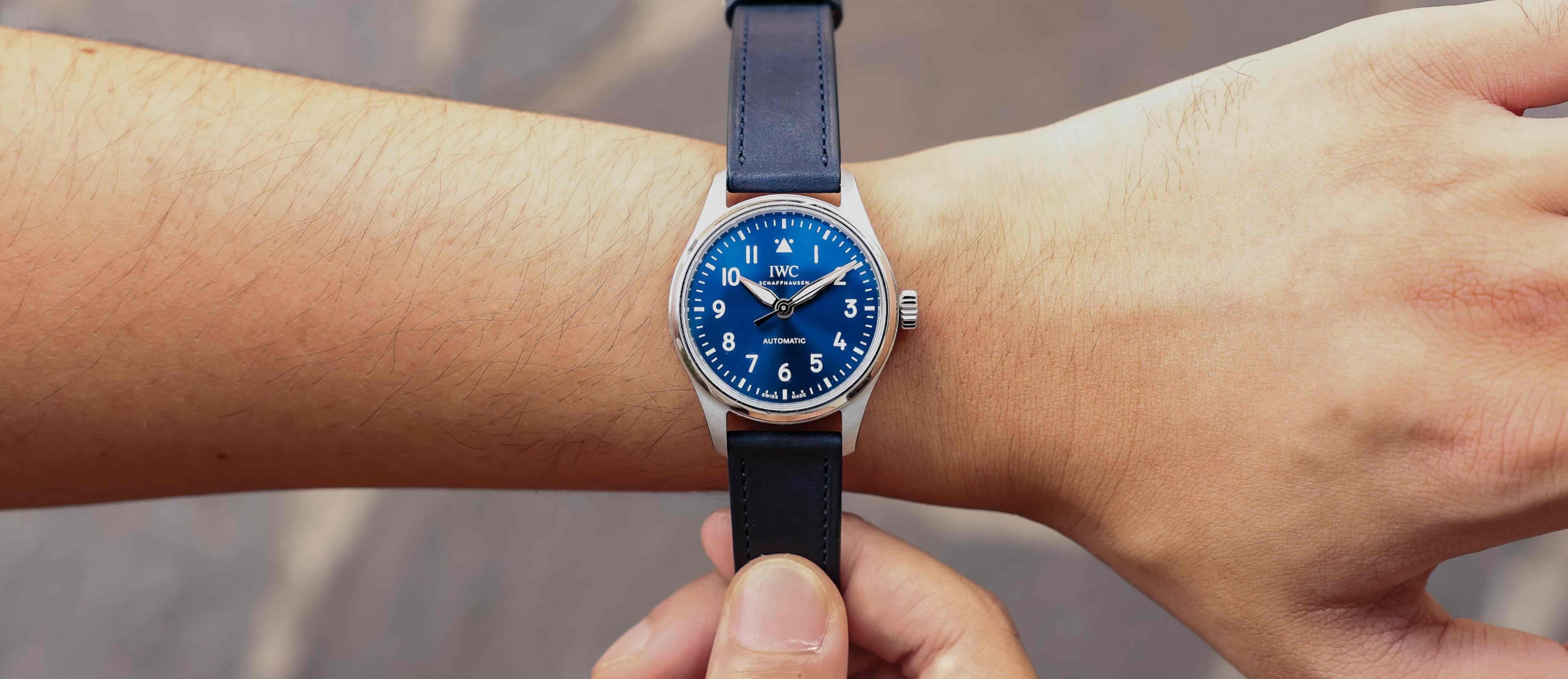
IWC’s just given their 36mm Pilot’s Watch lineup a bit of TLC, but has the wait been worth it? Let’s find out!
What We Love:
- Light, balanced wear
- Rose gold hands make for fun contrast
- Clear, simple, legible
What We Don’t:
- Very long lug-to-lug
- Leather strap only, and no quick-exchange
- Should a military design be dressy?
Overall Rating: 8/10
- Value for Money: 8/10
- Wearability: 8/10
- Design: 8/10
- Build Quality: 8/10
Children’s literature and historical aviation don’t exactly go hand in hand. But in the case of Antoine de Saint-Exupéry, there lies a unique exception. The French journalist, writer, aviator and poet is an icon of his country, most famously known for his work Le Petit Prince, or The Little Prince. A philosophical fable disguised as a children’s tale, it has captured the hearts of readers across Europe and around the world.
One such party enraptured by Saint-Exupéry’s stories was IWC, which partnered with his heirs and the subsequent Antoine de Saint-Exupéry Youth Foundation in 2006 to uphold the legacy of his illustrious career and the beauty of Le Petit Prince. Two decades on, the partnership remains strong, as demonstrated by several of IWC’s Watches and Wonders releases.
But while several other models have undoubtedly stolen the show, it was the reintroduction of the Pilot’s Watch Automatic 36 collection that intrigued me the most. Now bearing a new design, a new movement and the legacy of Le Petit Prince, does this latest version pick up where its predecessors left off? Well, that’s exactly what I wanted to find out when I had the opportunity to take it for a spin earlier this year.
First Impressions
Now, I understand that the word ‘reintroduction’ might be a bit of a misnomer. IWC has been making 36mm Pilot’s Watches since 2016, so the new Le Petit Prince edition isn’t exactly some Messianic figure for the roster. However, at the time of writing, it’s the only one of its kind currently available, as the previous model line was gradually phased out not too long ago in 2024.
On the surface, this might seem almost counterintuitive given the growing trend towards smaller watches. With collectors increasingly looking for more conservative sizing, why pare things back now? But, looking at the bigger picture, it allowed the brand to double down on the then-resurgent Ingenieur collection. Though many of us were have been sad to see the old Pilot’s Watch Automatic 36 go at the time, its departure ultimately bolstered the roster of what is now a renewed flagship for IWC.
And it’s not as though it was ever going to be gone forever. IWC is acutely aware of the ebbs and flows of collector behaviour, and this returning model comes with a few major adjustments of its own. The fact that it also celebrates the 20th anniversary of the brand’s collaboration with the Saint-Exupéry estate is simply serendipitous, allowing IWC to add a little more flavour to the new release.
The Design
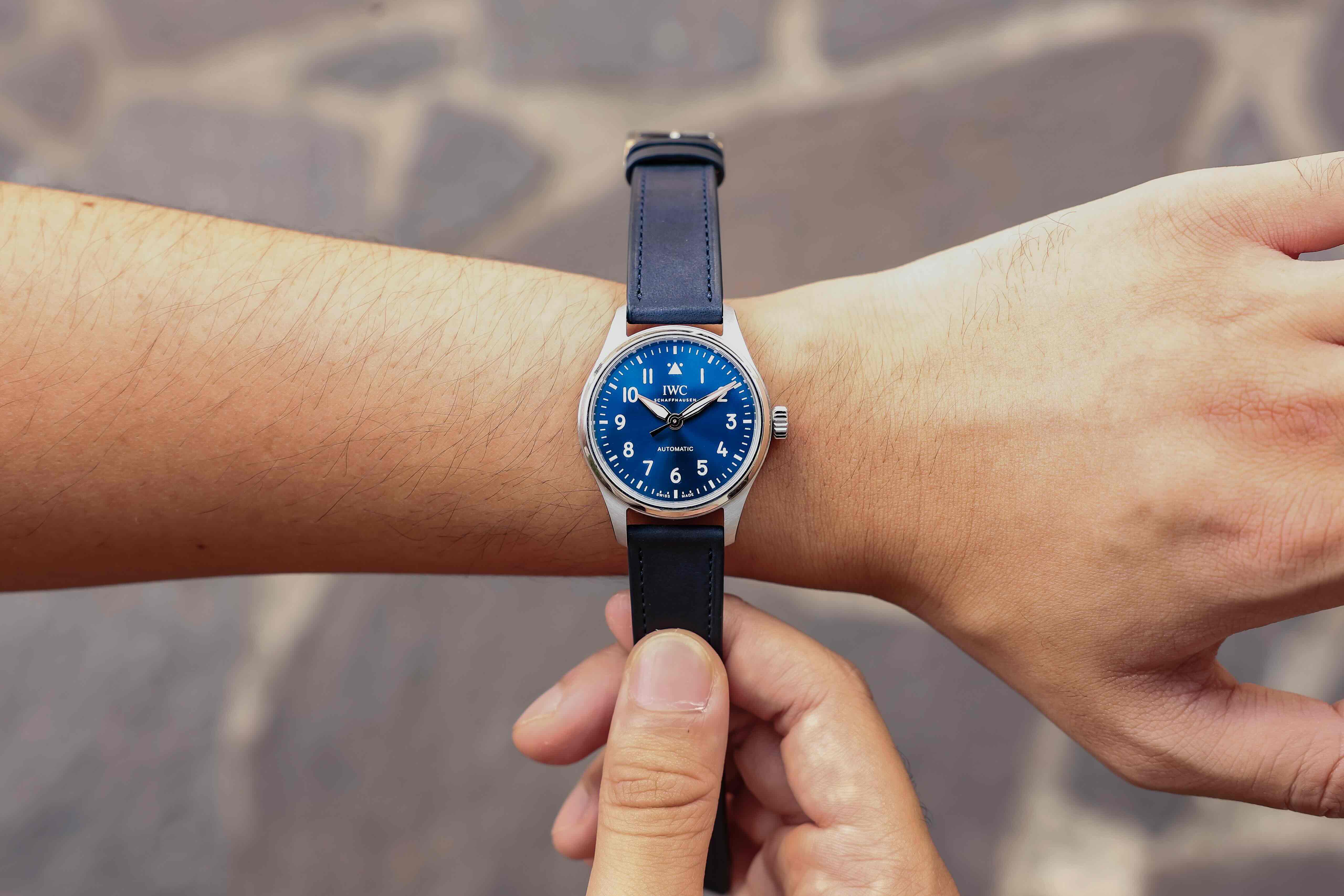
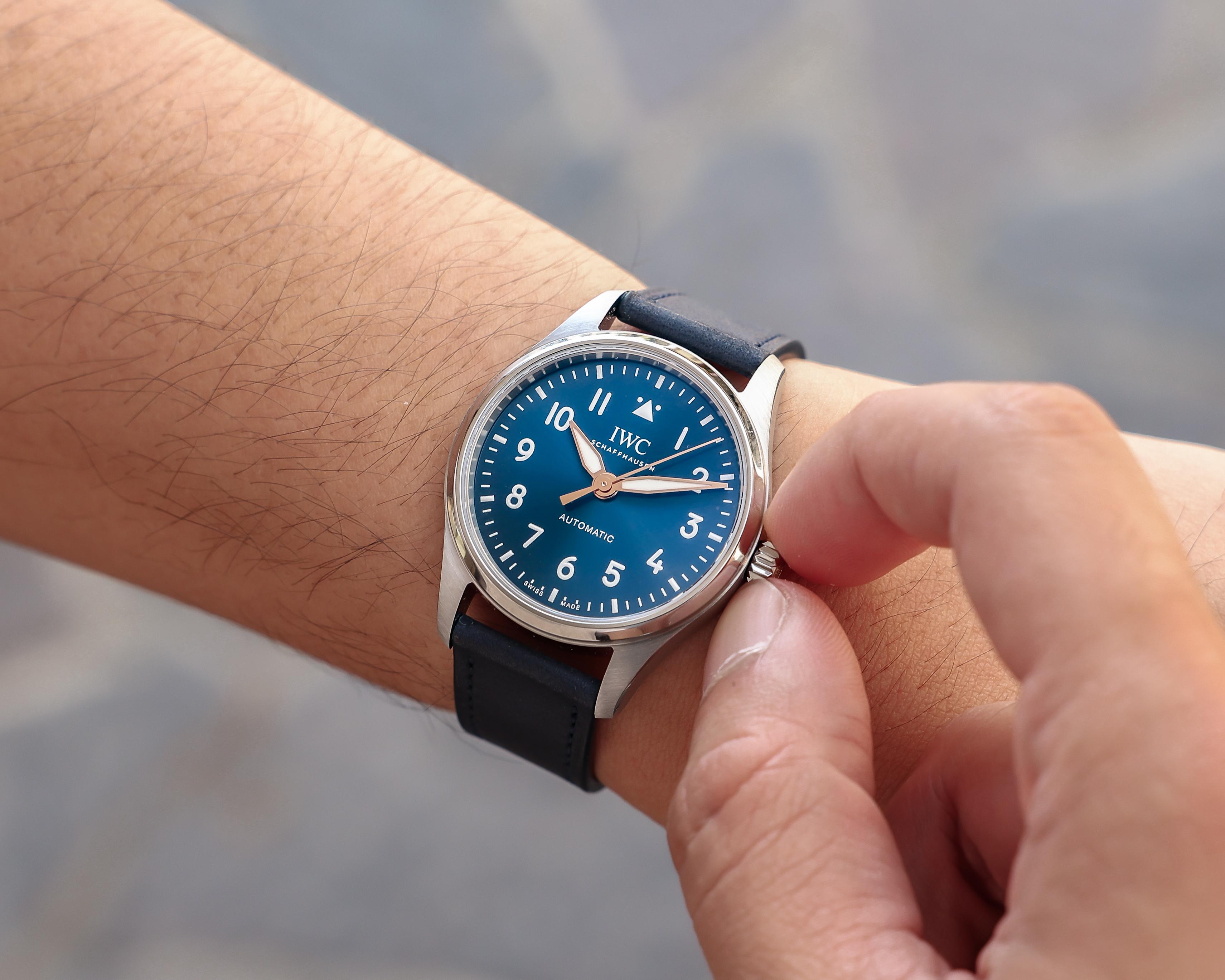
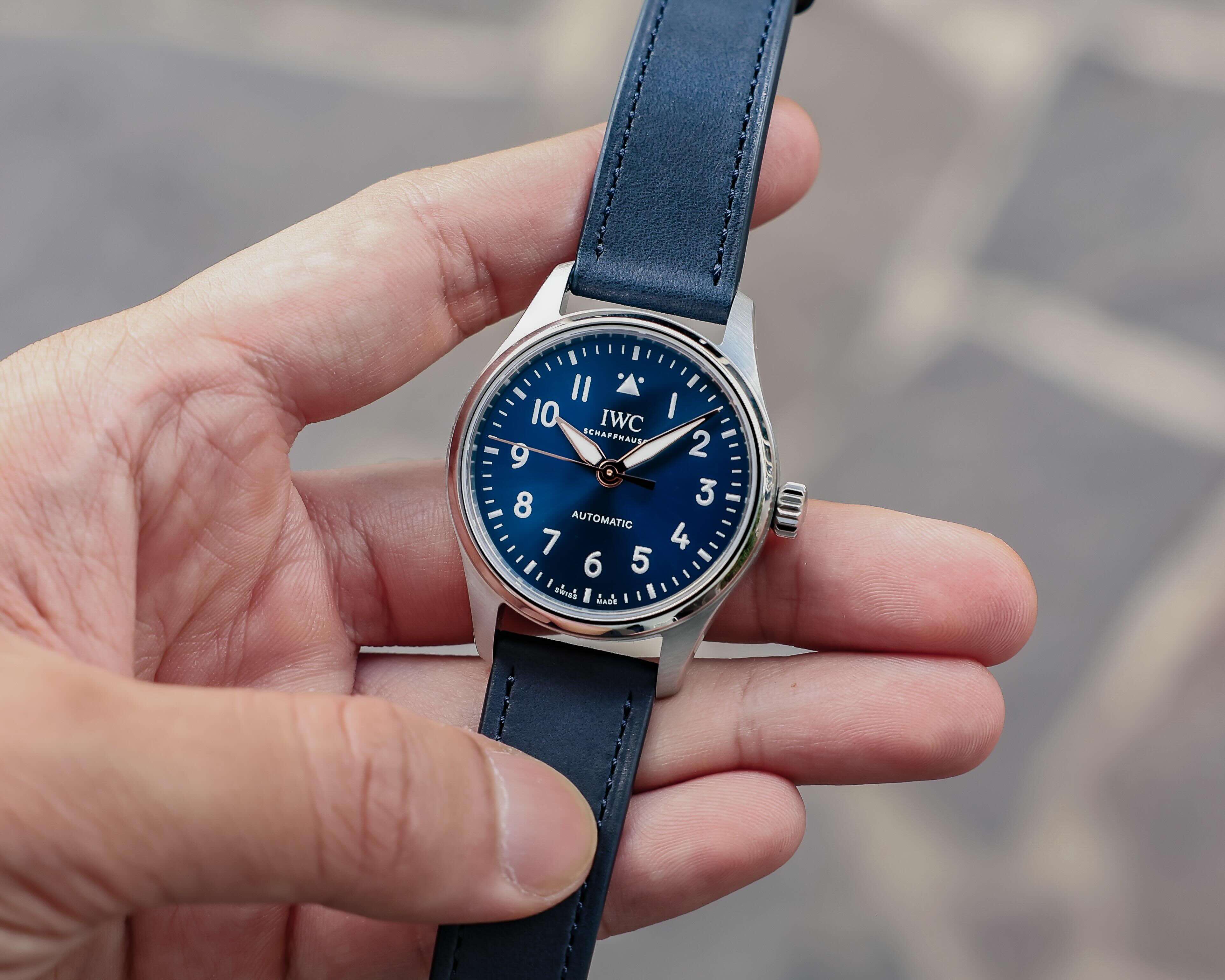
And while the pilot’s watch as a genre is bound by several stringent rules, the flavour I speak of is still distinctive in every part of this watch. As always, we begin with the dial, which uses IWC’s signature sunray-brushed blue. It’s not the most mind-blowing feature, sure, but one that IWC has committed to across its entire catalogue.
Blue tones might be the best at bridging the aesthetic gap, so to speak, between a watch’s practical heritage and its current, more luxurious status. Even for a piece as pragmatic as the IWC Pilot’s Watch, it works fairly well here.
Atop that dial is a series of white printed Arabic numerals, encircled by a similarly printed minute track. While you might think this makes the dial exceptionally flat, the generous printing of these features gives the watch an unexpected, albeit ever-so-slight, level of depth.
Another interesting element, or rather lack thereof, is the omission of a date window, which gives the new 36mm Le Petit Prince an unparalleled level of legibility for its size. I much prefer this to the inclusion of a date window, which, honestly, I take umbrage with on the 40mm Mark XX models. At least on the 36mm, it keeps the design clean and consistent, with little interruption.
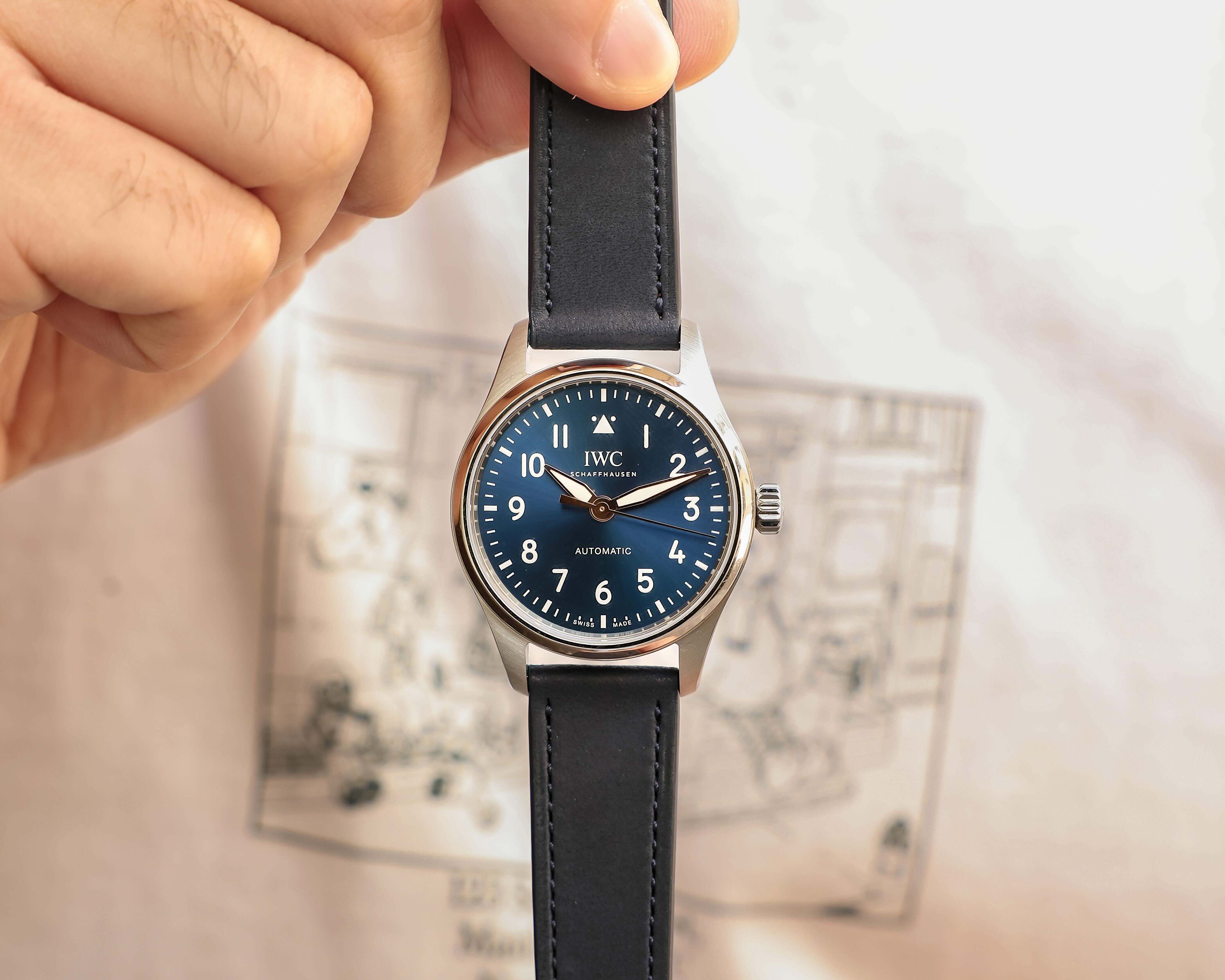
As is the case with the collection, the ‘12’ numeral is missing in favour of the signature triangle and two dots. This detail traces back to the Second World War military specifications for Beobachtungs-Uhren (observation or navigator watches), which IWC helped manufacture for Germany during the war.
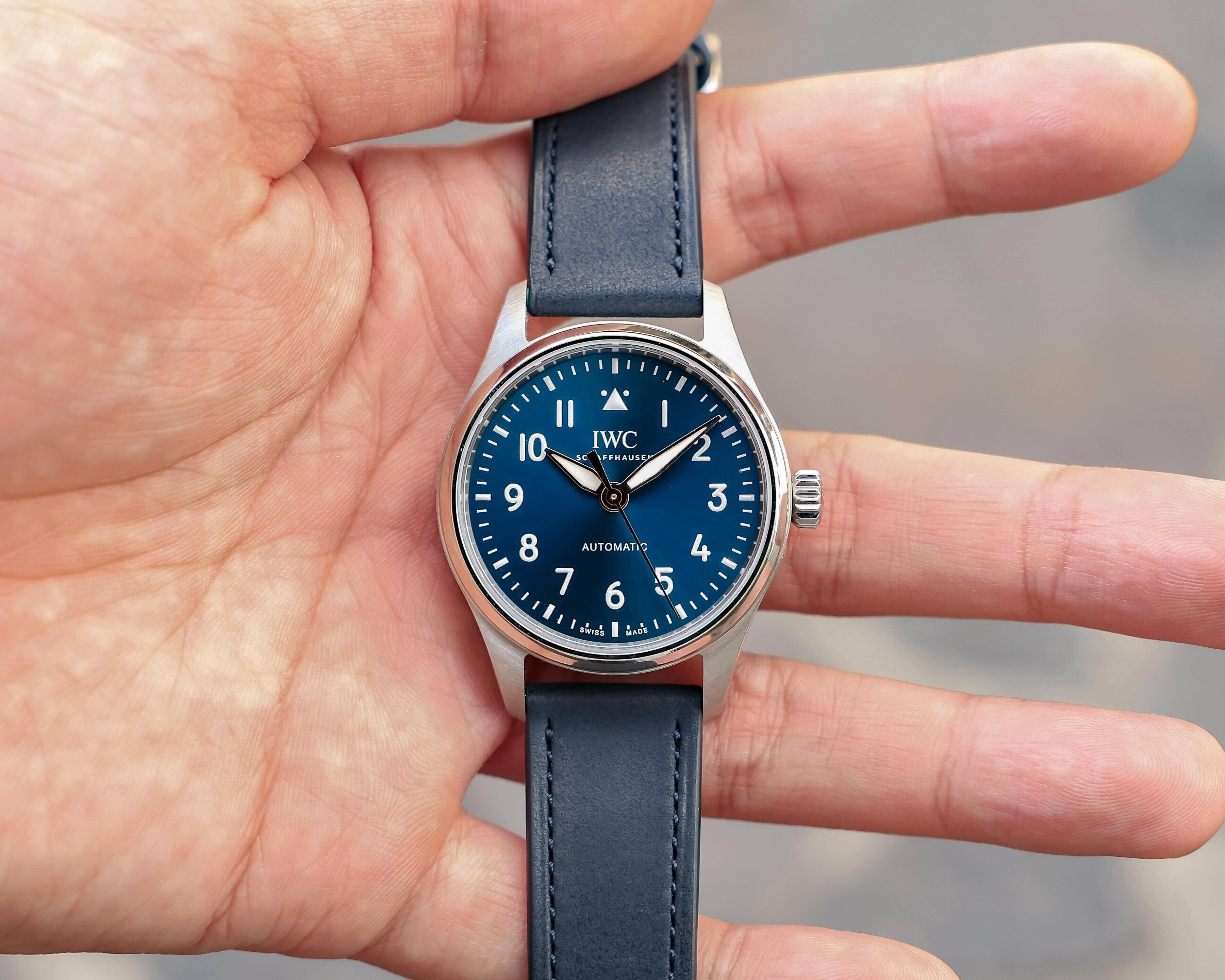
Its purpose is simple: in any orientation, a pilot can tell which way is ‘up’ at a moment’s notice. For even greater legibility in low-light conditions, the triangular index is lumed, alongside the numerals and the larger indexes on the minute track.
But the most striking detail of the new 36mm Le Petit Prince’s dial has to be the handset. Though it retains the same sword-shaped format as before, the brand has elected to gold-plate the entire arrangement. For a design as minimalist as a pilot’s watch, this is a massive change by comparison, and one I’ve seen debated online since its release. Some believe it’s a wonderfully elegant addition to the dial layout, while others feel it strays too far from the watch’s original pilot heritage.
Personally, I believe both are true. I don’t think many pilots would spring for a watch with gold-plated hands for practical reasons, but IWC does a great job of preserving the purpose-driven DNA of the collection while adding visual intrigue through warm contrast. It’s perhaps the most fitting detail for the occasion, given the context of Le Petit Prince, and this might be as dressy as a pilot’s watch can possibly get. I wouldn’t be surprised if it were a one-off, though.
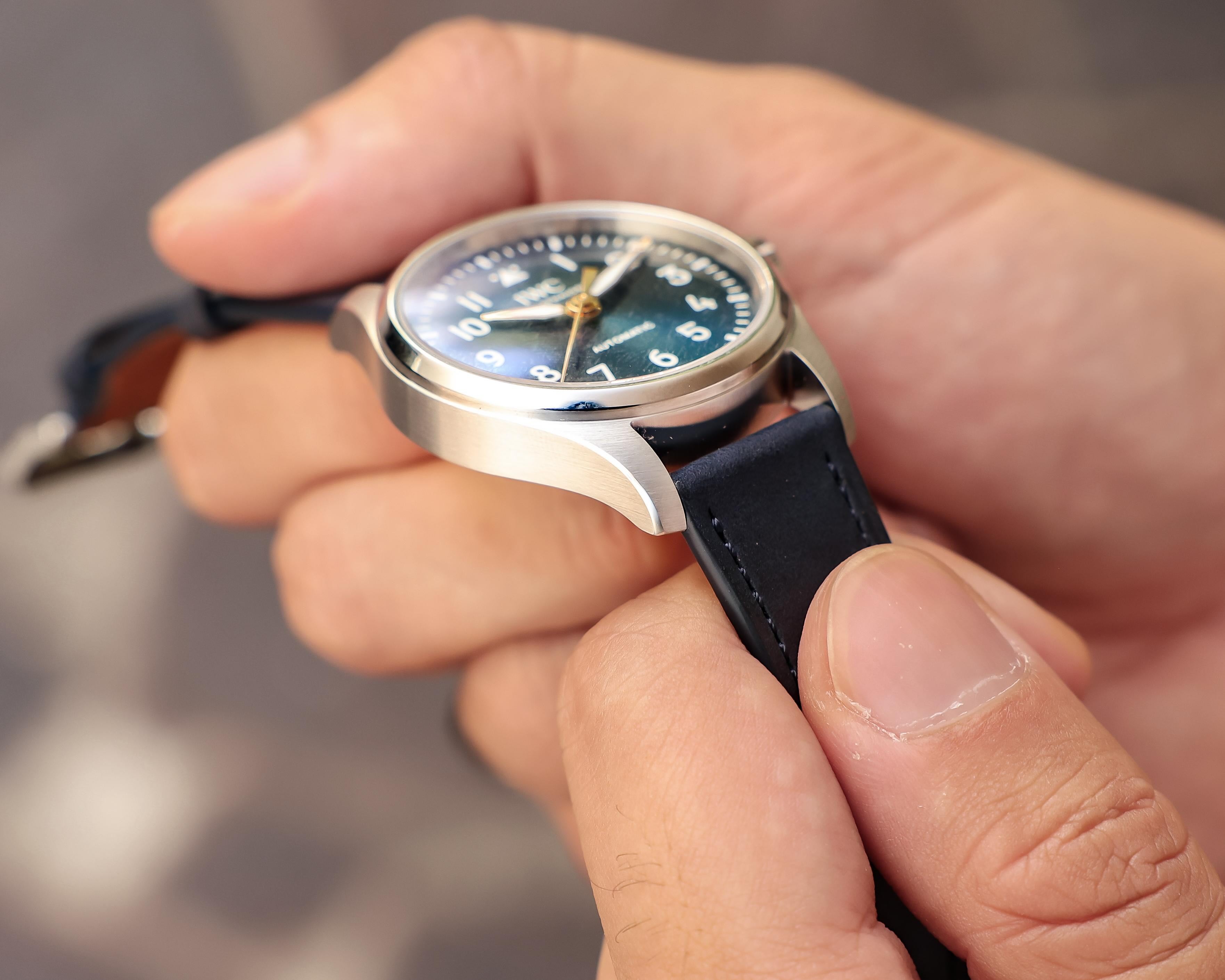
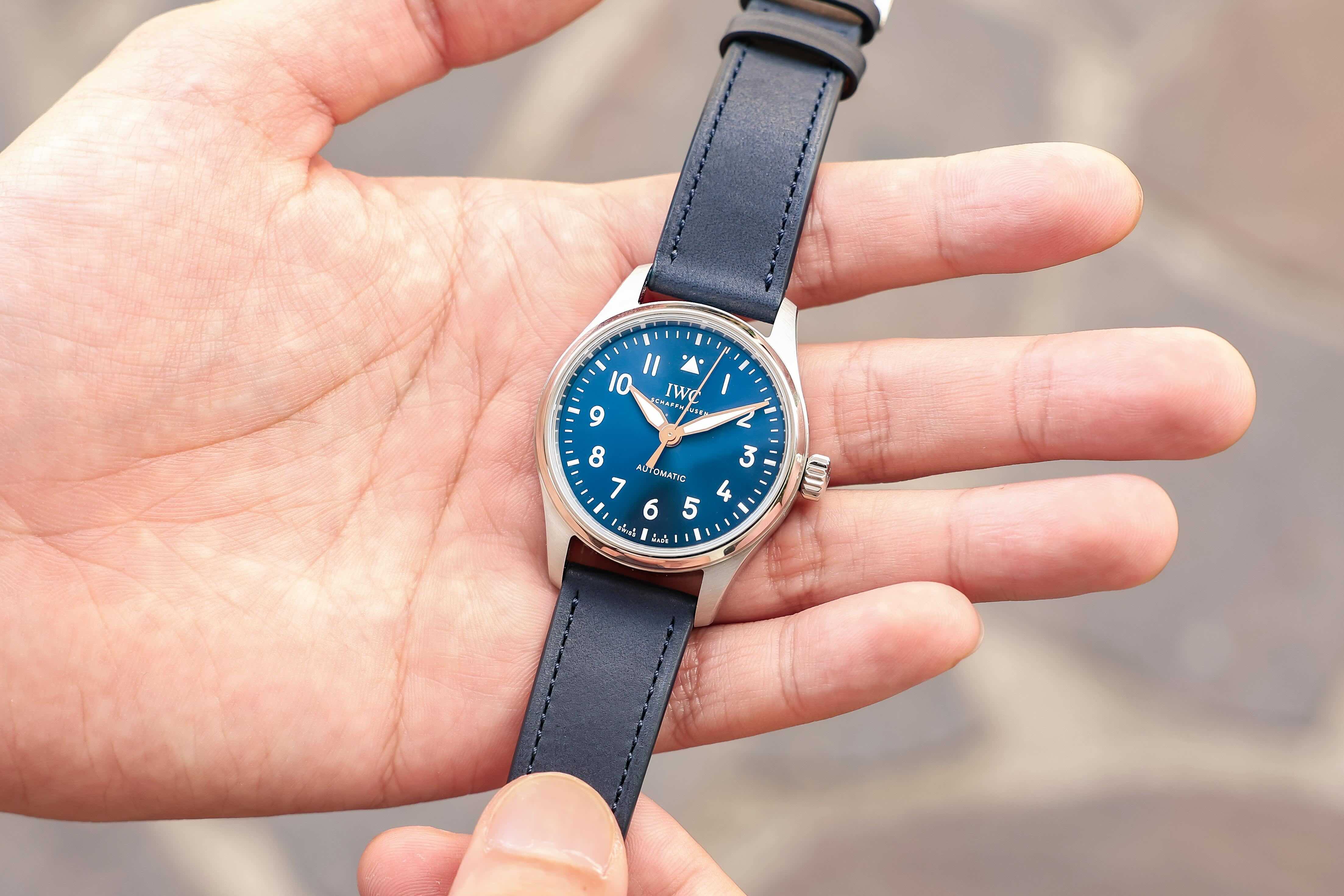
Moving to the outside, you’re immediately greeted by a classic flat sapphire crystal framed by a polished bezel. Again, it’s not entirely apropos for a pilot’s watch, but it still adds a halo of light that draws focus towards the dial. Aside from the fluted, signed crown, it and the small, polished case chamfers are the only polished surfaces on the entire watch.
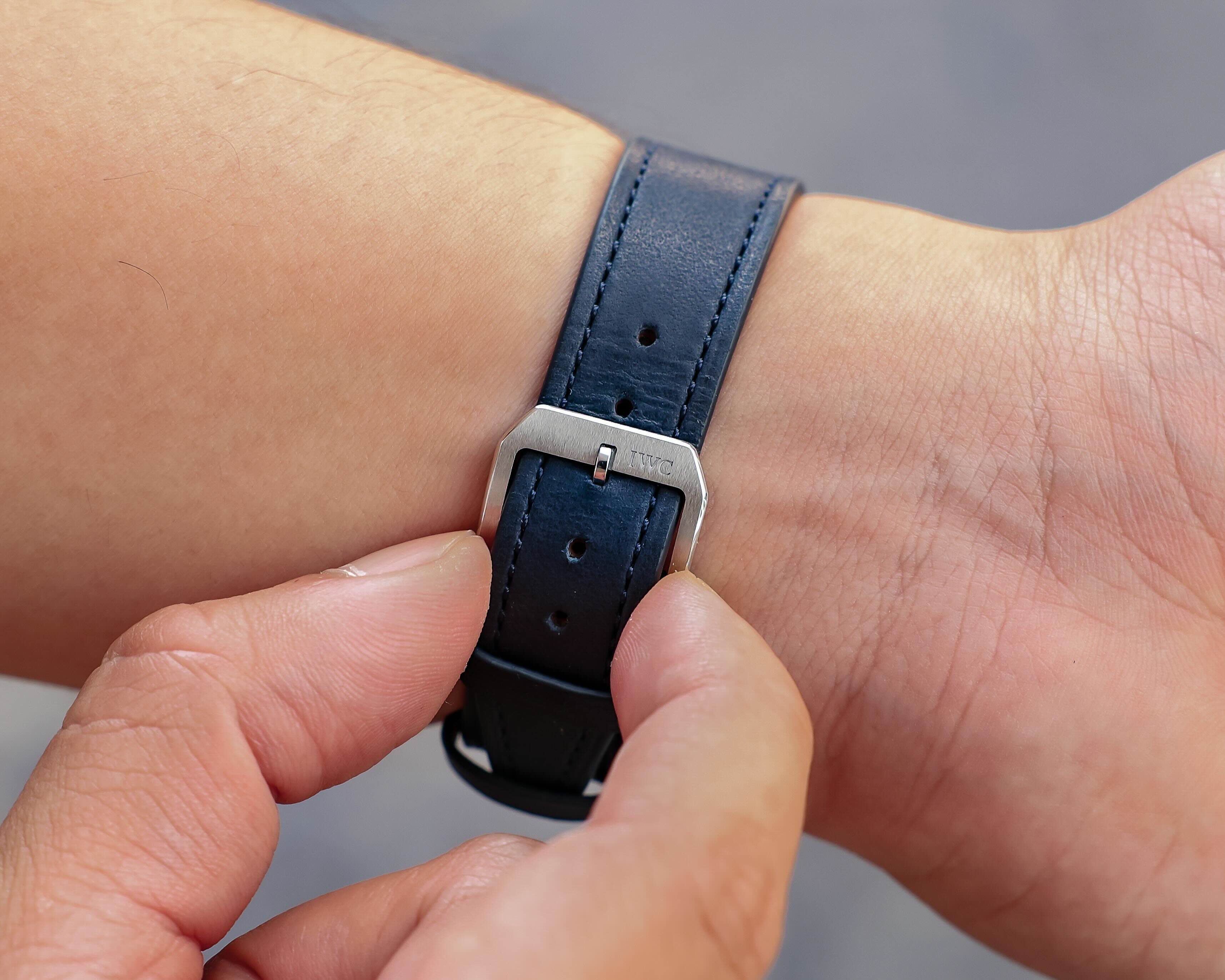
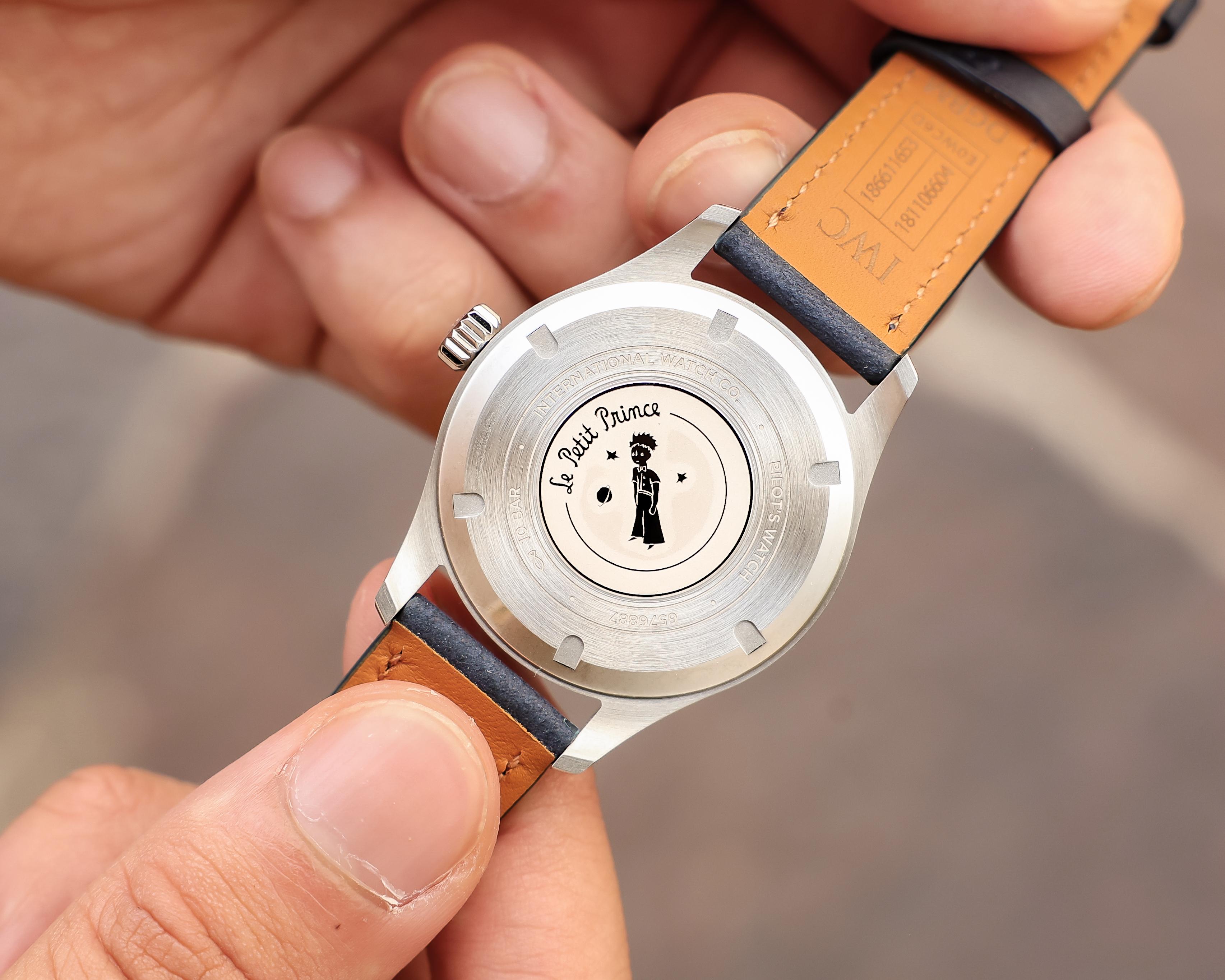
Radial brushing covers the upper case, a finish that is mirrored on the caseback, which features an engraving of the Prince himself. Horizontal brushing takes care of the flanks, continuing along the curved lugs that meet the blue leather strap. Terminating in a standard steel pin buckle, it completes the watch on the wrist.
Overall, the new Pilot’s Watch Automatic 36 Le Petit Prince presents a few design conventions that I’d love to see replicated more widely across IWC’s catalogue. No-date Pilot’s Watch models, in particular, are few and far between for the brand. Currently, your only options are this and the gargantuan 43mm Big Pilot references. Furthermore, the gold hands, while likely a one-and-done, add a touch of luxury without going overboard.
Again, there’s only so much you can do to a pilot’s watch before it can no longer be considered one, but as far as things go, IWC has taken a very measured approach with Le Petit Prince. Whether that works for you is entirely subjective, but it’s certainly cast its charm on me.
How It Wears
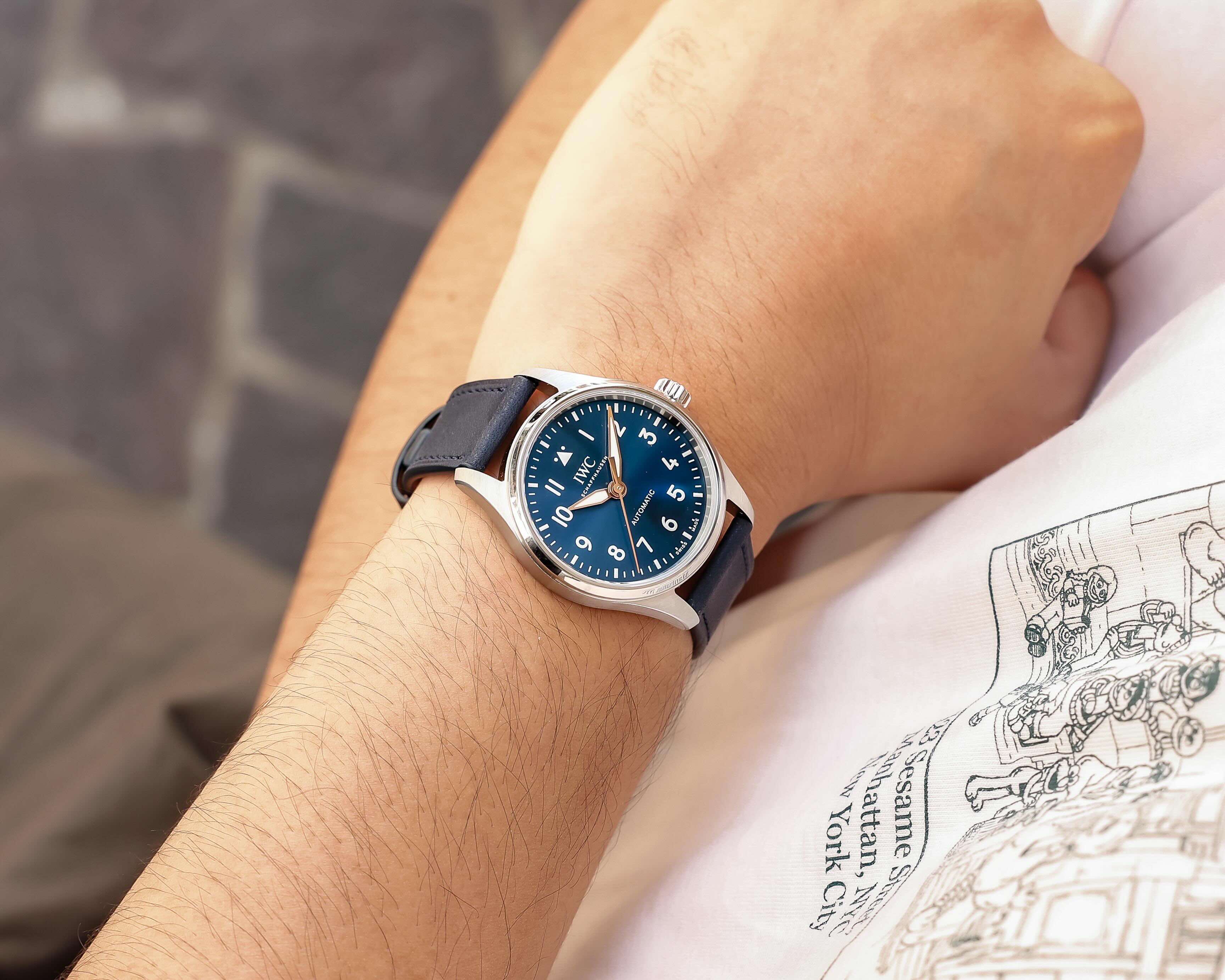
The design isn’t the only thing that has changed about the IWC Pilot’s Watch Automatic 36 Le Petit Prince. The new watch presents a wearing experience that is markedly different from the one that came before. In terms of width and length, it remains the same, measuring 36mm in case diameter with a 46mm lug-to-lug.
Where things change is the case thickness, which has slimmed down from 10.6mm to 9.9mm. A difference of 0.7mm might not sound like the biggest shift on paper, but it makes a world of difference compared with the older versions.
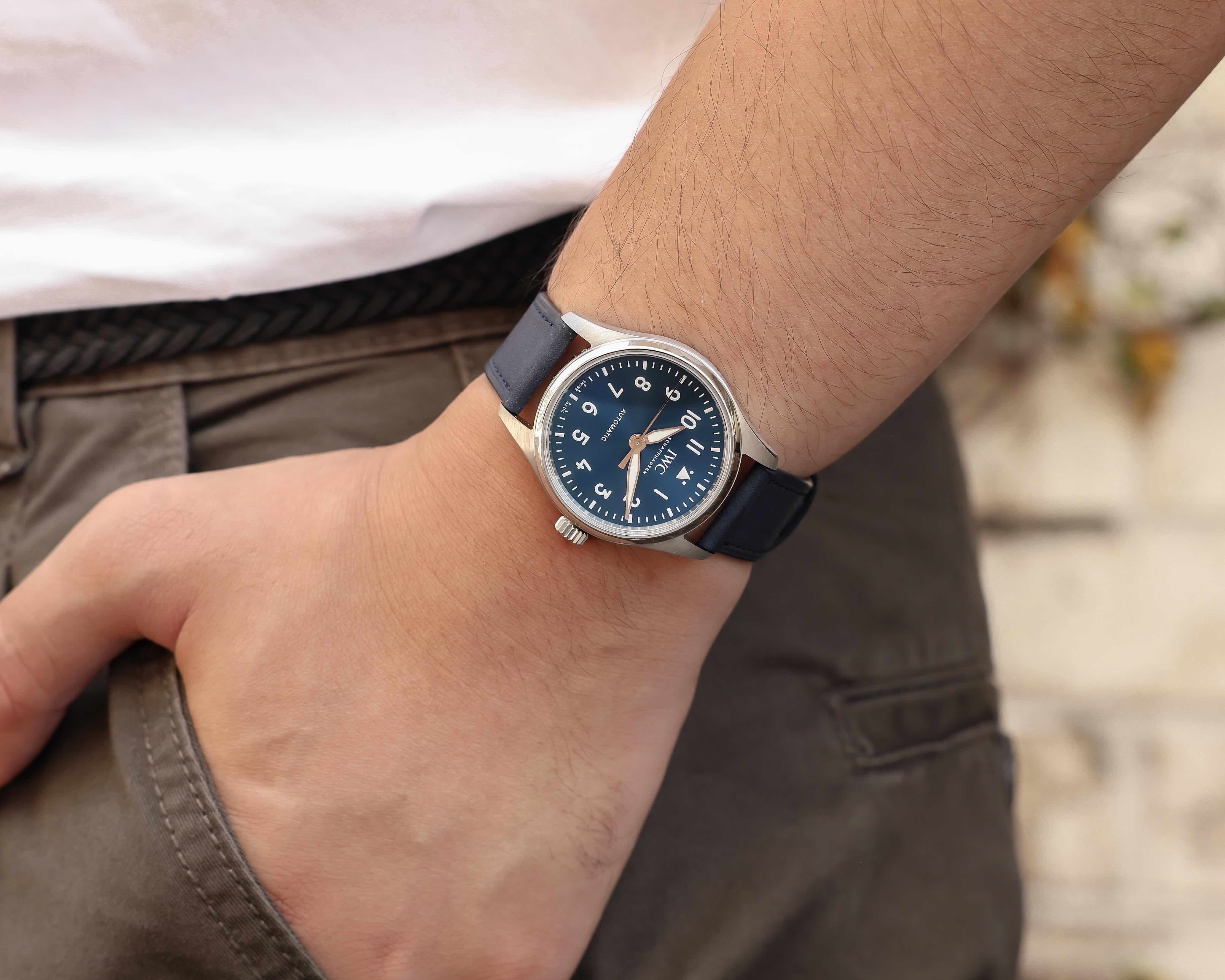
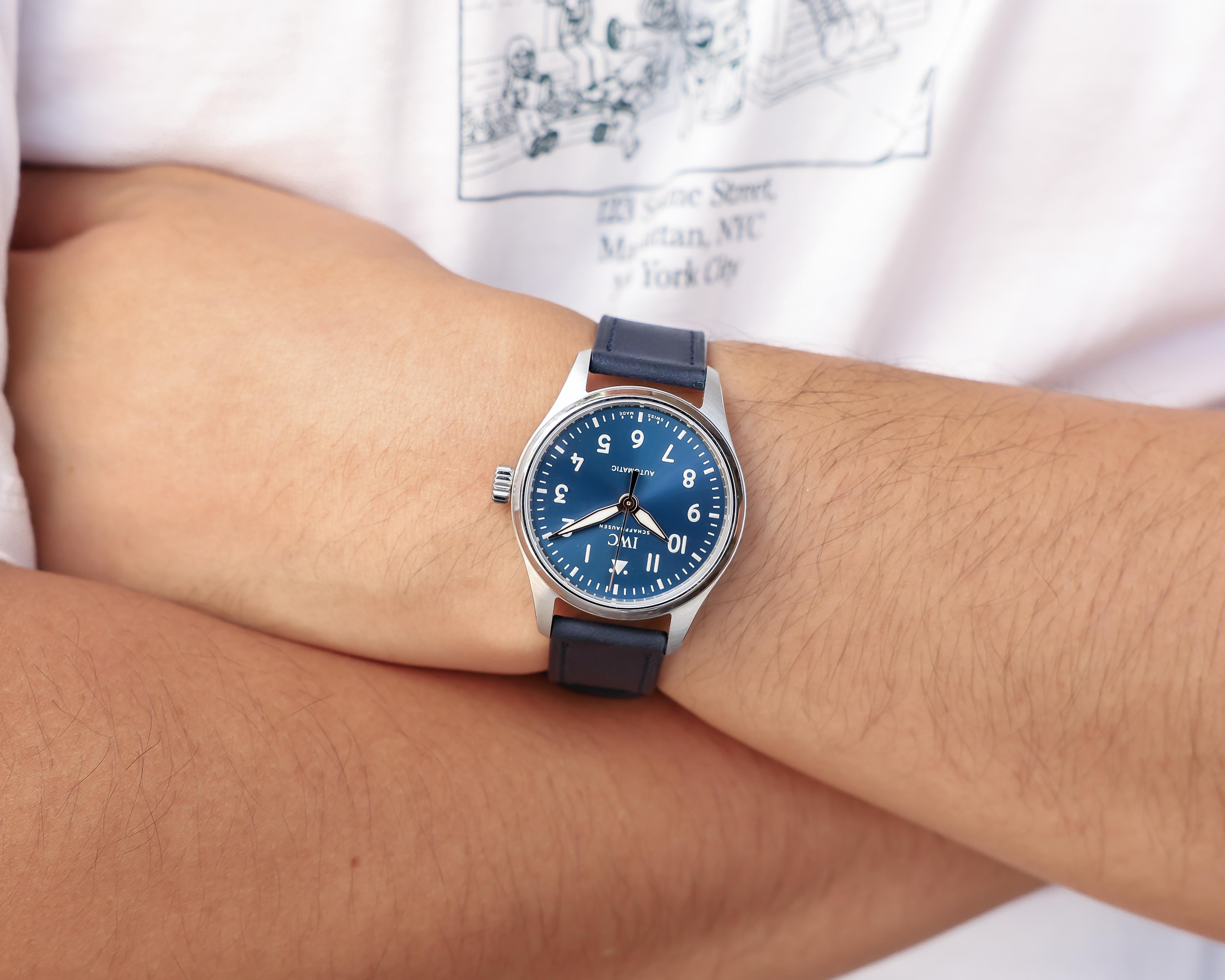
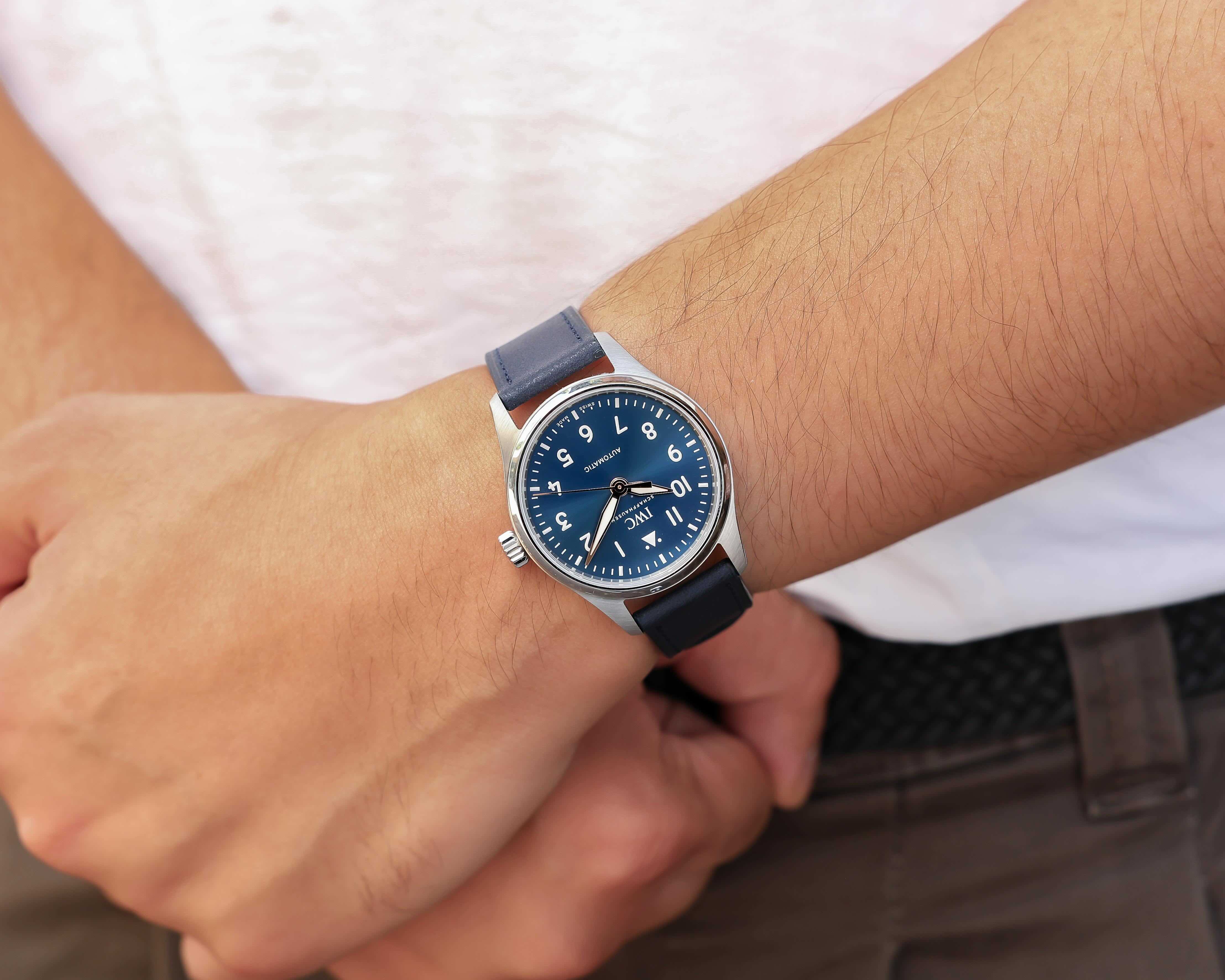
This is especially apparent when you look at the watch side-on. Without the added height, it sits remarkably low on the wrist, allowing it to slip seamlessly under most shirt cuffs and jackets. As a result, wearing this watch feels much closer to wearing a dress piece than a pilot’s watch, especially with those gold-plated hands.
But fear not: IWC may have added some pizazz, but the 36mm Le Petit Prince is as competent as ever. Its wearability and smaller case don’t come at the expense of toughness, with the watch maintaining a 100m water resistance rating. Interestingly enough, though, it manages to do so without the screw-down crown found on the Mark XX models.
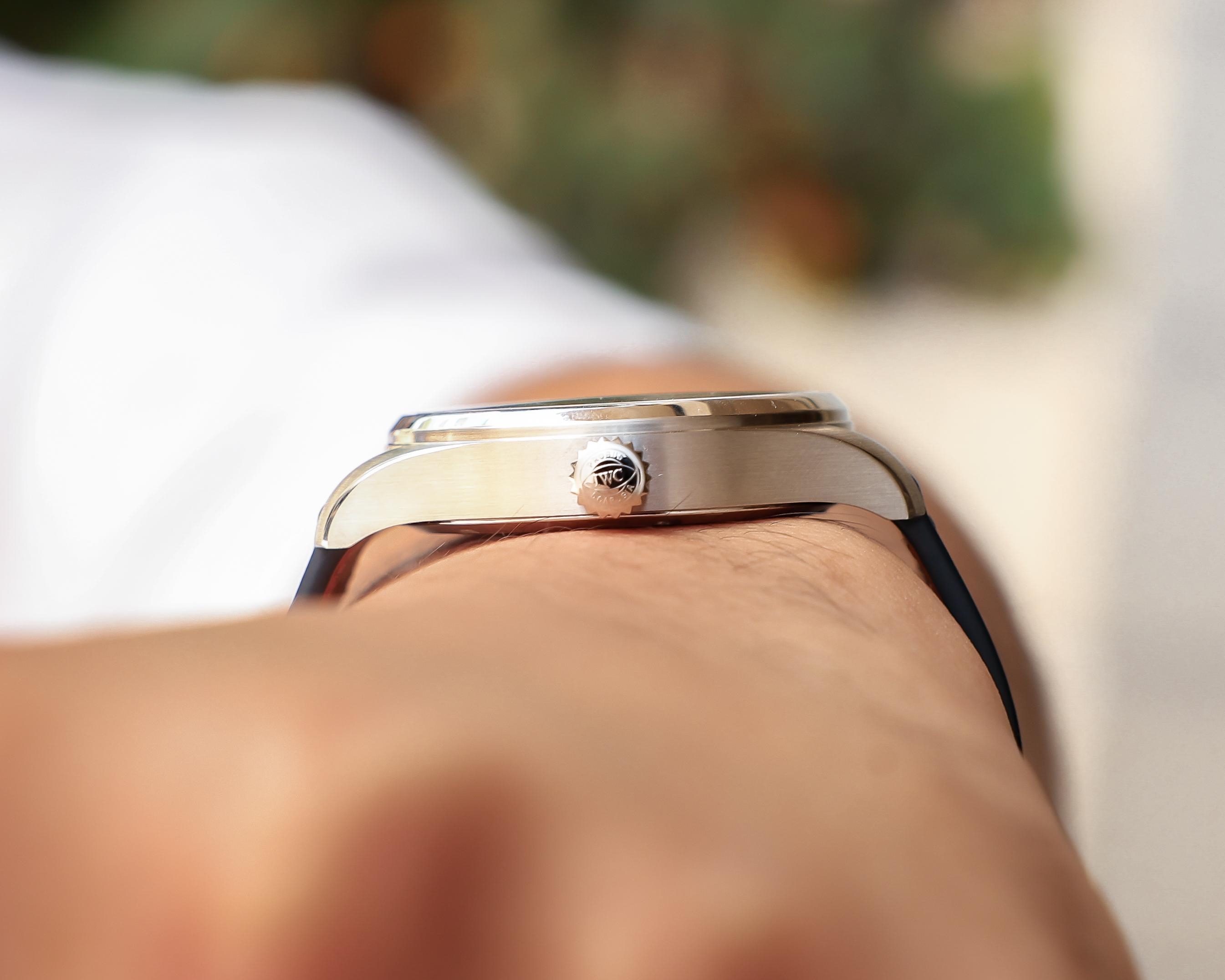
That’s not to say the watch doesn’t have any caveats. One element that might throw people off is its lug-to-lug measurement. While the slab-sided architecture of the case flanks and flat top help diffuse its silhouette, there’s no denying that it wears a lot larger than most other watches of its size. I myself had to check multiple times that I wasn’t wearing a 38mm.
Whether that’s a good thing or not is entirely subjective, much like the design itself. Some watches, like the Rolex Explorer 36 and older versions of the 36mm Nomos Club Campus, have found success with their longer lug-to-lug measurements of 43mm and 47.5mm, respectively.
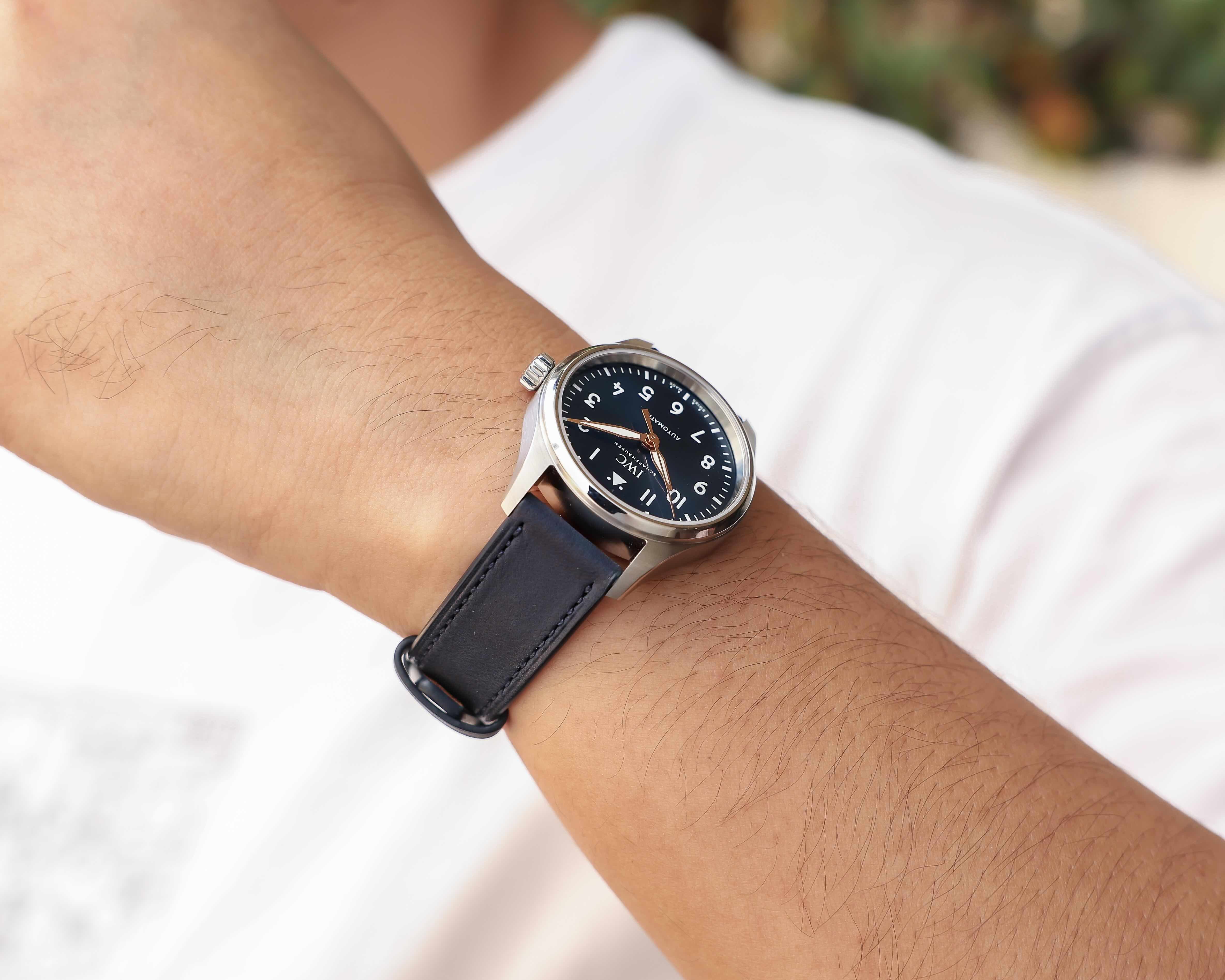
Comparatively, the 36mm Le Petit Prince doesn’t feel as awkward as the older Nomos models, but it’s certainly pushing the limits of proportionality. Should the watch ever be equipped with a metal bracelet to match its peers, that visual length might become even more pronounced.
Which brings me to the other major pain point of the 36mm Le Petit Prince: its singular strap option. At the time of writing, it’s only available on a blue calfskin leather strap. While that’s not necessarily a bad thing, IWC has been building a reputation for offering greater optionality across its watches.
In particular, its EasX-Change system has received plenty of attention, both among its upscale lines and flagship models. Though I don’t expect the 36mm Le Petit Prince to carry that burden alone, I feel strap variability should have been a greater consideration, given IWC’s renewed focus on the matter.
This is the first time in a while that a new revision of the 36mm Pilot’s Watch has been launched, so there’s still room for greater variety in the future. But perhaps this speaks to a different issue within the watch industry: whether all brands should be considering the optionality they provide with each new launch. A thought for another time, perhaps?
The Movement
In keeping with traditional pilot’s watch design principles, the IWC Pilot’s Watch Automatic 36 Le Petit Prince doesn’t have an open caseback. Instead of the movement, you’re treated to the aforementioned engraving of Le Petit Prince atop the solid steel caseback. However, that doesn’t mean everything has stayed the same in the movement department. Anything but, in fact.
Within the watch lies the Cal. 32112, a new movement introduced with the refreshed collection. Beating at the luxury standard of 4Hz (28,800VpH), the Cal. 32112 delivers an astonishing 120 hours, or five days, of power reserve. In one fell swoop, the new movement brings the 36mm Le Petit Prince in line with its peers, introducing its own offshoot of the 32000 series, as seen in the Mark XX, Aquatimer and Portofino 37 collections.
Upon further research, I found that it’s very closely related to the Calibre 32111 found in those watches, though the lack of a date complication warrants the change in designation. This follows the classification of previous time-only movements in the 32000 series, with the Cal. 32100 appearing in the Pilot’s Watch Automatic Black Aces and the Cal. 32101 featuring in the Big Pilot Shock Absorber XPL Toto Wolff x Mercedes-AMG PETRONAS Formula One Team reference.
It makes sense that the two are closely associated, as both are made by the Richemont-owned movement manufacture ValFleurier. Sadly, IWC has not yet provided imagery of the movement itself, so I can’t show you what it looks like behind the soft-iron inner case and closed caseback. Purely speculating, though, the Cal. 3211 that came before is on display in its Portofino 37 models, so we can expect the movement finishing to be on par with those standards.
Performance-wise, however, you can still expect it to deliver. With magnet-resistant silicon components and a bidirectional pawl-winding system for the automatic rotor, the Cal. 32112 should keep accurate time regardless of whether you’re wearing it for a special occasion or on the daily grind.
Final Thoughts
Models like the Big Pilot’s Watch Perpetual Calendar ProSet and the Pilot’s Watch Chronograph 41 Le Petit Prince proved to be the stars of IWC’s Watches and Wonders jaunt this year. However, the reintroduction of the 36mm Pilot’s Watch collection deserves its flowers as well. While it remains a singular release following two years of dormancy for the collection, the Pilot’s Watch Automatic 36 Le Petit Prince offers a considered new look at what IWC may have planned for the range.
Again, some details will probably remain exclusive to this watch, both the obvious, such as the Le Petit Prince engraving, and the less obvious, like the gold-plated handset. But the revised proportions, no-date layout and new movement are exactly what was needed to refresh 36mm Pilot’s Watch line-up. The pilot’s watch might be as standard as bread and butter, but IWC executes it to a dizzying level. It’s as if you replaced regular bread with freshly made brioche and normal butter with the spreadable gold that is French or Irish butter.
But given these additional touches of extravagance, does the watch suffer an identity crisis between its sportier and dressier natures? I don’t think so. Though elaborating on a practicalities-first aesthetic can sometimes feel like dressing up a gorilla, the reserved case size allows the new watch to slot comfortably into its own niche. In that sense, the bold legibility at the heart of its design shines just as brightly alongside its added elegance.
There are other watches that fit this bill, and at IWC’s asking price of AU$8,400, there’s certainly no shortage of competitors. At a similar price point of AU$8,590 is Breitling’s Top Time B31, while the AU$6,500 Baume & Mercier Riviera sits a touch below both. As always, they’re compelling alternatives to the watch at hand. Breitling’s power reserve is lower, but it comes with an added COSC chronometer certification, while Baume & Mercier’s Baumatic offers an equivalent five-day power reserve at a much lower price point.
There’s a lot to love about both, but that’s exactly the point. The appeal of either watch relies entirely on whether you buy into their distinct themes, be it Breitling’s old-world cues or Baume & Mercier’s contemporary integrated-bracelet sportiness. Though IWC’s offering isn’t entirely ‘timeless’, given its Second World War design heritage, it does just enough to transition seamlessly between a delicate dress piece and a robust luxury tool.
Whether you like it for its added flair, aviation heritage, practical specifications or enduring partnership with the Saint-Exupéry estate, the IWC Pilot’s Watch Automatic 36 Le Petit Prince has something for just about everyone. Whether it’s a tool watch, a special-occasion piece or simply another watch to add to the collection, I wouldn’t be surprised if you found yourself constantly gravitating towards it. It might not have any crazy bells and whistles, but it does everything you need it to, whenever you need it to. And that, horologically speaking, is perfect.
Reference & Specifications
| Feature | Specification |
|---|---|
| Reference | IW458802 |
| Dimensions | 36mm case diameter x 46mm lug-to-lug x 9.9mm thickness |
| Case | Stainless steel |
| Dial | Sunray brushed blue with gold-plated hands & white Arabic numerals |
| Crystal | Sapphire |
| Caseback | Closed, with Le Petit Prince engraving |
| Movement | Automatic Cal. 32102 |
| Power Reserve | 120h |
| Beat Rate | 4Hz / 28,800VpH |
| Water Resistance | 100m / 10bar |
| Strap/Bracelet | Blue calfskin leather strap with steel pin buckle |
Australian Retail Price: AU$8,400
Availability: Available now, via IWC boutiques, authorised retailers, or online at IWC.com
Image Gallery