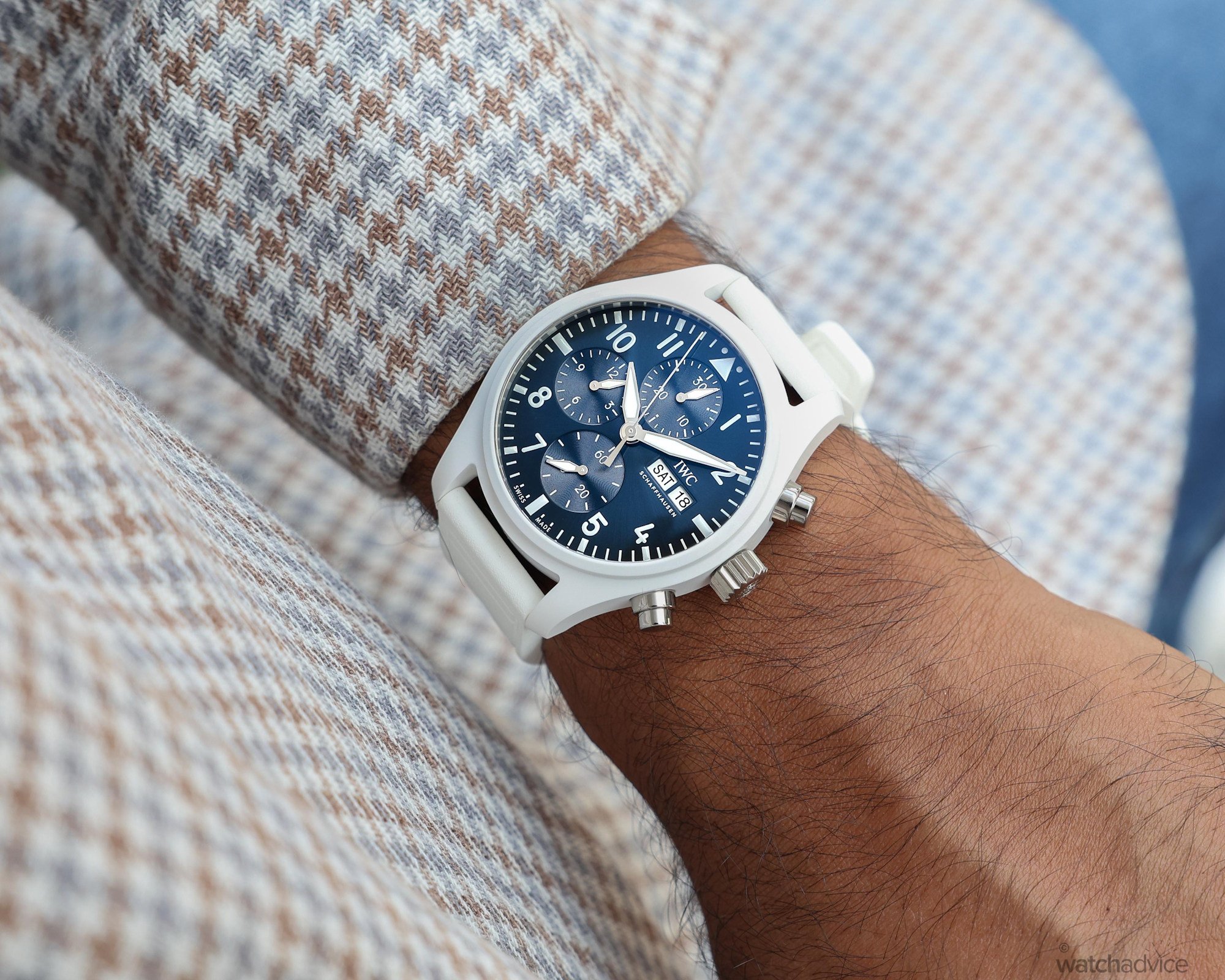

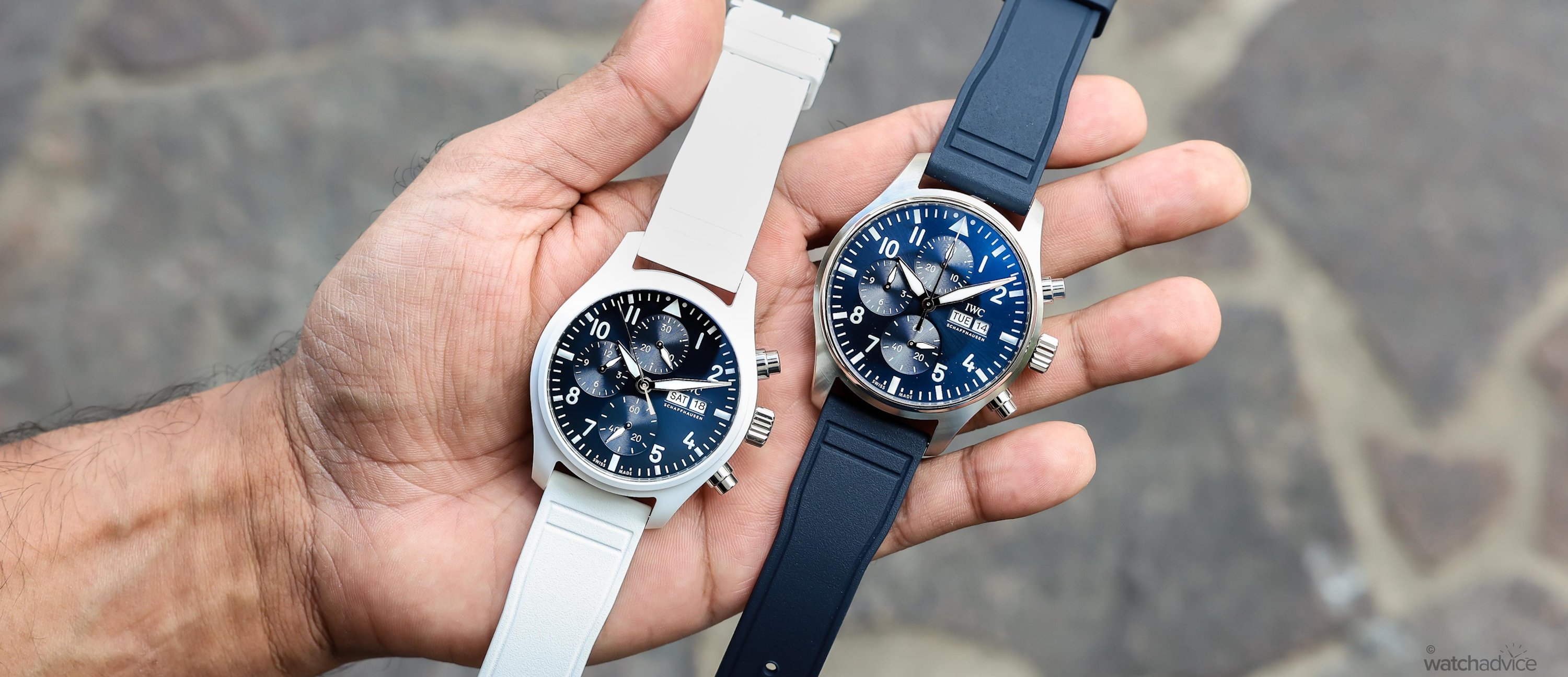
I take IWC’s latest Le Petit Prince chronographs for a hands-on review to discover how two materials completely transform the same design.
What We Love
- Eye-catching white ceramic case and deep-blue dial contrast
- Ceramic model is lightweight and comfortable to wear, despite its substantial dimensions
- Two distinct personalities across ceramic and steel
What We Don’t
- Full white ceramic edition lacks everyday versatility
- Both models are still relatively thick on the wrist
- 46 hour power reserve is modest by modern watchmaking standards.
Overall Rating: 8.6 / 10
- Value For Money: 8.7/10
- Design: 8.5/10
- Wearability: 8.7/10
- Build Quality: 8.5/10
To mark 20 years of its collaboration with the heirs of Antoine de Saint-Exupéry, IWC expands its Le Petit Prince lineup with new Pilot’s Watch Chronograph editions in stainless steel and white ceramic. This was one of IWC’s main themes for Watches & Wonders 2026, with a wide range of models carrying the signature Le Petit Prince design.
There are few collections as closely connected to IWC’s modern identity as the Pilot’s Watch, which carries a design inspired by the functional appearance of cockpit instrumentation. The Pilot’s Watch Chronograph then combines this aviation-inspired design with one of IWC’s best-known mechanical strengths in watchmaking: chronographs.

IWC Schaffhausen’s connection to the story of Le Petit Prince began in 2006, when the Swiss watchmaker started collaborating with the descendants of French author and aviator Antoine de Saint-Exupéry. This year marks the 20th anniversary of that partnership, and these releases perfectly encapsulate its enduring legacy.
What makes the Pilot’s Watch collection particularly relevant to this collaboration is that Antoine de Saint-Exupéry was both a celebrated writer and an aviation pioneer. Over the past two decades, the Le Petit Prince editions have also become some of the most recognisable watches in IWC Schaffhausen’s lineup, thanks to their deep blue dials and iconic caseback imagery.

The Le Petit Prince design works particularly well for the Pilot’s Watch Chronograph because the story itself feels relevant to an aviation-inspired timepiece. The Little Prince follows its protagonist on a journey through space, using his encounters on different planets to explore love, friendship, loss, and the importance of maintaining curiosity.
The deep blue colour associated with the story is intended to evoke the “vastness of the night sky,” connecting it to the Little Prince’s journey. It becomes even more relevant when you consider Saint-Exupéry’s relationship with aviation, alongside the historical aviation ties of IWC’s Pilot’s Watch collection.
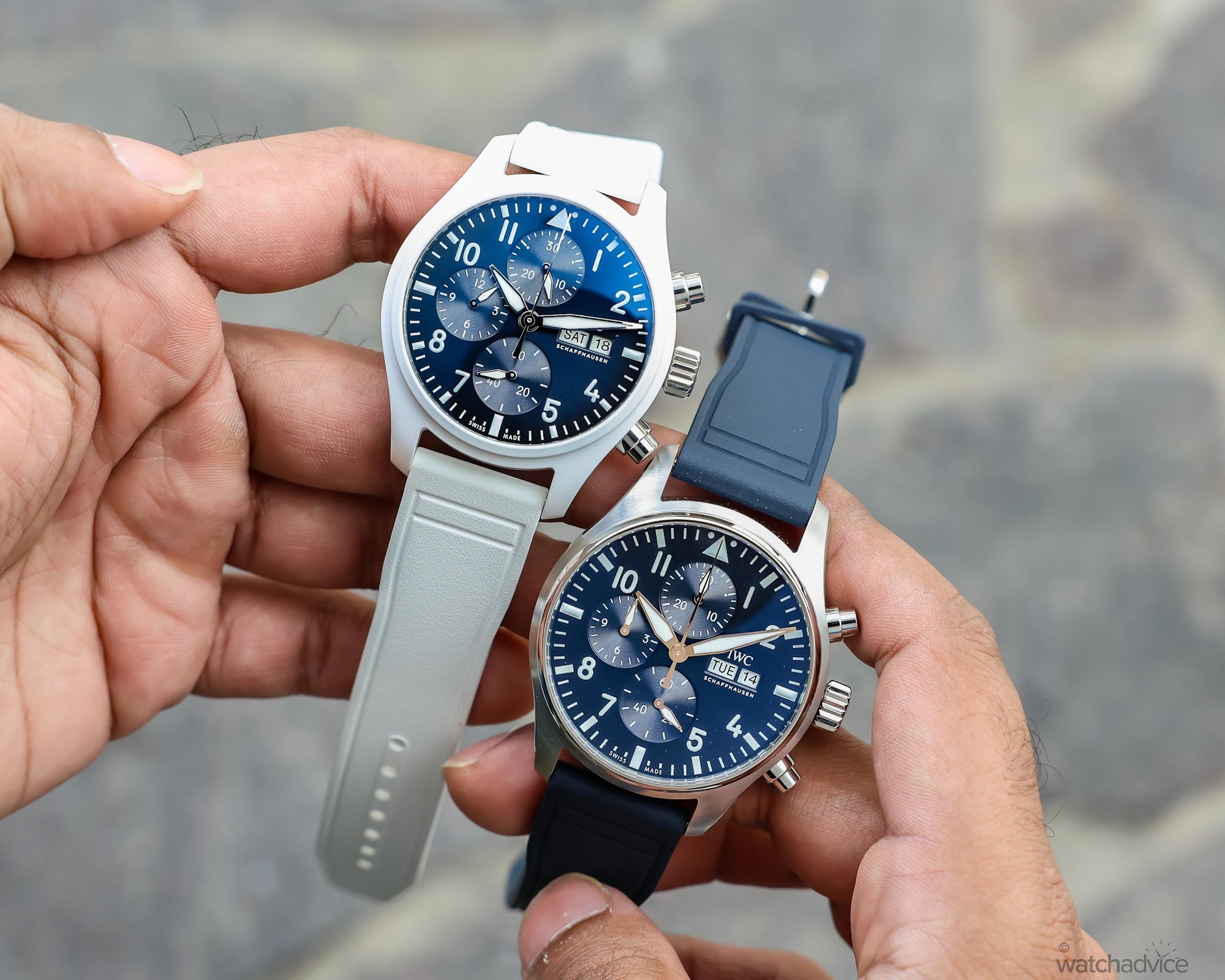
IWC Schaffhausen has introduced two variations of the Pilot’s Watch Chronograph with very different personalities, yet the same Le Petit Prince design. The stainless-steel edition is available in either a 41mm or 43mm case, while the white ceramic model measures 41.9mm. Importantly, this is the first time IWC has presented a white ceramic Pilot’s Watch Chronograph in this smaller size, with the previous TOP GUN “Lake Tahoe” edition measuring a much larger 44.5mm.
Initial Thoughts
I’ve previously had the chance to go hands-on with IWC Schaffhausen’s Pilot’s Watch Chronograph, particularly the Performance Chronograph 41 created in collaboration with Mercedes-Benz for the F1 movie. So, I already had an idea of what the watch would feel like on the wrist. However, this was my first time experiencing a Le Petit Prince model, and I can safely say that the design completely changes the personality of the timepiece.
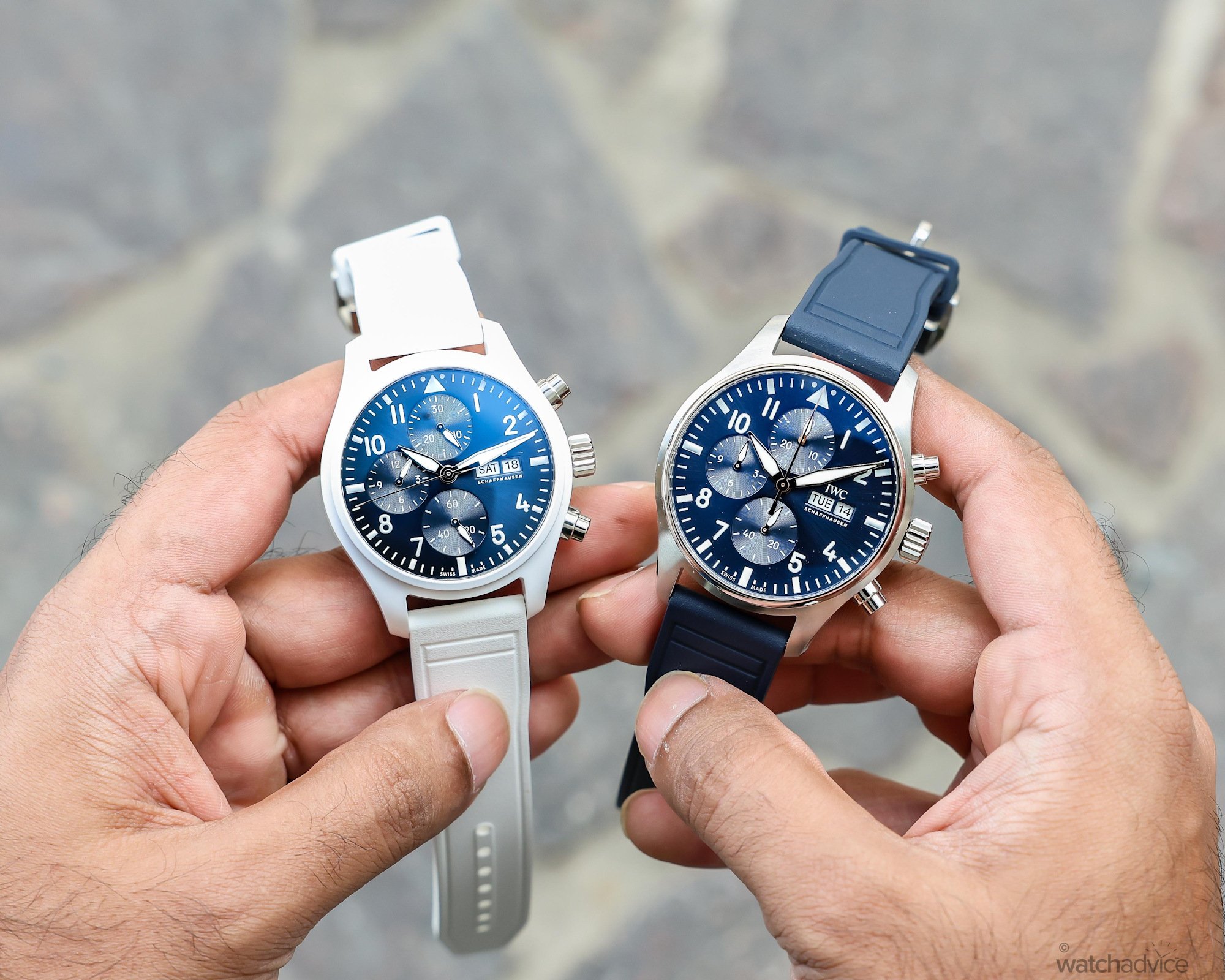
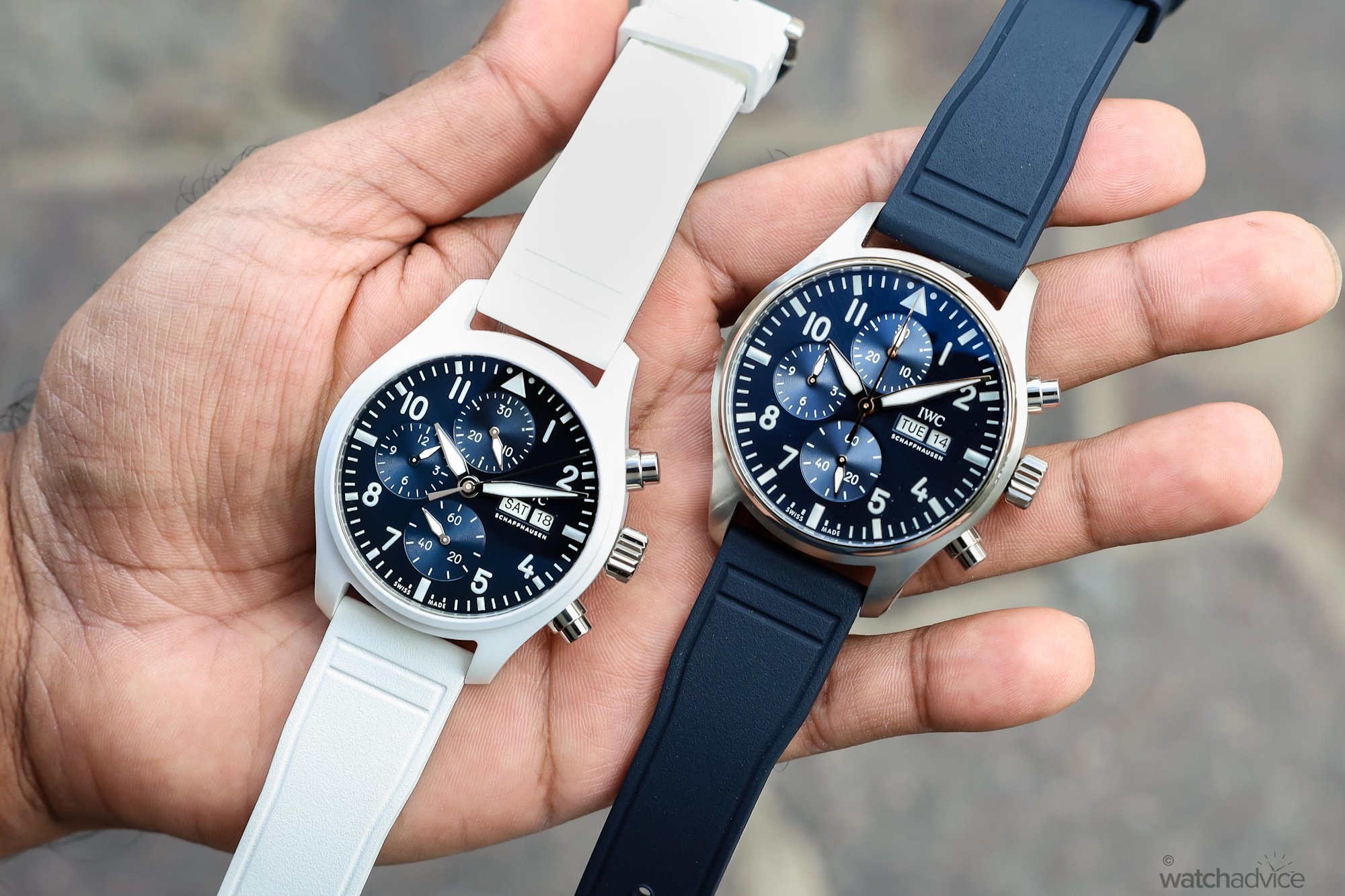
Having both the stainless-steel and white ceramic models for review gave me a broader perspective on the Le Petit Prince Chronograph collection, as each watch presents a very different personality despite sharing the same dial design. The stainless-steel edition feels far more traditional and luxurious, while the white ceramic model is considerably more eye-catching.
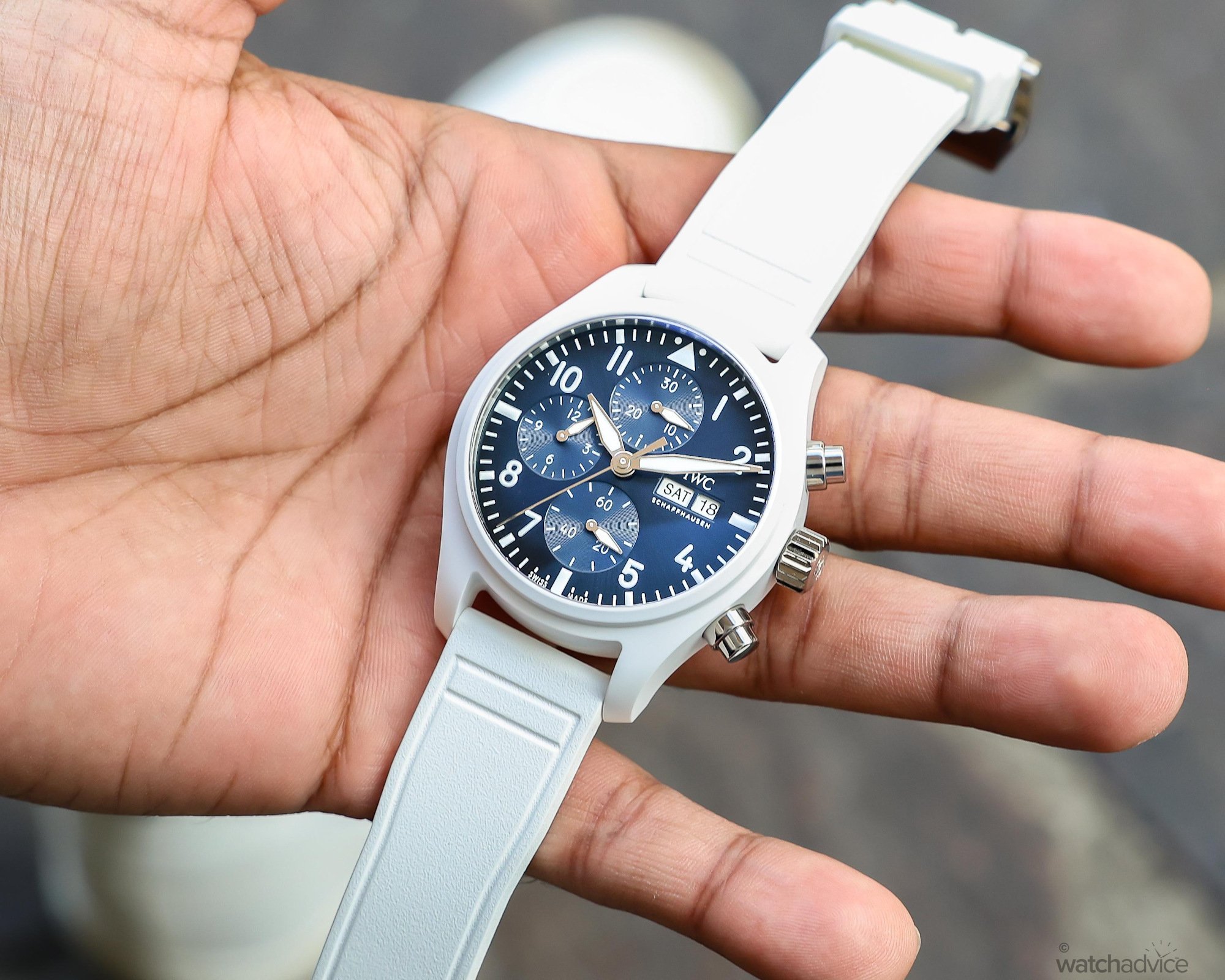
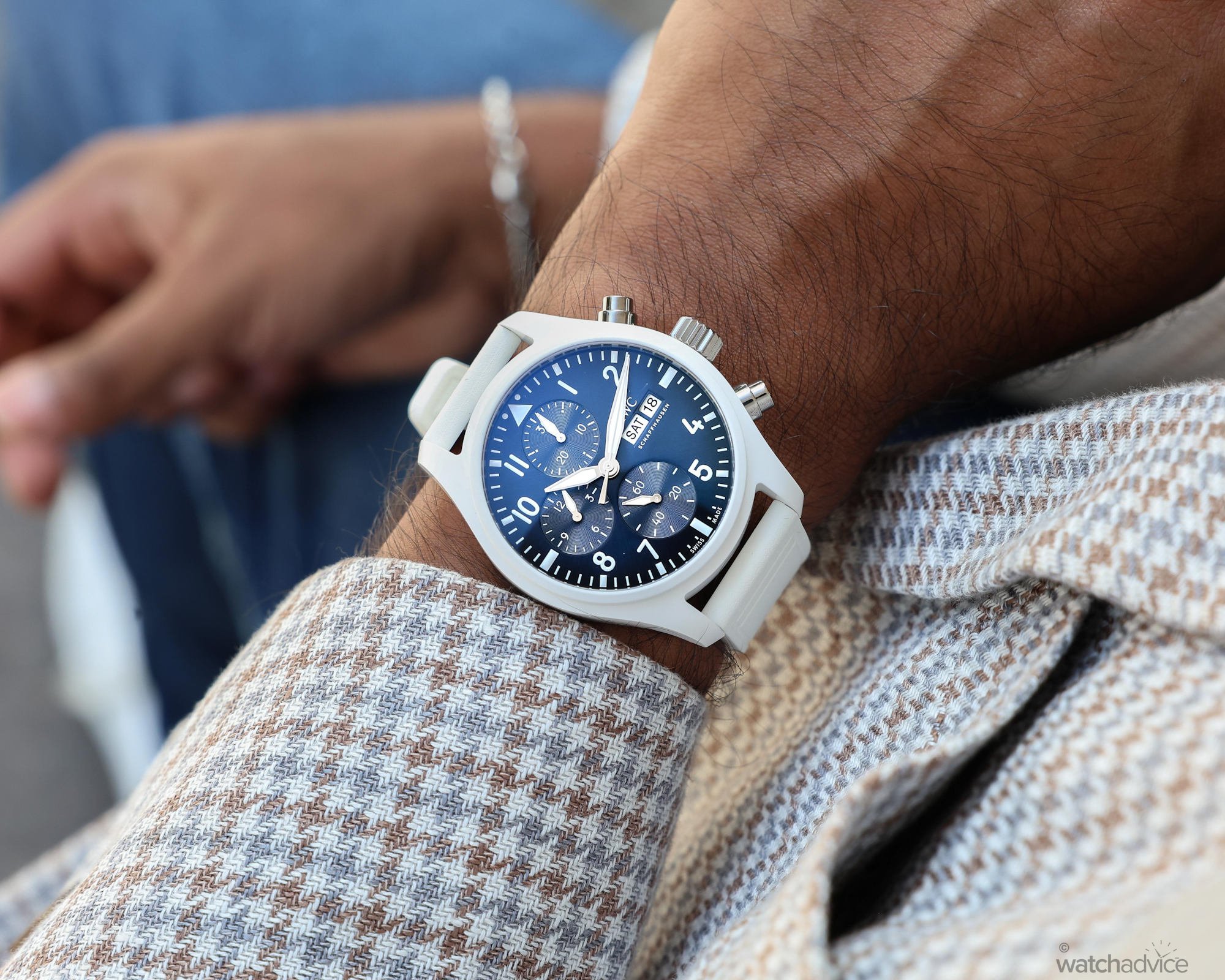
I had previously seen the white ceramic model in photos, and while it was immediately the standout option, experiencing it on the wrist added another dimension altogether. As expected, the ceramic construction makes it surprisingly lightweight and comfortable, while the full white aesthetic gives it an incredibly eye-catching presence. It is the model I naturally gravitated towards, as it beautifully complements the Le Petit Prince design while remaining comfortable to wear.
White Ceramic Expression Or Stainless-Steel Luxury?
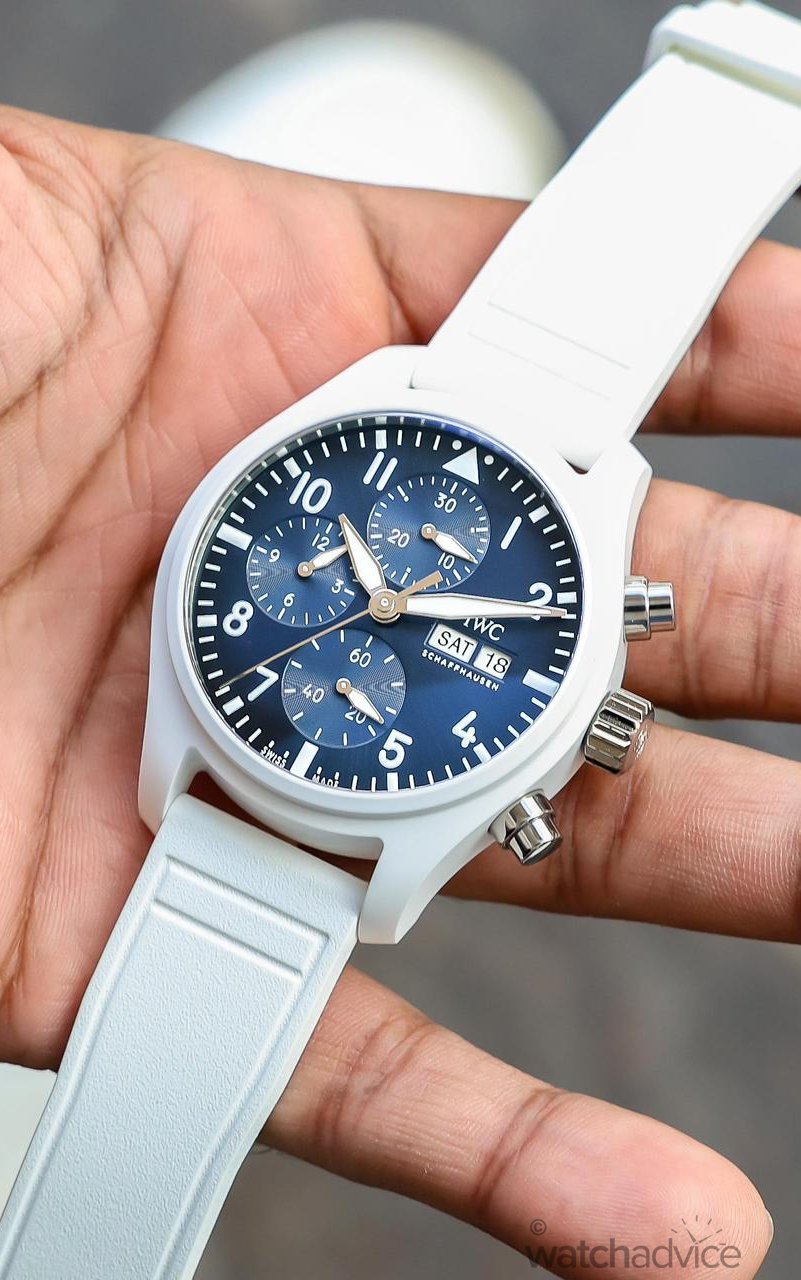
While both models share the same architecture and design, their case proportions vary slightly. The white ceramic, which is my favourite of the two, measures 41.9mm in diameter and 15.5mm thick, giving it a substantial profile despite its lightweight construction. However, it is now considerably smaller and more wearable than the 44.5mm all-white ceramic Lake Tahoe edition.
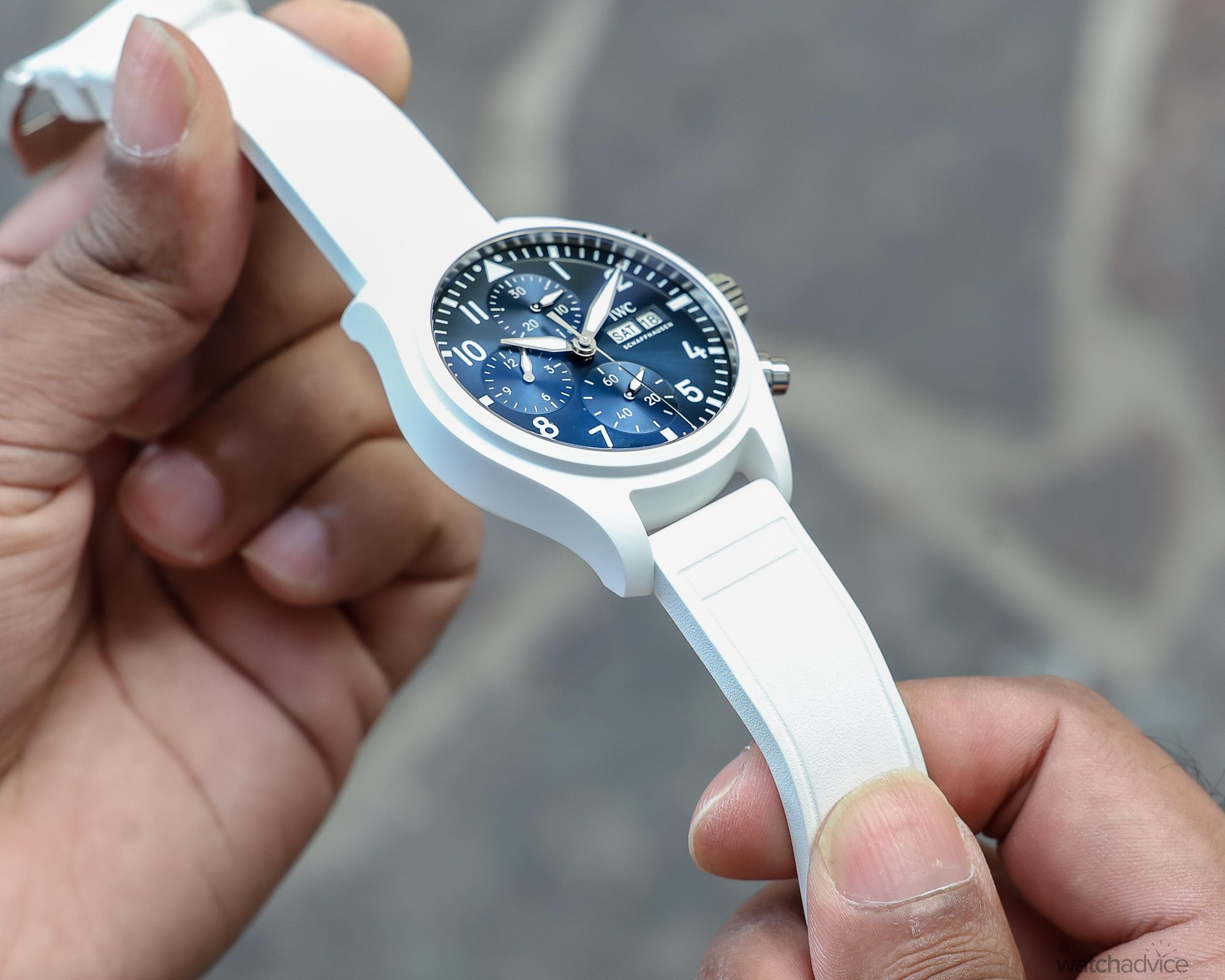
For the white ceramic case, IWC Schaffhausen uses zirconium oxide ceramic, a lightweight and highly scratch-resistant material. It also gives the case a smooth, silky surface, creating a different tactile and visual experience from the stainless-steel edition. However, while zirconium oxide ceramic offers excellent resistance against everyday scratches, its extreme hardness means that a severe impact could potentially chip or fracture the case.
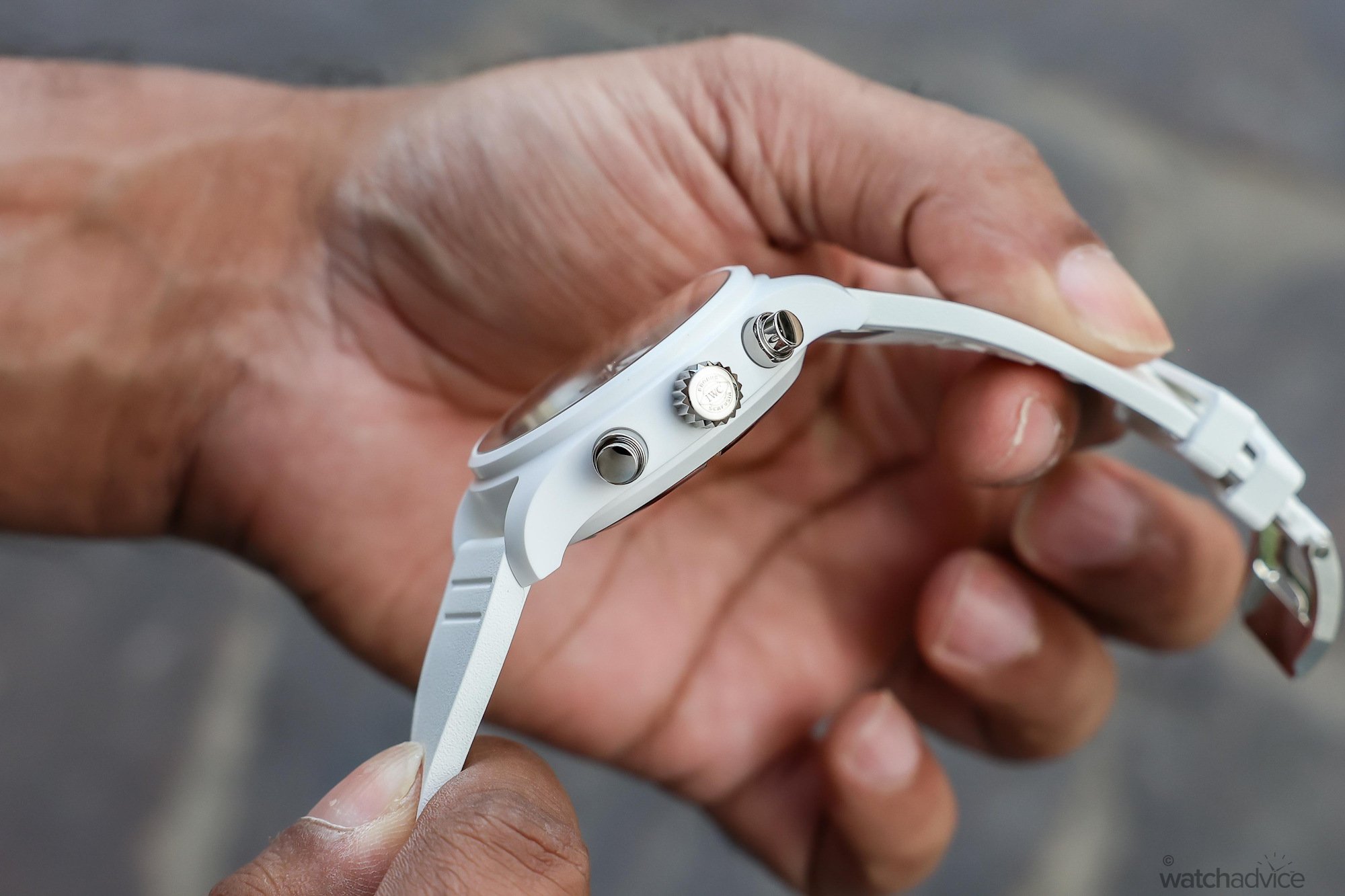
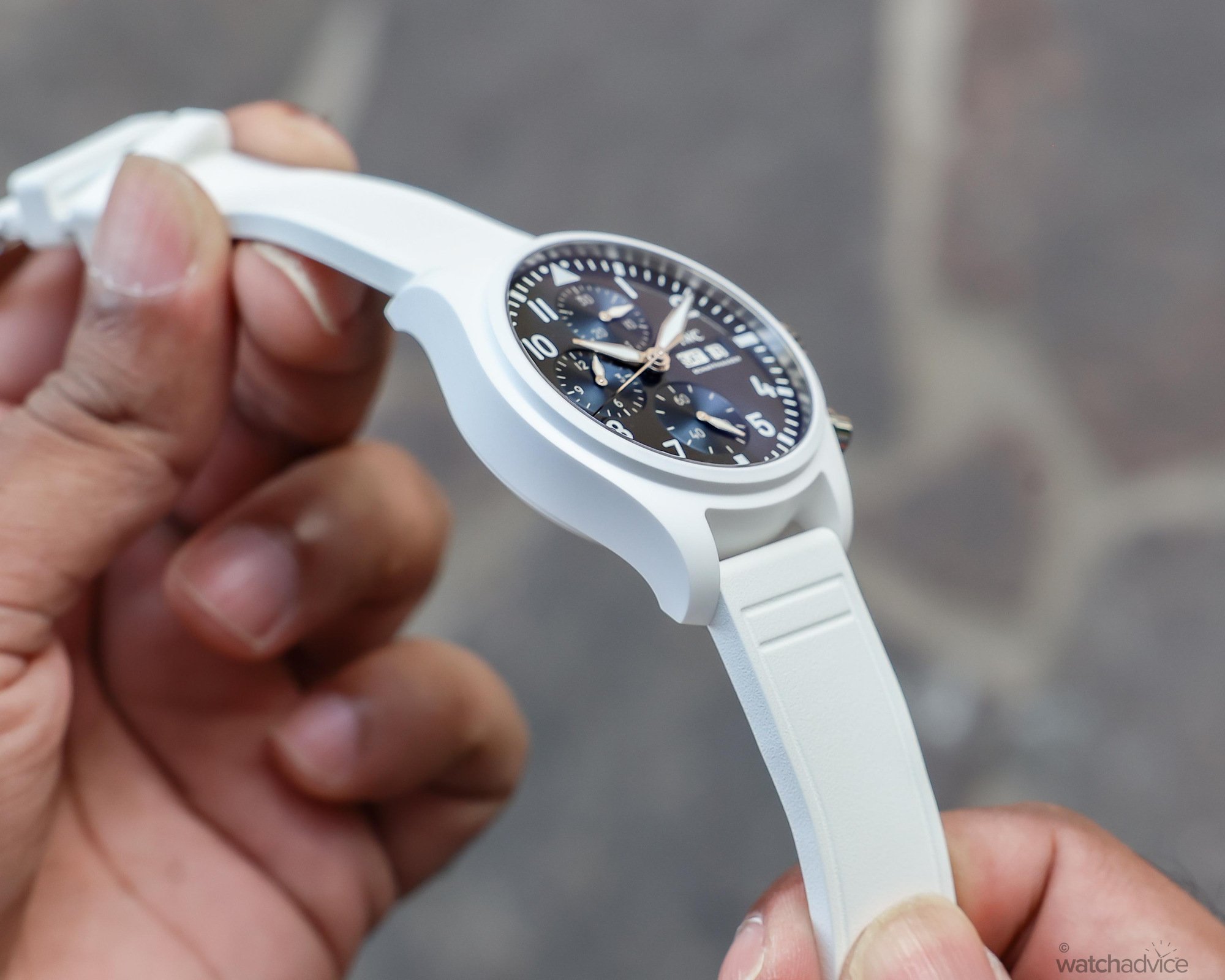
The white ceramic case also has a matte finish, unlike the stainless-steel model, which features alternating finishes for a more luxurious aesthetic. From a distance, the case’s architectural profile can become lost within the all-white ceramic appearance. However, the uniform matte finish gives it a clean and contemporary character while contrasting beautifully against the metallic blue dial.
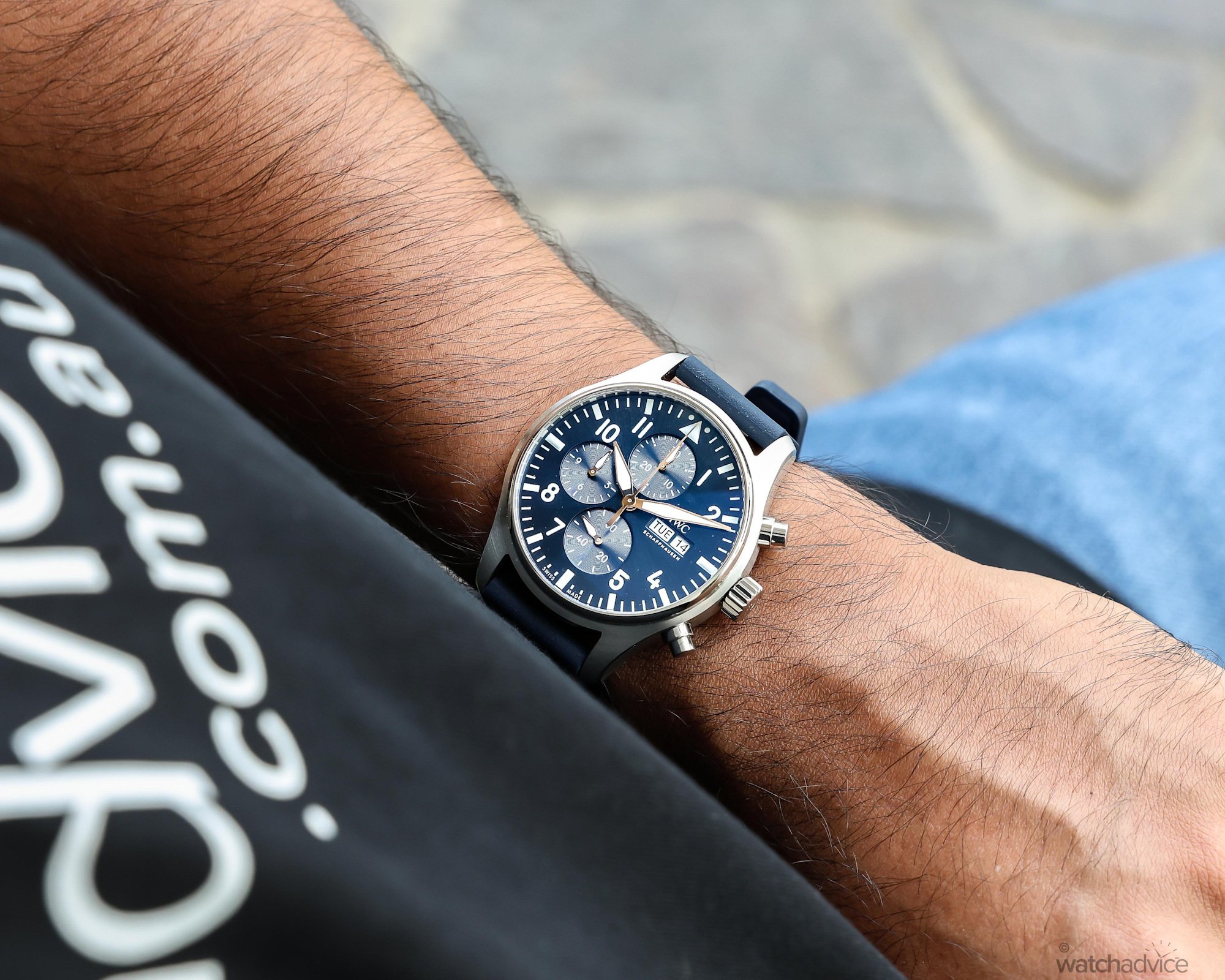
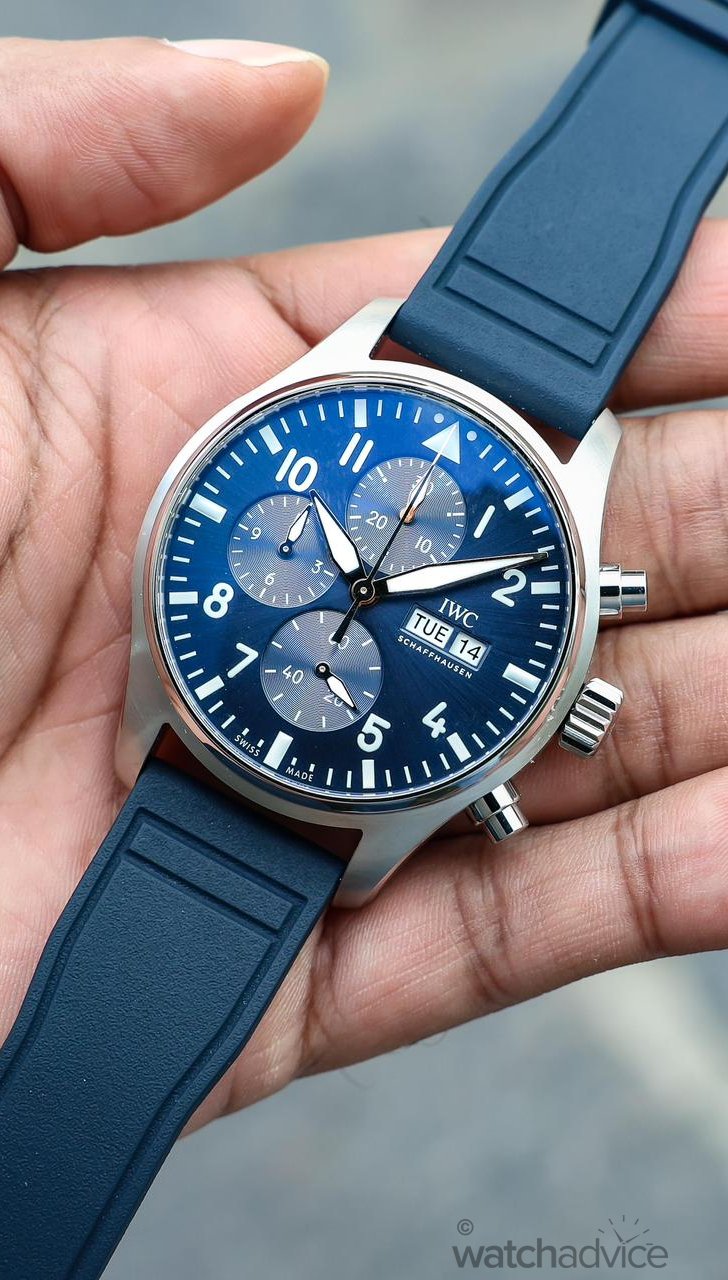
The stainless-steel edition (Ref. IW388120), on the other hand, offers a more traditional appearance, with the attention drawn more directly towards the dial. It measures a slightly more wearable 41mm in diameter and is slimmer at 14.5mm thick. While the differences between the two models may seem small on paper, the steel edition feels noticeably more compact on the wrist.
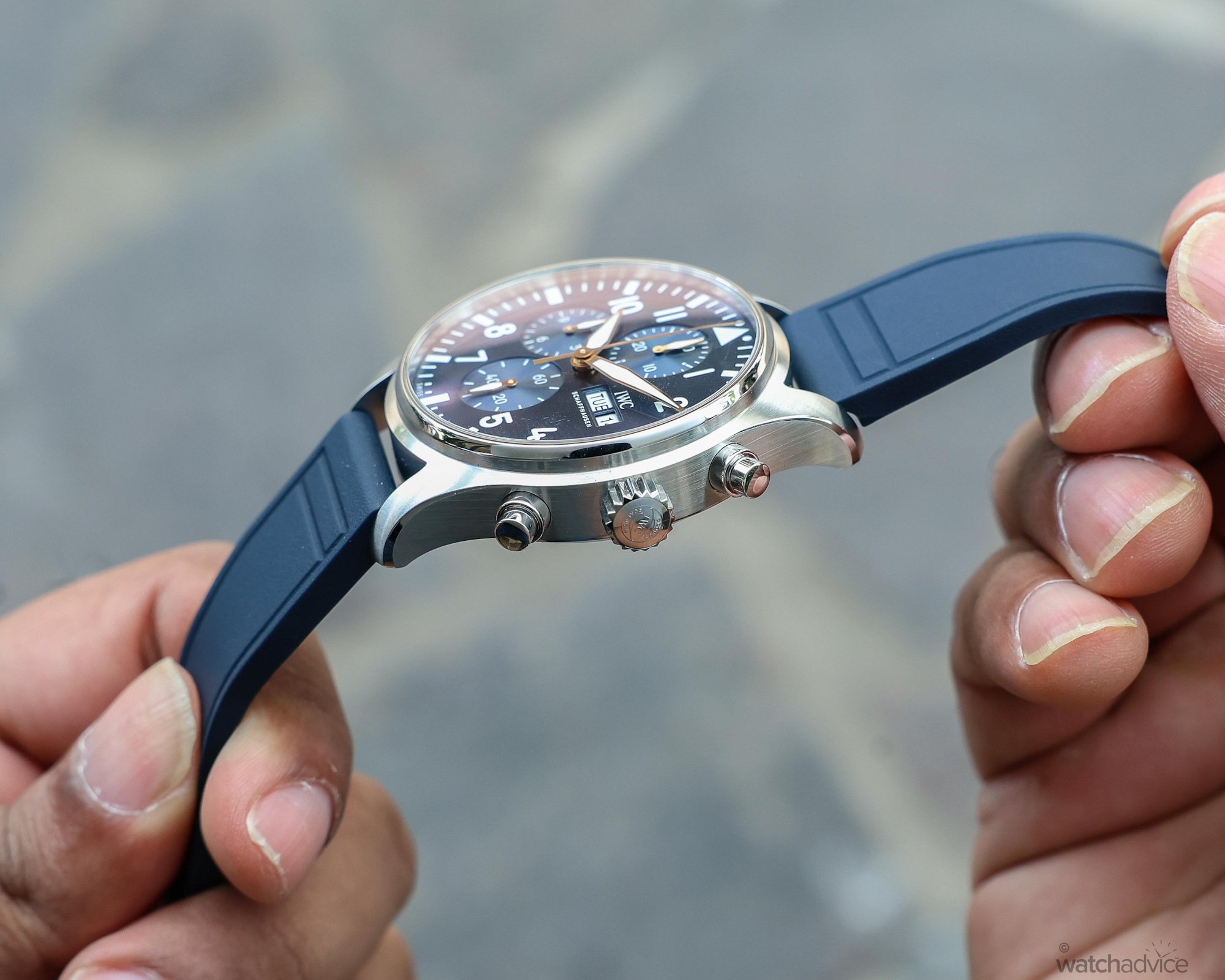
What I also like about the steel option is its varied finishing, which gives it a less sporty and more luxurious character than the ceramic edition. The bezel features both polished and horizontal satin-brushed surfaces, while the case presents alternating brushed finishes. Meanwhile, the faceted edges and chronograph pushers are polished, creating an elegant contrast that gives the watch a more refined and visually dynamic appearance.
Both models also feature different caseback styles, which may help determine which one stands out most. The white ceramic edition has a closed titanium caseback engraved with an image of the Little Prince, creating a direct callback to the inspiration behind this chronograph collection.
The stainless-steel edition, however, takes a more contemporary approach with an open caseback. Its sapphire crystal features a blue tint and the Le Petit Prince logo, while still allowing the mechanical movement inside to be seen, offering a view into the heart of the watch.
Le Petit Prince Blue Takes Centre Stage
The common link between both models is the beautiful metallic deep-blue Le Petit Prince dial. Its sunray finish adds to the dial’s allure, giving the collection a more refined and expressive personality that stands apart from the Pilot’s Watch Chronograph’s traditional instrument-like character.
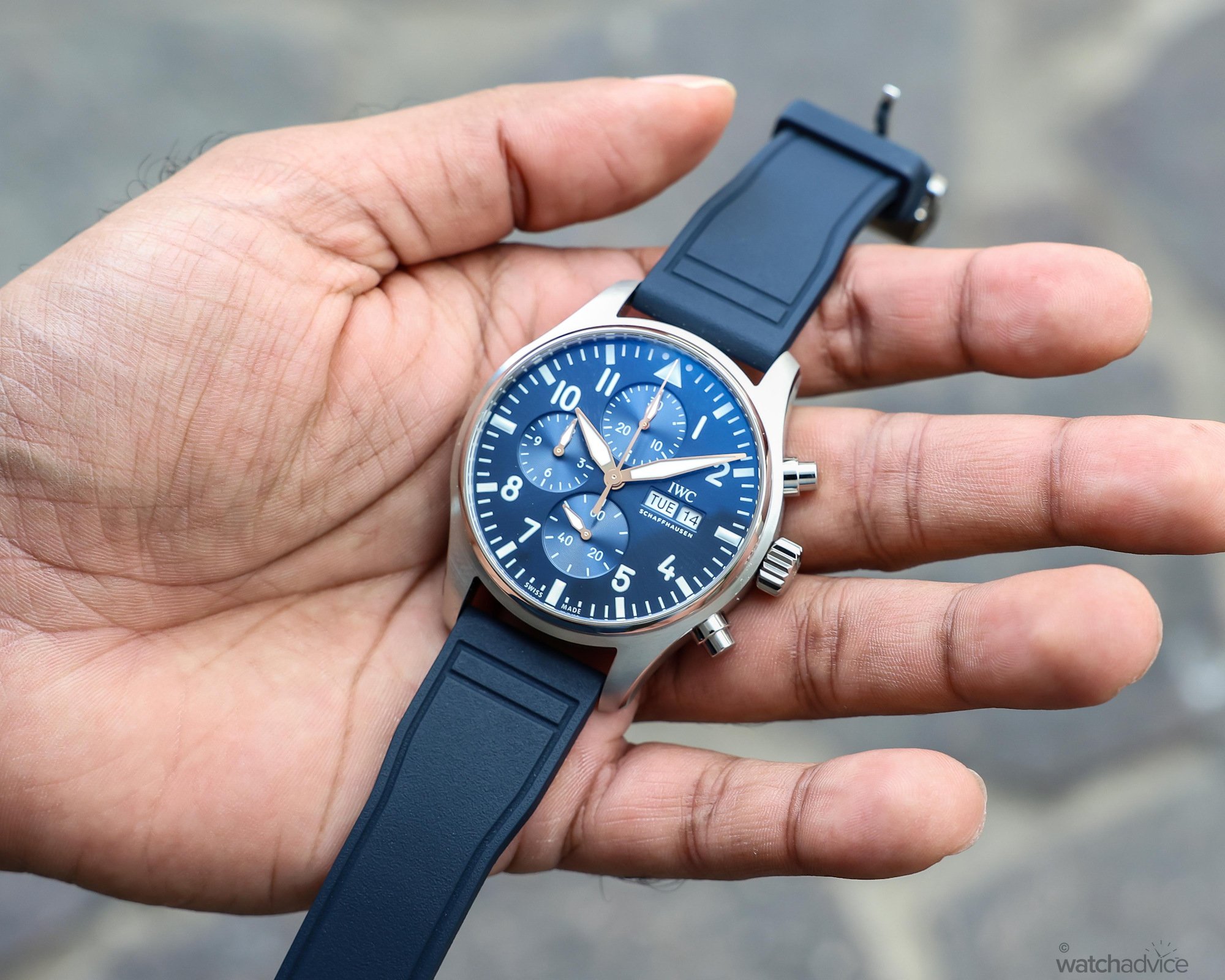
In low or artificial light, the dial appears closer to dark navy, with the sunray-brushed finish taking on a more subdued appearance. However, under natural light or direct sunlight, the dial really comes to life. The metallic finish becomes far more prominent, while the radial texture stands out beautifully, showcasing why IWC Schaffhausen’s Le Petit Prince editions are so easily recognised.
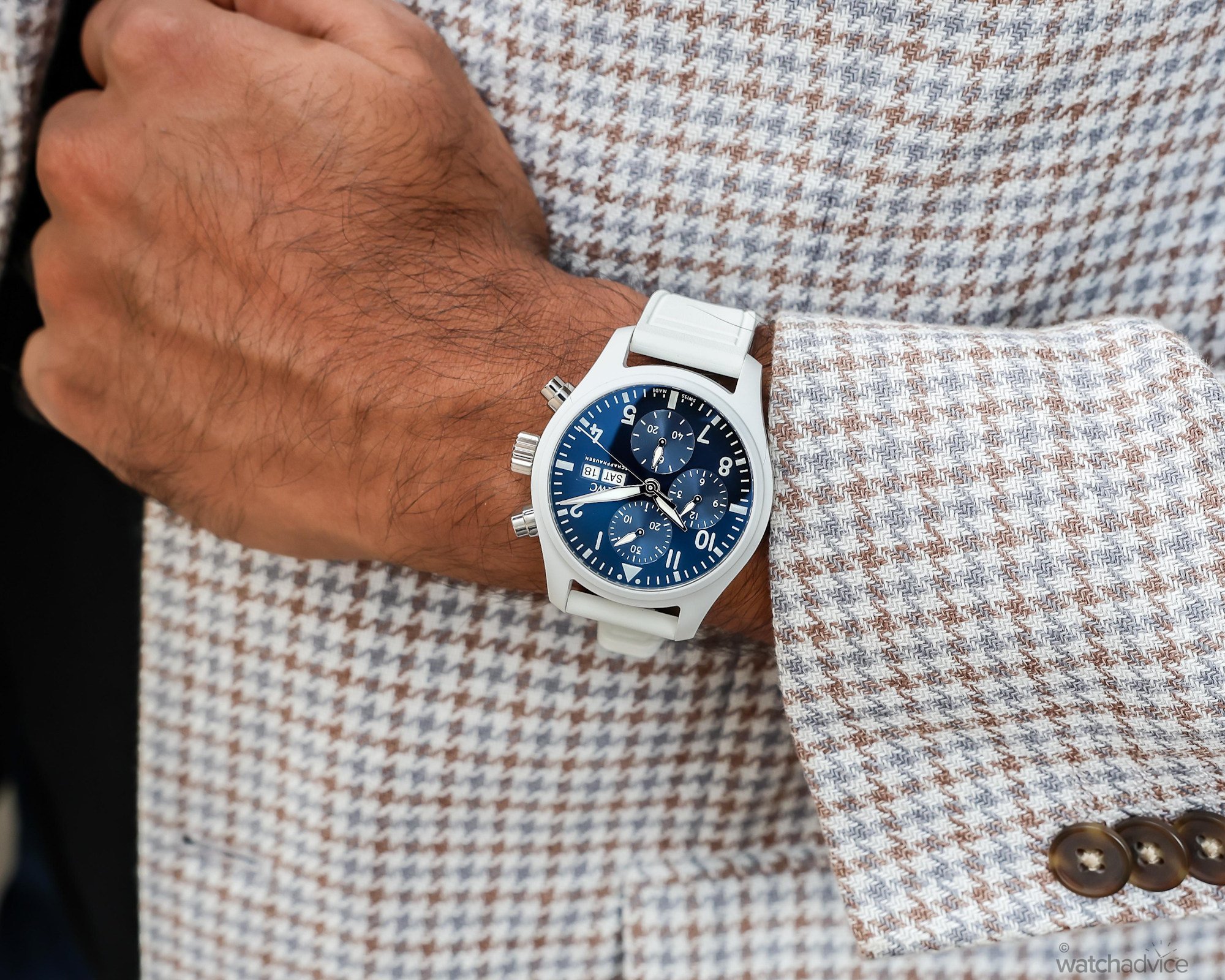
As mentioned earlier, my preferred model is the white ceramic edition. While the stainless-steel option takes a more traditional route, with its combination of polished and brushed surfaces complementing the dial’s sunray finish, it is the stark blue and white contrast of the ceramic model that makes it so eye-catching. This colour combination gives the watch a contemporary appearance, while the sapphire crystal’s anti-reflective treatment can add another slight blue tinge at certain angles.
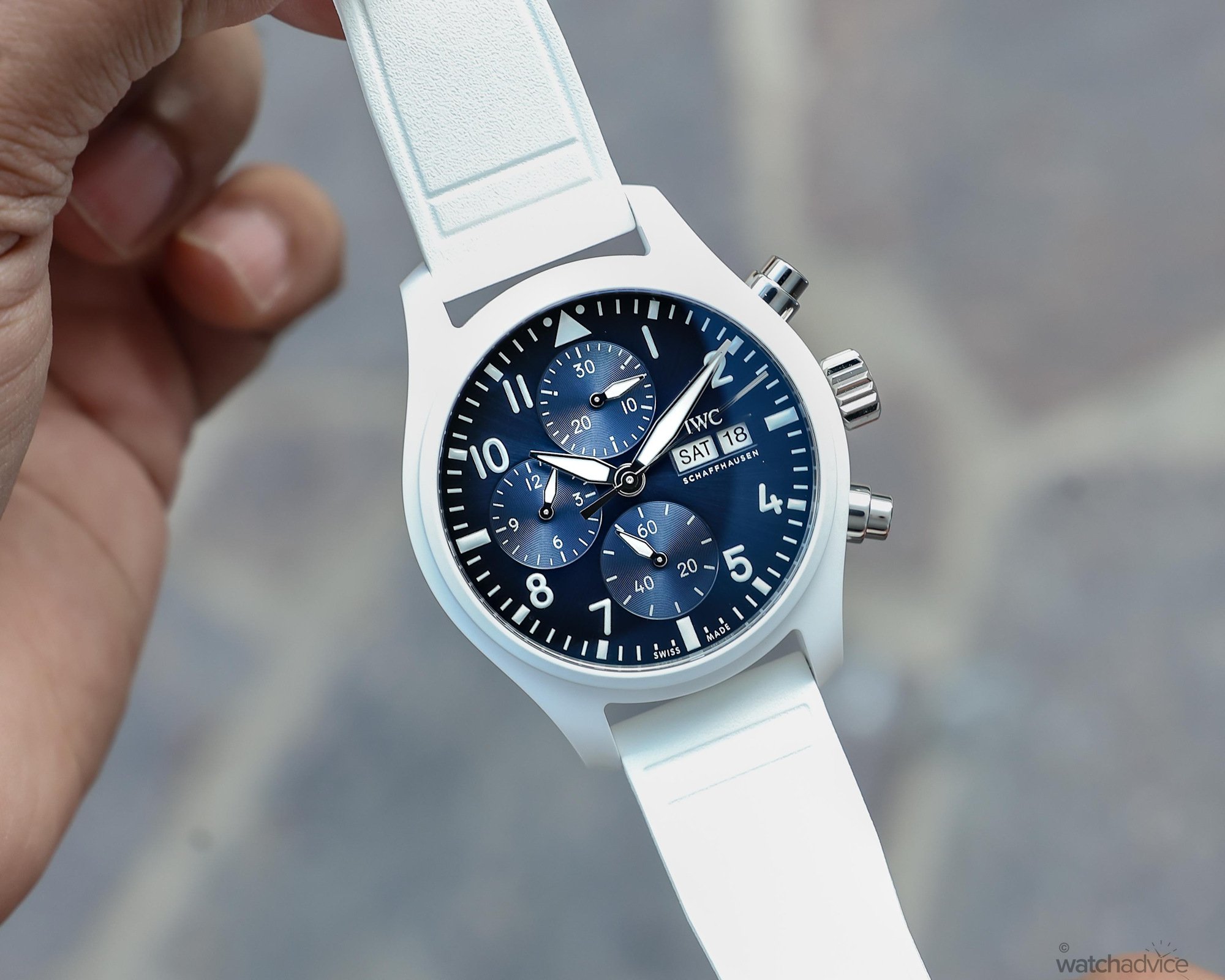
Both models feature IWC’s characteristic chronograph layout, driven by movements from the Calibre 69000 family. At 6 o’clock sits the running seconds counter, with the 12-hour counter at 9 o’clock and the 30-minute counter at 12 o’clock. Balancing these displays, the IWC logo and day-date window are positioned at 3 o’clock, creating a balanced quadrant-style layout.
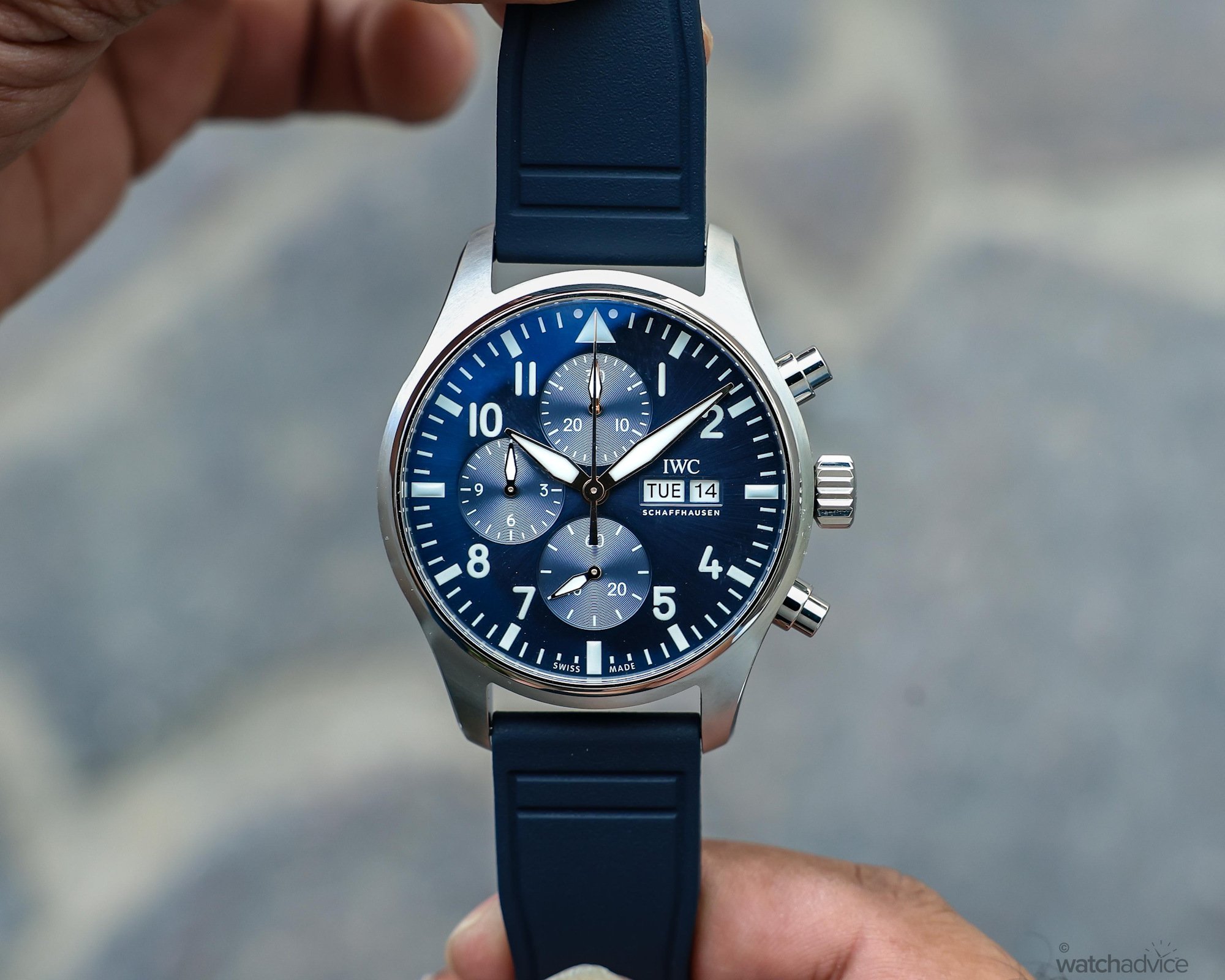
The dial aesthetics also vary slightly between the white ceramic and stainless-steel models. The ceramic edition uses rhodium-plated hands filled with white Super-LumiNova, preserving its blue-and-white colour scheme. The stainless-steel model, however, features gold-plated hands, giving the same blue dial a warmer and more refined appearance while subtly distinguishing it from the ceramic edition.
Two Closely Related In-House Chronograph Movements
While both models share the same overall architecture, the movements inside differ slightly. The white ceramic edition is powered by the IWC-manufactured Calibre 69381, part of the brand’s 69000 family developed to provide a modern, robust, and dependable chronograph platform.
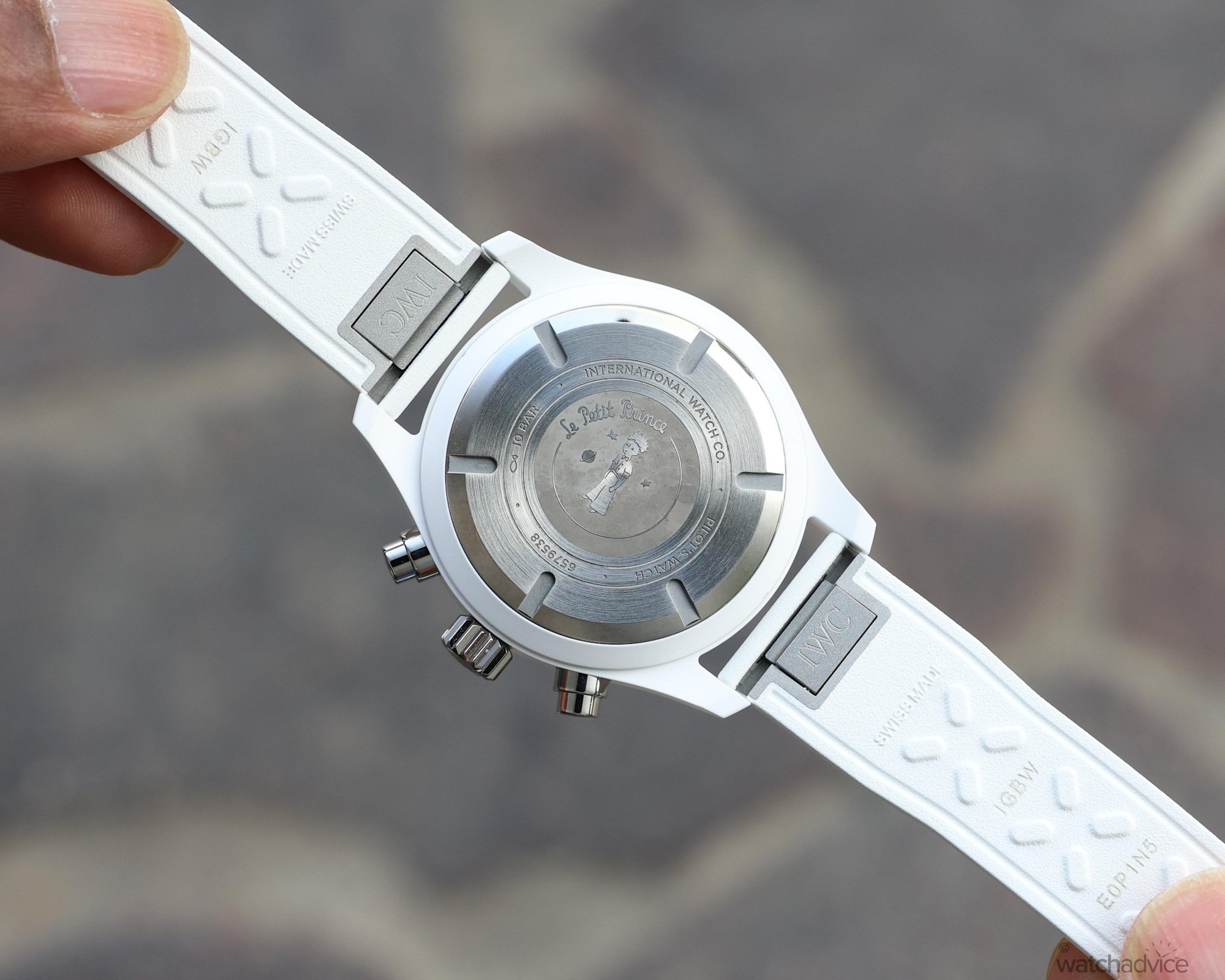
The Calibre 69381 operates at 4Hz (28,800 VpH) while delivering a 46-hour power reserve. While its high frequency supports stable and accurate timekeeping, the power reserve can feel modest by modern standards. However, it is still sufficient to last comfortably through a full day and overnight before requiring additional wrist time or manual winding. As mentioned earlier, the ceramic edition features a closed titanium caseback engraved with the signature Le Petit Prince design.
The stainless-steel Pilot’s Watch Chronograph Le Petit Prince, on the other hand, uses the closely related Calibre 69385. It offers the same performance specifications, with a 4Hz (28,800 VpH) frequency and a 46-hour power reserve. With identical dial-side functionality, there is no meaningful mechanical performance advantage over the Calibre 69381 in everyday use.
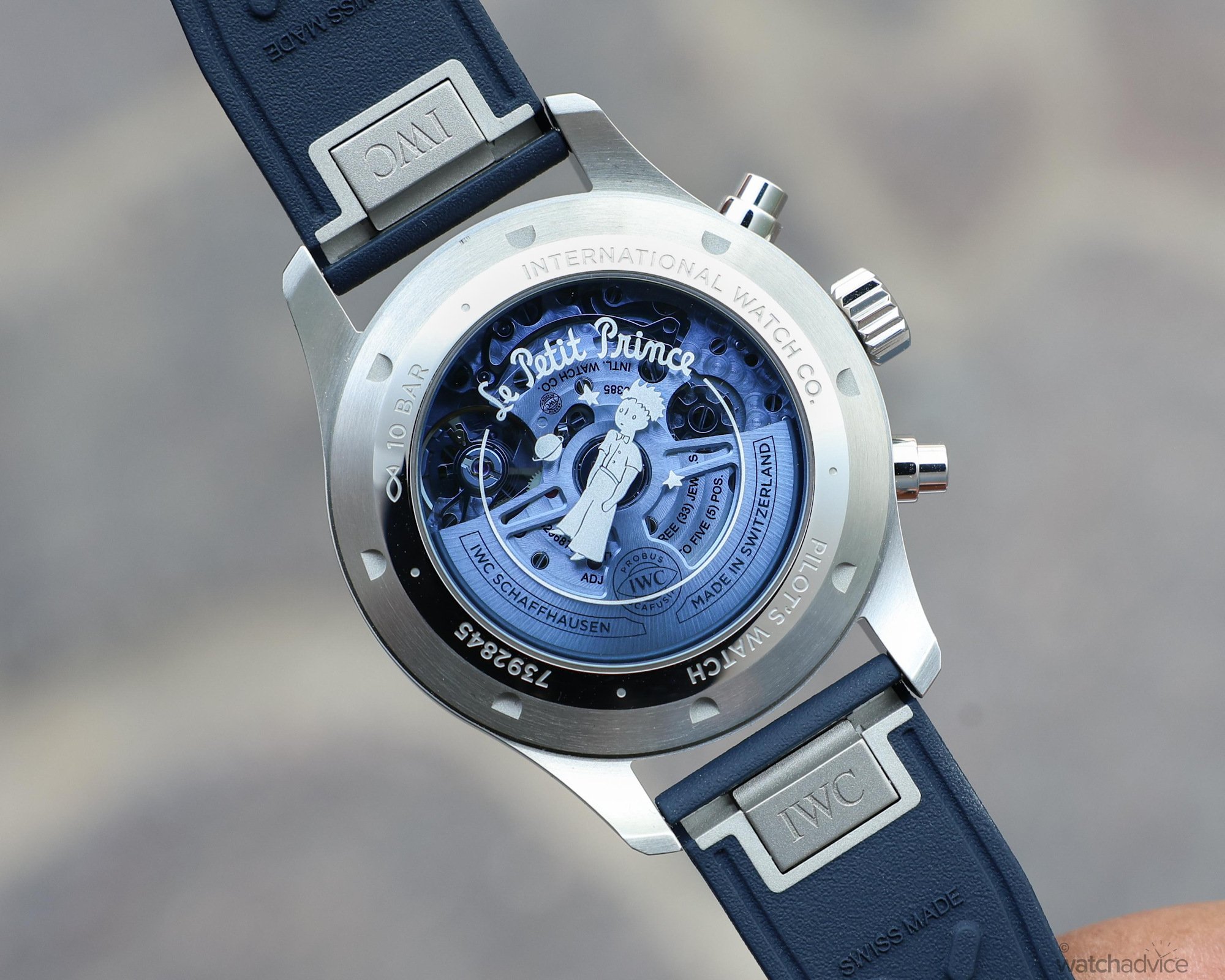
The main difference lies in the fact that the ceramic edition features a soft-iron inner case for magnetic protection, which explains why a titanium closed case back is used. The steel model, however, doesn’t utilise this soft-iron inner case; therefore, it allows it to have an open sapphire-tinted caseback, which allows the Calibre 69385 and Little Prince-decorated oscillating mass to be viewed.
How Do These Pilot’s Watch Chronograph Le Petit Prince Models Wear?
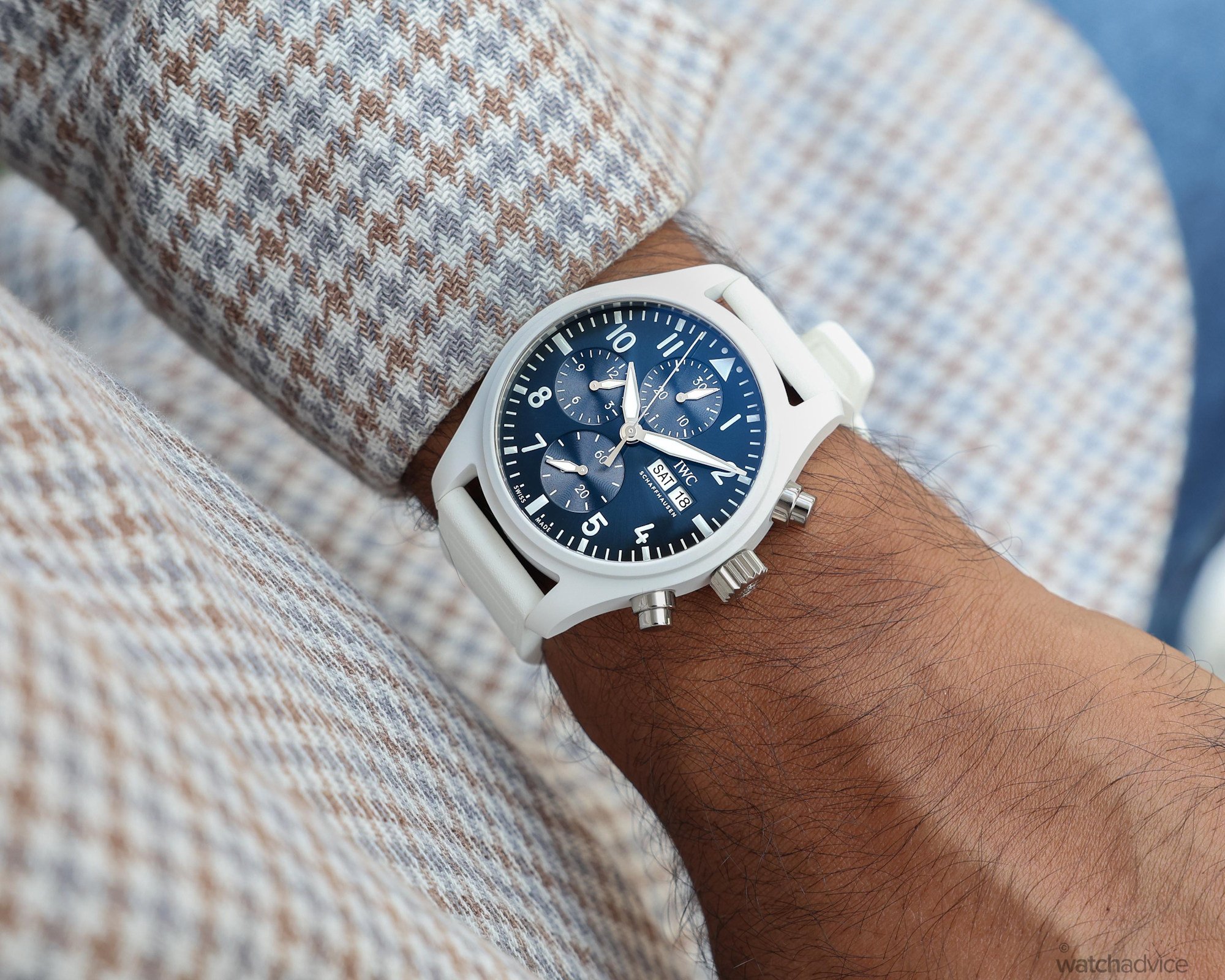
While both models have slightly different proportions, they sit comfortably on my 16cm wrist without the lugs protruding beyond its edges. The white ceramic edition’s 41.9mm case also wears considerably better than the 44.5mm Lake Tahoe. It still has noticeable wrist presence, but its 51.8mm lug-to-lug length sits just within the contours of my wrist.
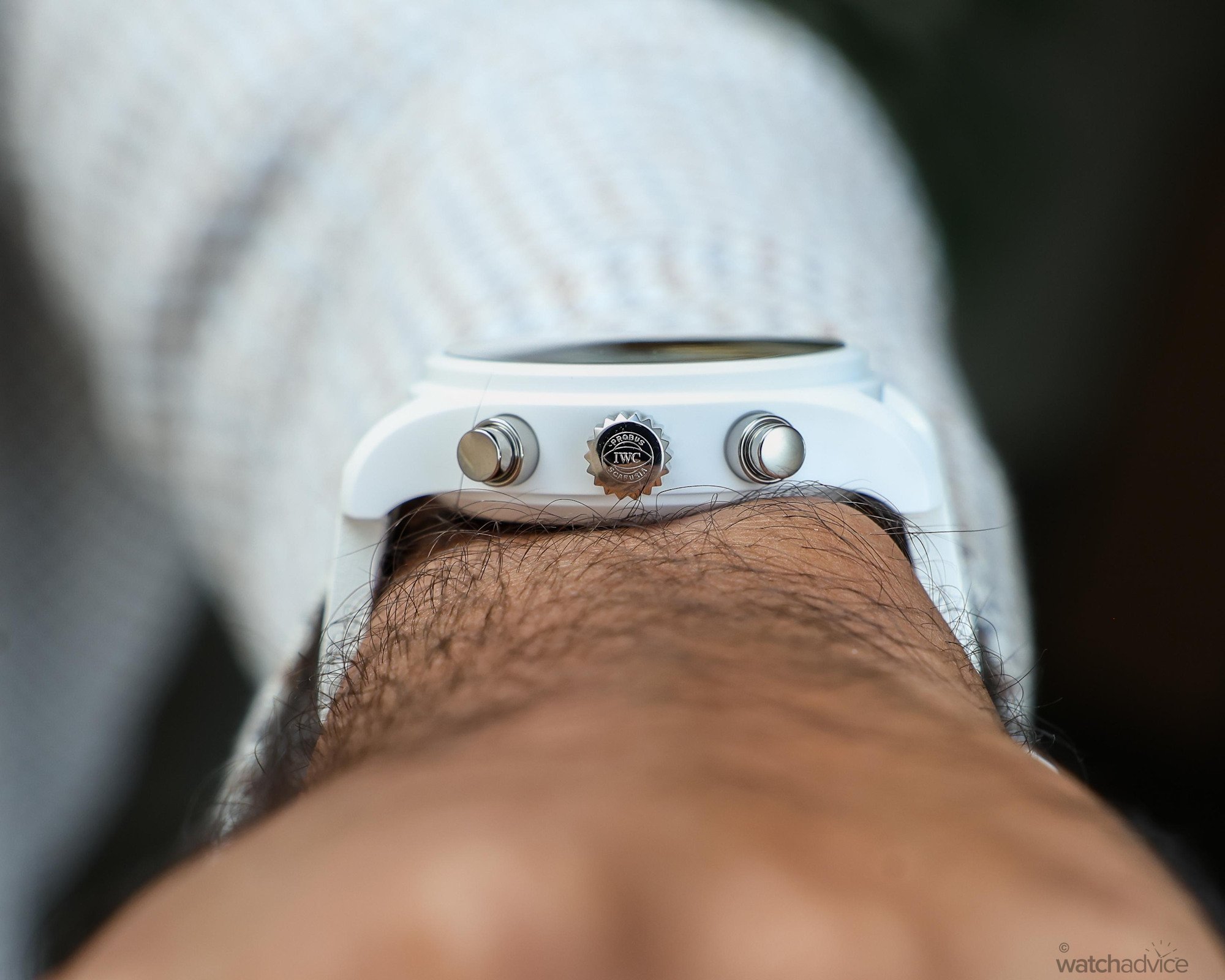
The white ceramic edition’s 15.5mm thickness is certainly a talking point, as it creates a substantial profile on the wrist. There is no disguising its size when viewed from the side, but this does not detract from its wearability for me. I personally prefer complicated watches to have noticeable wrist presence and some bulk when worn.
When you consider that it is made from lightweight ceramic, the watch certainly does not feel heavy on the wrist. It remains comfortable over extended periods of wear, despite its substantial dimensions suggesting otherwise.
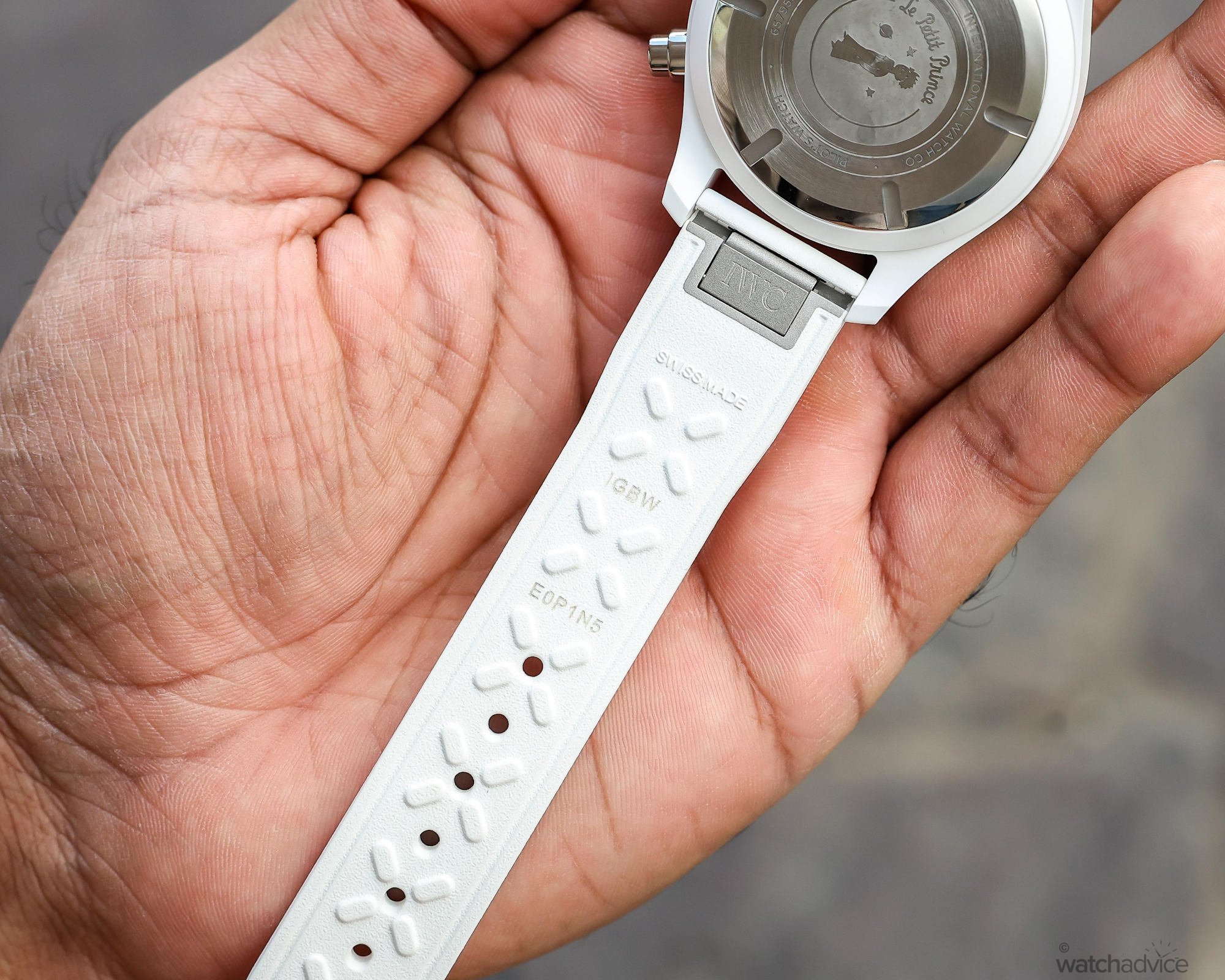
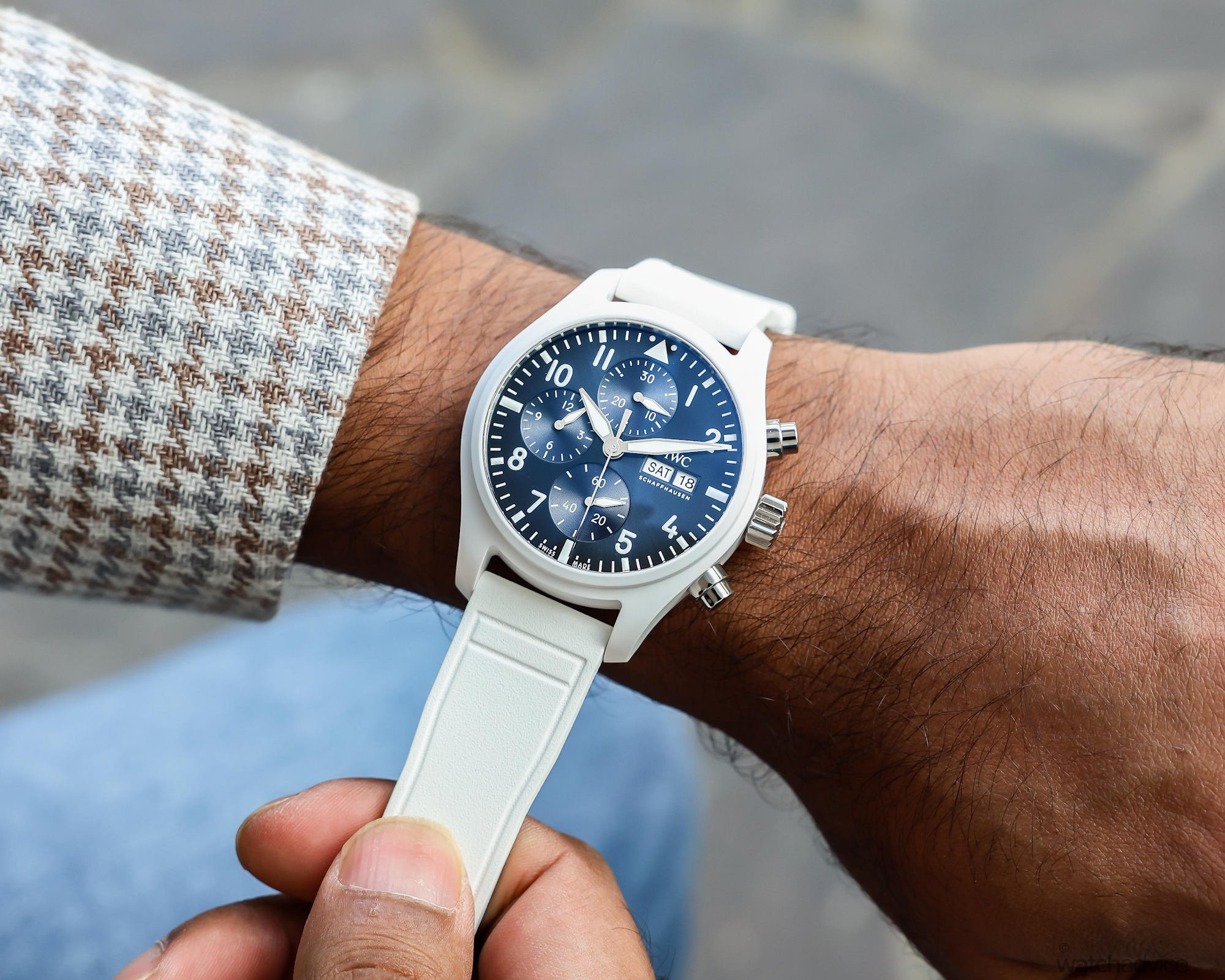
The white rubber strap is another important factor in the watch’s wearability. It contributes to the lightweight feel while wrapping snugly around the wrist, keeping the case secure without adding the bulk of a traditional bracelet. Although the strap complements the white case and dial elements, I think a contrasting colour would have made the ceramic case more prominent rather than sharing attention with the strap.
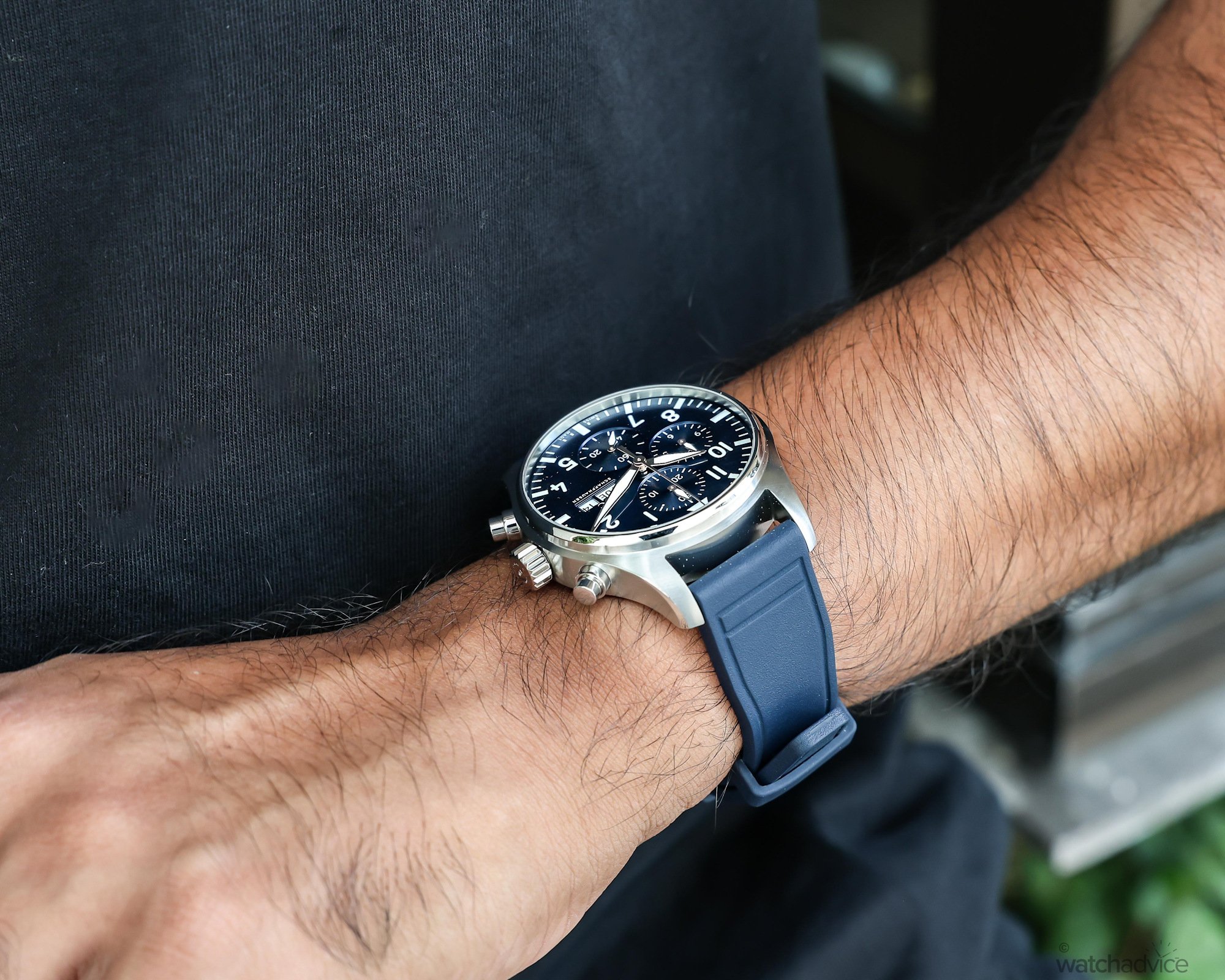
As mentioned earlier, the steel model has a slightly slimmer profile, measuring 41mm wide and 14.5mm thick. This makes it narrower and slimmer than its ceramic counterpart, giving it a more compact presence on my 16cm wrist. While the one-millimetre reduction in thickness may seem minor on paper, it helps the case sit closer to the wrist and appear less bulky when viewed from the side.
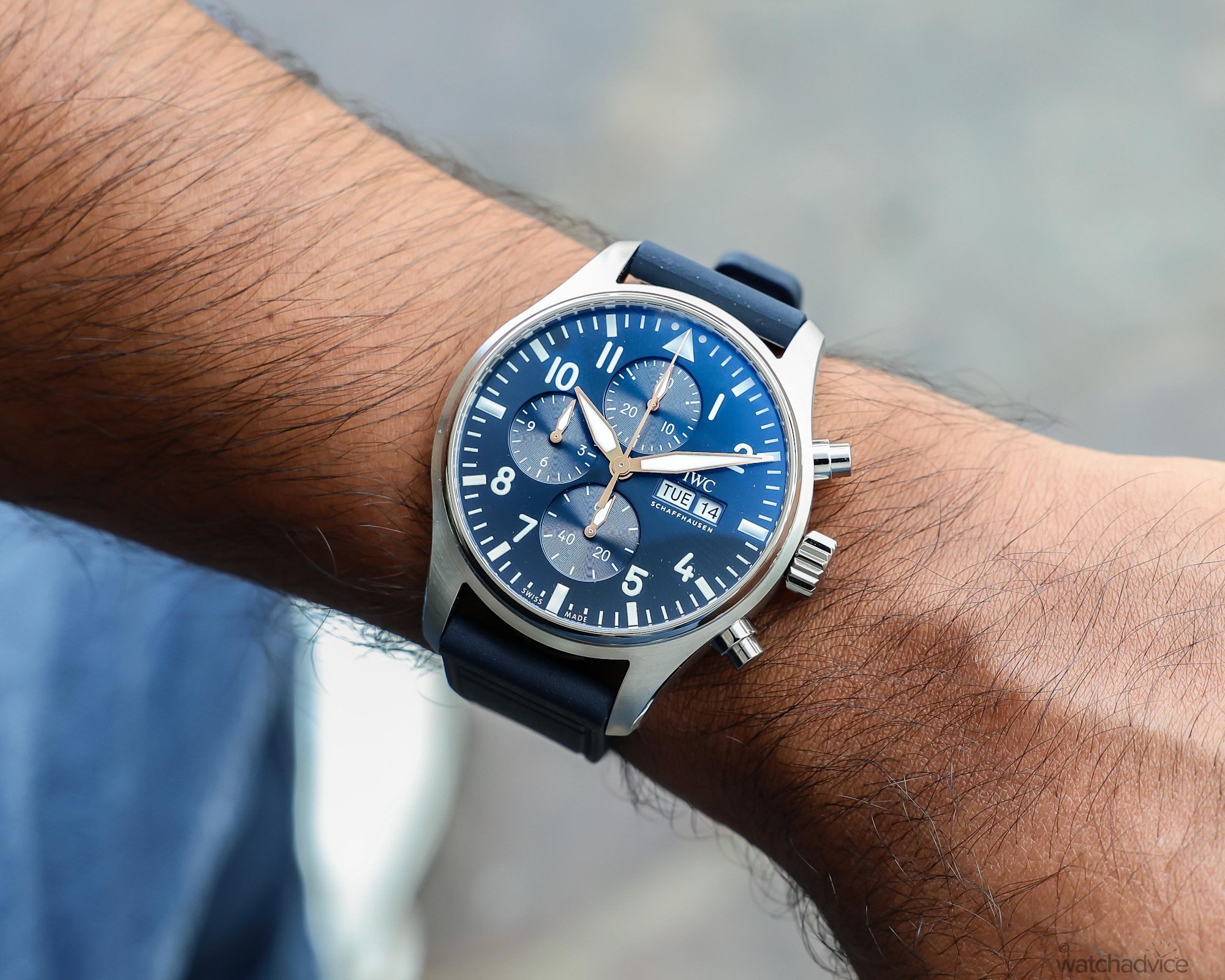
The drawback of the steel model is that it does not share the ceramic edition’s lightness, meaning its weight is more noticeable on the wrist. Combined with its 14.5mm thickness, it still feels quite substantial. However, the rubber strap improves the overall wearability, remaining comfortable over extended periods while matching the dial beautifully.
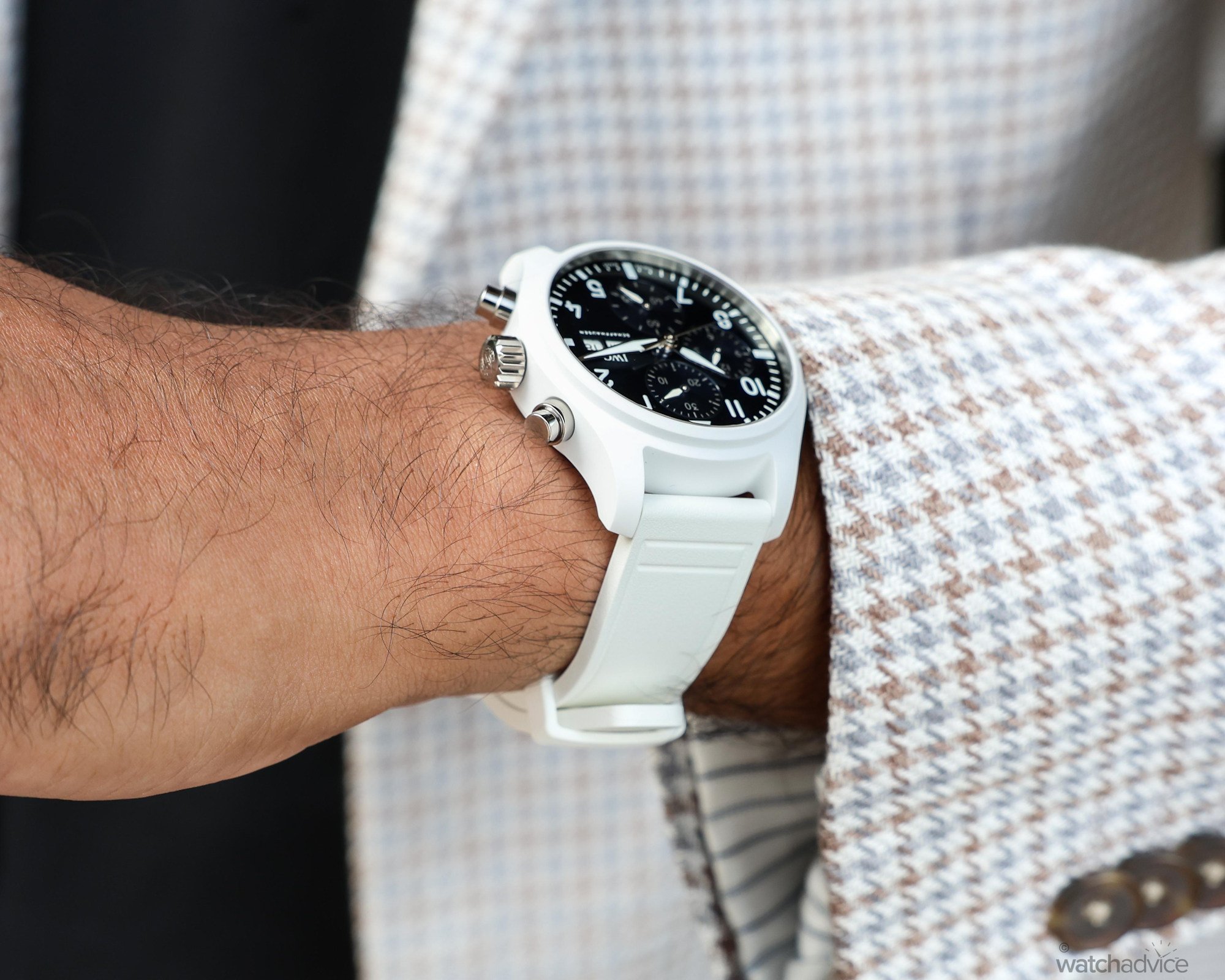
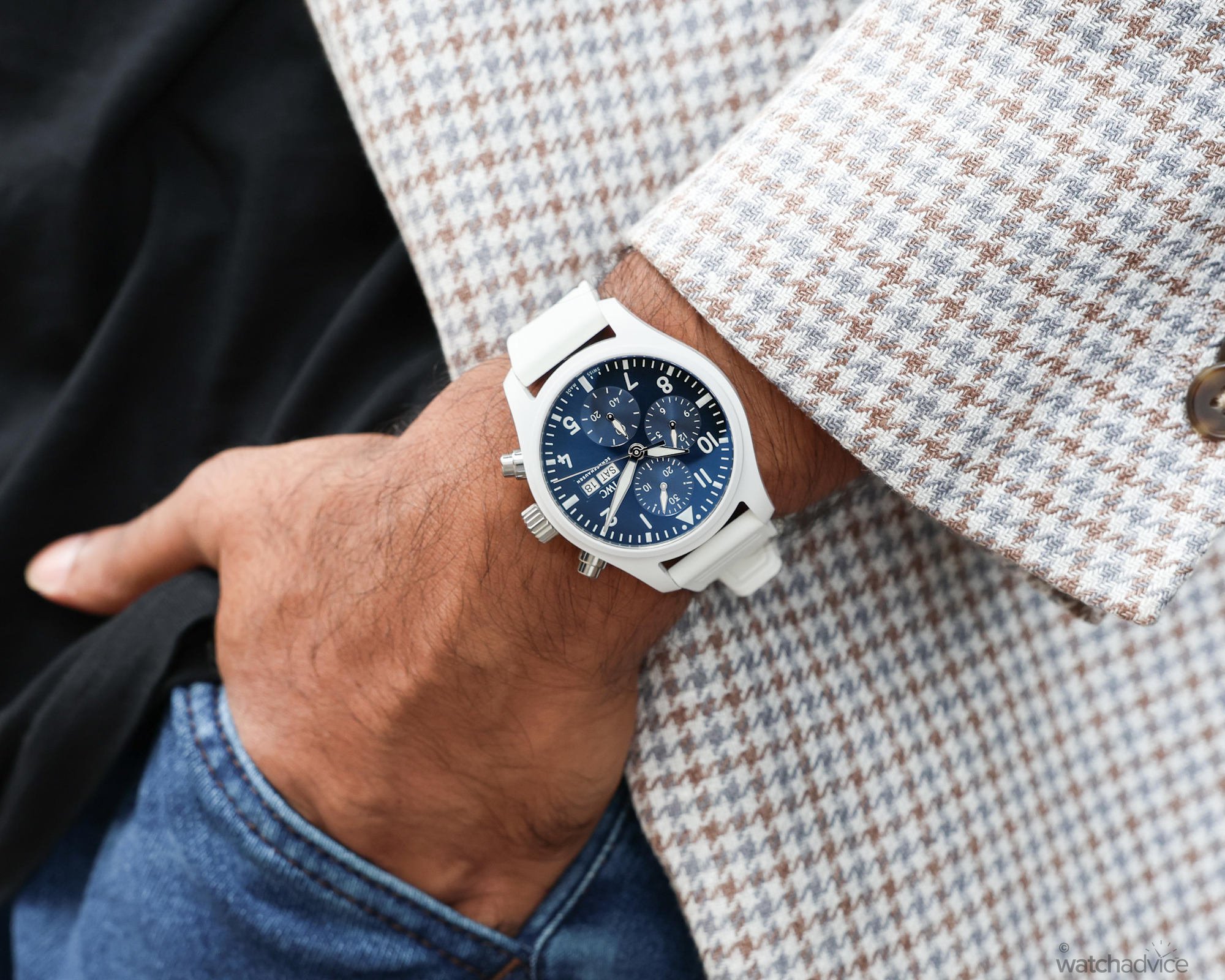
Both models have their advantages and drawbacks when it comes to wearability. The white ceramic edition offers excellent scratch resistance and a lightweight feel while contrasting beautifully with the deep-blue Le Petit Prince dial. However, its full-white aesthetic limits its versatility. I think pairing it with the steel edition’s blue rubber strap would improve its wearability while allowing the case and dial to become the watch’s central highlights.
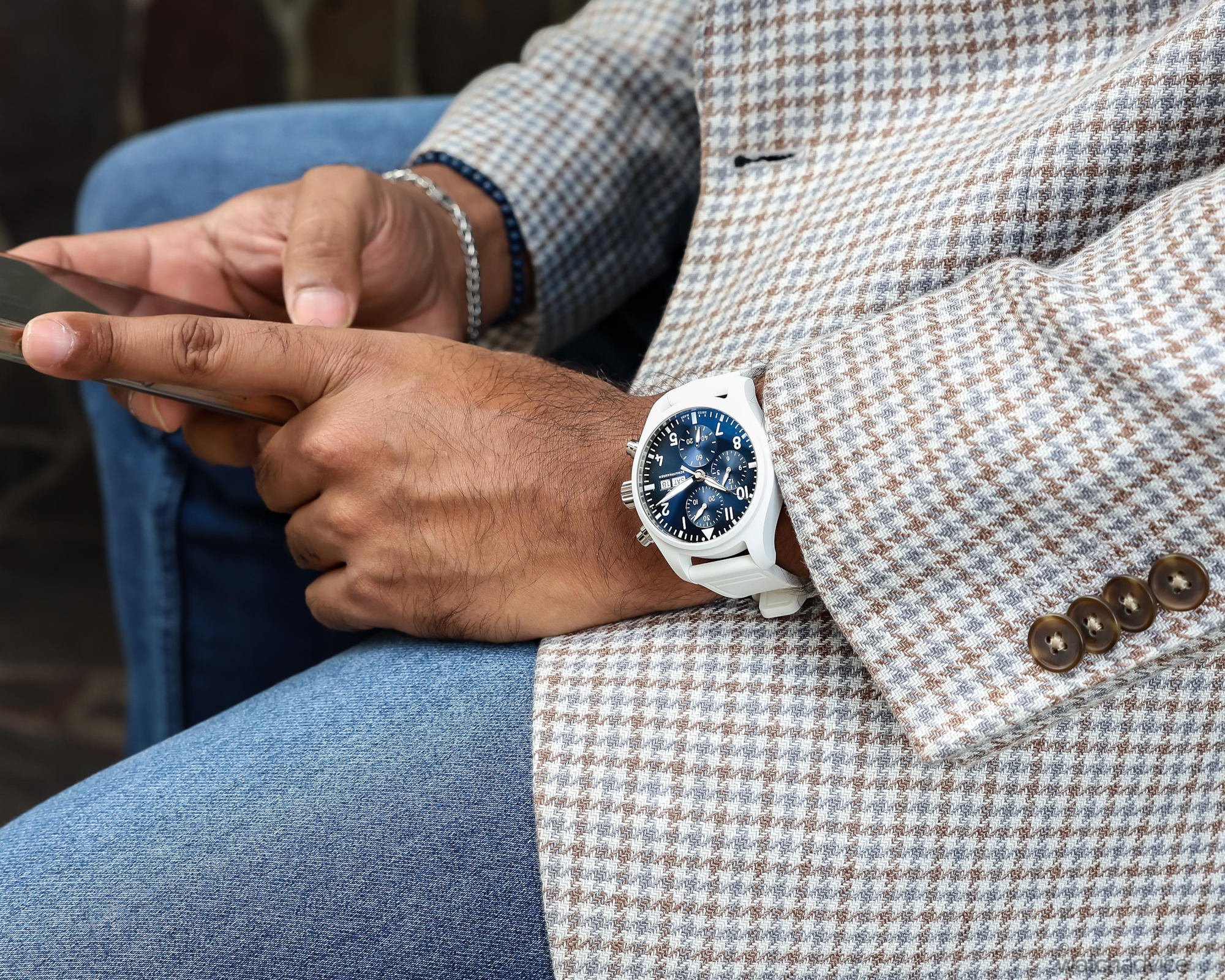
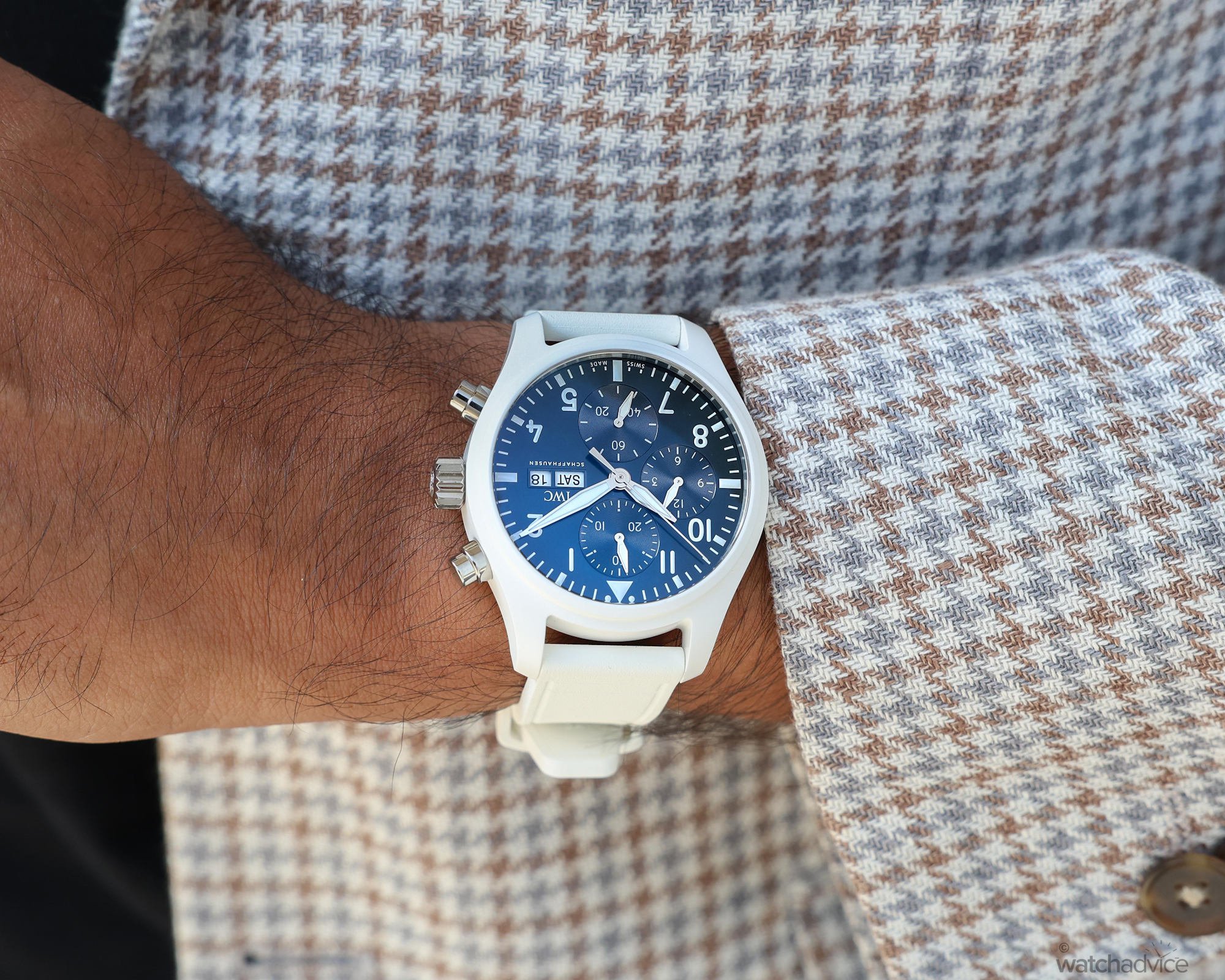
However, the ceramic edition was designed to be bolder and more expressive than the stainless-steel option. The steel model provides a more traditional chronograph appearance, with the Le Petit Prince dial taking centre stage and the golden tones of the hands adding to its luxurious character.
This is what makes the Le Petit Prince Pilot’s Watch Chronograph collection such a compelling offering, as it caters to two different styles and personalities. Those wanting something expressive and contemporary have the white ceramic edition, while those seeking a traditional, understated and versatile chronograph will naturally gravitate towards the stainless-steel model.
Final Thoughts
IWC Schaffhausen has released a range of timepieces celebrating the 20th anniversary of its collaboration with the descendants of Antoine de Saint-Exupéry. However, these Pilot’s Watch Chronograph editions are among the models that best encapsulate the partnership. Saint-Exupéry’s aviation background connects naturally with IWC’s Pilot’s Watch collection, while the chronograph format carries even greater significance, as the collaboration began in 2006 with a Pilot’s Watch Chronograph dedicated to the French author and aviation pioneer.
While the stainless-steel and ceramic editions present two different personalities through the same design, the white ceramic Pilot’s Watch Chronograph successfully brings together the emotional character of Le Petit Prince and IWC’s modern material identity. The matte white ceramic transforms how the deep-blue dial is perceived, creating an eye-catching contrast while making its metallic sunray finish appear even more prominent.
Despite the steel model’s greater practicality and everyday wearability, my personal choice remains the ceramic edition because the matte white case and blue sunray dial produce the most memorable visual combination. By combining the brand’s knowledge of ceramic, and the emotional appeal of Le Petit Prince’s story, this is easily one of the most expressive Pilot’s Watch Chronographs in the current collection.
Reference: IWC Pilot’s Watch Chronograph Le Petite Prince 43mm (IWIC378011) / 41mm (IWIC388120)
Specifications:
| Feature | Specification |
|---|---|
| Dimensions | 43mm x 14.8mm thick, 41mm x 14.5mm thick |
| Case | Stainless steel case with brushed and polished surfaces |
| Crystal | Convex scratch-resistant sapphire crystal, with anti-reflective coating on both sides |
| Dial | Deep blue Le Petit Prince dial, gold-plated hands. Tri-counter chronograph layout with day-date display. |
| Caseback | Steel with sapphire crystal with anti-reflective treatment |
| Movement | 69385 Calibre, operating at 4Hz (28,800 VPH) |
| Functions | Day, date, hours, minutes, constant seconds, 30-minute counter, and 12-hour counter |
| Power Reserve | 46 hours |
| Water Resistance | 100M (10 Bar) |
| Strap | Blue rubber strap and stainless steel pin buckle with EasX-CHANGE® system. |
Australian Retail Price: AUD $12,700 (43mm Ref. IW378011), AUD $12,200 (41mm Ref. IW388120)
Availability: Available through IWC Schaffhausen boutiques and authorised retailers. For more information, please head to IWC.com.au
Reference: IWC Pilot’s Watch Chronograph Le Petite Prince 41mm White Ceramic (IWIC389410)
Specifications:
| Feature | Specification |
|---|---|
| Dimensions | 41.9mm x 15.5mm thick |
| Case | White ceramic case |
| Crystal | Convex scratch-resistant sapphire crystal, with anti-reflective coating on both sides |
| Dial | Deep blue Le Petit Prince dial, rhodium-plated hands. Tri-counter chronograph layout with day-date display. |
| Caseback | White ceramic with sapphire crystal with anti-reflective treatment |
| Movement | 69380 Calibre, operating at 4Hz (28,800 VPH) |
| Functions | Day, date, hours, minutes, constant seconds, 30-minute counter, and 12-hour counter |
| Power Reserve | 46 hours |
| Water Resistance | 100M (10 Bar) |
| Strap | Blue rubber strap and stainless steel pin buckle with EasX-CHANGE® system. |
Australian Retail Price: AUD $19,000
Availability: Available through IWC Schaffhausen boutiques and authorised retailers. For more information, please head to IWC.com.au
Full Image Gallery: