

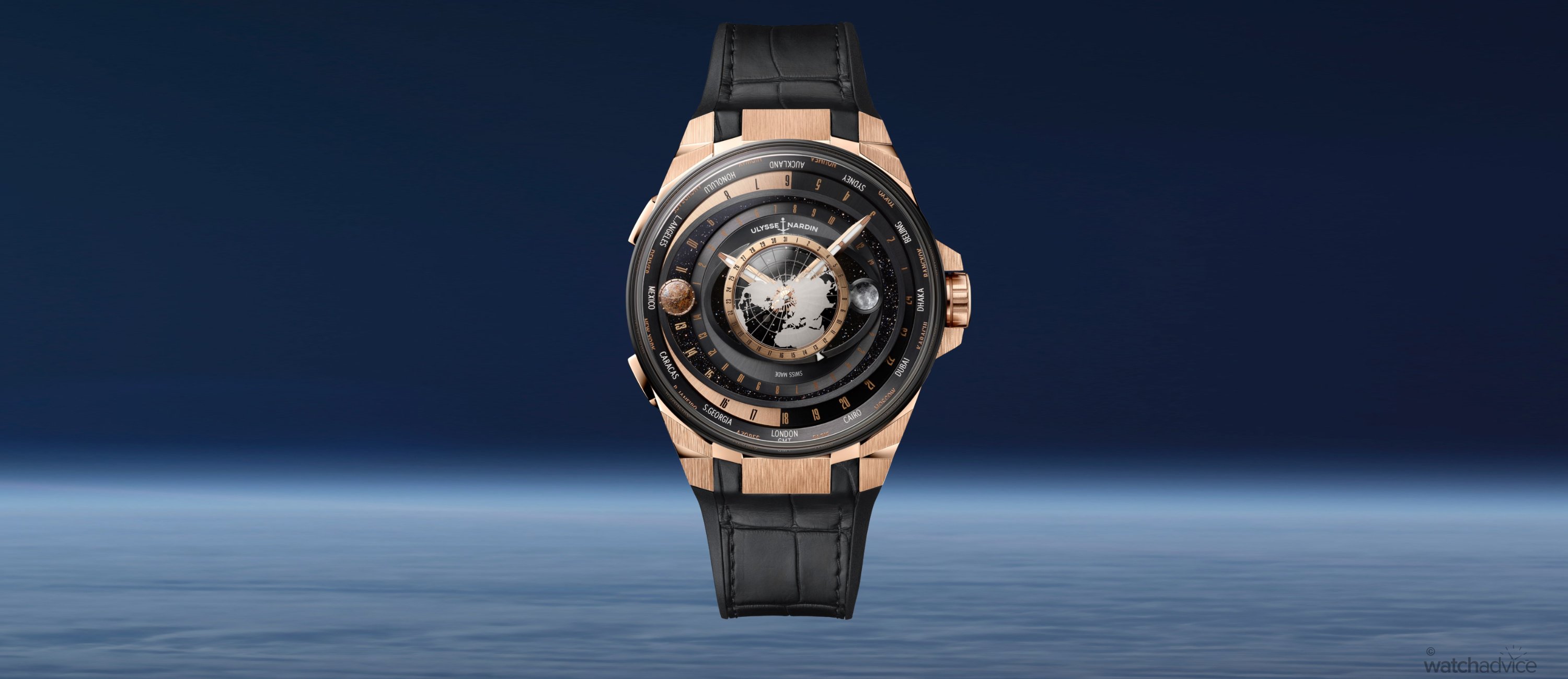
If you ever wanted to know the time and where the sun and moon are in relation to Earth, then the Ulysse Nardin Blast [Moonstruck] is for you!
For a brand that’s built much of its modern identity on doing things differently, or as Ulysse Nardin CEO, Patrick Pruniaux puts it, boldly and audaciously, it probably shouldn’t come as a surprise that Ulysse Nardin has once again ventured into territory that isn’t all that common. While the majority of complicated watches focus on perpetual calendars, tourbillons or chiming mechanisms, Ulysse Nardin continues to pursue astronomical watchmaking, an area that has been part of the manufacture’s DNA for decades. And for a brand that built its reputation with navigation and chronometry, that isn’t all that surprising.
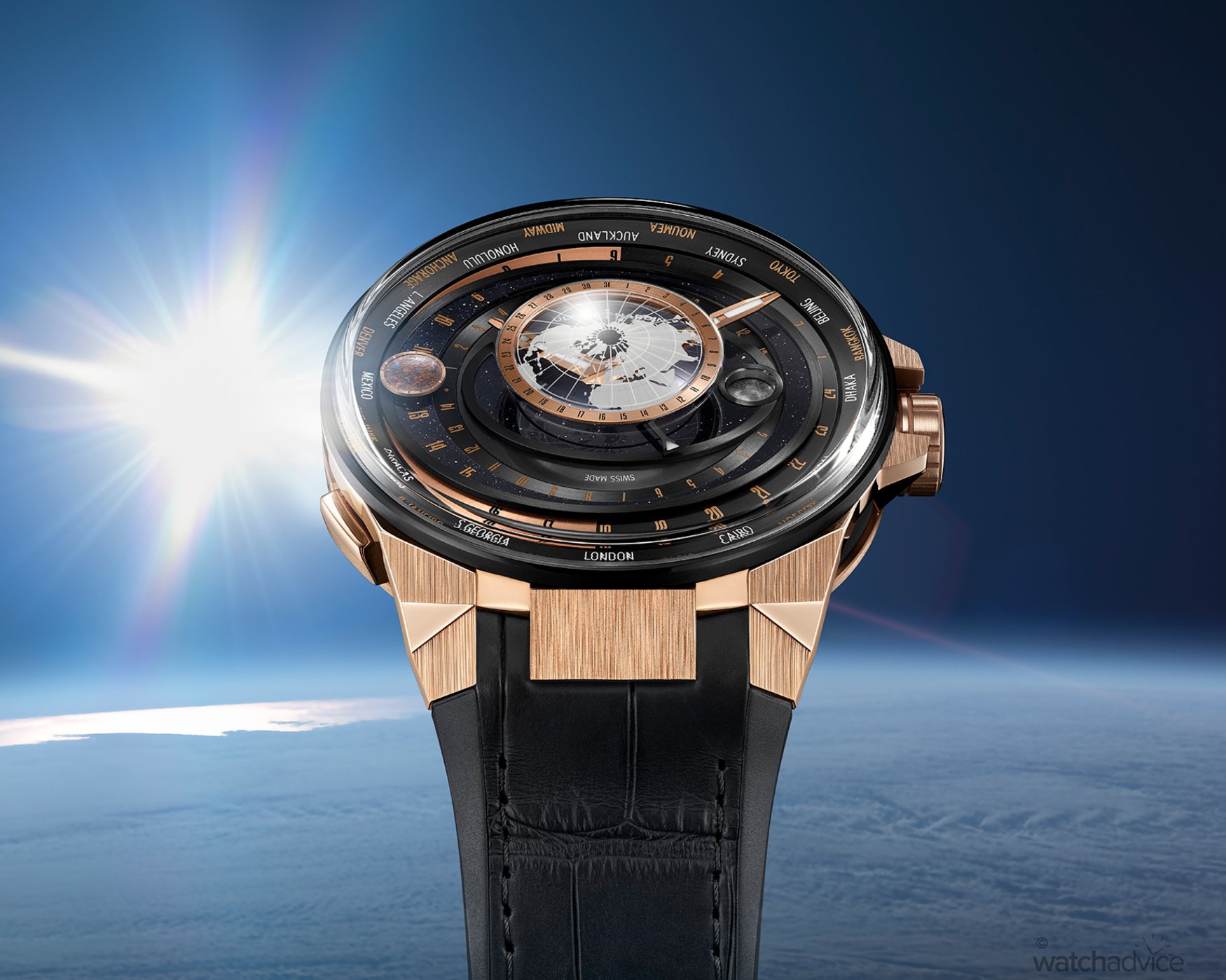
The new Blast Moonstruck is the latest addition for the brand, and one that talks to its roots in navigation and astronomical complications. Presented in a striking 45mm rose gold and black DLC titanium case, the watch is much more than your typical moonphase watch. Much more in fact!
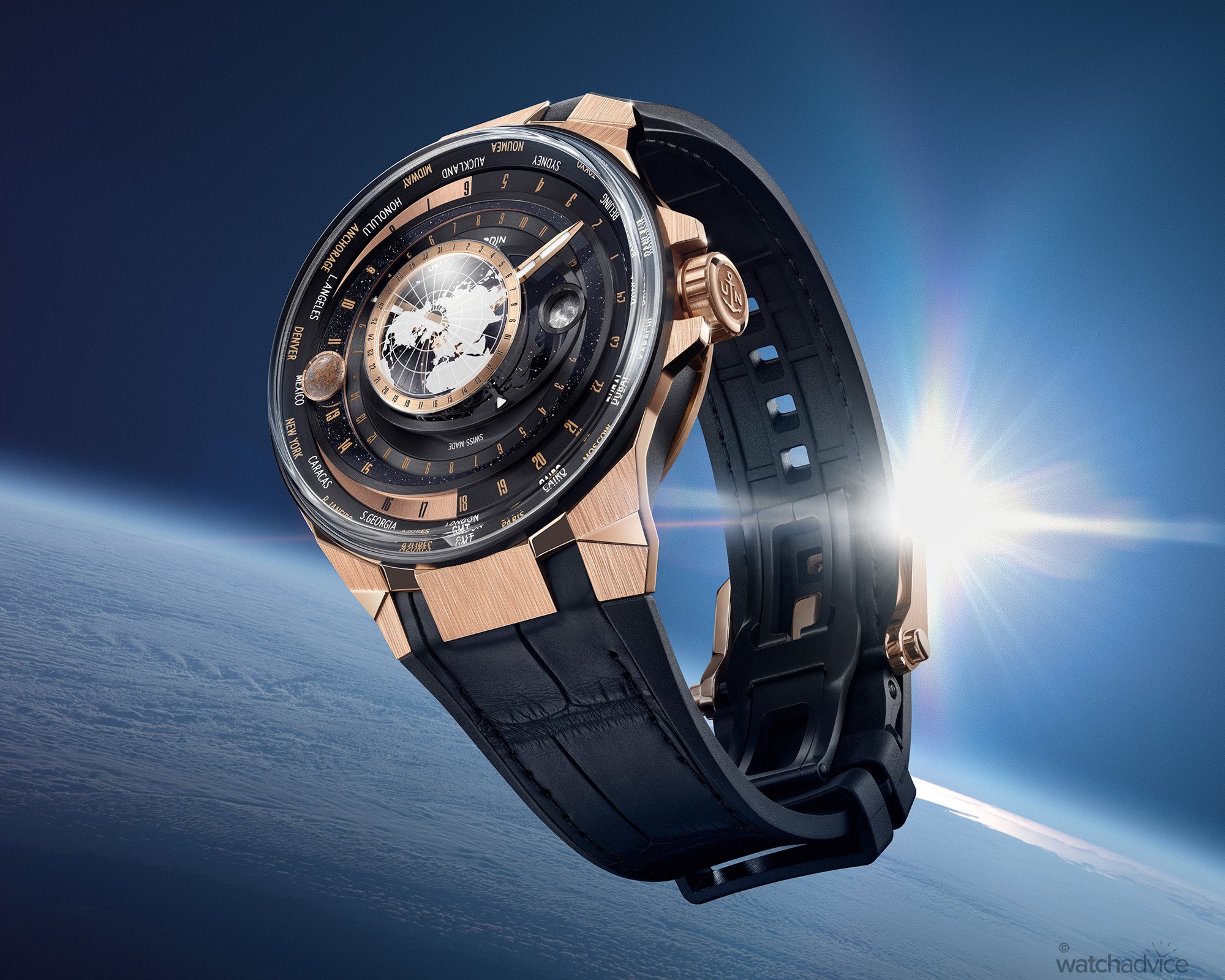
It combines five interconnected astronomical complications into a display that visualises the relationship between the Earth, Sun and Moon, all while functioning as a practical worldtimer. Not only this, but the Blast Moonstruck represents the continuation of a story that began more than 40 years ago, when one of watchmaking’s greatest minds was given a challenge, one that would forever change modern astronomical watchmaking.
Continuing the Legacy of Ludwig Oechslin
To understand the Blast Moonstruck, it’s worth going back to 1983…
That year, entrepreneur Rolf Schnyder had recently taken ownership of Ulysse Nardin and was determined to push the brand beyond traditional watchmaking. During a visit to master watchmaker Jörg Spöring, he encountered a young astronomer, mathematician and watchmaker named Dr. Ludwig Oechslin. Oechslin had created an incredibly complex astronomical clock, and Schnyder immediately recognised both his talent and his unconventional approach to solving mechanical problems.
Rather than simply admiring the clock, Schnyder challenged Oechslin to create an astronomical instrument that could be worn on the wrist. For those who know anything about watchmaking, this would have seemed a pretty hard task, but it would seem that Oechslin was up to the task.
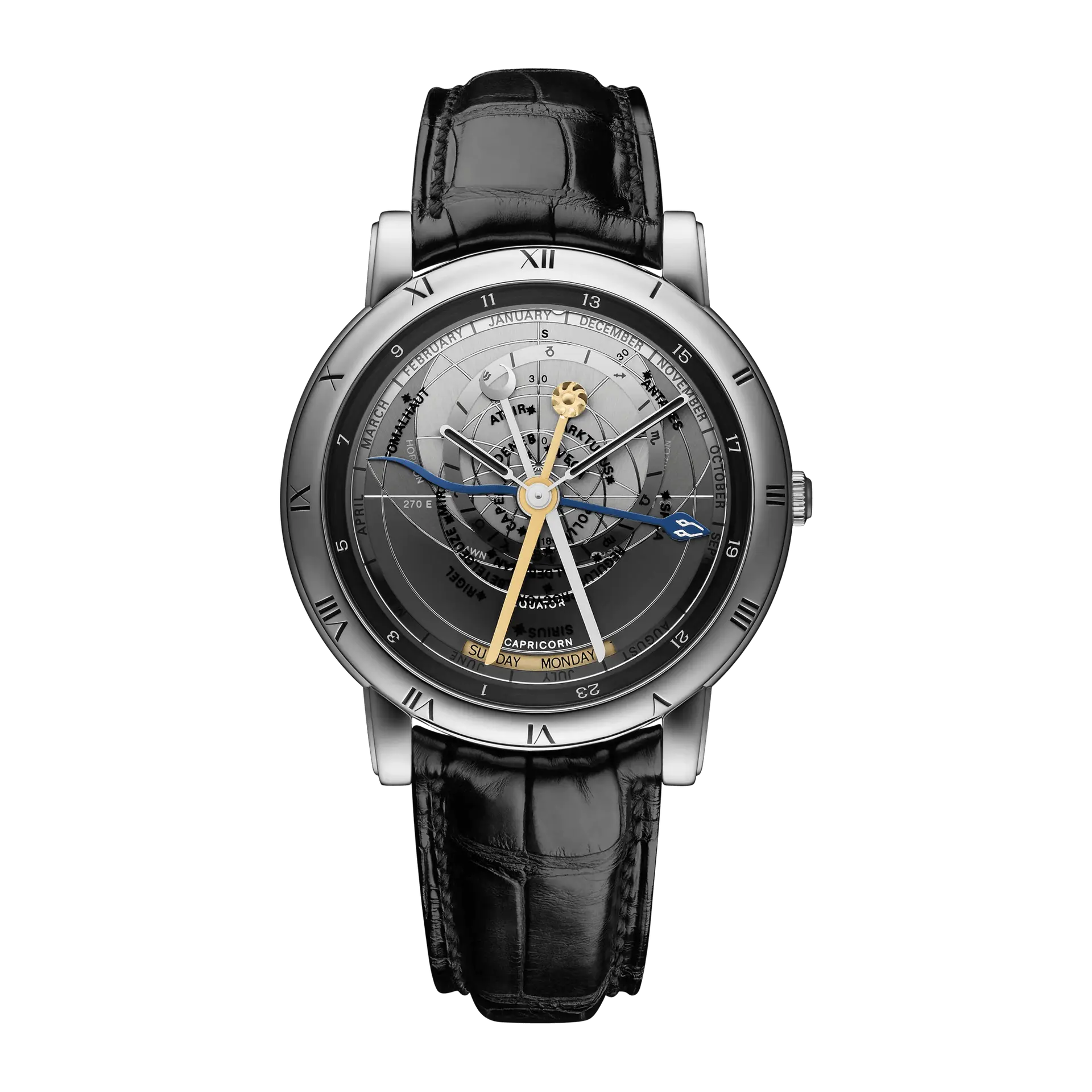
Just two years later, in 1985, came the Astrolabium Galileo Galilei, recognised as the world’s first true astronomical wristwatch. It was followed by the Planetarium Copernicus and the Tellurium Johannes Kepler, three watches that collectively became known as the Trilogy of Time. Even today, they remain among the most remarkable astronomical watches ever produced and cemented Ulysse Nardin’s reputation for creating highly complex yet surprisingly intuitive displays.
The Moonstruck concept first appeared in 2009, once again designed by Oechslin. Rather than expanding on the complexity of the Trilogy, it approached astronomical indications from a different perspective, focusing on visualising the movement of the Earth, Moon and Sun through a single coherent display. The new Blast Moonstruck continues that idea, bringing it into Ulysse Nardin’s contemporary Blast collection while preserving the core principles that made the original so fascinating.
Five Complications, One Display
One of Ludwig Oechslin’s defining philosophies has always been that complexity should exist inside the movement, not in the way the wearer reads the watch. That principle is evident throughout the Blast Moonstruck, where, instead of displaying separate complications across the dial, the watch combines five interconnected astronomical functions into a single visual representation centred around the Earth.
These include a high-precision moonphase, a lunar month indication, a tidal coefficient display, a worldtimer (handy for travellers), plus the real-time positions of the Sun and Moon around the globe. It provides for great theatre on the wrist and a talking point at any watch get-together! So, how does it all work?
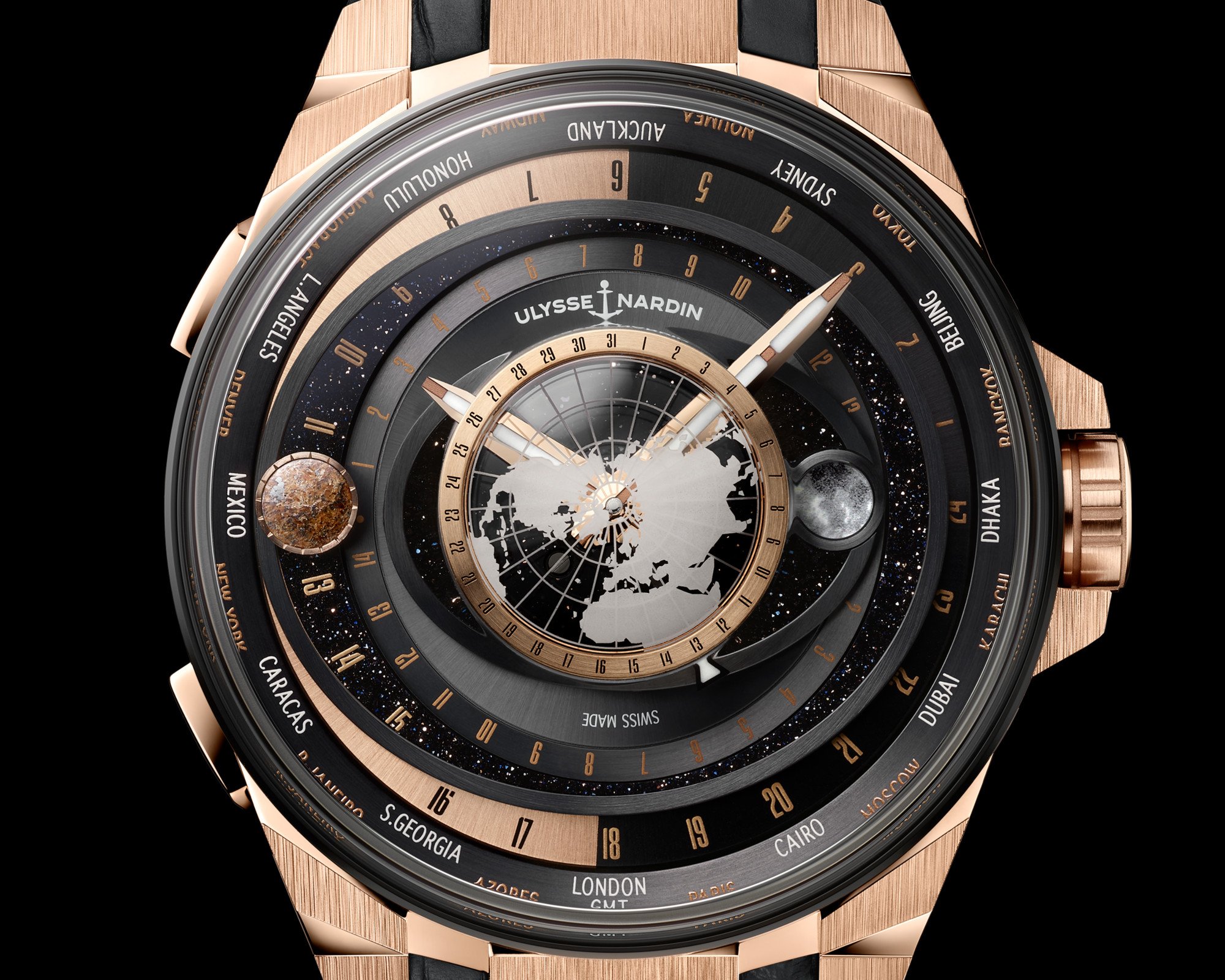
At the centre of the dial sits a three-dimensional depiction of the Northern Hemisphere, engraved beneath a domed sapphire crystal so that it appears suspended above the rest of the display. Around it, both the Sun and Moon travel across their respective paths, recreating celestial mechanics as they are observed from Earth. Rather than presenting each indication independently, every function is mechanically linked, allowing the display to visualise how these celestial bodies interact with one another. Again, theatre on the wrist.
The Sun itself doubles as the worldtimer indicator, travelling around a rotating 24-hour disc that displays the world’s principal time zones. Working alongside the fixed city ring, it allows the wearer to read the time around the globe while simultaneously showing the apparent movement of the Sun across the Earth over the course of a day. A two-tone day and night display further improves legibility.
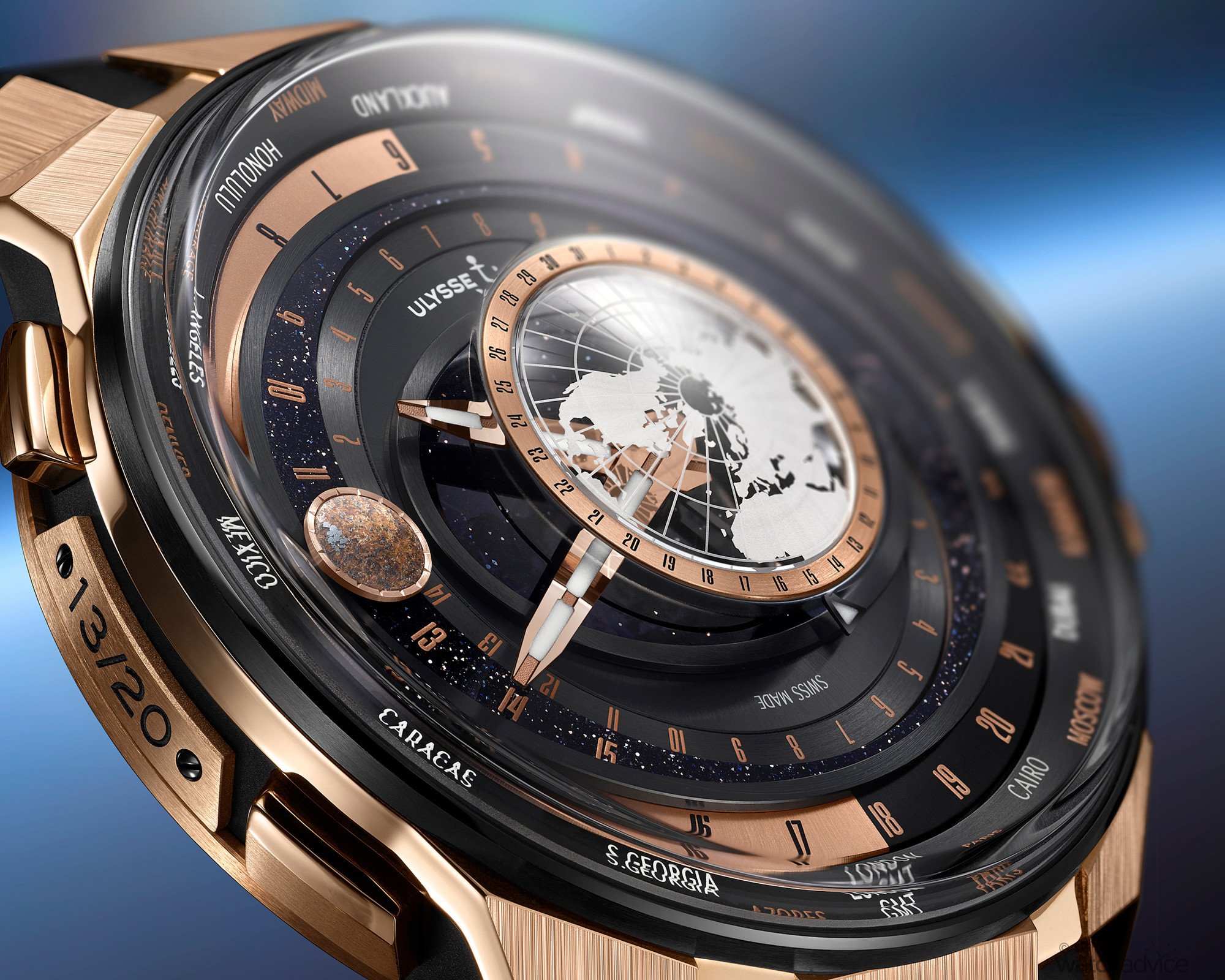
The Moon follows its own path, displaying both the current moonphase and the progress through the lunar month. The moonphase is accurate enough to require correction only once every 40.3 years. One design element that I do love however, is that the illuminated portion of the Moon always faces the Sun, exactly as it does in reality, rather than relying on the simplified approach used by conventional moonphase displays.
For anyone with an appreciation of astronomy or maritime history, the tidal coefficient display is another unique addition. By measuring the relationship between the Sun and Moon, the watch illustrates periods of stronger and weaker tidal activity, a subtle nod to Ulysse Nardin’s long association with marine navigation.
A Modern Home For A Classic Complication
While many brands would chose to put this display into a more classic styled case, Ulysse Nardin has chosen the more modern Blast to house the movement.
Measuring 45mm in diameter, the case combines an 18-carat rose gold upper section with a black DLC-coated titanium middle case and bezel. The contrast between the warmth of the gold and the more edgy black surfaces gives the watch a distinctly modern appearance while also reducing visual weight.
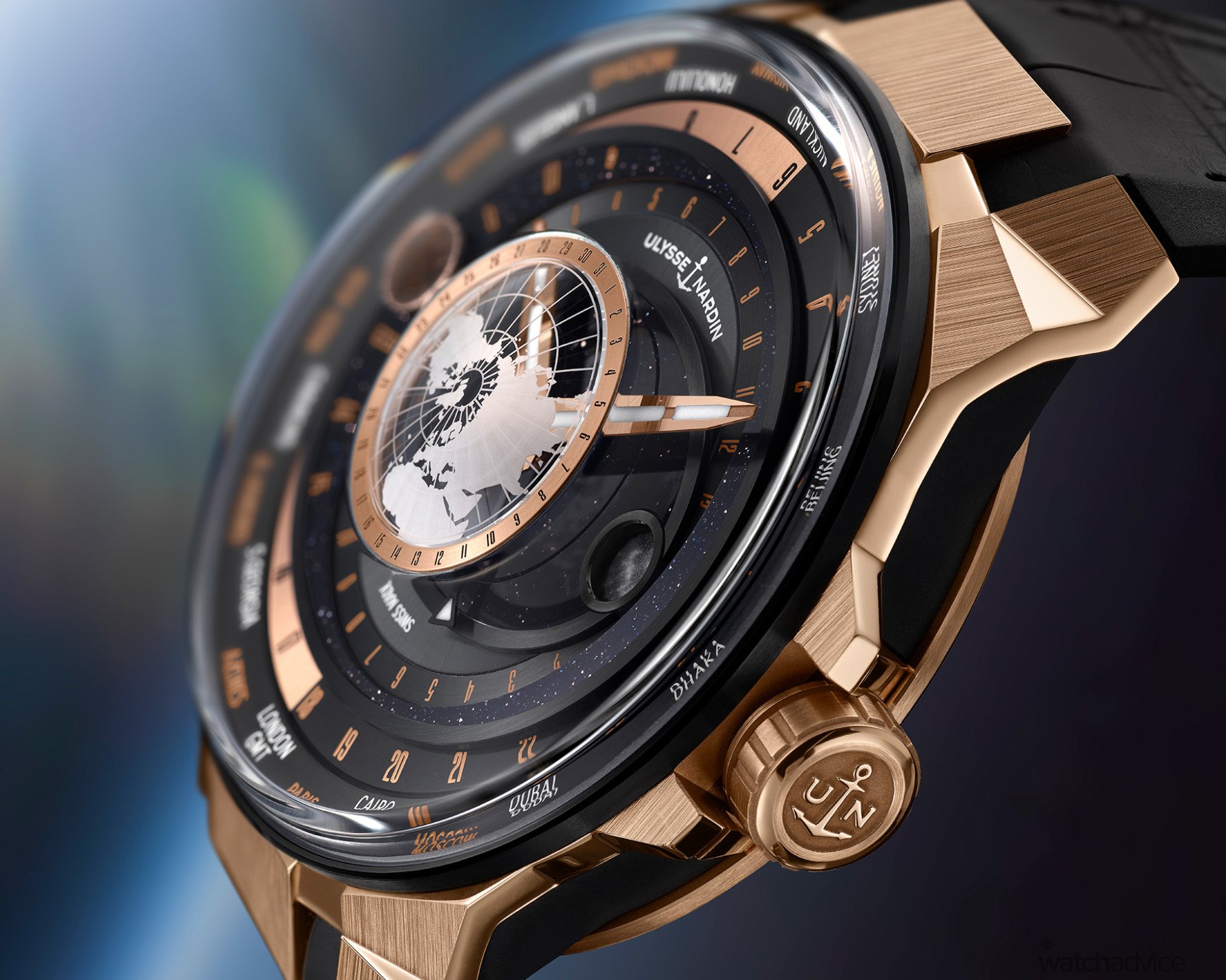
The architecture of the case has always been one of the defining characteristics of the Blast collection, and here it serves a practical purpose. The oversized sapphire glass box provides the vertical space needed for the suspended Earth display while creating depth across the dial. Viewed from different angles, the Earth appears to float above the aventurine base, which itself resembles a star-filled night sky.
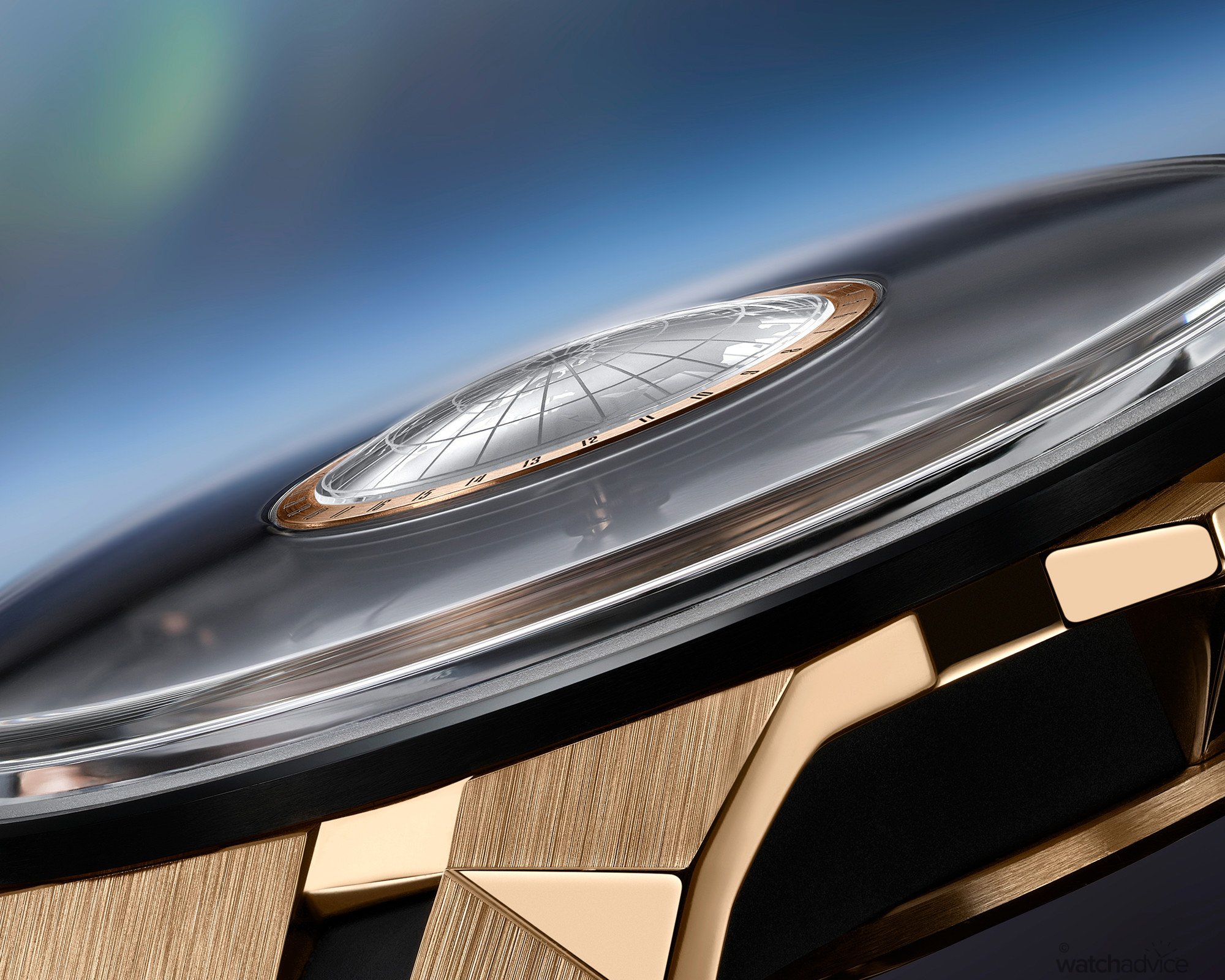
Additional details include a bronzite Sun indicator, a rose gold chapter ring engraved with the days of the month, and layered finishing that adds to the three-dimensional nature of the display. Like the wider Blast collection, it is a bold design, but warrented in this case.
The UN-106 Manufacture Movement
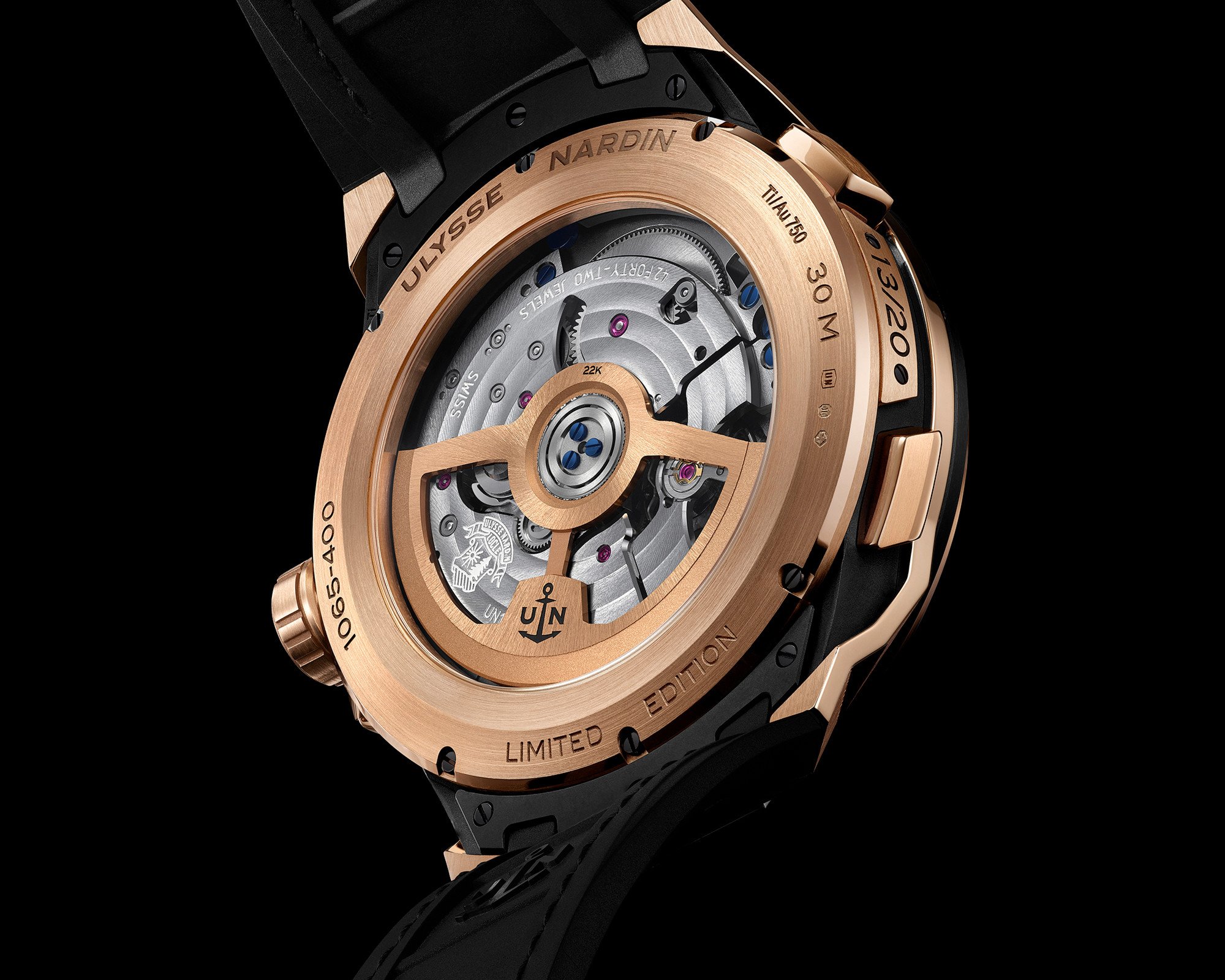
Powering the Blast Moonstruck is Ulysse Nardin’s in-house automatic Calibre UN-106, and beyond driving the astronomical display, the movement incorporates several technologies that have become synonymous with the manufacture over the past two decades.
Silicon remains a key component, with both the escapement and hairspring produced using technology pioneered by Ulysse Nardin and manufactured in-house through SIGATEC. The material’s anti-magnetic properties, low friction and resistance to wear contribute to improved long-term reliability and accuracy.
The movement also features Ulysse Nardin’s patented worldtime adjustment system, allowing local time to be advanced or reversed in one-hour increments using pushers built into the side of the case. This means they don’t interfere with the astronomical calculations or disturb the position of the minute hand, making the watch more user friendly even given its complexity.
The UN-106 calibre comprises of 338 components and pivots on 42 jewels, and operates at 4Hz. It delivers a 50-hour power reserve, which in on the lower side these days, but considering the complex functions of the Blast Moonstruck, I am happy to forgive this with this piece.
Final Thoughts
The Blast Moonstruck is a showcase of what haute horlogerie can be, and also showcases why Ulysse Nardin is a great watchmaker first and foremost. Yes, most people will associate Ulysse Nardin with the Freak, but it is watches and complications like this which highlights Ulysse Nardin’s expertise in the realms of navigation and celestial complications.
What I love about thie Blast Moonstruck is that even though there is a lot going on with the dial, the watch remains fairly intuitive to read. According to Ulysse Nardin, that was always Ludwig Oechslin’s objective, and more than four decades after he first partnered with Ulysse Nardin, his philosophy continues to define the manufacture’s approach to astronomical watchmaking.
Limited to just 20 examples worldwide, the Blast Moonstruck is not for the avege watch collector, nor is the price of almost A$180,000. Yet for those fortunate enough to experience one, or better yet, acquire one, it represents more than another high complication. It connects engineering, astronomy and mechanical artistry in a way very few brands do, and progresses Ulysse Nardin forward, even after 180 years of making navigation instruments, clocks and watches.
Reference & Specifications
| Feature | Specification |
|---|---|
| Reference | 1065-400LE-2A-BLACK/1A – Limited to 20 pieces |
| Dimensions | 45mm in diameter |
| Case | 18ct rose gold upper case, black DLC-treated titanium middle case and bezel |
| Crystal | Sapphire glass box, sapphire caseback |
| Dial | Aventurine with suspended Northern Hemisphere display engraved on sapphire crystal. Bronzite Sun indication & a rose gold ring engraved with the days of the month |
| Movement | Manufacture Calibre UN-106, automatic |
| Frequency | 4Hz (28,800 vph) |
| Power Reserve | 50 hours |
| Functions | Hours, minutes, quick-set date, worldtimer, moonphase, lunar month, tidal coefficient, Sun and Moon position indications |
| Water Resistance | 30 metres |
| Strap | Black alligator leather strap with a black DLC-treated titanium and rose gold folding clasp |