

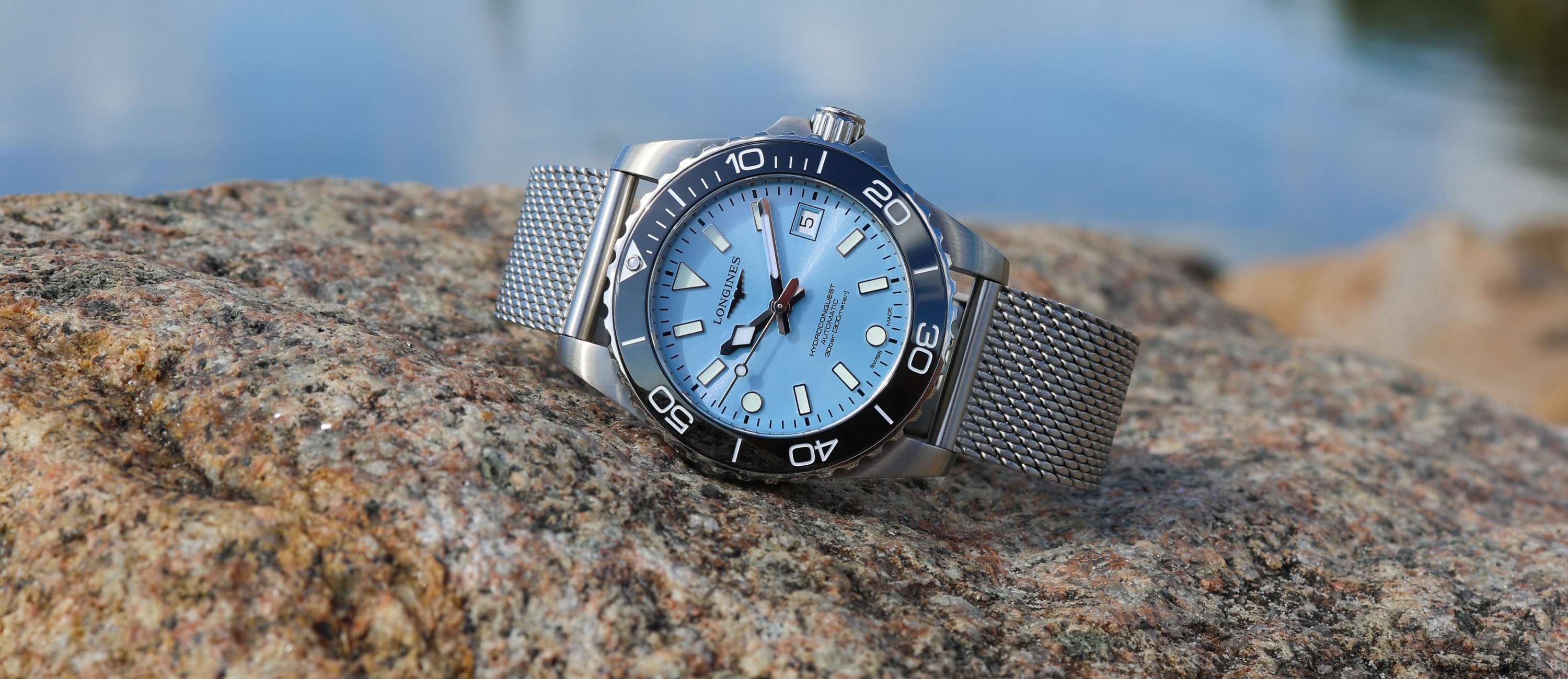
Longines has taken great strides into revising their HydroConquest line, but is it the collection’s best version yet? Let’s find out!
What We Love:
- Clean, modern design
- Excellent value proposition
- Comfortably wearing mesh bracelet
What We Don’t:
- No tool-less interchangeability
- The illusion of the mesh bracelet is lost up close
- Is it still a HydroConquest?
Overall Rating: 8.5/10
- Value for Money: 9/10
- Wearability: 8/10
- Design: 9/10
- Build Quality: 8/10
Though I’ve said it ad nauseam, it’s become common knowledge that Longines is one of the most consistent brands in the watch world. Whether it be their logo remaining unchanged since 1867 or their ability to produce high-quality watches at an impressive price point, the Swatch Group brand has remained an industry staple.
Longines has long defined itself through a dependable, heritage-inspired aesthetic. However, the 2020s have seen the brand begin to test the waters of modern design. While old-school styles like the Master, Flagship, and Spirit still remain, both the Conquest and HydroConquest lines have been redefined with a more contemporary, 21st-century look.
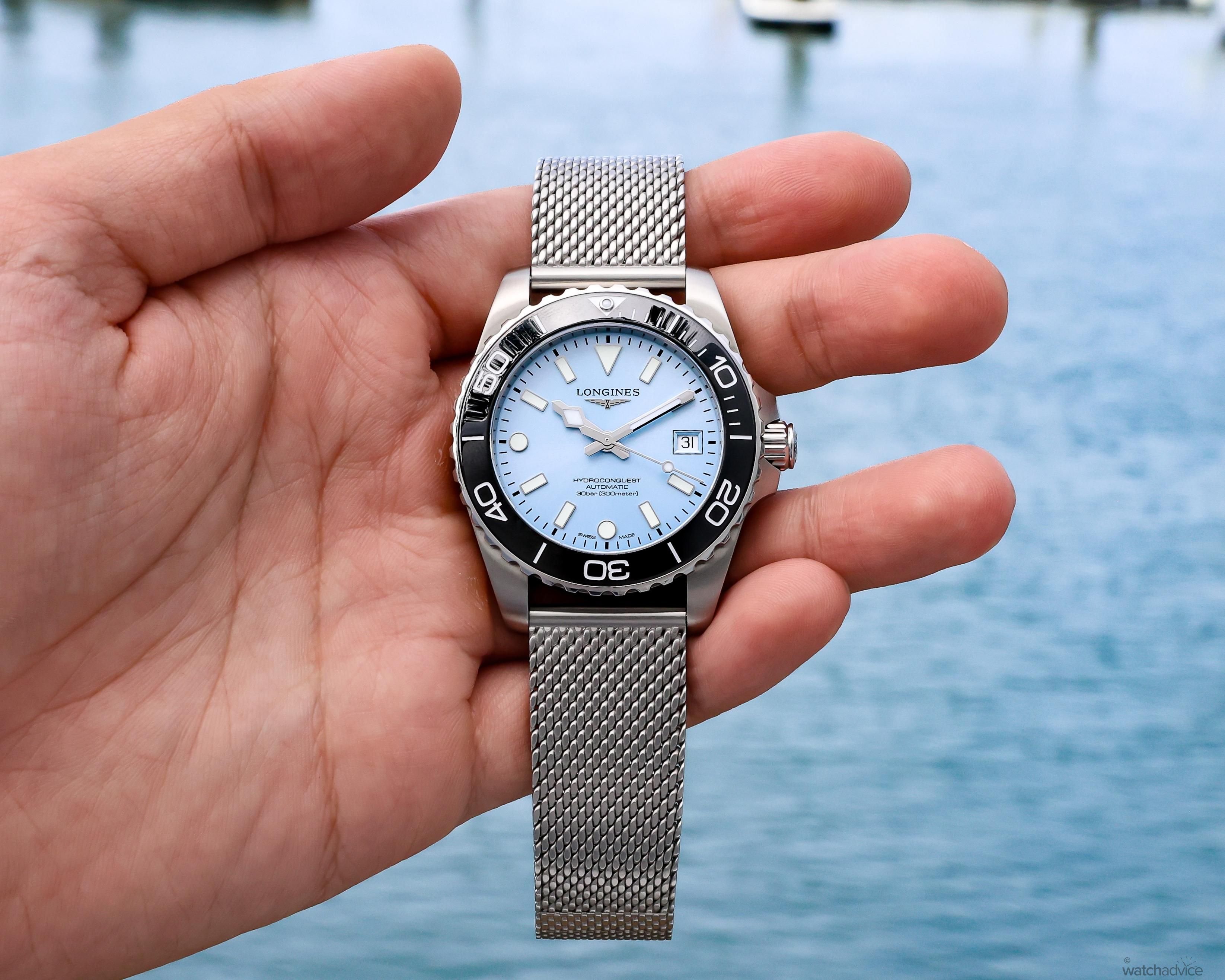
For this review, we’ll be focusing on the latter. Matt had the opportunity to share his thoughts on the 42mm version of the HydroConquest, but now I get to tackle the 39mm version with the ice-blue dial.
First Impressions
It didn’t surprise me that the Longines HydroConquest received a revamp. Admittedly, after the HydroConquest GMTs were released, it was only a matter of time. This new, contemporary design language has slowly been integrating itself into the Longines catalogue, beginning with the refreshed Conquest collection some time ago. I was a little concerned they were going to stay the course with the 41mm and 43mm case dimensions, so I was glad to be proven wrong.
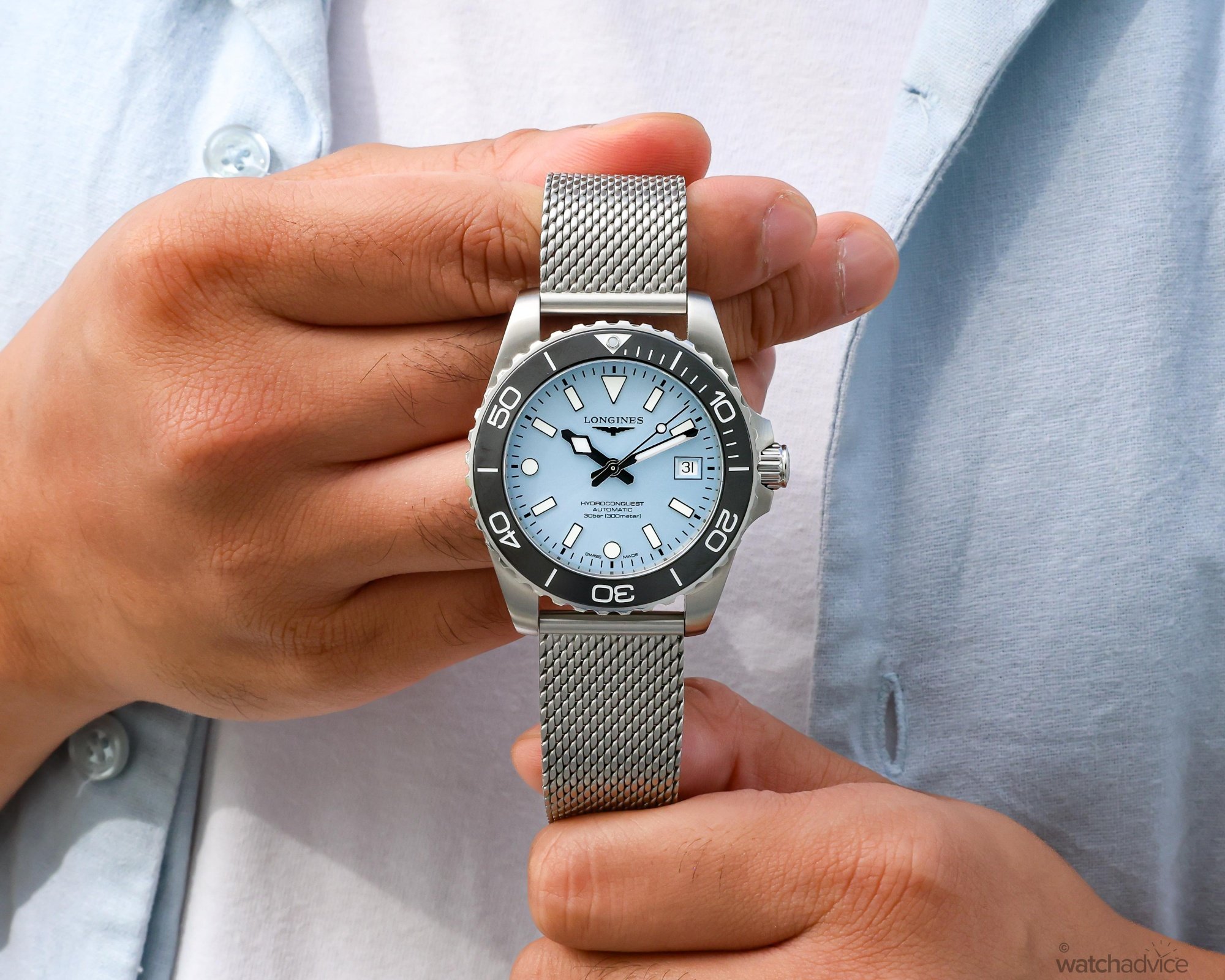
What immediately caught me off guard was the watch’s stature. Having previously tried on my dad’s HydroConquest GMT, I always felt that even the 41mm model was just a touch too big. So, with the 39mm in hand, it felt far more natural to wear. It no longer felt like someone else’s watch, both figuratively and literally.
It’s a solidly built watch, which I’ll touch on in a moment, but given the amount of time I had with it, I decided to have a bit of fun. I took it up to Springbrook National Park and put it through its paces while hiking Purling Brook Falls. Safe to say, the HydroConquest is more than capable of chasing waterfalls, rivers, lakes, and the like.
The Design
When Sam covered the initial announcement of this collection, he went into some fairly reasonable detail. In a similar vein, much of what I described about my dad’s HydroConquest GMT carries over to this watch, so I’ll just give you a short recap.
The star of the show in this 39mm reference is, of course, the ice-blue dial. This tone has been trending across the watch world, with Swatch Group sister brand Tissot also using it throughout the PRX collection, and I suppose its inclusion in the HydroConquest line has been a long time coming.
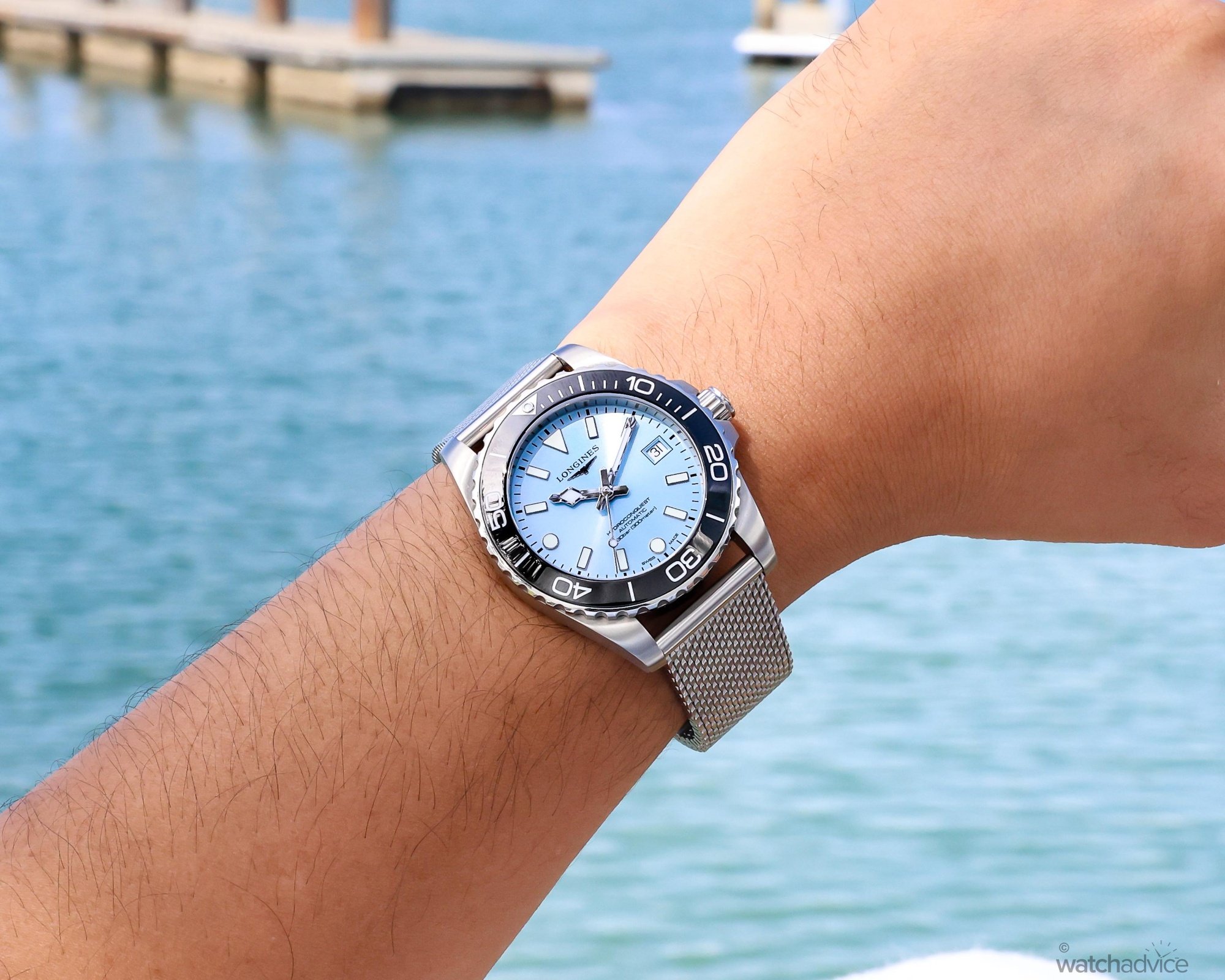
I never really got on board with the ice-blue trend. Whether in a bid to stay “hip” and different, or simply out of fear that it was a purely seasonal colour, I always distanced myself from ice-blue dials where I could. Getting my hands on this, though, changed my mind, and it all comes down to the presentation.
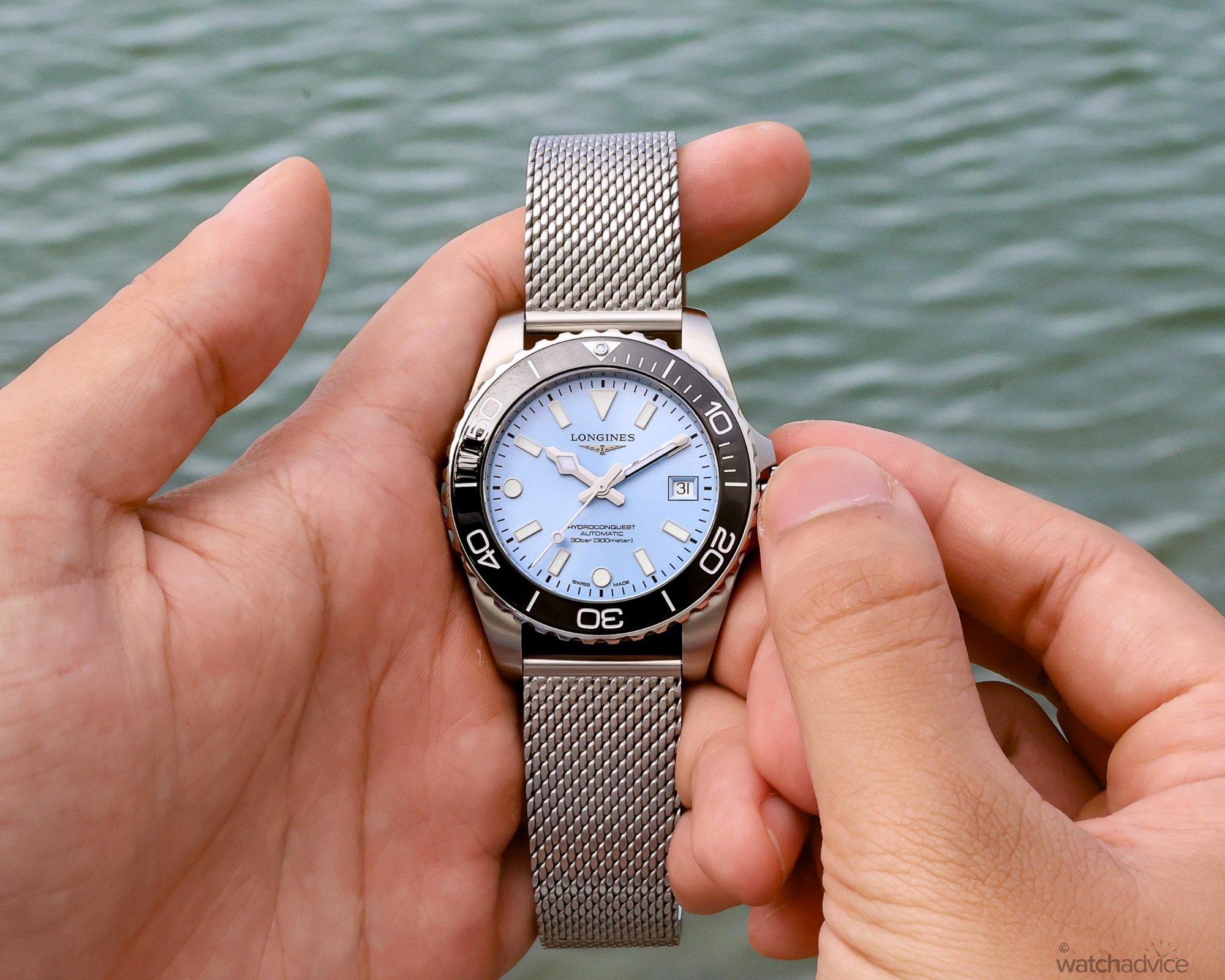
My core concern with ice-blue dials was that the cool tones would wash out against a steel watch. The way Longines rectified this issue was by using a black ceramic bezel insert. By dividing the ice-blue dial and steel case into two distinct sections, it effectively frames the dial and adds further intrigue. It also keeps this HydroConquest in line with the core dive watch philosophies of high legibility and contrast.
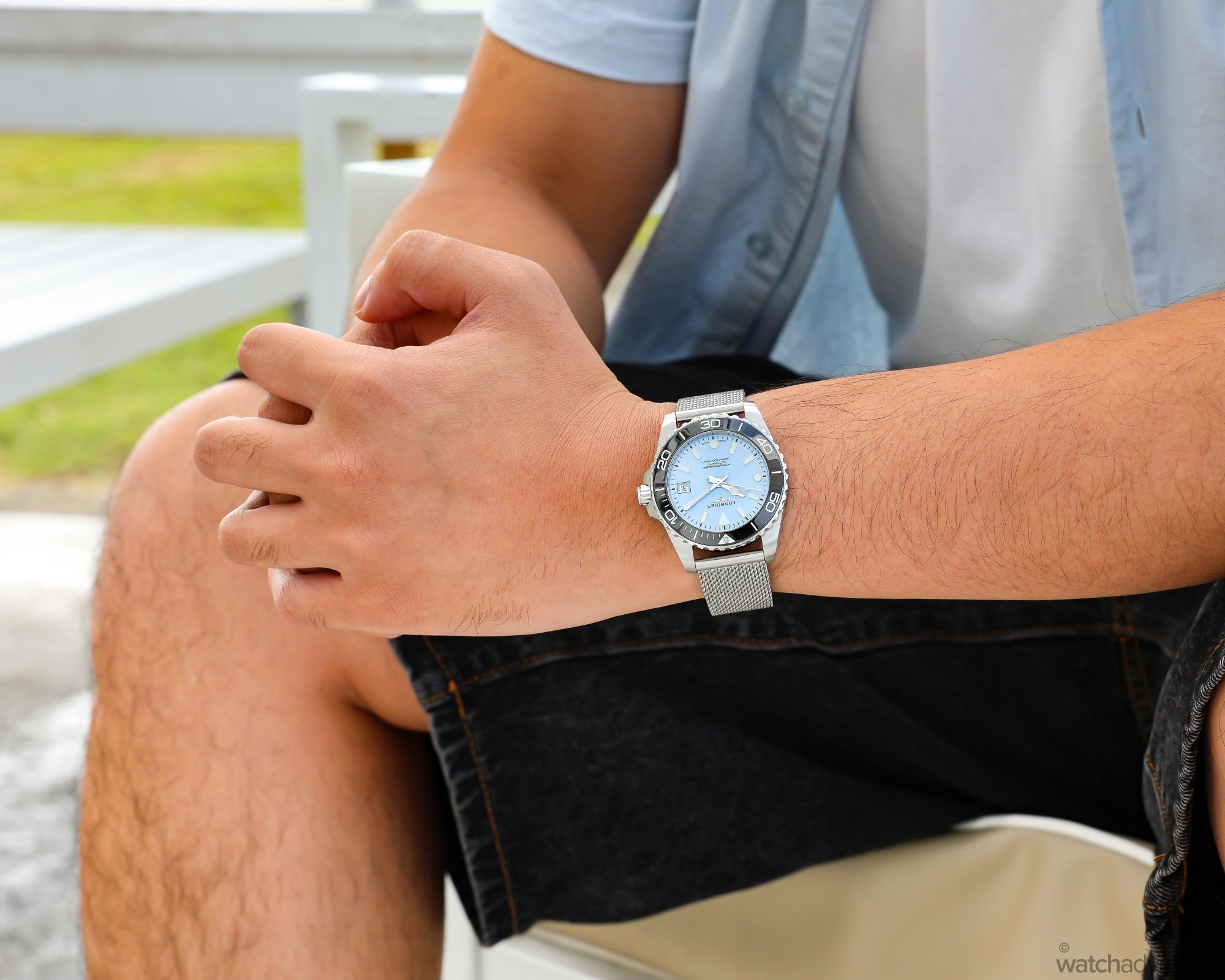
Similarly, the hands and indexes are comfortably lumed and remain visible in low-light environments. Blue lume covers most elements, while the minute hand and bezel pip are finished in green. Finally, the black printed minute track surrounds the indexes, while the date window is outlined in black as well.
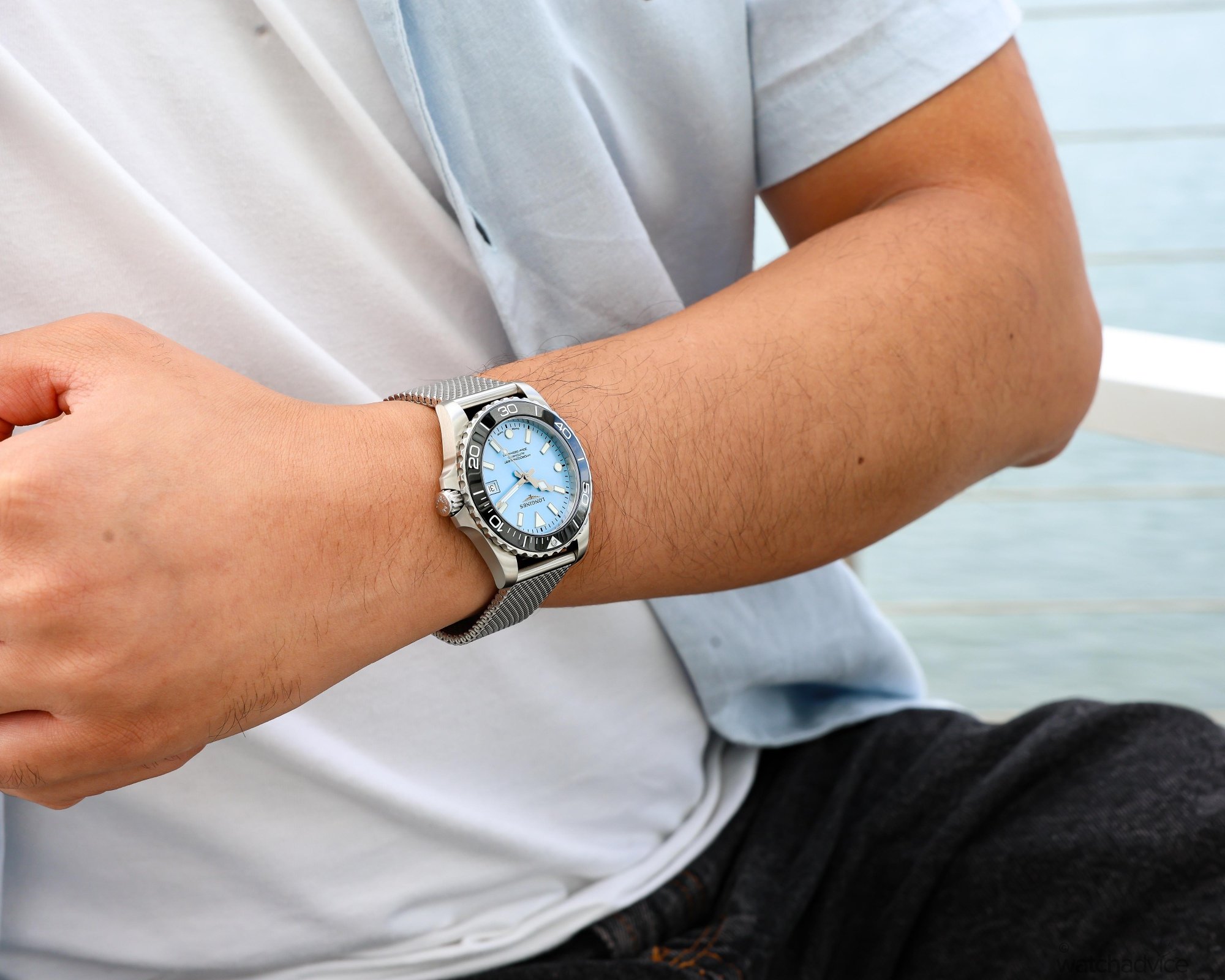
The case profile is similar to that of the HydroConquest GMT’s, adding flow where necessary and geometry to more practical elements. Equipped with a mesh bracelet, it wraps neatly around the wrist and tapers into a micro-adjustable signed clasp. While it initially appears as though the mesh is one cohesive piece, a closer look reveals otherwise – but I’ll talk about that later.
If you placed the new models alongside the older HydroConquest references, you’d immediately notice how far apart they are stylistically. While that certainly has its benefits, it’s also Longines’ greatest challenge.
Is it the same HydroConquest we all knew? For all intents and purposes, no. On one hand, that’s a good thing. The original design was beginning to feel dated and had plenty of issues that have now been ironed out. But while a lot of the bad has been scrubbed from the HydroConquest, a few of the good bits have disappeared with it.
Take, for example, the older model’s bold Arabic numerals at six, nine, and twelve o’clock. They felt like a distinctive part of the HydroConquest’s DNA. The old Conquest collection used the same numerals, which were similarly omitted in the newer renditions. In that case, the Conquest became more recognisable within the catalogue as a result.
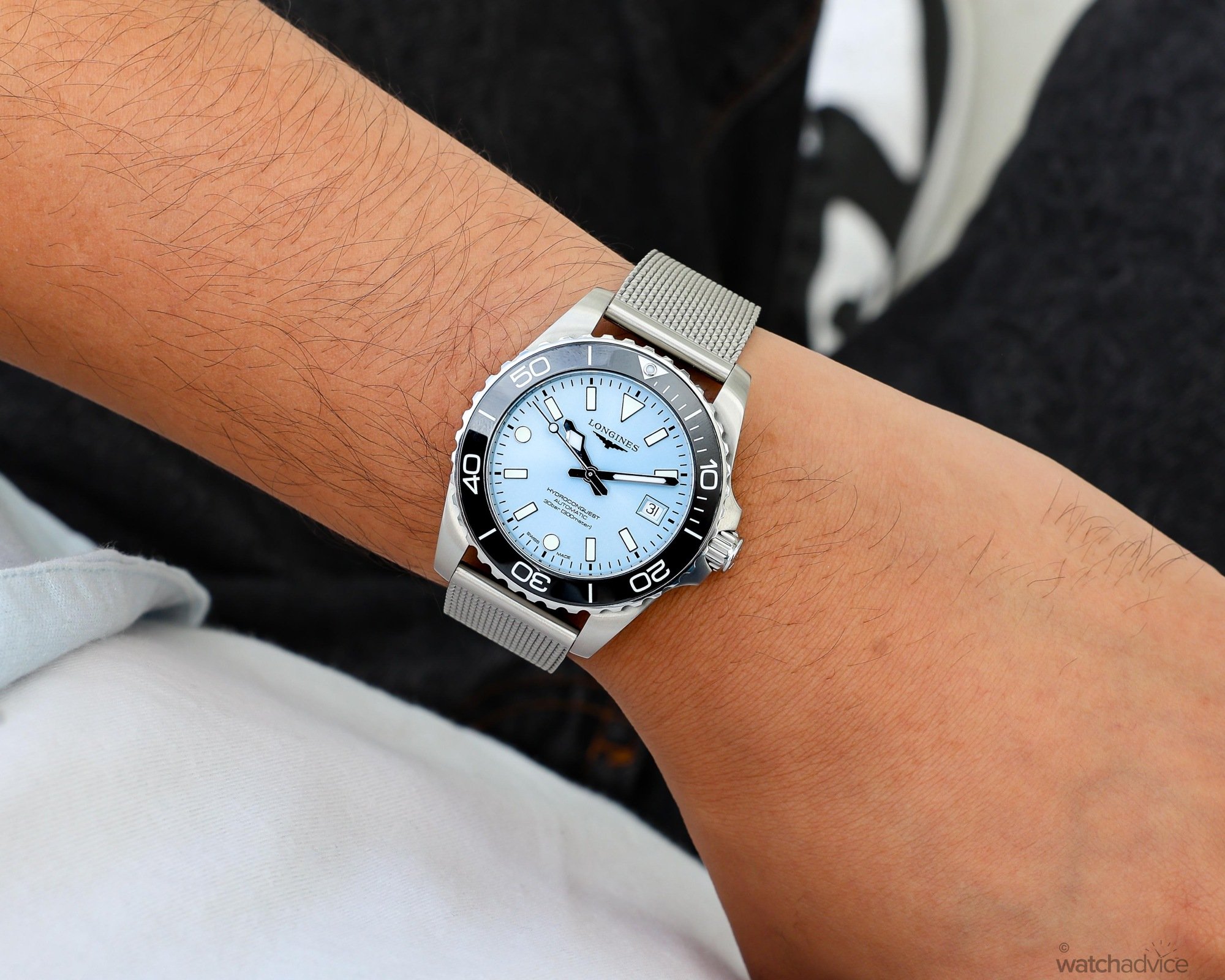
Can you say the same for this HydroConquest? Maybe. It certainly looks the part of a capable, modern dive watch. I’m just not fully convinced it looks like a Longines dive watch. Nevertheless, the watch on my wrist still manages to impress with its design from beginning to end. Turning the watch over, the final details come as no surprise, revealing the classic Longines engravings laser-etched into the solid caseback.
How It Wears
Sized to an unsurprising 39mm case diameter, the smaller Longines HydroConquest already positions itself as a broadly appealing dive watch. With a 48.1mm lug-to-lug and an 11.7mm thickness, the watch feels surprisingly balanced on the wrist.
This can partly be attributed to the case proportions, but also to the lightness of the mesh bracelet. I know this because Longines’ website actually provides the weight of the watch, with the mesh reference coming in at 155g, while the classic three-link version is 12g heavier at 167g.
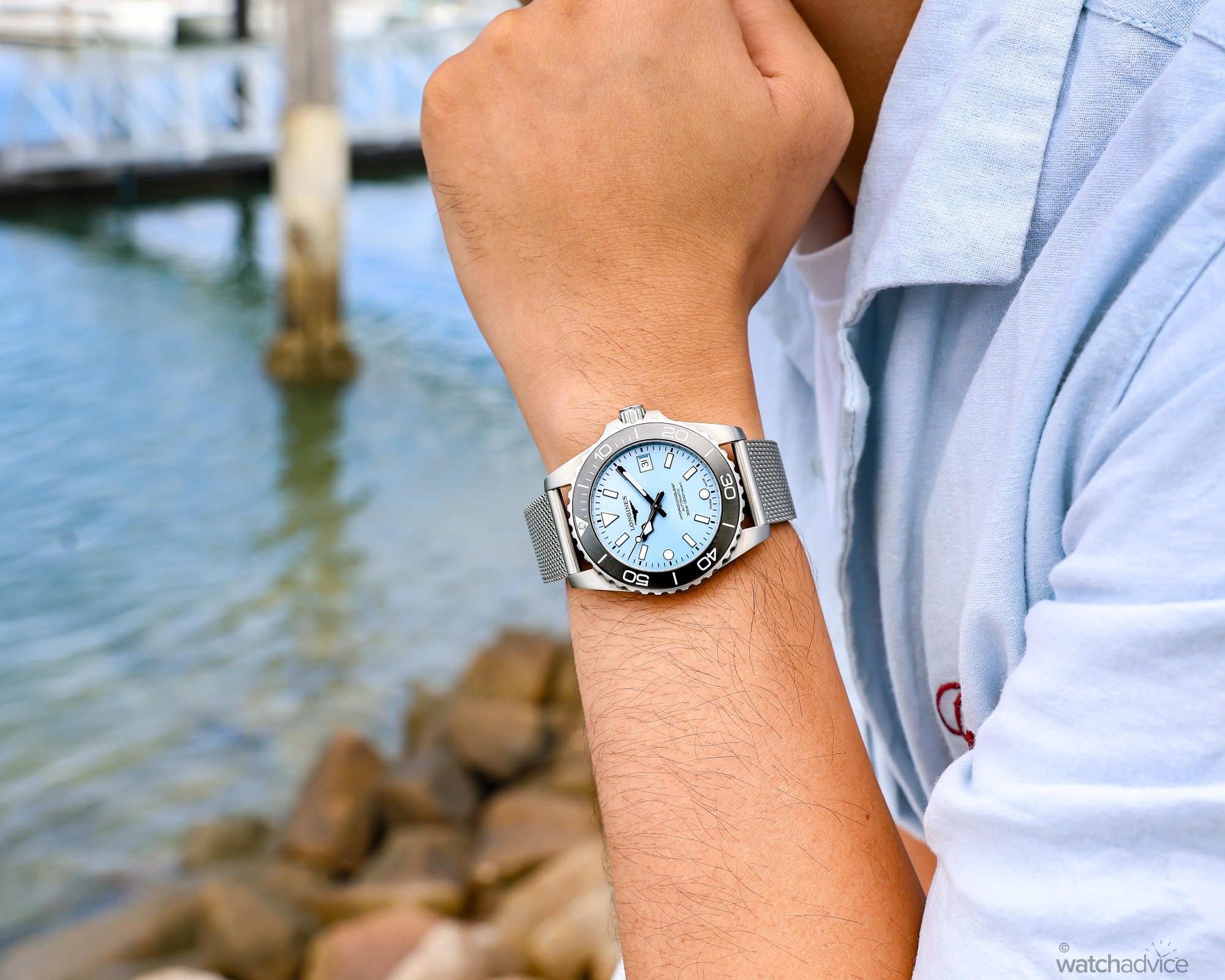
If you’ve read a few of my other review articles, you’ll know about my appreciation for mesh bracelets. Up until now, I’ve actually never reviewed a watch fitted with one, so what a watch to start with. This HydroConquest’s mesh bracelet is one of the most comfortable I’ve encountered, regardless of price point.
Central to this is the way Longines has constructed the bracelet. Instead of relying on traditional buckles or deployant clasps, like those seen on the No Time To Die Omega Seamaster, it feeds the mesh directly into a micro-adjustable clasp.
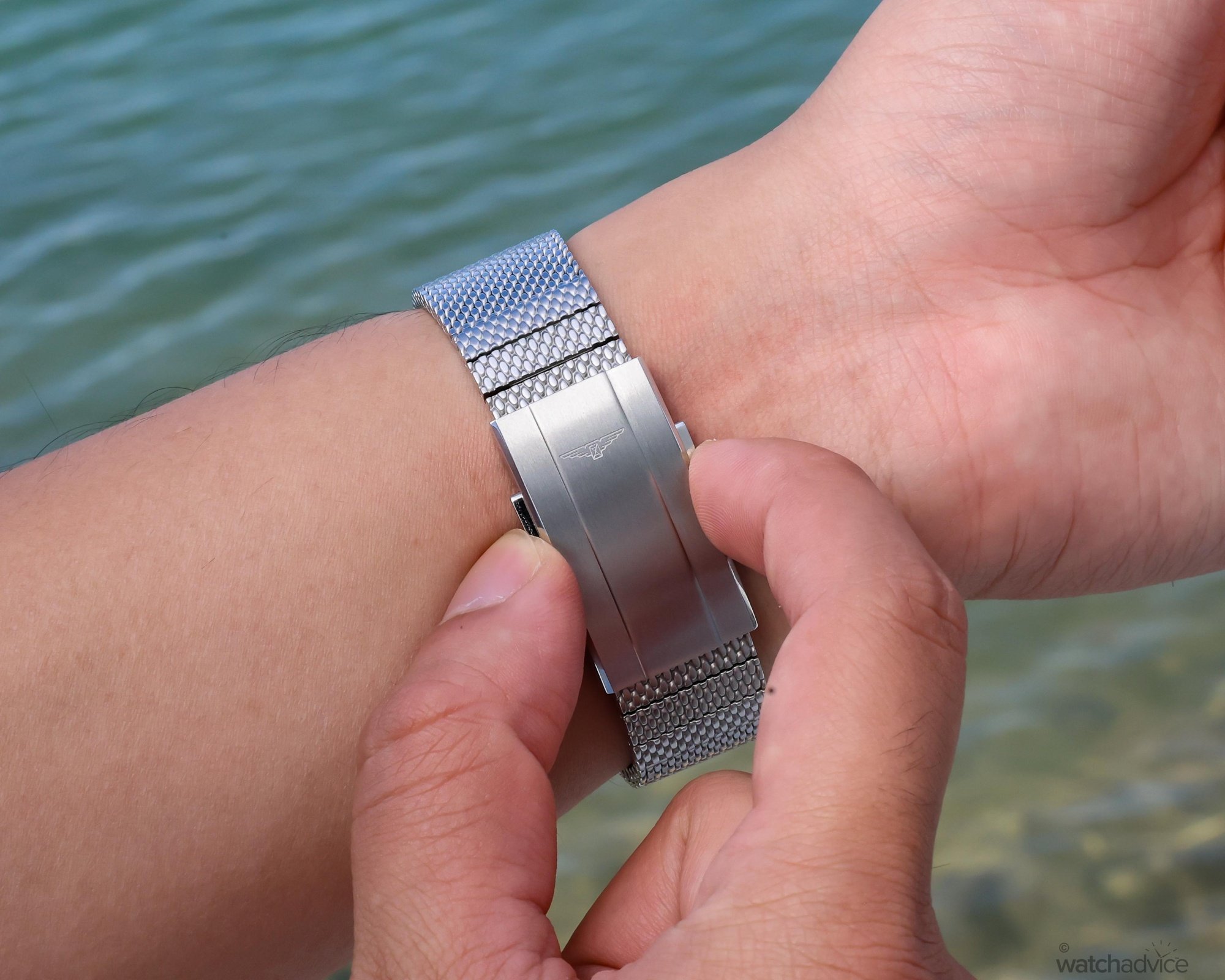
While that might seem a little unusual, given how difficult it is to make a mesh bracelet universally wearable, Longines has arrived at an interesting solution. As I alluded to earlier, the brand has created a hidden push-pin link adjustment system for the bracelet, with the links finished in a texture similar to the mesh itself.
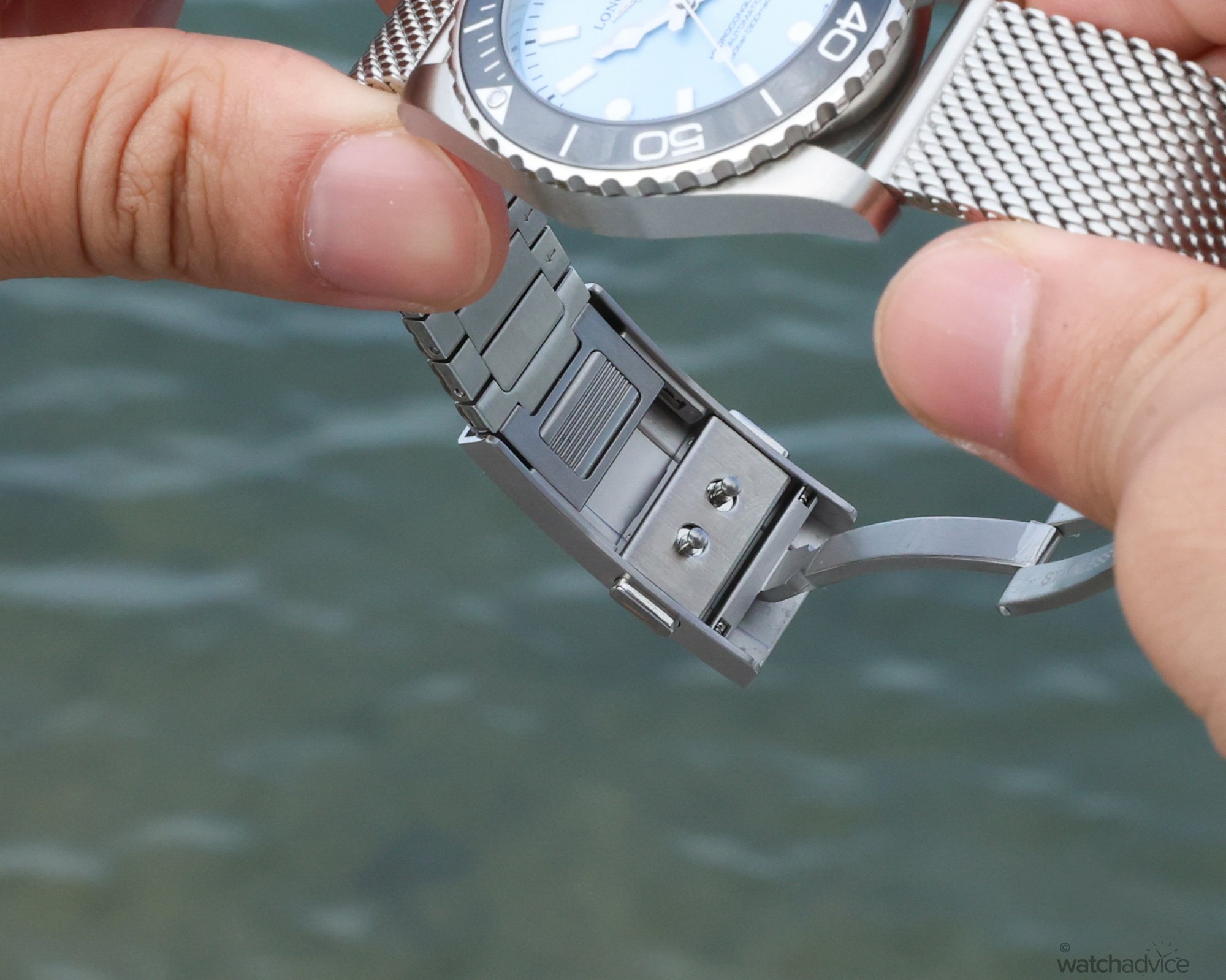
It’s a novel way to prevent the mesh bracelet from becoming too bulky, which is often the case with traditional buckles and deployant clasps, but the illusion does fall away up close. The links separate, creating a slight gap between the mesh finishes. Still, neither the clasp nor the link system is a perfect solution to making a mesh bracelet universally convenient. Unless you have a mesh bracelet custom-fitted to your wrist, one issue or another seems inevitable.
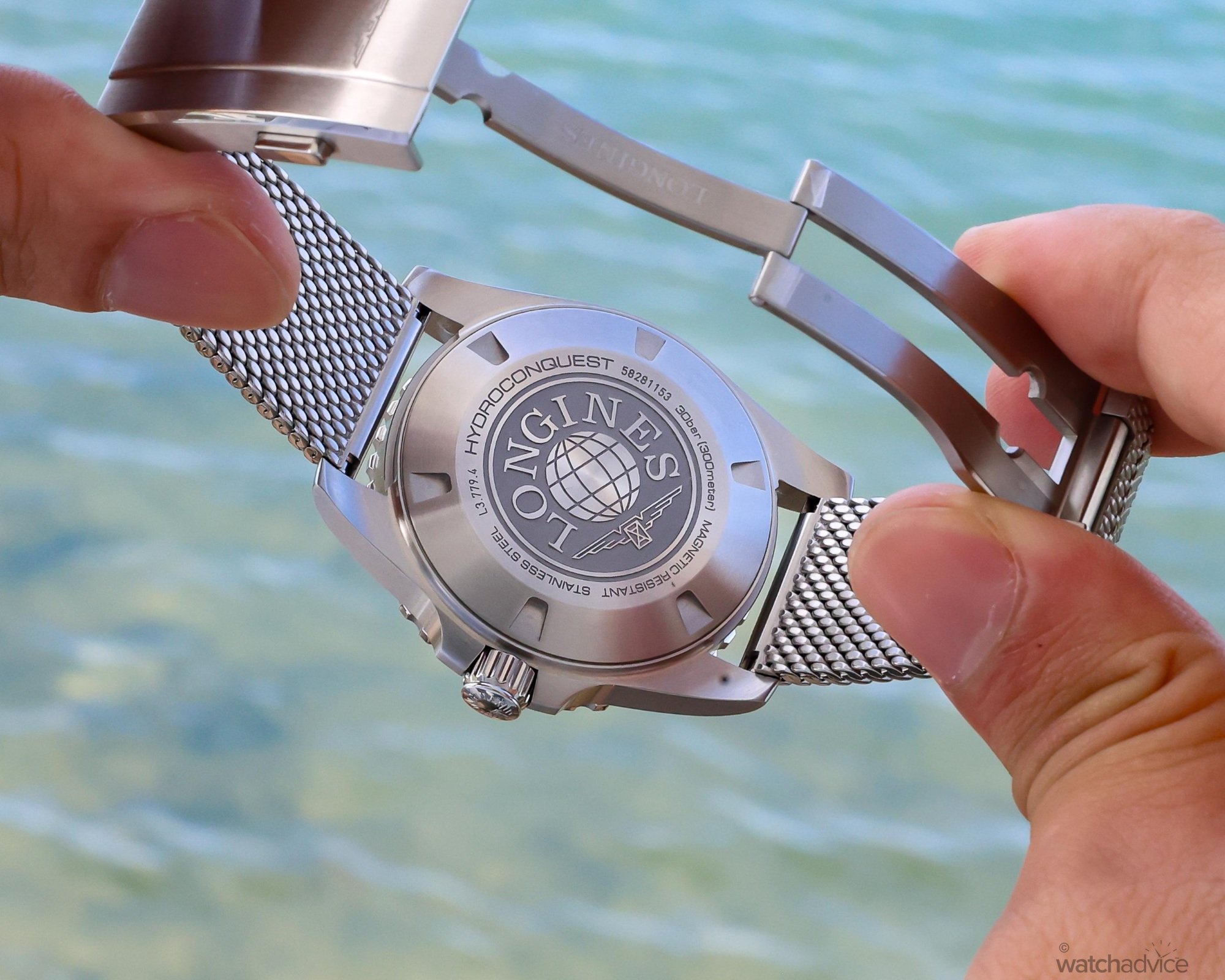
One other nitpick I have is the lack of quick-release spring bars on the bracelet itself. For a brand that offers a healthy range of strap options, it’s surprising this was omitted. However, I’ve never had a negative experience with strap changes at a Longines boutique, as staff are trained to carry out such adjustments efficiently. But if you’re constantly on the move, or simply in the mood for a quick strap swap, you may be out of luck without a spring bar tool.
The Movement
The beating heart of the watch, as dependable as ever, is the Cal. L888.5 automatic movement. A stalwart of the brand, it takes the architecture of the ETA 2892-A2 and heavily modifies it to Longines’ specifications. Beating at a somewhat unusual 3.5Hz (25,200VpH) and offering a stable 72-hour power reserve, the Cal. L888.5 appears across much of the catalogue, from the Master to the Conquest collections.
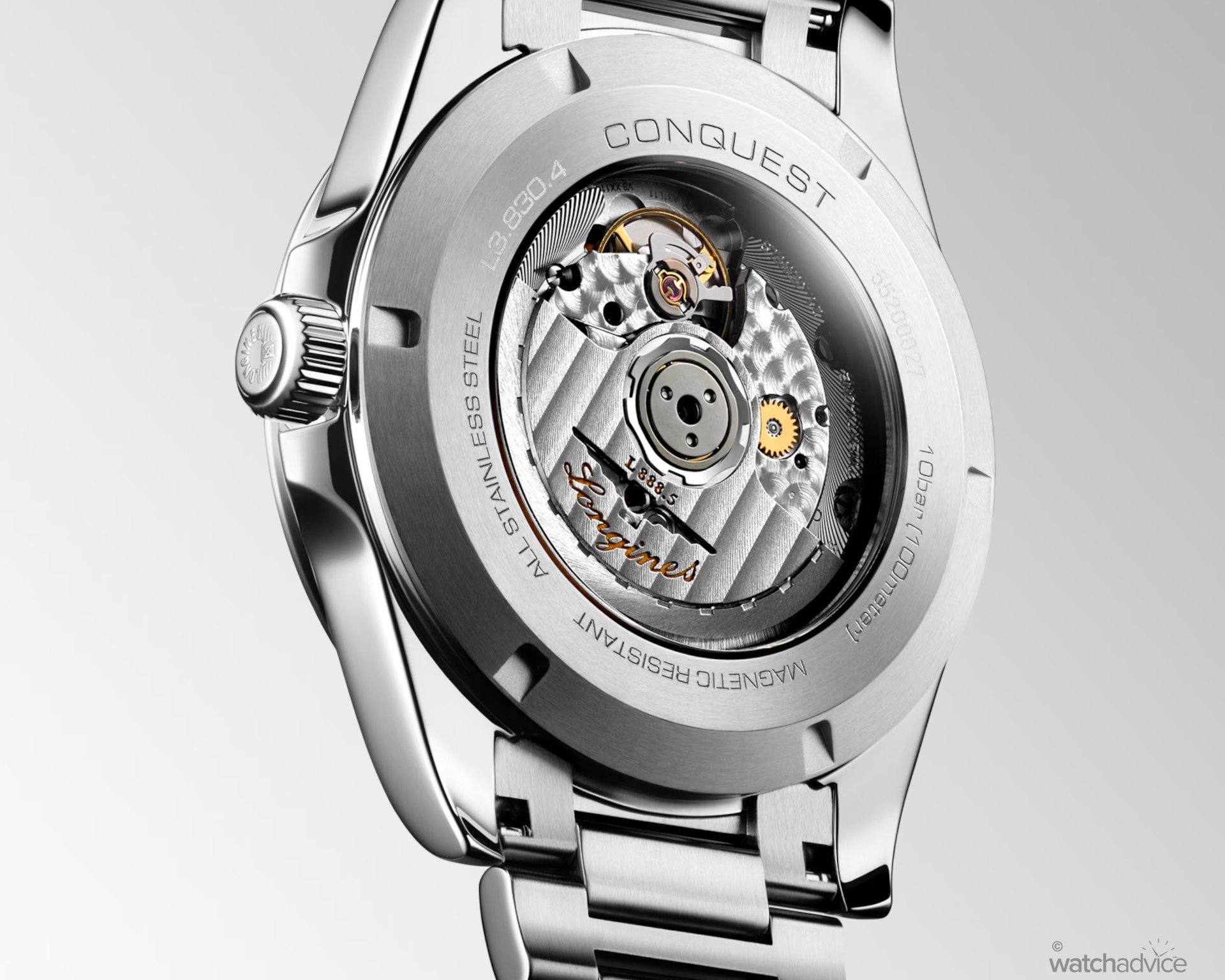
Matt already went into most of the nitty-gritty in his review, so I won’t rehash those details here. What I will expand on is the perception that these movements are in-house. Are they? Well, yes and no.
Since the Swatch Group owns movement manufacturer ETA SA Manufacture Horlogère Suisse, you could argue that this vertical integration effectively makes them in-house. On the other hand, since ETA operates as its own manufacturer and Longines is also its own brand within the group, you could just as easily argue that Longines’ use of ETA movements doesn’t fully meet the traditional definition of in-house. It’s a real Ship of Theseus situation, which changes depending on your perspective.
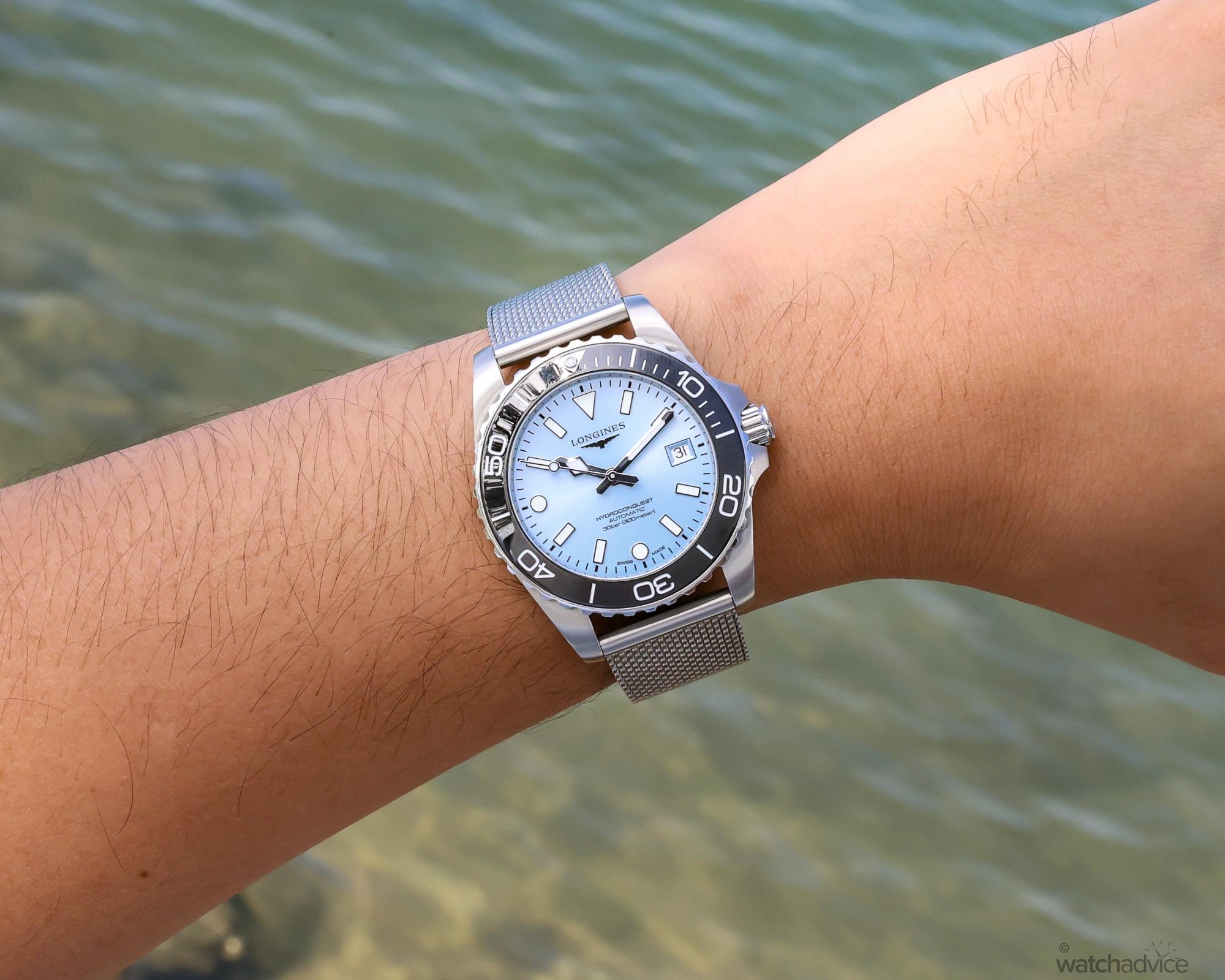
Personally, I lean towards the pro–in-house argument. Vertical integration feels closer to “in-house” than, say, a brand being supplied by a third-party manufacturer like Sellita or Soprod. However, it’s not what I would call a true “manufacture” movement, where everything is developed and produced entirely under one roof.
At this point, though, it’s splitting hairs, and it doesn’t detract from the capability of the Cal. L888.5. As Matt said, the 3.5Hz beat rate may take some getting used to, but it’s a capable movement built on equally capable architecture. It’s just a shame it’s not COSC chronometer certified, but that’s neither here nor there when you look at that price point…
Final Thoughts
Longines is one of the most consistent watch brands in the horological industry, but lately we’ve seen it step out of its comfort zone to try something new. From spending time with this 39mm HydroConquest, I can say that, for the most part, they’ve succeeded. The new collection presents itself as a modern continuation of the previous model, thoughtfully updating the build quality, appearance, and general operation of the watch.
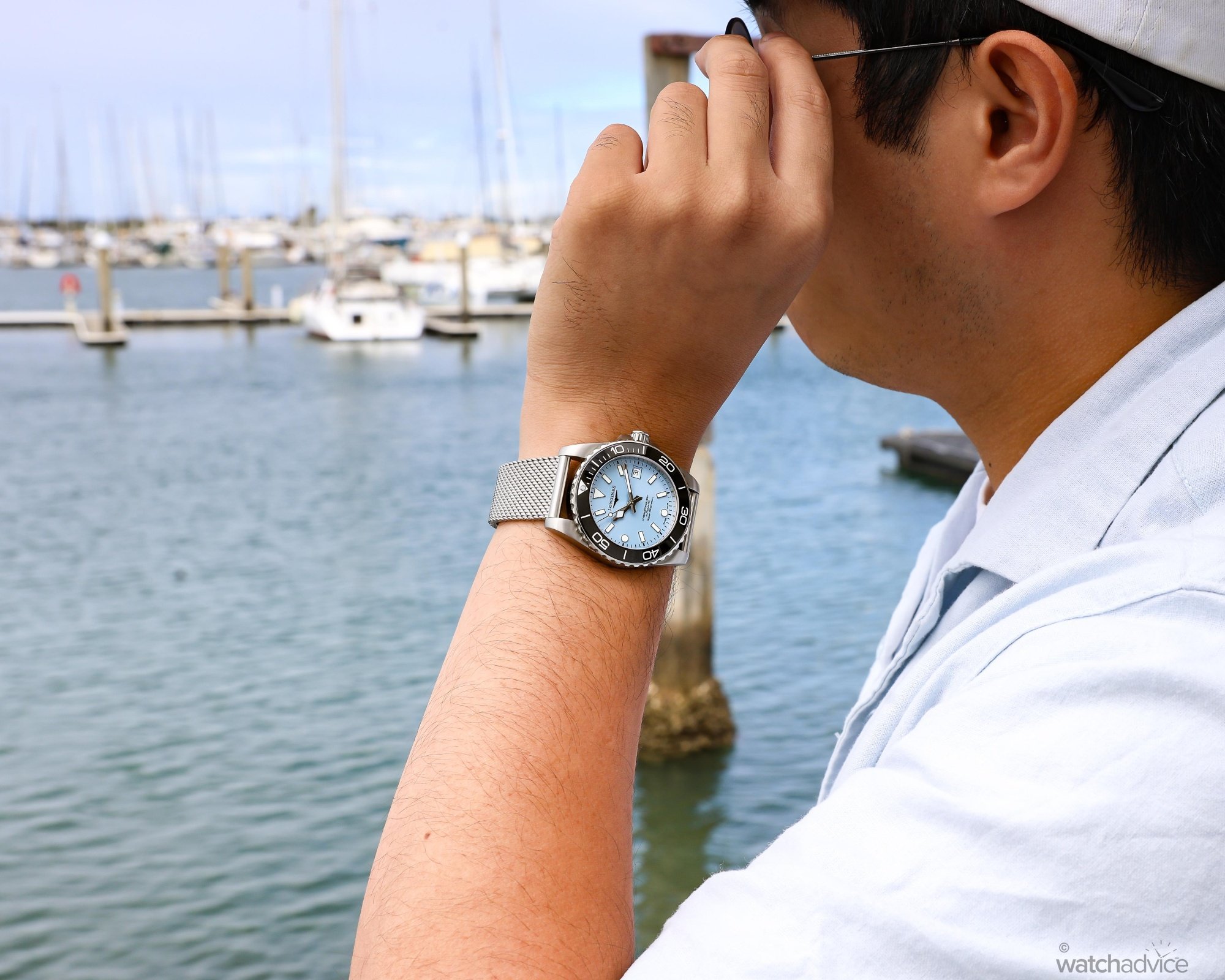
My reservations remain regarding the design. Time will tell whether the HydroConquest has become more or less distinctive within the often rigid design principles of the dive watch category.
But in the limited amount of online digging I’ve done, as well as conversations with watch lovers in Brisbane, opinions on the new collection have been generally positive. And after experiencing the watch while lounging at Manly Boathouse and trudging through mud at Springbrook, I agree.
At AU$3,550, Longines has once again positioned itself in a highly compelling price point. That doesn’t mean there aren’t alternatives. In the lower band, I’d look towards the AU$3,250 Doxa SUB 300T models, while the higher end is occupied by the AU$3,900 Oris Aquis and the CHF 2,150 (approx. AU$3,800) Titoni Seascoper. But for the combination of capable function, sleek form, and brand recognition, it’s difficult to pass on the Longines HydroConquest.
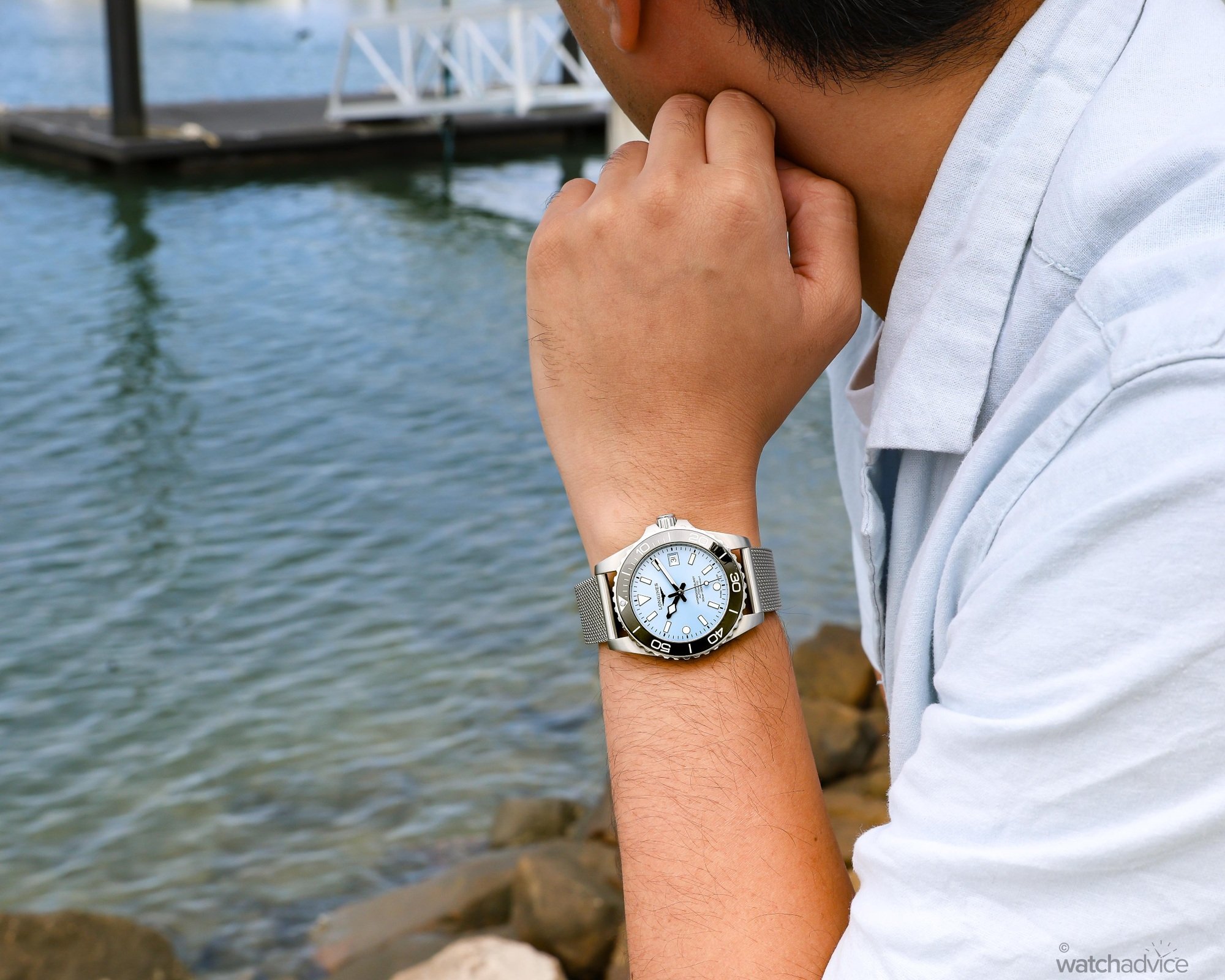
So, is Longines’ new 39mm HydroConquest the best modern Longines? I’d say it’s very close. Though I lament the departure of some of the collection’s most recognisable details, I believe this new chapter shows real promise.
And while the old-school design language still remains in the Master, Flagship, and Legend Diver lines, both the Conquest and HydroConquest are exactly what Longines needed to bring younger eyes back to the brand. Well… that, and I’d probably buy anything if you strapped it to the bulging arms of Henry Cavill. A job well done to Longines on both fronts.
Reference & Specifications
| Feature | Specification |
|---|---|
| Reference | L3.779.4.99.6 |
| Dimensions | 39mm case diameter x 48.1mm lug-to-lug x 11.7mm thickness |
| Case | Stainless steel |
| Dial | Sunray brushed ice blue with black accents |
| Crystal | Sapphire |
| Caseback | Closed, engraved |
| Movement | Automatic Cal. L888.5 with date complication |
| Power Reserve | 72h |
| Beat Rate | 3.5Hz / 25,200VpH |
| Water Resistance | 300m / 30bar |
| Strap/Bracelet | Mesh bracelet with micro-adjustable folding clasp |
Australian Retail Price: AU$3,550
Availability: Available now, at Longines boutiques, authorised retailers, and online at Longines.com
Image Gallery