
The Raymond Weil Freelancer Skeleton is more architectural than ever, but does the new frame make it more compelling? Let’s find out!
What We Love:
- Sharp design
- Symmetrical open heart display
- Comfortable but strong steel bracelet
What We Don’t:
- Monochrome look makes it less legible
- Lacklustre movement finishing
- Is skeletonisation superb or superfluous?
Overall Rating: 8.5/10
- Value for Money: 8.5/10
- Wearability: 8.5/10
- Design: 8.5/10
- Build Quality: 8/10
In watchmaking, relentless mechanical engineering is often tantamount to showcasing a brand’s artisanal qualities. There are many ways to champion both concurrently. You could refine fundamental mechanics to a dizzyingly high degree, or embellish and romanticise the craftsmanship within. Neither is the wrong answer, but both have their caveats, especially as you climb the luxury ladder. But what if you wanted to do both without having to run your wallet dry?
Enter Raymond Weil, ever the specialist in accessible, elegant horology. For what is now (at the time of writing) five decades, the brand emphasises discreet Swiss elegance and classical heritage at a contemporary price point. Though the battle has often been uphill, the last few years have seen Raymond Weil stage a major turnaround in both quality and reputation. Today, it’s undoubtedly one of the frontrunners in the middle market, standing alongside other mainstay contenders.
While many of its designs pride themselves on restraint, one line within the Freelancer collection takes quite the opposite approach. Since 2016, the brand has utilised skeletonisation as a singular, standalone design element, championing craftsmanship without compromising mechanical practicality.
This year, it unveiled its latest addition to the Freelancer Skeleton roster in a new, fully greyed-out rendition. Sporting the same skeletonised movement alongside a pared-back finish, it offers a fresh take on familiar architecture. But does the less flamboyant design make it more compelling? That’s what I wanted to find out when I had the opportunity to take the new Freelancer Skeleton out for review.
First Impressions
It’s no news to watch enthusiasts or regular Watch Advice readers, but Raymond Weil has been on quite the tear lately. The ‘mall watch’ reputation of years past wasn’t lost on any of the team members I’ve spoken to, so to acknowledge such a belittling remark and rally regardless is an impressive feat.
But ‘beating the allegations’, as it were, isn’t achieved simply by saying you’ve done so. Raymond Weil has proved it through an incredible body of work, beginning with its GPHG award-winning Millesime in 2023.
We’ve been paying close attention to the brand’s progress at Watch Advice for quite some time, though. Chamath himself reviewed one of the brand’s previous skeletonised models, so it’s safe to say the Freelancer Skeleton wasn’t entirely alien to us. And yet, as I handled this latest reference, something about it felt distinct.
The finishing and dial colour, as I’ll explore in the design segment, struck me as unusual choices. Why would you want the skeletonisation to blend in? Why restrain the finishing to such a degree? I was eager to figure out the reasoning behind these decisions and determine whether they were part of an intentionally considered design philosophy or simply another case of a brand doing something different for the sake of it.
The Design
Not much about the general structure of the Raymond Weil Freelancer Skeleton has changed for those familiar with the line. However, it’s the presentation and finishing of this new reference that gives it a more distinctive profile among its peers.
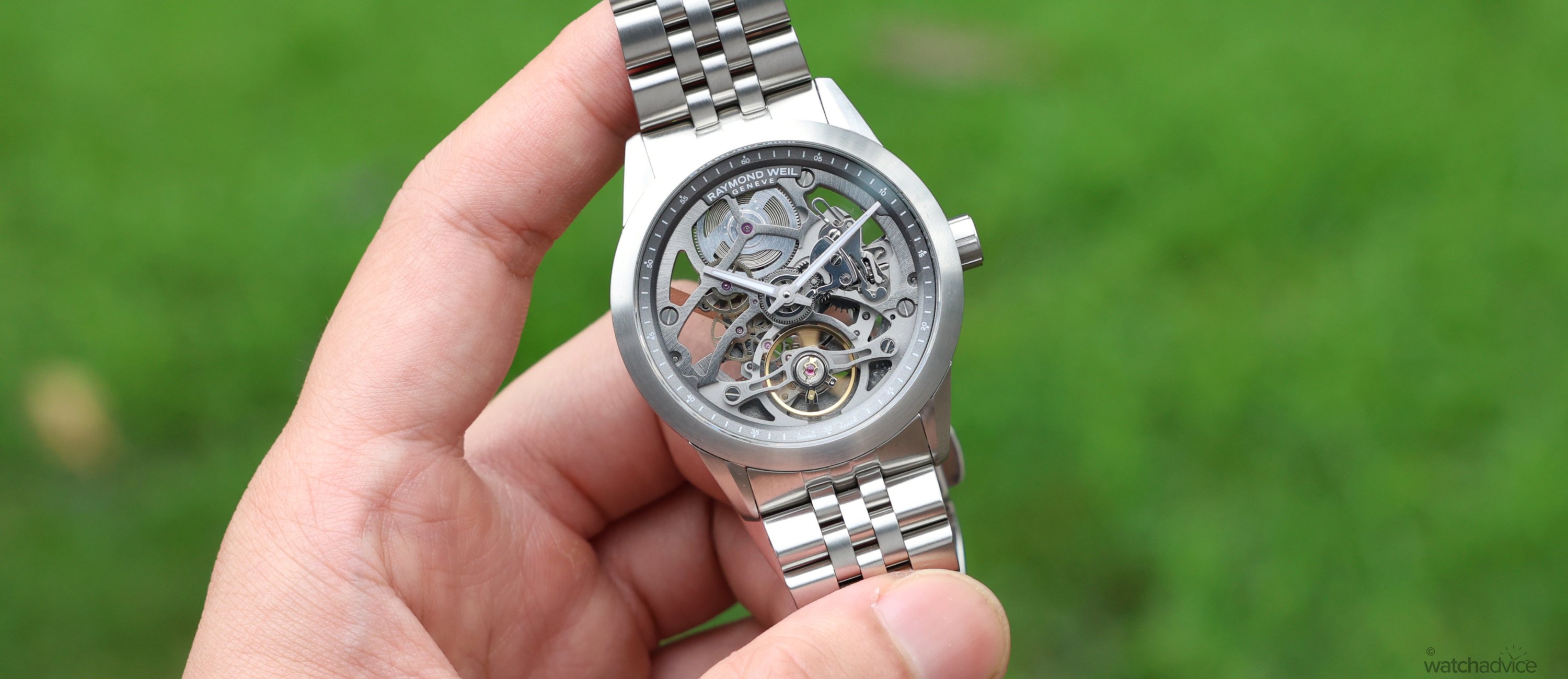
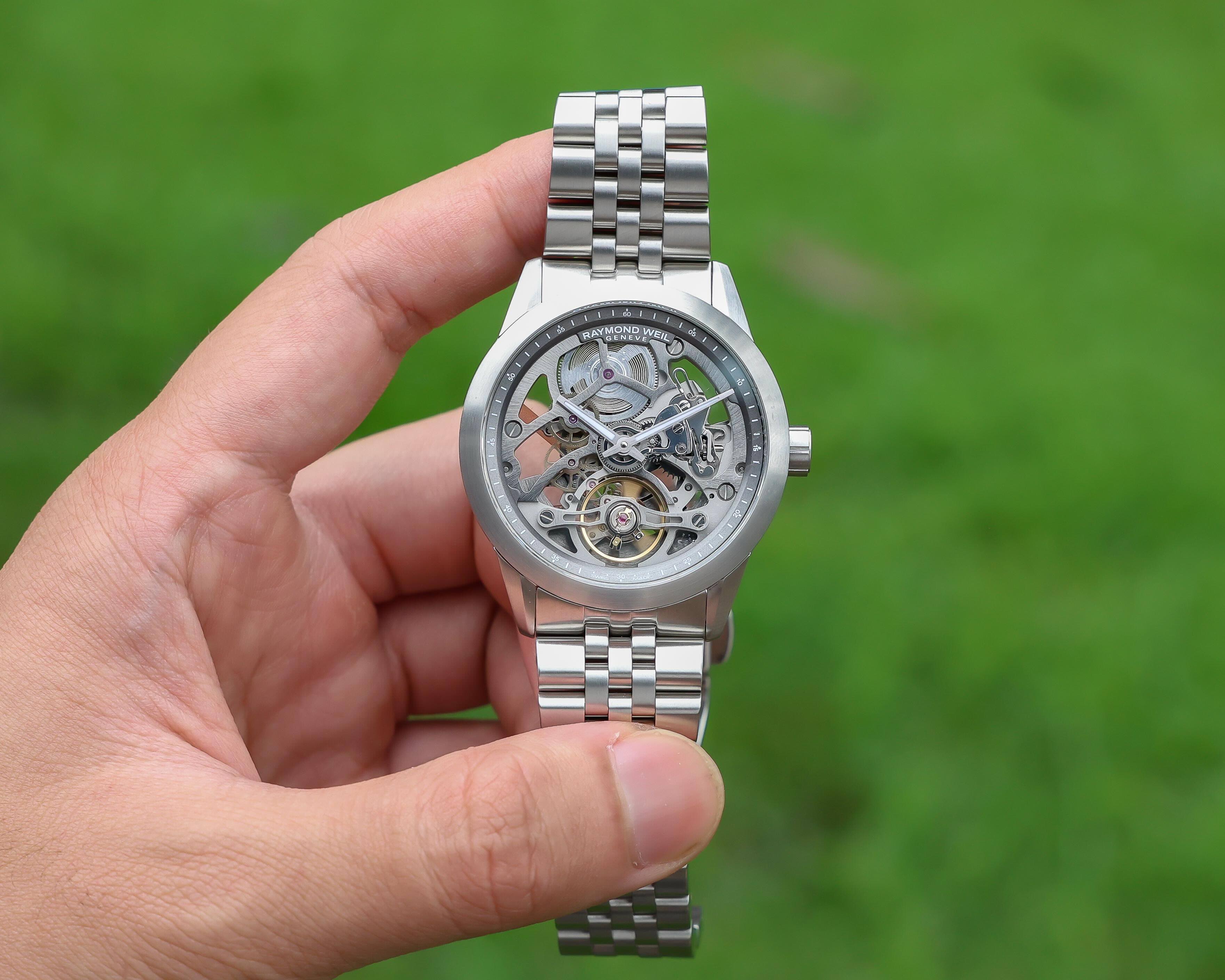
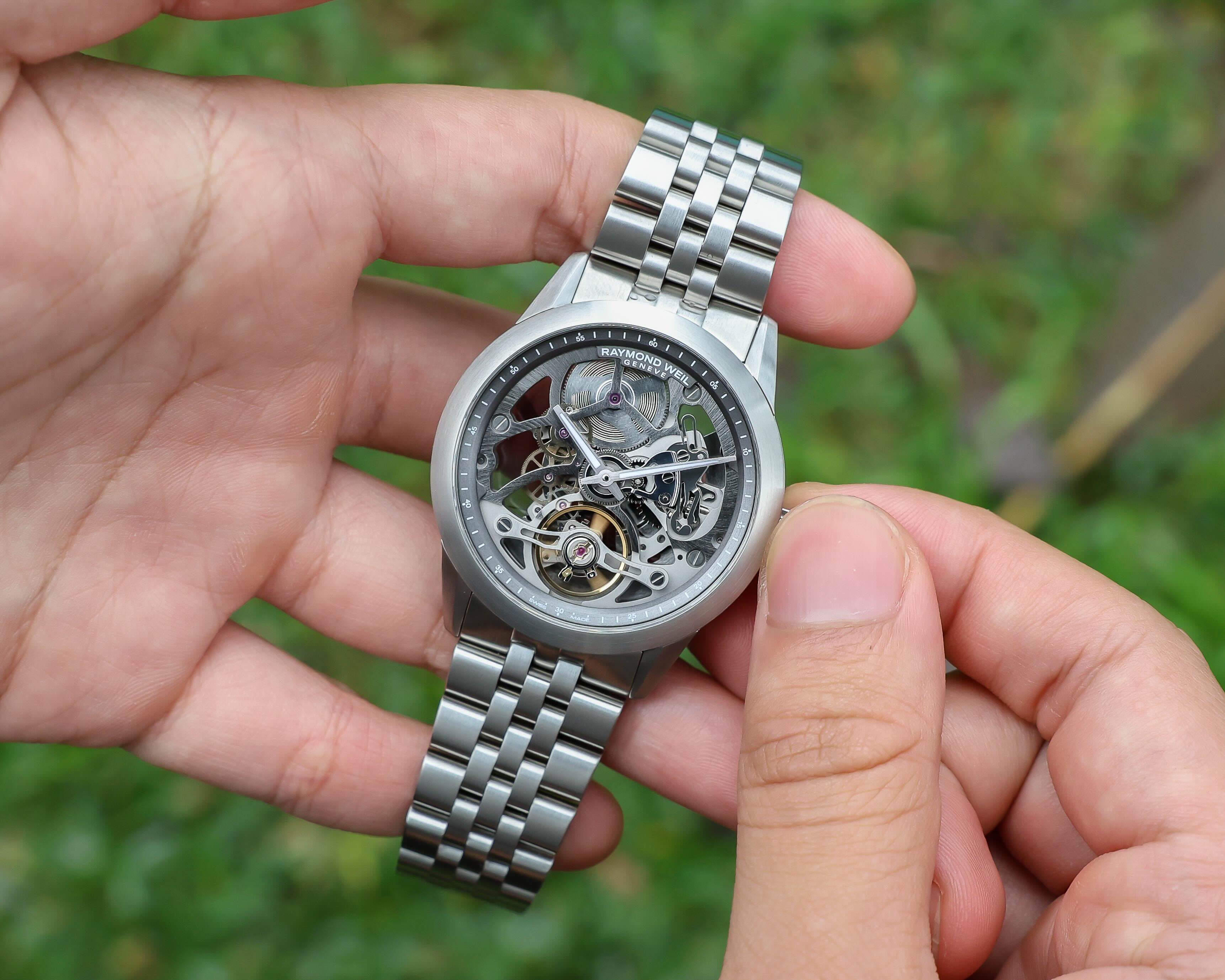
Starting with the dial, or lack thereof, you’re greeted by a skeletonised version of the Calibre RW1212. While I’ll get into the movement’s specifications later, its openworked architecture makes it an inherent part of the watch’s overall design. Featuring isolated bridges that act as stripped-back structural supports, the Freelancer Skeleton places the movement itself at the centre of attention.
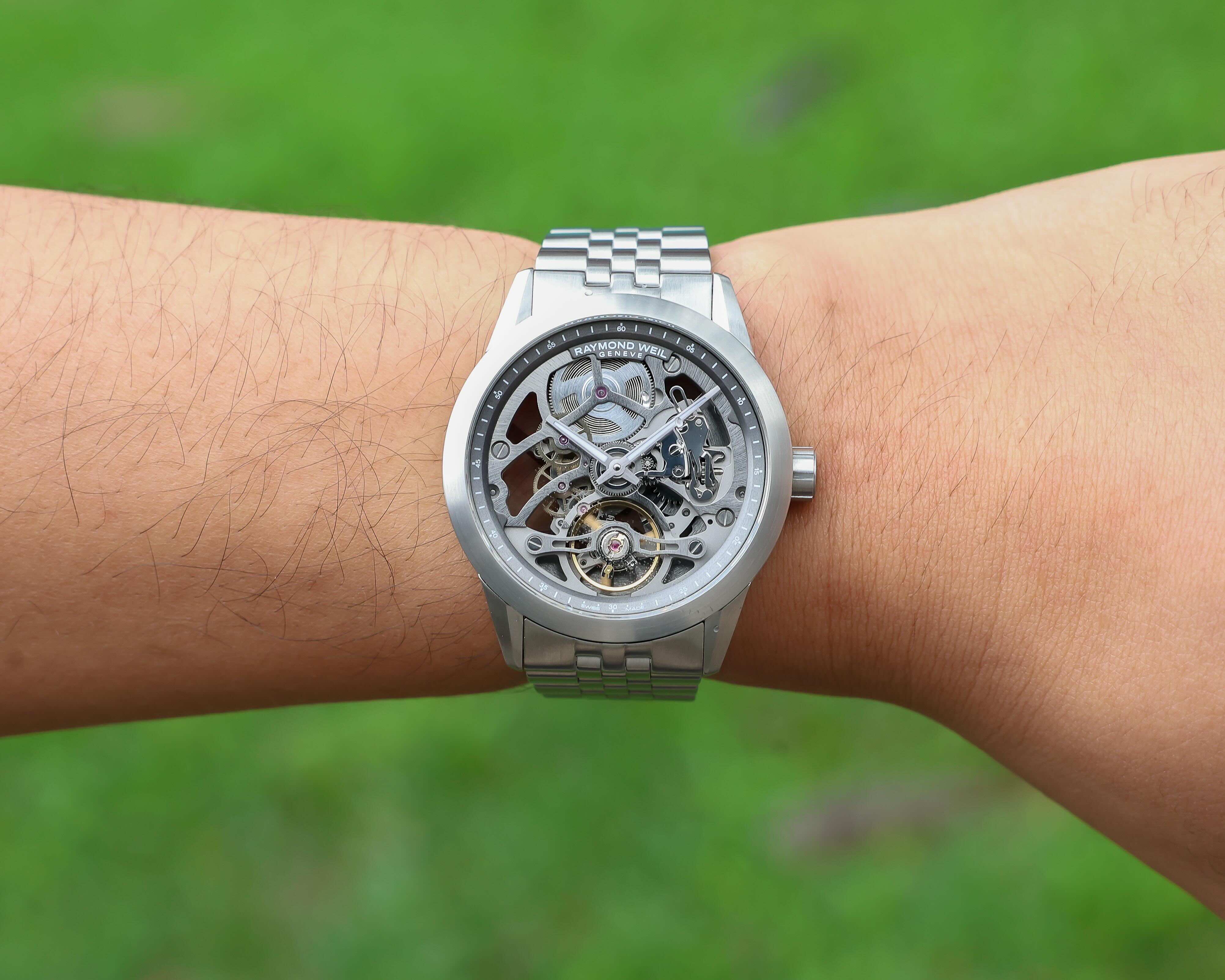
What immediately stands out to me is the six o’clock balance wheel, held in place by a single bridge. In my opinion, this is one of the best design choices any brand has made in an open-heart or skeletonised movement. While an exposed balance wheel offers a degree of visual intrigue through its movement, the asymmetry of some designs can really throw off the overall appearance of a watch.
Raymond Weil avoids this problem, with the open heart almost acting as a substitute tourbillon. Sure, it doesn’t serve the same function, but it’s still a visually compelling conversation starter without the hefty price tag, either at purchase or during servicing.
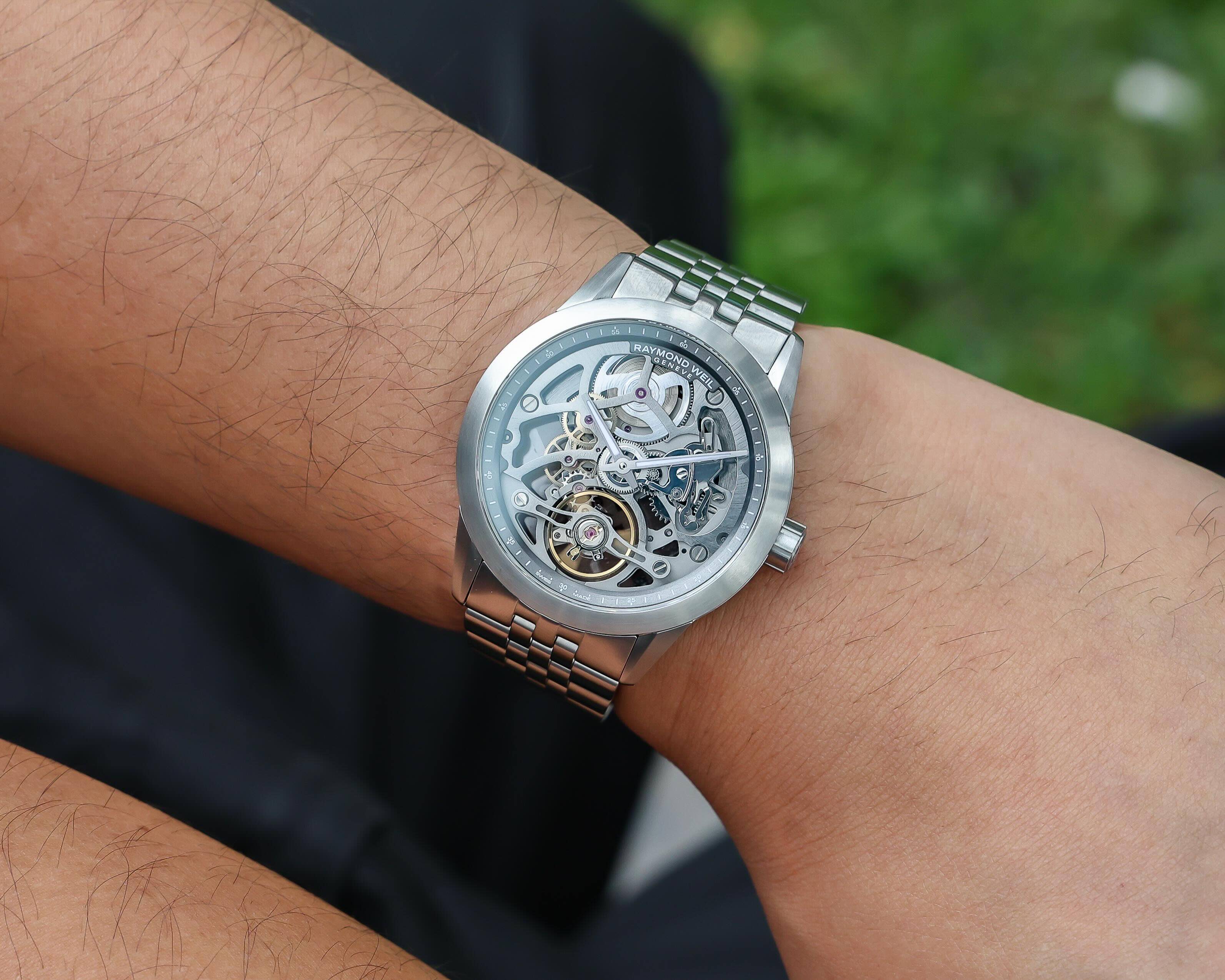
Skeleton dials are a subject of constant debate in the watch world. Some appreciate their aesthetic appeal, while others believe they clutter the overall design of a watch. In my opinion, both arguments hold some truth when it comes to the Raymond Weil Freelancer Skeleton. It occupies an interesting middle ground, with its skeletonisation finished in a sunray-brushed anthracite grey.
Closely matching the case and bracelet, the colour keeps the visual intrigue of skeletonisation while offering something more than an incidental design choice. Rather, it goes against the very nature of an openworked dial, making the watch more stylistically cohesive. Put simply, this Freelancer Skeleton succeeds where skeleton dials usually don’t: blending in while standing out at the same time.
That said, it does have its drawbacks. While the white outer minute track is fairly easy to read and follow, the rhodium-finished baton hands can be difficult to pick out at a glance. It’s a problem inherent to many skeletonised watch designs, and Raymond Weil encounters the same pitfalls here.
The easiest solution lies in contrast. Raymond Weil could have made the grey dial slightly darker, for example, without compromising the watch’s visual identity. Alternatively, the hands could have been finished in a different colour, perhaps heat-blued, to make them more distinct against the skeletonised backdrop.
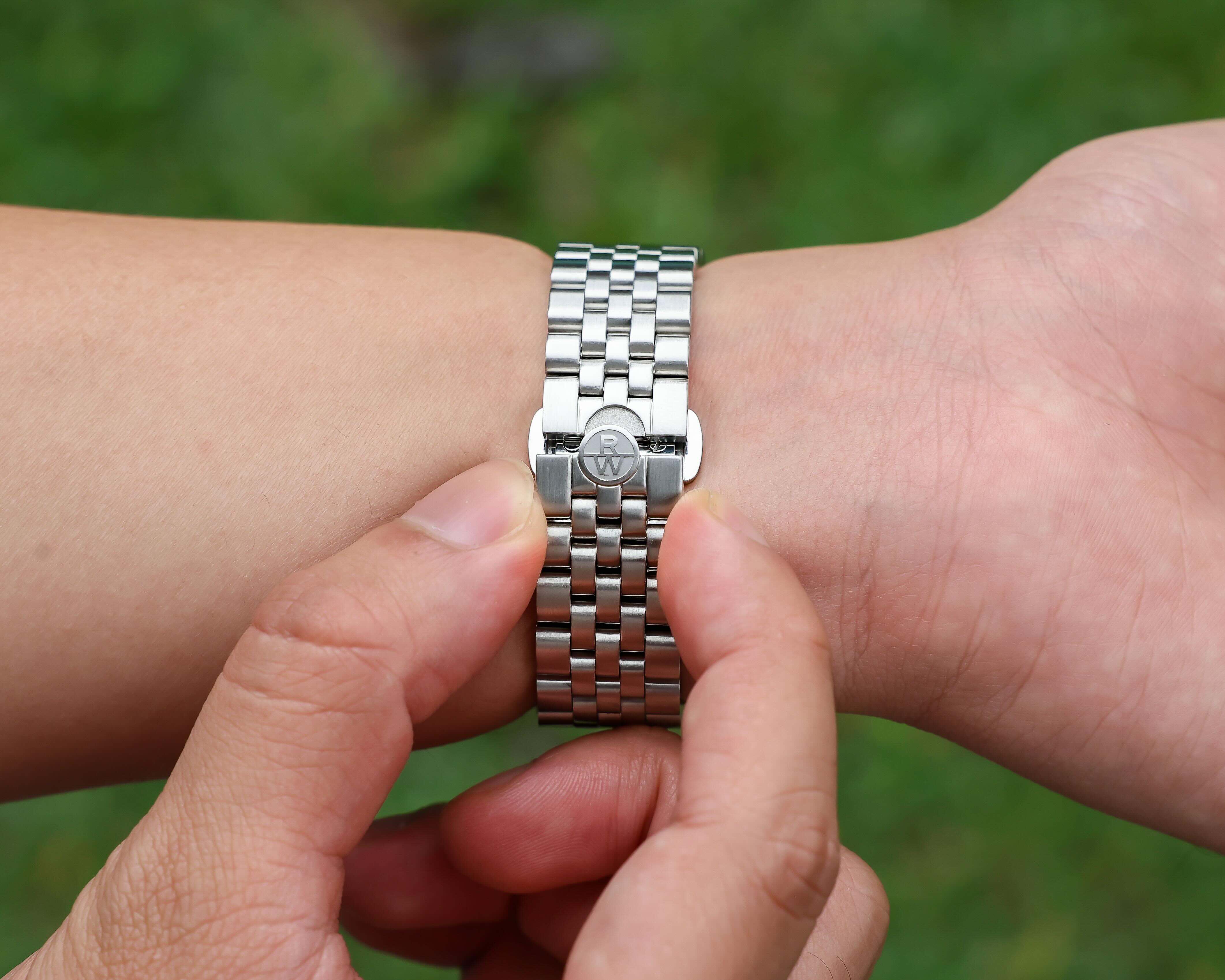
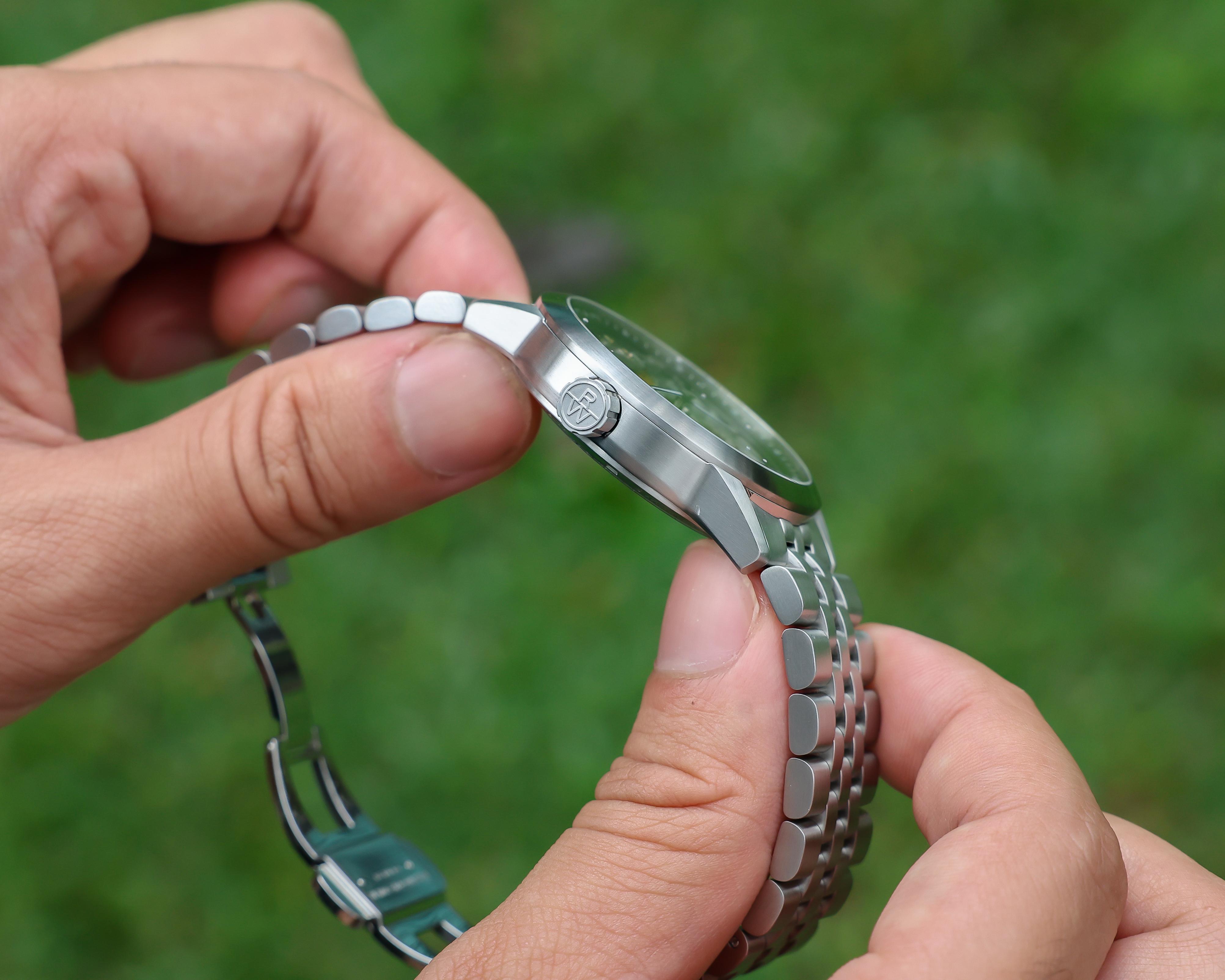
Moving outwards provides little fanfare, as the case and bracelet are entirely brushed. Radial brushing dominates the bezel, while vertical and horizontal brushing runs across the case’s various surfaces. This includes the knurled, signed crown, keeping the overall frame rather simple. A five-link bracelet tapers slightly towards the clasp, terminating in a folding butterfly clasp. Finally, the caseback features the usual serial engravings befitting a Raymond Weil watch.
While the finishing might seem uninspiring to some, I think the brand made a really good call. The skeletonisation is extravagant enough on its own, and the colouration allows it to blend in effectively. Combined with the restrained finishing, it gives the new Freelancer Skeleton a sharp, industrial and almost brutalist presence, somehow evoking mechanical honesty alongside aesthetic drama.
How It Wears
Interestingly, Raymond Weil has elected to outfit the Freelancer Skeleton with an entirely new case diameter. While the brand has previously implemented the skeletonised design in 42mm and 38mm case sizes, this marks the first time it has been brought to a mid-size format.
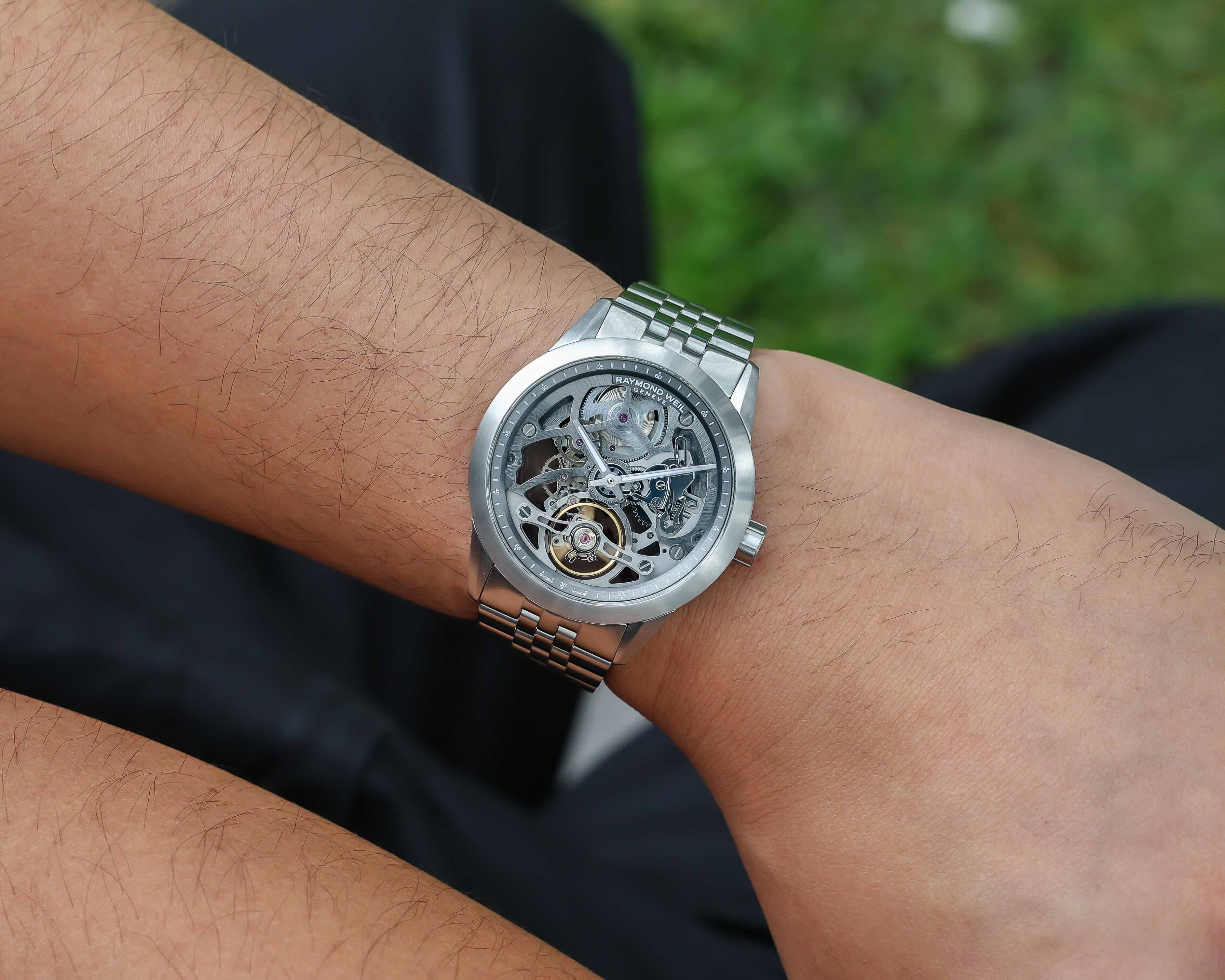
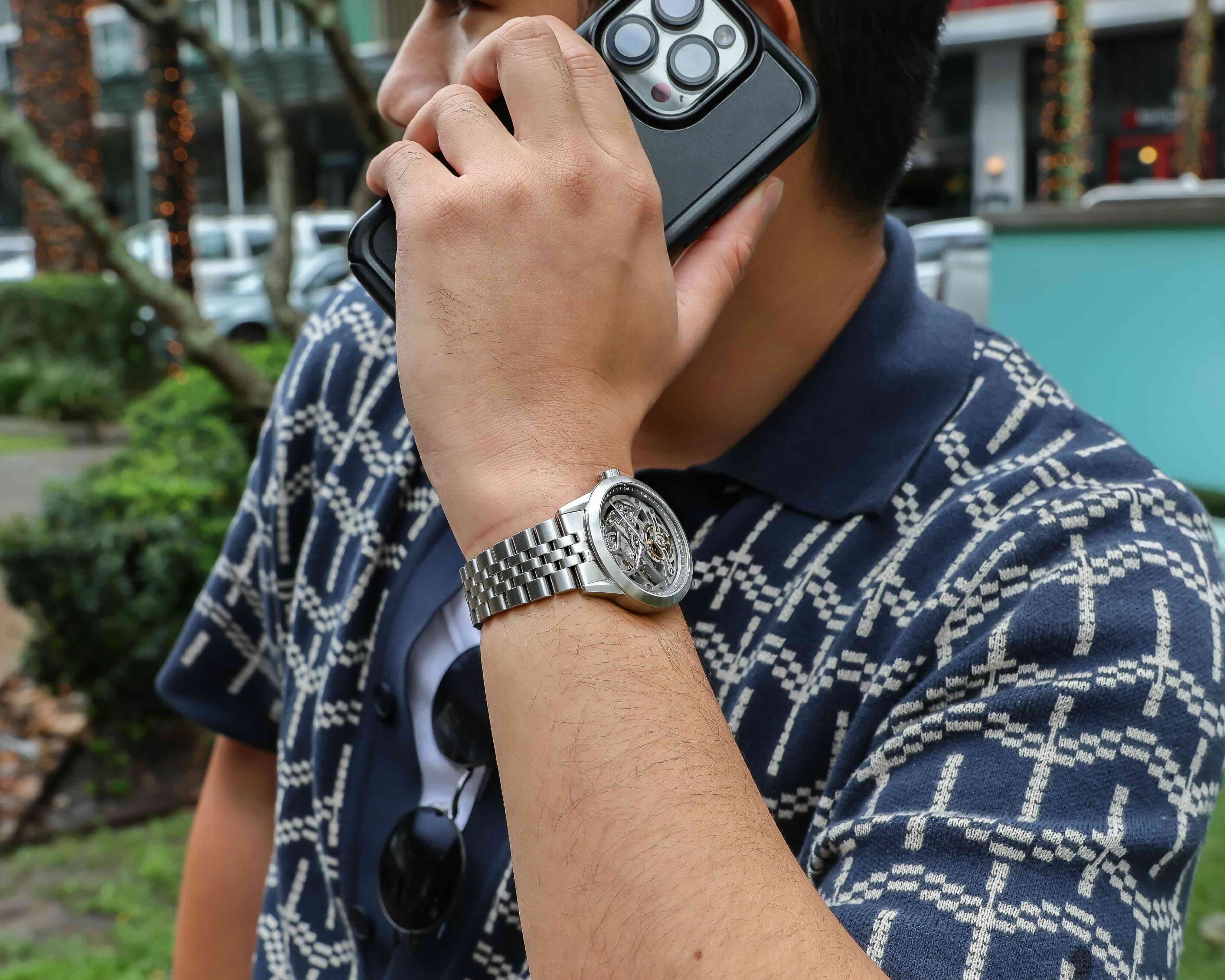
Measuring 40mm in diameter and 10.6mm in thickness, the Raymond Weil Freelancer Skeleton offers a bold, masculine-leaning wearing experience. While I don’t have a definitive lug-to-lug measurement just yet, my estimate would put it around the 48mm mark. So, if you have a wrist like mine (6.4in/16.4cm), you should be perfectly comfortable wearing one of these.
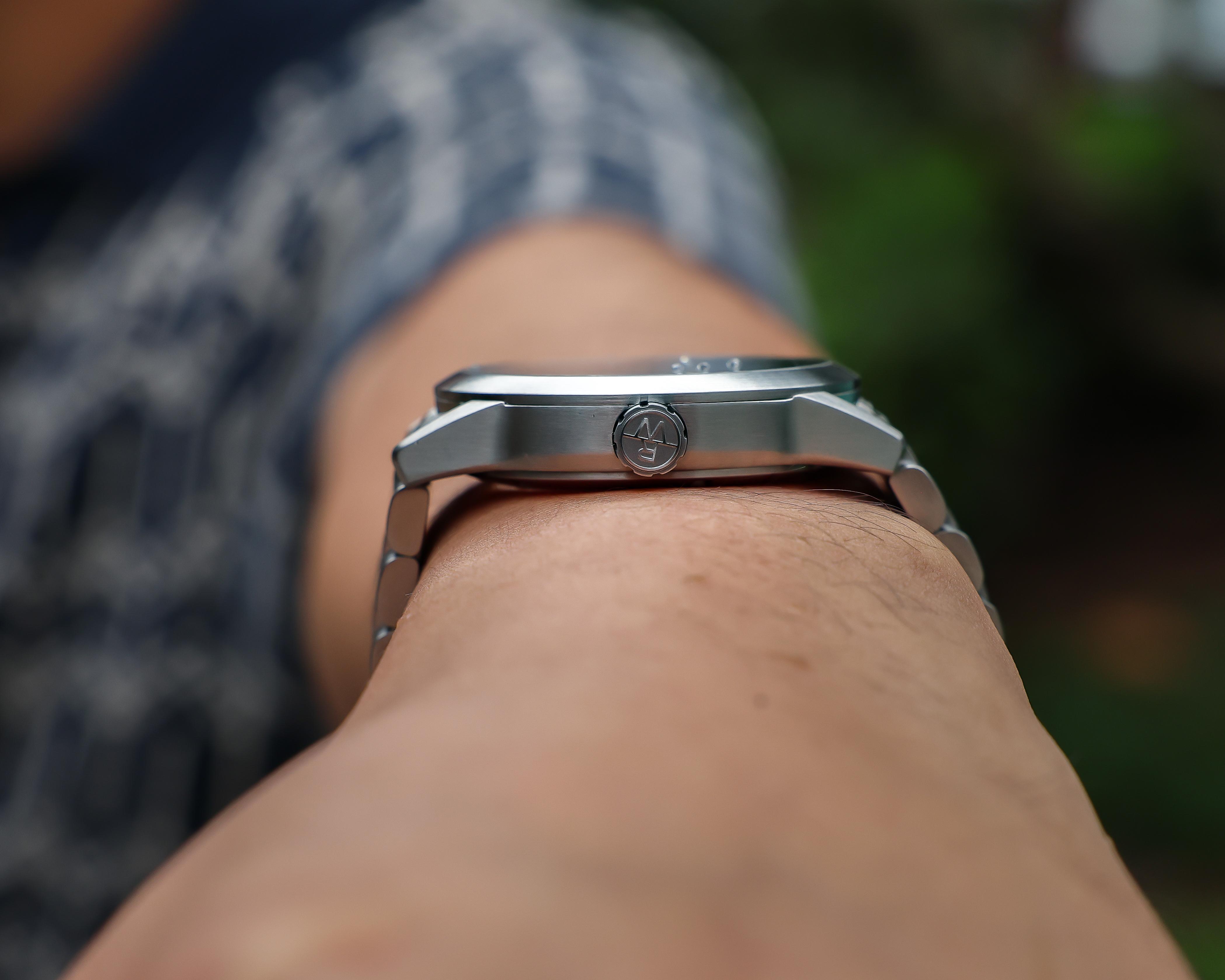
Despite the sub-11mm thickness of its stainless steel case, which makes for a fairly slim wear, the watch’s proportions are emphasised by its slab sides. The lugs further influence its on-wrist profile, curving only minimally towards the wrist. Together, these elements make the watch appear larger than it actually is on paper. There were several times I had to double-check the specifications myself, as my eye kept telling me it felt more like a 42mm watch.
This impression is only reinforced by the bracelet, which feels just as substantial as the case. The five-link was a great choice, as it breaks up the blockier aesthetic of the case profile and provides added comfort to the wearing experience. Combined with the brushed finishes and screw-down crown offering 100m of water resistance, the Freelancer Skeleton feels closer to a tool-oriented sports watch than one designed for more elegant occasions.
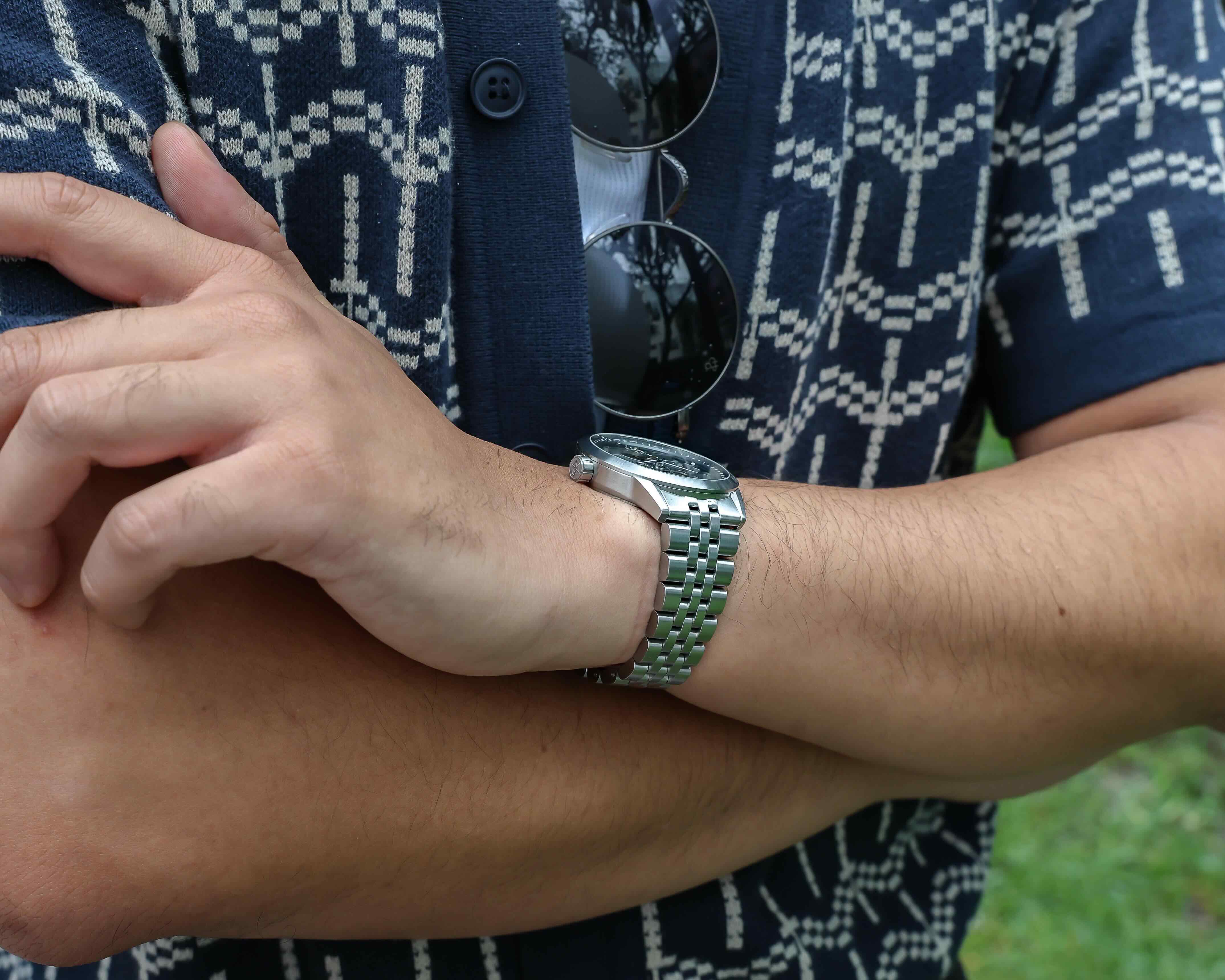
That’s hardly a bad thing, mind you. Norqain, for example, is a brand that excels in precisely this territory. But it does make you wonder whether this is the direction Raymond Weil intends to take the Freelancer Skeleton line from here on. The collection’s name alone suggests a multifaceted and versatile approach, so having sportier skeleton dials sit alongside dressier watches like the Freelancer Complete Calendar doesn’t seem like much of a stretch.
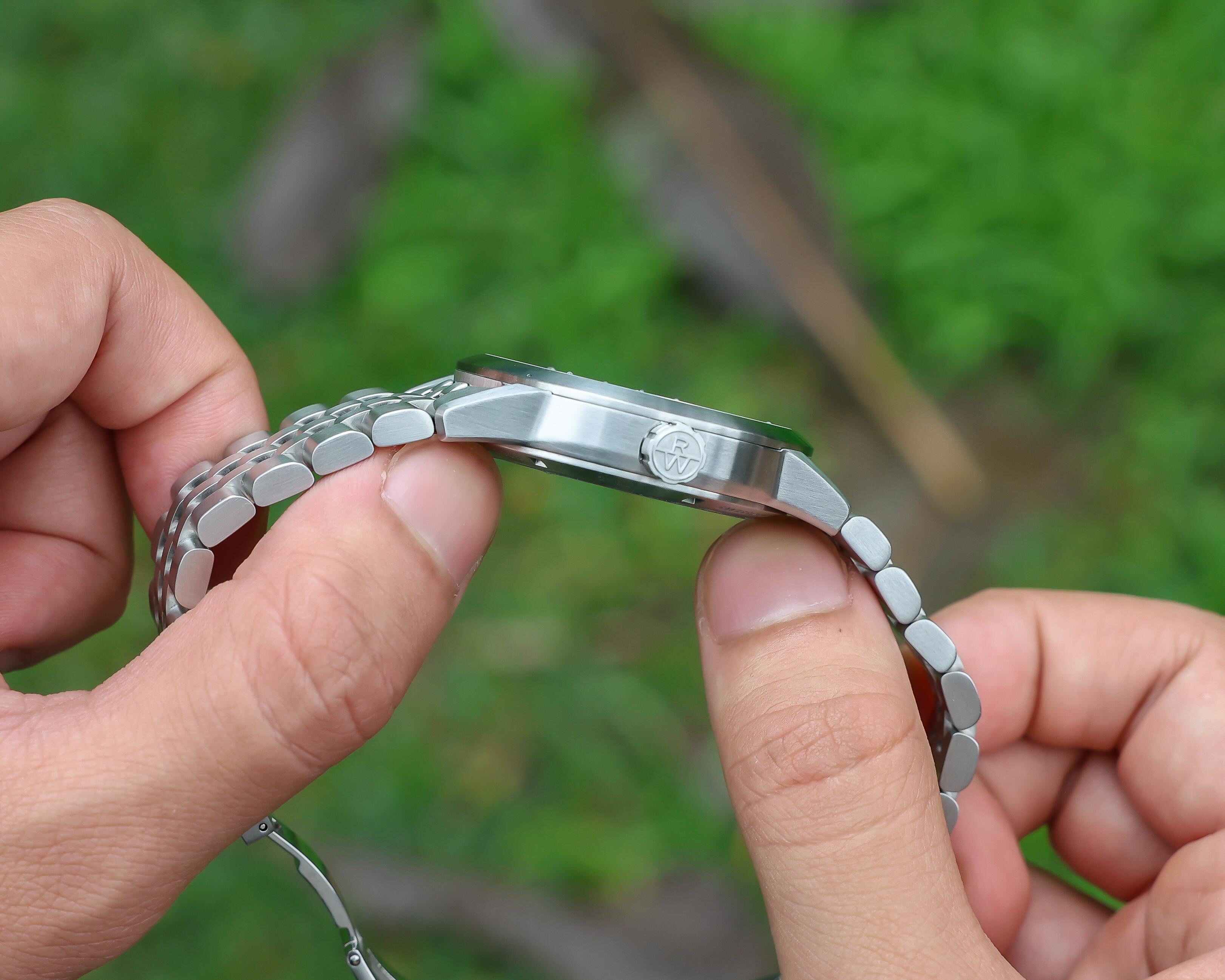
Overall, I think Raymond Weil has established the identity of this new watch quite well, and that translates into the wearing experience. My only personal pet peeve is the sequential butterfly clasp, which can become annoying if you prefer to fasten your watch differently from Raymond Weil’s intended configuration. But rather than being a design flaw, that’s more a matter of personal preference.
The Movement
The movement powering the new Freelancer Skeleton is the automatic Calibre RW1212, introduced a year after the collection’s debut in 2016. Utilising a luxury-standard 4Hz (28,800VpH) beat rate and offering a 41-hour power reserve, it almost immediately superseded the original Calibre RW4215 introduced with the collection.
The improved power reserve wasn’t the only difference between the two movements, though. Primarily, the Calibre RW1212 omits the seconds hand found on its predecessor and features the aforementioned six o’clock balance wheel. The newer movement is also significantly more skeletonised than the initial Freelancer Skeleton models, which had a much more closed-off appearance.
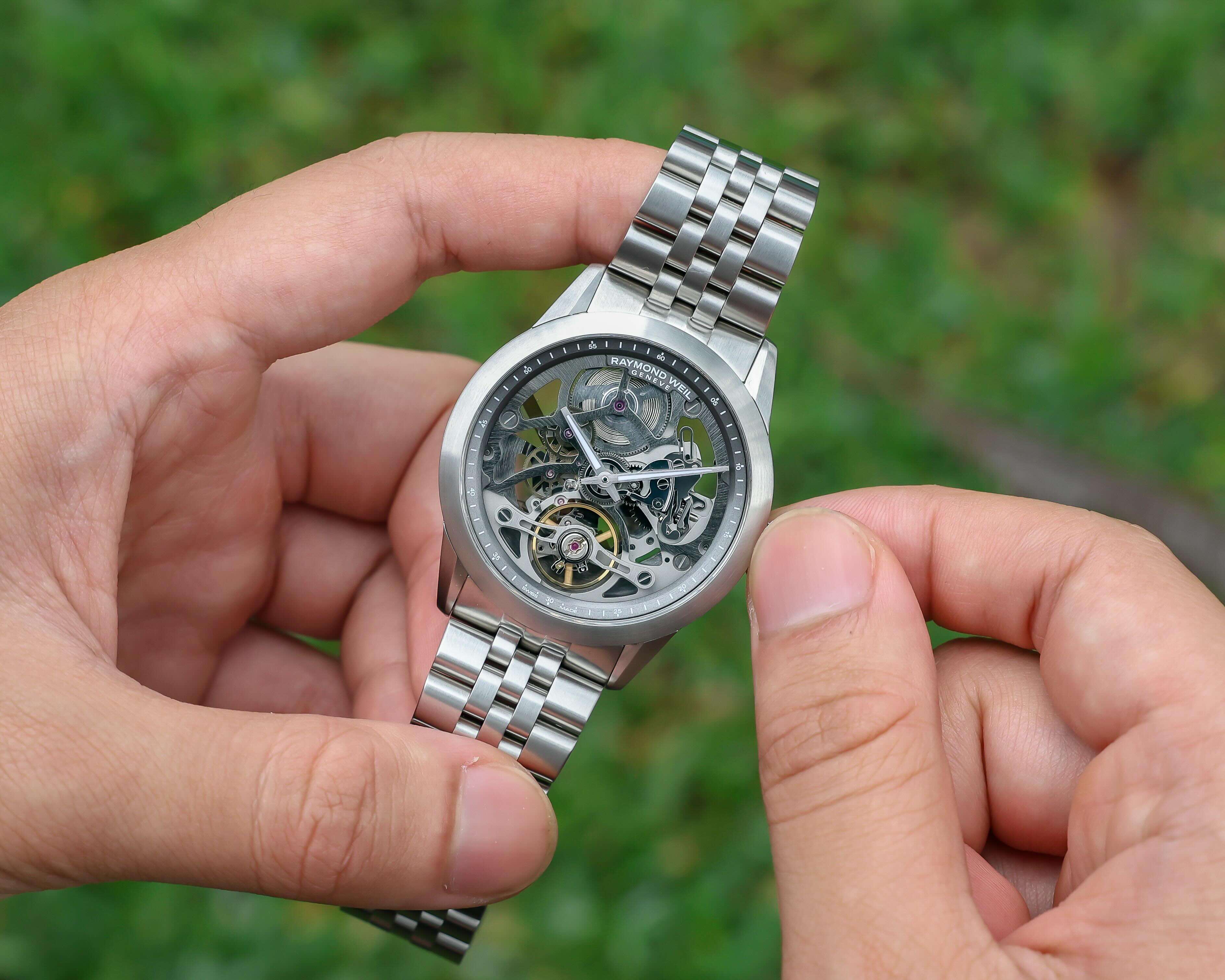
Perhaps the most significant difference, however, is that the Calibre RW1212 was made specifically for Raymond Weil by its manufacturing partner, Sellita. That doesn’t make it a 100% in-house movement, but it was developed exclusively for Raymond Weil by its partner. The name RW1212 is particularly poignant, as 1212 is the postal code for Grand-Lancy in Geneva, Switzerland, where Raymond Weil’s headquarters are located.
Once again, though, I find myself disappointed by the lack of movement finishing. While the movement features a dark grey signed rotor and more of the sunray-brushed finishing seen on the dial, little beyond the skeletonisation has been done to elevate its appearance.
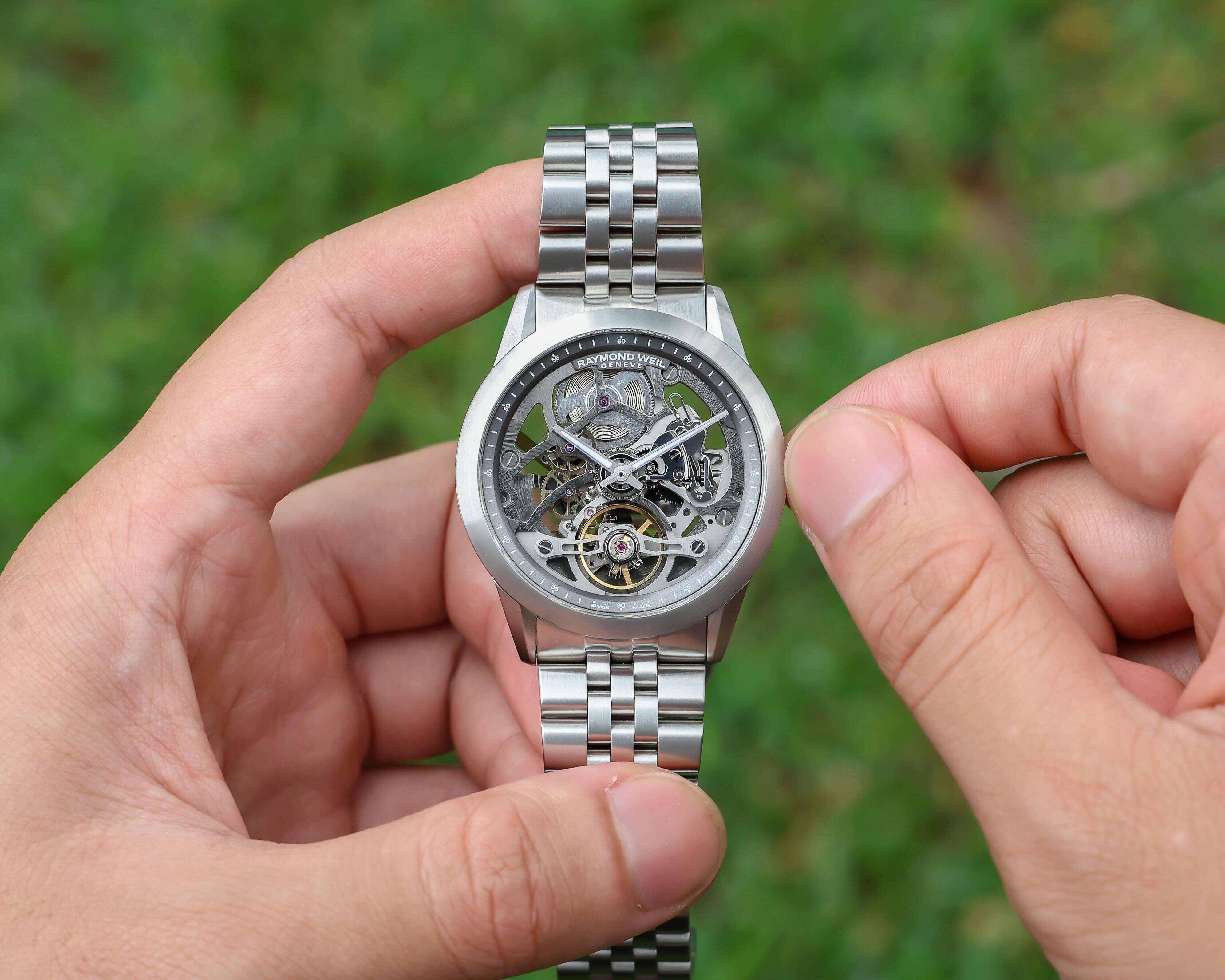
I understand that, from the front, it’s intended to blend in somewhat, but a blued screw or two would certainly have added something without going dramatically overboard. Raymond Weil is no stranger to such details, either, as demonstrated by the Toccata Heritage. As such, the absence of even a small additional layer of finishing feels like another missed opportunity.
As far as performance goes, however, Sellita’s signature reliability should be enough to let the watch hold its own in almost any situation. The manufacturer has proven time and again to be one of the class leaders in third-party movement production, filling the shoes left behind by ETA. It’s a reassuring proposition for Raymond Weil, allowing the brand to leverage its partnership with Sellita to continue producing accessible, functional and relatively good-looking movements.
Final Thoughts
Reviewing this watch really made me put my product design hat on. From a baseline perspective, you wouldn’t think much had changed. All that’s different is the case size, finishing and dial colour.
Yet, it’s the purposeful combination of these three elements that makes the new Freelancer Skeleton so interesting to me. As I mentioned earlier, it felt like more than just a happy accident, as not many brands in their right mind would try to draw less attention to the undoubtedly ornamental nature of skeletonisation. So why do it?
Searching for the answer to that question, I went down a scholarly rabbit hole. In particular, I became enamoured with the work of Vibeke Riisberg and Anders Munch in their article, “Decoration and Durability: Ornaments and their ‘appropriateness’ from fashion and design to architecture”. One important parameter they propose for assessing features as ornamentation is that “They should both be able to attract attention and stand back as frame or background.”
Had the Raymond Weil Freelancer Skeleton featured a more compelling case-finishing scheme, skeletonisation alone might have been too much: ornamentation for the sake of the visual stunt. But finished in accordance with the restrained brushing of the case and bracelet, it attracts attention as the central feature while also blending seamlessly into its background. I believe that was the intention all along, whether academically informed or not.
Of course, it’s not textbooks that sell good watch designs, but the value proposition of the piece itself. At AU$6,500, the Freelancer Skeleton sits confidently in the middle market. Beyond the brand’s catalogue, there are few similarly sporty competitors, such as the AU$5,750 Alpina Alpiner below and the AU$6,900 Baume & Mercier Riviera Squelette above. Both offer similar skeletonised aesthetics, particularly the Riviera, while the Alpiner offers 200m of water resistance compared to the Freelancer’s 100m.
But while the former is aesthetically similar and the latter is tougher, both use Sellita movements. Neither has quite the same relationship with Sellita as Raymond Weil. Its more direct connection to the manufacturer gives the brand greater creative control, allowing it to develop a competent movement according to its own specifications. Should Raymond Weil choose to upgrade the platform in any way, that direct relationship with Sellita will also prove crucial. It’s an advantage neither competitor can quite match.

In that sense, the new Freelancer Skeleton is a sharp exercise in restraint and product design, demonstrating how the slightest shift in design principles can transform the entire profile of a watch. While previous models attempted to achieve a similar effect by leaning into an overtly sporty aesthetic, the industrial, architectural nature of this latest reference gives it an edge as a versatile blank canvas, even with a visual statement as bold as skeletonisation.
Reference & Specifications
| Feature | Specification |
|---|---|
| Reference | 2786-ST-60000 (Bracelet) |
| Dimensions | 40mm case diameter x 10.6mm thickness |
| Case | Stainless steel |
| Dial | Openworked skeletonised, grey |
| Crystal | Sapphire |
| Caseback | Open, sapphire |
| Movement | Automatic Cal. RW1212 |
| Power Reserve | 41h |
| Beat Rate | 4Hz / 28,800VpH |
| Water Resistance | 100m / 10bar |
| Strap/Bracelet | Steel bracelet with butterfly clasp |
Australian Retail Price: $6,500
Availability: Available now, at Raymond Weil authorised retailers or online at Raymond-Weil.com
Image Gallery