

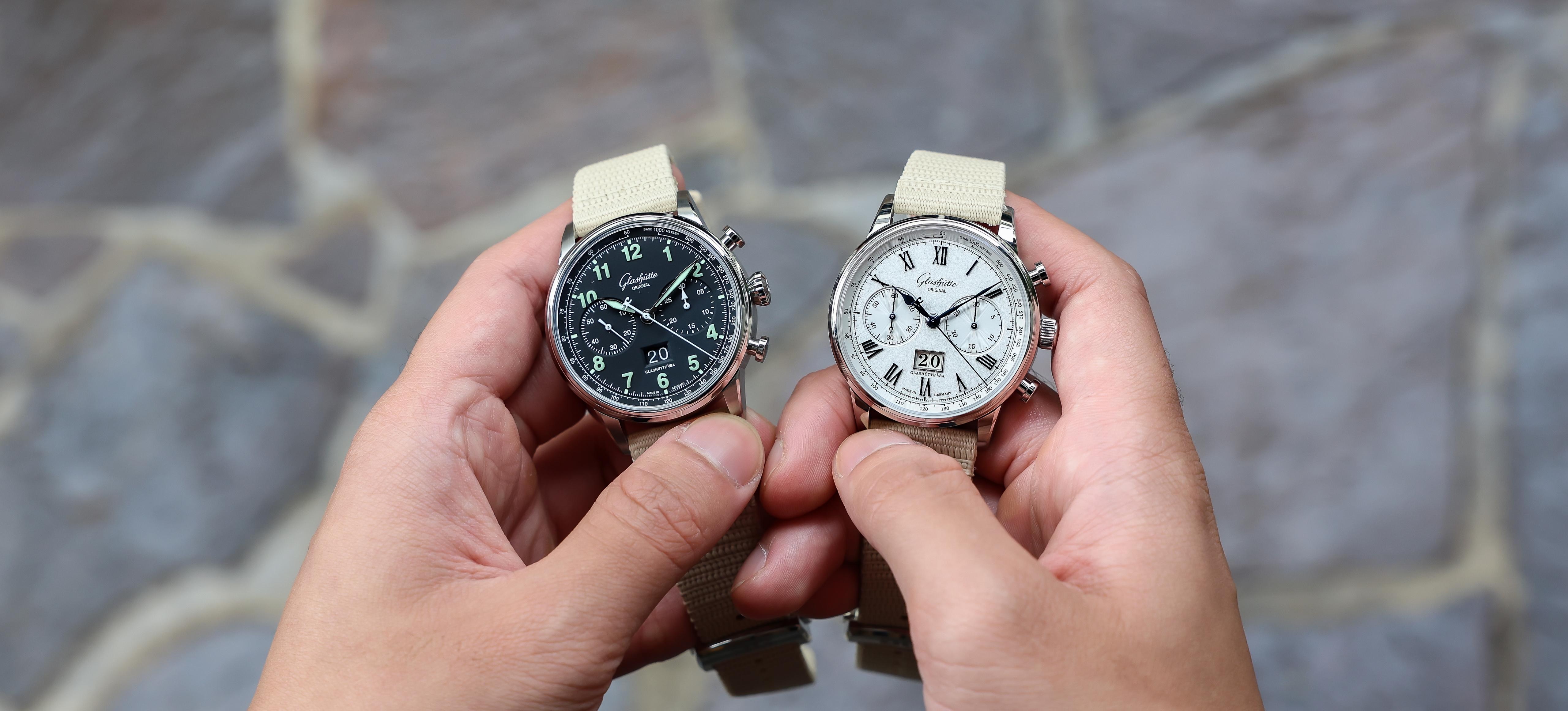
Glashütte Original have finally expanded their Senator Chronograph line, but are they exactly what enthusiasts ordered? Let’s find out!
What We Love:
- Clean, distinctive aesthetics
- Surprisingly wearable
- Impeccable movement
What We Don’t:
- Issues screwing down the crown
- Flyback oscillates a lot when activated
- Can a dress watch dress down?
Overall Rating: 9.5/10
- Value for Money: 9.5/10
- Wearability: 9.5/10
- Design: 9.5/10
- Build Quality: 9.5/10
As I mentioned during my visit to the Glashütte Original manufacture last year, the watchmaking town of Glashütte is a remarkably small place. This serves as a double-edged sword. On one hand, you’re able to take a comprehensive and condensed look at the defining history and characteristics of German horological craftsmanship. On the other, it’s all too easy for brands to be overshadowed by their next-door neighbours, even when they’re among the best in the region.
Such has been the case for Glashütte Original. While I won’t get into the Ship of Theseus philosophical riddle underpinning the tug-of-war between them and their neighbour, A. Lange & Söhne, the Swatch Group marque has often found itself overlooked, somewhat unfairly so.
In recent years, though, the narrative has changed. Drawing on its vastly accumulated and inherited knowledge, Glashütte Original has defined itself as a brand that stands apart from its competitors, in Germany and beyond.
With fine craftsmanship, Saxon design and a surprisingly thoughtful price point, Glashütte Original has steadily risen in prominence among watch enthusiasts. And while I can’t speak for every watch lover, it’s certainly won me over! And, at long last, I now have the pleasure of reviewing not just one of its latest releases, but both, in the newest additions to the Senator Chronograph lineup.
First Impressions
Prior to these releases, the Glashütte Original Senator collection had only one type of chronograph in its catalogue: the aptly named Senator Chronograph Panorama Date. Debuting in precious metals in 2014 and expanding into stainless steel in 2017, it has remained the collection’s sole chronograph offering ever since. This has, sadly, allowed it to become as overlooked as the brand itself.
But as Glashütte Original has emerged from the woodwork, so too has its watchmaking spirit. News that the brand would finally be adding two new references to the Senator Chronograph lineup was certainly music to many German watch lovers’ ears – most of all, mine.
To paraphrase Channing Tatum: “You know how long I’ve been waiting for this?” Glashütte Original has long been one of my favourite watch brands of all time. I know I say that about a lot of watch brands, but here I genuinely mean it.
Even in my first-ever meeting with the Watch Advice team, I cited Glashütte Original as a brand that excited me and one I wanted to explore further. Now, nearly three years and a manufacture visit later, I have two of its latest releases in my hands.
Don’t worry, though. I’ll do my best to keep my personal biases out of it. My preferences notwithstanding, there is no such thing as a ‘perfect’ watch. So, as I took both models for a spin, I was just as excited to admire them as I was to analyse and critique them.
The Design
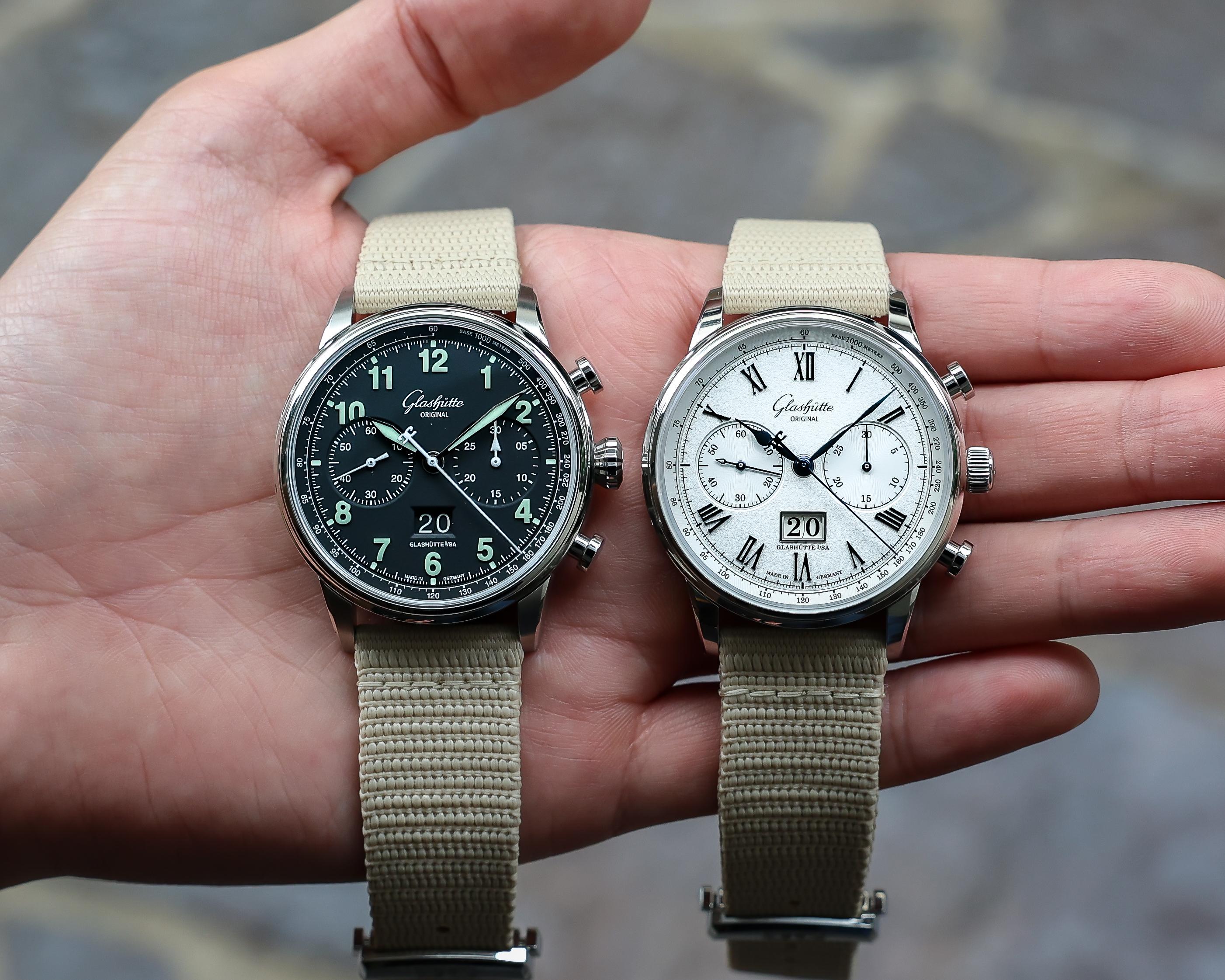
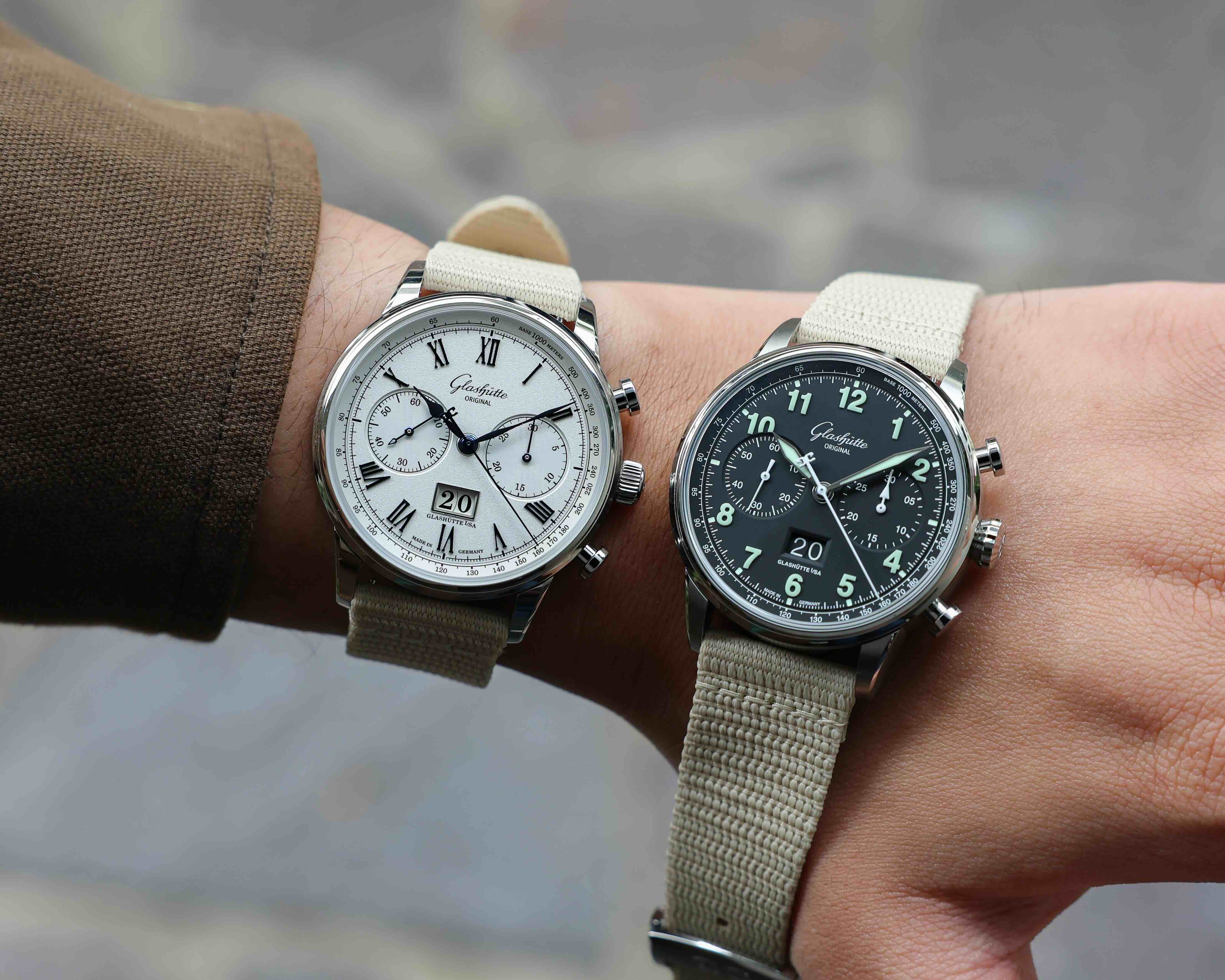
This review marks only the second time I’ve reviewed two watches as a pair, with the first being the Longines Master Collection Monopusher Chronographs. Unlike those two watches, which differed only in colour, these references convey two completely distinct visual identities within the same silhouette. I’ll run through their individually unique features before moving on to their commonalities.
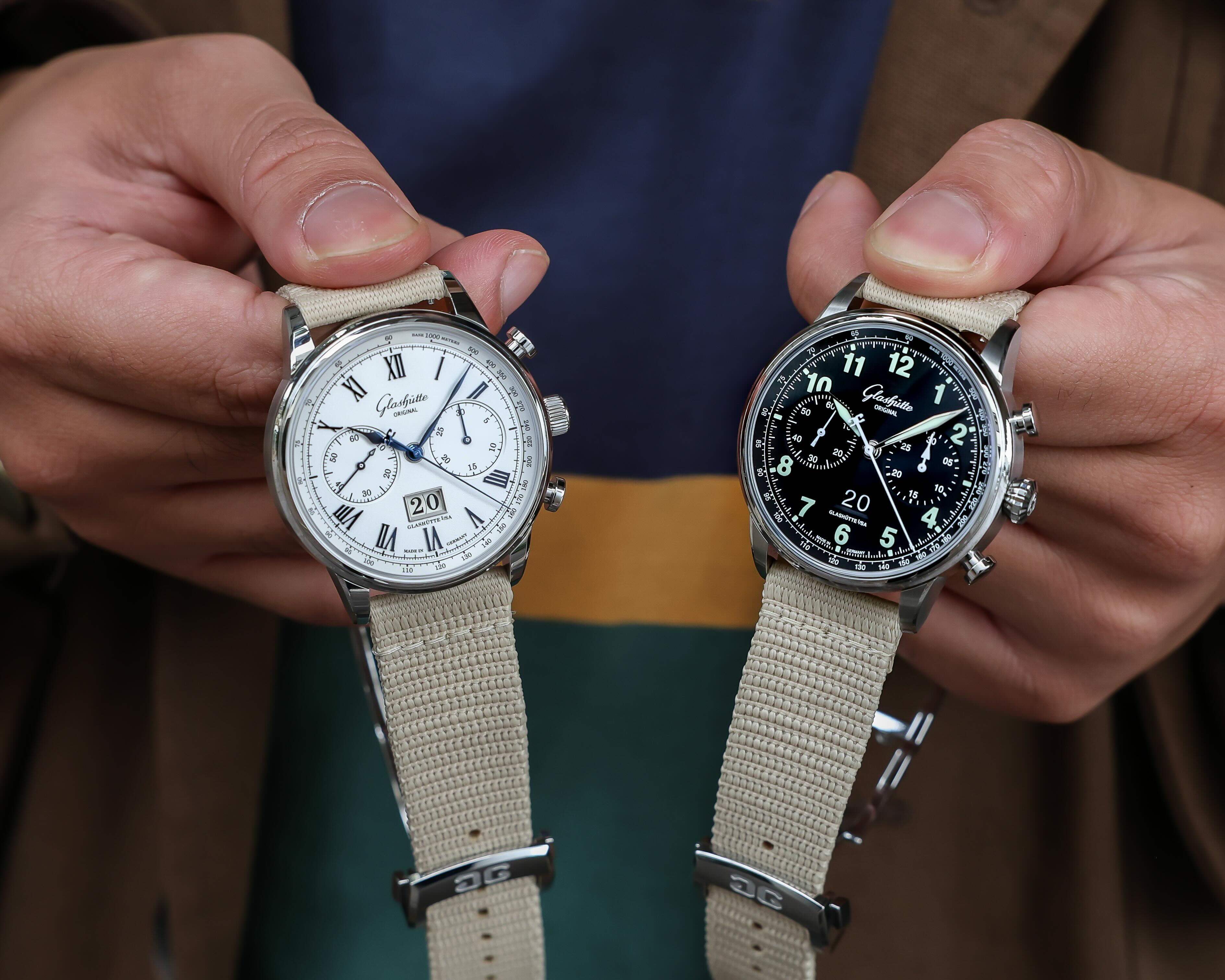
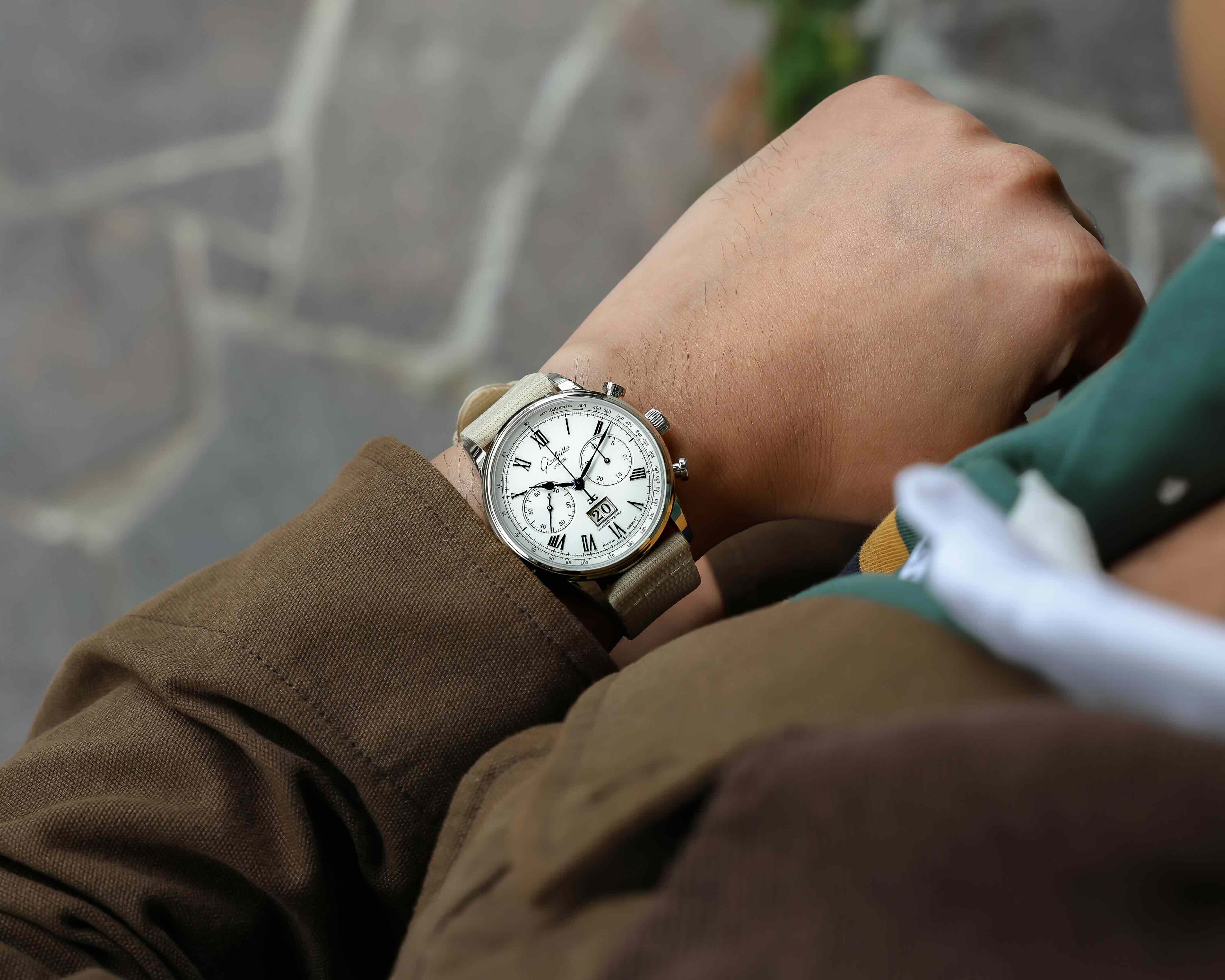
The first reference is the white-dial rendition, simply called the Senator Chronograph, though I’ve designated it ‘Dress’ for clarity’s sake. At first glance, it appears to have a classic white dial, but the galvanic silver grenage finish gives it considerably more character.
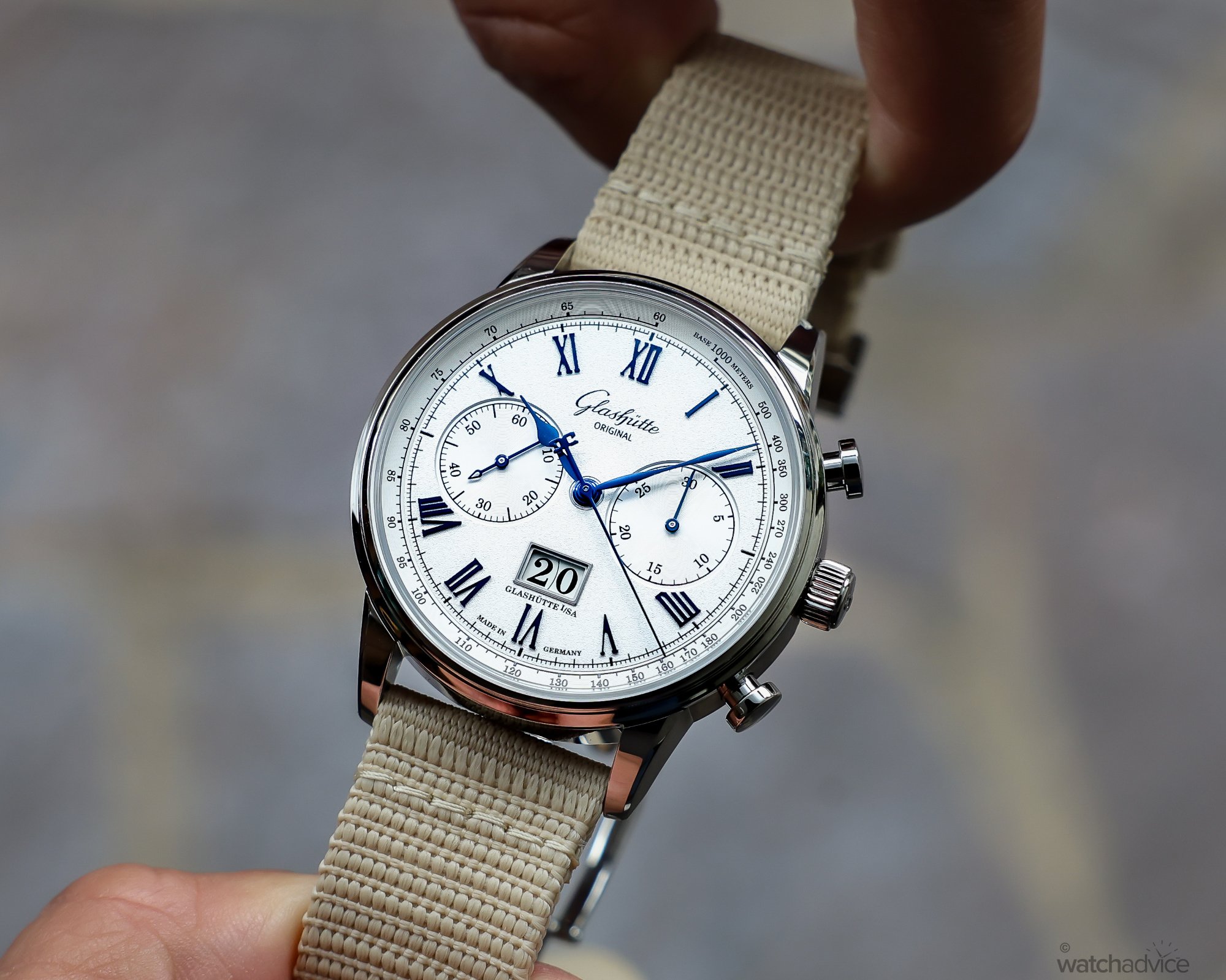
A relatively rare watchmaking technique, grenage typically involves a solid silver dial treated to achieve a matte, frosted finish. But the dial of this watch isn’t made from solid silver. Instead, it’s galvanically electroplated, with a microscopic layer of silver applied to a brass base via electrolysis. This provides a finish similar to that of a solid silver dial while keeping the price point relatively accessible.
It also differs considerably from another popular dial finish: opaline. While opaline dials often exhibit a degree of soft iridescence, grenage is matte, generating visual intrigue through its fine, textured surface.
In any case, the finish complemented by heat-blued applied Roman numerals and poire (spade) hands. Together, they offset the busier, more pragmatic elements of the chronograph complication. Yet, the printed tracks, tachymeter, and subtly inset subdials are neither intrusive to the overall elegance nor difficult to read at a glance.
Finally, the prominent Panorama Date window avoids disrupting the dial’s balance, sitting just above the six o’clock marker. Set within a rhodium frame, the date display reinforces the classical theme with its serif font. Inspired by 19th-century Saxon craftsmanship, similar fonts can be found in historical artefacts from the region, including the Five-Minute Clock at Semperoper Dresden.
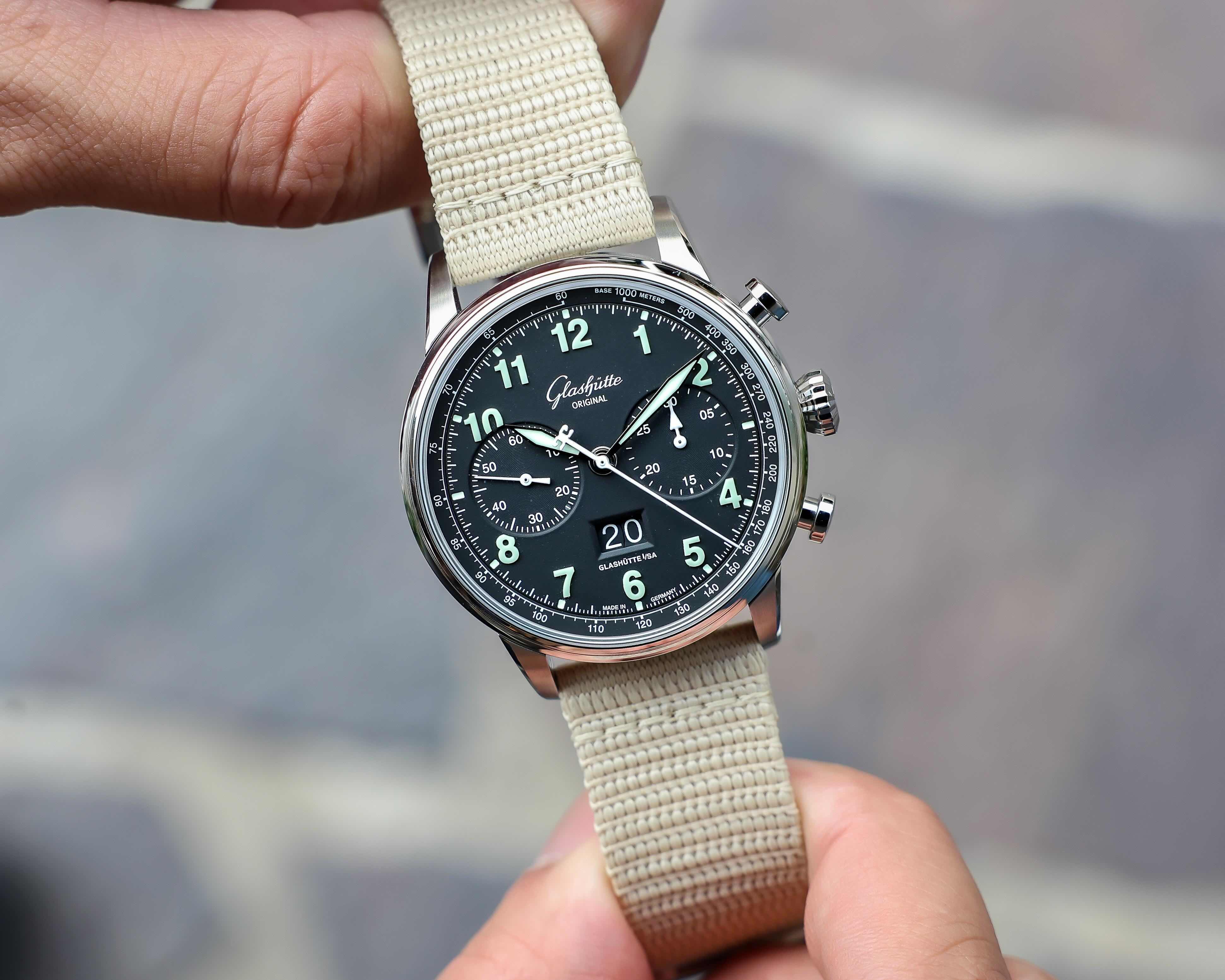
The second reference, called ‘Navigator’ by Glashütte Original themselves, shifts the focus from form to function. Yet the craftsmanship is just as considered as that of its sibling. Inspired by mid-20th-century Flieger navigation chronographs, the Senator Chronograph Navigator replaces the silvery grenage with a matte black backdrop.
Immediately, the priority is contrast rather than classicism, emphasised by the white printed minute track, tachymeter and subdials. This theme continues with the bolder white chronograph seconds and subdial hands.
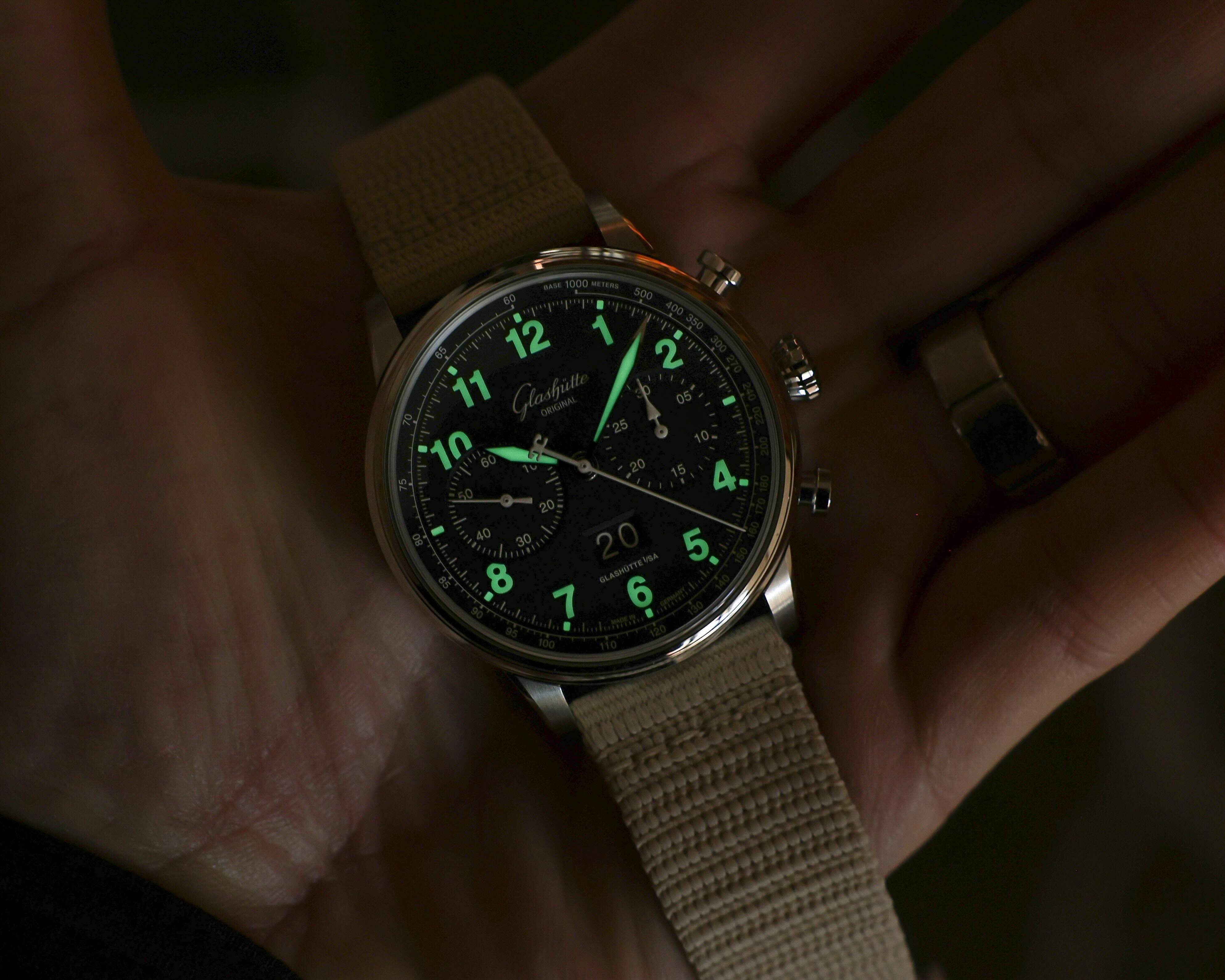
Meanwhile, the hour and minute hands are rhodium-plated swords rather than the elegant poire hands of the ‘Dress’. These hands have been generously filled with lume, as have the indexes and numerals. Instead of Roman numerals, the Navigator uses applied Arabic numerals constructed entirely from luminous material. Paired with small index blocks, the resulting illumination is quite unparalleled and genuinely fun to experience in person.
Even in daylight, the luminescent appliqués retain a slight green tinge, adding character and evoking the radium-based luminous compounds used in watches of old. The final major dial difference is the Panorama Date window, which now features a sans-serif font and dispenses with the rhodium frame.
Moving on from the dial, the case construction is identical between the two. A slim, stepped bezel is polished to catch the eye, while the box-style sapphire crystal sits just ever so slightly above it. The case itself is a finishing sandwich, with horizontal brushing through the middle and polished chamfers on the upper and lower components.
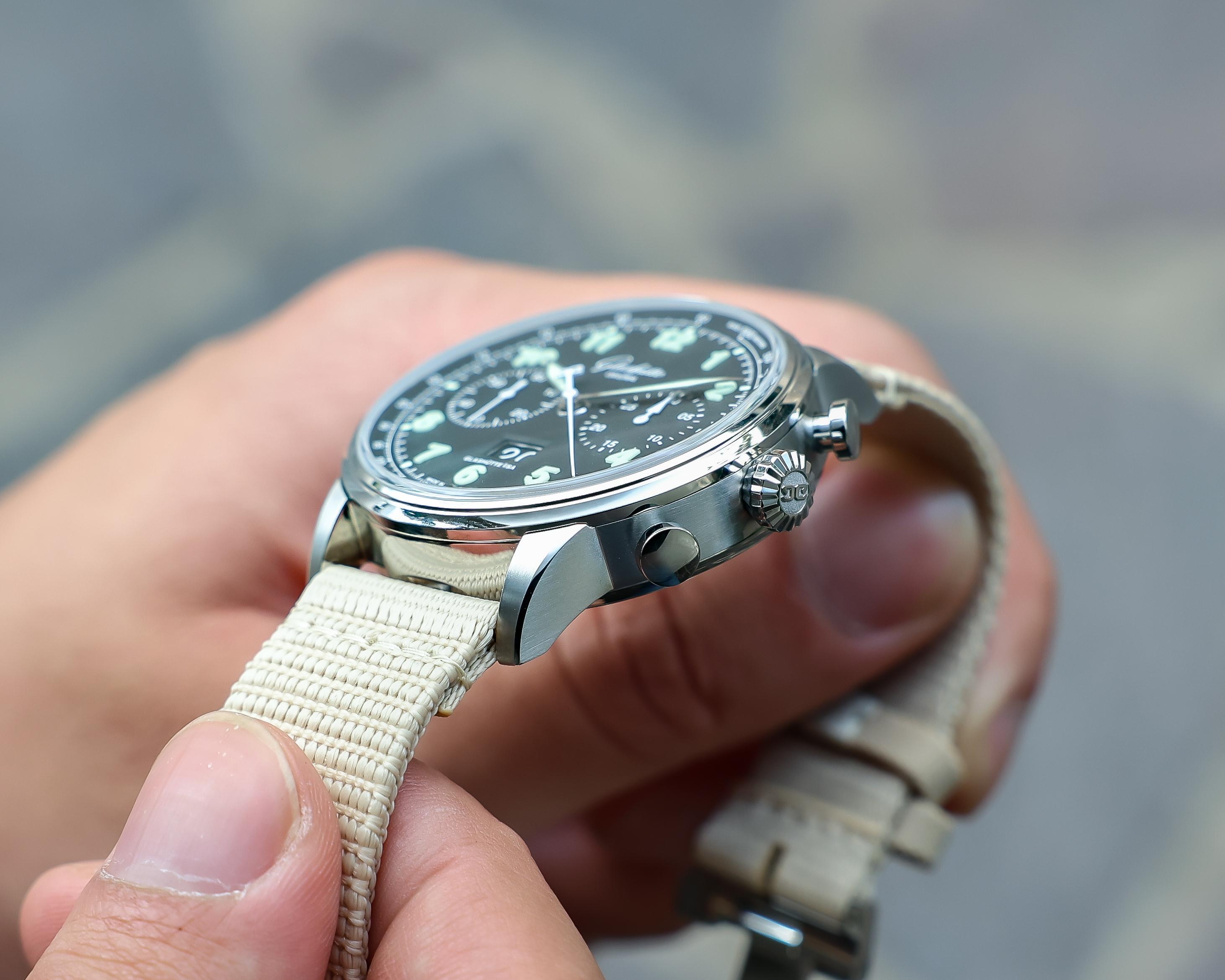
There’s only one other difference between the cases: the crown. The ‘Dress’ uses a more traditional rounded, fluted crown, while the Navigator, in keeping with its Flieger roots, opts for a wider, conical design. Otherwise, the piston-like pushers are identical, as is the display caseback, complete with its view of the movement and the usual serial engravings.
Overall, both watches provide a delightful dichotomy of craft versus purpose. Despite being alike in most ways, they serve as an exercise in how a dial layout can completely change the attitude of a watch. I personally like the ‘Dress’ dial more from a visual standpoint; The dress chronograph is a rare bird not often found outside the upper-upper echelons of the luxury world.
Conversely, the Navigator is ruthlessly practical, focussing on the chronograph and time-telling capabilities rather than championing its own craftsmanship. But either way you lean, or if you go both ways, you won’t find yourself in the wrong.
How It Wears
Perhaps my biggest concern with any German watch I come across is its size. While the prevalence of oversized German watches has diminished over the years, the region has been a little slower than most to embrace the trend towards smaller watches.
Glashütte Original is no exception, routinely producing watches measuring 42mm and beyond. However, the new Senator Chronograph duo take a step in the right direction for improved ergonomics.
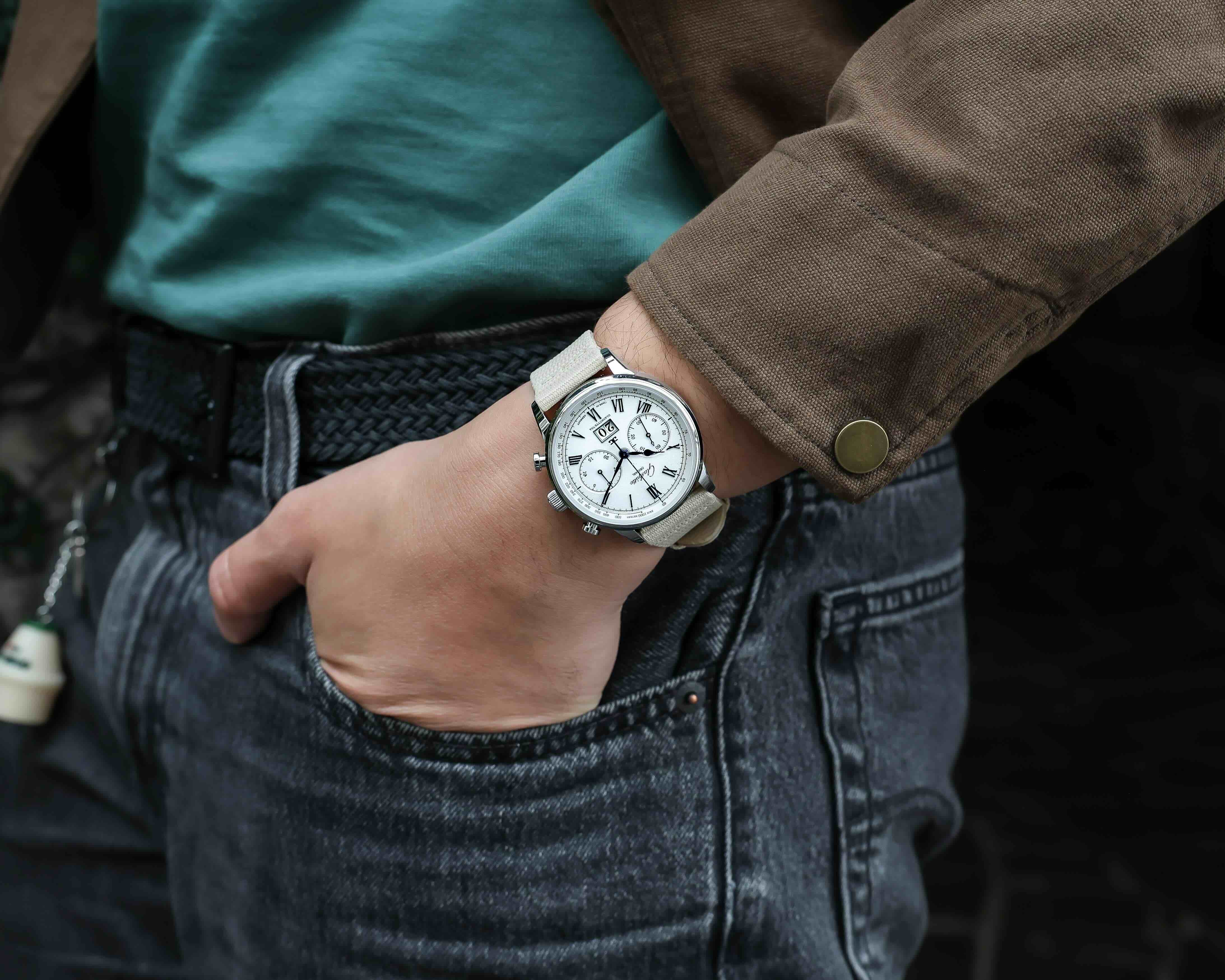
Both watches measure, unsurprisingly, exactly the same: 41mm in diameter, 48.5mm lug-to-lug, and 12.9mm thick. Compared to previous editions in the Senator Chronograph line, they’re noticeably smaller in diameter, shorter across the lugs and thinner. Yet they’re still substantial on the wrist.
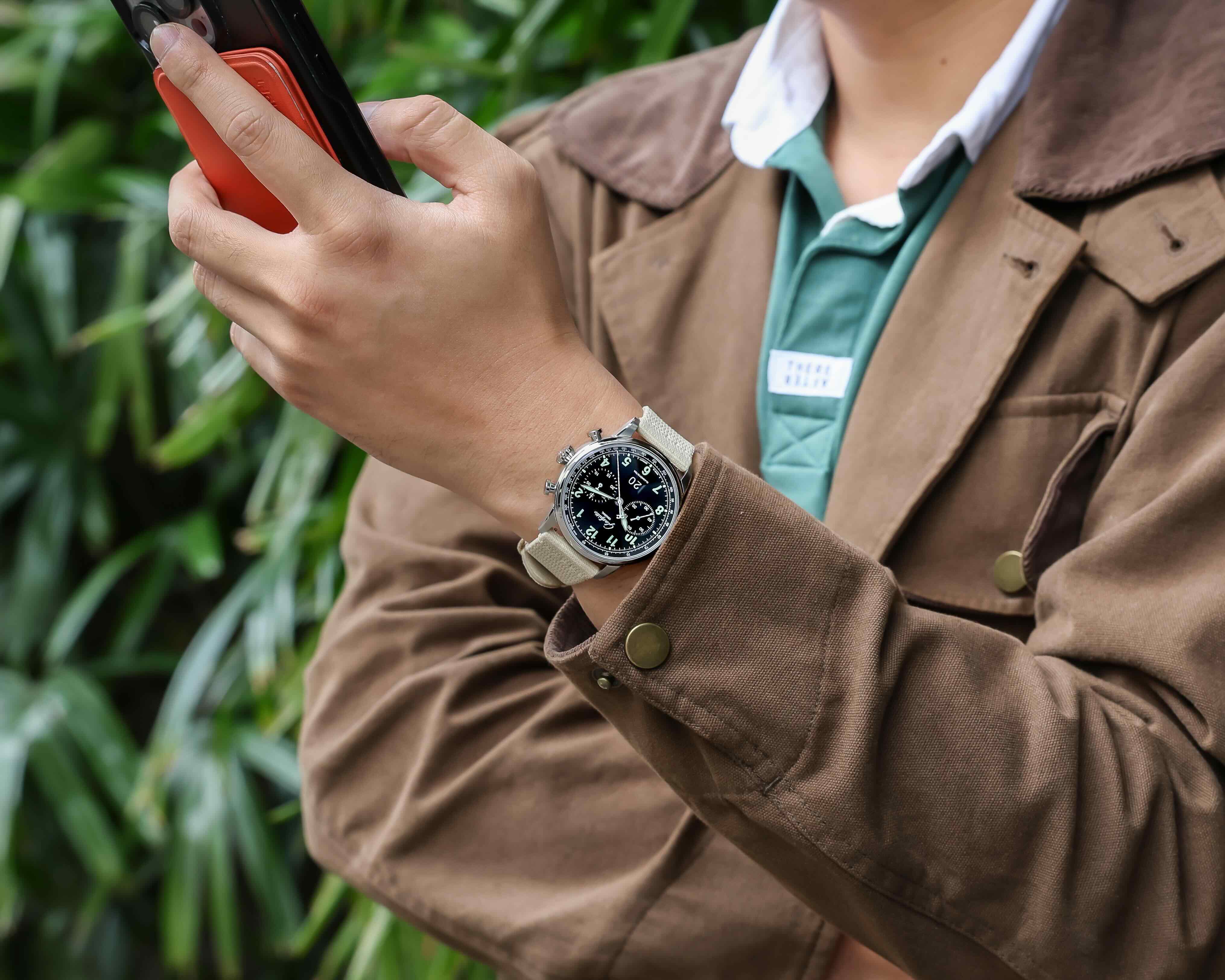
You can see what I mean in the side-on shot of the Navigator on my wrist. It certainly wears tall, but I wouldn’t go so far as to call it overtly bulky or top-heavy. The watch is surprisingly well-balanced, though I never quite forgot it was there. I suspect much of this comes down to the strap configuration.
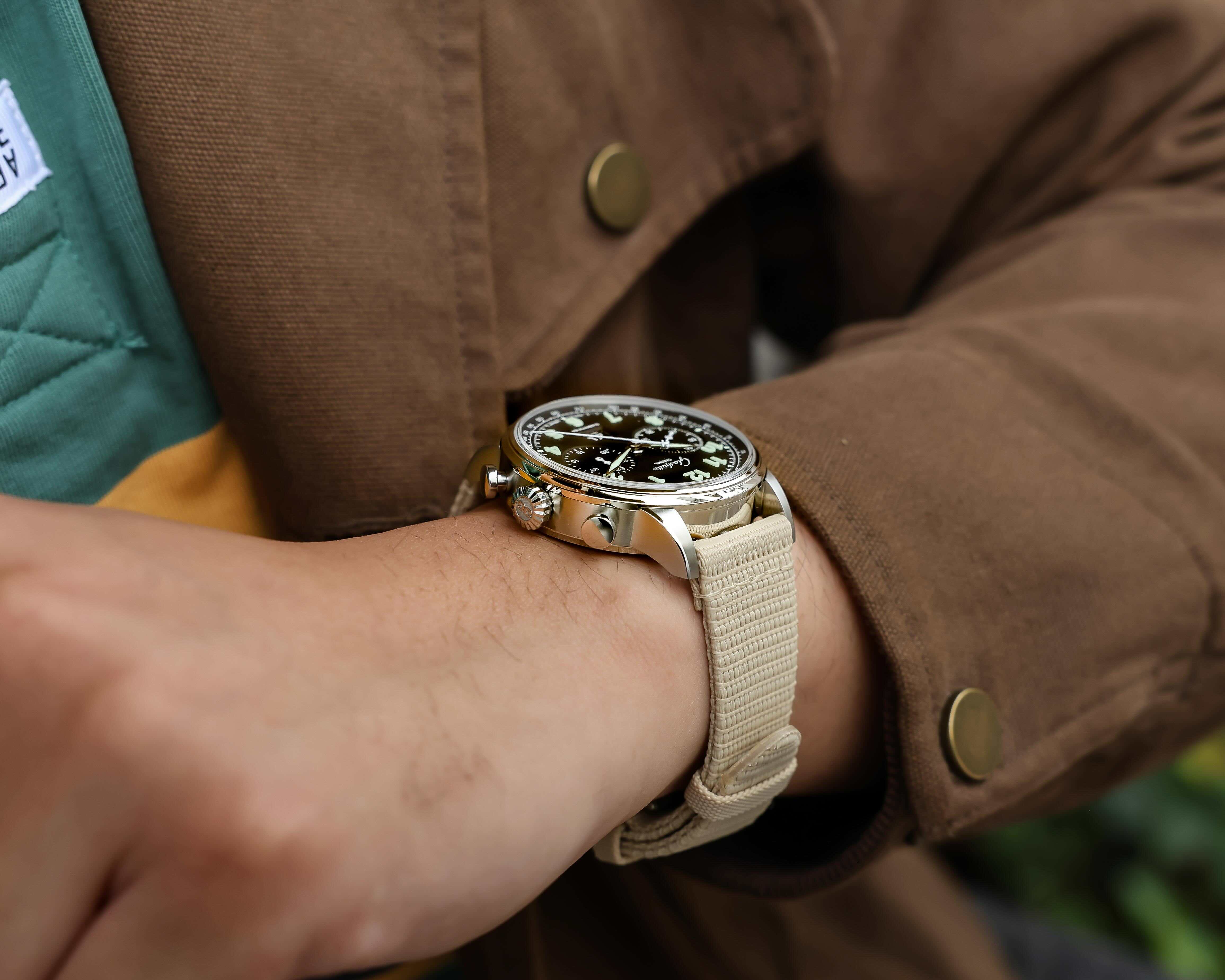
Glashütte Original offers three options: alligator leather, a steel bracelet with micro-adjustability, and the tan fabric strap you see here, complete with a butterfly deployant clasp. The latter is a welcome alternative to a traditional pin buckle, keeping the strap neatly secured against the wrist while minimising wear on the adjustment holes.
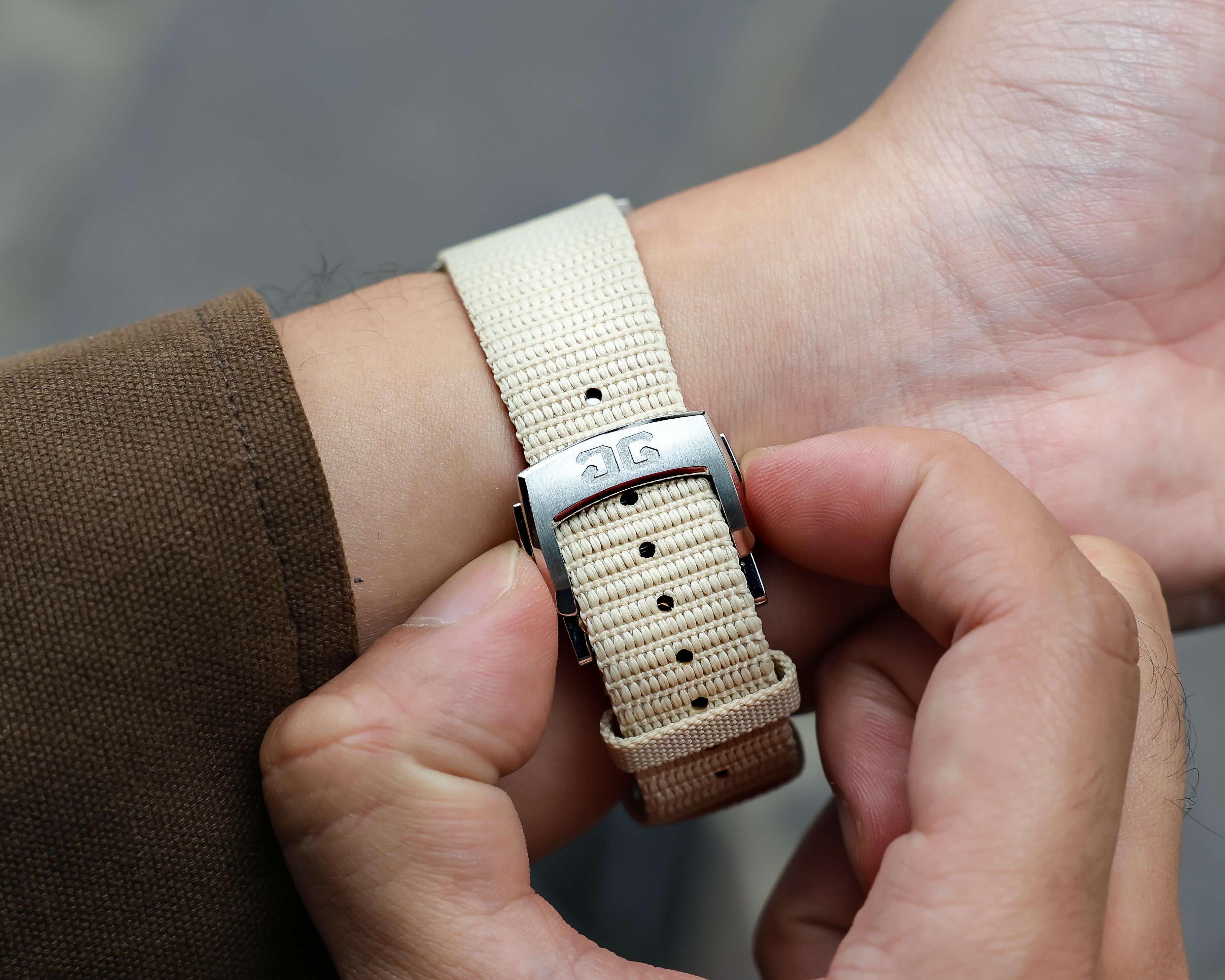
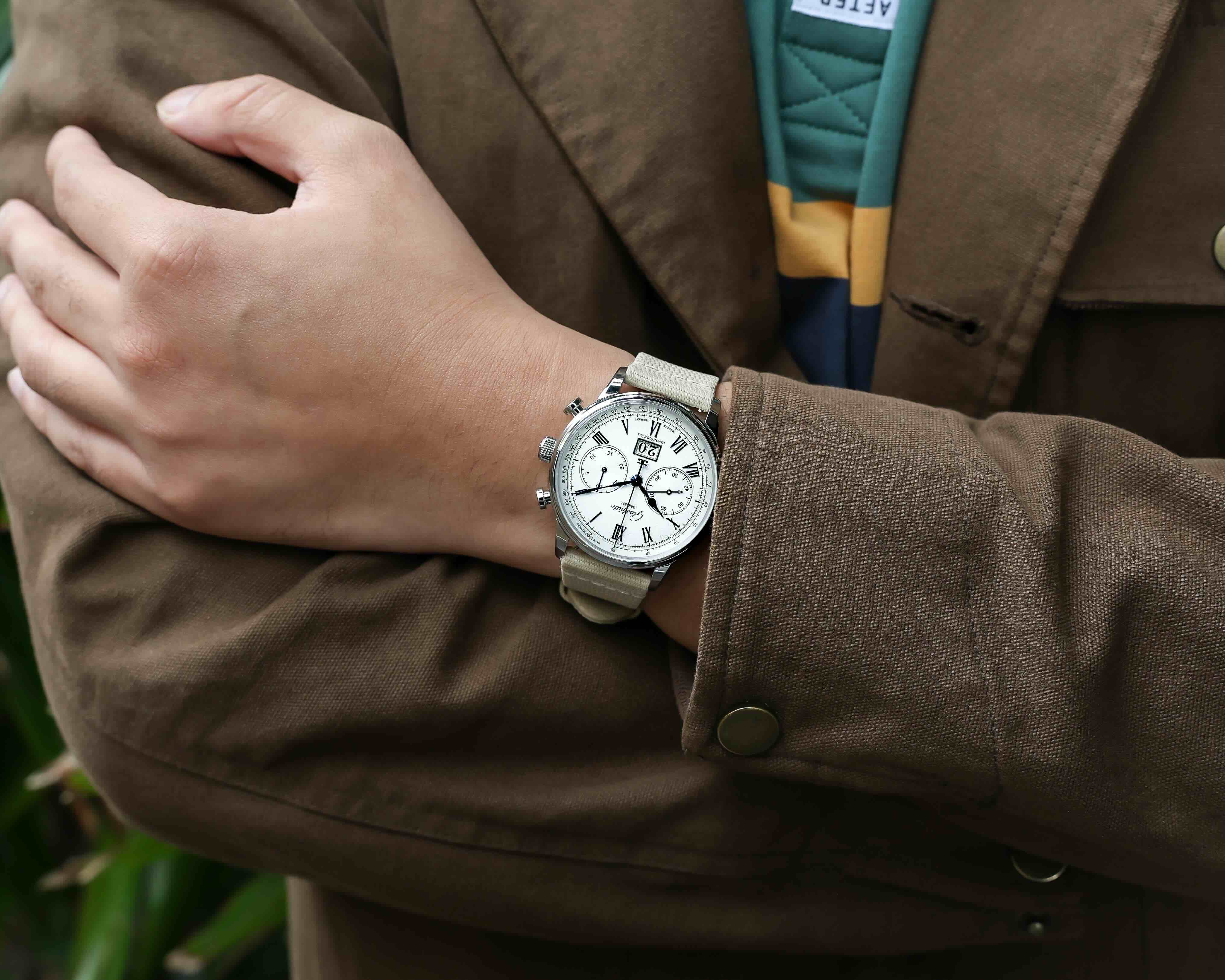
Aesthetically, you might think this puts the ‘Dress’ at a disadvantage. Its dial design lends itself more naturally to a leather strap, but I didn’t find the combination particularly jarring. Pairing its dressier aesthetic with the rawness and texture of fabric gives it a distinctive character, both on the wrist and in the hand, making it a compelling option for dressing the watch down.
Of course, this is a matter of personal taste. If I had to choose between the two configurations I handled, the Navigator would win out as a daily driver. However, with the leather-strap references available at the same price point, buyers can choose between a more formal watch and one suited to casual pursuits. Either way, Glashütte Original offers tool-less strap interchangeability, allowing you to switch up the look as you see fit.
Admittedly, the only aspect of the wearing experience I took issue with was adjusting the crown. Despite its screw-down design and 50m water resistance, the crown would often refuse to cooperate when I tried to screw it back in. While this might seem like a minor issue, it’s something prospective owners should keep an eye out for.
Nevertheless, despite my misgivings about the crown, both watches wear remarkably well. These days, I try not to stray beyond 40mm case diameters, but Glashütte Original has challenged me here. Wearing these watches, I’ve found that bigger might just be a little bit better, provided the proportions are right, of course.
The Movement
Turning each watch around reveals the all-new in-house movement introduced with these releases. Inside the exhibition caseback beats the Calibre 37-24, which, like the Senator Chronographs themselves, continues the legacy of the original Calibre 37-01 from 2014. Beating at the luxury industry standard of 4Hz (28,800VpH), the automatic movement offers a comfortable 70-hour power reserve, a figure that’s quickly becoming the modern standard for mechanical movements.
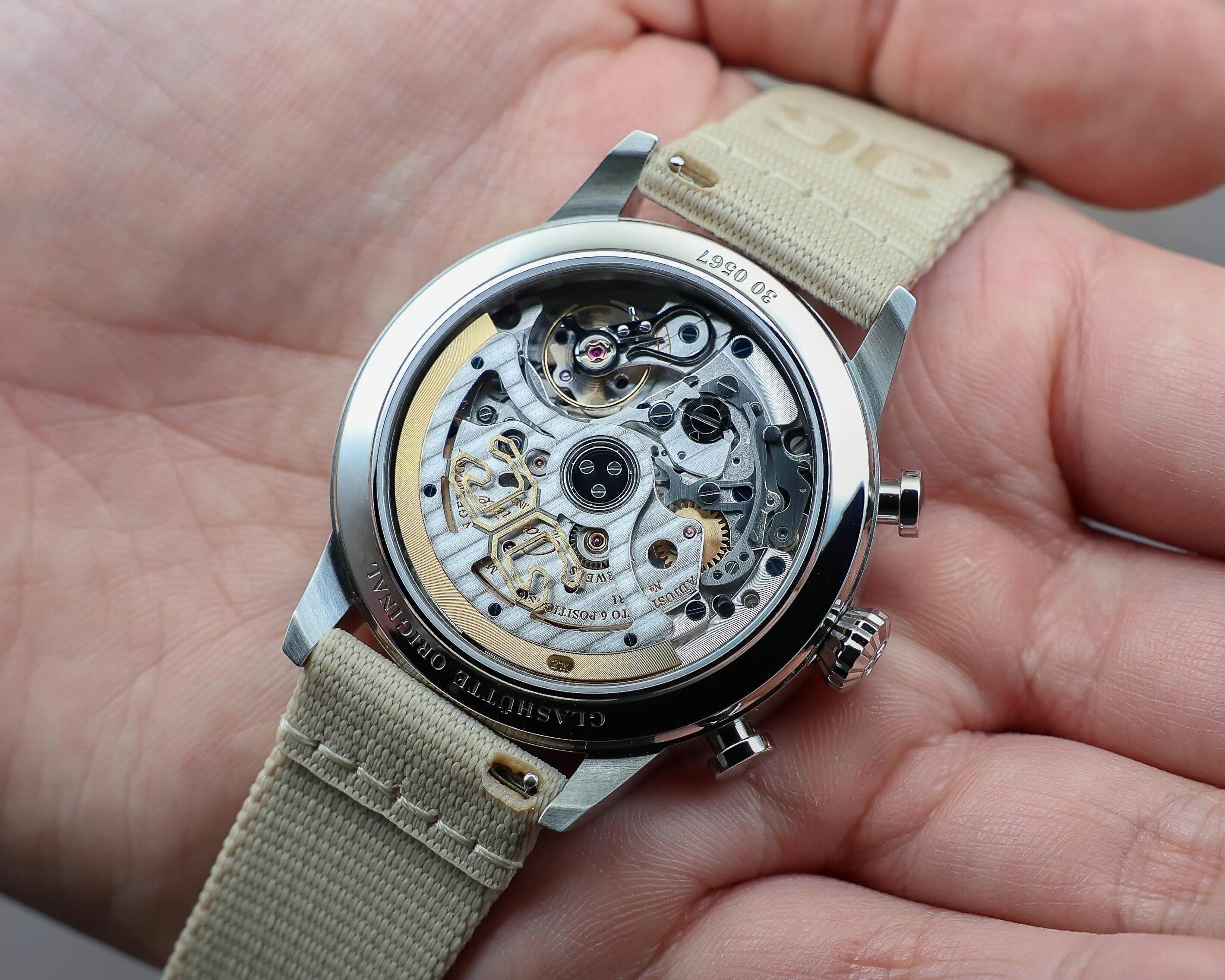
Compared to its older sibling, the Calibre 37-24 introduces a few changes to its finishing. A new two-tone rotor, complete with Glashütte ribbing, now features a skeletonised version of the iconic double-G logo.
I’ve never had any issues with the solid version of the double-G, but the skeletonised iteration feels decidedly modern in a region so steeped in horological tradition. Everything else is as it should be, with the movement housed beneath a classic three-quarter plate finished with blued screws, bevelled edges and Glashütte ribbing of its own.
Functionally, however, the Calibre 37-24 differs considerably from its original template. Most notably, it dispenses with the nine o’clock power reserve indicator and 12-hour subdial found on the Calibre 37-01, leaving the 30-minute register, flyback chronograph, small seconds and Panorama Date complications.
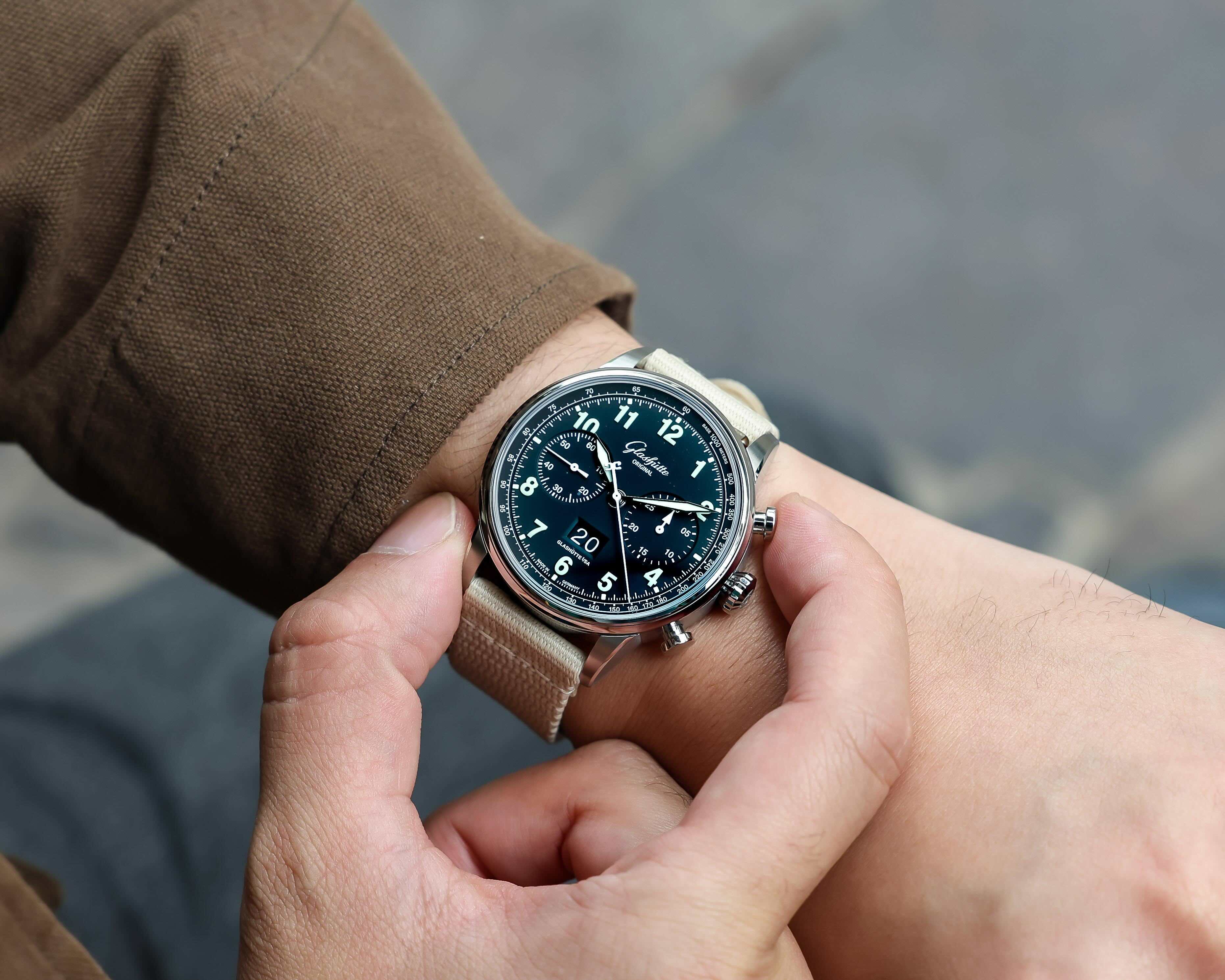
The Panorama Date works exactly as you’d expect, advancing seamlessly as the date changes. The flyback chronograph, however, might be a little less straightforward, at least at first glance. You see, many flyback chronographs disengage their hands and return them to zero under considerable pressure, allowing them to instantly time another event.
This rapid motion can sometimes produce a visual shudder or twang as the mechanism abruptly brakes at zero. That’s precisely what I observed with the Calibre 37-24 on every reset, as the chronograph seconds hand swings back and forth for a split second before continuing along its route.
Personally, I’m more accustomed to the instantaneous snap of most chronograph movements, so the twang isn’t something I particularly enjoyed. Again, this is entirely subjective, but the snap feels more modern, while the twang has a certain acquired charm. I’m sure some of you will look past it with time, as I might too if I spent longer with the watch.
Final Thoughts
It makes me incredibly happy to see Glashütte Original finally receiving some of the respect it so rightfully deserves. Furthermore, I’m equally excited to have played a small part in that story by sharing some of the brand’s latest releases with all of you!
But what do the new Senator Chronographs bring to the German brand’s overall catalogue? Several things, actually. Not only have they injected life into a collection in dire need of an update, but they’ve done so while offering a new perspective on the form and function of German watchmaking.
Where the Senator Chronograph was once defined by a singular aesthetic, these releases offer the freedom to switch things up, from dressy to sporty and everything in between. With distinctly contrasting dials and a masterful in-house movement, they take the somewhat haughty ideals of a watch bearing the name Senator and make them more appealing to all kinds of watch lovers.
At AU$23,800 on a strap, however, they certainly have their competitors. IWC’s Pilot’s Watch Chronograph 41 TOP GUN Ceratanium comes in at AU$21,500, while Jaeger-LeCoultre’s Polaris Chronograph sits slightly higher at AU$26,800. Both watches are excellent propositions at their respective price points, but each shares a more singular identity as a sports chronograph, with an aviation lean in the IWC’s case.
While that might give the Navigator a run for its money, that leaves the ‘Dress’ model almost entirely uncontested. A dress chronograph is an exceptionally rare proposition, both because of its niche appeal and the difficulty of its execution. Yet Glashütte Original has pulled it off with flying colours.
For all its scale and dynamism, German watchmaking is too often overshadowed by the sheer volume of Swiss and Japanese offerings. But the narrative is changing, and releases like the Glashütte Original Senator Chronograph duo are leading the charge. Whether you opt for a classic dress watch or a pragmatic Flieger-inspired piece, this latest chapter in Glashütte Original’s story is ready for all comers, with standout craftsmanship that confidently holds its own against its peers, both in Germany and beyond.
References & Specifications
| Feature | Specification |
|---|---|
| Reference | 1-37-24-20-12-64 (Navigator fabric) 1-37-24-01-02-64 (Dress fabric) |
| Dimensions | 41mm case diameter x 48.5mm lug-to-lug x 12.9mm thickness |
| Case | Stainless steel |
| Dial | Matte black lacquer with green accents (Navigator) Galvanic silver grenage with blue accents (Dress) |
| Crystal | Sapphire |
| Caseback | Open, sapphire |
| Movement | Automatic Cal. 37-24 with flyback chronograph (30min register), small seconds, & Panorama Date complications |
| Power Reserve | 70h |
| Beat Rate | 4Hz / 28,800VpH |
| Water Resistance | 50m / 5bar |
| Strap/Bracelet | Interchangeable tan fabric strap with steel butterfly clasp & pin buckle |
Australian Retail Price: $23,800
Availability: Available now, at Glashütte Original boutiques, authorised retailers, or online at Glashuette-Original.com
Image Gallery