

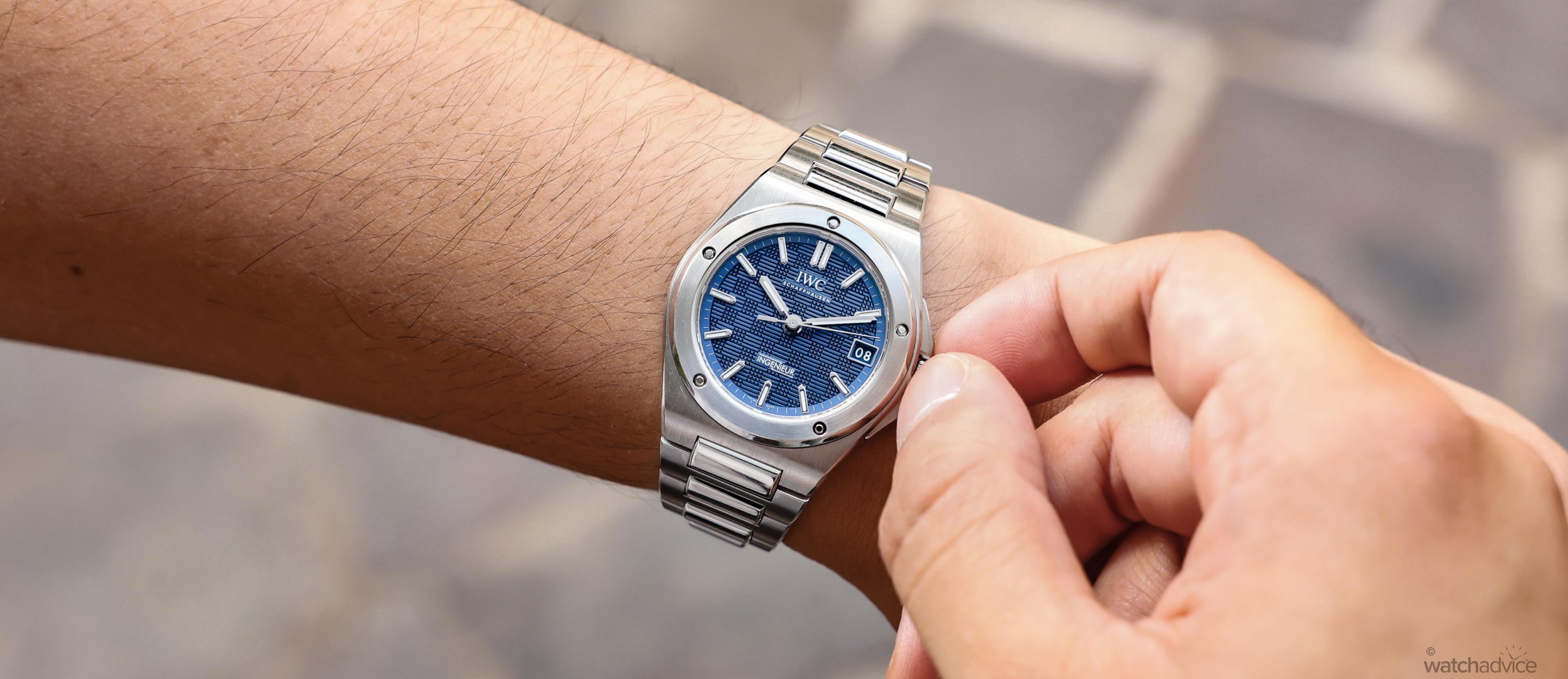
The IWC Ingenieur 35 comes in a smaller package – but does it still make the same big impact? Let’s find out!
What We Love:
- A well-wearing compact case
- Smartly proportioned without compromise
- Unisex appeal for the size
What We Don’t:
- No micro-adjustment a missed opportunity
- Butterfly clasp felt fiddly
- What does IWC want the Ingenieur to be?
Overall Rating: 8.5/10
- Value for Money: 8/10
- Wearability: 8/10
- Design: 10/10
- Build Quality: 8/10
It’s a small world these days. Rapid communication, travel, and deeply connected economies are bringing everything closer than ever, and people are becoming increasingly accustomed to the appeal of compaction. No industry has been able to completely ignore the effects of downsizing, and in the watch world, that shift couldn’t be more apparent.
Once considered the hallmark of vintage taste or dedicated enthusiasm, the small watch has found itself in high demand. More than simply a correction of a trend, consumers are increasingly drawn towards intent and proportion over hyper-tangible, bold statement pieces. Compelling watchmaking is no longer measured by square footage, and brands around the world have shifted to meet consumers where they are.
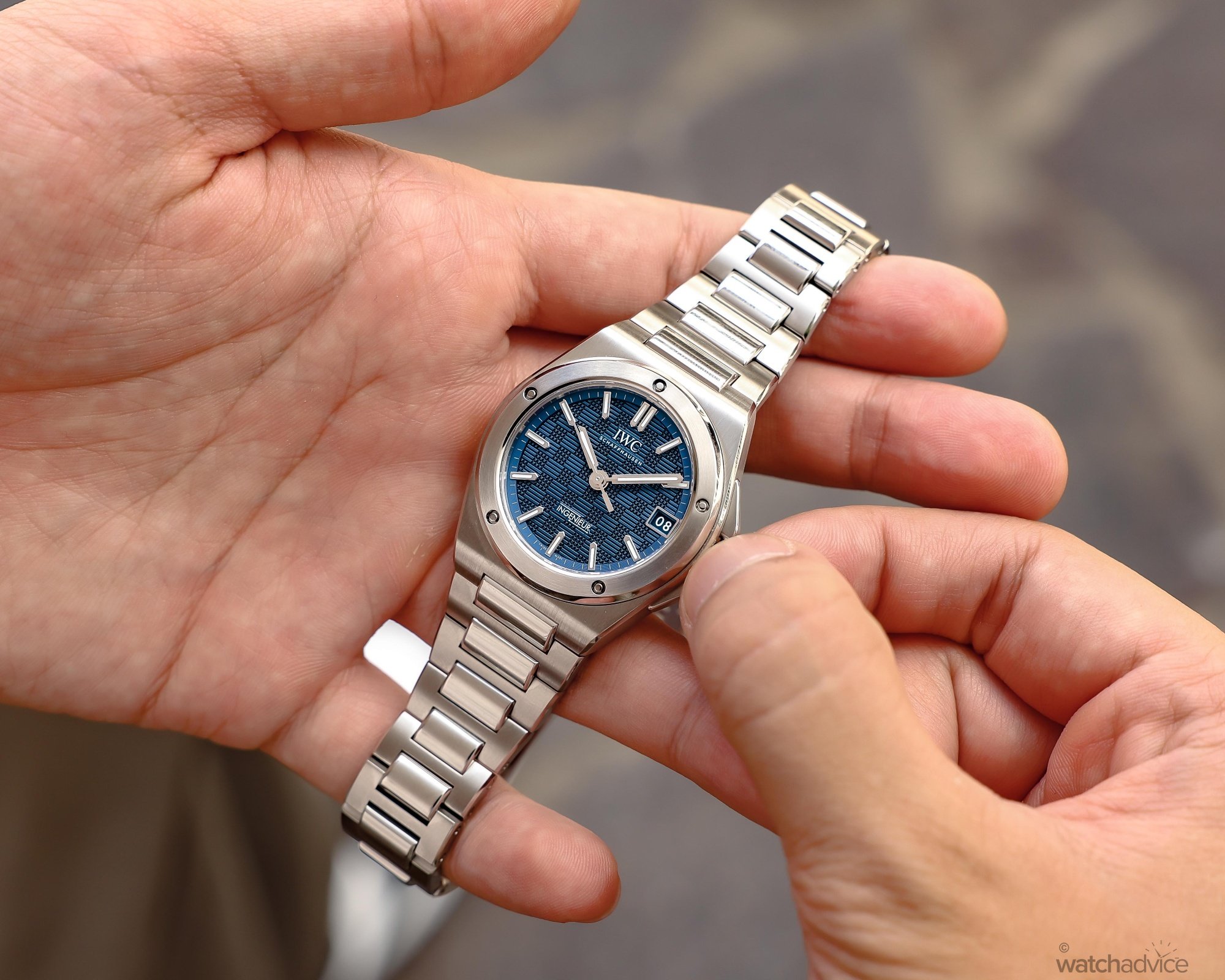
This is especially apparent with the IWC Ingenieur as it exists today. Reimagined by Gerald Genta as a “Jumbo” model measuring 40mm in diameter, Genta’s revision earned fame for its ability to command presence through pragmatic minimalism and bold lines. When IWC re-released the collection in 2023, it leaned into the guidelines Genta had originally established while offering an entirely refreshed take on the product.
2025, however, saw a paradigm shift, as IWC expanded the Ingenieur’s silhouette into the 35mm range. This presented an interesting dilemma for watch lovers. Had IWC been able to make the Ingenieur 35 models feel just as purposeful and true to the beloved Genta design? Well, that’s exactly what I wanted to find out as I took on the task of reviewing one of these watches myself.
First Impressions
When the opportunity came to review the Ingenieur 35 collection, I was pretty excited. I had already experienced the model line once before, reviewing the 40mm Ingenieur in 2023, so I was curious to see how my experience would differ from my first encounter with the collection.
Back then, I treated the IWC Ingenieur as one of those ‘character actor’ celebrities: famous enough to be held in high regard, but not quite a mainstream A-lister. Think Walton Goggins compared to Brad Pitt. But like Goggins, the IWC Ingenieur’s popularity has truly skyrocketed since then, and nowadays it is treated like the icon it always was.
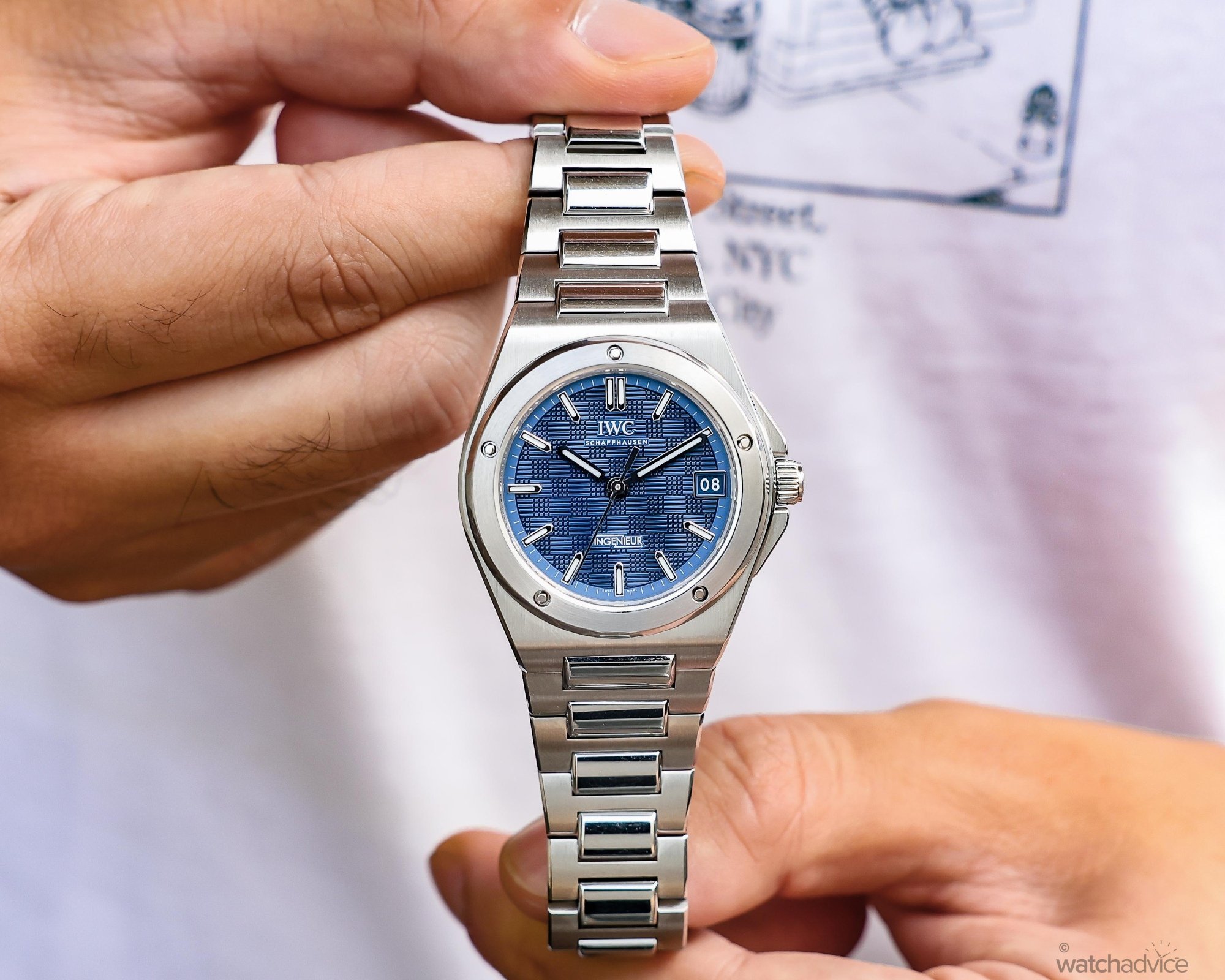
Regardless of my personal feelings towards the Ingenieur, I still approached the 35mm line with a degree of caution. 35mm is a strange size, bridging the gap between what may traditionally be considered men’s and women’s watches. While I don’t really subscribe to such labels, the sizing still puts its proportions into question.
Get it wrong, especially on a smaller watch, and the errors become painfully obvious. But get it right, and it introduces a capable new member to the catalogue: one that remains compelling without compromise. So, with the blue dial Ingenieur 35 released at Watches and Wonders 2026, I took a leap of faith to see if this watch was more than just “Ingenieur, but smaller.”
The Design
Just like the Longines HydroConquest I covered some time ago, Sam has already beaten me to the punch, reviewing the gold rendition of this same watch. A lot of the design elements remain similar, so I won’t lecture you, but I’ll give you a bit of a recap.
The 2023 reintroduction of the IWC Ingenieur felt closest to what might have been Genta’s original vision, which I’m happy to say has carried forward in the 35mm model. Starting with the dial, it returns with that signature ‘grid’ finishing. It’s a distinctive feature that has defined the collection since its release, and one that has earned widespread acclaim for its textural qualities and the way it plays with light.
When I reviewed the 40mm Ingenieur, I remarked that it reminded me of a pair of checquered Vans. Perhaps a more apt comparison would be a chequered flag, given the brand’s close relationship with the Mercedes-AMG Petronas Formula One Team. Either way, it’s not an element that needed reinventing, so I’m glad to see it return once more.
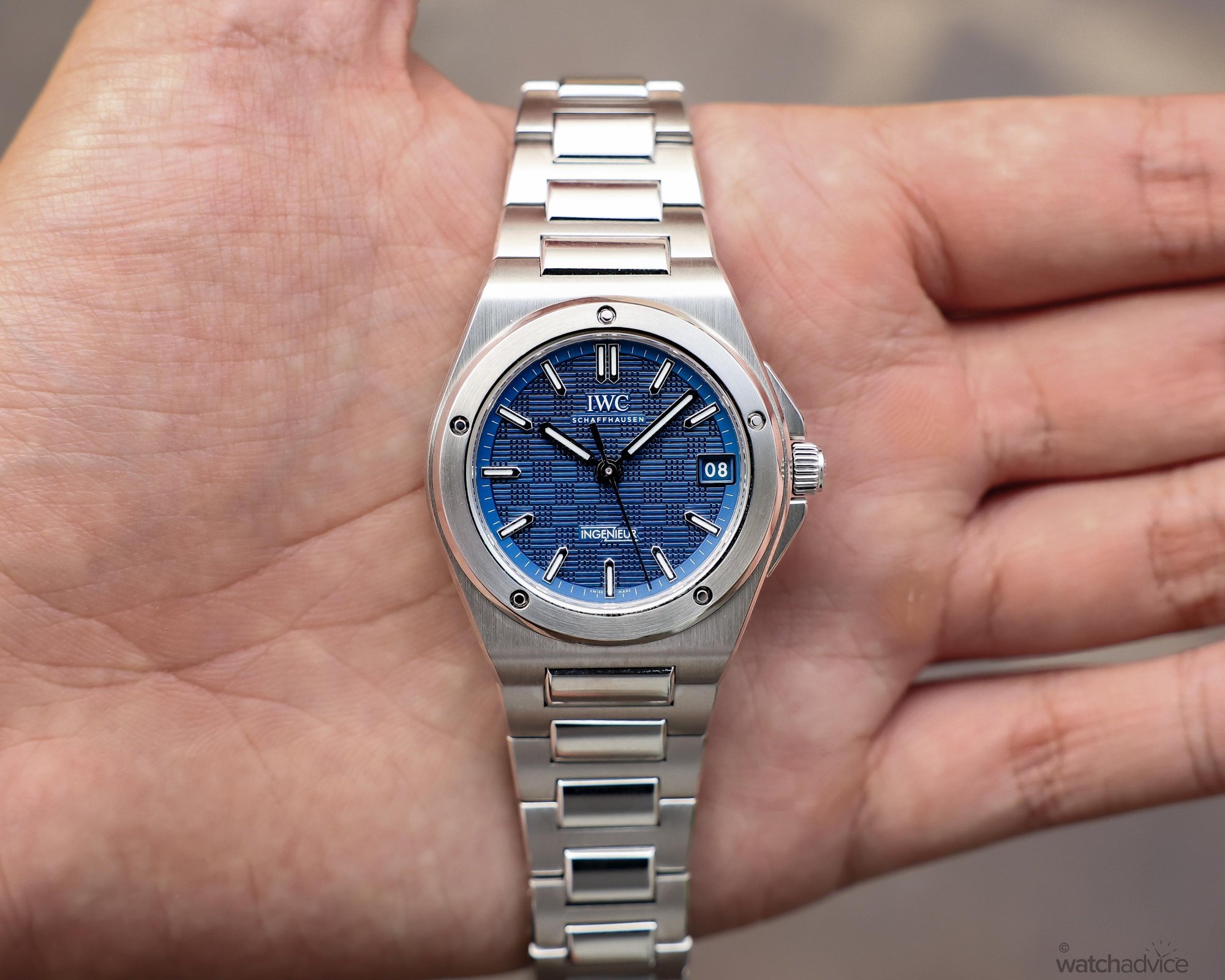
Unlike the model Sam reviewed, which prioritised the extravagance of gold, the backdrop here is a standard blue. A universally flattering tone, this version of the Ingenieur 35 leans more towards versatility than flair. It’s also the dial colour that, compared to the rest of the collection, best balances subtlety without compromising detail.
In my opinion, the classic black dial loses some of the grid’s texture, while the silver, gold and ‘Pool’ dials show it off just a little too much. The blue excels at teasing the eye, allowing you to catch glimpses of the grid pattern under more specific lighting and at certain angles. Because of that, I find this version of the Ingenieur 35 infinitely more interesting than the others. Sorry!
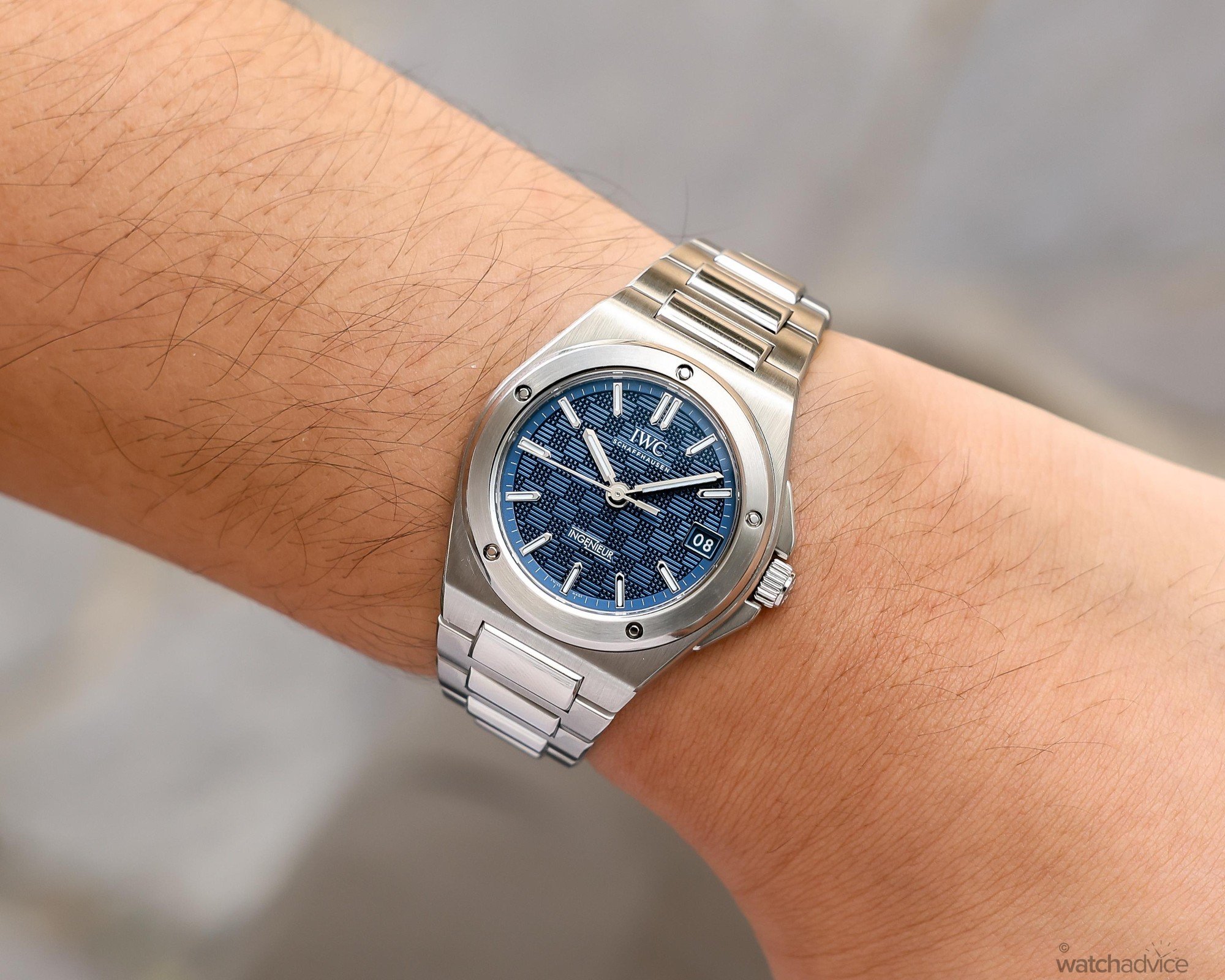
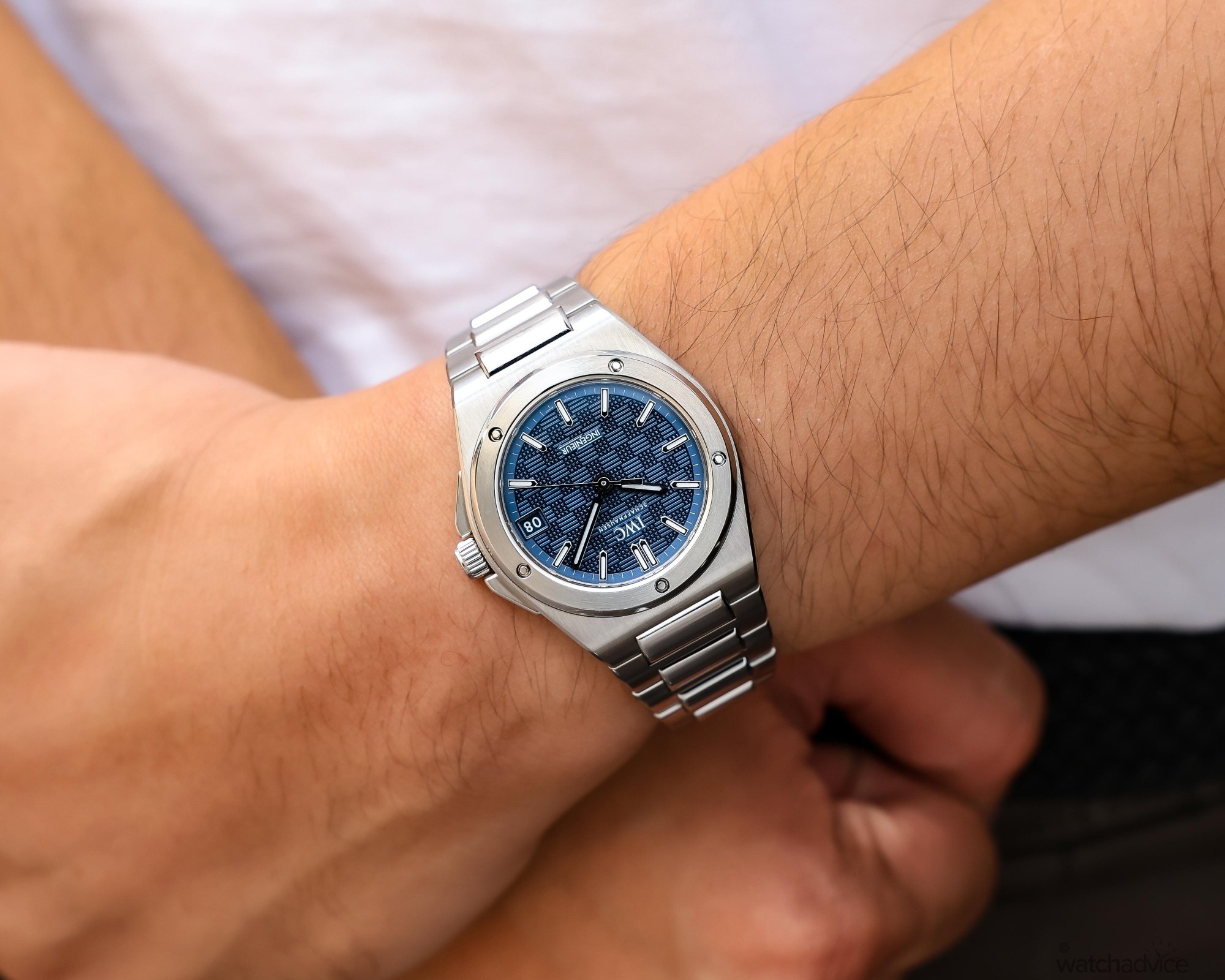
Beyond the dial itself, many of the Ingenieur’s other aesthetic details have been smartly preserved. The raised minute track, sharp indexes, hands and lume application look practically identical to their bigger brothers… well, almost. Instead of preserving every aspect of the design, IWC has made a subtle change that keeps the date window almost exactly the same size as those on the larger references.
While this means sacrificing the three o’clock tiny lumed index and pushing into the minute track, it was a necessary compromise for legibility’s sake. I think it was absolutely worth it; Everything has been proportioned intelligently to suit the more compact size, meaning you’re barely compromising on readability, if at all.
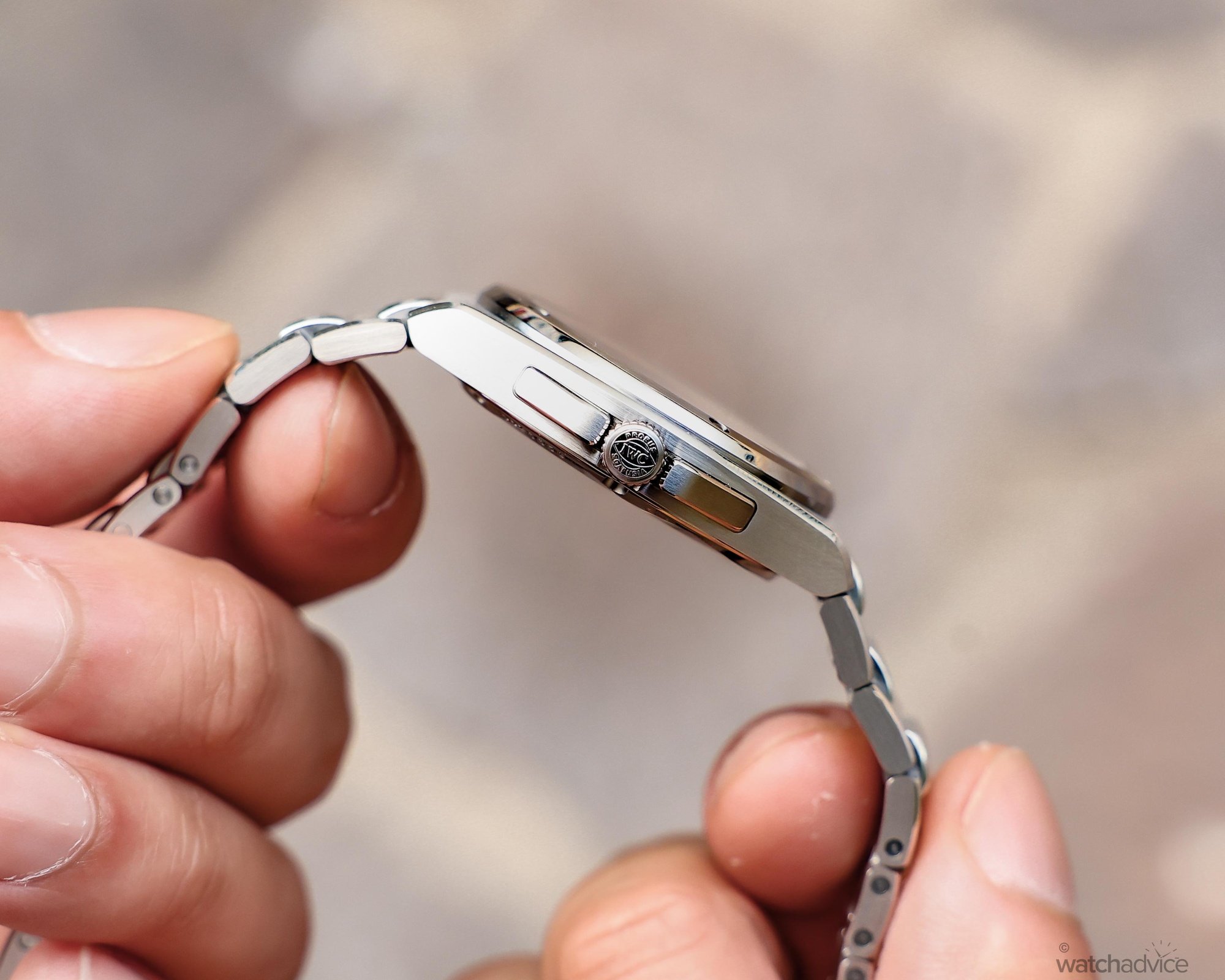
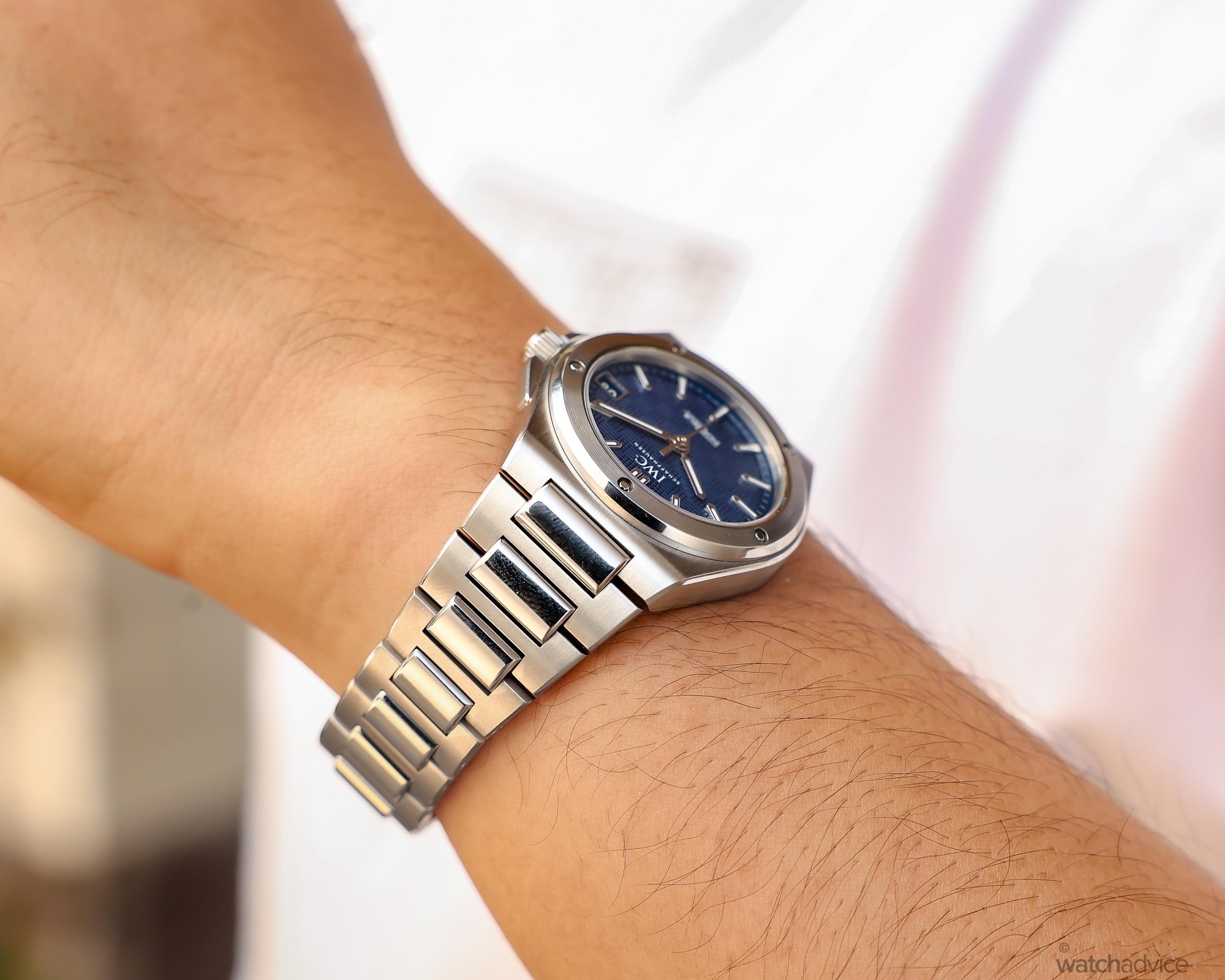
Moving outwards, little has changed with the case and bracelet design. Circular brushing still dominates the screw-in bezel, with polished screws matching the polished chamfers around its edge. Continuing on, you’re greeted by more brushing across the case top and flanks, accompanied by polished chamfers that further accentuate the watch’s profile.
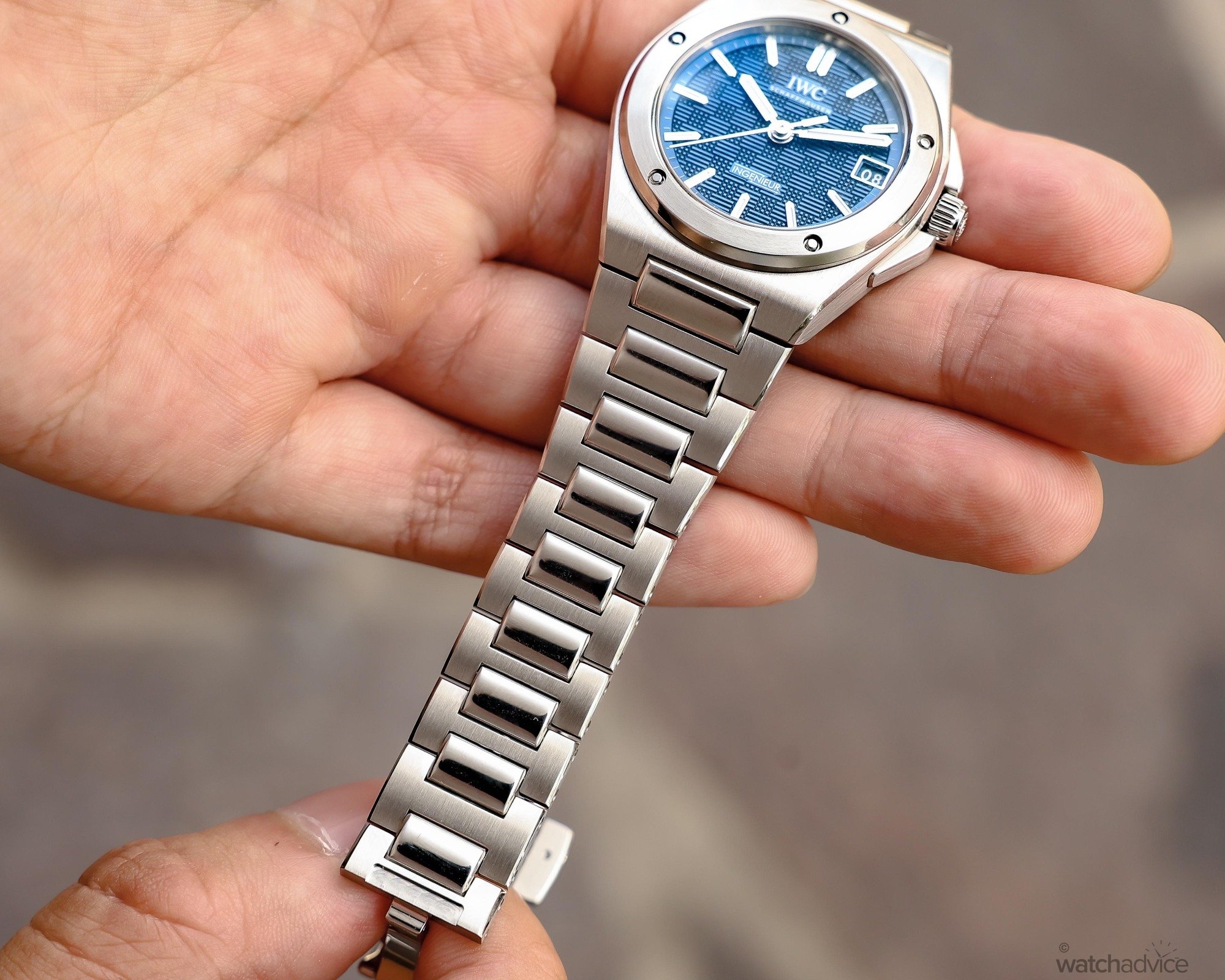
The monobloc illusion is somewhat lost as you reach the signed crown, where the crown guards have a more obvious separation from the rest of the case. That eventually leads into the same, albeit smaller, aggressively tapered H-link bracelet, featuring rounded, polished centre links that flow down to a non-sequential butterfly clasp.
Finally, turning the watch over reveals the last major change: an open caseback. Inside sits the automatic Calibre 47110, which eschews the original’s anti-magnetic soft iron inner case, but we’ll get to that later. At least from a design perspective, it’s a welcome addition, framed by the traditional engravings denoting the reference, serial number and specifications.
For a watch that is, ostensibly, the exact same thing as its larger counterpart, the IWC Ingenieur 35 does an admirable job of preserving the spirit of the original while adding a character that remains entirely its own.
It would have been so easy to simply copy and paste the design while following the original proportions, but brands that do so often end up in an uncomfortable uncanny valley where something just looks off to the human eye. I’m happy to report that the Ingenieur 35 avoids this entirely. Despite not following the proportions to the letter, it presents itself as a thoroughly convincing and genuinely compact alternative to the standard line.
How It Wears
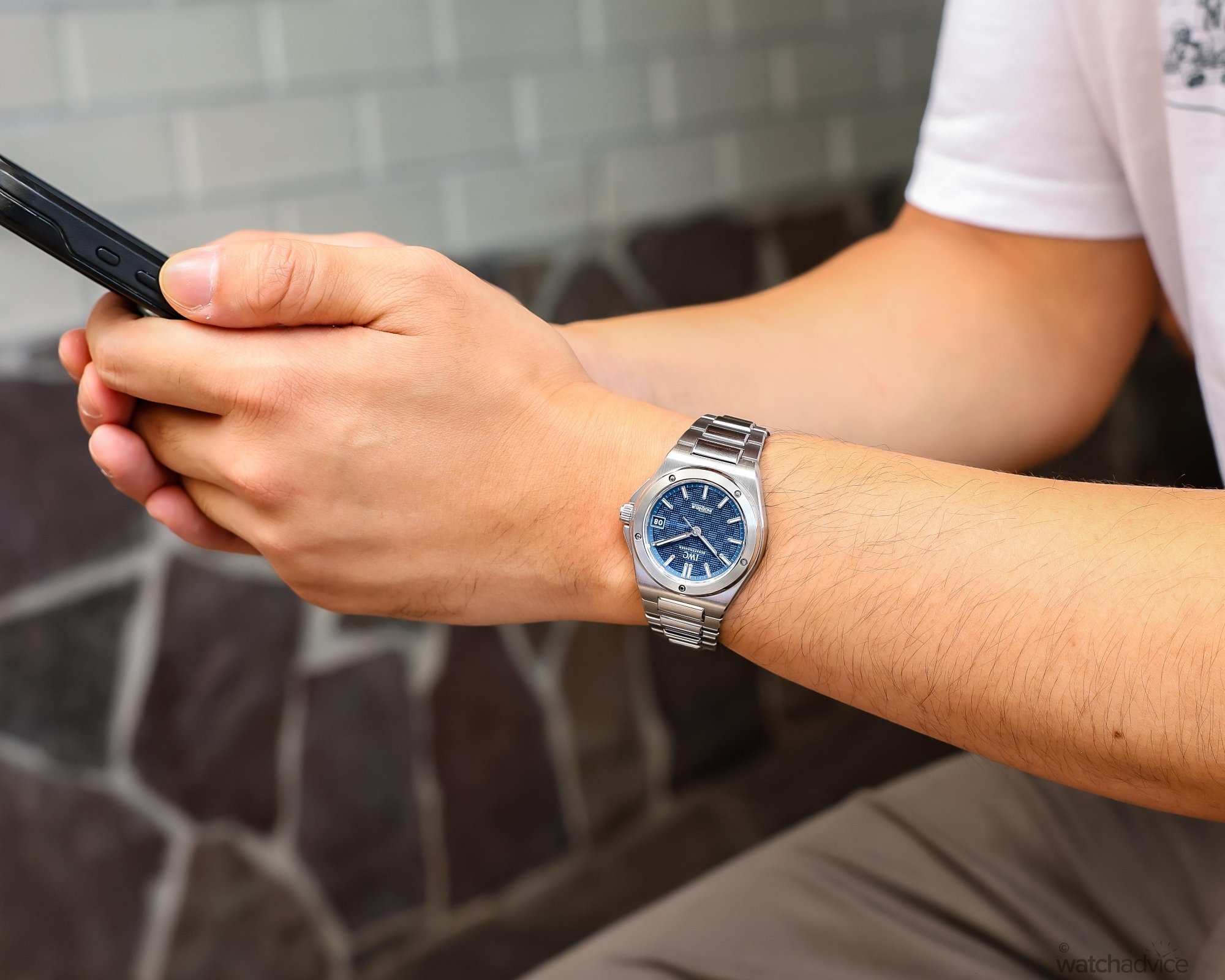
I’ve never really been that nervous about case proportions. Despite my 16.3cm (6.3in) wrist, I’m of the mentality that I could pull off a Piaget just as comfortably as I could a Panerai. But not all of us are the same, and perhaps most people would be unsure about wearing a watch that measures just 35mm in diameter.
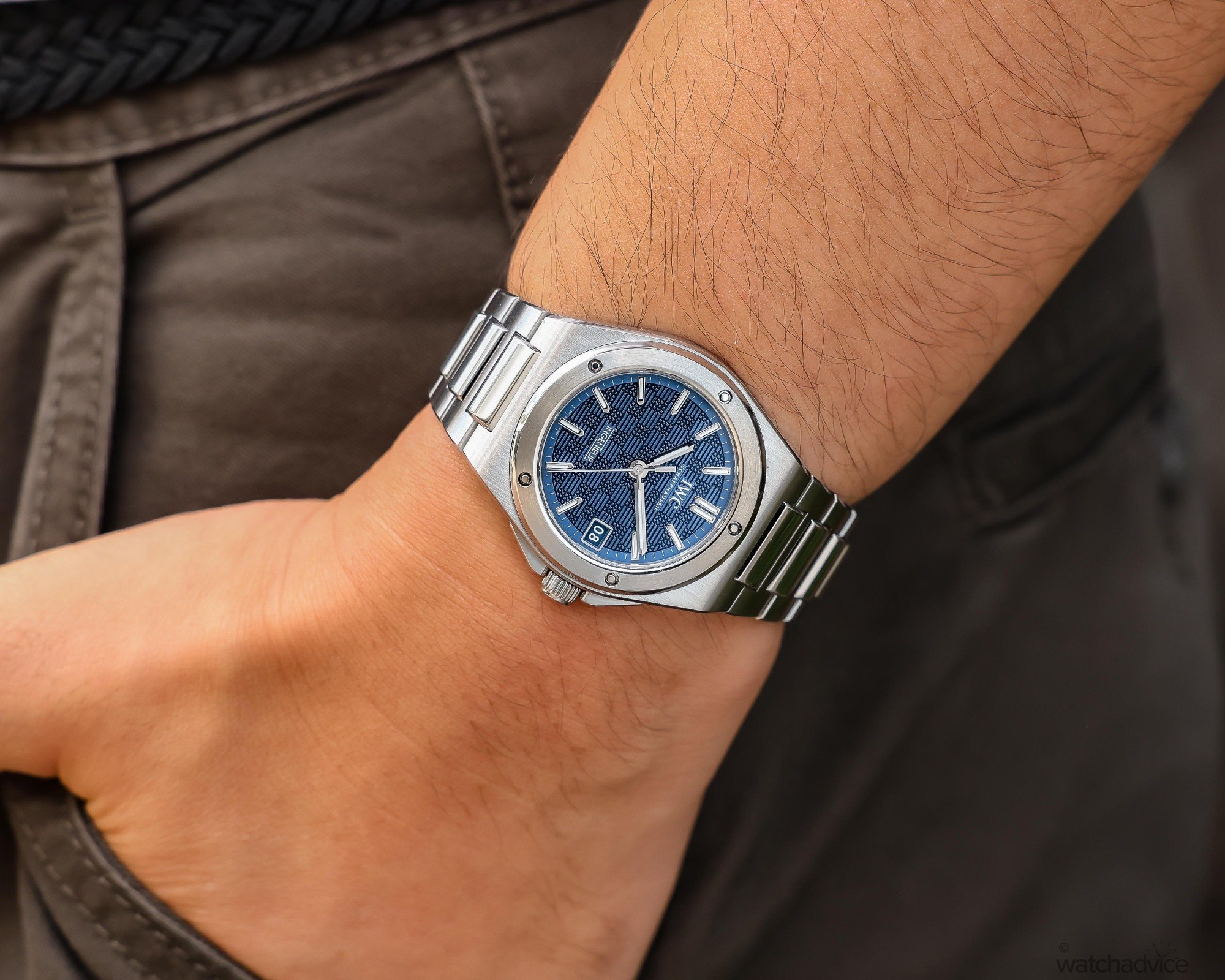
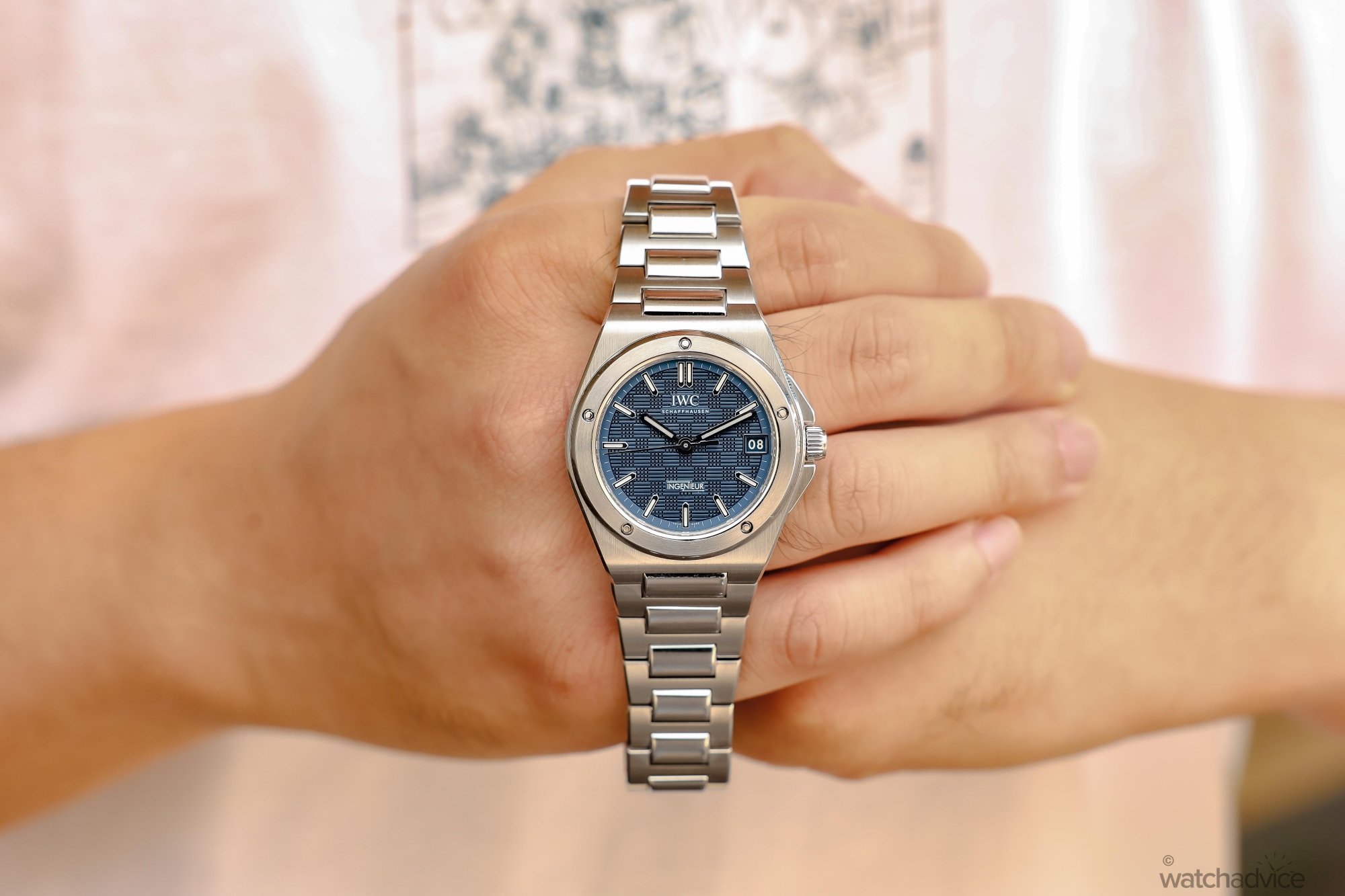
Admittedly, the on-paper specifications threw me off a little. At 35mm wide, 40.7mm lug-to-lug, and 9.4mm thick, the IWC Ingenieur 35 is by no means a titan. Yet those compact dimensions make their presence known across every millimetre. This is largely due to the nature of integrated bracelet watches, which almost always wear larger than their measurements suggest. On the wrist, expect an experience closer to that of a conventional 36-37mm watch. The closest comparison I can think of is the 36mm Rolex Explorer, which itself wears like a true 36mm.
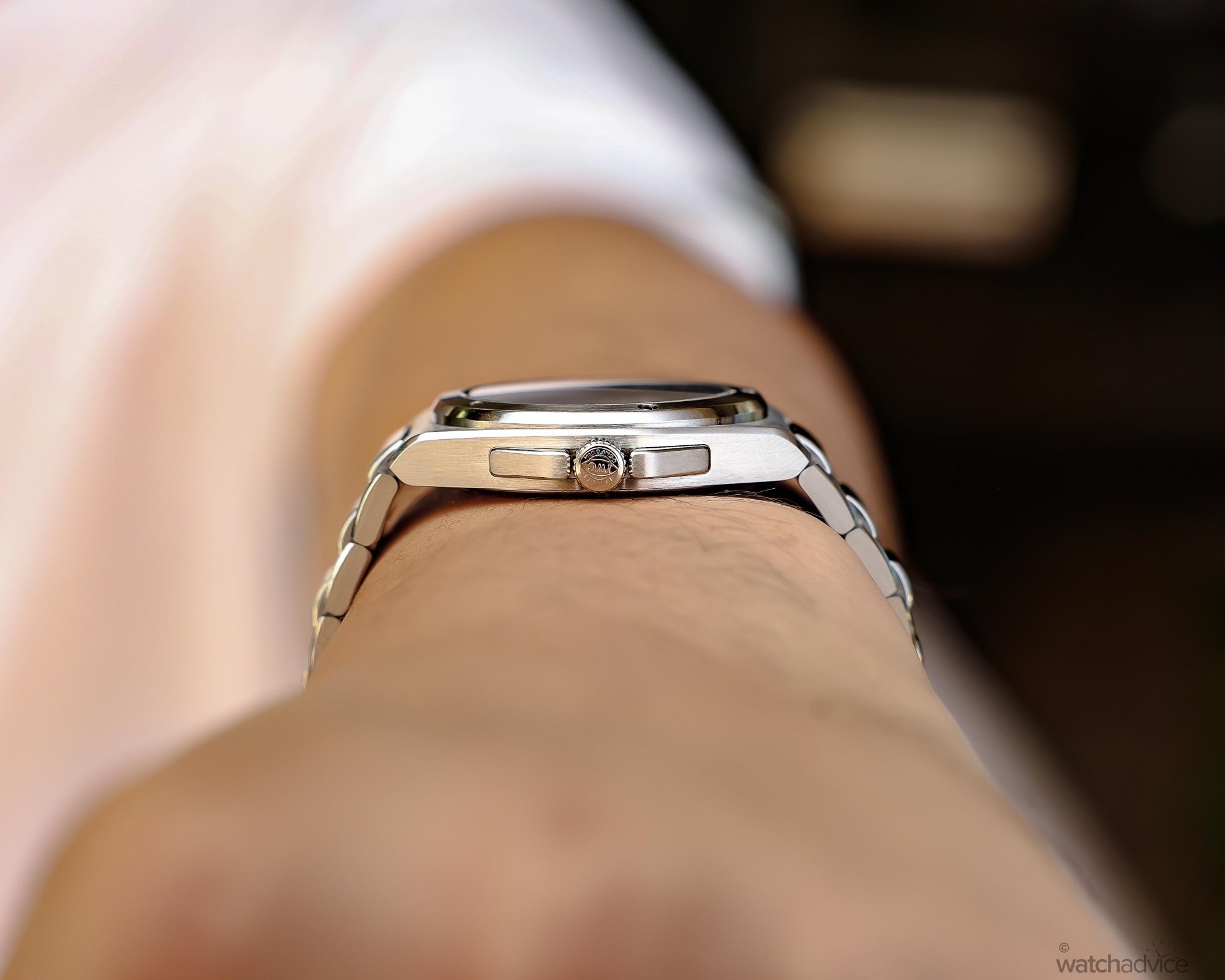
At 9.4mm thick, the Ingenieur 35 feels more delicate than the 40mm models, but not in a way that diminishes its sporty, ‘solid block of metal’ character. In my head, I’d describe it as wearing a steel nugget compared to a bar, if that makes any sense; It still feels solidly built, but the smaller size gives it a surprising lightness not otherwise seen in stainless steel watches. Altogether, it’s a watch that doesn’t feel distinctly gendered, appealing to a wide range of wrists for anyone to enjoy.
One small detail I found particularly interesting is the push-pull crown, which still provides 100 metres of water resistance despite doing away with the screw-down construction. Instead, the internal gaskets do all the heavy lifting, proving more than capable even without the additional security of a screw-down crown.
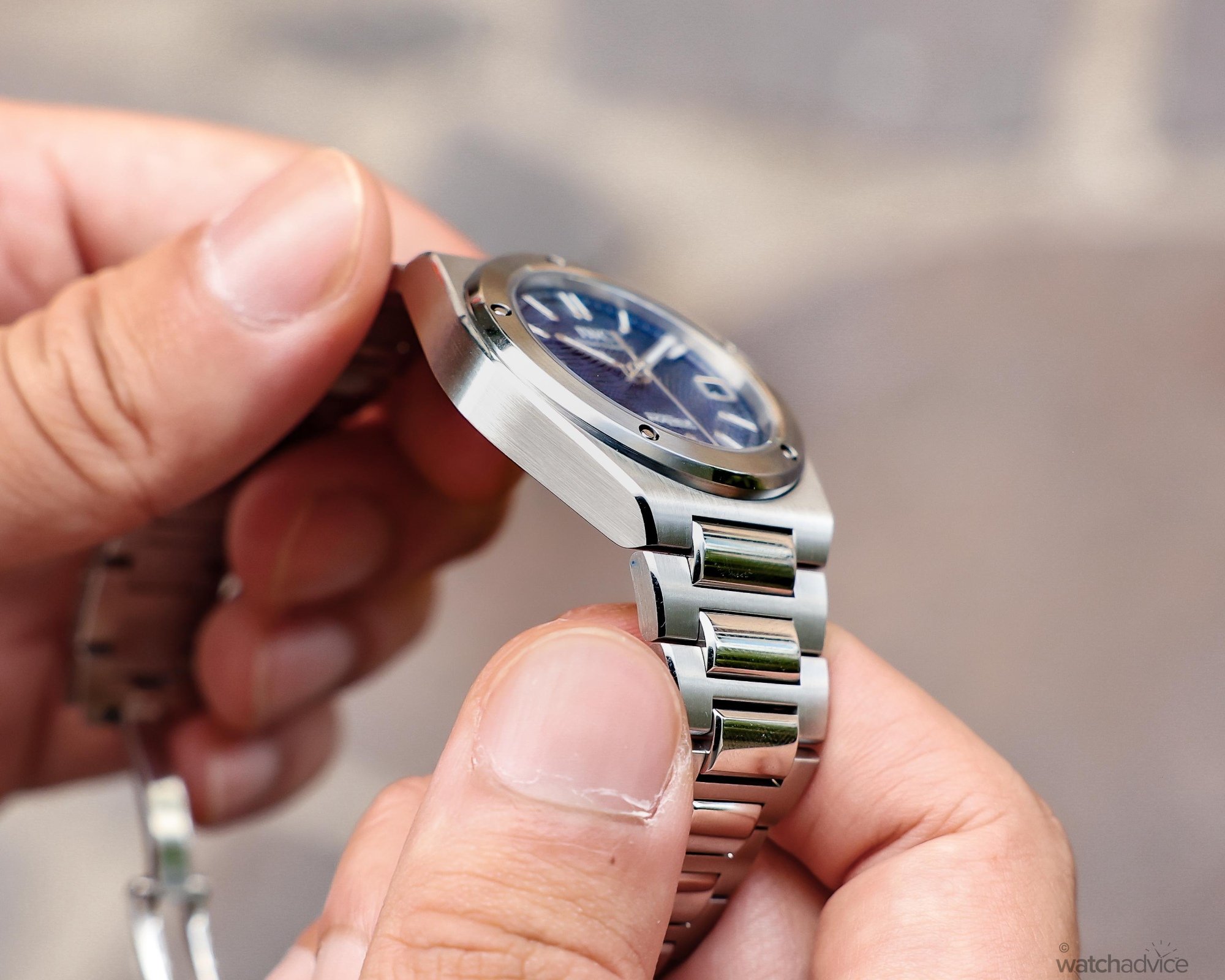
As for the bracelet, I’m slightly conflicted. The returning elements are still as good as they were on the original, particularly the push-button bracelet adjustment system. Additionally, my personal pet peeve, the sequential butterfly clasp, has thankfully been replaced with a conventional butterfly clasp. However, the deployant buttons didn’t operate as smoothly as I would’ve liked. The lack of an in-clasp micro-adjustment system also feels like a missed opportunity, especially for a watch that has so much going for it in terms of wearability.
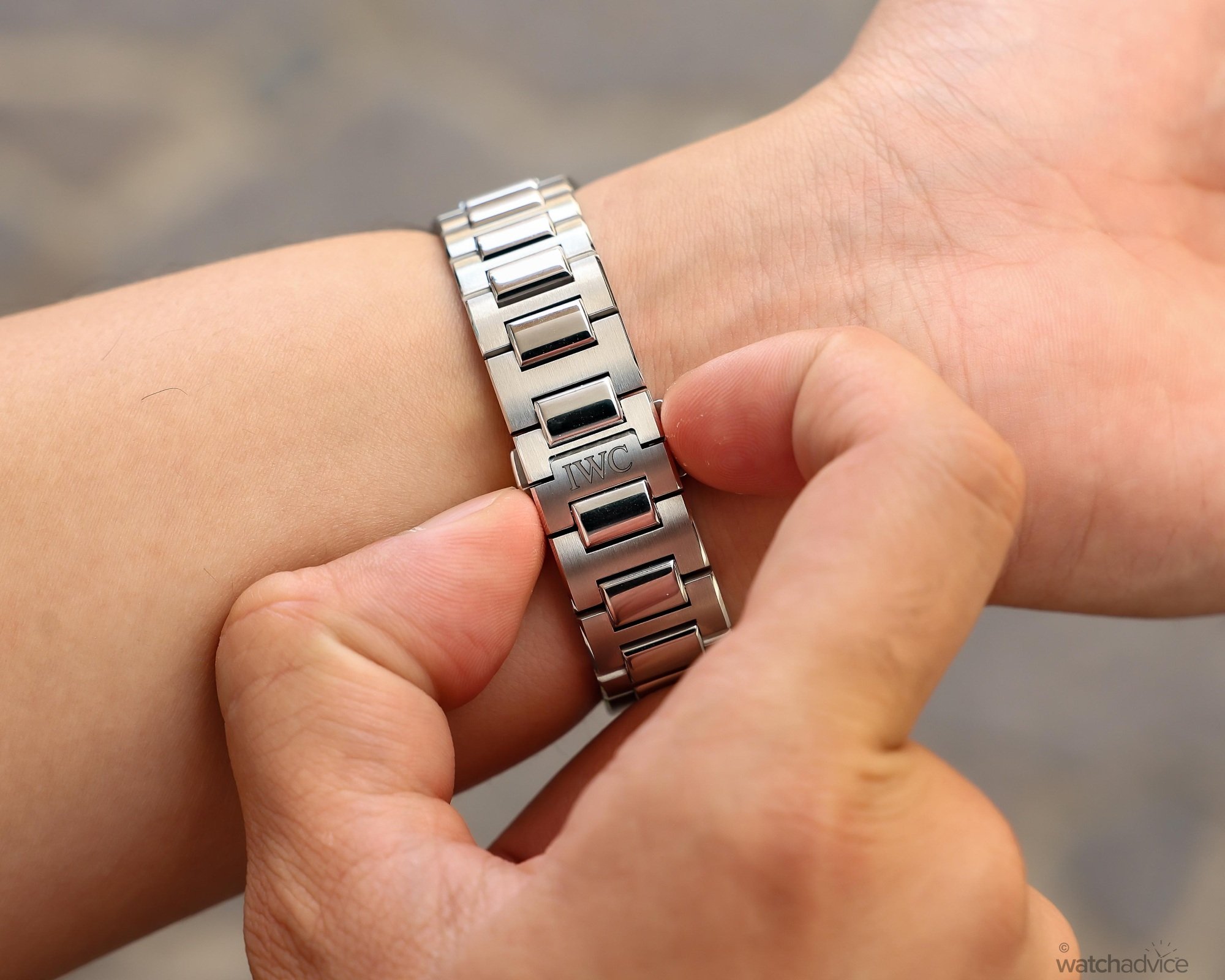
Though I understand that micro-adjustable butterfly clasps are a relatively new concept in the luxury watch world, I was anticipating IWC would be among the brands to adapt quickly. I still hold out hope, though, as the brand has already demonstrated excellent micro-adjustment systems elsewhere in its catalogue. For now, the bracelet does everything it needs to do, but it feels like it could be so much more.
The Movement
As promised, we’ve finally made our way back to the movement. Inside through the open caseback of the IWC Ingenieur 35. the Calibre 47110 can be seen. An automatic movement introduced alongside the first wave of 35mm releases, it operates at 4Hz (28,800VpH) with a respectable 42-hour power reserve.
Now, all of those specifications might sound familiar, and they may have already given the watch nerd within you a hunch. You’d be right, as the Calibre 47110 is IWC’s bespoke rendition of the Cartier Calibre 1847 MC.
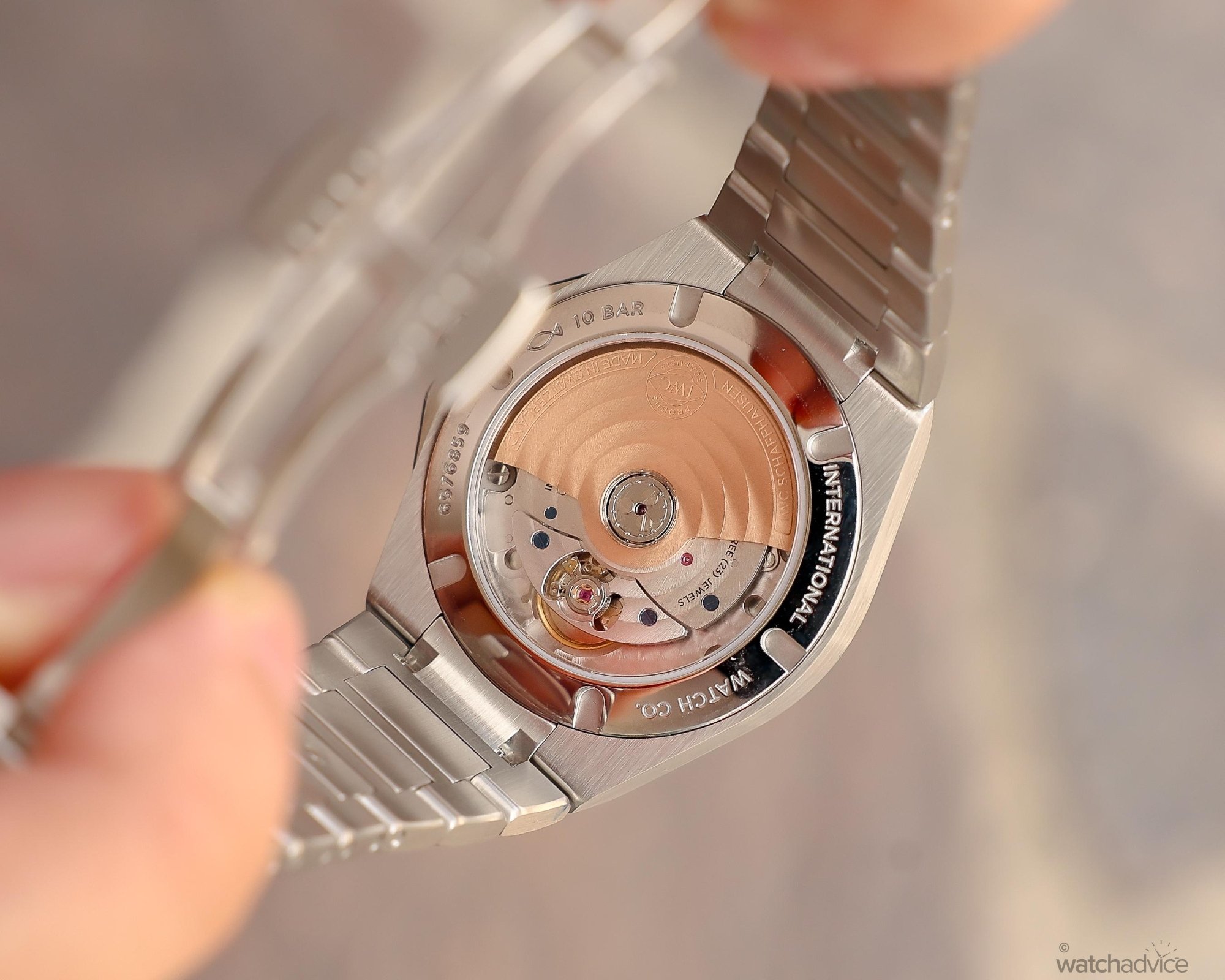
It makes perfect sense that IWC would use Cartier’s base architecture. As fellow constituents of the Richemont umbrella, they join Piaget in utilising the same movement found in the Santos de Cartier collection. And why wouldn’t they? It’s an impressive base movement, one that IWC has dressed up slightly with a gold-plated automatic rotor.
While I join Sam in lamenting the lack of a more ornate rotor, I don’t think it detracts from my personal enjoyment of the watch. What I do find interesting, though, is what the display caseback implies for the Ingenieur 35’s positioning within the wider IWC catalogue.
As mentioned earlier, the Ingenieur usually uses a soft iron inner case that provides the anti-magnetic properties synonymous with its name and original purpose. Such a feature necessitates a solid caseback, which has been sacrificed here to showcase the Calibre 47110. That creative decision raises an interesting question: what kind of watch does IWC want the Ingenieur 35 to be?
I suppose that’s ultimately up to the wearer. It feels a little too sporty to be considered a delicate dress watch, while the absence of the soft iron inner case makes it less qualified for its original role as an engineer’s watch. Most signs instead point towards it being a compact luxury sports watch. Judged on those terms, the IWC Ingenieur 35 still performs exceptionally well.
Final Thoughts
With the growing trend of shrinking watch sizes becoming increasingly prevalent, IWC has done well to translate that demand into the Ingenieur line with the new 35mm reference. However, the notion that this watch is simply “Ingenieur but smaller” is a misconception at best. IWC has genuinely considered how to bring the iconic silhouette to life in a more compact package, resulting in a watch that feels surprisingly well balanced and, as Sam might argue, even more balanced than the original 40mm model.
While there are some points of contention, particularly the omission of the soft iron inner case and the occasionally frustrating bracelet, they don’t detract from the overall look and feel of the Ingenieur 35. Its repositioning as an integrated bracelet sports watch also moves it further away from the collection’s original intent, but not in a way that feels fatal. The modern watch world has become thoroughly accustomed to the genre, even as it edges towards critical mass, and the IWC Ingenieur remains one of its most beloved stalwarts.
But, as always, competitors exist, and no design is more rife with competition than the integrated bracelet sports watch. IWC’s rivals in this space are formidable. From below, the AU$14,800 Zenith Defy Skyline 36mm offers a more architectural design at a slightly lower price. Above it, the AU$18,100 Santos de Cartier in titanium houses essentially the same movement architecture within one of the most recognisable silhouettes in horological history.
Both offer qualities the Ingenieur 35 can match: the compact sizing of the Zenith and the lightweight comfort of the Cartier. Yet that’s precisely why the Ingenieur 35 remains so competitive. It bridges the gap between compactness and everyday solidity with a design that still feels distinctly its own.
As the watch world gets smaller, so too do the places to hide. But the IWC Ingenieur 35, despite having very little room for error, still manages to stand out within the growing small-watch movement. Although it’s another step away from what the original Ingenieur was conceived to be, the qualities that made it so beloved have not only been preserved, but in several respects refined under IWC’s watchful eye and steady hands.
Reference & Specifications
| Feature | Specification |
|---|---|
| Reference | IW324907 |
| Dimensions | 35mm case diameter x 40.7mm lug-to-lug x 9.4mm thickness |
| Case | Stainless steel |
| Dial | Blue with ‘Grid’ pattern |
| Crystal | Sapphire |
| Caseback | Open, sapphire |
| Movement | Automatic Cal. 47110 with date complication |
| Power Reserve | 42 |
| Beat Rate | 4Hz / 28,800VpH |
| Water Resistance | 100m / 10bar |
| Strap/Bracelet | Self-adjustable integrated steel bracelet with butterfly clasp |
Australian Retail Price: $16,800
Availability: Available now, at IWC boutiques, authorised retailers, or online at IWC.com
Image Gallery