

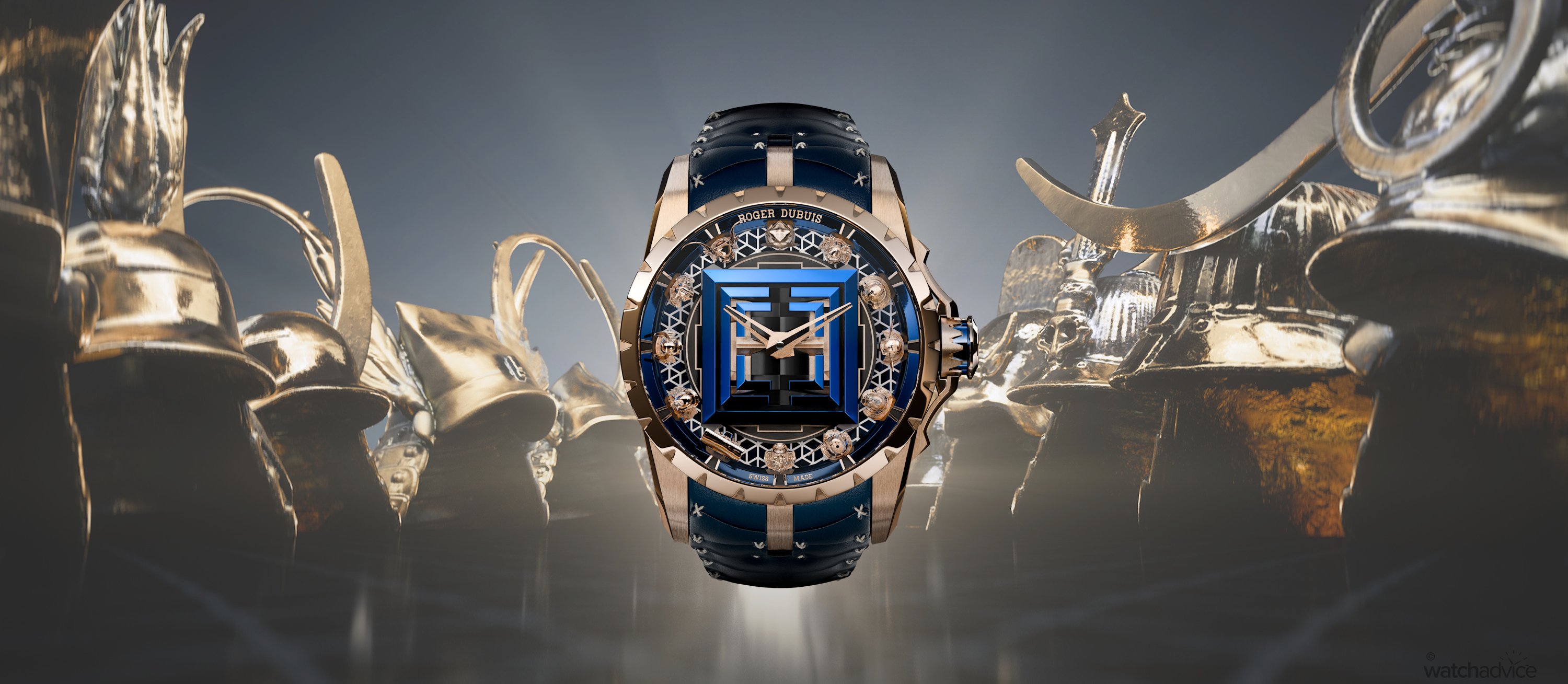
Roger Dubuis’ Excalibur The Kabuto Legacy brings samurai history, miniature sculpture and Geneva fine watchmaking together in one bold, theatrical creation.
Having recently returned from Japan, I’ll admit this one immediately caught my attention: Roger Dubuis has turned to the world of samurai culture for one of the most theatrical versions of the Excalibur yet.
Roger Dubuis is one brand that doesn’t do subtle watchmaking. Just one look at the brand’s current lineup, and you’ll immediately see that what they do best is take haute horology and give it a dramatic flair. This is what makes this Samurai-inspired Excalibur all the more special, as it is perfectly in line with Roger Dubuis’s identity.
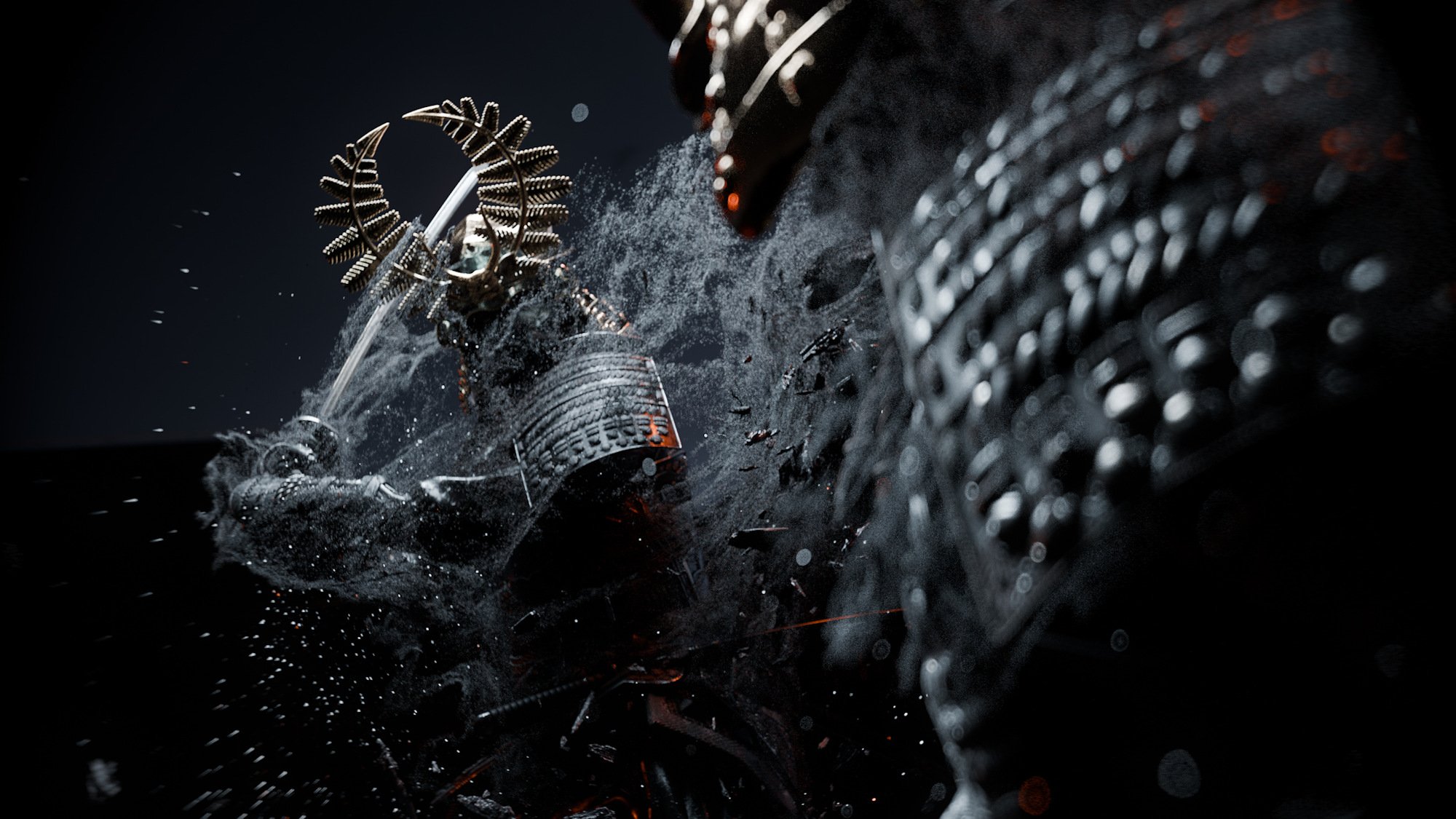
The Roger Dubuis Excalibur ‘The Kubuto Legacy’ goes far beyond just integrating a Samurai theme and Japanese design cues into the Excalibur. Roger Dubuis is drawing from a symbolic moment in 17th-century Japan, when “a period of conflict gave way to unification, political order and more than 250 years of peace, with Edo Castle becoming the symbolic heart of that reformed society.“
“The Maison has always looked beyond its own walls. The Kabuto Legacy turns that instinct toward Japan. Centuries ago, twelve samurai brought a divided country together and opened an age of peace that would hold for 265 years. This ambitious timepiece gathers them around Edo Castle, rebuilt in miniature on a single dial, as the Maison’s homage to a culture it has long admired.”
Roger Dubuis
This timepiece, in a way, is almost like Roger Dubuis’ ‘Knights of the Round’ and Excalibur collections colliding together, as the watch centres on the idea of “unity around the table”, with twelve samurai commanders represented around the dial through their individual Kabuto helmets and Kamon crests. In samurai culture, the Kabuto helmet was not just any armour; it represented lineage, philosophy and aspiration, which gives Roger Dubuis a very rich foundation for the Métiers d’Art work on the dial.
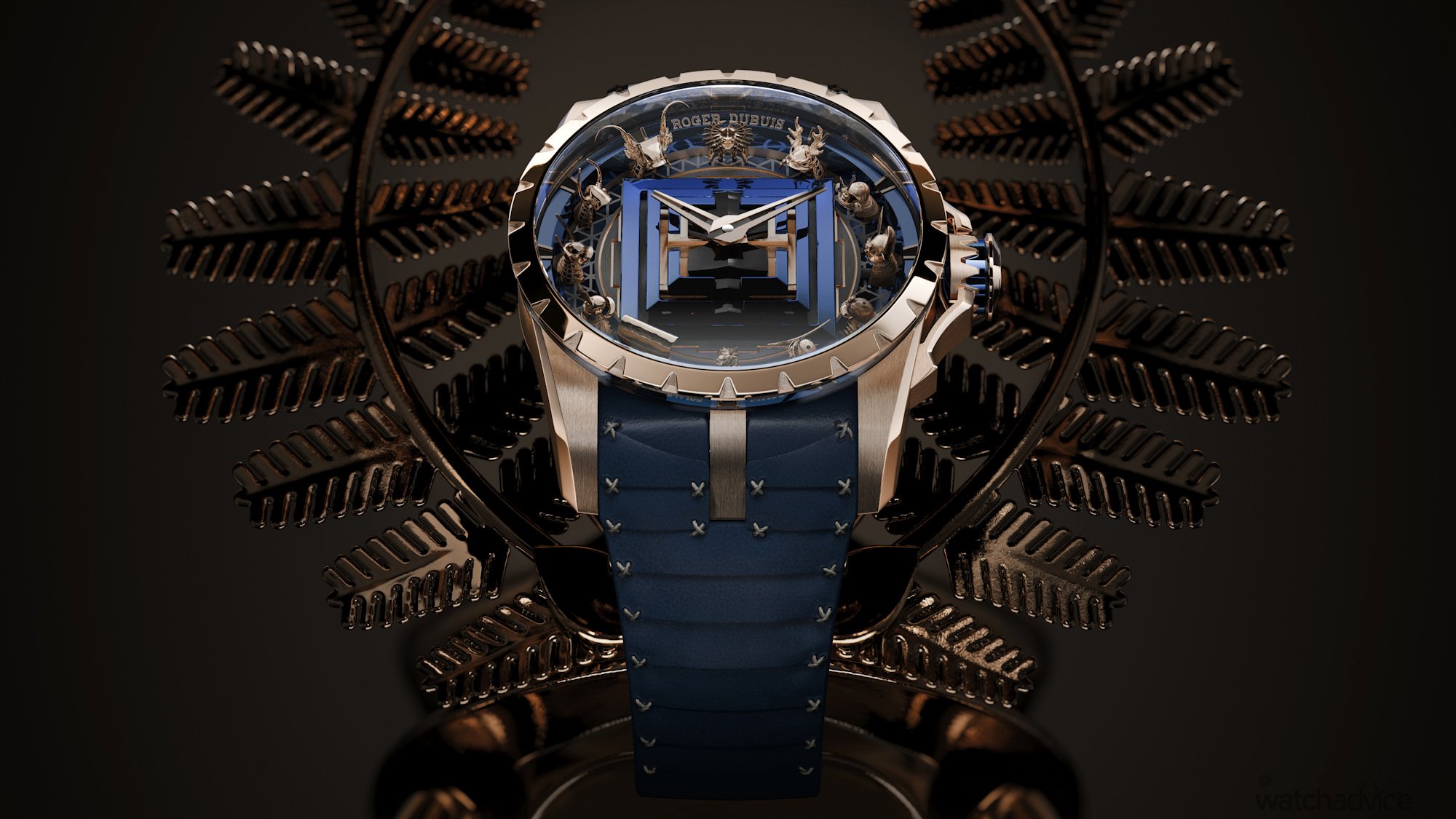
Roger Dubuis went the extra distance when working on the Excalibur The Kabuto Legacy. The Maison worked alongside Frederik Cryns, Professor of Japanese History and consultant on the Emmy-winning series Shōgun, to bring historical accuracy and authenticity to the project. This shows the attention to detail that went into making this timepiece and the historical accuracy of its design.
A Samurai-Inspired Stage Of Gold, Armour And Edo Castle
With such a grandiose dial design comes a large and unapologetic case to accommodate it. Measuring 45mm x 16.87mm thick and in 18K pink gold, this is certainly a bold watch, and one perhaps not suited for smaller wrist sizes. The case size does make sense here, however, as the dial needs space to accommodate the Edo Castle structure and its intricate details.
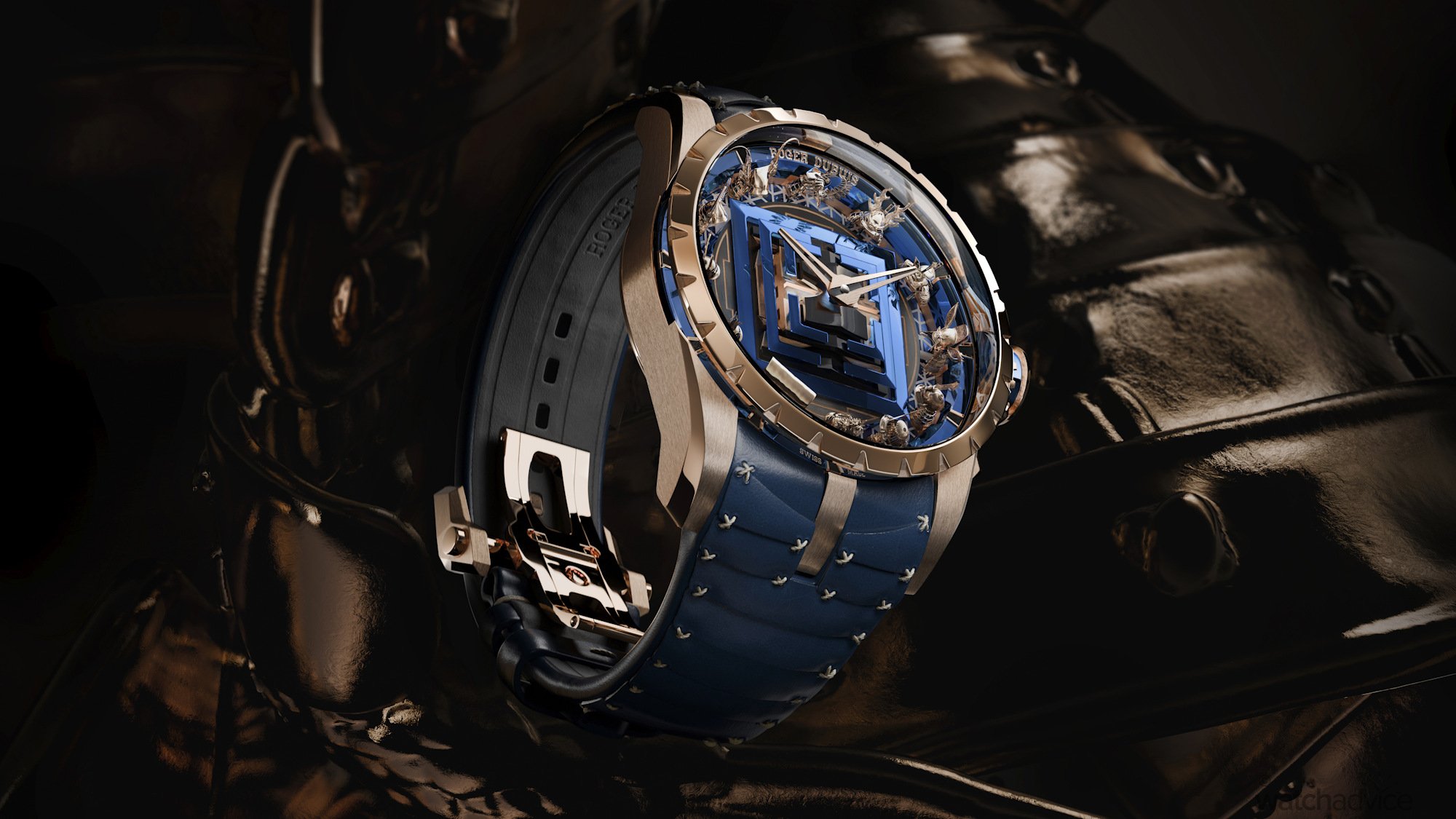
The use of 18k pink gold gives the timepiece a warmer aesthetic, but it also plays into the rare and special feeling that surrounds this entire design. And considering the Kabuto helmets are also recreated in 18K pink gold, the case material helps tie the entire exterior together rather than making the dial feel like a separate decorative object.
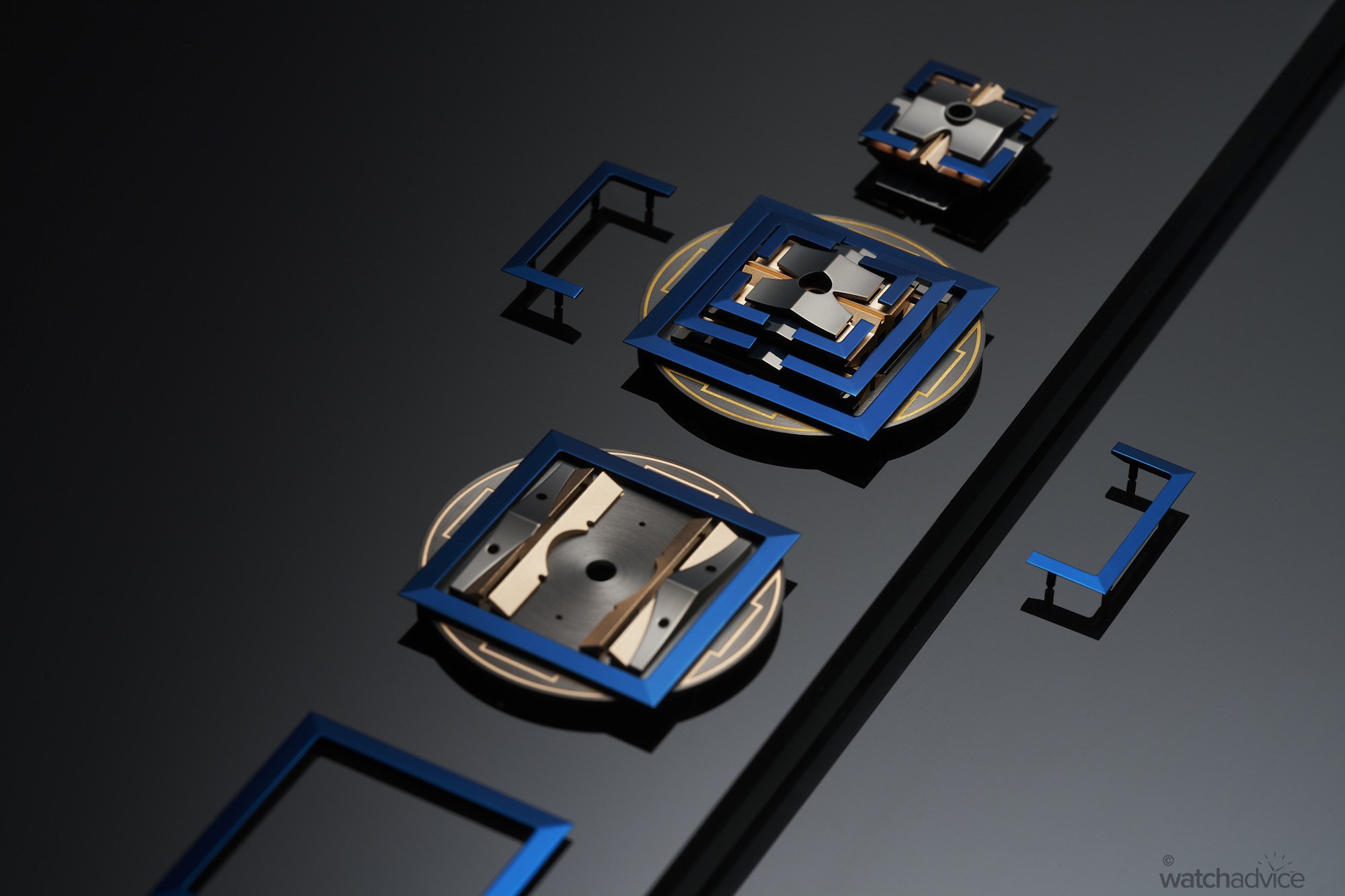
The dial is where the Excalibur The Kabuto Legacy truly comes to life. At its very core, Roger Dubuis has created an interpretation of Edo Castle, using a layered architectural construction which makes the castle appear “futuristic”, while also giving the dial a theatrical aesthetic.
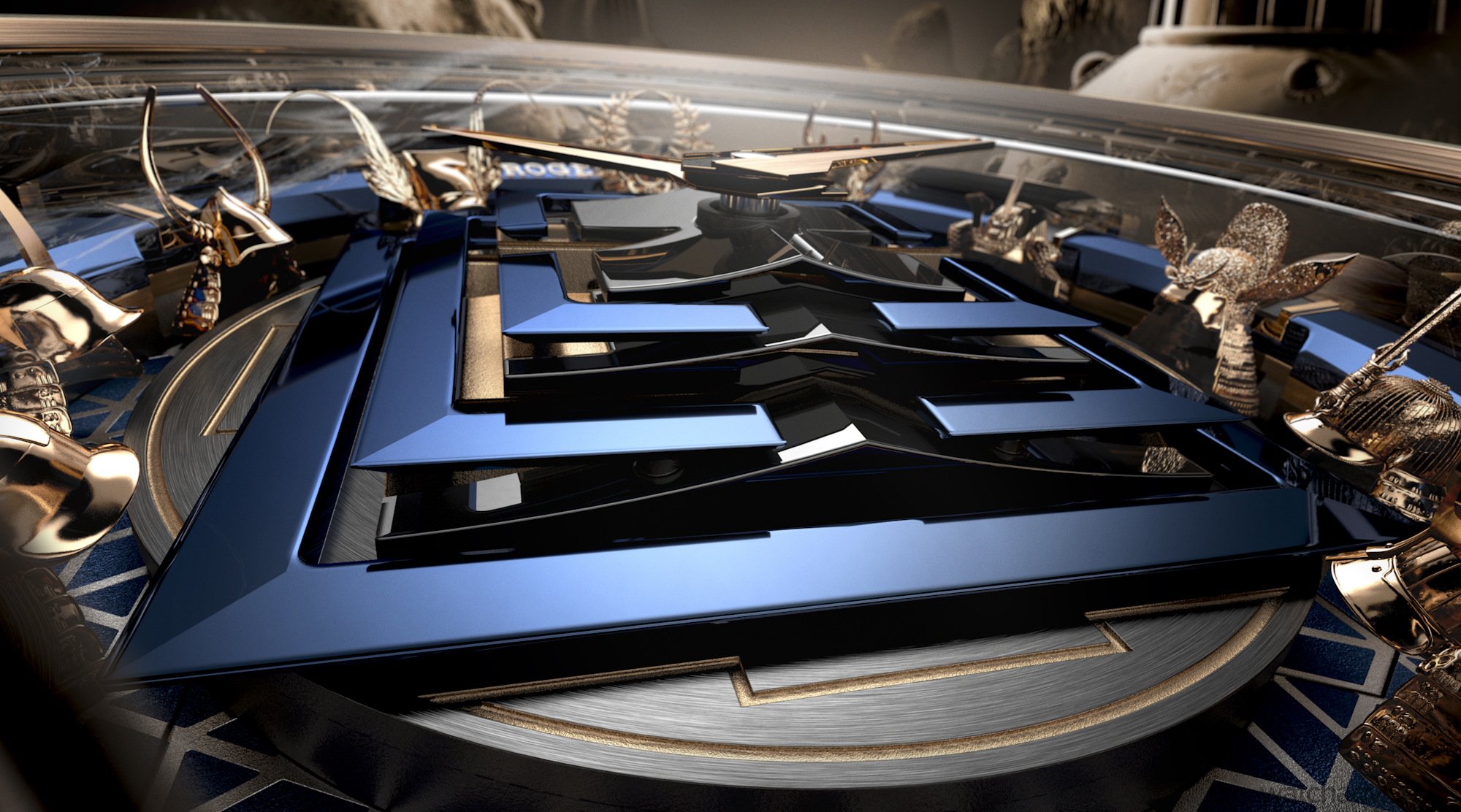
Rather than depicting the castle literally, the Maison uses 17 separate elements and four decoration techniques to create the sculptural representation of the fortress. The deep blue coating is inspired by indigo dye, a colour that is historically associated with samurai garments and later Japanese art and textiles. It gives the dial almost a direct link to the cultural world that inspired the watch in the first place.
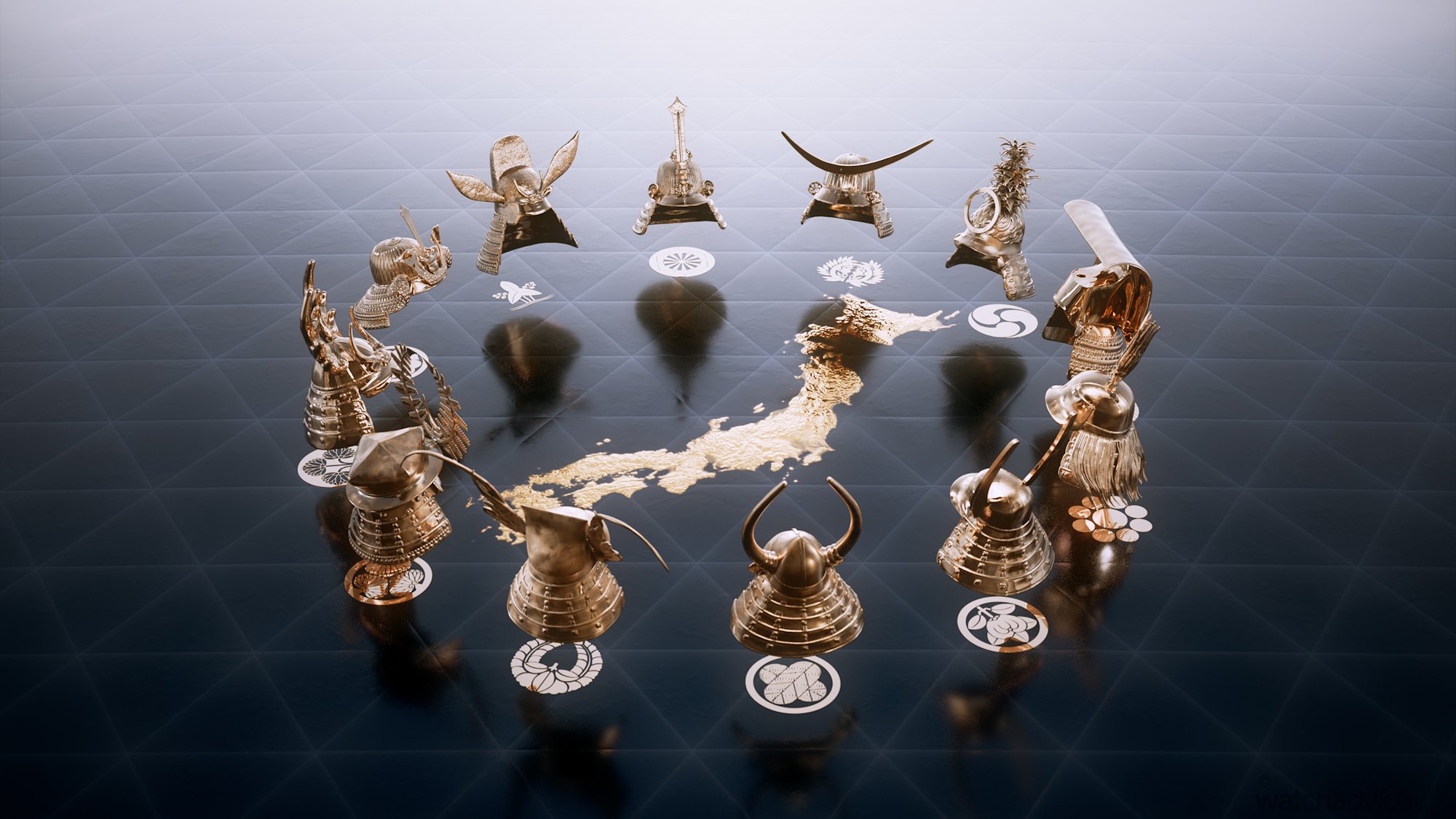
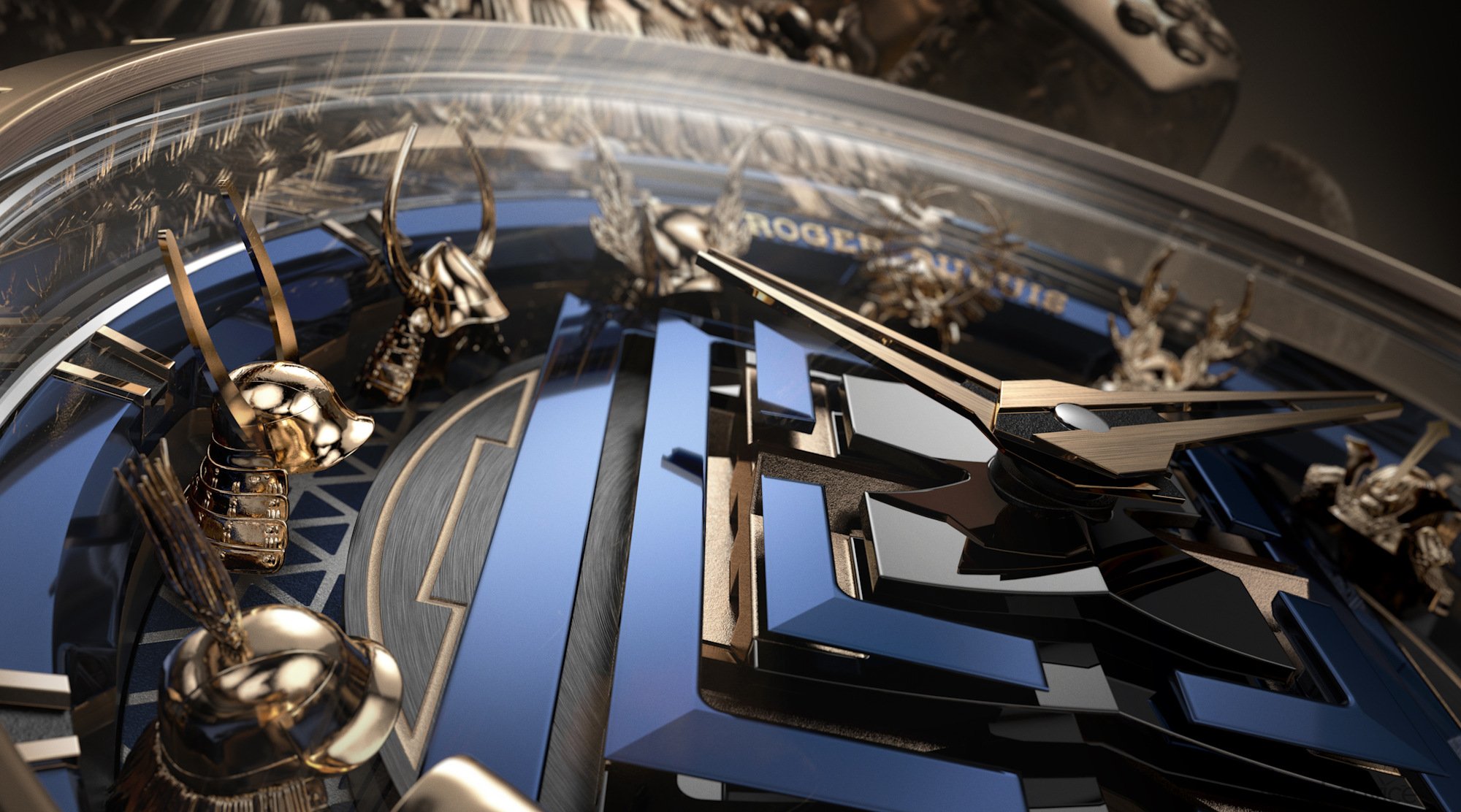
Then, surrounding this central structure are twelve hand-engraved 18k pink gold Kabuto helmets, with each one representing a different samurai commander. Every Kabuto helmet carries its own symbolic form and historical identity. Each of these miniature sculptures requires two to three days of skilled work from master artisans to complete.
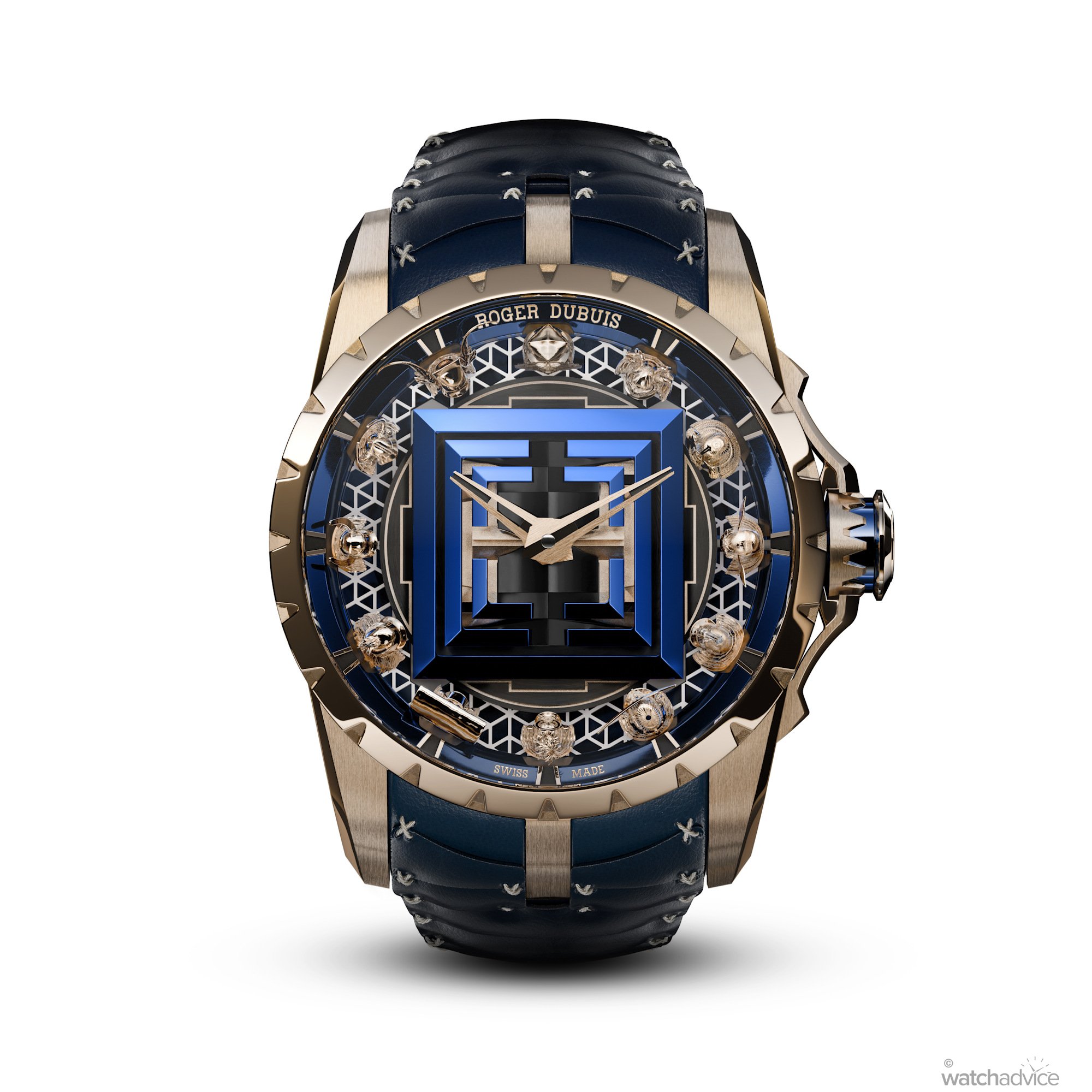
The Excalibur The Kabuto Legacy is simply more than just a watch. With the storytelling within the dial, it becomes a gathering of historical figures, brought together through Métiers d’Art, miniature sculpture and Roger Dubuis’ typically theatrical Excalibur design language.
Geneva Fine Watchmaking Beneath The Samurai Story
Powering this Excalibur The Kabuto Legacy is the Roger Dubuis RD821 automatic Calibre. This is an in-house movement which allows the Maison to keep the dial side open for the full artistic and theatrical display. It is a movement with serious high-watchmaking credentials; however, rather than being the centre of attention, it allows the Métiers d’Art storytelling to take the limelight.
The RD821 calibre is certified by the Poinçon de Genève, and with a modest 48-hour power reserve, it operates at a 4hz frequency offering accurate timekeeping. Roger Dubuis also applies 14 distinct finishes in-house across the movement, which includes decorative finishing that is required for the Poinçon de Genève certification. The brand does not list every individual finish; however, it has been carefully designed to “showcase the contrast between matte and polished surfaces”.
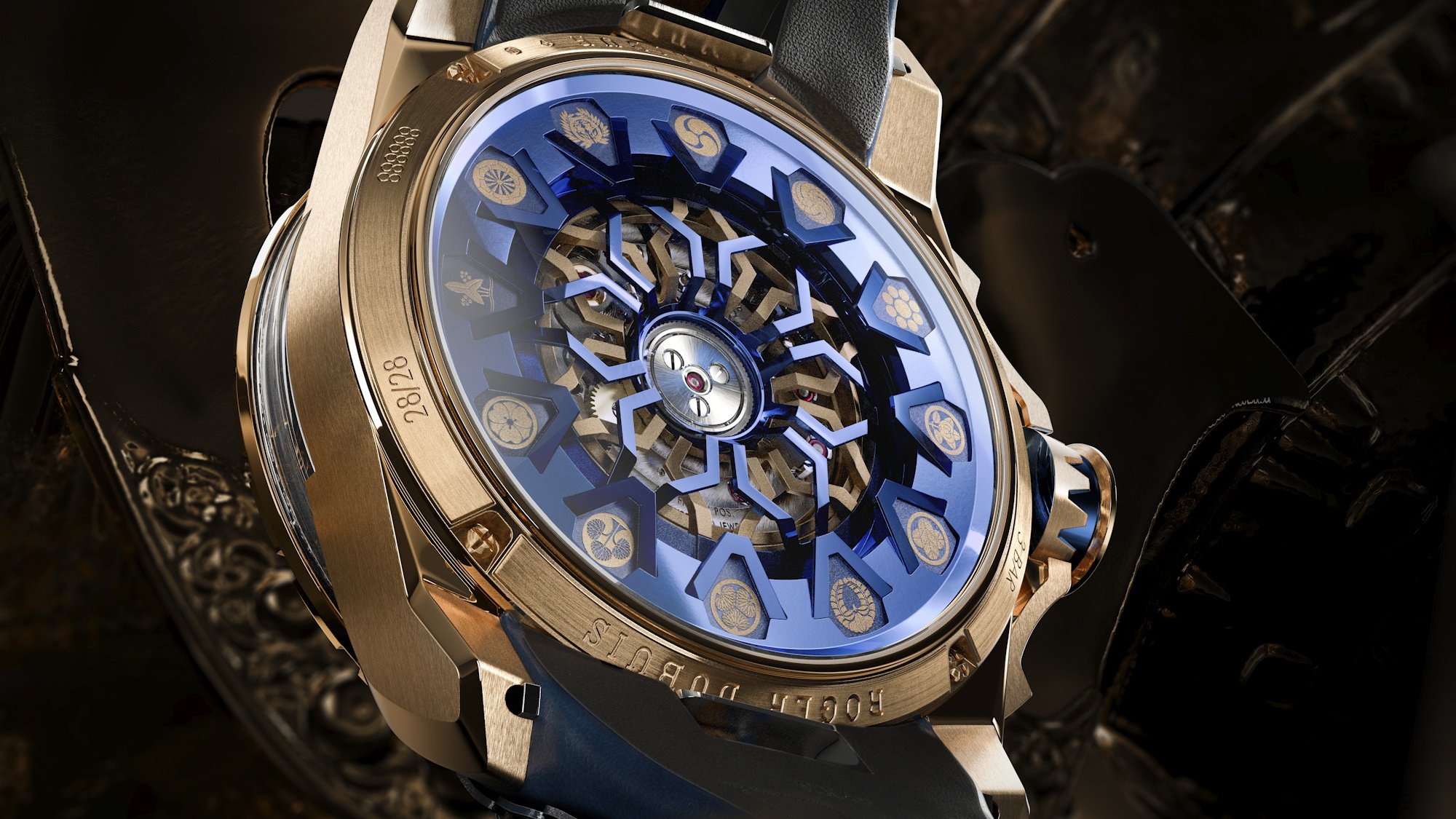
The caseback, as mentioned earlier, also carries the Samurai storytelling, with twelve crests (directly in line with the dial side Kabuto helmets) being laser-engraved on a blue-coated pink gold ring surrounding the movement. These crests represent the Kamon of the twelve bushō, which adds another layer of historical identity to the watch.
Initial Thoughts
This is exactly the type of watch that Roger Dubuis is expected to create. Perfectly in line with the brand’s ‘dramatic’ identity, the Excalibur The Kabuto Legacy is bold, theatrical, and technically serious, making the Excalibur platform the perfect base for this extravagant creation. While many brands would’ve approached this concept by borrowing colours, patterns or symbols, Roger Dubuis has gone to great lengths to build the timepiece around Edo Castle, twelve samurai commanders, their Kabuto helmets and their Kamon crests.
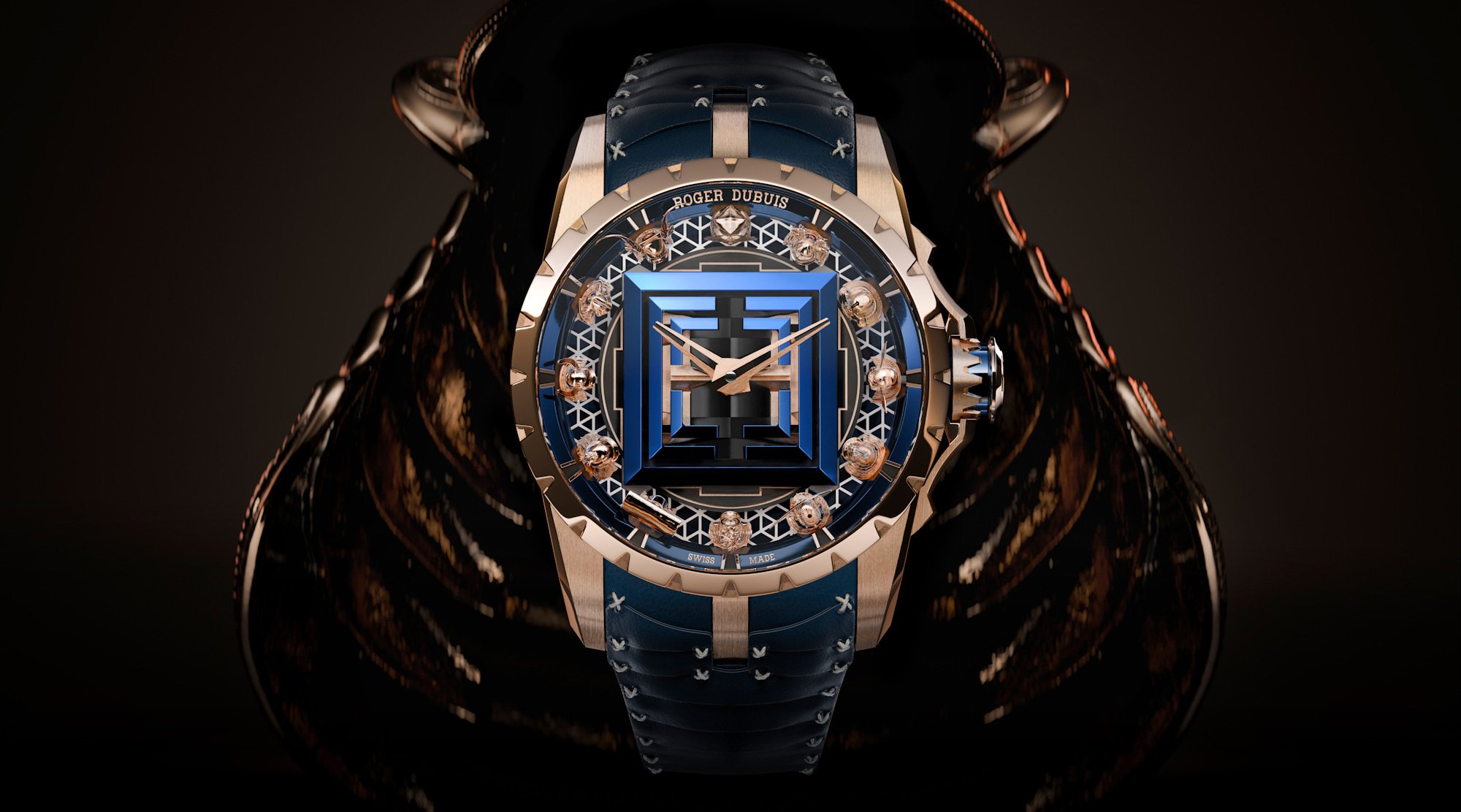
With the watch being 45mm in diameter and almost 17mm thick, this is certainly not a watch for everyone, nor is it made to be an everyday piece. But that is also the point. The Excalibur The Kabuto Legacy is a statement watch. It is indeed a rare collectible, designed around mechanical theatre and miniature sculpture. This is Roger Dubuis at its boldest: dramatic, expressive, deeply detailed and a masterpiece of Métiers d’Art.
Roger Dubuis Excalibur The Kabuto Legacy
Reference & Specifications
| Feature | Specification |
|---|---|
| Reference | DBEX1139 |
| Dimensions | 45mm x 16.87mm thickness |
| Case | Ethical 18-carat rose gold |
| Dial | 17 elements compose the castle, made up of 18K pink gold, blue CVD coating, and black PVD. Pink gold 750/1000 ring with 12 pink gold hand-engraved helmets. |
| Crystal | Sapphire with anti-reflective coating |
| Caseback | Open, sapphire |
| Movement | Automatic winding Calibre RD821 |
| Power Reserve | 48 hours |
| Beat Rate | 4Hz / 28,800VpH |
| Water Resistance | 30m / 3bar |
| Strap/Bracelet | Interchangeable calf leather strap, with glued and stitched leather strips. Patina leather like used armor. Pink gold 750/1000 cover with pink gold triple folding buckle. |