

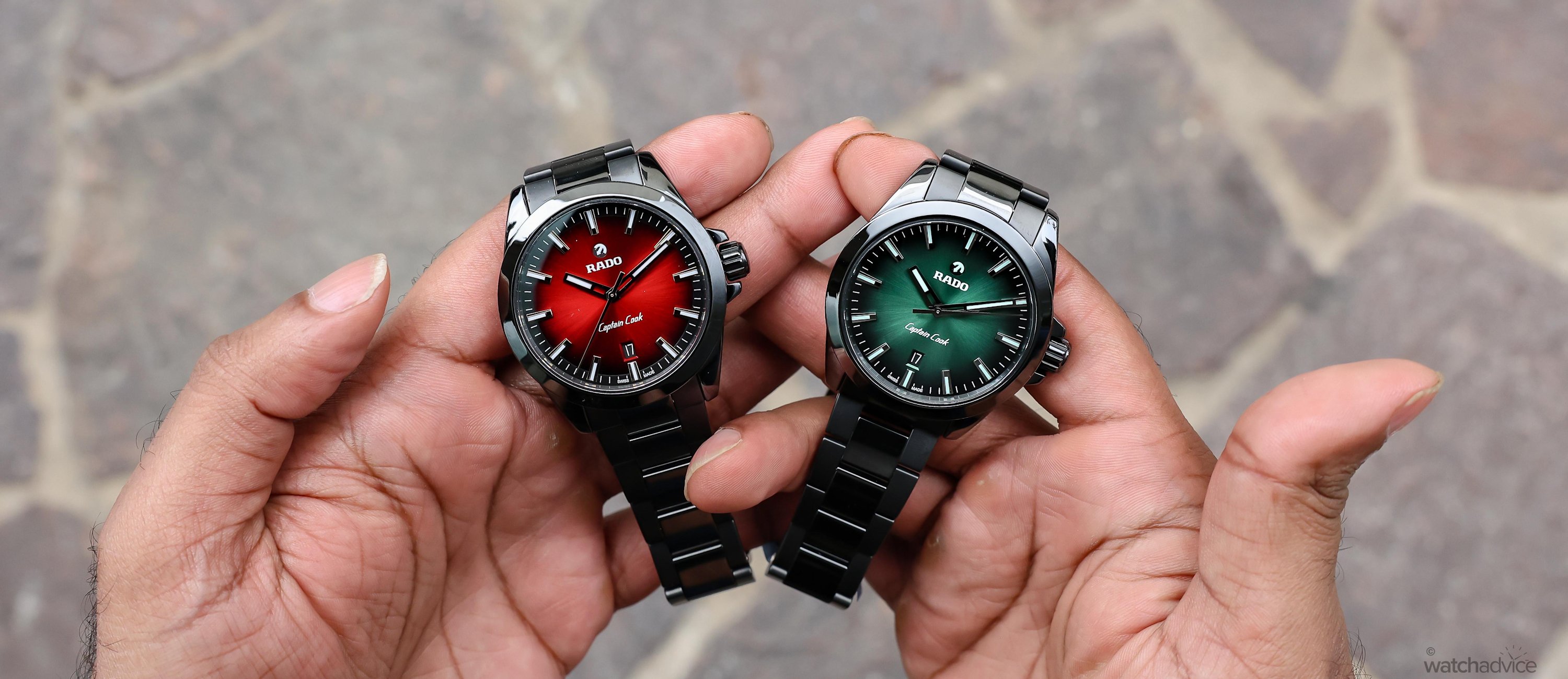
Red and green gradient dials meet polished black ceramic in the new Rado Captain Cook Discover collection. I wore both to see whether it earns its place in the range.
What We Love:
- Red and green gradient dials with distinctly different personalities
- Compact case and ceramic bracelet fit my 16 cm wrist well
- Fixed bezel and slimmer hands give it a dressier look
What We Don’t:
- The clasp could use more adjustment range for warmer days
- All-black ceramic is harder to style than steel
- Fewer factory strap options than the steel Captain Cook models.
Overall Rating: 8.7/10
- Value for Money: 8.75/10
- Wearability: 8.5/10
- Design: 8.75/10
- Build Quality: 8.7/10
Rado has unveiled the Captain Cook Discover, a dressier take on the dive-watch design it brought back in 2017. So the natural question for me is whether these new models can carve out a place of their own in a collection that already makes a great everyday watch.
Well, I spent some time with the red and green dial editions to find out! Before we get into that, though, I want to go back to where the Captain Cook began and look at what led to the Discover. If we don’t understand the history, we won’t know why it exists!
Rado introduced the original Captain Cook in 1962, and the modern collection still draws on that design. It began as a dive watch, with a rotating bezel that let the wearer track elapsed time at a glance. Prominent hands, bold hour markers, and a clearly marked minute track made the dial easy to read and gave the watch a distinctive look on the wrist.
While Rado marketed this model as a dive watch, what was interesting was that it spoke to a lot of people outside diving, including doctors, engineers, athletes and racing drivers, as well as, of course, deep-sea divers. So the idea that the Captain Cook could be worn every day goes back to the very first model in 1962, well before the modern rendition.
Rado’s original Captain Cook certainly had a distinctive design. It was released during a time when the market was flooded with dive watches, especially ones featuring bold, easy-to-read dials. This meant that the Captain Cook struggled to find its audience at the time, and six years after its introduction, Rado decided to discontinue the model.
Nearly five decades after the original model’s run ended, Rado returned to its archives to create a vintage-inspired timepiece. This is what led to the birth of the modern Captain Cook in 2017. For its introduction as part of the HyperChrome family, Rado’s designers scanned the original Captain Cook model to reproduce the exact proportions of its 37 mm design.
Unlike the original, it looked like the modern rendition of the Captain Cook was here to stay. In 2021, Rado expanded the Captain Cook collection by introducing a ceramic edition, tying in their signature material nicely with what would become one of the brand’s core collections. This ceramic edition kept all the defining features of the Captain Cook, including the rotating bezel.
So then, how do the Captain Cook Discover models find their place within an already established collection? Rado itself describes the Discover as a reinterpretation of the original Captain Cook. However, the way I see it, the Discover offers a dressier, more expressive, and more versatile option compared with other all-black ceramic watches on the market.
Initial Impressions of Captain Cook Discover Collection
Having handled a variety of Captain Cook models before, I noticed a few things that immediately stood out with these new Discover models. One of the most noticeable things is the lack of a rotating dive bezel, which immediately gives this watch a new character and moves it away from that purely dive-watch aesthetic. The polished bezel gives the Discover collection a completely new look. As mentioned earlier, it’s a little dressier and more refined, with a more relaxed, sporty feel.
Then, of course, we have the dial elements. Now, Rado is no stranger to using coloured dials to capture attention in the Captain Cook models, with the current collection featuring deep green, blue and red dials, ice blue, a gold dial textured with diamond powder and even the more recent Captain Cook x Cameron Green with its bold green and yellow aesthetic. Rado has also used finishing effects like gradient colouring to give the models more character than they’d get from plain colours.
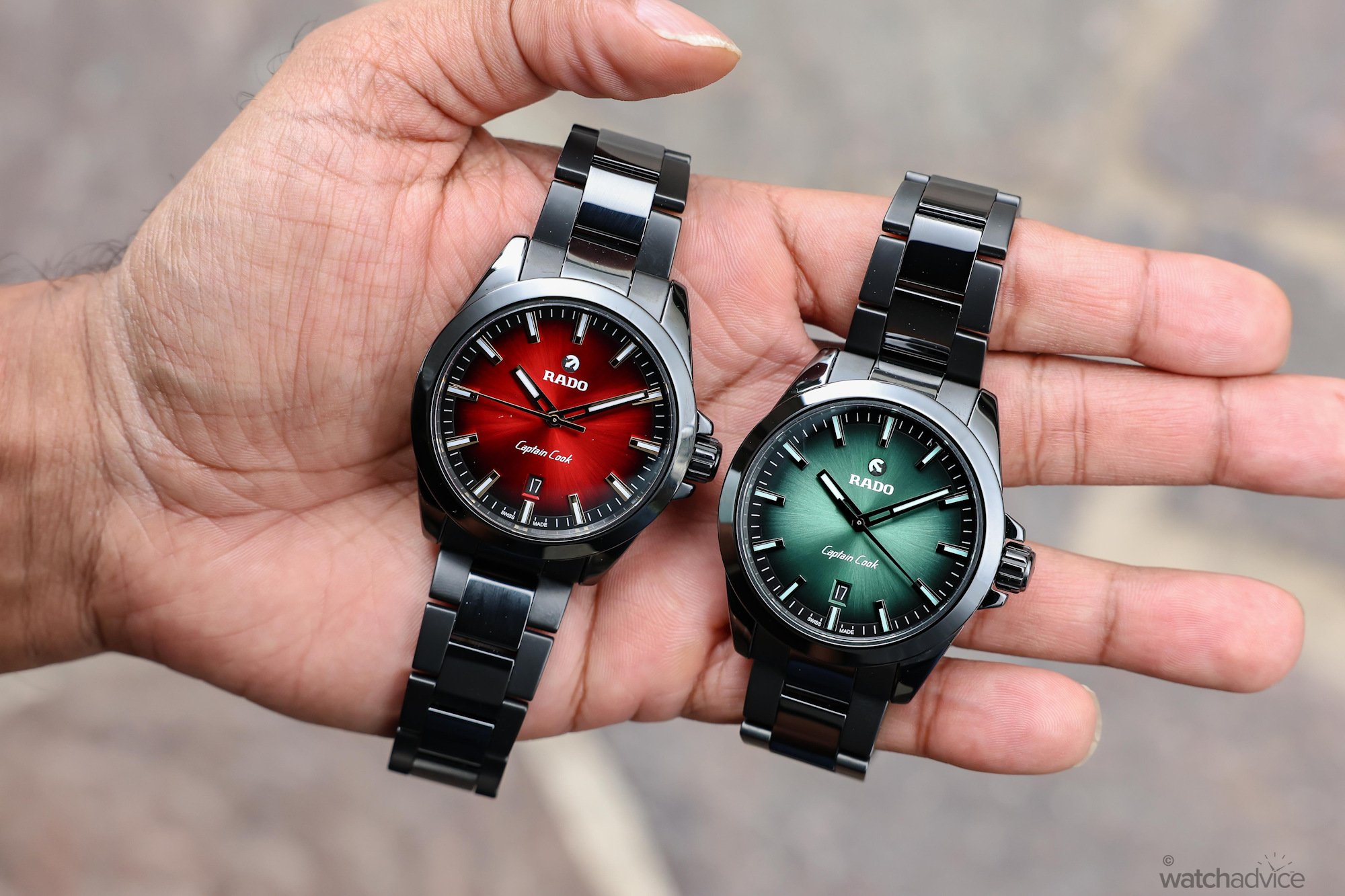
This is exactly what they have carried across to the new Discover range (why change something if it’s not broken, right?). What I’ve noticed is that these colours stand out more than on the standard Captain Cook models, purely because there are fewer elements on the dial competing for attention, so the colours can take centre stage.
For this review, I spent time with the red and green gradient-dial models. However, the new Discover collection encompasses so much more. The full collection currently features three more models, including one with a blue gradient dial, one with a black sunray dial with a unique laser-enhanced wave pattern and, lastly, a full white ceramic edition with the same wave-like pattern for those who want something even bolder on the wrist!
For me, the red and green editions were the standout picks. But trying to choose between the two models? Well, that became harder and harder as I spent more time with them!
A More Compact Take on Rado’s Ceramic Captain Cook
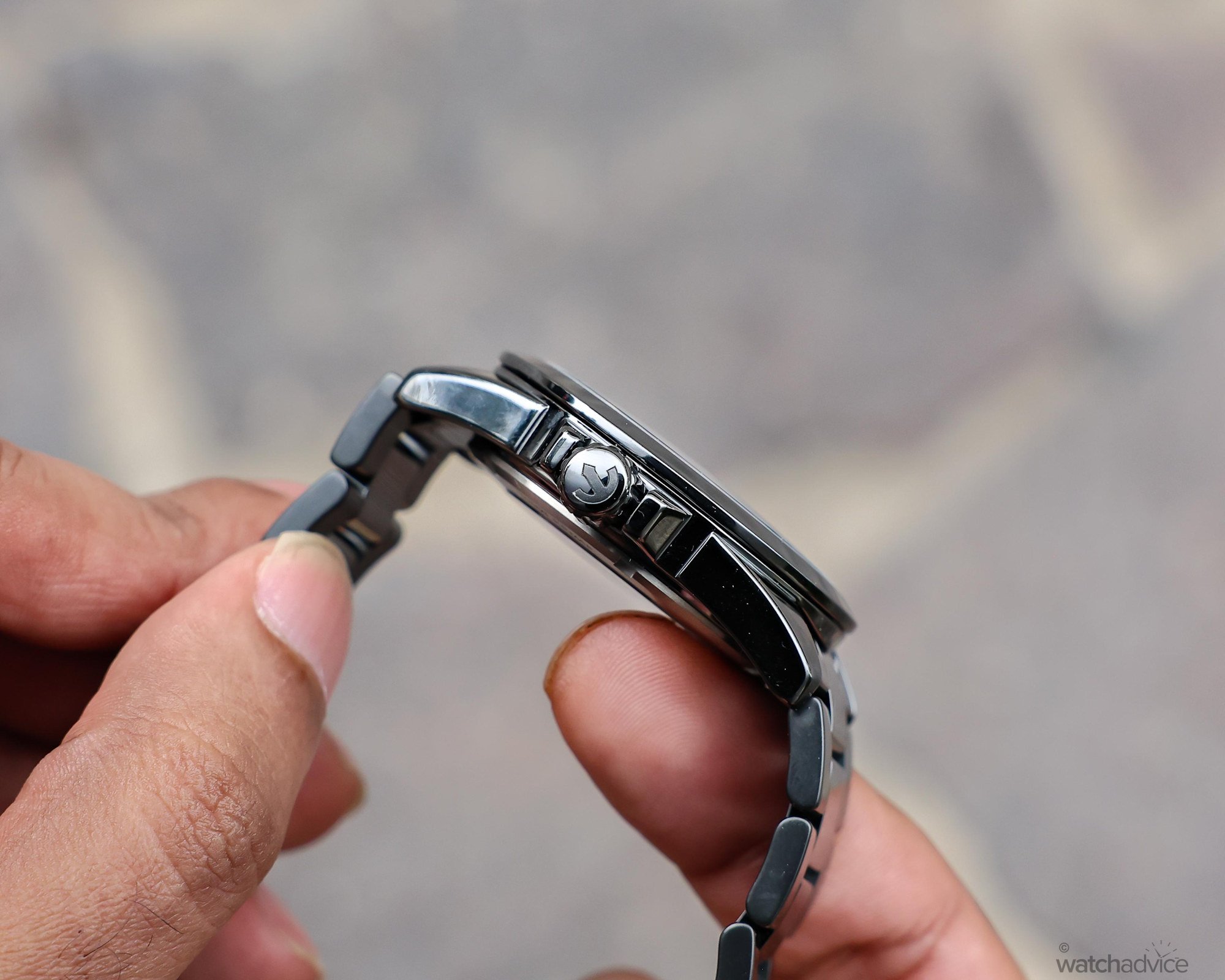
The new Captain Cook Discover collection measures 40.7 mm in diameter and 12.3 mm thick. These are measurements that have been carefully thought out, as they sit nicely within the brand’s current Captain Cook offerings. For reference, one of the smallest models in the Captain Cook collection is a steel automatic with a 39 mm case that’s 12 mm thick. Above this, there is another steel edition with a 42 mm case diameter that shares the same 12.3 mm thickness as the Discover range.
The closest comparison in terms of material is the Captain Cook High-Tech Ceramic. However, it has a much larger profile on the wrist, with a 43 mm case diameter and a thickness of 14.6 mm. These specs vary widely across the Captain Cook models, but that is also where the collection’s strength lies, as it caters to a variety of wrist sizes, ensuring that there is a model for everyone!
As the Captain Cook Discover range is dressier in its styling, it only makes sense to keep the proportions relatively compact. At 40.7 mm, it slots in nicely between the 39 mm Captain Cook and the larger models, offering enough wrist presence while still being compact enough for everyday wear!
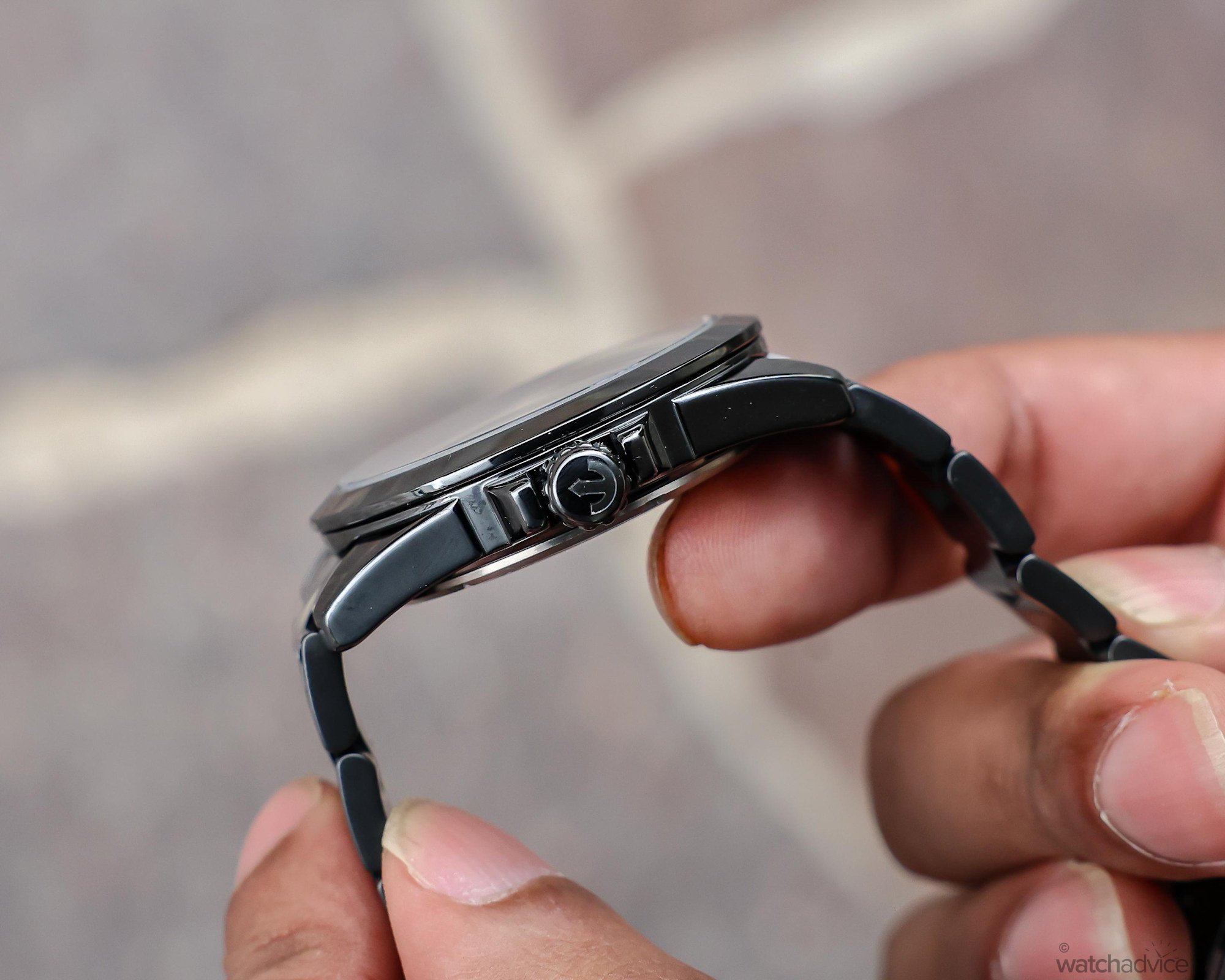
Now, as we know, the model utilises Rado’s high-tech ceramic capabilities. The brand first introduced high-tech ceramic to its watches with the Integral in 1986. Incidentally, this marks 40 years since the brand first brought the material to market, which shows just how much experience Rado has in the ceramic department!
The first model from Rado to feature a ceramic case and bracelet was the Ceramica in 1990. In 2021, Rado introduced the first-ever ceramic Captain Cook, which featured a 43 mm case and retained the signature rotating dive bezel. This makes the new Captain Cook Discover’s smaller case proportions and fixed bezel a deliberate change in direction. Both Discover models I reviewed feature a polished black bezel, which picks up the shine of the case beautifully, so that both surfaces match as you turn the watch in the light.
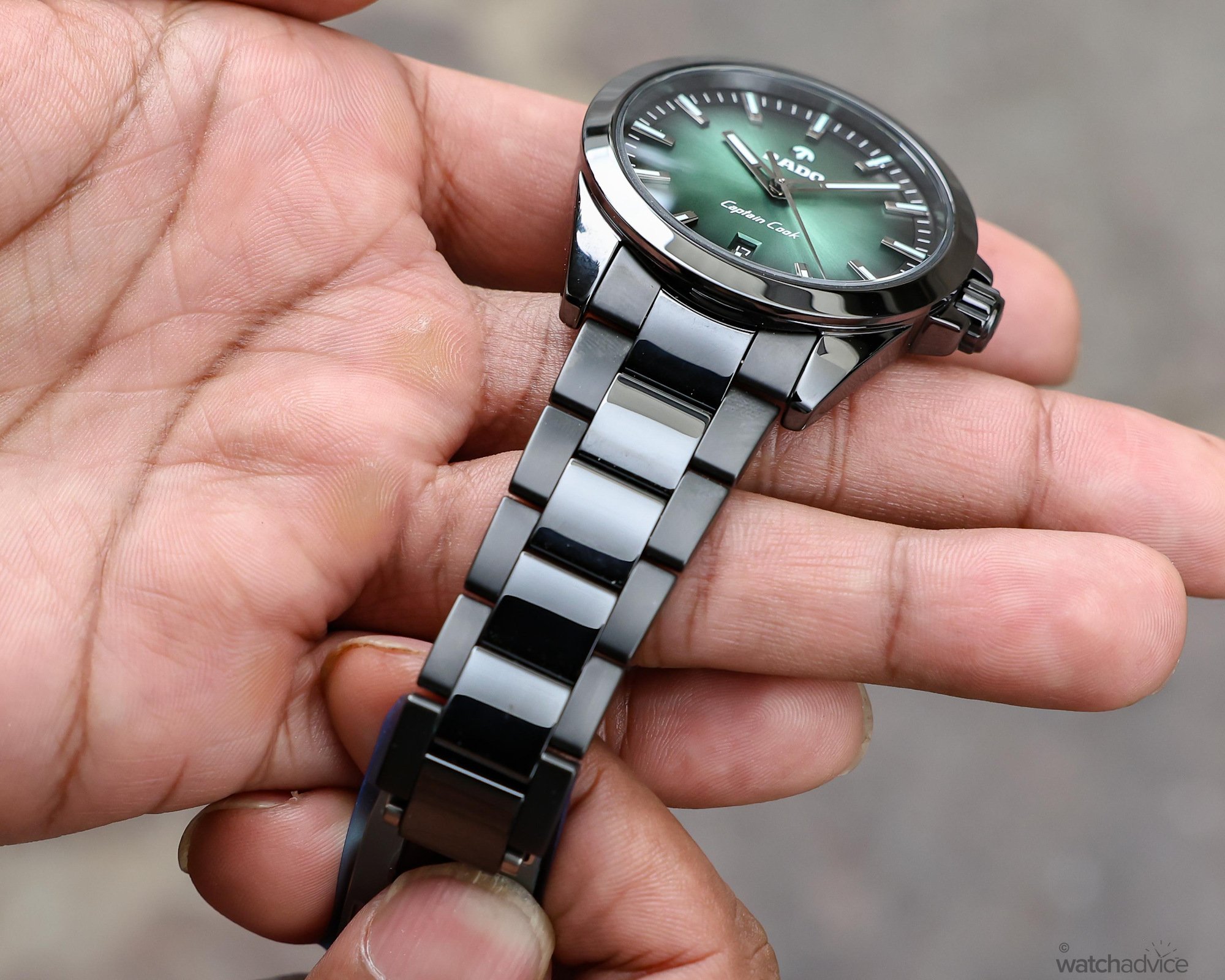
The three-link bracelet, on the other hand, offers varied finishing. The wide polished centre links carry the sheen of the case and bezel down the wrist, whilst the matte outer links give these centre links more definition, allowing them to stand out beautifully.
Crimson Red and Forest Green Against Black Ceramic
While coloured gradient dials are nothing new in the Captain Cook range, I like how Rado has executed them on these Discover models. The black ceramic case, polished bezel and black minute track lead your eye into the dark outer edge of the dial. The colour only starts to emerge as you move towards the centre.
This is what makes the gradient finish feel like part of the whole watch’s design. The dark perimeter visually connects the dial to the case, while the centre is where each model gets its own character. This visual design is also what helps set the Discover apart from the other Captain Cook models. Without the rotating dive bezel, the transition from the case through the polished bezel to the dial is seamless.
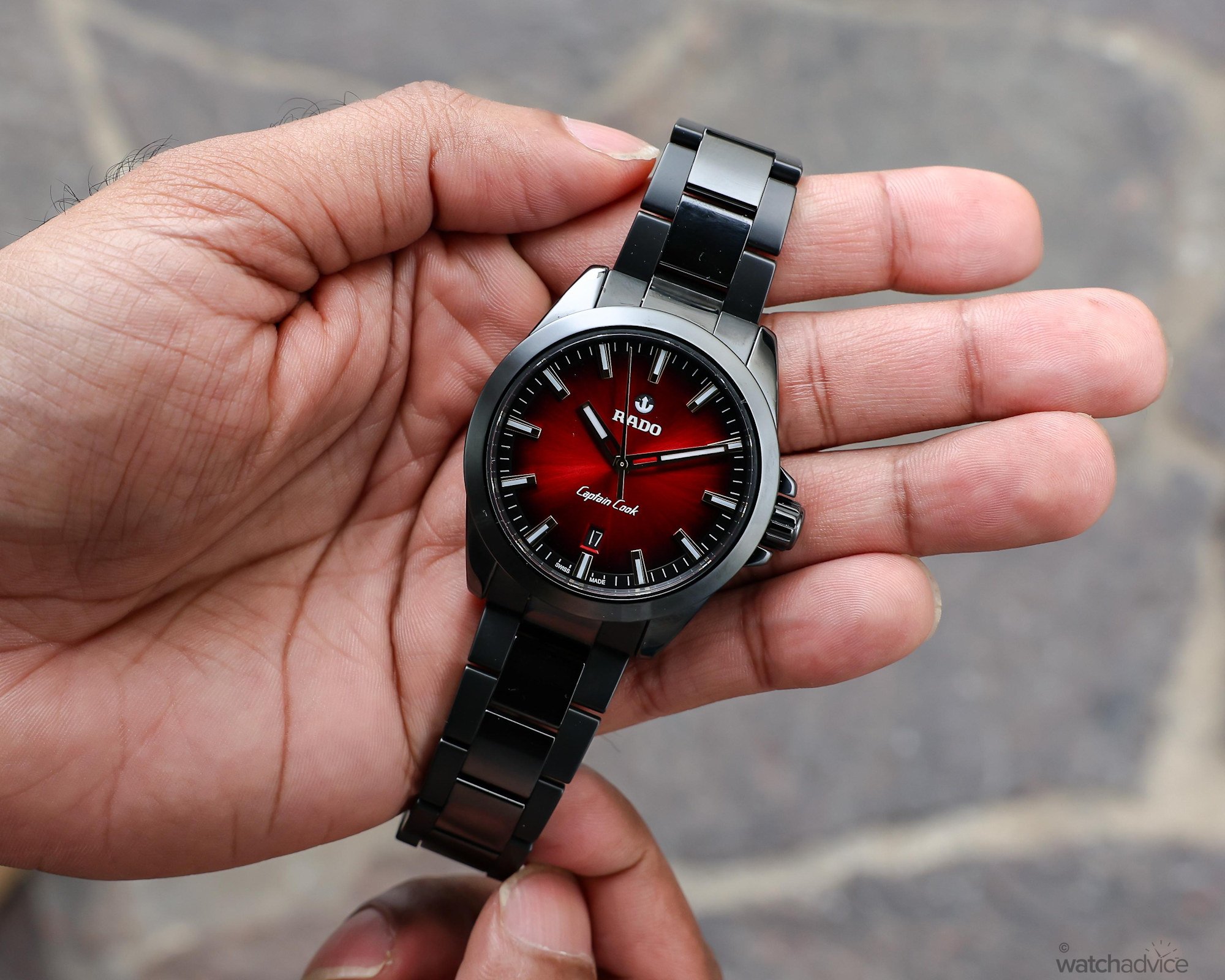
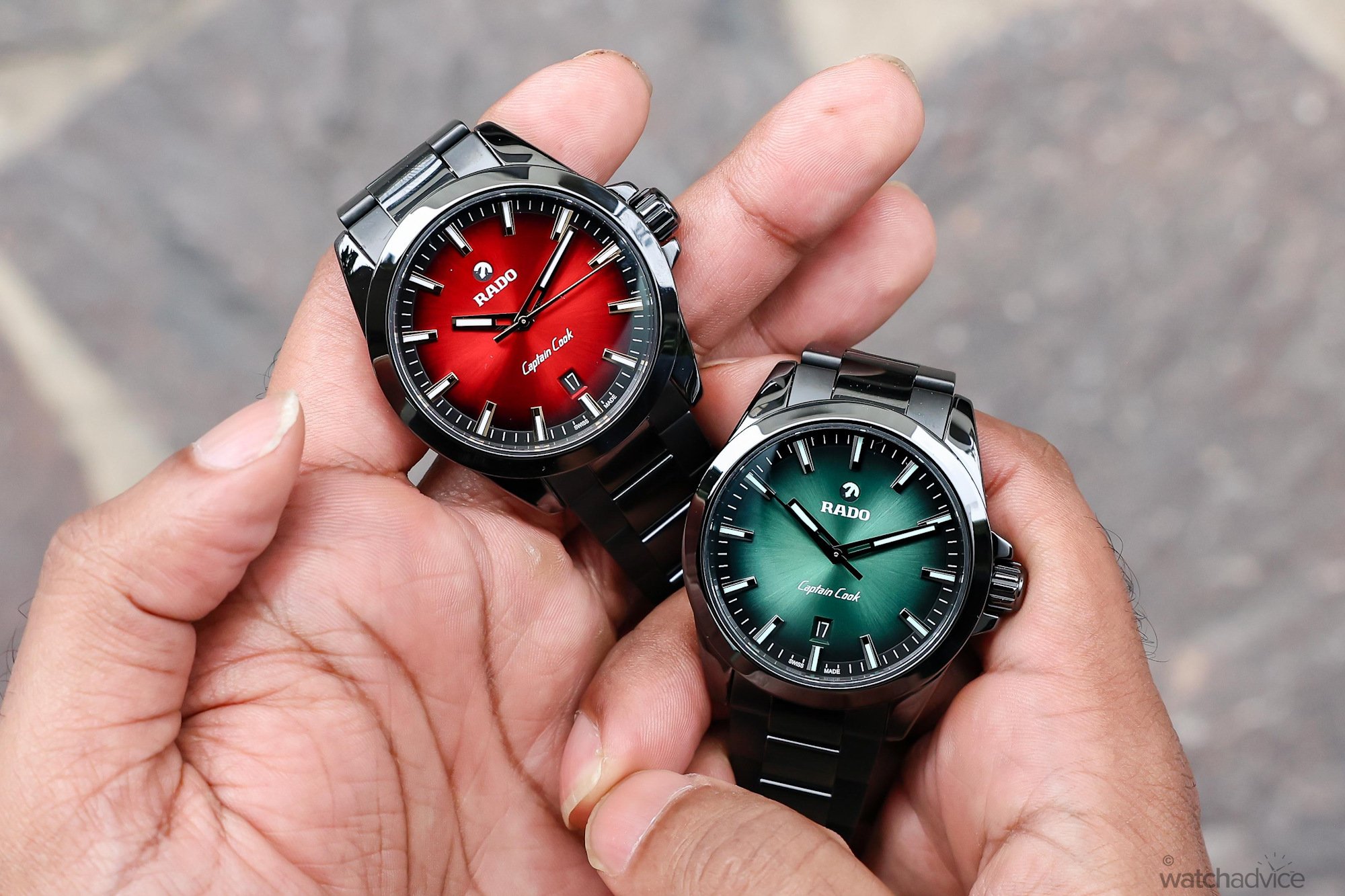
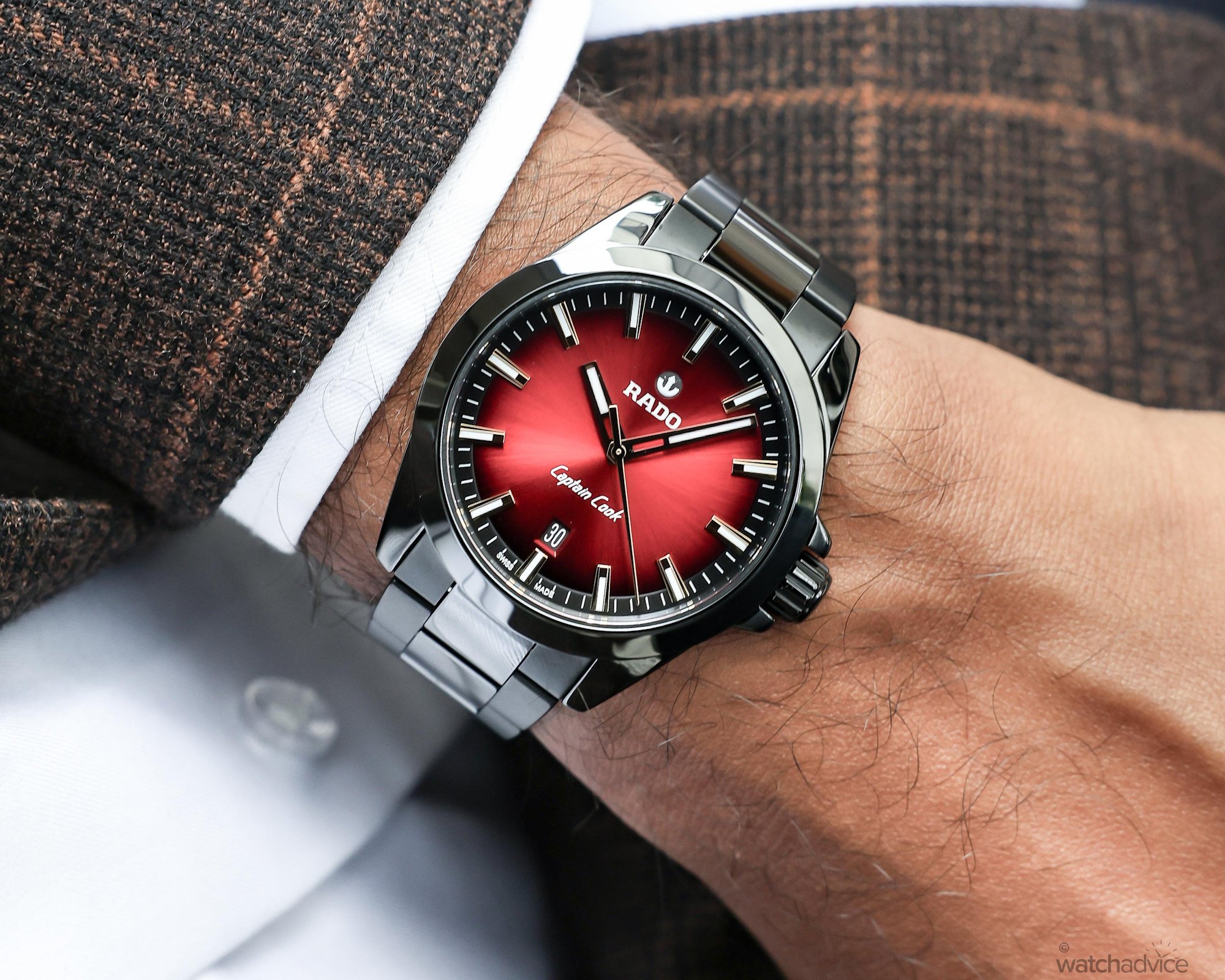
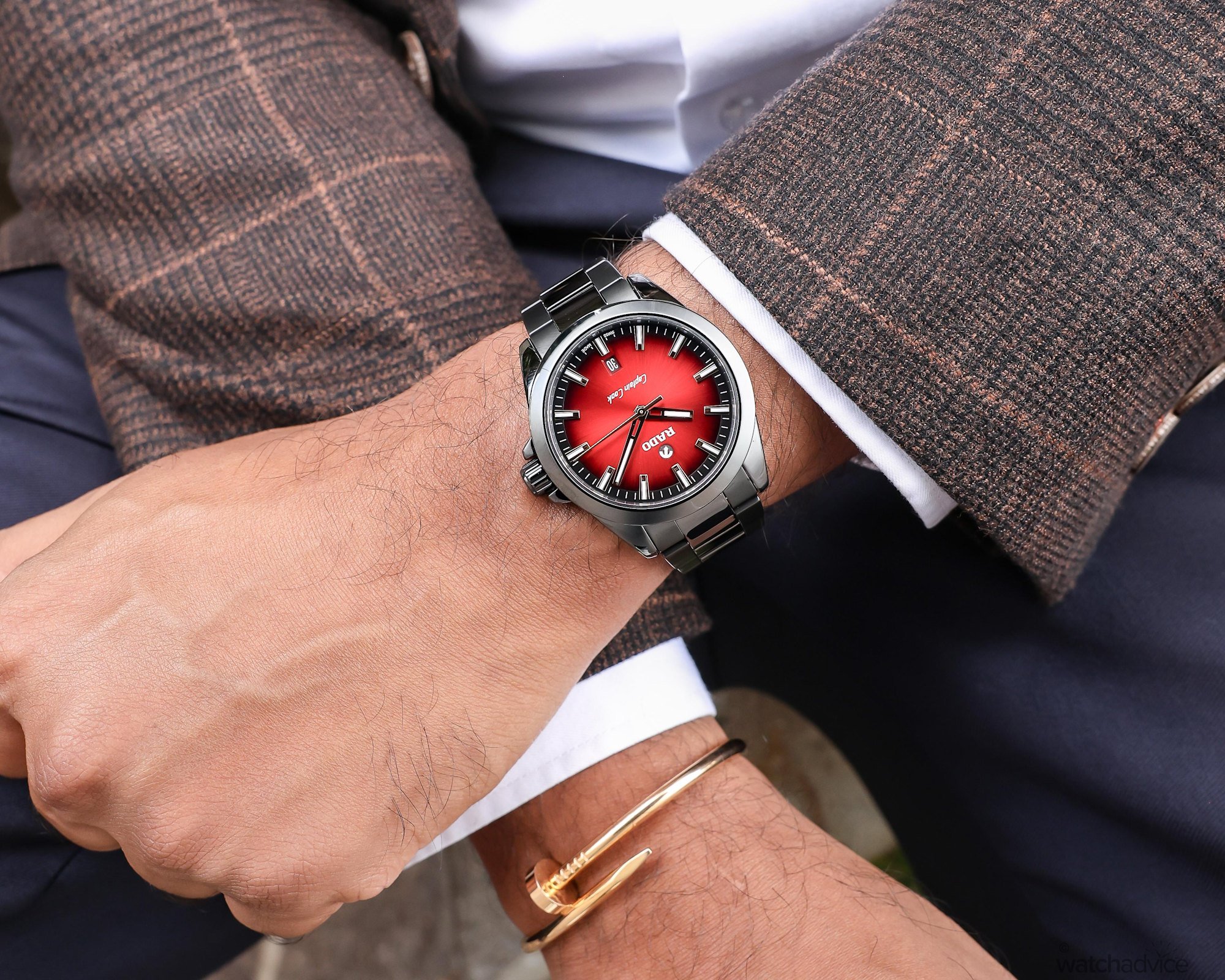
On the red model, the dial moves from an almost-black edge through a deep red before opening up into a brighter tone in the middle. Then you take this watch outside into natural light, and these red tones become even more prominent, shifting to brighter hues that catch your eye almost immediately! And funnily enough, when we were taking these photos, a watch enthusiast from the other side of the road actually came over and wanted to know what we were photographing!
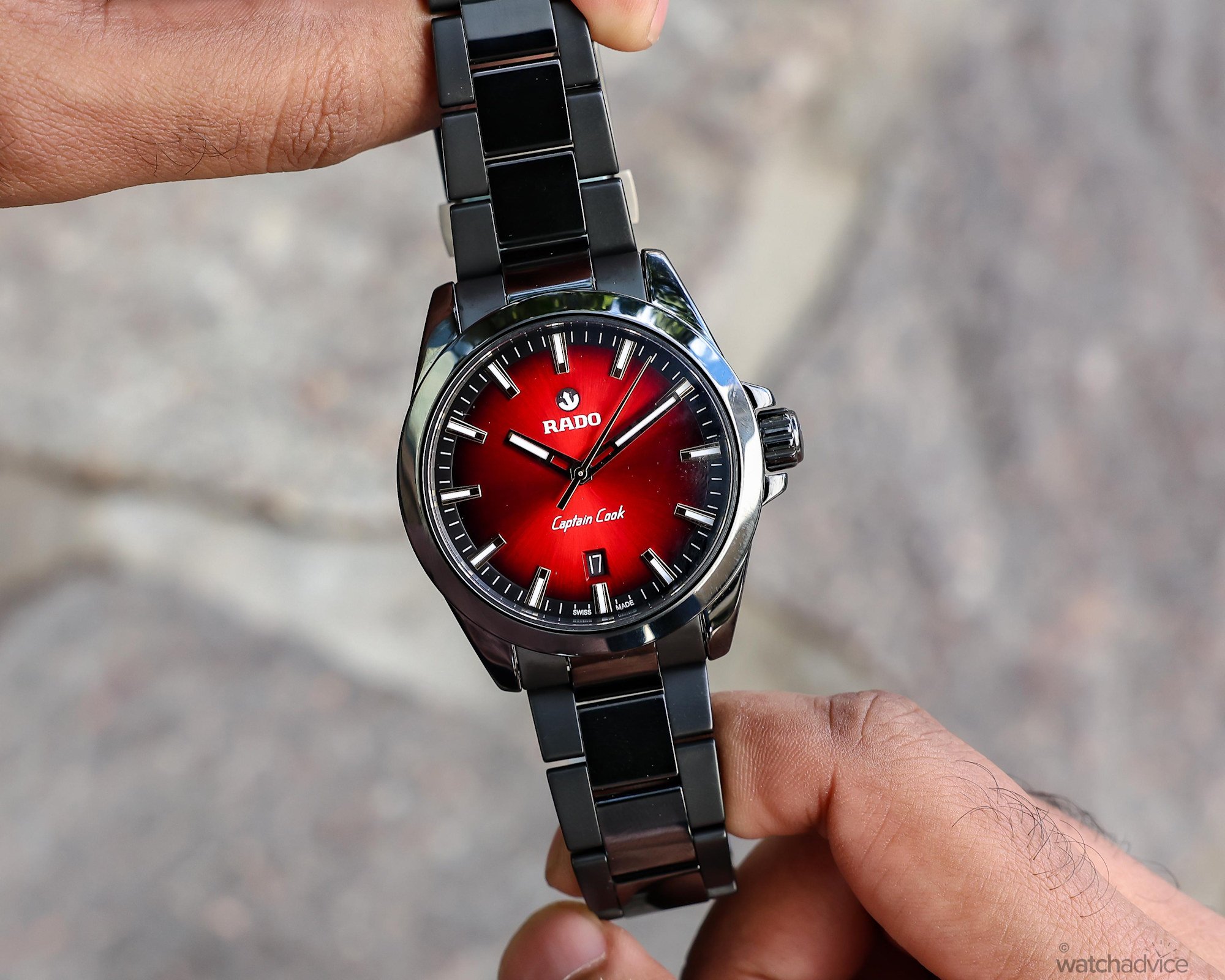
What helps to further elevate the dial visually is the gold-toned hands and indices. They add warmth and more colour to the dial, standing out nicely against the surrounding black elements. For me, the red Captain Cook Discover has to be the most vibrant of all the black ceramic editions in the collection.
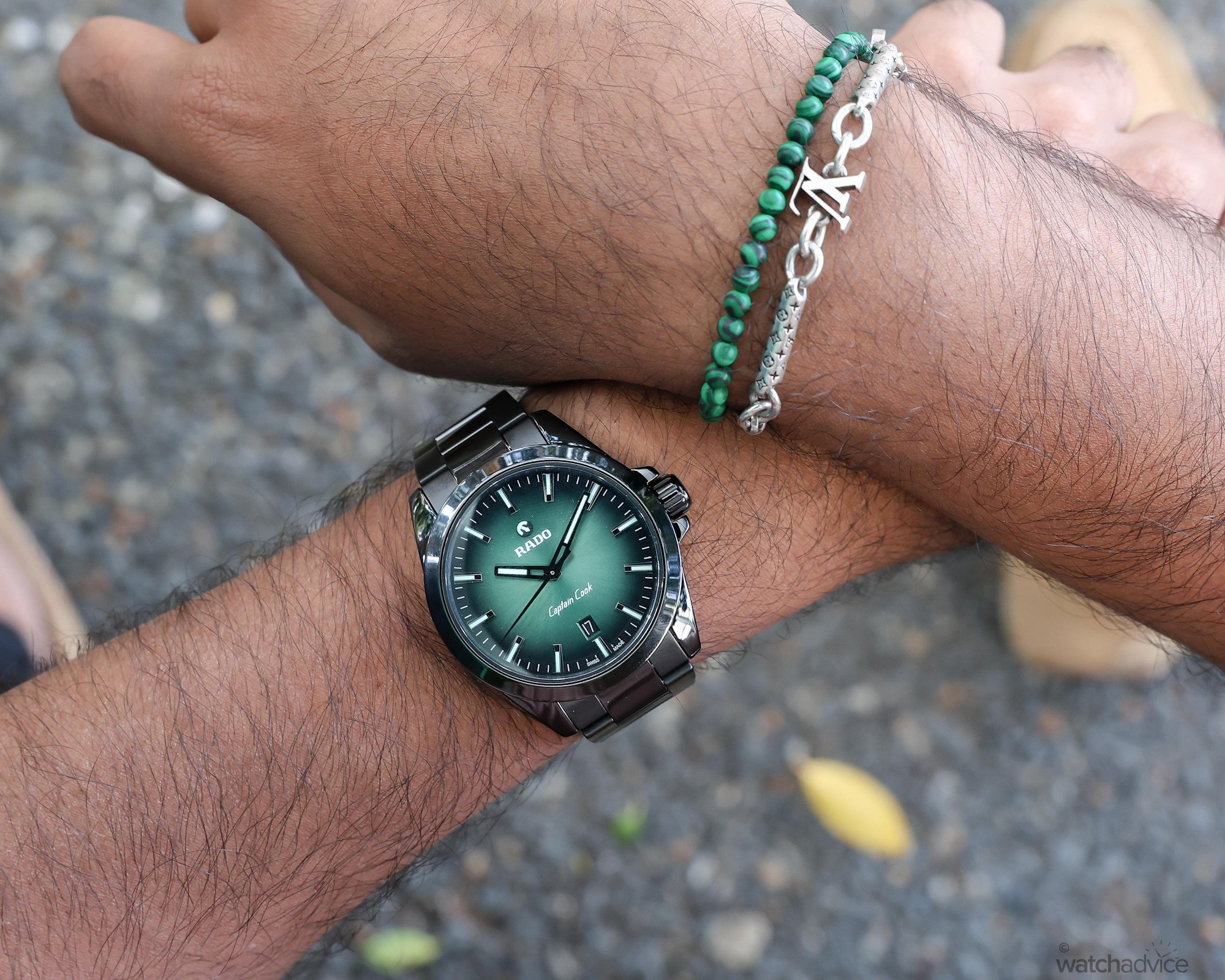
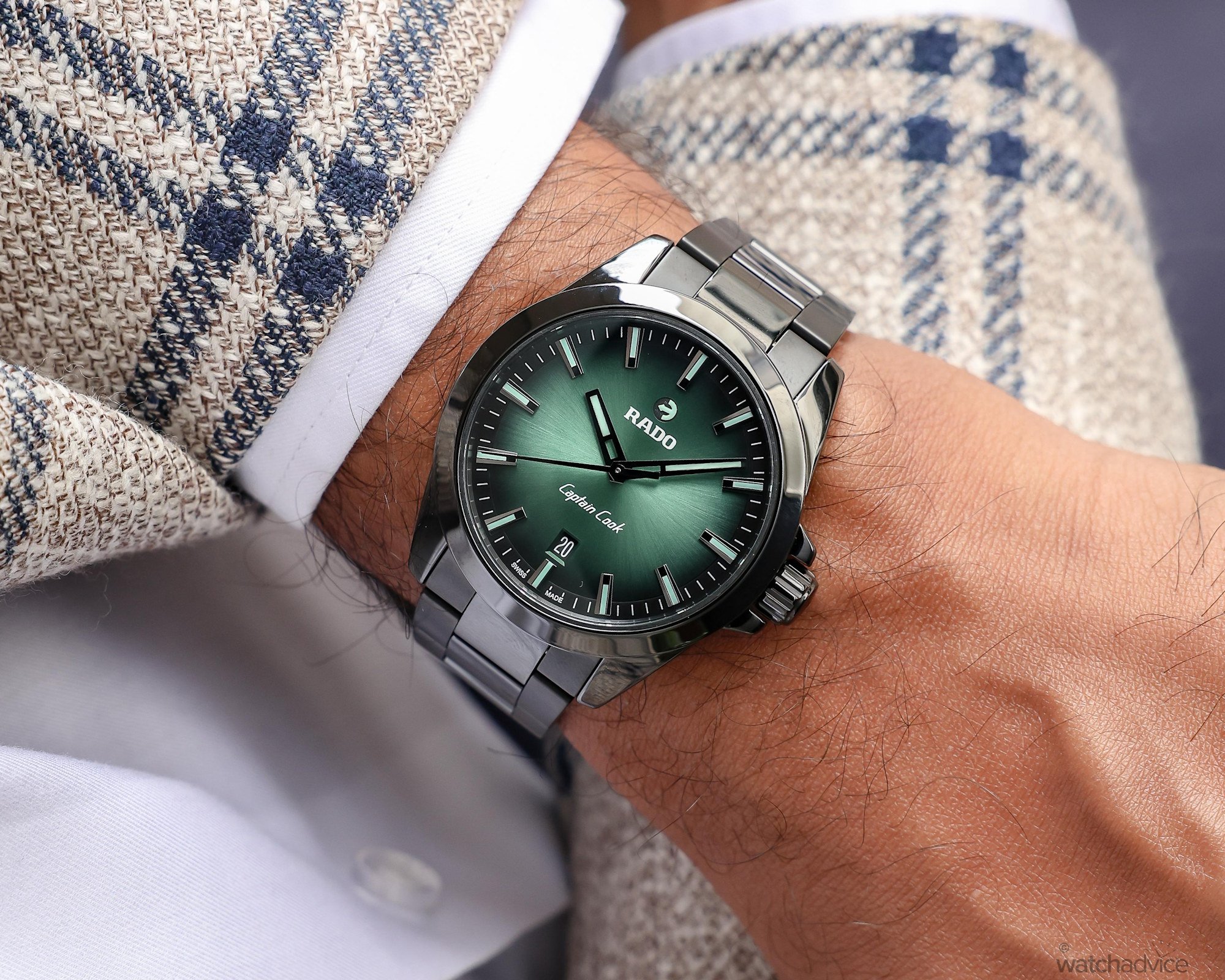
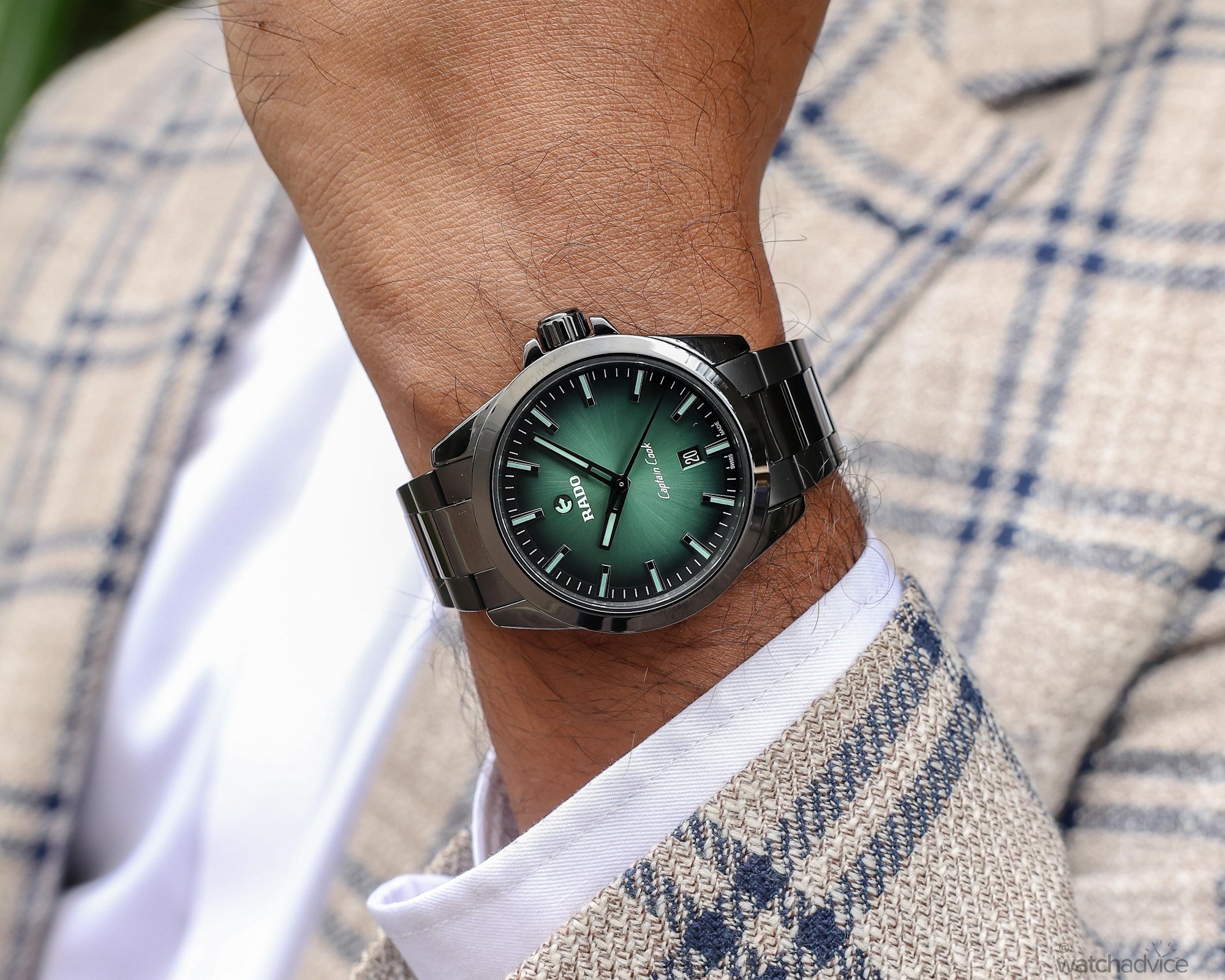
The green dial variant, however, presents a more restrained look, giving it a personality of its own. It uses the same dial layout, and the green still has vibrant tones, though they’re slightly more subdued than on the red. The dial shifts from darker forest green at the edges to lighter tones in the middle. And what surprised me most about this model is how much more vivid the centre becomes outdoors. It may be understated compared to the red, but don’t let that fool you. It’s still eye-catching!
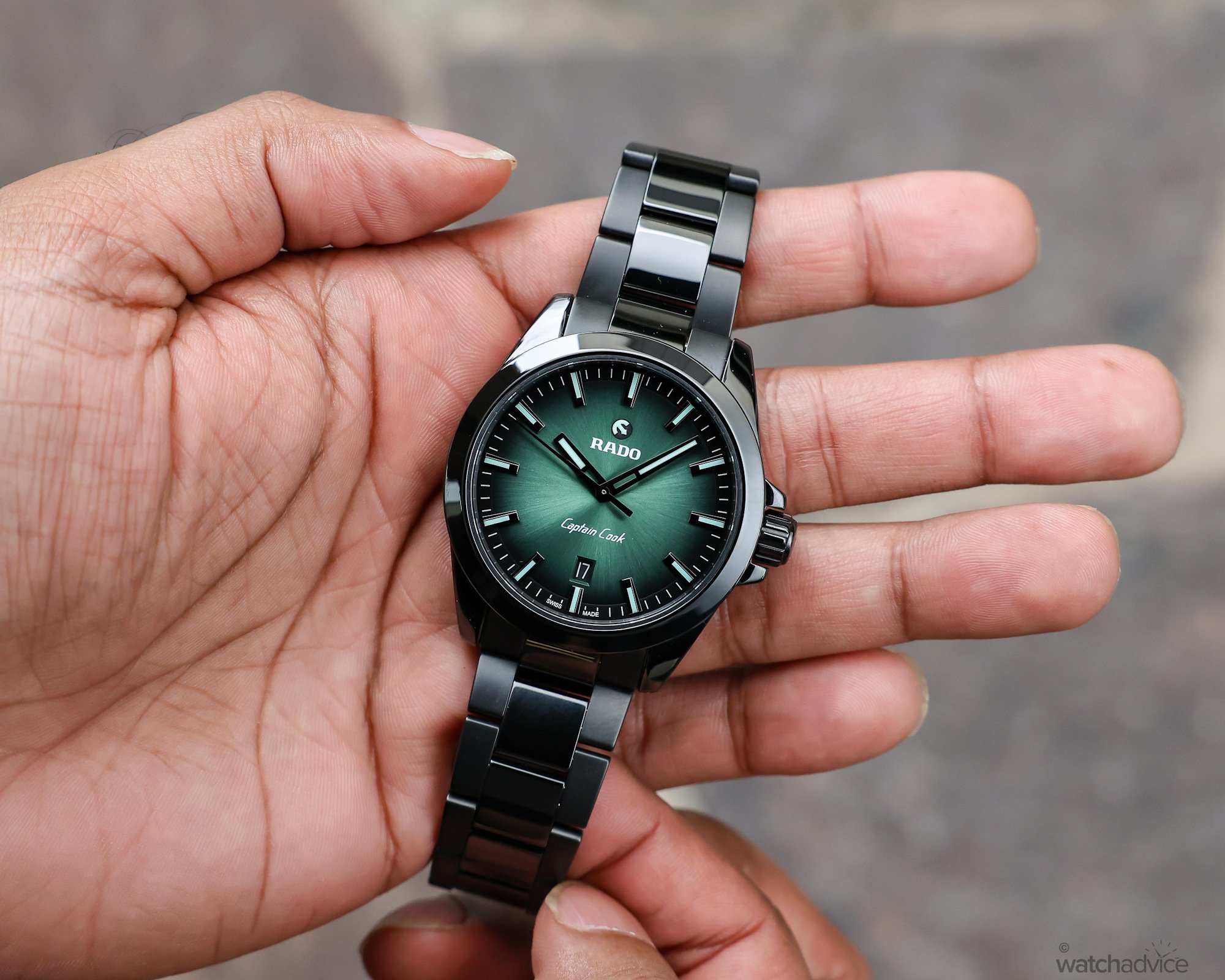
The Discover collection also redesigns some signature elements of the Captain Cook range. The hour markers are now slimmer and rectangular in shape, offering the same excellent readability in a simpler design that suits the dressier character of this new Discover line. The hands also get the same treatment, and both the hands and markers feature Super-LumiNova for excellent low-light visibility.
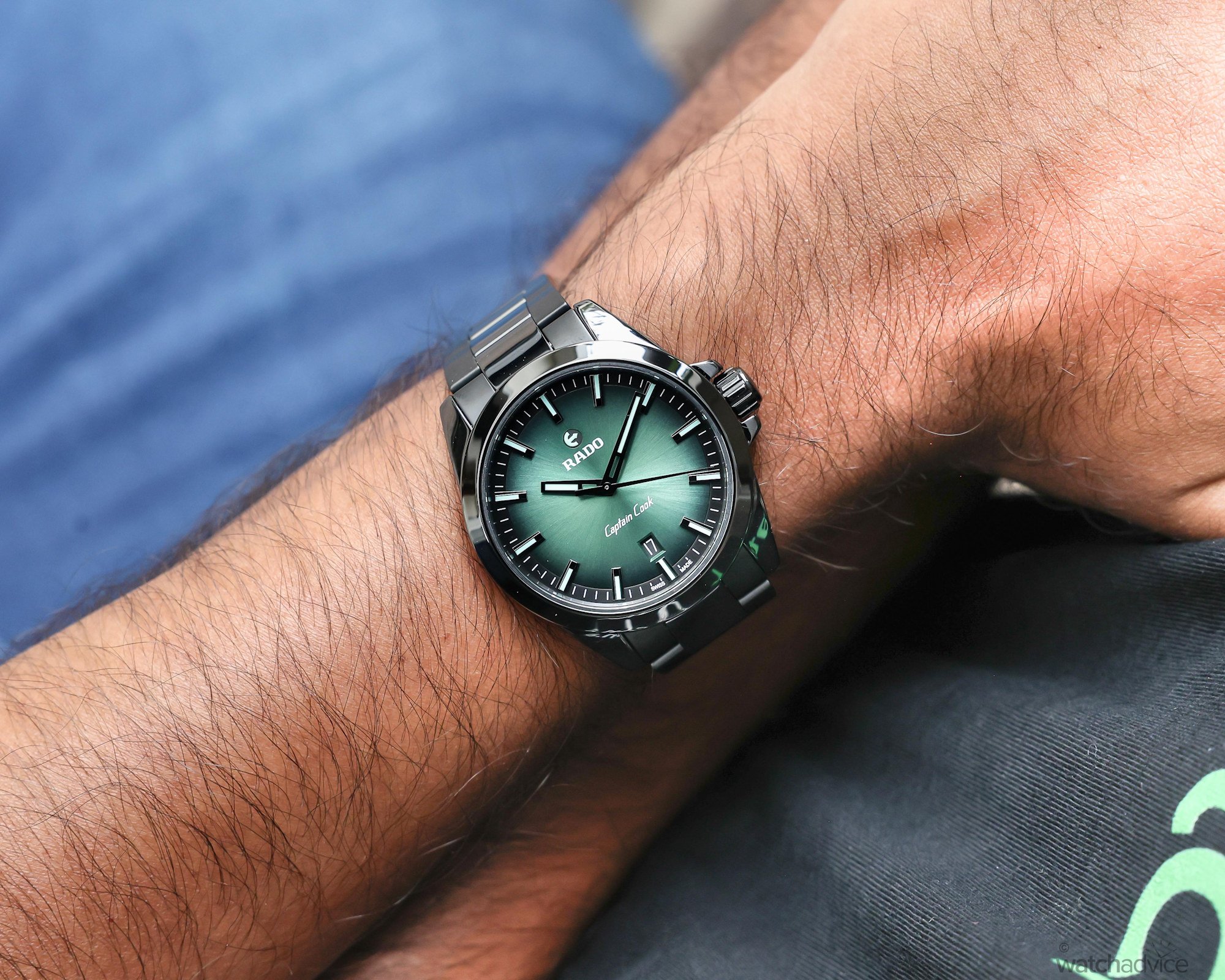
The date window has also moved from the Captain Cook’s 3 o’clock position to just above the 6 o’clock hour marker. Normally, I’m not fond of this design, as I feel replacing the hour marker with the date gives the dial a more balanced look. However, this is one of those instances where it actually makes sense to have the date window in this position.
Underneath the 12 o’clock marker, we have Rado’s signature rotating anchor, with the Rado inscription just below it. Having the date window above the 6 o’clock marker acts as a counterbalance to the anchor on the opposite end, which ultimately ties the dial’s design together nicely. It’s little details like these that make you realise that Rado has put a lot of thought into the design of this new Discover collection.
A Familiar Calibre With 80 Hours in Reserve
Rado is using the automatic calibre R763 in this new Captain Cook Discover collection. This is the same movement used in the 39 mm steel Captain Cook editions, which means the Discover retains the beating heart of the core collection. The movement operates at 3 Hz (21,600 vph), a beat rate that helps keep energy demands down and contributes to the movement’s 80-hour power reserve. With more than three days of power reserve up its sleeve, the watch is practical as well as good-looking on the wrist!
Rado also uses a Nivachron hairspring in the movement, which helps to reduce the effects of magnetic fields on timekeeping, another practical feature for everyday wear. The brand has also adjusted the movement in five positions, which helps maintain consistent timekeeping across different orientations.
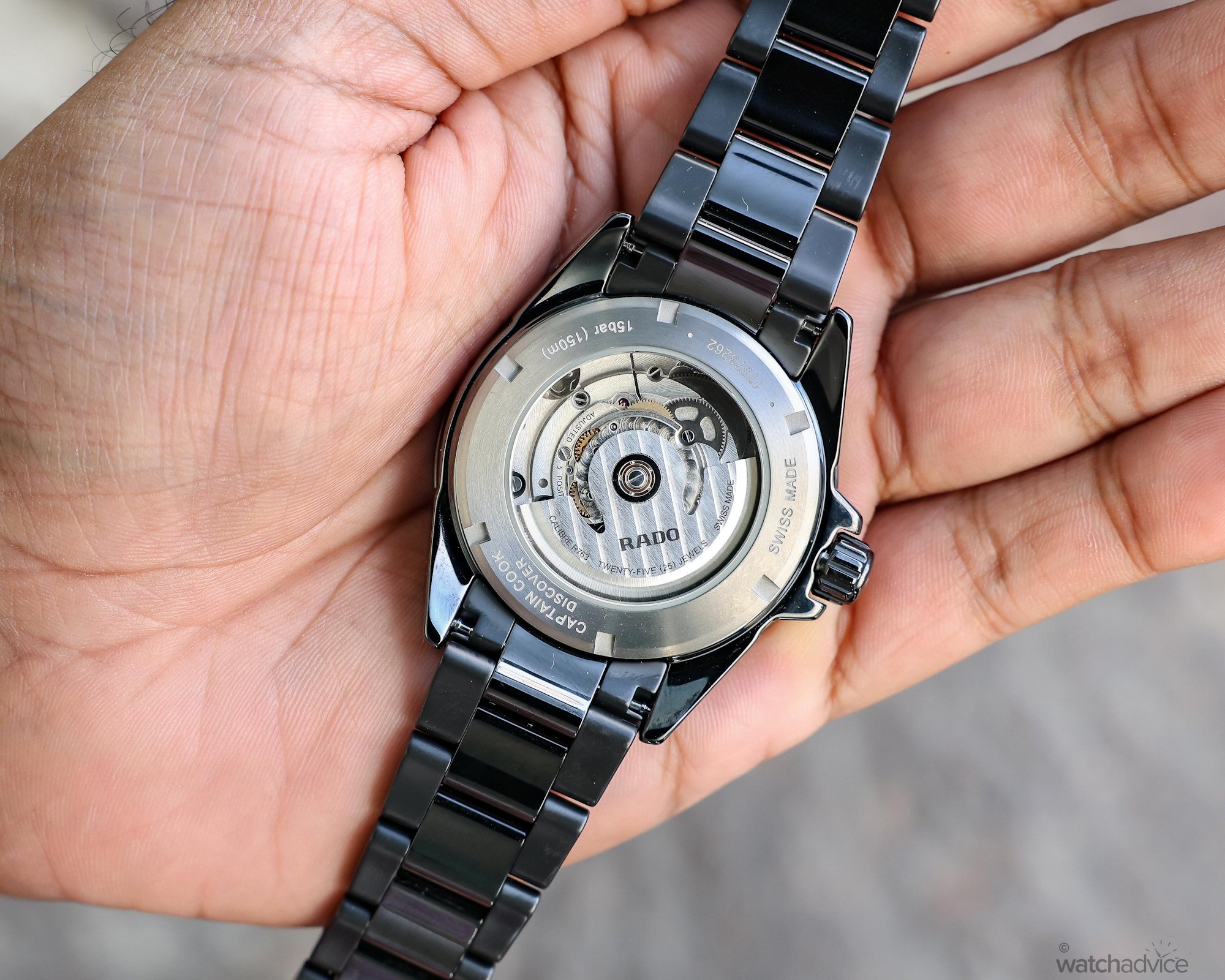
Turn the watch over, and the sapphire crystal caseback gives you a view of the calibre R763. The winding rotor is certainly the first thing your eye goes to. Broad diagonal stripes run across the surface of the rotor, with the dark Rado signature standing out nicely against the silver finish. The cutaways in the rotor also give the wearer a glimpse of the wheels and screws sitting underneath.
Look a little closer, and you can see the overlapping circles of perlage sitting right beneath the rotor, along with finer brushing on the visible movement plates and bridges. I like how these smaller details show the care Rado has put into the finishing of this new collection.
How Does The Captain Cook Discover Wear?
With its compact case proportions and ceramic construction, I knew this watch was going to wear well! On my 16 cm wrist, the 40.7 mm case sits comfortably without feeling top-heavy, and the lugs sit inside the edges of my wrist. The lug-to-lug measurement of approximately 46.2 mm helps here. As I’ve stated in my previous reviews, the sweet spot for lug-to-lug distance for me is around 46–47 mm, and the Discover lands perfectly within that range!
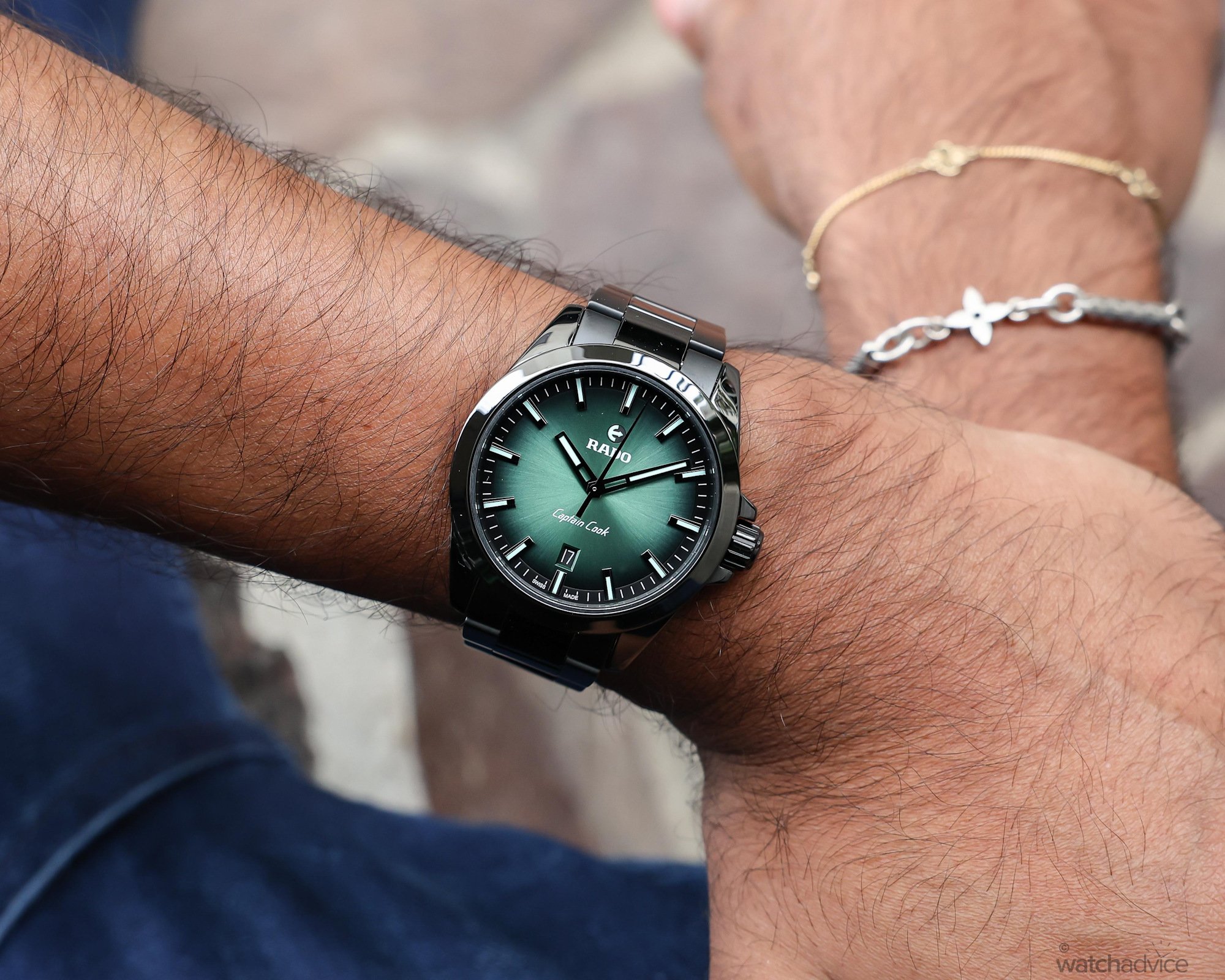
With their ceramic cases and bracelets, both models felt very light on the wrist. Rado lists both Discover models at 128.5 g. For reference, the smaller 39 mm steel Captain Cook I mentioned earlier weighs slightly less at 125 g. The 42 mm steel reference R32505313 weighs 137 g, which is 8.5 g heavier than the Discover.
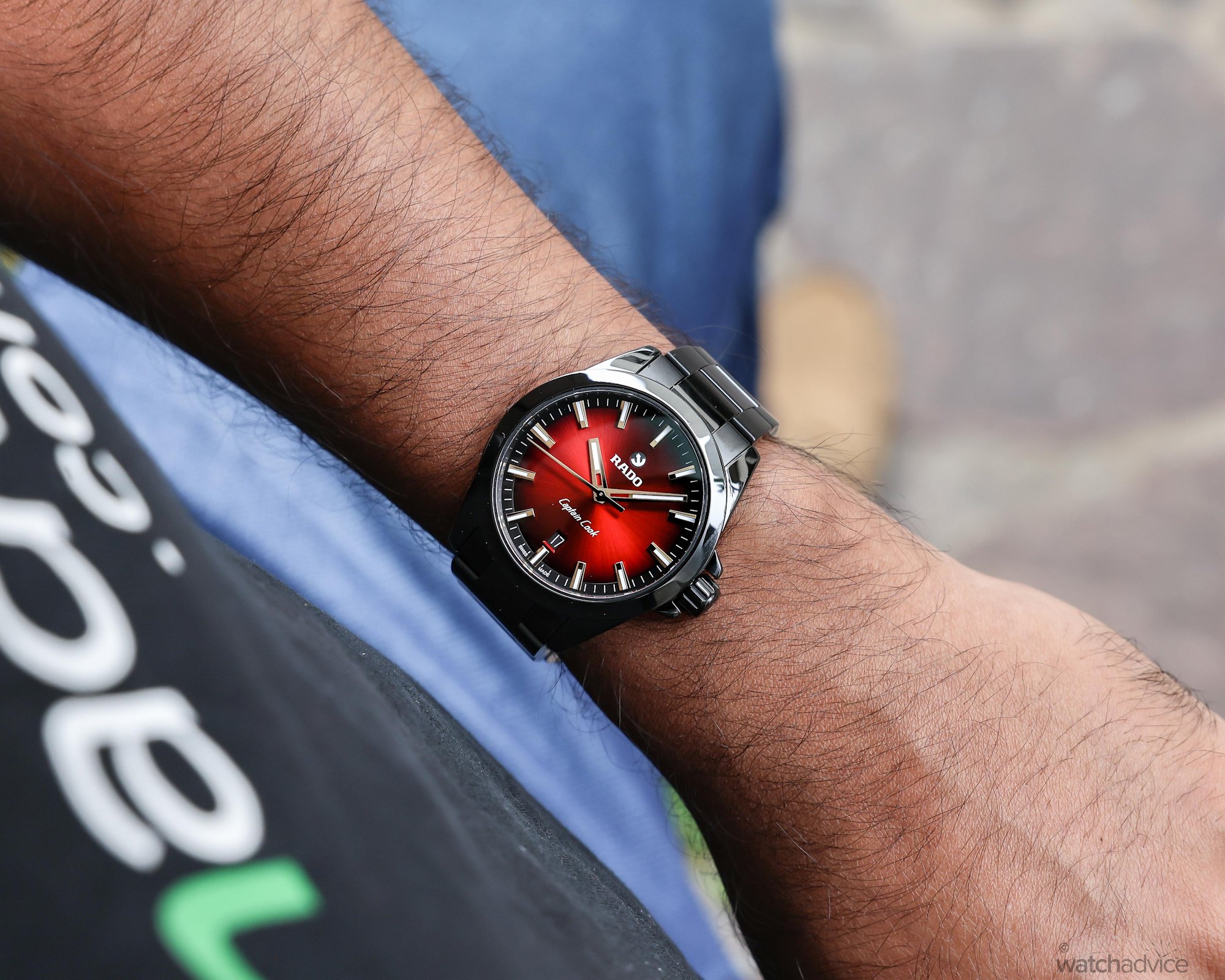
I’m not someone who wears a lot of ceramic timepieces, so the feel of the material, especially that lightweight bracelet, took a little getting used to! The ceramic bracelet almost felt plasticky at first, which surprised me given how polished and refined it looked. Once I had it on the wrist, however, the bracelet’s finishing stood out more.

The polished centre links caught the light as I moved, while the matte outer links helped define that shine and add contrast. I also loved how the polished finish brought out the shape of the case. The polished exterior gives the watch a more luxurious look, while its light feel made it easy for me to wear for long periods!
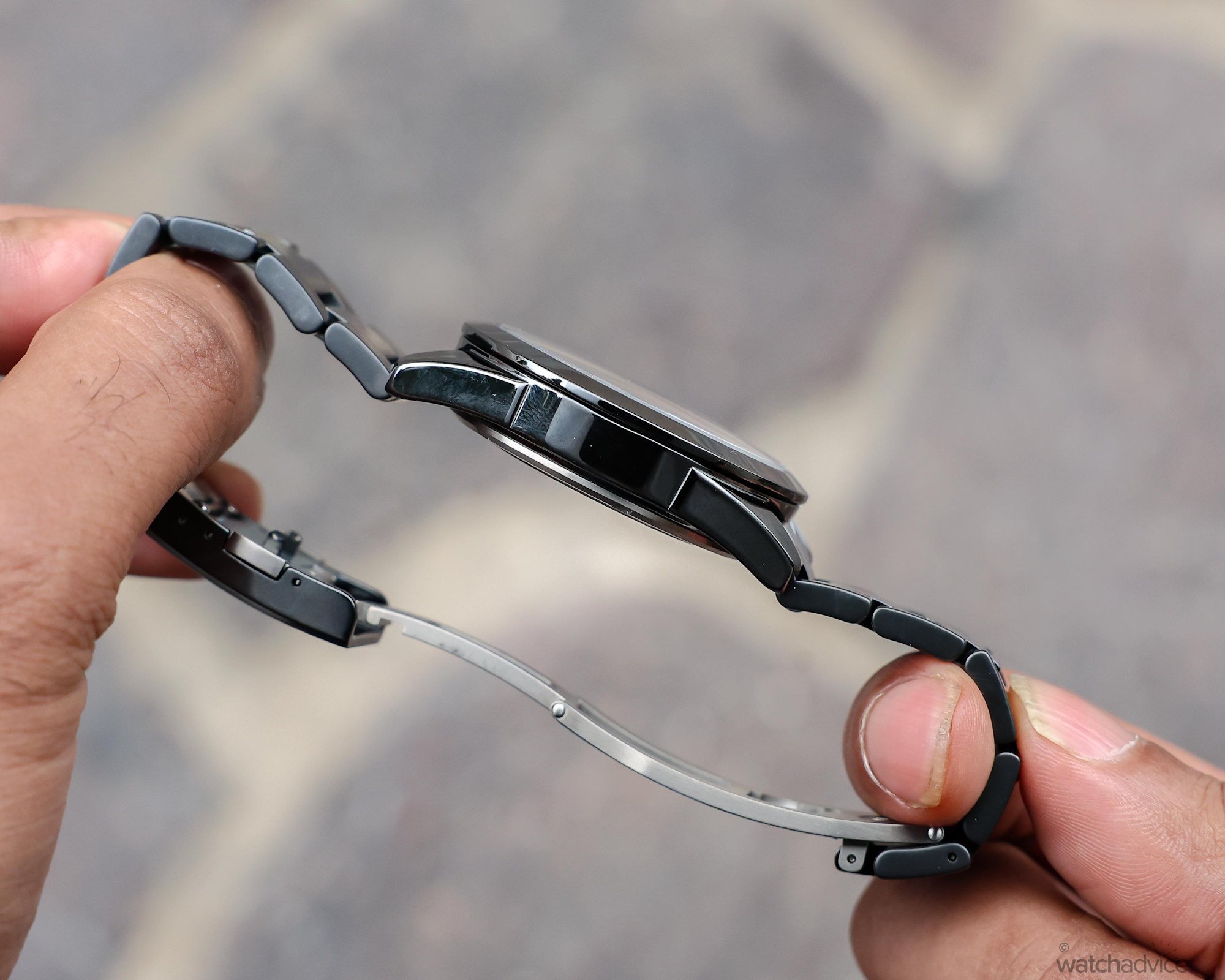
The bracelet clasp also offers micro-adjustment, with three positions to choose from. Once you get the hang of it, moving between the positions is fairly easy, especially on the go! The quick adjustment helped me get a comfortable fit, though I still would have liked a little more range. My wrist can change size on warmer days, so a little more room to loosen the bracelet would help me keep the fit snug and comfortable. However, if you’re someone who likes to wear your watch a little loose, I don’t see this as much of a problem!
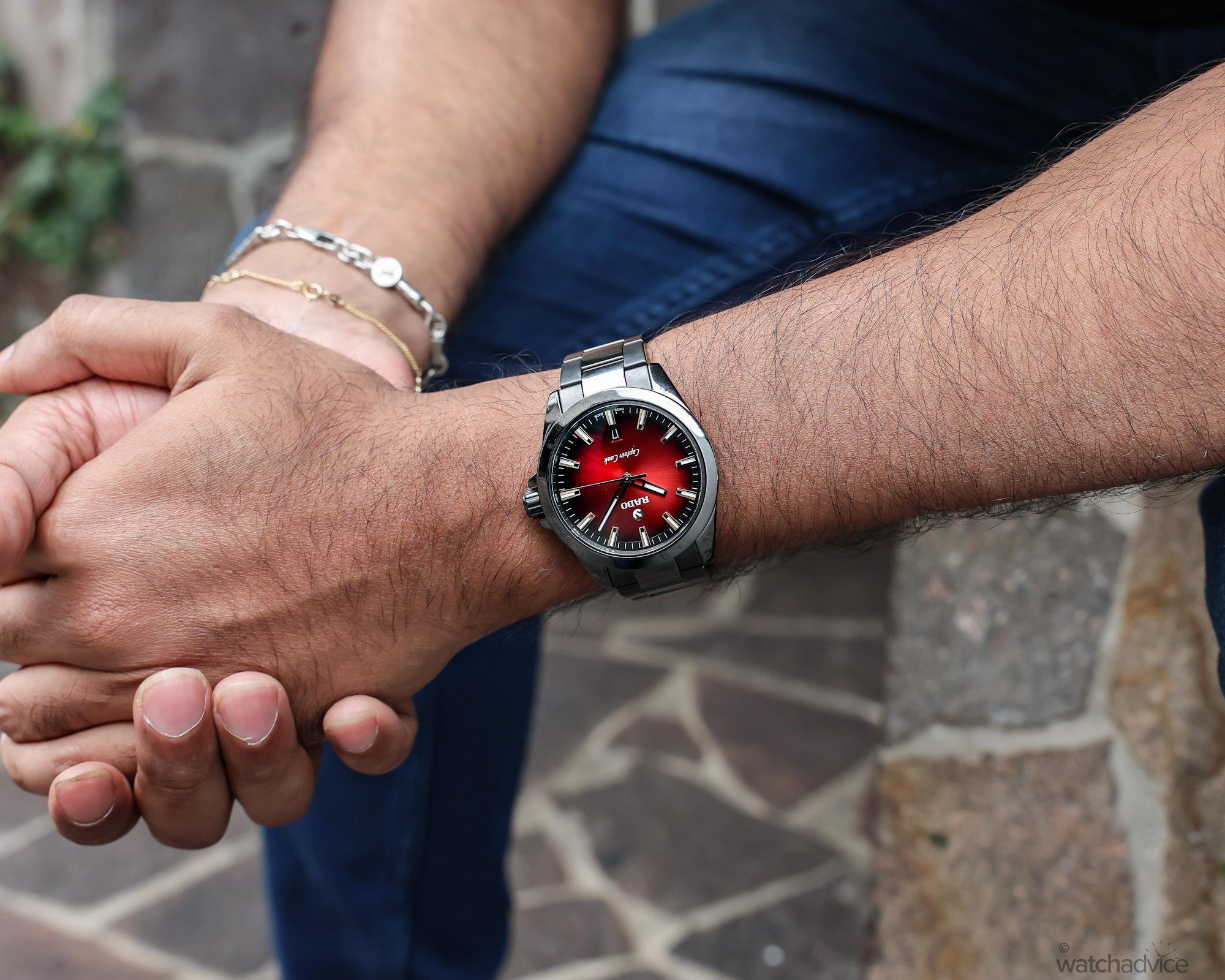
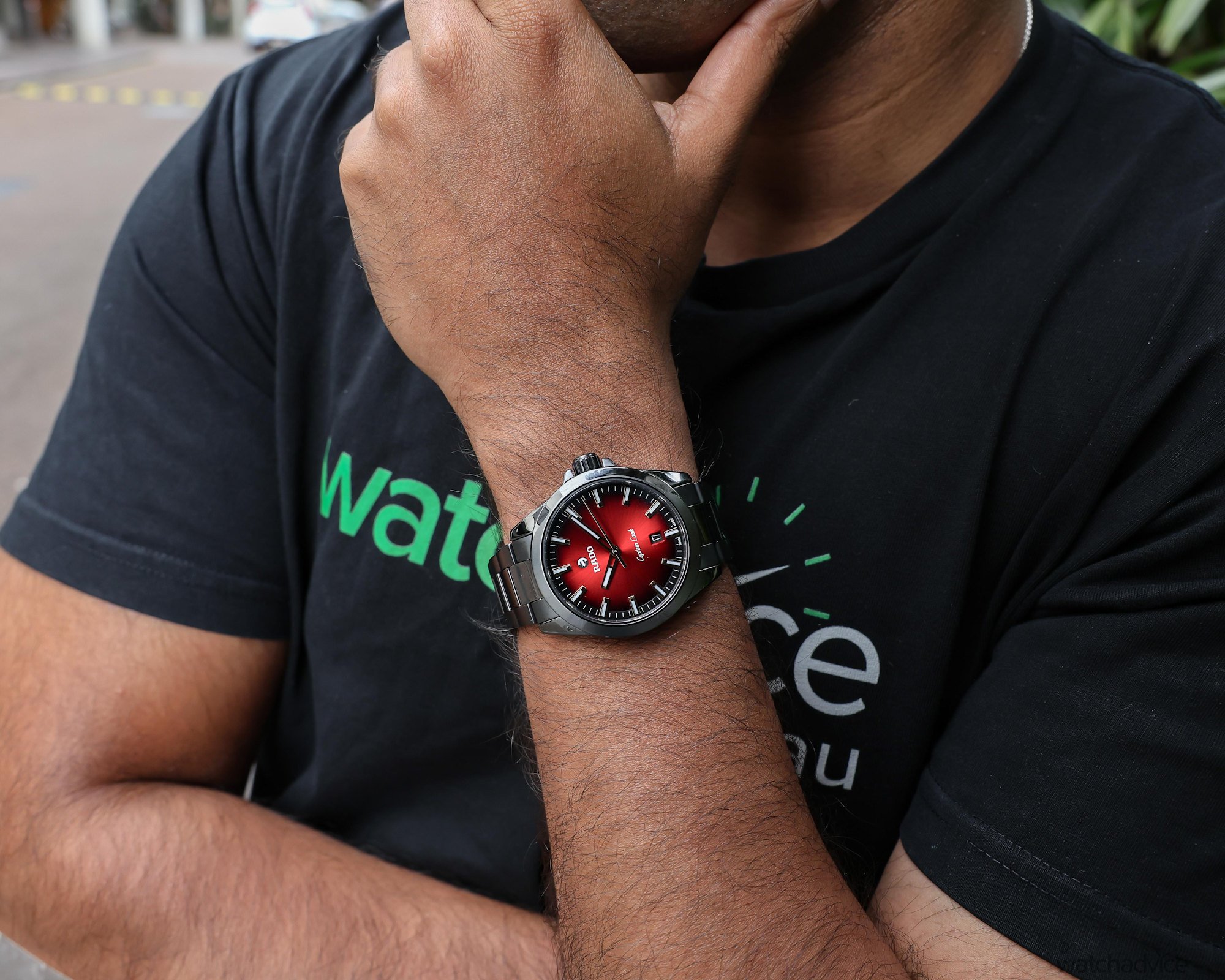
When it comes to the different colours, the red and green have two very different personalities. The red gradient dial with its sunburst finish is simply stunning on the wrist! If you are a fan of red dials, this is one model that will be very hard to look past. In natural light, both dials come to life, but the red becomes that much more vibrant.
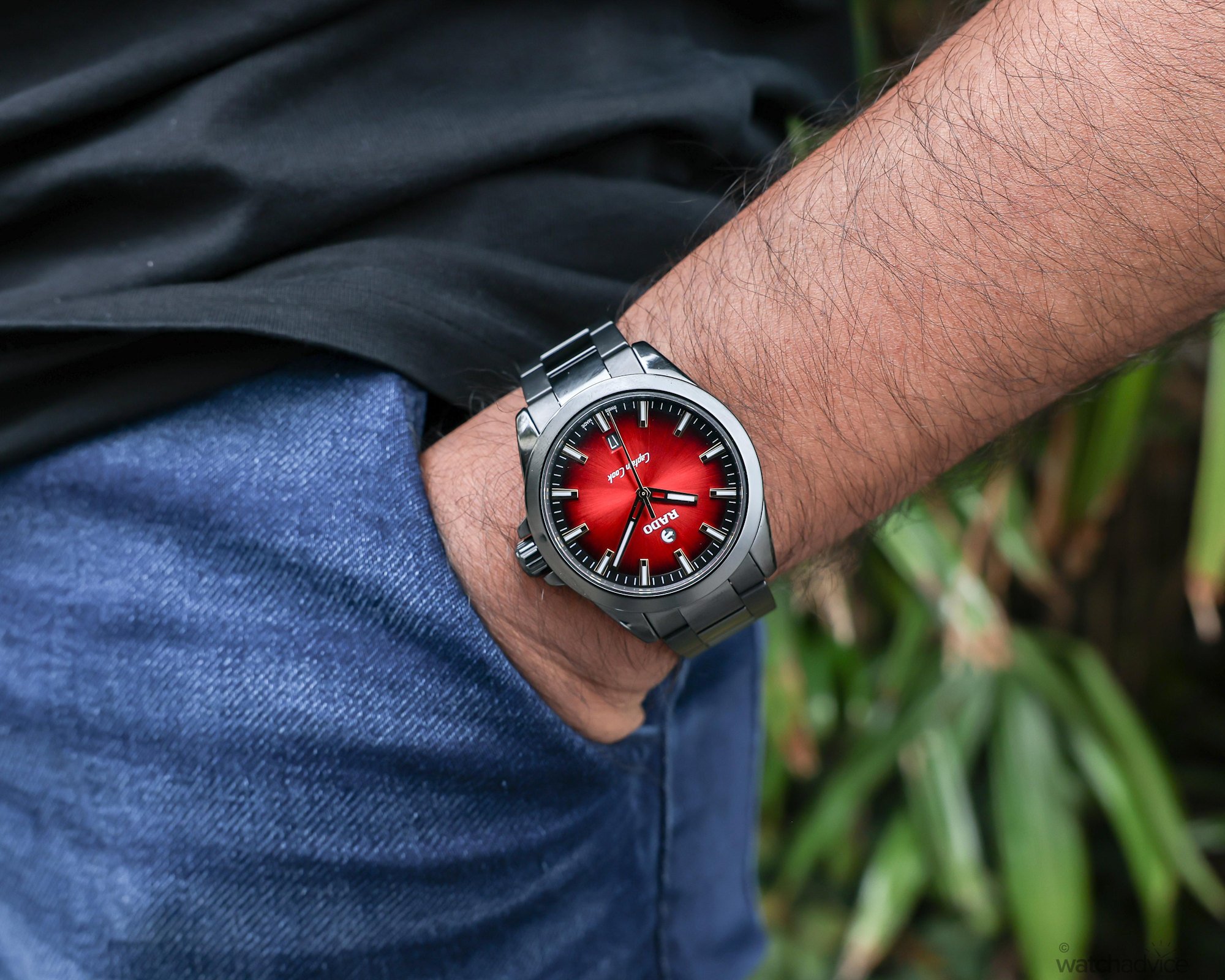
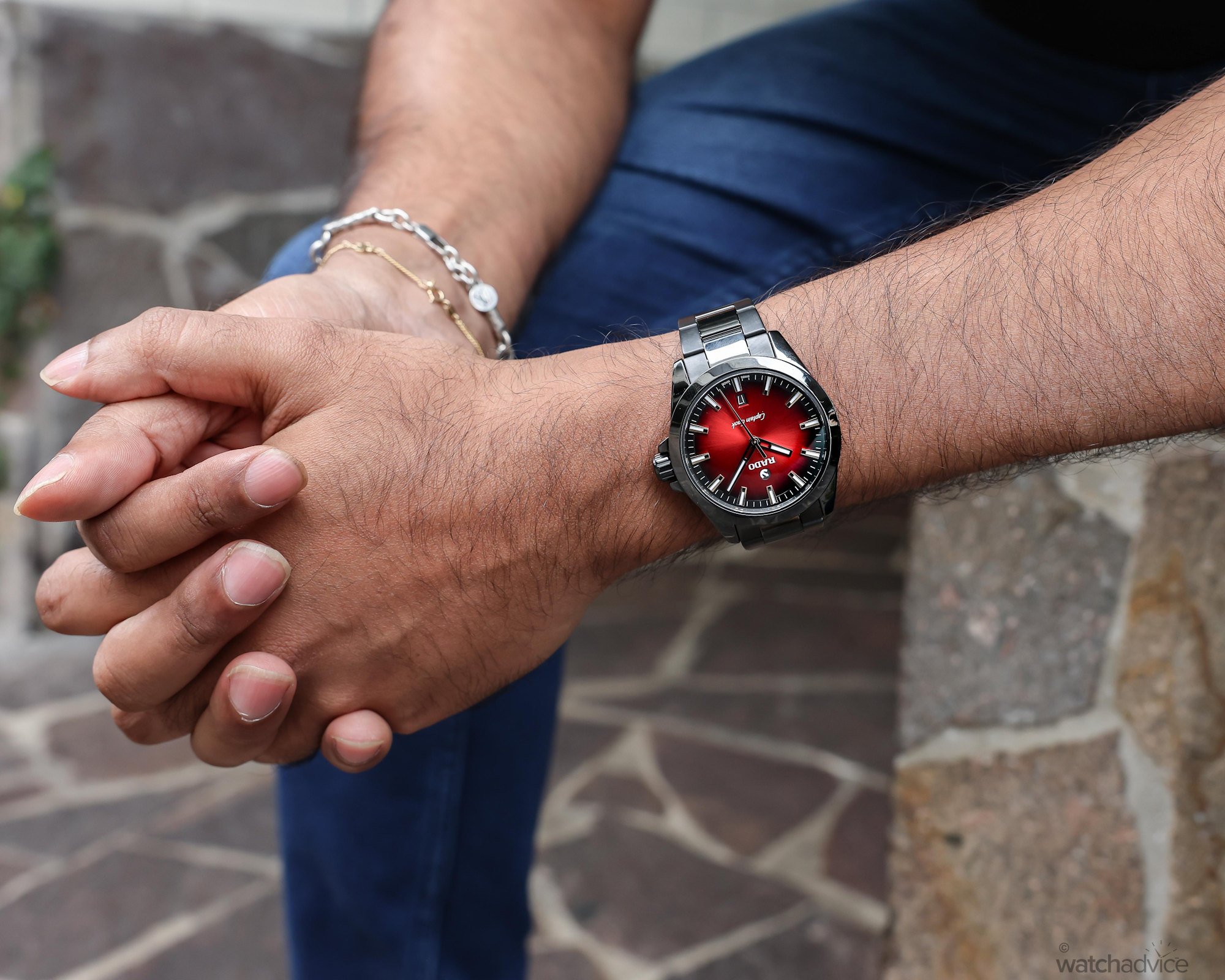
The tones shift in two ways. The gradient takes the dial from black at the outer edge to lighter red in the centre. And then the sunburst effect allows the dial to play with light beautifully, shifting between crimson and lighter shades of red. The gold-toned indices and hands add a little more sparkle and colour to the dial.

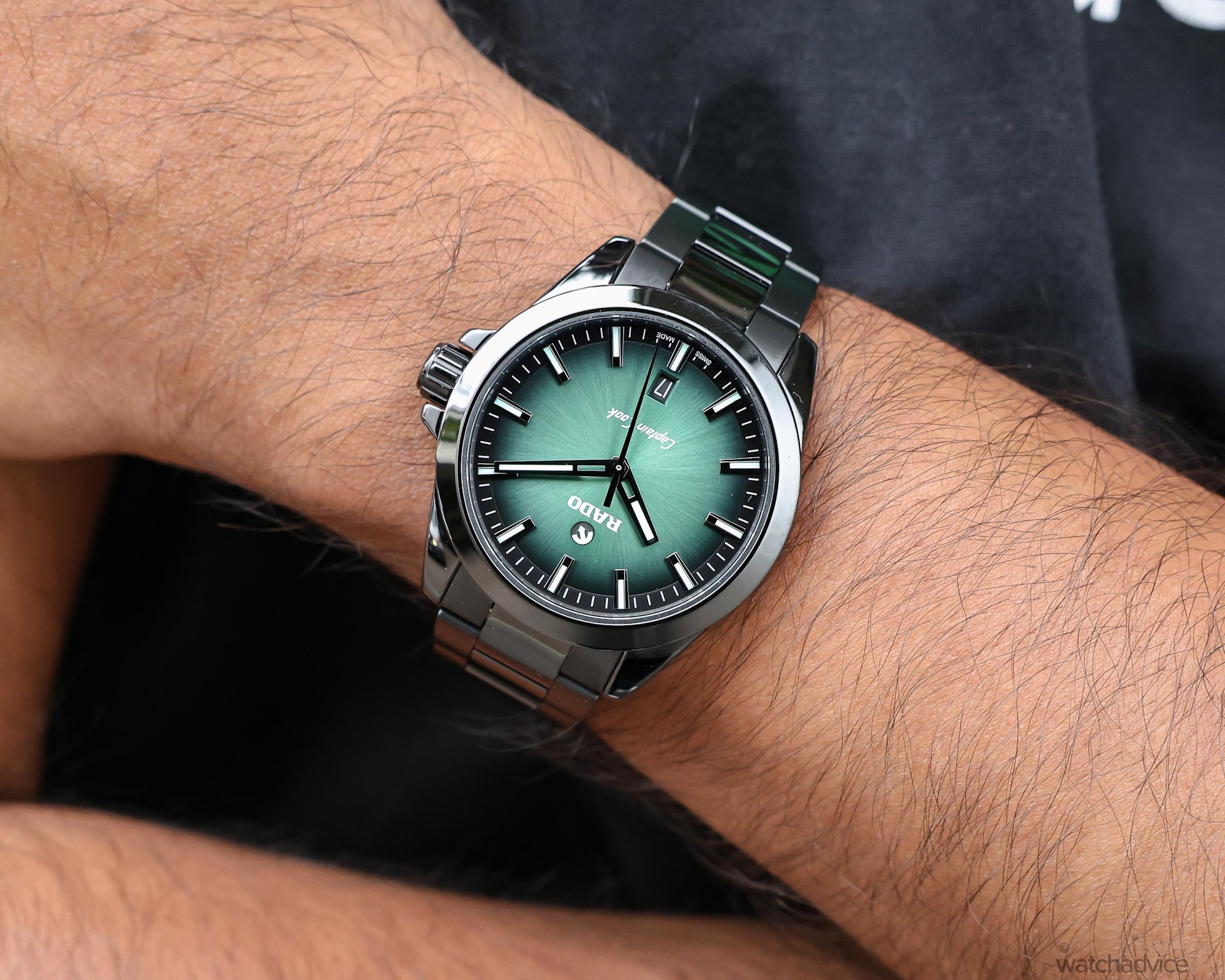
The green edition, on the other hand, has its own appeal too. For those who want a watch with an all-black ceramic case and bracelet but an understated dial that still has some colour, this would be my go-to recommendation. I personally think that the green edition is a bit more versatile because of that understated look. I certainly like my coloured dials, and this darker green gives me the colour I like while being easier to work into what I would wear day to day.
And it’s these details that, for me, help the Captain Cook Discover stand on its own within the broader collection. You can still see the Captain Cook in the shape of the case, the curved crystal and the gradient dials, but on the wrist, the fixed bezel and slimmer hands and indices make it feel like a less sporty, slightly dressier take on that familiar Captain Cook dive-watch design.
Final Thoughts
After spending some time with the new Rado Captain Cook Discover models, I think I can safely answer the question I started with. Does the Discover hold its own within the broader Captain Cook range? Well, yes, it does. It takes the original dive-watch design in a more refined direction while keeping some of the details that make the Captain Cook recognisable.
You can still see the Captain Cook in the shape of the case and the curved crystal, along with the beautiful sunburst gradient dials. By replacing the rotating bezel with a fixed one and slimming down the hands and indices, Rado has given the Discover a dressier appearance. It feels like a model that I would reach for on different occasions, and that, for me, is what earns its place within the broader Captain Cook range.
At AUD $6,550, it also stacks up well against comparable models. For example, the Tudor Black Bay Ceramic “Blue” is listed at AUD $8,640 and comes on a hybrid strap, with a vivid blue dial, METAS Master Chronometer certification and a 70-hour power reserve. Then we have the Bell & Ross BR-05 Black Ceramic, which takes a more understated look with its black sunray dial and offers 54 hours of power reserve. It’s priced at AUD $11,900 on the ceramic bracelet.
For me, Rado’s red and green gradients in the Captain Cook Discover range make more interesting use of the contrast against black ceramic. At 80 hours, the Discover has the longest power reserve of the three, a practical advantage if you rotate between watches. It’s also the least expensive. The collection certainly makes a compelling case for those after the look of a black ceramic case and bracelet!
If I were to buy one, I’d have a hard time choosing a colour! The red has so much character and catches your eye straight away, while the green offers a more understated look that works well for everyday wear. Either way, the Discover brings a dressier side to the Captain Cook range and gives anyone drawn to its classic shape a new way to wear it!
Rado Captain Cook Discover
References & Specifications:
| Feature | Specification |
|---|---|
| References: | R32279332 – Black-to-red gradient dial R32279312 – Black-to-green gradient dial |
| Dimensions | 40.7 mm diameter × 12.3 mm thick × approximately 46.2 mm lug-to-lug |
| Case Material | Polished black high-tech ceramic case with a fixed polished black ceramic bezel and a protected screw-down ceramic crown |
| Case Back | Screw-down titanium exhibition caseback with sapphire crystal |
| Dial | Red dial features a black-to-red gradient sunray dial with yellow gold-toned hands and applied indices, with white Super-LumiNova® Green dial features a black-to-green gradient sunray dial with dark-toned hands and applied indices, with green Super-LumiNova®. Both models have skeletonised hands, a rotating Rado anchor and a date display at 6 o’clock. |
| Crystal | Curved sapphire crystal |
| Movement | Automatic calibre R763 with 25 jewels and an antimagnetic Nivachron™ hairspring. Runs at 3 Hz (21,600 vph) and is adjusted in five positions |
| Power Reserve | 80 hours |
| Water Resistance | 15 bar, or 150 metres |
| Bracelet | Three-link black high-tech ceramic bracelet with matt outer links and polished centre links. Titanium three-fold clasp with a polished ceramic cover and three quick-adjust positions |
Australian Retail Price: AUD $6,550 (both models)
Availability: Available through Rado boutiques and authorised retailers, or head online to Rado.com.au
Full Image Gallery