

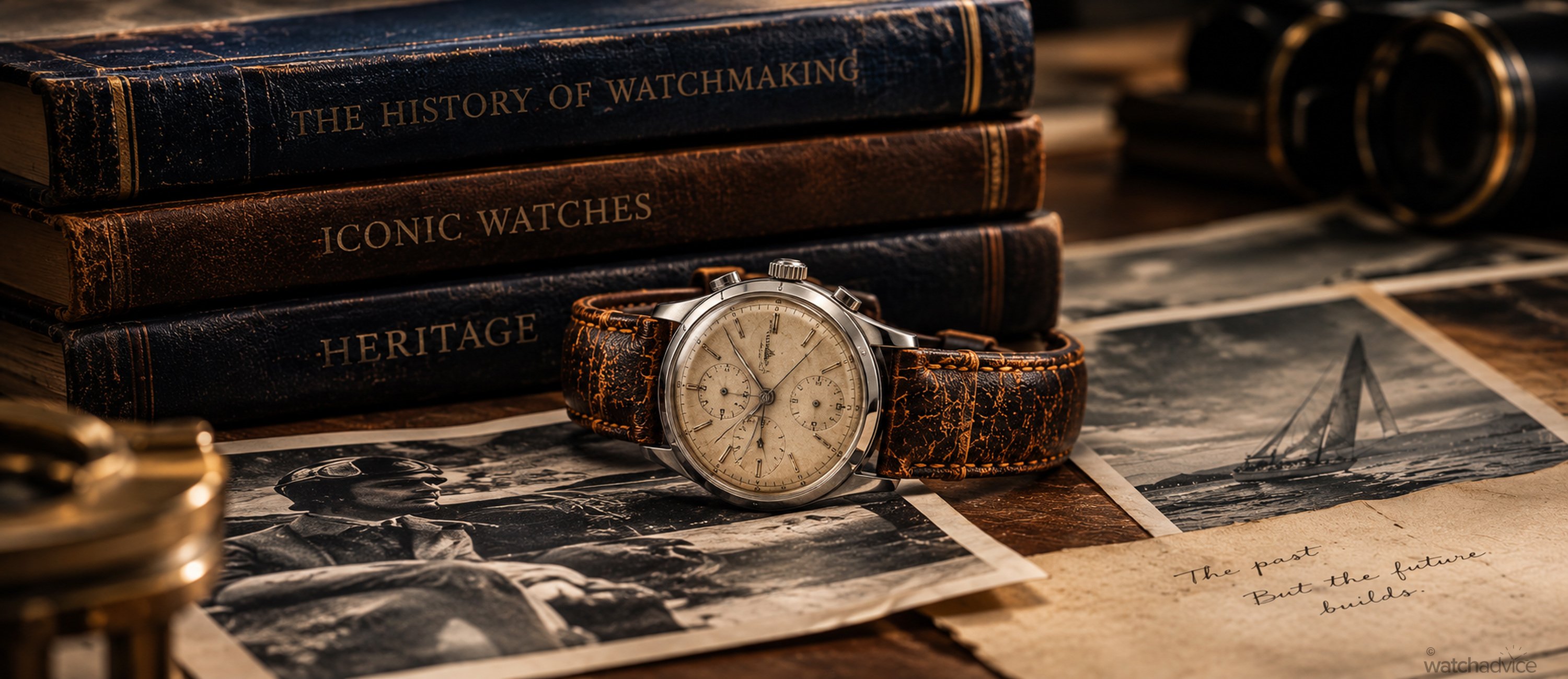
Are modern watch brands relying too heavily on heritage? We look at why nostalgia has become so important to the watch industry and whether it’s gone too far, or not far enough!
Watches are interesting when viewed through the lens of day-to-day life. These small objects on our wrists tell us the time, and maybe the day and date, plus a myriad of other time-related functions that are not necessarily needed at all in today’s digital age. So, why then, do we admire, love and revere them so much?
There are many answers to that question, and many of these will be highly specific to the person who answers it. But one reason is the emotional connection a watch has to a person for various reasons. Moreover, that emotional connection is driven by memories and nostalgia of friends and family, the time spent with them and the activities we did with them while wearing the watch.
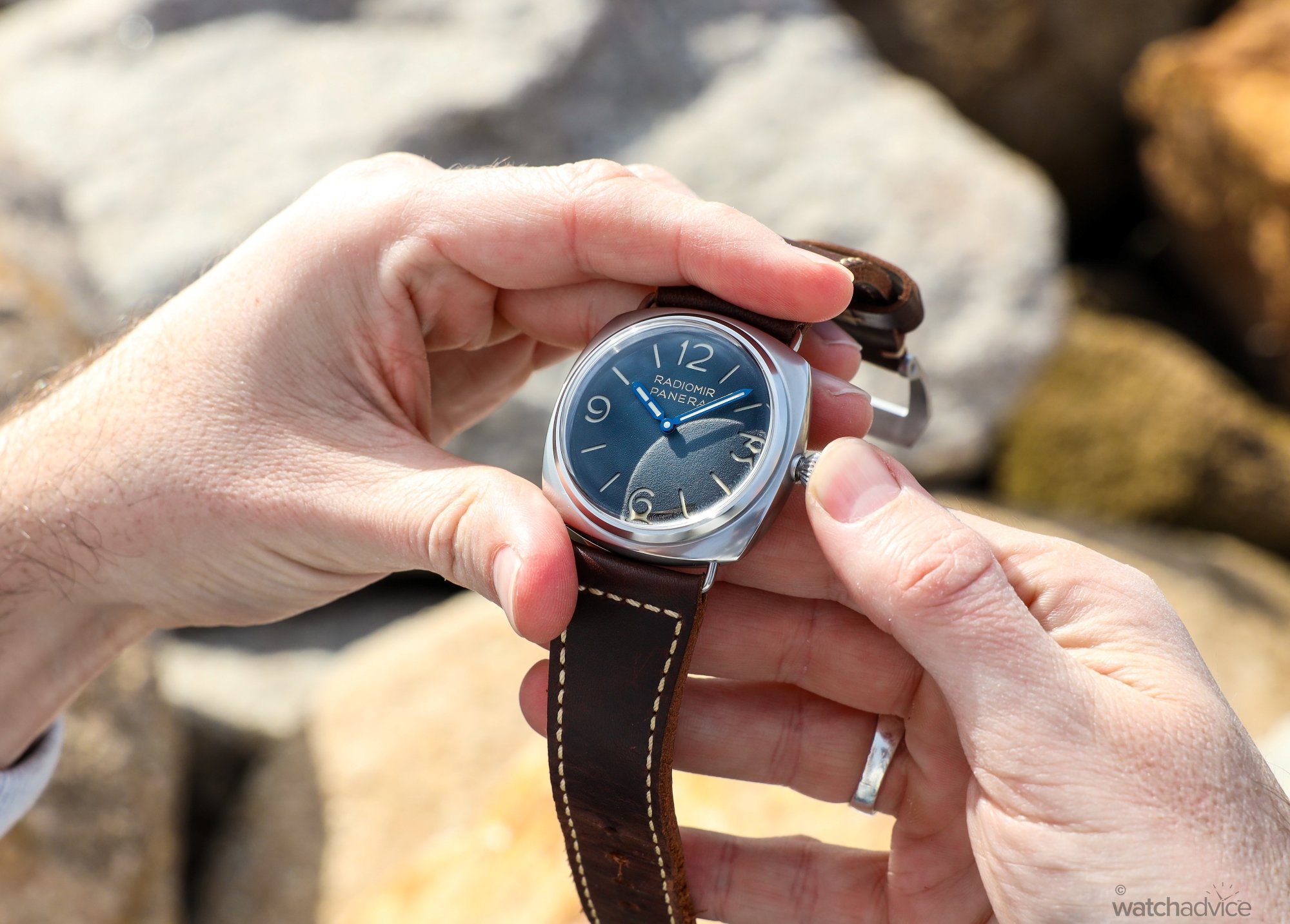
So it isn’t without reason that watch collectors and watch brands have placed a lot of emphasis on heritage and nostalgia when it comes to the current state of play in the watch world. And it is smart, too. If we, as individuals, place so much emphasis on nostalgia in our personal lives and it connects us with our watches, then in order to help us connect with them and their releases, why wouldn’t the brands?
I, for one, am a sucker for a good story. When a brand can tell a great story about a time that was less complex, how a watch was born out of a need or a necessity to fulfil a task, and how each component was individually crafted by hand, with love, how can you not feel some sort of emotion towards it? I know I certainly do. But are we, and the brands we’ve come to know and love, over-romanticising heritage and nostalgia? Or is it needed now more than ever in a modern tech-centric world?
The Importance Of Heritage
There is no doubt that heritage plays an important role in watchmaking, and I don’t think anyone would argue otherwise. The history of some of the major watch brands is fascinating, and many of the watches they produced decades ago have become important parts of watchmaking history itself. There is something special about knowing that the watch on your wrist shares a connection with something that was made 30, 40, 50 or even 100 years ago, whether that connection comes through the shape of the case, the design of the dial, a particular movement or even something as simple as a colour that takes you back to a particular period in the brand’s history.
This is one of the things I really enjoy about watches. Looking through old references and seeing how designs have changed over the years, how certain ideas have disappeared and then returned, and how some watches that may not have been particularly appreciated when they were released have gone on to become important to today’s collectors. There is a lot to be said for this connection to the past, and I don’t think modern watchmaking should abandon it.
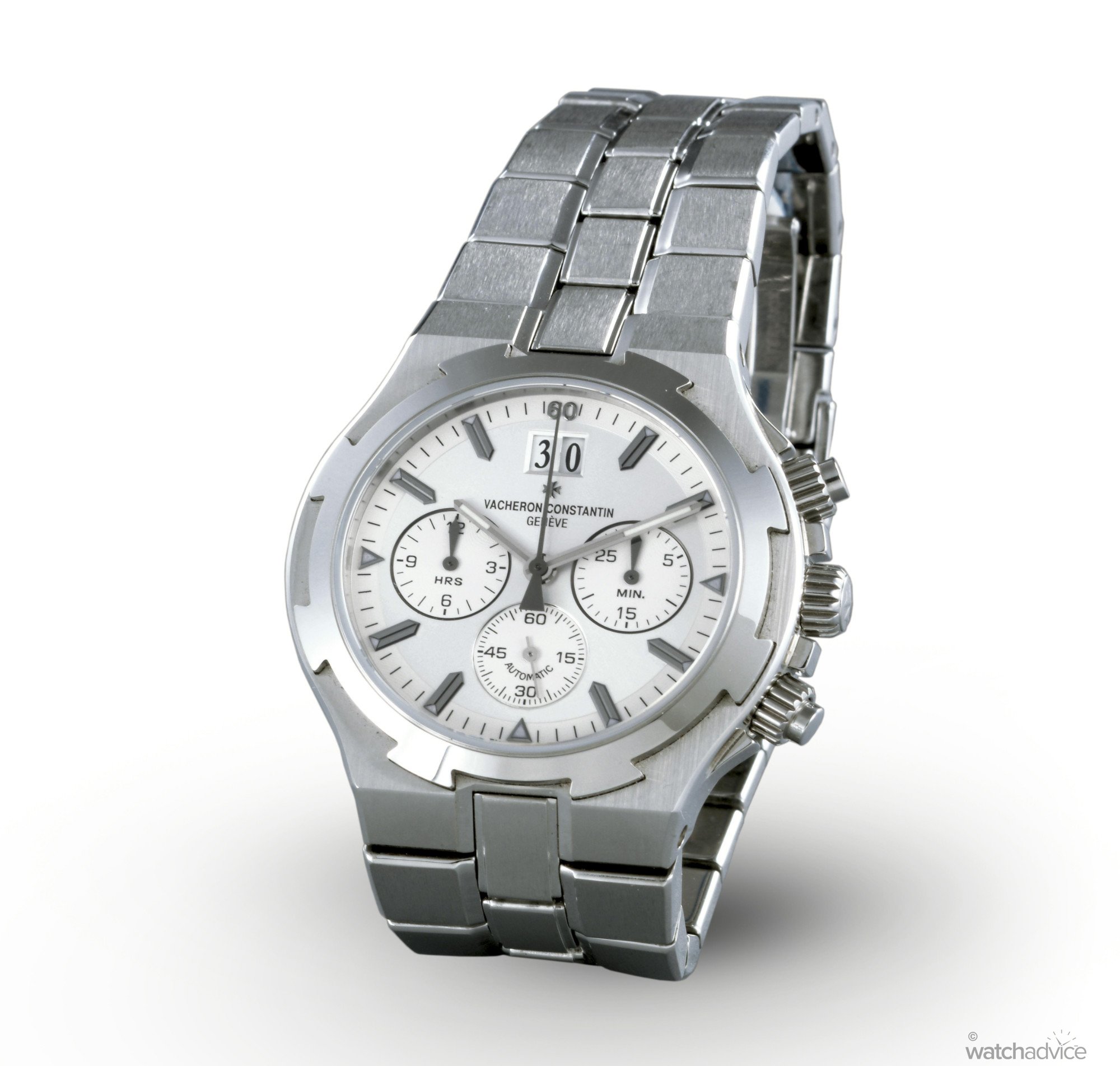
In fact, I think heritage is one of the things that makes watches different from many other products. A new smartphone might be an impressive piece of technology, but you usually don’t buy it because it reminds you of a device your grandfather used 50 years ago. A watch can have a history behind it, and that history can become part of the reason we form such a strong connection with it.
That is something the watch industry has always understood, but it feels like heritage has become increasingly important in recent years, to the point where it is now difficult to look at a new release without also being told where it came from.
But Heritage Is Everywhere!
Spend enough time looking at new watch releases, and you will start to notice just how often the past is used to explain the present. A new model is inspired by a watch from the 1960s, a dial colour comes from an old reference, a case shape has been taken from an archive model or a movement has been reworked based on something the brand developed decades ago. Again, there is nothing inherently wrong with any of this, and in many cases these connections are interesting, help grab our attention, and ultimately allow us to feel something about the watch itself.
But when almost every new release seems to have a historical reference point, it does make me wonder whether we are becoming too reliant on the past. Are we creating new watches that will eventually become part of the history of watchmaking, or are we continually looking backwards at the watches that have already achieved that status?

It is an interesting question because watchmaking is often presented as an industry built around innovation and creativity. Brands talk about pushing boundaries, developing new materials, creating new movements and finding new ways of making watches, yet at the same time some of the safest ways to launch a new watch seem to be to remind us of one that already exists, or existed at one point.
I can understand why brands do it, because collectors already know the names and the references, and many of us already have an emotional connection to them. A new watch that reminds us of something we already love has an immediate advantage over something completely new because we already understand the story behind it. It doesn’t have to introduce itself to us in quite the same way.
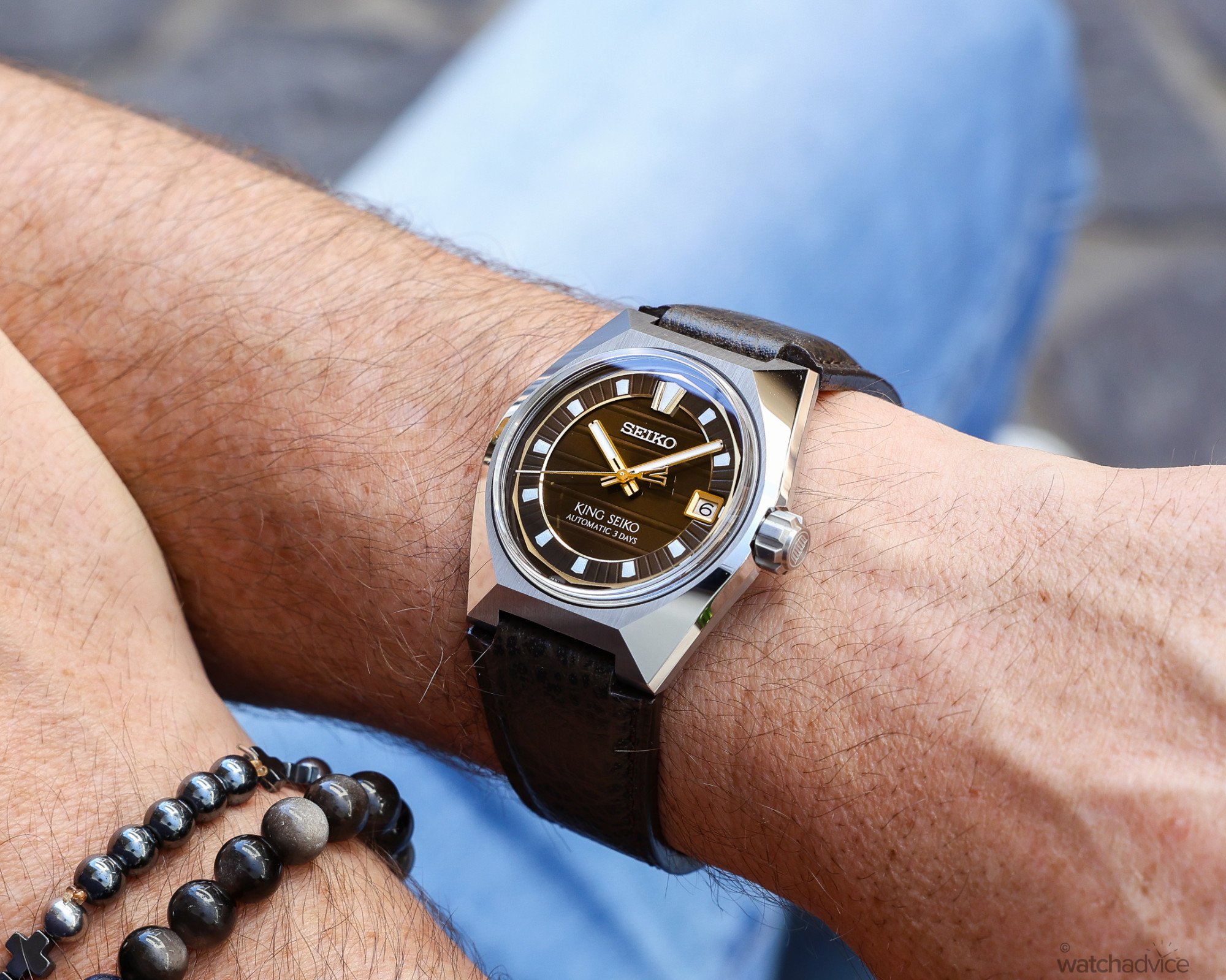
And from a commercial perspective, that makes perfect sense. If a brand has spent decades building an identity around a particular watch, why wouldn’t it use that history when creating something new? See my aforementioned point about our human trait of nostalgia and the past.
The question is whether there comes a point where heritage stops being an interesting part of the story and starts becoming the story itself.
When History Becomes Mythology
History is rarely as neat as the stories we sometimes tell about it today. The watches that we now consider important weren’t necessarily considered important when they were released. Some were commercial failures, some were ignored, and others simply disappeared into obscurity before collectors eventually rediscovered them.
I find this part of watch history particularly interesting because it reminds us that the importance of a watch isn’t always obvious at the time. Take the original IWC Ingenieur SL, Ref. 1832, designed by Gérald Genta. It is now regarded as an important design when it comes to the history of both IWC and the Ingenieur, yet it was considered a commercial flop when it was originally released.
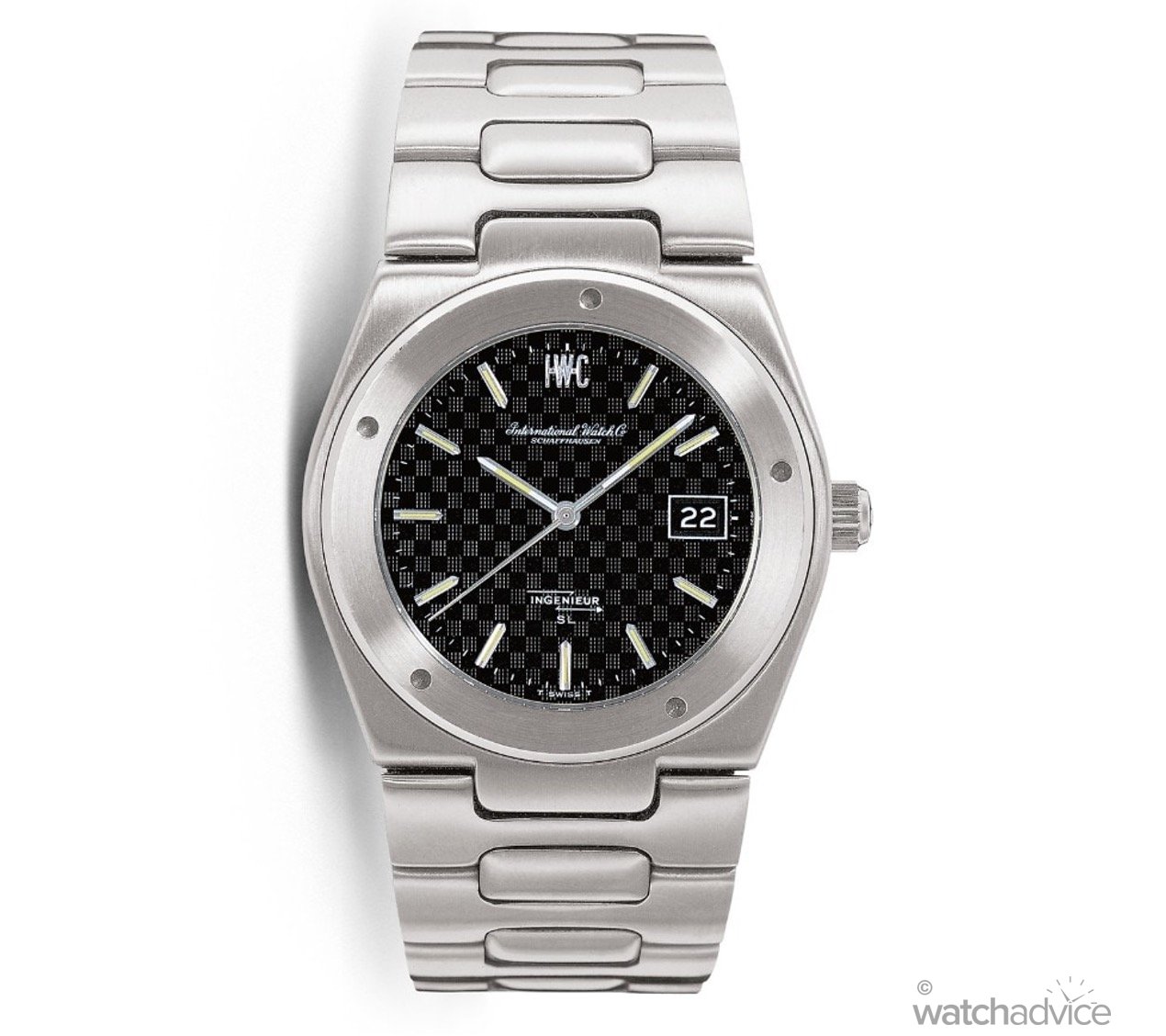
Now, saying this, I will give kudos to IWC, as they have openly said that the Ingenieur SL was a commercial failure and was shelved after selling fewer than 800 units over many years. Taking this point further, IWC has now used this to the brand’s advantage in its marketing of it, turning a negative historical moment into a positive present moment.
That is part of what makes its story so interesting, because it shows that a watch doesn’t necessarily need to be an immediate success to become important later. Maybe it is a case of being ahead of its time? Or maybe it is a case of us only now realising what it could have been, and should have been at the time, with hindsight being 20/20? Or maybe it’s that nostalgic feeling coming back to us?
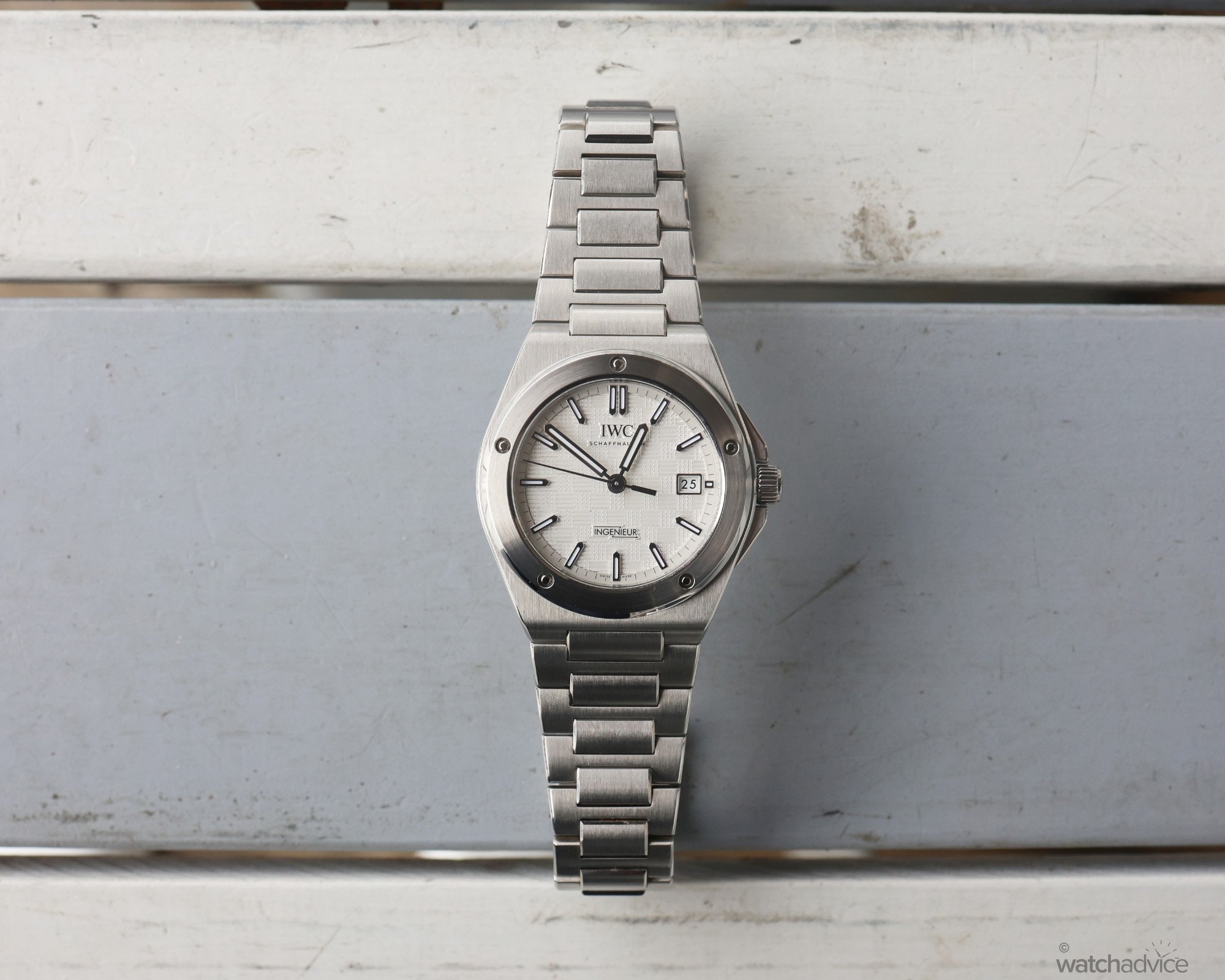
The problem comes when we start looking backwards and smoothing out all of those details. A watch that struggled commercially can become a “forgotten icon”, an obscure reference can become a “legendary design”, and a relatively simple product can be given a much bigger historical significance once there is enough time between its original release and its modern reinterpretation.
There is a difference between history and the way history is marketed, and I think that distinction is becoming increasingly important as brands continue to look towards their archives for inspiration. We are naturally drawn to stories, and brands know that, but the story can sometimes become more compelling than the object itself. But does that really matter?
Are We Buying The Watch Or The Story?
Something I’ve said numerous times over the years is, for many of us collectors, we don’t just buy watches because they tell the time; we buy into the stories surrounding them. Whether that is a Rolex Submariner and its connection to diving, an Omega Speedmaster and its history with NASA, a Jaeger-LeCoultre Reverso and its origins in polo, or an old Heuer (now TAG Heuer) and its connection to motorsport.
The story adds something to the object, and I think that is one of the great things about watches. It gives us another reason to care about something that, when you strip it back to its basic function, is really just a device for telling the time.
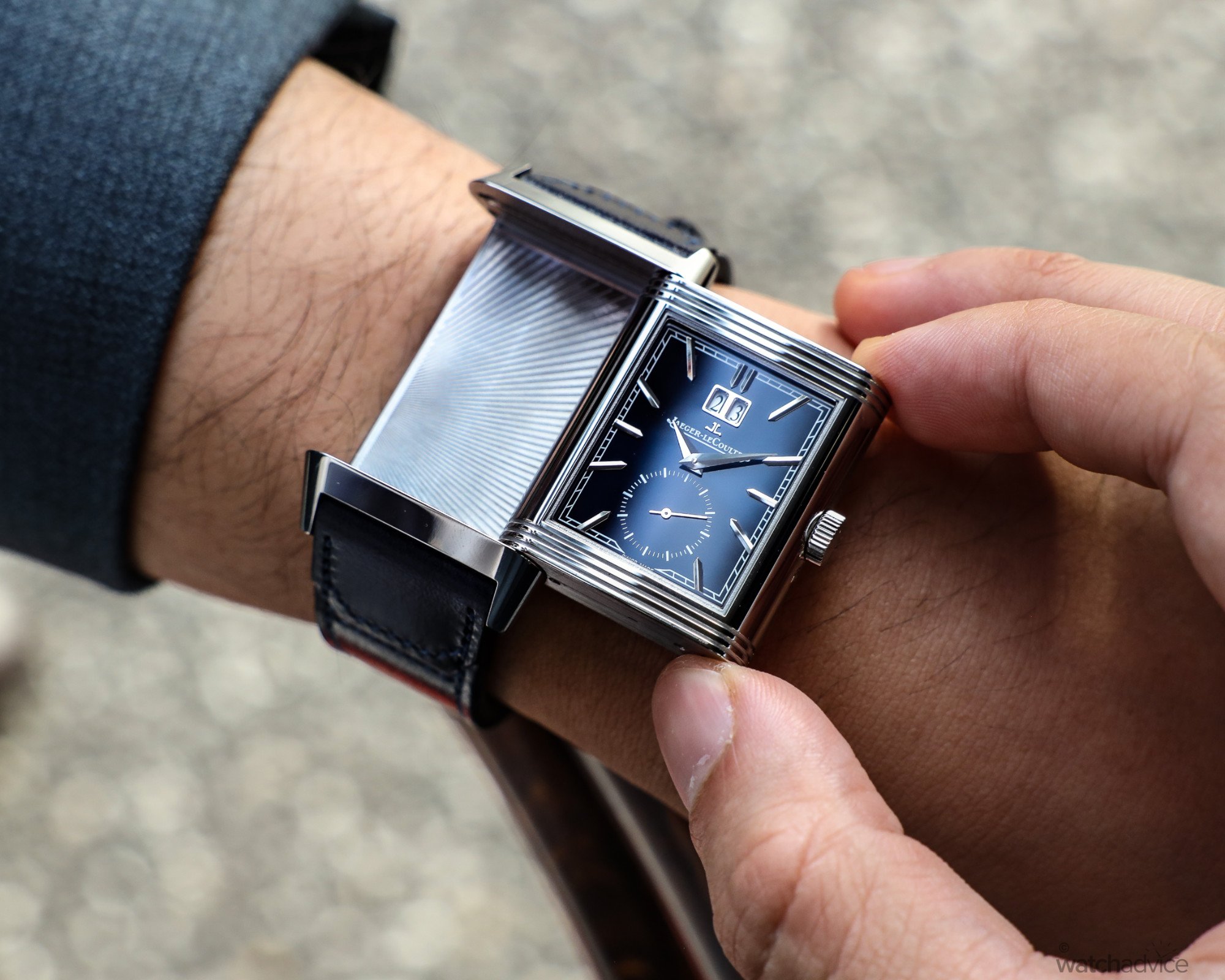
But it can also make it difficult to separate the watch itself from the story being told about it. If you took away the historical connection, would you still want the watch? That isn’t necessarily a criticism, because the answer will often be yes, but I think it is an interesting test to apply to some of the watches we see today.
If the watch is genuinely good, well designed, interesting to wear and enjoyable to own, then the heritage becomes an added layer. It gives us another reason to appreciate it and perhaps makes the ownership experience more meaningful. Even better if it talks to some part of our personality or persona that resonates with the watch and the history as well. I mean, who doesn’t want a watch that went to space, or a watch worn on the wrist of Steve McQueen?
But if the main reason we are interested in a watch is that we are told it connects to something from the past, then perhaps the balance has shifted too far.
We Are Partly Responsible For This
Now, it would be unfair to put all of this on the watch brands because collectors have helped create this environment as well. Believe it or not, brands do actually listen and pay attention to the watch-buying and collector community, sometimes.
We love the details; we want to know the reference numbers, production years, dial variations and movements, and we spend hours looking at old catalogues and photographs and discussing whether a particular detail on a modern watch is faithful to the original. I have done it myself in the past, and probably will do so in the future, so I certainly can’t sit here and pretend I’m above it all.
And, as I have just mentioned, brands have noticed how much collectors care about these things, and there is now a feedback loop between brands and collectors that is difficult to ignore. Just jump on any forum, or the many Instagram pages out there, for that matter, and you will know what I’m talking about.
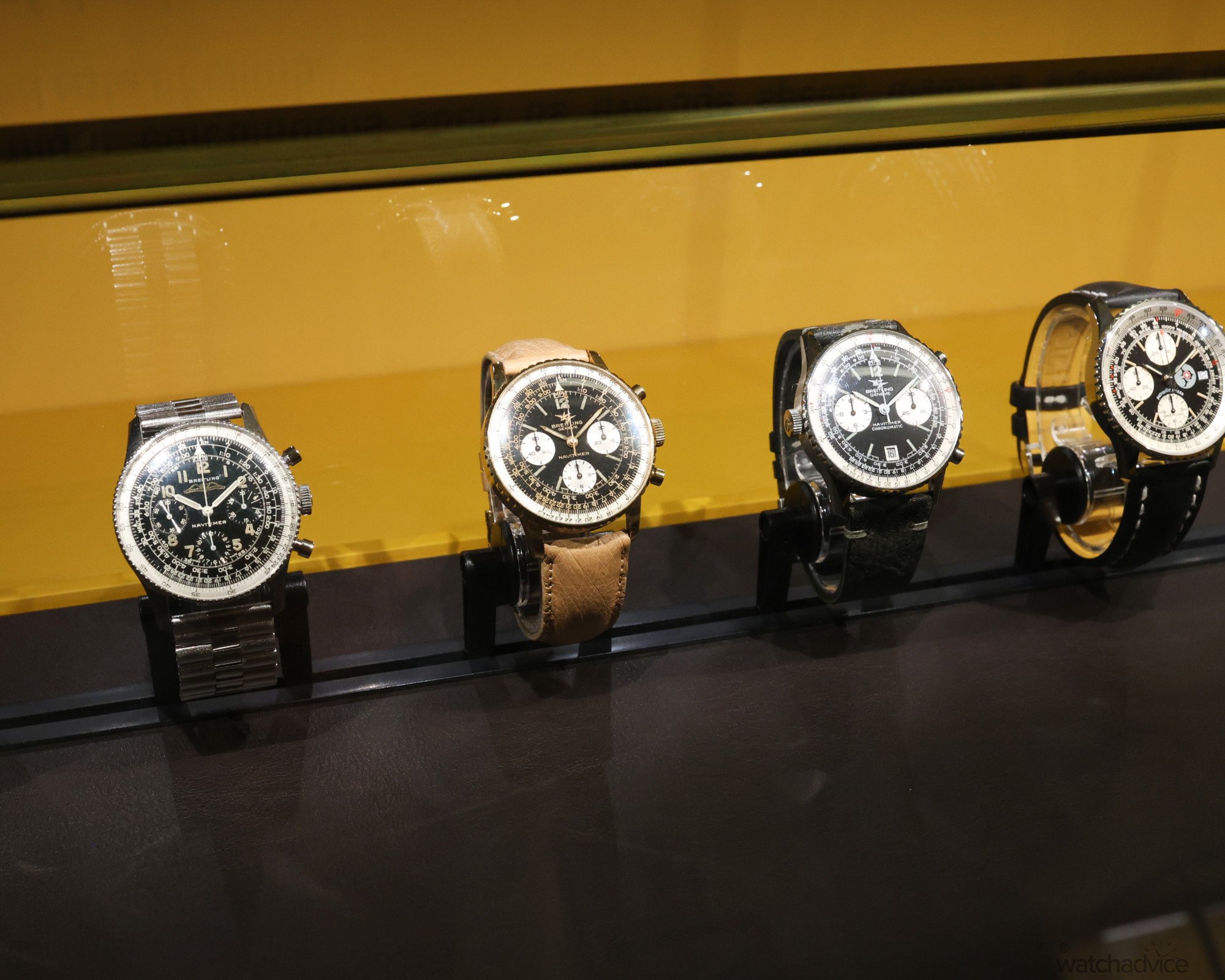
We want history, so brands give us history. We respond positively to it, so brands give us more of it. Eventually, it becomes difficult to know whether brands are responding to what collectors want or whether collectors have simply become accustomed to what brands are giving us.
Perhaps it is a bit of both, and something I’ve referenced in my last opinion article. The relationship between the industry and the people who buy its watches has always worked in both directions. Brands influence what we become interested in, but collectors also influence what brands choose to make. That is probably why heritage has become such a powerful tool. We have shown brands that we value it, and brands have responded accordingly.
What About Watches With No Heritage?
It is a good question to pose, and one with a few interesting answers to explore. What happens when a brand doesn’t have 100+ years of history to draw upon? What happens when there is no archive full of watches that can be revisited and reinterpreted? Or is there even a reasonable period of time that can be counted as heritage or historical?
It doesn’t necessarily make the watch less interesting or important. In some cases, I think the opposite can happen because a watch can be interesting precisely because it is trying to establish something new rather than recreate something old. Hublot, I’m looking at you here…
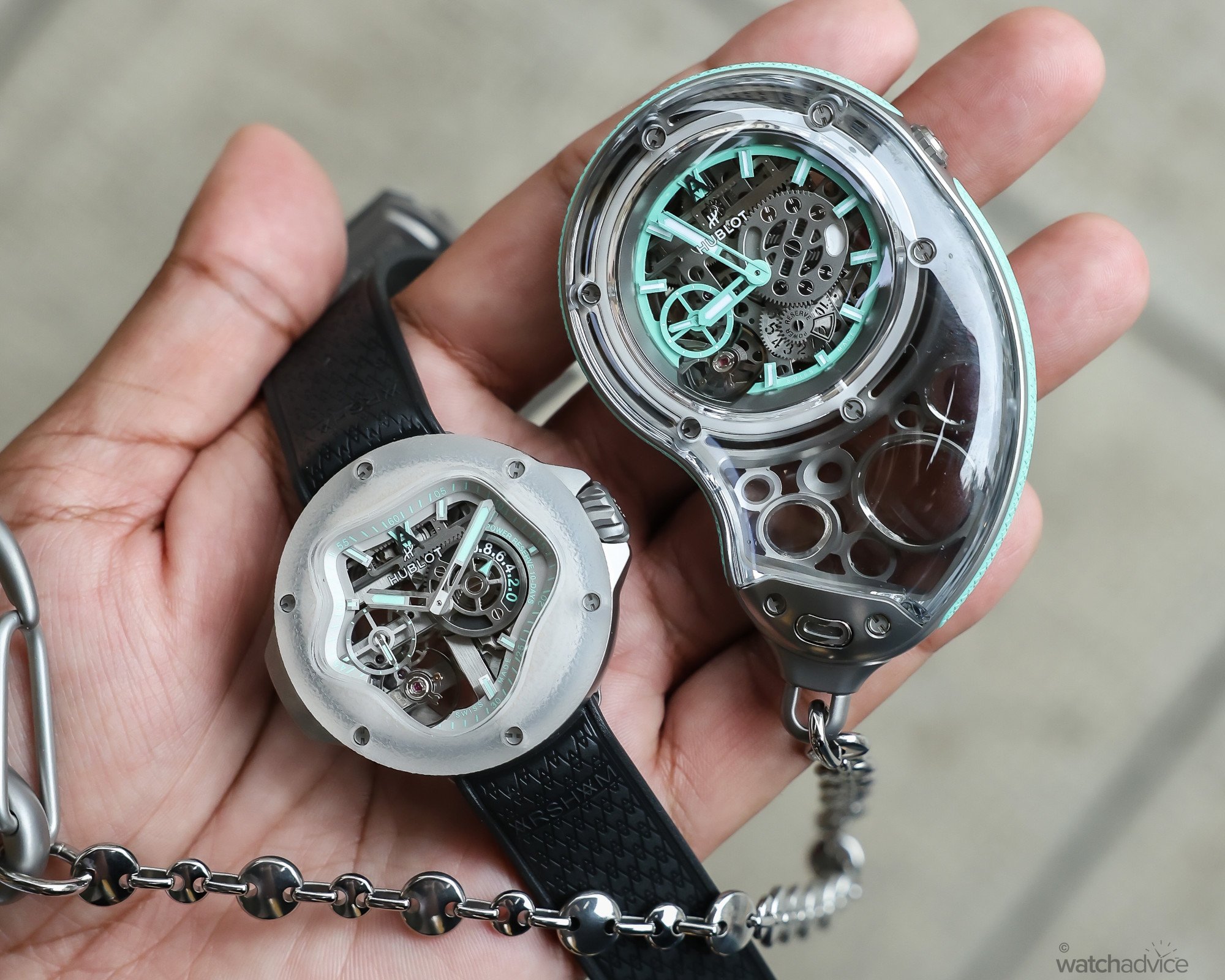
This is one of the reasons I find the independent watchmaking scene both interesting and fascinating. Many of these brands don’t necessarily have the option of saying, “We found this design in our archives from 1968.” They have to give us another reason to care, whether that is through a new movement, an unusual display, a different approach to finishing or simply a design that we haven’t seen before. All these are hallmarks of the likes of Greubel Forsey, which is why I love the brand and its watches so much.
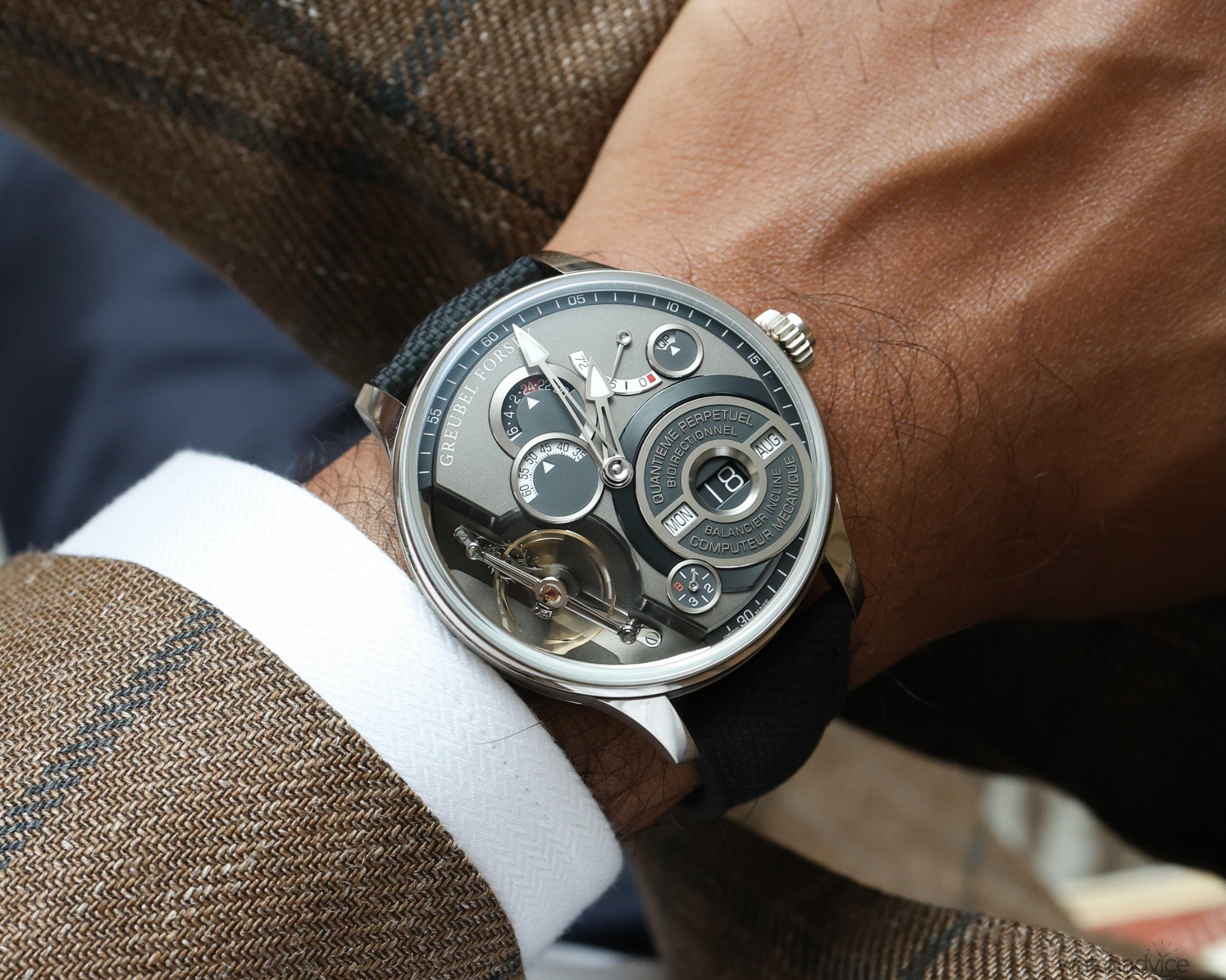
That doesn’t mean new is automatically better, because there are plenty of new watches that don’t work particularly well. But it does demonstrate that a brand doesn’t necessarily need decades of history behind it to create an emotional connection with collectors. Sometimes the story can simply be about what the brand is doing now, and maybe what we are seeing today will at some point be a historical reference point in the future.
The Best Use Of Heritage
I don’t think the answer is to stop using heritage. Far from it. Some of the best watches being made today are deeply connected to the past, and I don’t think that is going to change anytime soon, nor would I want it, as personally, I love how intertwined history and watches are. What matters, at least to me, is how that heritage is used. Let me explain.
There is a big difference between taking something from the past and using it as a starting point for something relevant today, and simply reproducing something because we know collectors already like it. The best heritage watches, in my opinion, are the ones where the historical connection makes sense but the watch still feels like it belongs in the present.

In other words, the heritage becomes part of the story rather than the entire story. Although I’ll preface this by saying that in some cases, a revival watch is cool when you see it being brought to market today in modern materials, but with a design that has been plucked from the pages of watch history.
And perhaps that is the test I keep coming back to. Would I still want this watch if I knew nothing about its history? Would I still find the design interesting, would I still want to wear it, and would I still appreciate the movement, the finishing or the way it feels on the wrist?

This isn’t a black-and-white answer, as it is hard to separate the product from the brand emotion sometimes, but if the answer is yes, then the heritage is doing exactly what it should. It is adding another layer to an already interesting watch rather than being asked to be the sole reason for buying or owning the watch. In other words, it adds value to it, rather than being the value itself.
Some Final Thoughts
I don’t think we should stop romanticising watches because, in many ways, that is the whole point. There is something inherently romantic about mechanical watchmaking, particularly when you consider that these are objects that can take hundreds of hours to produce, contain hundreds of tiny components and continue to work for decades if they are looked after properly.
They connect us to people, places and moments in our lives, and they can be passed down through families and carry memories long after the person who originally owned them is gone. That emotional connection is real, and I think it is one of the reasons mechanical watches have managed to remain relevant when almost every other aspect of telling the time has been replaced by technology.
Adding to this point, when you see where they are made, at least for many of the major Swiss brands, it is hard not to be romantic about them. When you are at the manufacture located in a small town in the Swiss countryside and, from the workshop floor, you can see the rolling hills of the Swiss Jura, with the watches all being put together by humans when the industrial world of today is predominantly automated by robots, it is easy to get swept up in it all.

So I don’t think nostalgia is the problem. The question is whether we sometimes allow nostalgia to do too much of the work. There is a fine balance between the product, the story and the brand, but in the right amounts, with all the right ingredients, the recipe works perfectly.
Heritage should give us a reason to look at a watch, but it shouldn’t necessarily be the only reason we want to own it. Because eventually, every modern watch becomes part of history, and perhaps the more important question for watch brands today isn’t how closely they can recreate what came before, but whether they are making something that people will still be talking about decades from now. Time, ironically, will tell.