

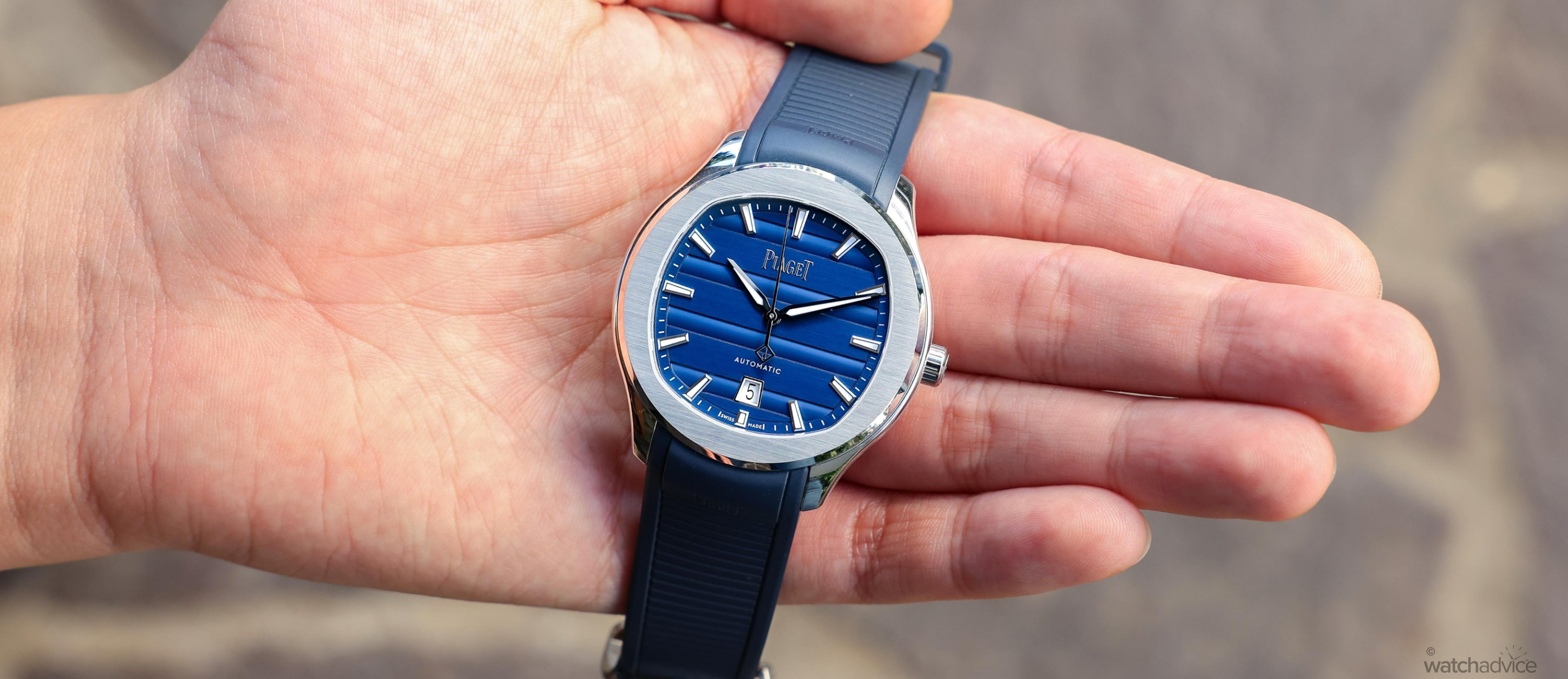
Piaget’s released a new iteration of their Polo Signature Date, but does it truly embody the brand’s modern creative vision? Let’s find out!
What We Love:
- Shapely, wearable case
- More distinct dial & identity
- The rubber strap – still comfortable!
What We Don’t:
- Crown feels slightly small
- Dead zone when changing times
- Is it finally recognisable?
Overall Rating: 9.25/10
- Value for Money: 9/10
- Wearability: 9.5/10
- Design: 10/10
- Build Quality: 8.5/10
For as much as I love watches for their design, technology, or daring in either field, recognition must be recognised as one of the most important elements of a watch brand’s arsenal. When a watch brand goes ‘mainstream’ within the enthusiast community, it brings with it a significant amount of power within the watch world. But it’s usually easier said than done; scant few brands have managed to capture the attention of both hardcore enthusiasts and luxury lovers at the same time.
Piaget is a brand that has perennially clung to the fringes of that audience. In the past, they hadn’t been able to tap into the enthusiast crowd with the same level of magnitude as some of their peers in Richemont. While one can easily point the finger towards characteristics like ultra-luxury and exclusivity, it hasn’t stopped other brands of a similar calibre from breaking through. So if not that, then what?
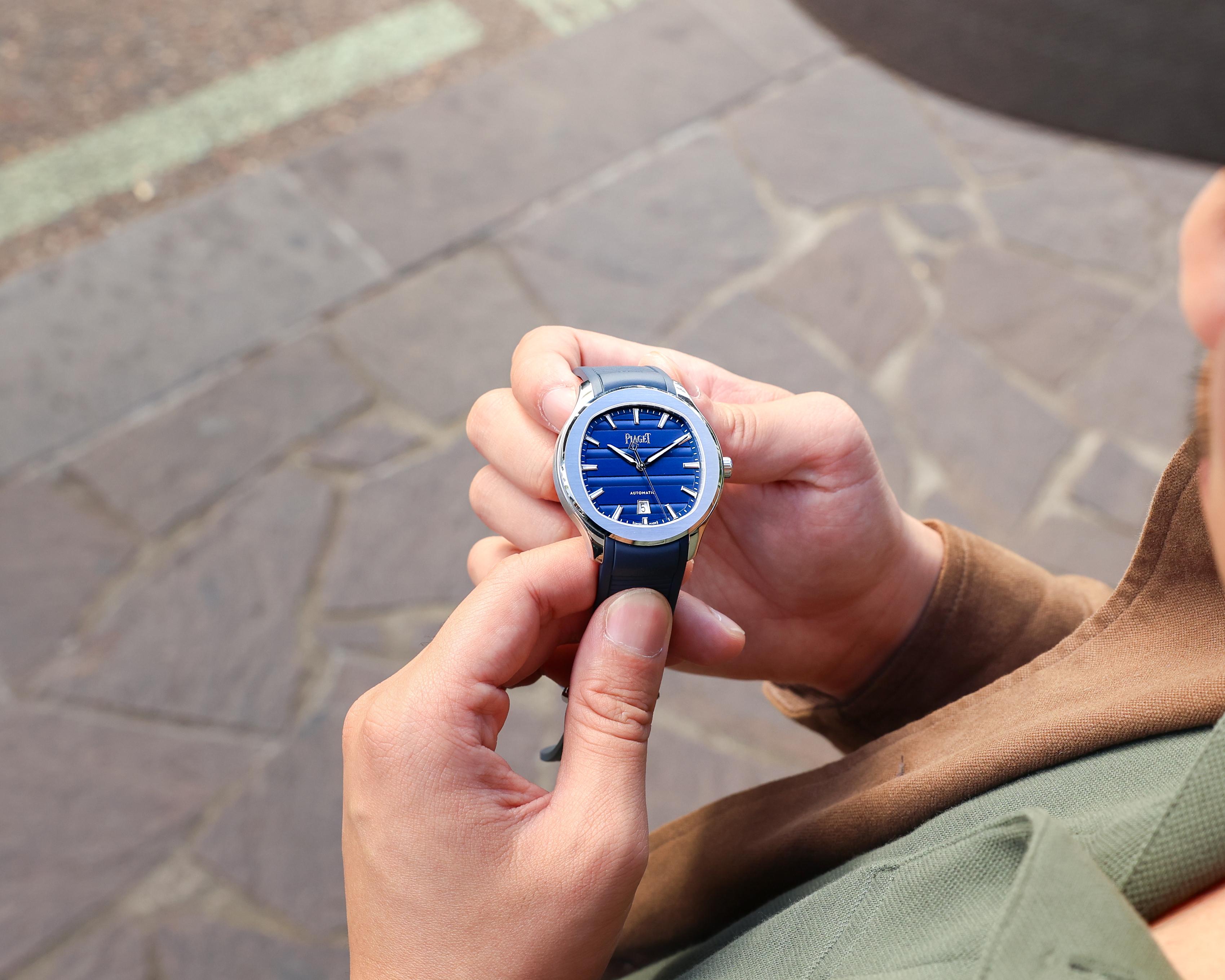
Perhaps it’s due to a lack of distinctive visual identity, which in recent years has begun to change. While fans of the brand know them for their duality as jeweller-watchmakers and their ultra-thin heritage, what really set them apart was their unique catalogue throughout the ’60s, ’70s, and ’80s. Piaget has begun to recognise how celebrated those designs were, reincorporating them into the main roster through collections like the Andy Warhol and Polo ’79.
The modern wing is not to be ignored, though, and Piaget knows that. Watches & Wonders 2026 saw them unveil the Polo Signature Date, which combined the disco-era aesthetic of the Polo ’79 with the shapely cases of the modern-day line. As a fan of the Piaget Polo Date already, having reviewed one for my very first foray into Watch Advice, I had to get my hands on one to see how it, and I, have changed since then.
First Impressions
Ah, if it isn’t the ghost of my past! Back when I started at Watch Advice, Chamath and Matt met with me and… well, if you read my original review of the Piaget Polo Date, you’d know the rest. Thanks for sticking around, by the way! How time flies, huh? A lot has changed since then, and I can’t help but feel somewhat sentimental about revisiting this piece.
I’ve jumped countries, changed relationships, went to therapy, made connections, and learned so much about myself and the watch industry on this crazy journey I’ve been on. Heck, in the middle of wearing this watch for review, I even attended my university graduation with it still on my wrist! Sorry, Piaget – it just looked good with the robes.
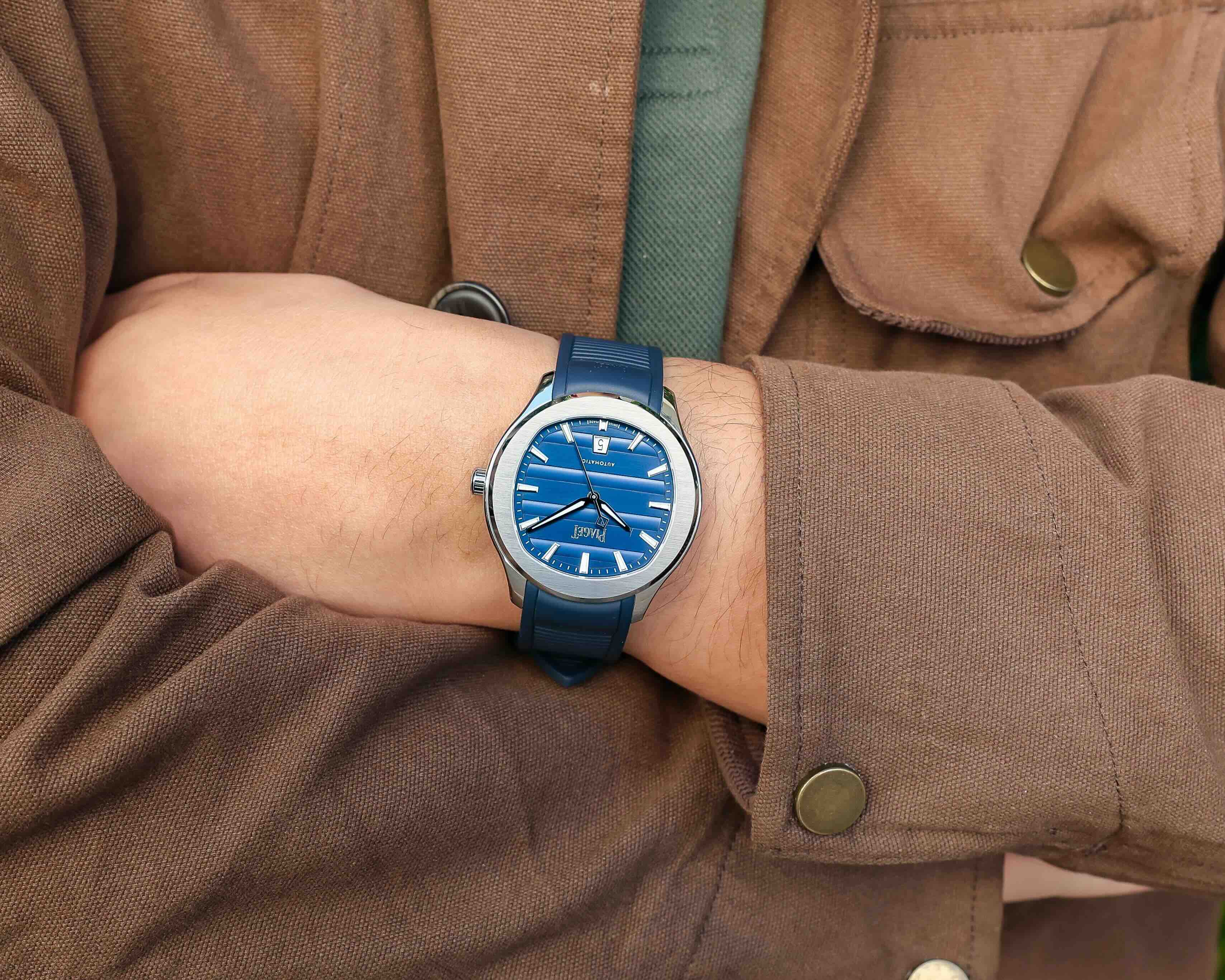
So one could say that the modern Piaget Polo, for as criminally underrated as it was (and still is, to a degree), has become one of the most important watches I’ve ever handled. Somewhat serendipitously, it’s also one of Piaget’s most important timepieces, representing their modern evolution and the guiding principles of the brand’s future.
But as the saying goes, “same same, but different.” Just like how I was a completely different person – and an utter watch noob – back then, the Piaget Polo Signature Date has changed drastically from the OG. My guess is that it was brought on by the brand’s return to heritage styling and the retro-cool of their archival back catalogue. So, with a new eye for detail but that same old enthusiasm, I took the opportunity to pick up anything that the old me might have missed – both good, and less so.
The Design
I’ve already extensively reviewed a version of this watch, so some of the features mentioned will be familiar to those who read that review. I won’t spend too much time on them, but I will mention what they are as we go along.
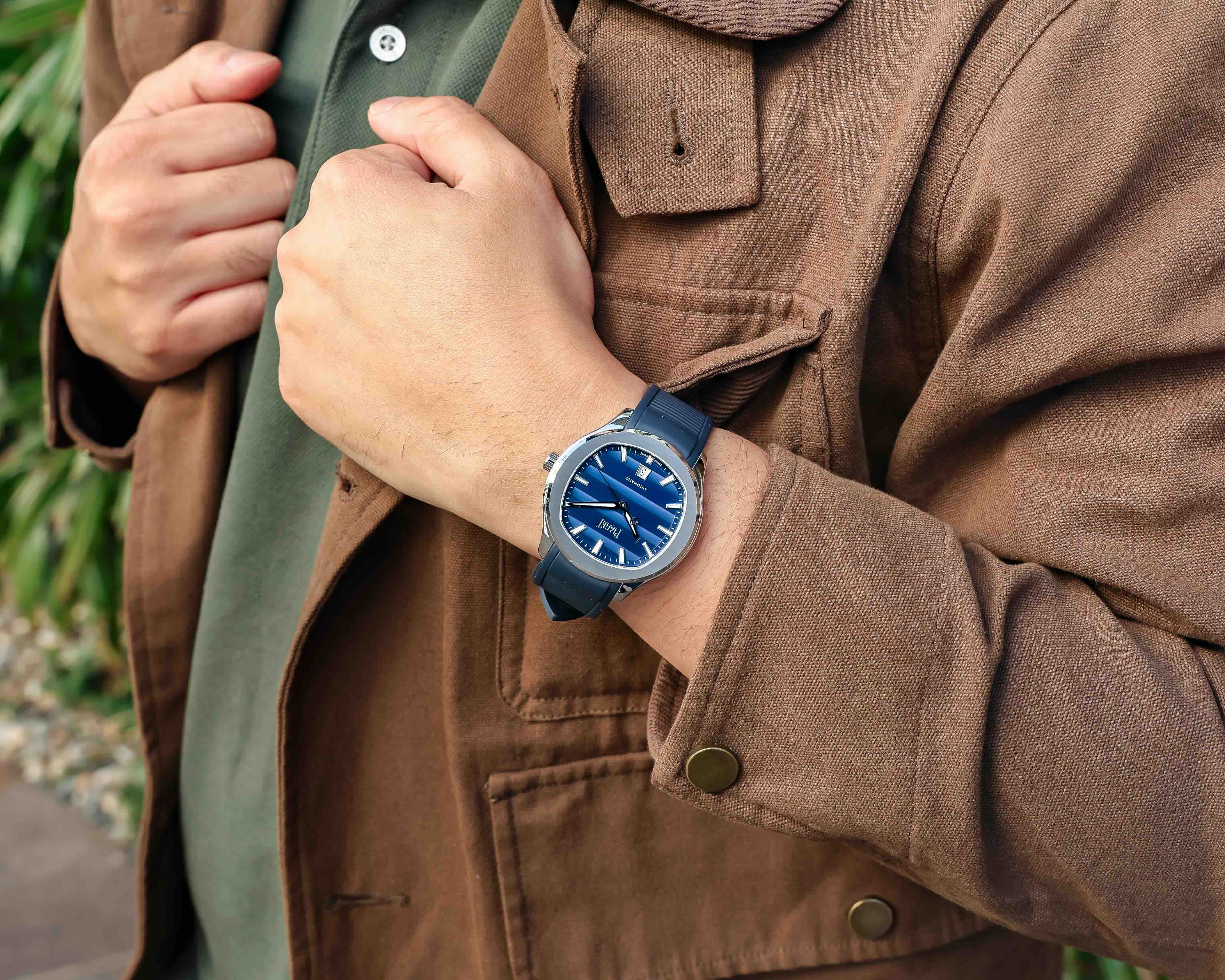
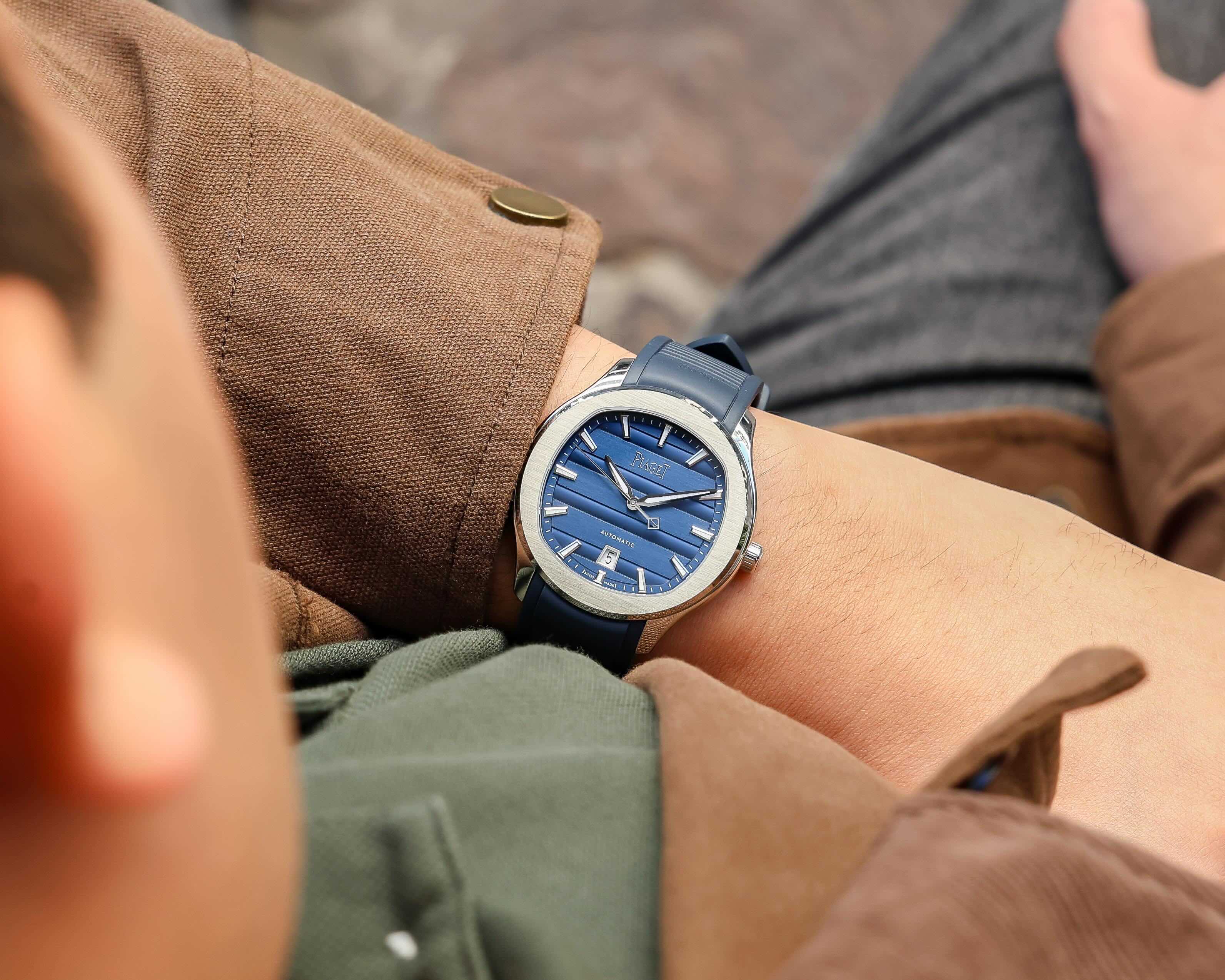
In any case, the Piaget Polo Signature Date feels identical to, yet worlds apart from, the standard Polo Date line. The biggest change comes by way of the new dial, which fundamentally changes the attitude of the collection. Gone are the horizontal grooved finish of the original: In its place, a pattern of flat, horizontally brushed and rounded matte surfaces. This is meant to echo the same design cues found on the Polo ’79, where the visual rhythm remained uninterrupted between dial and case. Here, the gadrooned motif serves more as a calling card – a signature, if you will – to the brand’s unique heritage.
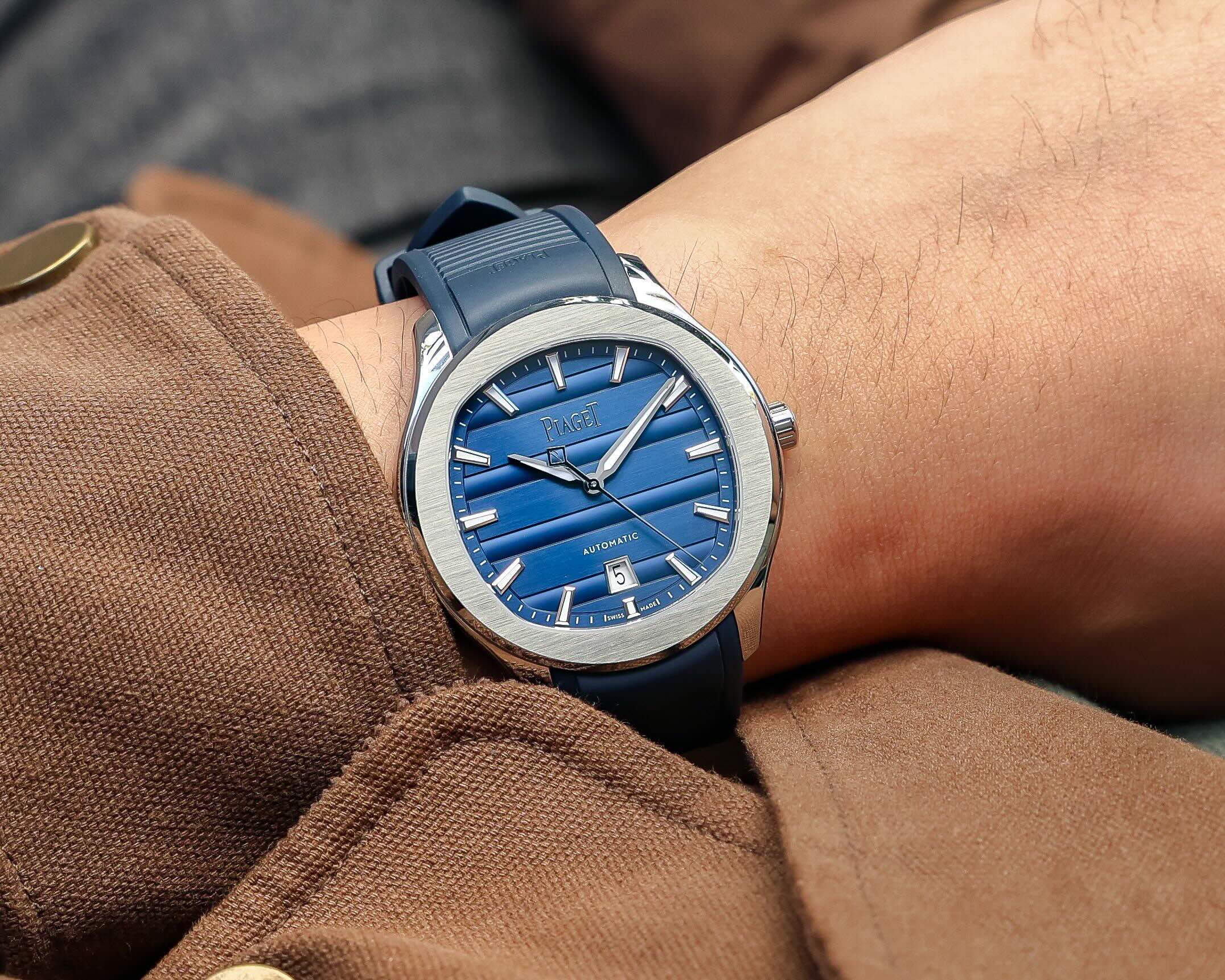
Back in 2024, I made a big deal about the original’s horizontal grooves, calling back to the theme of ‘continuation’ minimised for the modern wearer. While I still believe it was a nice, subtle touch, perhaps it was lost on those unfamiliar with Piaget.
In a world where all brands, even those beyond watchmaking, are subscribing to the much-maligned trend of corporate minimalism, the Polo Signature Date is a breath of fresh air in the opposite direction. Also, it makes the watch far more recognisable as a Piaget, an element that the previous collection didn’t quite have. Coloured blue, it doesn’t feel too over-the-top, either, adding depth and visual intrigue every time you glance at your wrist.
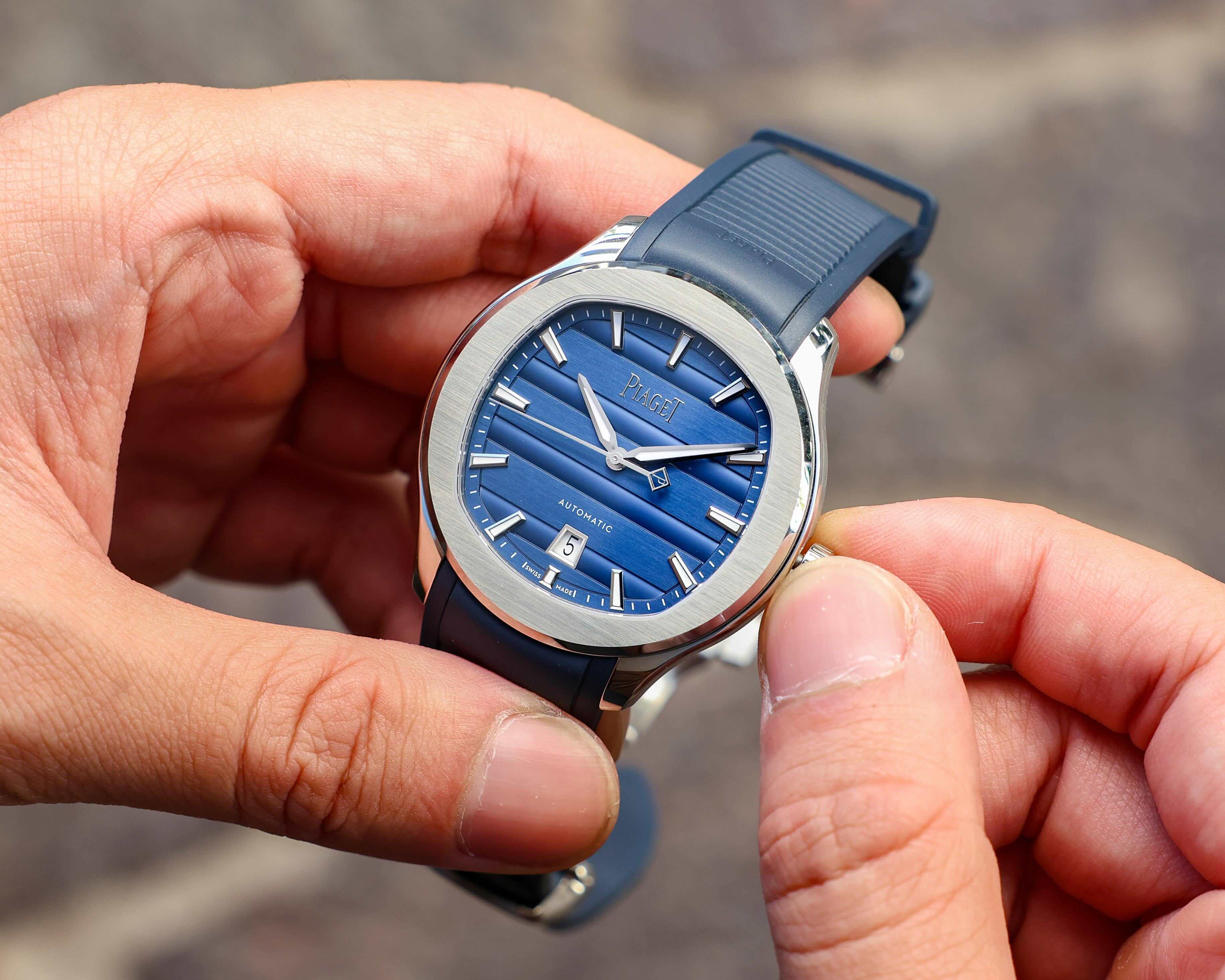
Set atop the dial are the Polo Date’s sizeable lance hands, accompanied by the emblematic seconds hand with the Piaget ‘P’ counterbalance. The hour and minute hands have been applied with a generous amount of lume, pointing to trapezoidal indexes similarly coated in lume. It’s effective in low-light environments, making it perfect for a sports watch like this.
The six o’clock index is shortened to accommodate another trapezoid in the form of the date window. The subtle geometry of the date window, hands, and indexes helps to literally sharpen the look of the watch, adding to the spectacle. An unbroken groove follows the lines of the ‘squircle’ cushion-shaped dial, framing the gadroon motif and separating it from the surrounding horizontally brushed minute track.
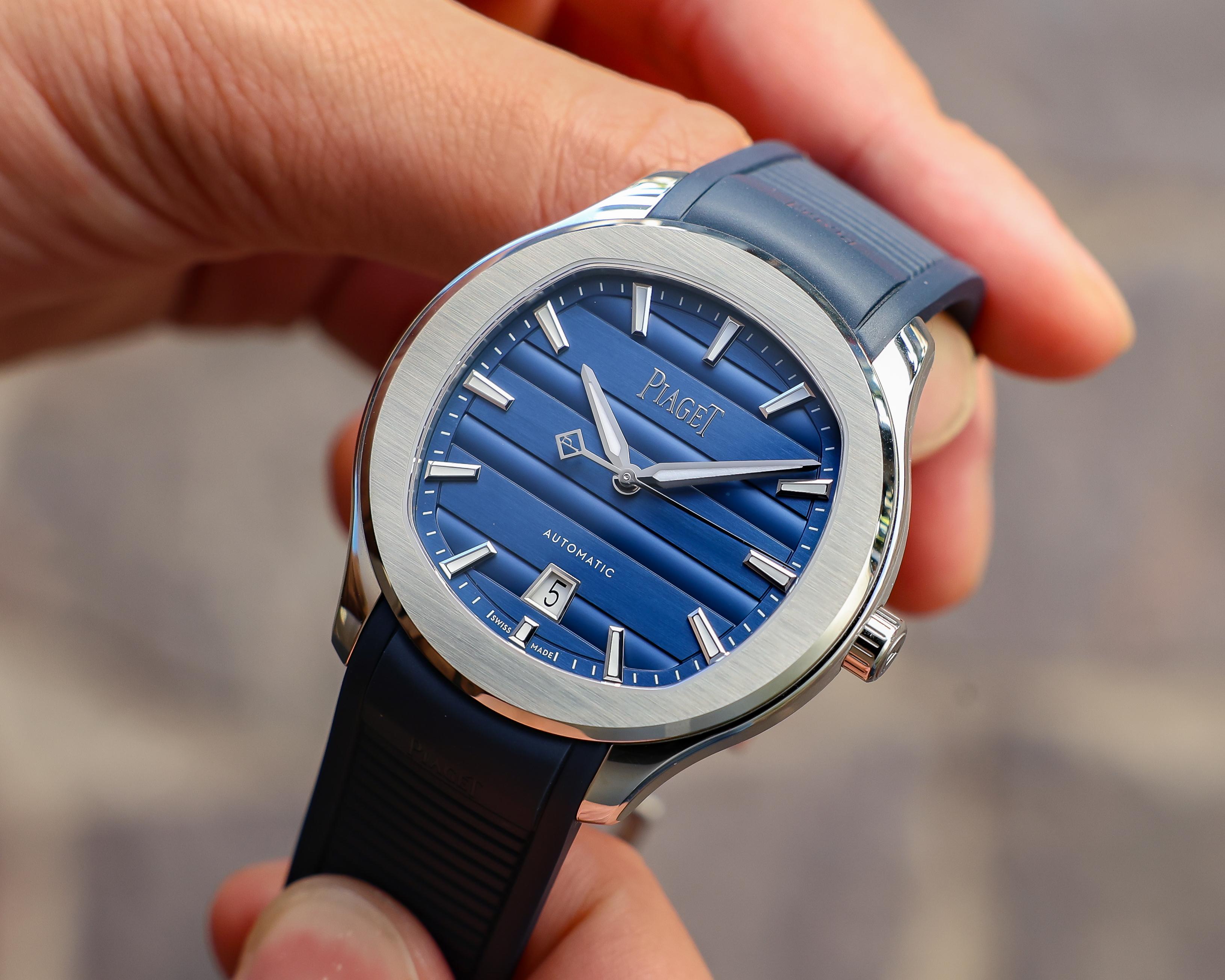
Moving outwards, you’ll find the horizontally brushed bezel, a feature carried over from the standard line-up. It feels more at home in the overall design of the watch, compounded by the horizontal brushing of the dial. The brushing eventually gives way to a polished chamfer, which flows down to a round polished case and lugs.
In my previous review, I mistakenly took it for a TV-screen watch, but the Polo collection takes on Piaget’s ‘shape within a shape’ design concept rather than a rounded square. The cushion-shaped dial is juxtaposed by the standard round case, giving the watch a more unique appearance. The halo of light from the polished surfaces also helps to frame the watch, while the horizontally brushed case flanks and fluted crown separate the chamfers of the upper and lower case.
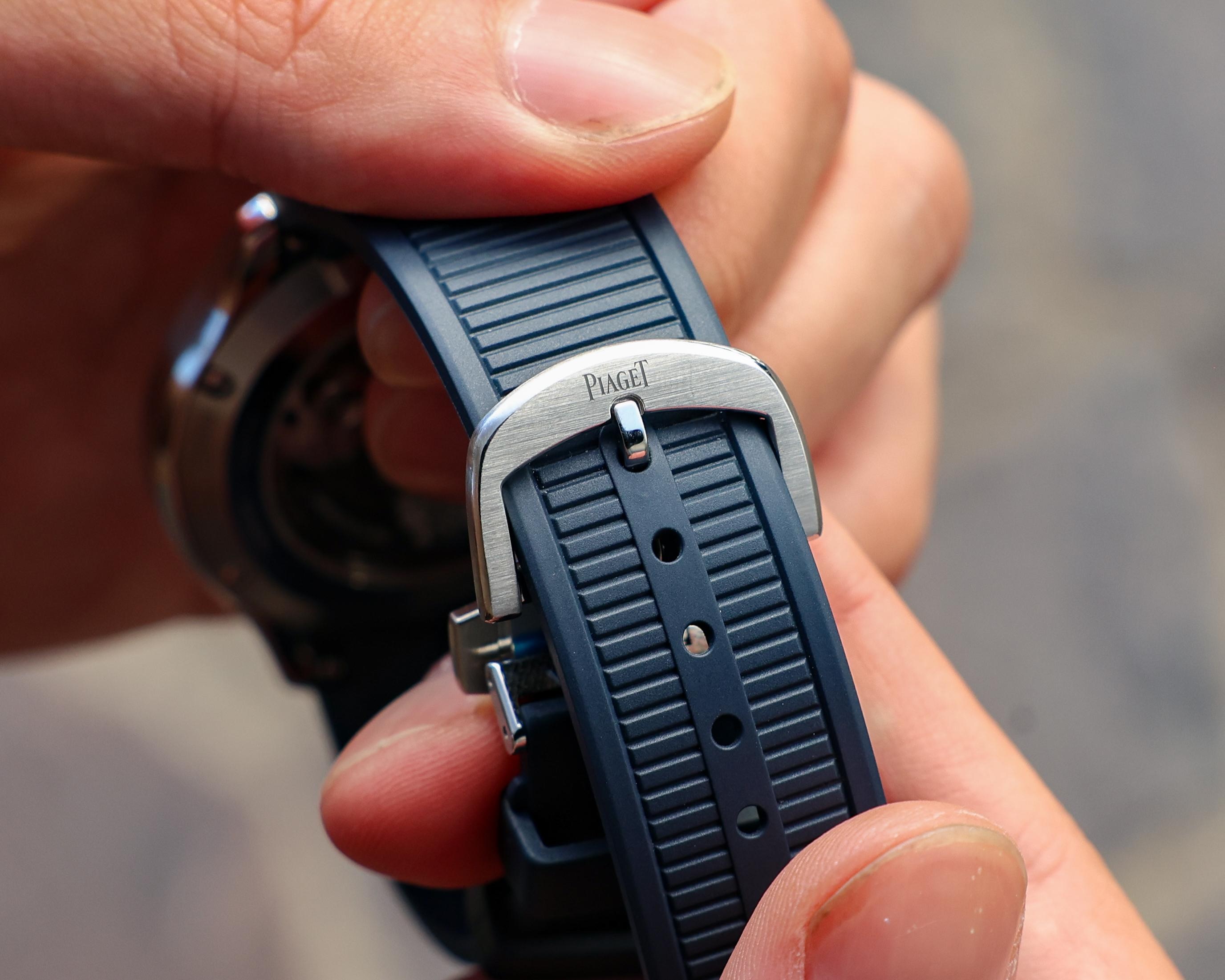
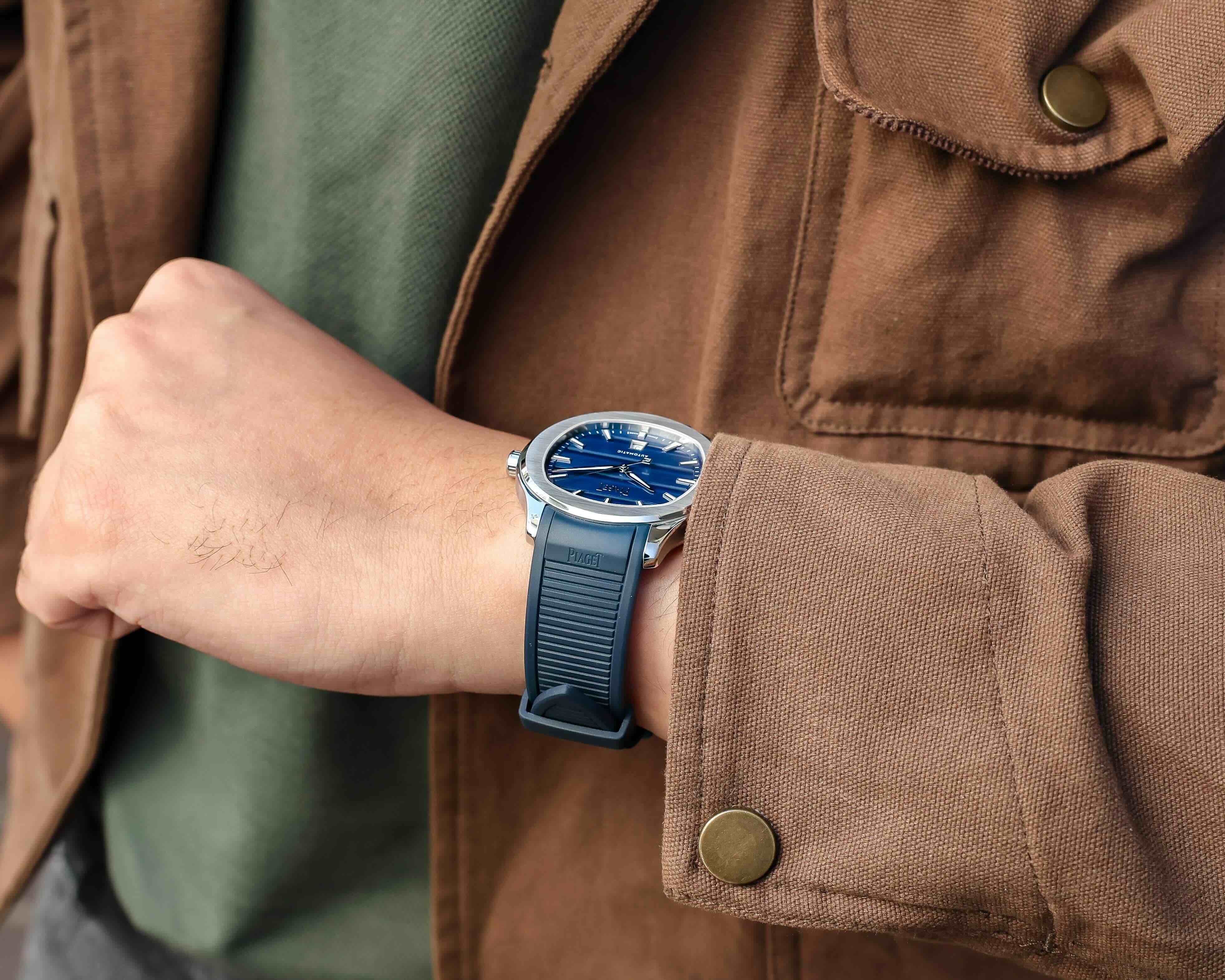
Turning the watch around reveals a screwed-in open caseback with radial brushing and polishing, possessing all the typical serial engravings. Shifting away from the case is the rubber strap, which still possesses the same horizontal grooves on its front and back. Moving down to a secure butterfly clasp and pin buckle combo, it completes the look of the watch.
Overall, the Piaget Polo Signature Date carries the best features of the original Polo line while shifting its identity through a more distinctive design. I did appreciate the subtle detail that the original line brought, but I held reservations about whether such a flamboyant design could be watered down.
I’m glad to say that this new model proves me wrong. While the dial has become slightly more extravagant, the highly refined DNA of the modern Polo remains the same. It goes to show just how close to the finishing line Piaget was before, and I believe they’ve finally crossed it now.
How It Wears
The new Polo Signature Date doesn’t reinvent the wheel in Piaget’s sizing, carrying over the same stainless-steel case measuring 42mm wide, 47mm long, and 9.4mm thick. Fortunately, this means the comfortable wearing experience hasn’t changed much atop my 16.3cm/6.4in wrist. The width of the watch is tamed by its relatively short lug-to-lug, while its relatively thin stature allows it to slide seamlessly under a jacket cuff.
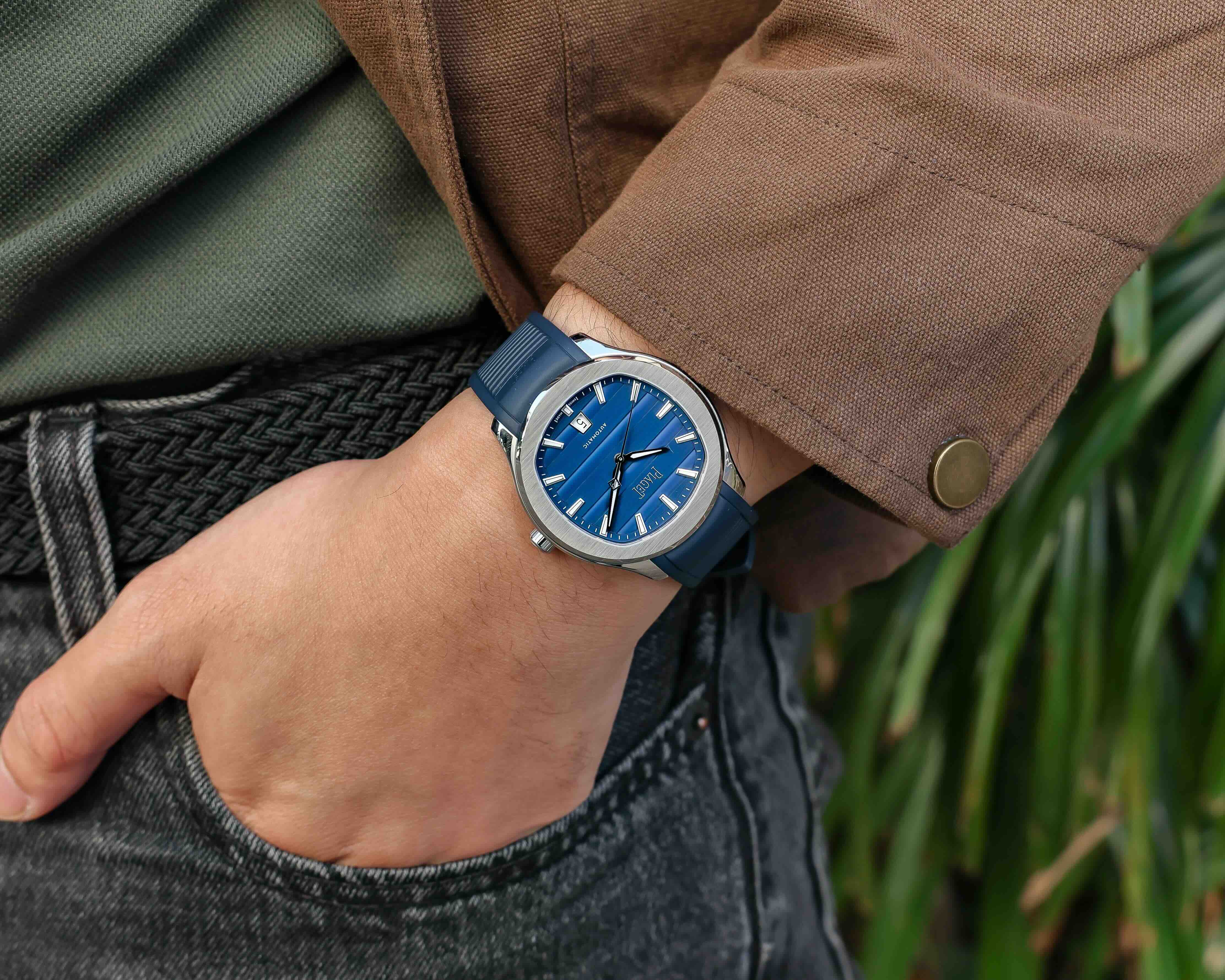
I do understand if some are sceptical about the cushion dial within the round case profile, but it really does work here. Despite having a smaller dial than what a 42mm watch might suggest, Piaget doesn’t suffer from any legibility issues thanks to the large hands and indexes. Furthermore, the dial shape tricked my eyes into believing it was smaller on the wrist, wearing closer to, say, a Rolex Oyster Perpetual 41.
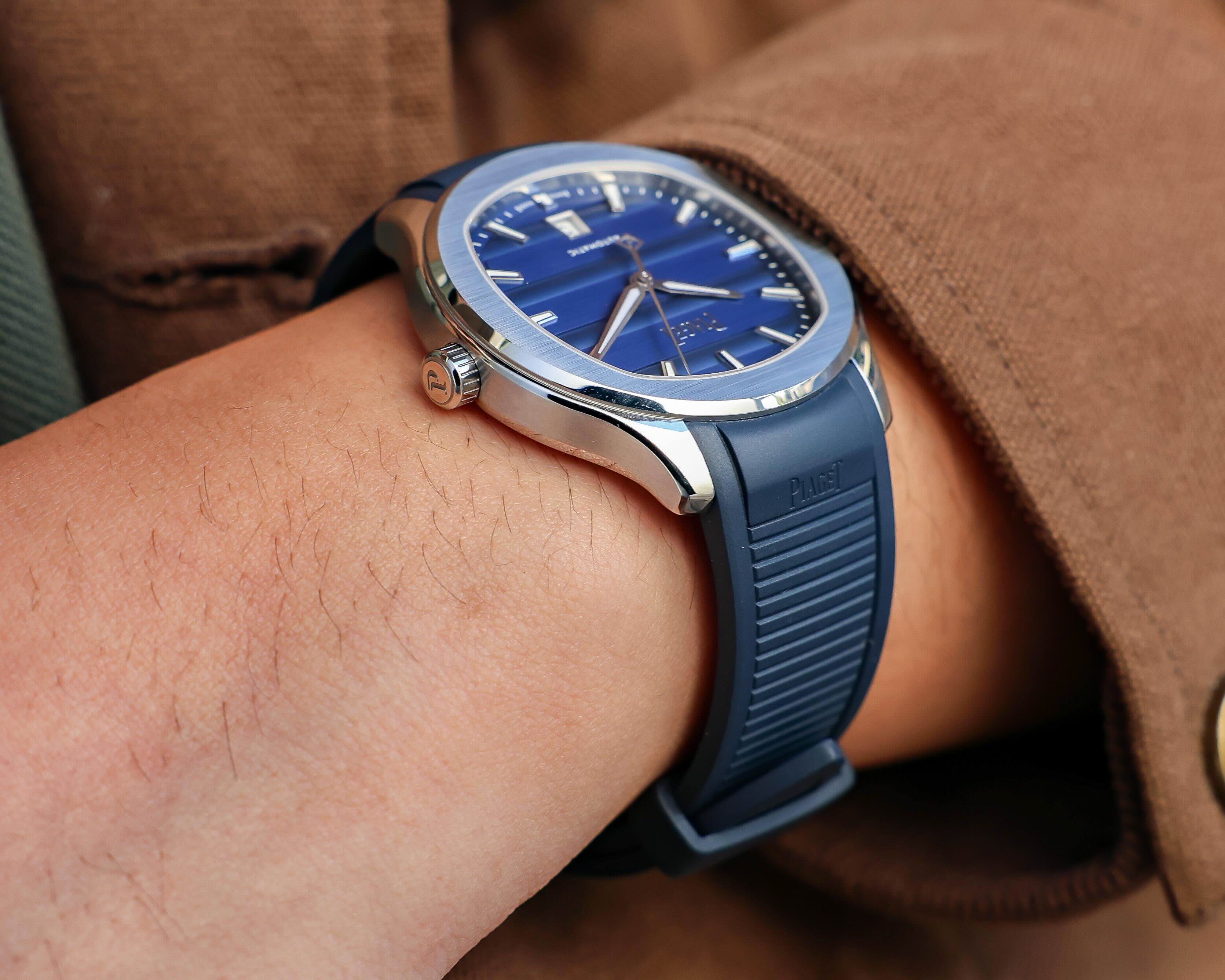
Though the wearing experience between the standard Polo Date and Polo Signature Date are one and the same, I’ve been lucky enough to wear the collection in two completely different seasons. Previously, I wore the watch in February, which, for our Northern Hemisphere readers, is summer in Australia. Hot air sticks to you like glue here in Queensland, and so a rubber strap was a perfect reprieve from the general discomfort of the season.
Now, we’re in the back end of winter, which is still relatively warm but completely absent of humidity. Yet, the wearing experience remains just as good as it was before. Even though the rubber strap’s integrated nature flares slightly outwards beyond the lugs, it’s not something that noticeably affected the wear of the watch for me.
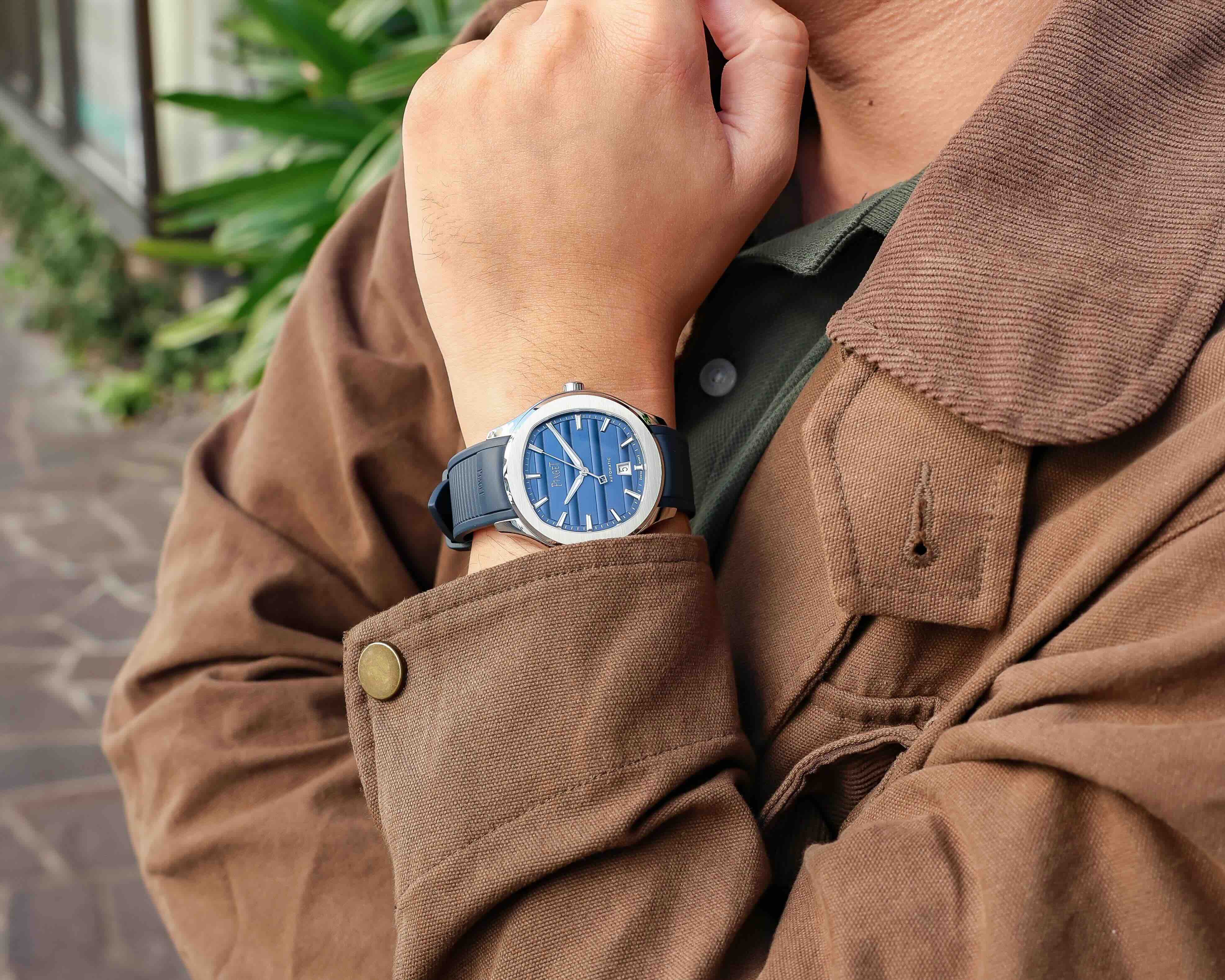
Interestingly, I didn’t have many of the same issues with the strap and clasp as I encountered before. Both straps were the standard size, yet I actually managed to fit the Polo Signature Date down to the last two holes. Previously, I wasn’t able to do so. Maybe I’ve gained a bit of weight since then? Other than that, the only observation I made was that the butterfly clasp does tend to fold in on its hinges as you make the strap tighter.
One thing I will say I had issue with is the usage of the crown. Compared to other sports watches of the same size, I found myself constantly trying to seek out the small crown when adjusting or winding the watch. It feels a little bit odd that a 42mm watch would have such a small crown comparatively, and should perhaps be slightly larger to make adjustments more tactile.
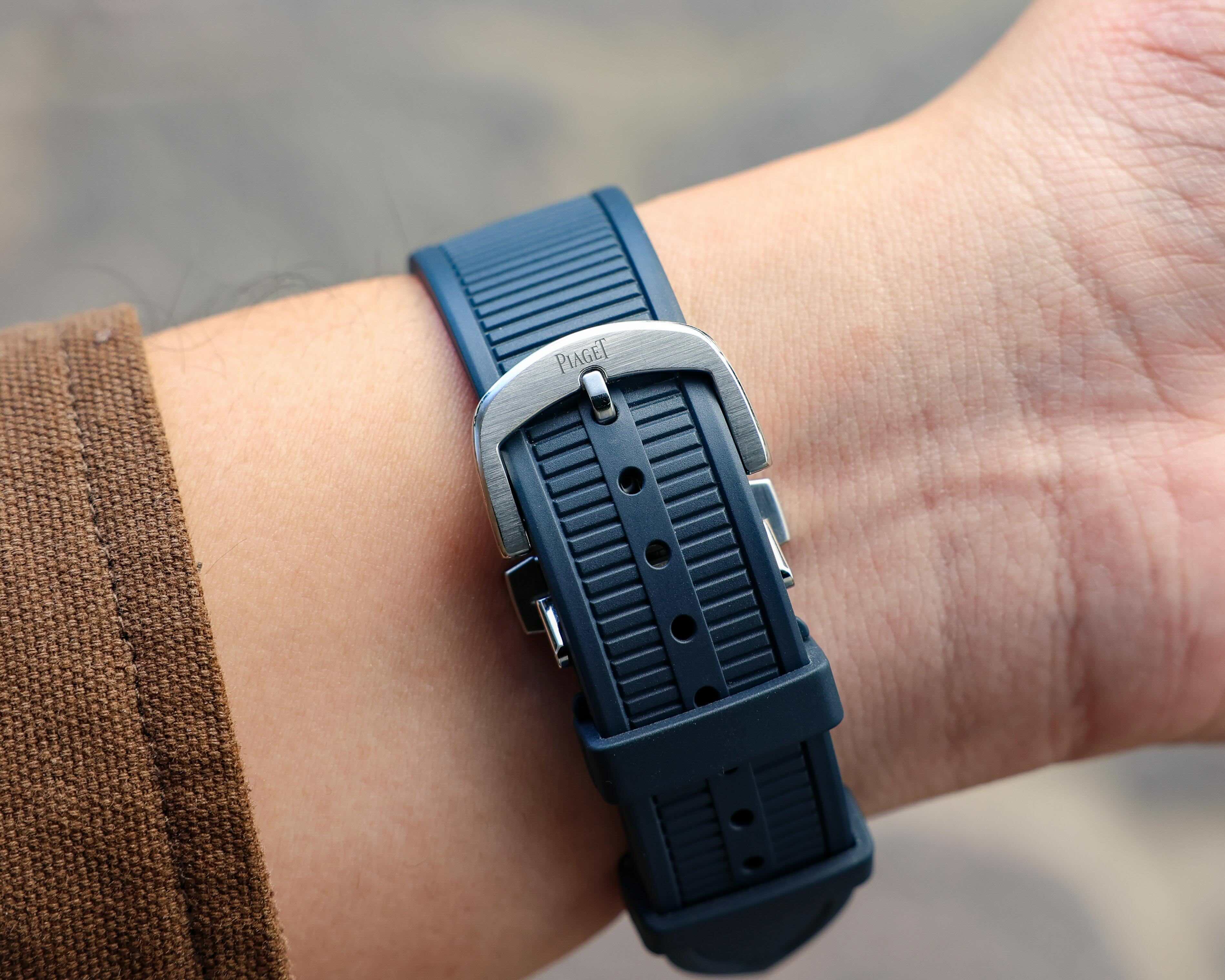
Water resistant to 100m, the Polo Signature Date wears and reads exactly like a sports watch should, with few caveats. But if you don’t like it on the rubber strap, that’s fine. Piaget offers another reference on a full-metal bracelet, as well as interchangeability between the two whenever you so desire.
The Movement
As part of the Richemont Group, Piaget has the benefit of having access to some of the best base movements on the planet, courtesy of its peers at Cartier. But while they are certainly capable of making stunning movements on their own, it doesn’t hurt to get a little help from your next-door neighbours.
Like the rest of the Piaget Polo line, the Polo Signature Date possesses the Cal. 1110P, which itself is based on the Cartier Cal. 1904-PS MC’s architecture. It’s a handsome, utilitarian movement, featuring the luxury-standard 4Hz beat rate alongside a respectable 50-hour power reserve. It’s a perfectly serviceable automatic movement that features a date complication.
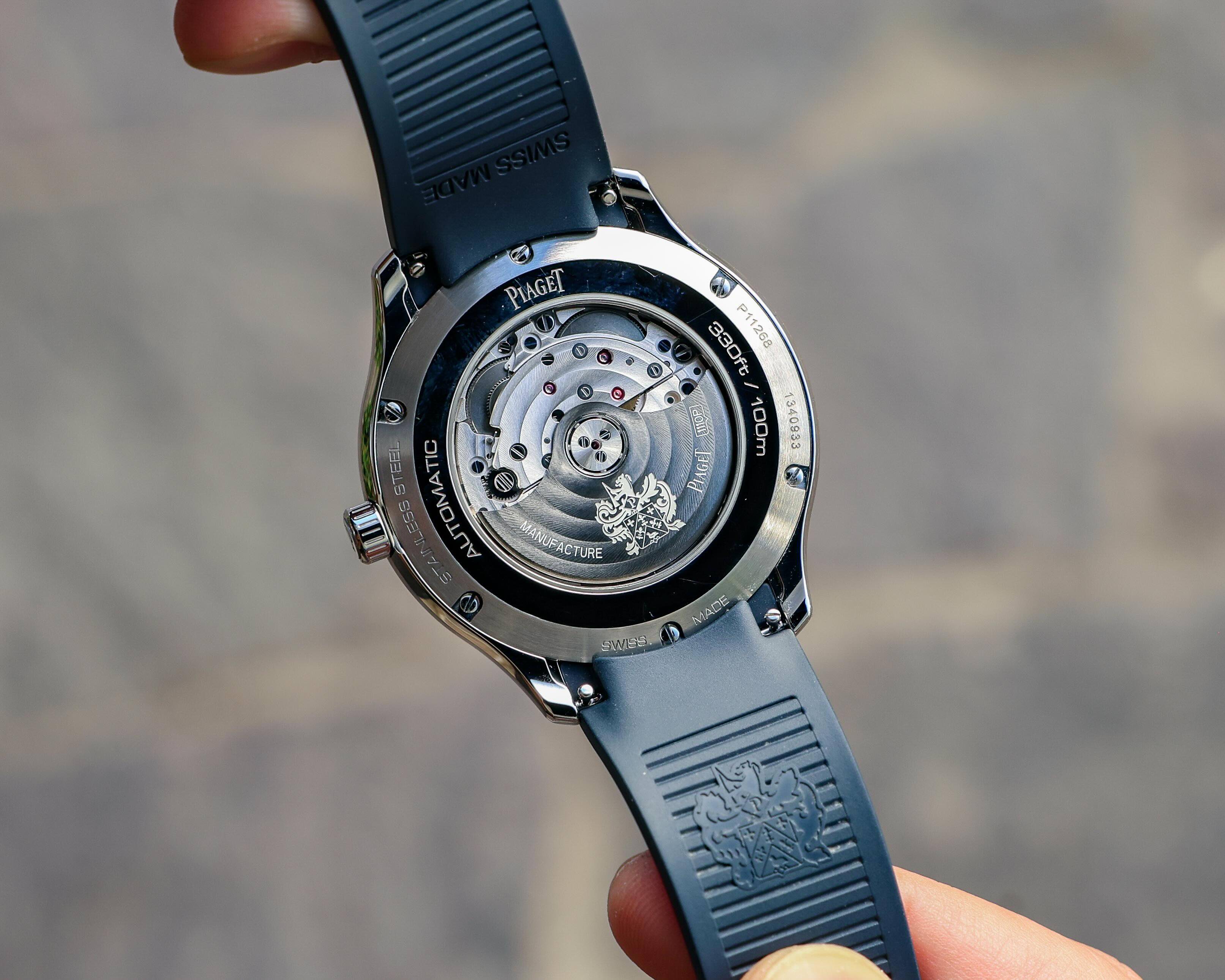
This is, however, where I begin to contend with the watch in my head. Allow me to put things into perspective. The Cal. 1110P was introduced in 2016 alongside the Polo S, whose design reinterpreted the classic collection and informed its successors. Additionally, the Cartier Cal. 1904-PS MC was introduced in 2010. So, as it stands, this year marks the tenth year of the Cal. 1110P and the 16th year of its base architecture.
Is that the end of the world? No. In-house movements and modified calibres from other brands have been around for much longer. But the Cal. 1110P is beginning to show its age for two reasons. One is specific to the movement itself: the crown ‘dead zone’ from the past remains an issue, though it seems to have been slightly corrected in this current model.
The second is somewhat out of Piaget’s hands, as Cartier has begun to slowly phase out the 1904 series of movements. Again, while it’s not a deal-breaker, the Cal. 1110P may be reaching the twilight of its tenure The brand should perhaps start planning for the next movement they wish to use, or perhaps even make it themselves.
Either way, the Cal. 1110P remains exactly as I said it was: serviceable. But with watch brands at all levels beginning to fire on all cylinders, only time will tell if ‘serviceable’ remains sufficient.
Final Thoughts
There’s merit in maintaining an exclusive, “if you know, you know” image within the watch world. But such a reputation only works, ironically enough, when people know enough to walk through your door. It’s a Catch-22: to build an exclusive image, you need to be recognisable, but then it’s not really exclusive, is it?
Piaget has attempted to bridge the gap several times over, to create this air of extravagant elegance, of inclusive exclusivity. But while the craftsmanship and level of detail are evident, it was a clear visual identity that the modern brand lacked. With the release of the Polo Signature Date, I do believe that they’ve finally found their stride.
Riding the wave of acclaim that the Polo ’79 and Andy Warhol lines has certainly helped Piaget find new inspiration in the Polo Signature Date. Leaning into the flamboyance of the old times while presenting high quality for the modern enthusiast, it feels like it’s what the brand envisioned for the collection: a recognisable, contemporary flagship timepiece, even if it came a little later than they might have liked.
But two things can be true at once. While I believe this is the best the modern Polo has ever been, there’s still plenty of work that can be done. Movement upgrades, slight touches to proportionality, and perhaps another look at the clasp will truly make this watch a force of nature.
Comparing the watch against its peers at this price point (AU$21,900 at the time of writing) it certainly lands itself in unenviable territory. Just below sits the Cartier Santos in Titanium at AU$18,100, while just above is the world-beating Jaeger-LeCoultre Master Control Chronomètre at AU$22,300.
Sandwiched between two powerhouses, Piaget may not have been considered at all in the past. But today, sporting its new design, overall comfort, and capable movement, it stands out as a perfectly viable and unique option in the sports watch category.

In 2024, I ended my review by saying that the Piaget Polo Date is an “awesome piece that doesn’t quite know its place yet, but when it does, it’s bound to put the sports watch market on notice…” And forgive me if I’ve tooted my own horn far too many times in this review, but I believe this version of the collection might just be that piece.
As I predicted, the Piaget Polo Signature Date is exactly what the brand wanted, and has finally put the luxury sports watch scene on notice. I can’t wait to see what happens next!
Reference & Specifications
| Feature | Specification |
|---|---|
| Reference | G0A51031 |
| Dimensions | 42mm case diameter x 47mm lug-to-lug x 9.4mm thickness |
| Case | Stainless steel |
| Dial | Horizontally brushed blue with gadroon motif |
| Crystal | Sapphire |
| Caseback | Open, sapphire |
| Movement | Automatic Cal. 1110P with date complication |
| Power Reserve | 50h |
| Beat Rate | 4Hz / 28,800VpH |
| Water Resistance | 100m / 10bar |
| Strap/Bracelet | Blue rubber strap with steel butterfly clasp & pin buckle |
Australian Retail Price: $21,900
Availability: Available now, at Piaget boutiques, authorised dealers, or online at Piaget.com
Image Gallery