

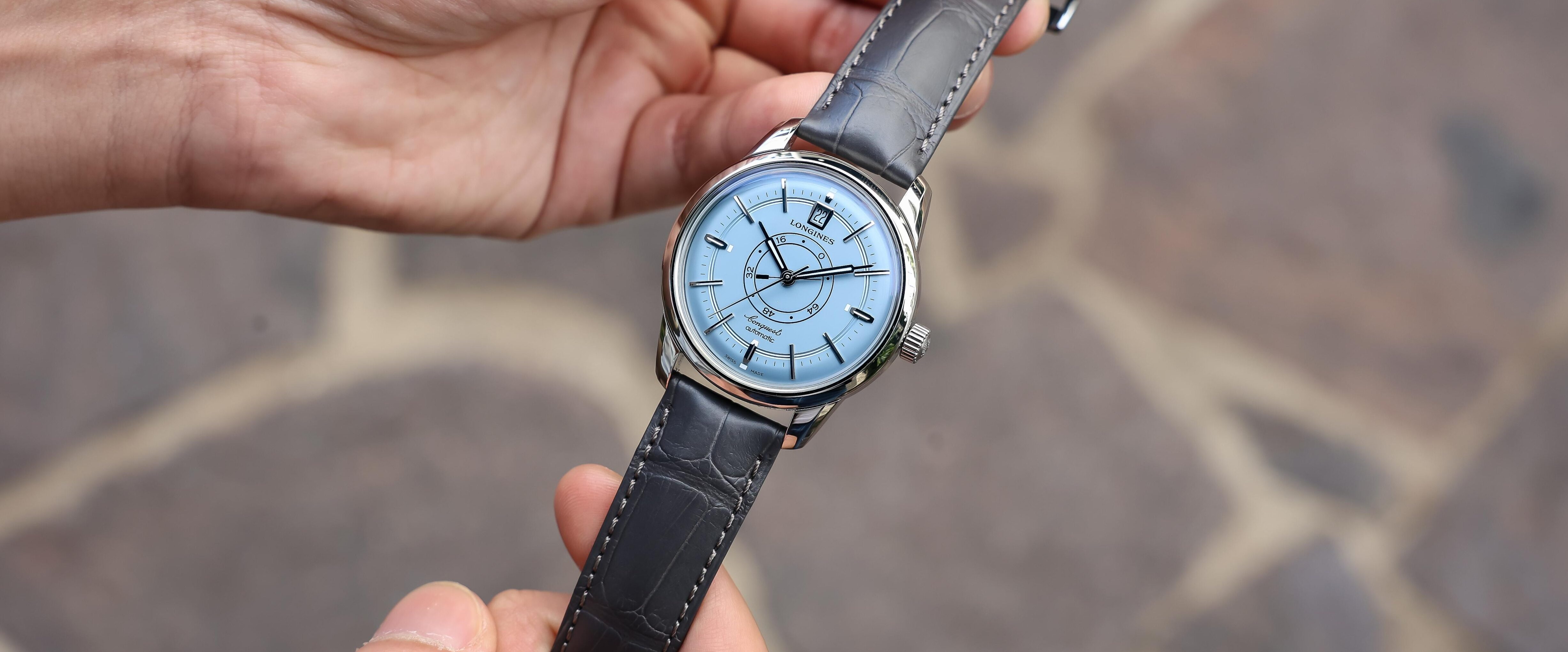
Longines have created a new spin on a heritage design, but have they done enough to give the unique watch a modern kick? Let’s find out!
What We Love:
- A modern but non-generic colour & finish
- Universal, easy-wearing dimensions
- Unique heritage-inspired complication
What We Don’t:
- Questionable lume
- Movement finishing somewhat lacking
- How new can an ‘old’ watch be?
Overall Rating: 8.5/10
- Value for Money: 8.5/10
- Wearability: 8.5/10
- Design: 8.5/10
- Build Quality: 8.5/10
Heritage revivals have become a huge part of the modern watch industry. Everywhere you look, there’s another release that’s either an exact copy of, or inspired by, a design from a bygone era. While these watches have returned to varying degrees of success, they typically all share one common thread: they put their fingers on the pulse of the watch community to see which past designs have proved wildly popular, then remaster them accordingly.
Longines, however, has started to behave a little differently. While the brand has found plenty of success bringing back watches from its vast archive (case in point, the Ultra-Chron) they use them as a celebration of its brand identity, inviting the watch community to celebrate alongside it. That doesn’t mean chasing what’s popular, but rather embracing what makes Longines so distinctive in a sea of sameness.
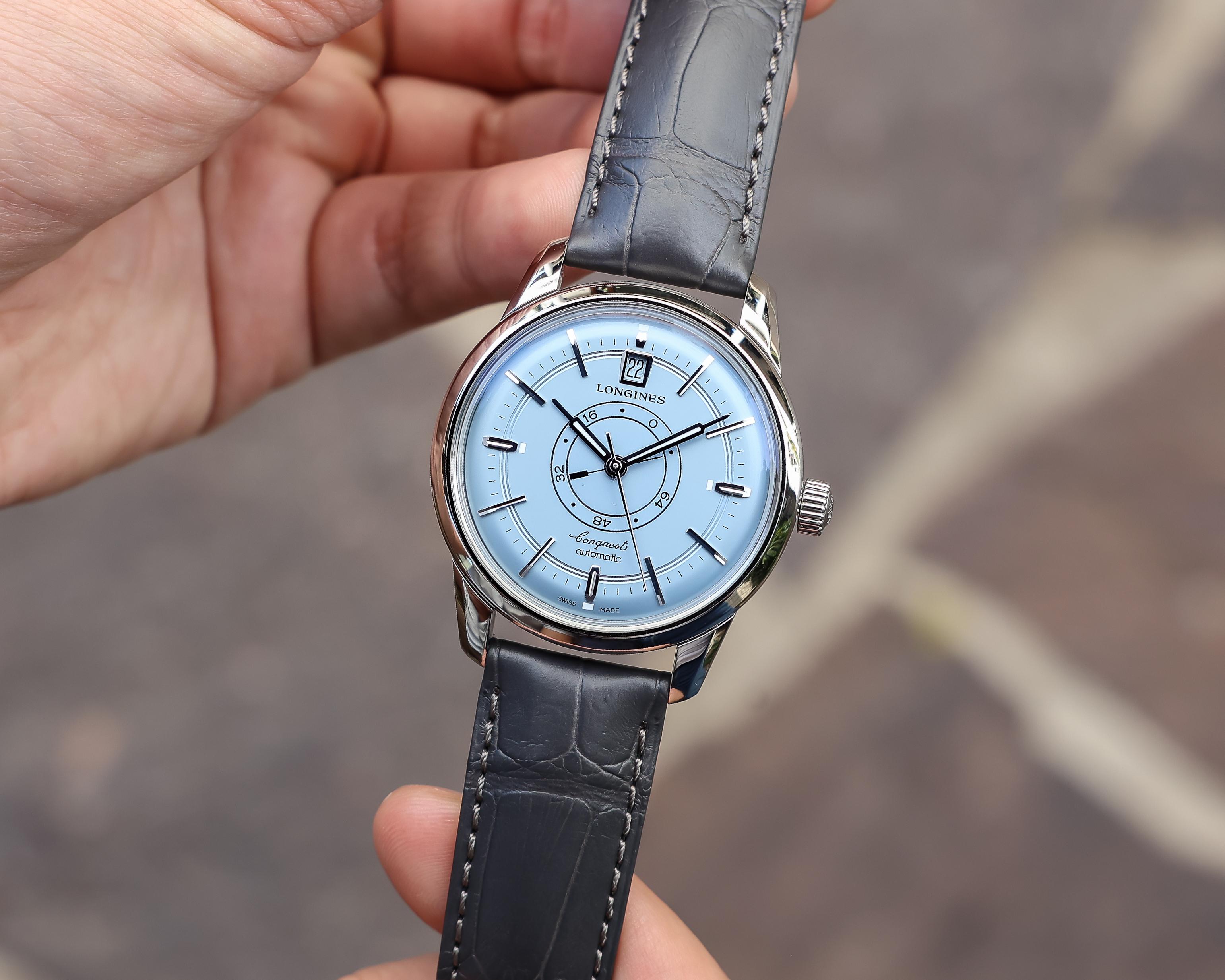
Perhaps the best example of this is the Longines Conquest Heritage Central Power Reserve. Inspired by a design from 1959, the watch was brought back into the fold in 2024 with an unmistakably retro layout and equally vintage colourways.
For 2026, though, the brand moved in a new direction with a new, contemporary dial tone. But has that been enough to bring 21st-century eyes back to such a quirky golden-age design? That’s exactly what I wanted to investigate when I managed to take this watch out for a spin myself.
First Impressions
The year was 1959. Fidel Castro had taken power in Cuba, the Barbie doll went on sale in the United States, Tibetans rose up against Chinese rule, and 3 February became known as the day the music died. It was a year of massive change, and the same could be said for the watch industry, especially at Longines, which released the Ref. 9028 that same year. A highly unconventional watch defined by its equally unusual complication, it became a distinctive product of the mid-century era of space-age minimalism.
Some 65 years later, it finally returned to the catalogue, much to the delight of many enthusiasts. I, however, was a little apprehensive at the time. While I love a unique watch as much as anyone else, the initial release didn’t quite speak to me. The old-world cues felt a little too antiquated for my taste, conjuring images of a poorly disguised Steve Buscemi in 30 Rock brazenly asking, “How do you do, fellow kids?” I thought that would be the end of it, but Longines’ latest addition to the catalogue piqued my interest.
The brand had already changed one of my opinions – regarding ice blue dials – after I spent time with the HydroConquest 39mm. Thus I wondered if it could do the same with my opinion on watches with heavily emphasised heritage lines like the Conquest Heritage Central Power Reserve. Thankfully, Longines was gracious enough to let me take this watch out for a while, giving me the chance to put that theory to the test.
The Design
The Longines Conquest Heritage Central Power Reserve is a unique watch that almost certainly doesn’t exist anywhere else. It’s almost entirely a one-to-one recreation of the original, albeit with a few changes to bring it in line with modern standards. Given its distinctive look, I’ll walk you through the details and those changes as they come up.
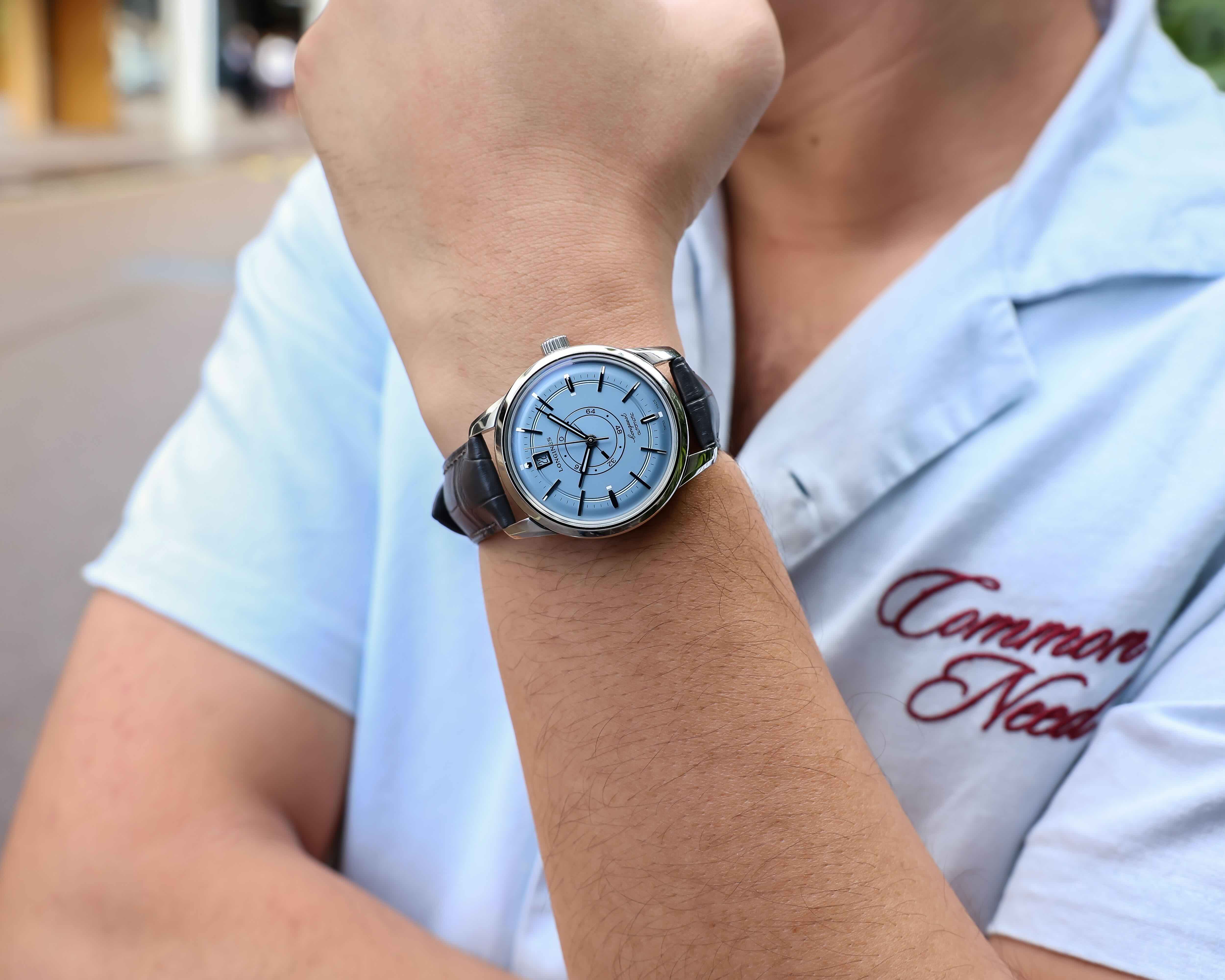
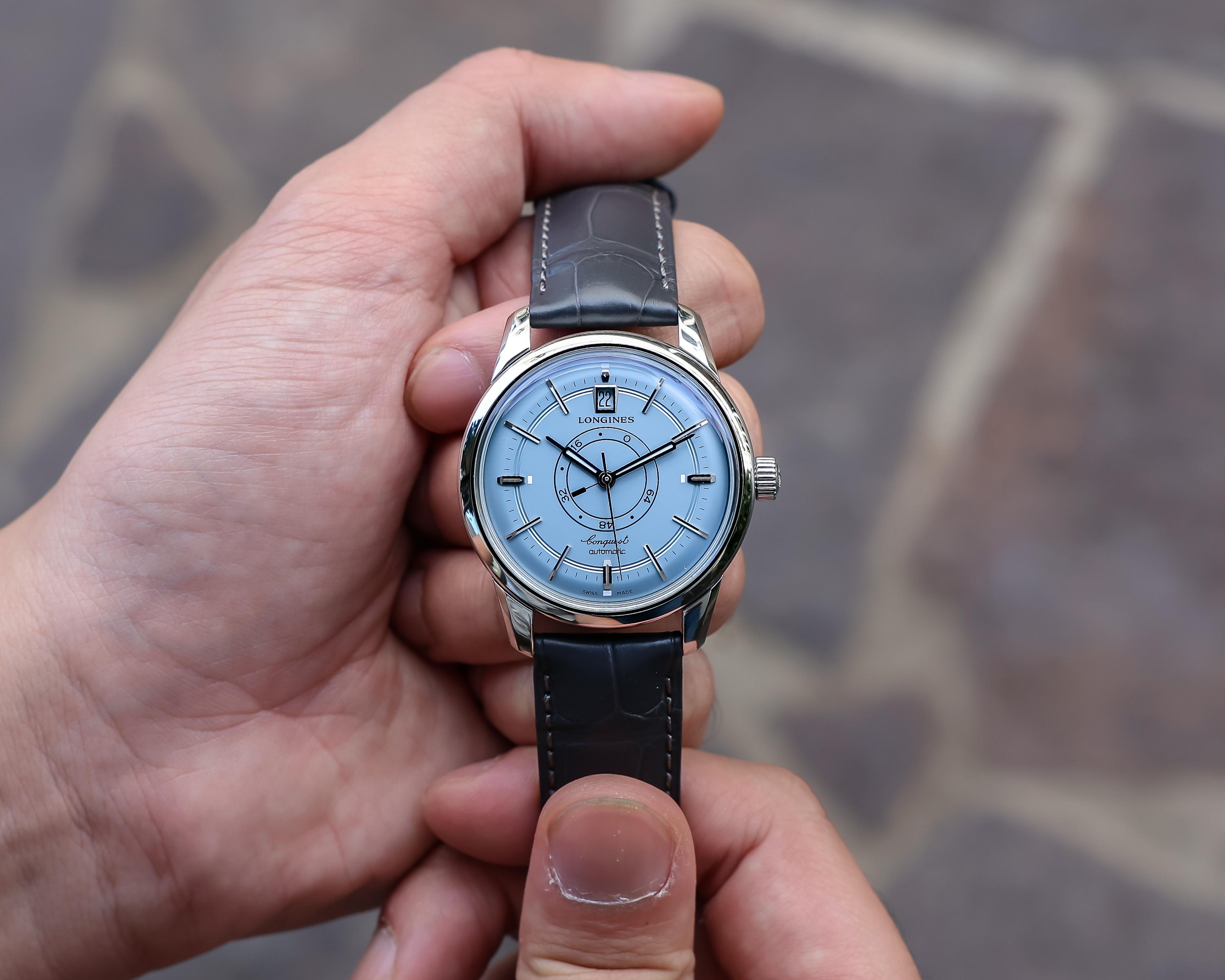
Naturally, we begin with the dial, which immediately makes its presence known with a light blue opaline finish. On the surface, it seems like another attempt by Longines to jump on the ice-blue trend, as it did with the aforementioned HydroConquest 39mm. However, I personally wouldn’t lump this dial into the same category.
Unlike the sunray-brushed HydroConquest, the Conquest Heritage Central Power Reserve features an opaline finish. The muted blue diffuses light rather than reflecting and scattering it like a brushed dial would. It’s a clean, understated, vintage-inspired aesthetic that leans into the ice-blue trend without feeling overtly modern. By the same token, it highlights the dial layout even more, framing it as a fresh interpretation of a classic watch rather than a relic of the past.
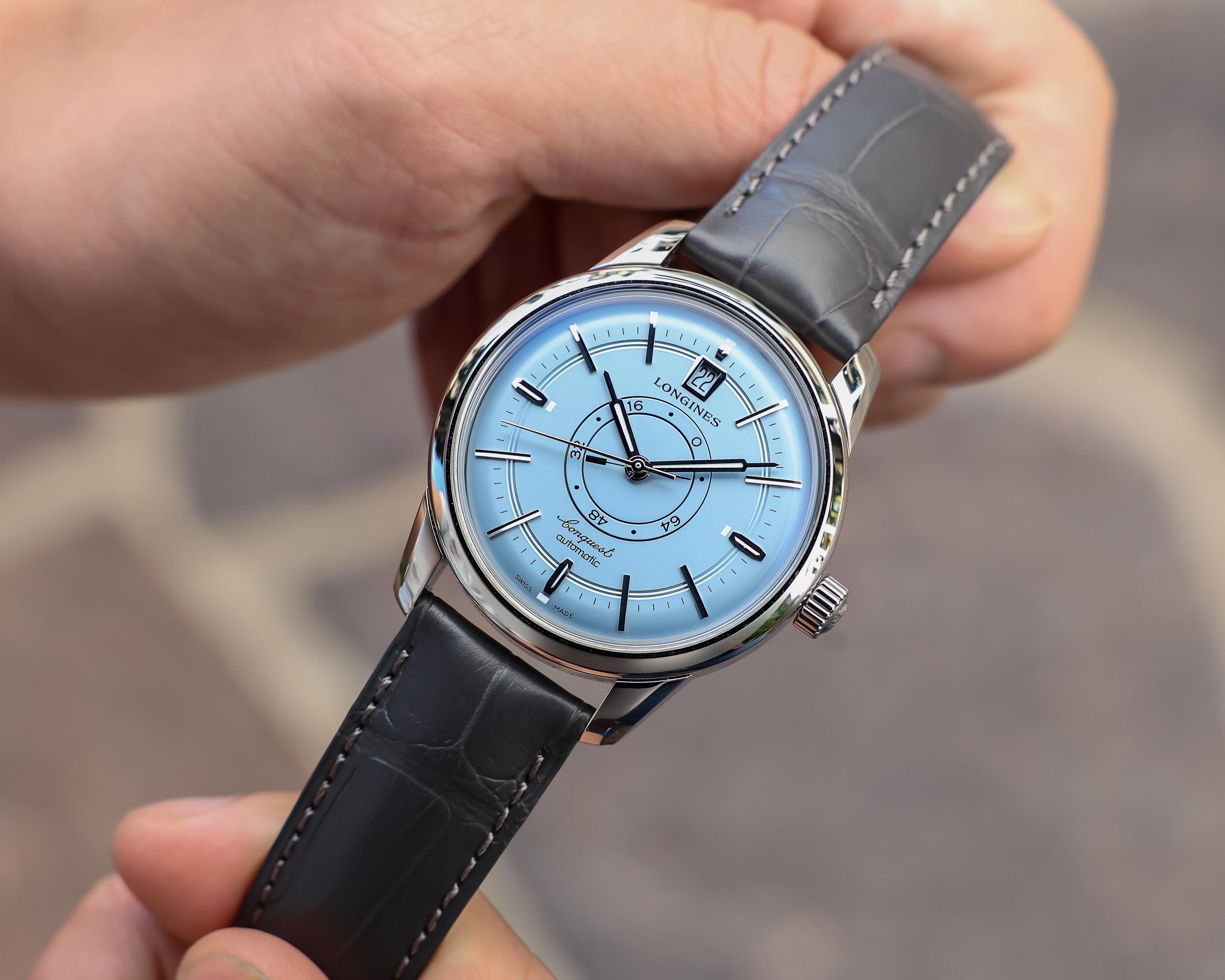
Speaking of the dial, the watch presents itself on a domed base in line with other Conquest Heritage designs. Atop the dial, rhodium-plated syringe hands tell the hours and minutes, surrounded by faceted indexes and a single groove that frames the hands and complications. It recalls the layout I found on the Vacheron Constantin 34.5mm I reviewed, though with a little more depth and less rhodium within the groove itself.
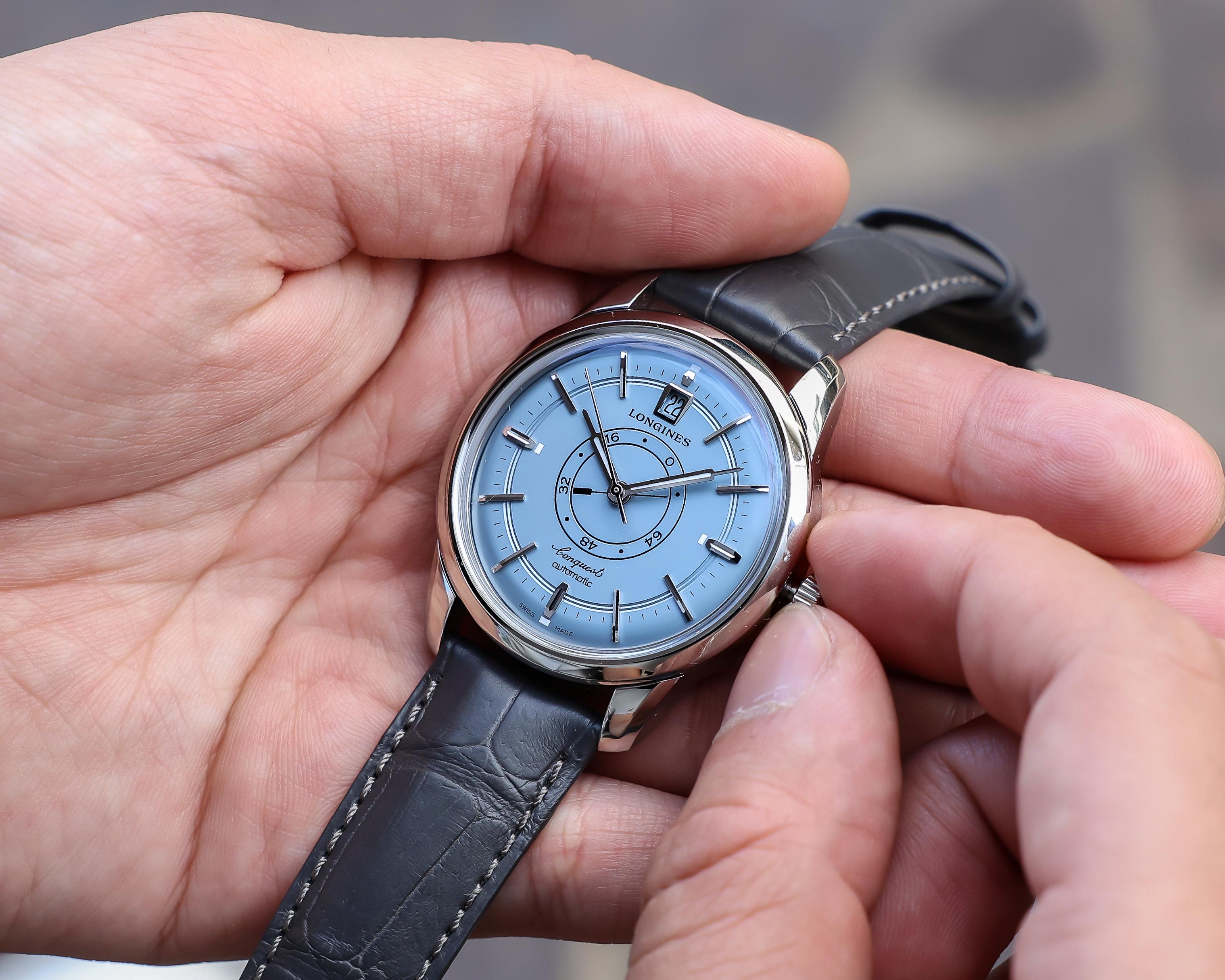
The star of the show, the central power reserve, sits right in the middle. Made up of two rotating discs, one containing the numbered power reserve scale and the other the indicator, it contrasts against the lighter tones of the dial in black. I’ll get to exactly how it works later.
The other unusual feature on the dial is the 12 o’clock date window. It’s an uncommon position for a date display; I only remember seeing it once before on a TAG Heuer Carrera Glassbox. But instead of a standard rectangular frame, the date sits within its own trapezoidal window, drawing the eye to its prominent position at 12 o’clock.
For the most part, I’m loving the vintage flavour of the Longines Conquest Heritage Central Power Reserve. However, the lume on this design – as with the original – leaves a lot to be desired. Visible only on the hands and in small plots at the quarter-hour indexes, it offers a meagre amount of luminescence for low-light timekeeping.
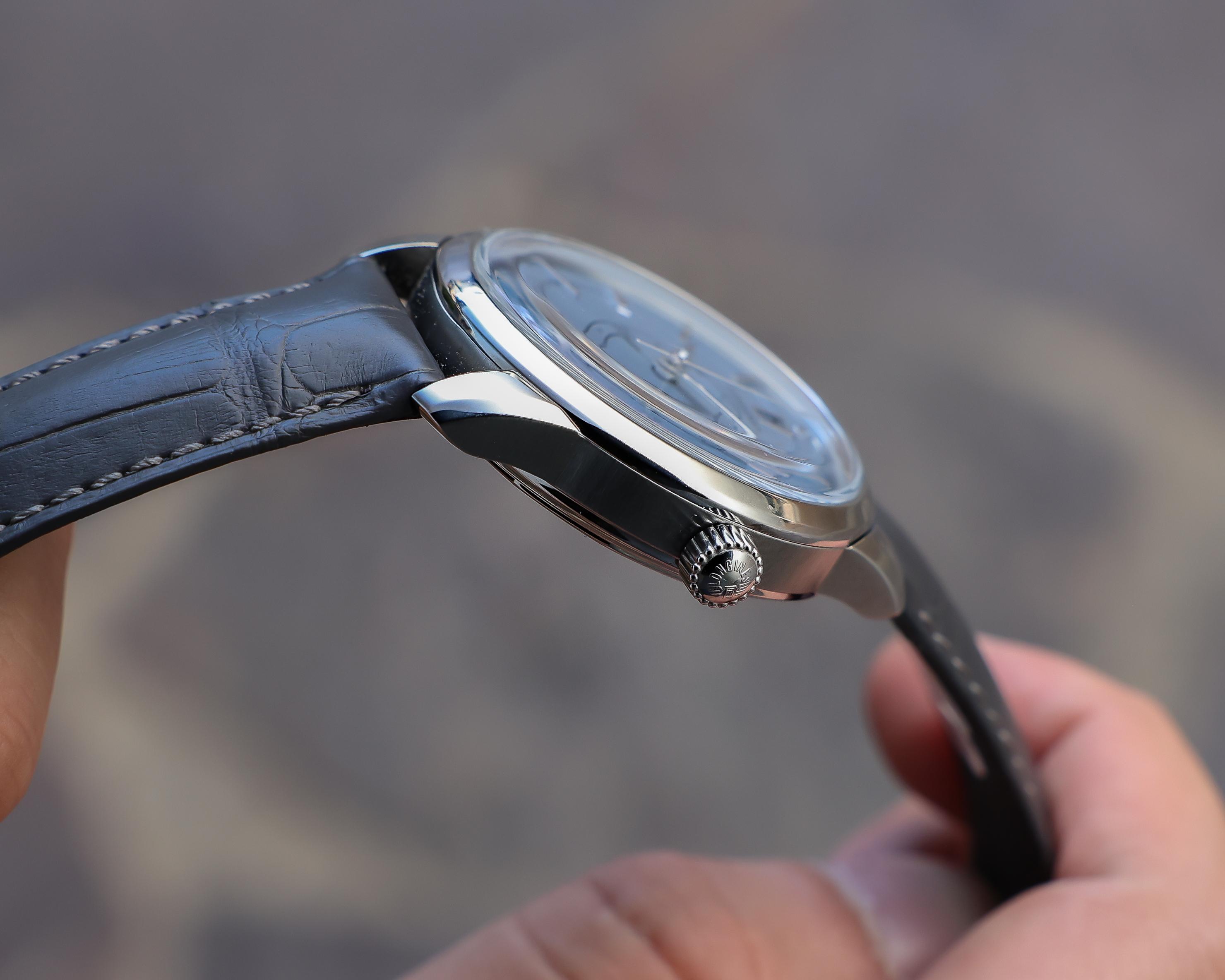
Now, I’m aware the watch is a dress-oriented piece and not a diver. But Longines could have taken the opportunity to slightly modernise the design with additional lume without compromising the watch’s DNA. Otherwise, it could have omitted it altogether. While I’m never one to object to the use of lume, it does irk me when it feels more like an afterthought than a meaningful addition to the design.
Moving outwards, the stainless steel case delights the eye with a combination of old-world styling and modern, dressy finishing. The box sapphire crystal rises slightly above the slim, polished bezel, distorting the dial at extreme angles but balanced by its domed profile. Rather than the more traditional horizontal brushing, the mid-case is vertically brushed, with a polished caseback bookending the silhouette. At three o’clock, a fluted and signed crown can be found, which feel proportionate with the watch size and relatively easy to operate.
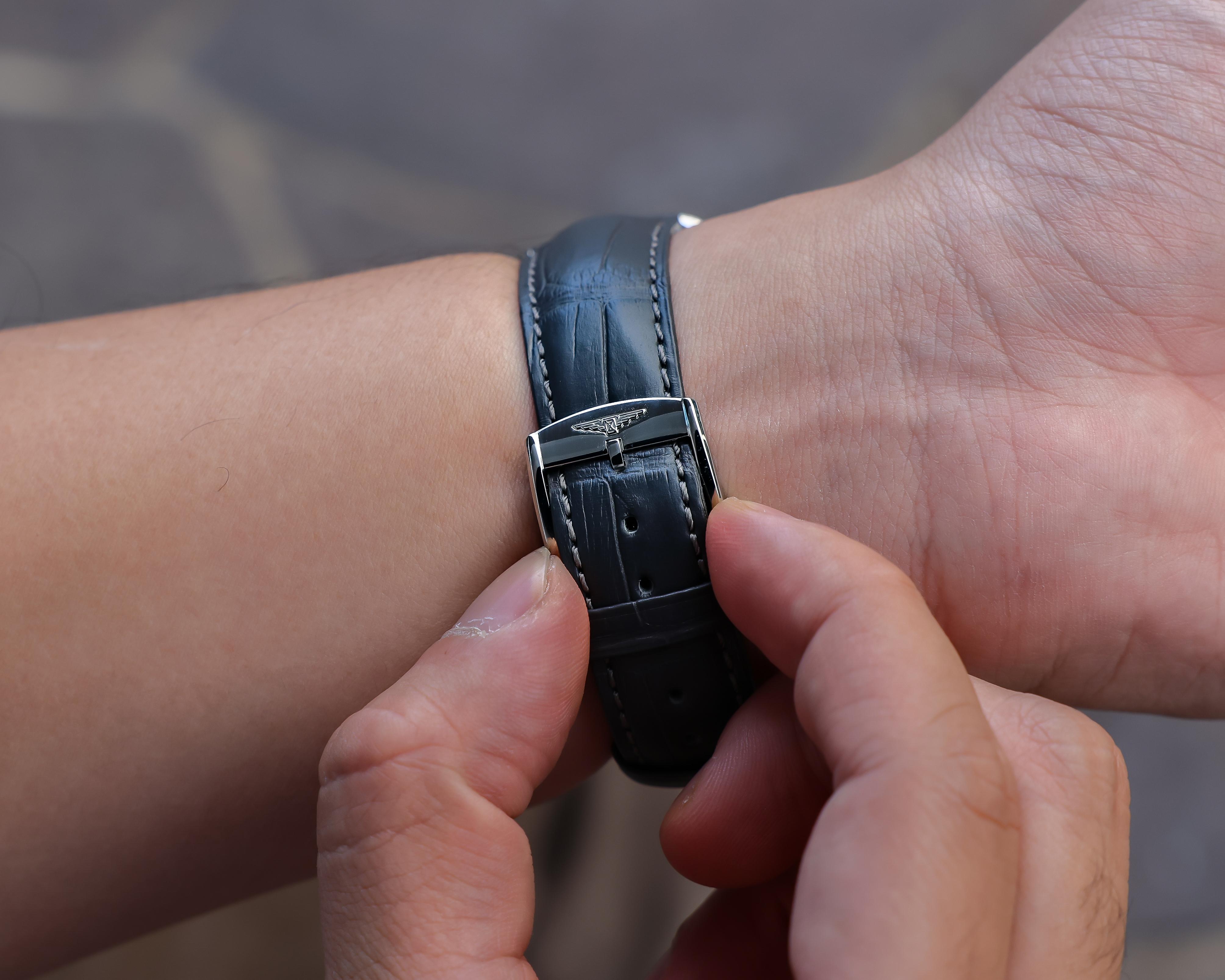
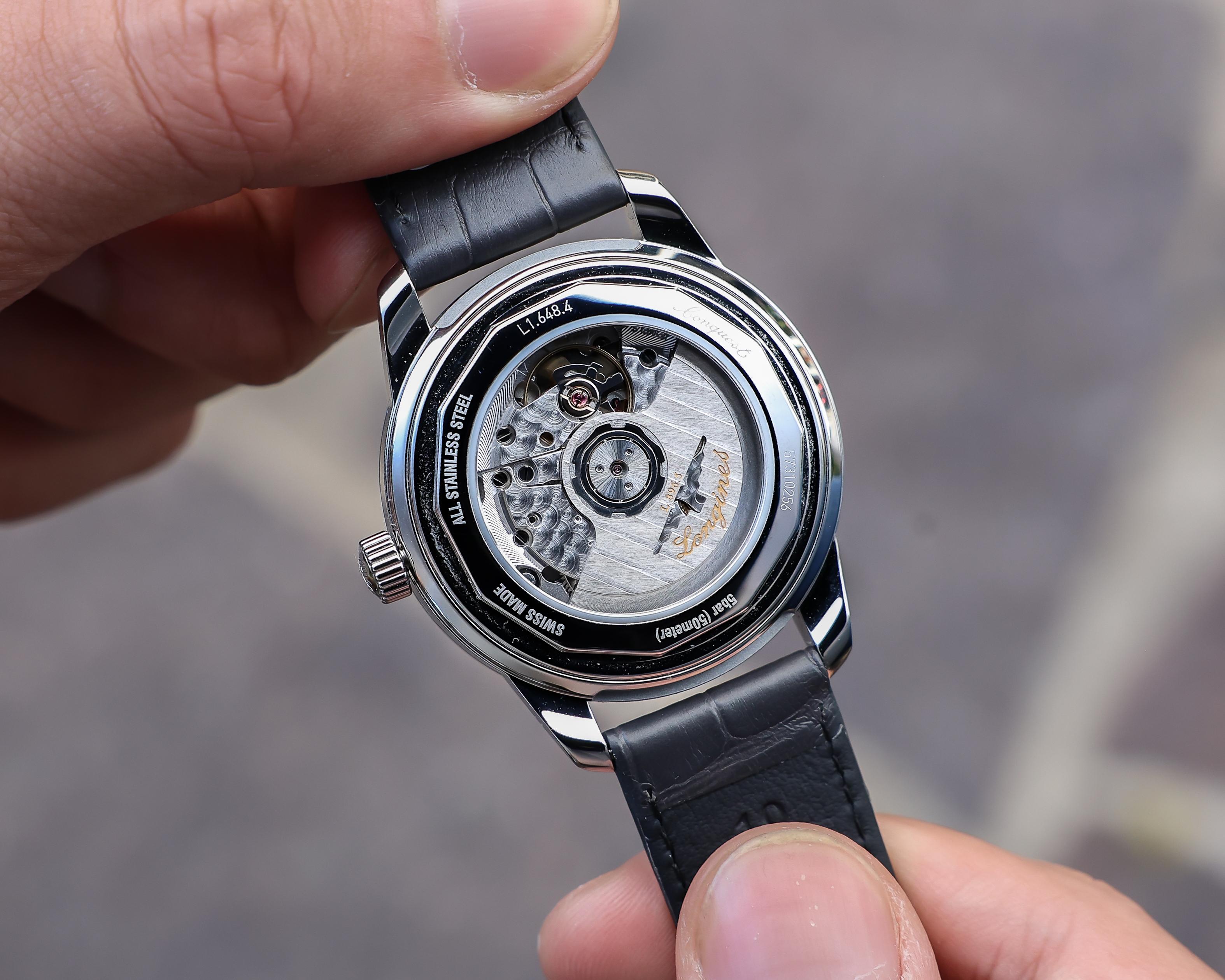
The lugs slope elegantly downwards into a grey alligator leather strap, which tapers into a steel pin buckle. Finally, turning the watch over reveals the exhibition caseback, the movement, and the familiar serial engravings. Interestingly, the caseback combines rounded surfaces with a dodecagonal, or twelve-sided, border framing the movement.
Overall, the well-finished case provides the Longines Conquest Heritage Central Power Reserve with the perfect frame for its dial. Though only a time-and-date watch, it showcases the brand’s commitment to heritage-inspired design with far more visual intrigue than first meets the eye. While I disagree with some elements, particularly the weak lume, there was very little to stop me appreciating it every time I glanced down at my wrist.
How It Wears
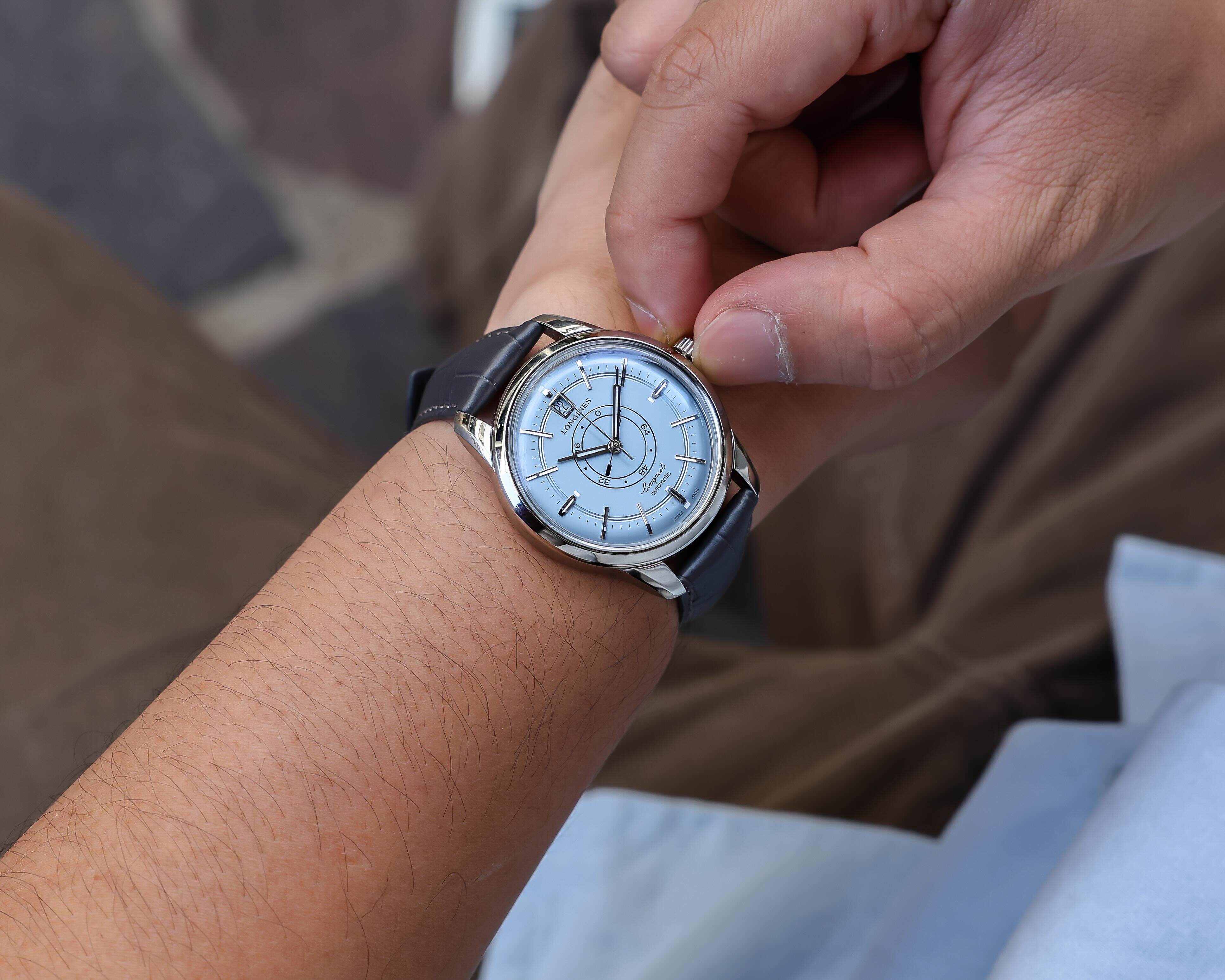
Though the visual appeal of the Longines Conquest Heritage Central Power Reserve remains faithful to the original, the wearing experience has changed drastically over time. As I said regarding the lume, there’s only so much heritage that should be carried into the modern day. For the most part, Longines understands that, reframing this re-edition in a universally wearable case.
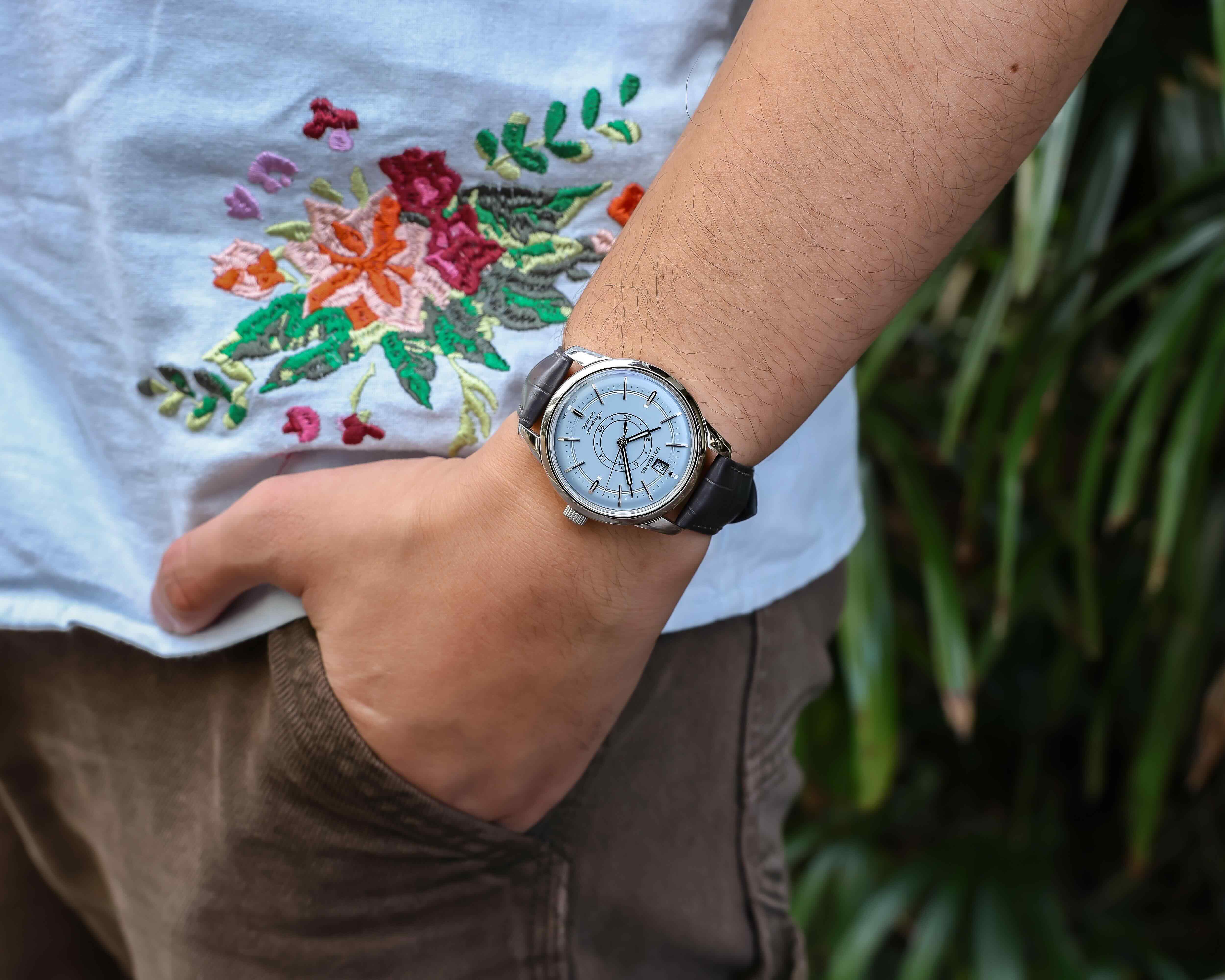
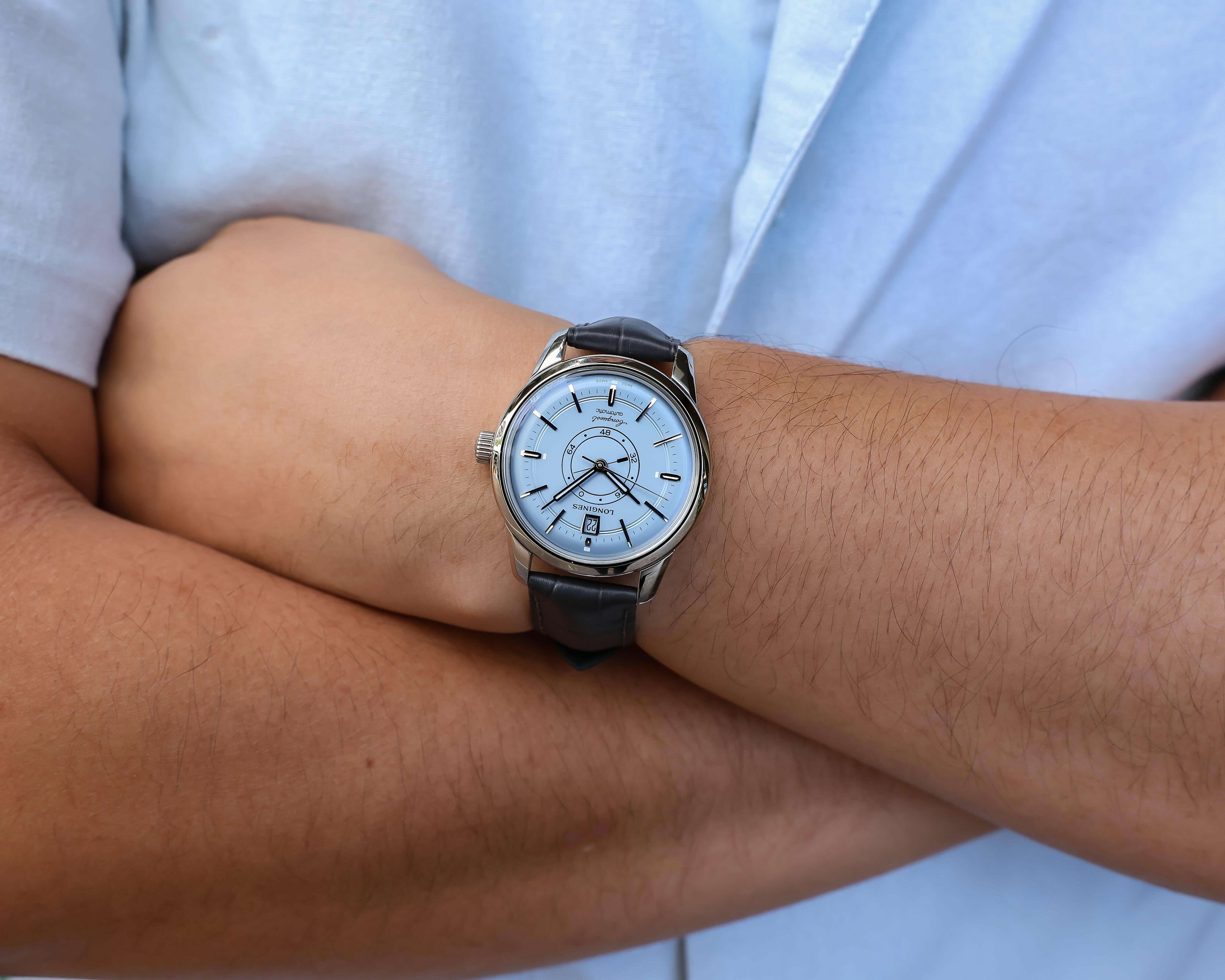
At 38mm in case diameter, 45.6mm lug-to-lug, and 12.3mm thick, the watch sizes up from the original’s 35mm frame, and it’s all the better for it. Given the slim indexes and hands, this isn’t a watch you’ll read at a glance.
However, the 38mm case gives the dial the real estate it needs to maintain excellent legibility. Rhodium-plated hands and indexes against a lightly coloured dial might not seem like the ideal recipe for readability either, sure. But I never encountered any major issues beyond the slight distortion caused by the box sapphire crystal.
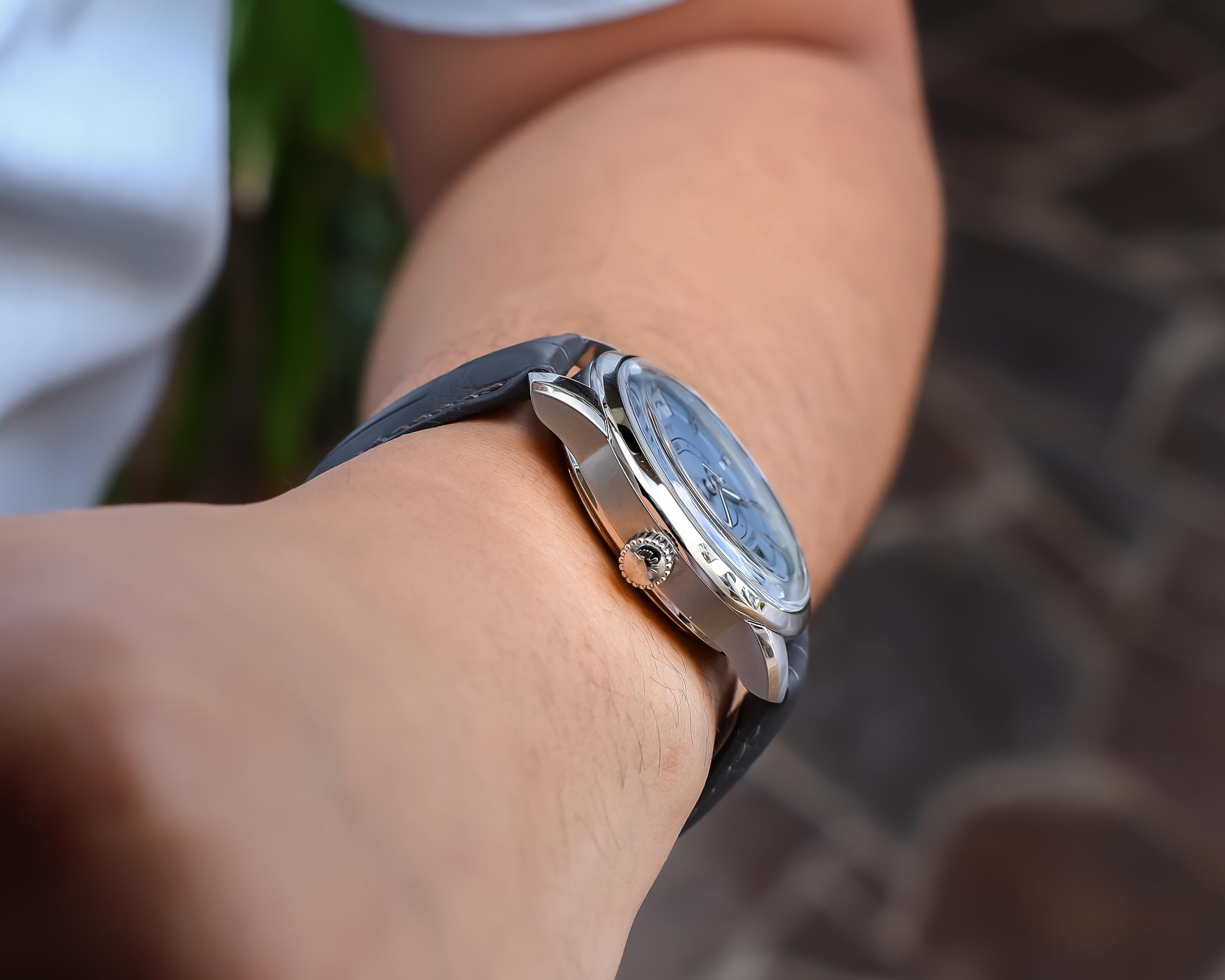
Hitting the universal sweet spot for wearability, I had no major gripes with it on the wrist. The alligator leather strap felt comfortable and pliable, although more time with it would no doubt enhance the experience even further. It’s also available on a steel bracelet with a micro-adjustable clasp, but I can’t comment on that until I’ve seen it in the metal.
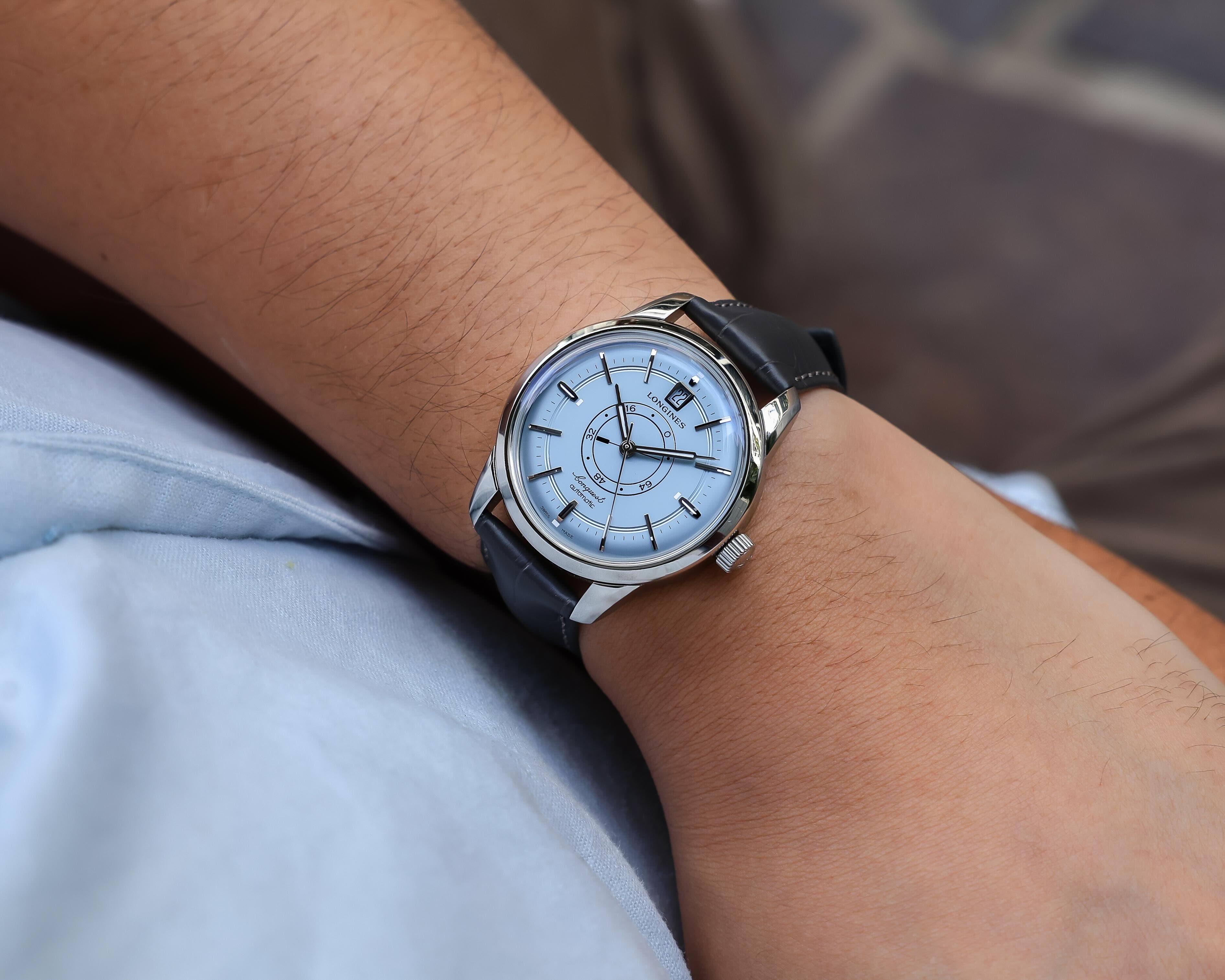
The lugs, while on the shorter side, never felt stubby, instead allowing the watch to sit low and securely on the wrist. The only notable point of interest was the separation between the case and the strap, with a distinctive gap visible between the two.
Personally, it didn’t bother me, but online opinions seem fairly divided on the matter. If Longines had moved the strap slightly closer to the case and/or fitted it with curved spring bars, I think it would have addressed any potential concerns.
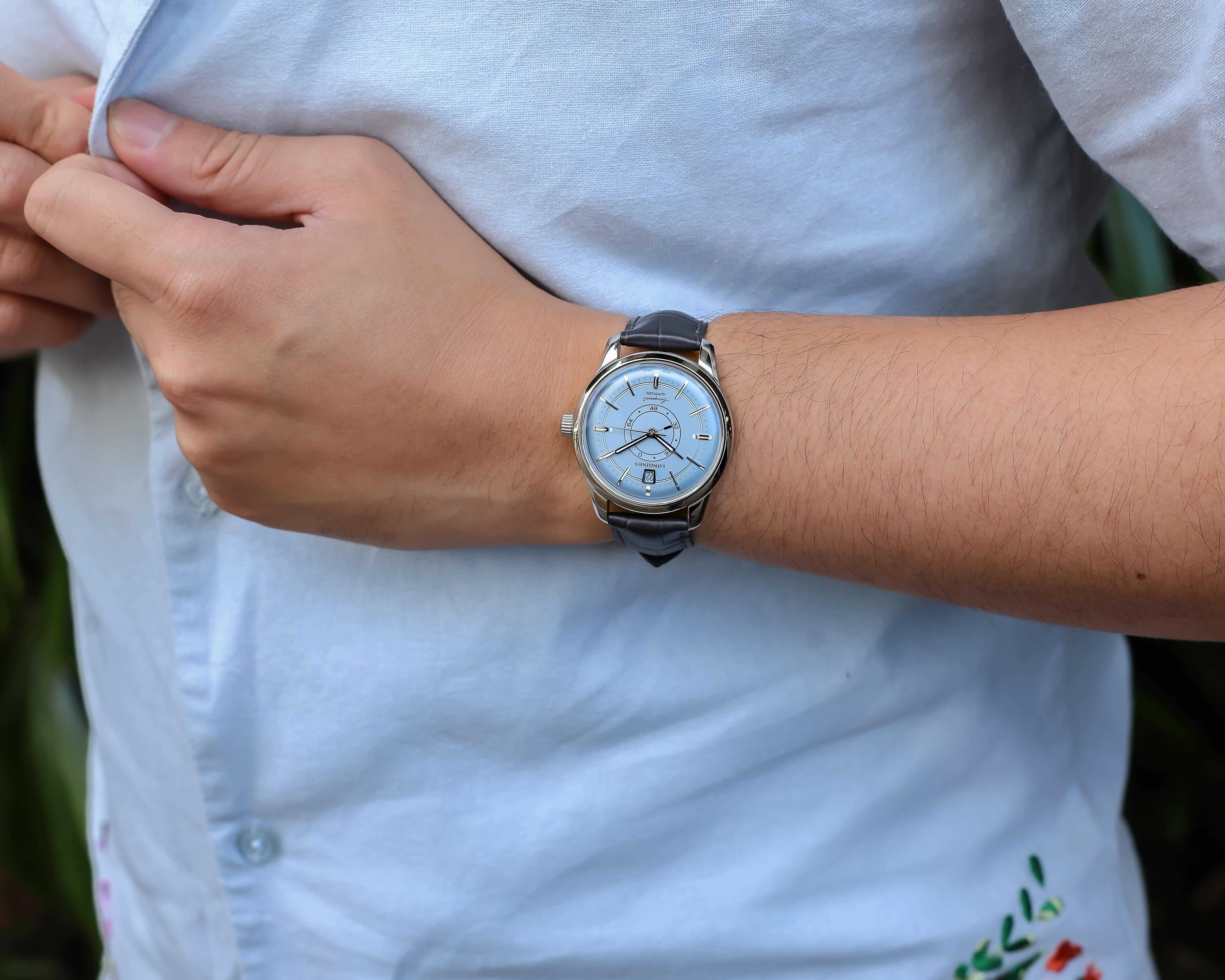
One omission that puzzled me slightly was the lack of interchangeable straps. At just 50 metres of water resistance, it’s hardly a sporty, do-everything watch. Even so, I’d like to see quick-release straps become a more consistent feature throughout the Longines catalogue.
At 19mm between the lugs, there also won’t be nearly as many aftermarket strap options as there are for the more conventional 20mm width. Still, on my 6.3-inch (16.3cm) wrist, the Conquest Heritage Central Power Reserve hit every mark it was supposed to, with opportunities for refinement rather than any major drawbacks.
The Movement
But of course, most watches are only as good as their movements. Thankfully, Longines is one of the most chronologically consistent brands on the planet, so few questions need to be asked about its technical excellence. Visible through the open caseback is the brand’s automatic Calibre L896.5, developed in collaboration with Swatch Group manufacturer ETA. Beating at the brand’s signature 3.5Hz (25,200VpH) frequency and offering a 72-hour power reserve, it controls both the date and power reserve complications.
So, how does it work? Well, as promised, let me explain. Within the dial are two discs that sit flush against the ice-blue surface. The outer disc rotates as you wind the watch, numerically indicating the remaining power reserve in multiples of 16, while multiples of 8 are represented by the adjacent dots. The remaining power can then be checked by looking at the second disc, which features a black stick indicator that rotates accordingly to catch up with the “0” denoting a fully depleted reserve.
Both rotating elements create a slow but noticeable dance across the dial, where neither the power reserve numerals nor the indicator ever occupy the same position at the same time. Never in my life have I seen a power reserve indication be so harmoniously connected to, let alone add visual intrigue to, the design of a watch. Yet Longines manages to pull it off here in spectacular fashion. Combined with the light blue colouration, it feels like an incredibly modern timepiece rather than simply a recoloured archival reference.
That being said, the movement itself isn’t quite as jaw-dropping as its function. Don’t get me wrong, ETA and Longines have still given it a crisp, industrial finish. Perlage is applied across the base movement bridges, while Côtes de Genève (Geneva striping) is evident on the automatic rotor. Still, it feels somewhat spartan for the price point, although nothing that a blued screw or two couldn’t improve. In any case, the beauty of this movement lies more in its functionality than its finishing, and it succeeds brilliantly in that regard.
Final Thoughts
When deciding what kind of watch you want to buy, you can almost never count Longines out of the race. As one of the most consistent brands in the industry, it has managed to create a reputation as one of the champions of the middle-luxury market.
Collections like the Master and HydroConquest are typically where the mainstream crowd gravitates. However, the Conquest Heritage line presents itself as a refreshing alternative, offering the same level of quality as the brand’s standard roster.
In that regard, the Conquest Heritage Central Power Reserve does well to distinguish itself from the crowd. Though the design carries both the strengths and shortcomings of its mid-century inspiration, its light blue rendition feels more like a breath of fresh air than an attempt to simply dust off the archives. Whether you showed it to a veteran collector, a budding enthusiast, or one of my disinterested watch-averse friends, it invites a double take from anyone who sees it in action.
Beyond design, though, price is certainly worth considering. At AU$6,575, it’s positioned towards the upper end of the Longines catalogue, largely thanks to its unique complication. One could be persuaded to move slightly further up the price range; Perhaps towards Grand Seiko’s AU$8,000 SBGW291 with its clean, timeless lines. Alternatively, they could remain within the Longines family and reach for another, such as the Heritage Flagship Moonphase on leather at AU$5,300.
Yet the Conquest Heritage Central Power Reserve still holds a rare ace up its sleeve: nothing else looks or behaves quite like it. Finding an exact replacement, with a central power reserve and a 12 o’clock date display, is perhaps impossible. How many watches can genuinely say that and actually mean it?
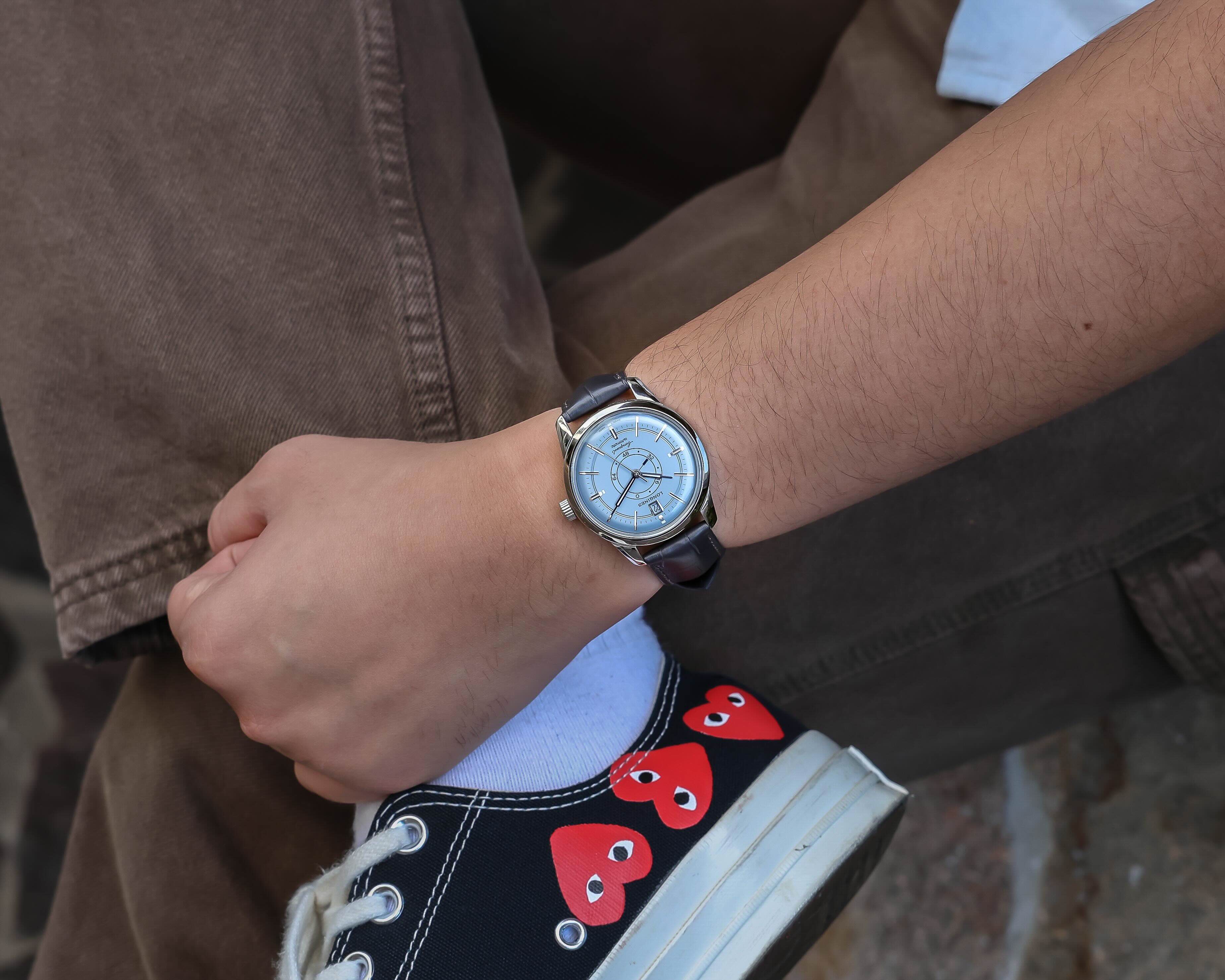
Prioritising character over convention, the Conquest Heritage Central Power Reserve is Longines’ most delightfully eccentric watch yet. After spending time with it, I realise that perhaps old can become new, and that even a design inspired by a bygone era can still evoke so much joy in the modern day. I ended my time with the watch feeling not like I wore a historic revival, but more like I rediscovered the brand’s golden-age bohemian attitude that gave way to this watch’s conception.
Reference & Specifications
| Feature | Specification |
|---|---|
| Reference | L1.648.4.92.2 |
| Dimensions | 38mm case diameter x 45.6mm lug-to-lug x 12.3mm thickness |
| Case | Stainless steel |
| Dial | Opaline light blue |
| Crystal | Sapphire |
| Caseback | Open, sapphire |
| Movement | Automatic Cal. L896.5 with power reserve & date indicator complications |
| Power Reserve | 72h |
| Beat Rate | 3.5Hz / 25,200VpH |
| Water Resistance | 50m / 5bar |
| Strap/Bracelet | Grey alligator leather strap with steel pin buckle |
Australian Retail Price: $6,575
Availability: Available now, at Longines boutiques, authorised dealers, or online at Longines.com
Image Gallery