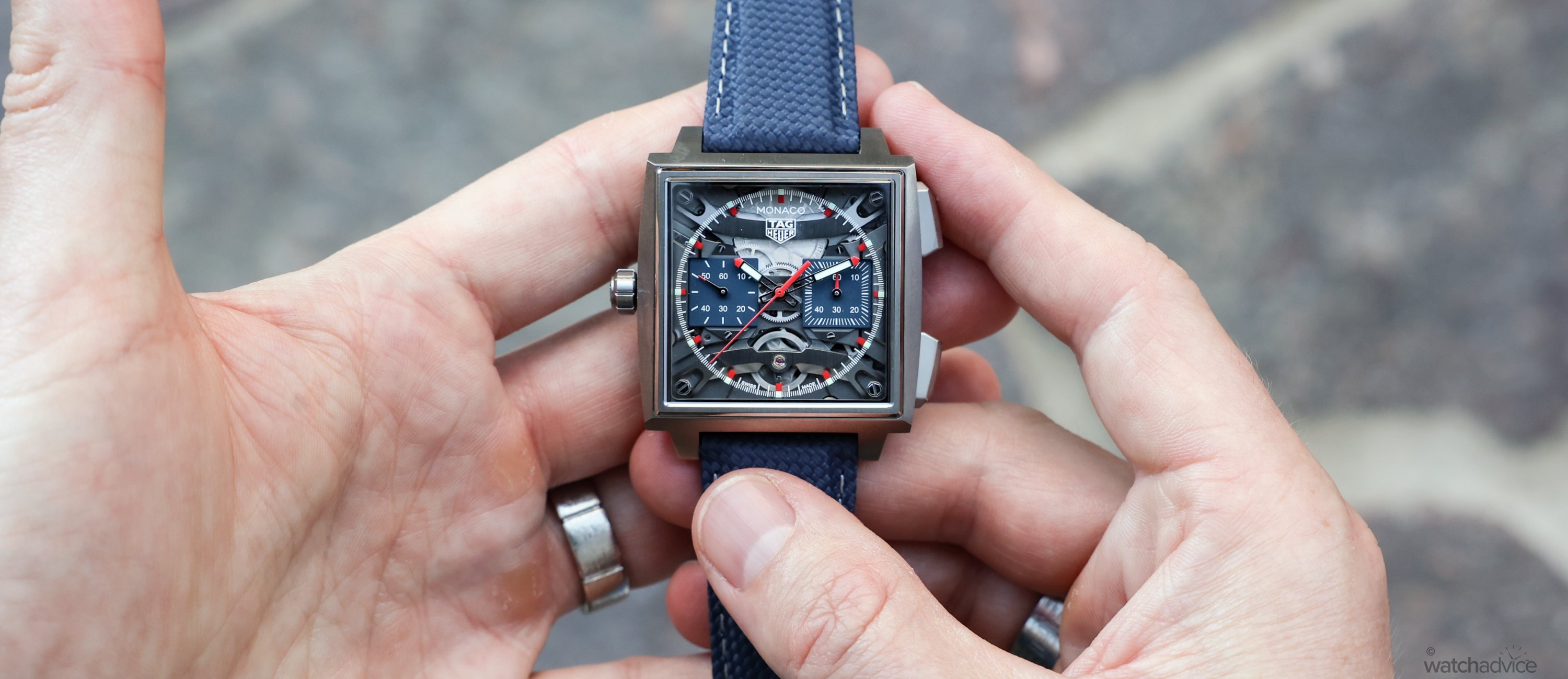

TAG Heuer’s Monaco Evergraph may just be the best Monaco yet. A redesigned case, a new look dial, and of course, the new TH80 movement. We took it for a spin to see how it stacks up.
What We Love:
- The new innovative TH80 movement
- Refined case makes for a better wearing experience
- Overall look is sporty and modern
What We Don’t:
- The new clasp doesn’t allow for an exact fit on the wrist
- The watch does wear larger on the wrist visually, so check the sizing if you have smaller wrists
- The lack of versatility due to the Monaco design. it is a sports watch through and through
Overall Rating: 9/10
- Value for Money: 9/10
- Wearability: 8.5/10
- Design: 9.5/10
- Build Quality: 9/10
When TAG Heuer unveiled the Monaco Evergraph at Watches & Wonders 2026, it immediately became one of the show’s most talked-about releases. Why? Because it housed a completely new chronograph movement developed over several years by TAG Heuer Lab in collaboration with Vaucher Manufacture Fleurier.
The Monaco itself is no stranger to innovation. Since its debut in 1969 as one of the world’s first automatic chronographs and one of the first waterproof square-cased watches, it has always had a special place in TAG Heuer’s collection. The design has never been universally loved, but that’s arguably part of its appeal. More than half a century later, it remains one of the most recognisable watch designs in the industry.

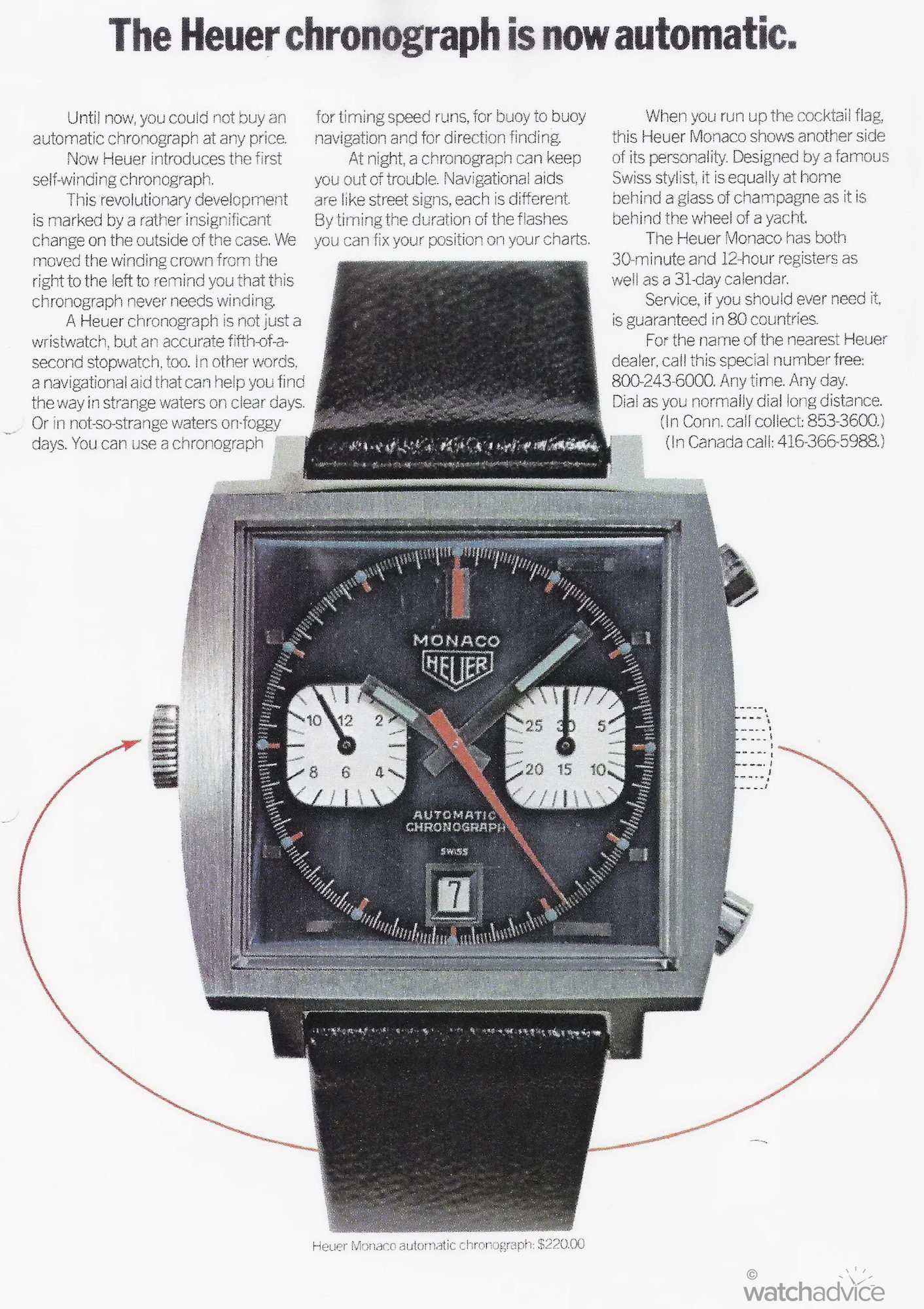
The Evergraph takes that foundation and moves it in a new direction. It introduces a movement built around the compliant component, rather than traditional chronograph levers and springs, and combines that with a high-frequency 5Hz regulator, and packages everything inside a titanium Monaco case that feels more contemporary than anything the collection has seen before.
First Impressions
My first reaction when seeing the Monaco Evergraph in person was just how different it feels compared to previous Monaco models. Which, on first glance, you wouldn’t necessarily think this at all. Let me explain.
The square case remains instantly recognisable, and from a distance there’s no mistaking what it is. Up close, however, the titanium construction, skeletonised architecture and open dial create a much more technical appearance than the vintage-inspired Monaco models we’ve seen over recent years. The case refinements are also very subtle, but meaningful on the wrist, and you don’t notice this really until you wear the watch.
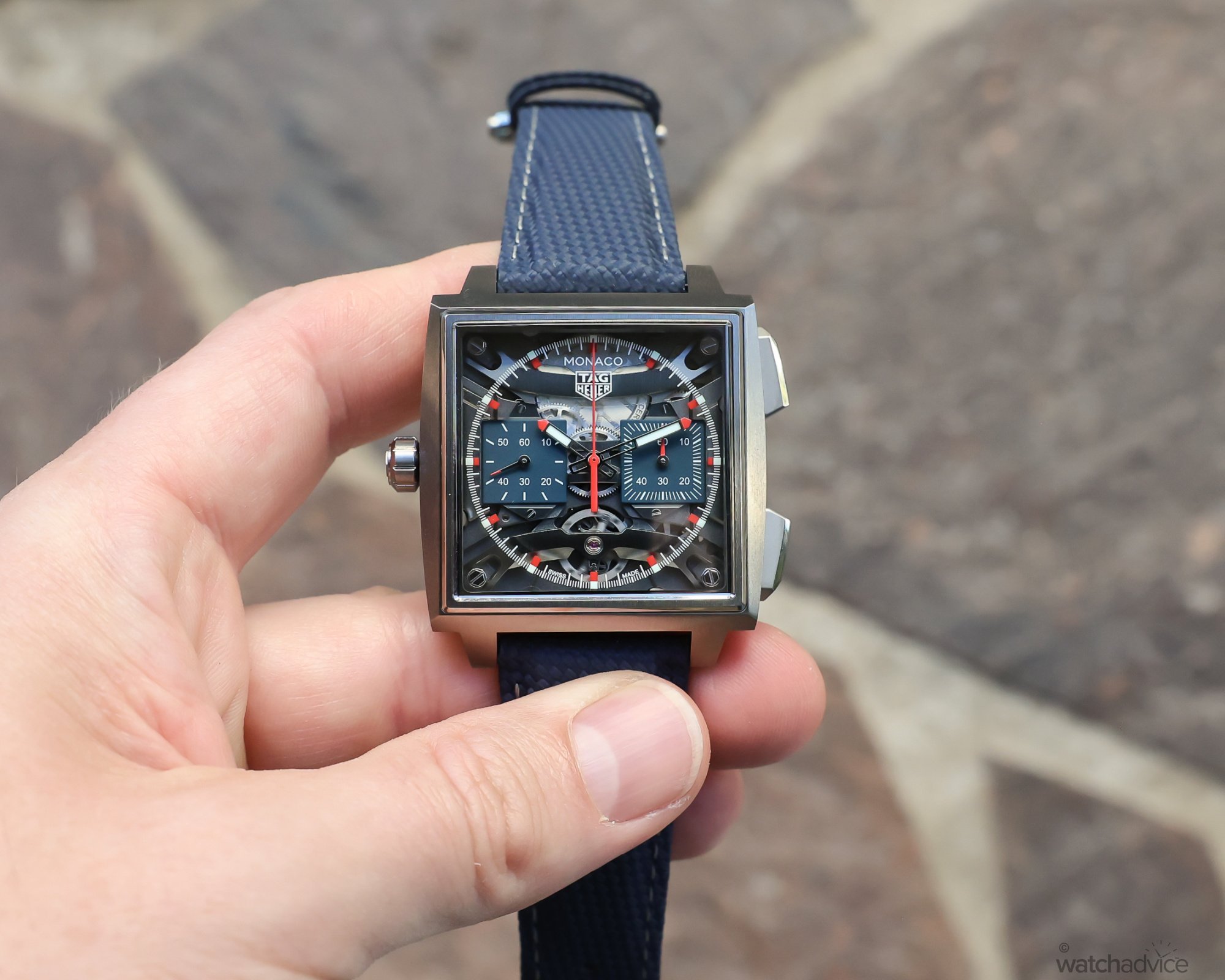
Looking through the dial, your eye is immediately drawn to the balance wheel at 6 o’clock oscillating away at 5Hz. Unlike many skeletonised watches that sacrifice legibility for visual drama, TAG Heuer has done a good job of maintaining a clear hierarchy across the display. The chronograph counters remain easy to identify, the central hands are straightforward to read, and the movement architecture forms part of the design rather than competing against it.
While we didn’t have the black DLC model for review, seeing it at Watches & Wonders let us compare the two models. However, for this review, I had the straight titanium model, which is, thankfully, my favourite of the two.
The contrast between the grey tones of the case and movement components against the blue subdials is a subtle nod to the classic blue Monaco. The black DLC version undoubtedly has more wrist presence, but the titanium model feels slightly more versatile and allows the movement details to stand out more clearly.
The Design
The TAG Heuer Monaco naturally creates a stronger visual presence compared to a round watch, especially with the size, proportions and design of the Monaco. I’ve found it is either a watch that you love, or you don’t. There isn’t an in between, quite possibly as it is a square sports watch vs a more traditional square or rectangular dress watch.
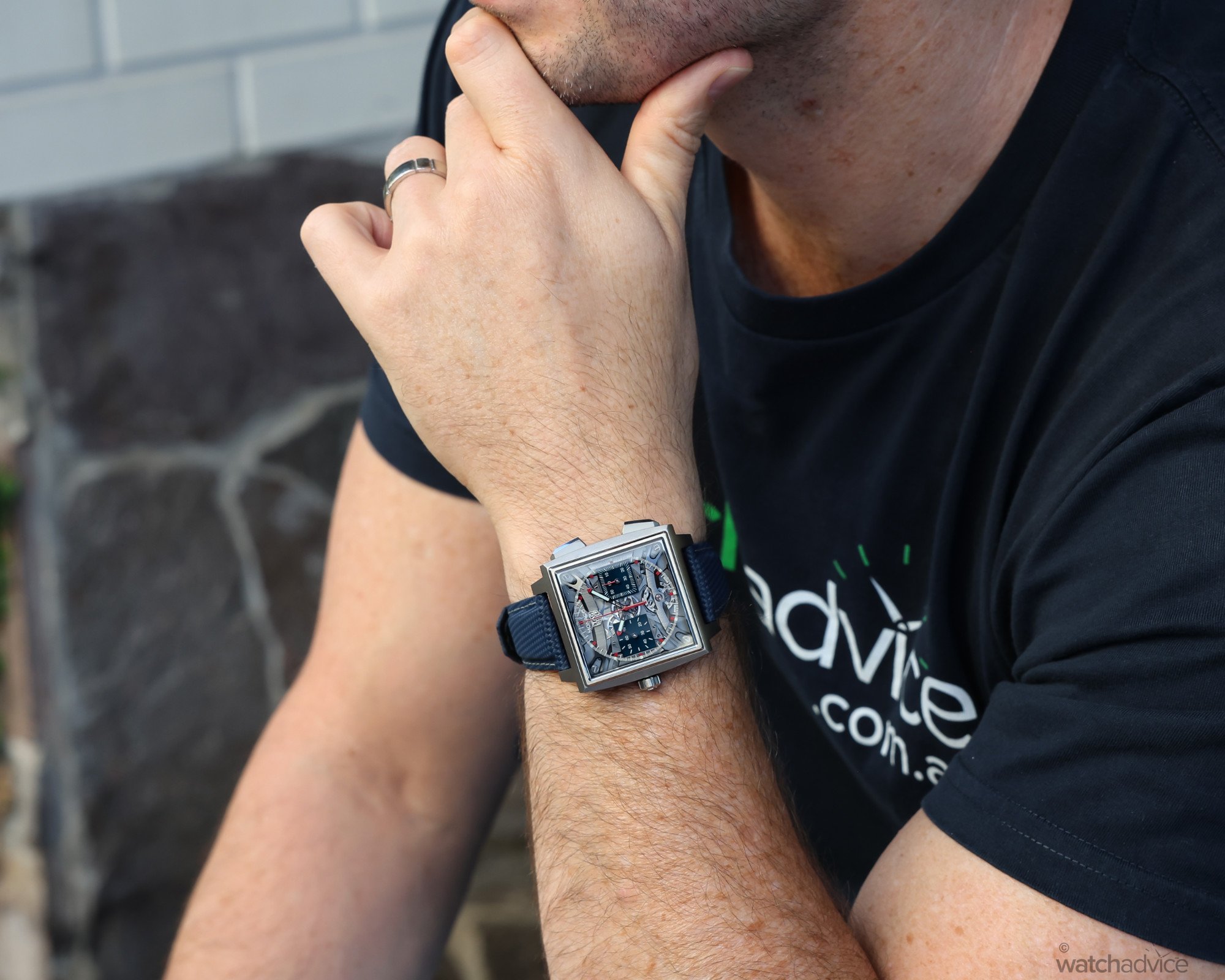
When TAG Heuer was developing this watch, over 5 years, I might add, the team went back to the drawing board to make this the best Monaco to date. The goal was to create a more wearable watch that gave justice to the new TH80 movement designed by Carole Forestier-Kasapi and her team, without losing the DNA of what made the Monaco iconic.
The case is made from Grade 5 titanium, sized at 40mm x 14.51mm thick. The lightweight nature of titanium helps keep the watch feeling modern and wearable, and also gives the watch a more technical and modern look, which I love.
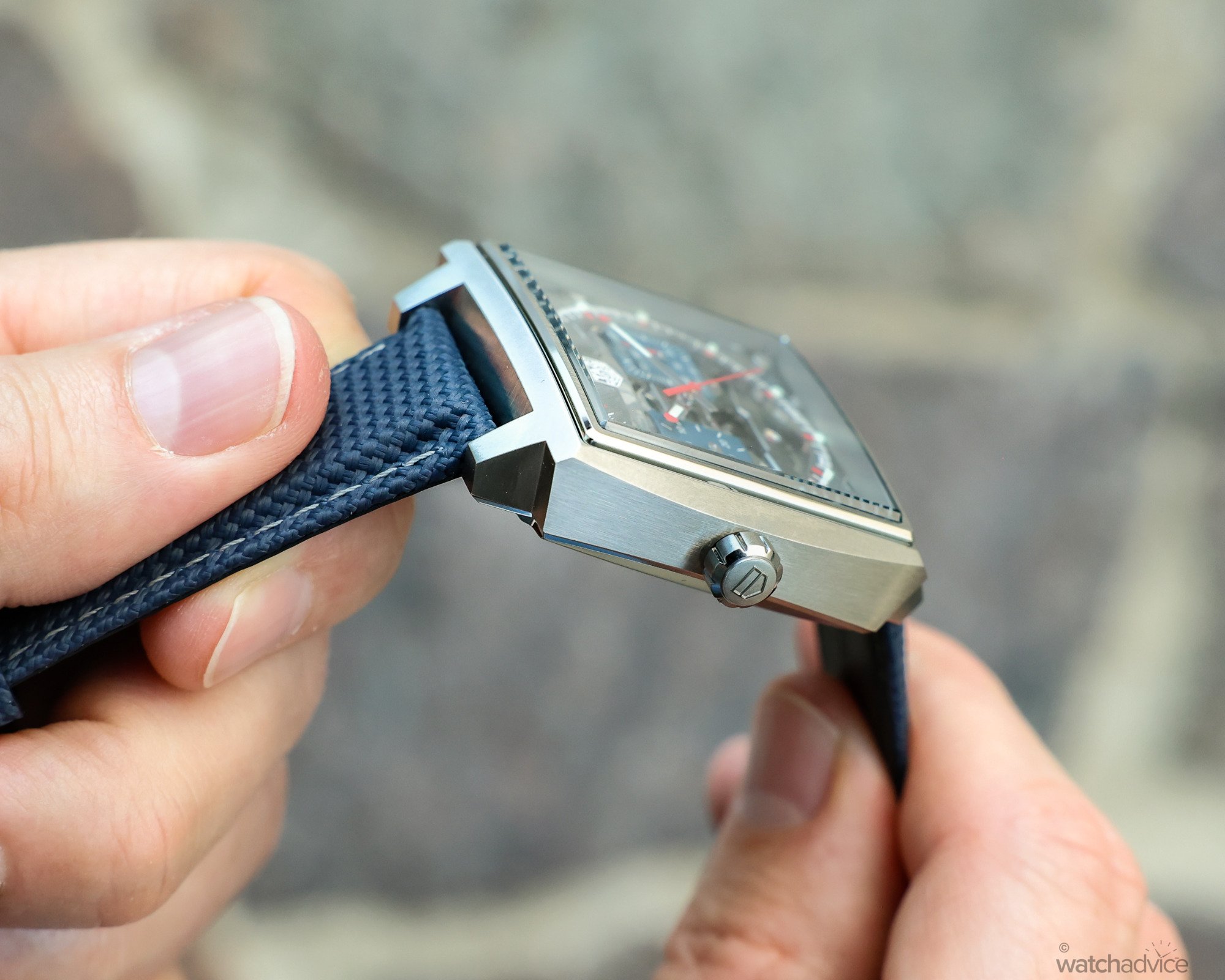
Looking closer at the case construction, TAG Heuer has subtly refined several areas compared to previous Monaco generations. The transitions between brushed and polished surfaces are crisp, the lugs flow more naturally into the strap, and it lowers the centre of gravity for greater balance on the wrist.
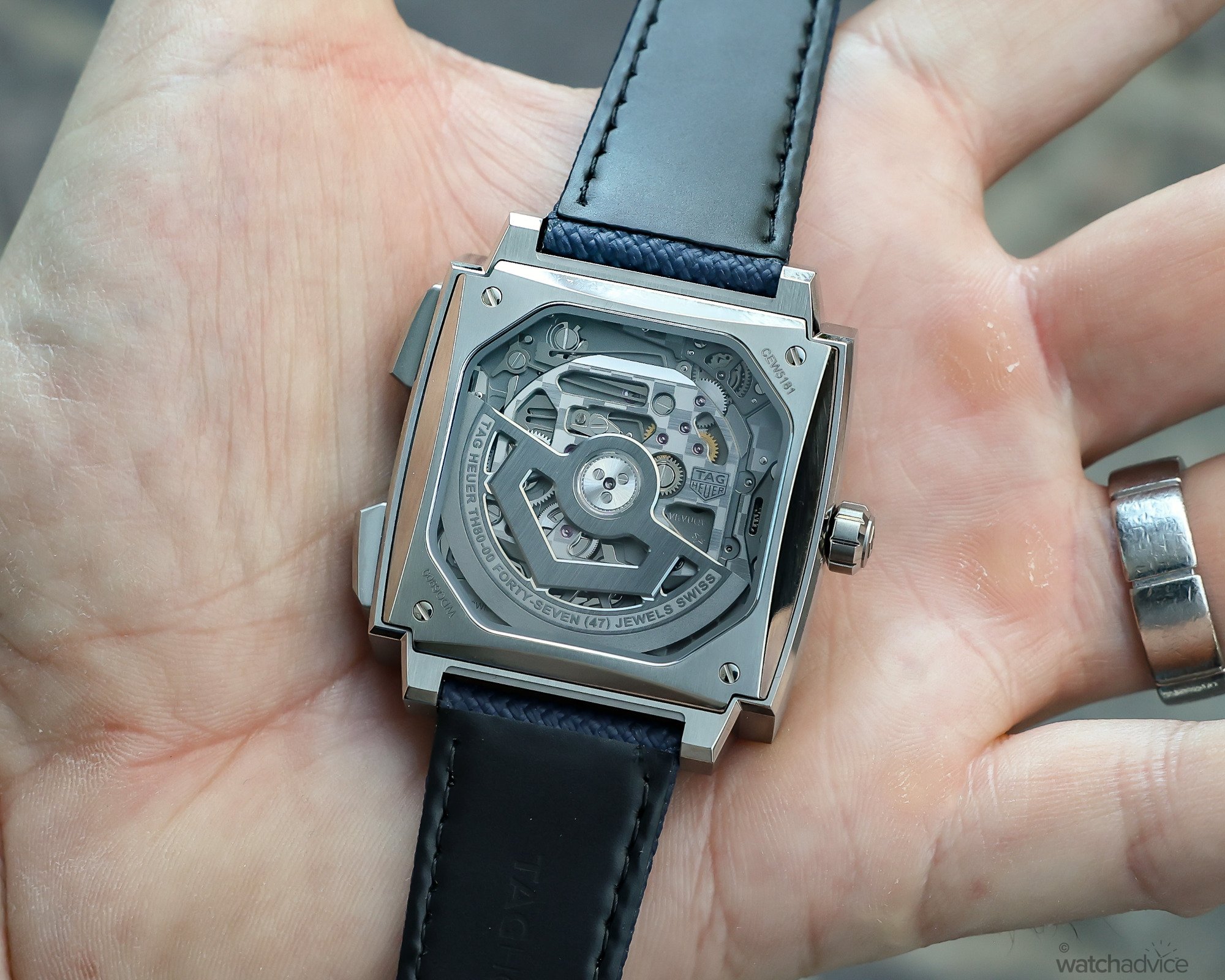
Adding to this, the caseback has a centre section that is domed, which, counterintuitively, makes the watch sit better on the wrist. Julien Delcambre’s team, TAG Heuer’s Lead Designer, who headed up the project on the new Monaco, explained to us that every detail of the case was mulled over and played with to get it right. Overall, it is very cohesive.
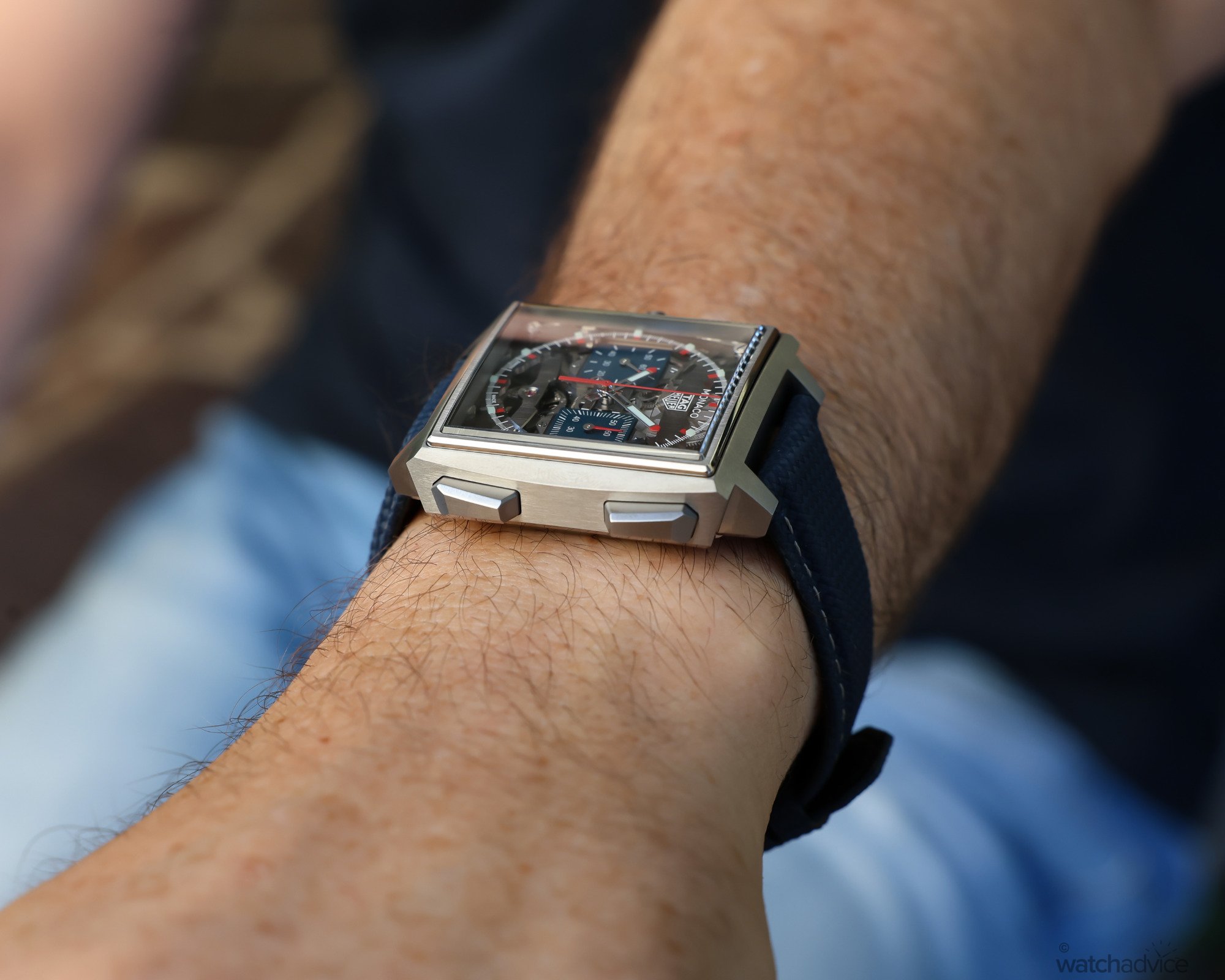
Transparency has become increasingly common in contemporary watchmaking, yet many open-worked designs still feel like conventional dials with sections removed. With the Monaco Evergraph, the design takes inspiration from the Rattrapante released for Only Watch a few years back, which developed into the commercial proposition the year after – an openworked dial that was purposefully done to show off the movement.
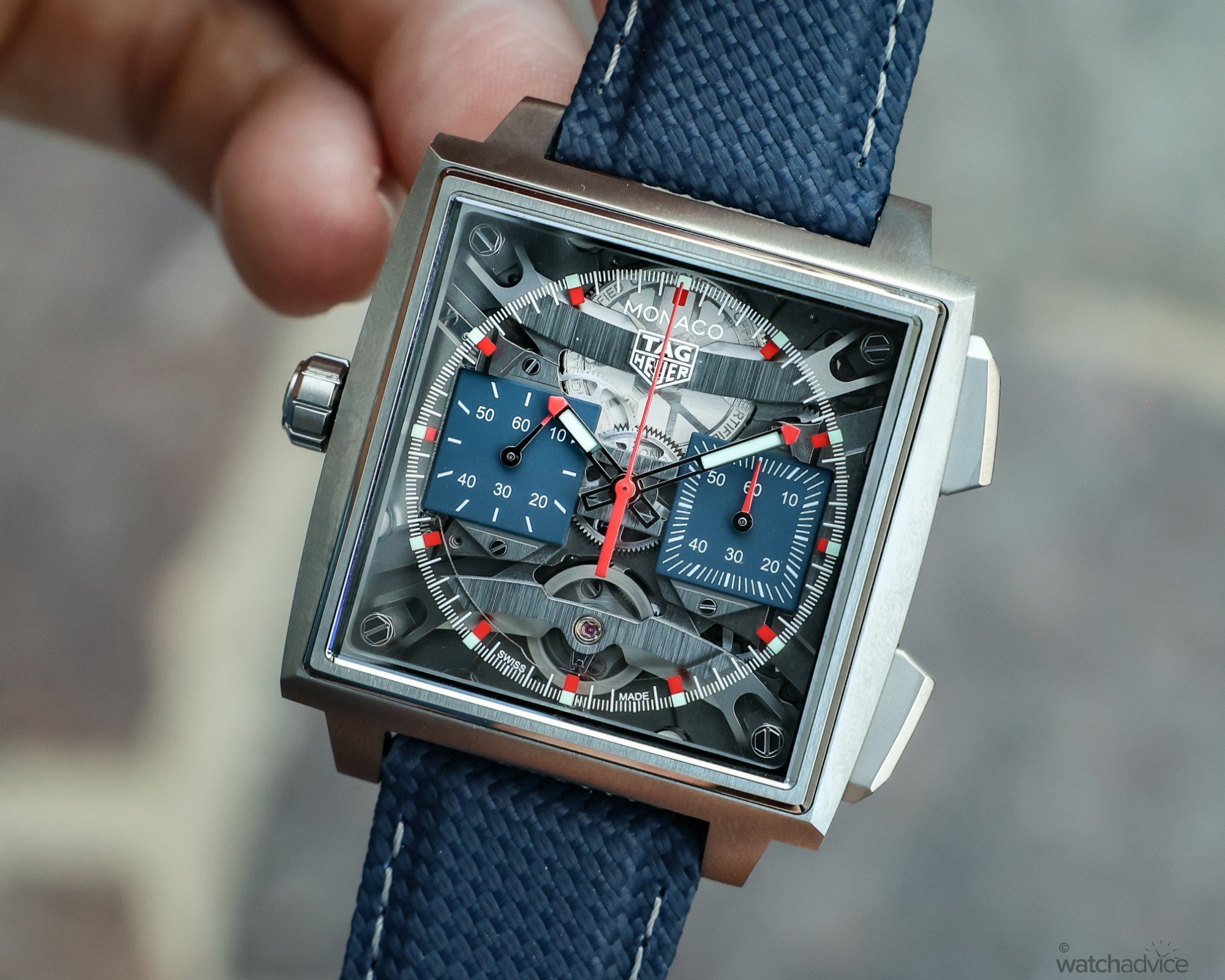
The square chronograph registers reinforce the Monaco’s identity while providing useful visual structure across the dial. The colour accents help separate the chronograph functions from the time display, preventing the watch from becoming difficult to read, and the layers of the dial create a nice depth to it that you won’t get in the standard TAG Heuer Monacos.
How It Wears
Historically, the Monaco has divided opinion when it comes to wearability. Admittedly, I was one of those people, that is, until I took the 2024 Vegas Skeleton edition for a spin. The square case shape means it often wears larger than the dimensions suggest, and previous references could feel quite substantial on the wrist, especially with the steel models as opposed to the more recent skeleton chronographs in Titanium. The Evergraph addresses many of those concerns.
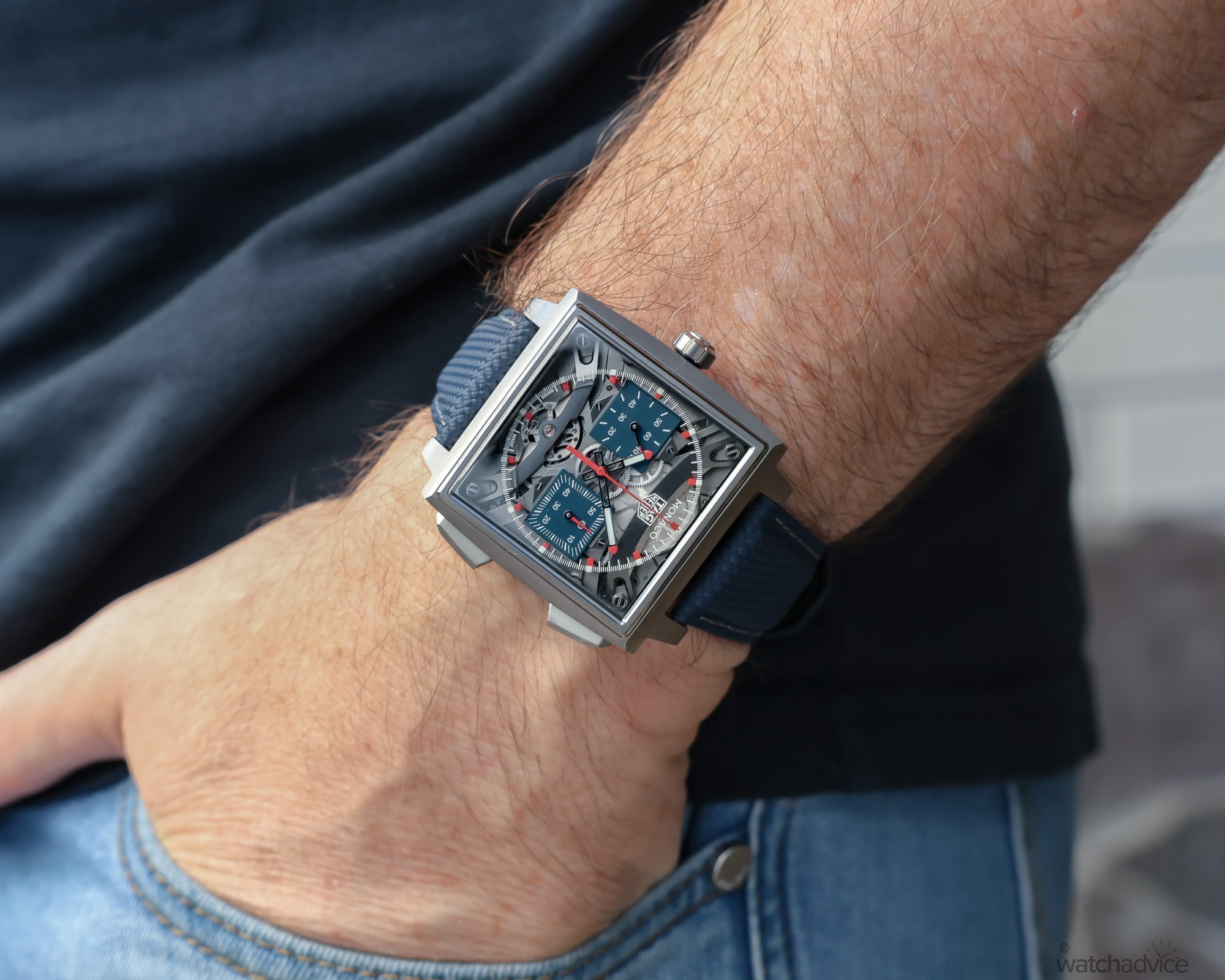
The titanium construction plays a major role here. Picking up the watch for the first time, the weight immediately feels different from a steel Monaco. That reduction in mass makes a noticeable difference over a full day of wear and helps the watch sit more naturally on the wrist.
The caseback design has also been thoughtfully executed. Combined with the revised case profile, the watch sits lower and more securely than I initially expected. While the square shape still gives it plenty of presence, it doesn’t feel cumbersome. The rounded caseback assists with this also. Counterintuitively, the convex caseback allows the watch to sit into the wrist, meaning less movement when on, and a much better wearing experience. I was doubtful at first, but it does, in fact, help!
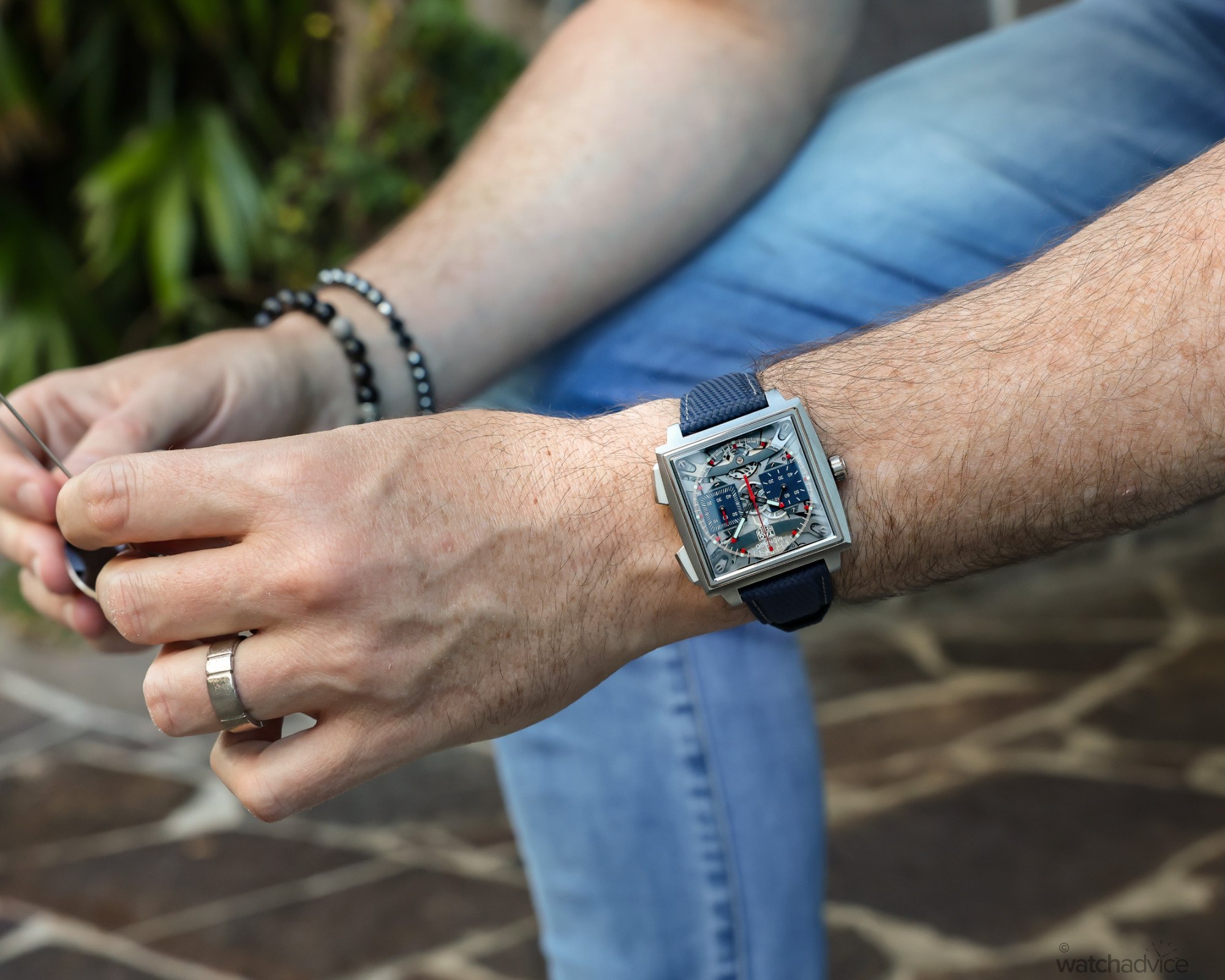
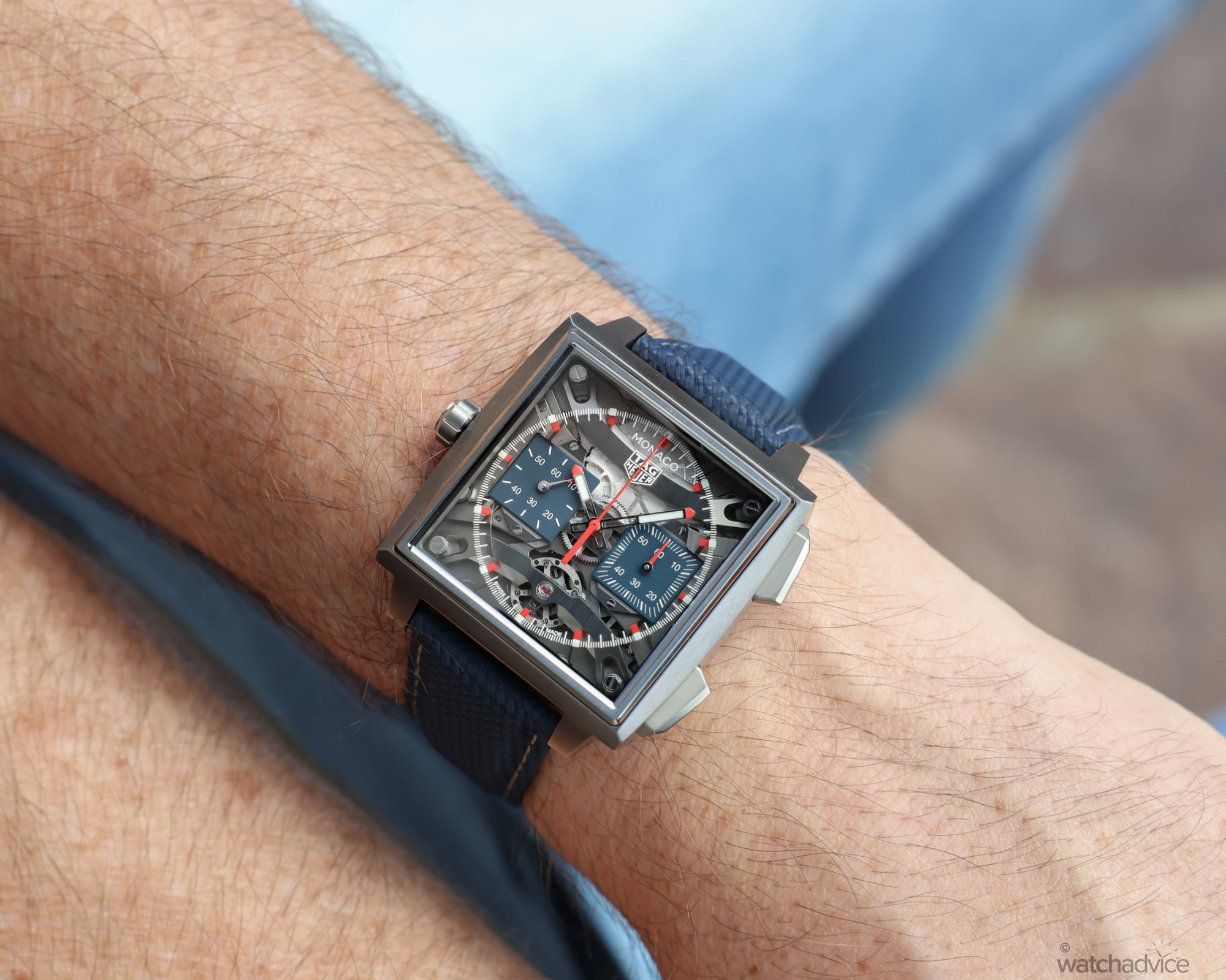
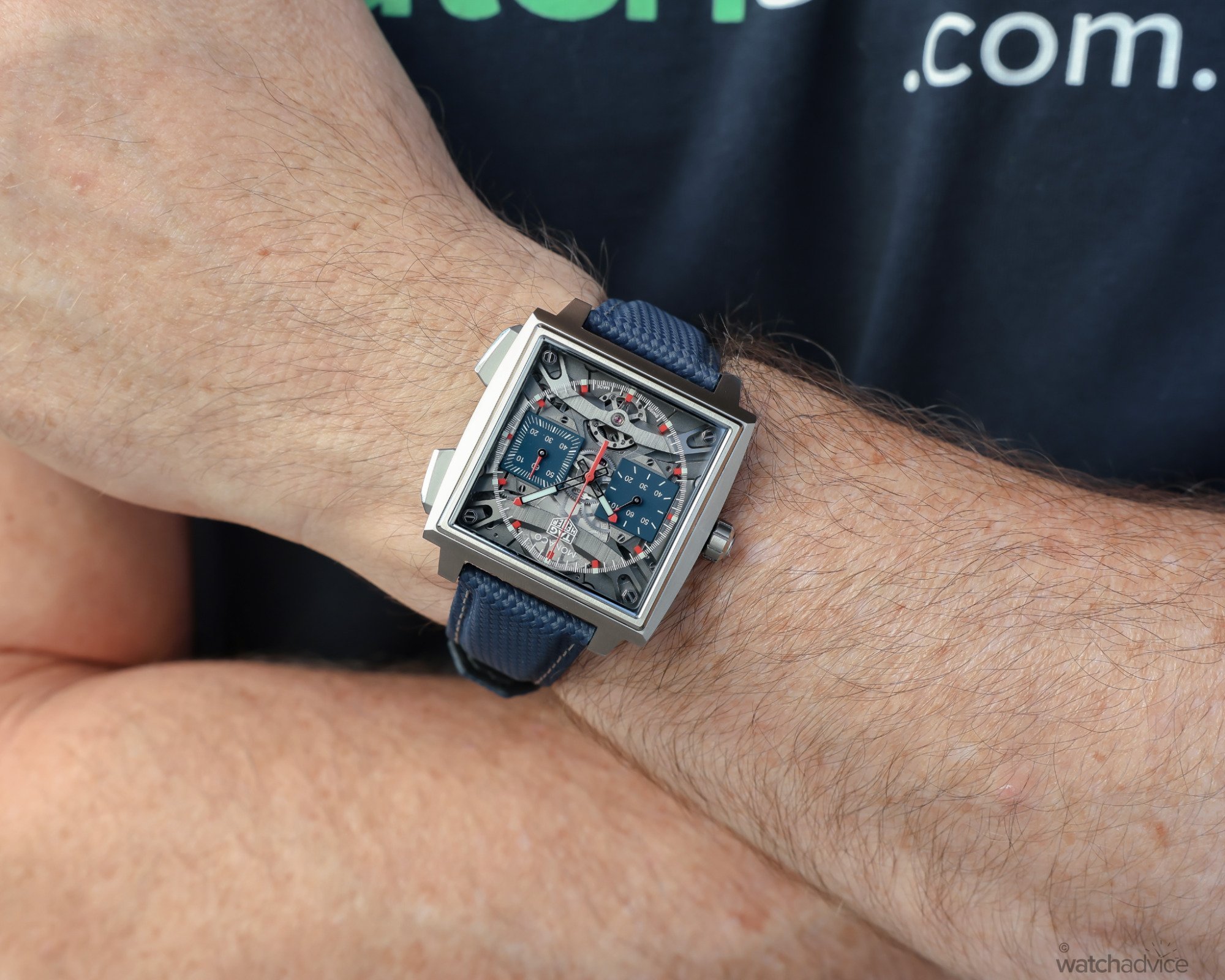
On my wrist, the watch wore comfortably throughout the day without requiring constant adjustment. That’s not always something I can say about larger chronographs, or my wrist for that matter. The size felt about right as well, although, could it be better by shaving a millimetre or two off? Perhaps. My 17.5cm wrist lends itself to slightly larger watches, and the TAG Heuer Monaco Evergraph does feel slightly larger visually, albeit not on paper and not so much in the wearing experience.
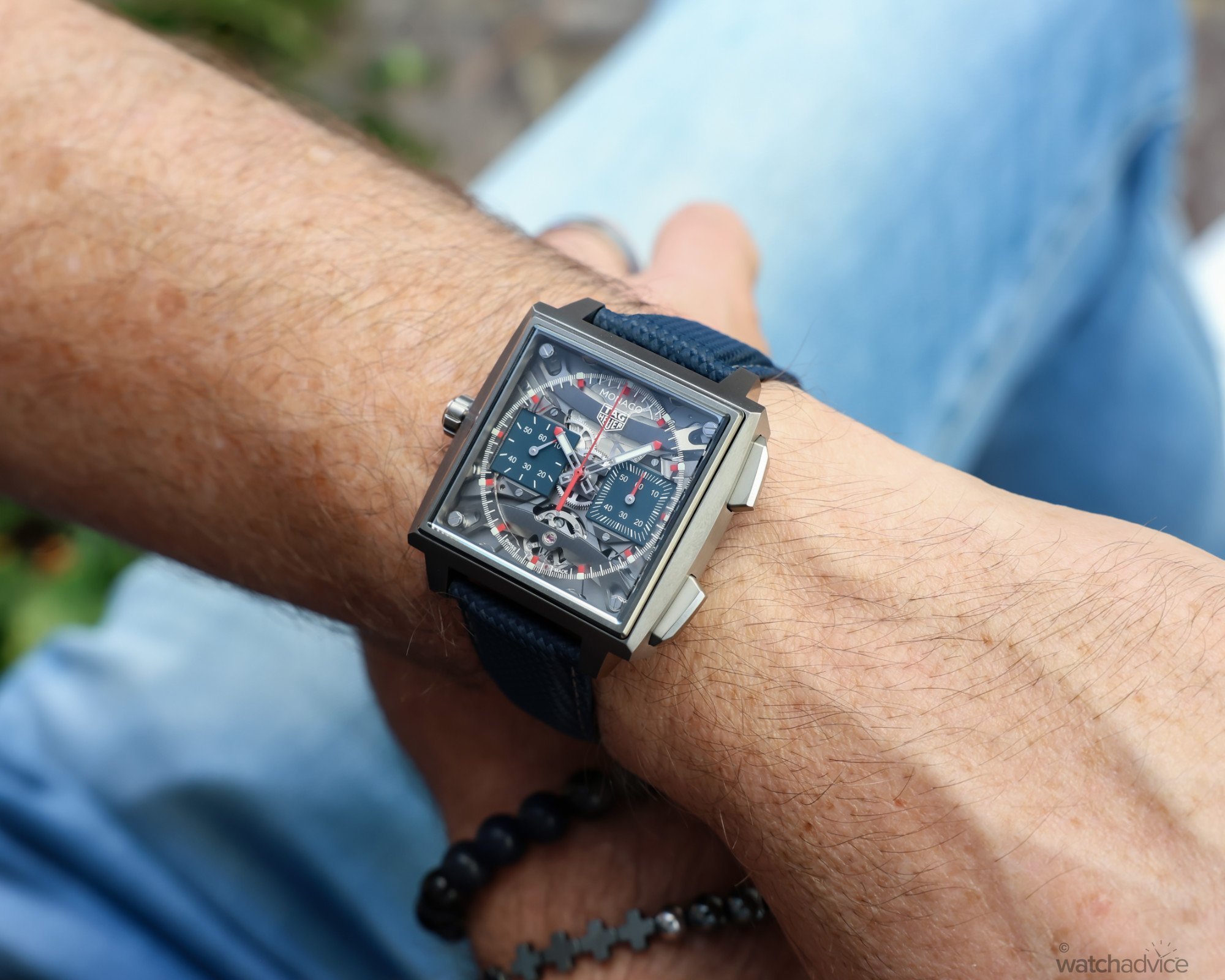
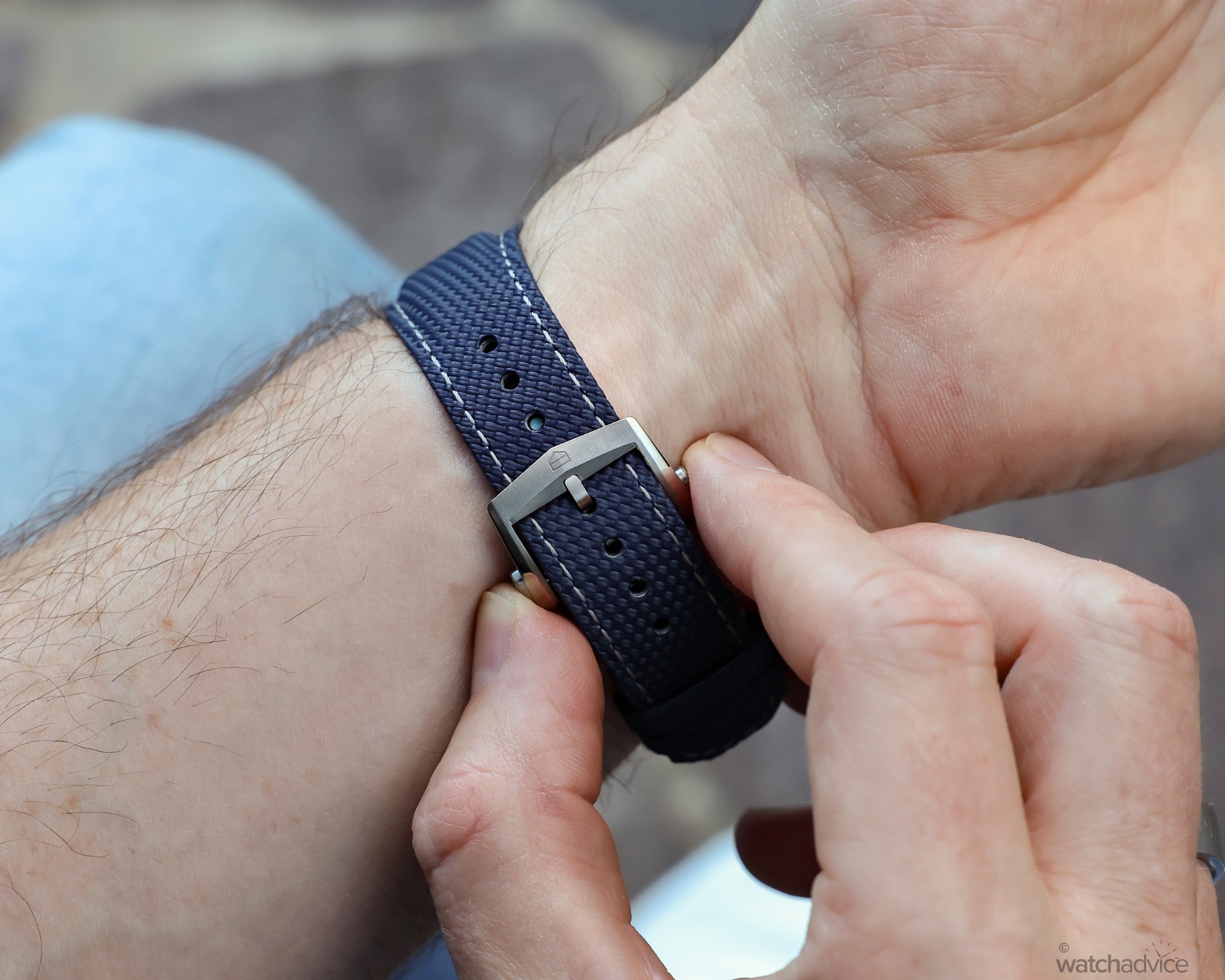
The rubber strap complements the case particularly well. It feels substantial enough to match the technical nature of the watch while remaining comfortable and flexible. More importantly, it adds to the overall design, complementing the case and dial rather than drawing attention away from them. The textile pattern is a nice touch here; however, I would say to TAG Heuer, bring back the old clasp. The push-button folding clasp allows the strap to sit more flush under the wrist, but you do lose the ability to size it exactly right.
The other point I’ll make is that the watch is probably less versatile than other sports watches. It falls squarely (squarely, get it?) into pure sports watch territory. Wearing anything outside of casual clothes with this may be a stretch, but if a watch can elevate an outfit, then an outfit could elevate a watch. Hey, who am I to give fashion advice out? You do you!
The Movement
Of course, the TH80-00 movement is the reason this watch exists. Developed by TAG Heuer Lab and Vaucher Manufacture Fleurier, under the stewardship of TAG Heuer Haute Horlogerie and Movement Strategy Director, Carole Forestier-Kasapi, the calibre introduces a compliant chronograph mechanism that replaces many traditional chronograph components with flexible structures manufactured using LIGA technology.
In her words: “I’m confident more and more, even before Watches & Wonders, what we have achieved today with the Evergraph is huge! And because we started from zero for this project, we had the possibility to rethink everything. So for me, it is exciting to put everything on the table and to look at what we can change!” And I think she is right here.
Operating the chronograph is where the difference becomes immediately noticeable. The pushers feel crisp, precise and remarkably consistent. Every start, stop and reset action delivers the same tactile response, something that traditional chronograph systems can struggle to maintain over time as components wear.
And this isn’t by accident either. The team that developed this spent a lot of time researching chronograph tactility, comparing dozens of models out there in order to create a totally unique feel when operating it. Using it, it does feel very different, and even the sound the compliant component makes when pushing the start/stop and reset is like nothing else.
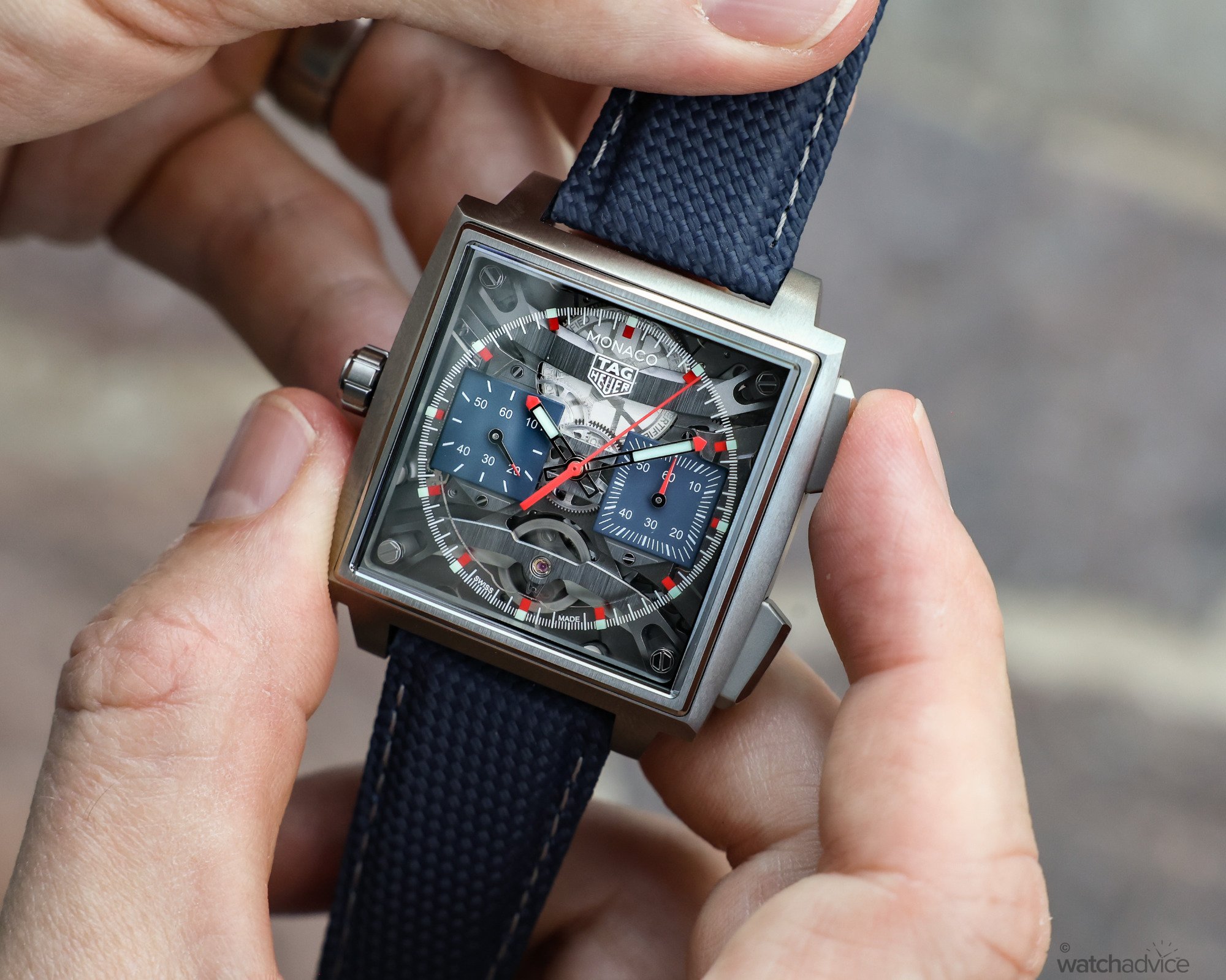
The only way I can describe it is that it has a metallic ‘ting’ when operating the pushers, and they don’t provide a lot of resistance at all. If I were forced to rank this tactile feel, I’d say it is up there, and right behind the AP Royal Oak RD#5 (a watch that 99.9% of people will never own and costs over A$400,000) and Hublot’s Unico HUB1280 Flyback Chronograph – I’ve still not found a mainstream watch that can match this. So, for me, this is a massive step forward for TAG Heuer.
The high-frequency 5Hz regulator operates at 36,000 vibrations per hour, improving timing stability while creating a lively visual presence through the open dial. The movement is COSC certified, incorporates TAG Heuer’s TH-Carbonspring technology, and delivers an amazing 70-hour power reserve when you consider this is not a 4Hz and below beat rate.
Final Thoughts
Too often, innovative watchmaking can feel disconnected from the ownership experience. Many brands create technical watches for the sake of being able to. Yes, they are a marvel of engineering and often art, but not really for everyday. Here, the technological advances have a direct impact on how the watch functions and feels to use. Whether it’s the consistent pusher action, improved durability characteristics or enhanced resistance to magnetism, the innovations serve a practical purpose. Well done TAG Heuer.
The technology doesn’t overshadow the watch itself, and the watch doesn’t rely solely on its movement to justify its existence. The Monaco Evergraph succeeds because it combines both elements into a cohesive package that feels genuinely considered from every angle.
Vintage-inspired designs continue to dominate new releases, and many brands have found success revisiting familiar territory. There’s nothing inherently wrong with that. In fact, in a lot of cases, it’s a good thing. But sometimes, injecting modernity into classic design can go a long way. The TAG Heuer Monaco Evergraph is just this.
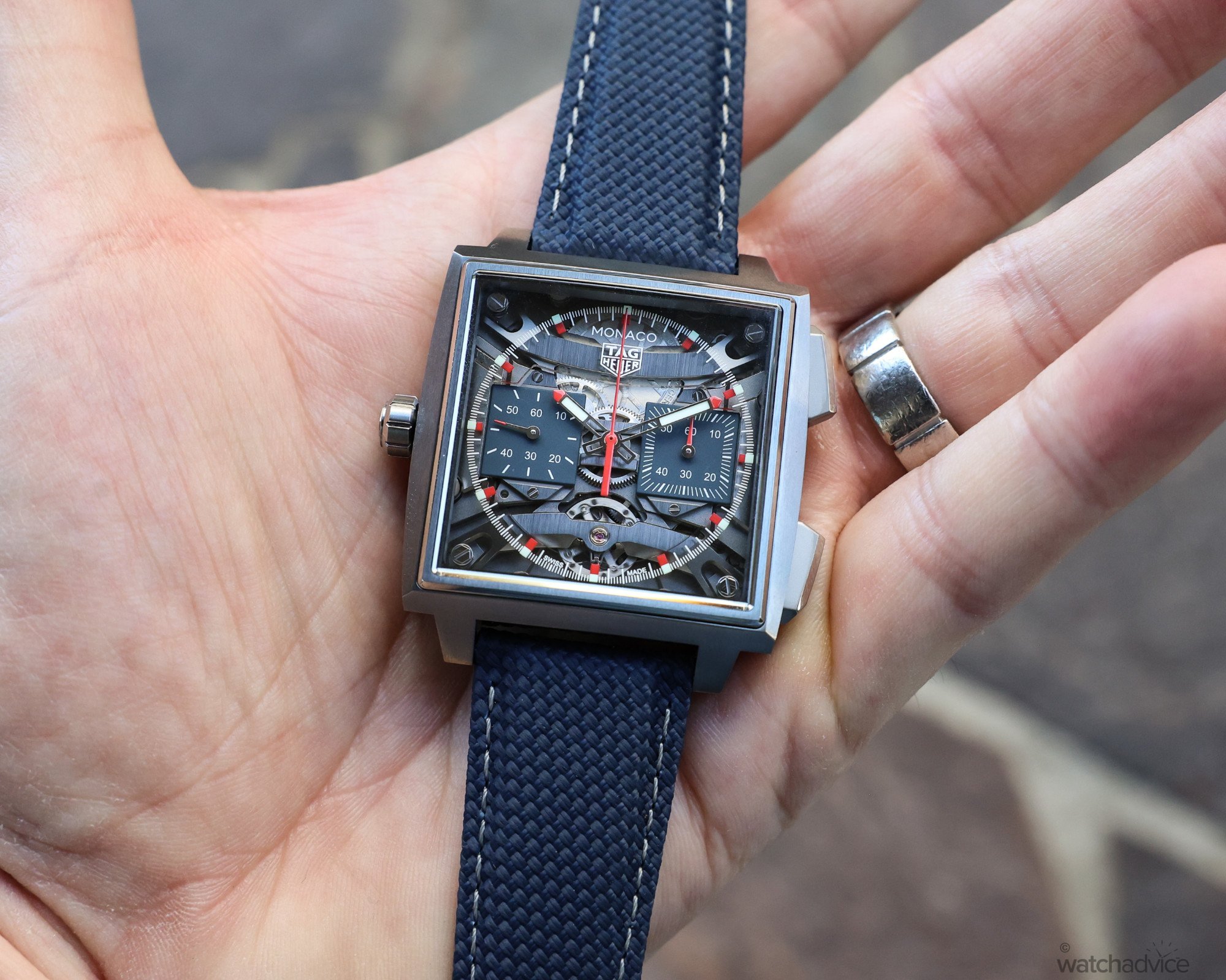
The design remains unmistakably Monaco, the wearability has improved considerably, and the movement introduces one of the most interesting developments in chronograph construction we’ve seen in recent years. It is a Monaco through and through, just a new generation of Monaco for the modern watch lover.
At A$42,000, this is undoubtedly a significant investment and positions the Monaco Evergraph in a highly competitive segment of the market. However, for collectors interested in meaningful mechanical innovation, there are very few watches available today offering something genuinely different. The Monaco has always stood apart from the crowd, and now with the Evergraph, TAG Heuer has ensured that remains the case.
Reference & Specifications
| Feature | Specification |
|---|---|
| Reference | CEW5181.FT8123 |
| Dimensions | 40mm x 14.51mm thick |
| Case Material | Grade 5 titanium, brushed & polished |
| Case Back | Sapphire Case back, domed for comfort |
| Dial | Transparent acrylic glass with white and red markings, Super-LumiNova hands & indices. Rhodium-plated open-worked hour and minute hands with red lacquered tips, blue subdials. |
| Crystal | Bevelled, domed sapphire crystal |
| Movement | Calibre TH-80 automatic movement with a TH-Carbonspring and new compliant chronograph mechanism – beating at 5Hz / 36,000 VpH |
| Power Reserve | 70-hours |
| Water Resistance | 10 bar (100 metres) |
| Strap | Blue rubber strap with textile embossing and grey stitching with a push-button folding clasp. |
Australian Retail Pricing: A$42,000
Availability: Available now through TAG Heuer Boutiques, retailers or online at TAGHeuer.com
Full Image Gallery