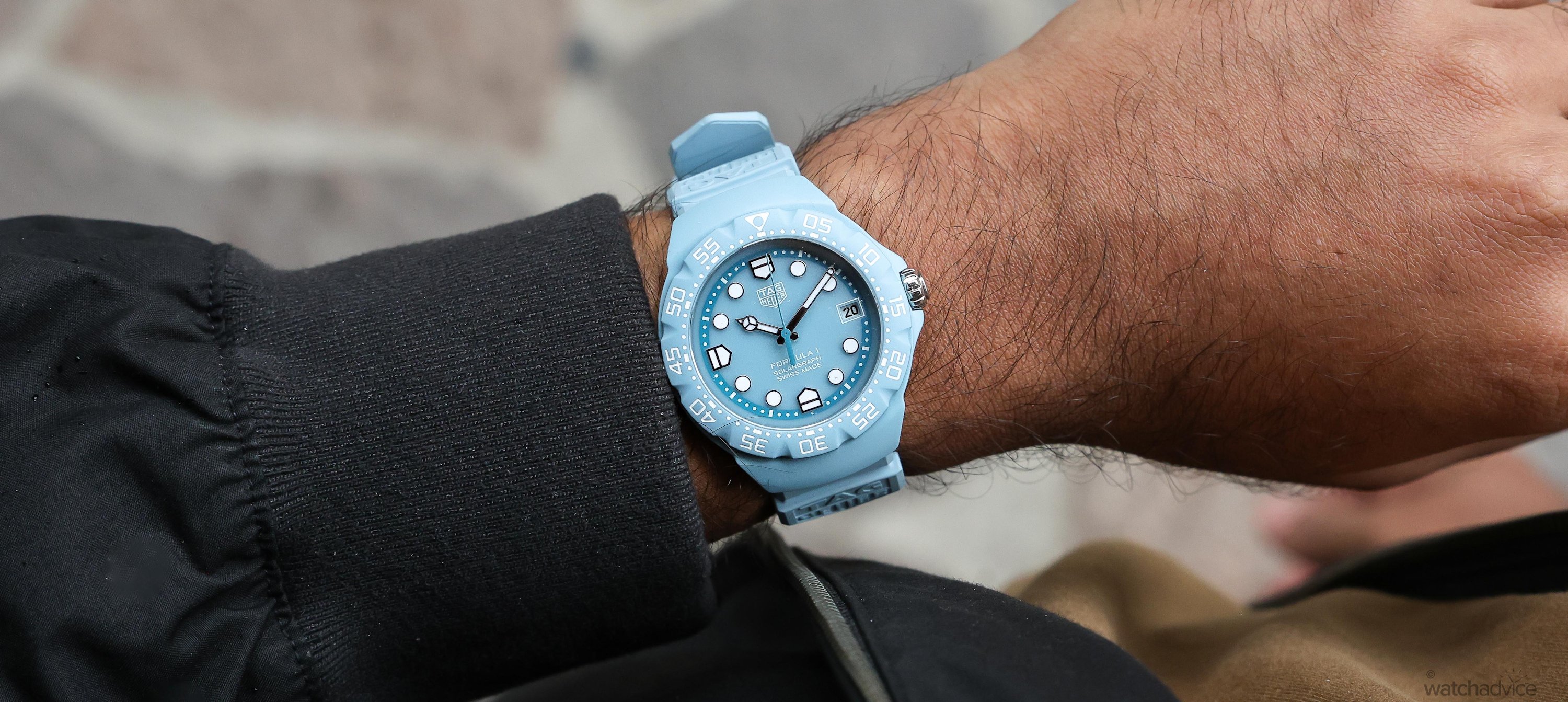

I took one of TAG Heuer’s most vibrant Formula 1 Solargraph editions out for a test drive to see whether its playful design is backed by everyday practicality.
What We Love:
- Vibrant Pastel Blue feels refreshing and full of character
- Recaptures the playful spirit of the original Formula 1
- Lightweight wearability and Solargraph practicality suit the fun aesthetic.
What We Don’t:
- AUD $2,950 feels steep for a quartz TH-Polylight watch.
- The monochromatic design may be too niche for some.
- Limited strap options restrict its overall versatility.
Overall Rating: 8.3/10
- Value for Money: 8.3/10
- Wearability: 8.5/10
- Design: 8.5/10
- Build Quality: 8.0/10
Few watches in TAG Heuer’s catalogue like to have fun quite like the Formula 1 Solargraphs. Originally introduced in 1986, the TAG Heuer Formula 1 editions represented a new beginning for the recently formed brand, bringing together colourful designs, lightweight construction, reliable quartz movements and an accessible price point.
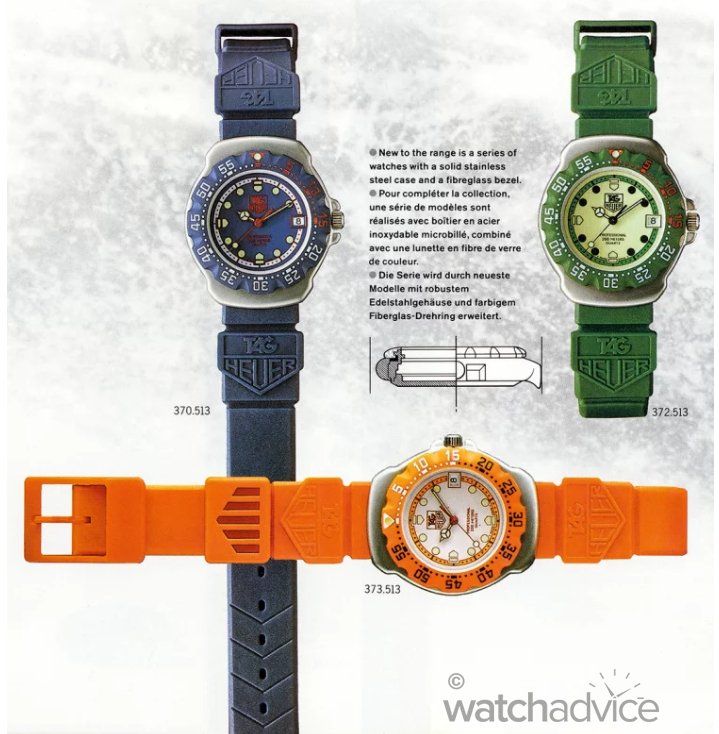
The first Formula 1 editions arrived during a period when colourful quartz watches were trending, helping to reinvigorate the Swiss watch industry after the Quartz Crisis. TAG Heuer looked to join in on the fun and responded with something lightweight, accessible and closely connected to the brand’s history and heritage in motorsport. The vibrant colours and composite construction of the watches separated them from traditional Swiss timepieces of the era.
Over the following decades, the Formula 1 collection gradually became larger and more mature, but it never lost its essence as a playful and joyful creation. With TAG Heuer eventually introducing steel cases and mechanical movements, the collection became more conventional and modern, appealing to a wider range of tastes.
In 2024, the TAG Heuer × Kith collection brought back the colourful designs of the original 1986 Formula 1 models. While this was a collaboration, it acted as a way of “testing the waters,” which proved successful. A year later, in 2025, TAG Heuer introduced a permanent collection in the form of the Formula 1 Solargraph models. These models retained the compact proportions and expressive colours while introducing contemporary materials and solar-powered technology.
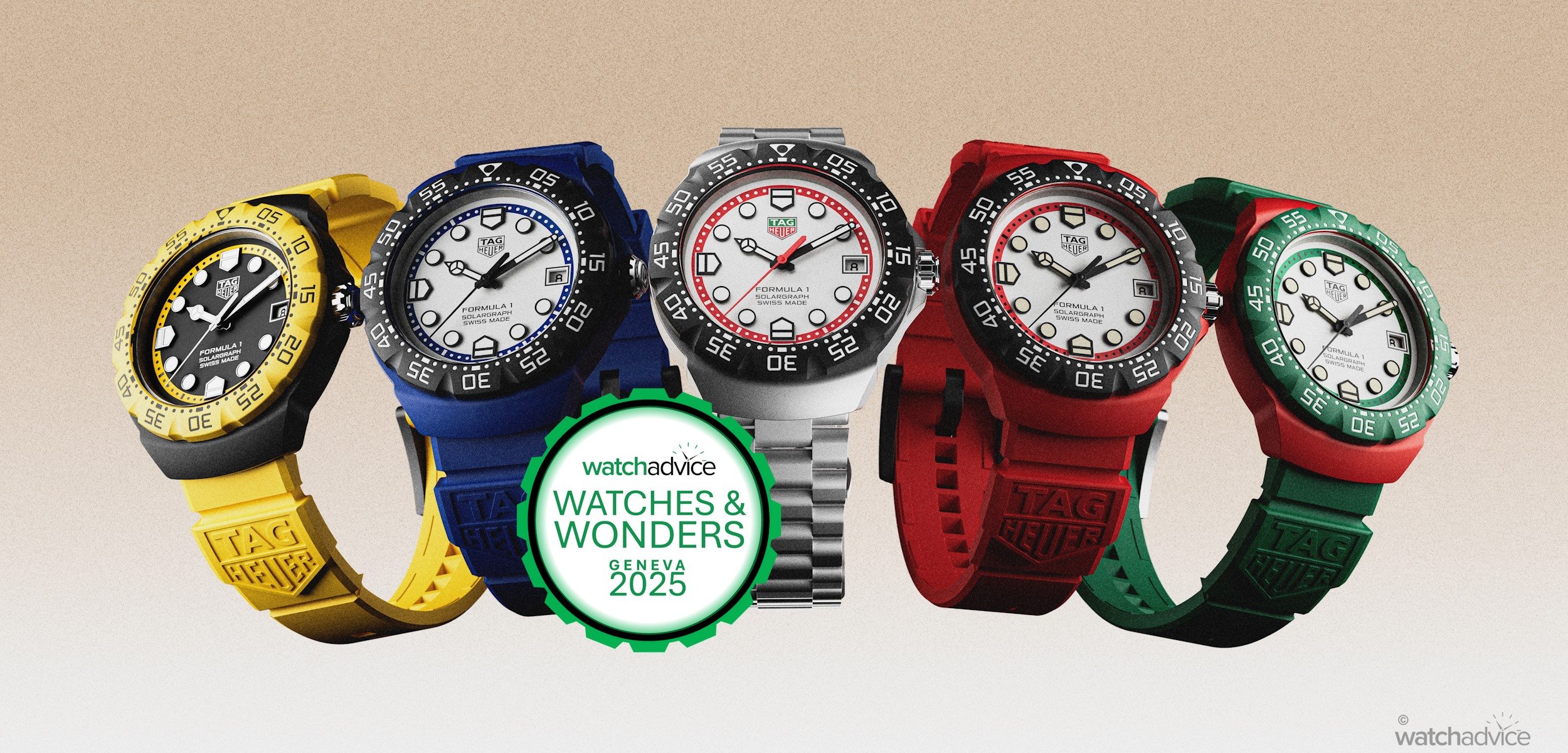
This new collection featured permanent editions alongside limited-edition models introduced for specific races throughout the Formula 1 calendar. The design, colours, quartz technology and wearability all showed that TAG Heuer had returned to its roots to revive the original formula, and it’s easy to see why.
Then, in 2026, five new editions arrived in the collection, arguably the most vibrant models since the Formula 1 collection’s rebirth. With the latest pastel editions, TAG Heuer has shifted the focus away from racing-livery-inspired colour combinations and towards colour as a form of personal expression.
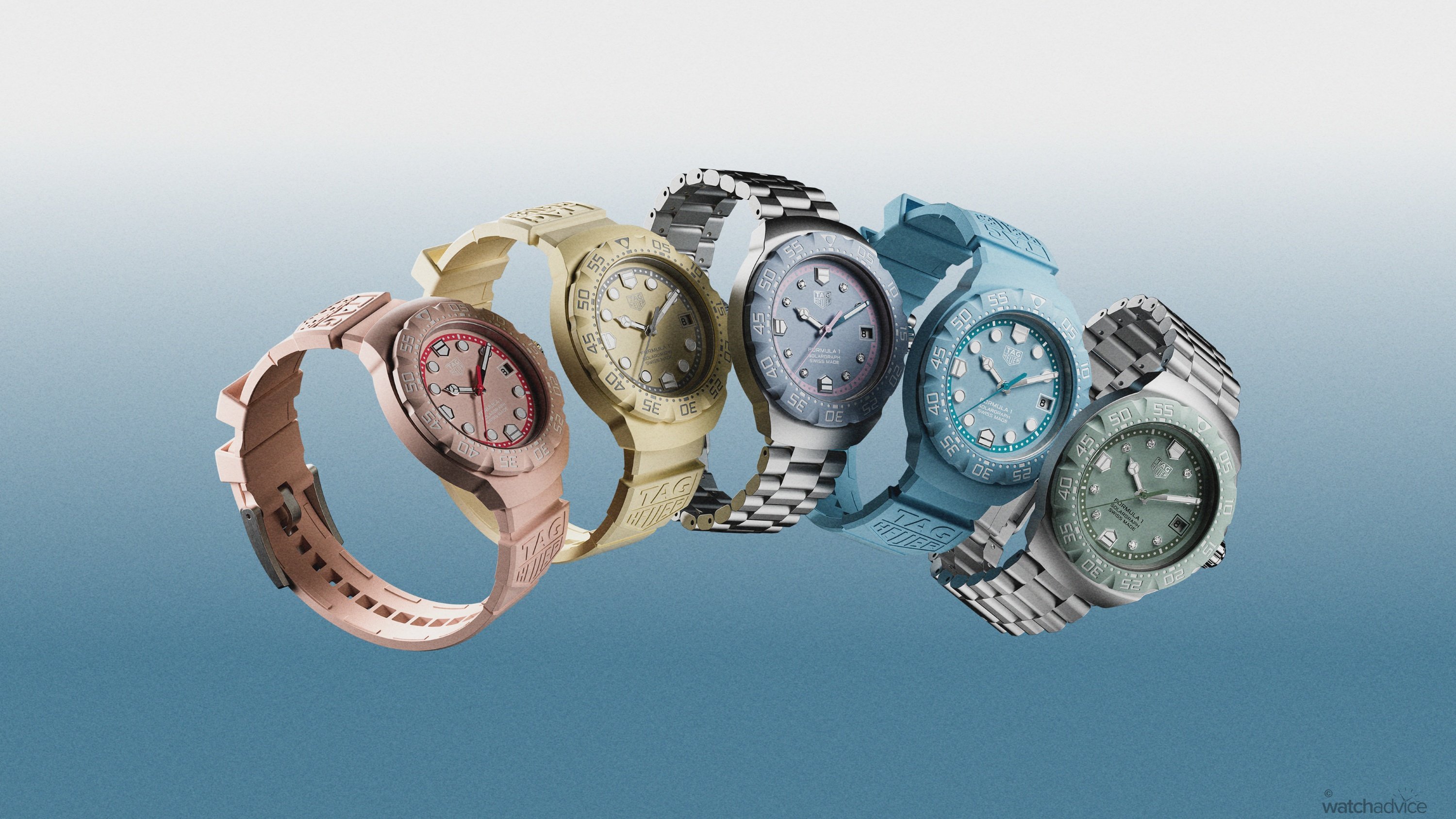
The pastel collection introduced five editions: pastel blue, beige and pink in the lightweight TH-Polylight material, and two editions in pastel green and lavender blue with sandblasted steel bracelets and diamond-set dials. The pastel blue immediately stood out to me as the most expressive of the five, and it is the model I had the opportunity to spend some time with for this review!
Initial Thoughts
This is not the first time I’ve had the TAG Heuer Formula 1 Solargraph in for review. Last year, after the brand refreshed the collection as mentioned above, I had the chance to go hands-on with the steel Silverstone GP Limited Edition, named after one of the more iconic races on the Formula 1 calendar and now part of TAG Heuer’s “Race Editions.”
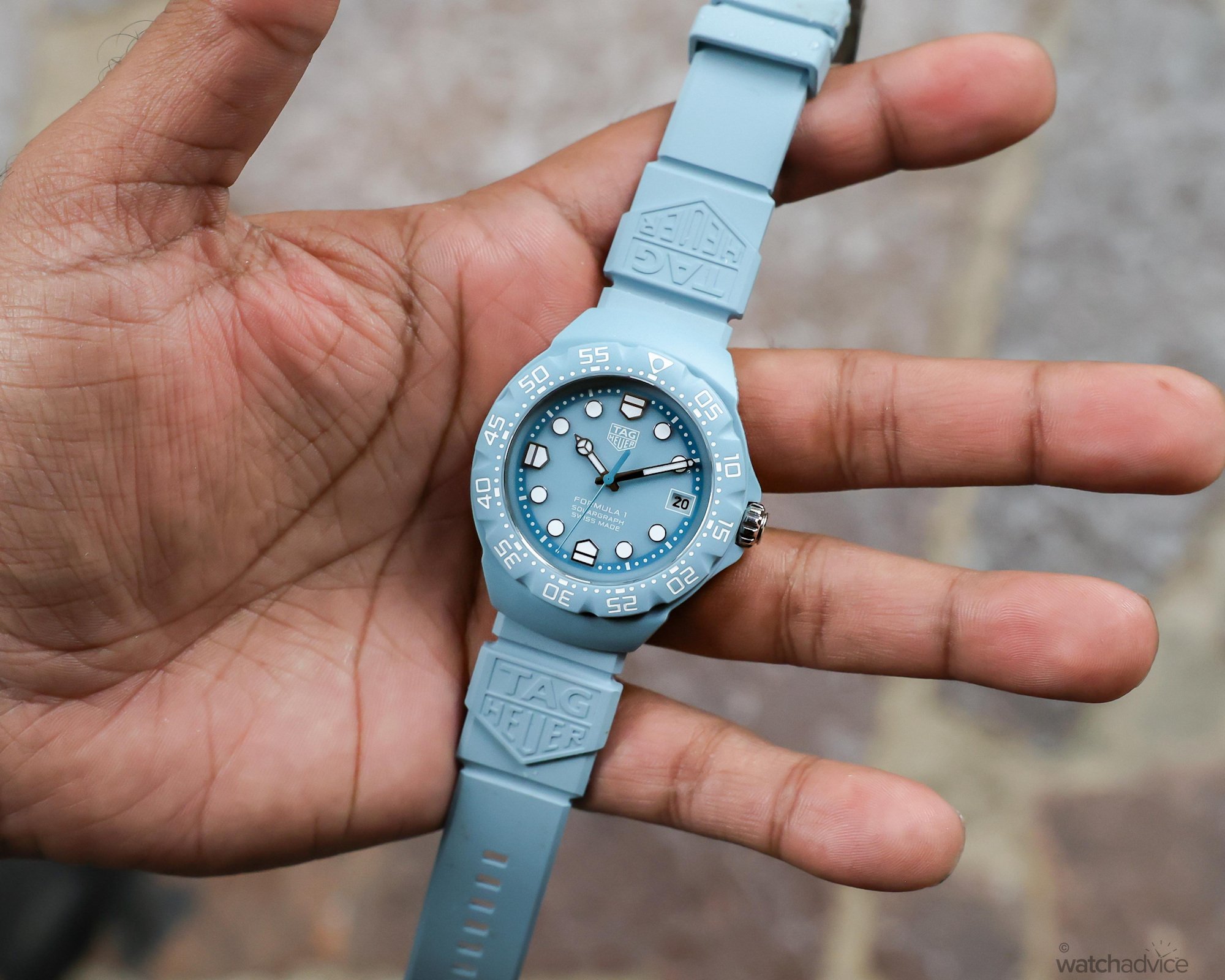
And while the aesthetic codes remain the same as last year’s release, what has changed is the use of colour, and it makes a huge difference to how the watch is perceived on the wrist. While the Silverstone GP edition I reviewed was a more toned-down, mature and everyday-wearing version of the Formula 1 Solargraph, this Pastel Blue edition couldn’t be more different. As I’ve mentioned, while it carries the same overall design concepts, the use of pastel blue across the entire watch makes it much bolder, more expressive and full of character.
I’ve also had the chance to wear the TH-Polylight models, including the red Monza edition, but they don’t quite present the same way as this Pastel Blue model. The Monza breaks up the colour with its white dial and black bezel, and it would normally be my go-to choice if I had to select one of the TH-Polylight models from the collection. However, that was well before the release of these pastel editions.
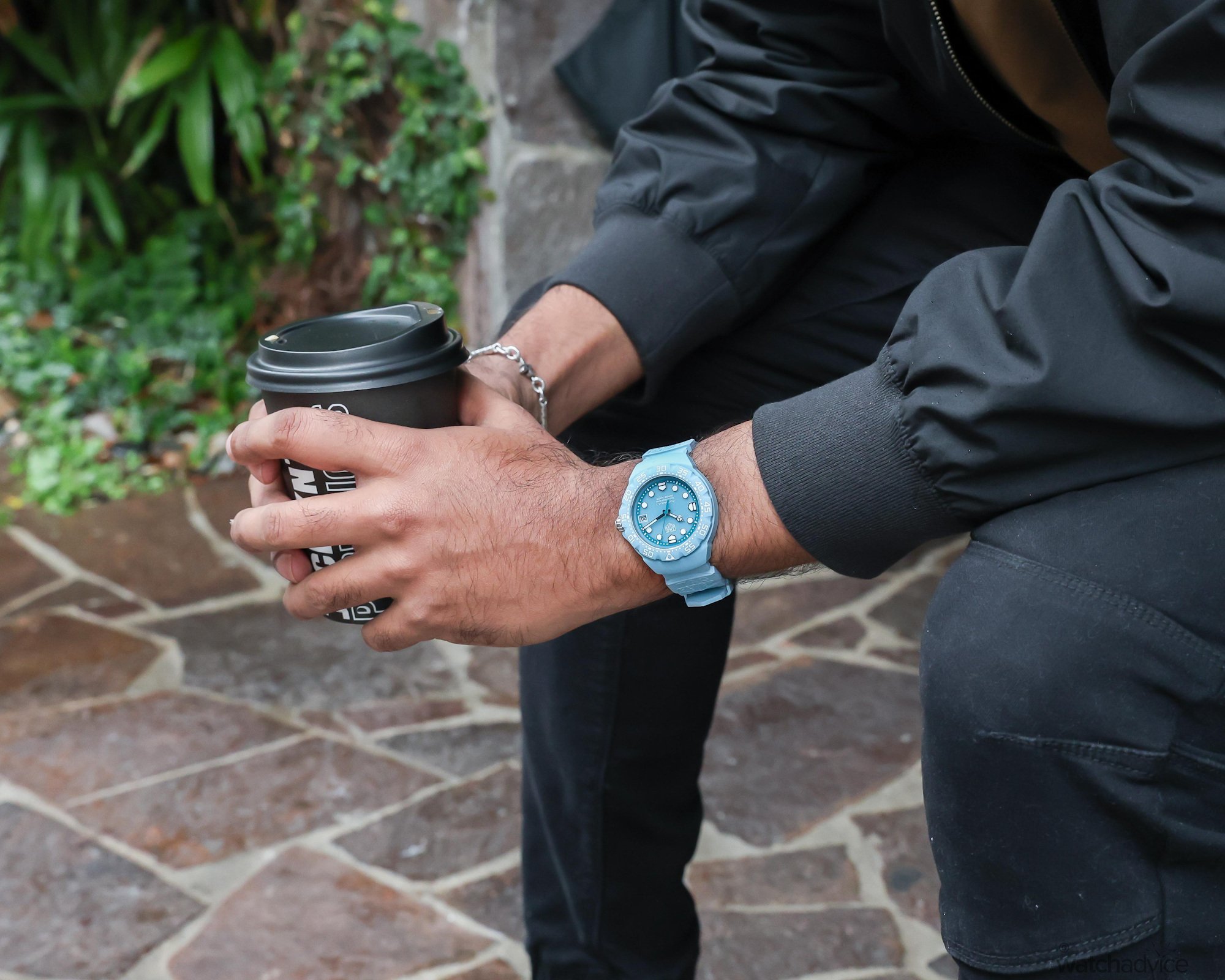
Normally, I don’t go for monochromatic designs, but it just works with this Pastel Blue edition. Maybe some of that comes down to my own bias towards the colour, but personally, I think it looks fantastic.
Lightweight TH-Polylight Dressed In Pastel Blue
This TAG Heuer Formula 1 Solargraph features the familiar proportions we are used to seeing in the collection, with a 38mm case diameter and a thickness of 9.9mm. The watch follows current market trends with its slimmer design, which is also why I think it works so well. With a lug-to-lug distance of only 45.2mm, it fits almost perfectly on my 16cm wrist and should also suit a broader range of wrist sizes, making the wearability of this model even more appealing.
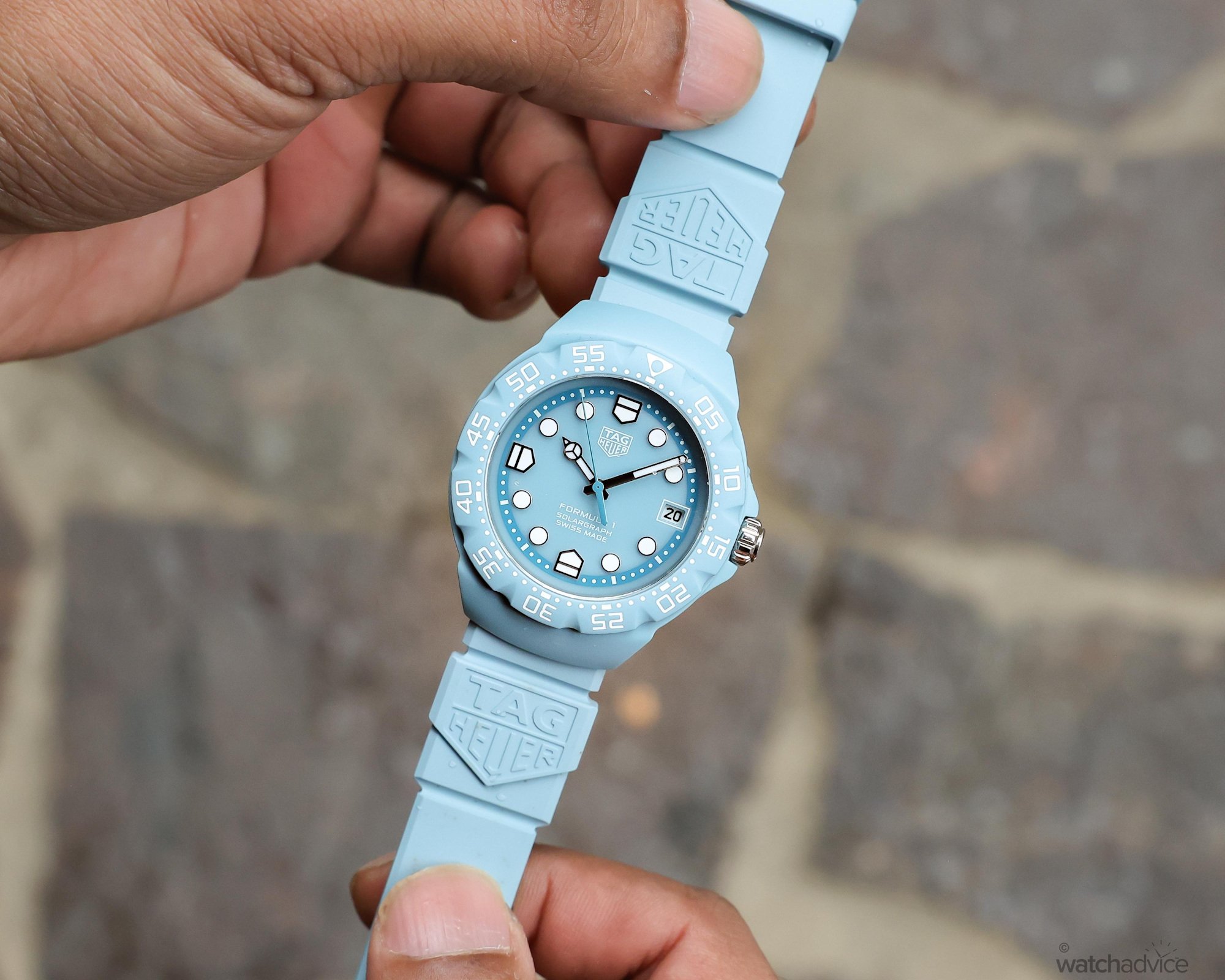
These new Formula 1 Solargraph editions are bigger than the original models that debuted in 1986, which had a case size of 34mm, but are also smaller in comparison to the 41mm to 43mm Formula 1 watches of the modern collection. Just like the original 1986 models, these are meant to be fun additions that you can wear without having to worry about them too much, whether you are heading to the beach, the pool, or simply wearing one as an everyday watch.
The TH-Polylight material is also central to the case and bezel design. TH-Polylight is TAG Heuer’s name for its lightweight bio-polyamide material, which the brand emphasises as offering “durability, colour flexibility and ergonomic benefits.” What I can attest to is that the material makes the watch sit more comfortably on the wrist, as it is extremely lightweight, which is also aided by the Solargraph movement.
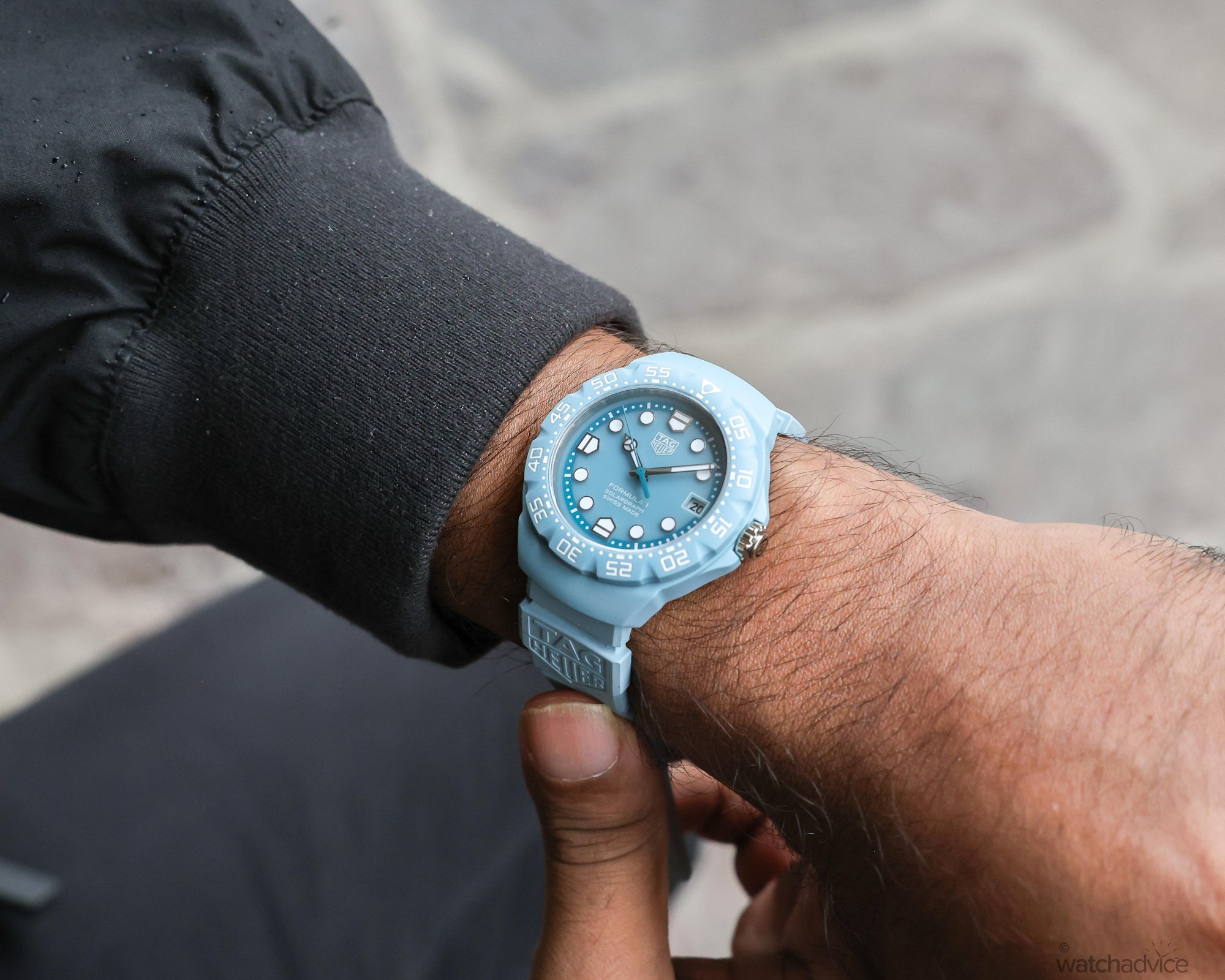
And as TAG Heuer has mentioned, what the TH-Polylight case allows the brand to do is have greater flexibility when it comes to case and bezel colours. Unlike a painted or coated steel case, TH-Polylight allows the case itself to carry the colour. There are already quite a few case colour variations in TAG Heuer’s Formula 1 Solargraph lineup, including other pastel colours such as the beige and pink editions. However, for me, it is this Pastel Blue that stands apart from the others in terms of being visually engaging and simply an overall fun piece to have in the collection.
While the beige and pink pastel colours have their own appeal, with beige arguably being the more versatile of the three, for me, if you are going down the coloured route, go the full distance! The Pastel Blue captures the playful character of the Formula 1 collection perfectly while still being surprisingly easy to wear.
More Than Just A Pretty Blue Dial
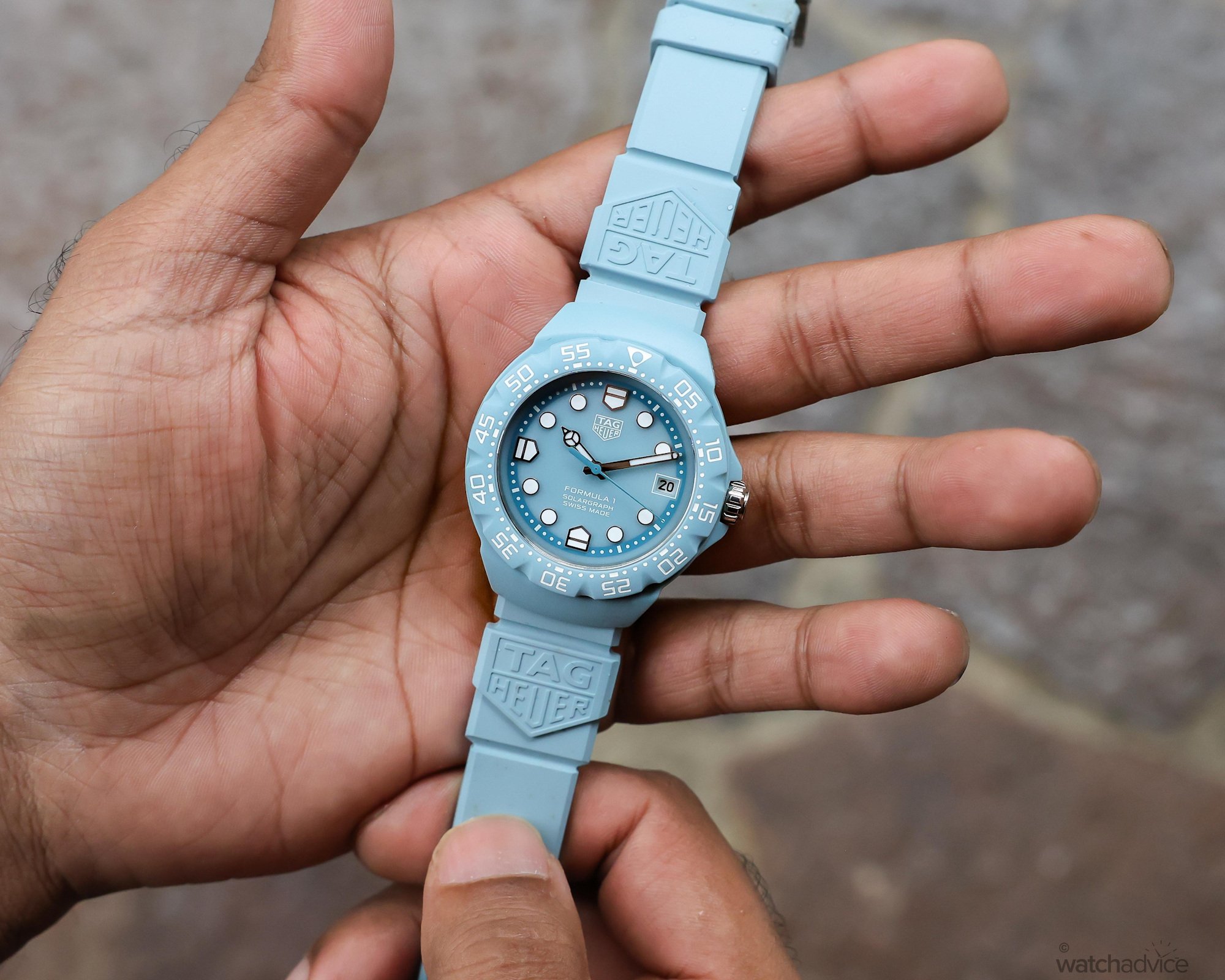
The dial retains the recognisable design of the TAG Heuer Formula 1 Solargraph editions while receiving the same pastel blue colour treatment to match the case and bezel beautifully. All three elements feature the same Pastel Blue, while the rhodium-plated hands and hour indices, coated with white Super-LumiNova, introduce a subtle contrast that helps break up the use of blue throughout the watch.
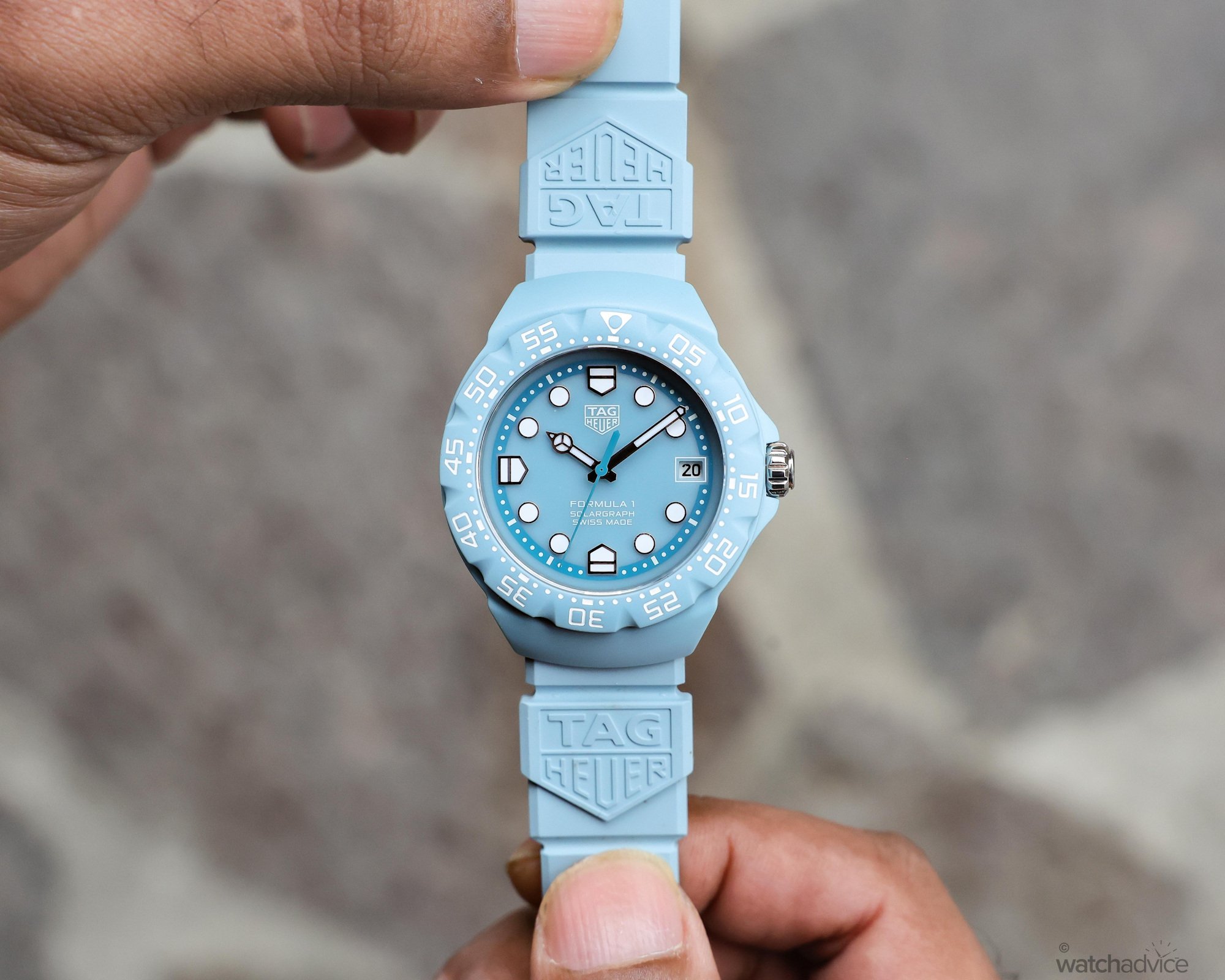
The dial finish is also opaline, which has more of a matte effect and diffuses light more softly than, for example, a dial with a sunburst finish. And when you look at the toned-down matte aesthetic of the case and bezel, the dial complements it nicely instead of introducing too much shine and disrupting the uniformity of the overall design.
For me personally, the applied hour indices helped to elevate the dial’s aesthetic more than I would normally have assumed. The indices are made up of circular markers, with those at 6, 9 and 12 o’clock taking the form of TAG Heuer’s iconic shield. This gives the watch more visual depth and character while also tying the brand’s identity back into the overall design.
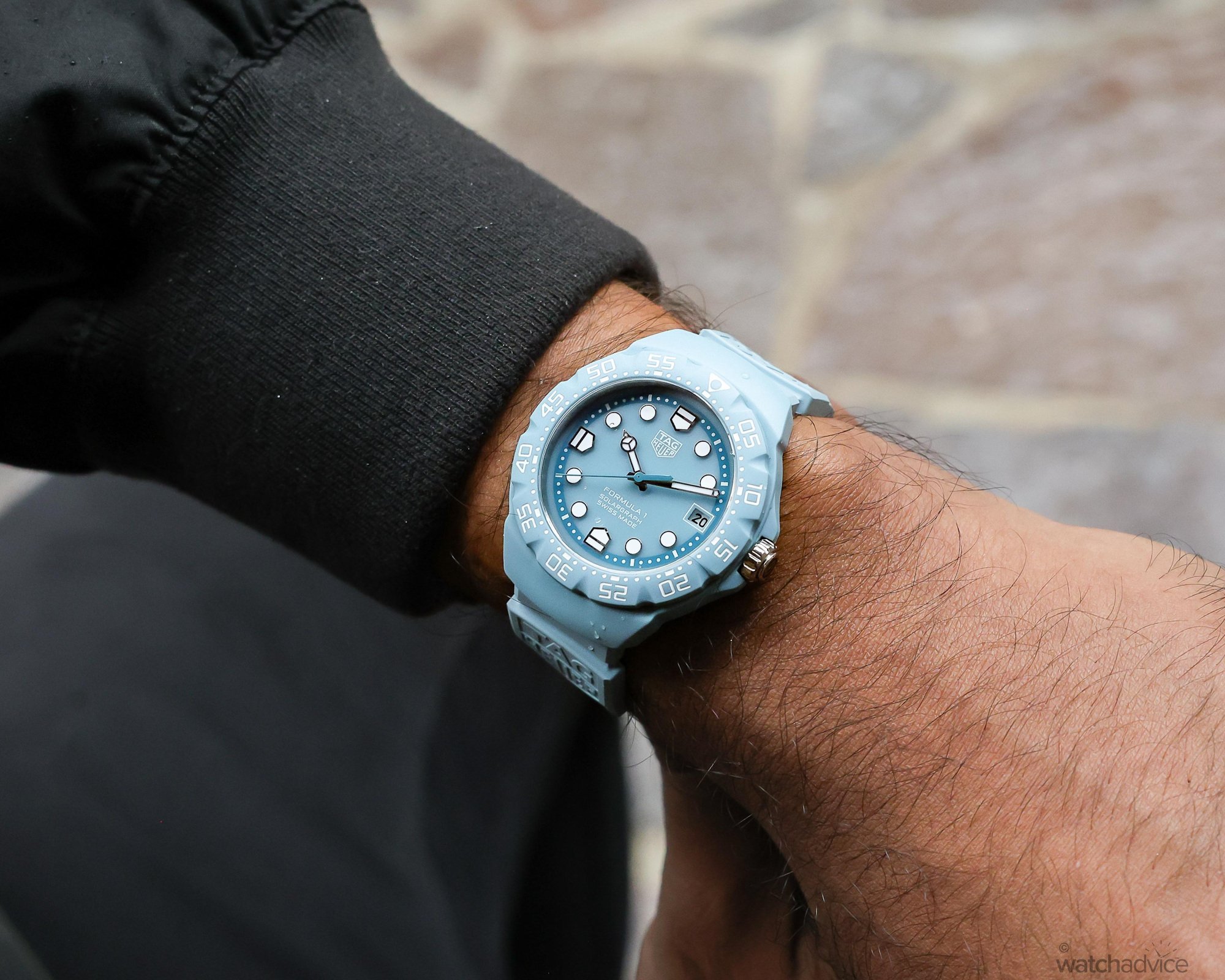
I also love the integration of the date window, which is a signature design of the modern TAG Heuer Formula 1 Solargraph series. The placement of the date window allows the dial to remain perfectly balanced, as it replaces the 3 o’clock hour index, essentially meaning that the window itself acts as an hour marker. And with the date wheel being done in white, it also matches the rest of the indices and their white Super-LumiNova coating.
One particular detail that stands out about the dial is its actual construction. This is not a traditional dial, as the Solargraph movement sits underneath it, with the dial playing an important role in how the watch receives the energy needed to power the movement. The dial uses two superimposed polymer layers that allow light to reach the solar cell underneath.
Essentially, the dial needs to perform two roles at once. It must provide enough colour and opacity to look like a conventional watch dial without appearing flat or boring, while also allowing natural or artificial light to pass through to the photovoltaic solar cell beneath it. As you may know, different dial colours naturally absorb and transmit light differently. With these pastel editions, TAG Heuer has carefully balanced the pigment and translucency of the polymer layers. The end result is this pastel blue hue, which appears like a solid colour to the naked eye but still allows light to pass through to the Solargraph system underneath.
Turning Light Into Everyday Practicality
As touched on earlier, TAG Heuer uses the TH50-00 solar-powered quartz movement, which converts both natural and artificial light into electrical energy. Under normal use, you would never need to worry about winding or charging the watch, or regularly replacing a disposable battery as you would with other conventional quartz timepieces.
During the time I had this watch, not once did I have to worry about winding it. Even if I didn’t wear it for a day or two, it would still run perfectly fine, as the artificial light reaching the watch while it sat on my desk kept it charged in the background. TAG Heuer states that once fully charged, the watch can continue operating for up to 10 months in complete darkness, which is obviously far longer than it is likely to remain unworn during normal ownership.
Even a brief exposure to either natural or artificial light can provide approximately one day of operation. In the event that the watch powers down from not having enough energy, the TH50-00 movement can restart after roughly 10 seconds of light exposure. TAG Heuer also claims that the rechargeable energy storage cell can last up to 15 years before it needs to be replaced, which is considerably longer than the two-to-three-year replacement cycle of a traditional quartz battery.
So, how is the Solargraph movement able to charge so effectively with minimal light exposure? Well, it starts with the dial. As mentioned earlier, the dial has two superimposed polymer layers that allow natural and artificial light to pass through. The photovoltaic solar cell sitting underneath these layers then converts the incoming light into electrical energy, which is stored in a rechargeable accumulator and used to power the movement.
This is a calibre that is not about hand-finishing or traditional mechanical craftsmanship. Instead, its value comes from the accuracy of the movement, the convenience of not having to wind the watch, and its long-term longevity.
How Does The Pastel Blue Formula 1 Solargraph Wear?
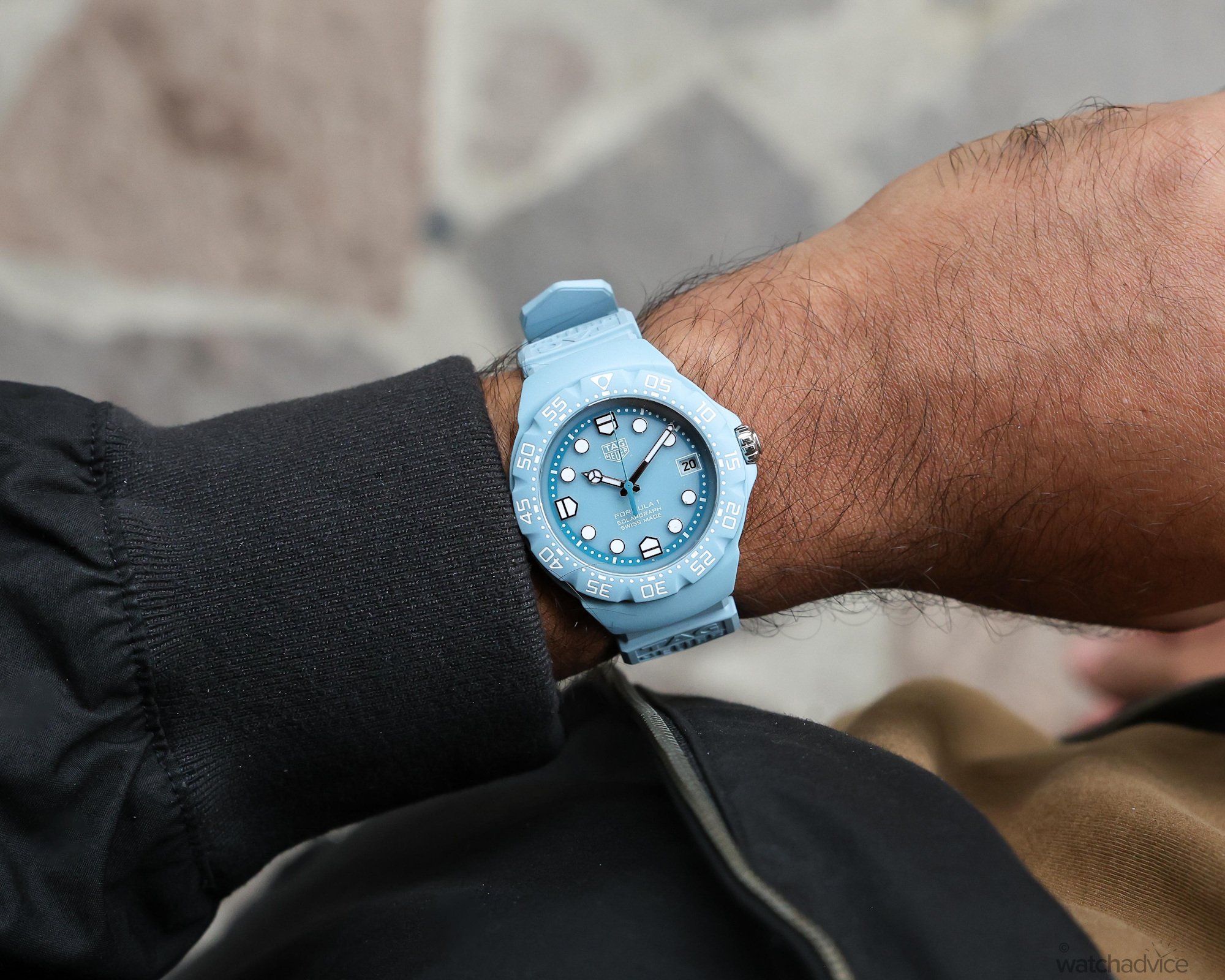
These fun TAG Heuer Formula 1 Solargraph editions have always tended to wear well, as they are compact in size and well-proportioned to suit even smaller wrist sizes. With a 38mm case diameter and a lug-to-lug distance of 45.2mm, the watch sits comfortably on my wrist without any overhang, while still maintaining enough presence to feel like a proper sports watch.
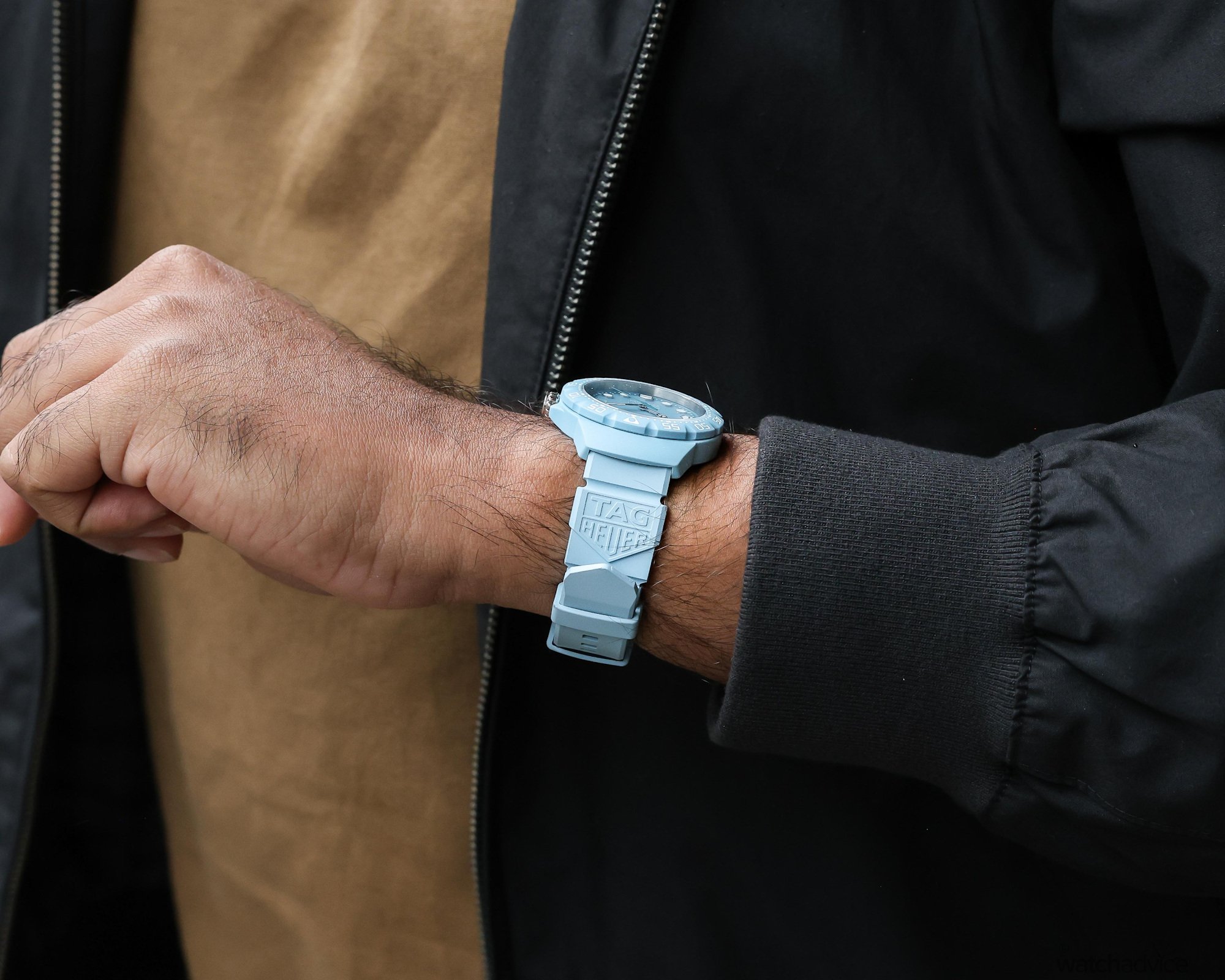
While the case measures only 9.9mm thick, it has a fairly substantial presence and appears thicker than the dimensions suggest, mainly because of the prominent bezel. The Solargraph quartz calibre helps keep the overall profile relatively slim, but with the bezel occupying a large portion of that profile, the watch carries greater visual thickness on the wrist.
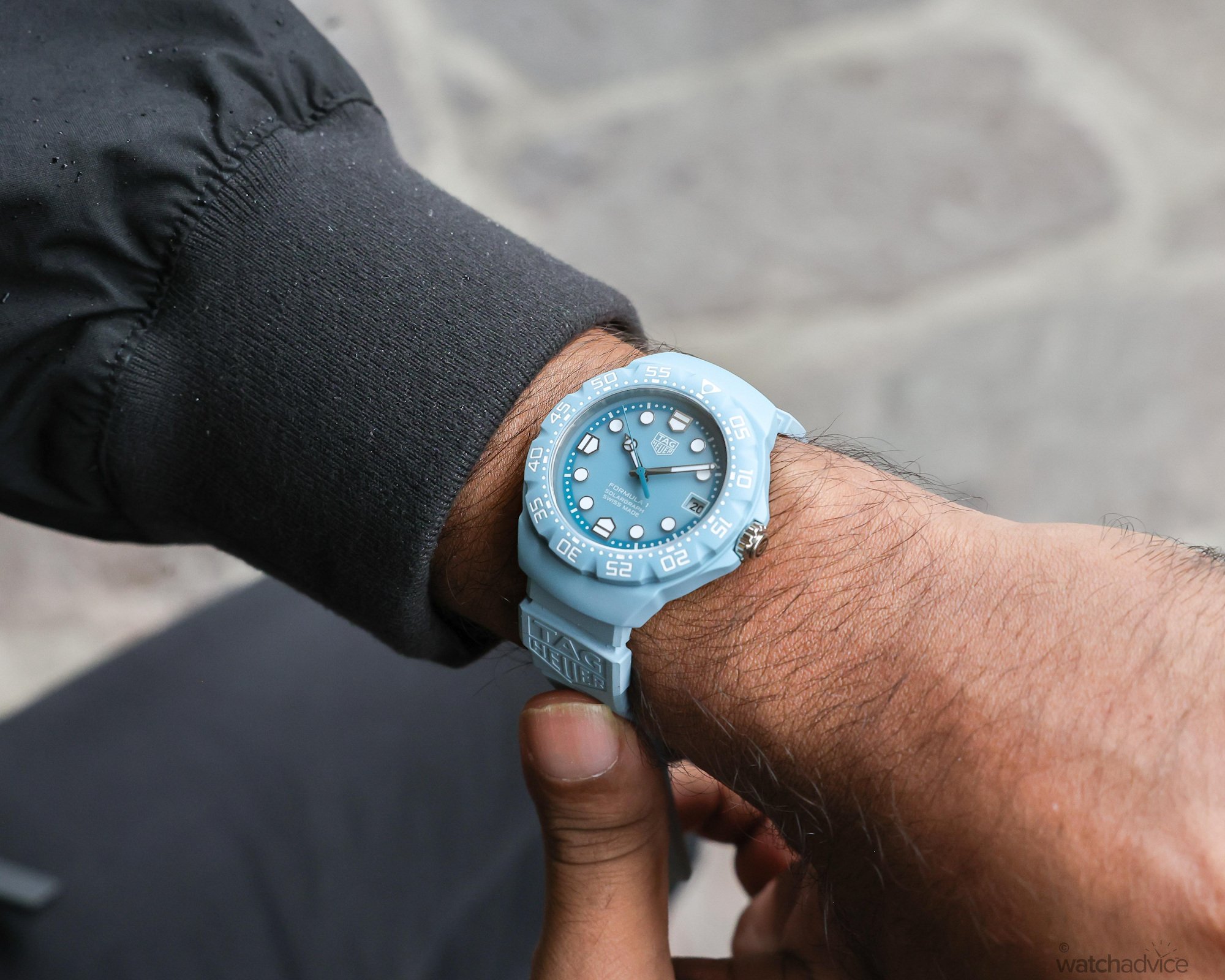
The TH-Polylight construction also keeps the watch incredibly lightweight, which I found to be one of its biggest positives. Throughout my time with it, the watch remained comfortable over extended periods and never felt like it was weighing down my wrist. Combined with its durable construction and 100 metres of water resistance, it is the kind of watch you can wear for almost anything and rarely feel the need to take it off.
The rubber strap is another key element of this Formula 1 Solargraph that adds to the practicality and wearability of the watch. It feels soft and, as you would expect from a rubber material, flexible around the wrist. The lightweight of the strap also complements the TH-Polylight case perfectly, adding to the overall lightweight construction of the timepiece.
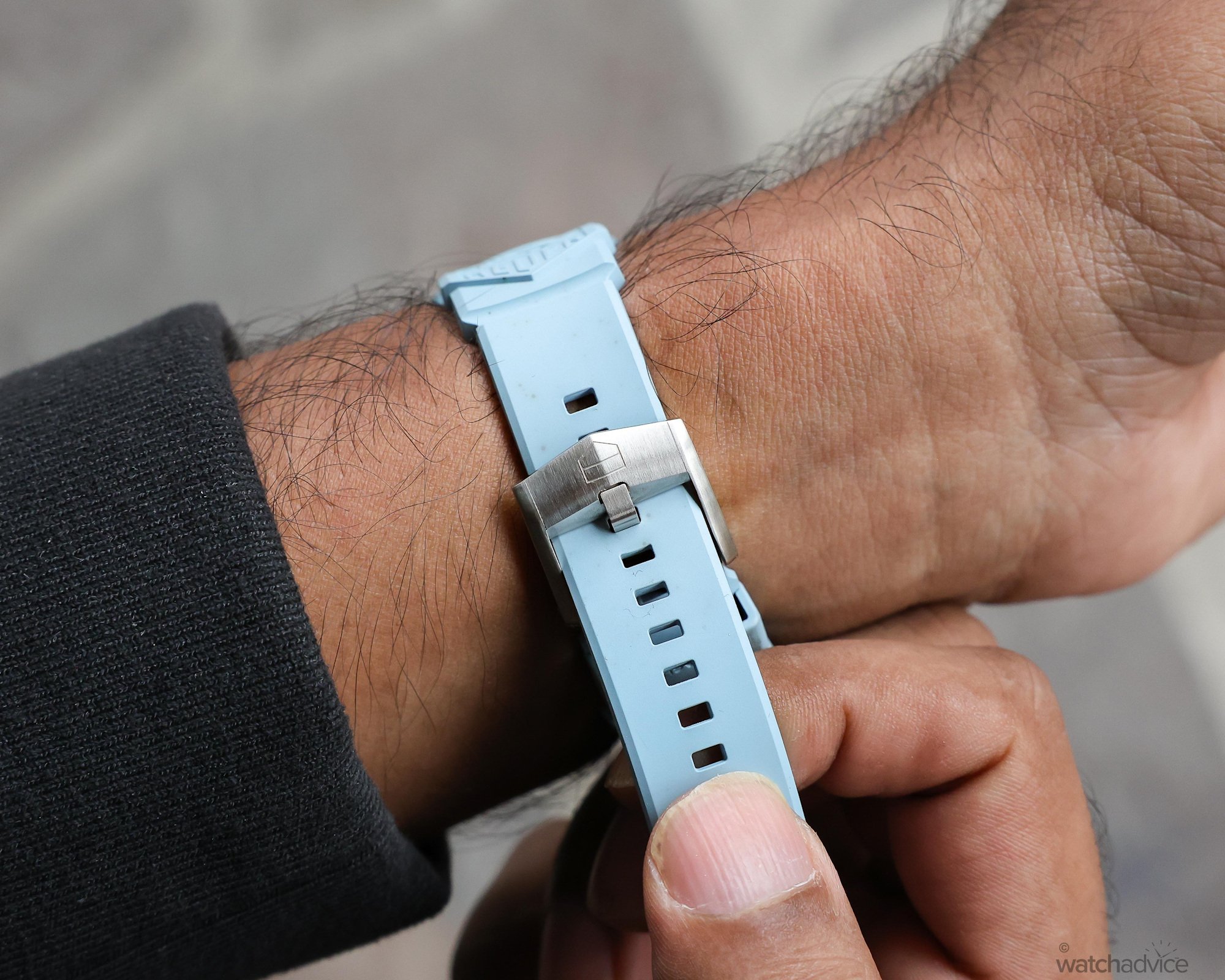
The colour matching of the rubber strap to the case, bezel and dial actually suits this design. While I normally don’t go for a fully monochromatic look, I think having any colour other than this Pastel Blue would detract from the eye-catching appeal of the watch. A black strap could work well here, as it would allow the case, bezel and dial to stand out more, but it would also lose the overall cohesion and unapologetically playful character that makes this Pastel Blue edition so distinctive.
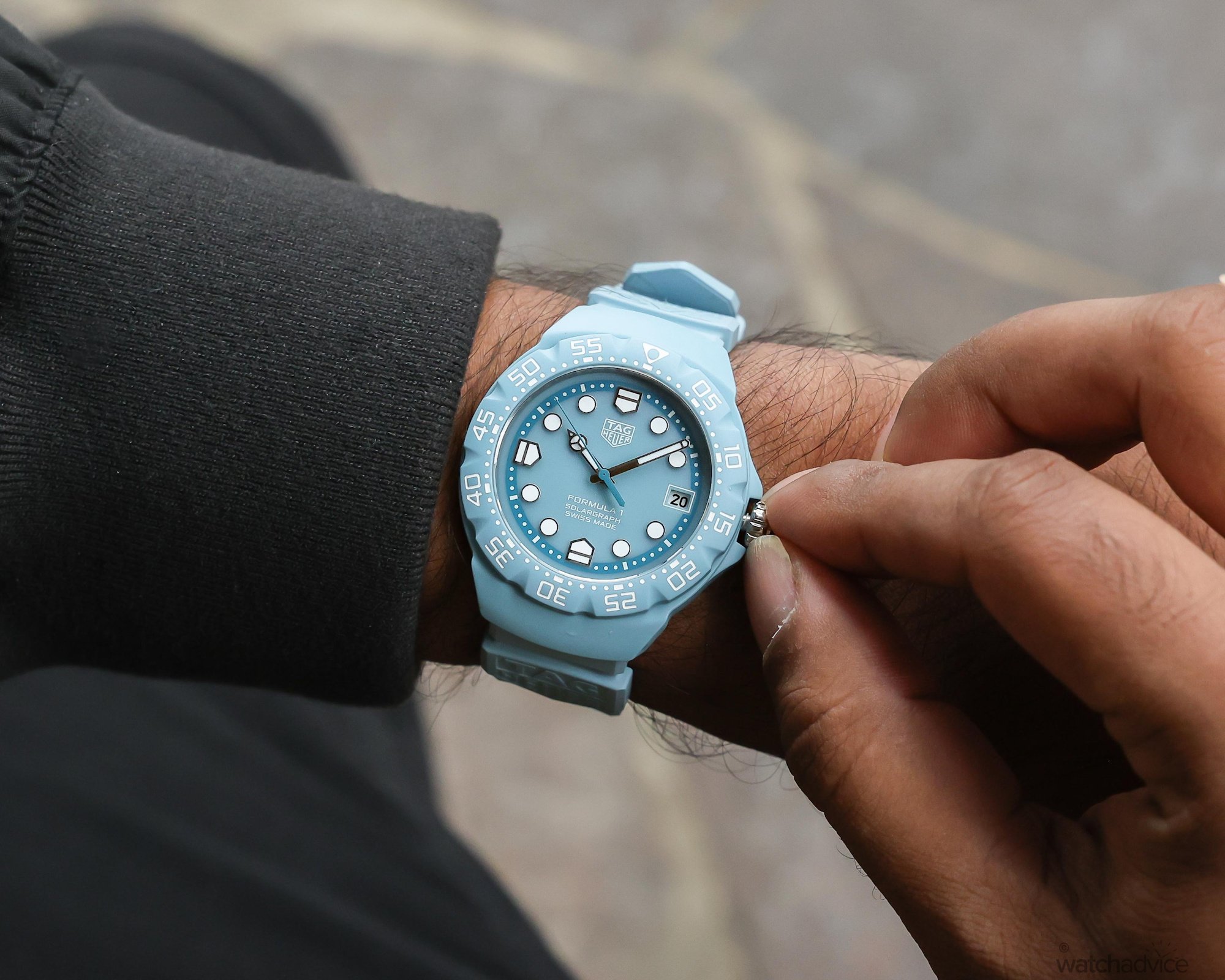
Out of the three pastel Formula 1 Solargraph editions, would I still choose the blue after spending some time with it? The answer would be a resounding yes. The closest choice would be the Pastel Pink edition, as it features a prominent red minute track that stands out beautifully and is something the Pastel Blue and beige models don’t offer as much.
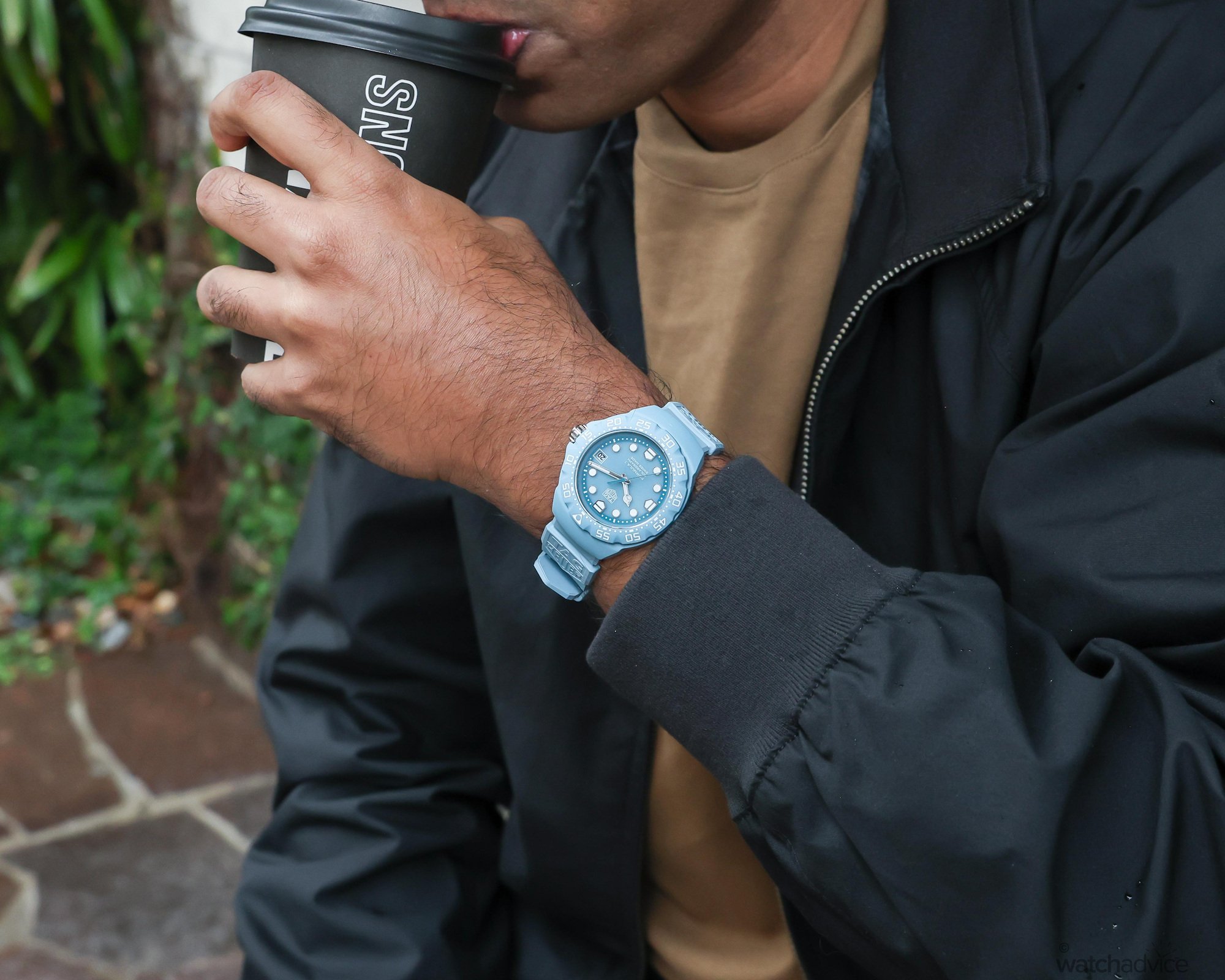
And while the beige is arguably the more “versatile” option with its more subdued appearance, for me, that is also its Achilles’ heel. These Formula 1 Solargraph editions are meant to be bold, playful and represent the “life of the party,” if you will. The Pastel Blue edition embraces that personality more convincingly, delivering the fun, eye-catching presence that this collection was always intended to have.
Final Thoughts
These Formula 1 Solargraphs have always represented the fun and playful side of TAG Heuer’s solar-powered collection. If we go back to the original Formula 1 models from 1986, that was exactly what the brand intended them to be: fun, colourful, lightweight, accessible and easy to wear. These new pastel editions do exactly that, combining compact proportions and vibrant colours with the everyday practicality that made the original Formula 1 models so successful in the first place!
Sitting at AUD $2,950, however, these Pastel editions can be quite expensive, especially when you consider that they house quartz movements within TH-Polylight case constructions. However, this isn’t just a standard quartz movement. The TH50-00 is far more advanced than a conventional battery-powered quartz calibre.
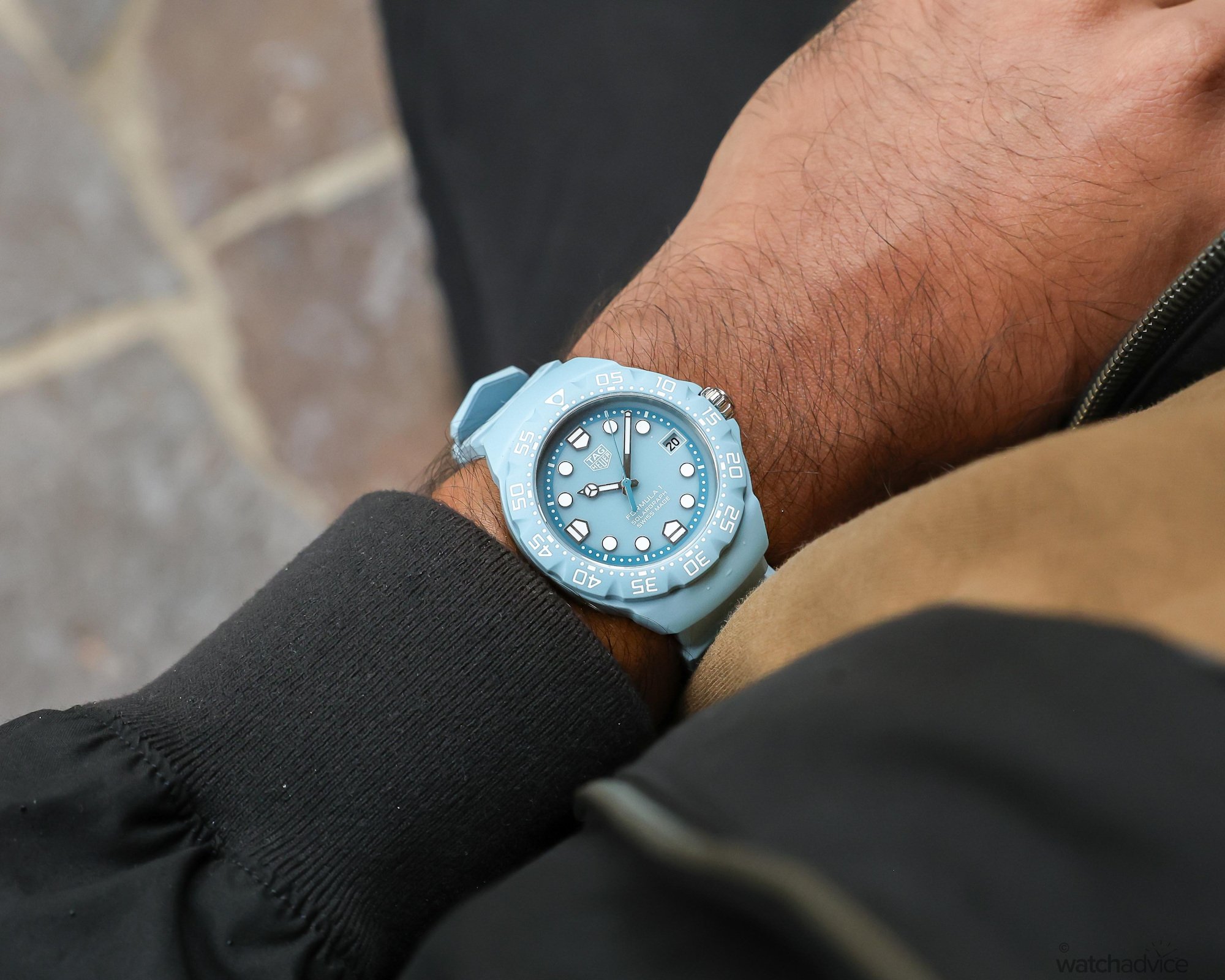
Its Solargraph technology offers up to 10 months of autonomy when fully charged and has a claimed accumulator lifespan of up to 15 years. Combined with 100 metres of water resistance, a five-year warranty, lightweight construction and the fun appeal of these Formula 1 Solargraph editions, there is more substance and long-term practicality here than their playful appearance may initially suggest.
While it was difficult to choose among the three pastel TH-Polylight editions, the Pastel Blue ultimately resonates most with me. It is a beautiful shade that catches attention easily, while the fully monochromatic design gives the watch a personality that the more subdued beige edition cannot quite match.
The TAG Heuer Formula 1 Solargraph Pastel Blue may not be the most conventional or the most versatile in terms of wearability, but that is also what makes it so appealing. This is a watch designed to bring some fun back to the wrist, and for me, this Pastel Blue edition captures that original Formula 1 spirit better than any other!
TAG Heuer Formula 1 Solargraph Pastel Blue
Reference & Specifications
| Feature | Specification |
|---|---|
| Reference | WBY1163.FT8113 |
| Dimensions | 38mm case diameter x 45.2mm lug-to-lug distace x 9.9mm thickness |
| Case | TH-Polylight Sand-blasted in pastel blue. Turning bezel in pastel blue with white indications. |
| Dial | Opaline pastel blue dial with white indications. SuperLumi-Nova used for hands and hour indices. |
| Crystal | Sapphire with anti-reflective coating |
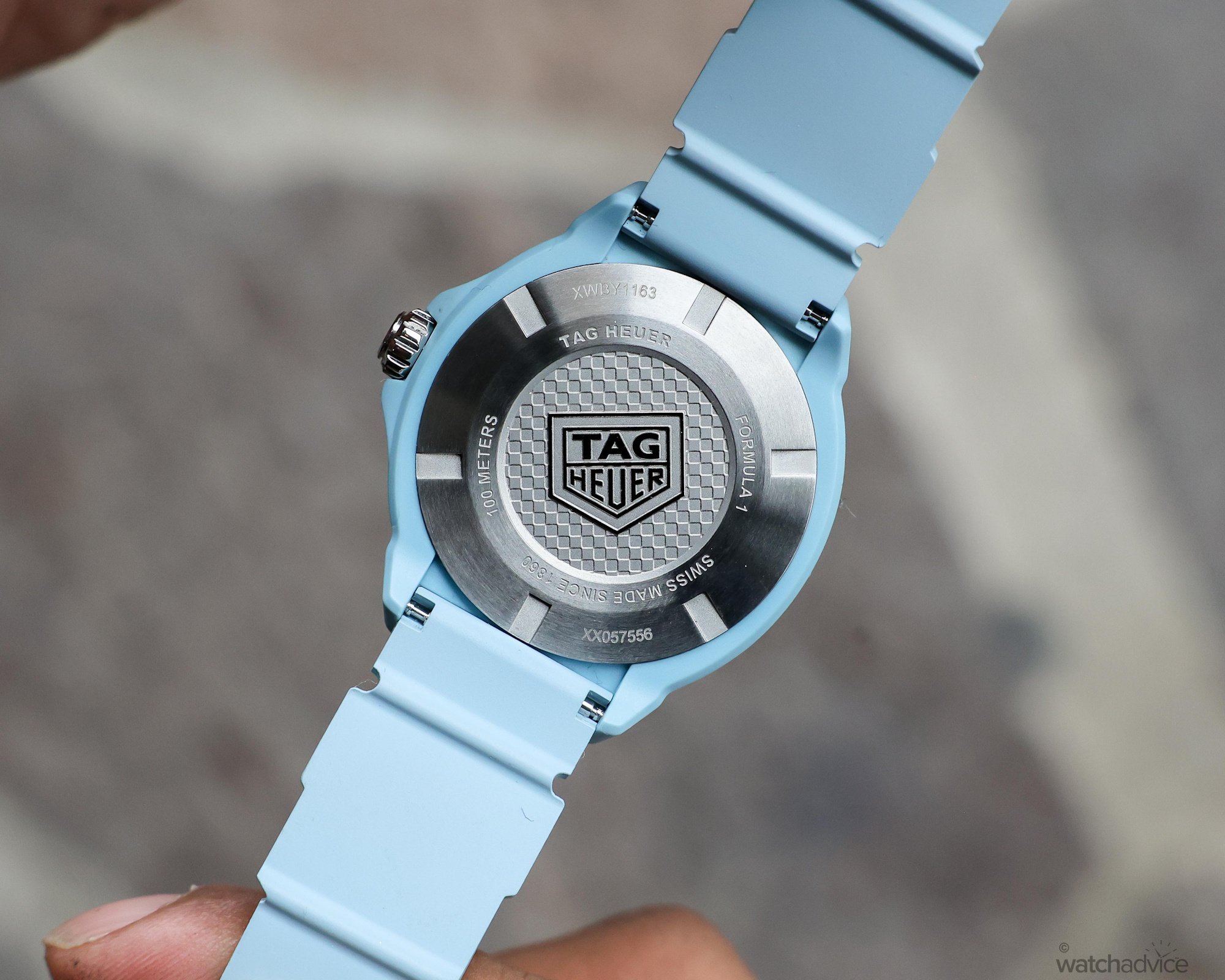
| Caseback | Steel, closed with TAG Heuer logo. |
| Movement | TH50-00 solar-powered quartz movement |
| Power Reserve | A full charge delivers up to 10 months of autonomy, while brief exposure to light can power the timepiece for a full day. |
| Beat Rate | N/A |
| Water Resistance | 100m / 10bar |
| Strap/Bracelet | Pastel blue rubber strap with steel pin buckle. |
Australian Retail Price: AUD $2,950
Availability: Limited to 3,000 pieces worldwide. Available through TAG Heuer boutiques and authorised retailers, or head online to TAGHeuer.com.au
Full Photo Gallery: