

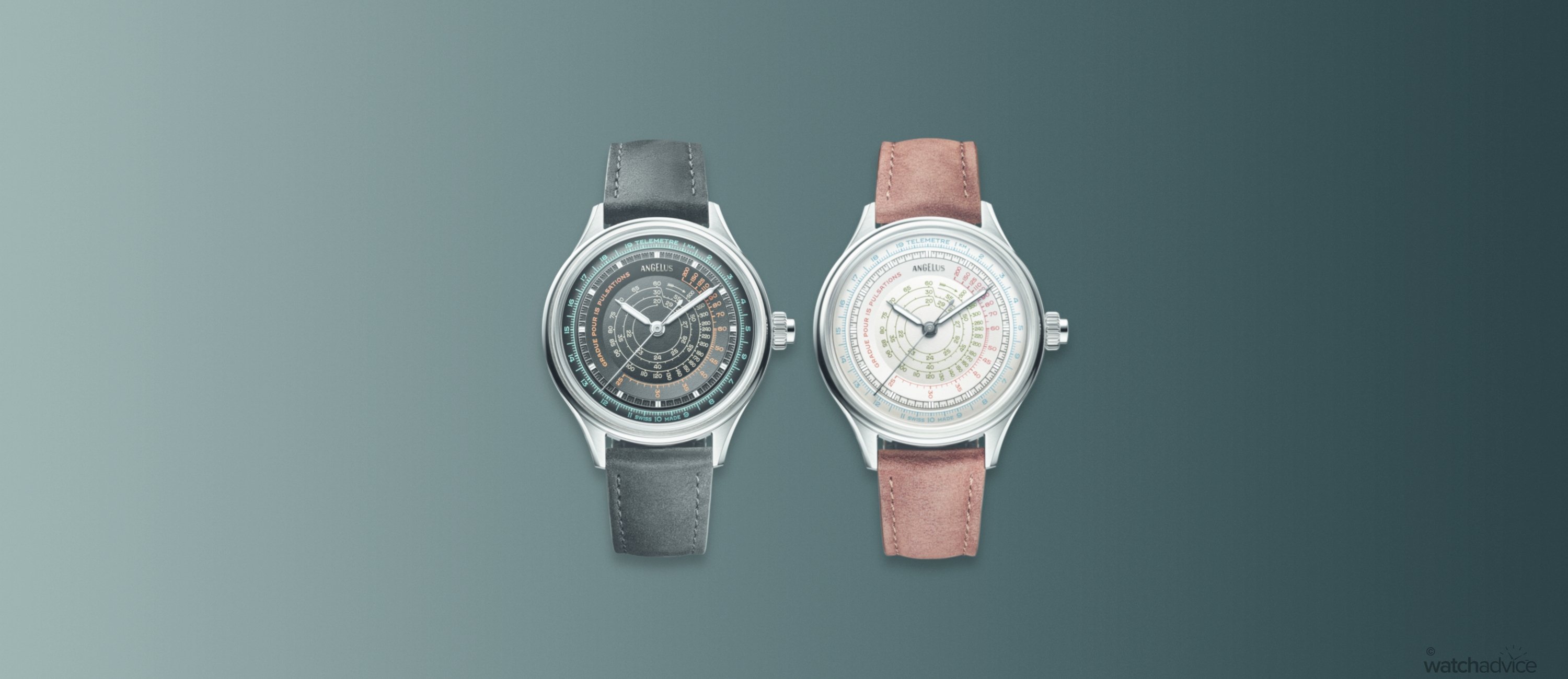
Flexing their heritage in chronograph watchmaking, the new Angelus Instrument de Mesures links three legendary measurements into one watch.
Founded in 1891 in the ever-famous Le Locle municipality of Switzerland, Angelus is responsible for several milestones in horological history. The brand built a reputation around creating practical complications that served the wearer’s needs.
From alarms to calendars and chronographs, and even military contracts alongside Panerai, no Angelus watch was ever created without purpose. Swallowed by the quartz crisis, the brand was brought back to life by La Joux-Perret in 2011 and immediately picked up where it left off. Today, it is a major player within the Swiss arm of the Citizen Group, retracing its heritage and re-establishing itself in the chronograph world.
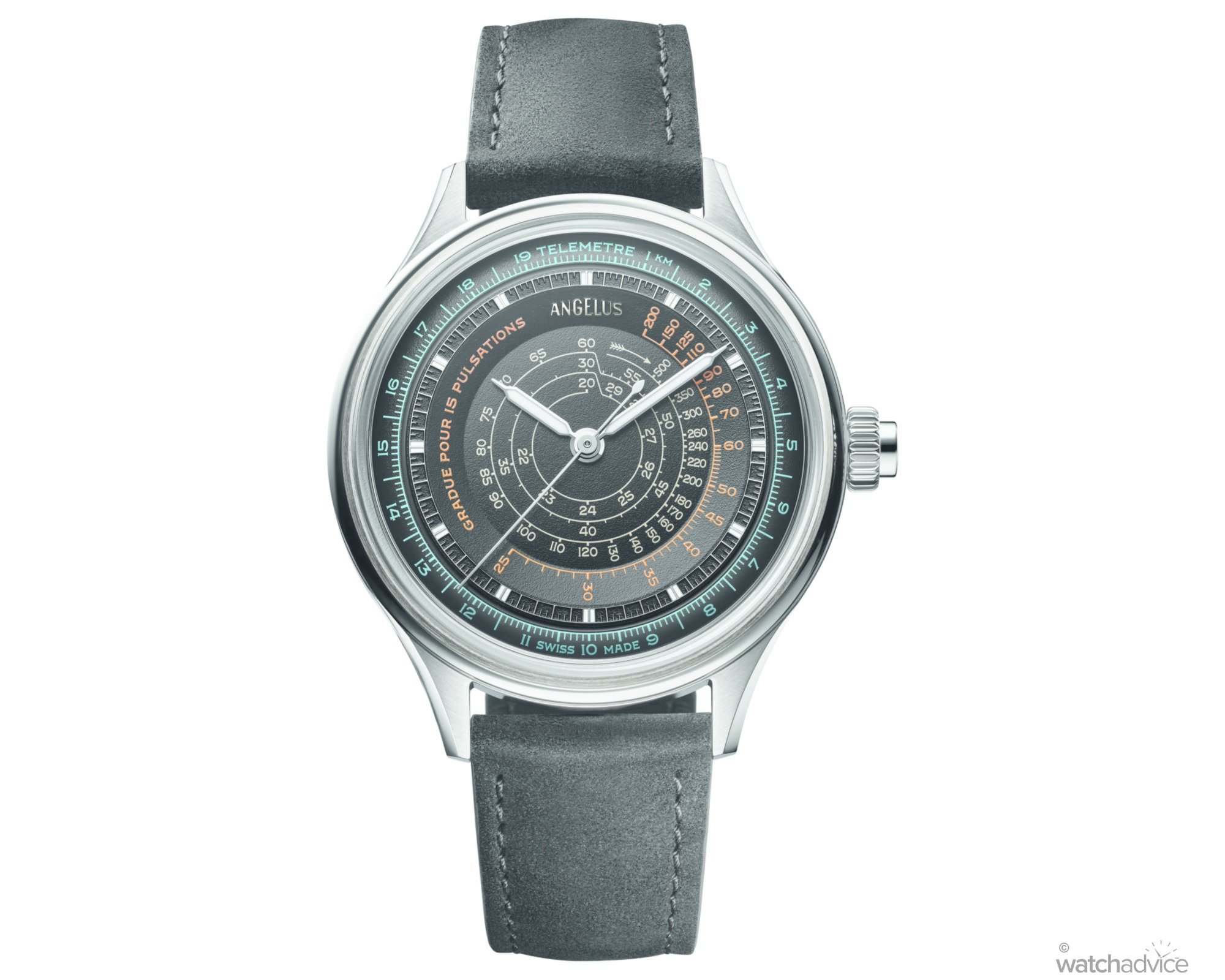
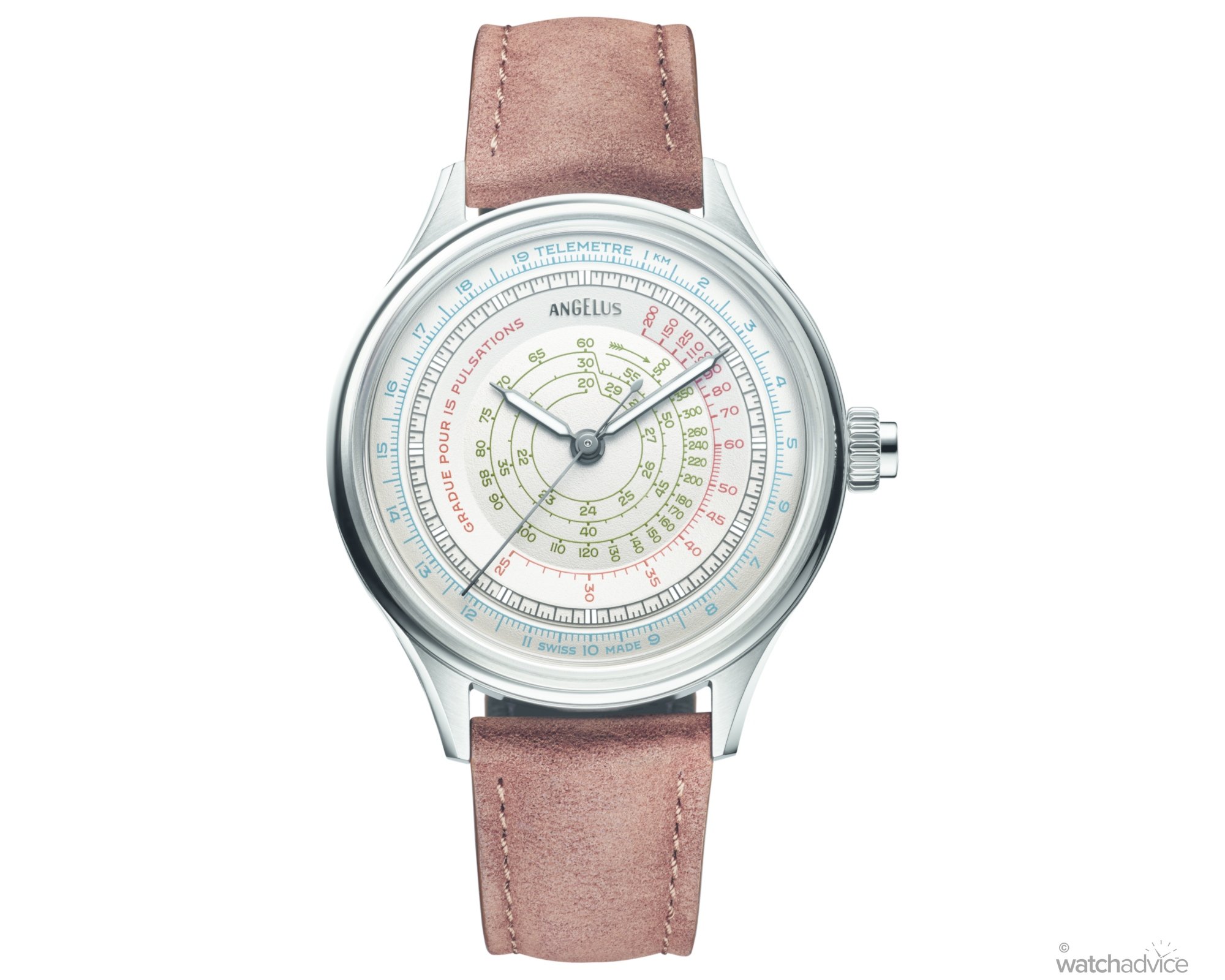
A staple of the Angelus catalogue is the Calibre SF15, a monopusher chronograph introduced in 1925 as a tool of measurement. Paying tribute to the complication that helped build the brand, Angelus has introduced the Instrument de Mesures, harnessing all of its metrological experience and asking the question: why measure just one thing when you can measure them all?
Measuring Up
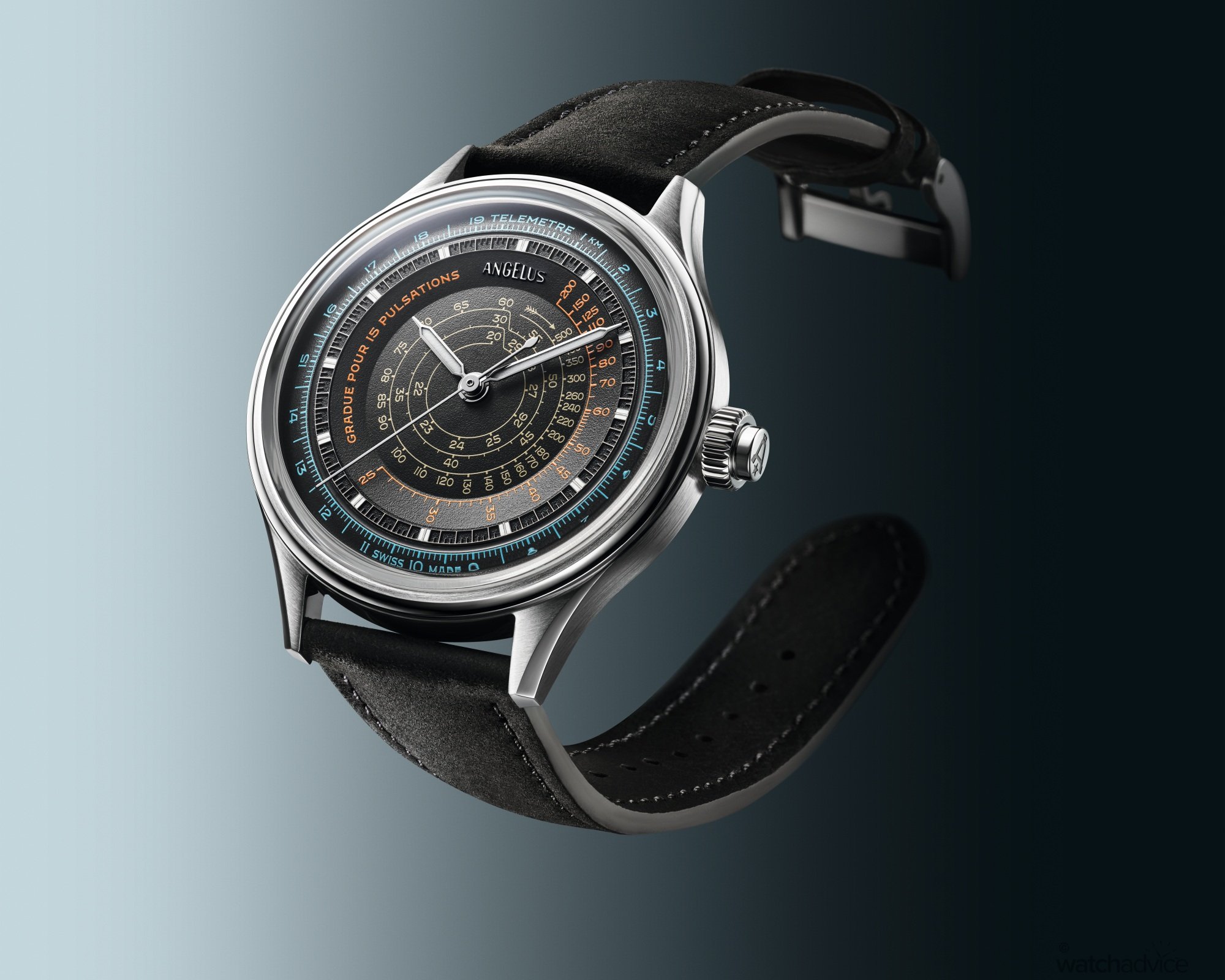
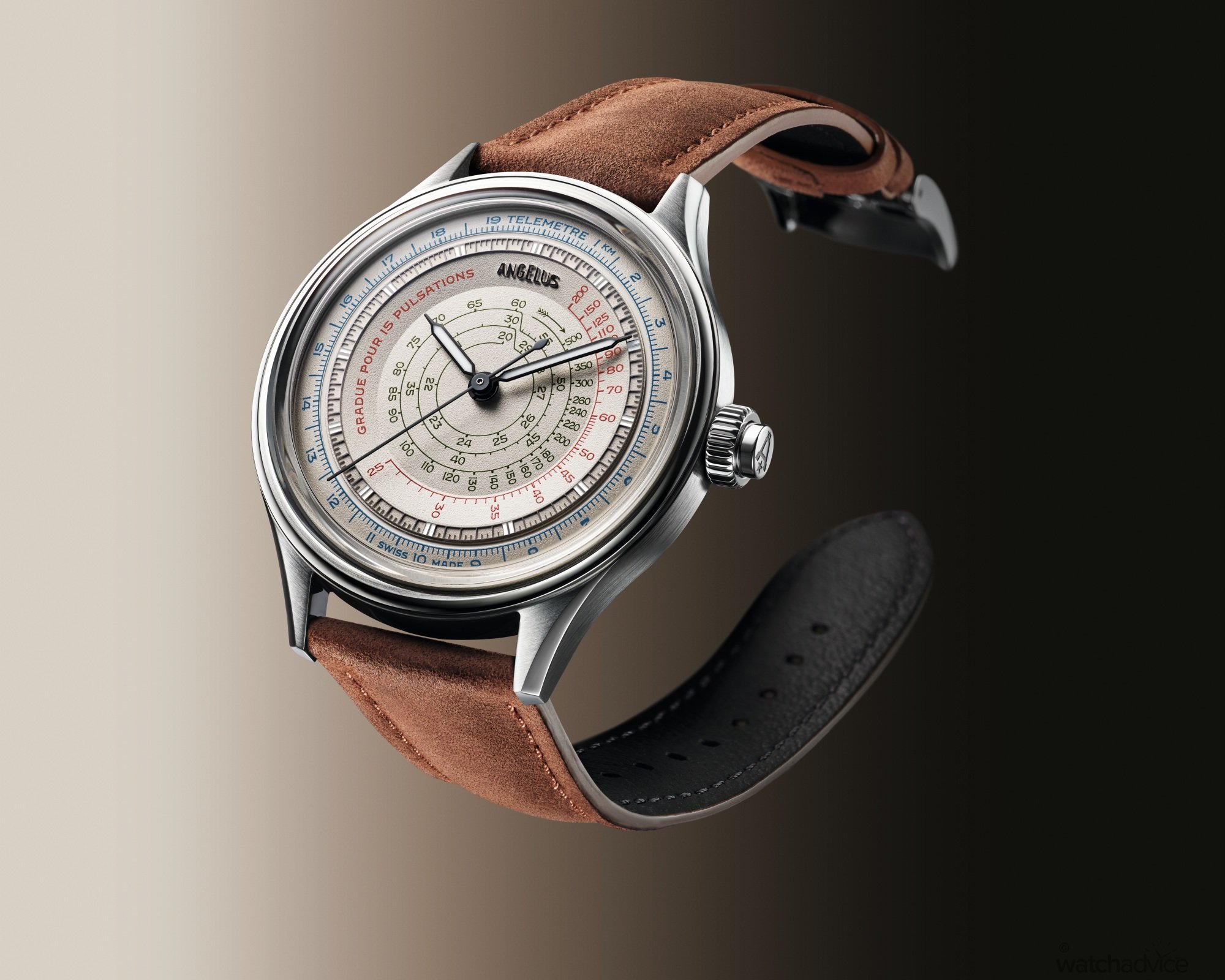
Sized at 39mm in diameter and just 9.25mm thick, the Angelus Instrument de Mesures follows in the footsteps of the brand’s other monopusher chronographs like the Instrument de Vitesse. Encased in stainless steel, it’s a largely inoffensive wear and could even double as an unconventional dress piece. It comes fitted to either a black or brown calfskin leather strap and is finished with a steel pin buckle for classic adjustability and comfort.
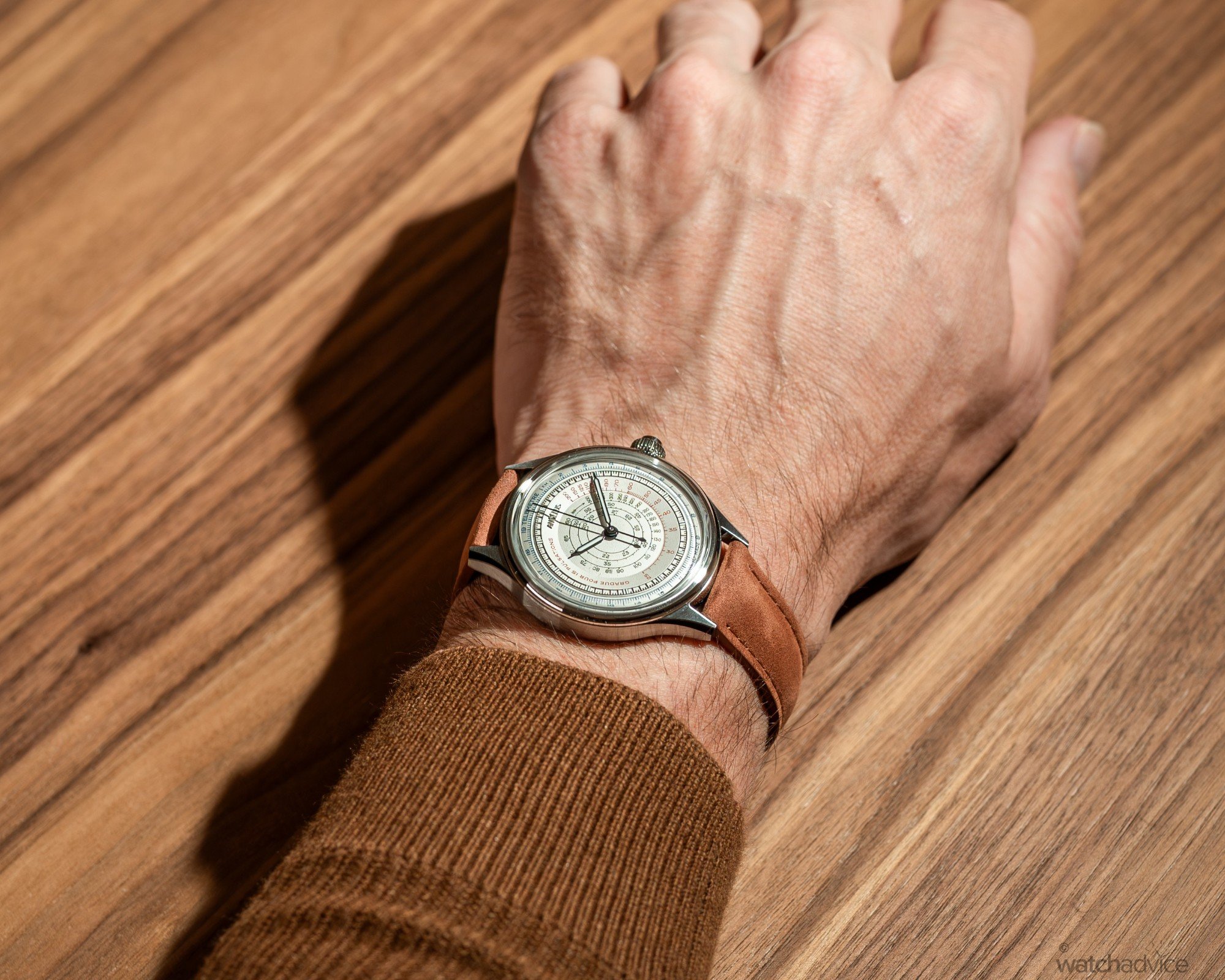
The mid-century inspiration is apparent, though if they were aiming for complete historical accuracy, they probably would have made it somewhere between 34mm and 36mm. For our eyesight’s sake, we’re all probably glad they didn’t.
By sizing up the flowing case profile to 39mm and topping it off with a box sapphire crystal, Angelus blends contemporary sensibilities with the delightfully retro vibe of the La Fabrique series. Water-resistant to 30 metres, it’s not a watch for ambitious waterborne adventures – but it can safely time them, from a distance.
Three For The Price Of One
Speaking of timing, the Instrument de Mesures is perhaps Angelus’ most metrologically focused watch yet. Available with either an ebony black or ivory white dial, the display is about as busy as a dial can get. This is largely due to the three chronograph scales printed across its surface; blue, red, and green on the white dial, and blue, orange, and cream on the black.
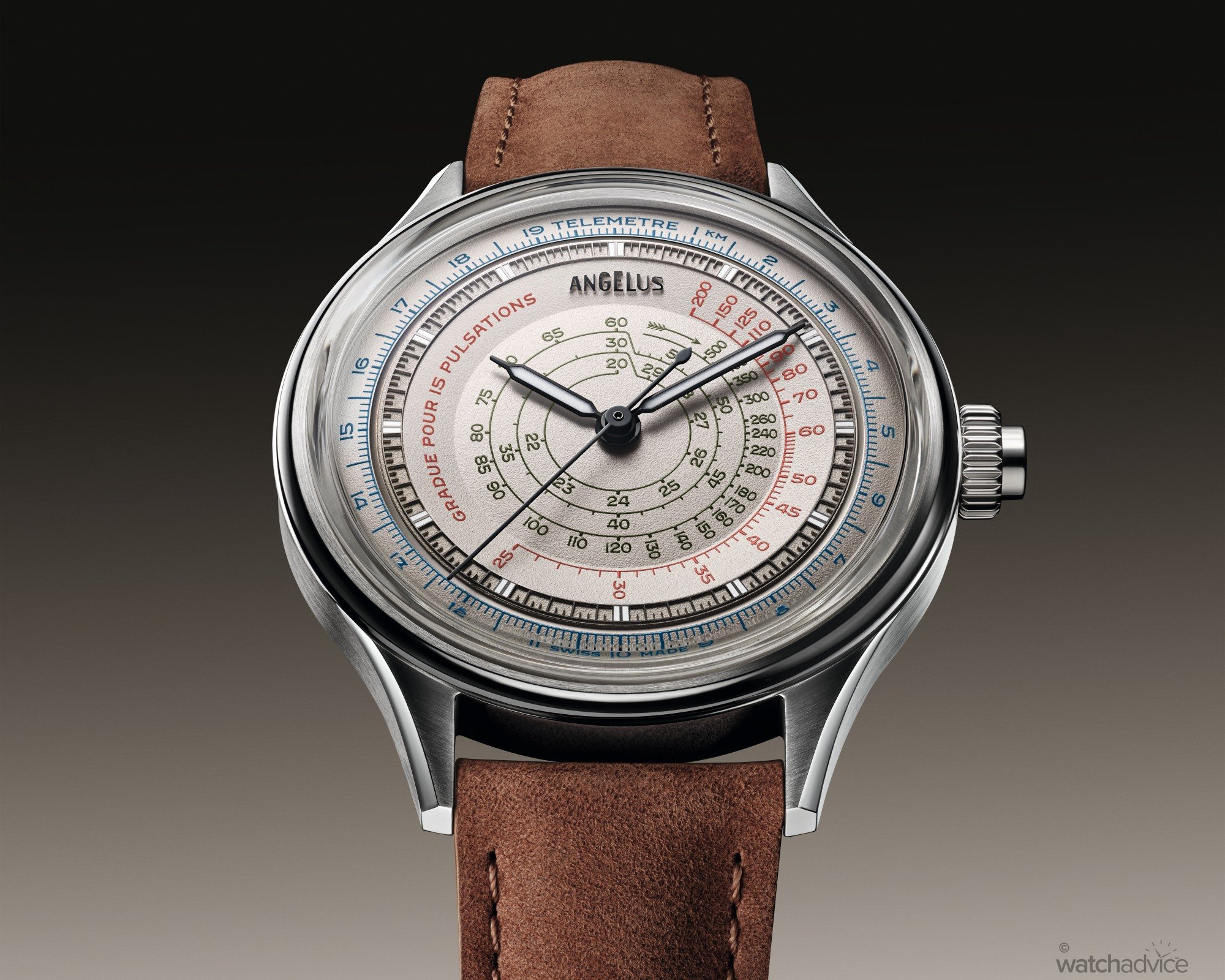
The outermost scale is the telemeter, which gauges the distance to a sound-producing event by calculating the time elapsed between seeing it and hearing it. A practical use would be measuring the distance of a thunderstorm; start the timer when you see the lightning strike and stop it when you hear the thunder, and the scale will tell you how far away it is.
The second scale is the pulsometer, which measures heart rate by running the chronograph while counting 15 pulsations. Finally, the inner tachymeter determines the speed of an object travelling over one kilometre; simply start the chronograph at the beginning and stop it after one kilometre.
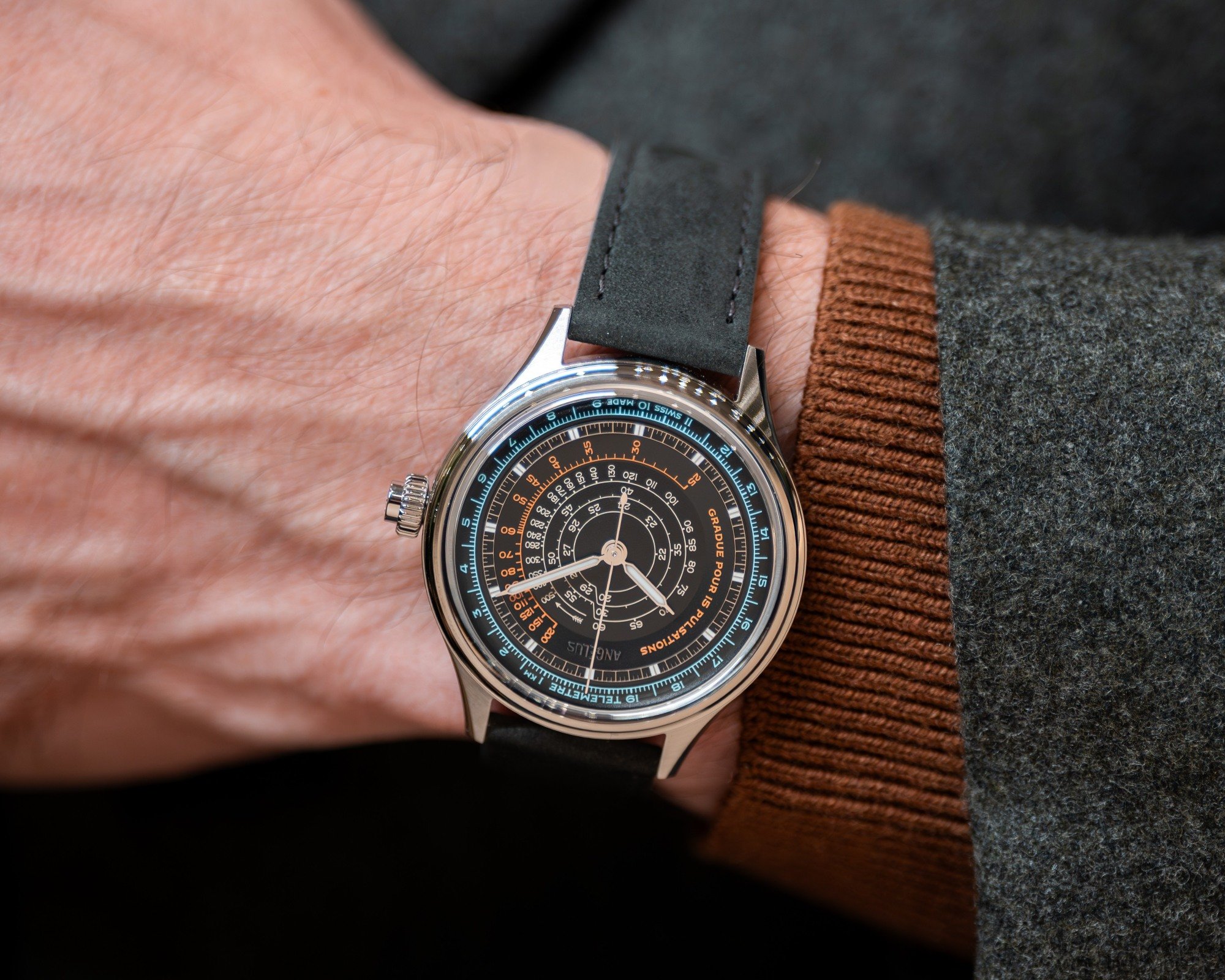
While this sounds like a lot to take in at once, the Instrument de Mesures’ dial structure ensures excellent readability at all times. Angelus employs a multi-level dial construction consisting of a domed centre, a sloped intermediate section, and a raised outer ring.
The markings are laser-cut directly into the dial structure, with a noticeable separation between each scale. Finally, the hour and minute hands tell the time via a minute track positioned between the pulsometer and telemeter scales, complete with small baton indices for each hour.
A Classy Chronograph
Turning the watch around, Angelus enthusiasts will find a familiar sight: the in-house Calibre A5000 movement. Manually wound, it beats at a comfortable 3Hz (21,600VpH) and offers a 42-hour power reserve. Unsurprisingly, it is equipped with the monopusher chronograph complication, controlled by a button integrated into the crown.
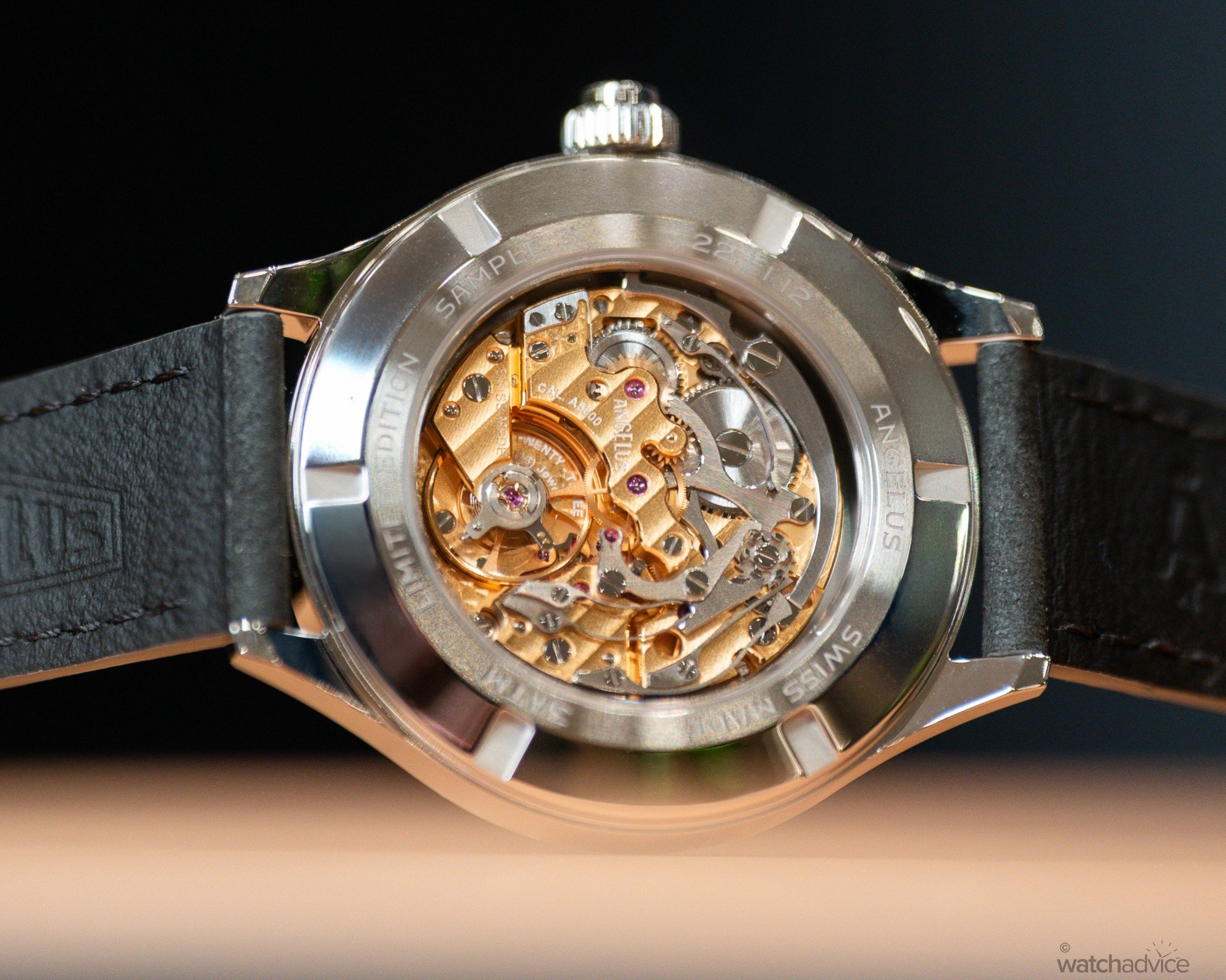
Featuring a column wheel and a vertical clutch, these and other key components have been highlighted in palladium, while the remainder of the movement is finished in gold. The result is a striking visual contrast that once again celebrates the chronograph in form as much as in function.
Initial Thoughts
The La Fabrique series from Angelus is, ostensibly, a playbook on how to properly retrace your steps in the watch industry. With roughly 50 years between succumbing to the quartz crisis and being revived by La Joux-Perret, there is plenty of ground to cover. Yet with releases like the Instrument de Mesures, Angelus has handled the task with grace and clarity.
With the dominance of minimalist, visually lukewarm timepieces, it’s nice to see brands like Angelus pushing back against the trend. Not many watchmakers would want to tackle the idea of cramming every metrological scale into a single watch, but Angelus has done exactly that, creating a timepiece that is as distinctive as it is practical. In doing so, the Instrument de Mesures not only brings back a piece of the brand’s past, but also lays another brick on the path towards Angelus’ future.
Reference & Specifications
| Feature | Specification |
|---|---|
| Reference | OCHDS.B01A.V1476S (Ebony Black) OCHDS.IO1A.V1477S (Ivory White) |
| Dimensions | 39mm case diameter x 9.25mm thickness |
| Case | Stainless steel |
| Dial | Grained ebony black / ivory white with blue, orange / red, & cream / green accents |
| Crystal | Sapphire |
| Caseback | Open, sapphire |
| Movement | Manual wind Cal. A5000 with monopusher chronograph (60sec hand) complication |
| Power Reserve | 42h |
| Beat Rate | 3Hz / 21,600VpH |
| Water Resistance | 30m / 3bar |
| Strap/Bracelet | Black / brown leather strap with steel pin buckle |