


Watches & Wonders 2026: Jaeger-LeCoultre shows why the Watchmaker of Watchmakers reigns supreme when it comes to complications and artistry.
With its latest releases, Jaeger-LeCoultre is doing what it does best, and that is approaching high watchmaking from different angles. Rather than focusing on a single headline complication, like what we have seen with the new Master Hybris Intentiva, these two new pieces highlight separate areas of expertise within the brand: precision-driven mechanics and ultra-thin complexity.
The first is the Master Grande Tradition Tourbillon Jumping Date, built around one of the brand’s most recognised modern calibres. The second is the Master Hybris Mechanica Ultra Thin Minute Repeater Tourbillon, which pushes technical limits, combining a minute repeater and tourbillon within an extremely slim case. They’re very different watches, but together they showcase some of the best Jaeger-LeCoultre has to offer!
Master Grande Tradition Tourbillon Jumping Date
The Master Grande Tradition Tourbillon Jumping Date revisits the Calibre 978, a movement that has been part of Jaeger-LeCoultre’s lineup for two decades. It’s a calibre with some history behind it, including winning a modern chronometry competition back in 2009, and this latest version builds on that foundation.
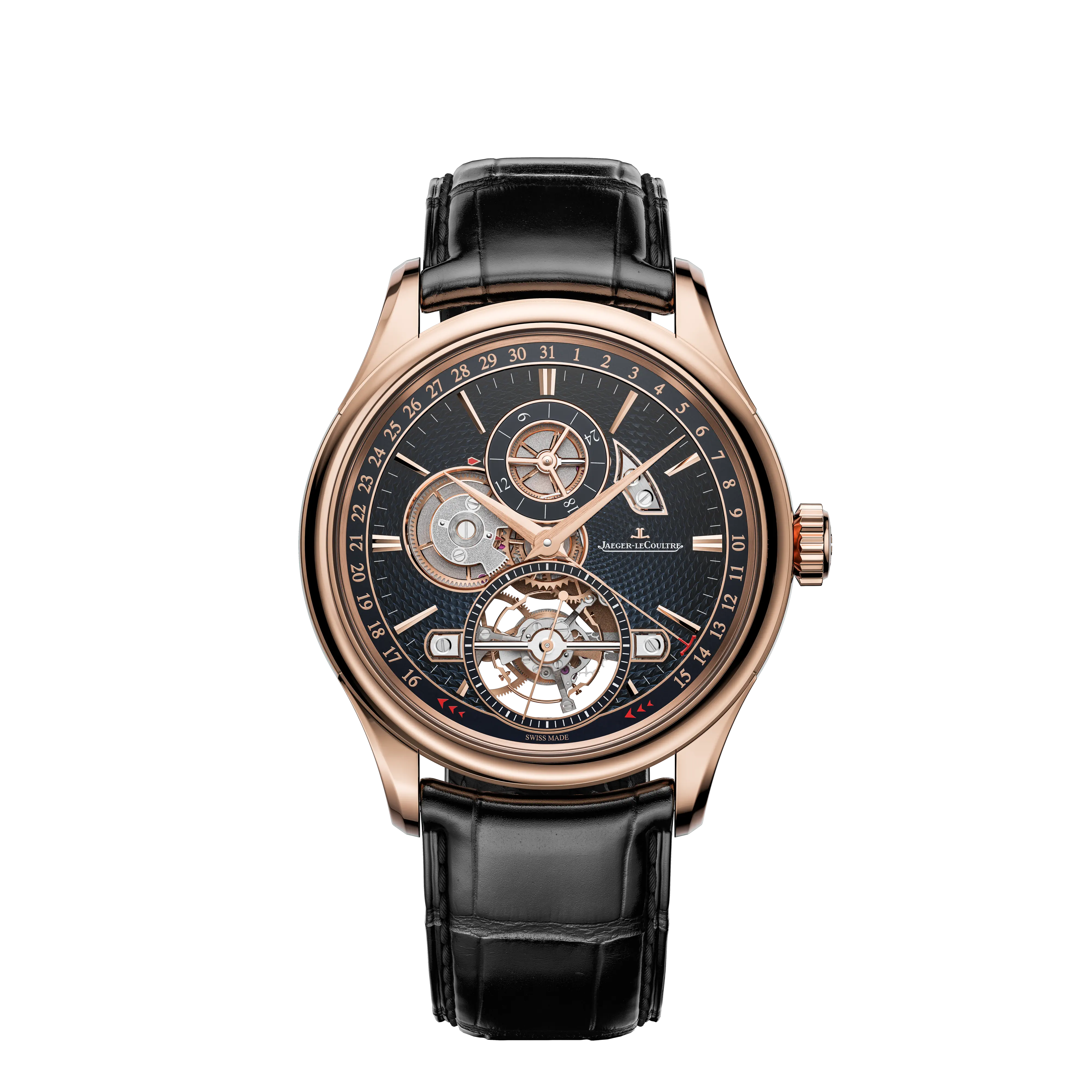
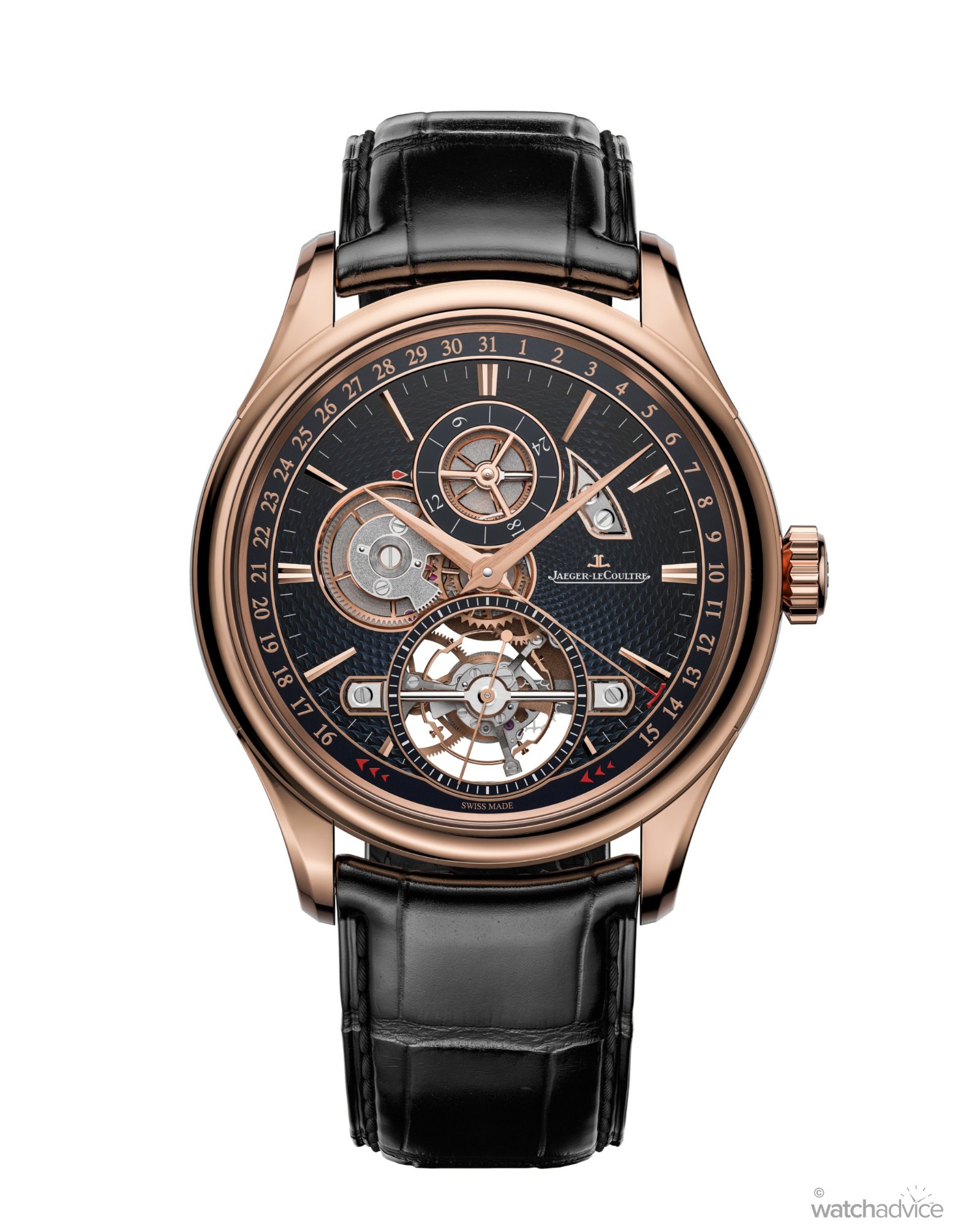
The biggest update here is the movement. It’s been reworked to open up the dial, enhancing the visibility of key features. Elements like the tourbillon, the jumping date mechanism, and the 24-hour disc are now more prominent, giving the watch a more layered look without moving too far away from the Grande Tradition design language.
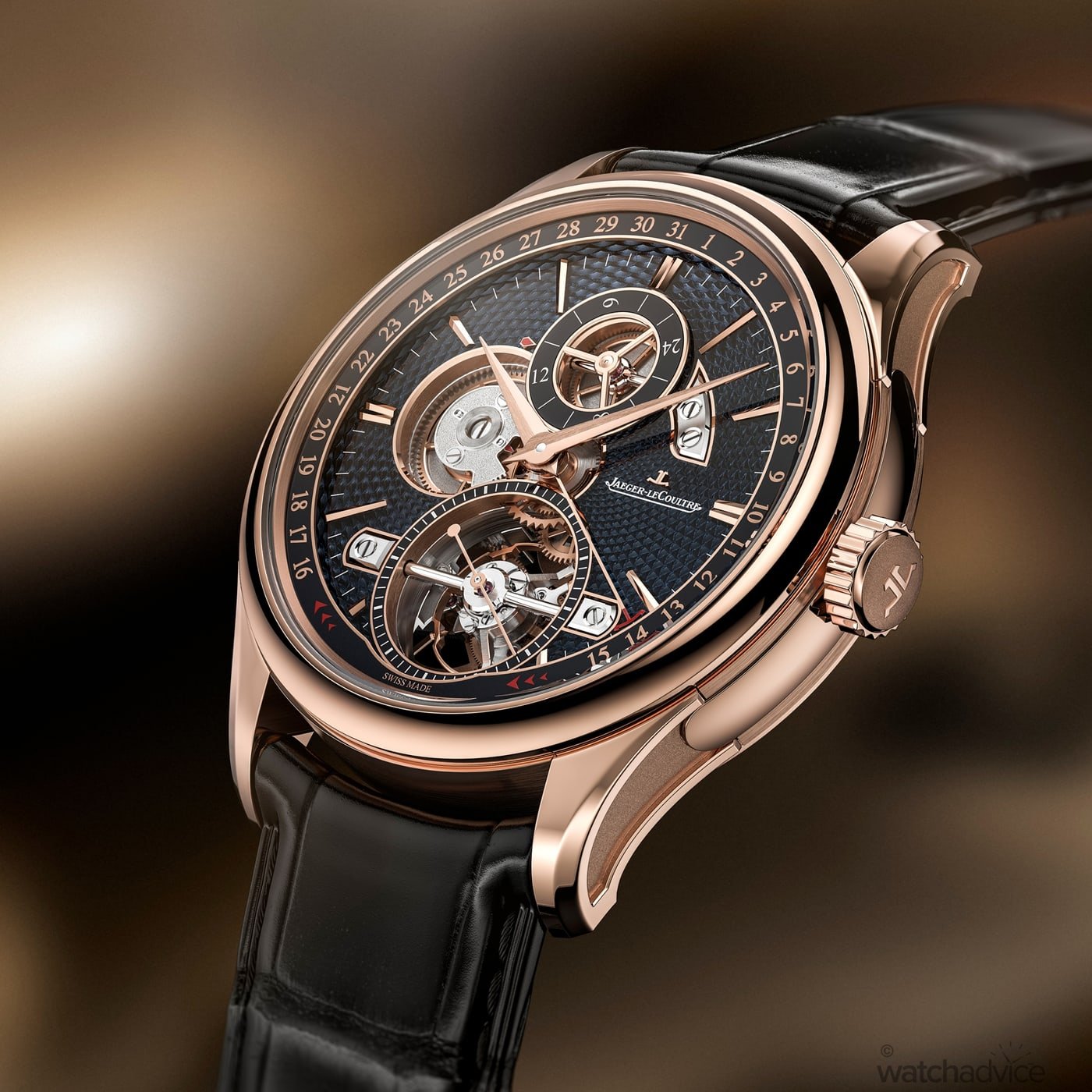
The tourbillon remains the focal point. It’s a one-minute tourbillon made up of 77 components and weighing under half a gram, designed to offset or compensate for the effects of gravity. While that’s largely academic in a modern wristwatch, thanks to modern materials, components, and manufacturing, it still plays an important role in demonstrating mechanical capability, something I called out with the aforementioned Master Hybris Intentiva Gyrotourbillon À Stratosphère

What makes this watch a bit more interesting from a usability standpoint is the jumping date. Rather than a traditional date display, the indication sits around the edge of the dial, with a long central hand pointing to the current date. The detail worth noting is how it behaves between the 15th and 16th. Instead of passing directly over the tourbillon, the hand jumps across at an angle to keep the aperture clear. This may not seem like a big deal, but it shows some thought has gone into how the watch is actually experienced on the wrist.
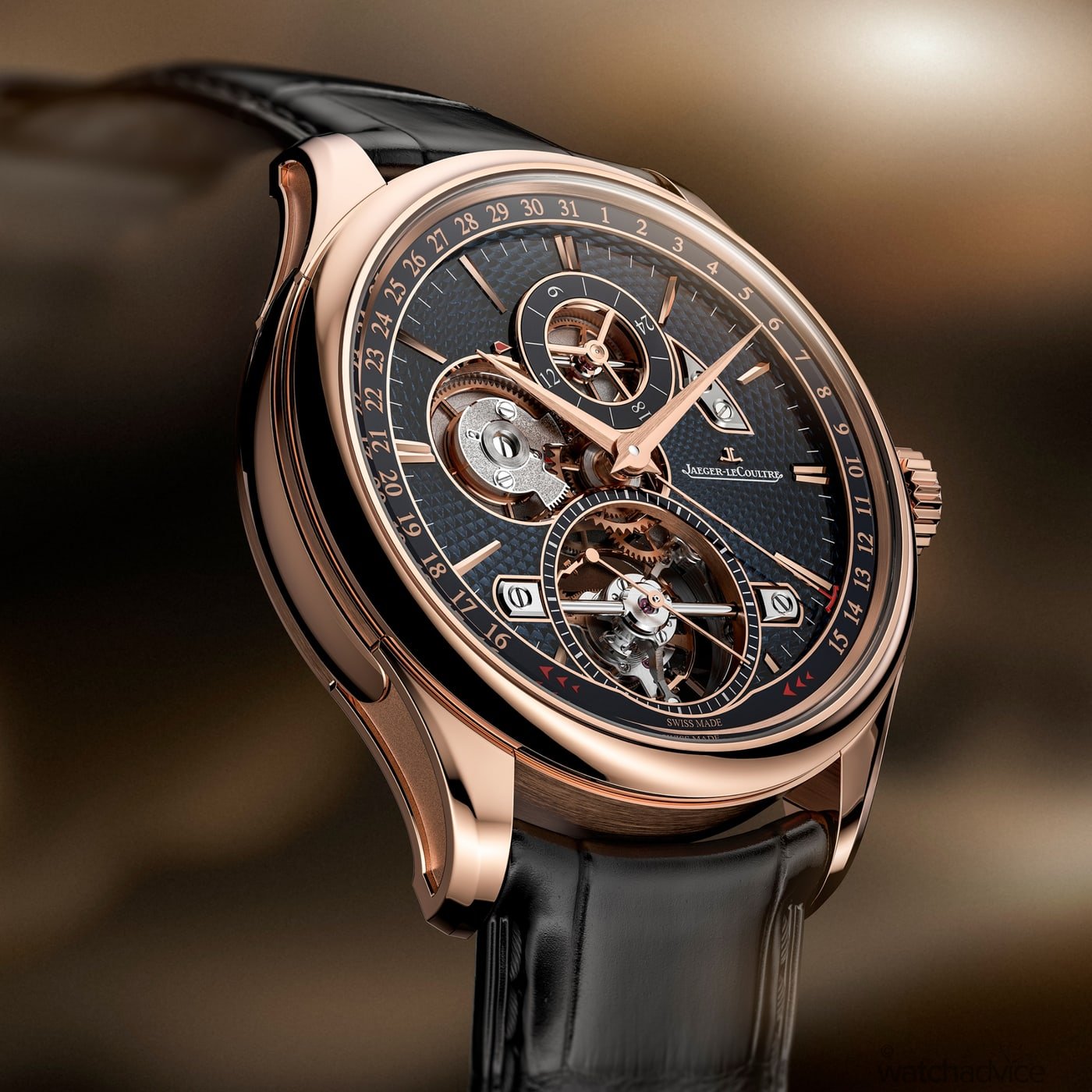
There’s also a 24-hour disc, which works as both a day/night indicator and a second time zone. It’s independently adjustable, which adds a layer of practicality without complicating the display too much.
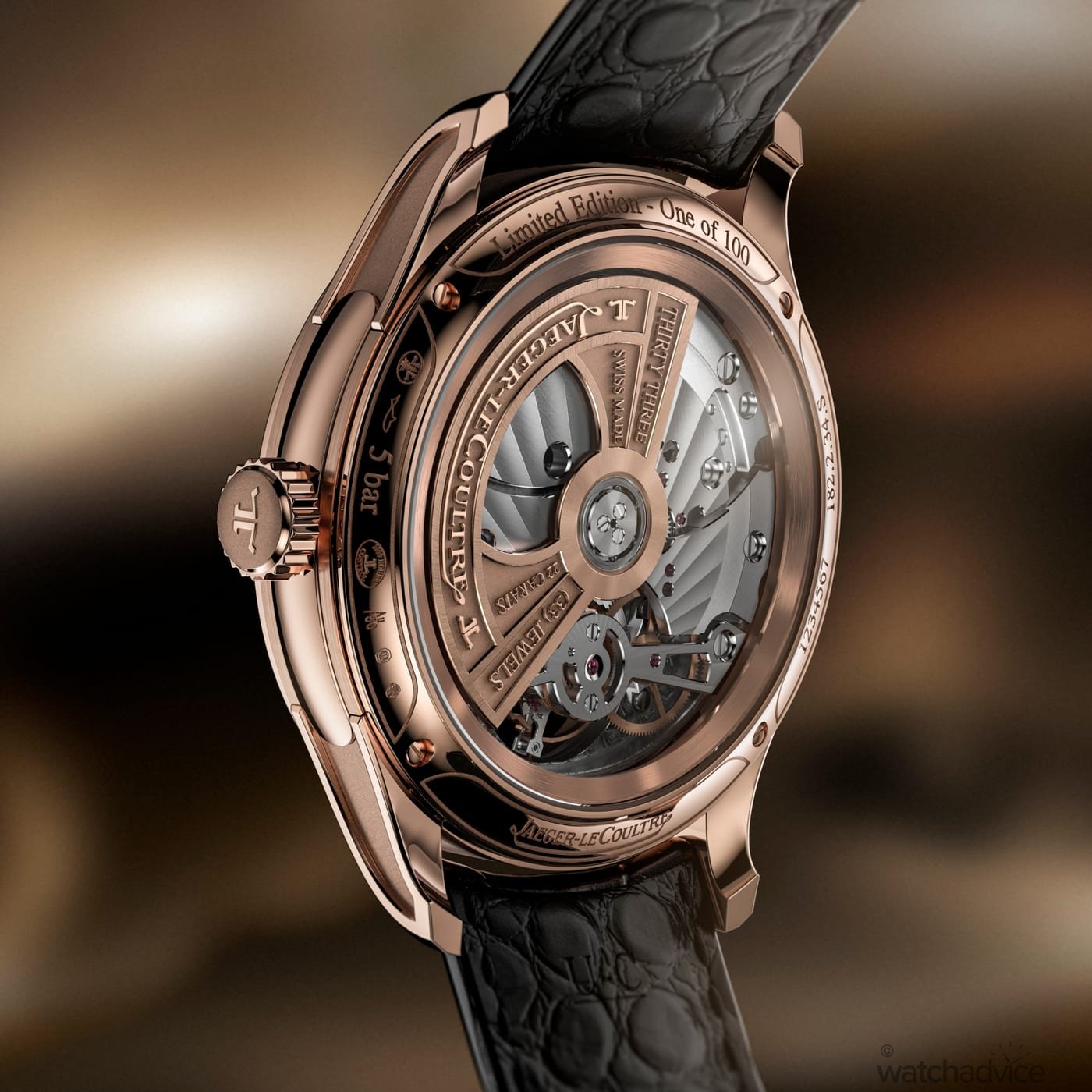
From a finishing perspective, this is exactly what you’d expect from Jaeger-LeCoultre at this level. The movement is made up of over 300 components and goes through a wide range of finishing techniques. Over 30 components are decorated by hand, and 48 angles are hand-bevelled and involve the expertise of 8 different workshops at the Manufacture.
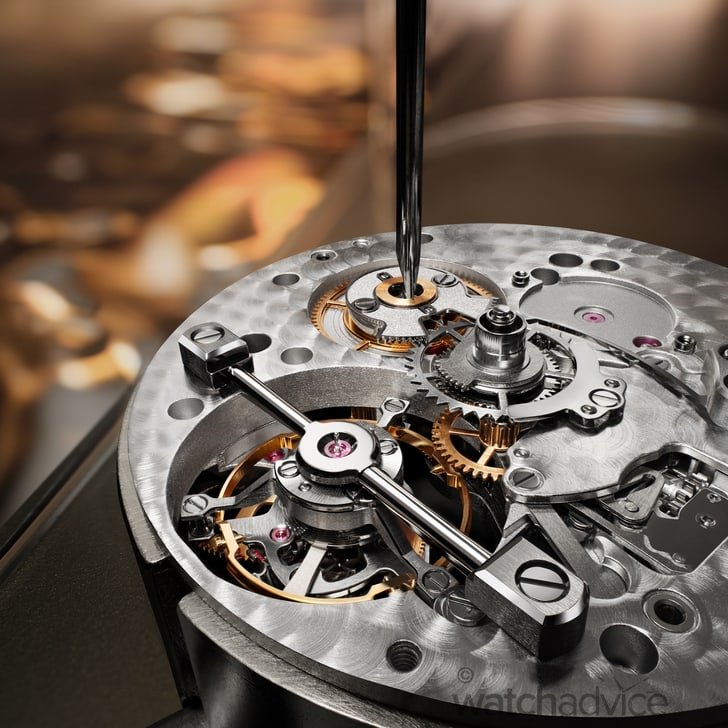
When you look at the movement, you can see the perlage, beveling, multiple brushing techniques and Côtes de Genève among them. The white gold bridges on the dial side have been rounded and polished using traditional methods, giving them a softer look compared to sharper, more industrial finishes.
The dial itself combines a barleycorn guilloché (or grain d’orge in French) base with blue enamel, adding depth to the dial and offsetting the 18k pink gold. Openings on the dial reveal parts of the underlying mechanism, reinforcing the technical feel while keeping the overall layout strangely balanced.
All of this sits inside a 42mm pink gold case that follows the Grande Tradition design codes, with multiple high-polished, brushed and micro-blasted finishes over its 60 components. It’s a relatively complex case construction, but Jaeger-LeCoultre does a great job of making the case look less complex and more elegant.
Master Hybris Mechanica Ultra Thin Minute Repeater Tourbillon
Where the Grande Tradition is about refining an existing concept, the Hybris Mechanica is about pushing technical limits. Jaeger-LeCoultre introduced the Hybris Mechanica collection in 2003, and it was centred on pushing the limits of what could be achieved in a single watch by combining multiple high complications. And let’s say, the maison does it very well.
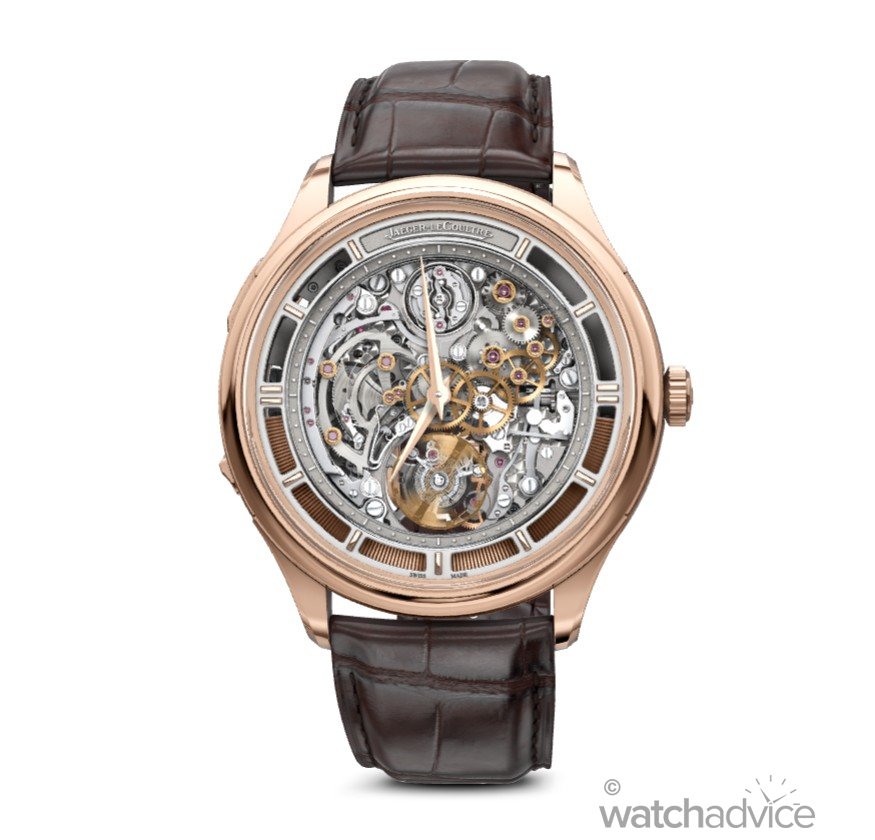
At 8.25mm thick, this remains one of the thinnest automatic minute repeater tourbillons currently available. In fact, Jaeger-LeCoultre’s Master Ultra Thin Minute Repeater Flying Tourbillon from 2014 takes the prize for this, at 7.9mm thick. So Jaeger-LeCoultre can say that it has now mastered the art of the thin minute repeater tourbillon. The new Hybris Mechanica is powered by the same Calibre 362 found in its 2014 counterpart, adapted for a whole new look.
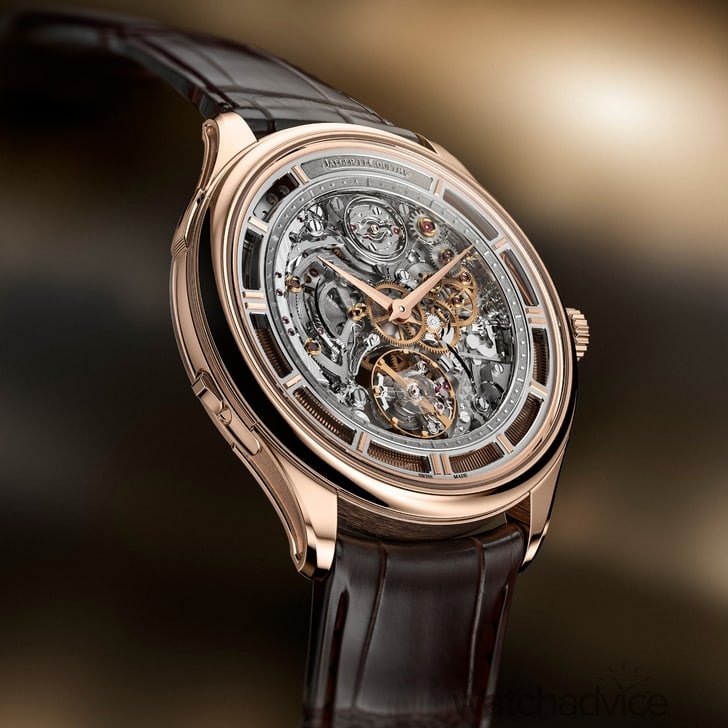
Jaeger-LeCoultre achieves the Calibre’s thinness by having the components fully integrated rather than modular. The minute repeater, flying tourbillon and automatic winding system are all designed as part of the same architecture. That approach is what allows the watch to stay so thin, while still delivering the level of performance expected from both complications.
Also, by removing the upper bridge of the tourbillon, Jaeger-LeCoultre reduces the overall height of the movement while also opening up the view. Along with this, the minute repeater itself has been re-engineered to minimise vertical space. The layout of the racks, hammers and gongs has been carefully considered so they sit within the main structure of the movement, rather than separate.
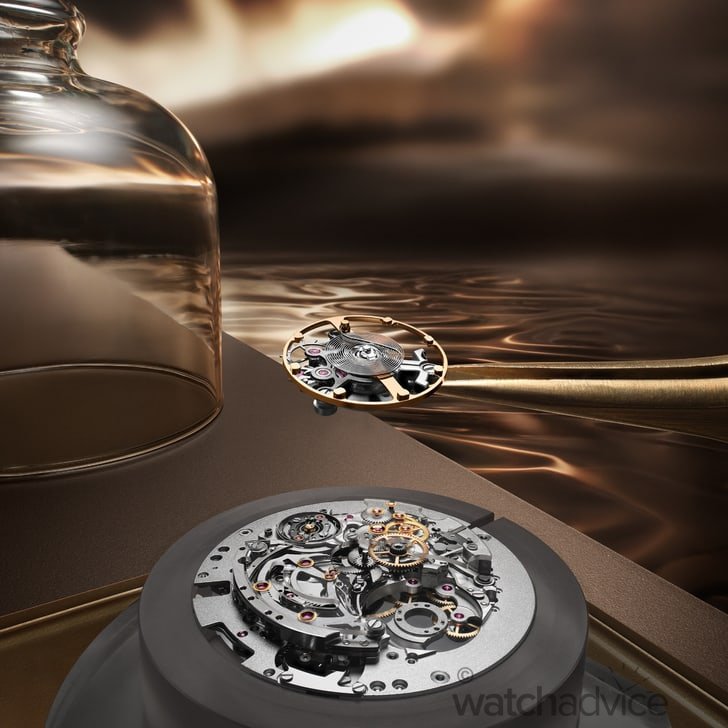
Jaeger-LeCoultre has worked to balance both form and function of the mechanisms. Features like square-profile gongs and trebuchet hammers are used to improve the clarity and strength of the chime, while a patented mechanism reduces the pause between hour and minute strikes, creating a smoother sequence.
Another key element is the peripheral rotor, which runs around the outer edge, keeping the profile slim and leaving the movement fully visible from both sides. It’s a practical solution, but also one that suits the overall design of the watch.
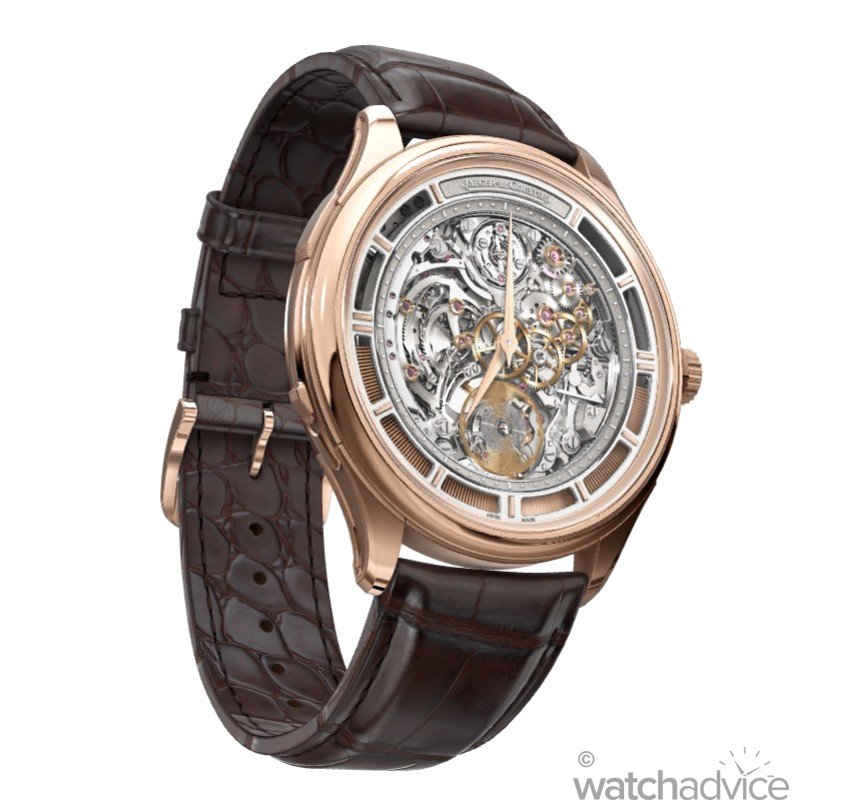
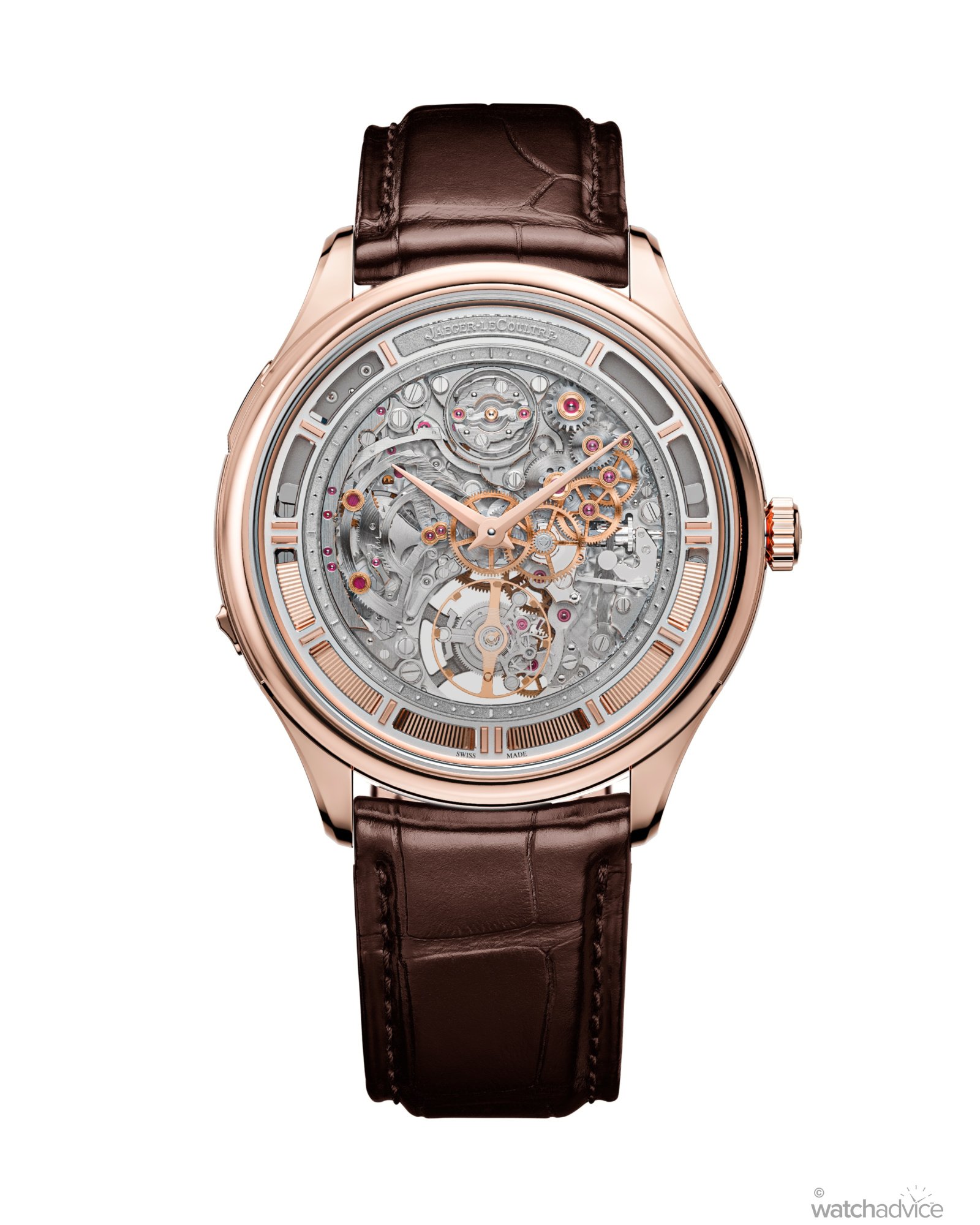
To maximise the movement’s visibility, rather than traditional skeletonisation, Jaeger-LeCoultre has gone a step further by using sapphire bridges in key areas. This allows more of the movement to be seen without compromising structural integrity, although it does introduce additional technical challenges in terms of assembly.
The dial is reduced to a simple ring around the edge, giving just enough structure to display the time while leaving the rest of the movement open. Combined with the pink gold case and the visible rotor, the watch feels more like a mechanical display than a traditional dial-based piece.
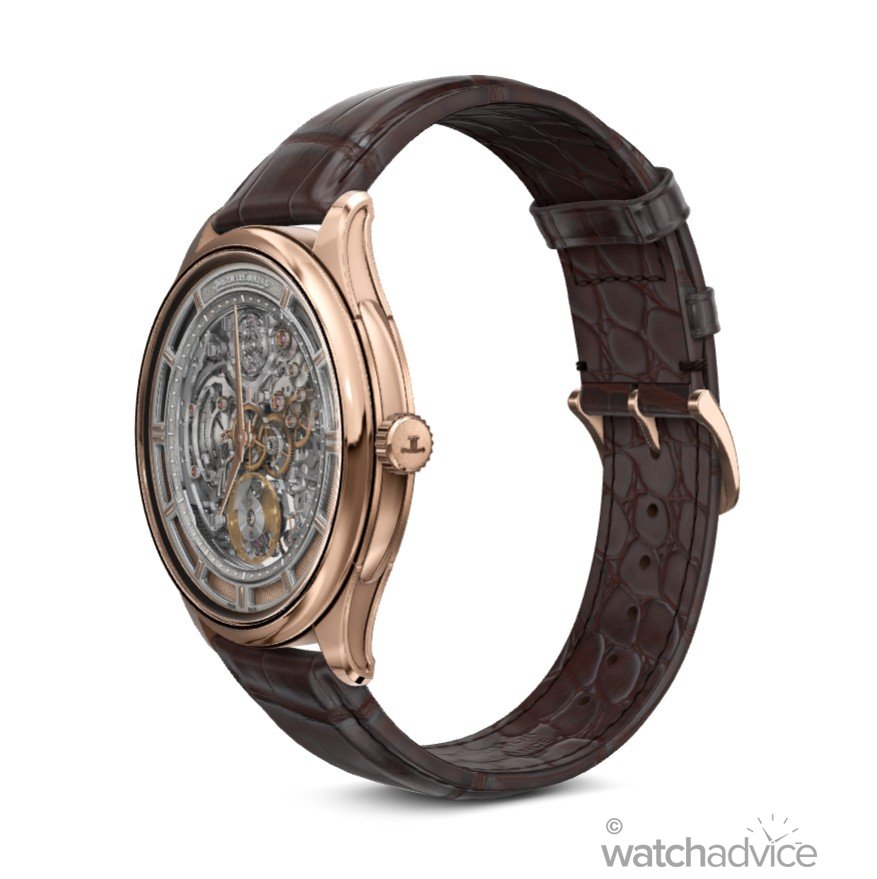
Despite the complexity, the case design remains relatively restrained. It follows similar design principles to the Grande Tradition line, with a mix of finishes to create some variation without drawing attention away from the movement itself. With the 41.4 mm x 8.25 mm thick dimensions, this is a highly wearable watch as well, which is really where Jaeger-LeCoultre excels in this space.
With these two latest releases, Jaeger-LeCoultre reminds us that true high watchmaking is not just about chasing spectacle, but about mastering very different expressions of mechanical artistry. The Master Grande Tradition Tourbillon Jumping Date shows the maison’s strength in taking an already respected calibre and making it more open, more usable, and more visually engaging, while the Master Hybris Mechanica Ultra Thin Minute Repeater Tourbillon pushes the boundaries of ultra-thin complication with impressive confidence.
They are two very different watches in execution, but together they perfectly capture what makes Jaeger-LeCoultre so compelling at the top end of watchmaking: technical depth, design restraint, and an ability to make even the most complex mechanisms feel elegant.
References & Specifications
Master Grande Tradition Tourbillon Jumping Date
| Feature | Specification |
|---|---|
| Reference | Q4202480 |
| Dimensions | 42mm x 12.5mm thick |
| Case Material | 18K Pink Gold (750/1000) |
| Movement | Automatic Jaeger-LeCoultre Calibre 978 |
| Functions | Hours, minutes, tourbillon seconds, jumping date, second time zone (24-hour indicator) |
| Power Reserve | 45 hours |
| Dial | Blue enamel with barleycorn guilloché pattern, open-worked |
| Caseback | Sapphire crystal (transparent) |
| Water Resistance | 5 bar |
| Strap | Black alligator leather with 18K Pink Gold folding buckle |
Retail Price: Price on Application
Availability: Limited to 100 pieces worldwide. See your local Jaeger-LeCoultre boutique or head online to Jaeger-LeCoultre.com for more
Master Hybris Mechanica Ultra Thin Minute Repeater Tourbillon
| Feature | Specification |
|---|---|
| Reference | Q13125S2 |
| Case | 18K Pink Gold (750/1000) |
| Case Dimensions | 41.4mm diameter x 8.25mm thickness |
| Movement | Automatic Jaeger-LeCoultre Calibre 362 One-minute flying tourbillon |
| Functions | Hours and minutes, minute repeater, flying tourbillon |
| Power Reserve | 42 hours |
| Dial | Open-worked, white gold ring |
| Caseback | Transparent sapphire crystal |
| Water Resistance | 30 metres |
| Strap | Brown alligator leather with 18K Pink Gold pin buckle |