

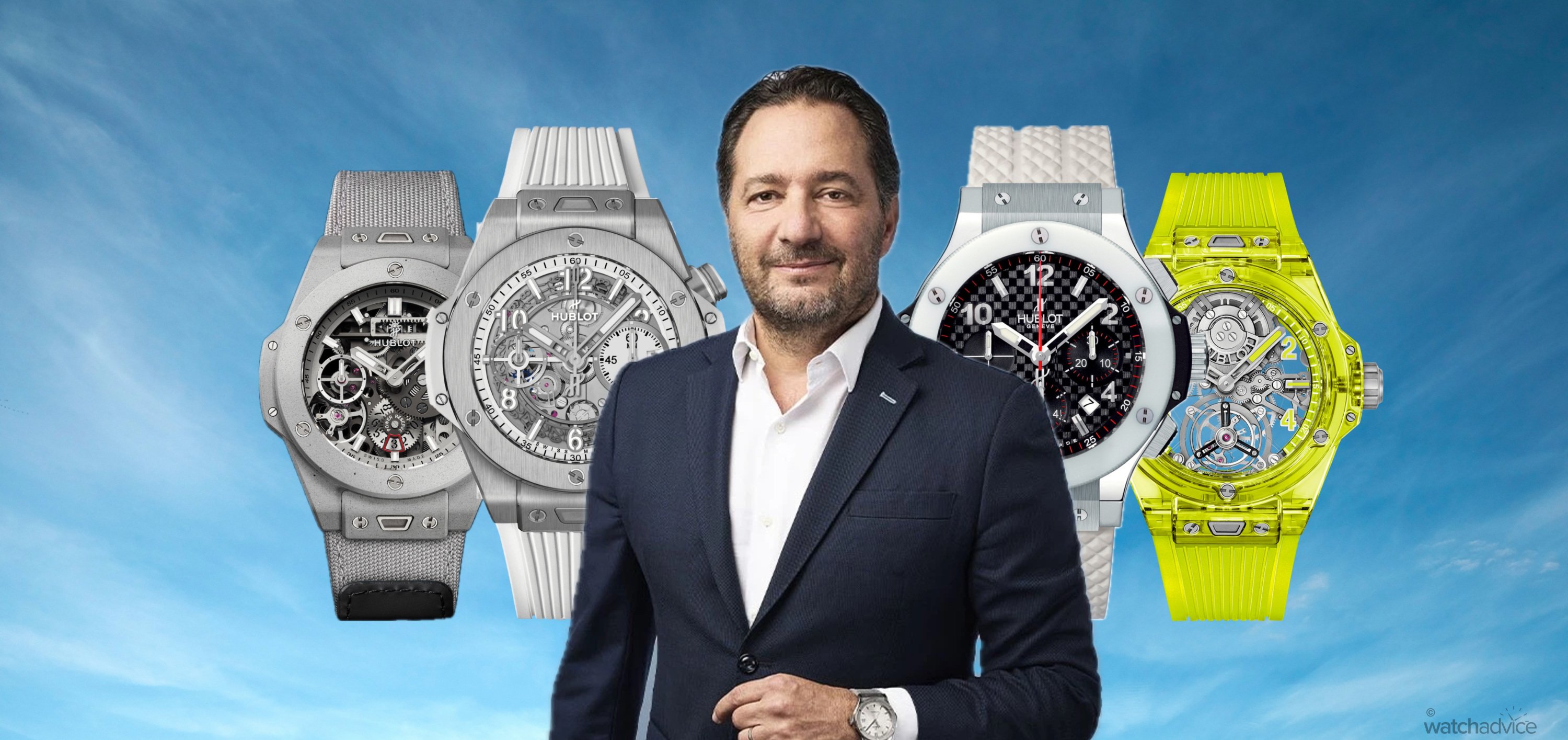
As the 20th Anniversary year of the Big Bang draws to a close, we speak with Hublot CEO, Julien Tornare, and take a look back at the evolution of the Big Bang, some standout models, and where both the brand and the Big Bang are headed in the future.
It’s hard to believe that the Hublot Big Bang has only been around for 20 years. I can remember when I was first getting serious about watches, and I guess that is when my fascination with Hublot started. Back in the early 2000s, big watches were the trend and with the advent of the Big Bang, there were very few brands that were making watches as bold and as masculine as Hublot.
Back then, around 2010, one of my grail watches was a Big Bang in King Gold with the black ceramic bezel. I thought it was the coolest watch, and I remember wandering around to boutiques and dealers when I was overseas, looking at them and trying them on my wrist.
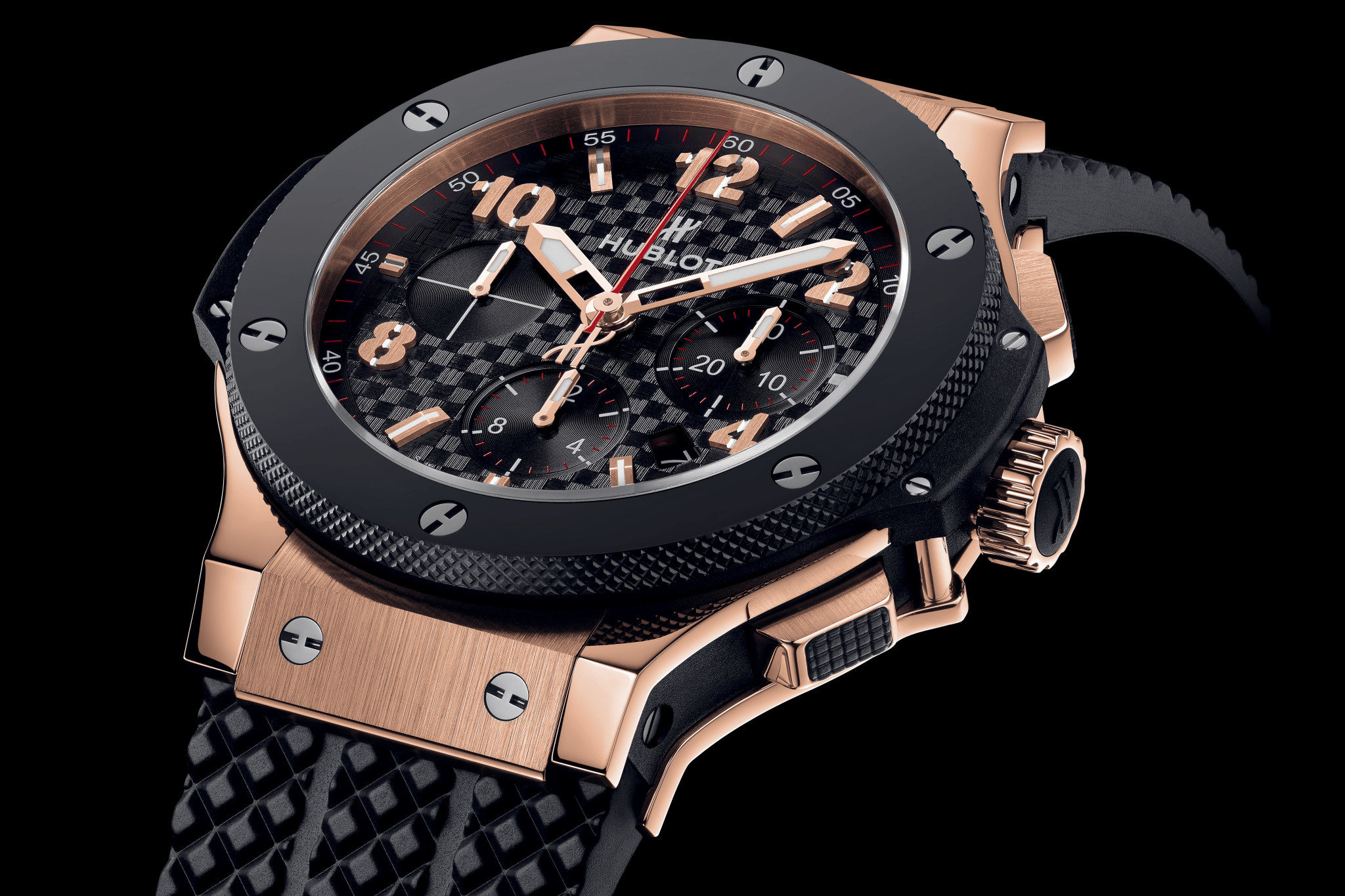
If we fast forward to today, in 2025, the new Big Bang Original collection that Hublot brought out at Watches & Wonders was a great way to celebrate the 20th anniversary of the iconic watch. All of the design elements on that collection pay tribute to the original launch back in 2005 and subsequent models over the years, but obviously with the modern Unico movement and a slightly more comfortable easier-wearing 43 mm case size.
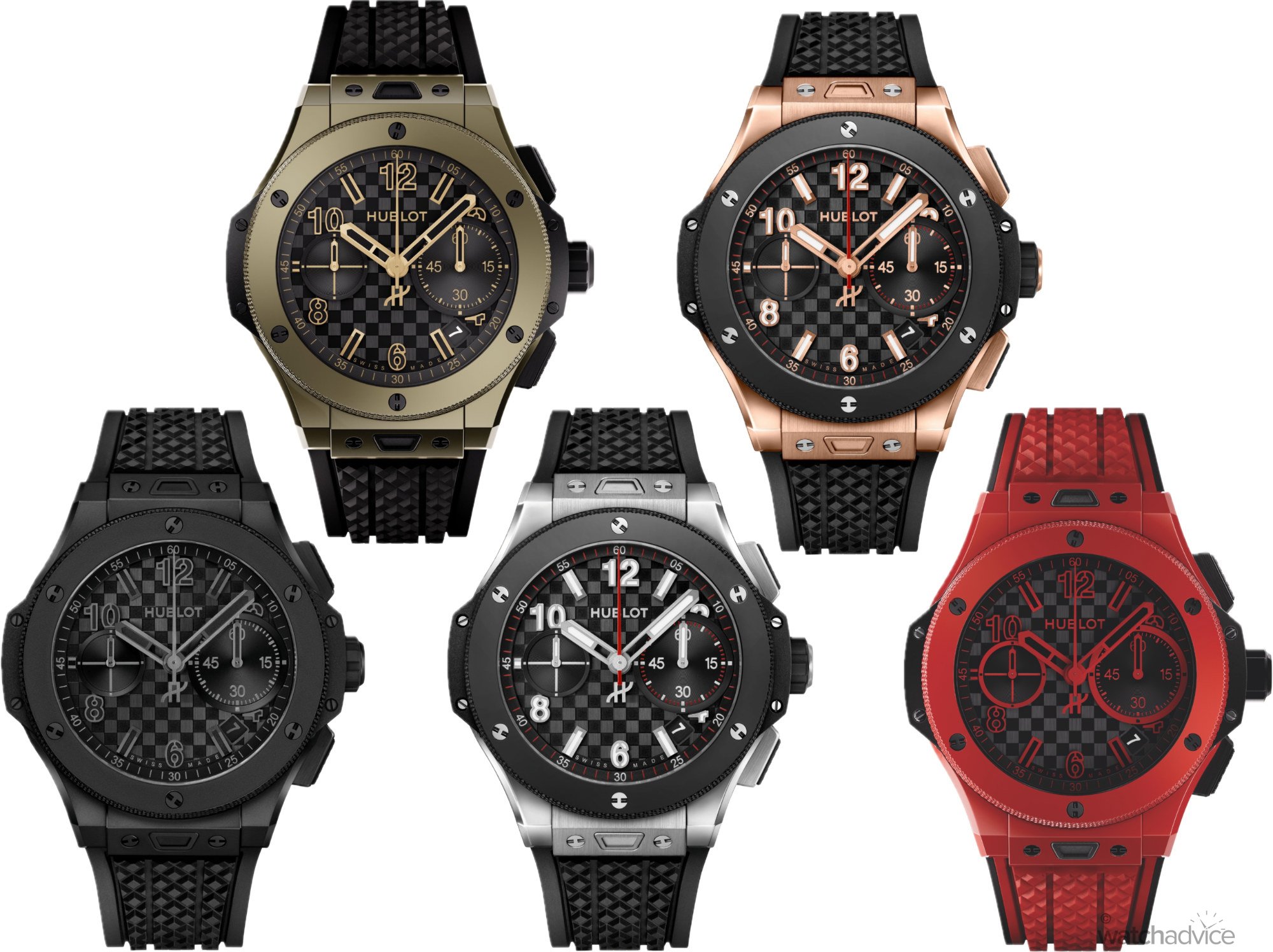
We caught up with Julien Tornare in Switzerland to talk about the Big Bang and the 20th Anniversary, what the future holds and just how important the Big Bang is to the brand. But first, he explains the rationale for the 20th Anniversary Collection and why they selected them as the five models that would come to market this year to celebrate:
“Of course, the original one in titanium, the all black, as Hublot was the first brand to really come with this all black concept. Obviously, the Magic Gold that you cannot scratch, King Gold and the red ceramic, because we are known for this, and we are the only ones to do a vivid coloured ceramic. So that was really to play on five themes and to add a special signature that you see, which is a gold bezel with 20 years, as well as in a very secret way on the crown, the 20 years signature. That’s only for these limitations. So the product is really giving the best of the best of what you can have as far as the Big Bang is concerned.”
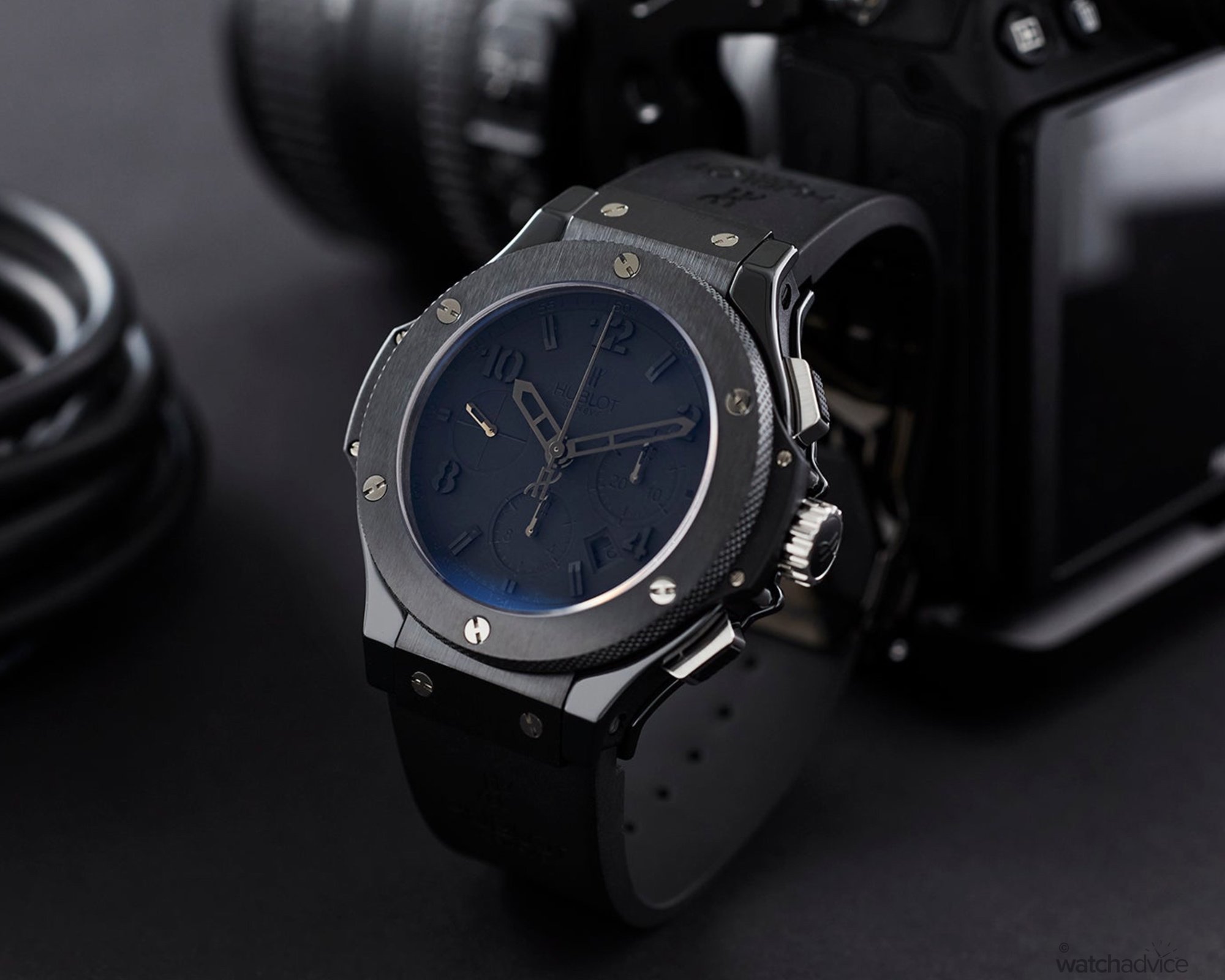
2006: Hublot Big Bang Original All Black
Launched 1 year after the Big Bang, and entirely black, this watch made the reading of its time imperceptible and became a cult object. The Big Bang Original All Black went even further in the use of all-new materials combined with an extreme design. The black ceramic case and bezel framed a matt black dial with black numerals, indices, hands and date display. The inserts in black resin and the strap in black rubber completed this monochrome style.
And this got us here at Watch Advice thinking a little. Over the past 20 years, there have been some very cool models, and the evolution has also been interesting to watch, so why not have a look at the Big Bang’s rise, some of the more iconic and out-there models? And thanks to Julien, we are also able to see the Big Bang through his eyes as well, and get his take on the collection. So let’s dive in.
The Big Bang Evolution
Let’s start at the beginning. The Hublot Big Bang was the brain-child of Jean-Claude Biver. After joining the company as CEO, he wanted to create a disruptive watch that put Hublot on the map, but used the philosophy that helped start Hublot in the first place – The Art Of Fusion. Fusing rubber and precious metals on a watch was now not new to Hublot, and was gaining popularity in the industry, but Jean-Claude Biver wanted to take this to the next level. The Big Bang was just the watch to do this.
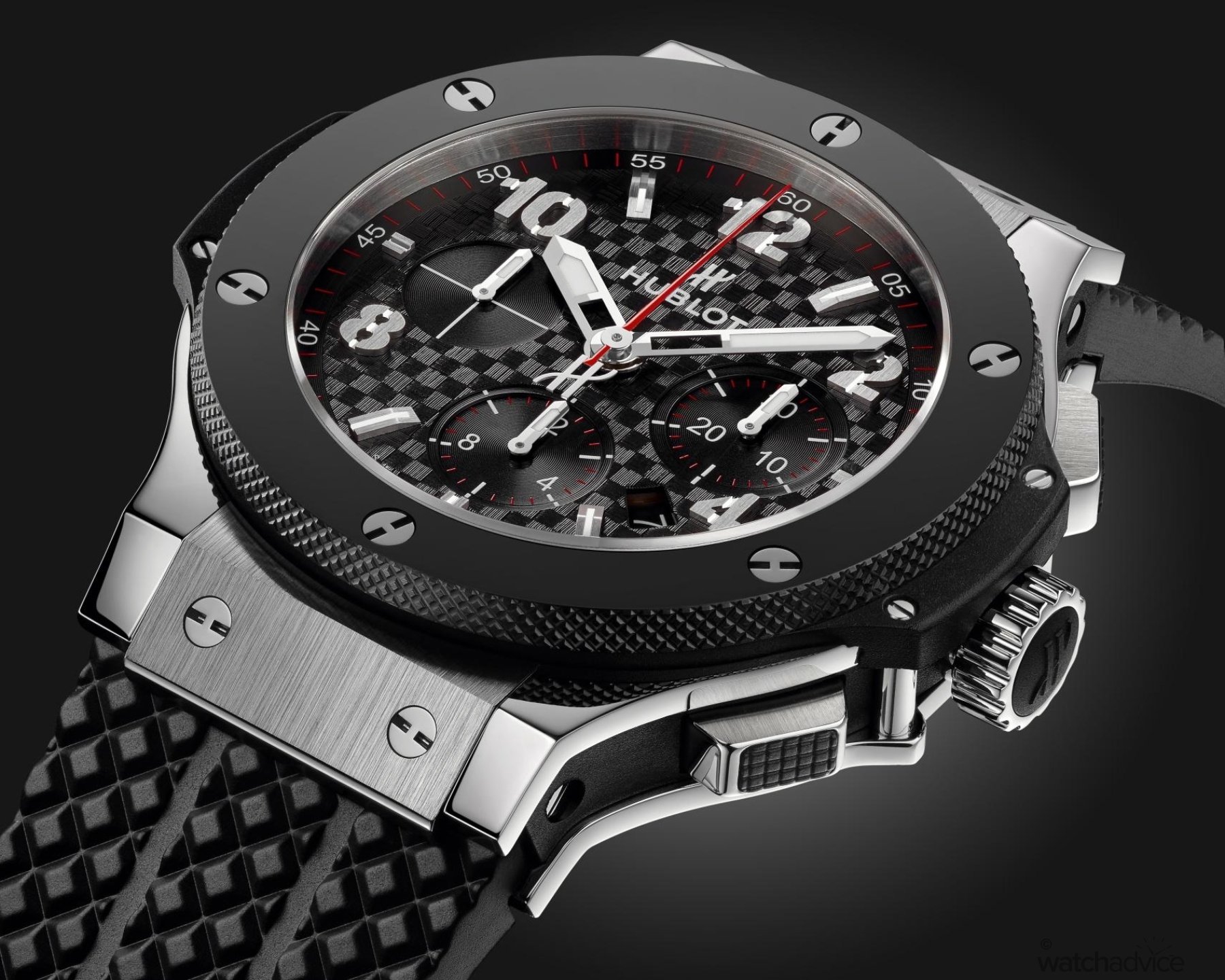
I can recall watching an interview with JCB, probably close to 15 years ago, maybe, and I vividly recall him talking about how he created the Big Bang and also why it was called the Big Bang in the first place. In his words, from my recollection, “the only time that rubber and gold existed together as one was at the start of the universe, when the actual big bang happened. Now, it does so again in a watch, and we’ve called it the Big Bang.” I’m paraphrasing here a little, but you get the gist. Jean-Claude Biver has always been a great marketer, and this showed in how he told the story of the Big Bang.
So by combining rubber and precious metals together in a very unique layered case design of the ceramic, steel, Kevlar and gold, it became a watch that was synonymous with the avant-garde and also success. I used to see lots of people wearing Hublot Big Bangs, as back then, it was one of the “It” watches to have. In fact, it was awarded the 2005 Design Award at that year’s GPHG, showing that Hublot was onto a winner (pardon the pun!)
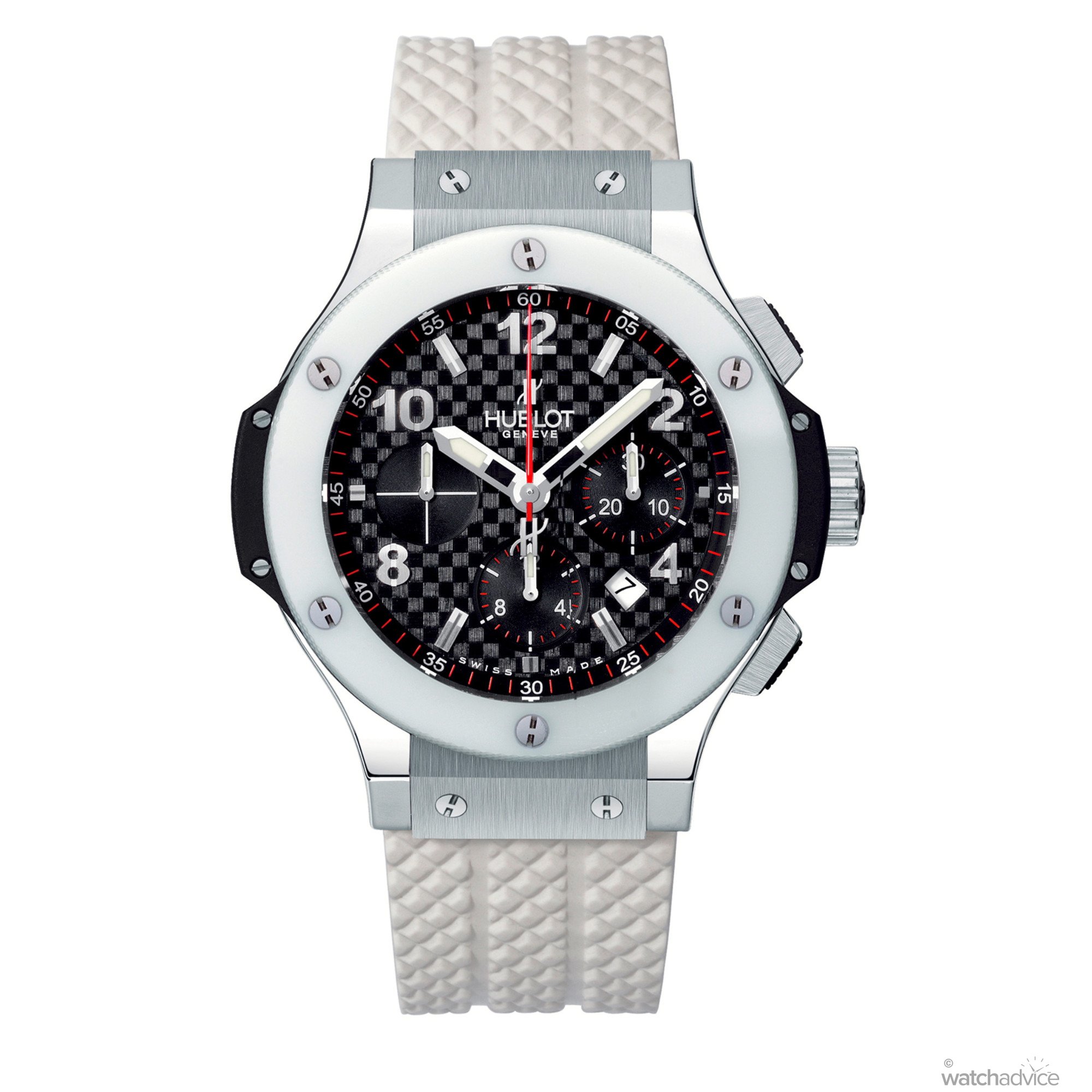
In the late 2000s, this is where we saw Hublot’s rise, thanks to the Big Bang and its different variants, not to mention the materials used, such as carbon fibre, ceramic, and other harder-to-work-with materials like tungsten, titanium or tantalum. Most people don’t realise that because of the Big Bang, Hublot became the brand that it is today, and thanks to its lack of heritage, it could do a watch like this in the first place. Julien mentions this…
“First of all, we don’t have a long history or a long heritage, and we are known as being a bit crazy. That’s probably why they gave me the job! So that’s the reason why we have no limit, and it’s a fantastic playground, so let’s enjoy it. If Hublot becomes too normal, Hublot will not perform. I’m telling you, we cannot be, you know, on the same path.”
The Big Bang – Reinvention in Motion
By the early 2010s, the Big Bang had already done the heavy lifting for Hublot. It was the watch that put the brand on the map, the watch that made “fusion” more than a marketing line. But what followed from 2013 to 2020 wasn’t about Hublot going into maintenance mode; it was a full-scale reinvention of what the Big Bang could be. On this point, we broach this subject with Julien and discuss how important it is for what is now an icon in the industry.
“Like every icon watch, and the Big Bang has become an icon in this industry, you need to lift it up. You need to make it evolve, you know. Think about the iconic cars, people often mention the 911 from Porsche. It’s developing new models all the time and evolving, and I think it needs to continue to evolve. So the Big Bang will have a lifting, as will the Classic Fusion. And I think it’s part of our responsibility. We cannot keep it the same as it was, or is today.”
The first shift came through materials. This was when Hublot truly committed to making the Big Bang the result of a laboratory experiment on the wrist. Ceramic as a material was being experimented with, with new vibrant colours being the focus. Sapphire cases, once an industry rarity, became part of Hublot’s everyday vocabulary – and they are still today, one of the few watch brands that experiment and make their own sapphire at scale.
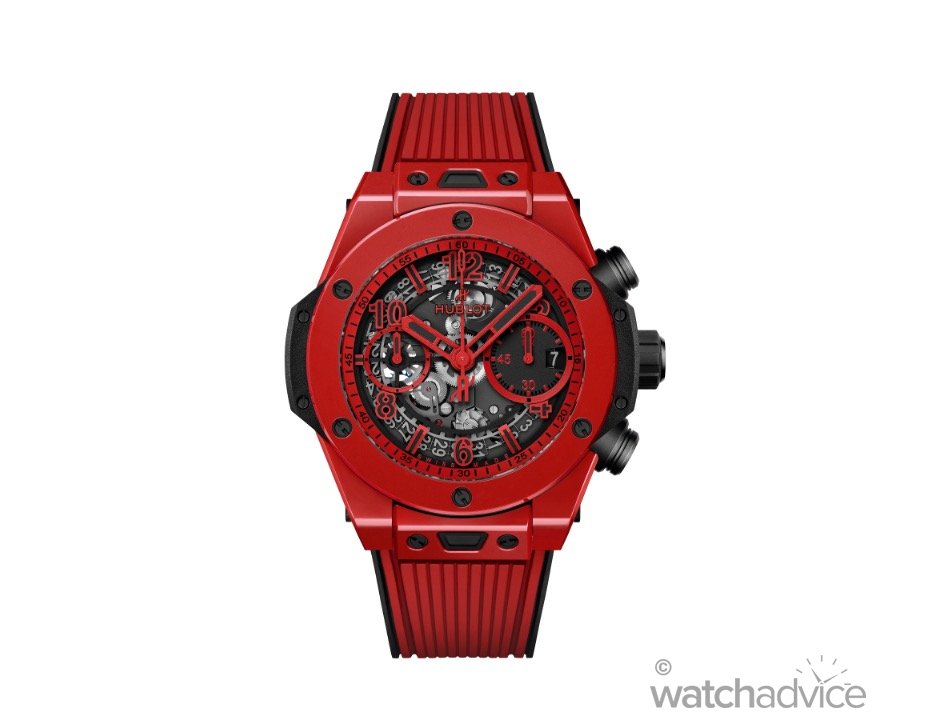
Even precious metals, something no other brand dared to touch, were experimented with. Magic Gold, the world’s first scratch-proof gold, was invented. These experiments gave the Big Bang a sense of technical maturity and shifted the focus from just being about aesthetics. Interestingly, Magic Gold is something that Julien is passionate about, as he feels that the brand hasn’t shouted about it enough in recent years.
“Magic Gold is not new, but sometimes we do something, and Hublot goes so fast that you forget it, and you don’t talk anymore. But there are tons of people who still don’t know about it, among our clients and our potential clients, and our new clients. So it’s such an important subject that I wanted to put it back on stage, especially when we have a way to celebrate those 20 years!”
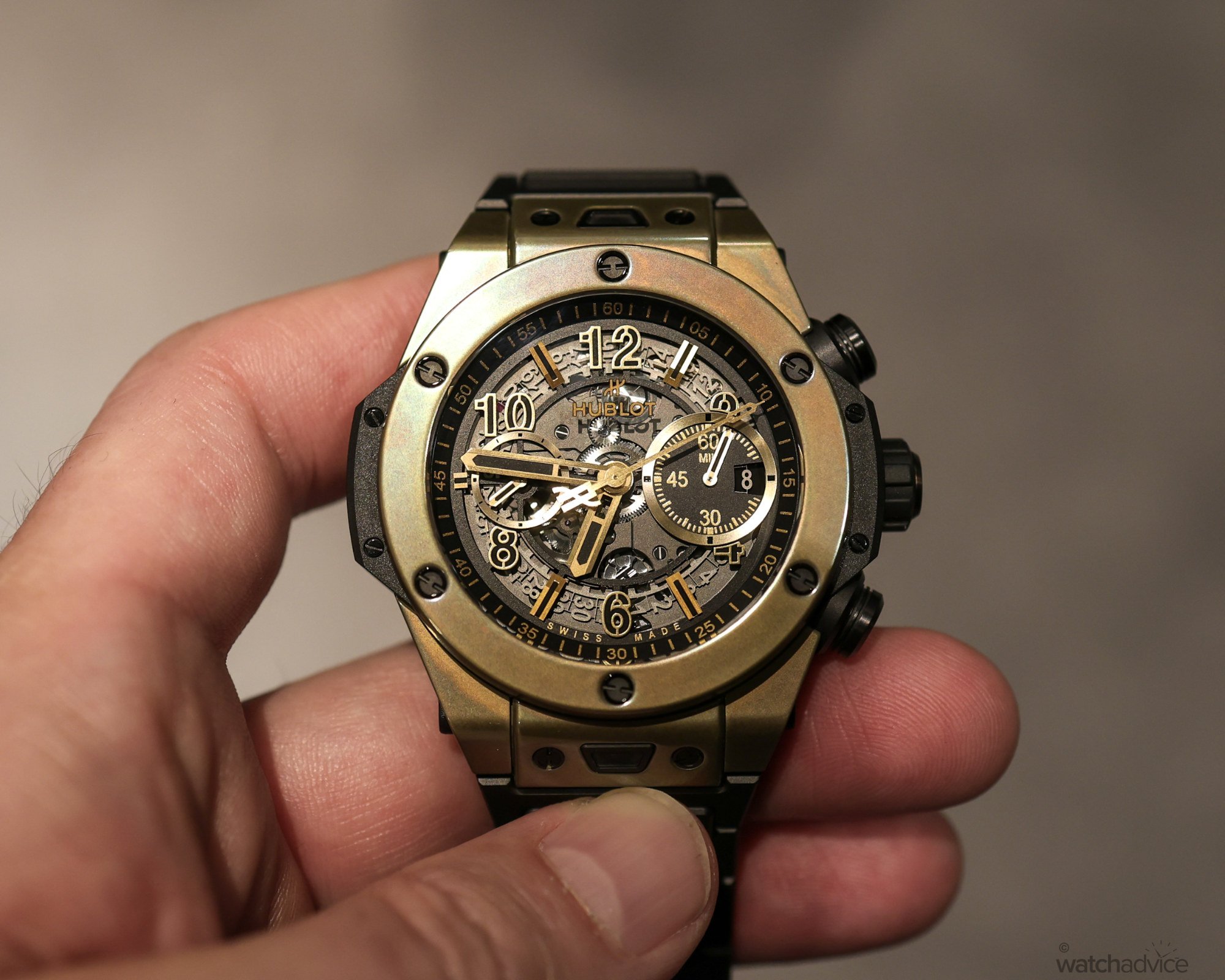
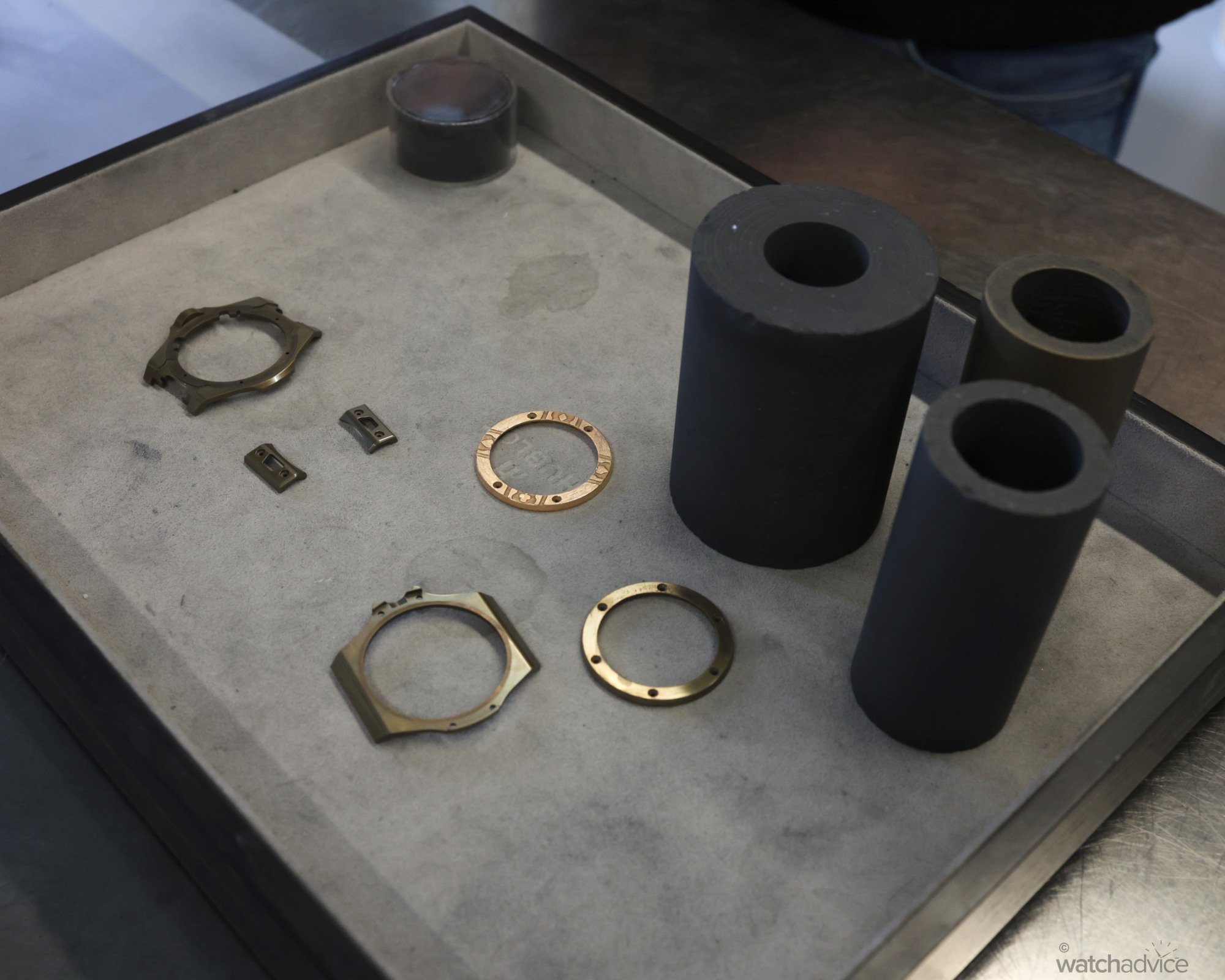
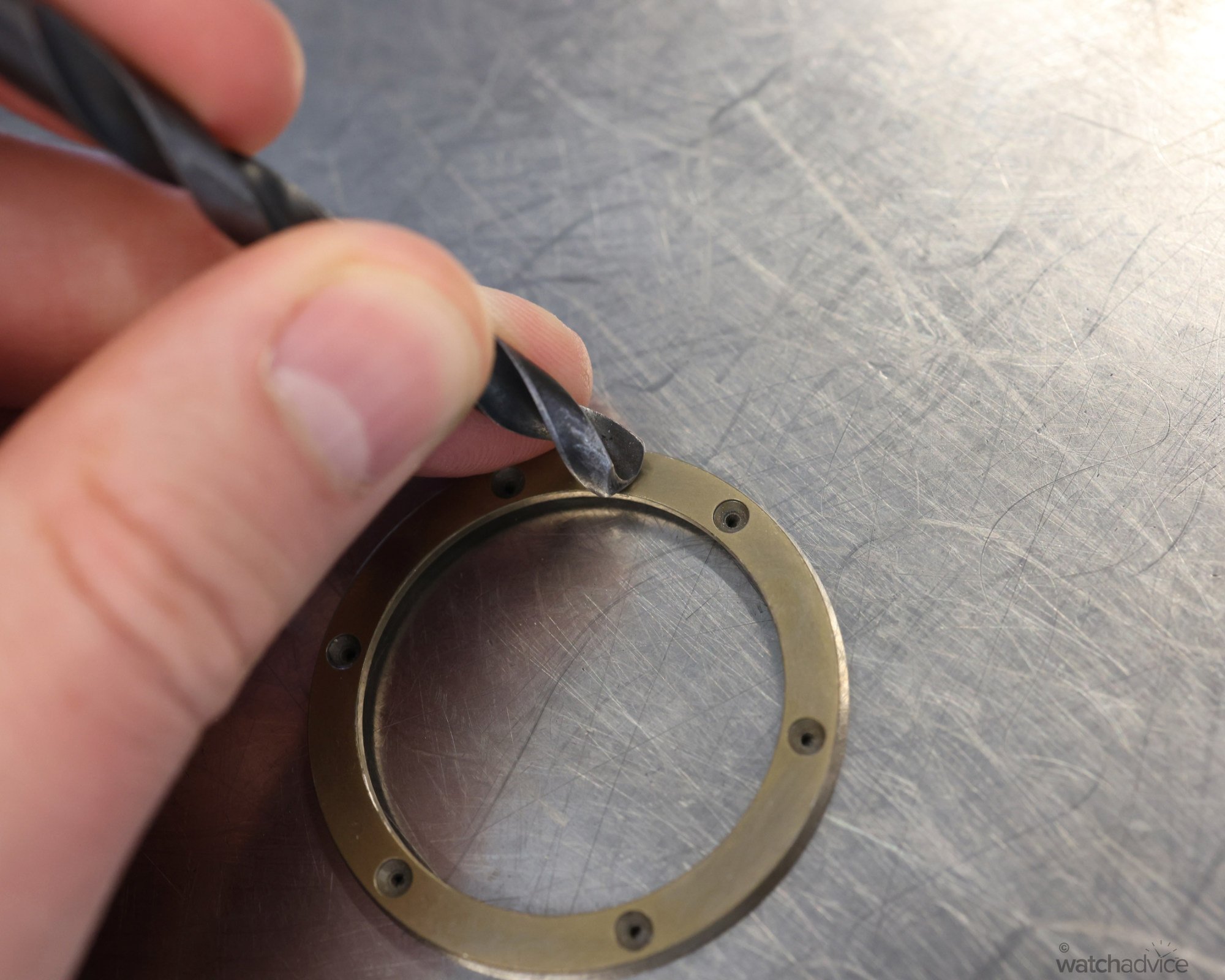
At the same time, Hublot began re-engineering the watch from the inside out. The modular case construction and the in-house Unico movement weren’t just technical milestones. They allowed the Big Bang to broaden its identity. The Unico movement was a re-invention for Hublot, and built from the ground up, became the movement Hublot could hang its hat on. This period saw the watch evolve into something more architectural, mechanical, and versatile.
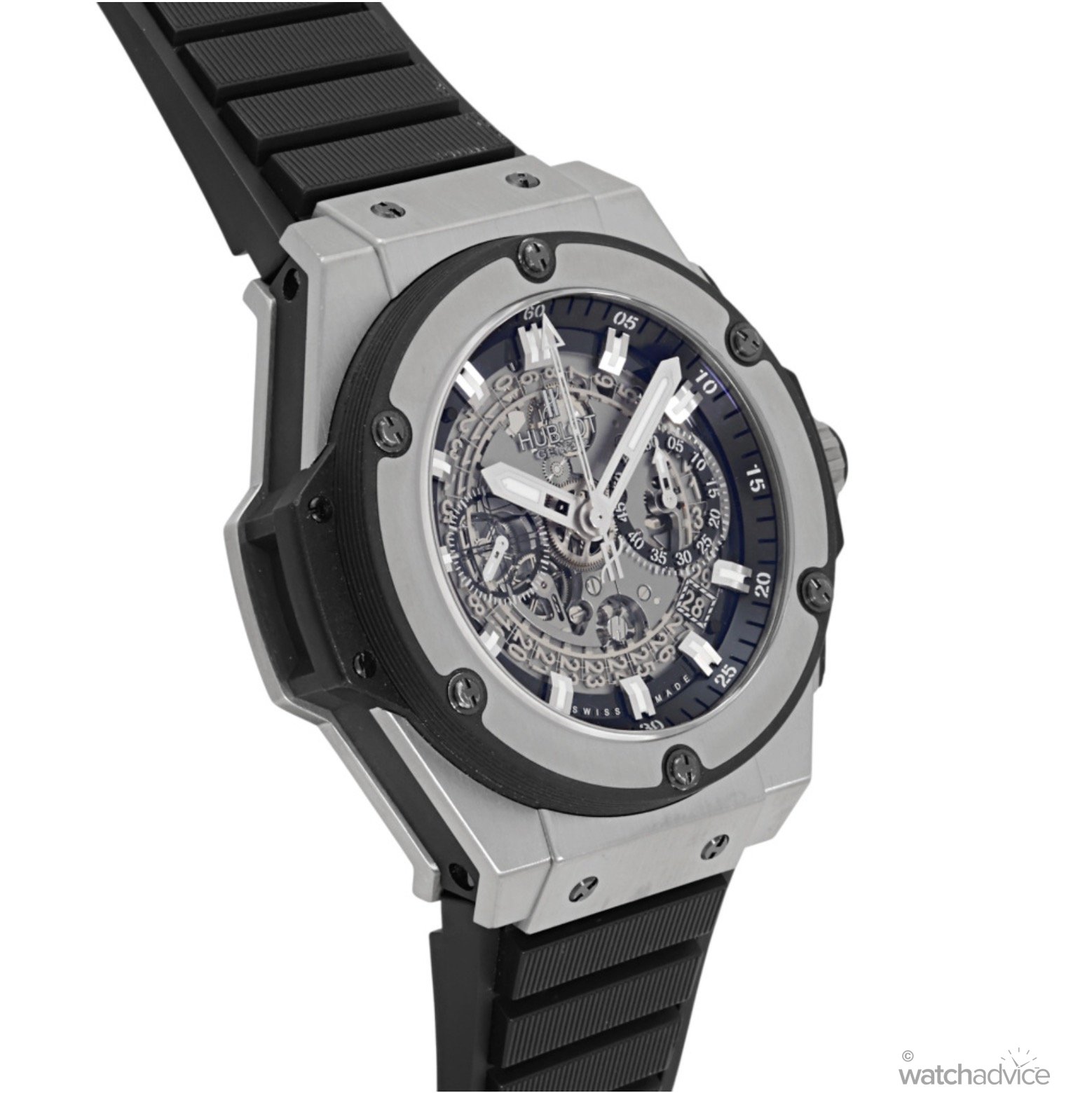
2010: Big Bang King Power
While remaining faithful to the lines of the flagship model, the King Power maximised the Big Bang’s attributes. Its masculine design was reinforced by even more imposing dimensions and more understated colour schemes.
An avant-garde design fashioned from high-tech materials, with a massive case – sharper and more angular than that of the Big Bang – and a dial composed of several levels. It was also the first watch to incorporate the new Unico chronograph movement.
Talking about the movement briefly, Julien takes an aside:
“We don’t get enough credibility on the movement side, on the technical, on the watchmaking side of our products, and that’s wrong. I was the first one, with my past at Vacheron Constantin, and I know high-end watchmaking pretty well, I was the first one to be very positively surprised when I met the watchmakers when I visited the manufacturer, and I saw that. It’s just that we haven’t put it on stage enough, or we haven’t talked enough about it, or those other elements (the materials) were so strong that the movements were a bit in the shadow of them. I want to work on that. I will also improve the weaknesses that we have, of course. I want to elevate the movement, upgrade the movement.”
By the late 2010s, all that groundwork paid off. Experimentation with materials and movement tech gave way to a more confident, expressive Big Bang, one that embraced artist collaborations, boutique exclusives, and cultural crossovers that actually felt authentic. Rather than simple colour changes, Hublot worked in partnership with collaborators to make those watches half Hublot, half collaborator. This is something that many other brands just do not do.
Winning Collaborations
Before we go any further, let’s look at some of the great collaborations Hublot has entered into with the Big Bang, and how the brand fuses its watchmaking know-how with the vision and input from each collaborator.
Sang Bleu – Maxime Plescia-Buchi
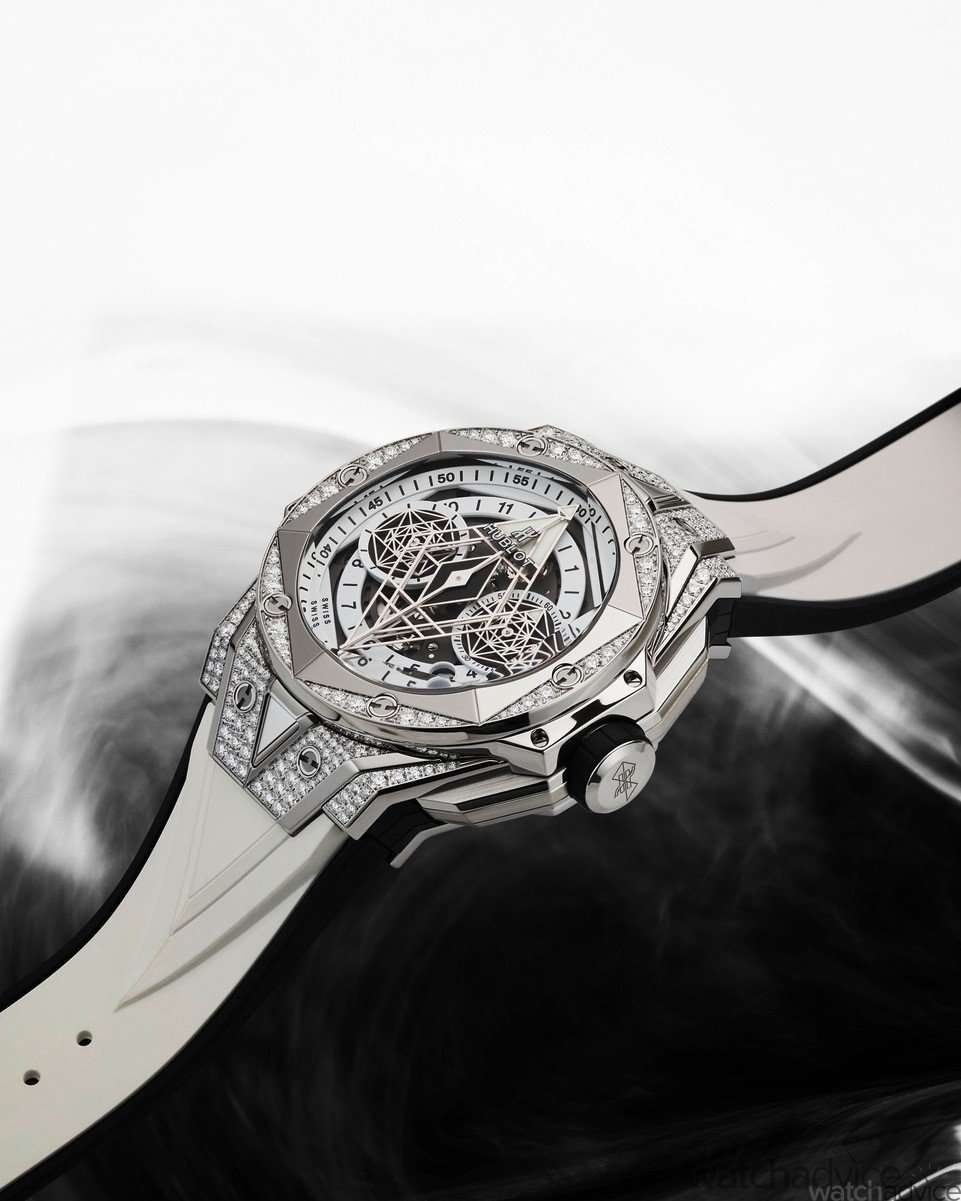
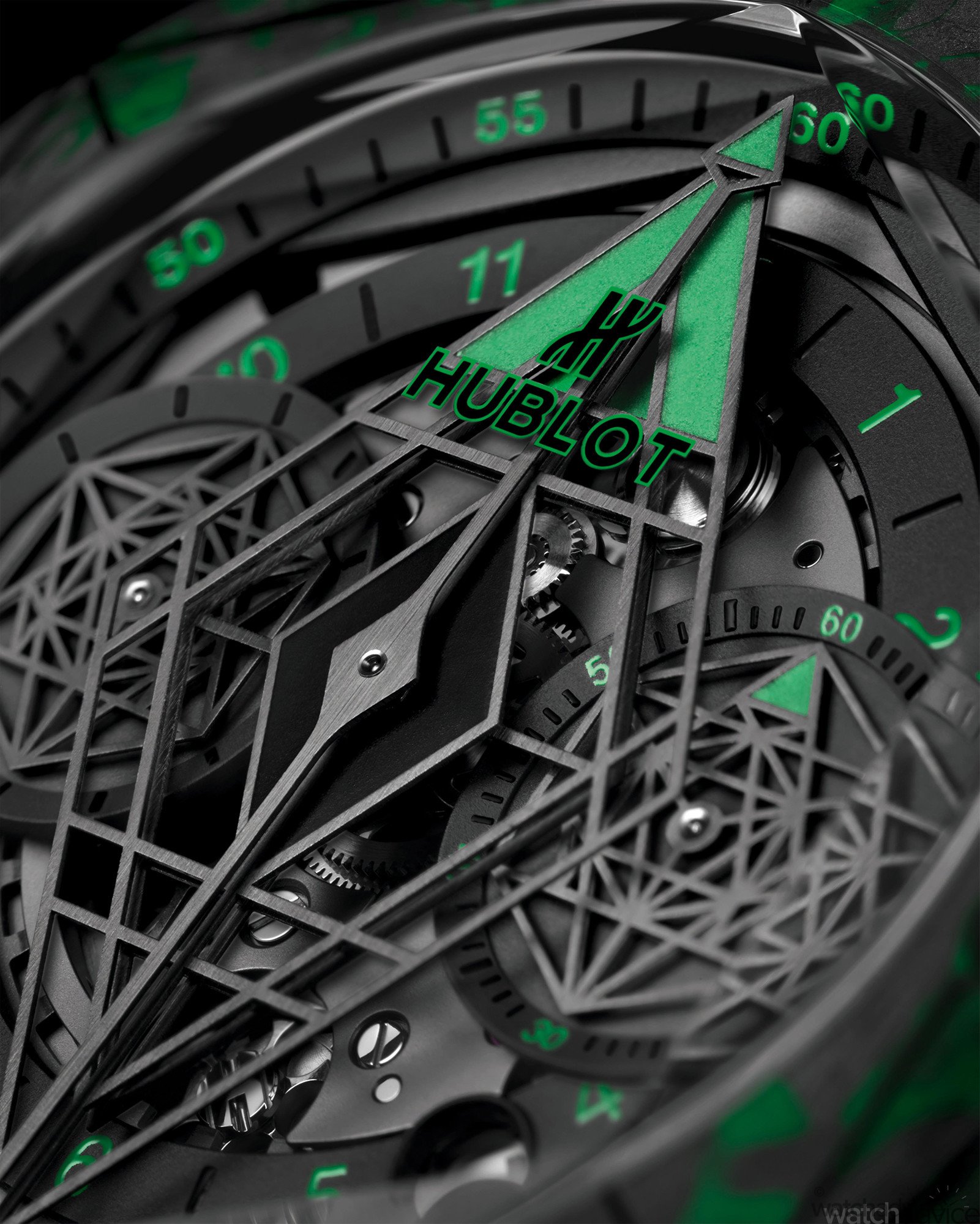
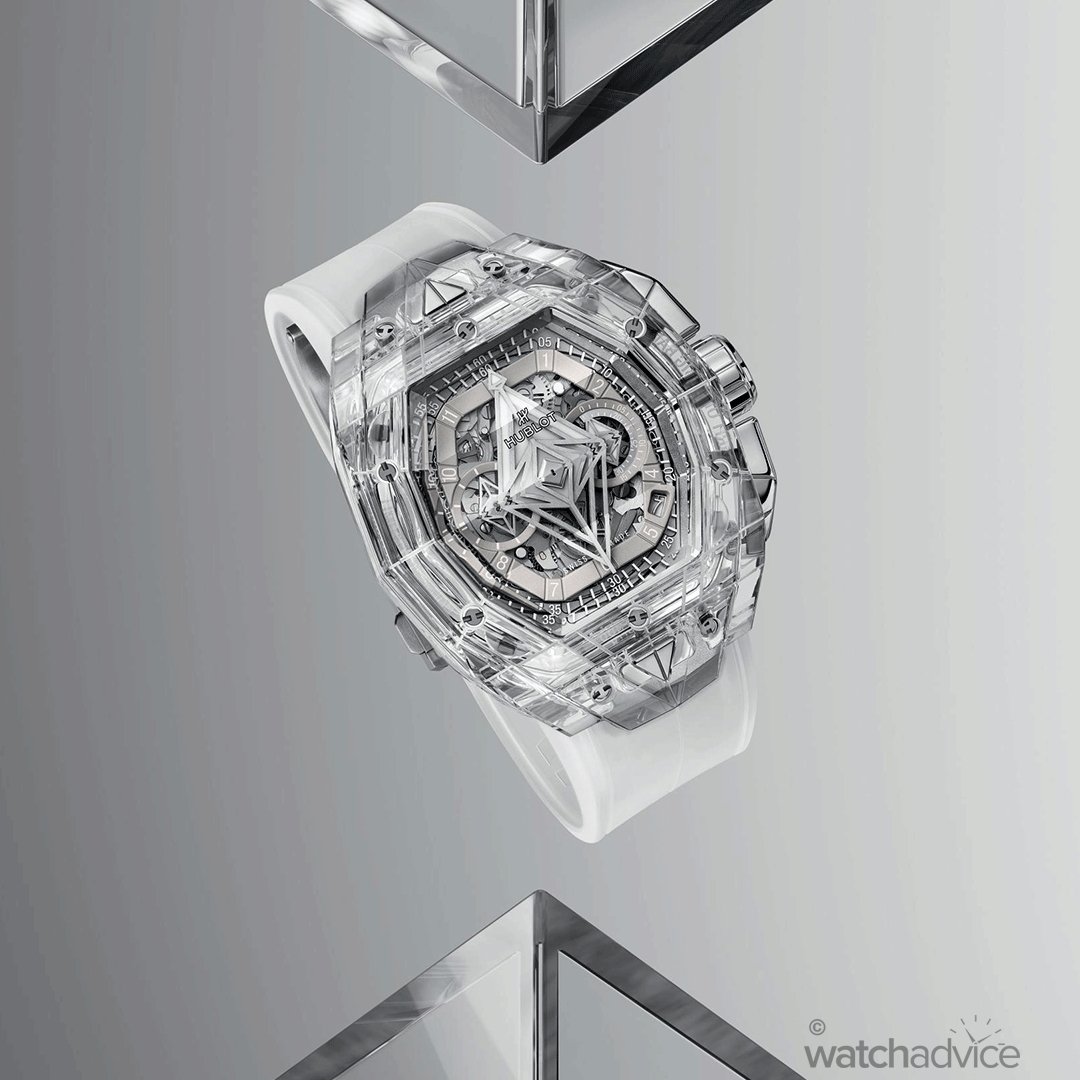
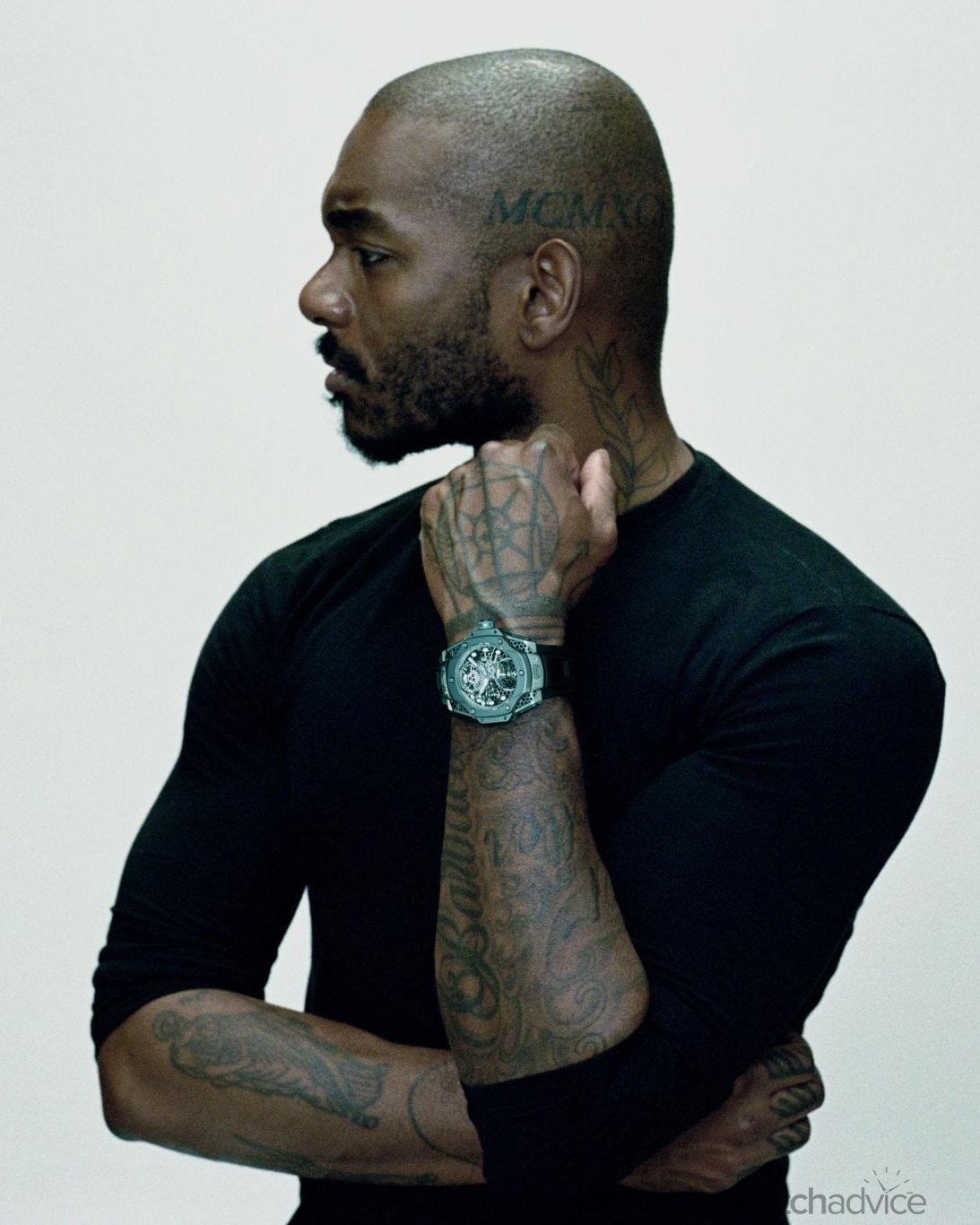
The collaboration between tattoo artist Maxime Plescia-Buchi has been a successful one since 2016. Taking the base of the Big Bang, Maxime helps Hublot weave in his geometric shapes that are well-known in his tattoo art, and the highly successful tattoo studio, Sang Bleu, or “Blue Blood” in English.
Each watch is designed with Sang Bleu’s artistry and design elements in mind, and this creates a Big Bang that is part Hublot and part Maxime.

Samuel Ross
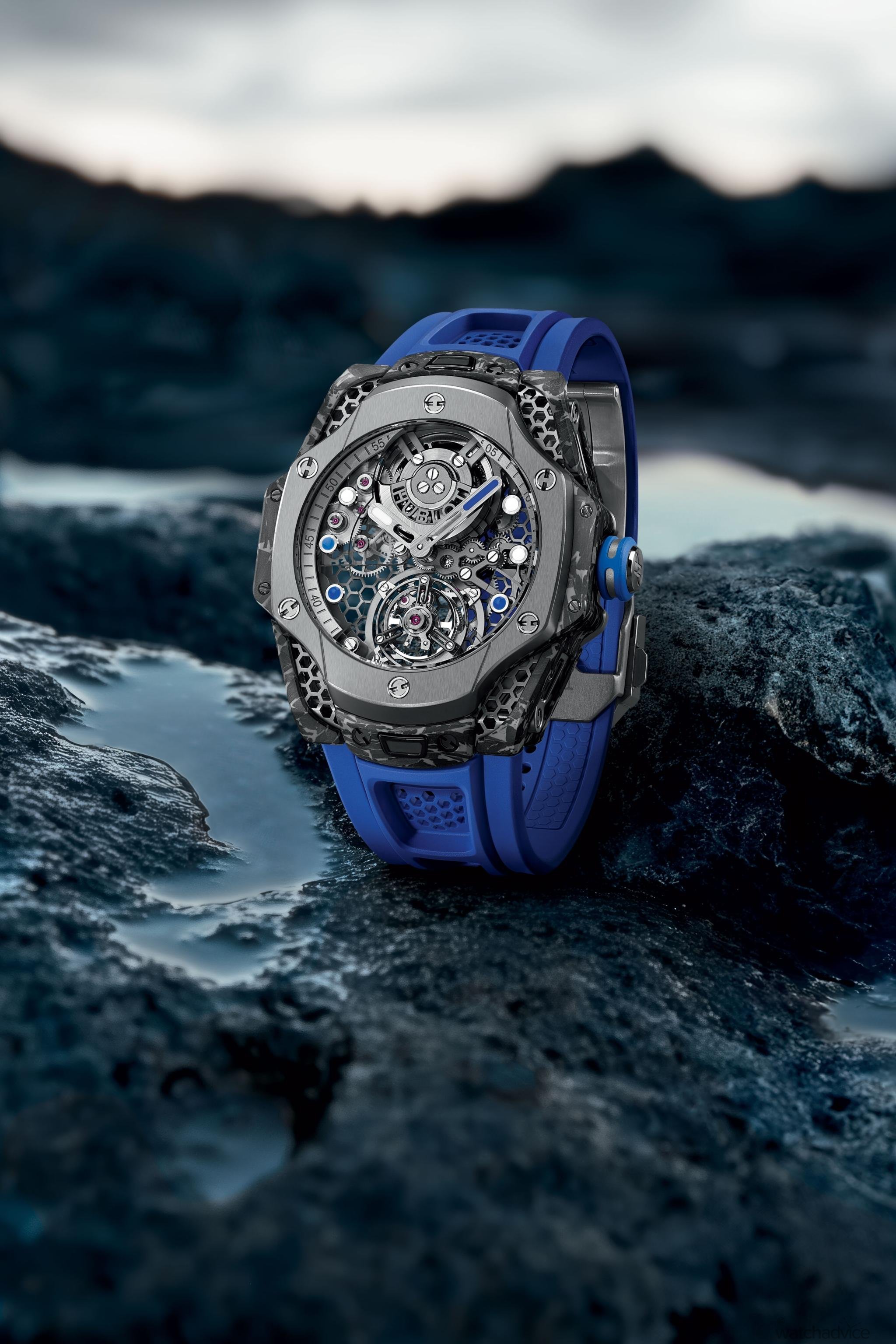
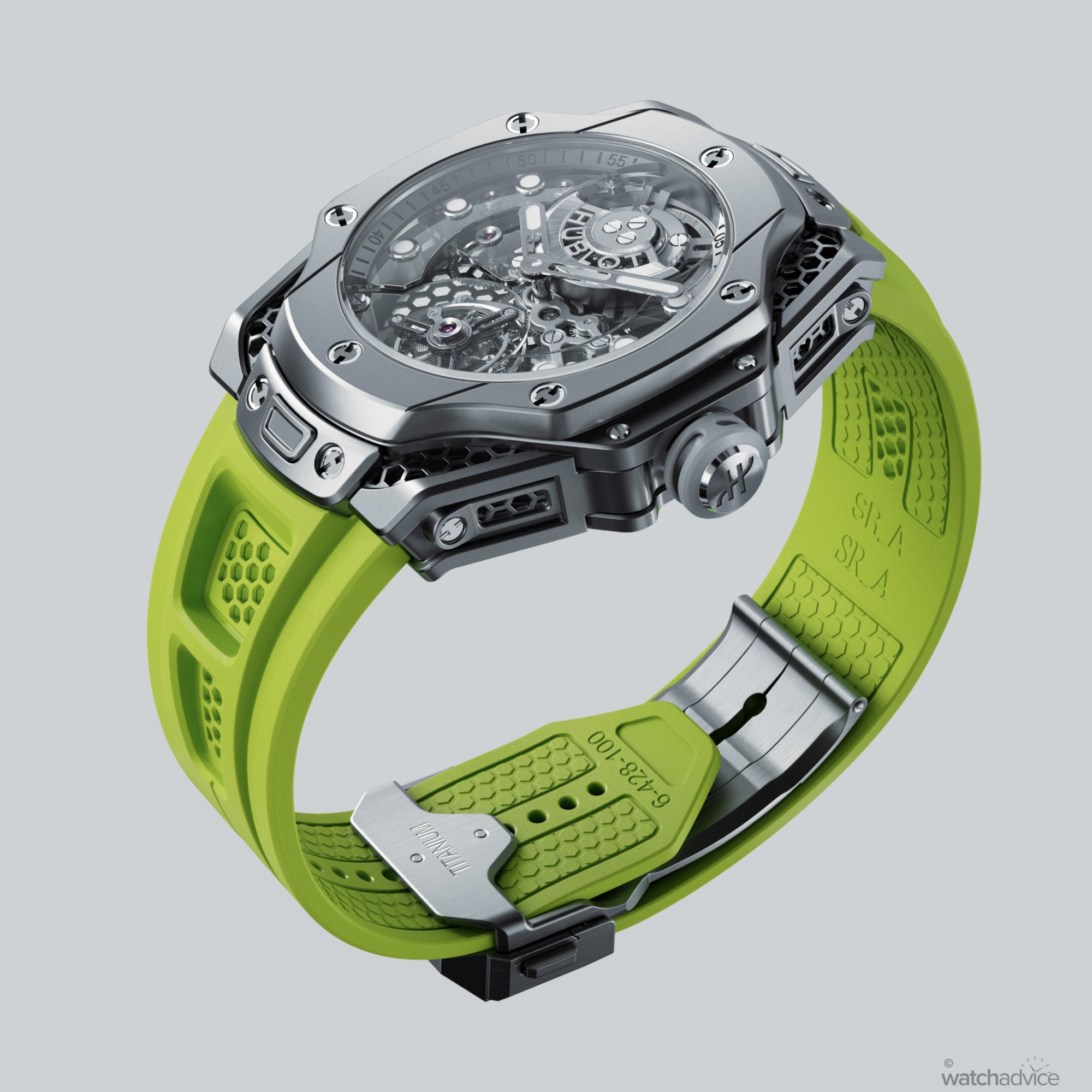
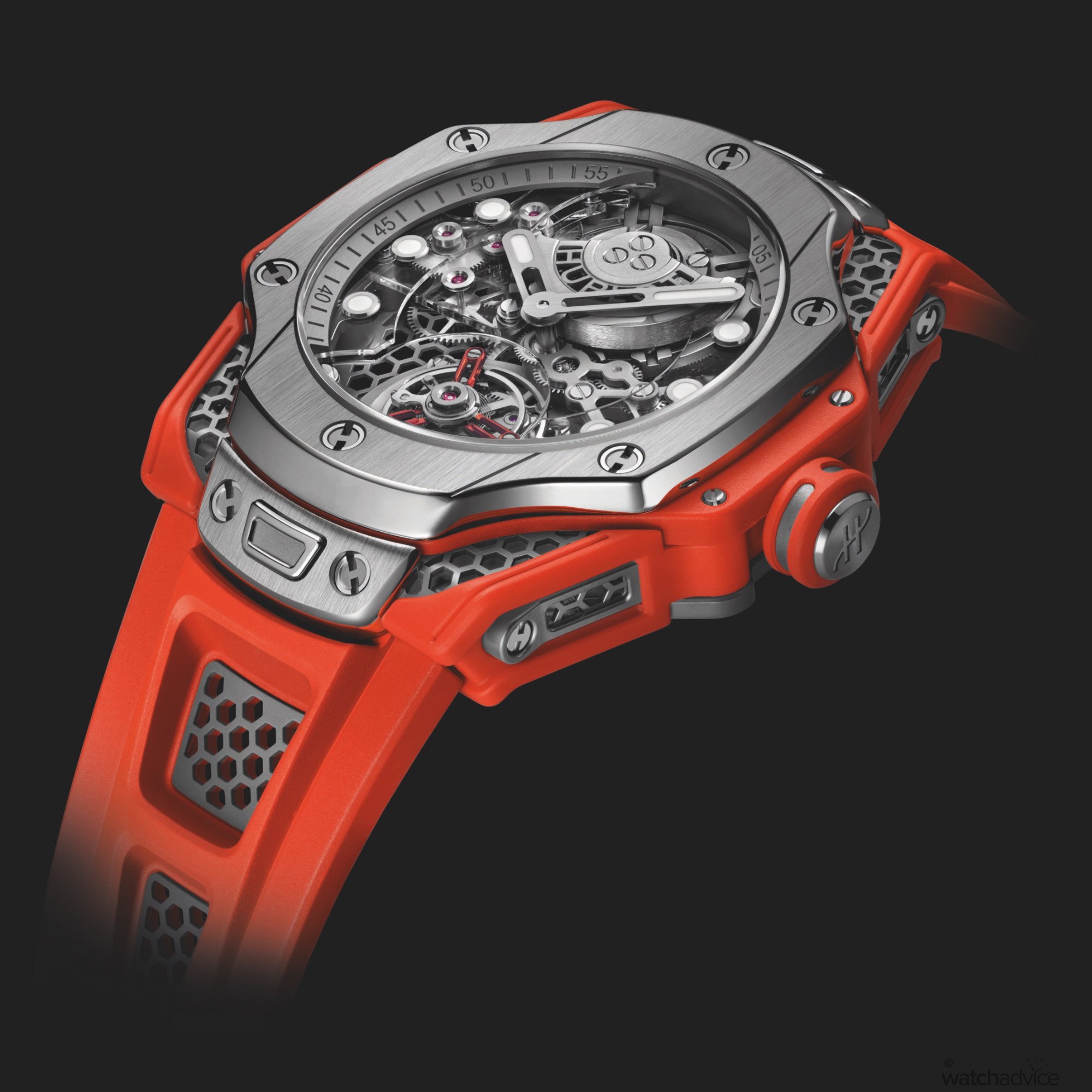
Samuel Ross is a British fashion designer and artist, and he crossed paths with Hublot in 2019 when he was awarded the Hublot Design Prize. His artistic designs are very different and are not limited to any real discipline or object. This means he is more free-flowing, and the Big Bang SR_A is very much this.
His watch? Created the SR_A based on his sculpture, REFORM, done using granite and steel, and designed to encapsulate 40 years of Hublot.
Novak Djokovic
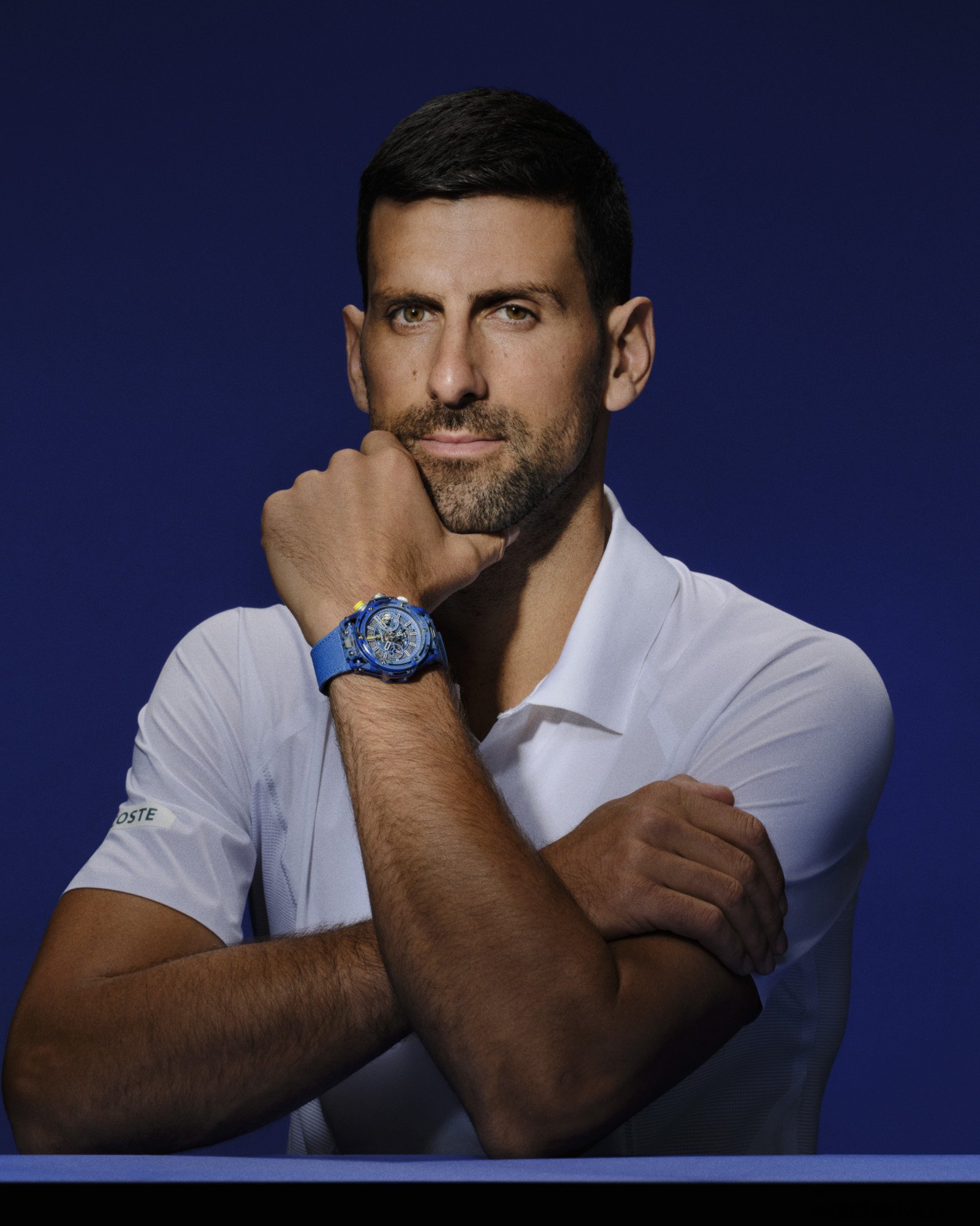
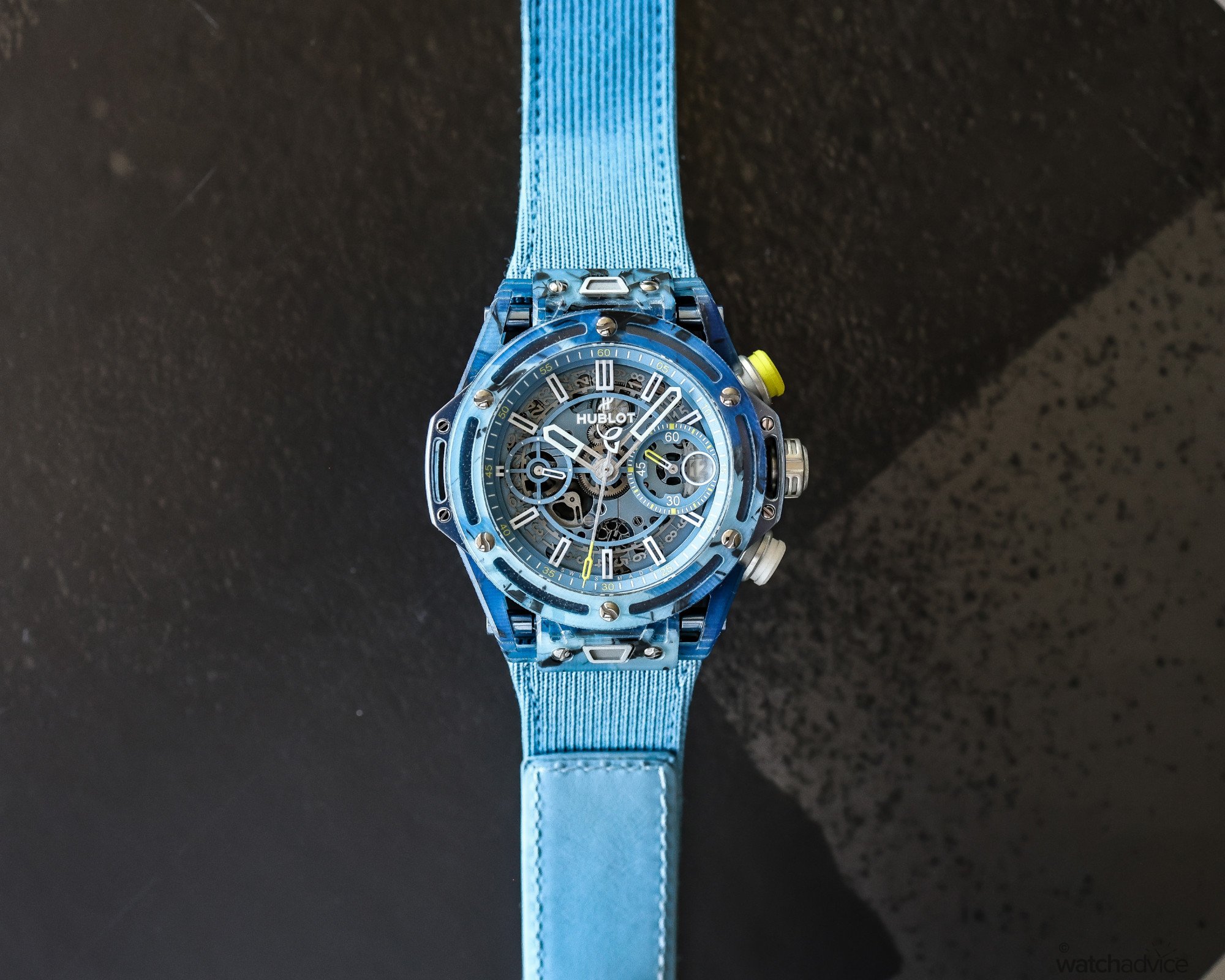
No, he isn’t an artist, but this collab took it to another level using both innovative and unique materials – old tennis rackets and polo shirts from Novak himself, creating the lightest Hublot Big Bang ever!
This is Hublot thinking outside the box and creating a collaboration that goes beyond just design and enters the world of sustainability, not to mention material innovation.
2020 And Beyond
Getting back to the evolution, the decade of the Big Bang growing and evolving culminated in the Big Bang Integral. When Hublot finally released a fully integrated bracelet version in 2020, it felt like the natural closing chapter of this decade and era of the Big Bang. A cleaner, more mature Big Bang that stood toe-to-toe with the category’s giants while still looking unmistakably Hublot.
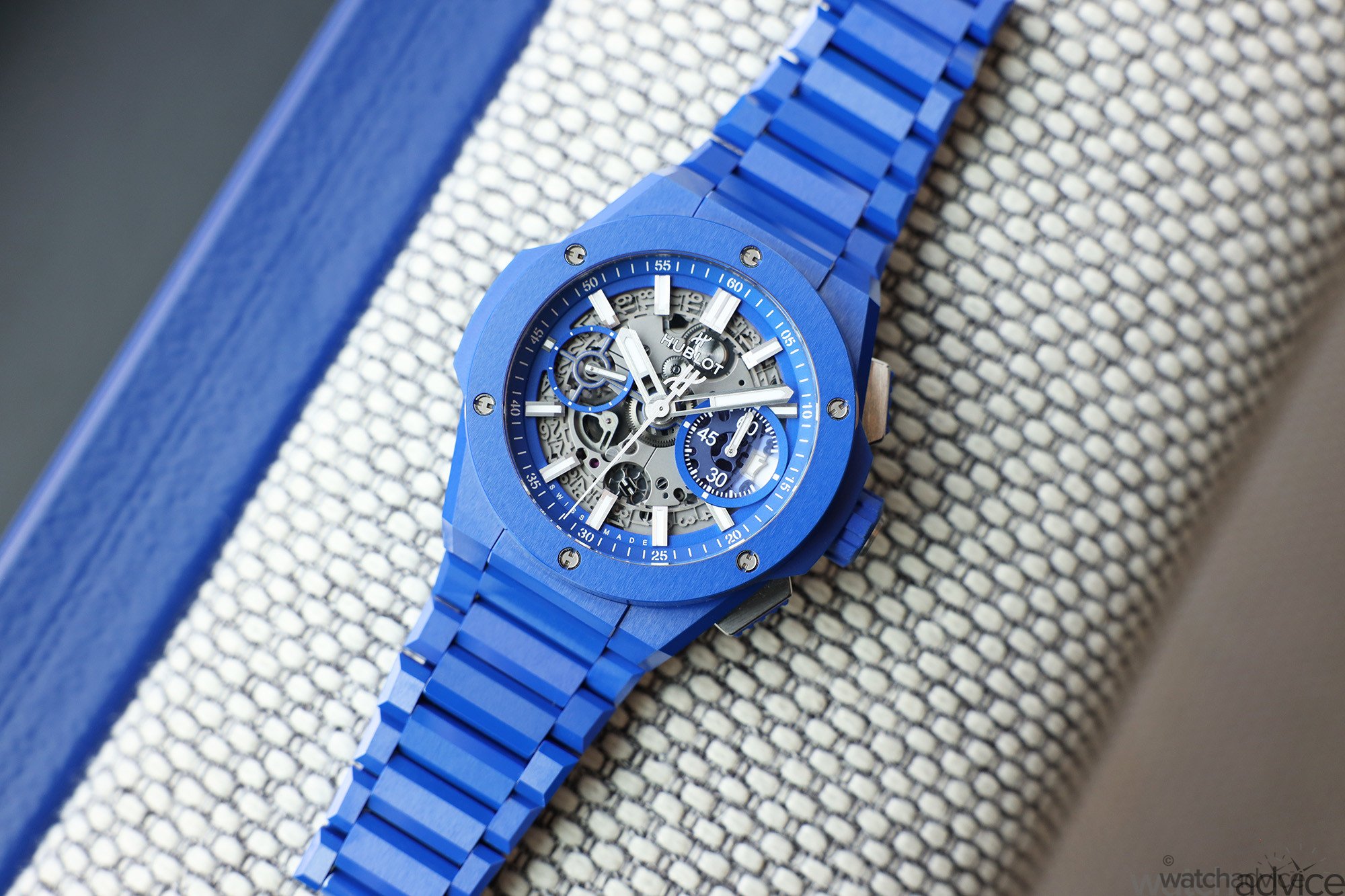
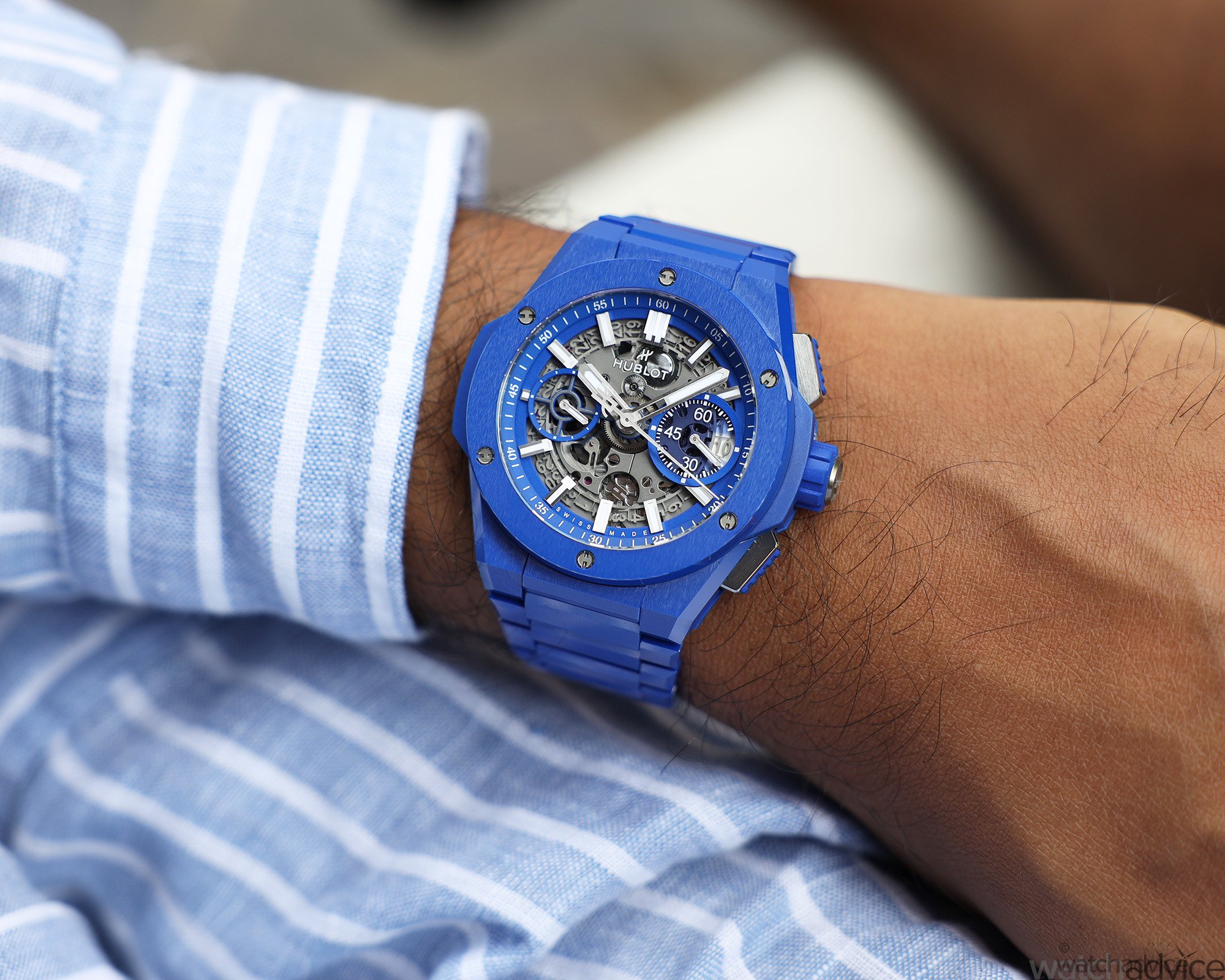
The 2020s, however, is where I feel Hublot has really put the foot down, so to speak. It evolved the Integral models, with new colours, but it also started to bring out more ceramic colours across the Big Bang range, like the 2024 Green and Orange Big Bang Unico models, a full Magic Gold Big Bang limited edition for the 18th Birthday in 2023, and who could forget the green Nespresso collaboration, using recycled Nespresso pods and coffee grounds, or at the start of this year, a world first multi-coloured ceramic?
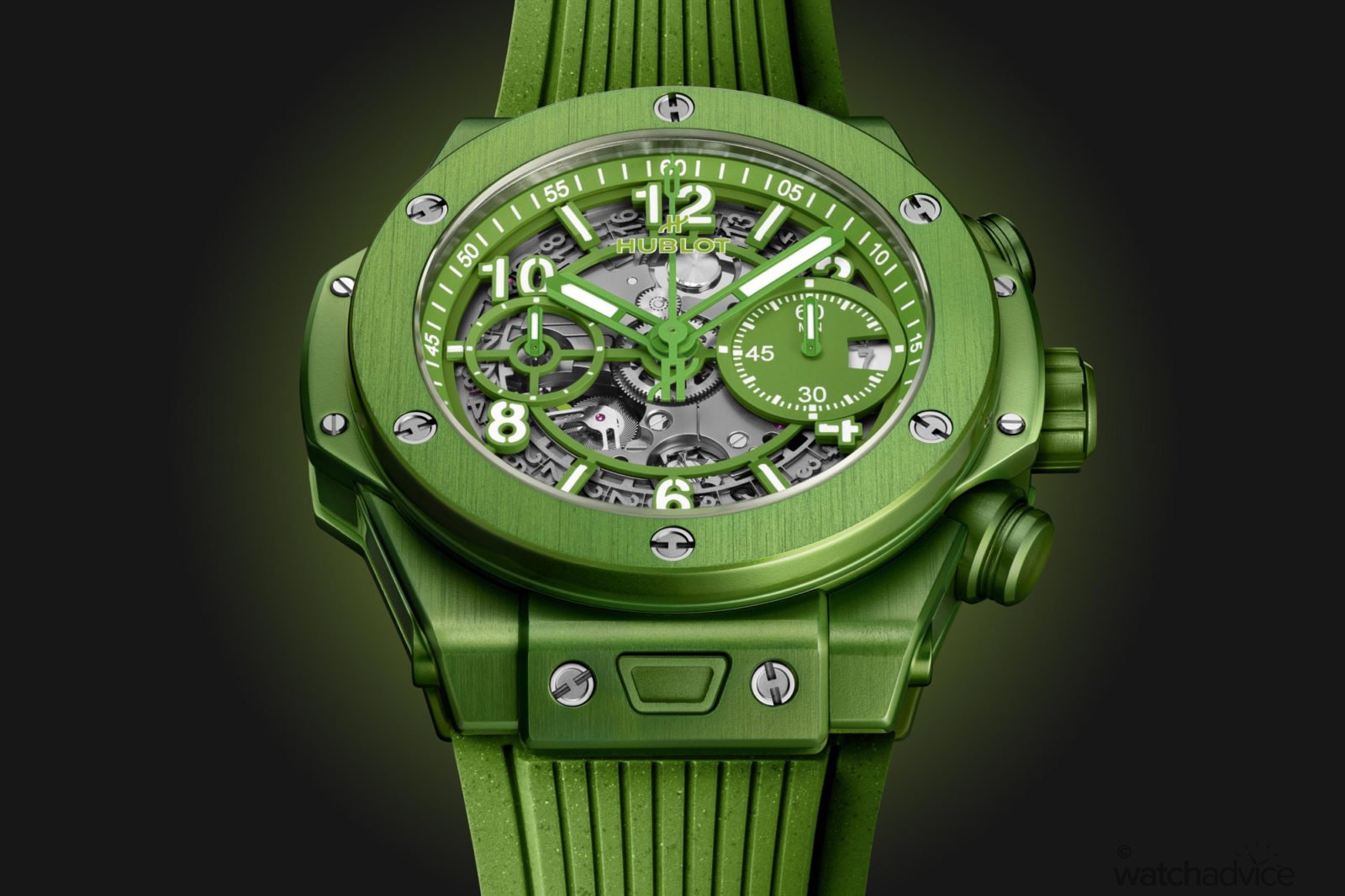
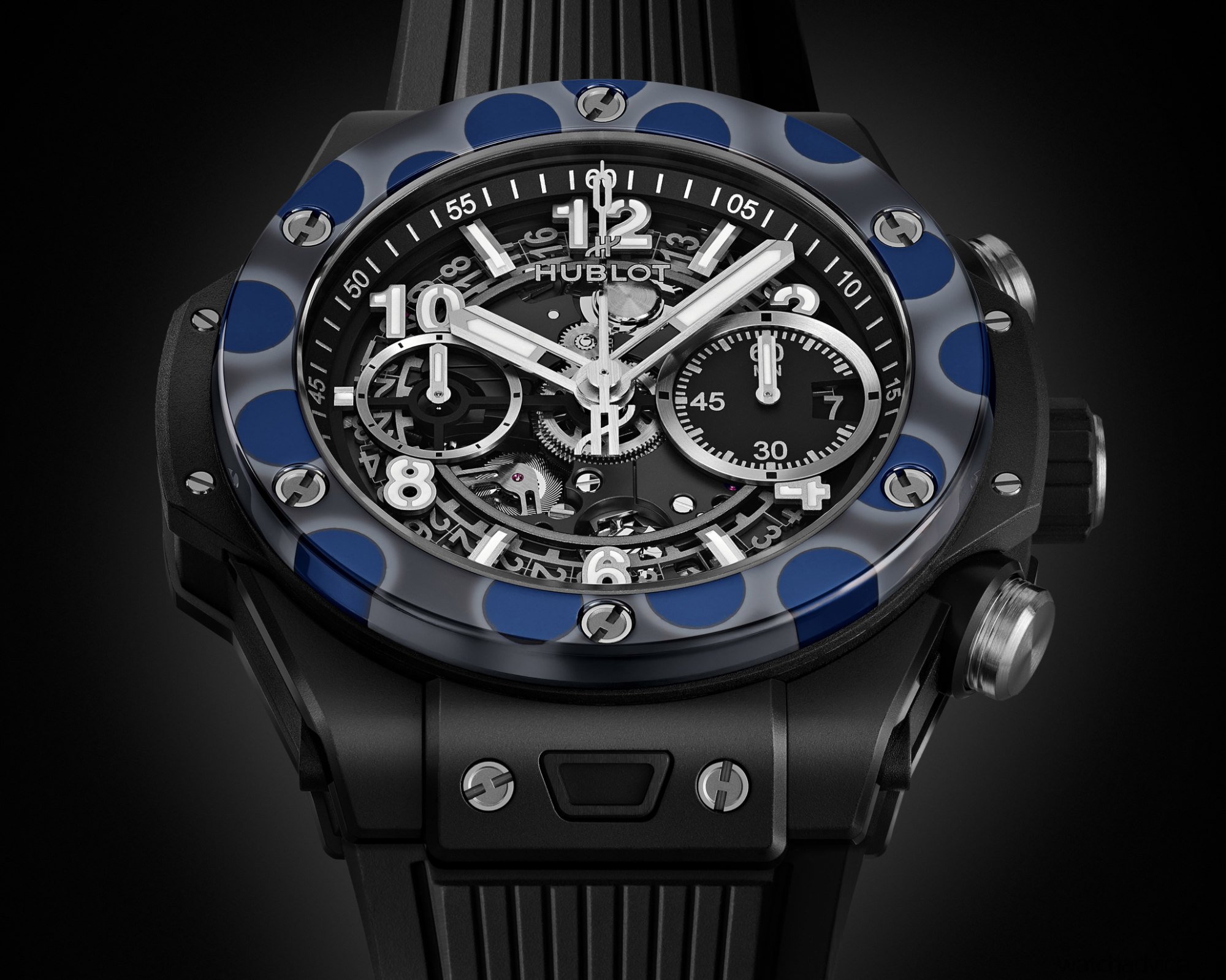
Sapphire also played a much larger part than in the previous 10 years. While Hublot had brought out some magnificent sapphire pieces in the 2010s, like the Big Bang Unico Sapphire that was released in 2016, the first full sapphire Big Bang chronograph, and in 2017, the Sapphire Rainbow, to name a couple, the brand’s use of Sapphire has been significant over the last five years.
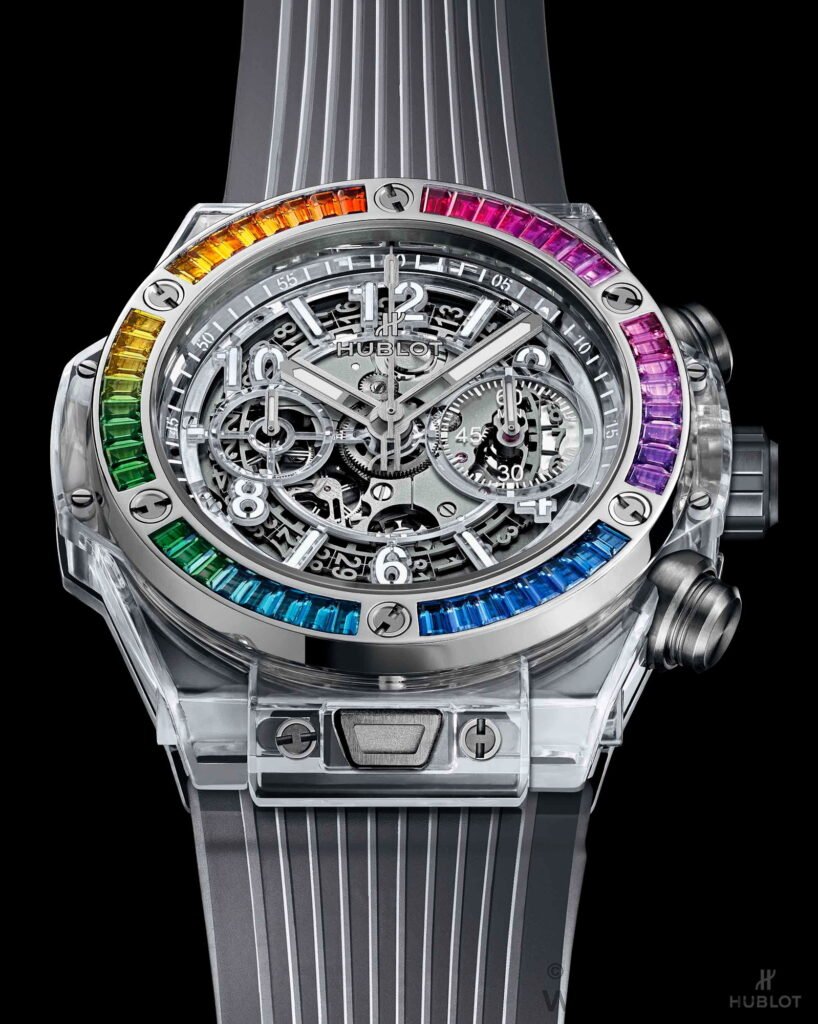
2017: Big Bang Sapphire Rainbow
Building on the 2016 Big Bang Unico Sapphire, the Sapphire Rainbow showcased Hublot’s craftsmanship with not only sapphire, but gem setting.
This model housed the first Unico movement, the HUB1242, which was the predecessor to the modern HUB1280 flyback Chronograph Calibre.
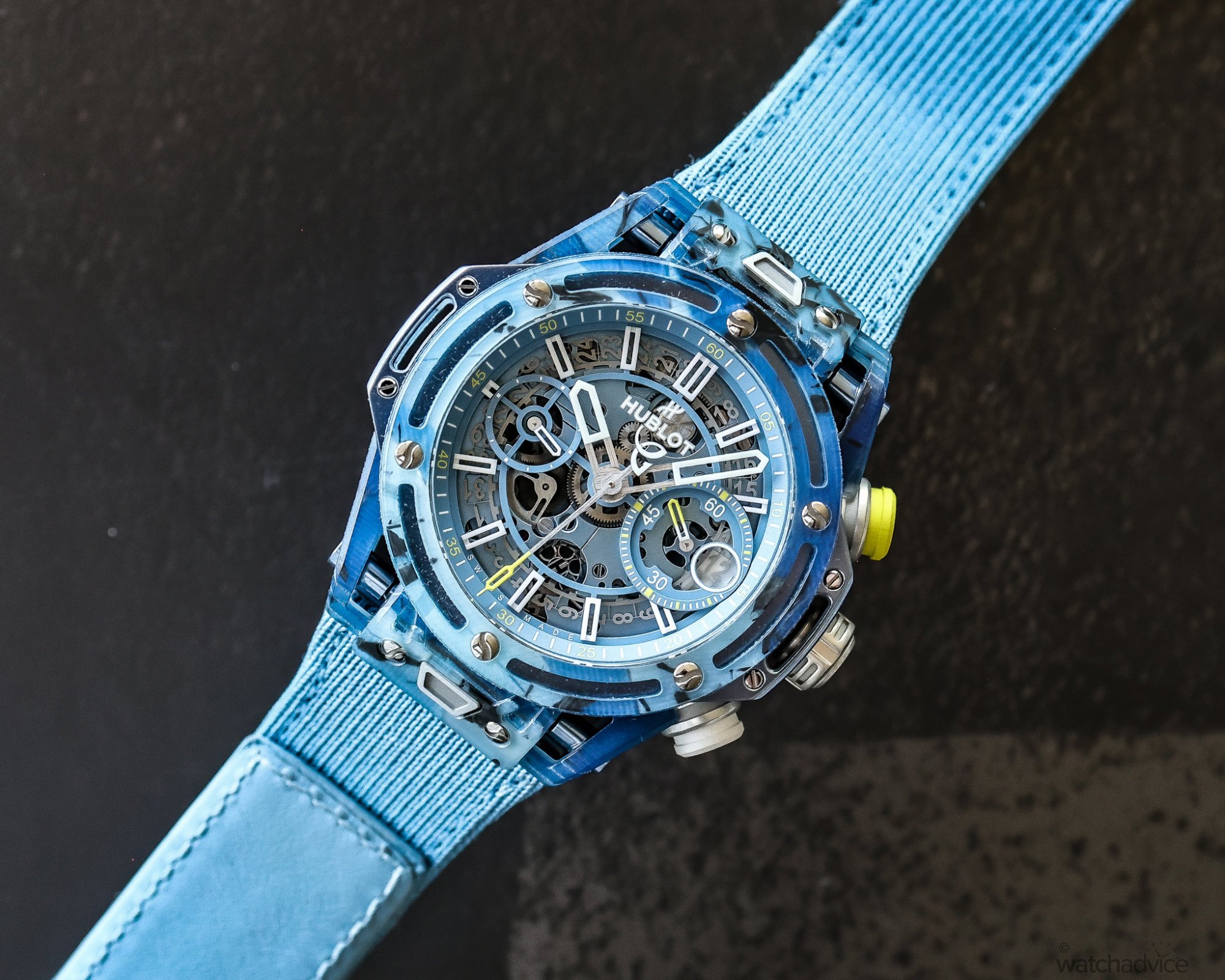
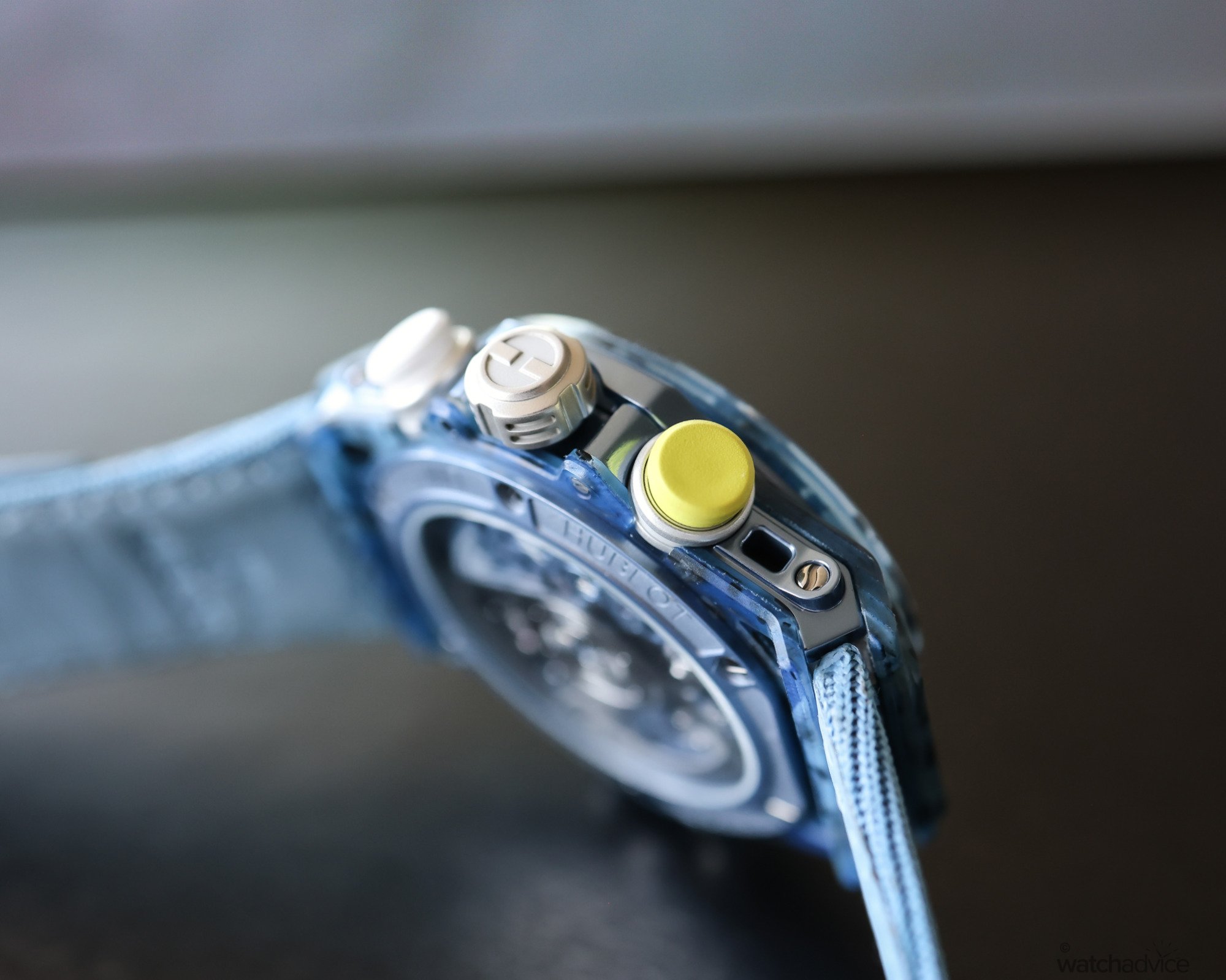
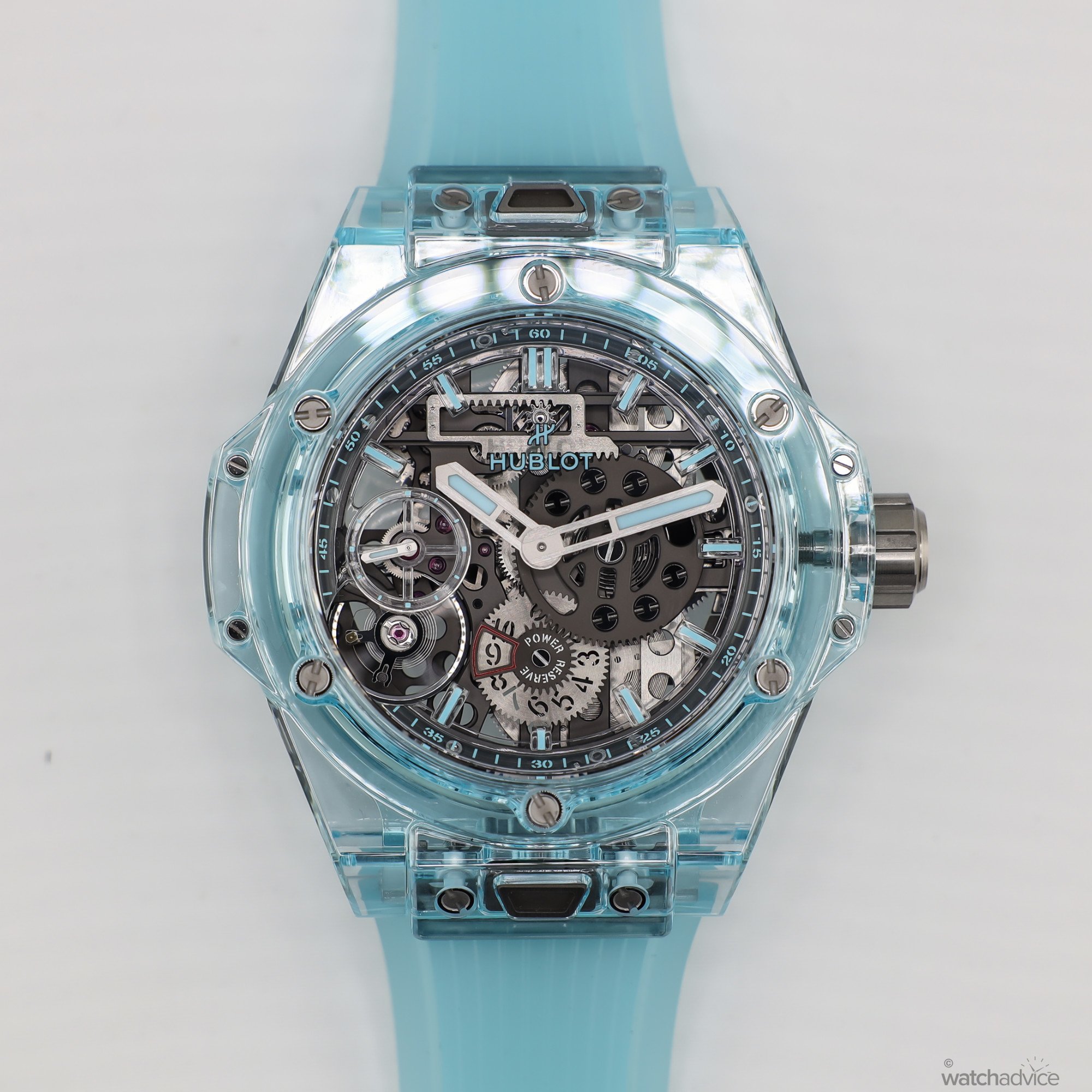
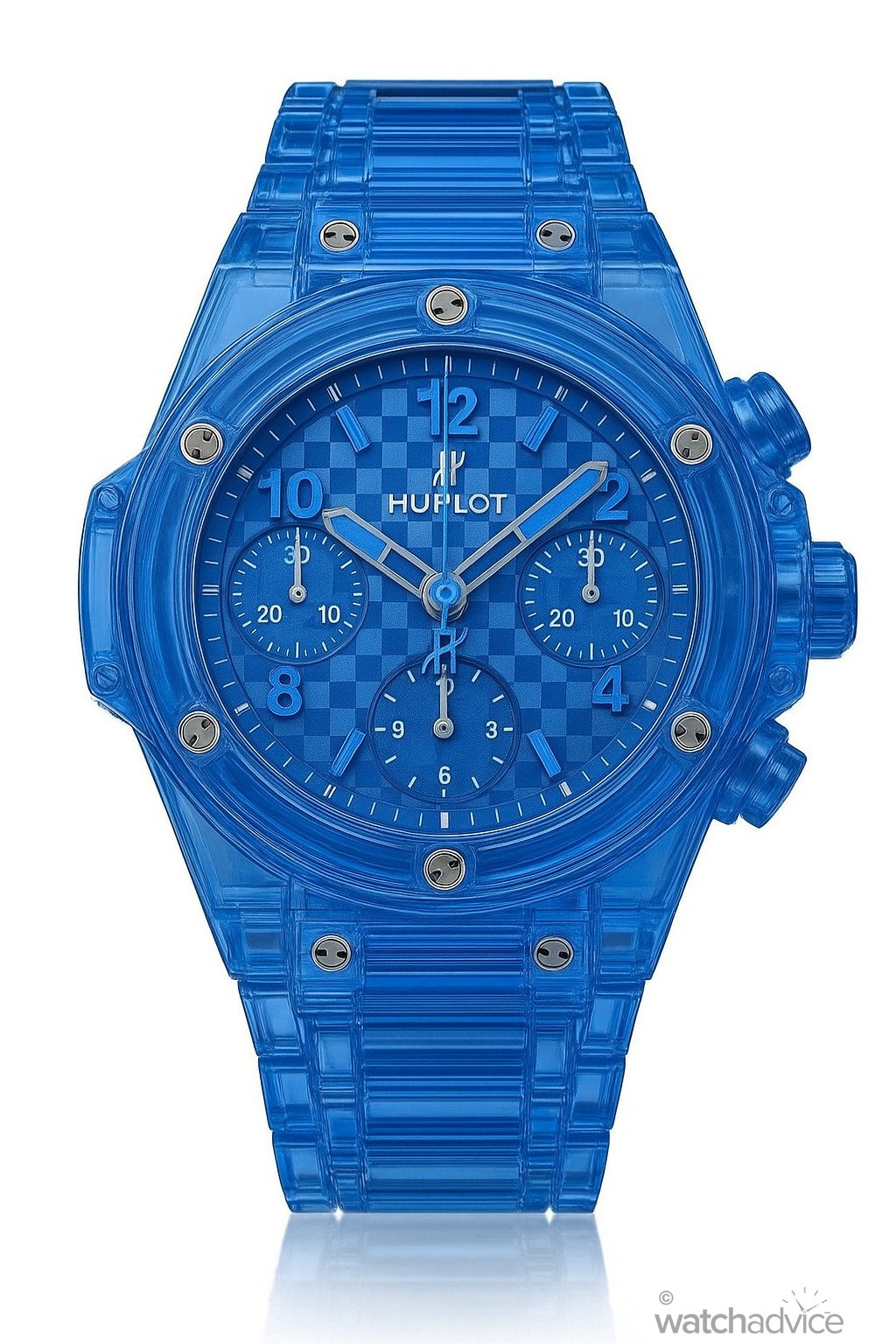
Hublot started experimenting with coloured sapphire in 2017, bringing out a dark blue model and a ruby red Big Bang. These models were the start of a journey that Hublot has very much made its own. It followed up with a smoked sapphire Big Bang shortly after, and then in 2019, the first experimental sapphire compound: SAXEM. Standing for Sapphire Aluminium oXide and rare Earth Mineral, this was several years in the making to perfect both the colour and the clarity, to the point where it almost looks like it glows from the inside.
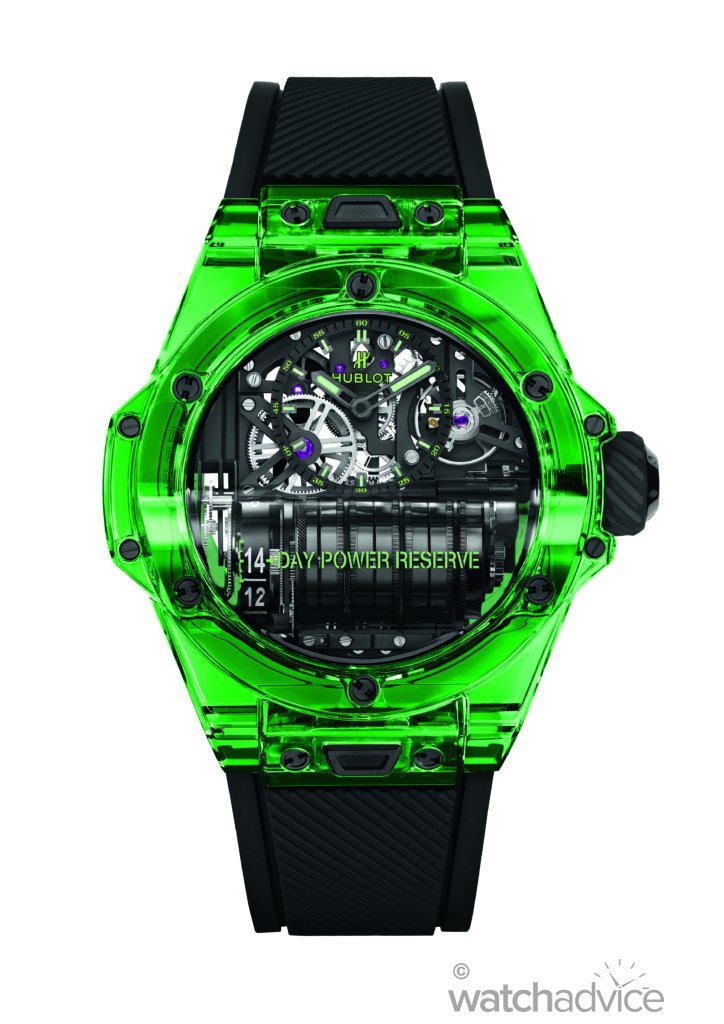
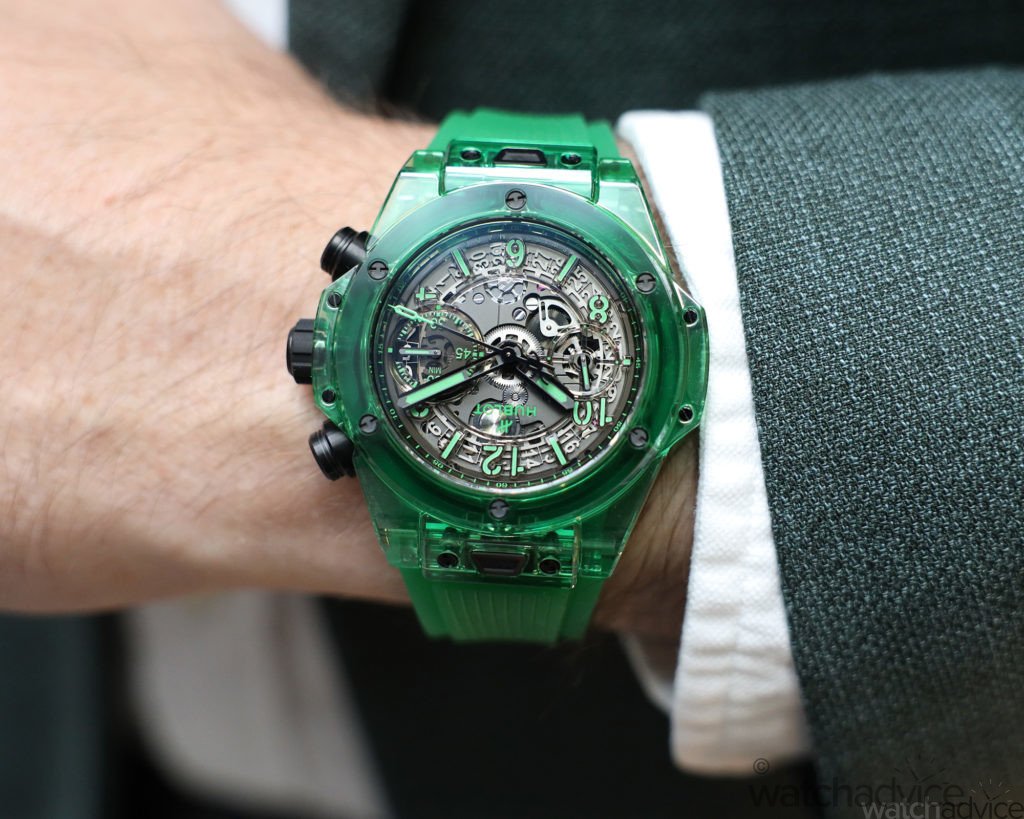
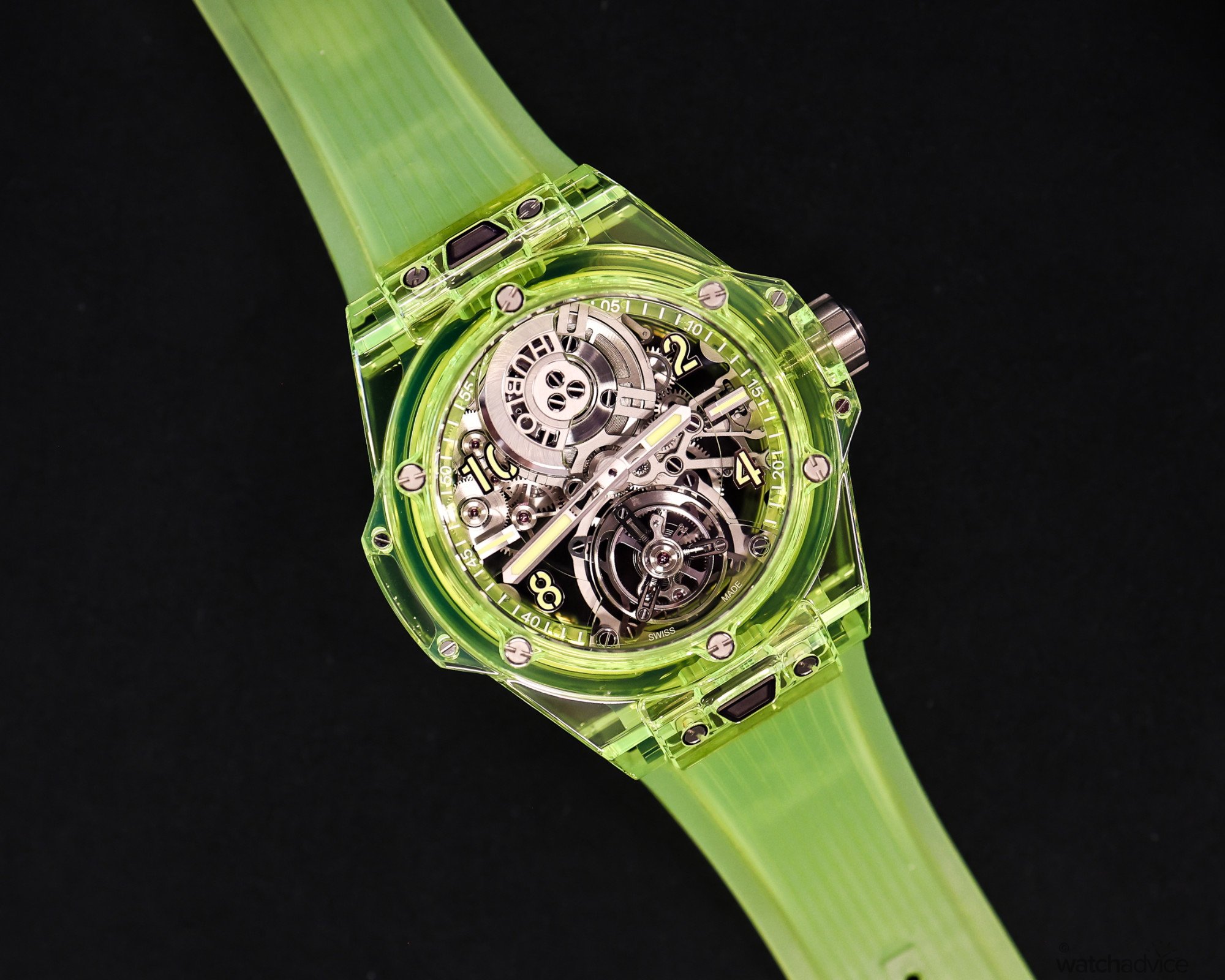
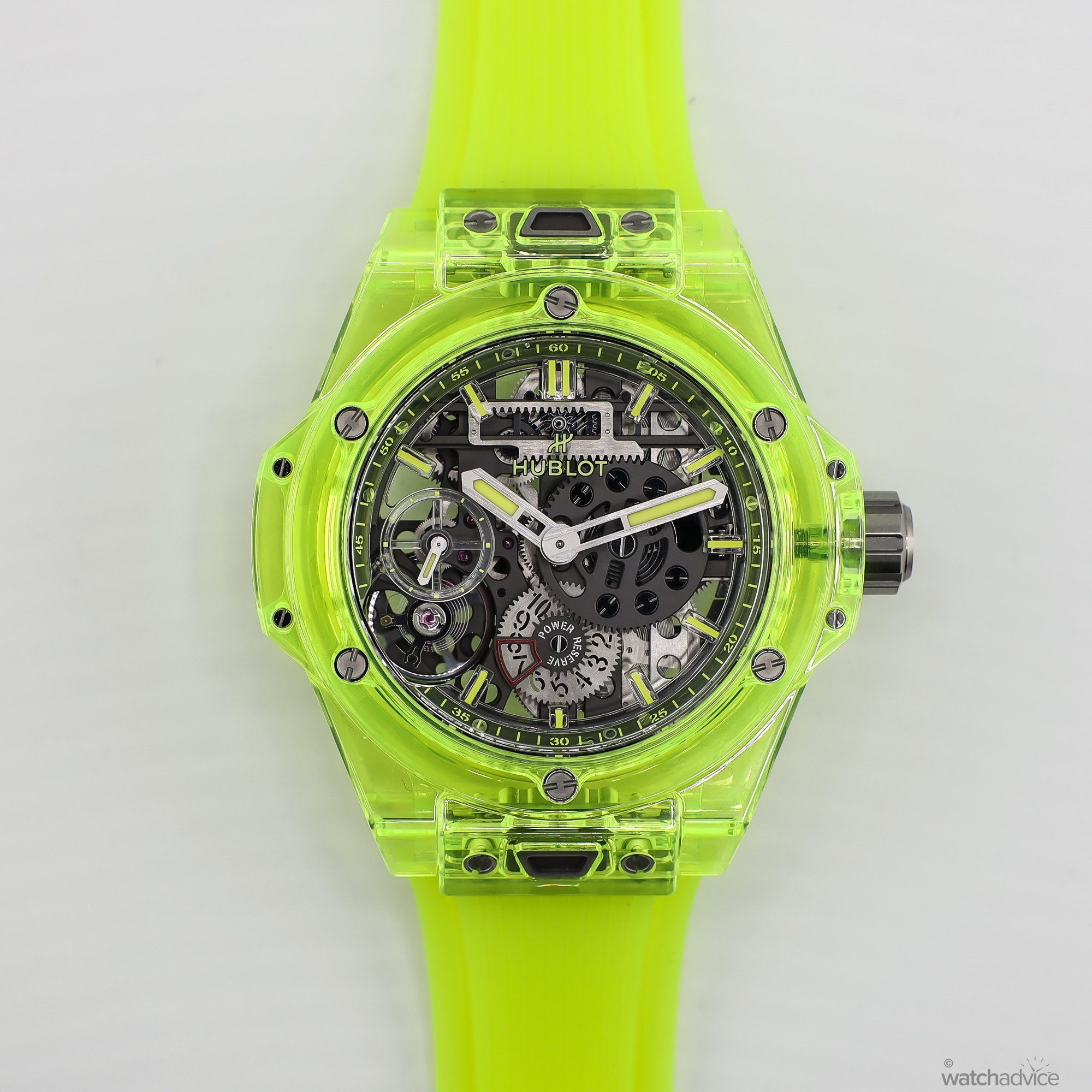
The first piece to receive the SAXEM treatment was the Big Bang MP-11 in SAXEM Green, and since then, SAXEM has been used multiple times across Big Bang Models. Hublot took this one step further in 2023 when the brand developed neon yellow SAXEM. According to the team at Hublot, the yellow was harder to produce as the colour was more delicate, and getting the right hue and clarity took many attempts. Hublot used the Big Bang Tourbillon with the HUB6035 Manufacture automatic tourbillon movement inside, which appears to float inside the watch case thanks to the several clear sapphire discs holding the framework in place.
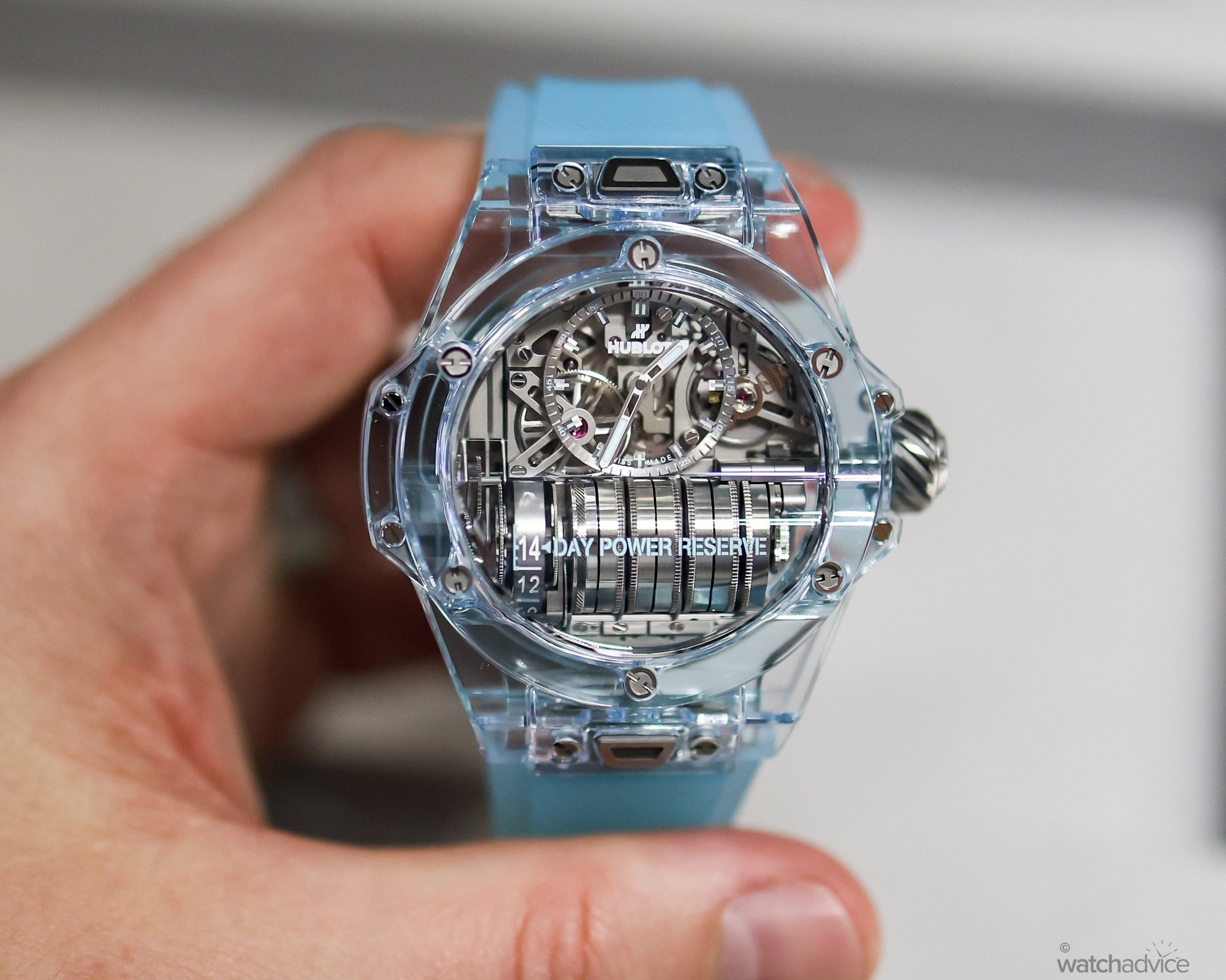
Hublot’s foray into sapphire didn’t and doesn’t stop there. We’ve seen purple, orange and last year, water blue added to the sapphire colour palettes. This, according to the (then) CEO, Ricardo Guadalupe, was one of the hardest colours to create to date, thanks to the exact shade Hublot’s material science team was aiming for, to differentiate it greatly from the darker blue it had created years prior.
Spin Off Series
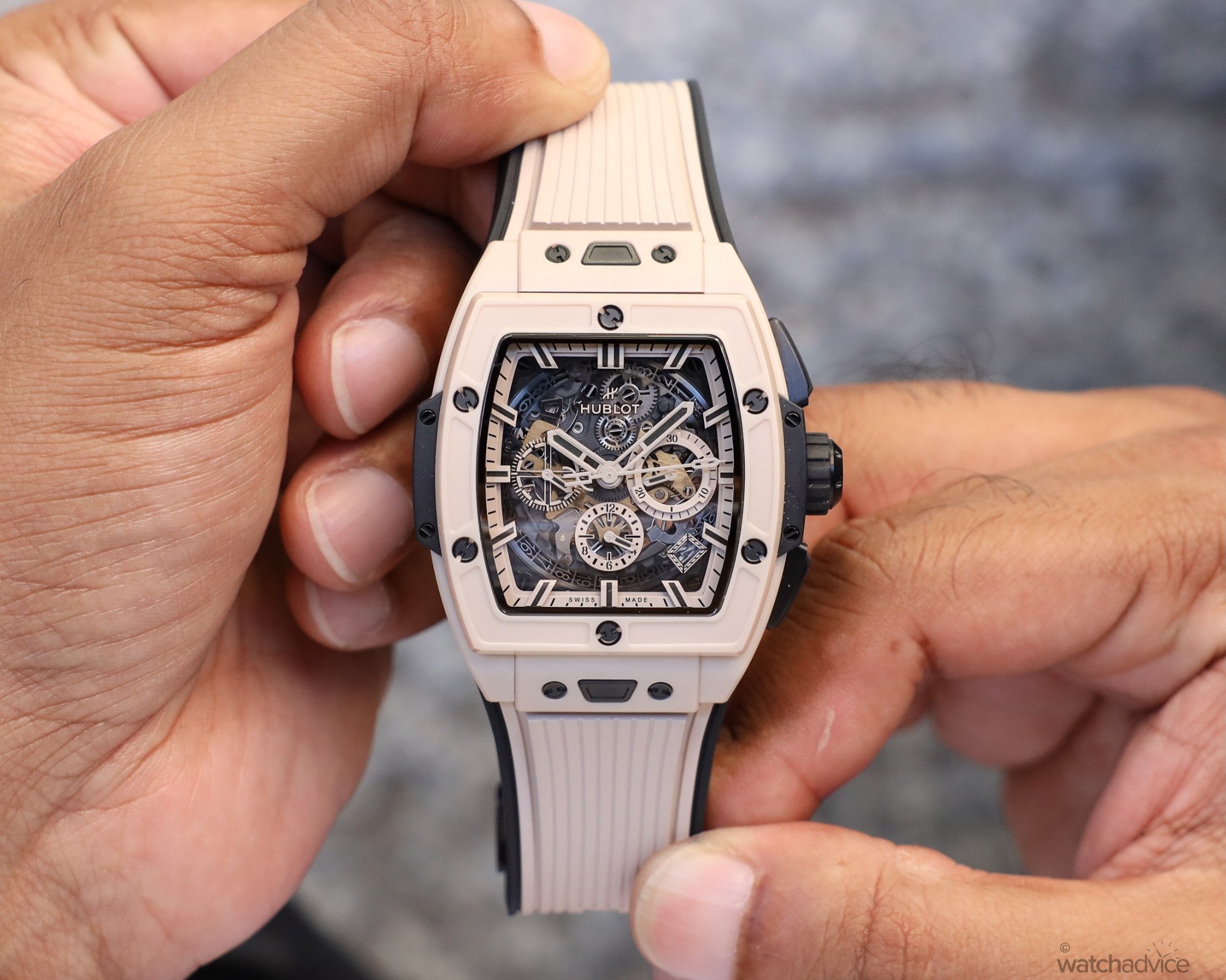
There have also been “spin-offs” of the Big Bang, too, notably with the Meca-10, Spirit of Big Bang, and Square Bang. models. The Spirit of Big Bang was the first “Spin Off”, launched in 2014. It gave people a very different-looking Hublot, featuring a tonneau-shaped curved case and a modified and adapted El Primero movement from sister brand Zenith. While it was controversial for looking like a Richard Mille, the tonneau shape wasn’t new, nor exclusive to RM, and this was Hublot capitalising on a trend.
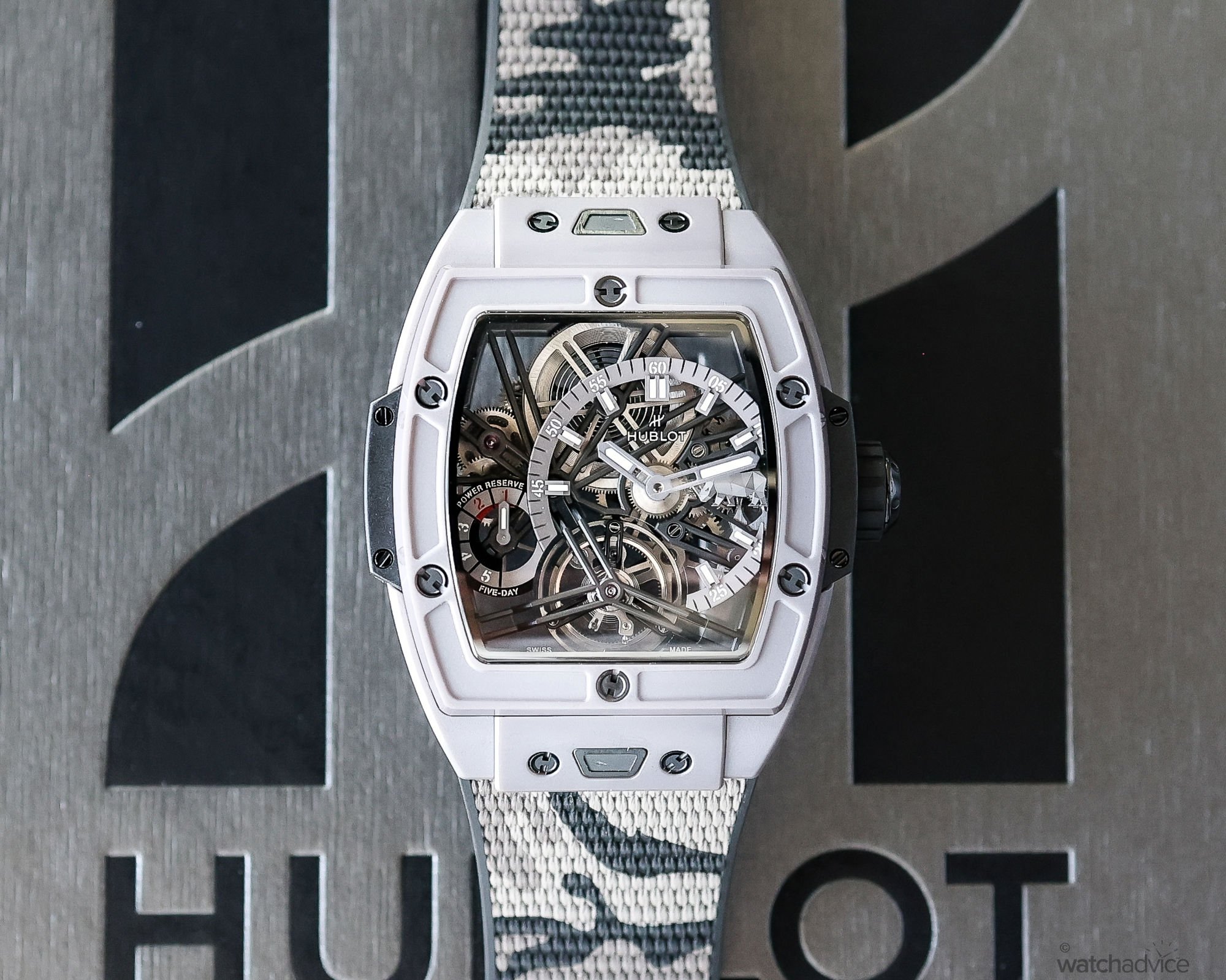
The 2017 Big Bang Meca-10 was pivotal with its Red Dot Design Award-winning 10-day power reserve movement that was inspired by Meccano sets. This was recently overhauled this year to have a cleaner dial layout, and shrunk in size from a 45mm to a now more wearable 42mm.
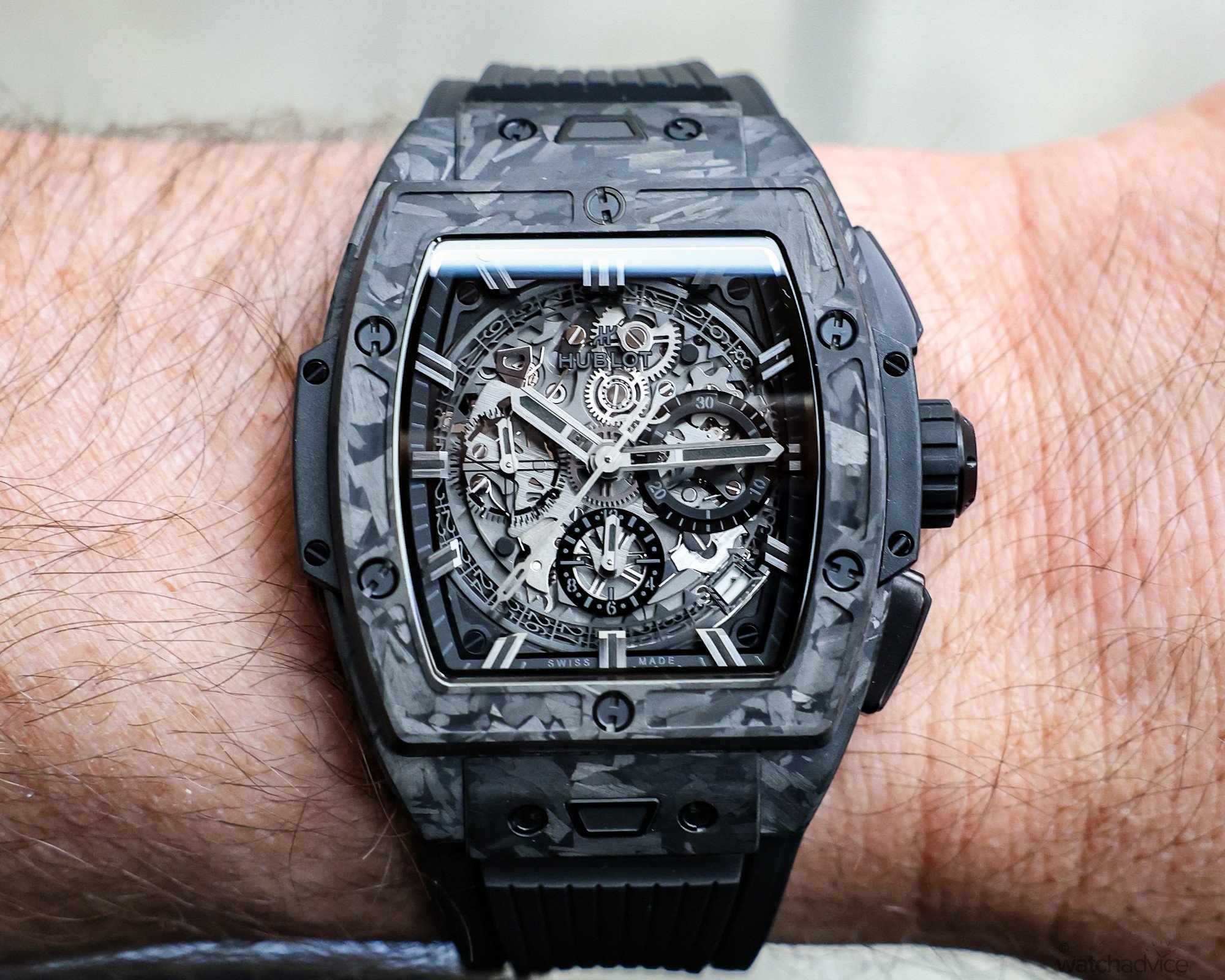
In 2022, Hublot took the Big Bang concept and created the Square Bang, looking to extend the Big Bang case design and concept into a shaped case. It has only been in existence for really 4 years, inclusive of 2022, but has already carved out a niche for the brand, with different case materials and movements.
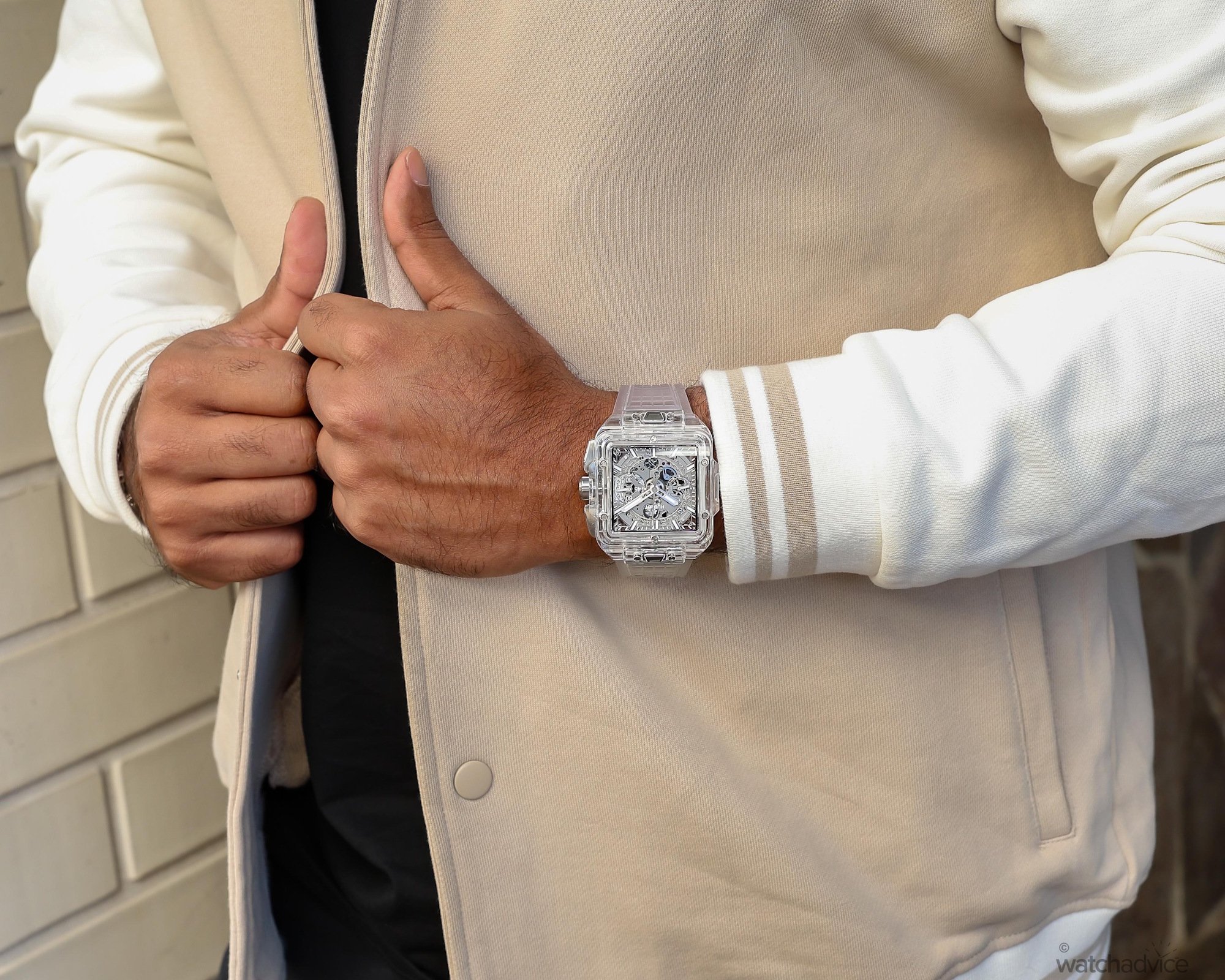
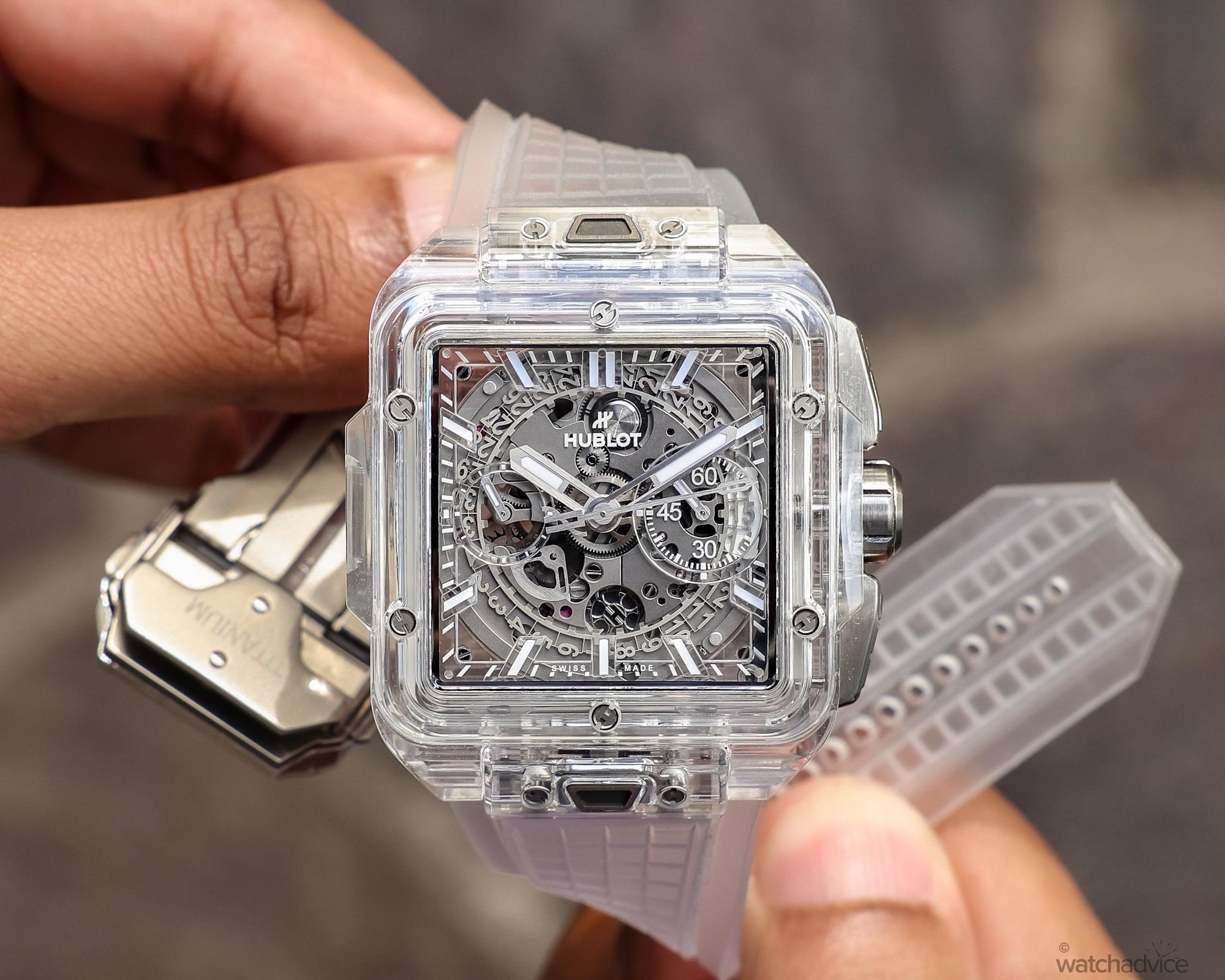
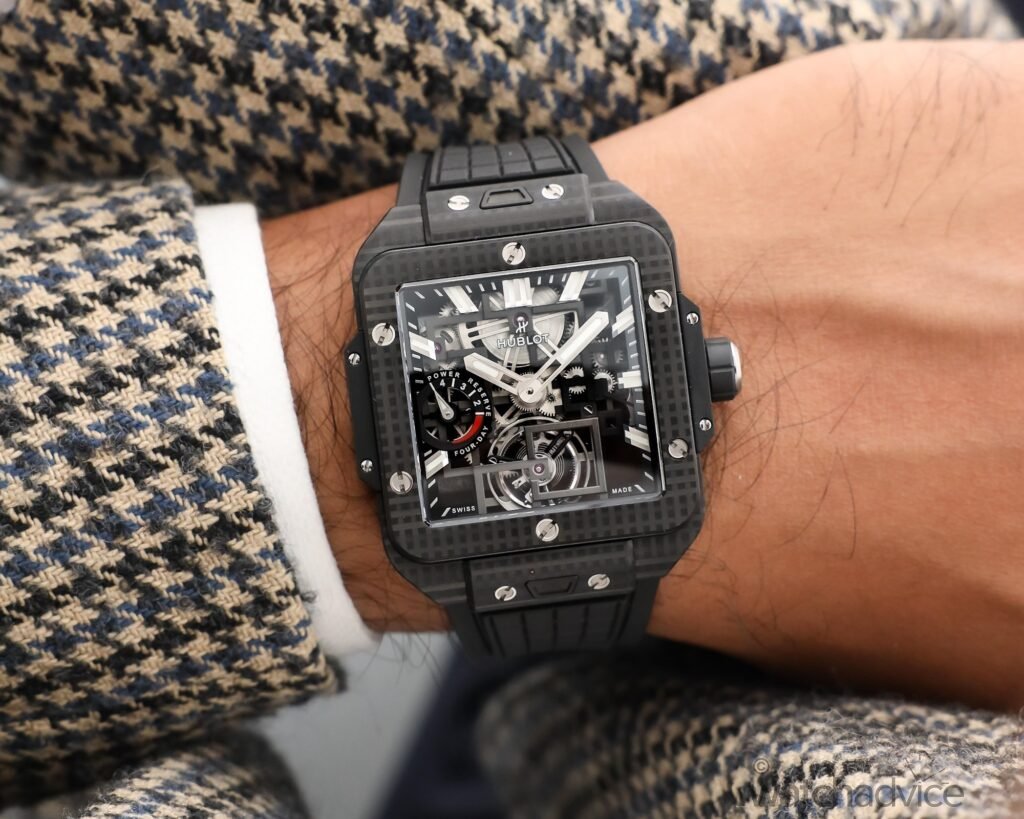
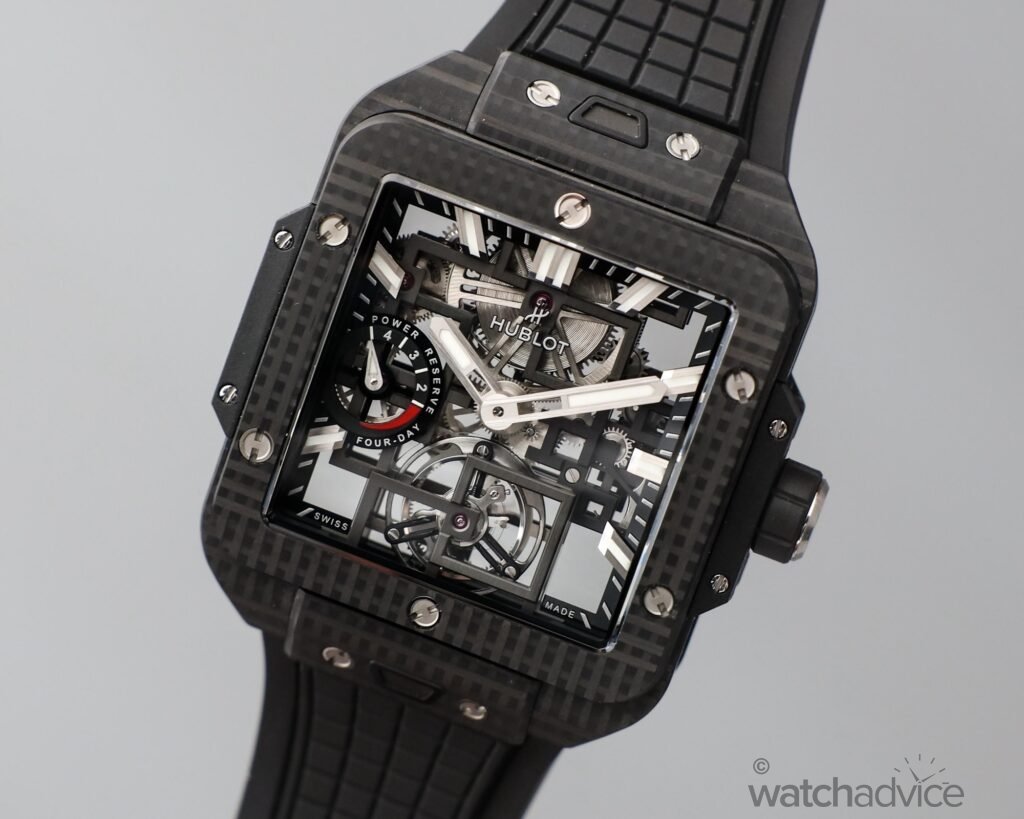
Above, we’ve road tested several out, including the Square Bang Sapphire and the 2025 Square Bang Tourbillon 3D Carbon, both showcasing Hublot’s materials and movements adapted to a square-shaped case. Why were these spin-offs important? It is Hublot looking forward and iterating on designs, trying new things to see how far they can push the boundaries. In Juline’s words:
“So, you need to be able to anticipate what is necessary for the brand to move forward. And you take more risk. When you make a re-addition of a watch that was made 50 years ago, it’s a different exercise than creating something new. And that’s a big responsibility for me to bring this brand to the next level, but always looking forward.”
A Full Circle Moment
All this has led us full circle back to where it all started, the Big Bang, now the Big Bang Original. A more refined version 20 years on, with the HUB1280 Unico flyback chronograph movement inside, but all the hallmarks from those gone before it. Perhaps I can let Julien explain it better:
“It is a big, big, Big Bang deal, because the idea was to take the essence of the original Big Bang as it was back 20 years ago, and add in the additional features and elements to the watch, like the One Click technology, of course, like the Unico movement, which is very important to us. We wanted to use every iconic topic, aspects that are so well known with Hublot.”
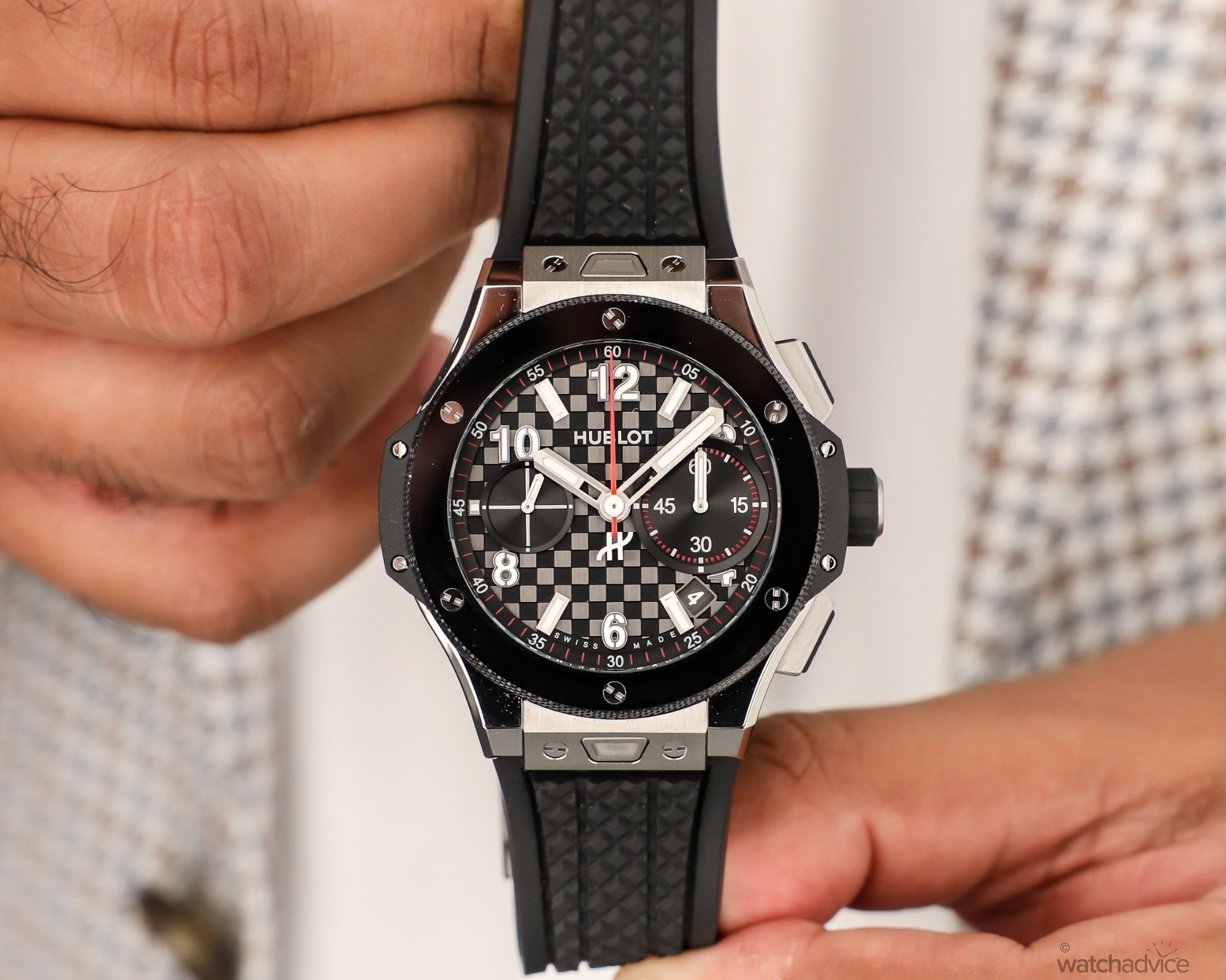
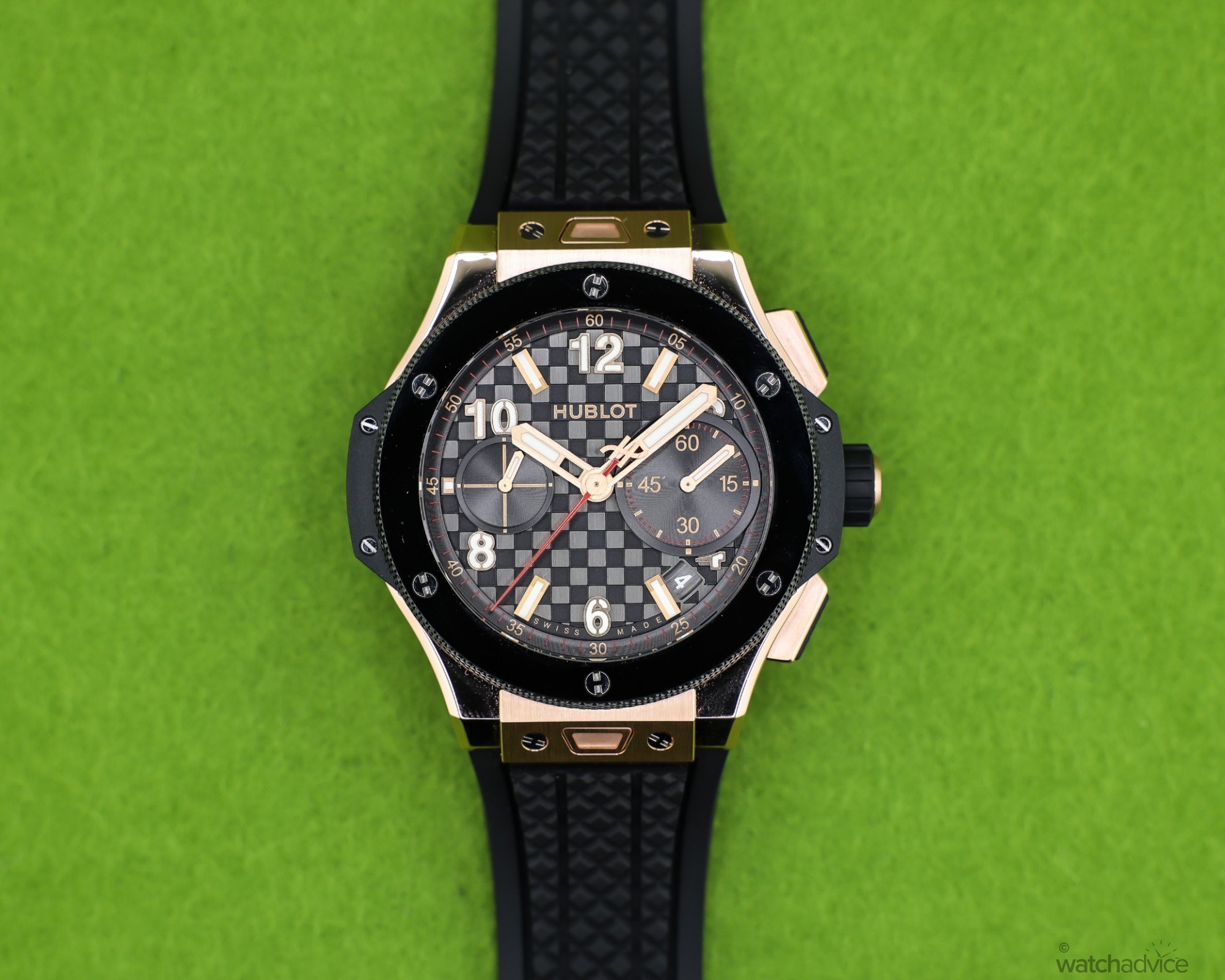
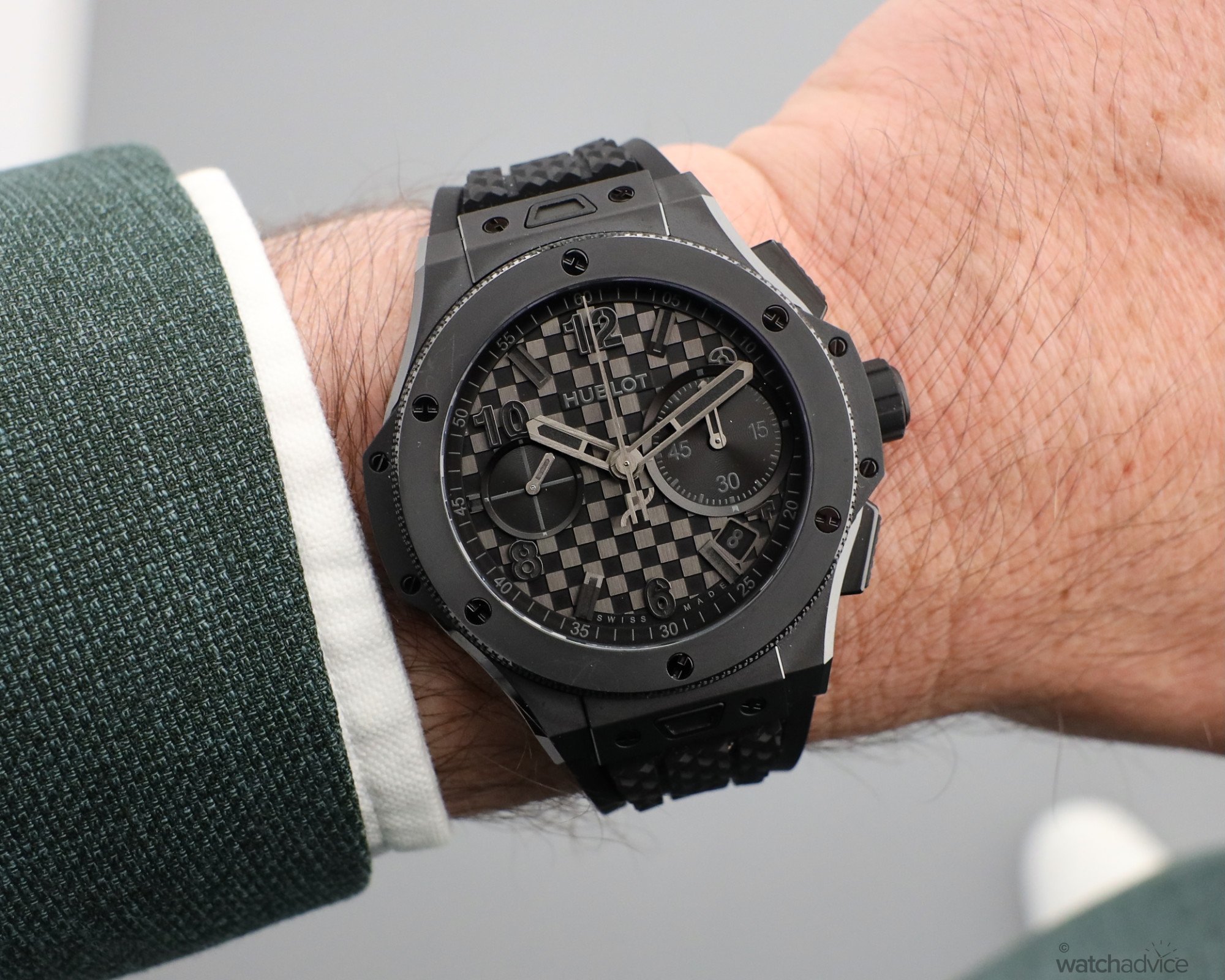
These not only celebrate the Big Bang, but are another step forward for Hublot. Julien wants to pick up where Ricardo left off, and see Hublot become more of a movement manufacture once the new 26,000 square foot facility is built next year in 2026. The Unico movement is a large part of this, as he explains:
“I want to have more in the house, more manufactured, high-end movements. And high complications where we’ve done so strongly in the past, we have to continue this. So all these elements are really something that I want to upgrade, upside, elevate, etc.”
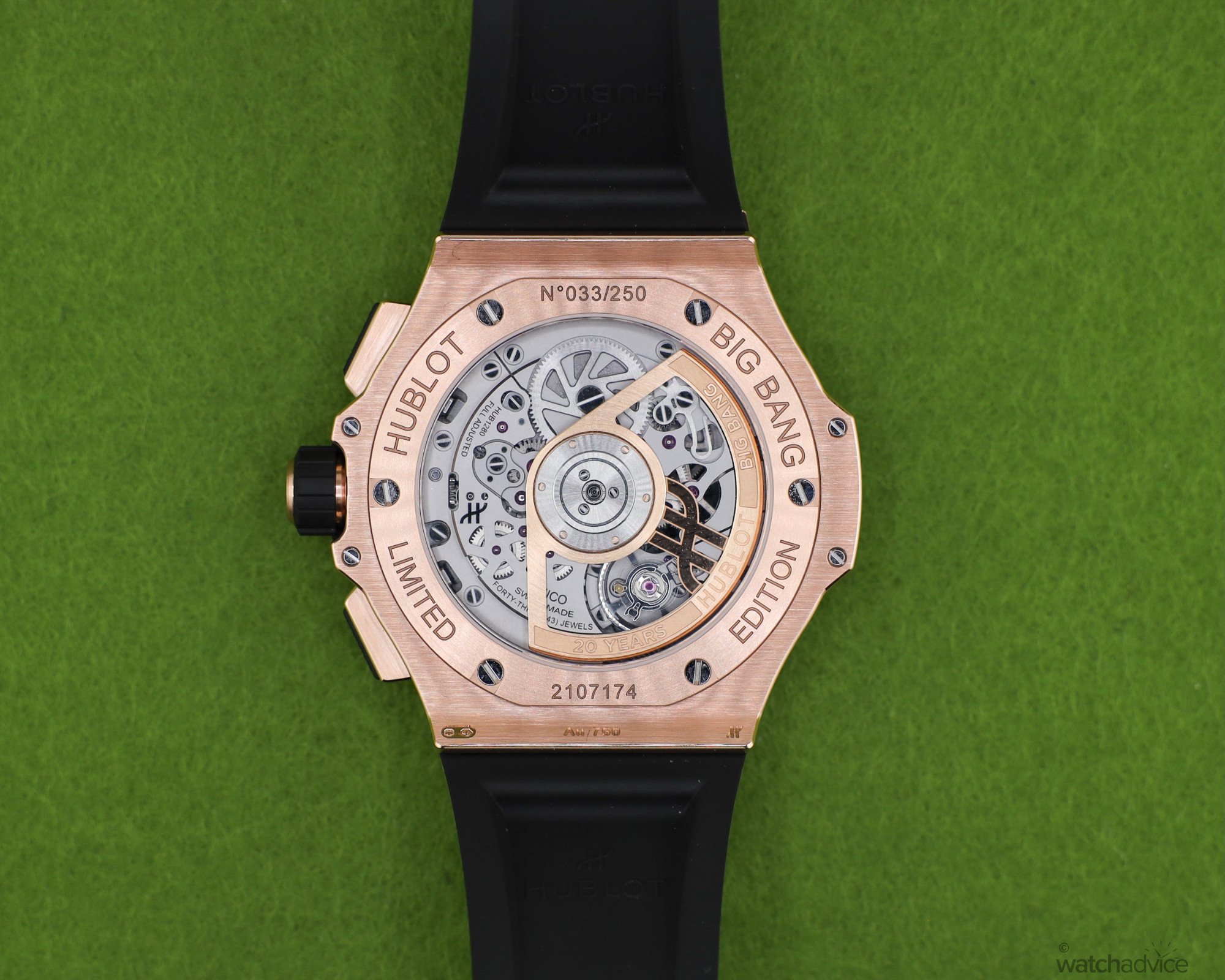
And speaking of this new facility at the site in Nyon, Julien has even bigger plans than just creating a new movement-making facility. He sees this next step as a way to showcase the world of Hublot to the world.
“First of all, we are doubling the size by 2.5x, and I want it to showcase our watch making, showcase R&D and materials, and new material development. I want it to be the one and only top of the top hospitality experience that any watch brand will offer. It will go from a Hublot art gallery where you will see all the creations we’ve done in the past with the artists – everything, to a hall of fame, entertaining room where you can turn it into different atmospheres, to a very secret room that nobody will know where it is, where we will do bespoke collections. I mean, it’s gonna be the most surprising visit of the whole industry from far.”
The Big Bang & Hublot’s Future
As 2025, and the 20th Anniversary of the Big Bang draws to a close, it is interesting to think about where the next 20 years will take the collection and the brand. We can only speculate on this, as unfortunately, Julien didn’t give away any secret future plans, other than those that he’s discussed with us and others. But he was kind enough to give us an insight into how he operates and how he plans to elevate Hublot.
“You know, we’re not a brand looking in the past. So I will use all my learnings, all my experience, my taste in watches, my feeling in the concept, to move the brand forward. When I mentioned the manufacture visit experience that I want to organise, it’s because I know what clients are looking for.”
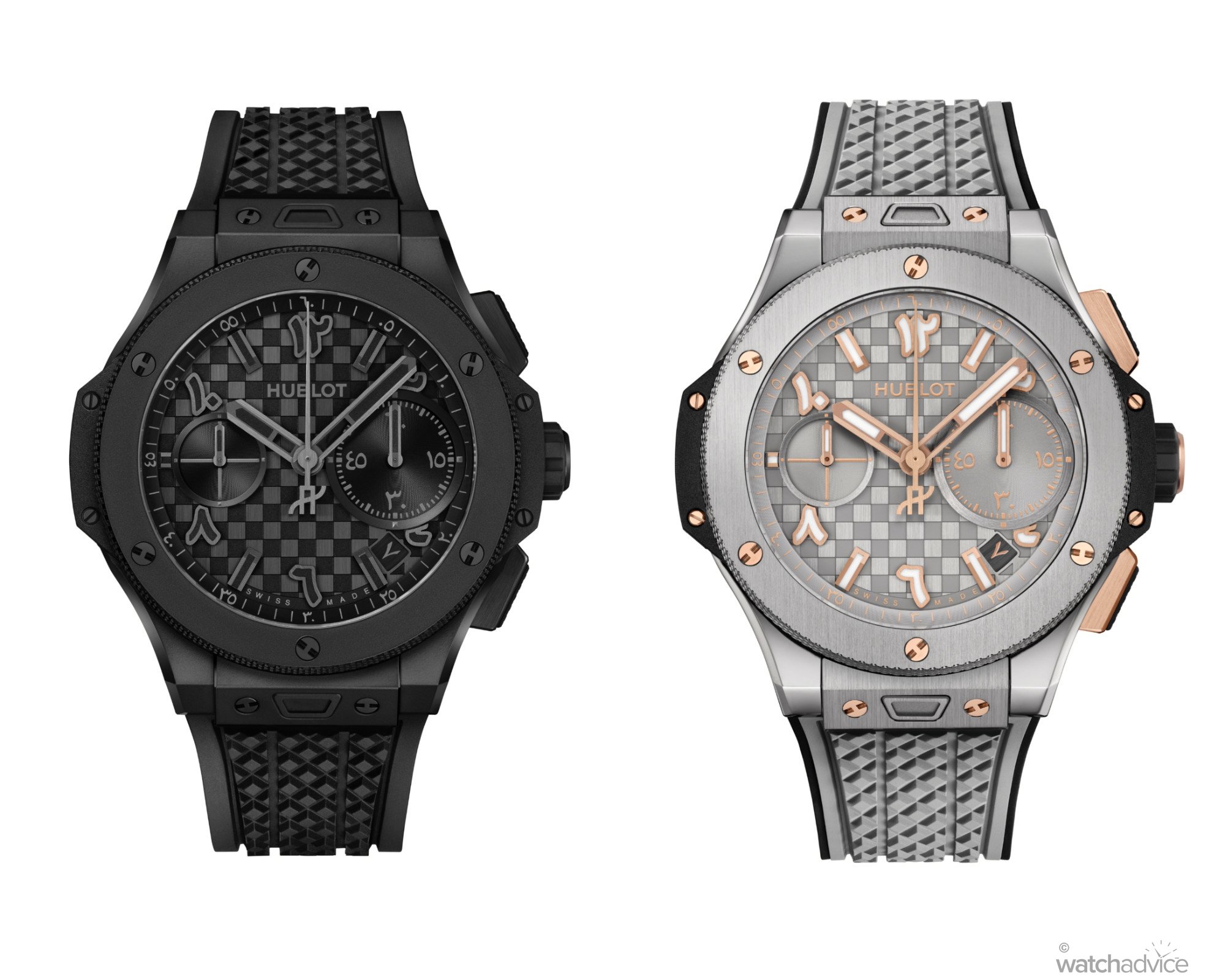
And we can see this in how, in the last 12 months, Julien has started to steer the company in a new direction, with an effort to focus on what makes Hublot unique in the market.
“I’m spending a lot of time on the markets, doing meetings and exchanges with them. I want to really be able to offer people the ability to do their best internally. Externally, I will go and draw on my own experience to try to build the future. Hublot doesn’t follow the trends, so I need to continue that.”
The Big Bang Original collection sort of speaks to this, fusing the old school cool of the Big Bang and making it more relevant to today’s collectors – modern materials, smaller case sizes and the in-house Unico movement in a package that doesn’t stray very far from the original’s DNA. With this in mind, could we see more material-based Big Bang Originals in the near future? We already have the ceramics, gold, and titanium, but, maybe forged carbon, frosted carbon or a Big Bang Original Sapphire could be in the works? For those with smaller wrists, maybe a 41mm size variant?
In any sense, we feel that Julien’s energy, plus prior knowledge and experience with many brands, both at LVMH with Tag Heuer and Zenith, but also his time before at brands like Vacheron Constantin, will aid him in guiding Hublot over the next phase, and of course, the Big Bang will be key as the brand’s core collection. Stay tuned, as they say…