

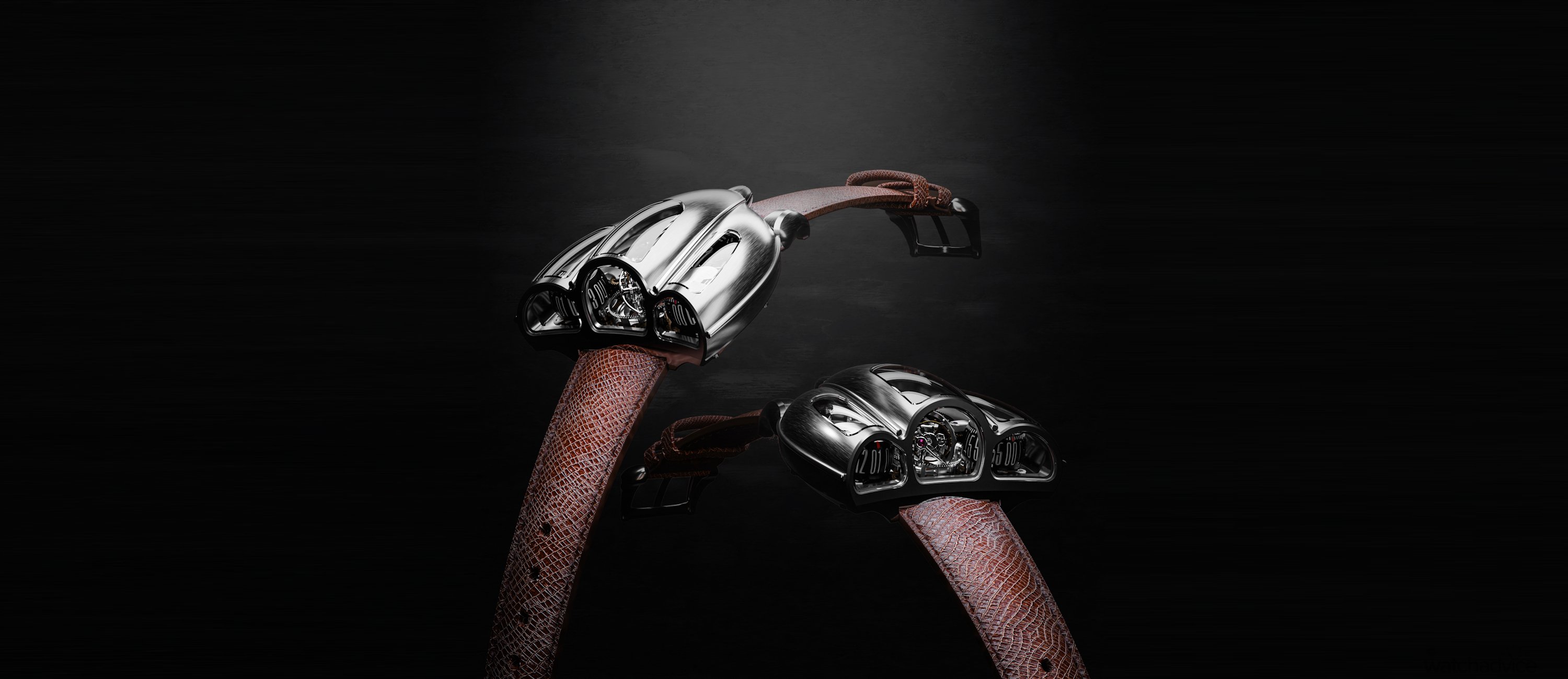
Italian coachbuilding inspires DESDER’s first creation, pairing sculptural design with a triple-axis tourbillon in just six unique pieces.
One of the more unusual discoveries I made during Geneva Watch Days this year was DESDER, a new name in independent watchmaking. The watchmaker’s first creation brings a triple-axis tourbillon into an extravagant design inspired by classic coachbuilt cars.
I was fortunate enough to meet DESDER’s founders during Geneva Watch Days and had the opportunity to discuss their first creation at length. Born from the spirit of the Italian Motor Valley, DESDER, whose name comes from the Emilian word for “awakening” or “being called into motion,” was founded in Modena as a brand that would push the limits of watchmaking. Here, the technical ambitions of master watchmaker Luca Soprana and the design vision of Mo Coppoletta come together to create extraordinary timepieces.
The first release, the D001, brings automotive engineering and specialist craftsmanship together through a design philosophy intended to become a pillar of DESDER’s watchmaking. Inspired by classic coachbuilding, the D001 translates this distinctive approach to automotive bodywork into watchmaking, immediately making a bold statement on the wrist.
Rather than putting timepieces into serial production, DESDER treats each creation as an individual project, producing only a handful of pieces. This also explains why the brand has launched with such an unconventional and mechanically ambitious watch as its first model.
Classic Coachbuilding Meets An Unconventional Time Display
Mo Coppoletta, the designer behind the DESDER D001, drew inspiration from the teardrop forms of coachbuilt cars of the 1920s and 1930s, when airflow helped shape automotive designs and proportions. He also took inspiration from the sculptural bodywork and craftsmanship associated with later Italian coachbuilders. The D001 is not a conventional timepiece by any means, with its beautifully flowing exterior divided into different raised sections.
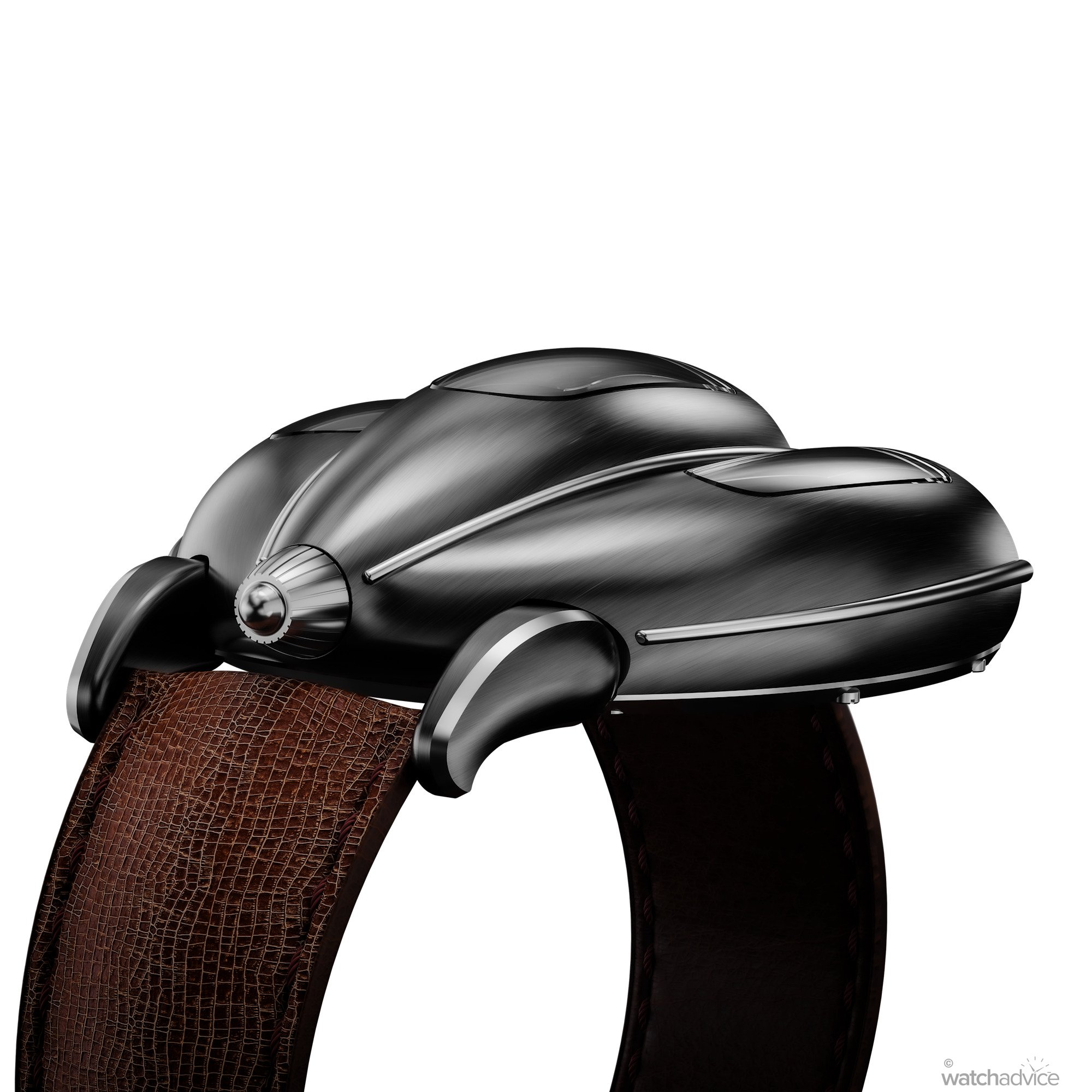
These raised “sections” accommodate the triple-axis tourbillon and cylindrical displays, making the mechanics part of the case’s overall outline. The case design is very much like coachbuilding in the old days, when the exterior of a car was shaped around the machinery inside it. While the shape is certainly eye-catching, what makes the design even more unique and brilliant is the transparent “display” that provides a view of the engine running inside the D001.
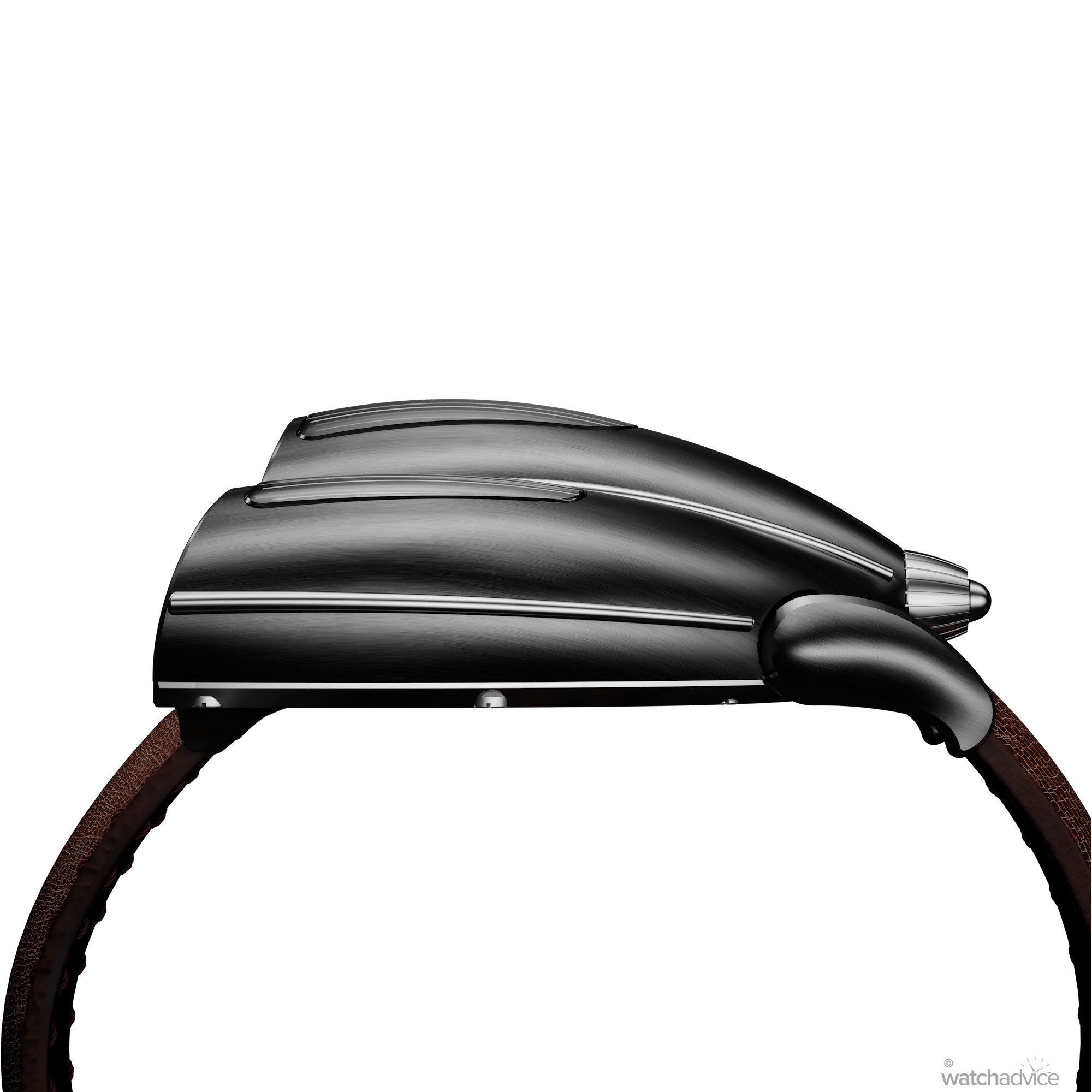
Being a statement piece, this is not a watch you will see all too often on the wrist. With its substantial proportions, the D001 has a grade 5 titanium case which measures 46mm in diameter and 24.8mm thick. The thickness, or rather height, of the case is a defining feature of the design, as the tall construction accommodates the three-dimensional mechanism and the beautifully sculpted, curved bodywork surrounding it.
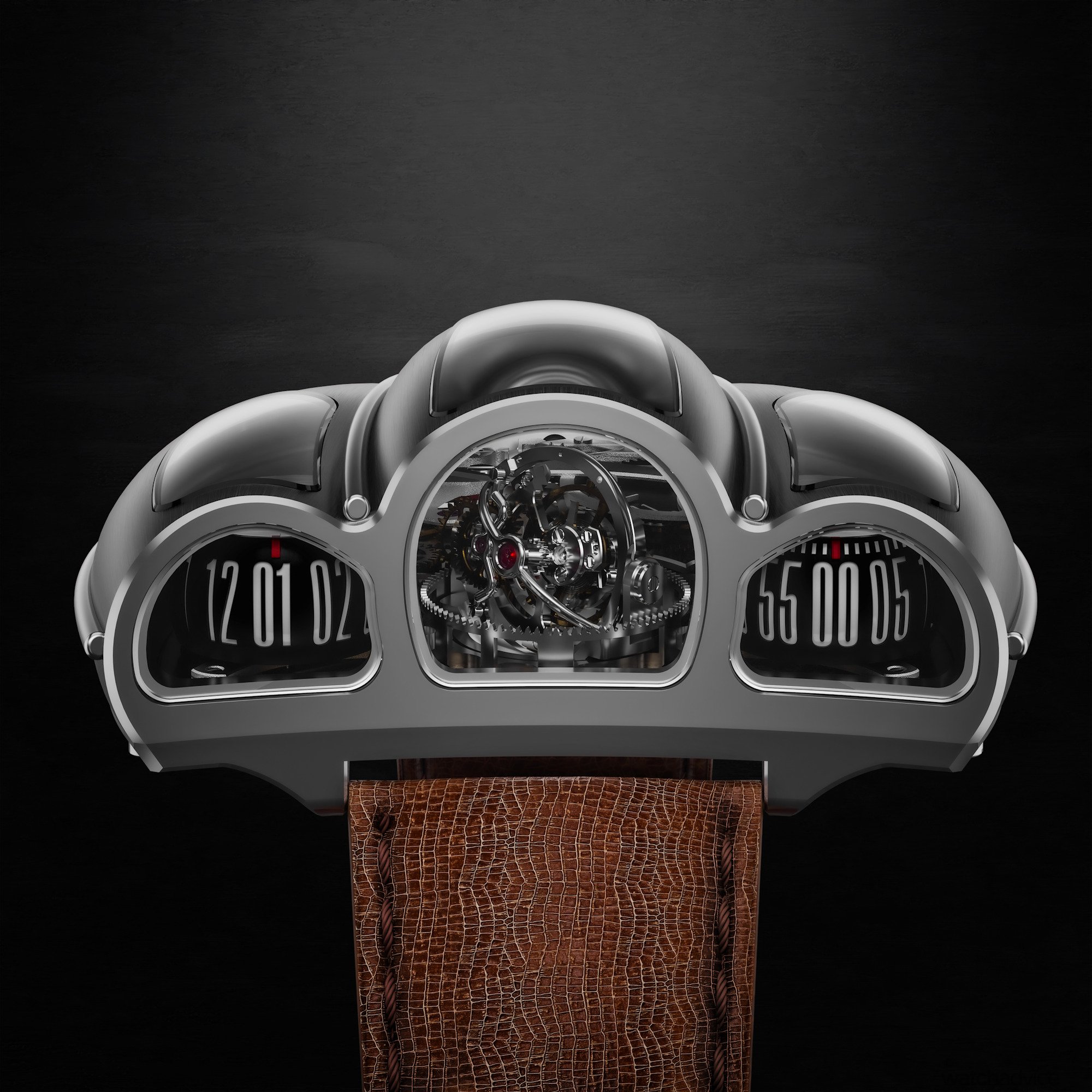
The D001 doesn’t have a traditional dial per se, with its main time display viewed from the side. It presents a particularly distinctive view from the front, where the central window reveals the triple-axis tourbillon, flanked by the two time cylinders. Viewed from above, the automotive influences on the case design become clear.
As DESDER states, “time is displayed through a system of rotating cylinders: a jumping hour module paired with a continuous minute display”. The left cylinder displays the jumping hours, while the right cylinder displays the continuous minutes. This configuration makes it easier to read the time, especially considering the unorthodox display, while also showcasing the mechanical identity behind the piece.
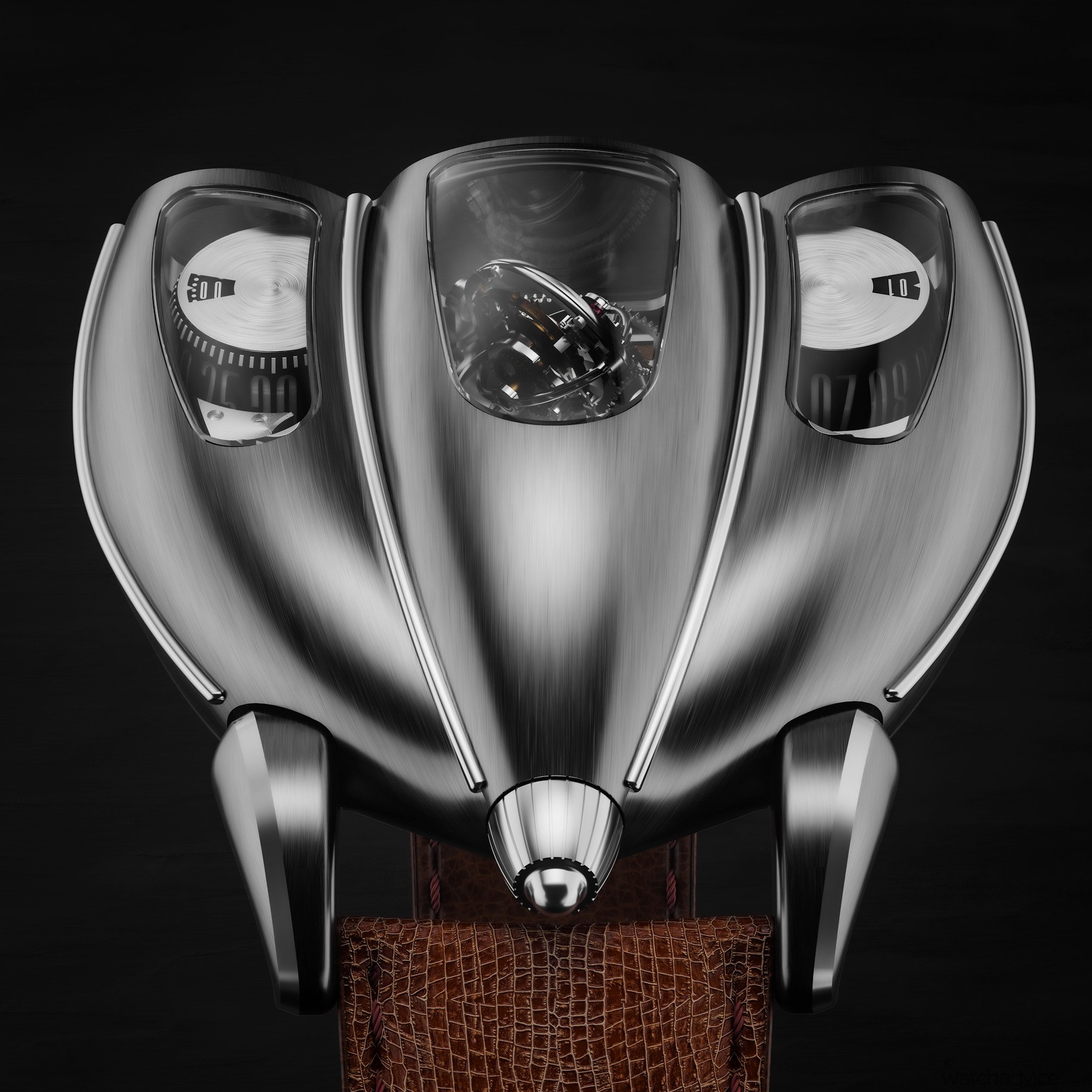
With the case’s transparent sapphire display integrated onto the top of the case itself, it reveals the intricacies of the mechanism that lies inside. The individual discs that show the time from the front also have a vertically facing display integrated into them, which features GMT functionality and a power reserve indicator.
The rotating architecture of the triple-axis tourbillon creates movement across multiple planes, giving the D001 a constantly changing mechanical focal point. The case also contours around the mechanism beautifully, making the tourbillon feel like an integral part of the design rather than a complication housed within the timepiece.
Luca Soprana’s Calibre DSD_01 Brings The D001 To Life
The engine sitting inside the D001 is the manually wound Calibre DSD_01, conceived by Luca Soprana. The movement features 465 components along with 63 jewels, showcasing the complexity behind the regulating system and the various displays. It operates at 3Hz (21,600 VpH), while delivering a power reserve of 45 hours.
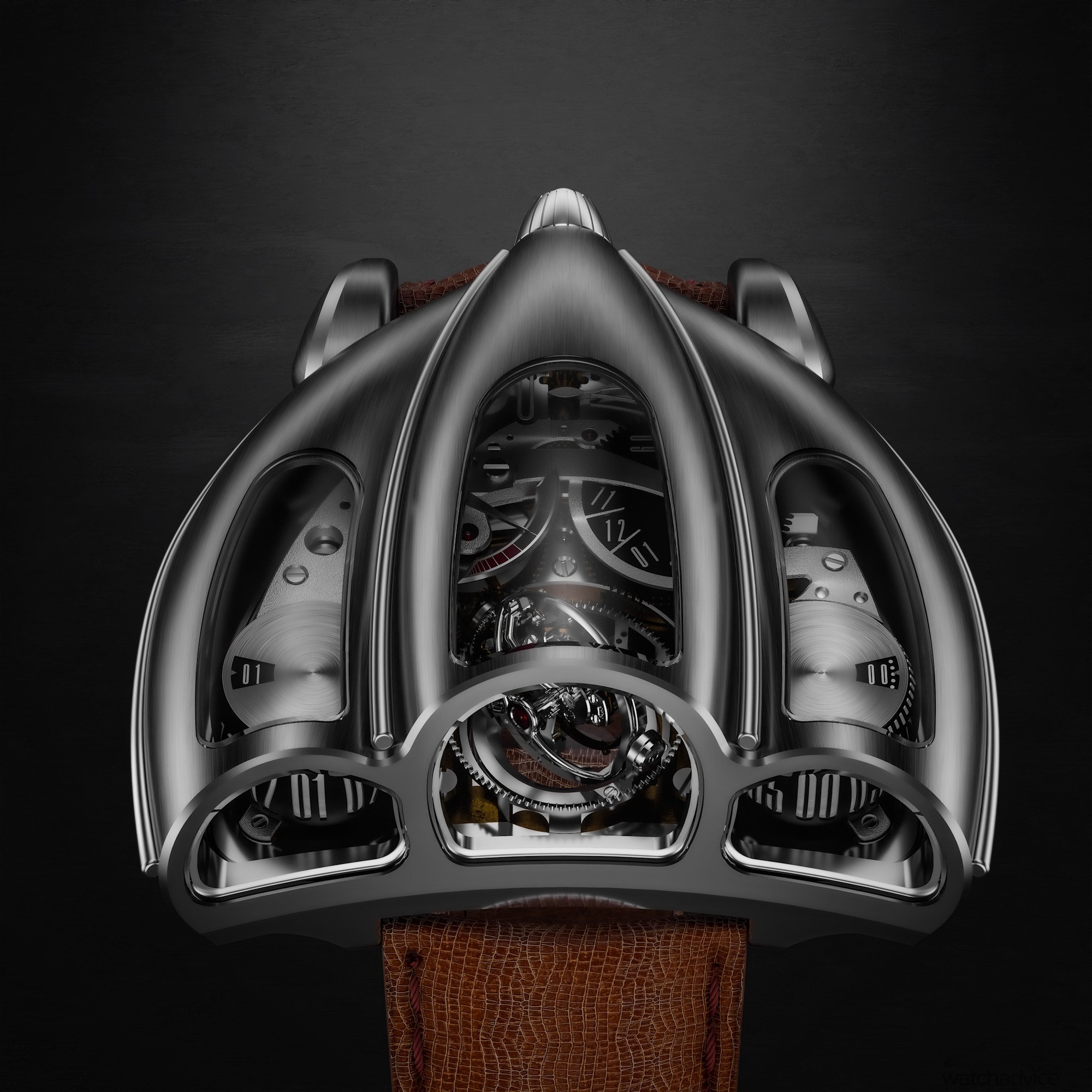
While the timepiece features an extraordinary design, one of its ingenious features is the incorporation of a triple-axis tourbillon. This mechanism allows the tourbillon to rotate around three axes, which essentially means that the balance and escapement are continually changing their orientation through this spatial movement. While the daily accuracy figure of the D001 is not specified, DESDER describes the incorporation of the triple-axis tourbillon as improving chronometric stability across multiple planes.
Beyond the tourbillon and the two distinct time displays, the Calibre DSD_01 also offers added functionality through a power reserve indicator showing how much of the movement’s 45-hour autonomy remains, while a GMT function allows a second time zone to be tracked.
Initial Thoughts
Speaking with the brains behind the D001 and DESDER gave me a direct introduction to the thinking behind not only this Modena-based brand, but also its extravagant first timepiece. It’s certainly not the first time we have seen automotive-inspired creations in watchmaking, with brands like L’Epée 1839 and MB&F exploring the theme through clocks and watches. However, it’s very rare to see a triple-axis tourbillon incorporated into such a design, alongside GMT functionality.
The GMT functionality is also a poetic touch considering the automotive theme behind the watch. It feels like a timepiece made for adventure and crossing borders! The strongest design angle is how closely the bodywork of the case follows the mechanical layout, making the automotive influence feel very much connected to the design. I also love the fact that DESDER has incorporated transparent windows into the case, much like those found in the automotive world that provide a view of the engine inside.
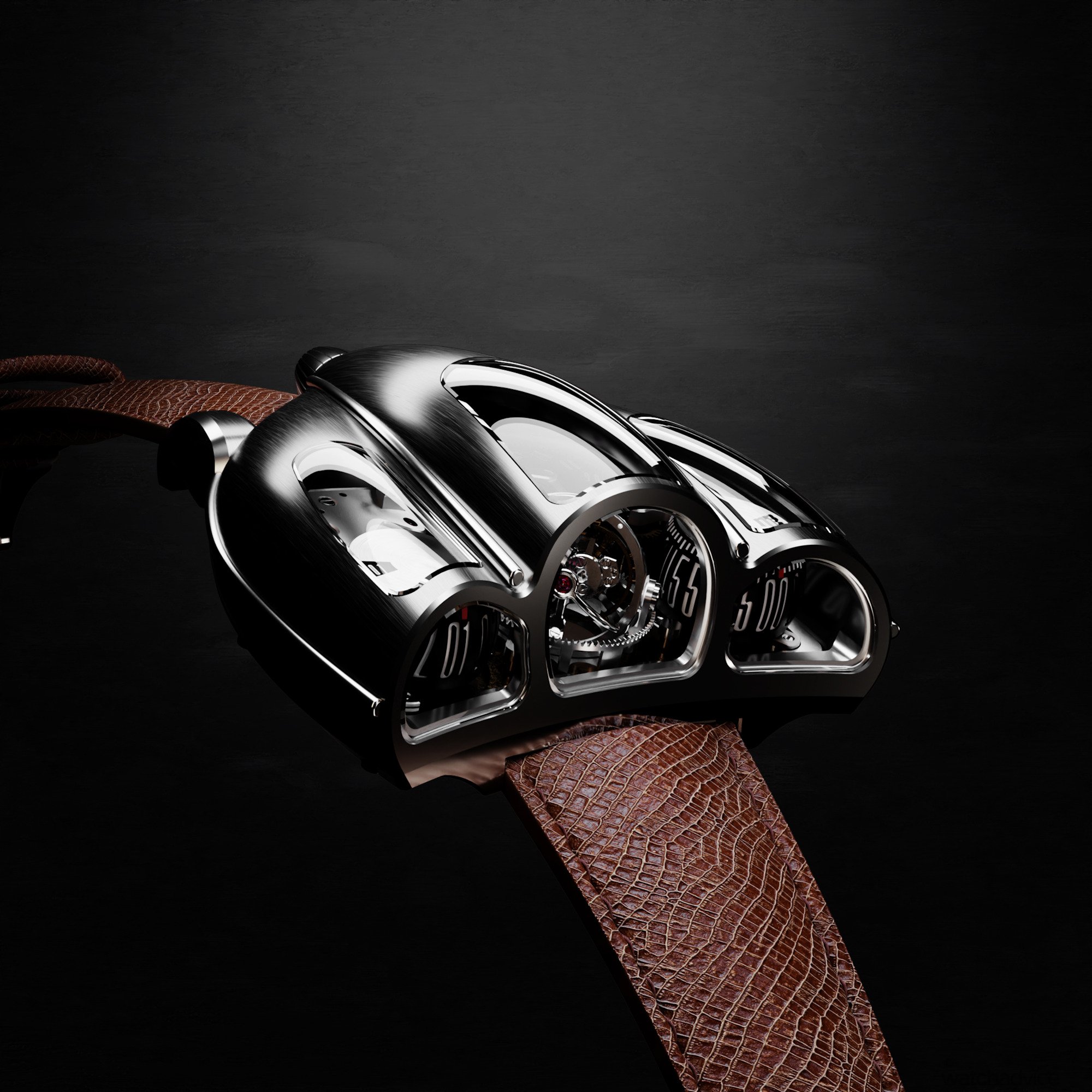
Beginning its journey in high watchmaking with a design as complicated yet extraordinary as the D001 sets DESDER apart from the get-go. The watchmaker will produce only six pieces of the D001, each individually differentiated, reinforcing the brand’s intention to work on small, project-led ideas.
Bringing Italian design together with Swiss-made mechanics is always a welcome addition to horology, especially with a debut as ambitious as the D001. Having talked with the brand in person during Geneva Watch Days and heard the thinking behind it and the brand’s vision going forward, I’m certainly keen to see where DESDER takes things next!
DESDER D001
Reference & Specifications
| Feature | Specification |
|---|---|
| Reference | D001 |
| Dimensions | 46mm case diameter x 24.8mm thickness |
| Case | Grade 5 titanium and stainless steel with sculptural, coachbuilding-inspired construction |
| Dial | Cylindrical jumping-hour and continuous-minute displays flanking a central triple-axis tourbillon; additional upper time display, GMT function and power reserve indicator |
| Crystal | Transparent viewing windows; crystal material not specified in the supplied technical details |
| Caseback | Not specified |
| Movement | Manually wound Calibre DSD_01, conceived by Luca Soprana, with triple-axis tourbillon, twin mainspring barrels, GMT function and power reserve indicator; 465 components and 63 jewels |
| Power Reserve | 45 hours |
| Beat Rate | 3Hz / 21,600VpH |
| Water Resistance | 30m / 3bar |
| Strap/Bracelet | Brown lizard leather strap |