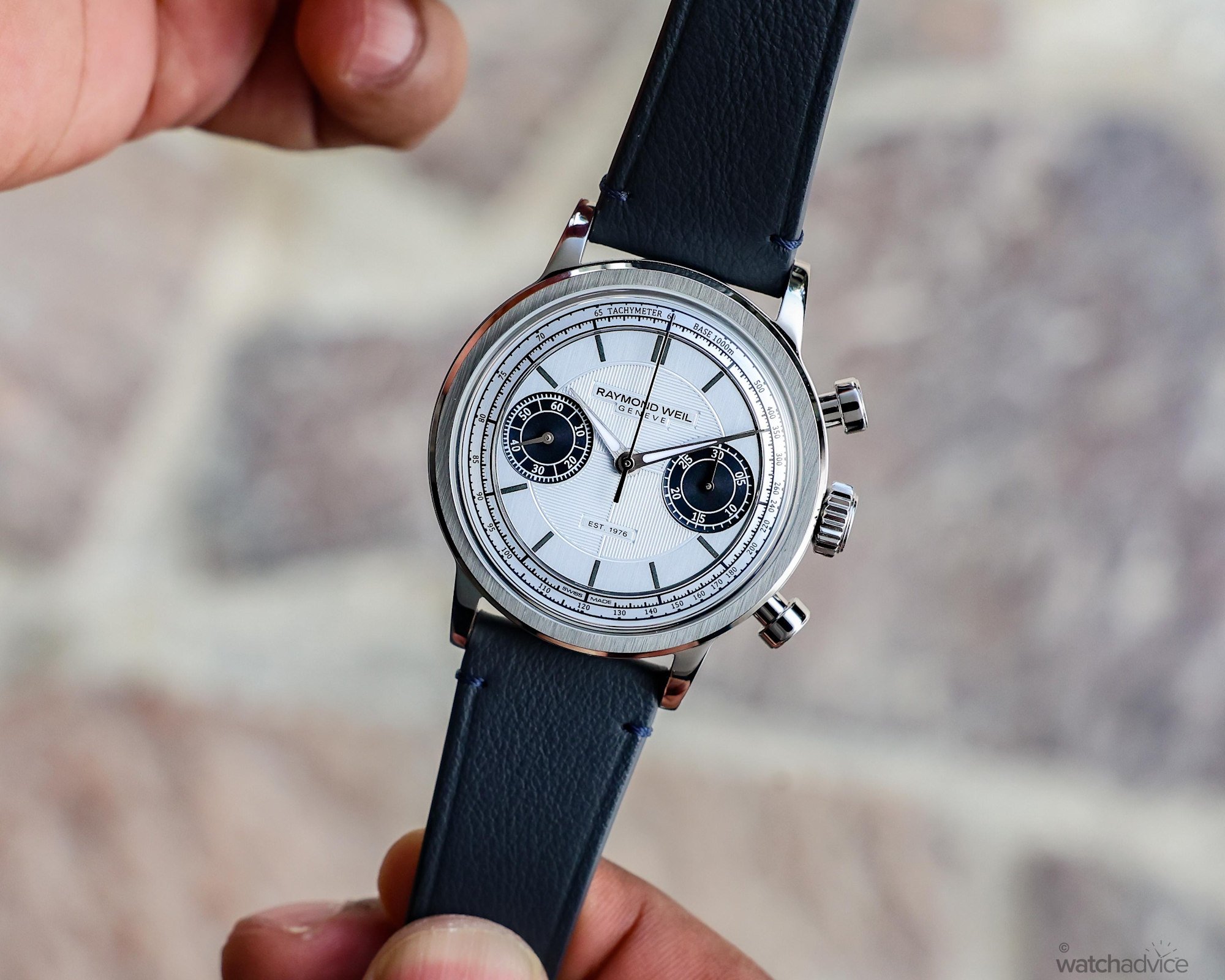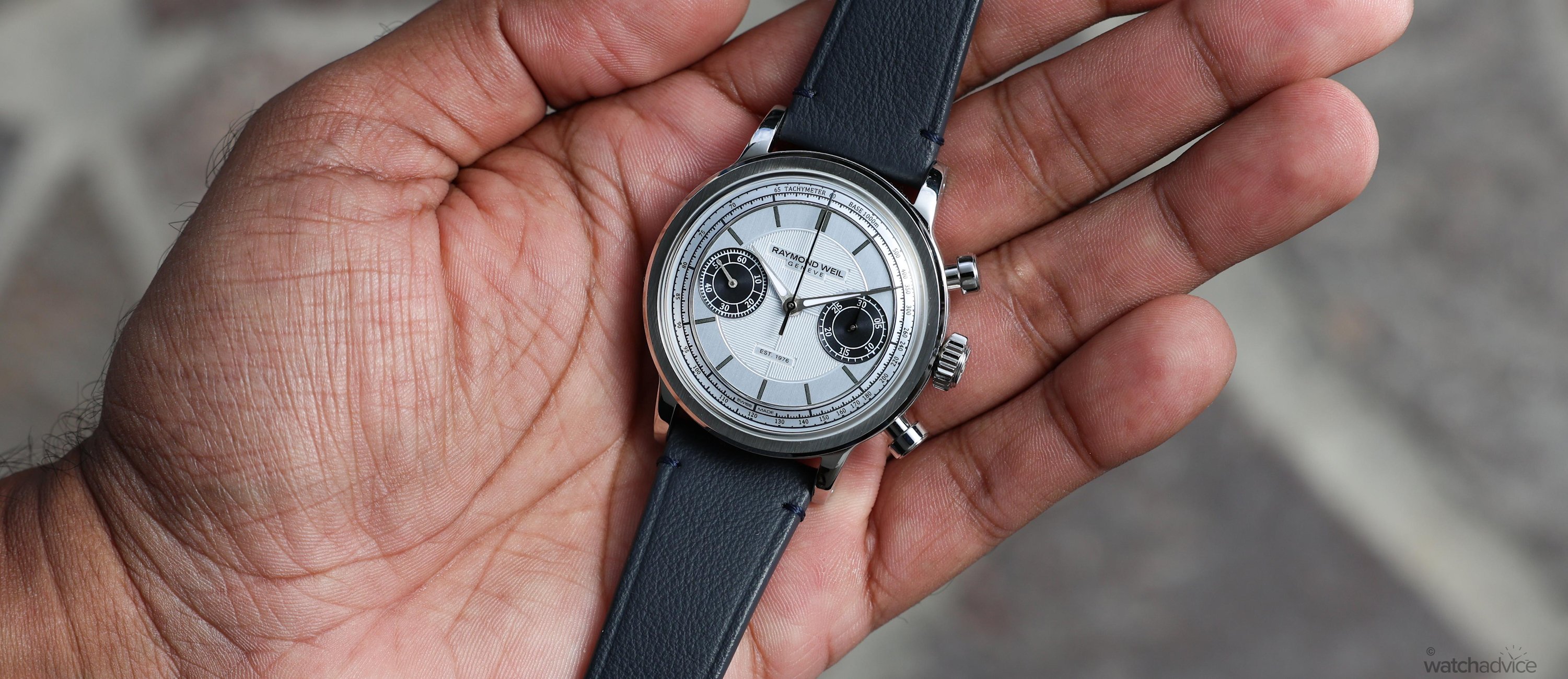

I take the new Raymond Weil Millésime Jubilee hands-on to see how the bi-compax anniversary edition compares with the existing Tri-Compax Chronograph!
What We Love:
- Bi-compax layout gives the signature Millésime sector dial more room to shine
- The model retains the exceptional wearability of the Millésime chronographs
- Carries defining traits of “The Fifty” into a more accessible format
What We Don’t:
- No date display for those who may prefer the added practicality
- No steel bracelet option!
- 12.9mm thickness may be substantial for those who prefer slimmer chronograph proportions.
Overall Rating: 9/10
- Value for Money: 9/10
- Wearability: 9/10
- Design: 8.8/10
- Build Quality: 9/10
Raymond Weil, like many other watchmakers, went through some turbulent times during the COVID-19 era. However, as is often the case, periods of adversity can inspire some of the most creative and important work. This was certainly the case with Raymond Weil, as it was during this period that the Millésime collection was born.
While the collection was introduced in 2023, its development and design began a few years earlier. The brand wanted to create a new expression of its watchmaking identity, bringing together its history with accessible contemporary watchmaking. The word “Millésime” literally translates to “vintage” or “vintage year” in French, directly reflecting the collection’s inspiration from watches produced between the 1930s and 1960s.
As you may already know, the collection did wonders for the brand upon its introduction. One of the defining factors behind its success was how well proportioned the timepieces were, suiting a range of wrist sizes, especially those with smaller wrists. From the simple beginnings of the Millésime collection, Raymond Weil gradually expanded the line beyond its time-only models to include different dial configurations, materials and, of course, chronograph functionality.
The three-counter “Tri-Compax Chronograph” added a considerable amount of information to the dial, but that was also where its appeal lay. It brought greater mechanical complexity to a model designed to exude elegance and luxury, adding a sportier personality without ever losing its core vintage identity.
The Tri-Compax Chronograph has become one of my favourite models from Raymond Weil, so much so that I own one myself! The model’s wrist presence, the way it sits on my slim 16cm wrist, and how well its complex dial has been executed without appearing overly complicated made it an easy choice for my collection.
Raymond Weil is celebrating its 50th Anniversary this year, marking an important milestone for the independent, family-owned Swiss watchmaker. The WatchAdvice team was fortunate enough to spend time with the brand in Sydney, where we not only had the chance to sit down for dinner with Elie Bernheim, but also to explore several historic collections, gaining a much deeper understanding of the brand’s journey over the past five decades. The Millésime Jubilee brings that history into the present, celebrating the occasion through a design that reflects both Raymond Weil’s heritage and its modern direction.
The Swiss watchmaker chose the Millésime collection to celebrate its 50th anniversary, showing just how important the line has become for the brand in the modern watchmaking era. Not only that, but it was a chronograph model that Raymond Weil selected as its celebratory 50th-anniversary timepiece. Named “The Fifty”, this is what Raymond Weil CEO Elie Bernheim had to say:
“To celebrate its half-century milestone, RAYMOND WEIL places mechanical watchmaking at the heart of its story. Conceived as a true workshop piece, The Fifty highlights watchmaking in its most authentic interpretation: manual craftsmanship, precision of expression, and respect for traditional savoir-faire. Every component, surface, and detail has been worked by hand to reveal the depth and nobility of Swiss artistry.“
Elie Bernheim – Raymond Weil CEO, Third Generation
Raymond Weil is continuing its 50th-anniversary celebrations, and with that comes another milestone timepiece, this time as a more accessible interpretation of “The Fifty”. The Millésime Jubilee continues the design direction introduced by The Fifty, carrying across its bi-compax dial arrangement and the more prominent sector design that made the Millésime collection so visually appealing in the first place.
Initial Thoughts On The Millésime Jubilee
I’ve already become accustomed to and familiar with the Millésime Chronograph, having previously purchased the rose gold PVD Tri-Compax Chronograph model, a design that has become one of my personal favourites within my collection. With this existing appreciation for the Millésime Chronograph’s beautiful design and vintage-inspired aesthetic, I jumped at the chance to review the Millésime Jubilee and experience the chronograph through a different interpretation.
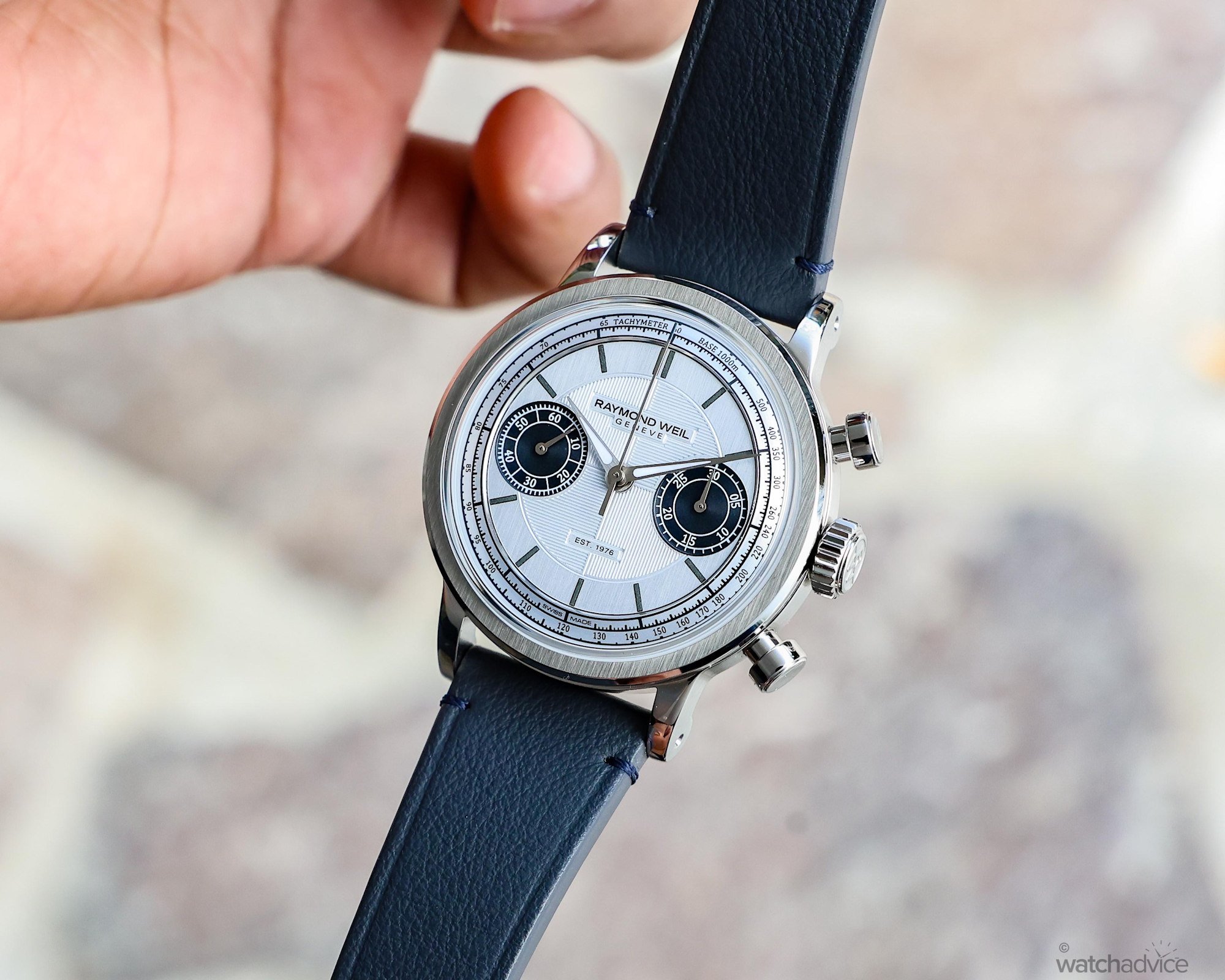
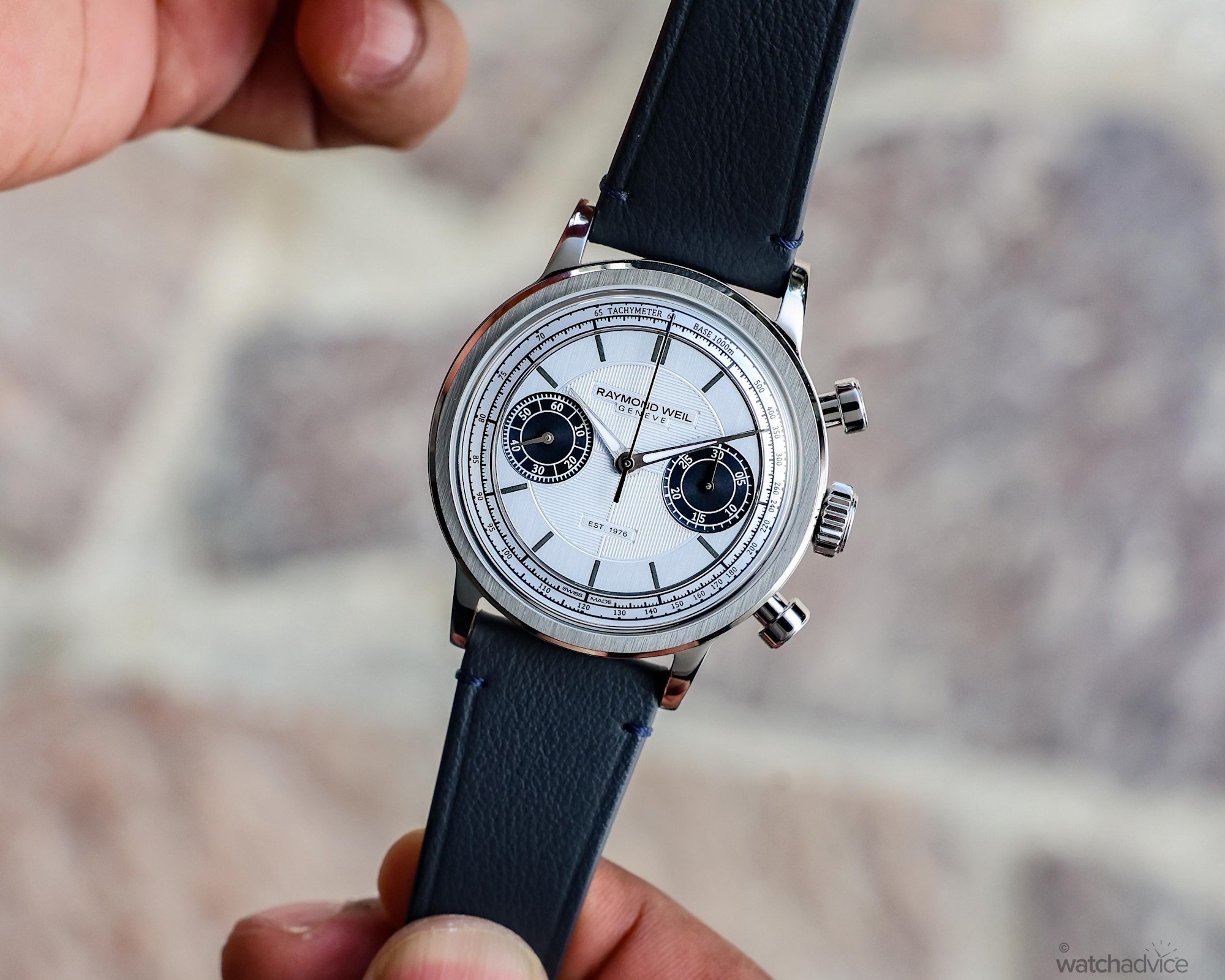
From the get-go, I could immediately tell that the stainless-steel construction, light-blue dial, and dark-blue subdials offer a more restrained personality than the warmer and more luxurious appearance of my rose gold PVD model. However, the greatest point of interest lies in the new bi-compax layout and the integration of the sector dial, or perhaps I should say a more prominent interpretation of it compared to the previous Tri-Compax dials.
Familiar Proportions, Timeless Architecture
It may feature a new bi-compax chronograph display, but the Millésime Jubilee shares the same case architecture as the other chronographs in the Millésime collection. The design, as we know, draws inspiration from watches of the 1950s and 1960s, now presented in a contemporary stainless-steel format for the Millésime Jubilee.
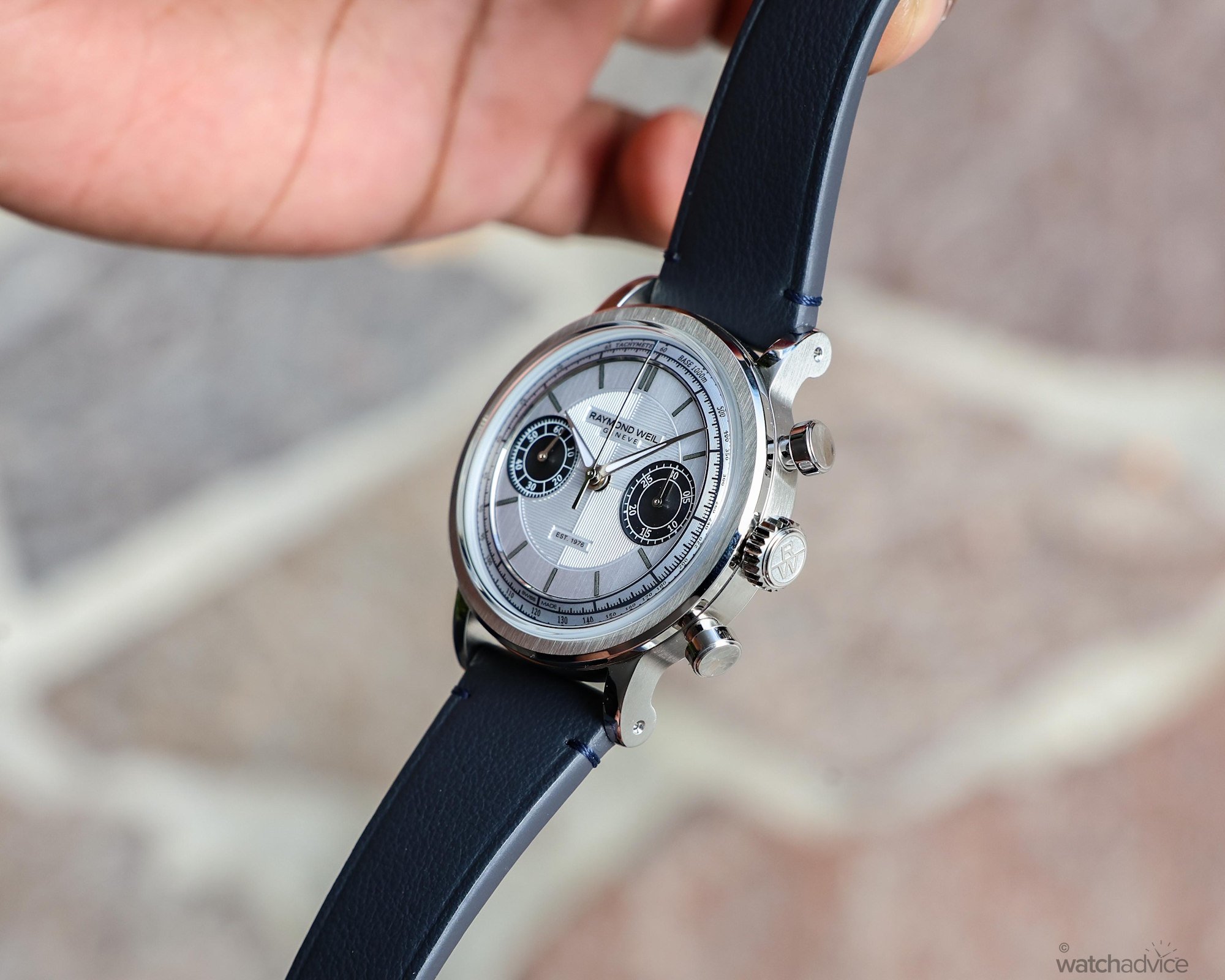
It is the proportions of the Millésime Chronograph models that make them so appealing and wearable. With a compact 39mm diameter paired with a thickness of 12.9mm, the Jubilee shares the same foundation as my own Millésime Tri-Compax Chronograph. I can safely say that it is one of the best-wearing chronographs in my collection and among those I have had the pleasure of reviewing.
However, it is not just the case diameter and thickness that make this model so wearable. The lug-to-lug footprint measures approximately 46mm, allowing the watch to sit well within the contours of my 16cm wrist. Combine that with the sloping lugs, and it wraps around the wrist nicely, especially when paired with the blue genuine calf-leather strap.
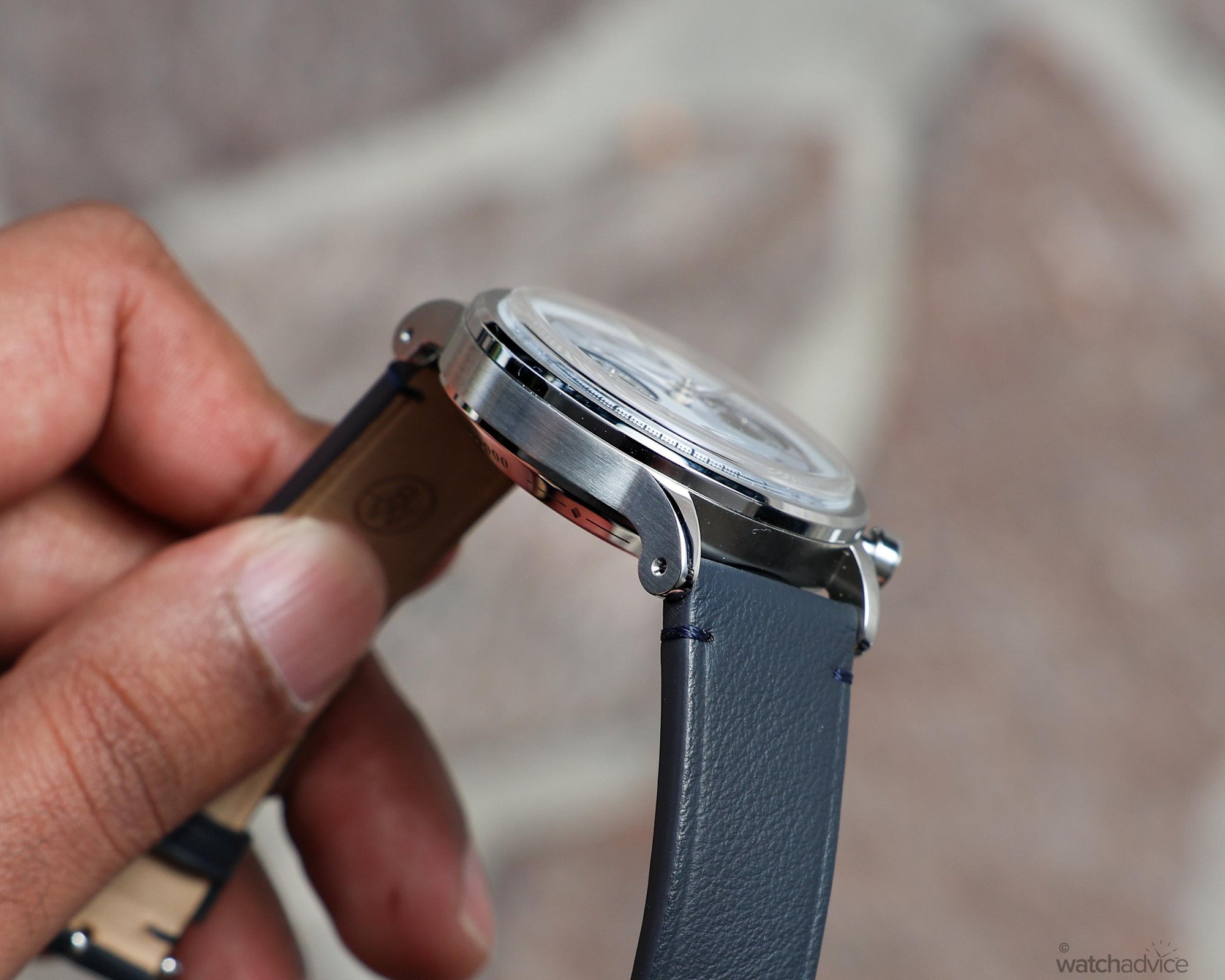
What makes the overall Millésime construction so appealing is that there are quite a few layers to its design. Firstly, we get the glassbox sapphire crystal, which sits above the flat bezel to create the raised, domed appearance traditionally associated with vintage acrylic crystals, further reinforcing the vintage-inspired aesthetic of the broader Millésime collection.
This then leads to the layered, almost sandwich-like case construction, which creates a distinct separation between the central case and the caseback. As mentioned previously, the timepiece features a flat bezel with a vertical satin-brushed finish. The chamfered edge and sides of the bezel feature a mirror-like polished finish, which has been beautifully executed. When you turn the watch under light, it creates a shimmering appearance as the reflection moves between the polished sides and the flat bezel surface.
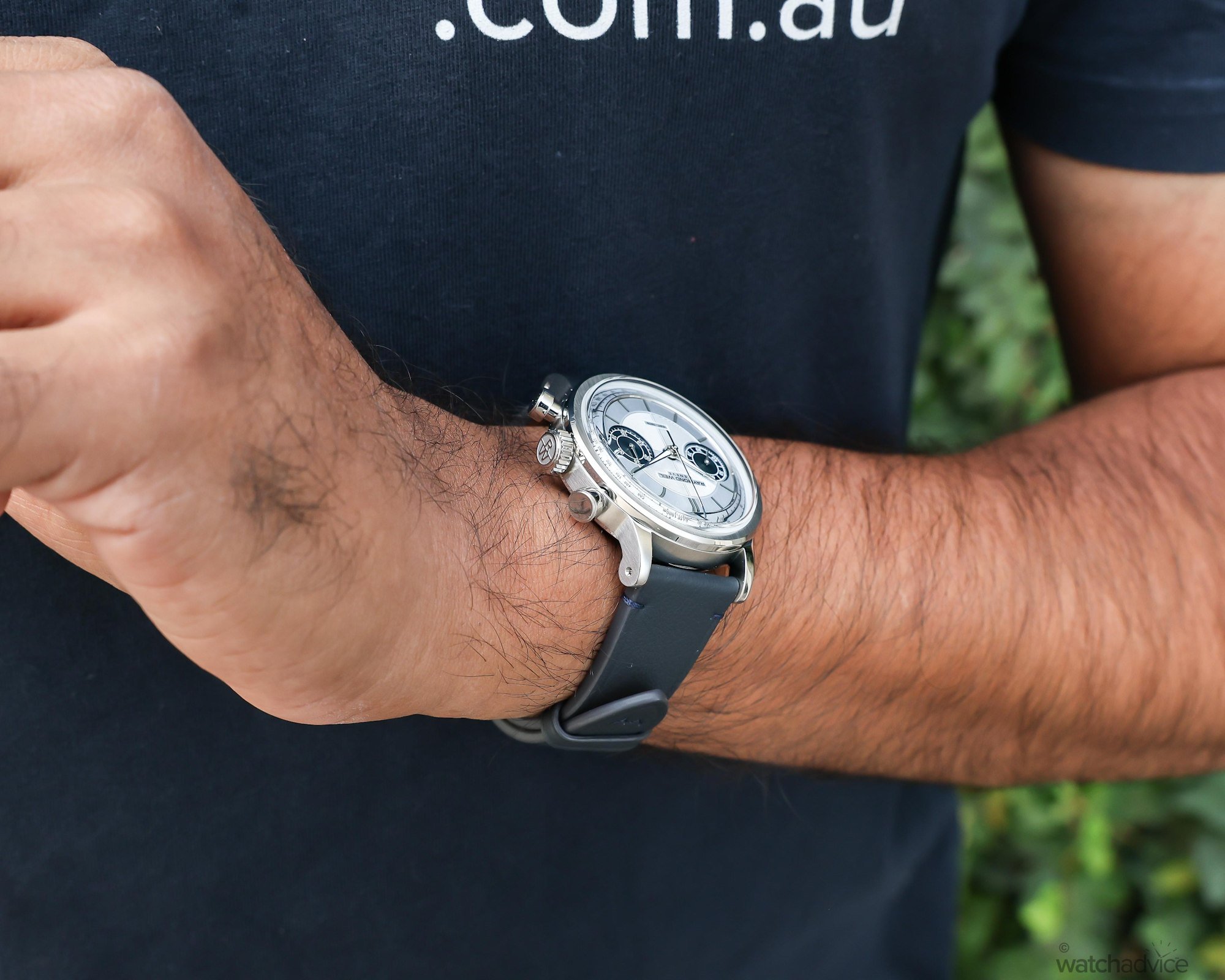
The central case has a horizontal satin-brushed finish, while the surfaces of the lugs have been polished. This creates an interconnected display of different finishes, but it also allows the polished surfaces, which include the chronograph pushers and crown, to stand out nicely without making the entire case appear overly polished.
The chronograph pushers are another detail that I like about the Millésime Jubilee, which shares its design DNA with the broader chronograph collection. They feature a traditional pump-style design, beautifully reinforcing the neo-vintage aesthetic that Raymond Weil has achieved throughout the overall case construction.
Giving The Sector Dial Room To Shine
Apart from the neo-vintage-inspired case, another defining feature of the Millésime collection is its dial. I was fortunate enough to sit down with Elie Bernheim during Raymond Weil’s 50th-anniversary celebrations, and with the Millésime being my favourite model from the brand’s line-up, I had the chance to pick his brain about the collection. The dial was created to be something different and unique, while also capturing attention instantly.
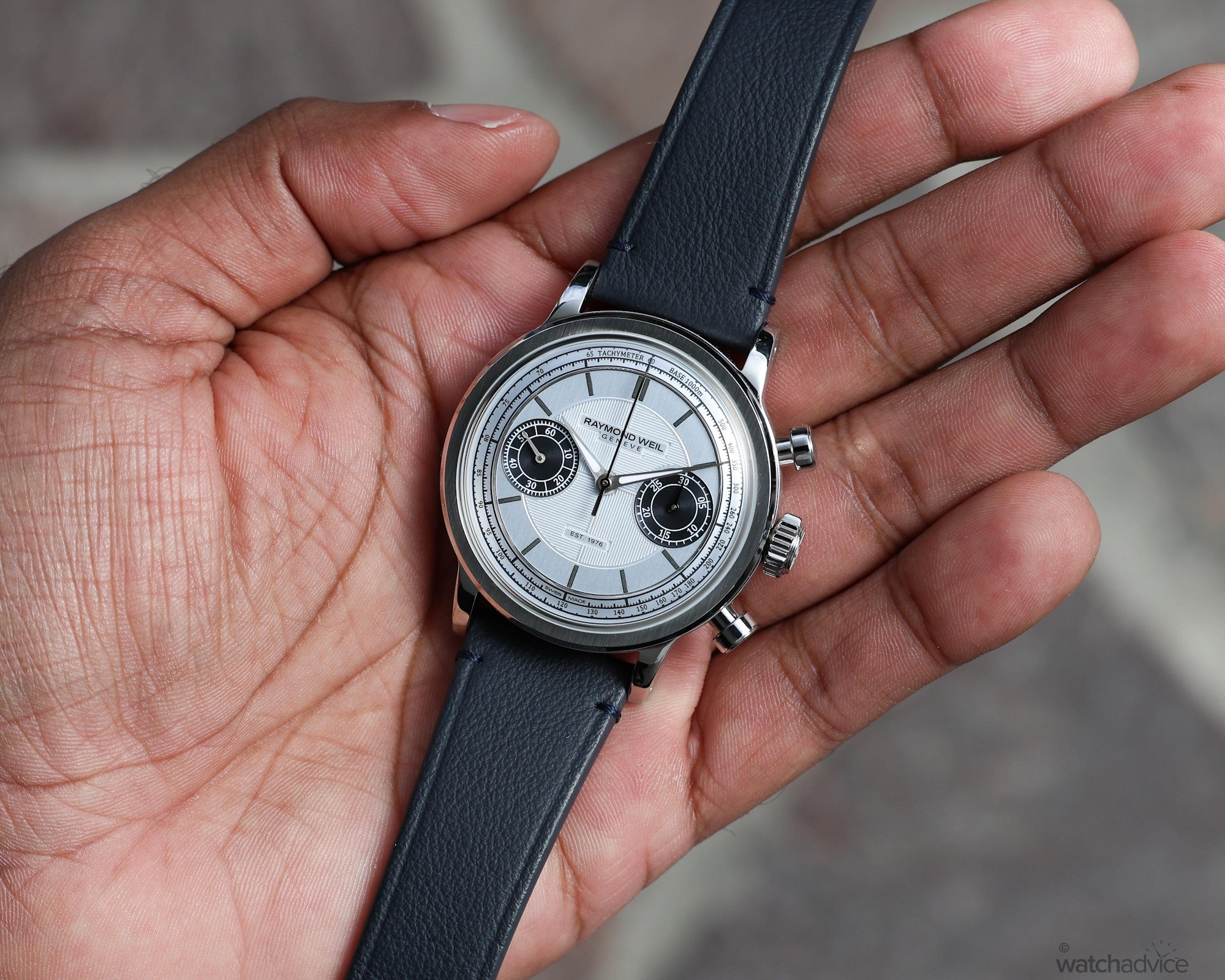
One of the many features of this dial is its sector design. This is a core element visible throughout the Millésime collection, but among the chronograph models, it is far more prominent on the Jubilee. The dial is divided into four sectors through vertical and horizontal lines, with the pattern of each section mirrored diagonally across the dial. This design detail remains central to the Millésime identity, while also bringing greater structure to the overall display.
Then, of course, we have the bi-compax chronograph layout. The Millésime Chronograph normally features a 3-6-9 sub-counter arrangement. However, this changed with the introduction of “The Fifty”, Raymond Weil’s exclusive 50th-anniversary edition. The Fifty was also where the sector design became more prominent within the chronograph line, so it is clear that the Jubilee continues the design inspiration established by that model.
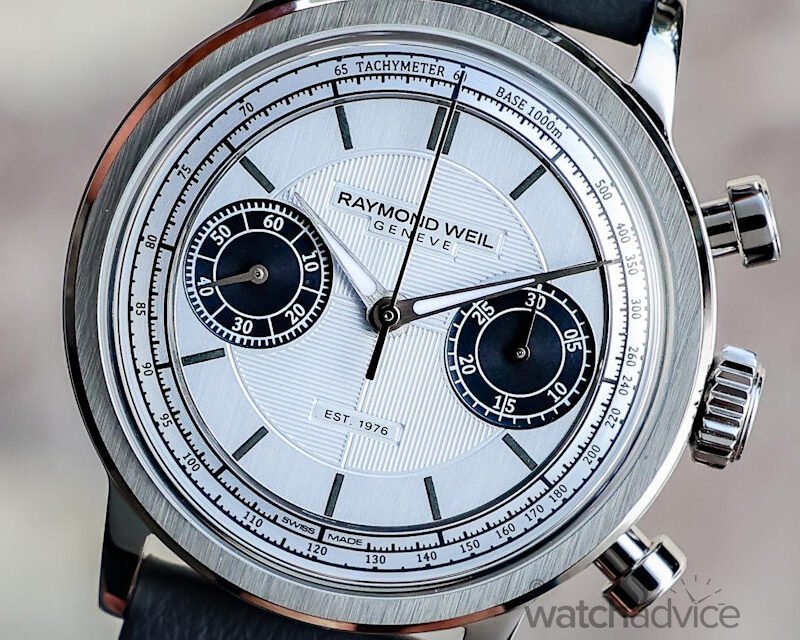
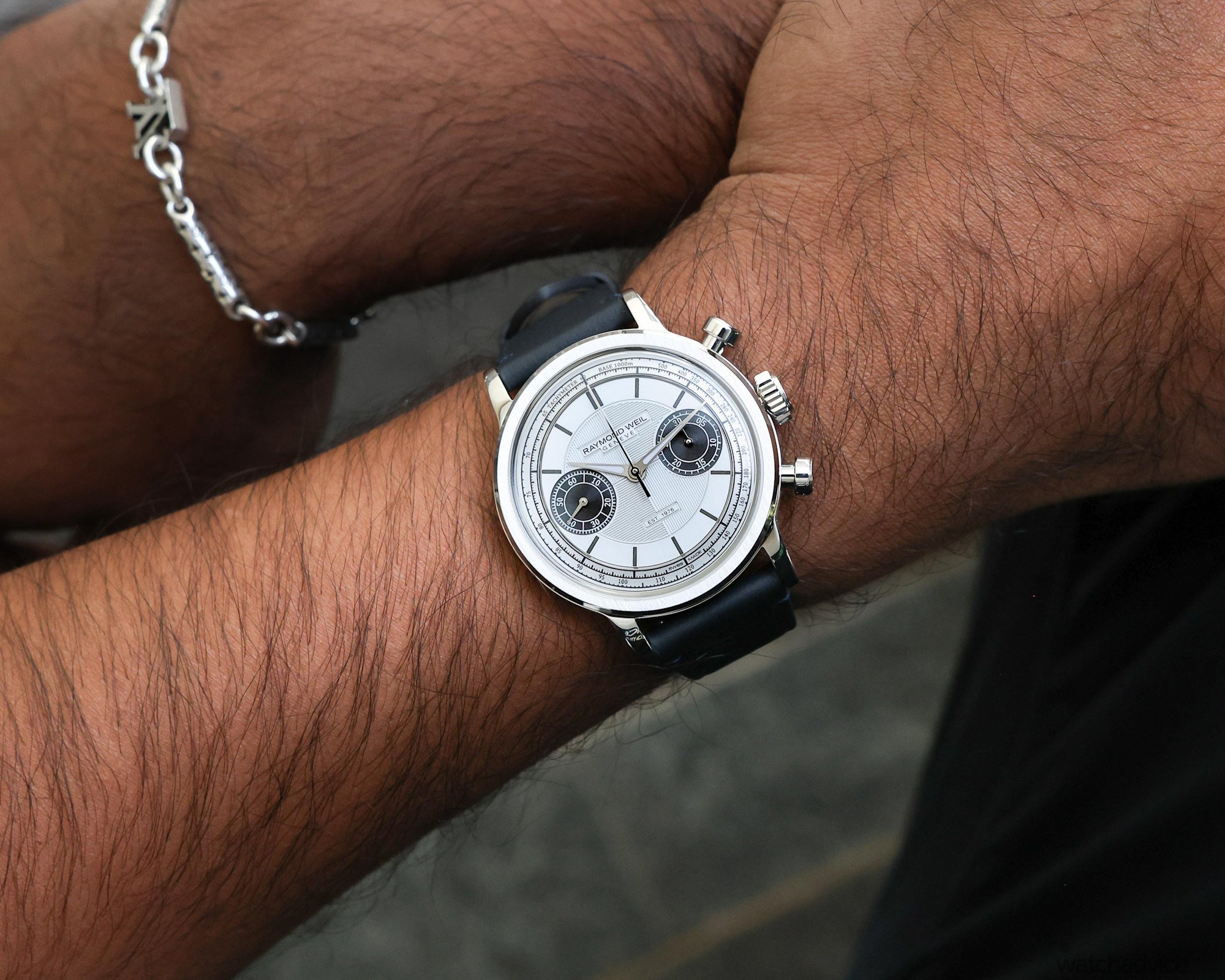
The two recessed dark-blue counters display a 30-minute chronograph counter at 3 o’clock and running seconds at 9 o’clock. They create a subtle contrast against the lighter-blue areas of the dial, including the outer tachymeter scale and central sector display. The silver-toned hour ring introduces another shade, creating a nice contrast with both the bi-compax counters and the black obelisk-shaped indices.
While I did love the aesthetic of the Millésime “The Fifty”, which featured white sub-counters against a lighter-toned dial, the Millésime Jubilee presents a more restrained aesthetic to me. It is one that can be worn more effortlessly across a wider variety of occasions without drawing too much attention.
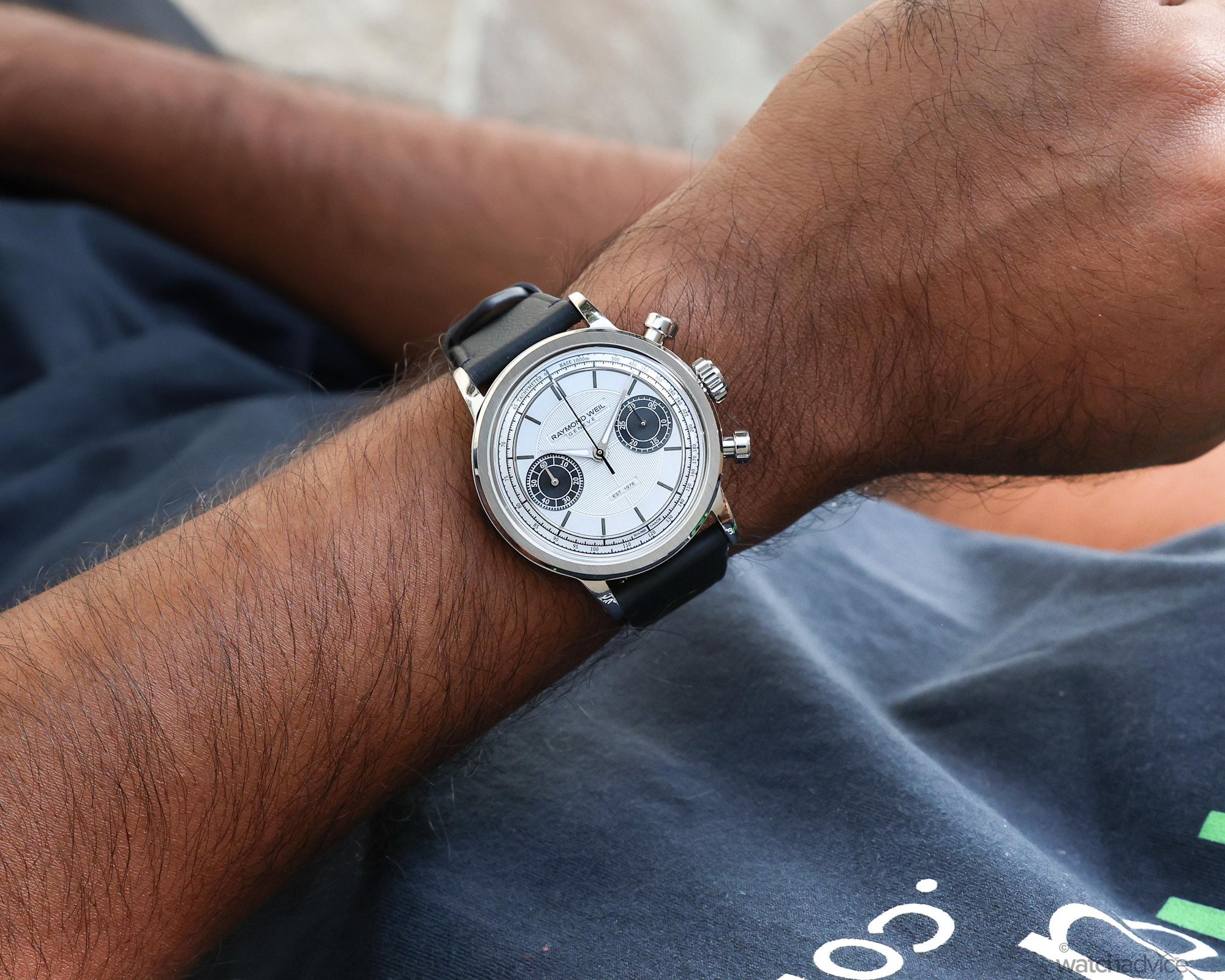
So, how does this new Jubilee design compare with the existing Millésime Tri-Compax Chronographs? The most obvious difference lies in the reduction from three sub-counters to two, which, as expected, gives the Jubilee a cleaner appearance than the three-register Tri-Compax. It allows more of the light-blue dial and sector design to remain visible. More importantly, it gives collectors a choice between the traditional three-counter arrangement or a simpler, more open interpretation of the Millésime Chronograph.
A Familiar Automatic Heart With The Calibre RW5030
The movement inside the Millésime Jubilee is Raymond Weil’s Calibre RW5030, the same movement used throughout the Millésime Tri-Compax Chronograph models. While the Jubilee is inspired by “The Fifty”, it does not carry over that model’s historic manually wound movement. This makes the Jubilee considerably more accessible and affordable, placing it in line with the rest of the Millésime Chronograph collection.
Rather than introducing an entirely new calibre, the Calibre RW5030 is based on the established Sellita SW510 architecture, offering proven reliability and easier serviceability. The movement features a cam-operated chronograph construction, providing a mechanically robust and widely used system for the chronograph’s start, stop and reset functions.
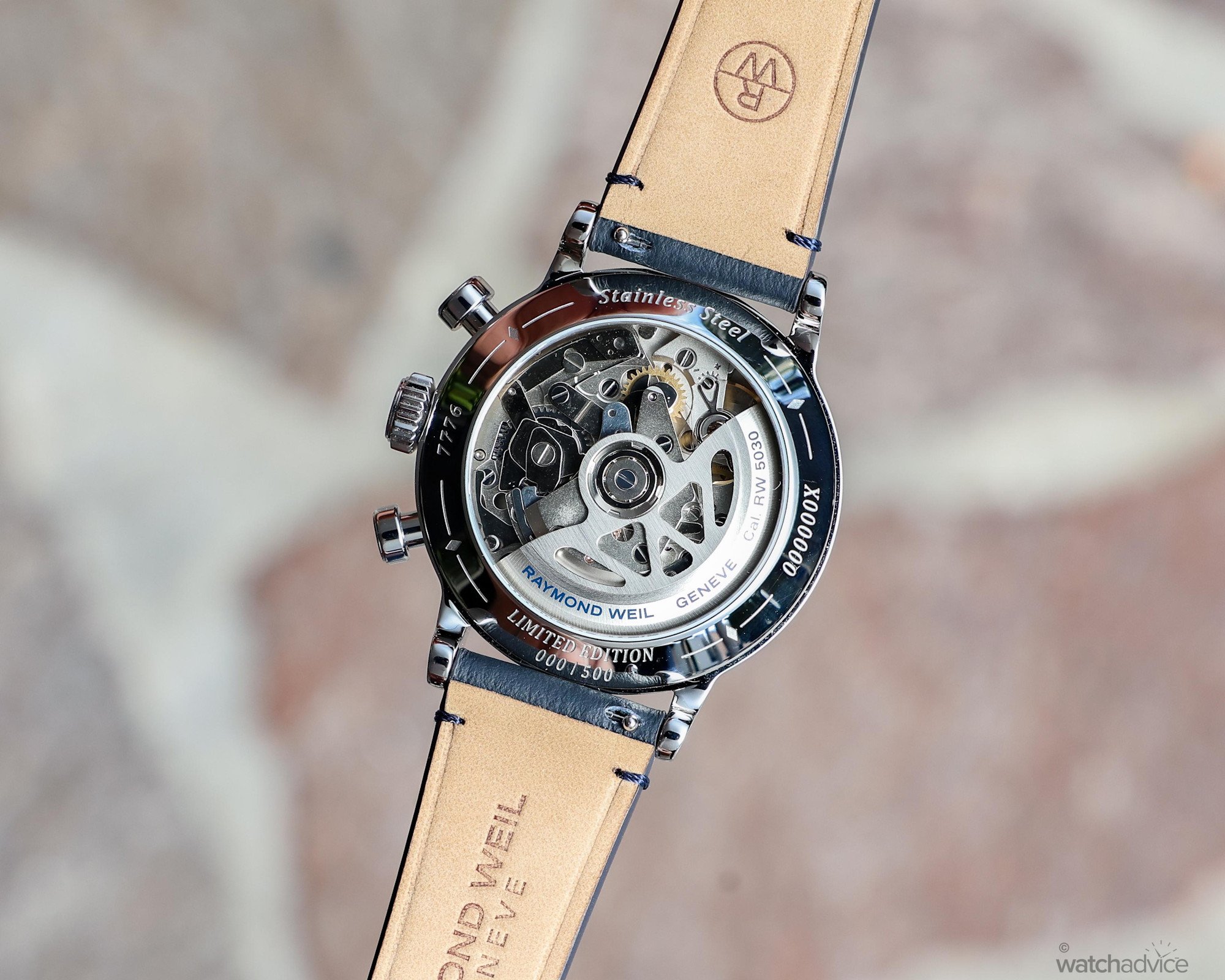
The Calibre RW5030 operates at 4Hz (28,800 VpH), producing a smooth central chronograph seconds sweep and stable timekeeping, while also delivering a practical 62-hour power reserve. Having owned the Tri-Compax Chronograph for approximately a year now, I can certainly say that the movement operates reliably in the background, allowing the aesthetic design of the Millésime to take centre stage.
In saying that, the Millésime Jubilee does feature a sapphire caseback through which the Calibre RW5030 can be viewed. While the movement finishing is kept relatively minimal, the standout detail is the skeletonised winding rotor, which has been designed to resemble the Raymond Weil logo. The levers and cam mechanism of the chronograph are also visible, particularly when the pushers are operated, providing an intricate view for those who love watching the mechanical components of a movement in action.
How Does The Millésime Jubilee Wear?
As mentioned previously, the Raymond Weil Millésime Jubilee shares the same 39mm by 12.9mm proportions as the Millésime Tri-Compax Chronograph models, allowing many of the sentiments I have about my own watch to carry across to this new edition. The 39mm case diameter is honestly perfectly proportioned for my 16cm wrist, giving it the ideal wrist presence for a chronograph without appearing excessive.
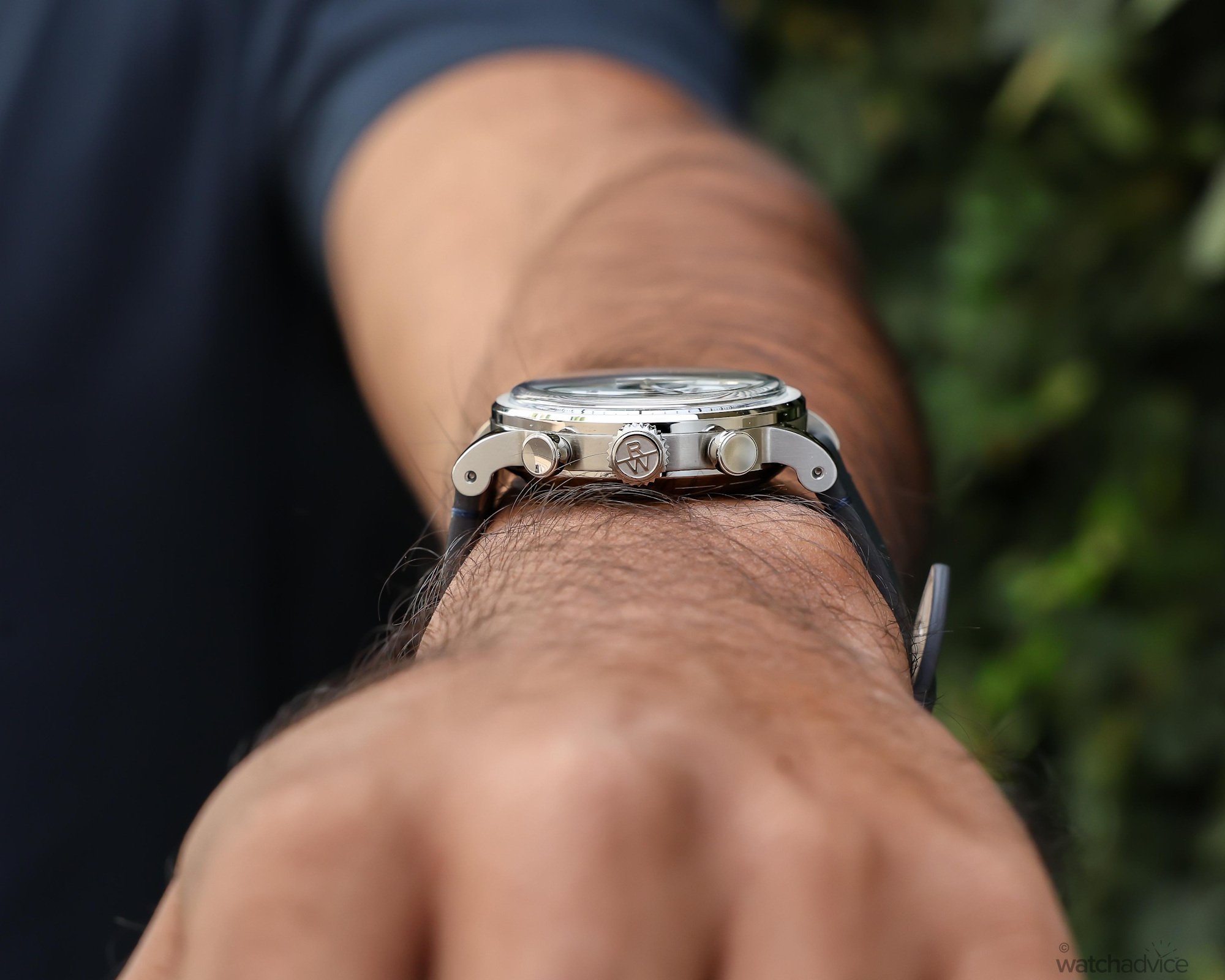
While the 12.9mm thickness may be slightly large for some, for me personally, this is the ideal size for a chronograph. Outside of simple time-and-date models, I like watches to have a little heft and size so that you actually notice their presence when wearing them. This is exactly what you get with the Raymond Weil Millésime Jubilee.
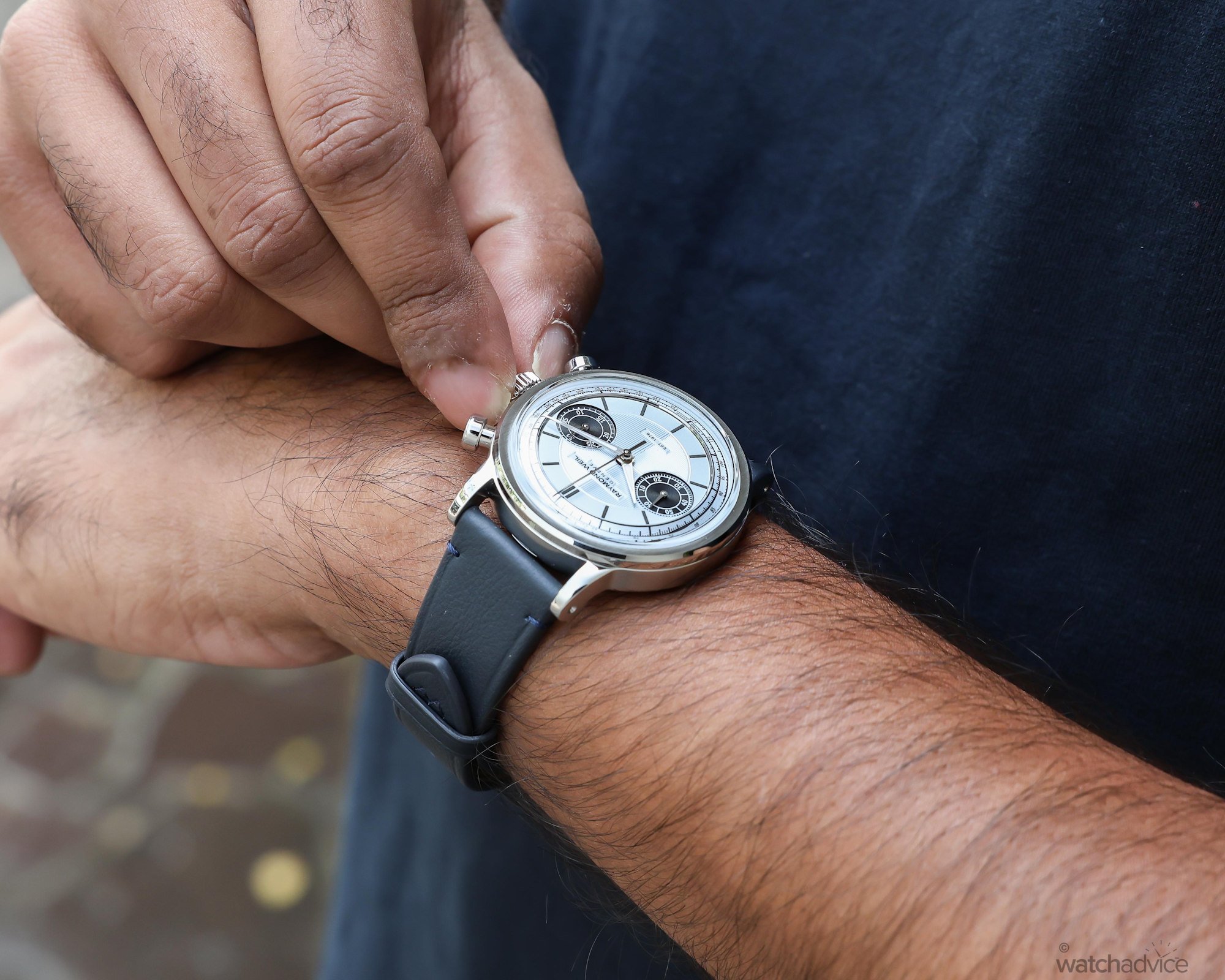
What also helps the model’s wearability is its curved lugs, which bring the strap down towards the wrist almost immediately without creating any overhang. This helps contain the case and prevents the watch from feeling flat or overly broad. With a lug-to-lug measurement of approximately 46mm, the lugs should remain within the wrist even for those with smaller wrist sizes.
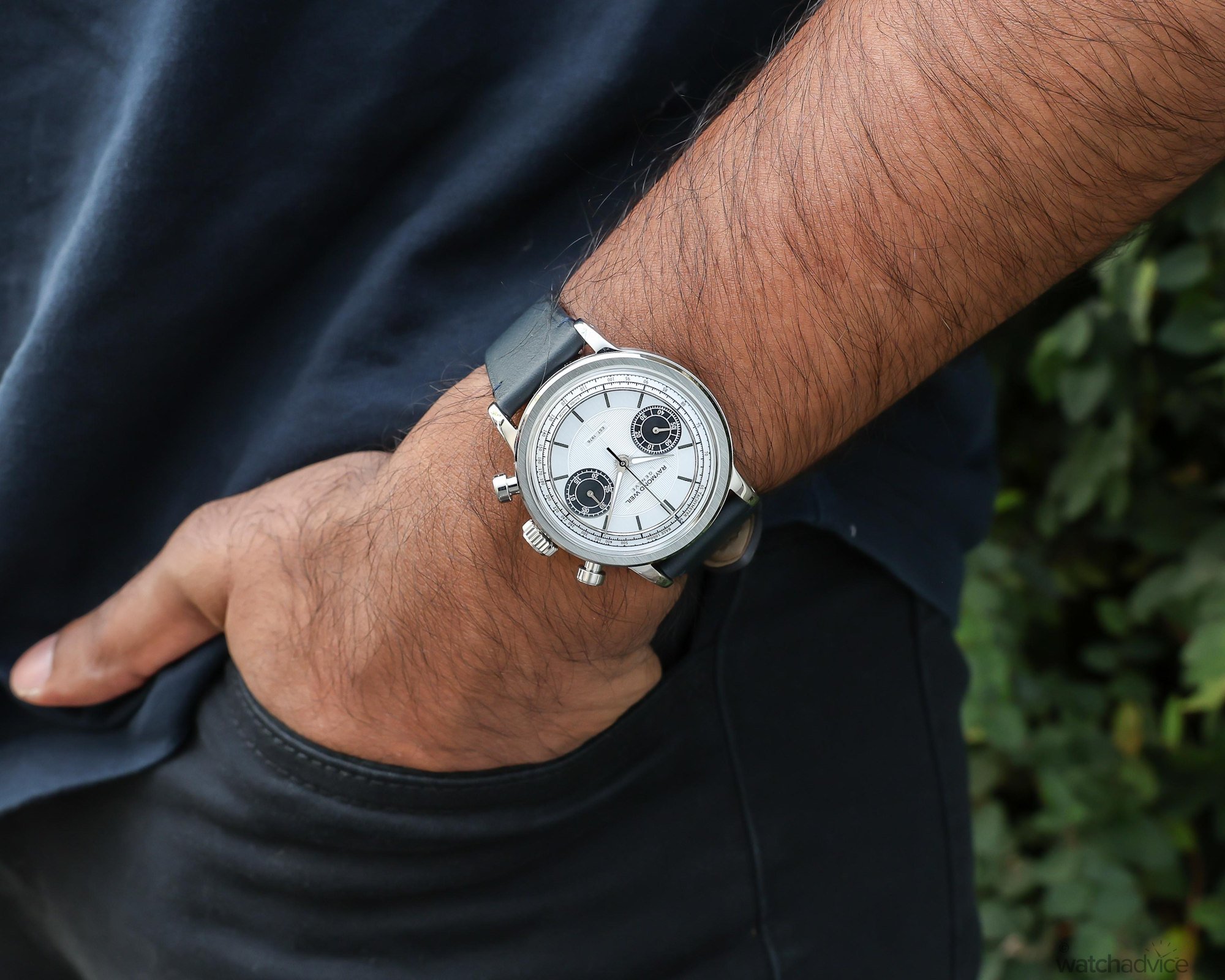
Where this model does differ, however, is in its aesthetic presence. While the model I own features a rose gold PVD case, which I must admit I am heavily biased towards, the stainless-steel execution of the Millésime Jubilee gives it a more restrained character, especially when combined with the light-blue dial and navy-blue sub-counters.
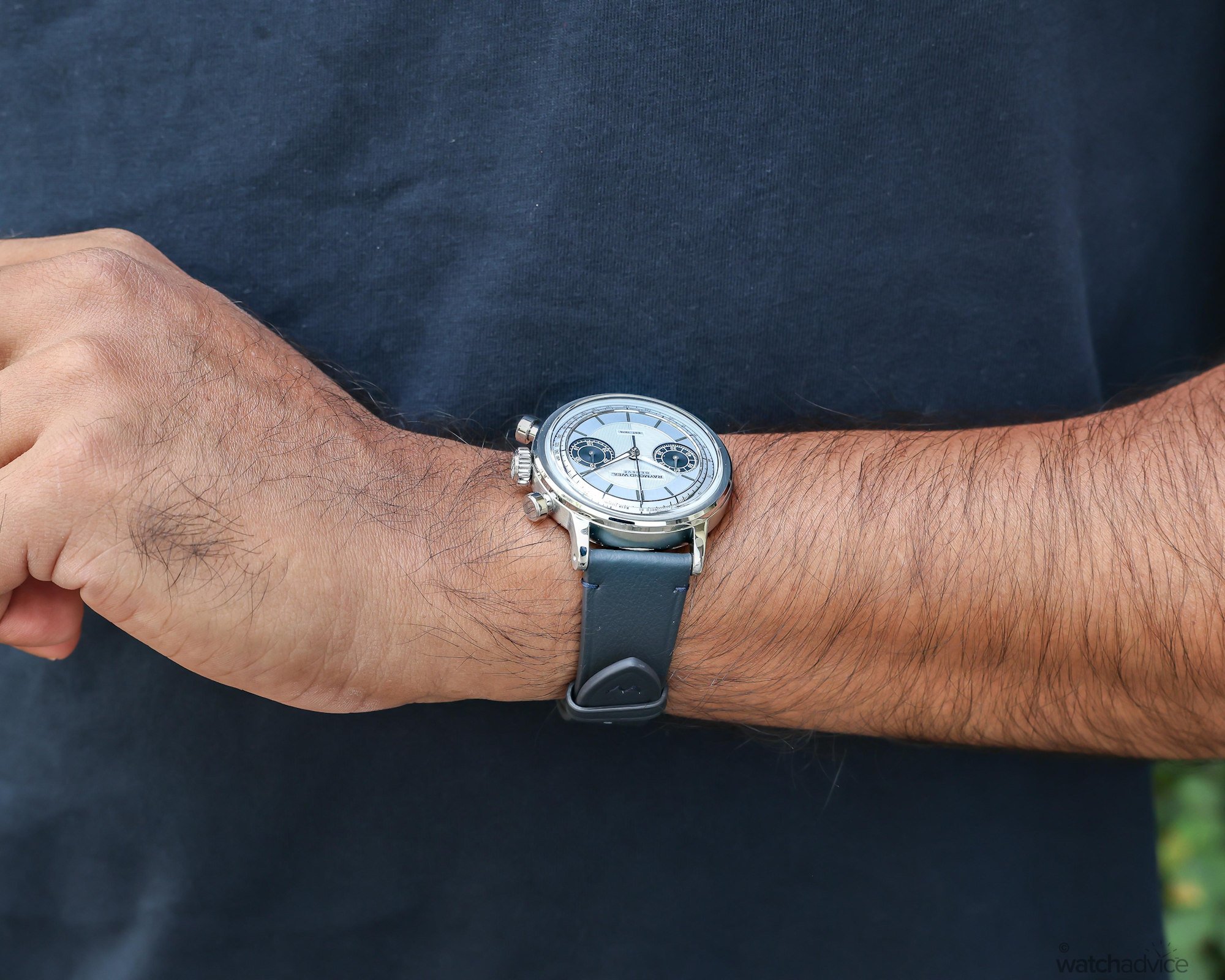
This is a model that leans more towards everyday wearability, one that can easily be worn to the office or within a professional environment. At the same time, it fits perfectly into casual and formal settings thanks to the dress-like appearance of the case and dial, combined with the sportier character of the chronograph functionality.
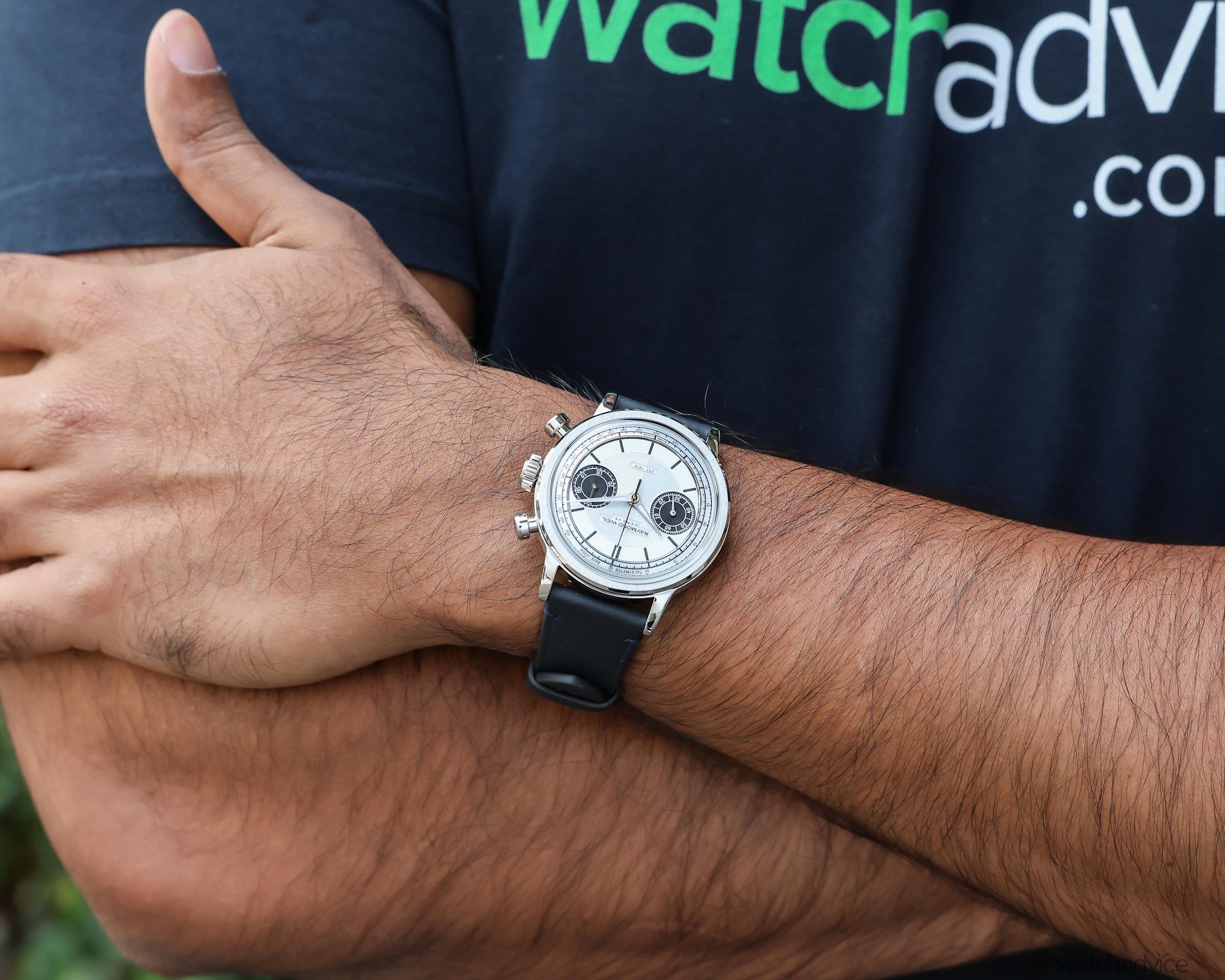
What I love about the Millésime Jubilee, and the broader Millésime Chronograph collection, is its neo-vintage-inspired design. The Jubilee carries across the simpler bi-compax aesthetic introduced by “The Fifty”, allowing the sector dial to command just as much attention as the surrounding elements and the vintage-inspired case architecture.
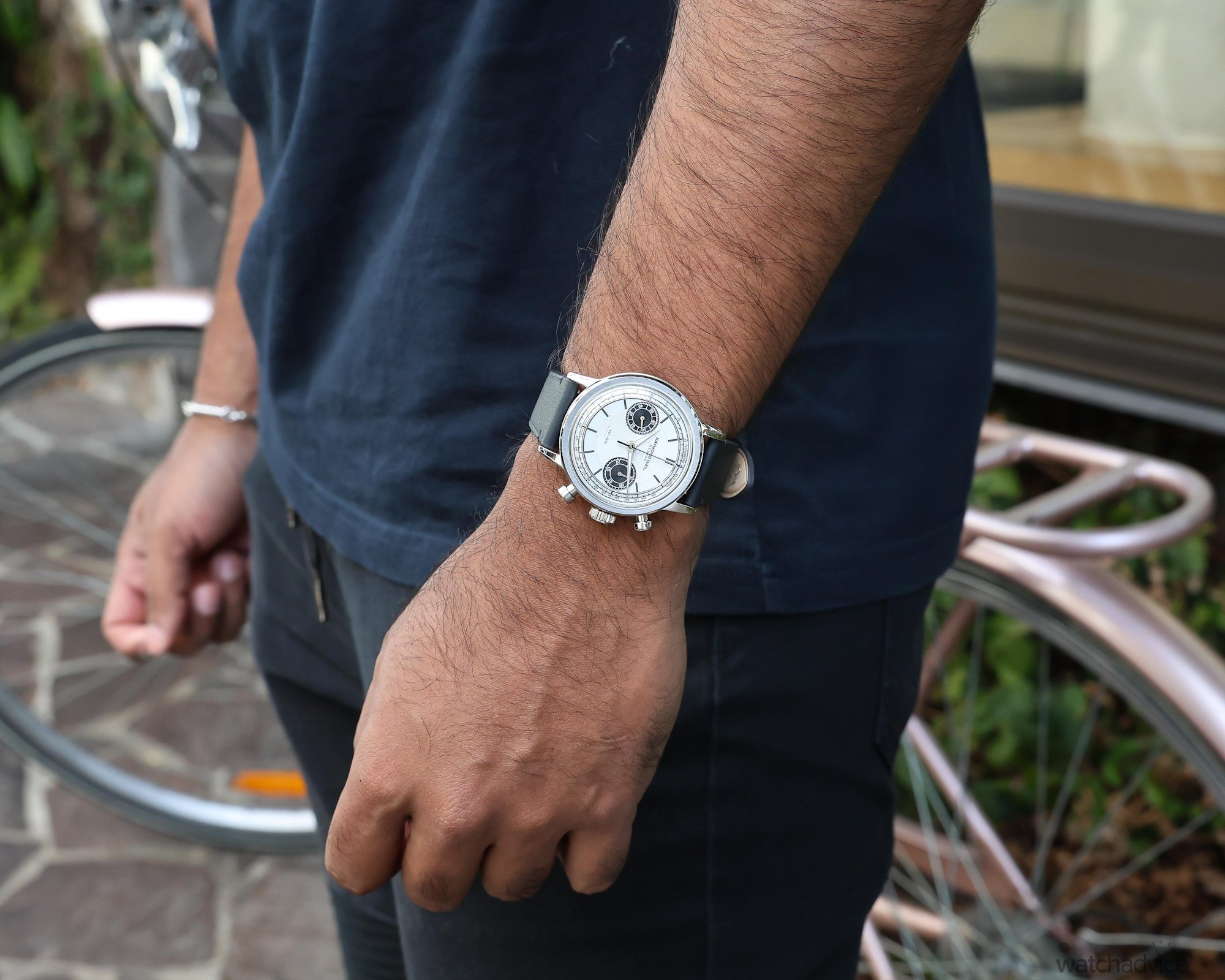
The chronograph pushers also add to this vintage aesthetic, while their operation is what you would expect from a cam-lever mechanism. The action is crisp and provides some resistance when engaged. I would not say that it offers the smoothest chronograph pusher operation, but it is in line with what you would expect at the Millésime Jubilee’s price point.
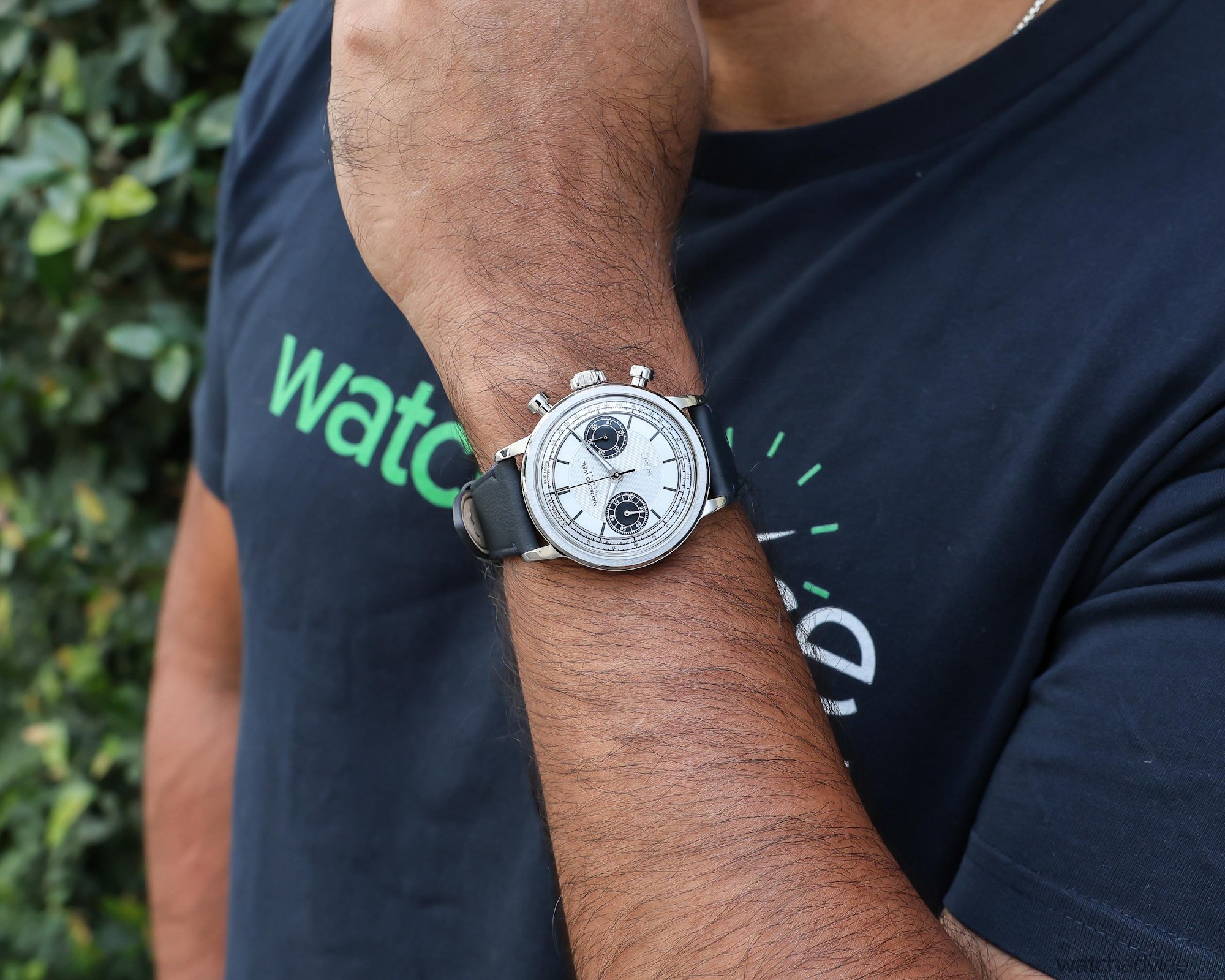
Wearing the Millésime Jubilee during the time I had it certainly offered a different perspective compared to my own model. However, what I noticed was that I received just as many compliments on the Jubilee as I did with the rose gold PVD Tri-Compax edition. When paired with the dark-blue genuine calf-leather strap, not only was the Jubilee comfortable to wear, but the strap also complemented the two-tone blue dial beautifully, creating a cohesive and refined aesthetic.
Final Thoughts
The Millésime Jubilee continues Raymond Weil’s 50th-anniversary celebrations, but it also gives us a glimpse into what the future of the Millésime Chronograph could look like. What I love about it is that it offers something different from the Tri-Compax. Although it only removes one sub-counter, this creates more open space across the dial and allows the iconic sector design of the Millésime to become far more prominent. This is understandably less visible on the Tri-Compax models, as adding further sector detailing would make their dials feel overly busy and complex.
The Jubilee draws clear design inspiration from Raymond Weil’s 50th-anniversary Millésime “The Fifty”. However, it makes that aesthetic more accessible by replacing the historic manually wound Valjoux 23-6 movement with the automatic Calibre RW5030 found within the Tri-Compax. The beautifully balanced bi-compax chronograph design and broader neo-vintage character have still been carried forward. This is ultimately what gives the Jubilee its appeal, offering some of the visual charm of The Fifty with the everyday practicality of an automatic chronograph movement.
Having discussed Raymond Weil’s future at length with the brand’s third-generation CEO, Elie Bernheim, I am certainly looking forward to seeing what lies ahead for the Millésime Chronograph collection. I cannot see the brand introducing an entirely different design anytime soon, although I could be completely wrong here. It makes more sense for the collection to sit and soak in its success while Raymond Weil introduces different materials and dial colours to bring further variety to this new bi-compax design.
Having spent some time with the Raymond Weil Millésime Jubilee, it feels like a natural bridge between The Fifty and the existing Tri-Compax collection. While it may not possess the same historical movement or exclusivity as The Fifty, it captures much of its visual identity while remaining practical and, like the other models within the Millésime collection, easy to wear. Limited to 500 pieces, the Jubilee is a fitting celebration of Raymond Weil’s 50-year history and, more importantly, an exciting indication of where one of the brand’s most successful modern collections could be heading next!
Raymond Weil Millésime Jubilee
Reference & Specifications
| Feature | Specification |
|---|---|
| Reference | 7776-STC-65501 |
| Dimensions | 39mm case diameter x 12.9mm thickness |
| Case | Stainless steel with polished and satin-brushed surfaces |
| Dial | Light blue four-part dial with midnight-blue azuré-finished bi-compax subdials |
| Crystal | Sapphire glassbox with double-sided anti-reflective coating |
| Caseback | Sapphire crystal exhibition caseback |
| Movement | Automatic bi-compax chronograph Cal. RW5030 |
| Accuracy | 4Hz / 28,800vph |
| Functions | Hours, minutes, running seconds, central chronograph seconds, 30-minute chronograph counter |
| Water Resistance | 50m / 5bar |
| Strap/Bracelet | Midnight-blue calfskin leather strap with pin buckle |
Australian Retail Price: AU$6,995
Availability: Limited to 500 pieces worldwide. Available through Raymond Weil boutiques, or for more information, please head to Raymond-Weil.com.au
Full Image Gallery: