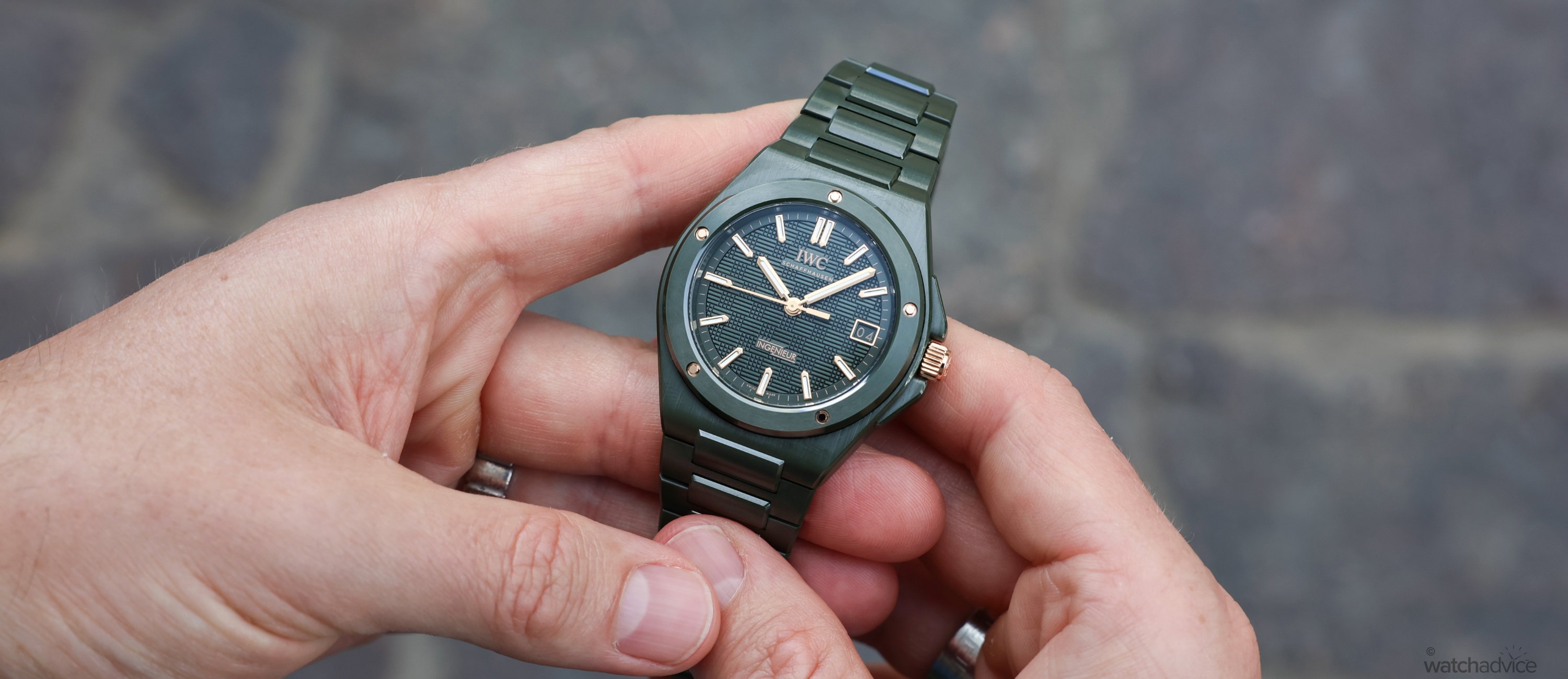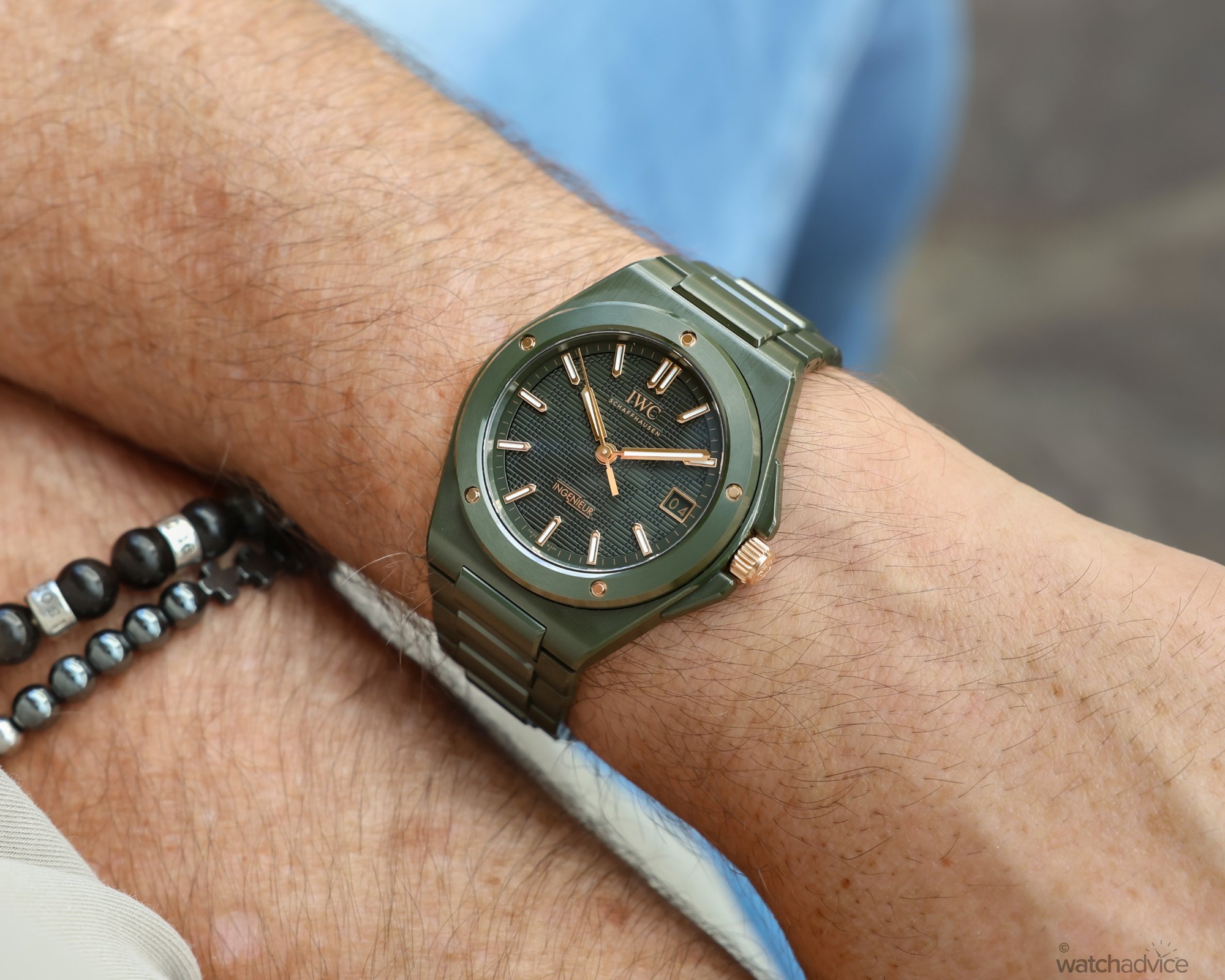

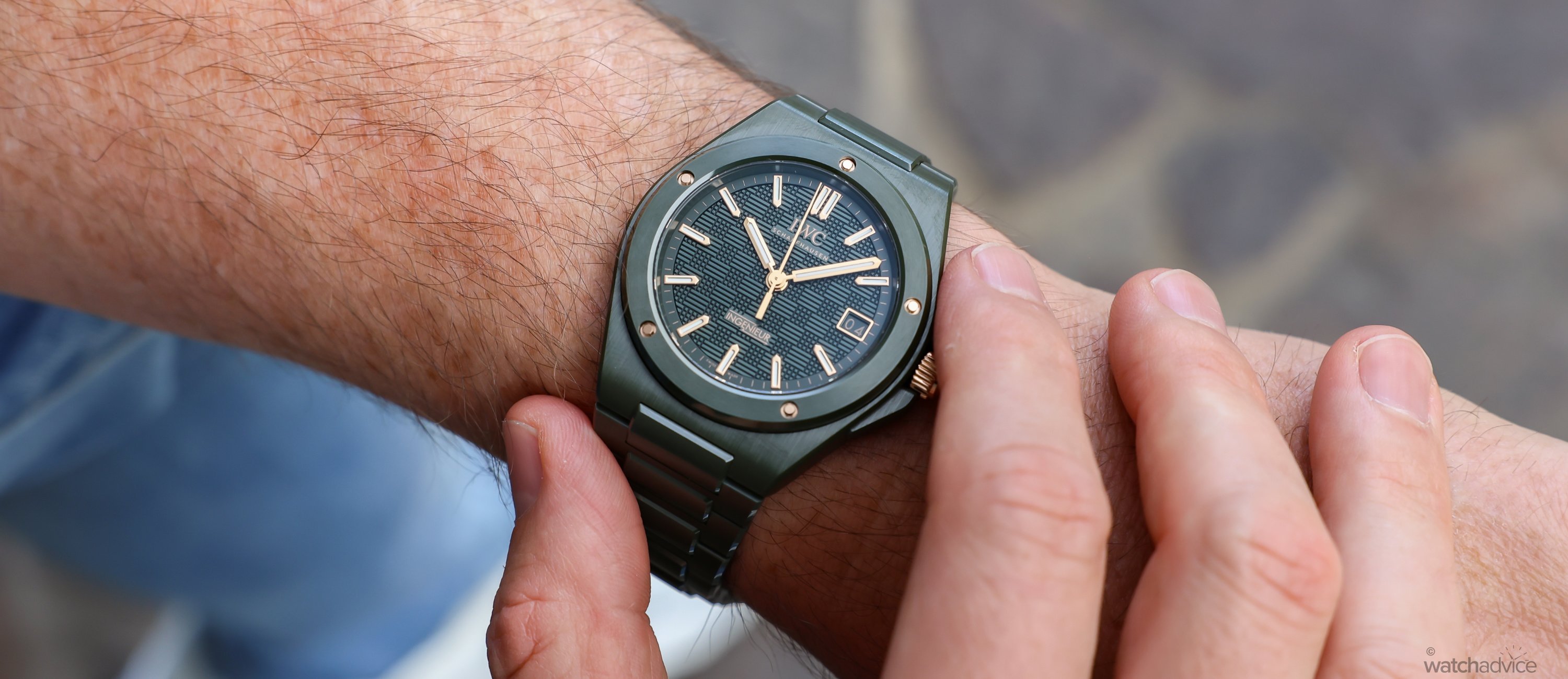
IWC went green this year with the Ingenieur 42 Ceramic, and while we thought the black was good, this could be better!
What We Love:
- The shade of green ceramic works extremely well
- The gold accents elevate the watch nicely
- The finish & light play make this a standout on the wrist
What We Don’t:
- Still, the lack of the quick-link adjustment system on the bracelet
- The 42 mm case size may not suit all wrist sizes and types
- A full ceramic watch may not be for everyone, or suit some people’s lifestyles
Overall Rating: 8.75 / 10
- Value for Money: 8.5/10
- Wearability: 8/10
- Design: 9.5/10
- Build Quality: 9/10
When IWC released the black ceramic Ingenieur last year, I was pretty impressed with how well the watch worked in the metal, or ceramic, I should say. The Ingenieur is already a very distinctive design, and creating it in ceramic could easily have changed the proportions or feel of the watch, but IWC managed to retain what makes the current Ingenieur work while giving it a completely different feel on the wrist.
IWC CEO Chris Grainger-Herr talked to us about this last year, and how much research and development went into making a 42mm-sized ceramic version to mirror the proportions, look and feel on the wrist as the standard steel 40mm. It was an interesting chat, which you can read all about here.
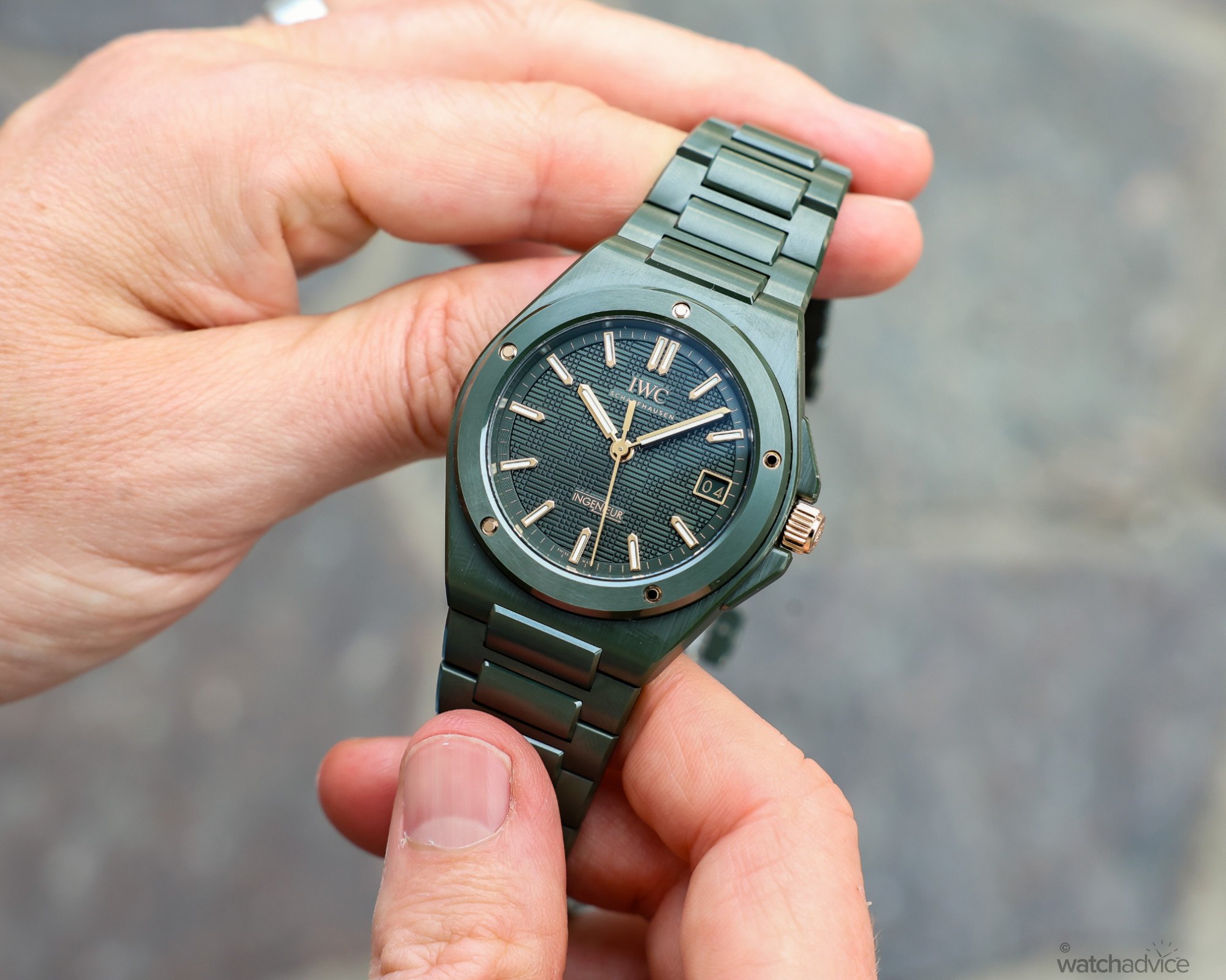
Not content to rest on its laurels, IWC released a green ceramic version for Watches & Wonders this year, which takes exactly the same approach to the case and bracelet but gives the watch a very different character. I had spent quite a bit of time with the black ceramic model when I reviewed it last year, so having the green one on the wrist was a good opportunity to see whether the change in colour actually made much difference to the experience of wearing it. So, does it?
First Impressions
The dimensions, construction and movement are all the same, but the olive green ceramic changes the way the light plays across the watch, while the matching green dial and gold-toned details give it considerably more contrast than the black version. I liked the black version, but I’ve stated in the past that an all-black watch doesn’t tick all the boxes for me, and my preference is still a watch with some contrast. This is where the green ceramic comes in: I think this colour combination gives the design a little more personality.
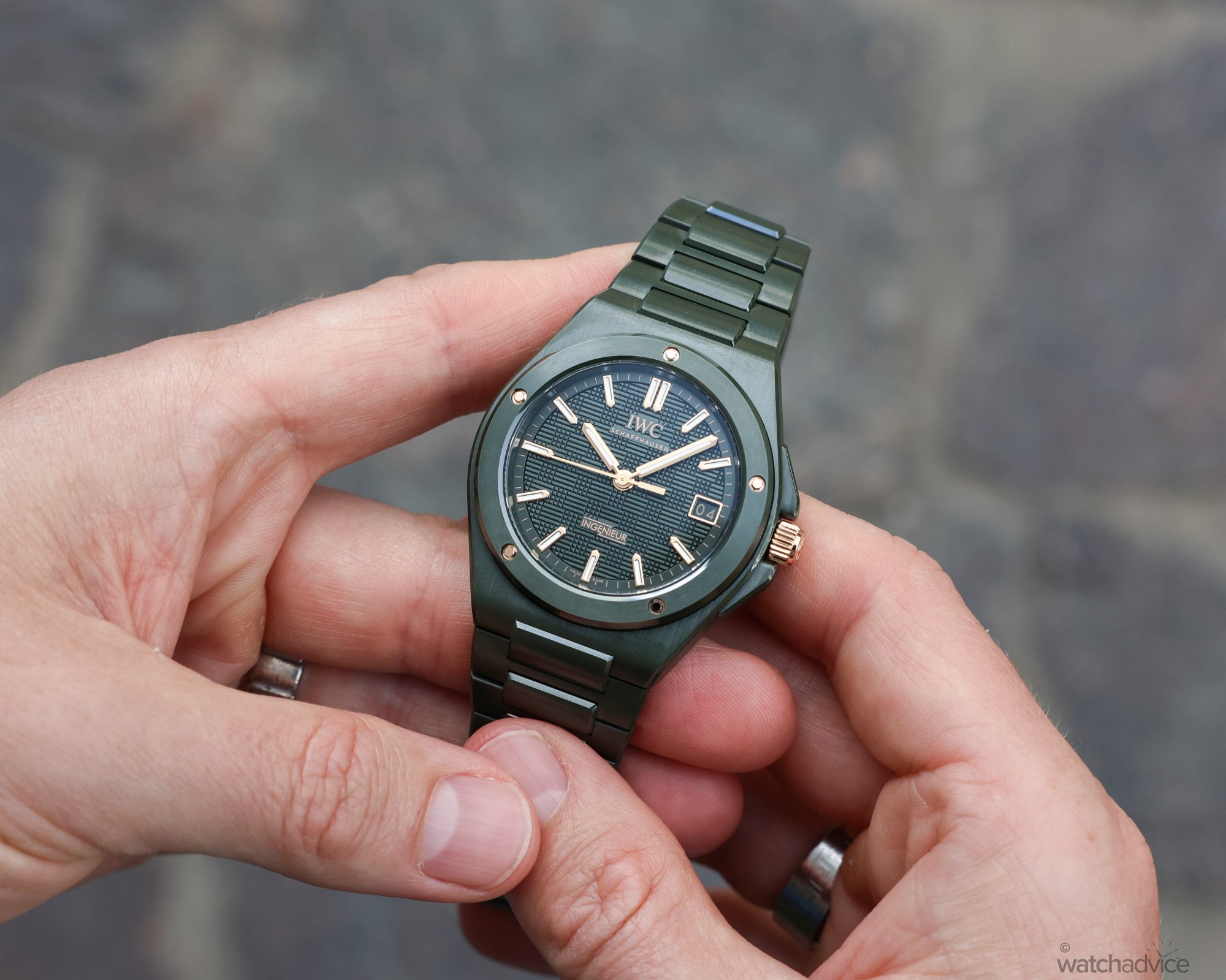
The dark olive green colour is subtle, but not so much that it looks like an ambiguous colour from a distance. Thanks to the shade of green used, the brushing and polishing across the case and bracelet provide more for the eye to look at when compared to the black ceramic model, and the use of the gold accents on the dial, crown and screws gives the watch enough contrast so it is not so monochromatic and elevates it on the wrist.
The Design
Similarly to the black ceramic, IWC has used a combination of satin-brushed, sandblasted and polished surfaces across the case and bracelet. The green ceramic seems to reflect the light a little better when compared to the black, so the changes between the various surfaces are much easier to pick up. Because of this, the entire watch stands out more and as the green doesn’t absorb the light as much, the colour changes between light and shade are noticeable.
The case itself measures 42mm in diameter and 11.5mm thick, with 100 metres of water resistance. These are the same dimensions as the black ceramic model, and I think they work particularly well with the ceramic construction because the lighter material stops the watch from feeling as substantial as a 42mm steel watch might.
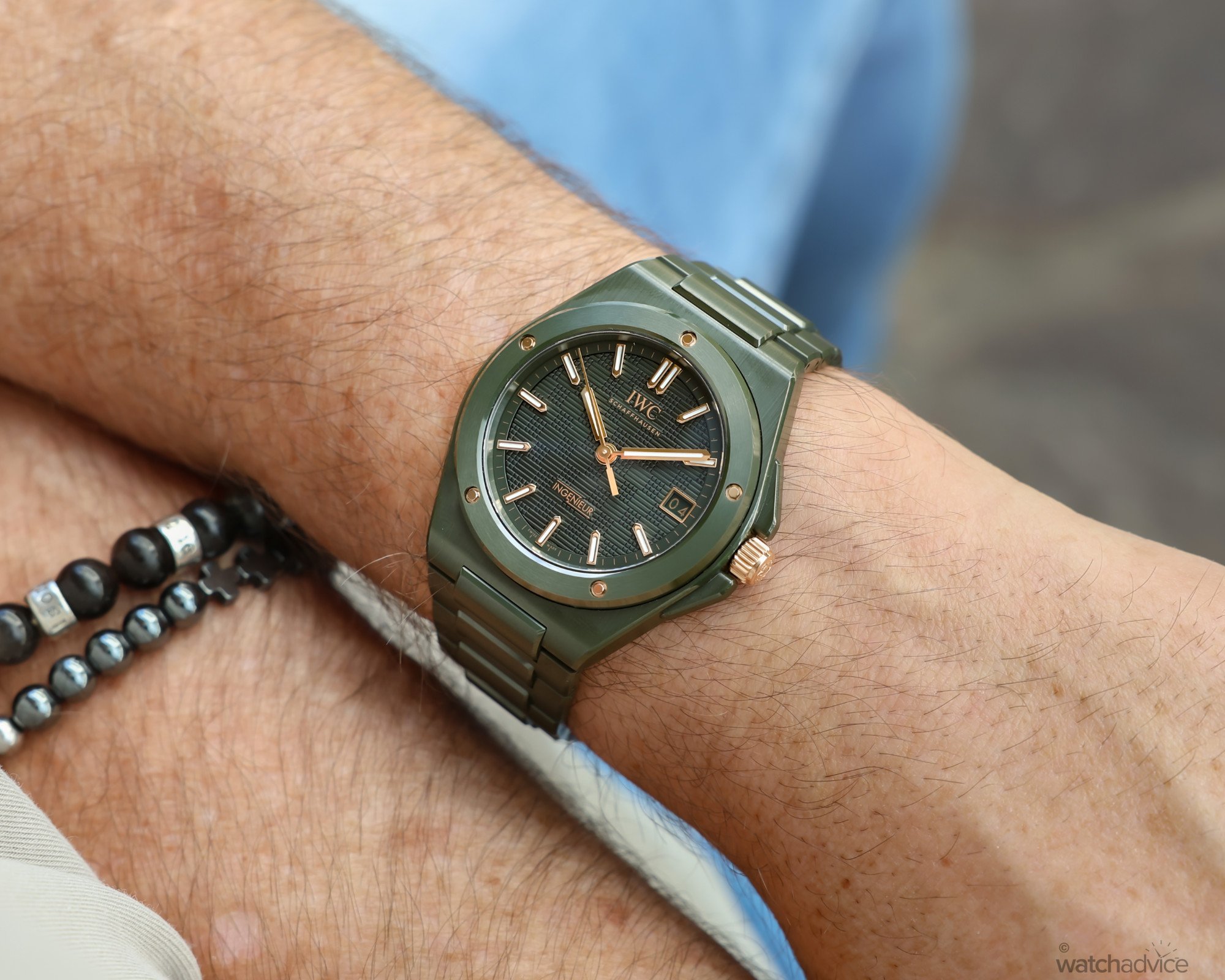
I mentioned in my previous review the case construction, but if you’ve not read it, then here is a paraphrased version for you. The ceramic isn’t just an outer shell; rather, IWC chose to use a multi-part construction that includes a titanium inner ring to support the movement and provide the structure needed for the functional screws that run through the case. And when it comes to the entire design, working with ceramic is not just a simple material replacement:
“The process we’re using is really about designing from the outside in, and we don’t normally work like that. As an example, when you do something in ceramic, you would always start from the fact that ceramic asks for slightly bulkier dimensions — everything has to be beefed up a little bit to suit the material you’re working with. Often when you look at ceramic, the tolerances and the gaps between bracelet links are a lot wider, so everything can move very freely, but it all feels a bit sort of loose and non-engineered in the hand. This is what we didn’t want to do. We didn’t want to mess with the proportions.”
Chris Grainger-Herr – CEO, IWC
The integrated bracelet is also ceramic, which means you notice the lighter weight of the watch. Once you have worn the watch for a full day, you at first start to appreciate the lightness compared to the steel model, but then you get used to it and it feels relatively normal. The bracelet also articulates nicely around the wrist, so despite the 42mm case, it doesn’t feel like a particularly large or cumbersome watch.
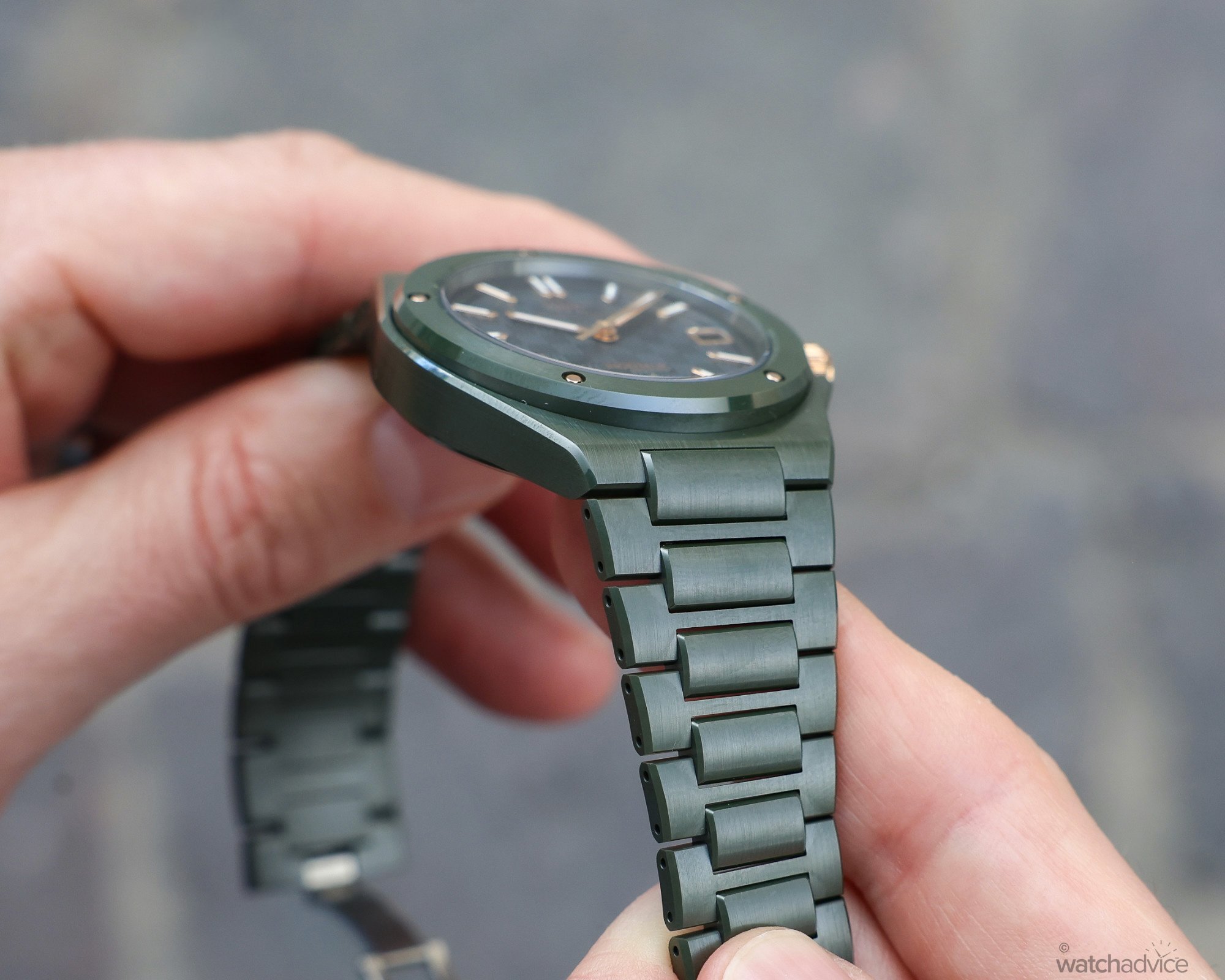
One other point to note is this. The green ceramic seems less susceptible to fingerprints and smudges on the case and bracelet compared to the black model. I feel the lighter colour masks these a lot more, whereas the black has the opposite effect.
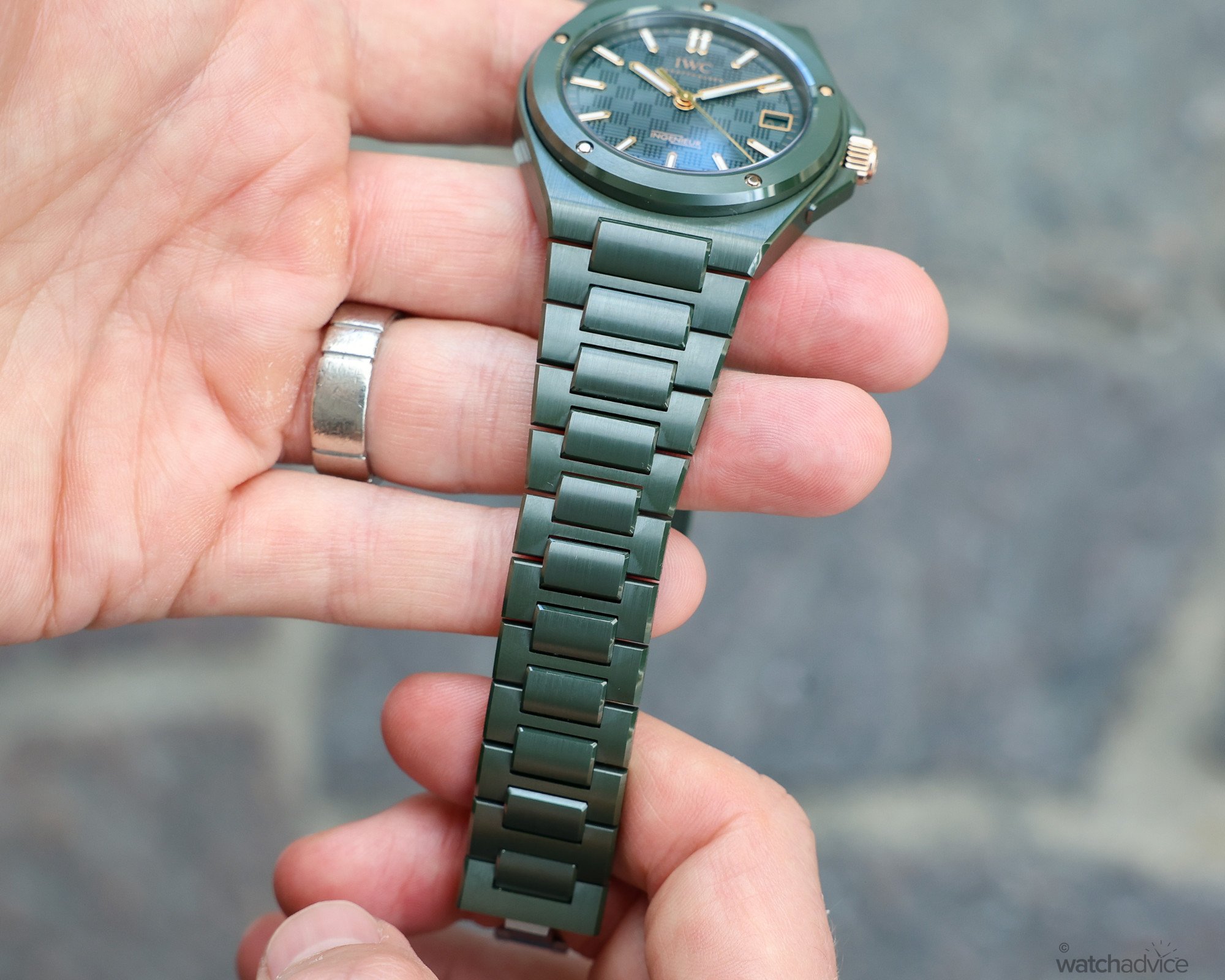
But let’s talk about the dial, as for me, it is probably my favourite part of the watch. The dial follows the same basic layout as the black ceramic model, with the familiar Ingenieur grid pattern, applied markers, date display and three-hand configuration. The big difference is obviously the colour, with IWC matching the dial to the green ceramic case and bracelet.
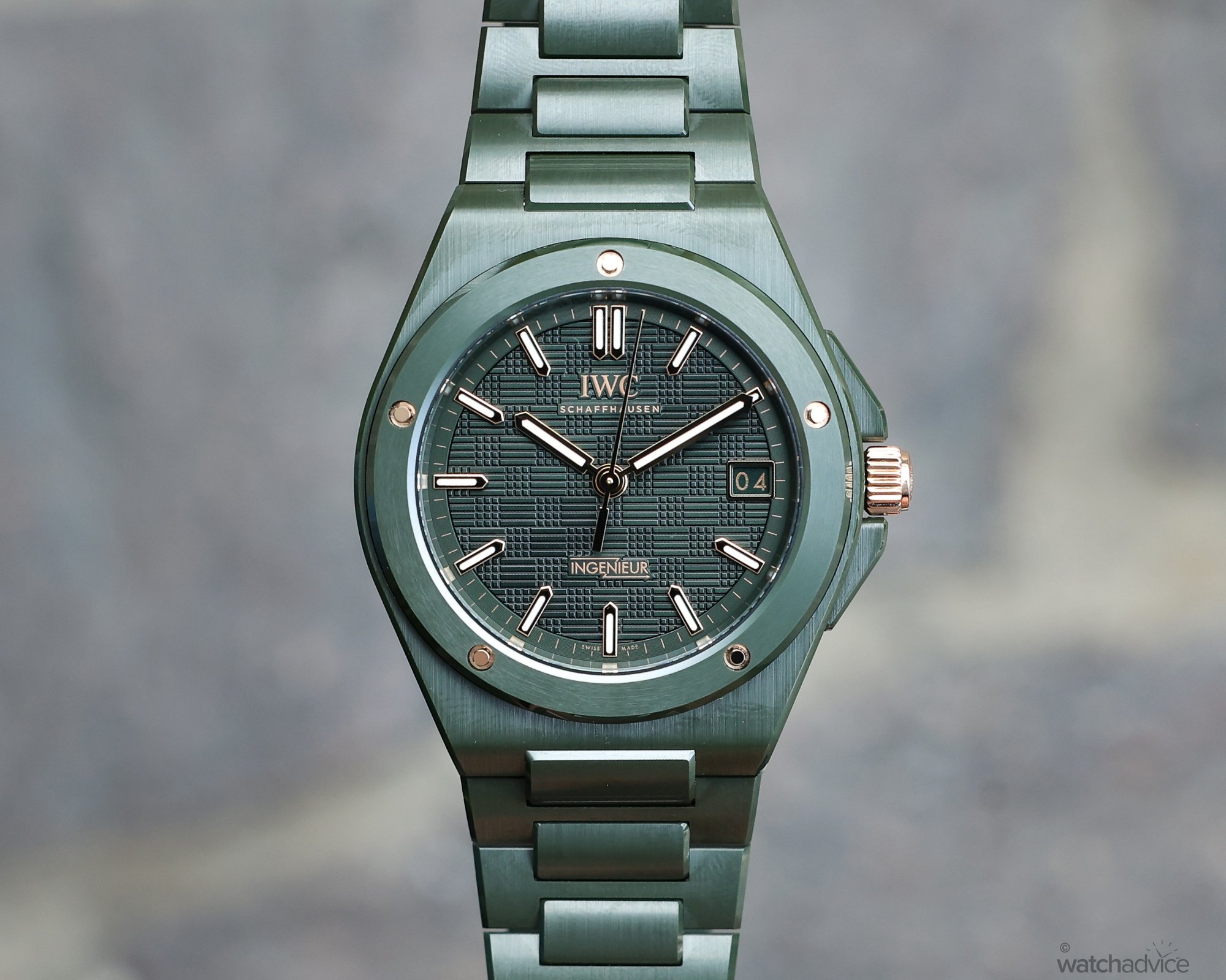
I actually think the dial is where the green version makes the biggest difference to the overall watch. Normally I’m not one for a colour-matched dial with the case and bracelet. Too much of a monochrome colourway isn’t my thing, but IWC has negated this on the green ceramic Ingenieur 42 thanks to the gold accents.
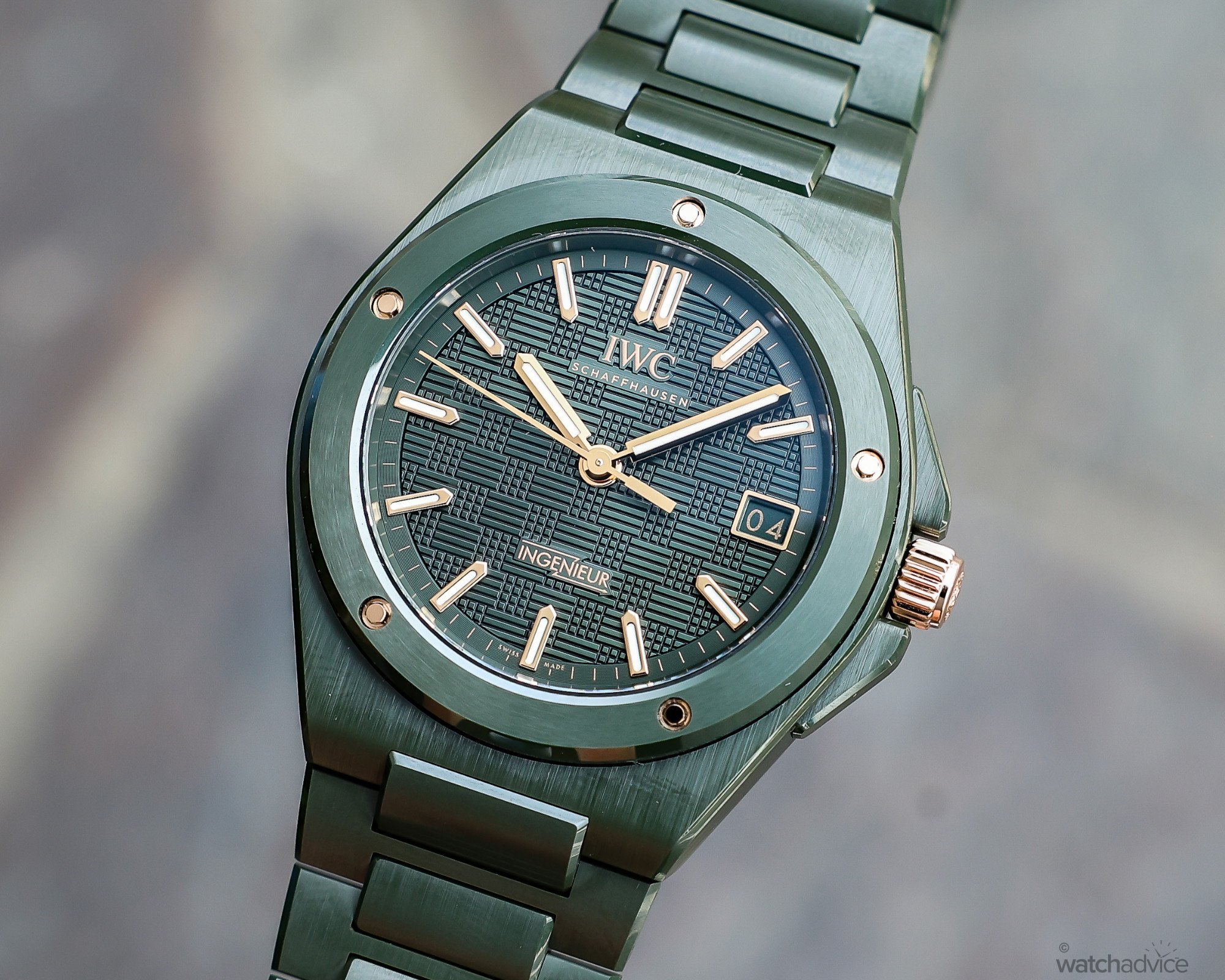
The gold-toned hands and applied markers are also a nice touch. You get the same treatment on the bezel screws and crown. Whereas the black ceramic model went with black hands and indices, with the only contrast being the Super-LumiNova and logo, the green adds the gold to all these, plus the crown, logo, date window and bezel screws, and this makes all the difference.
How It Wears
Having already spent time with the black ceramic model, the wearing experience is essentially the same when it comes to the olive green with regard to the fit and feel. The 42mm case sits comfortably on the wrist, and the integrated bracelet does a good job of following the shape of the wrist as well.
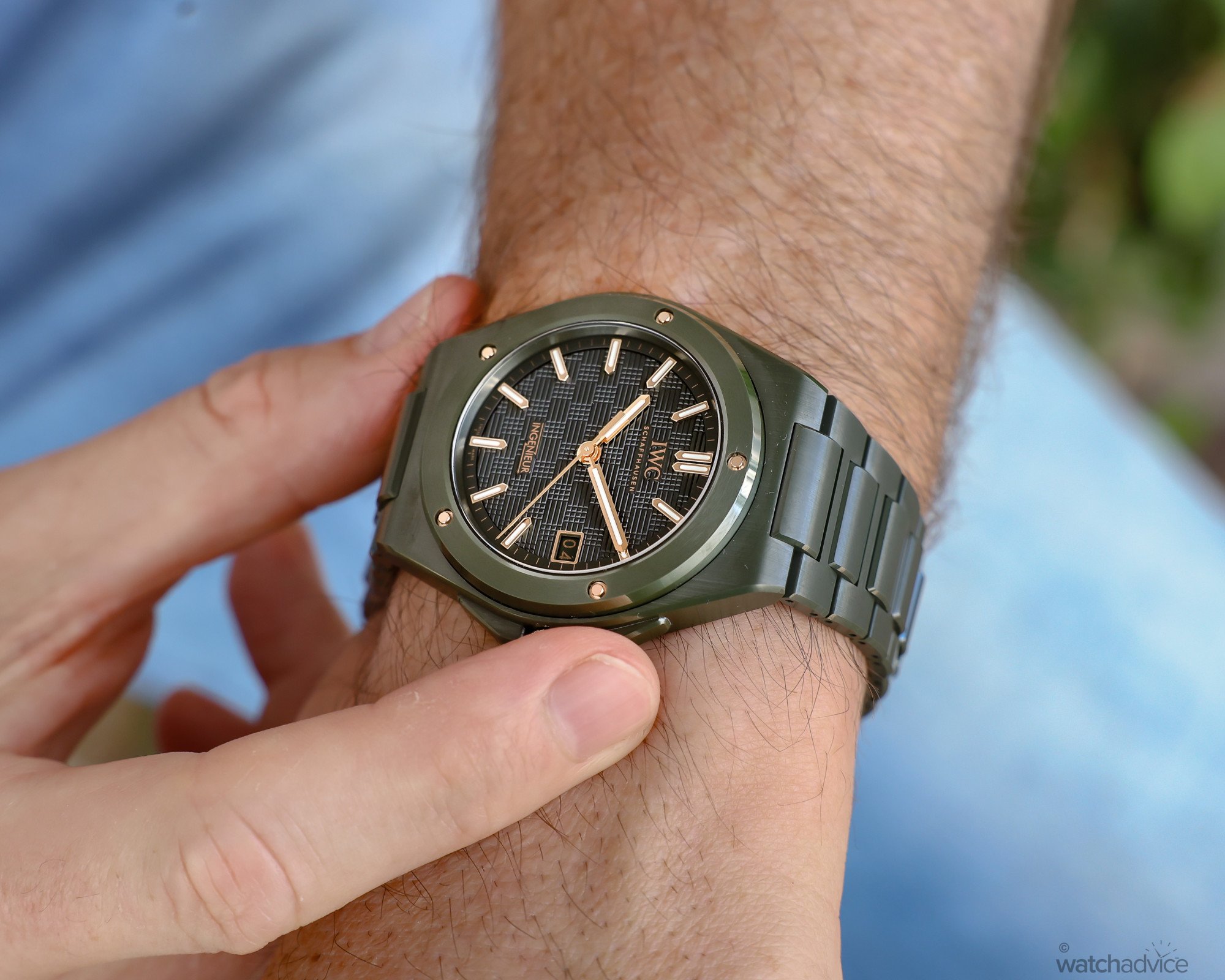
But for those who have the same affliction as me: a fluctuating wrist size, the green ceramic could prove problematic, as it still lacks an integrated micro-adjustment system. Even though that is the case across the entire range, I did buy the steel model with the blue dial a few months ago, so I’m evidence that this is not a deal breaker.
To negate this, you just have to play around with the bracelet size to get the right fit, and you may have to add in or take a link out in summer or winter. While the steel models have the easy link removal tools you can do yourself, the ceramic does not, so you will need to take it in to the boutique to do so.
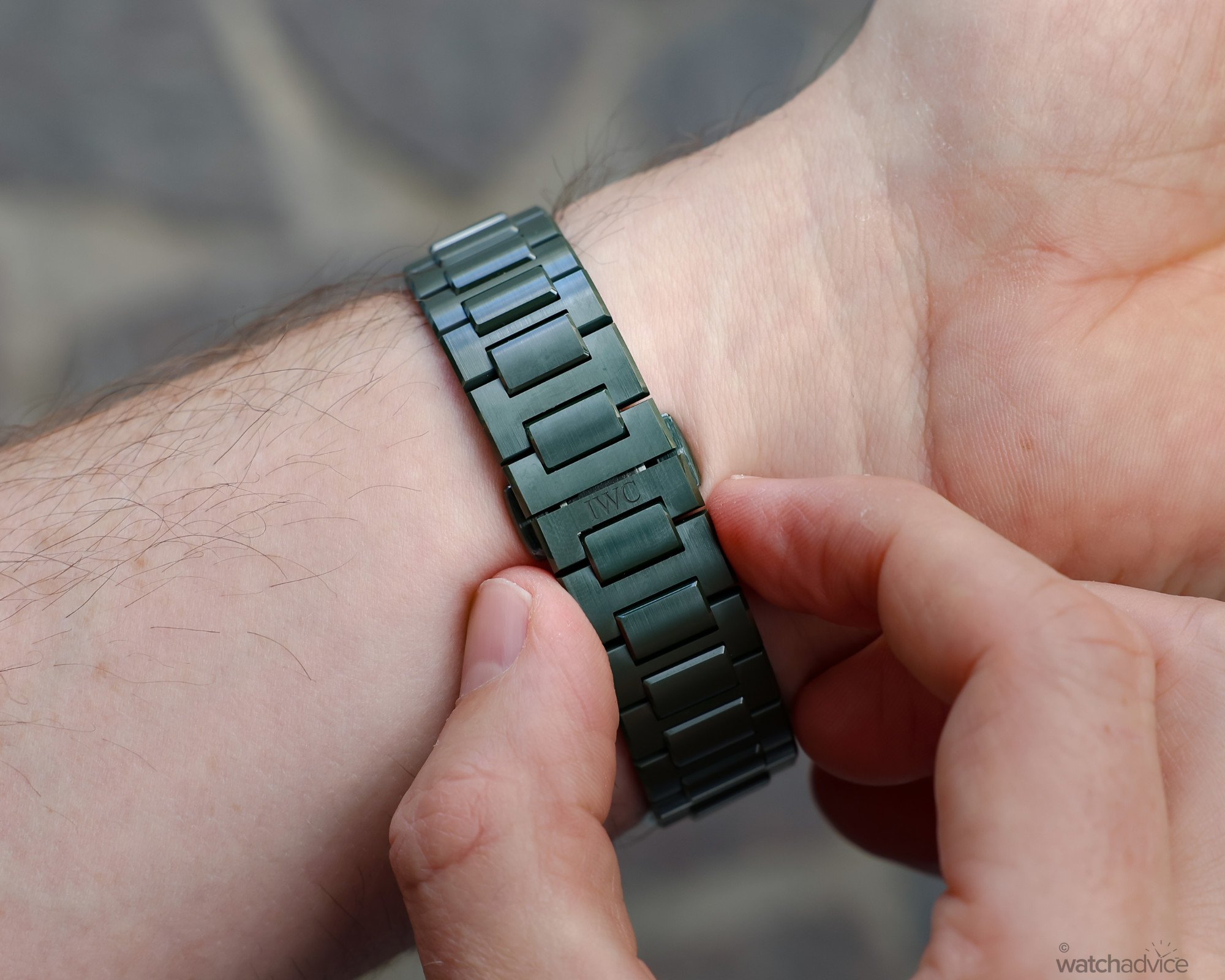
The 42mm size may not be for everyone and everyone’s wrist size, but at 11.5mm thick, it also doesn’t feel overly bulky, which is important with a watch of this diameter. I tend to prefer watches that have a little room on the wrist rather than wearing them particularly tight, and the Ingenieur works well that way because the bracelet has enough articulation to remain comfortable without the watch moving around excessively.
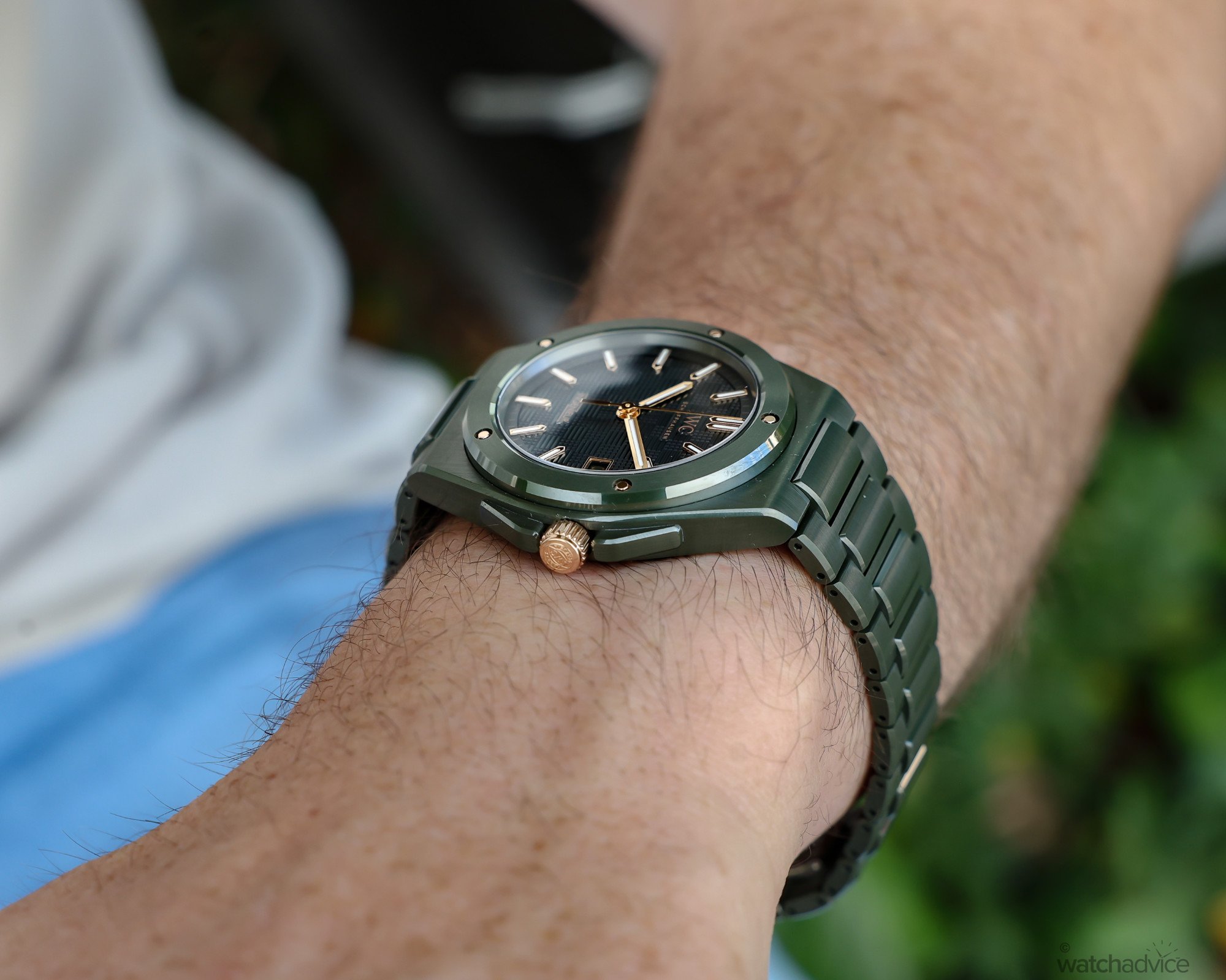
The steel 40mm Ingenieur will suit more wrist sizes compared to the ceramic thanks to the 2mm less in diameter and around 1mm thinner, so it really comes down to you and personal preferences. The weight is probably the thing you notice most after wearing it for a while, and this makes the difference. Ceramic is considerably lighter than steel, and because the bracelet is ceramic as well, you get the benefit across the entire watch rather than just the case.
The green also changes the way the watch looks throughout the day. Under some lighting it is quite dark and subdued, while in brighter light the colour becomes much more obvious and you can see the different case finishes more clearly. That gives it a bit more life on the wrist than the black version. And this is where the green Ingenieur comes into its own.
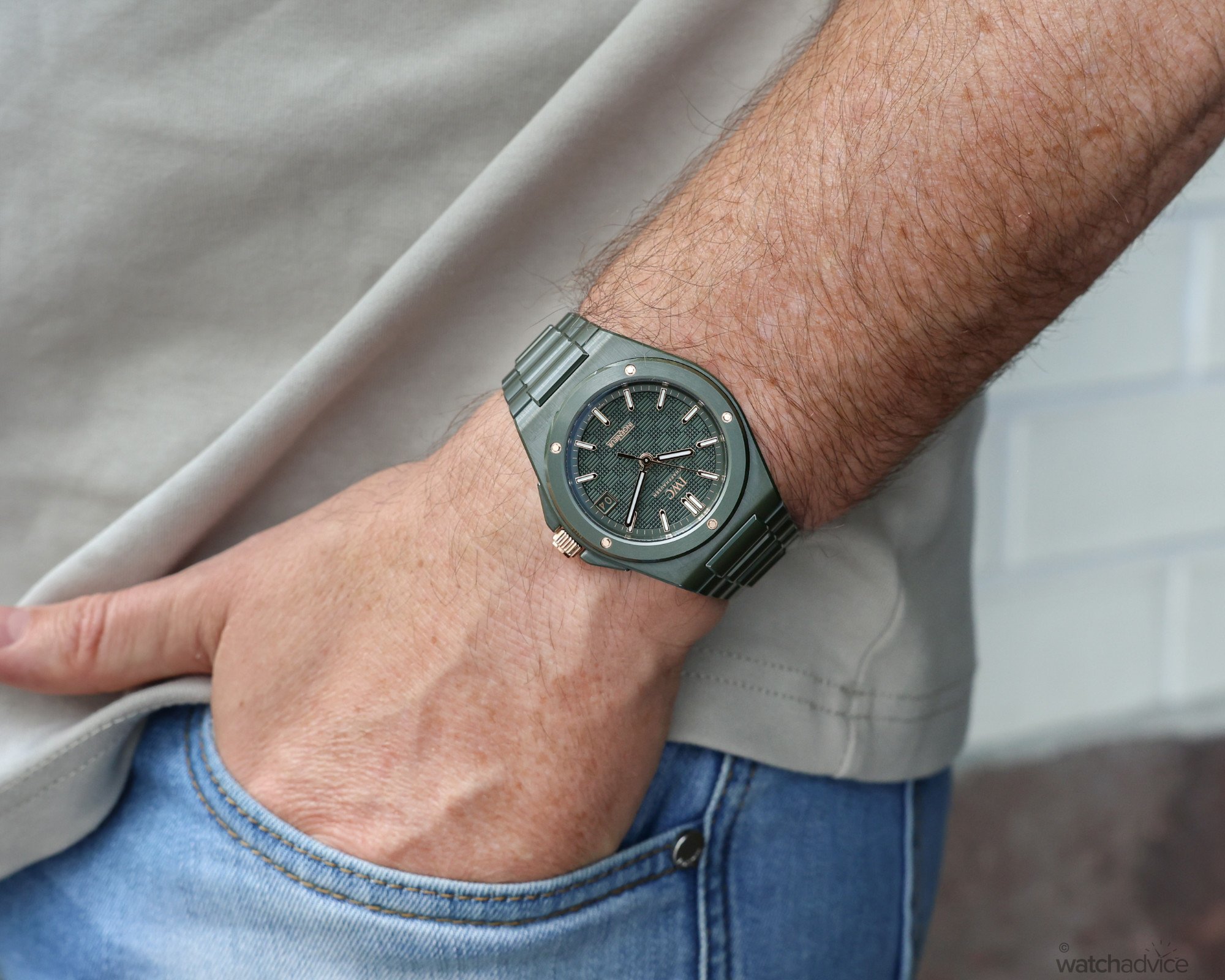
If you like some colour, but are not a “Look at me” kind of person, then the way IWC has created the olive green ceramic works incredibly well. The Schaffhausen brand has found a good balance between subtlety and being too “out there” so it is a watch that is not too polarising from a colourway standpoint.
If I were comparing directly to the black ceramic model, I wouldn’t necessarily say one is better than the other because they are going for quite different things. The black is incredibly easy to wear and has that understated ceramic look, while the green is a little more expressive without changing the basic character of the Ingenieur. Again, it is all about personal preferences.
The Movement
Inside the watch is IWC’s calibre 82110, which is the same movement used in the black ceramic version. It runs at 4Hz and provides a 60-hour power reserve, while the Pellaton winding system uses ceramic components to improve durability in the areas that experience the most wear.
IWC has also used a clear sapphire caseback on this version, giving you a much better view of the movement than you get with the tinted caseback on the black ceramic model. The movement is nicely decorated with enough finishing to justify a sapphire caseback, particularly the skeletonised rotor and the gold IWC ingot. The skeletonised rotor allows a view of the movement with perlage across the base plate, and the wheels and bridges have been solarised for contrast.
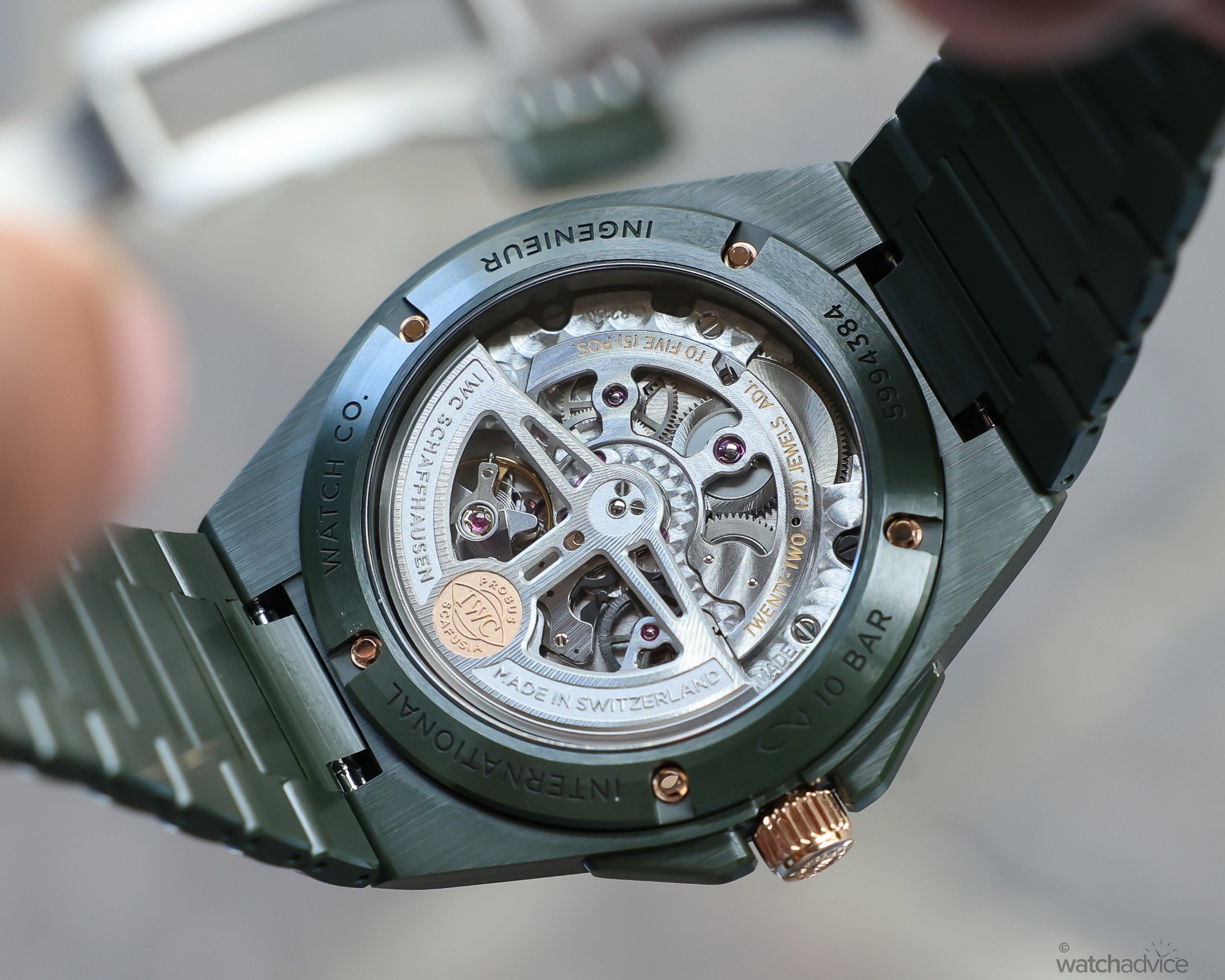
After seeing the amount of work that has gone into making the ceramic case, it is nice to be able to turn the watch over and see the movement rather than having the entire caseback closed off. It also gives the ceramic models a point of difference over the 40mm steel models.
Could IWC have used the Calibre 32111 with the 120-hour/5-day power reserve in this? Potentially, as I don’t imagine the green ceramic would be an everyday watch for most people; job and lifestyle dependent that is. But, given the challenges in crafting the ceramic case to fit the proportions, as Chris outlined to us last year, this could have been yet another hurdle IWC would have had to overcome.
Final Thoughts
I think the green ceramic Ingenieur is a good example of why changing the colour of a watch can sometimes have a much bigger effect than you might expect. On paper, there isn’t much separating this from the black ceramic model. The case is the same size, the construction is the same, the bracelet is the same, and the movement is unchanged. Put the two on your wrist, though, and they have quite different personalities.
Having spent time with the black version, I was already sold on the ceramic Ingenieur as a concept. IWC has managed to retain the proportions and character of the steel Ingenieur, albeit slightly larger, while making good use of the advantages of ceramic, particularly the weight reduction and the ability to create a very different surface treatment.
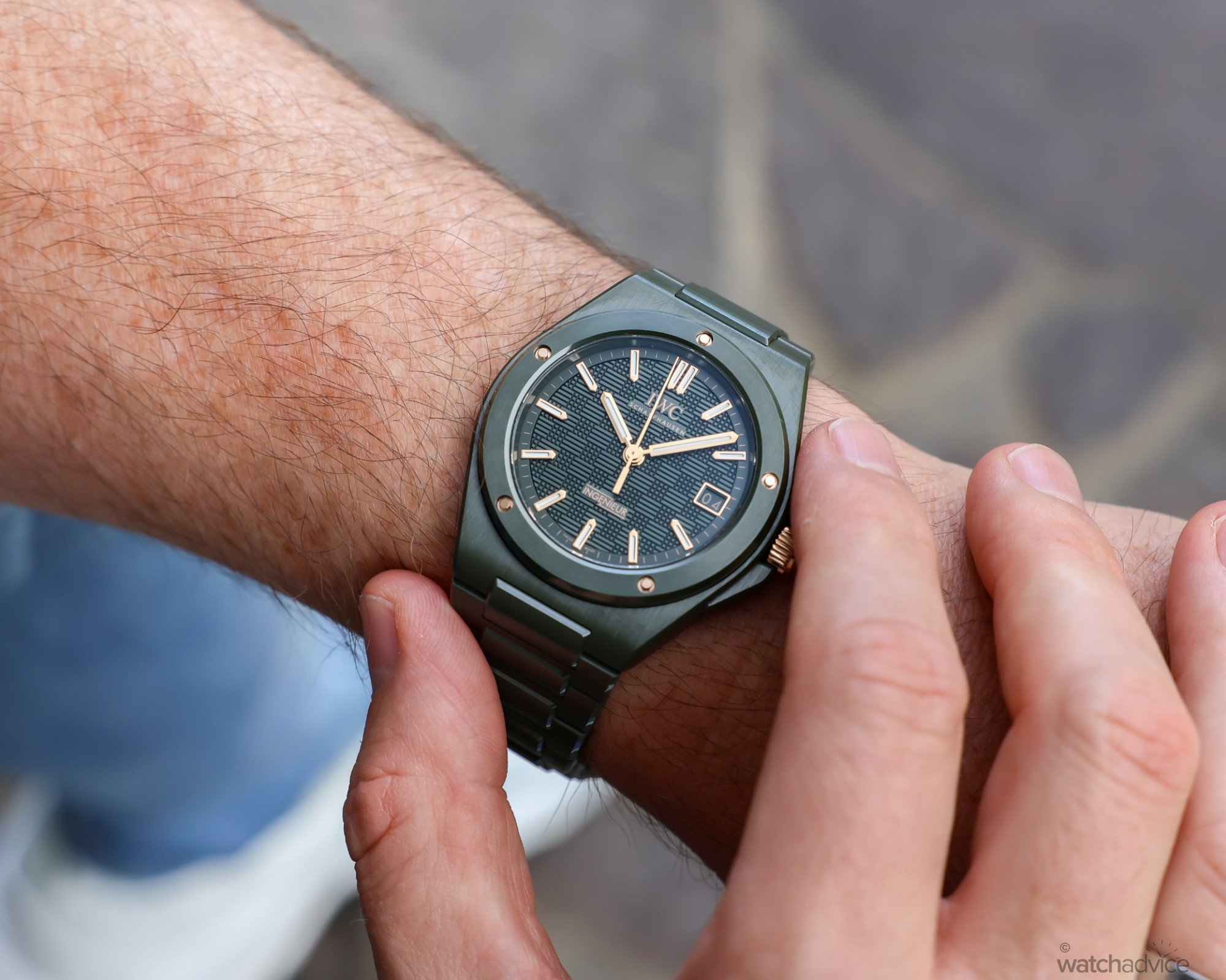
The green version adds yet another consideration to this. The colour makes the finishing easier to appreciate, while the gold-toned details give the dial and case a bit more warmth. I also think the darker olive green works particularly well with the shape of the Ingenieur because it gives you some colour without detracting from the design.
At A$37,200, it is certainly a significant step up from the steel Ingenieur, but there is a lot of engineering involved in getting a case and integrated bracelet like this to work in ceramic. It is not as simple as just making a ceramic case and bracelet in the same size and specs, substituting one for the other.
After wearing both ceramic versions, I think that is something you appreciate much more in person than you do from looking at photographs, as is often the case. The black ceramic remains the more understated option, while the green has more visual character. For me, that is ultimately what makes this version my pick of the two, for now, that is…
Reference & Specifications
| Feature | Specification |
|---|---|
| Reference | IW338902 |
| Dimensions | 42 mm x 11.5 mm thick x 48 mm lug-to-lug |
| Case Material | Olive green ceramic case, brushed & polished with an 18-carat 5N gold crown |
| Case Back | Ceramic with transparent synthetic sapphire crystal |
| Dial | Olive green dial with gold-plated hands and appliqués |
| Crystal | Sapphire, with anti-reflective coating |
| Movement | Automatic Calibre 82110 operating at a frequency of 4Hz (28,800 VpH) |
| Functions | Hours, minutes, seconds & date |
| Power Reserve | 60 hours |
| Water Resistance | 100 meters (10 bar) |
| Bracelet | Integrated green ceramic bracelet with a butterfly clasp |
Australian Retail Price: AUD $37,200
Availability: Available through IWC Schaffhausen boutiques and authorised retailers. To enquire, please head online to IWC.com
Image Gallery