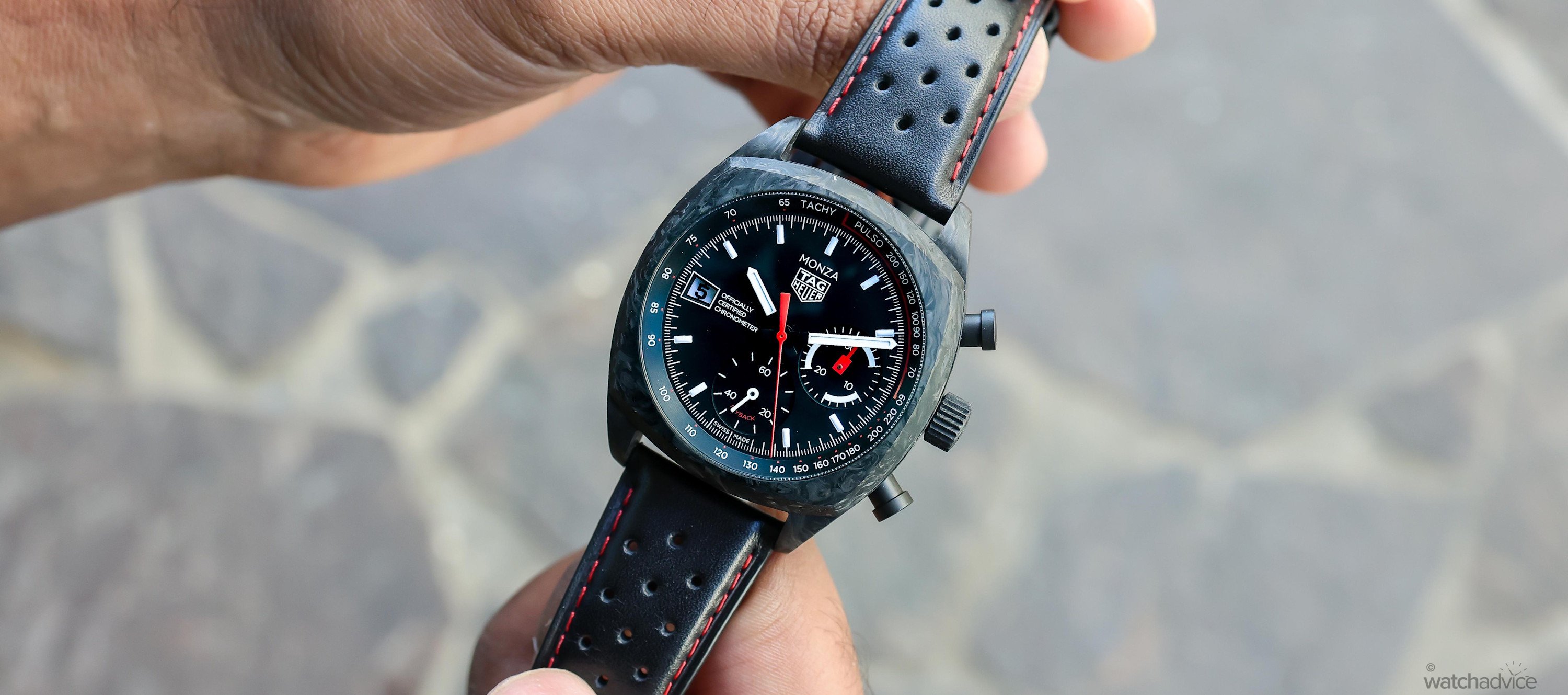

We take the new TAG Heuer Monza Flyback Chronograph hands-on to see how it brings 50 years of racing heritage into the modern era.
What We Love
- Forged carbon makes the watch lightweight
- Heritage inspired dial design
- Flyback calibre delivers exceptional performance
What We Don’t
- 50.85mm lug-to-lug can be challenging for smaller wrists
- with 15.22mm thickness, it remains noticeably substantial
- Chronograph pushers miss the forged carbon treatment
Overall Rating: 8.6 / 10
- Value For Money: 8.5/10
- Design: 8.7/10
- Wearability: 8.5/10
- Build Quality: 8.5/10
TAG Heuer has introduced the latest chapter in the Monza story just in time for Formula 1’s return to the legendary Italian circuit. This time, however, the Monza is returning to its roots. Created to celebrate the collection’s 50th anniversary, the new Monza Flyback Chronograph brings back the black, white and red identity that made the original 1976 model such an iconic design. It also combines contemporary elements from the 2023 Monza edition, which, in many ways, makes this new Monza a meeting of the timepiece’s past and future.
The story of the TAG Heuer Monza first begins in 1971, when Heuer established a significant partnership with the Formula 1 racing team Scuderia Ferrari. This momentous relationship extended well beyond a conventional sponsorship between a watch brand and a racing team, as Heuer supplied Ferrari with its sophisticated Centigraph electronic timing system.
This electronic timing system allowed Scuderia Ferrari to precisely record and analyse the performance of multiple cars during testing and racing. In return, Scuderia Ferrari placed Heuer branding on its Formula 1 cars, while its drivers wore the familiar red Heuer patch on their racing suits.
This partnership reached its defining moment during the 1975 Formula 1 season, when Ferrari returned to the top after more than a decade. Driving the new Ferrari 312T, Niki Lauda won five of the final 10 races and secured the Drivers’ Championship at the Italian Grand Prix in Monza. To celebrate this incredible achievement, in which Heuer also played an active role, the watchmaker introduced an entirely new chronograph in 1976: the Heuer Monza.
The identity of the Monza was set in stone, as it captured the spirit of 1970s motorsport through a black-coated case, marking the first time Heuer had used a black-coated case for one of its timepieces, alongside a matte-black dial, white hands and distinctive red racing details. However, the Monza was never a permanent flagship collection like the Carrera. Instead, it has returned through various reinterpretations that reflected the design language and watchmaking of their respective eras.
And this is exactly what the 2026 edition represents: a return to familiarity while still being forward-thinking. Fifty years later, the new TAG Heuer Monza Flyback Chronograph revisits the model’s original identity while combining it with the contemporary platform introduced in 2023.
Initial Thoughts
After having the chance to wear the 50th-anniversary Monza for the first time, a few things immediately stood out to me. This new edition feels more connected to the collection’s history than the highly contemporary skeletonised model released in 2023. However, it is not simply a reinterpretation of the original 1976 Monza chronograph, as TAG Heuer has instead combined its familiar design cues with the modern Monza Chronograph platform.
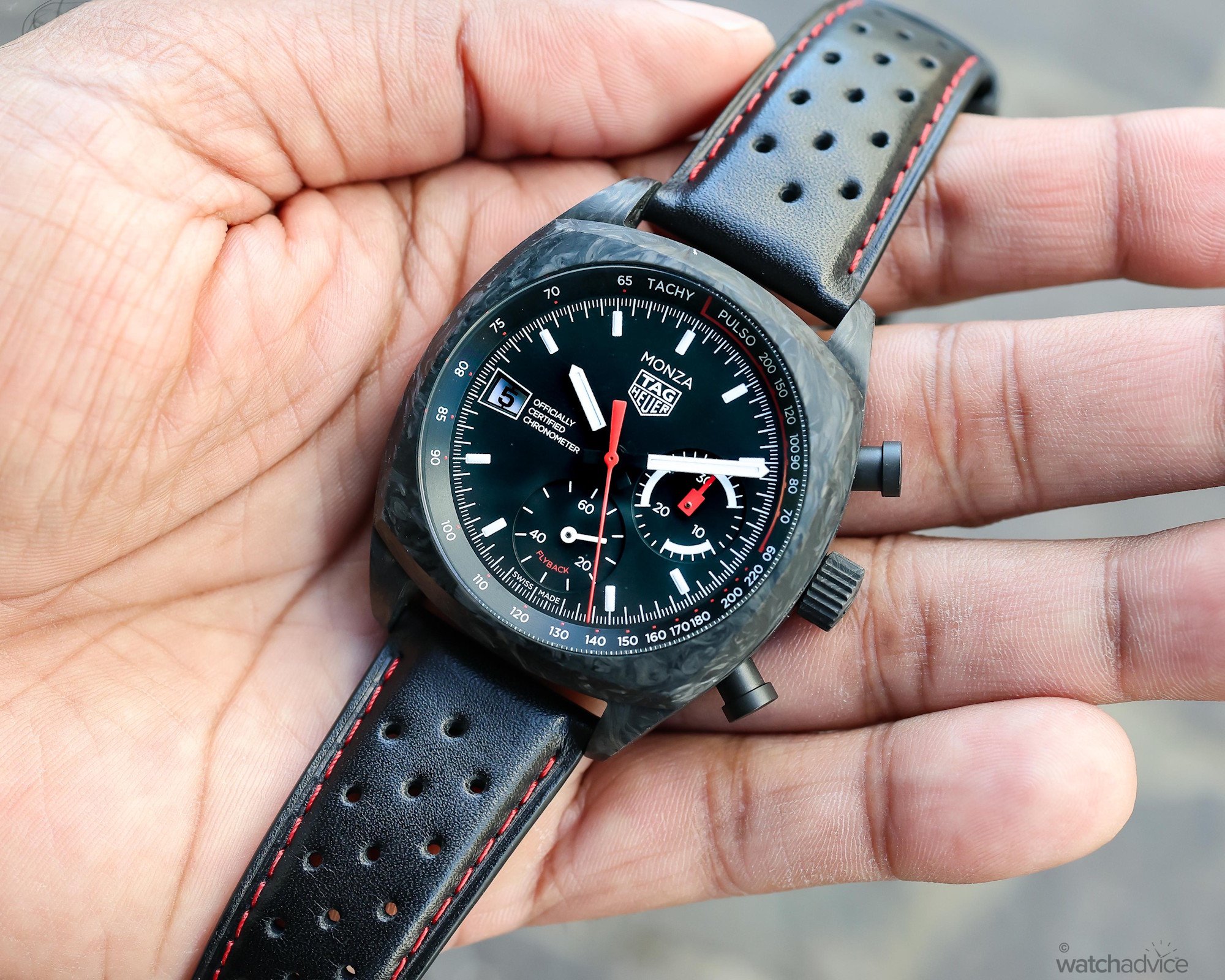
One detail I particularly like that has been carried across from the 2023 edition is the inclusion of the forged-carbon cushion case, which I think gives the Monza a truly contemporary aesthetic while also tying it beautifully to its motorsport identity through the use of exotic materials. This makes the anniversary edition feel like a meeting point between the original Monza, the 2016 revival and the more experimental 2023 design.
Familiar Form, Futuristic Carbon
As mentioned earlier, what makes this TAG Heuer Monza edition fascinating is that it has essentially taken the architecture and mechanics of the more futuristic model presented in 2023. This gives the Monza a far more contemporary design while still keeping it historically grounded for the collection’s 50th anniversary.
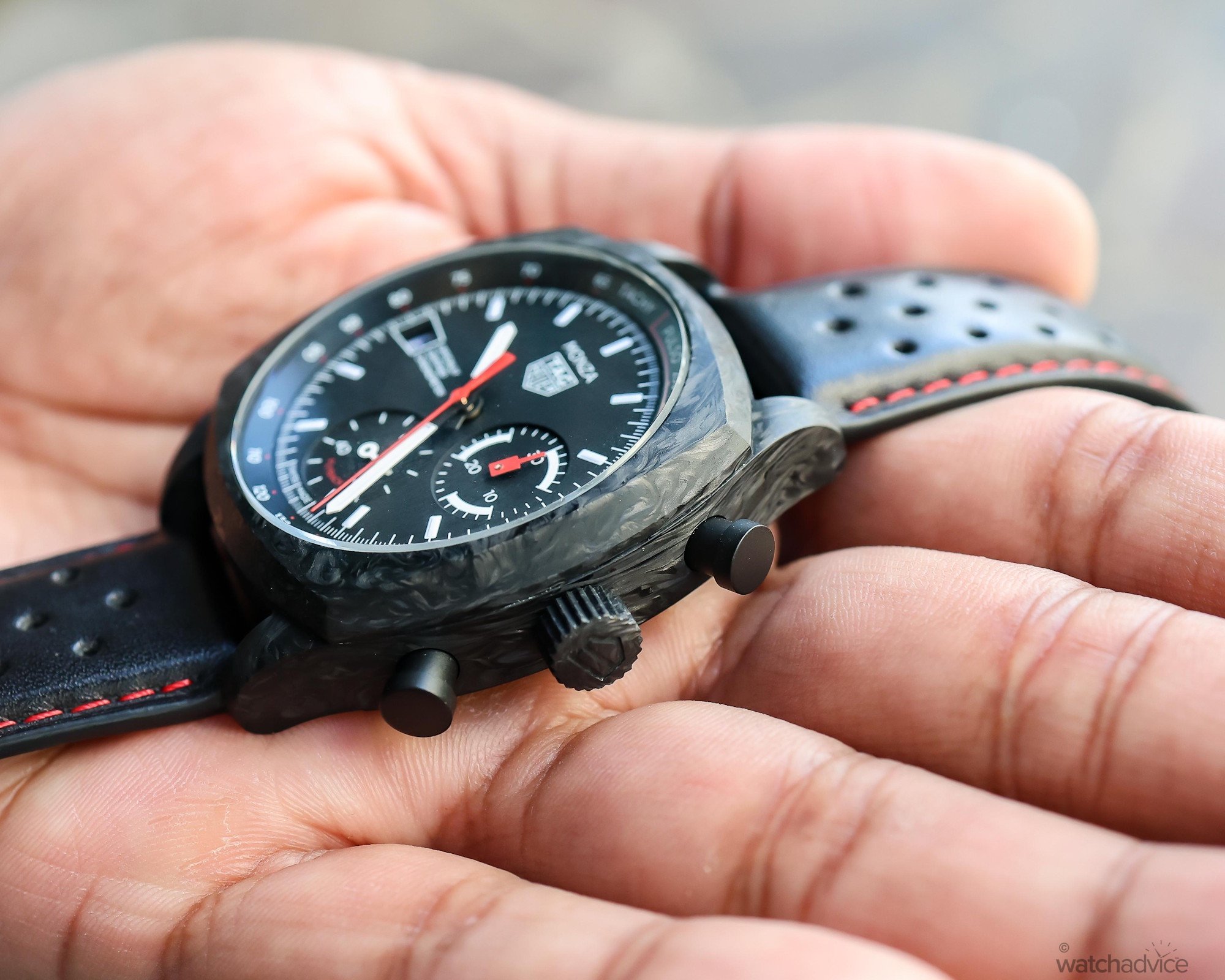
The 42mm cushion-shaped case, produced from forged carbon, continues the contemporary Monza case design first introduced with the 2023 TAG Heuer Monza Flyback Chronometer. I personally think the forged-carbon case is the perfect addition to this collection. With the Monza’s rich racing heritage being directly tied to Formula One, the use of contemporary materials gives the watch a direct link to its motorsport history.
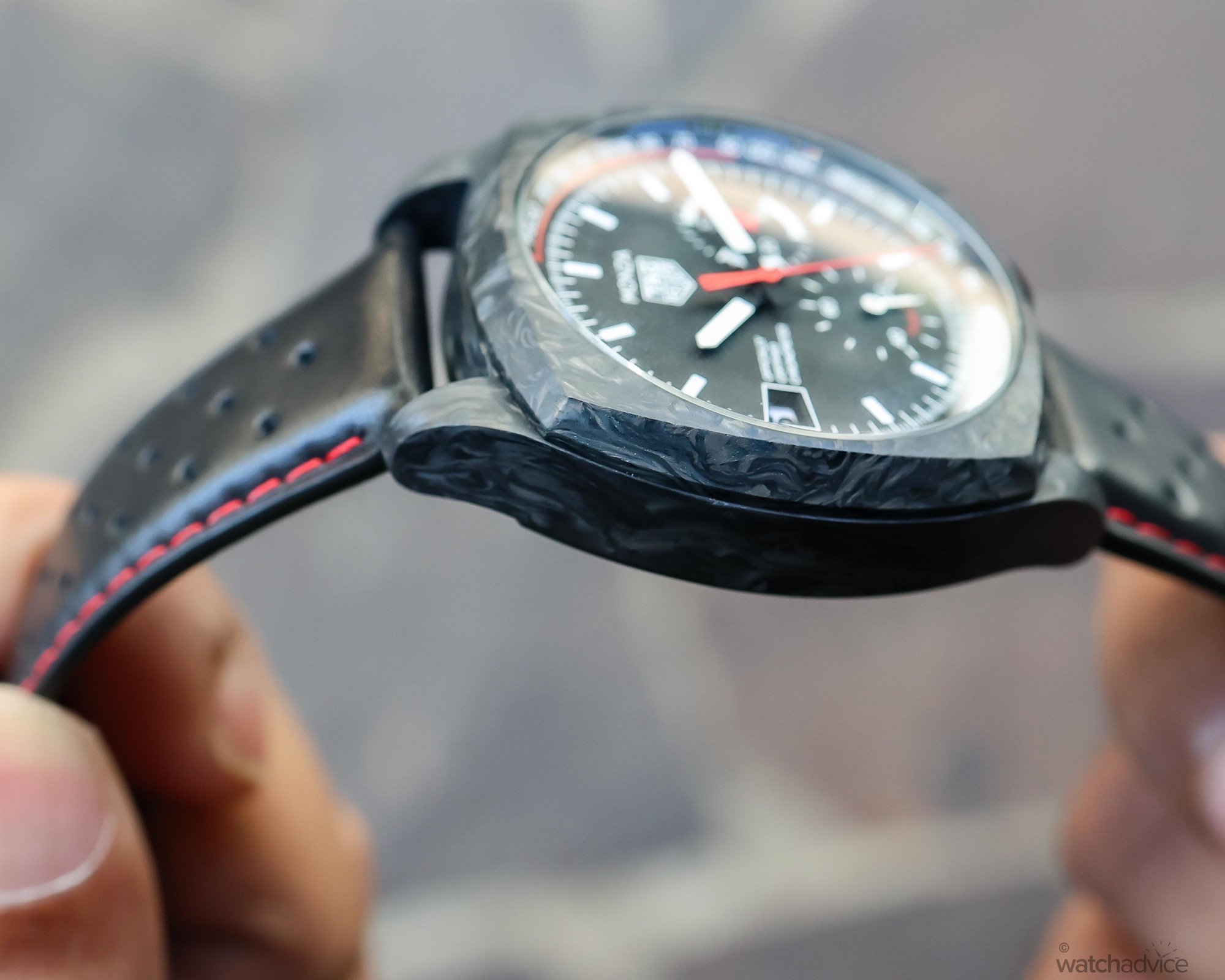
While the original 1976 Monza featured a black-coated brass case, this forged-carbon case still gives the watch a similarly dark aesthetic while also being significantly lighter, enhancing the overall wearing experience. The compressed individual carbon fibres also give the case an irregular marbled texture. As we know with carbon fibre, no two designs are ever the same due to these individual fibres, which means the timepiece also has a sense of individuality about it.
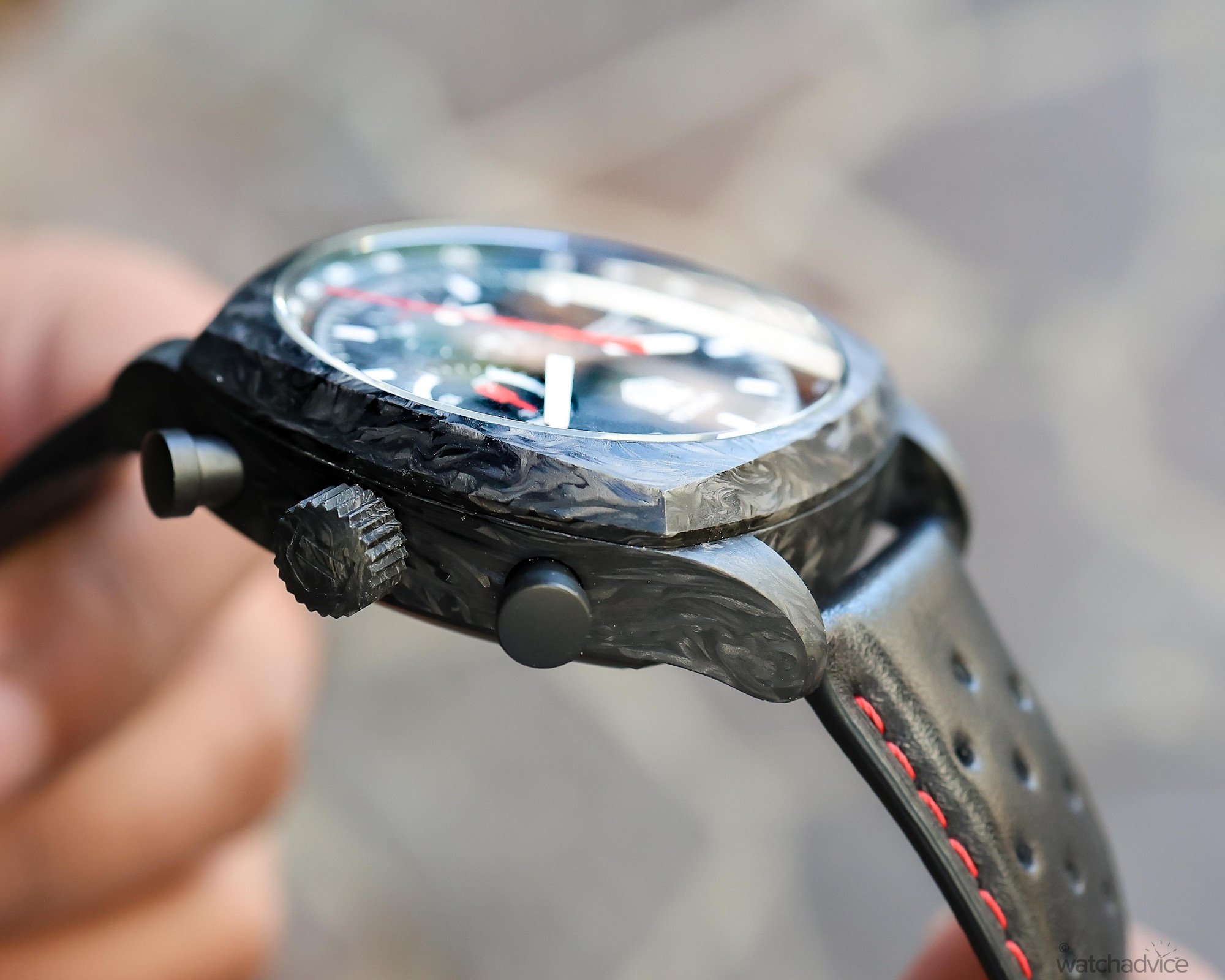
When compared with the black PVD-coated Grade 5 titanium case introduced on the 2016 40th-anniversary Monza, this feels more technical, lightweight and much more in line with its motorsport history. While it was not introduced this year, forged carbon certainly seems like a fitting choice for the Monza’s 50th anniversary.
The TAG Heuer Monza features a fixed carbon bezel surrounding the domed sapphire crystal. The crown is also made from forged carbon and features individual carbon fibres running through it, which I personally love, as they add another level of detail to this element. The chronograph pushers, however, do not receive the same treatment, as they are made from black DLC-coated steel. While it would have been nice to see the pushers made from forged carbon as well, this approach provides a visual break from the material and allows them to stand out on their own.
Returning To Its Racing Roots
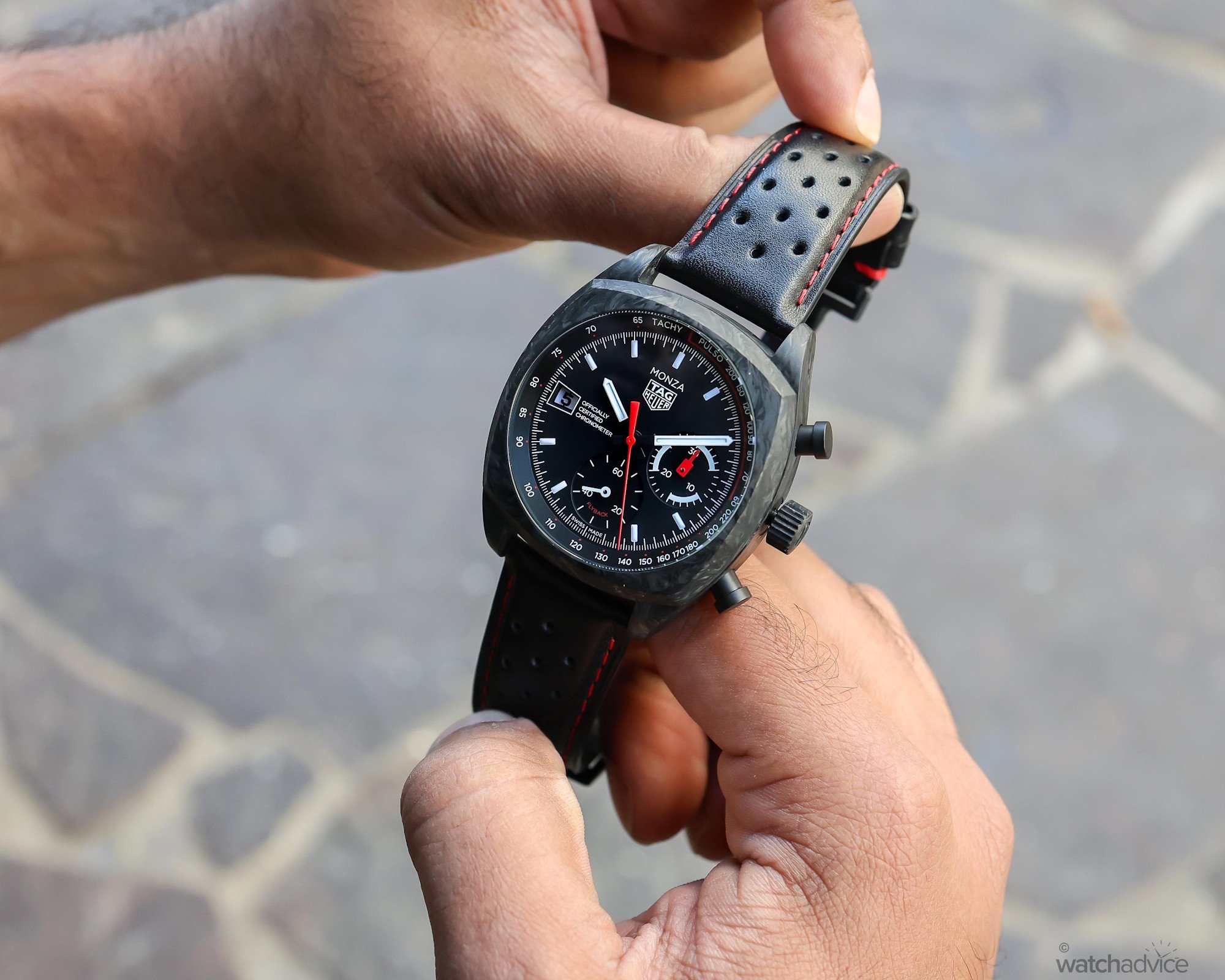
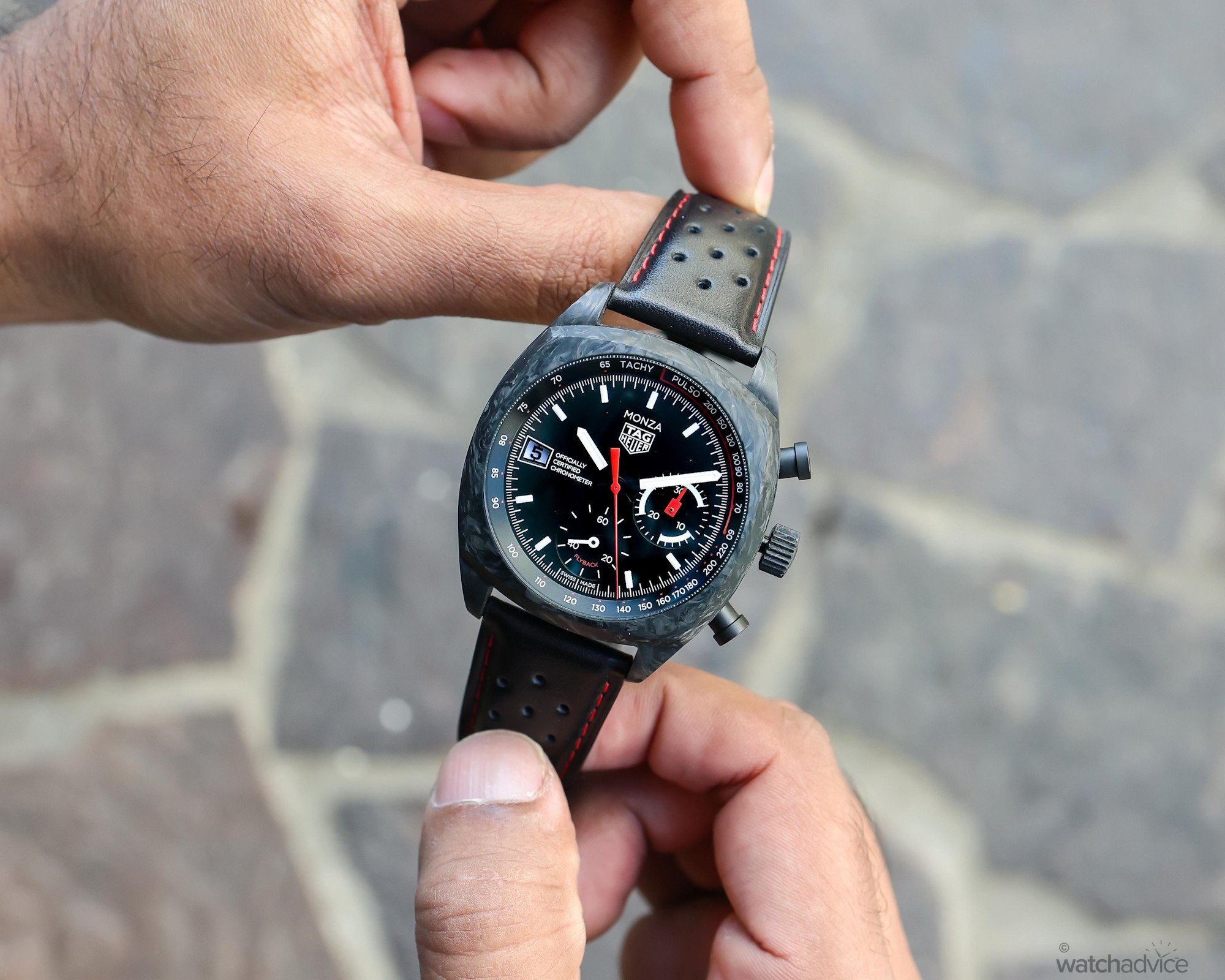
The 2026 rendition of the TAG Heuer Monza replaces the 2023 model’s skeletonised grey dial and translucent blue sapphire counters with a solid matte-black display featuring a dual-counter configuration. This presents a more traditional Monza aesthetic than the contemporary skeletonised version, while still retaining its sporty character through the various design elements across the dial.
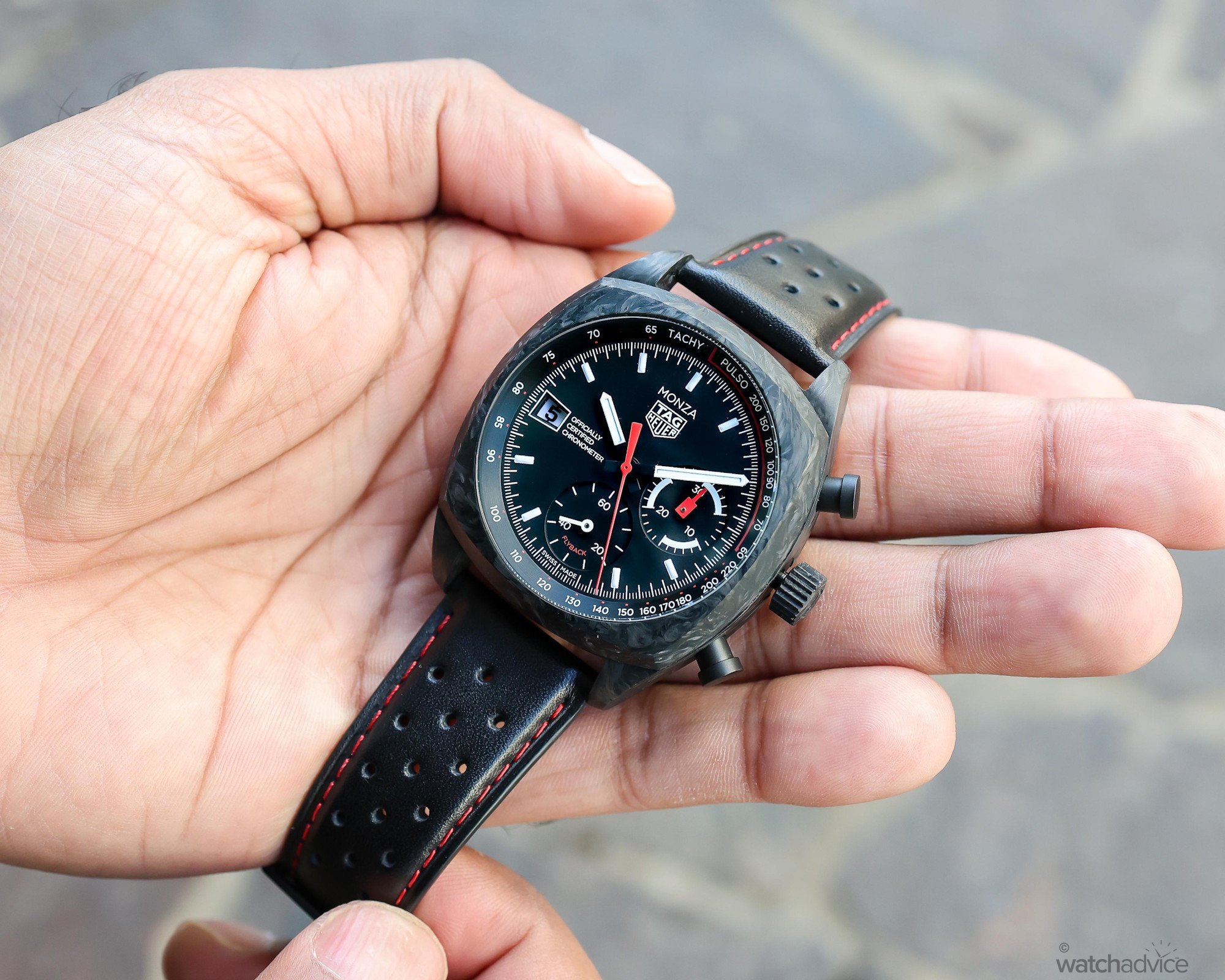
By returning to a more traditional look, the 2026 edition also creates a much stronger connection to the original 1976 Monza, which is particularly fitting for a 50th-anniversary tribute. While the original model had a different dial layout, with its counters positioned at 3 and 10 o’clock, its visual colour identity is reflected nicely in this 2026 edition. As mentioned earlier, this creates a historical link to the original while still presenting the watch as a contemporary model.
The colours red, white and black now dominate the design, removing the blue highlights that featured in the 2023 edition of the Monza. I think this gives the watch a sportier aesthetic, as the colour red is synonymous with motorsport racing. The black 30-minute chronograph counter sits at 3 o’clock with a red lacquered hand, while the permanent seconds display appears at 6 o’clock with a white hand.
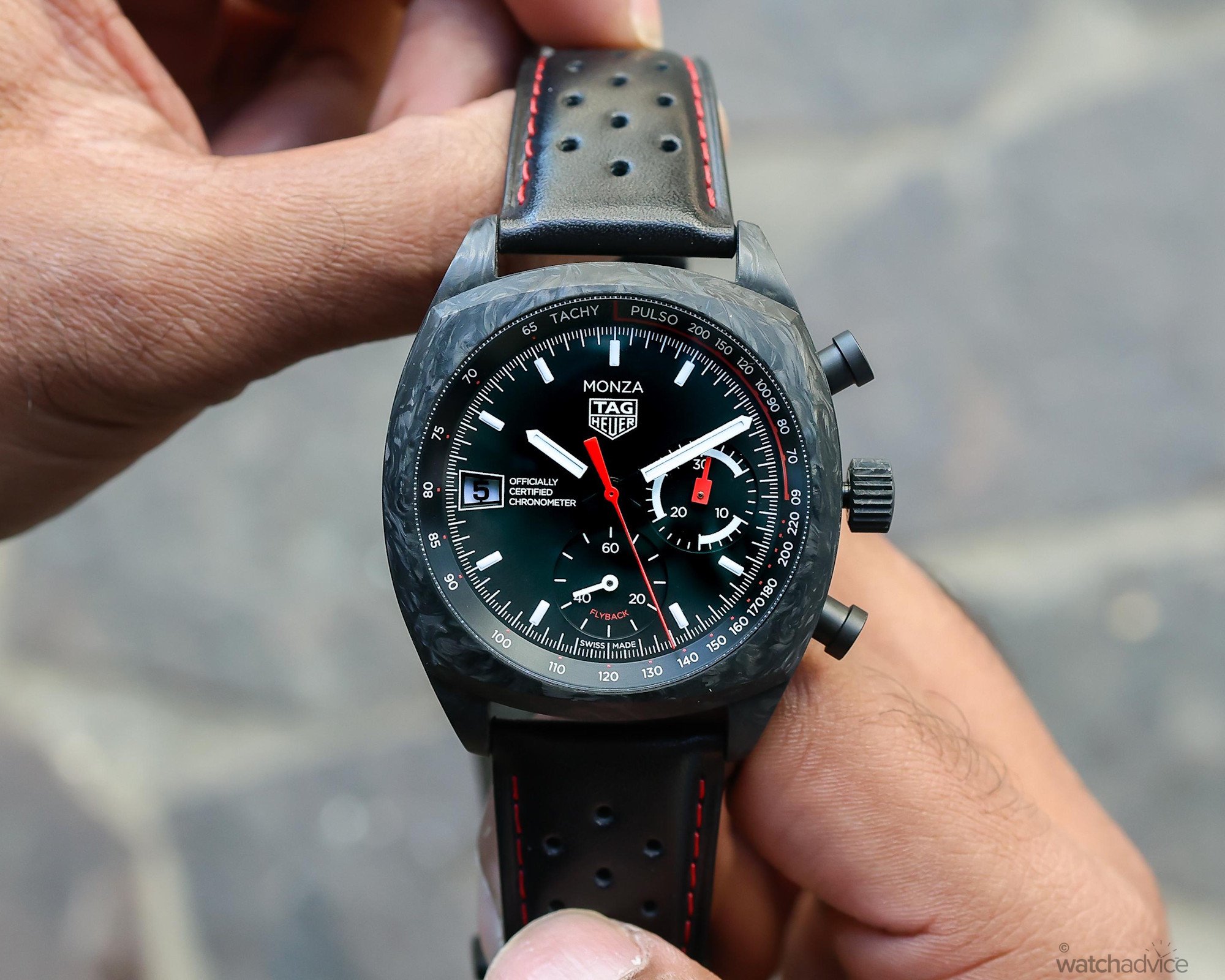
The white lacquered hour and minute hands and printed hour markers, alongside other white dial elements such as the TAG Heuer and Monza inscriptions and minute track, create a crisp contrast against the matte-black dial. This not only enhances readability but also allows the model to visually stand out.
The outer flange of the dial incorporates both a tachymeter scale and a pulsometer scale, two functional details carried by the original 1976 TAG Heuer Monza and later revived in the modern 2016 rendition. While the pulsometer was not a feature specifically associated with motorsport, it was inherited from the multipurpose chronographs available at the time of the original Monza.
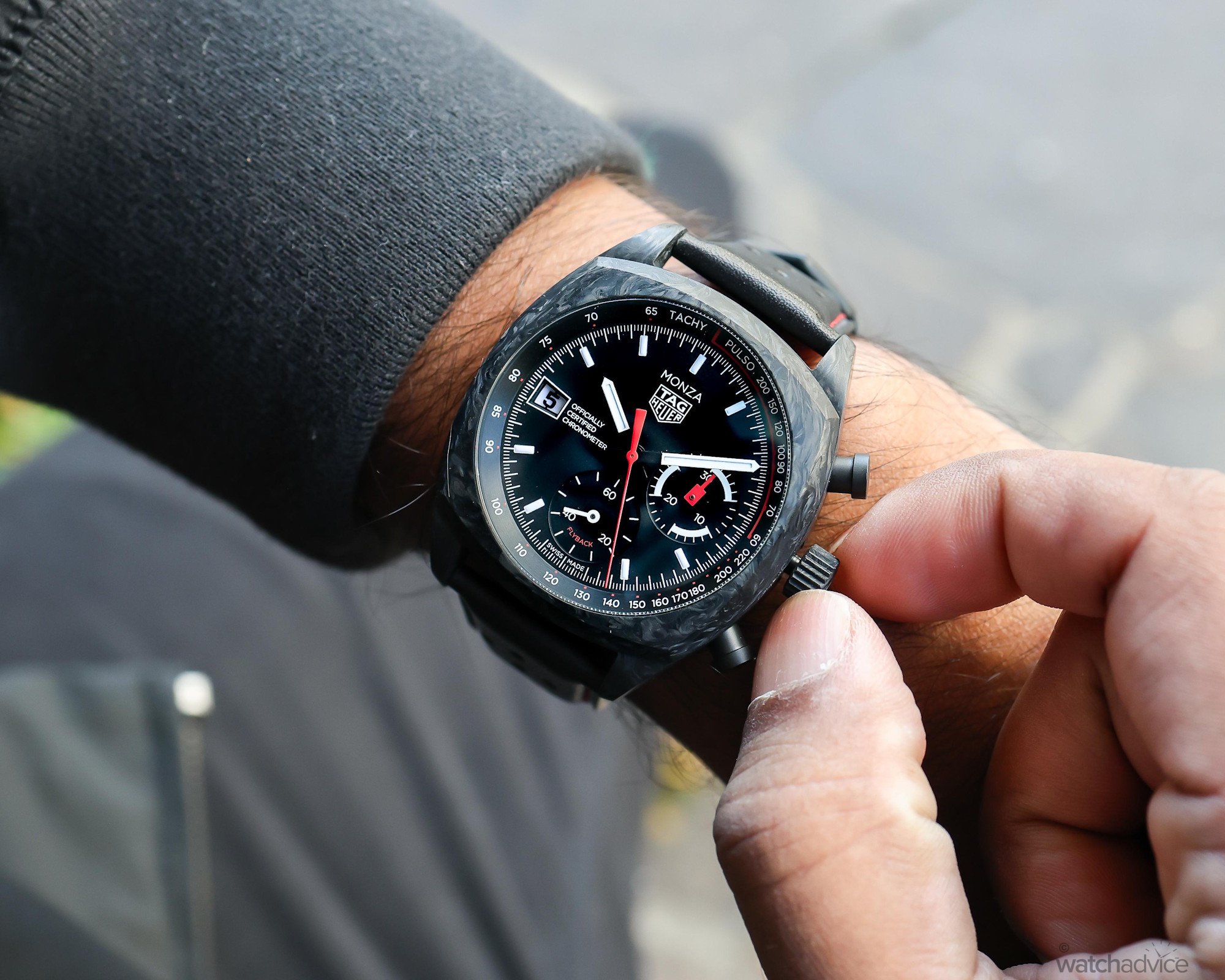
As for how it works on this model, the wearer would essentially start the chronograph, count the prescribed number of heartbeats, then stop it. The chronograph hand would then indicate the corresponding beats per minute on the pulsometer scale. The inclusion of this scale on the Monza was driven more by the timepiece’s instrument-like identity than by its ability to serve drivers during a race.
The placement of the date window has also been retained from the 2023 edition. Positioned at 9 o’clock, it creates a balanced aesthetic, especially with the sub-counter layout now positioned at 3 and 6 o’clock. The date disc is also finished in white, allowing the aperture to double as the 9 o’clock hour marker and integrate more naturally into the overall dial layout.
A Modern Flyback Engine
Powering this 50th-anniversary edition of the Monza is the manufacture Calibre TH20-12, the same automatic flyback chronograph movement used inside the 2023 Monza. The movement offers exceptional performance, operating at 4Hz (28,800vph), delivering an 80-hour power reserve and carrying COSC chronometer certification. This certification is awarded to movements that demonstrate exceptional accuracy across different temperatures and positions.
The sequential timing ability of the flyback chronograph ties in nicely with the Monza’s motorsport identity, while also representing a major technical advancement for the collection as it evolves from the traditional chronograph movements used in previous editions.
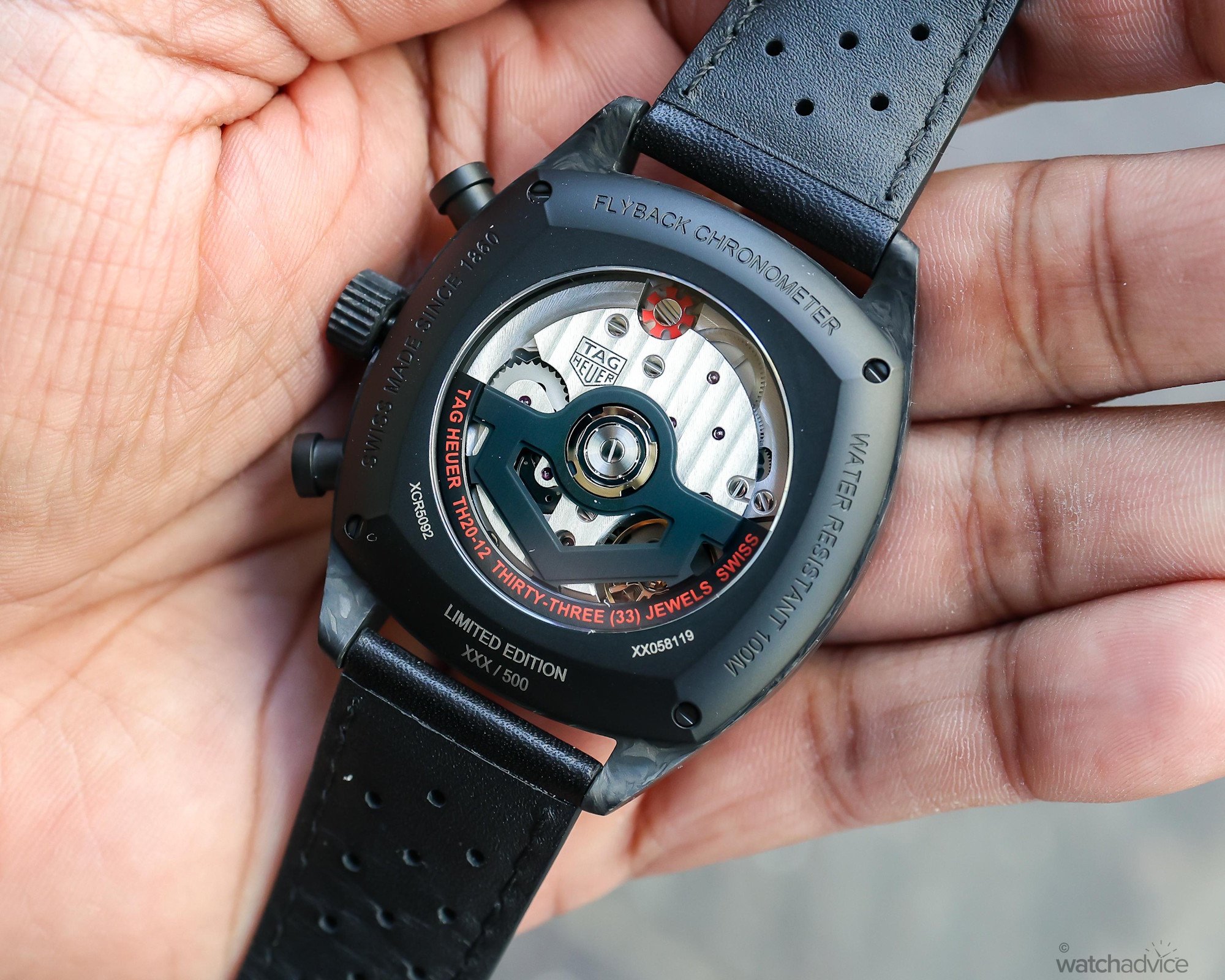
The Monza’s movement has seen significant development across the generations. The original 1976 Monza used Heuer’s Calibre 15, which featured a running seconds display at 10 o’clock, a 30-minute counter at 3 o’clock and no chronograph hour counter. The 2016 40th-anniversary edition improved on this by using the automatic Calibre 17, which offered a more conventional dial layout while delivering a modest 42-hour power reserve.
This latest 2026 version, however, doubles that autonomy while also adding COSC certification, an integrated high-end chronograph design and flyback functionality. The Calibre TH20-12 is also visible through the caseback of this latest Monza edition, showcasing TAG Heuer’s finishing through Geneva-striped bridges, red detailing and a black openworked rotor that complements the overall black aesthetic and subtle red elements.
How Does The TAG Heuer Monza Wear?
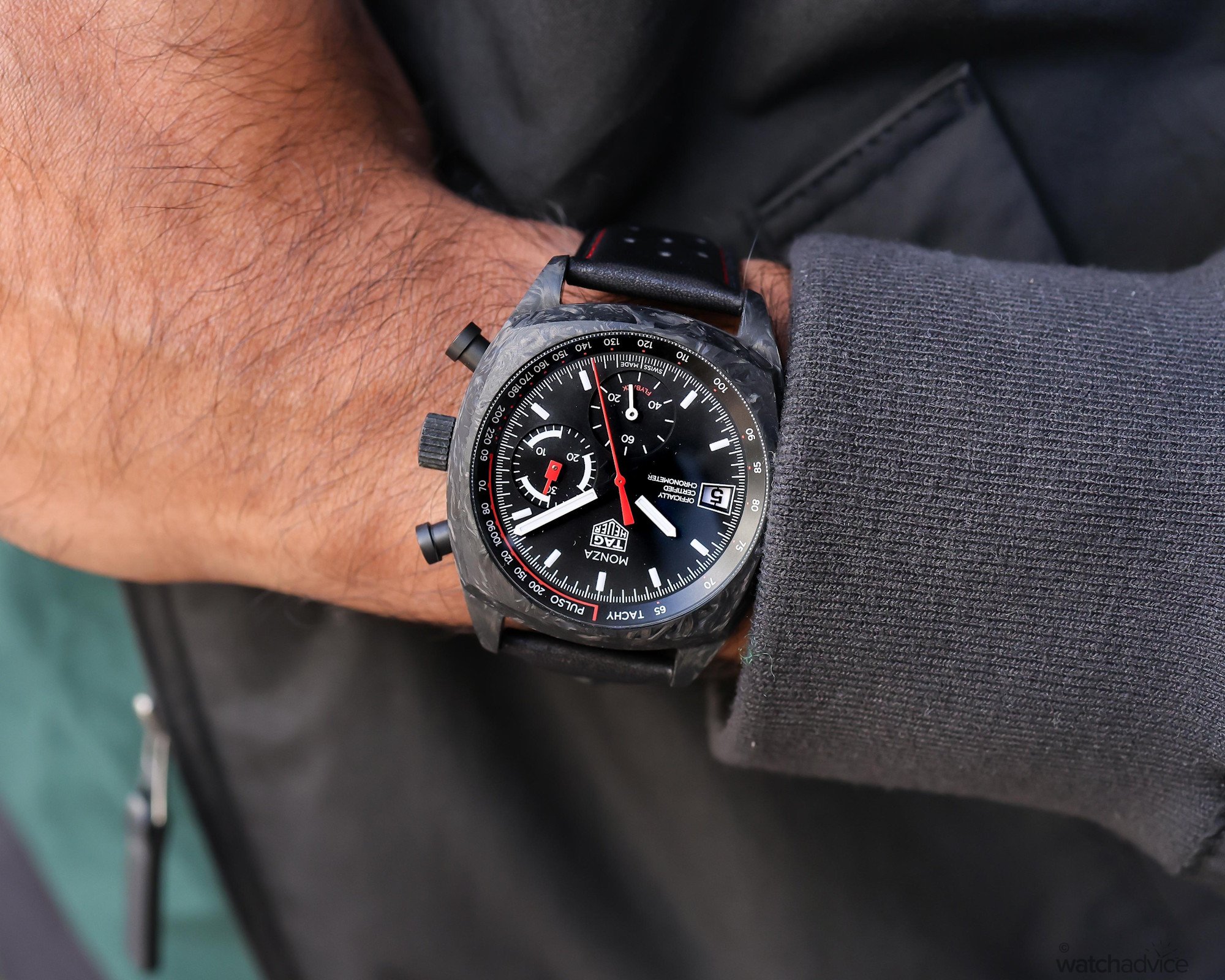
With the watch measuring 42mm by 15.22mm, this is certainly not a compact vintage reissue, as it retains the assertive dimensions of both the 2016 and 2023 Monza editions. The defining feature of the Monza is its cushion-shaped case, which gives it a broader visual appearance on the wrist compared with a more conventional round 42mm watch.
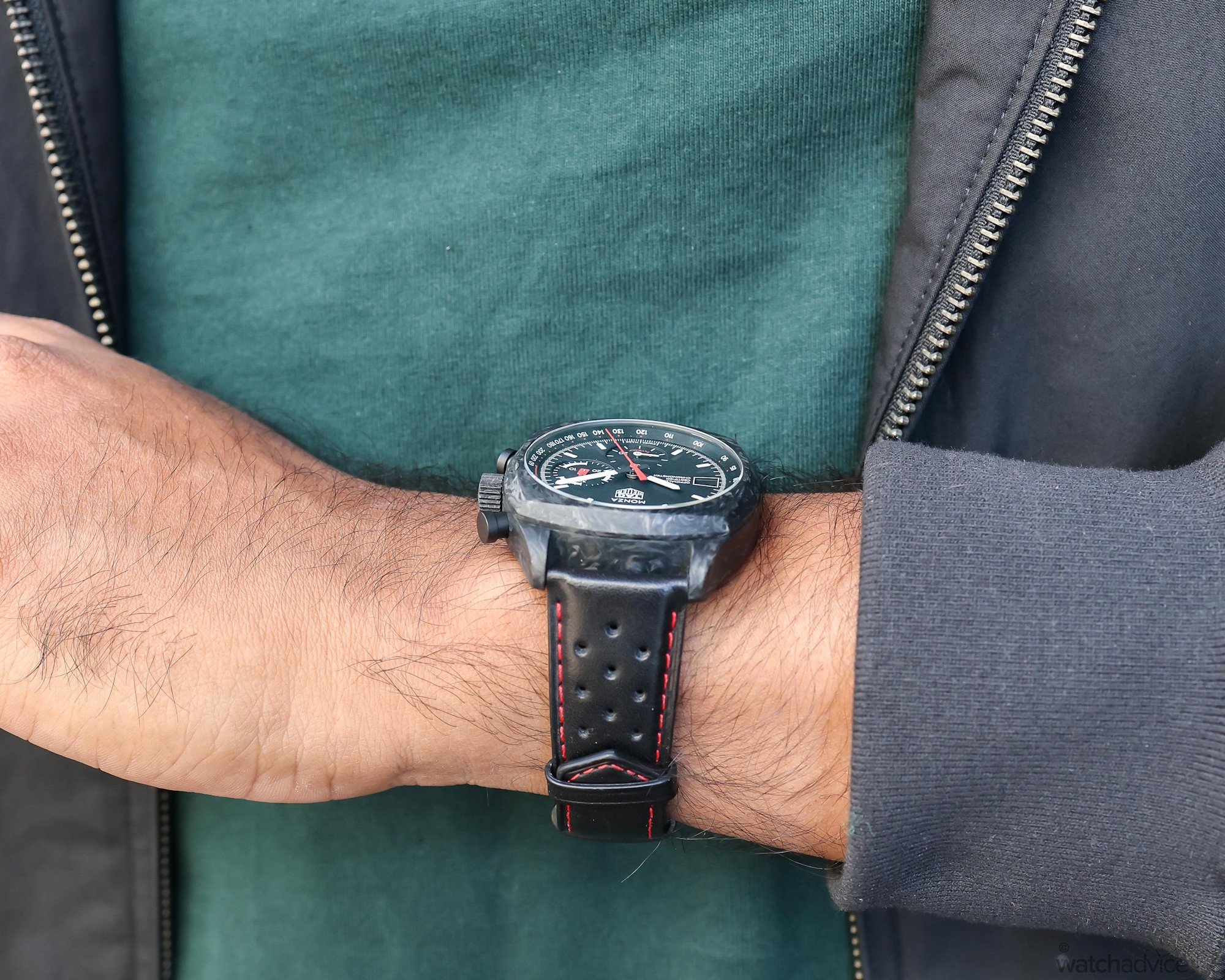
While the measurements on paper suggest that it will be a generously proportioned timepiece, the short, sharply angled lugs help contain its footprint and allow the strap to turn down relatively quickly around the wrist. On a slimmer wrist like mine, which measures 16cm, the Monza feels visually bold and substantial. However, as you can see from the photos, it does not protrude beyond the wrist, meaning the sizing is still just right.
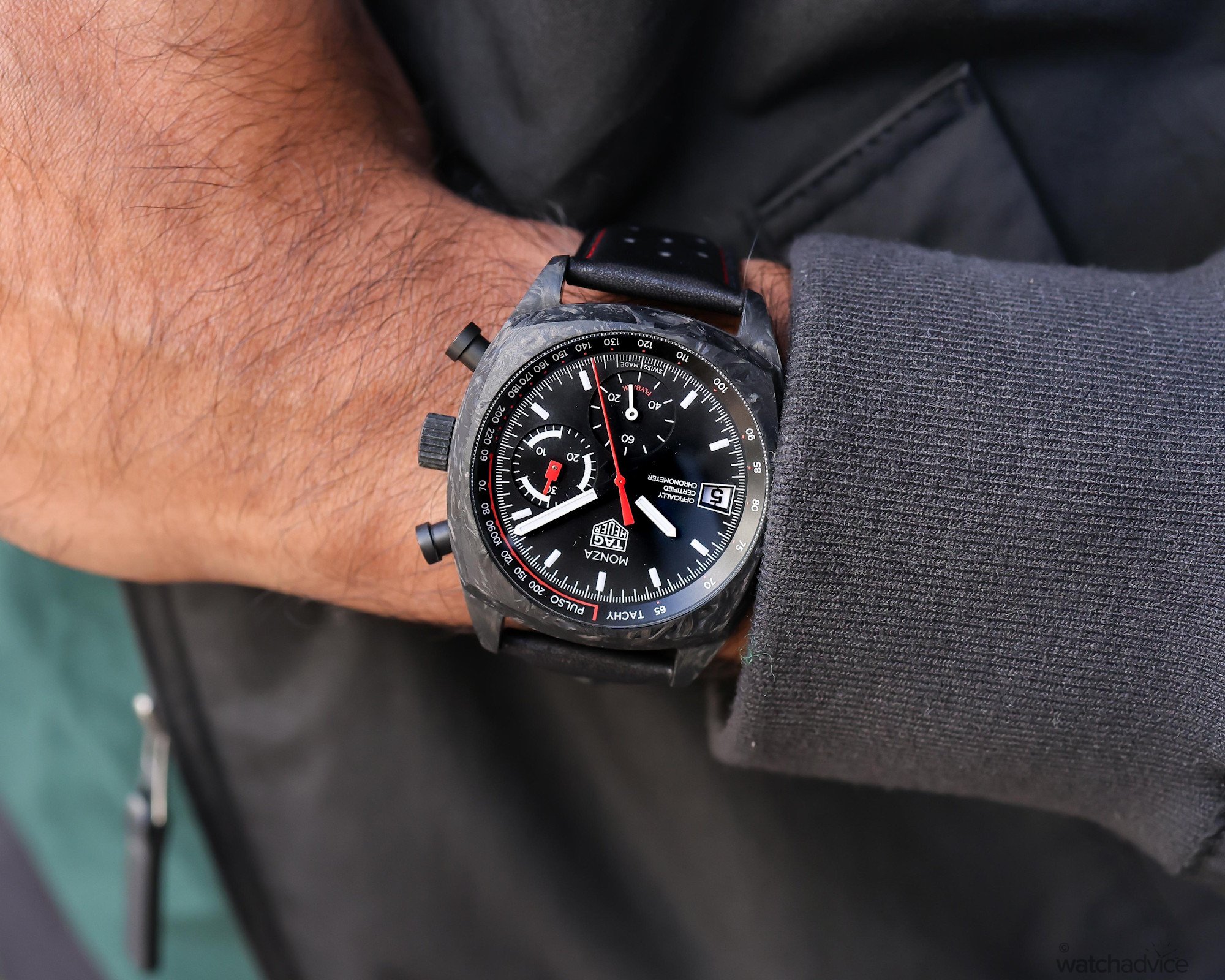
The choice of material for the case and bezel also plays a major role in how well the watch wears. Forged carbon considerably reduces its physical weight, beautifully balancing the visual size and 15.22mm height of the 42mm chronograph case. This makes the Monza easier to wear for extended periods than its measurements may initially suggest, especially when compared with an equivalent stainless steel chronograph.
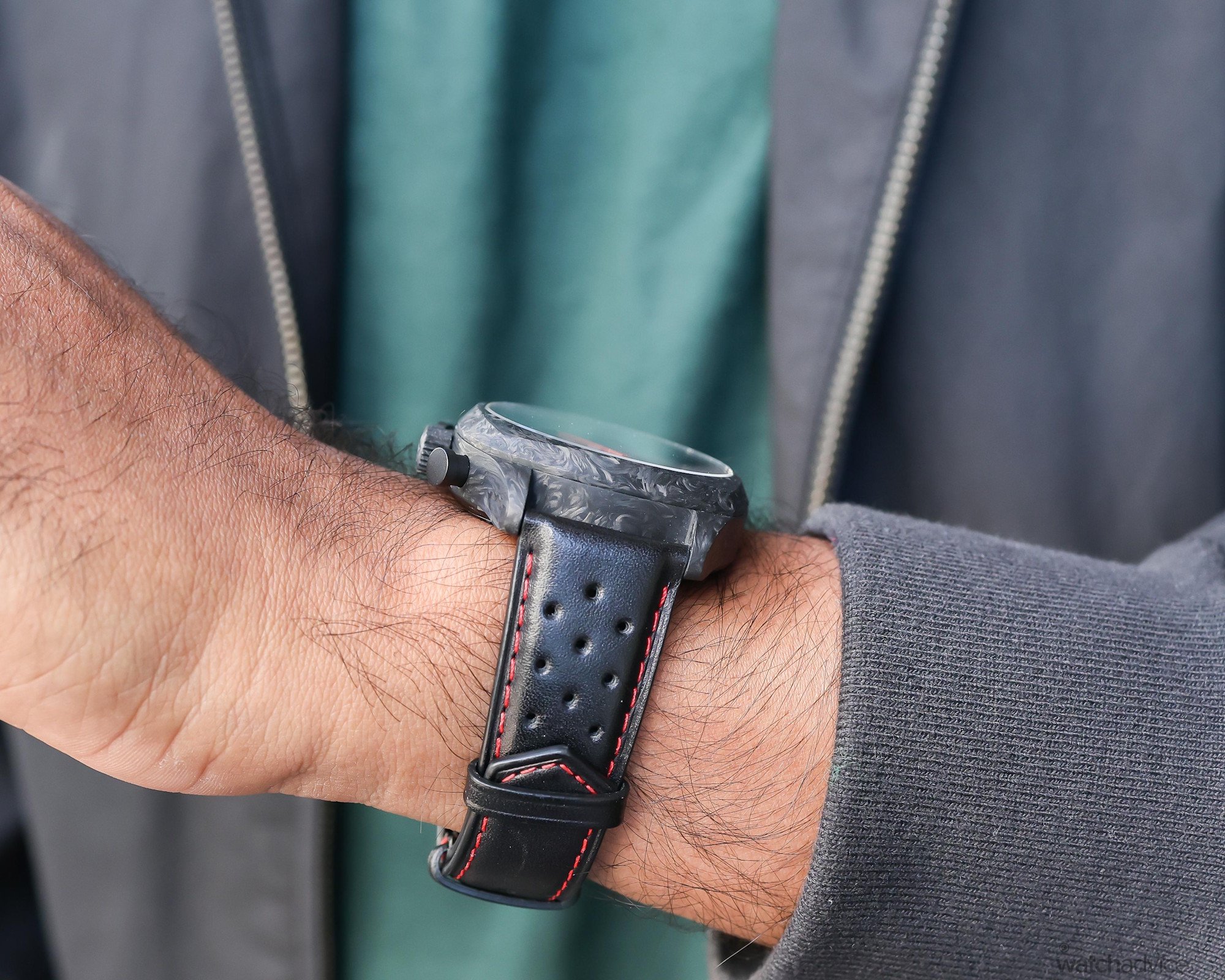
Forged carbon not only brings a lightweight feel, but its irregular texture also softens the appearance of the case by breaking up the surfaces of the case and bezel rather than presenting one uninterrupted block of black material. As mentioned earlier, forged carbon also ties into the Monza’s historical link with motorsport, as the material has been used extensively throughout the racing world.
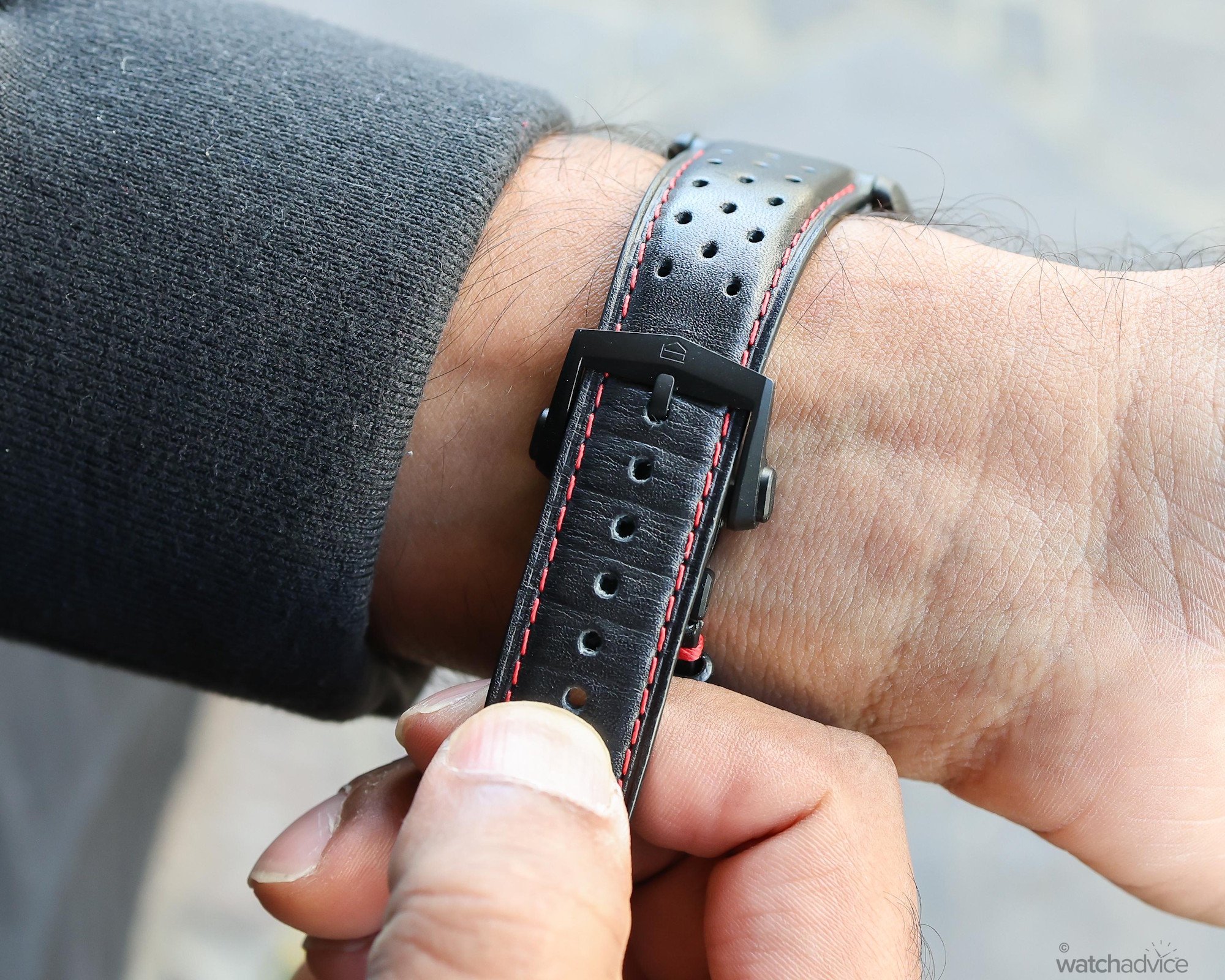
For this 2026 Monza edition, TAG Heuer has introduced a perforated calfskin strap featuring contrasting red stitching. This replaces the black textile strap and blue stitching of the 2023 model. The perforated design directly references classic motorsport gloves and racing straps, helping this 50th-anniversary edition feel more historically grounded.
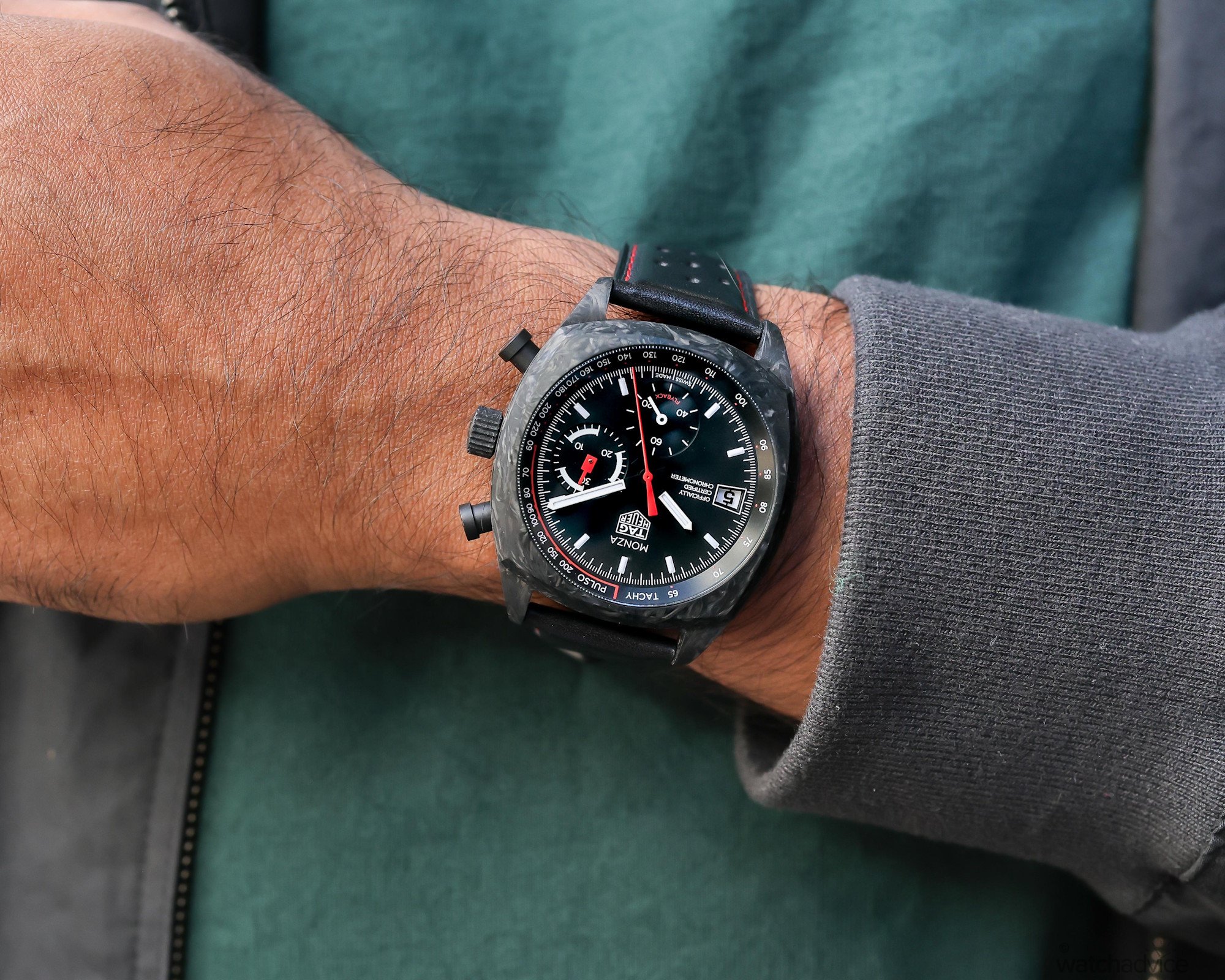
I personally feel that moving away from the contemporary skeletonised design of the 2023 Monza and returning to the original 1976 edition for inspiration serves this 50th-anniversary model well. The matte-black dial, red details on the 30-minute counter and chronograph seconds hand, and red inscriptions throughout the dial add just the right amount of colour, with red being synonymous with motorsport racing. However, the black-and-white contrast is one of the standout features, as it makes the dial crisp, clear and easy to read.
Final Thoughts
After spending some time with the latest 50th-anniversary TAG Heuer Monza, its greatest strength for me is how successfully it balances the historical inspiration of the original 1976 model with a more contemporary and futuristic design.
The matte-black dial, perforated leather strap and red accents beautifully reconnect the watch with its racing heritage, which I personally think this edition does better than the more experimental 2023 skeletonised design. That edition showed what the Monza could be through a truly contemporary watchmaking approach. This edition, however, ties the watch beautifully back to the Monza’s racing origins without turning it into a direct vintage reissue.
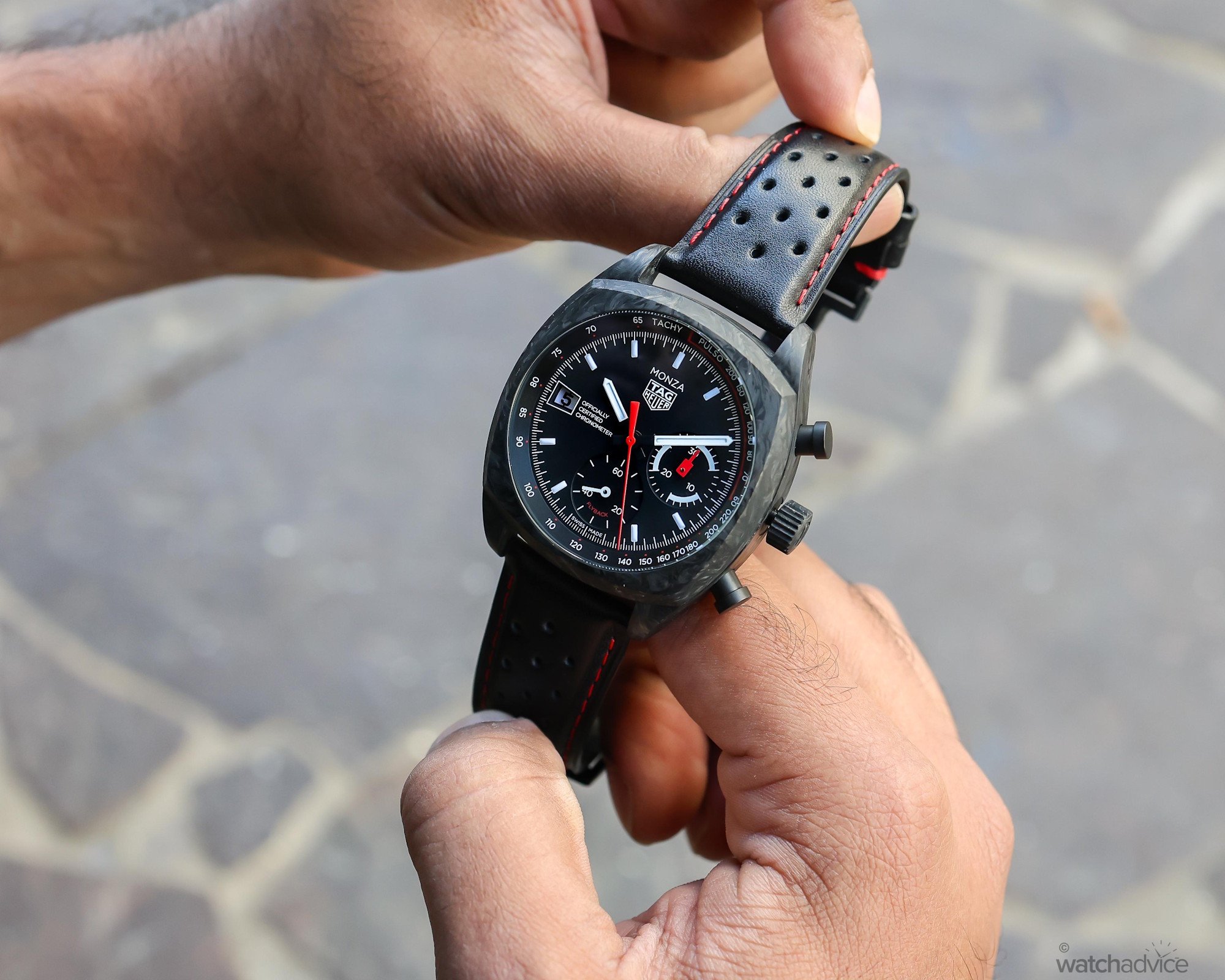
The 42mm cushion-shaped case will still feel slightly large on smaller wrists, especially as it carries a thickness of 15.22mm and a lug-to-lug distance of 50.85mm. With these proportions, traditionalists may prefer the original size of the Monza, as it wears a little slimmer on the wrist.
However, what helps this model’s wearability is its lightweight carbon construction. Even with a lug-to-lug distance of 50.85mm, the short lugs allow the strap to taper down quite quickly around the wrist. Combined with the flexible leather strap, this makes the watch significantly more wearable than its dimensions may initially suggest. Compared with the previous edition, this 50th-anniversary model feels cleaner, more cohesive and, as it should for such a special occasion, more faithful to the Monza name.
Limited to 500 numbered pieces, this feels like a carefully considered anniversary model rather than merely another colour variation. For collectors wanting heritage without sacrificing modern performance, the latest 50th-anniversary TAG Heuer Monza Flyback Chronograph presents one of the collection’s most complete interpretations yet!
References & Specifications:
| Feature | Specification |
|---|---|
| References: | CR5092.FC8372 |
| Dimensions | 42mm x 15.22mm thick; 50.85mm lug-to-lug |
| Case Material | Forged-carbon cushion-shaped case with fixed carbon bezel, forged-carbon crown and black DLC-coated steel chronograph pushers |
| Case Back | Black DLC-coated Grade 2 titanium caseback with sapphire crystal and individual XXX/500 engraving |
| Dial | Matte-black dial with black counters, white hour markers and hands, red chronograph details, tachymeter and pulsometer scales |
| Crystal | Domed sapphire crystal with anti-reflective treatment on both sides |
| Movement | Manufacture automatic Calibre TH20-12 COSC Flyback operating at 4Hz (28,800vph) |
| Power Reserve | 80-hour power reserve |
| Water Resistance | 10 bar (100 metres) |
| Bracelet | Black perforated calfskin leather strap with red stitching and black DLC-coated Grade 2 titanium folding clasp |
Australian Retail Price: AUD $20,150
Availability: Limited to 500 models. Available through TAG Heuer boutiques and authorised retailers, or head online to TAGHeuer.com\
Full Image Gallery: