

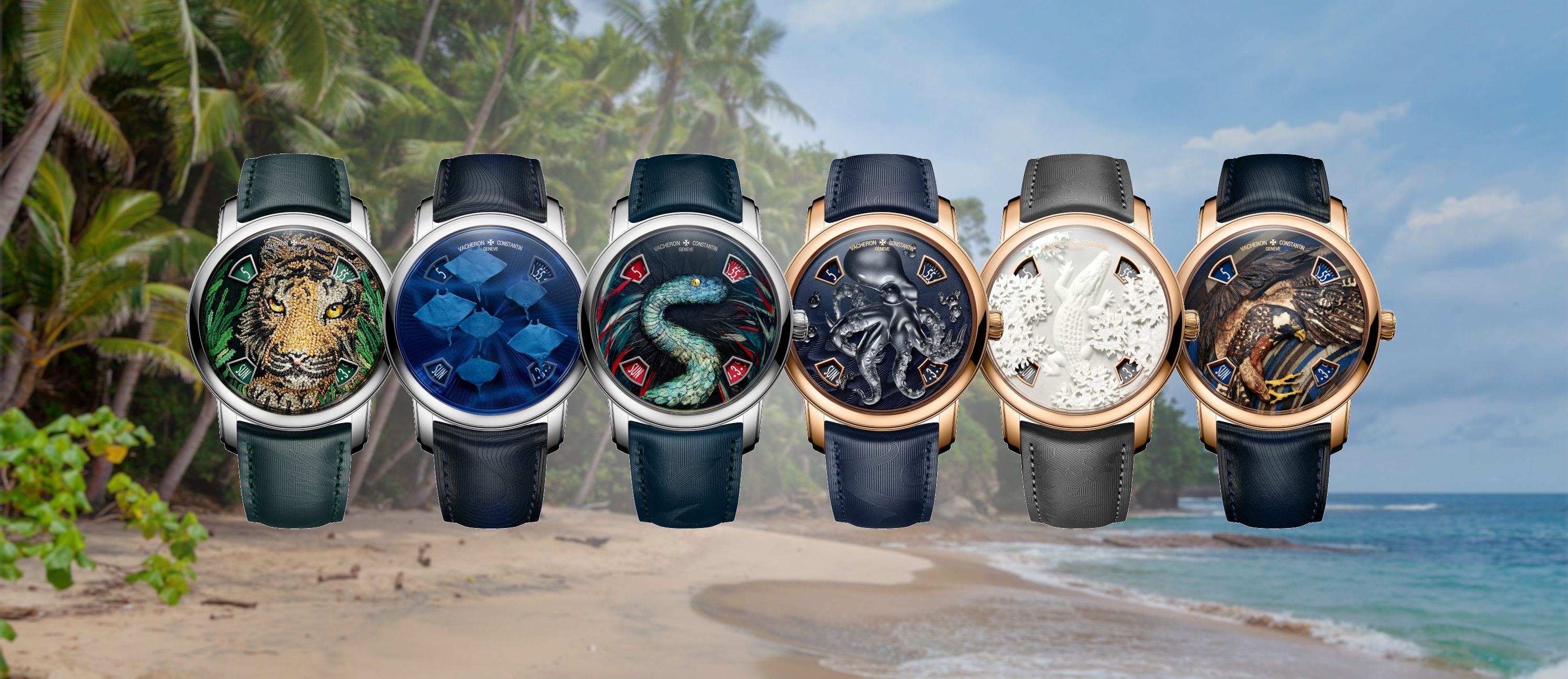
Vacheron Constantin get take a walk on the wild side, paying tribute to the animal kingdom with six new Métiers d’Arts pieces that are as unique as each other.
For nearly three centuries, Vacheron Constantin has consistently defined itself through its commitment to watchmaking tradition. Not in the sense that modern technologies and innovation take a backseat, but rather that they are leveraged to champion the painstaking handiwork of its craftsmen and artists. Nowhere is this more apparent than in the brand’s hyper-exclusive Métiers d’Art collection. Serving as a modern platform for forgotten crafts, the Métiers d’Art puts the fine art of watchmaking front and centre, giving its artists complete creative freedom to showcase their meticulous handiwork.
This is part of its “One of Not Many” Crafts Programme, which challenges individuals and organisations outside the horological sphere to transpose their work into watch form. Many artists have taken up the call, as have some of society’s finest cultural institutions, including the Louvre and The Metropolitan Museum of Art.
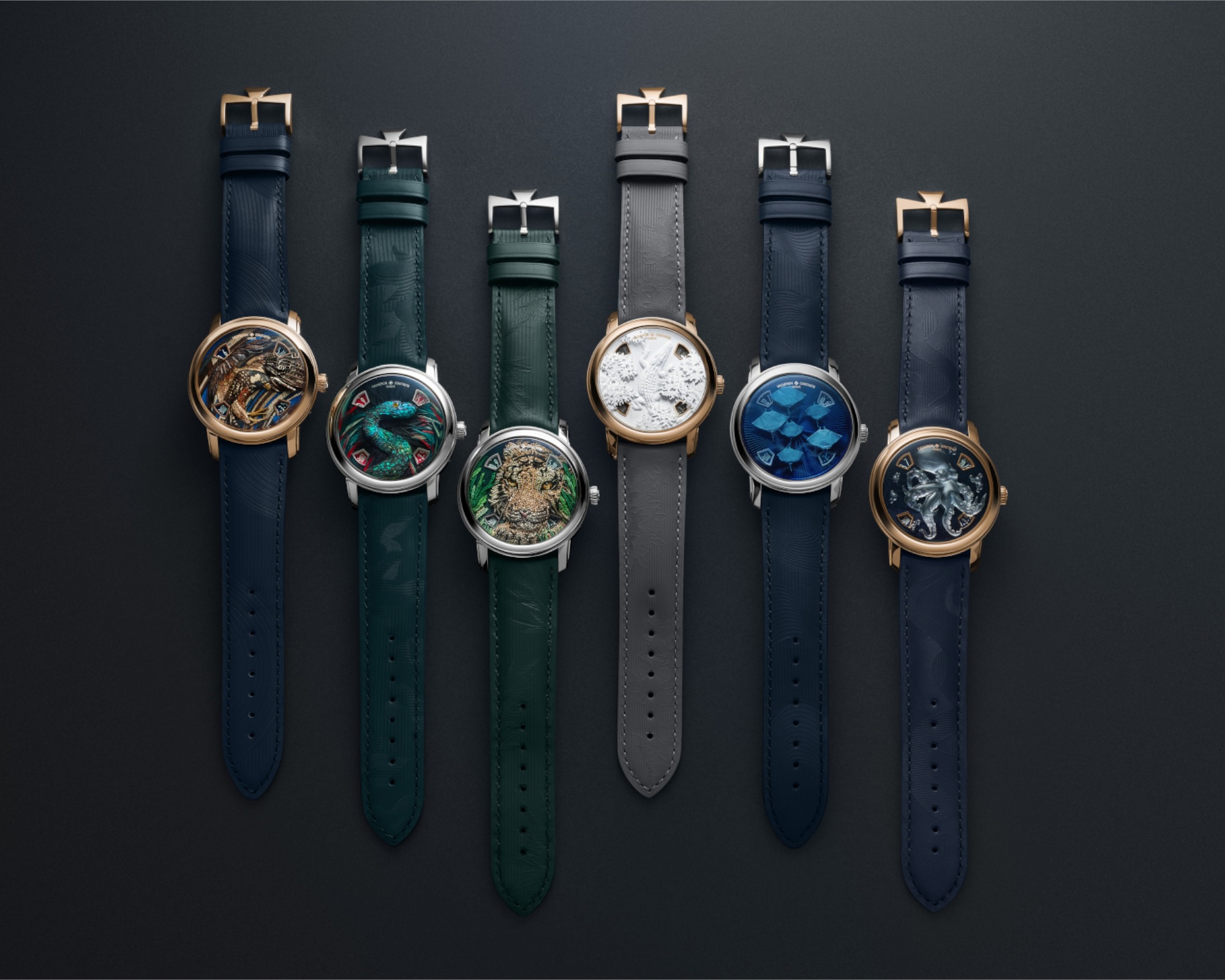
For this edition of the Métiers d’Art, Vacheron Constantin has invited six more artisans from outside the watch world to express their chosen crafts under the same theme: a Tribute to the Animal Kingdom. The result is six unique-piece watches, each as outstanding as the last, rich with detail and each artist’s distinctive flair.
Sinister Six
But before we get into the full beauty of these pieces, we should remind ourselves that these are still watches, after all. Split across six models, the Vacheron Constantin Métiers d’Art Tribute to the Animal Kingdom command a significant wrist presence even without their artistry.
Each watch shares the same 42mm case diameter, with a 12.9mm thickness, and comes in either an 18K white or rose gold case. The profile is big, but shouldn’t feel overtly so, though the gold cases will make the watches feel significantly heavier than if they were made from standard steel. Beyond the material, the case frame is abundantly dressy, with a polished bezel and stepped lugs, and comes complete with matching embossed leather straps with pin buckles.
Turning the watch around reveals the open caseback, as well as the movement behind every Métiers d’Art watch since 2005: the automatic Cal. 2460 G4. Now, a 21-year-old movement might sound rather long in the tooth, but the complexity and capability of the calibre prove that it can still run with the modern crowd.
For starters, the Cal. 2460 G4 forgoes hands in favour of four digital disc displays, occupying the four corners of the dial. At what would be ten o’clock is the hour display, two o’clock shows the minutes, four o’clock the date, and eight o’clock the day. It’s a clever exercise in horology with minimal disruption to the dial artistry, enabling it to remain in the spotlight.
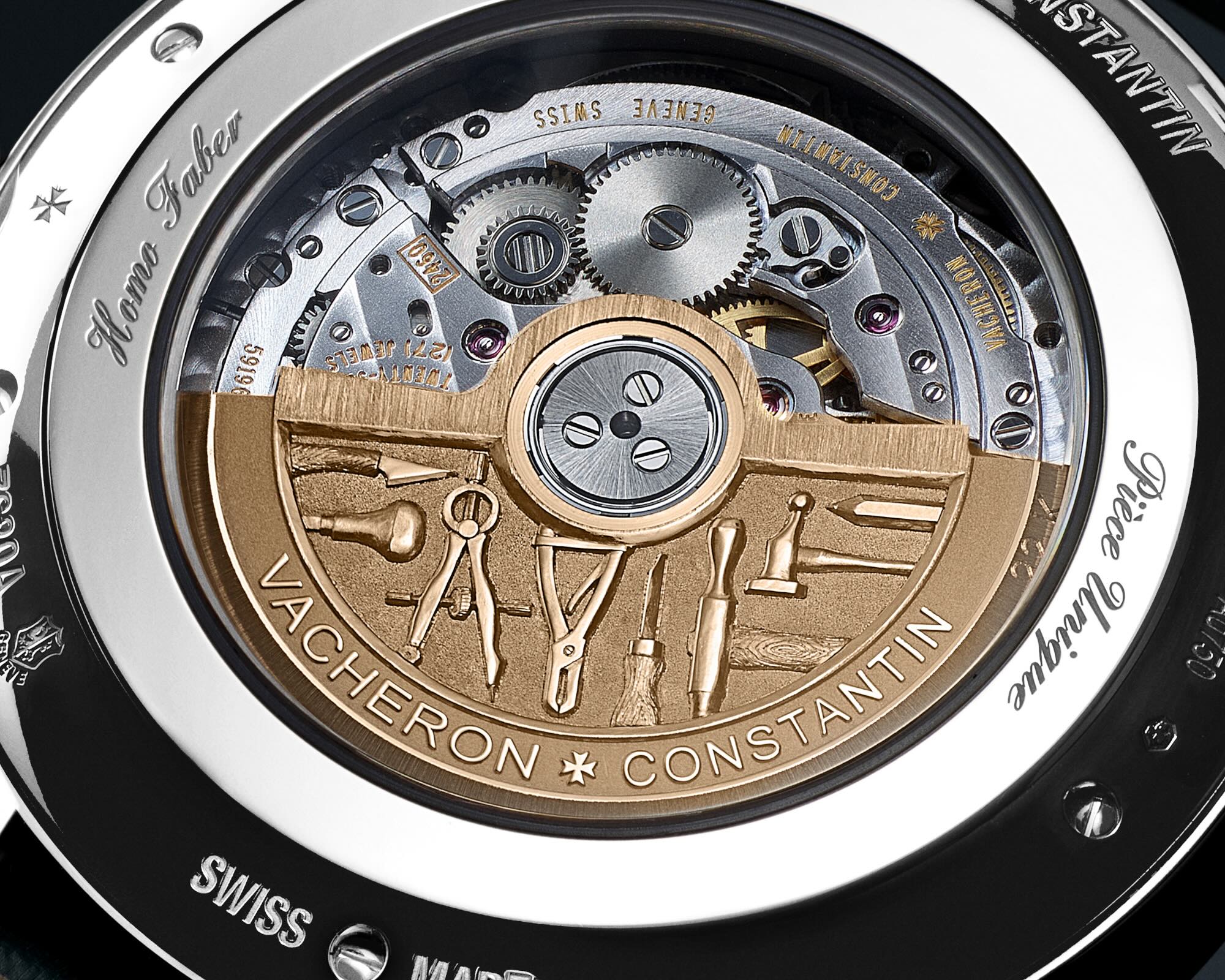
Not only that, but the movement has consistently maintained the Poinçon de Genève, or Geneva Seal, throughout its entire tenure and counting. With the already challenging COSC Chronometer certification serving merely as a prerequisite for assessment, it’s the horological equivalent of a Michelin Star, which the watches proudly sport on their casebacks. Beating at 4Hz (28,800VpH) atop a 40-hour power reserve, the Cal. 2460 G4 has more than earned its stripes in the Vacheron Constantin catalogue.
Jungle Book
But of course, the case profile and movement aren’t what we’re here to talk about, not really, at least. The shining stars of the show are those incredible dials, each showcasing a unique form of craftsmanship courtesy of its associated artisan. As each dial and artistic approach is entirely different, I’ll give you the rundown of them individually, in order of appearance.
Tigerbroidery
I have always loved the phrase: “Creativity is a wild mind and a disciplined eye.” For me, this project perfectly embodies the balance between artistic innovation and the technical discipline of embroidery that defines my creative process.
Laura Baverstock, creator of the Tigerbroidery
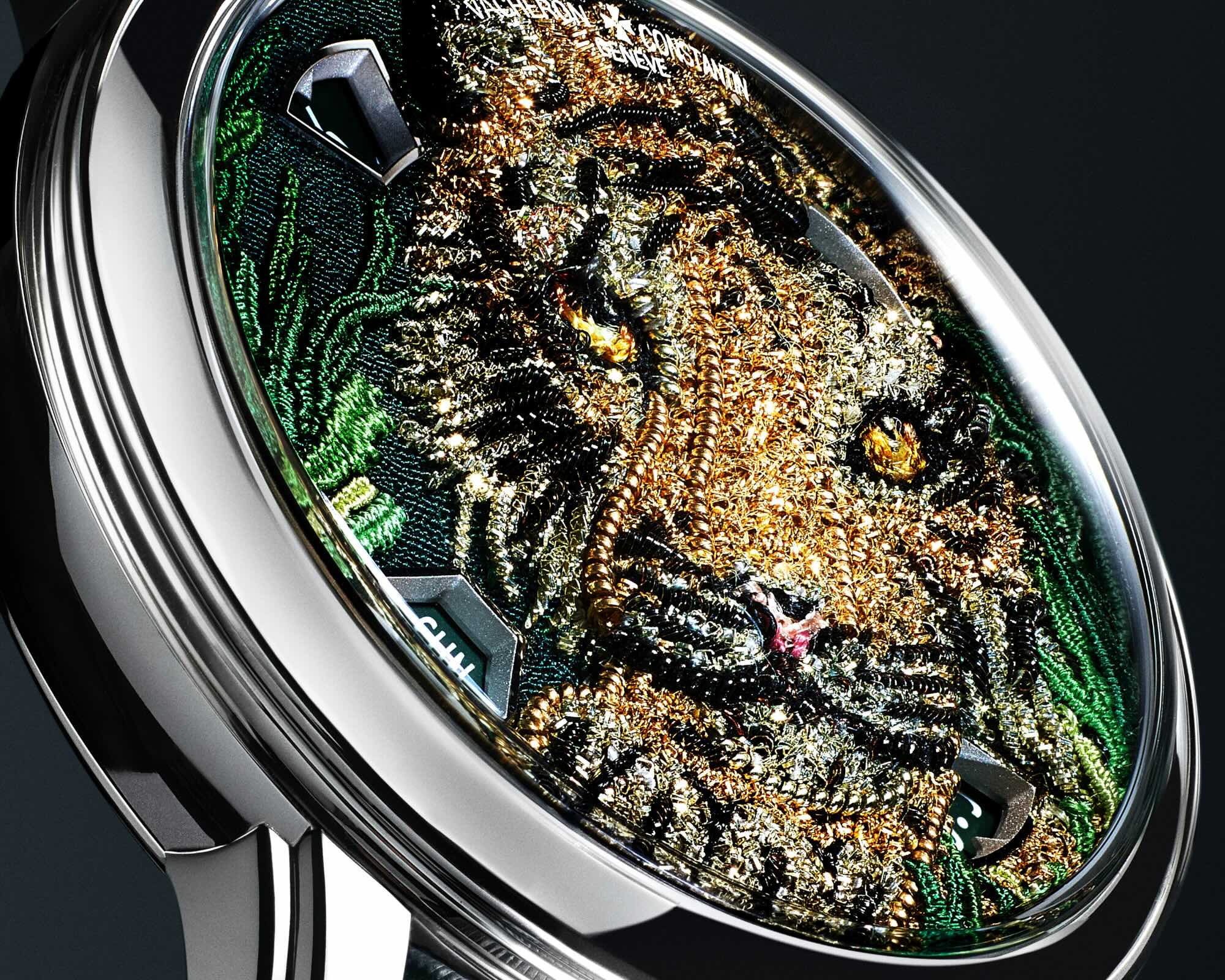
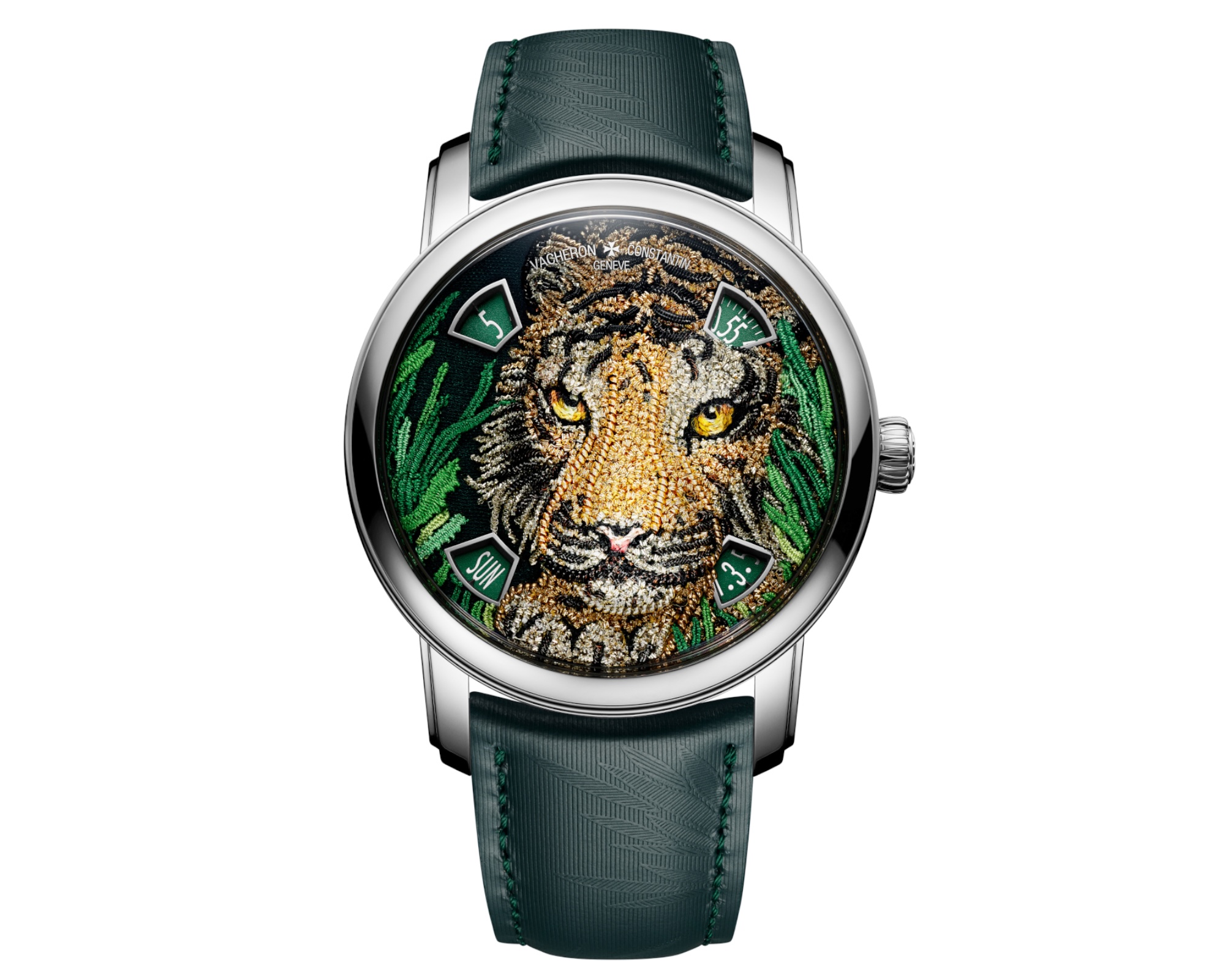
The first of six watches is the Tigerbroidery, which has been brought to life by specialist hand embroiderer Laura Baverstock. A graduate of the Royal School of Needlework in the United Kingdom and a member of the Worshipful Company of Gold and Silver Wyre Drawers, Baverstock was challenged by Vacheron Constantin on two fronts: to create an animal and portray it in motion, and to use thread with the highest possible gold content.
This took her on a tireless quest of researching wildlife imagery and videography of tigers, and experimenting with which type of golden thread would be viable for her to use. For as unfamiliar as the territory was for Baverstock, the end result shines through perfectly. 9K white and yellow gold, alongside ceramic-coated black wires, make up the tiger’s construction, while the lush green background and foliage are comprised of both British and Japanese silk. The final result, a product of around 210 hours of work, is as profoundly artistic as it is technically impressive.
Oraygami
This is probably the most significant project of my origami career so far. It was the first time I had been involved from the very beginning of the creative process rather than simply executing a finished idea.
Anya Midori, creator of the Oraygami
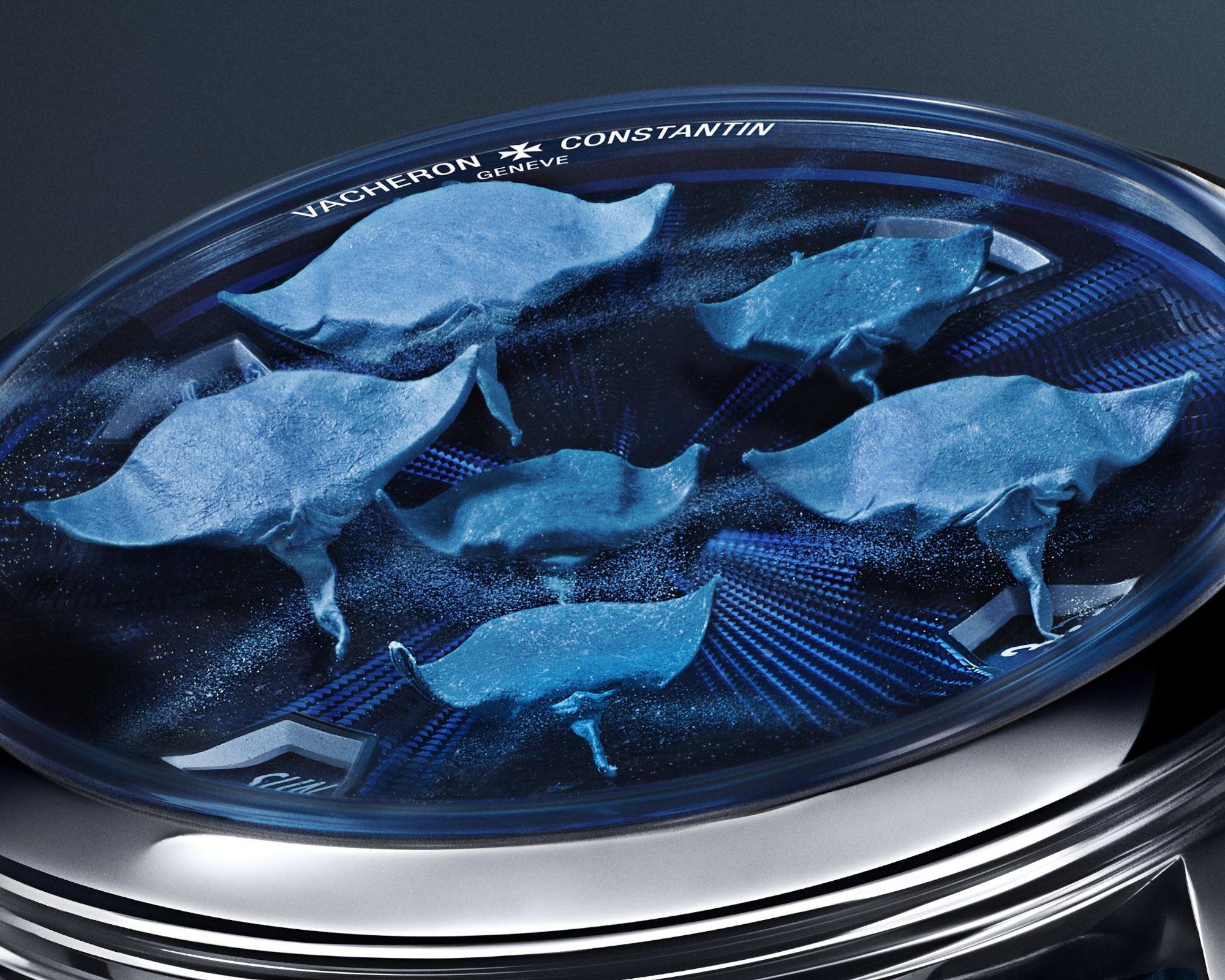
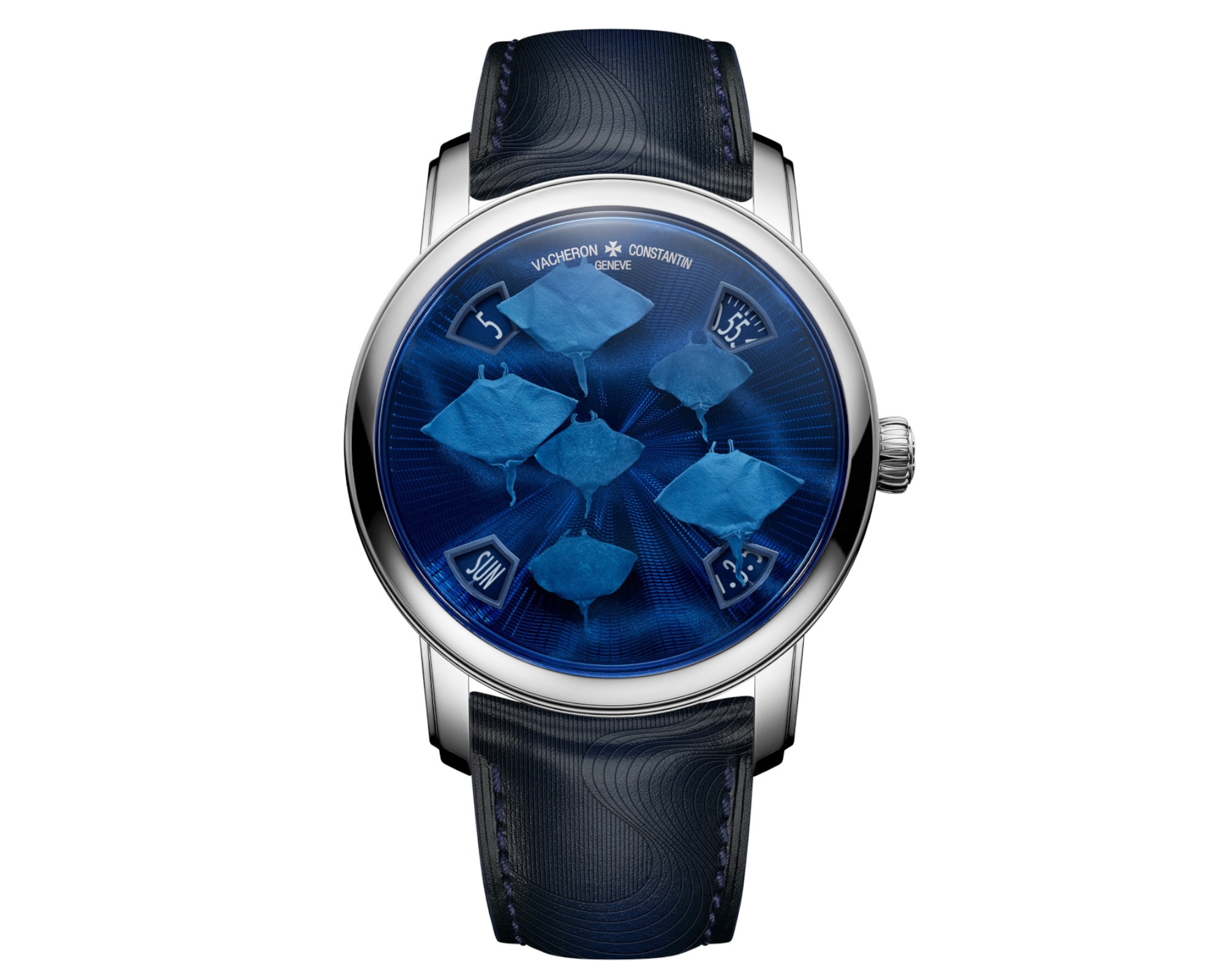
The delightfully named Oraygami is the product of Germany-based micro-origami sculptor Anya Midori. Though she only discovered the art form less than a decade ago, she took to it with much gusto, becoming one of the most notable figures in the field. For this model, Vacheron Constantin wanted to see if she could create an origiami animal entirely from scratch, instead of following sequences developed by masters. Additionally, she was unable to find the appropriate coloured paper to use for the project, which meant she had to dye a new tone entirely on her own.
Yet Vacheron Constantin trusted her with the process, and Midori pulled it off marvellously. After countless hours studying footage of manta rays in water and creating her own blue paper using a unique mixture of water, natural cellulose and acrylic pigment, Midori’s efforts are apparent on the dial. Each of the origami manta rays was folded exclusively using fingers, fingernails and the tip of a toothpick, all without magnifying glasses. Set atop a blue guilloché dial, they appear to float in empty space, suspended on fine brass stems extending from the dial.
Feathersnake
Throughout the process, I remember warning Vacheron Constantin several times that I was not sure I would be able to complete the project because we were constantly pushing the material beyond what I thought was possible. The fact that I ultimately succeeded is a source of pride as it enabled me to venture beyond what I believed were my own limits.
Julien Vermeulen, creator of the Feathersnake
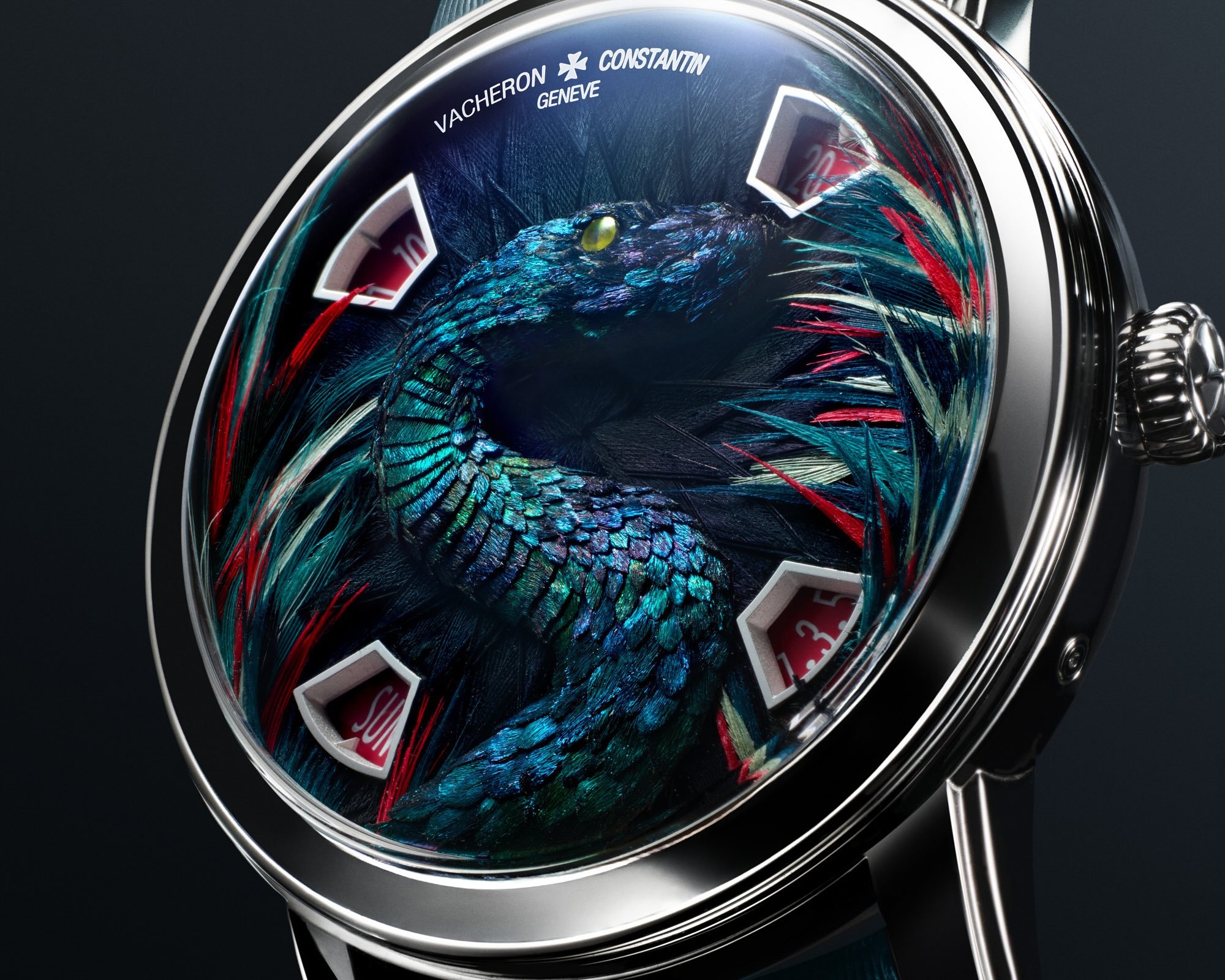
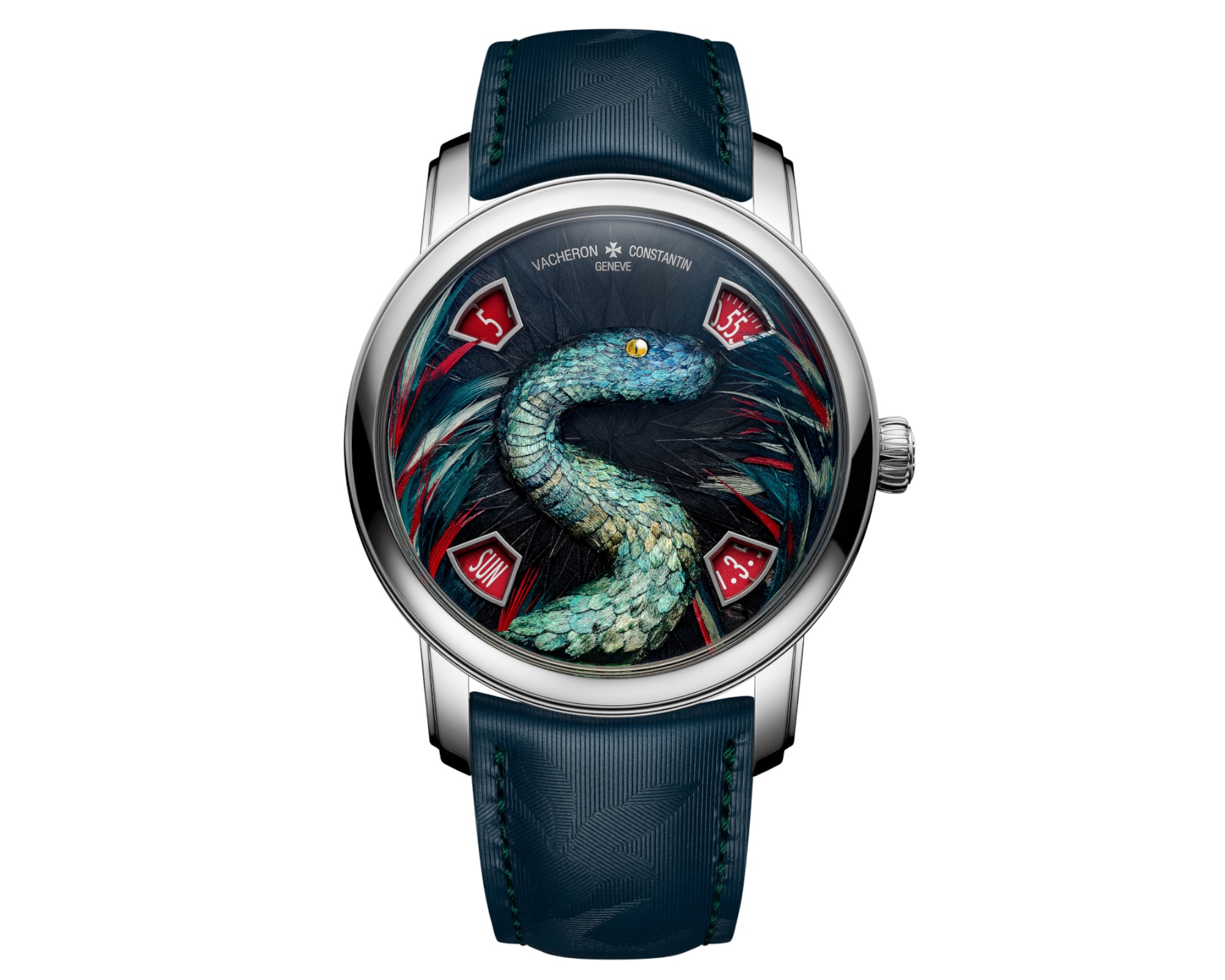
Third and last of the white gold Métiers d’Art is the Feathersnake, created by master plumassier Julien Vermeulen. Cutting his teeth in applied arts at France’s Lycée Octave Feuillet and a brief stint and Jean Paul Gaultier allows Vermeulen to hone his skills to a dizzying degree. It was for this reason that Vacheron Constantin approached him, and tasked him with creating the same artistry on a microscopic scale.
After 250 long, exhaustive hours that required Vermeulen to control every aspect of his body – including his breathing – the Feathersnake was completed. Not only that, but it was his first time to work with feathers from the lophophore, or Himalayan Monal. The end result is staggering, combining both goose and lophophore feathers mounted onto silk paper and the applied metal snake. Vermeulen even needed to create his own tools, as none existed for a project of such small scale. An 18k gold and enamel eye anchors the work, depicting a plumed snake in a bed of red-green fathered grass.
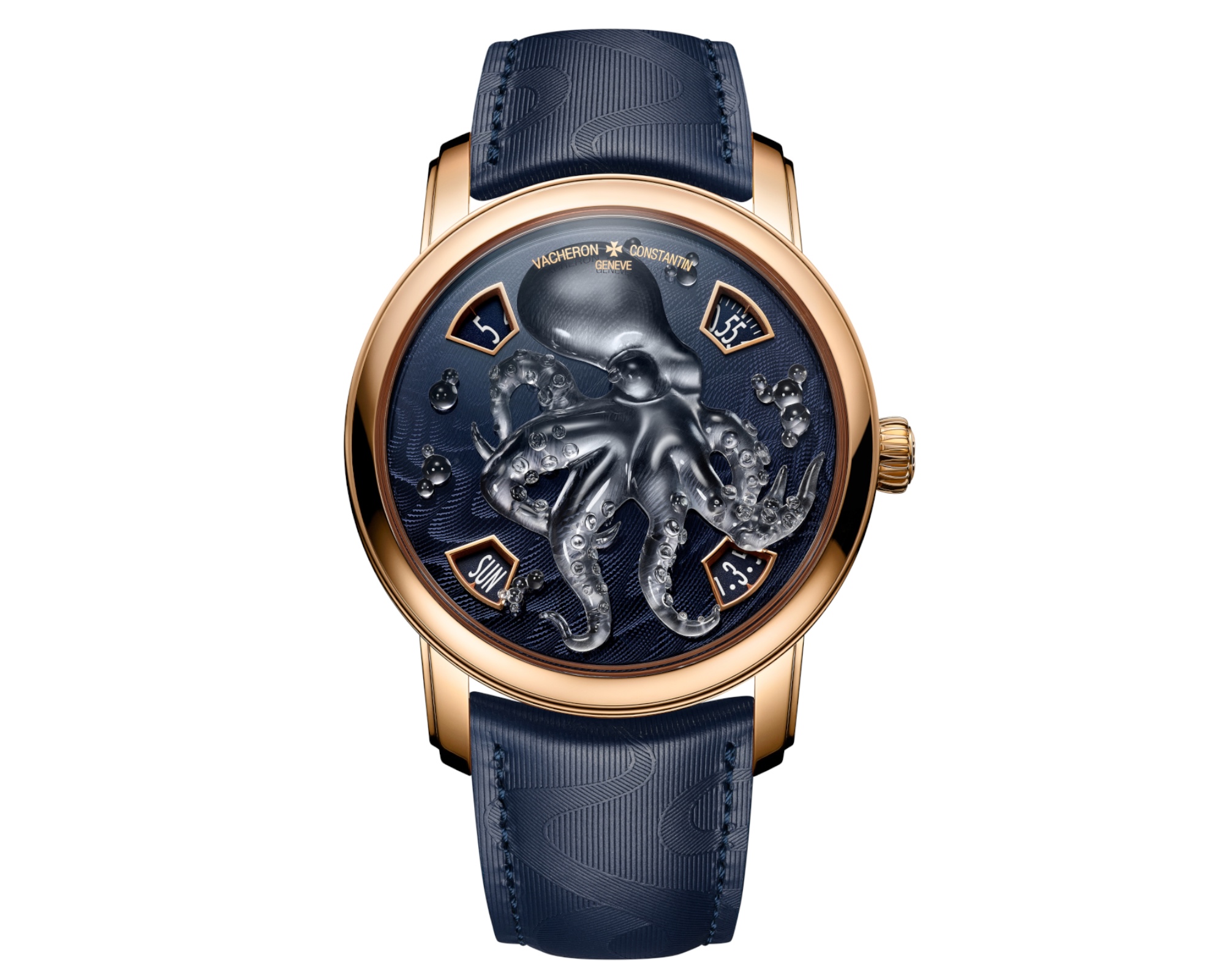
Glassoctopus
This project constitutes a real turning point in my work because it forced me to develop a new technique that I had never used in twenty-five years of working with glass. It opened a new perspective in my practice, making me realize that I can now apply this knowledge to create even smaller, more intricate elements in future works.
Simone Crestani, creator of the Glassoctopus
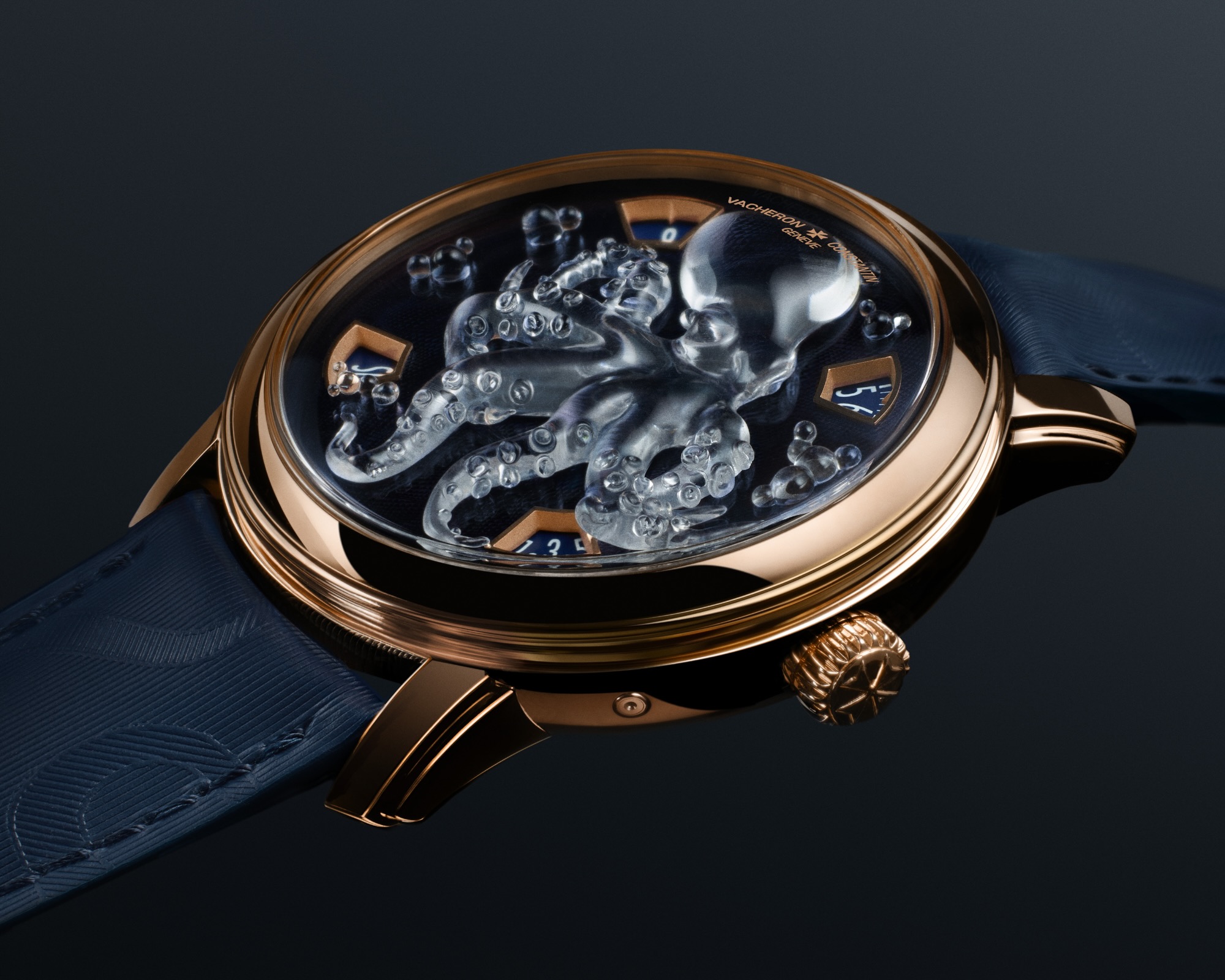
The first of three 18k pink gold references is the Glassoctopus, a collaborative effort with Italian glass artisan Simone Crestani. Crestani first began working with glass at 15 years old, and quickly became renowned for his revolutionary techniques in the scene. Most famously, he invented the Scultura Cava (Hollow Sculpture) method, which enabled him to make large, glass sculptures whilst still maintaining the smallest of details.
Vacheron Constantin put his skills to the test with the Glassoctopus, where measurements were taken in tenths of a millimetre instead of by centimetres. Safe to say, he passed with flying colours. Atop a deep blue guilloché dial sits Crestani’s handiwork: A transparent glass octopus, surrounded by bubbles. Rising just 3.5mm above the dial, the impressive sculpture was created by melting tiny glass rods and shaping them with tungsten tools, in a manner that looked similar to 3D printing by hand. Such tools were, like the Feathersnake, specifically developed for this achievement, making it all the more justifiable that the development took over a year to do.
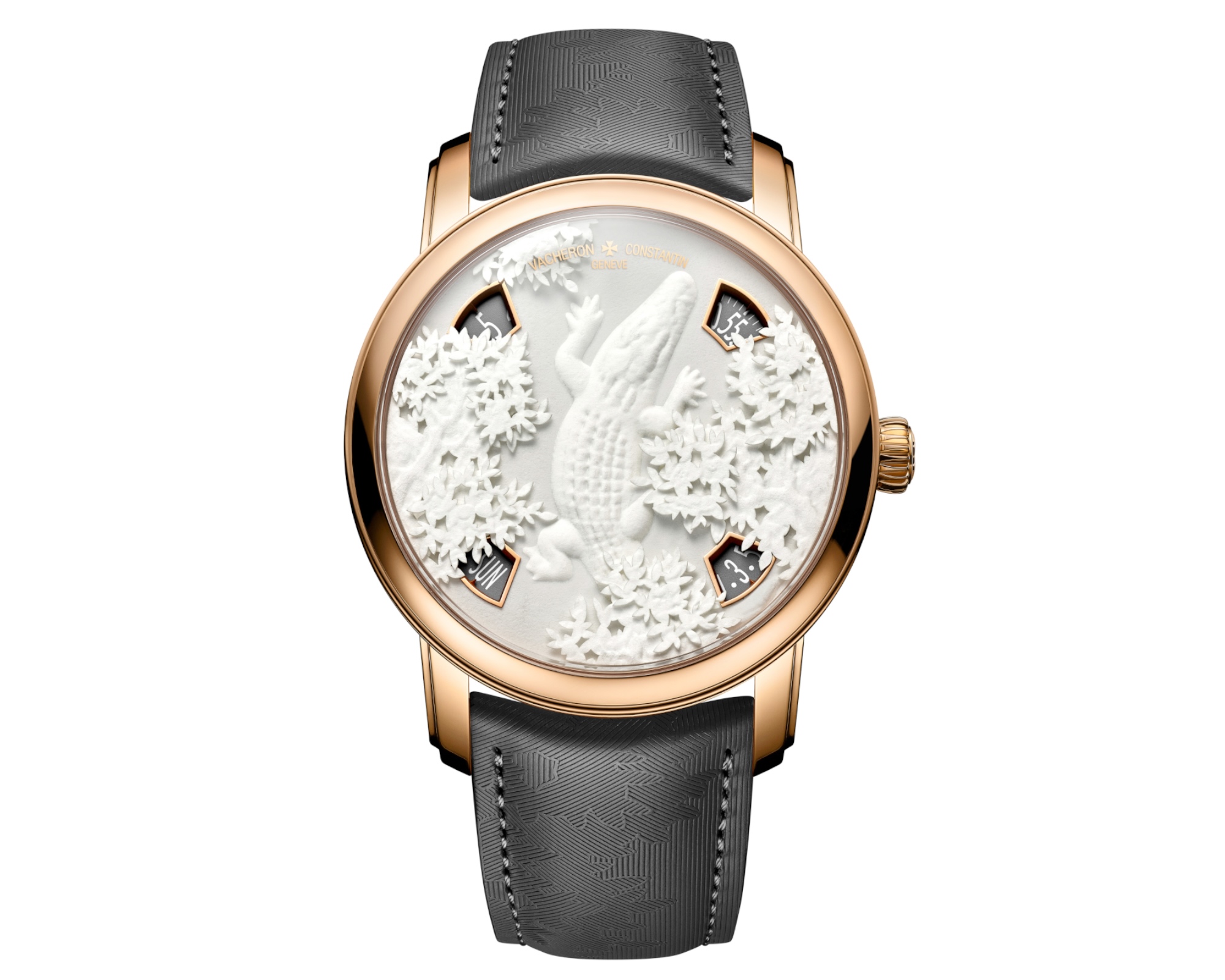
Papercroc
In Europe, paper is still often considered merely a medium and is frequently associated with fragility — notions I have always challenged in my work. This project allowed us to demonstrate that paper can enter the world of haute horlogerie as a true form of art.
Marianne Guély, creator of the Papercroc
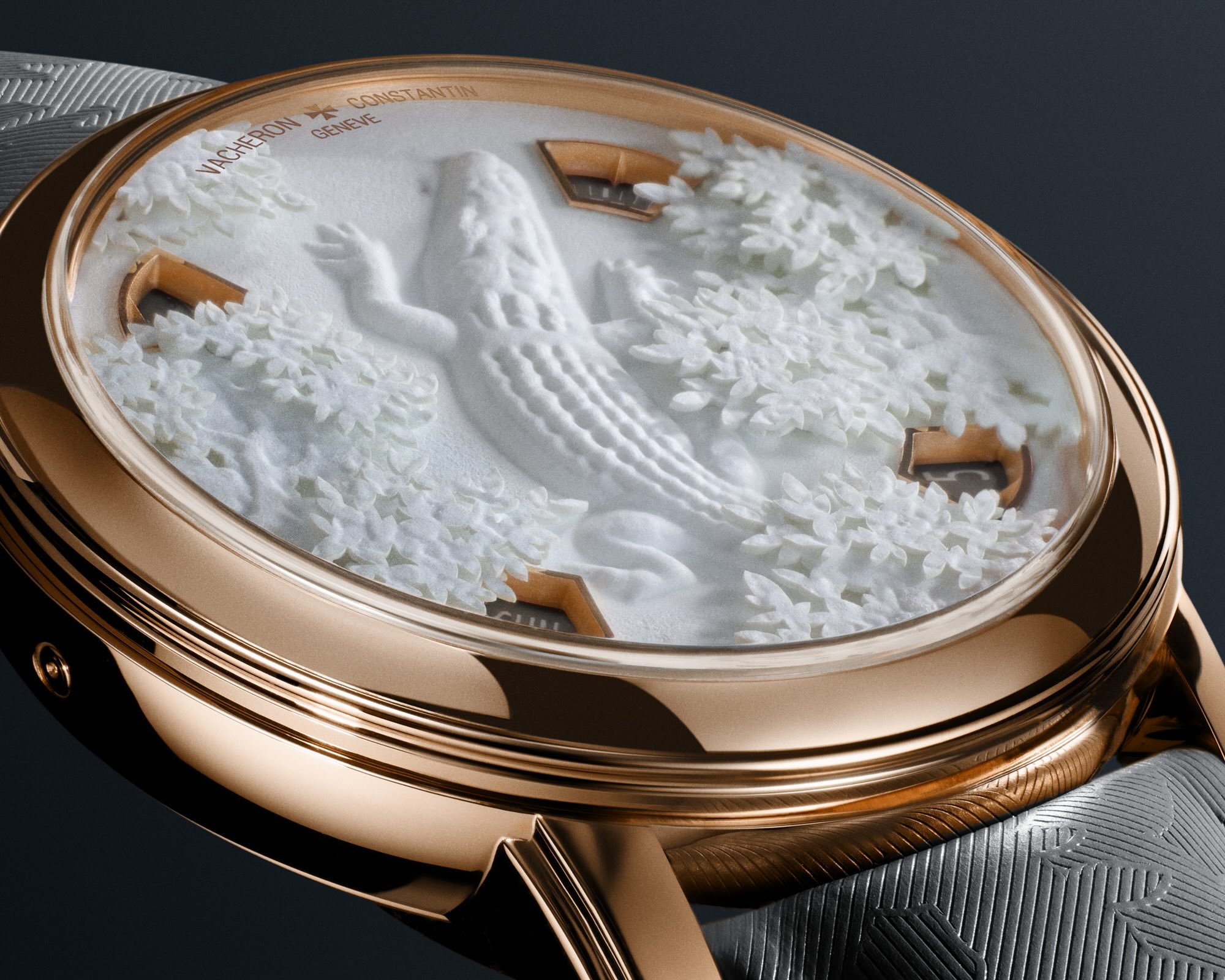
Parisian paper sculptor Marianne Guély is to be credited for the creation of the Papercroc. Originally coming from a world of industrial design, her experience ranges from endless collaborations with the likes of Cartier, Valentino, and Grand Seiko among others. Using paper, she bridges the gap between traditional craftsmanship and innovative technology, transforming it into everything from micro-sculptures to monumental architectural elements.
Vacheron Constantin’s proposal to her was clear: Do what you do best, but see if you can do it smaller. Easier said than done, as achieving Guely’s level of detail took an immense amount of precision in every aspect of the watch. Not only herself, but her entire studio and Vacheron Constantin’s resources all had to work in tandem to ensure the result was just right. And right it certainly is, as the dial features an embossed crocodile amongst surrounding foliage. Both careful consideration of papers, as well as even more bespoke tooling, was required to create such a lifelike depiction within paper.
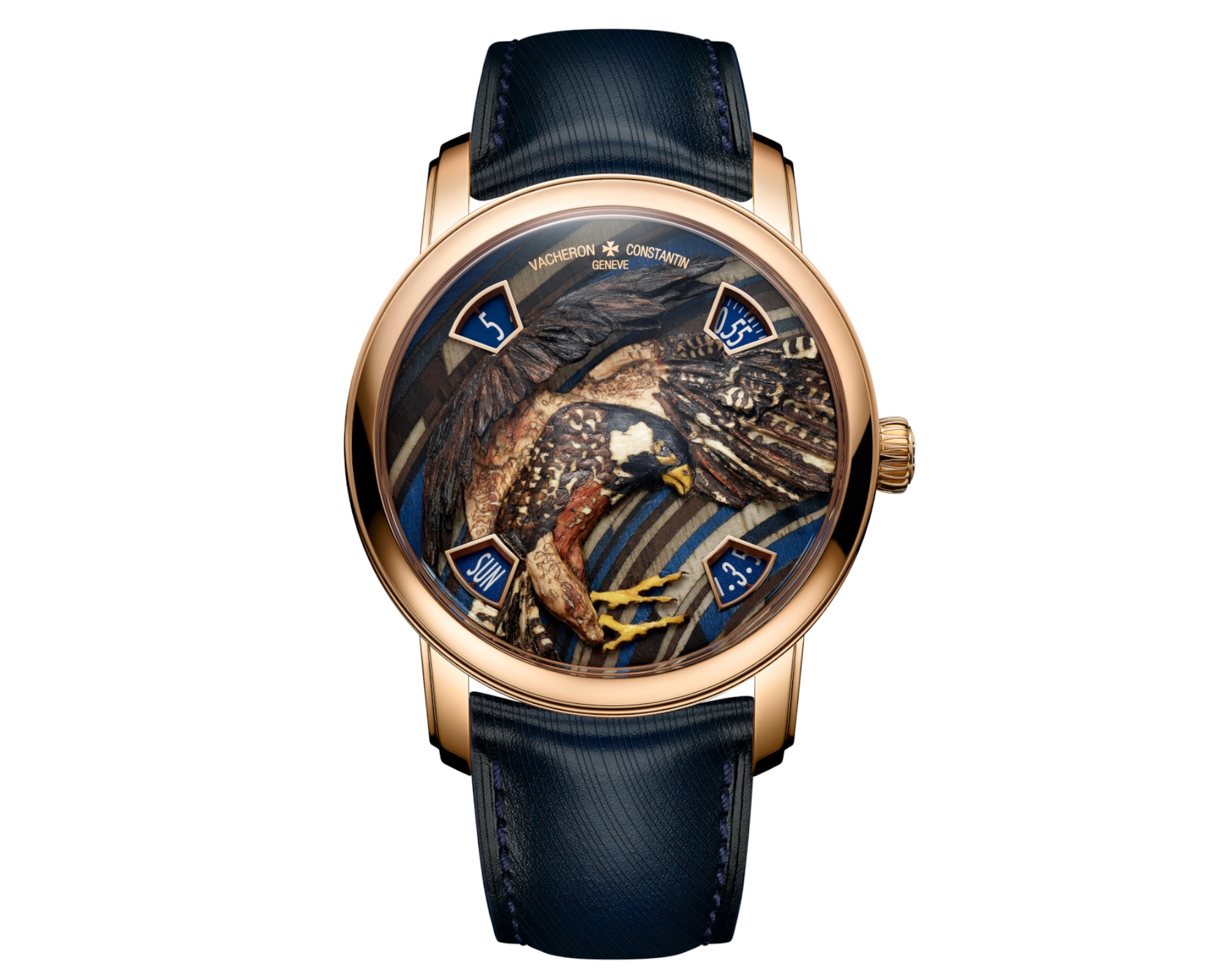
Woodenwings
The more I sculpted and experimented, the more I discovered entirely new possibilities within the material. It became a stimulating process because I constantly had the feeling that an idea that seemed technically possible in my mind could actually work in reality.
Anna Le Corno, creator of the Woodenwings
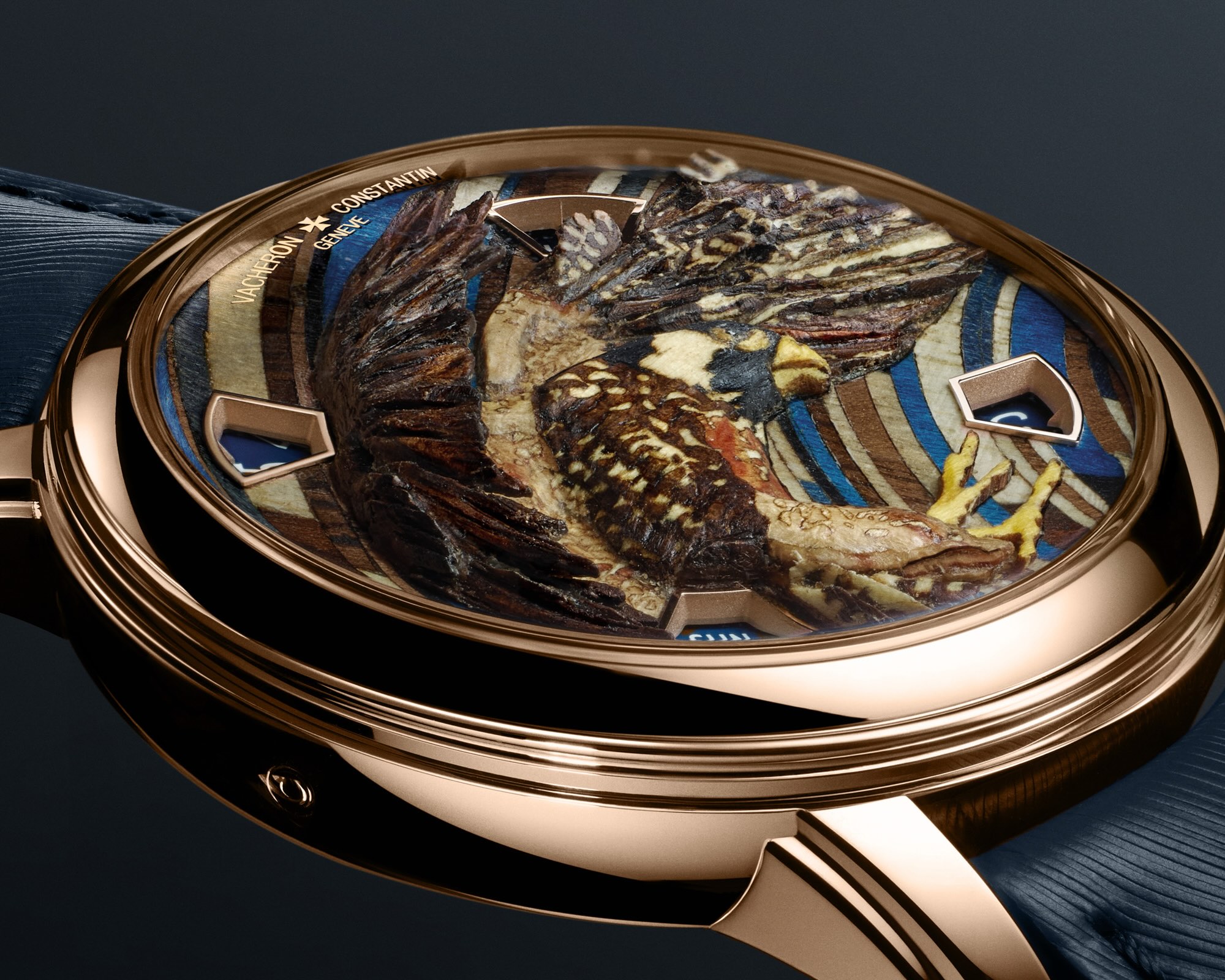
The new release’s final work, the Woodenwings, comes courtesy of Parisian architect and woodworker Anna Le Corno. Studying at the prestigious École Boulle, she is distinguished by her work blending traditional woodworking techniques with cutting-edge digital technology. In particular, her fascination with wood marquetry has led her to making some of the finest furniture, sculptures and decorations, with combinations of wood that make for inlaid frescoes.
Though scale always proves to be a challenge, Le Corno’s concern was that she wouldn’t be able to recreate the same level of detail Vacheron Constantin wanted. However, after sourcing specific woods, specialised tools, and even making some of her own, Le Corno was able to present the Woodenwings in spectacular fashion. Combining 12 woods – including spalted horse chestnut, tulipwood, and even smoked eucalyptus – she depicts a falcon in hunting motion, its wooden feathers positioned at the very limits of what the dial allows.
Initial Thoughts
Though watches have lost much of their functional purpose, they have found a second life in luxury and art. But sometimes, that second life can be muddied by those who look beyond the beauty and extravagance, only seeing dollar signs instead of what truly makes a watch special.
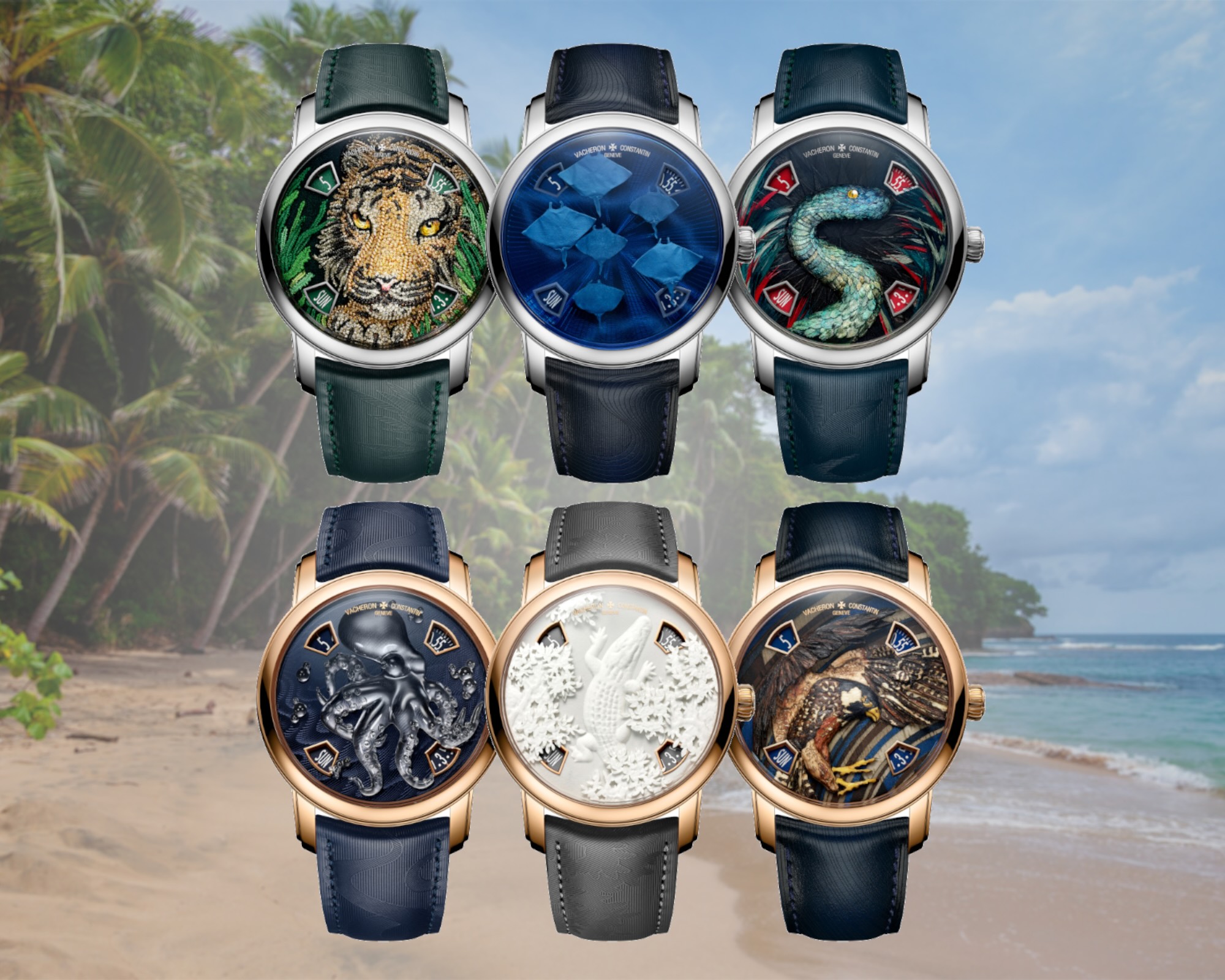
The Vacheron Constantin Métiers d’Arts Tribute to the Animal Kingdom completely shatters that illusion. By letting the horology, as special as it is, take a backseat, they present the art of watchmaking in full force, to such a dizzying quality that makes it impossible to ignore.
By utilising traditional techniques alongside modern-facing artisans, the brand has managed to level up a profession that has already excelled beyond its own brief. But since they’re only piece uniques, I’d feel bad if I wore one around. As a certain whip-cracking adventurer once said, “It belongs in a museum!”
References & Specifications
| Feature | Specification |
|---|---|
| Reference | 7630A/000G-H207 (Tigerbroidery) 7630A/000G-H204 (Oraygami) 7630A/000G-H206 (Feathersnake) 7630A/000R-H205 (Glassoctopus) 7630A/000R-H202 (Papercroc) 7630A/000R-H203 (Woodenwings) |
| Dimensions | 42mm case diameter x 12.9mm thickness |
| Case | 18k pink / white gold |
| Dial | Gold, black, green, & copper thread tiger embroidery (Tigerbroidery) Blue guilloché with mounted blue origami manta rays (Oraygami) Goose and lophophore featherwork snake with gold enamel (Feathersnake) Dark blue guilloché with sculpted glass octopus (Glassoctopus) White cotton paper with embossed crocodile motif (Papercroc) Wood marquetry falcon (Woodenwings) |
| Crystal | Sapphire |
| Caseback | Open, sapphire |
| Movement | Automatic Cal. 2460 G4 with Poinçon de Genève (Geneva Seal) & digital display (hour, minute, day, date) complication |
| Power Reserve | 40h |
| Beat Rate | 4Hz / 28,800VpH |
| Strap/Bracelet | Colour-matched calfskin leather strap with embossed decorations & material-matched pin buckle |