

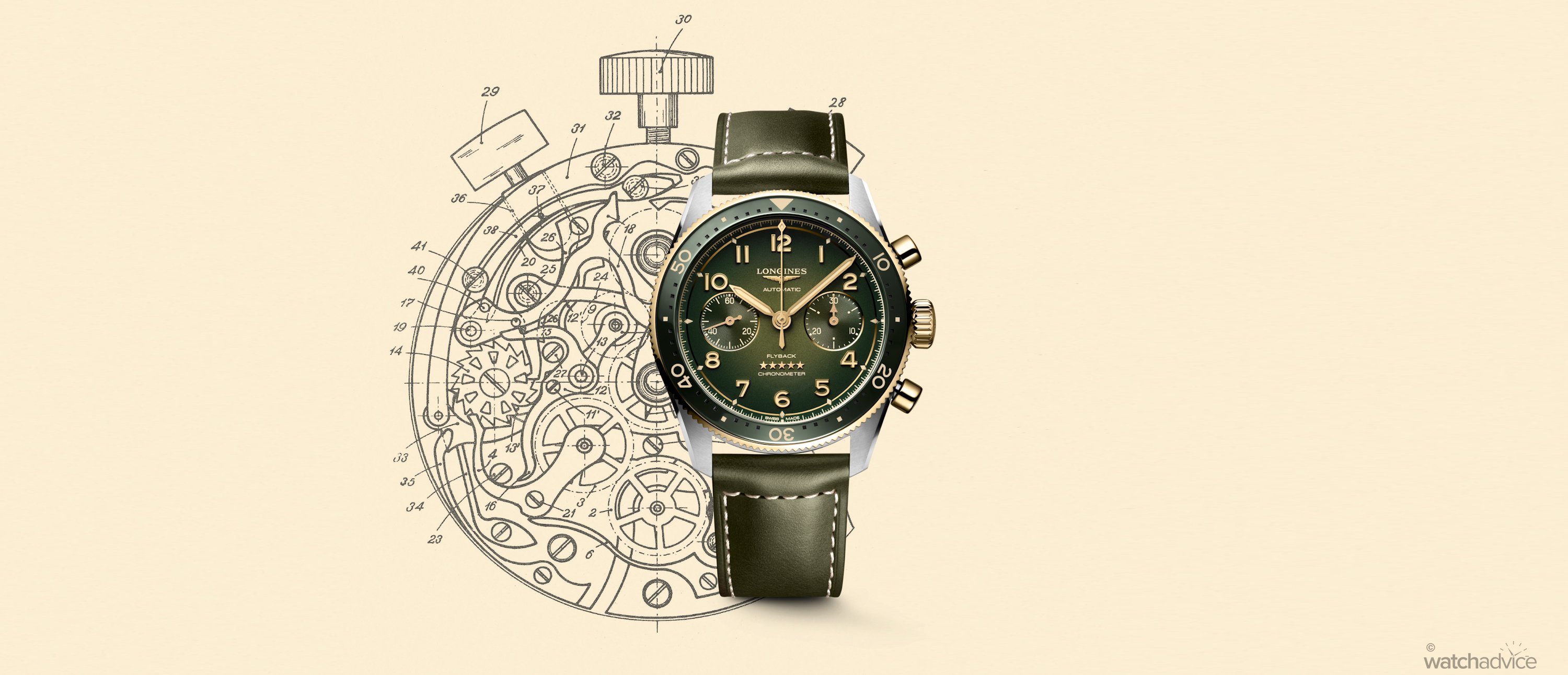
Longines celebrates 90 years of its flyback chronograph patent, an aviation-born invention that continues to define the brand’s pursuit of precision, elegance, and function.
Longines, as a brand, has quite an extensive history when it comes to precision timekeeping, aviation, and professional chronographs. However, one of the most important contributions from Longines to watchmaking came exactly 90 years ago. On 16 June 1936, Longines received patent protection for its pioneering flyback chronograph, an invention that would eventually go on to transform how pilots measured and managed successive stages of flight.
At a time when aviation was progressing rapidly, and aircraft were travelling further and faster than ever before, the need for accurate time measurement and precise stopwatch functionality grew even more. Many watchmakers were creating aviation-inspired timepieces with chronograph complications, feeding the need for pilots who wanted accurate, intuitive, and reliable timing instruments on their wrists.
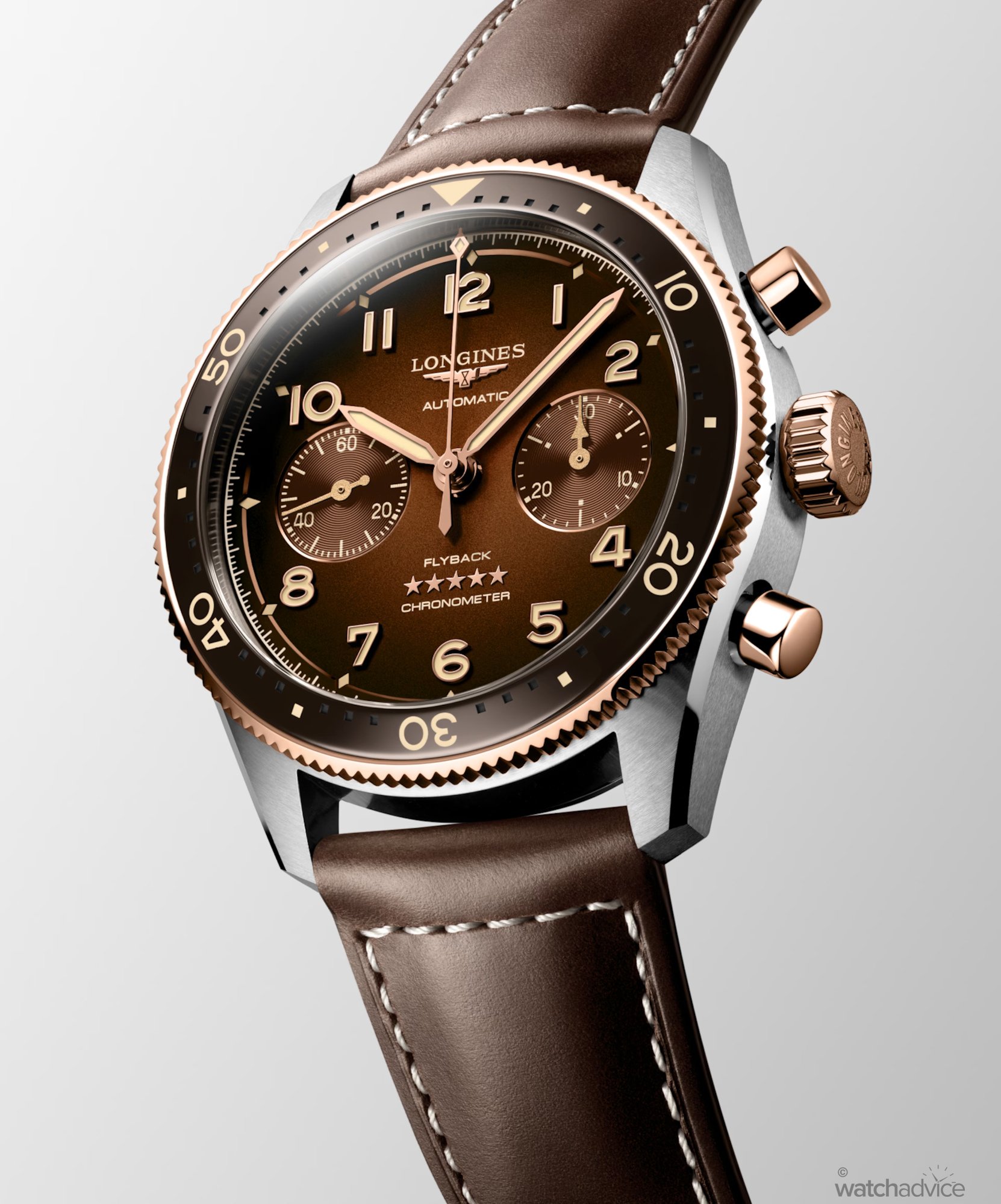
And Longines had the answer. The flyback chronograph fulfilled this need with a simple but highly effective function. Instead of pilots having to stop, reset, and restart the chronograph through separate actions, the Longines flyback chronograph allowed the seconds hand to be stopped, reset. It restarted with the push of a single button. This made the complication especially useful in aviation, where pilots needed to quickly time consecutive intervals while reducing the risk of human error.
Ninety years later, the Longines flyback remains one of the brand’s defining achievements, with its legacy continuing through modern collections such as the Longines Spirit Flyback and Spirit Pilot Flyback.
A Patent That Changed The Chronograph
Longines had already started producing the first examples of the flyback chronograph long before the patent application was filed on 12 June 1935. The patent was granted a year later, which is why Longines is now marking the 90th anniversary of the invention this year.
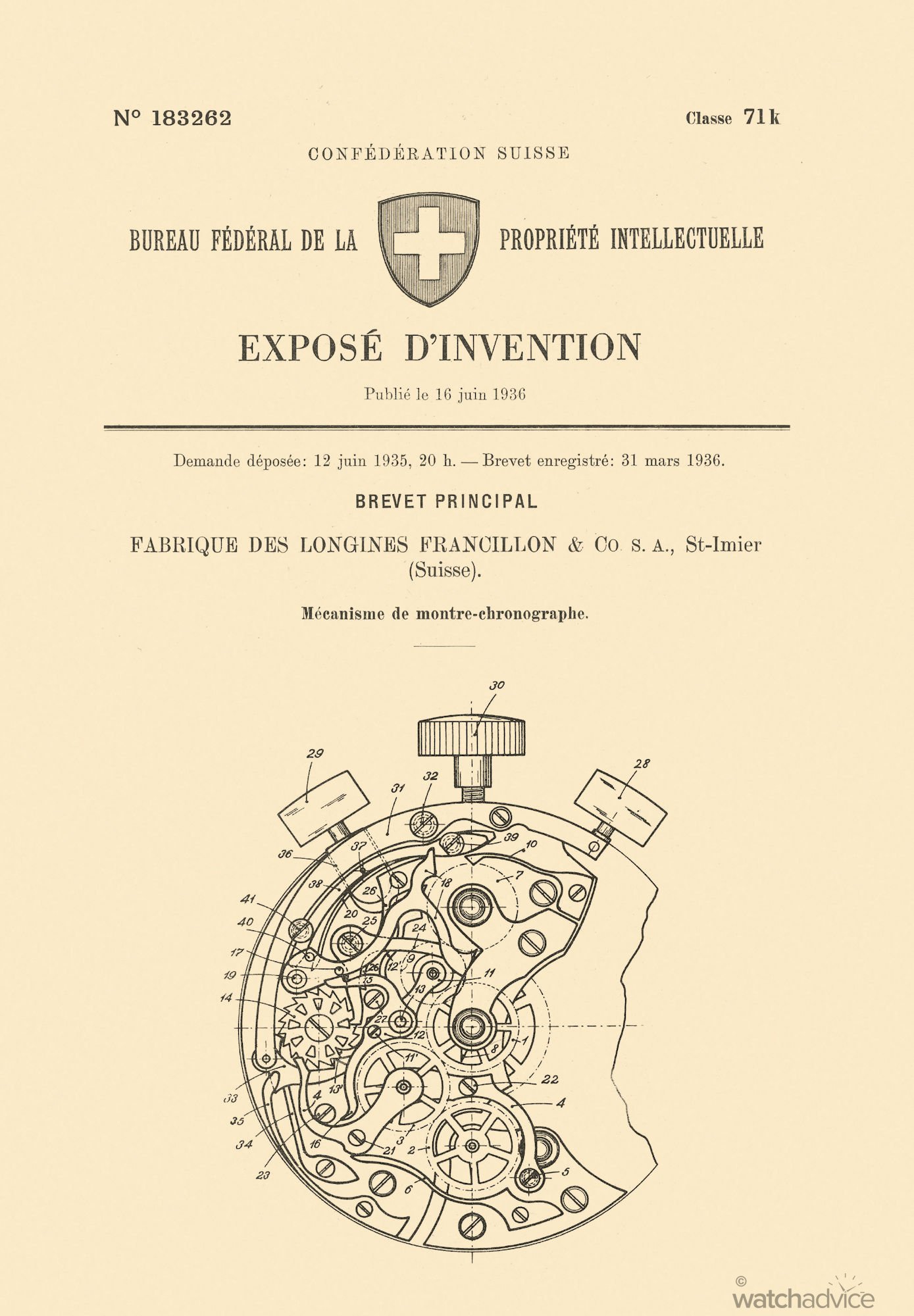
With the patent, Longines was given 15 years of protection, which played an important role as it restricted competing watch manufacturers from creating comparable mechanisms during that period. Even though many brands today feature the flyback chronograph mechanism in their repertoire, back then, this 15-year period gave Longines a strong technical lead in the development of professional flyback chronographs.
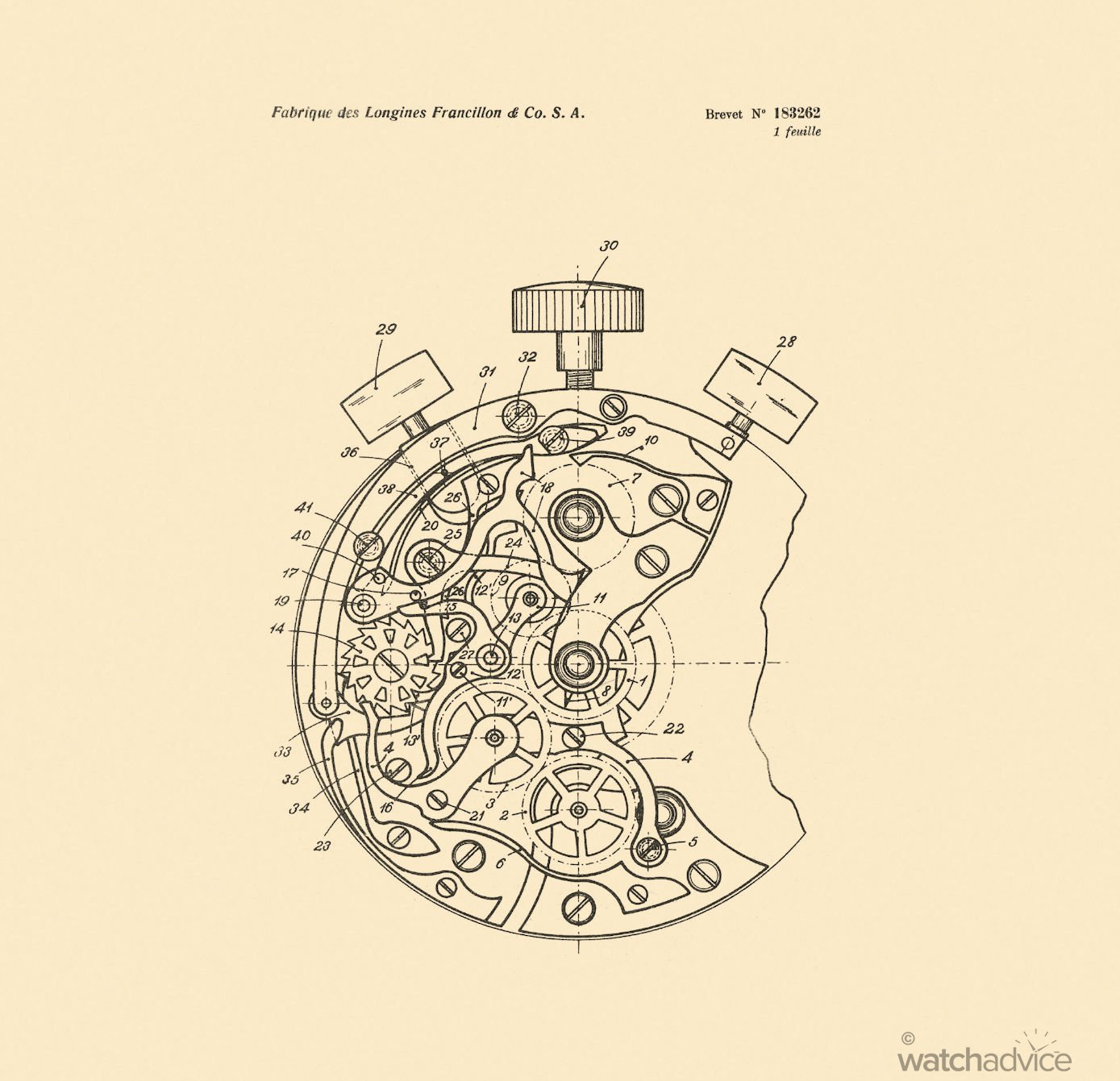
The original patent drawings for the flyback chronograph are still preserved in the Longines archives, and looking at these drawings, you can start to see the thinking behind the mechanical invention. Essentially, unlike standard chronographs, where attempting to reset a running mechanism could damage the delicate gears over time with constant use, a flyback system relies on a sophisticated mechanical sequence. While modern-day chronographs are built to be much sturdier, this may not have been the case 80 to 90 years ago.
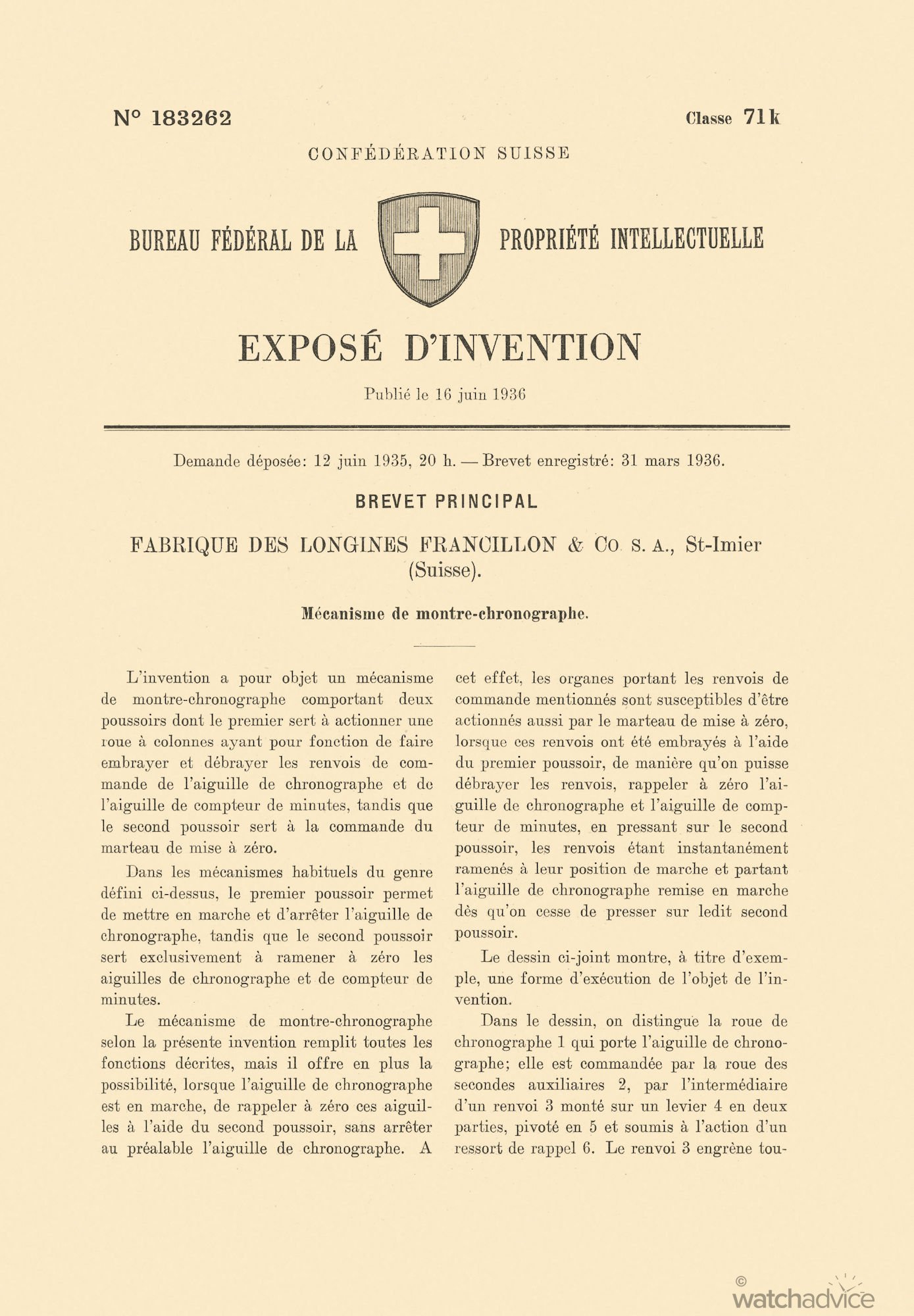
So how does it work? When the flyback pusher is engaged, the clutch, or coupling system, instantly disconnects the chronograph seconds wheel from the main movement gear train. A specialised hammer mechanism then strikes the heart-shaped cams, forcing the chronograph hands to instantly snap back to the zero position. The clutch then immediately re-engages, allowing the hands to start a new measurement from zero without interruption.
The 13ZN: The Birth Of A Longines Icon
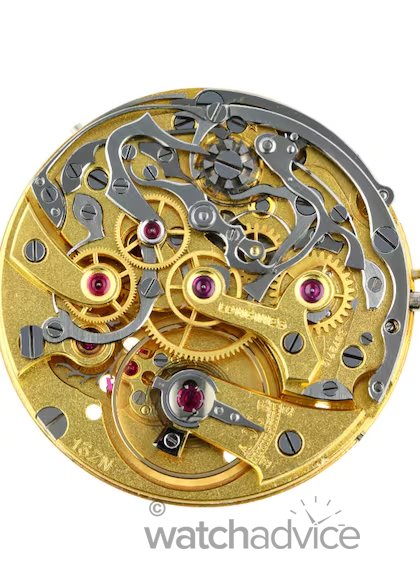
With the patent granted in 1936, the flyback mechanism found its most famous expression in the Longines 13ZN calibre. With this movement, Longines was able to bring the flyback mechanism into serial production, setting a new benchmark for chronograph design, performance and practicality.
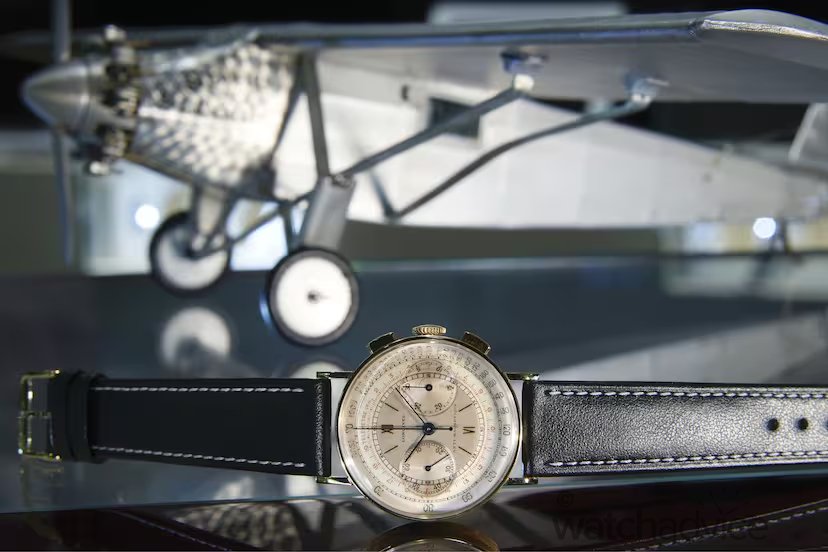
Today, the 13ZN is widely seen as one of the defining chronograph movements of the 20th century, helping to move the evolution of the complication forward while featuring a compact design and reliable operation. Longines, however, only produced the 13ZN for a limited period of time, which has only enhanced its rarity and collectability. Many early examples of this movement were delivered to Italy and the United States, places where the world of aviation was evolving and growing quickly. This helped to further establish the flyback chronograph’s importance to pilots and technical pioneers.
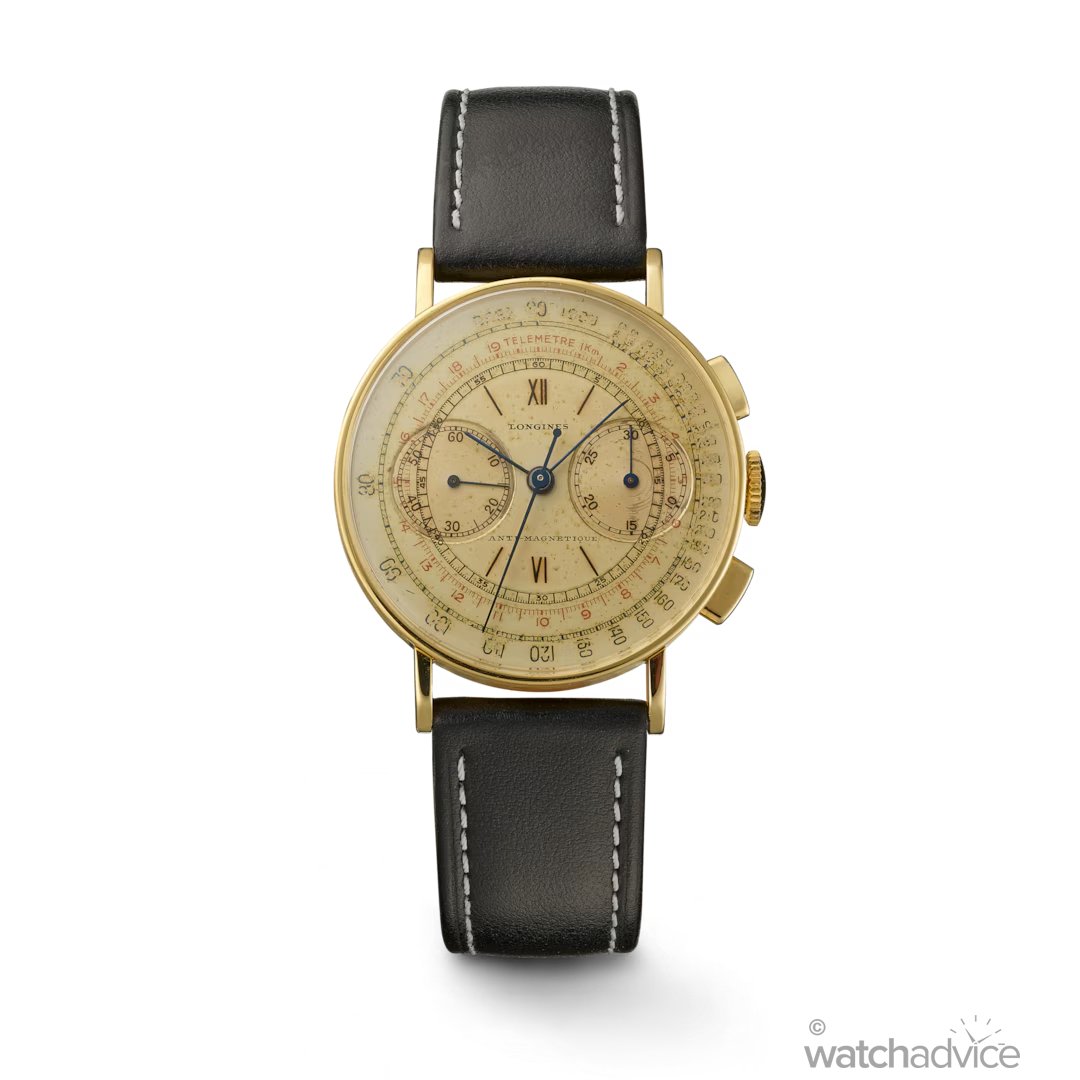
One such pioneer was American aviator and Antarctic explorer Richard Byrd. Byrd relied on a Longines flyback during his third expedition to Antarctica in 1939 and 1940, reinforcing the watch’s connection to exploration, precision and demanding real-world conditions.
Why The Flyback Mattered In Aviation
The flyback chronograph was perfectly suited to the aviation environment. Pilots often needed to measure successive stages of flight, whether for navigation, timing different manoeuvres, or making real-time trajectory adjustments. By allowing the chronograph to reset and restart almost instantly, the flyback mechanism reduced the number of actions required, ultimately saving precious time and reducing the risk of human error.
This is why Longines flyback chronographs became closely associated with aviators, explorers and record-breakers. The mechanism that Longines developed was not just clever and technical, but also served to solve a real-world problem. In an era when aviation and mechanical watchmaking were advancing together, the flyback chronograph became one of the few complications that proved to be incredibly useful in the real world.
History Examples of Longines Flyback Chronographs
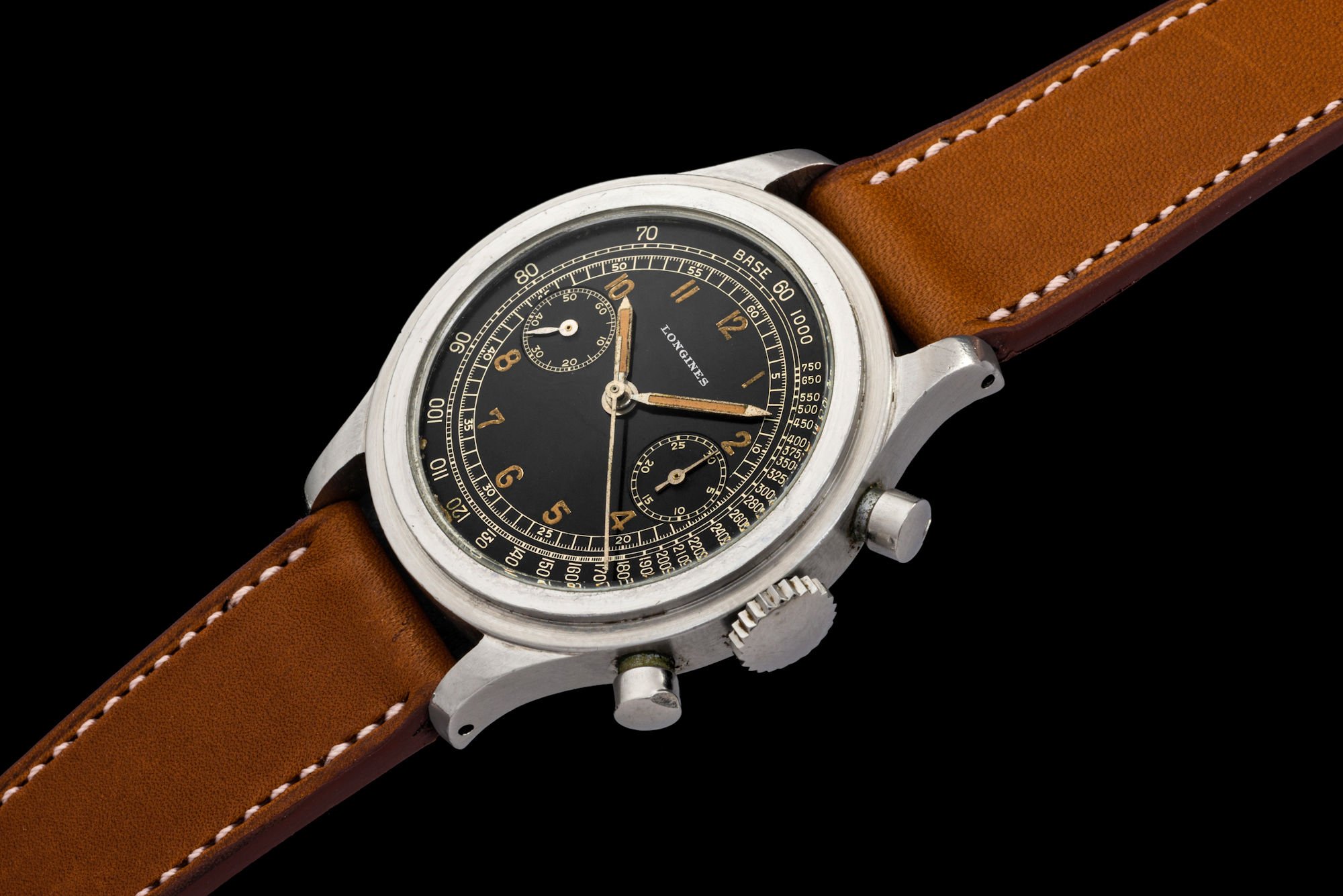
Several vintage examples of Longines flyback chronographs featured the iconic 13ZN flyback calibre, with one standout model being the “Tre Tacche” from 1942, also known as reference 4974. This watch came with a 37.5mm stainless steel case, a screw-down caseback, a black radium dial, and, more importantly, the 13ZN movement.
Another important example is the Longines Flyback Chronograph from 1941, serial no. 6’152’189. This timepiece also featured the 13ZN flyback calibre and a dial with an inner ring, where a fine granular layer of silver particles created a shifting play of light across the 60-second and 1/5-second scale. It is this kind of detail that shows Longines wanted to create timepieces that were not just functional, but also aesthetically pleasing to the eye.
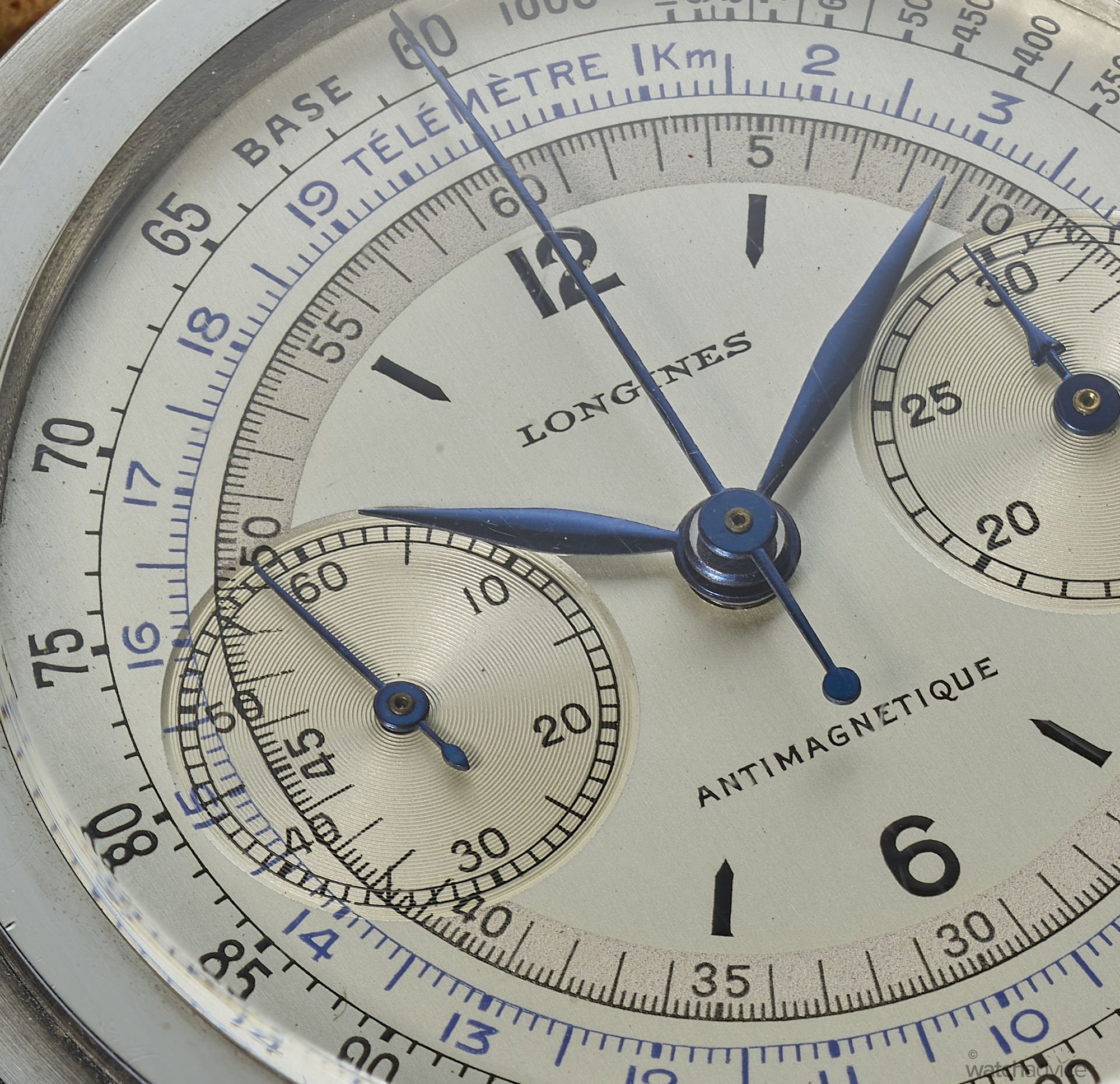
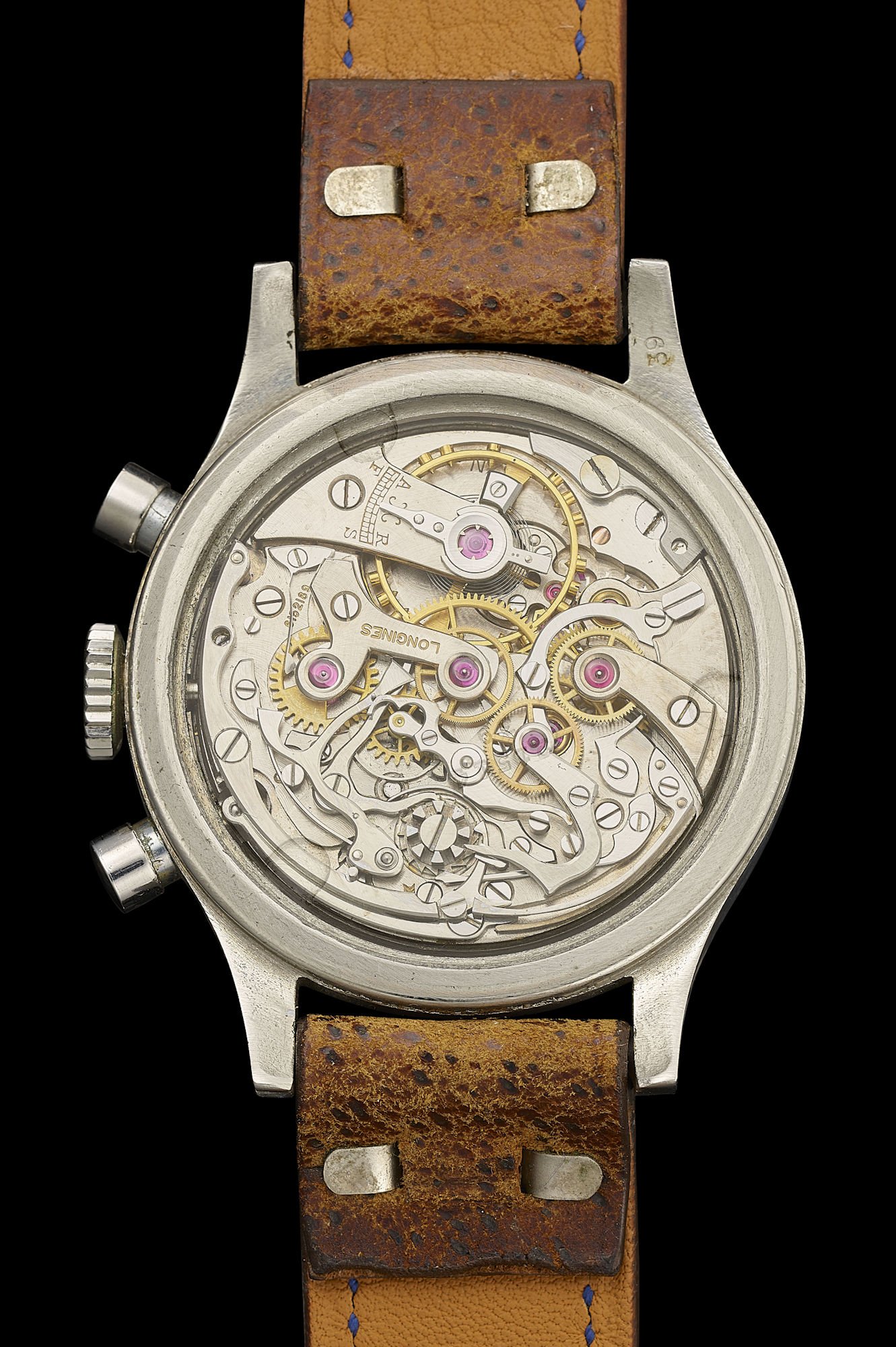
These watches are now highly sought after by Longines enthusiasts and collectors because they represent a period when aviation, engineering and watchmaking were all progressing together. This is what gives these vintage chronographs so much importance today. They are not just beautiful chronographs, but mechanical artefacts that showcased genuine technical advancement at the time. From the 13ZN calibre to the robust case designs and highly legible dials, these watches captured a moment in history when precision timekeeping had a direct role to play in aviation and exploration.
The Modern Flyback Chronograph
Even though the flyback chronograph is deeply rooted in Longines’ history, the brand has never rested on nostalgia alone. The complication still plays a part in the brand’s modern identity, especially through the Longines Spirit collection. Rewind back a few short years ago to 2023, when Longines introduced the Spirit Flyback, bringing one of the brand’s most important historical innovations back into the limelight, while also presenting it as a modern pilot’s chronograph watch.
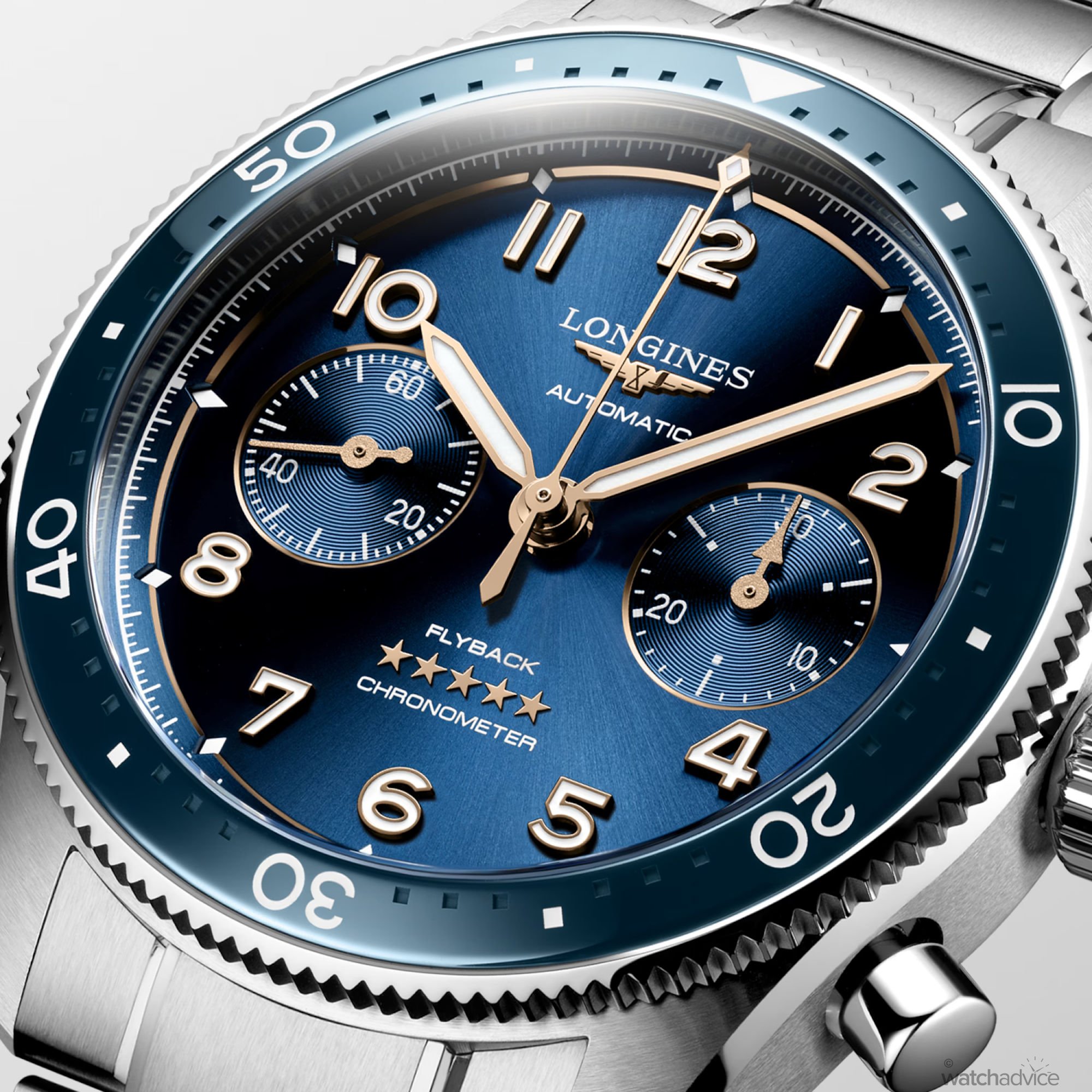
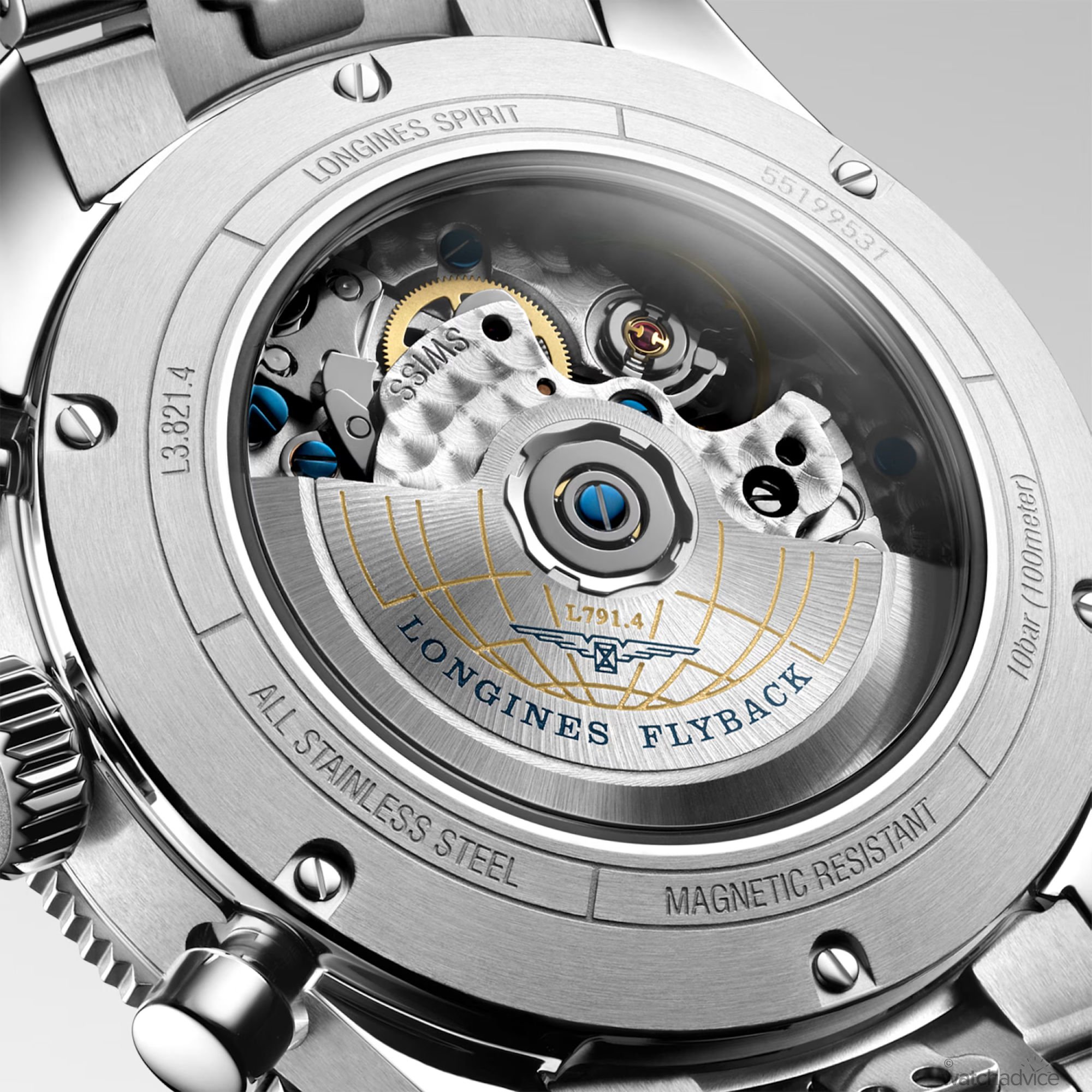
This Longines Spirit Flyback was powered by the self-winding L791.4 calibre and came with a 42mm stainless steel case that featured a bidirectional rotating bezel with a black ceramic insert, a screw-in crown, and 100m of water resistance. It features the Spirit collection’s aviation-inspired dial design, with a clean layout and Arabic indices for easy readability. The watch had the durability and practicality expected of a contemporary sports chronograph, while still keeping a direct link to Longines’ aviation heritage.
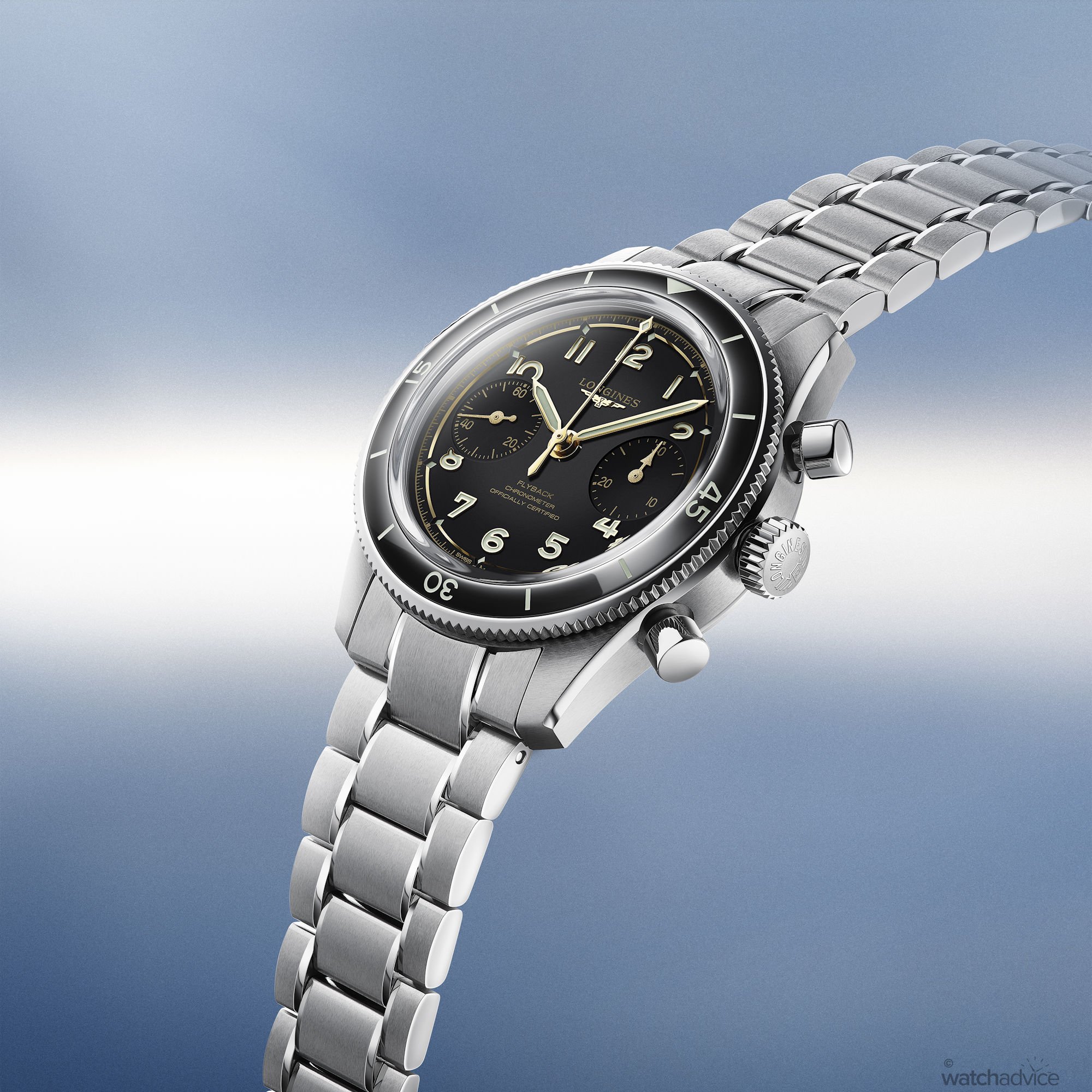
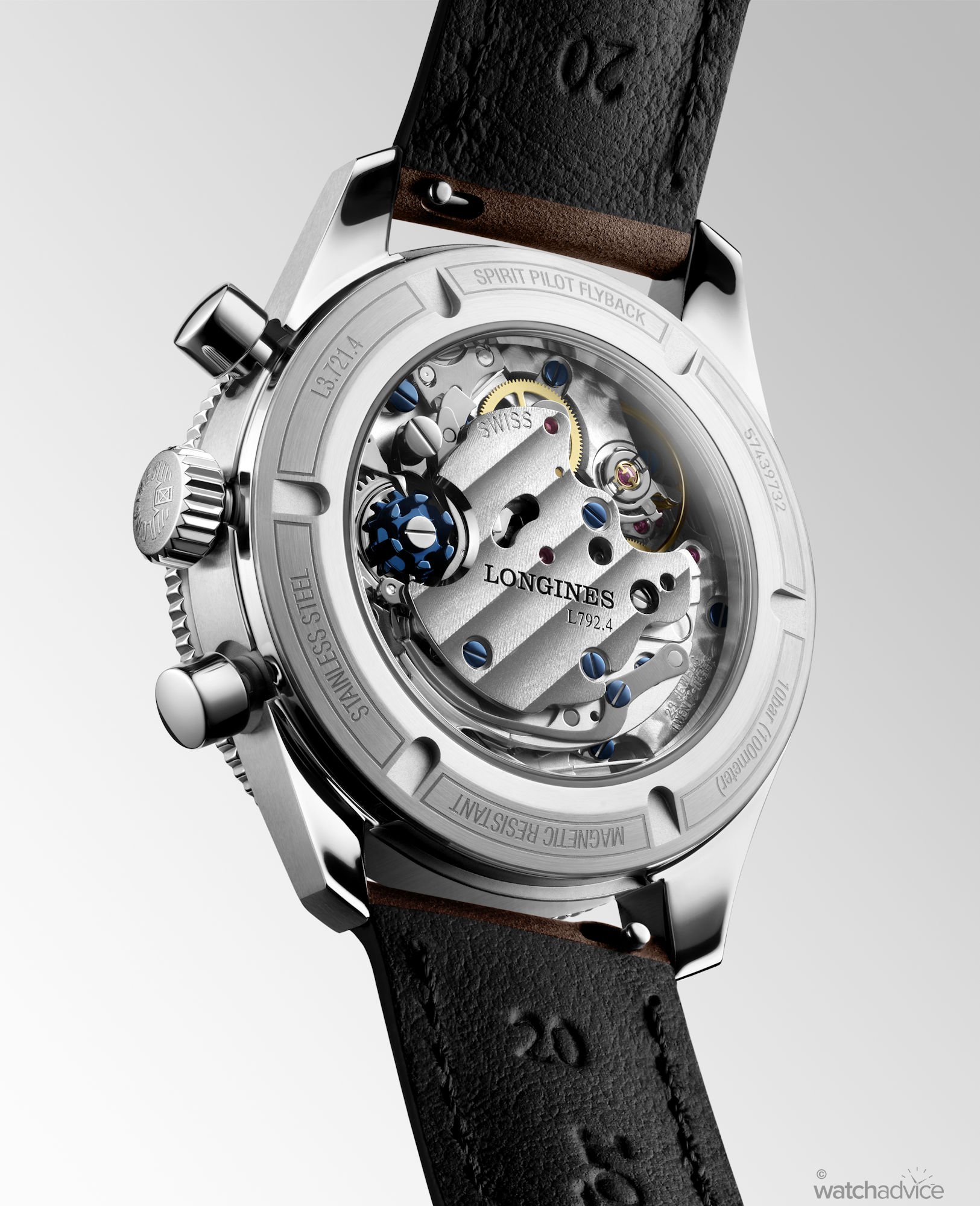
Then, last year, Longines introduced the 2025 Spirit Pilot Flyback, ref. L3.721.4, a chronograph inspired by the brand’s vintage flyback models. One standout characteristic of this timepiece was that it drastically improved upon previous versions, as Longines made the watch much more wearable with a new case size of 39.5mm x 13.4mm thick. The brand then integrated the exclusive hand-wound calibre L792.4. This modern flyback chronograph movement features COSC certification, a column-wheel flyback mechanism, a monocrystalline silicon balance spring, which provides higher resistance to magnetic fields along with thermal stability, as it does not expand or contract significantly due to temperature fluctuations, and a handy 68-hour power reserve for practicality.
A Legacy Carried Forward
Ninety years after the original patent for the flyback chronograph was published by Longines, the mechanism still remains one of the most important achievements in the brand’s watchmaking history. The appeal of the flyback chronograph comes from the clarity of the idea behind it. This mechanism was designed to solve a real-world problem that came with operating traditional chronographs, and with this innovation, it allowed users to time consecutive intervals quickly, accurately and, more importantly, with far fewer actions.
Now, in an age dominated by digital instruments, the mechanical flyback chronograph still has a special kind of charm. It is simple in concept, yet complex in its execution, all while being genuinely useful in practice. That balance of elegance and function has always been central to Longines, and the flyback chronograph remains one of the best examples of that philosophy.
What makes the story even stronger is that Longines is still carrying it forward. The modern Spirit Flyback and Spirit Pilot Flyback collections show that the flyback is not just a chapter from the brand’s past, but an idea that still resonates today. With Longines confirming that a new take on the Spirit Pilot Flyback will be unveiled in the second half of the year, the legacy of this aviation-born complication is clearly far from finished.