

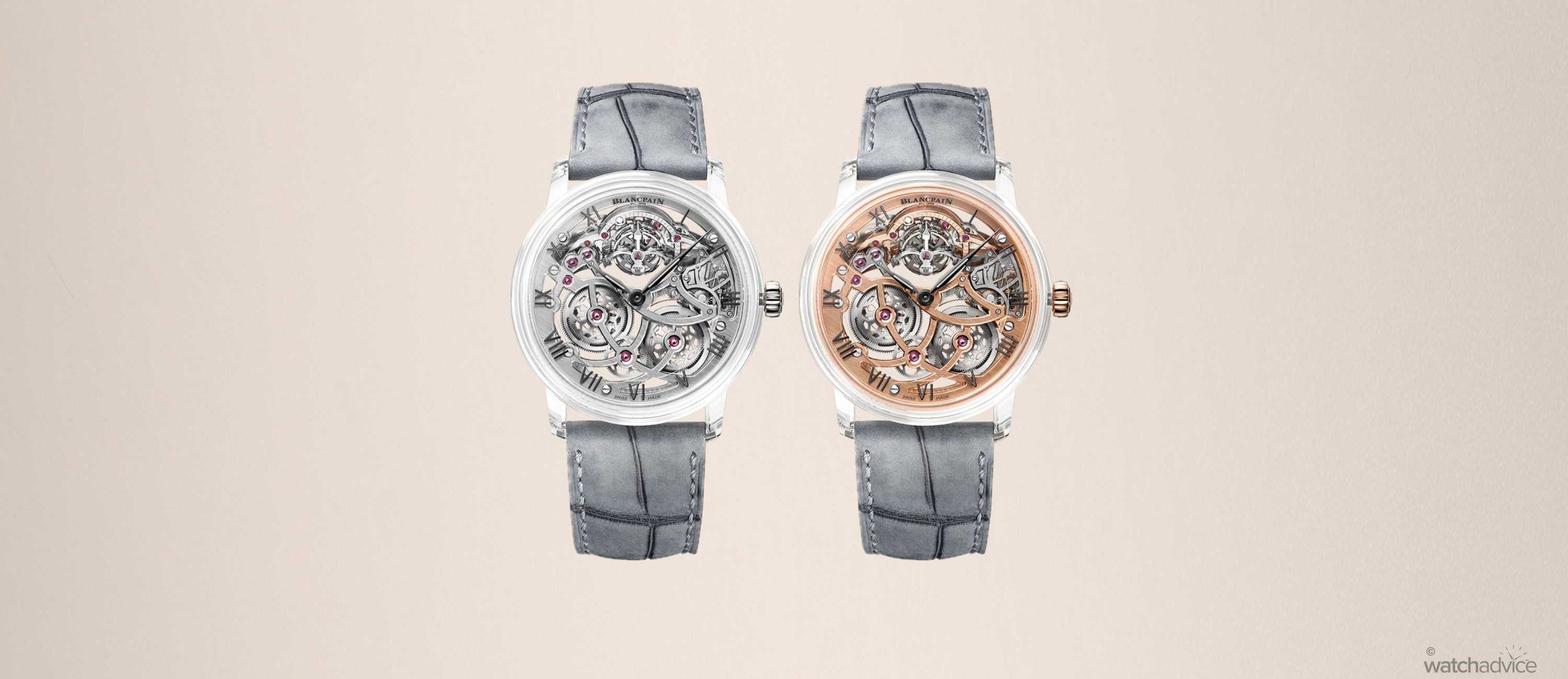
Blancpain takes a different angle on precision with the new Villeret Carrousel Incliné and unveils two new sapphire models.
The carrousel is not a common complication in watchmaking. On the surface, it does look like any other tourbillon mechanism, with a spinning cage housing the balance wheel. However, the two are different, something I’ll get into very shortly. That said, Blancpain has been developing its carrousel complication for almost two decades, and is one of the few manufactures who have done so.
With the new Carrousel Incliné, a new addition to the Villeret collection, Blancpain has taken things in a new direction. Instead of interpreting its signature complication, Blancpain has gone back to the original purpose of the mechanism, improving its chronometric performance by inclining the regulating organ at 30 degrees.
The result is a completely new movement, the Manufacture Calibre 222ISQ, featuring a one-minute flying carrousel that sits at an angle within the movement. It has taken four years of development, with Blancpain conducting extensive testing to determine the ideal angle for the best possible timekeeping performance.
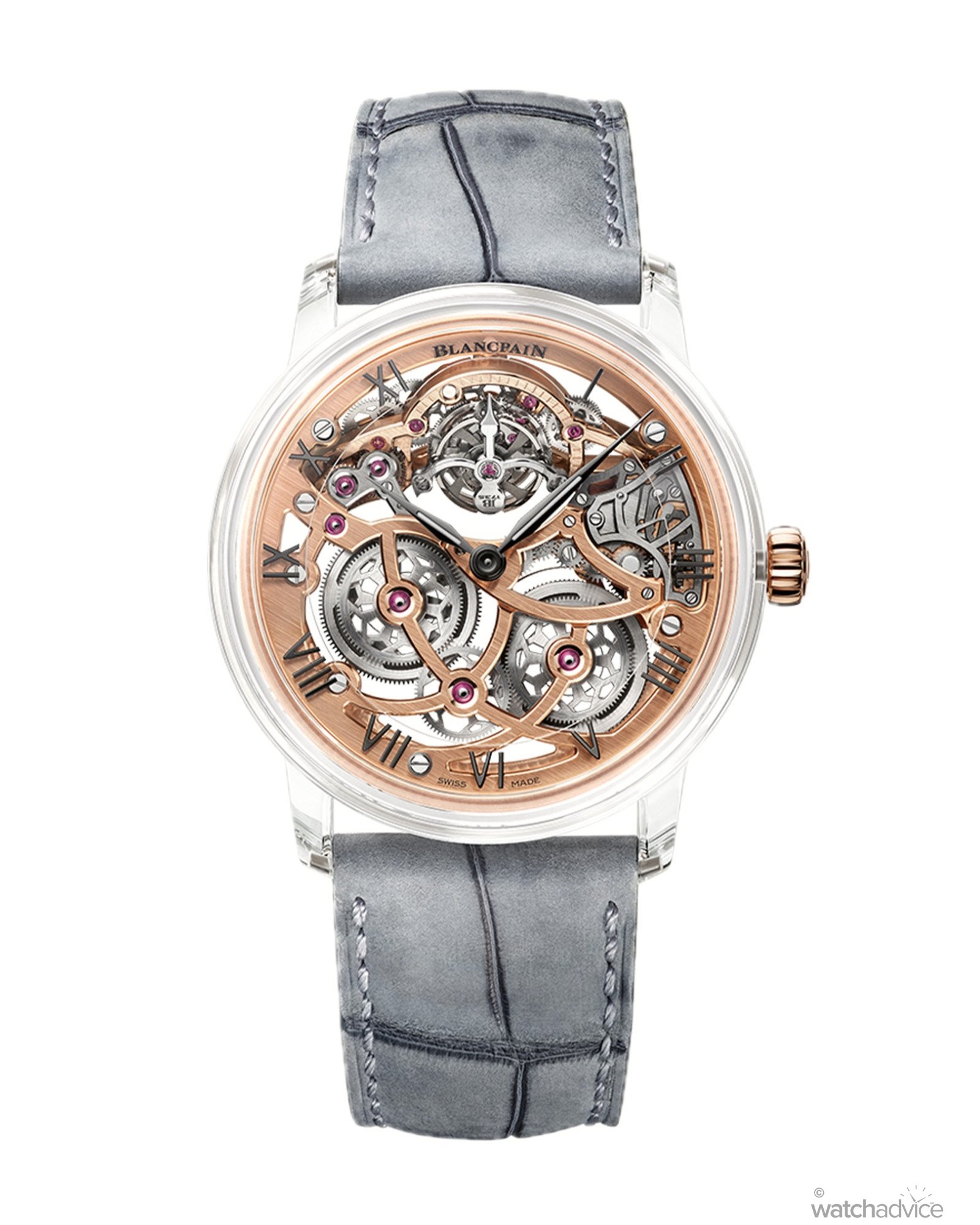
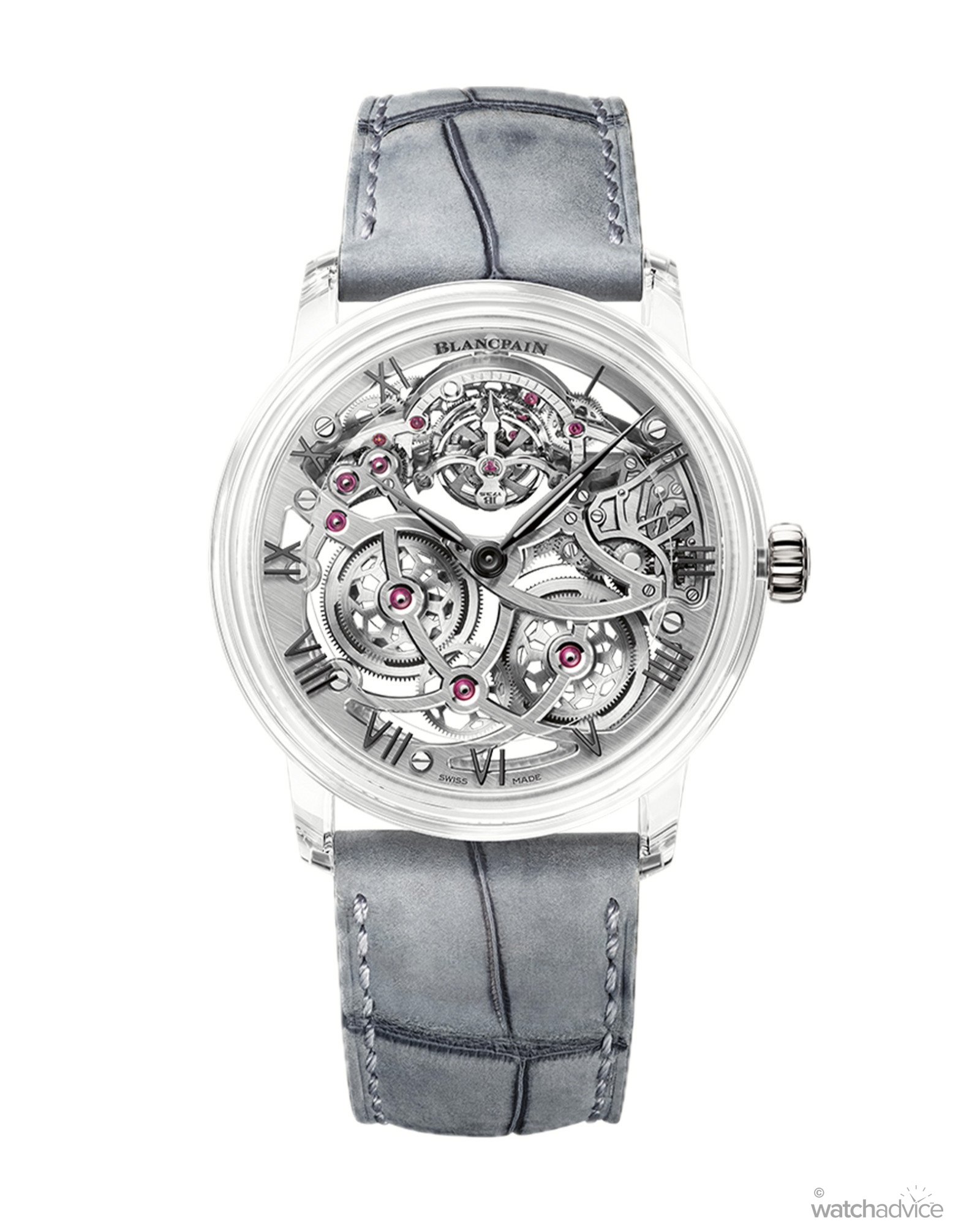
Alongside the new movement, Blancpain has introduced its first-ever fully sapphire case, with a skeletonised movement, one in rhodium-plated 18-carat 5N gold or a striking 18-carat 5N red gold. Each allows you to see almost every mechanical component from virtually every angle. And despite all of this, the Carrousel Incliné measures just 40.30mm in diameter and 11.30mm thick!
A Carrousel Is Not A Tourbillon
Before getting into the new watch, let’s delve into the difference between a carrousel and a tourbillon. The two are often mistaken for one another, understandably, as both use a rotating cage to house the balance wheel and escapement in an effort to counteract the effects of gravity on timekeeping. However, the setup to do so is a little different. Let me explain…
A traditional tourbillon uses a single gear train to power the escapement and drive the rotation of its cage. The carrousel, on the other hand, uses two separate gear trains. One delivers energy to the escapement, while the other controls the rotation of the cage itself. This makes for a more involved construction, with the two systems working independently of one another.
The flying part refers to the construction of the cage, whether it is a tourbillon or a carrousel. In a flying construction, the upper bridge is removed, leaving the regulating organ supported from below. This gives the mechanism a floating appearance and, importantly, allows for a much clearer view of the components.
Blancpain brought the carrousel back to life after a century’s hiatus in 2008, when it introduced the world’s first one-minute flying carrousel wristwatch. Since then, the manufacture has developed several variations, including combinations with minute repeaters and chronographs, as well as a model incorporating both a tourbillon and carrousel in the same movement.
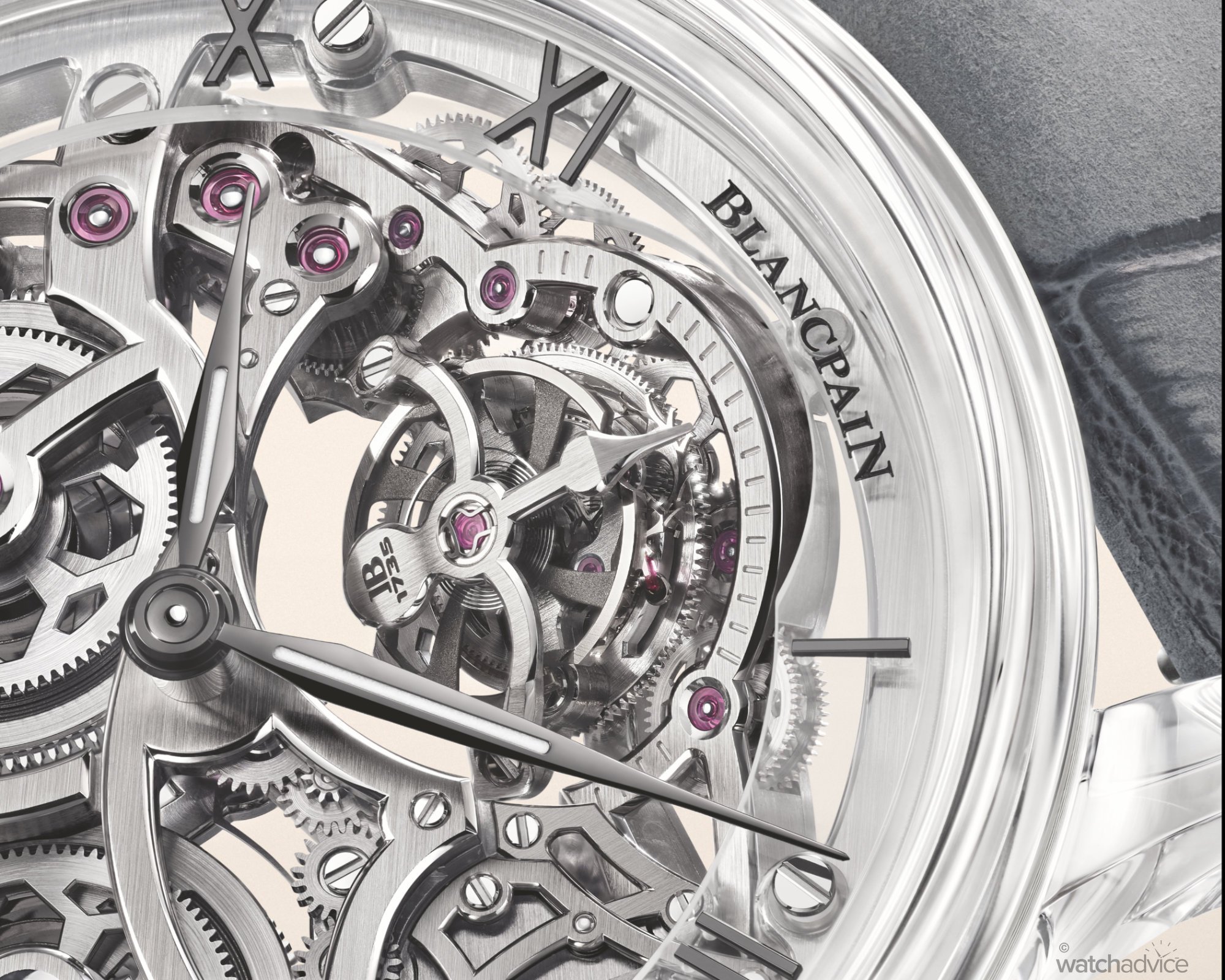
With the new Villeret Carrousel Incliné, Blancpain has unveiled the complication with a different objective in mind: improving its precision by changing the angle at which the regulating organ operates.
The 30-Degree Sweet Spot
The idea behind the Carrousel Incliné came from Blancpain’s President and CEO, Marc A. Hayek, who wanted to take the carrousel further and improve its original purpose. The initial concept was to create an inclinable carrousel, but the team needed to establish whether changing its angle would actually offer a measurable benefit to timekeeping.
This led to four years of research and development, with Blancpain testing different inclinations in five-degree increments, from zero through to 35 degrees. The team measured amplitude, running rate and positional variation across the six standard positions of a watch to determine how each angle affected chronometric performance.
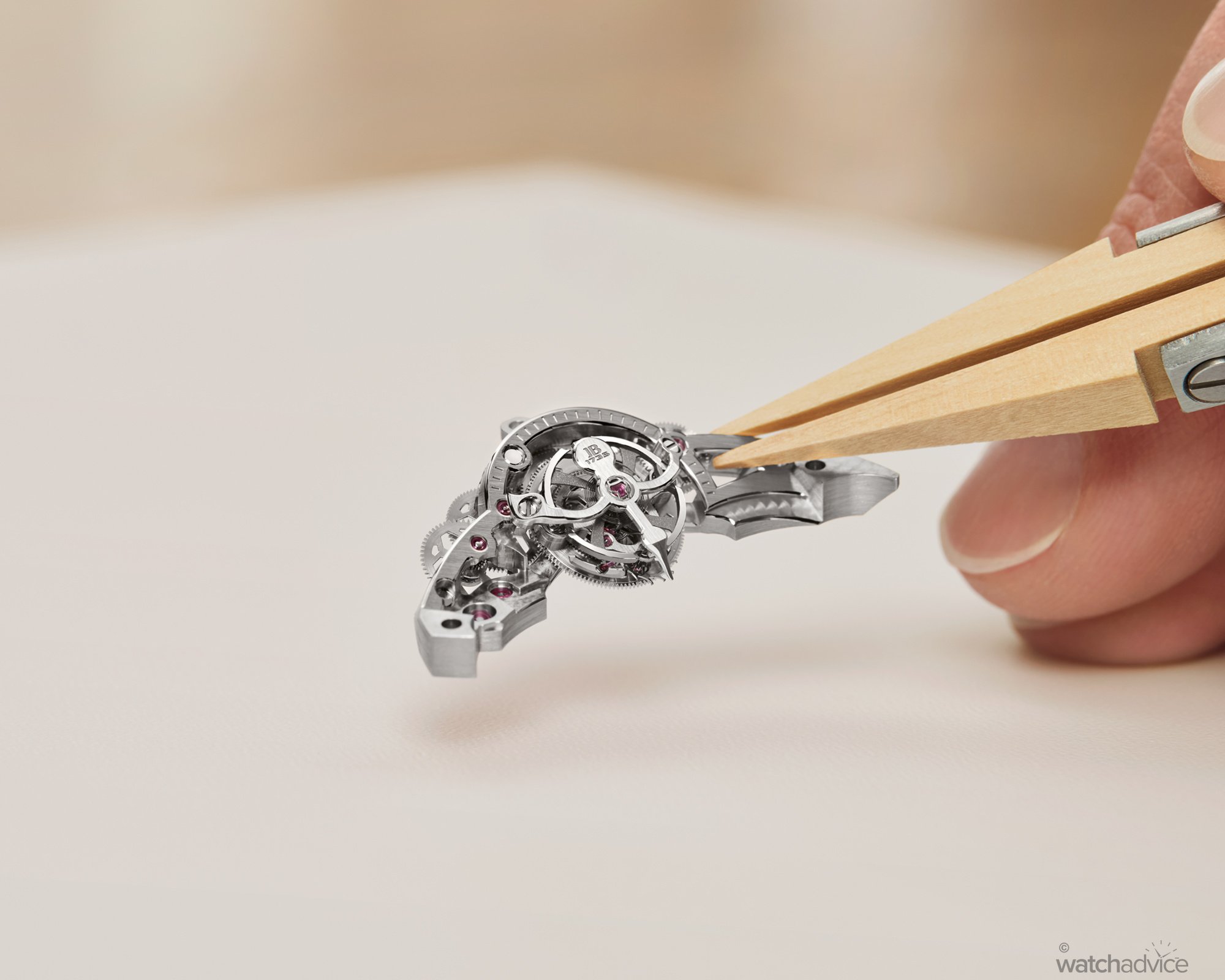
The findings pointed towards 30 degrees as the ideal position, providing the best balance between precision, movement proportions and overall aesthetics.
To understand why this makes a difference, a conventional carrousel rotates parallel to the mainplate, as you would see with any standard tourbillon movement. While this helps average out positional errors when the watch is held vertically, when the watch is lying flat, the balance wheel and escapement remain in a horizontal plane throughout its rotation.
By inclining the carrousel at 30 degrees, Blancpain changes this geometry. Even when the watch is resting dial-up or dial-down, the regulating organ continues to rotate through different angles relative to gravity. This means it can average out a greater range of positional errors, helping to maintain more consistent timekeeping regardless of how the watch is positioned. This is a similar principle (in effect) behind how a bi-axis or gyrotourbillon works, but without the use of a mutual-axis rotating cage in this case.
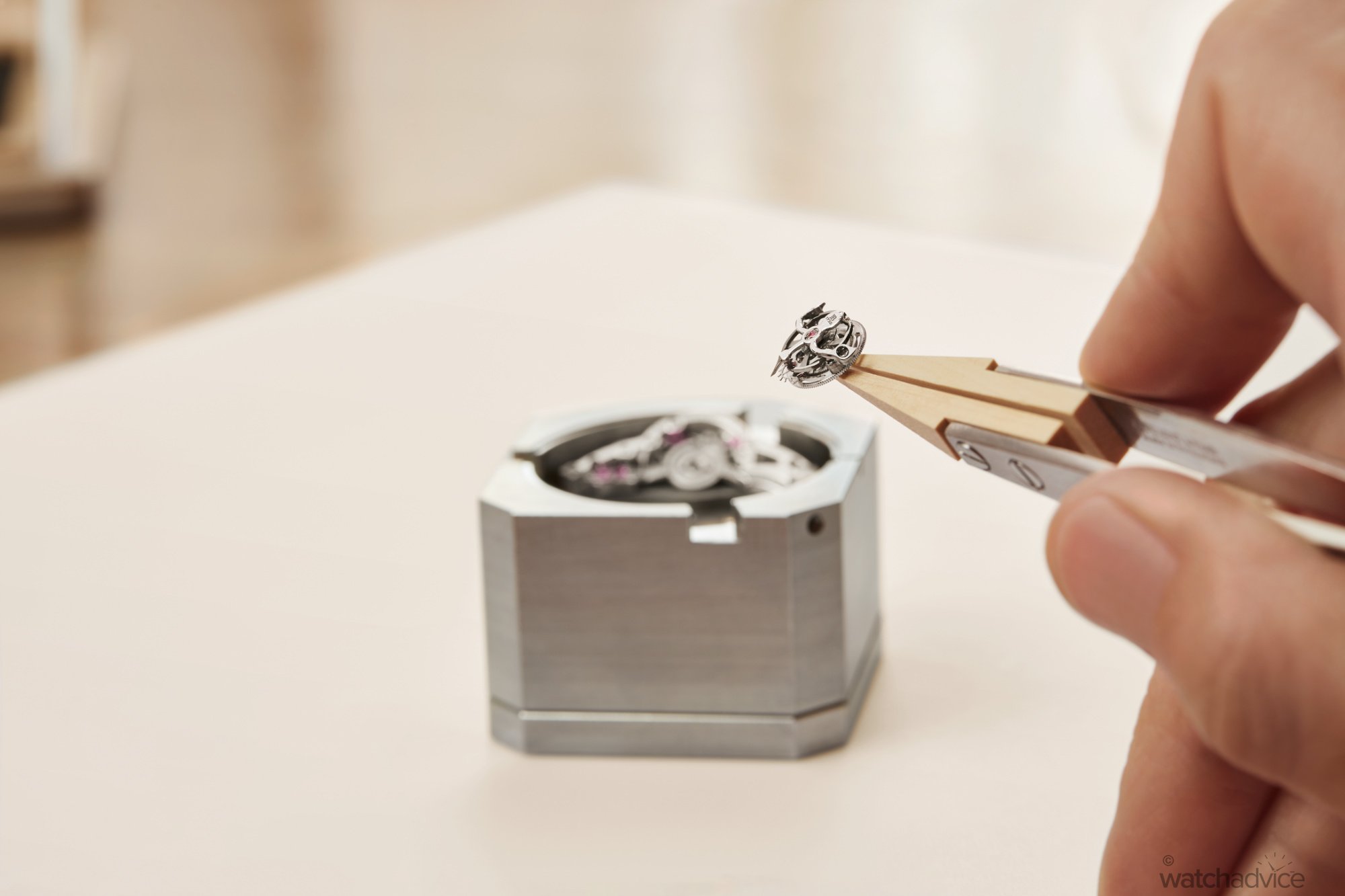
And Blancpain has achieved the desired result. Each Carrousel Incliné comes with an individual Blancpain chronometry certificate, documenting its performance across all six positions and throughout the entire 100-hour power reserve. The specified mean daily rate tolerance is 0 to +2 seconds per day.
What’s more impressive is that this performance is maintained throughout the movement’s full running time, rather than being measured at a single point when the mainsprings are fully wound, meaning Blancpain has eliminated a majority of the amplitude loss across the time period.
A New Movement Built Around The Carrousel
At the heart of the Carrousel Incliné is the new Manufacture Calibre 222ISQ, an entirely new movement developed from, as Blancpain puts it, a blank sheet of paper. It will also serve as the foundation for Blancpain’s future generation of carrousel movements.
The manually wound movement has 224 components and pivots on 37 jewels, operating at a relatively standard 28,800 VPH / 4Hz. As I mentioned briefly, it provides a 100-hour power reserve through two mainspring barrels connected in series, which are designed to deliver a more consistent supply of energy as they unwind.
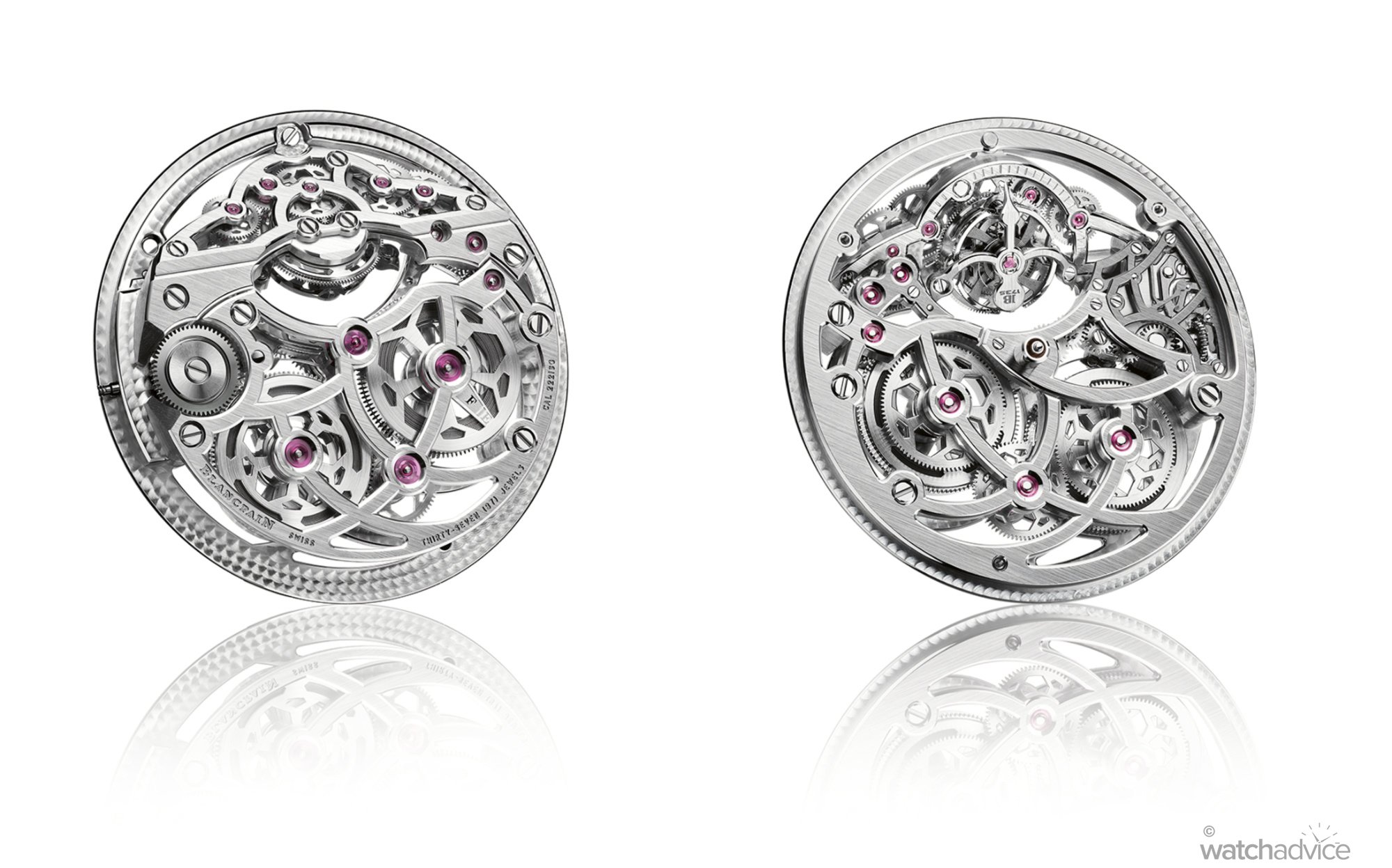
Thanks to their skeletonised construction, both mainsprings are on display, including how much they are wound. The barrel that supplies the going train also incorporates a small power reserve indication marked with E for empty and F for full.
The carrousel itself has received a substantial redesign. Its total mass has been reduced by 8.5%, while rotational inertia has been lowered by 30%, which makes a big difference in energy consumption. Blancpain has also enlarged the centrally positioned balance wheel to 8mm, while reducing the diameter of the cage wheel to just 9mm.
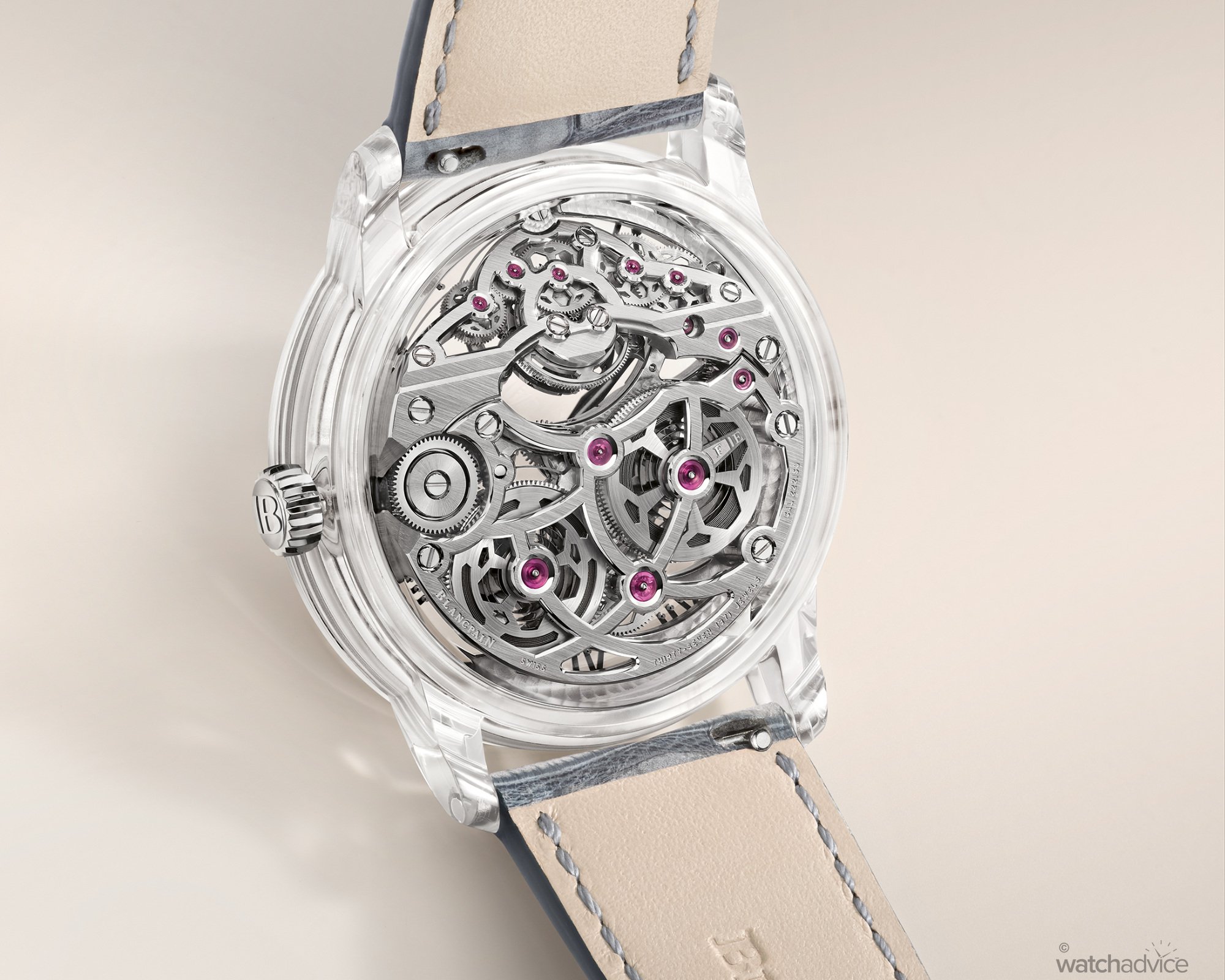
There was also the challenge of delivering power to a regulating organ operating at an inclined angle. Rather than making the entire 30-degree change at one point, Blancpain has distributed this transition across two successive gear engagements, at 22 and 8 degrees respectively, before the power is separated into the carrousel’s two drive trains.
When it comes to high-watchmaking, it is the incremental improvements that all add up, especially when it comes to energy efficiency and performance.
A Watch All On Show
For the first time in the manufacture’s history, an entire watch case has been made from sapphire, including the case middle, back, bezel and crystal. This allows for the movement and all its inner workings to be on full show, and in a watch like the Carrousel Incliné, why wouldn’t you want to show it off?
The sapphire is grown using the Kyropoulos process in Switzerland before being machined and polished in La Chaux-de-Fonds. Each of the main sapphire components requires approximately 100 hours of machining and polishing, so it is not a straightforward case to produce. The transparency allows the movement to be viewed from the front, back and sides, with the sapphire dial and extensively openworked architecture giving you a near-unobstructed view of all the components.
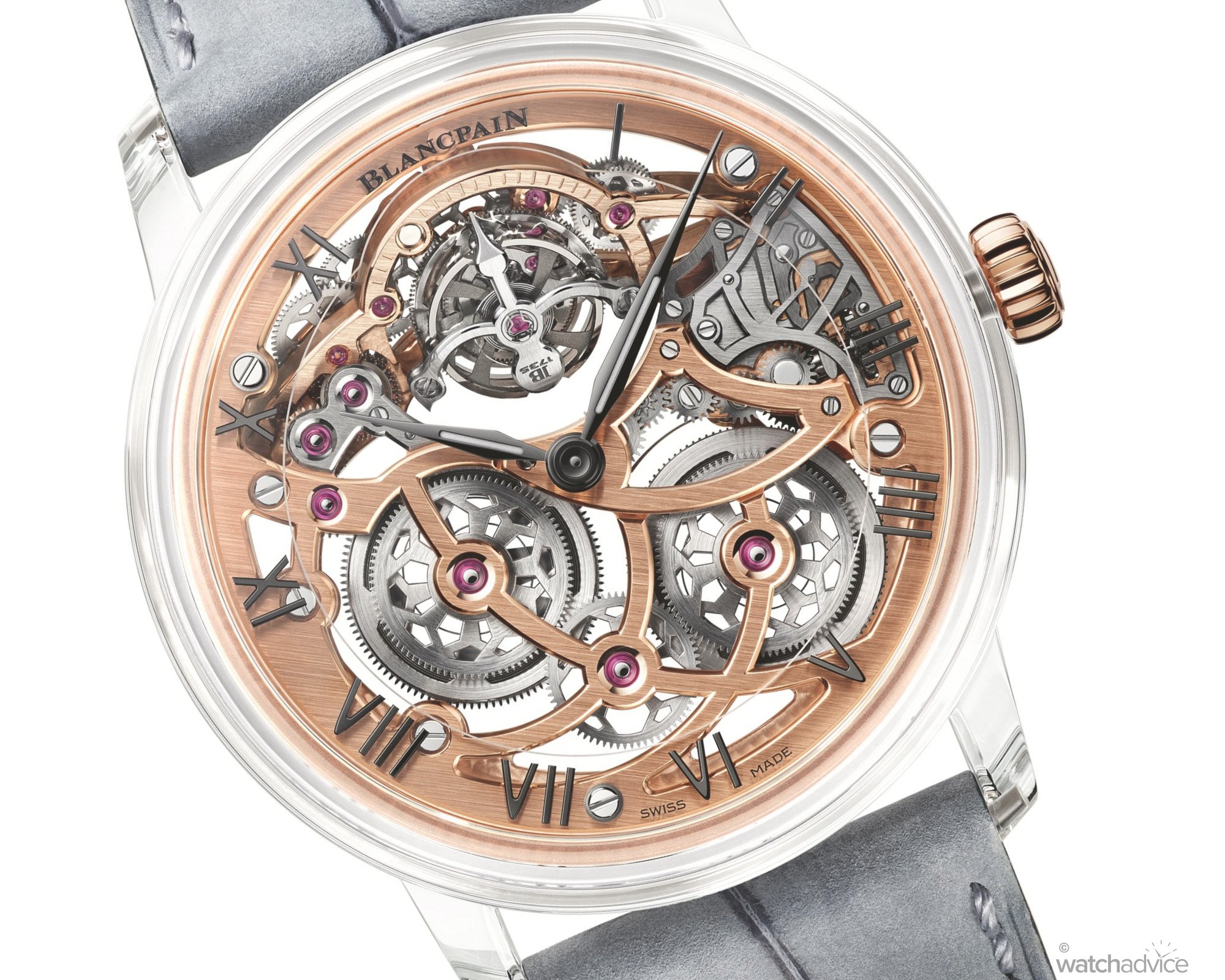
The movement itself is made from 18-carat gold and is available in either rhodium-plated 5N gold or 5N red gold. Depending on your personality, you can either go a little more subdued or a little less! Both versions feature 210 hours of hand finishing, carried out in Blancpain’s Decoration Workshop in Le Brassus. To put that into a 9-5 perspective, that is a little over five work weeks of five 8-hour days.
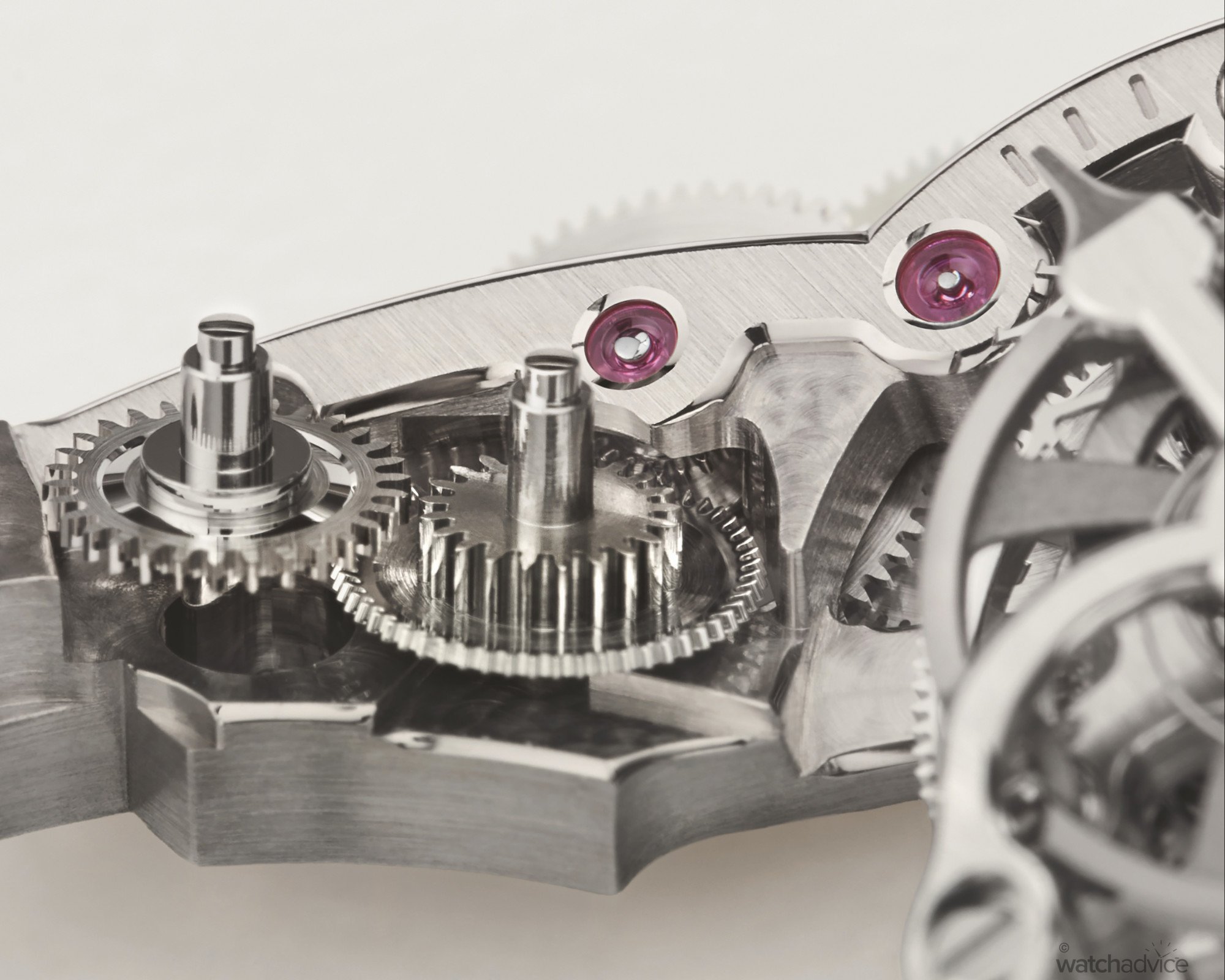
Why so long? Hand finishing takes time, and even more so when you think the Carrousel Incliné includes 253 sharp inward angles throughout the movement. Each one is shaped and polished by hand, using traditional tools and progressively finer abrasives before being given its final polish. The mainplate or barrel bridge alone requires between 55 and 60 hours of work.
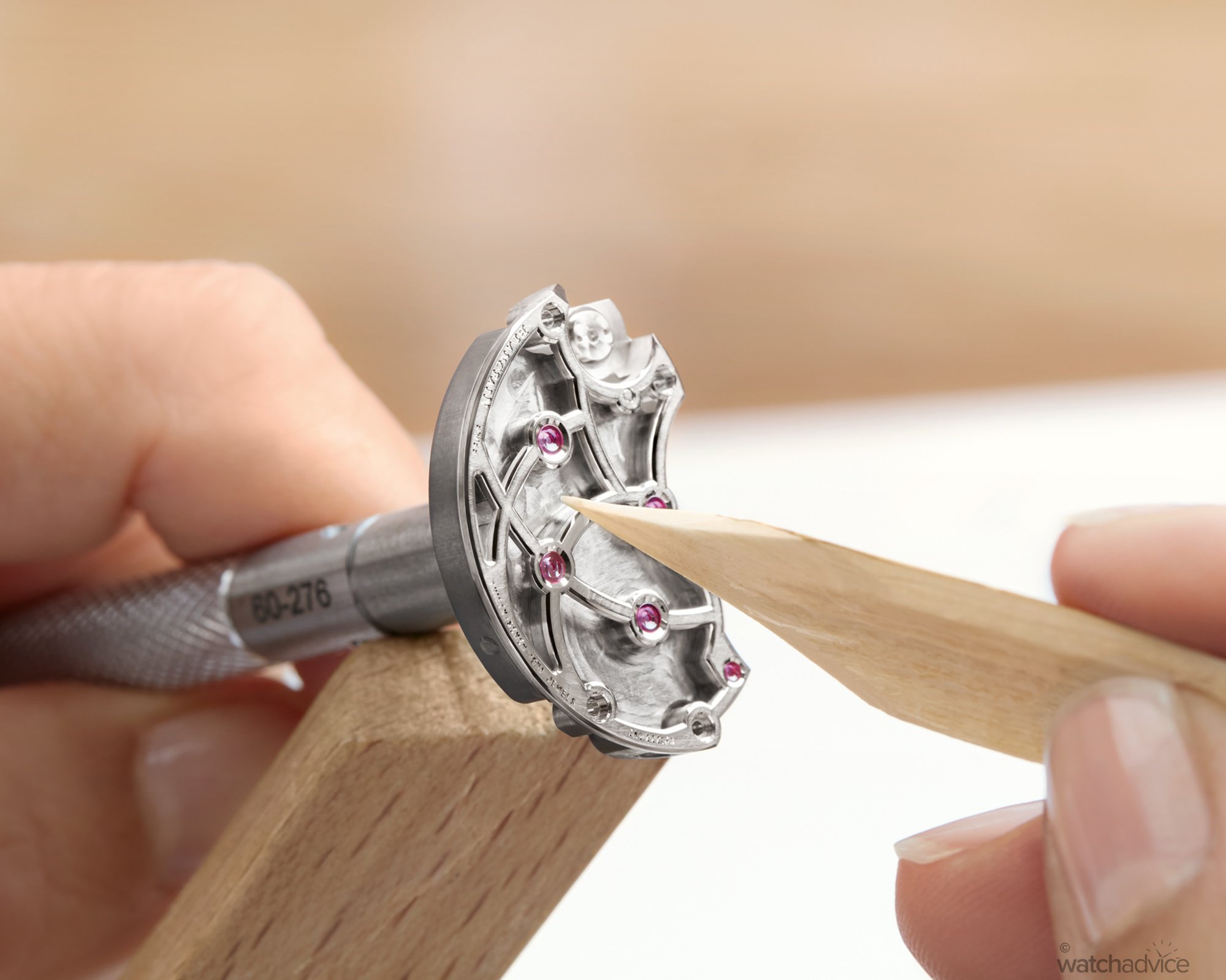
Blancpain has even applied finishing to both the upper and lower surfaces of the movement components. With the movement visible from practically every angle, everything is on show, and there is nothing to hide. Even the areas that would normally sit out of sight have received the same level of attention. Blancpain even went a step further by having to create more than 60 custom-made tools specifically for finishing the Calibre 222ISQ movement.
Initial Thoughts
When people think of Blancpain (myself included), the first thing that comes to mind is dive watches, thanks to the success of the Fifty Fathoms. So because of that, I think the Carrousel Incliné is a significant release for Blancpain. Not only for the reason of the brand having a history with this complication, but also it showcases Blancpain’s ability to do jaw-dropping high horology.
Since bringing the carrousel back into modern watchmaking in 2008, Blancpain has continued to develop it, and this latest version shows that there is still room to explore what can be done with a mechanism that is well over a century old.
If I were to take that thought a little further, what I like most about this release is that the 30-degree inclination has a purpose, and not just for show. Blancpain has spent four years testing and measuring the effects of the inclination before settling on the final construction. The chronometry certificate, covering all six positions throughout the full 100-hour power reserve, gives the watch real substance behind the technical claims.
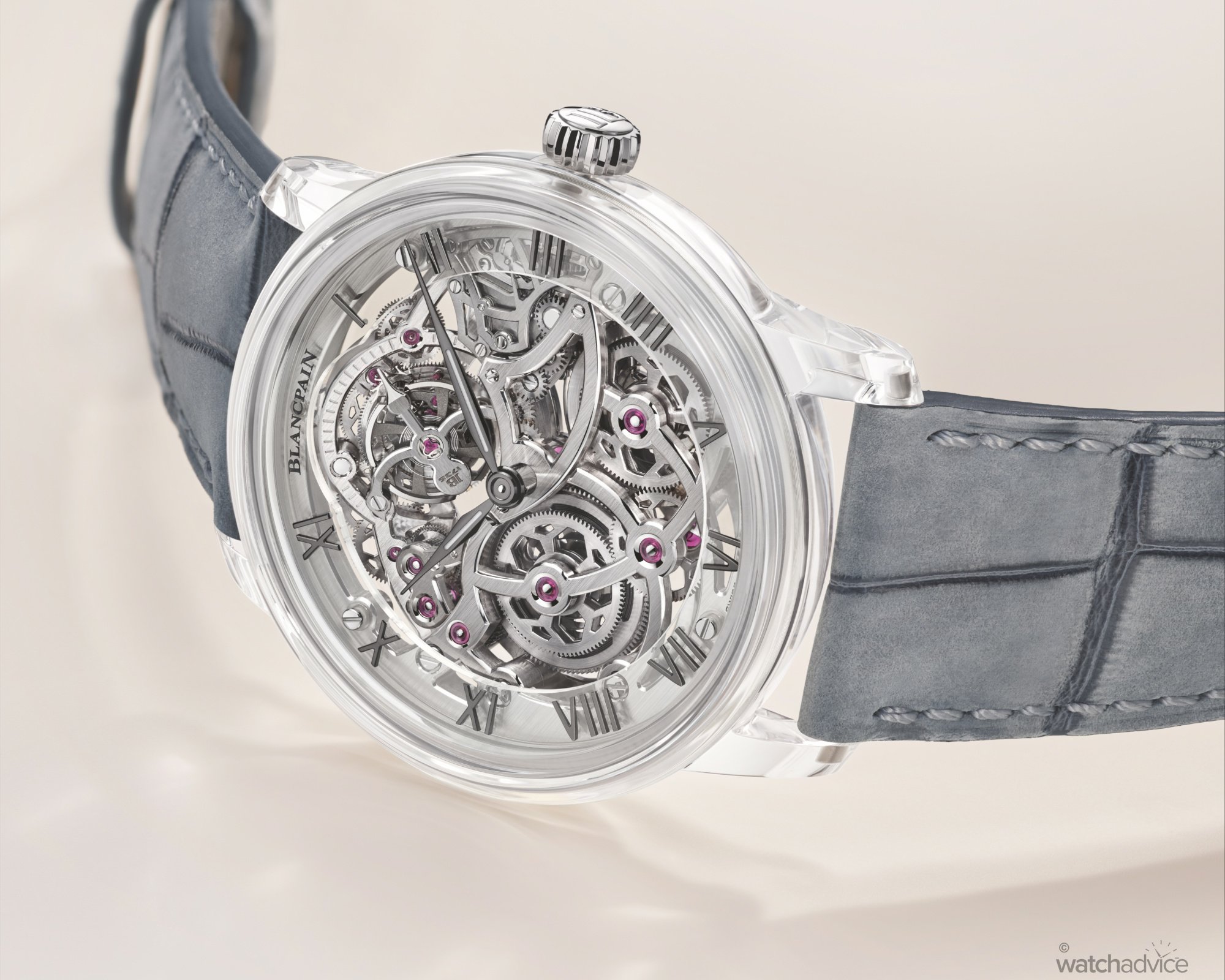
Then there is the presentation. The fully sapphire case is a first for Blancpain, and it gives the skeletonised movement a completely different look. When you have a fully transparent sapphire case, it lets the light in from all angles, and this allows the movement to take on a new look when compared to a solid metal case. Whether you do or don’t like sapphire watches, they are hard to beat when it comes to showing off movement aesthetics.
For me, this is a perfect example of Blancpain taking one of its established complications and giving it a great amount of technical development. The carrousel has been part of the brand’s identity for almost 20 years, and with Calibre 222ISQ, Blancpain has created a new platform, adding to the Villeret collection, that will likely play an important role in its future complicated watchmaking.
References & Specifications
| Feature | Specification |
|---|---|
| References | 66222S 0000 55B (rhodium-plated 5N gold) / 66222S A 0000 55B (5N red gold) |
| Dimensions | 40.30mm diameter × 11.30mm thick x 46.45mm lug-to-lug |
| Case material | Polished Sapphire |
| Dial | Sapphire dial with inclined and bevelled gold appliqués, with applied, polished black gold baton-style indexes, with either a 18-carat gold, rhodium-plated 5N gold or 5N red gold movement under |
| Movement | Manual-wound Manufacture Calibre 222ISQ, beating at 28,800 VpH / 4Hz with a one-minute flying carrousel inclined at 30 degrees |
| Functions | Hours, minutes and seconds |
| Power reserve | 100 hours |
| Certification | Individual Blancpain chronometry certificate, 0 to +2 seconds per day |
| Water resistance | 3 bar (30 metres) |
| Strap | Glazed blue-grey alligator leather, interchangeable with a gold folding clasp with safety system |