

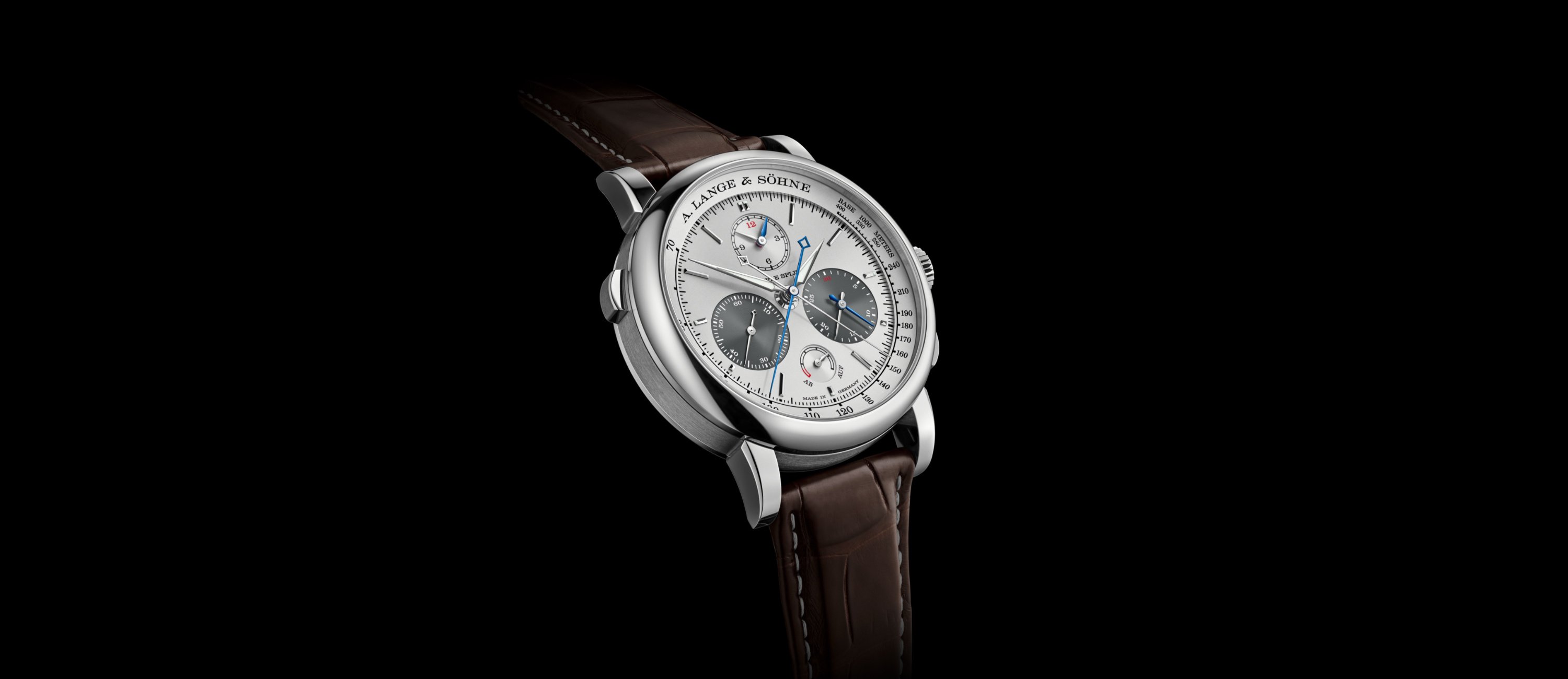
The Triple Split is arguably the most complicated of chronographs, but A. Lange & Söhne does it effortlessly, and the new Triple Split in platinum is a testament to this.
A. Lange & Söhne has introduced a new version of its Triple Split, bringing the complicated chronograph back in a 950 platinum case with a rhodié-coloured dial and contrasting grey sub-dials. Limited to just 100 pieces, it continues what is one of the most technically demanding chronograph constructions in modern watchmaking.
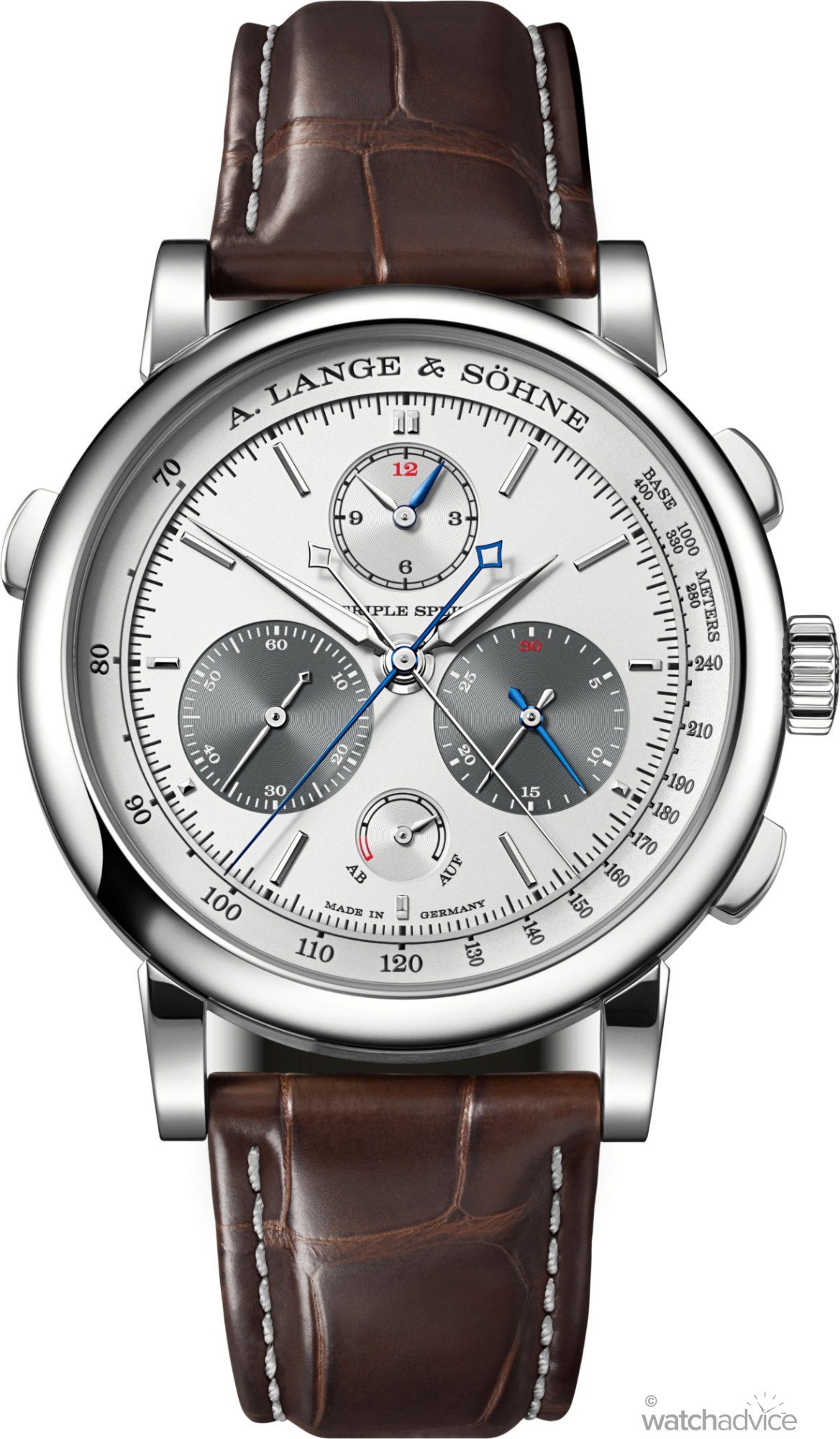
The new A. Lange & Söhne Triple Split Chronograph in platinum
The Triple Split first arrived in 2018 and immediately stood apart from other split-second chronographs thanks to its ability to measure intermediate, comparative and overall times across a period of up to 12 hours. That is possible because Lange extended the rattrapante mechanism beyond the seconds display, adding additional rattrapante hands for the minute and hour counters.
A Statement On The Wrist
The new Triple Split uses a 43.2mm case that is 15.6mm thick, with Lange using 950 platinum for the case and pairing it with a rhodié-coloured dial and darker grey auxiliary dials.
The layout is fairly busy, as you would expect from a watch with this many functions, but there is a clear hierarchy to the displays. The central seconds hands take up most of the main dial, while the minute counter sits at 4 o’clock and the hour counter at 12 o’clock. The small seconds is positioned at 8 o’clock, with Lange’s familiar UP/DOWN power-reserve indicator at 6 o’clock.
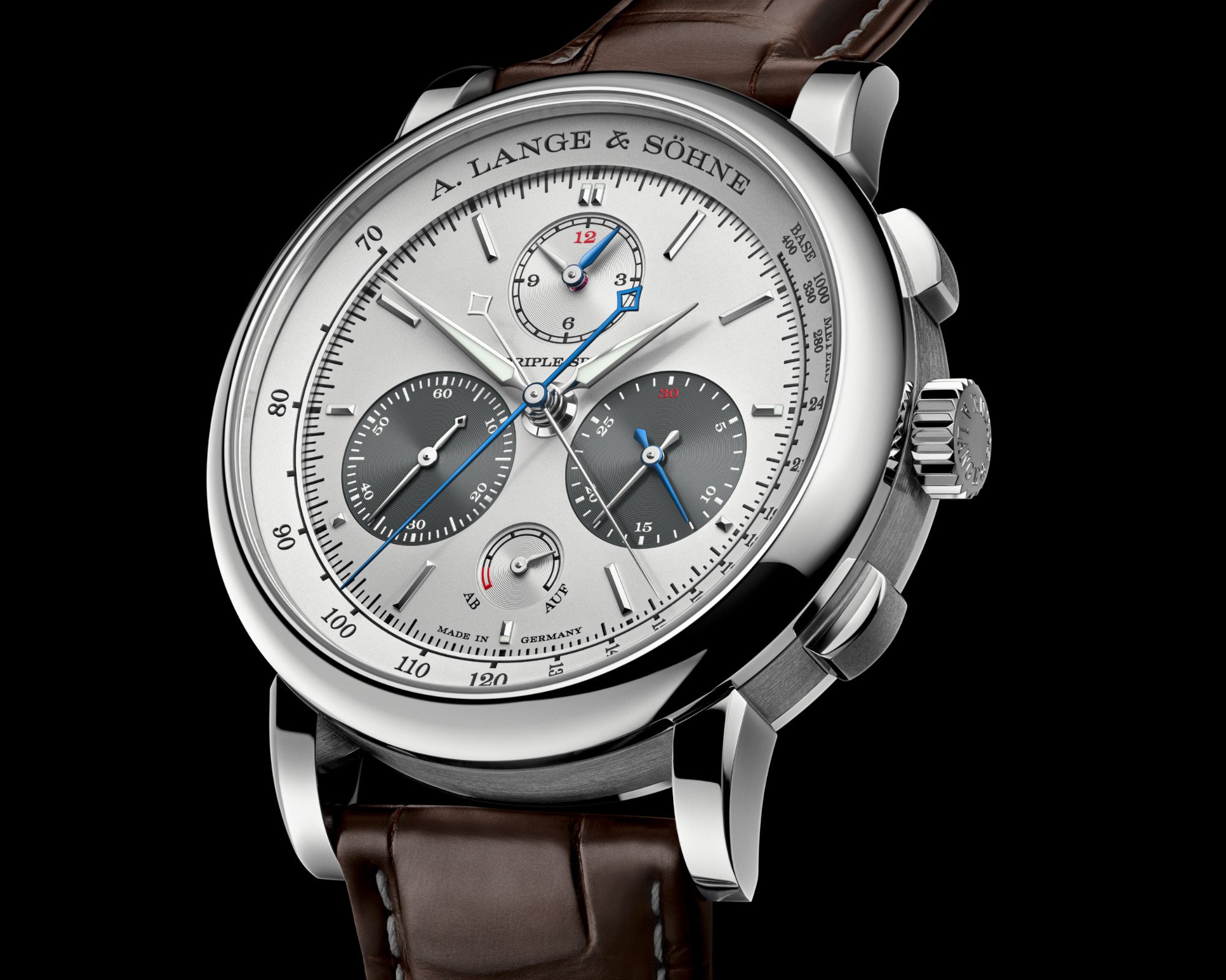
The chronograph hands are paired with blued rattrapante hands, while red details are used on the hour and minute counters and power-reserve display for key indications. The hour and minute hands are also luminous, with luminous markers at 3, 6, 9 and 12 o’clock.
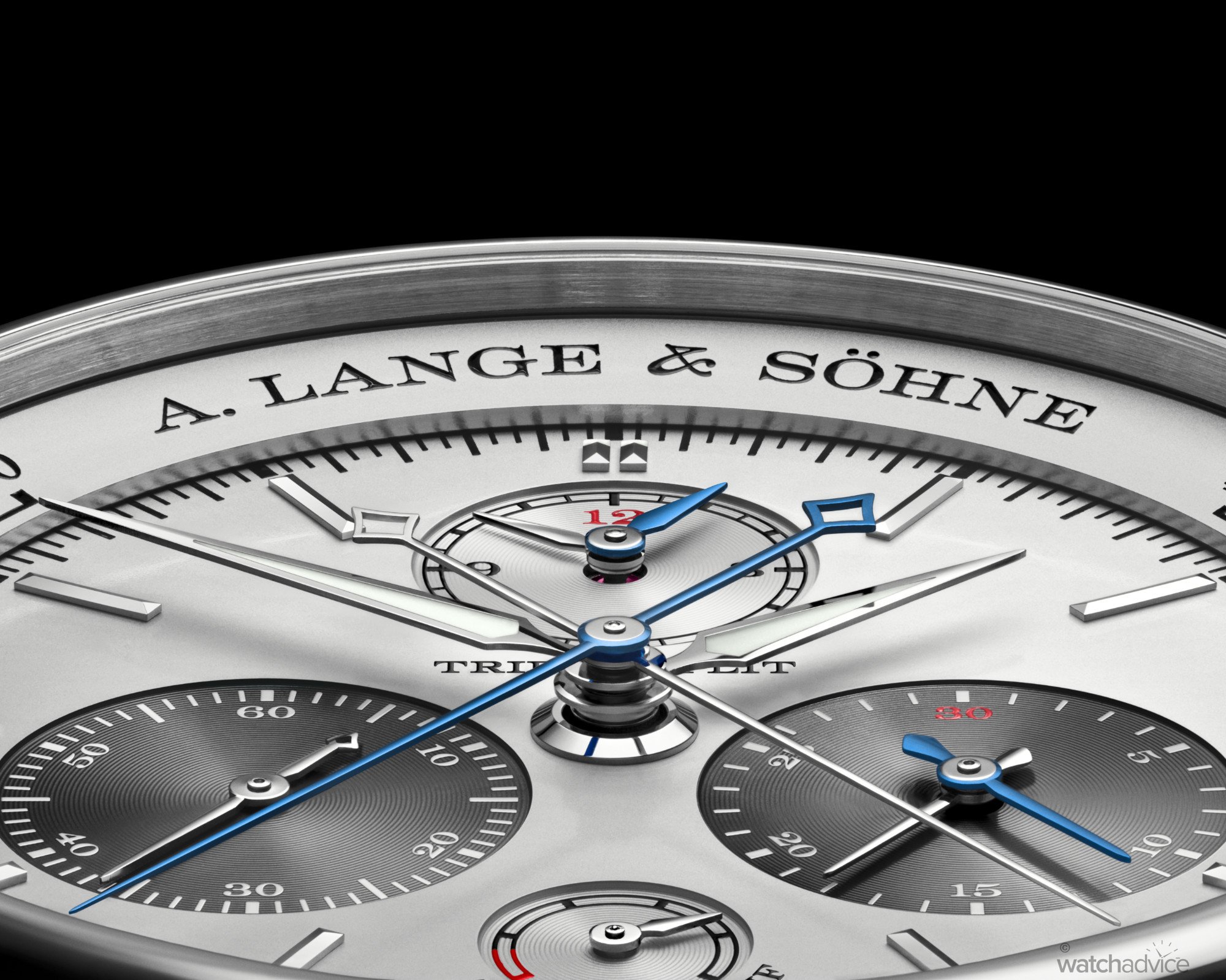
It comes fitted to a dark-brown hand-stitched alligator leather strap with a platinum deployant buckle, which keeps the overall look fairly restrained despite the amount of information being displayed on the dial. The one thing I’ll say is, when it comes to Lange watches, while they may be on the larger side, they feel amazing on the wrist and let’s face it, with a watch like the Triple Split, why would you want to hide it?
The Triple Split Movement
Let’s take a quick step back first. A split-second chronograph, or rattrapante, is already one of the most complex types of chronograph movement, as it allows you to time two events that start together but finish at different times. It does this through the use of two chronograph seconds hands, with one hand able to be stopped independently while the other continues measuring the elapsed time.
A. Lange & Söhne took that concept further with the Double Split, which adds a second pair of hands to the chronograph, allowing split times to be measured across both the seconds and minutes. In practical terms, you could have four runners start a race together and record their individual finishing times, with the additional minute split function allowing those measurements to continue beyond the usual 60-second limitation of a traditional rattrapante.
At an A. Lange & Söhne showcase at Capella last year, I was able to spend some time looking at the Double Split movement and spoke about it with David Weber, one of Lange’s flying watchmakers, about what makes the movement so complicated and the mechanics behind it, and it really drove home just how difficult these movements are to get right.
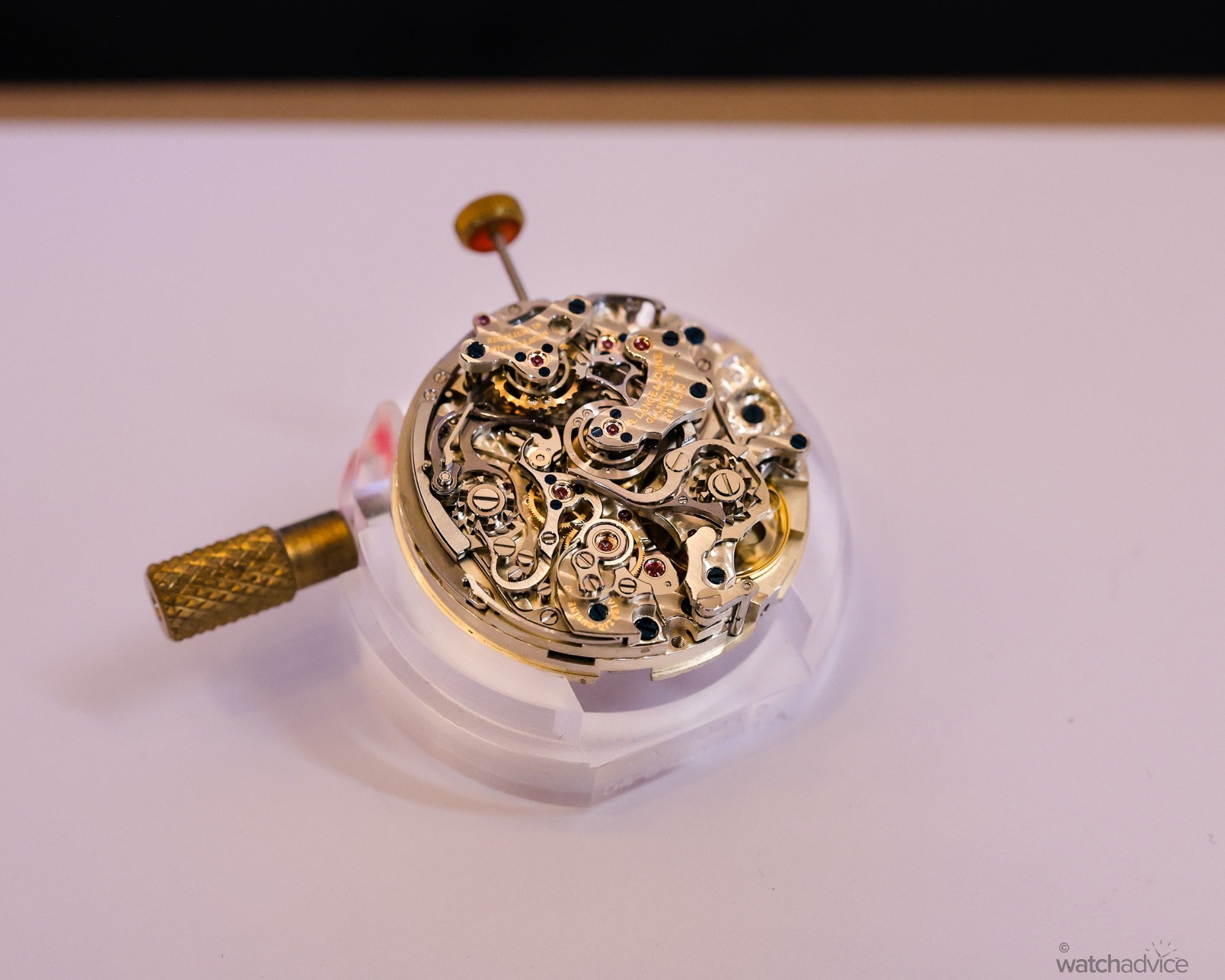
It is an incredible piece of watchmaking, and seeing even the Double Split movement in person, then discussing it with David, gives you a much better understanding of why these are among the most difficult chronograph complications to perfect. But why stop there?
The Triple Split takes this one step further by adding a third pair of rattrapante hands for the hours. This means the seconds, minutes, and hours can all be stopped independently while the main chronograph continues running, allowing intermediate and comparative times to be recorded over a period of up to 12 hours.
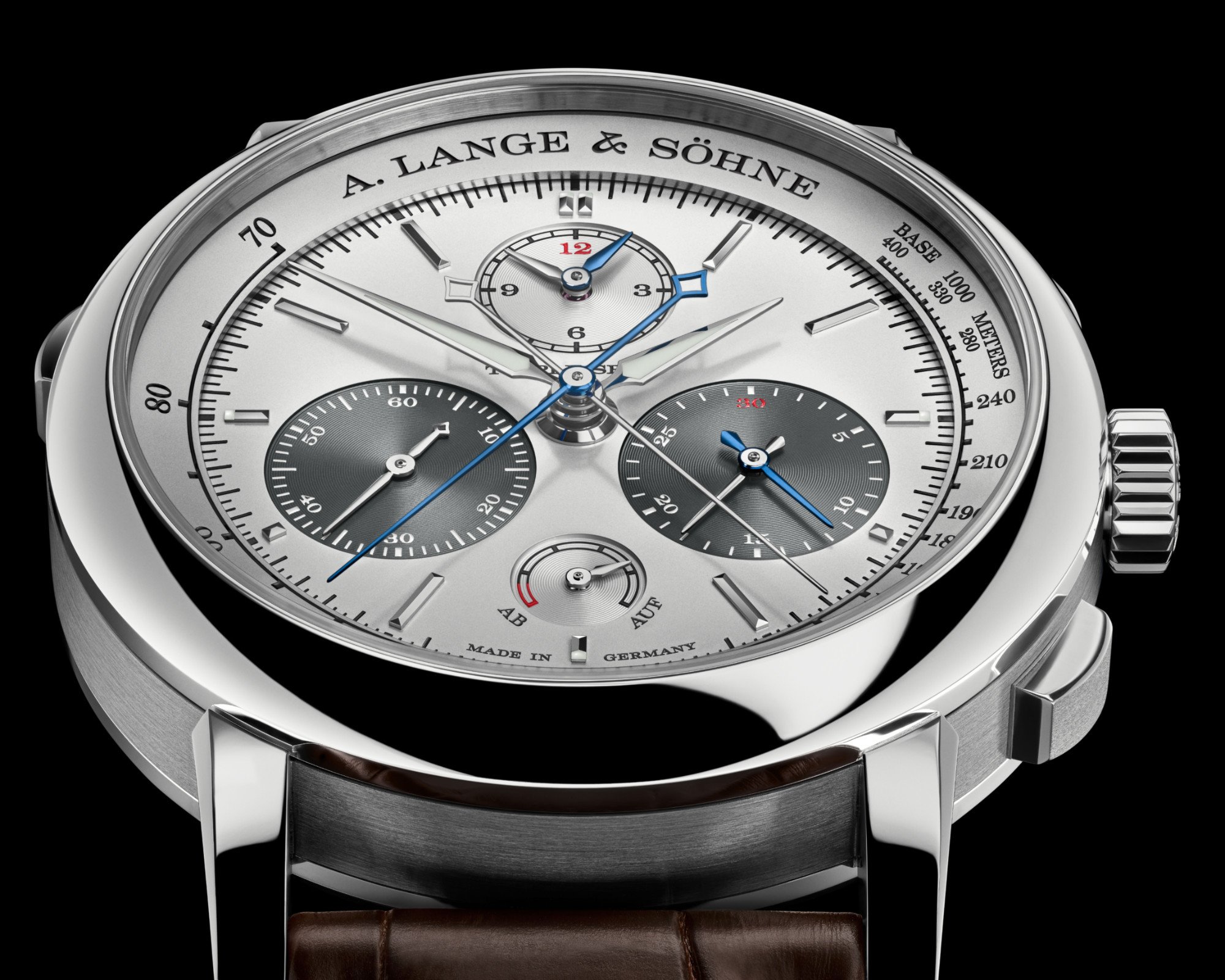
When the chronograph is started, the three pairs of hands run together. Pressing the rattrapante pusher at 10 o’clock stops the three blued rattrapante hands, recording the intermediate time, while the main chronograph hands continue measuring. Pressing the pusher again allows the rattrapante hands to catch up with the chronograph hands and continue running with them.
There is also a flyback function, operated through the pusher at 4 o’clock. A single actuation stops the current measurement, resets the active chronograph and rattrapante hands to zero, and allows a new measurement to begin immediately.
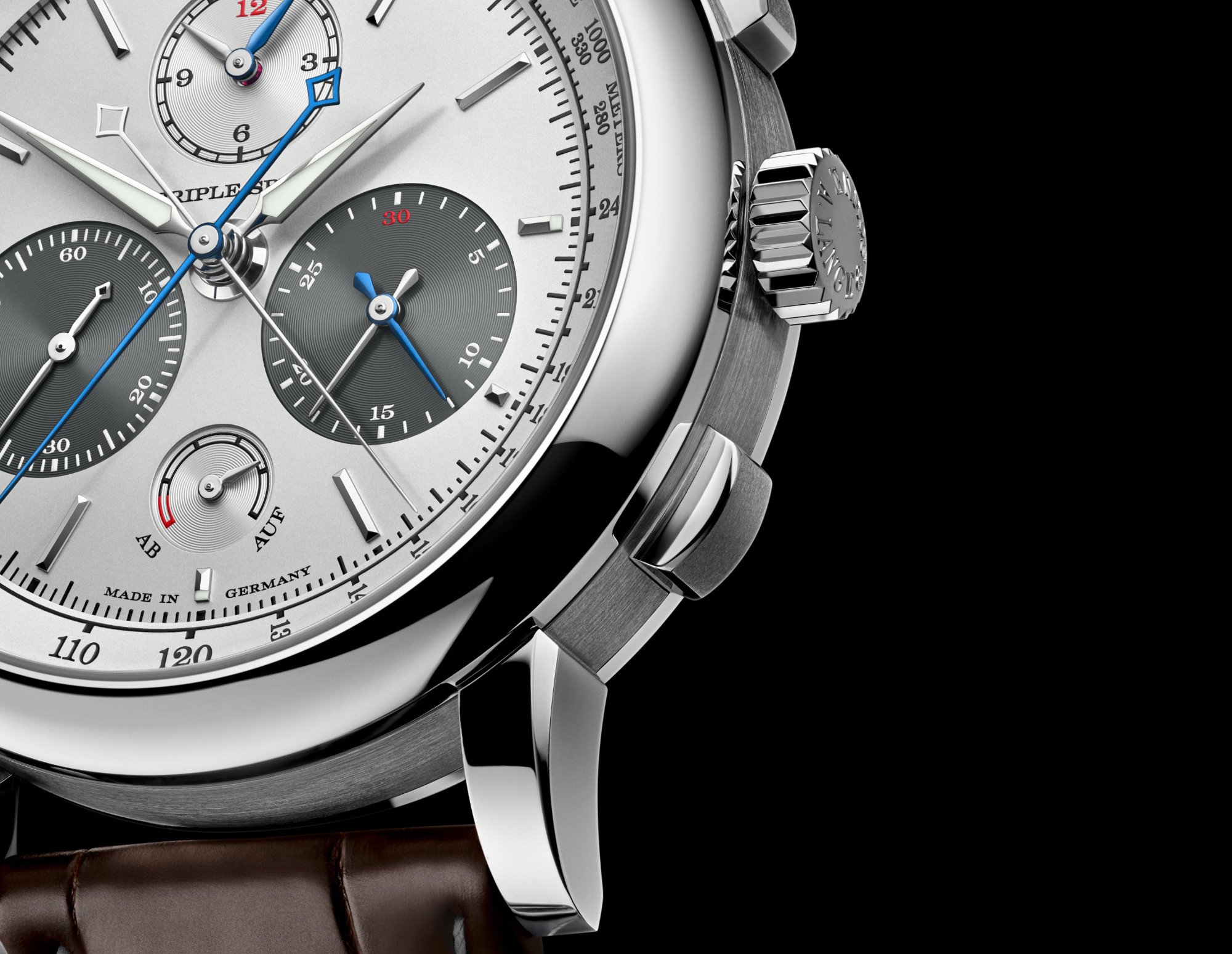
This is mechanical complexity on another level, with 567 components inside the L132.1 calibre and an enormous amount of coordination required between the wheels, levers, springs, clutches and jumpers to make all six chronograph and rattrapante hands perform their different functions correctly.
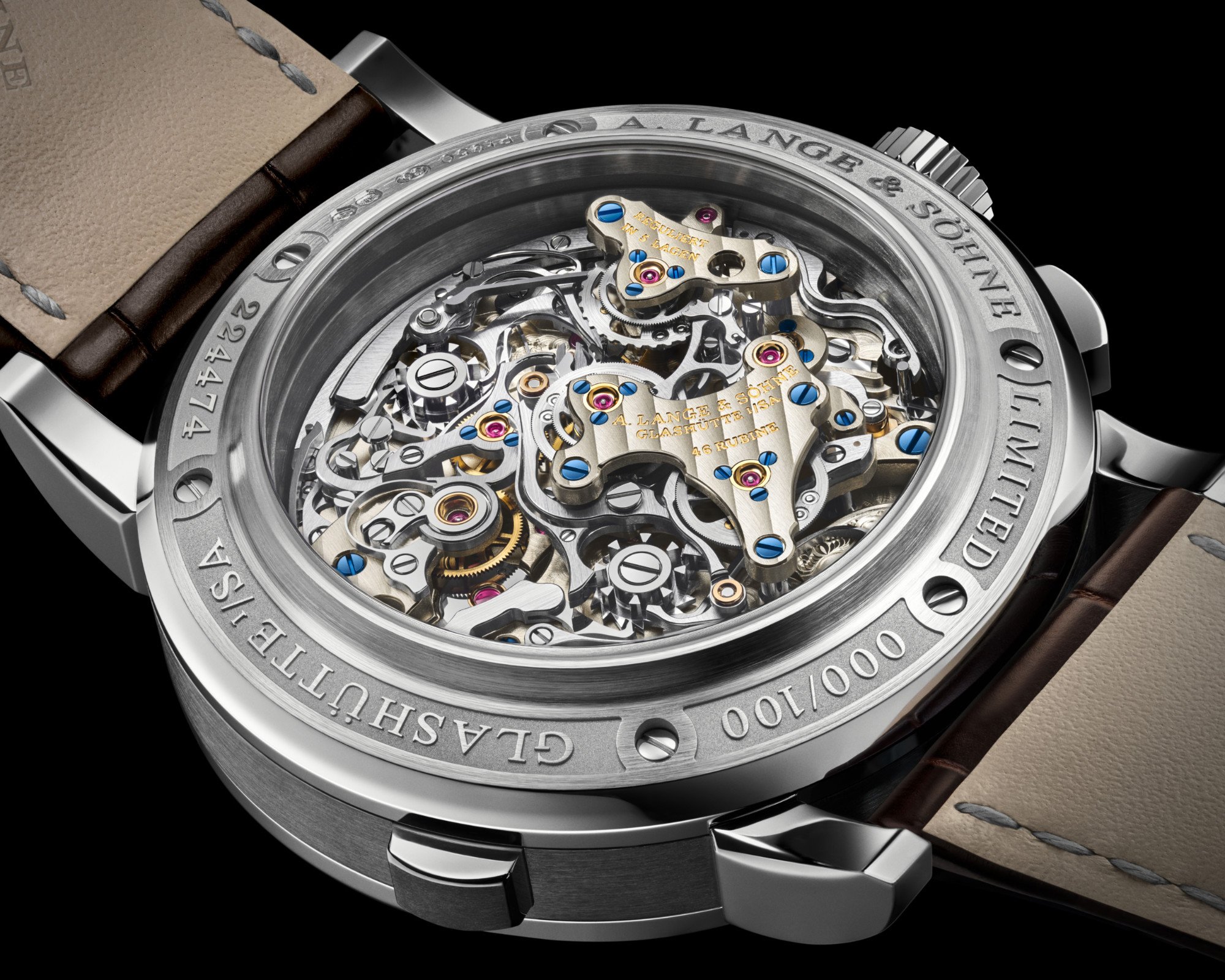
The more you look at these movements, the more impressive they become. What appears on the dial to be a complicated chronograph is actually a very intricate mechanical system, with the Triple Split effectively taking the principle of the rattrapante and extending it across three different time scales.
The Movement Finishing
The L132.1 is also a good example of what Lange does with movement finishing, particularly when the finishing has to work alongside such a complicated mechanism. And, as we know, the movement components are finished immaculately, even the parts you do not see.
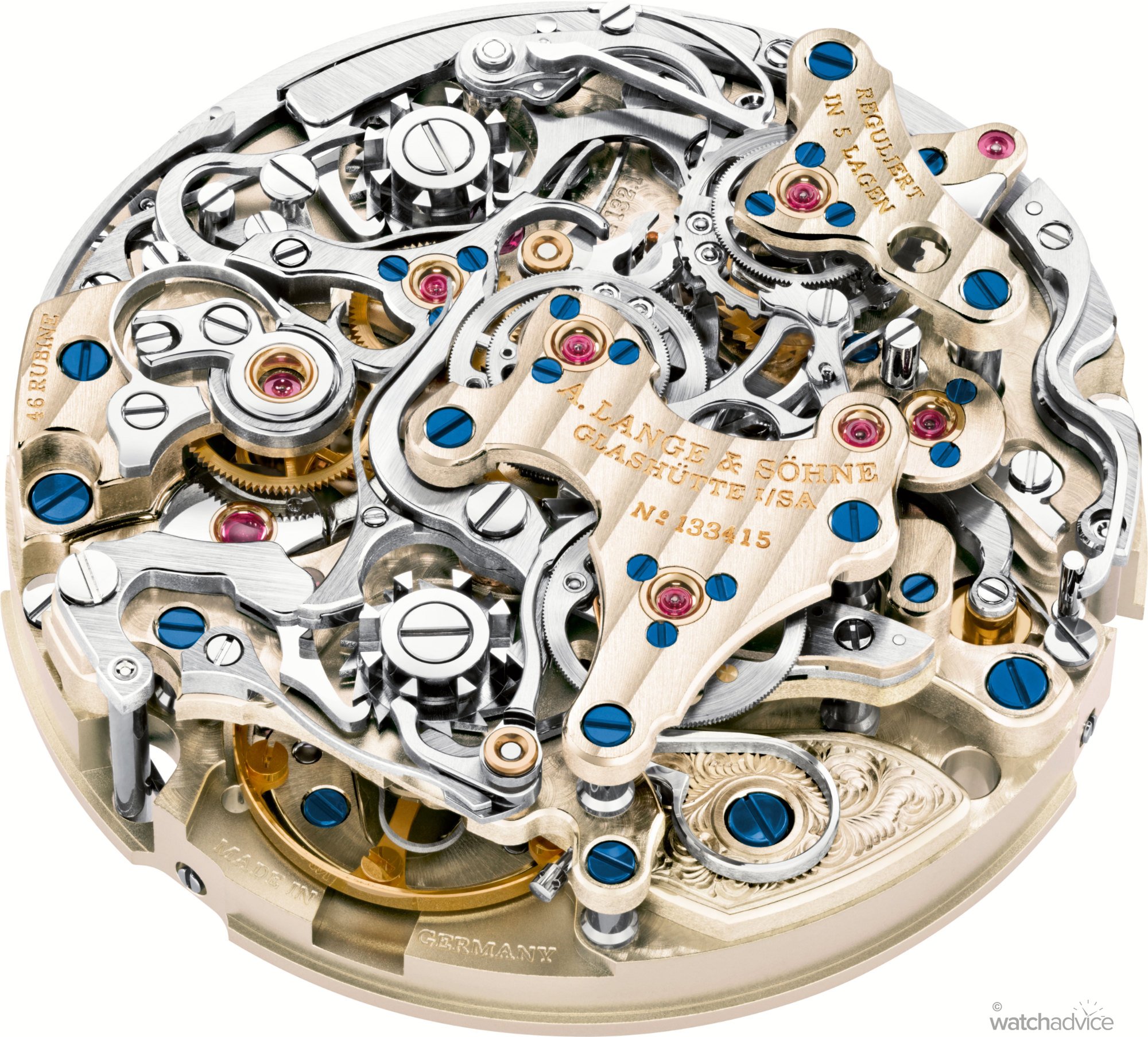
The bridges are made from untreated German silver and feature Glashütte ribbing, while the levers, springs and rockers receive straight graining. The edges are chamfered and polished, including the internal angles, which are particularly difficult to finish by hand. There are five screwed gold chatons set into the bridges, while the balance cock is hand engraved, and depending on which watchmaker engraves the balance cock, it will have a style and finish that is unique to that watchmaker.
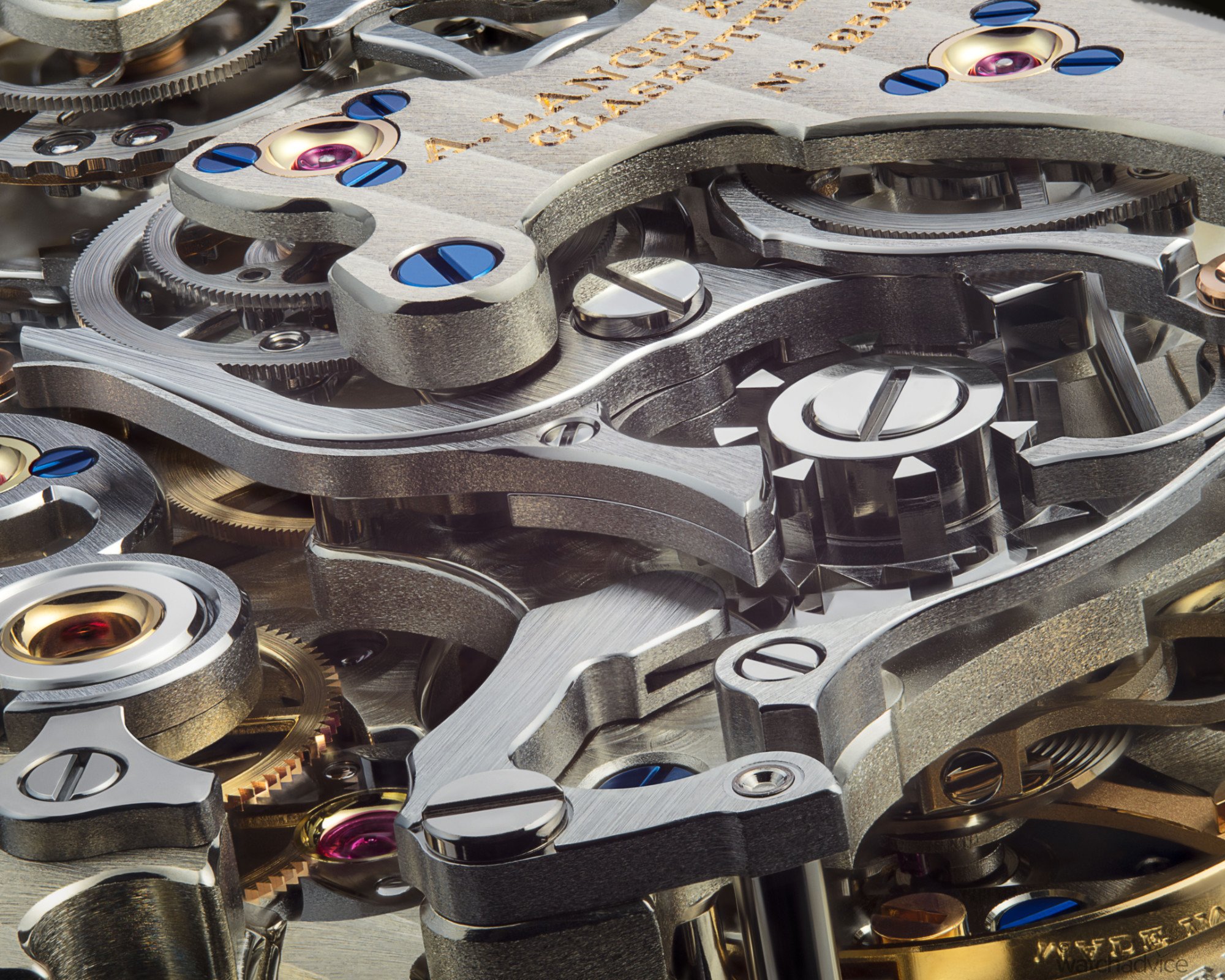
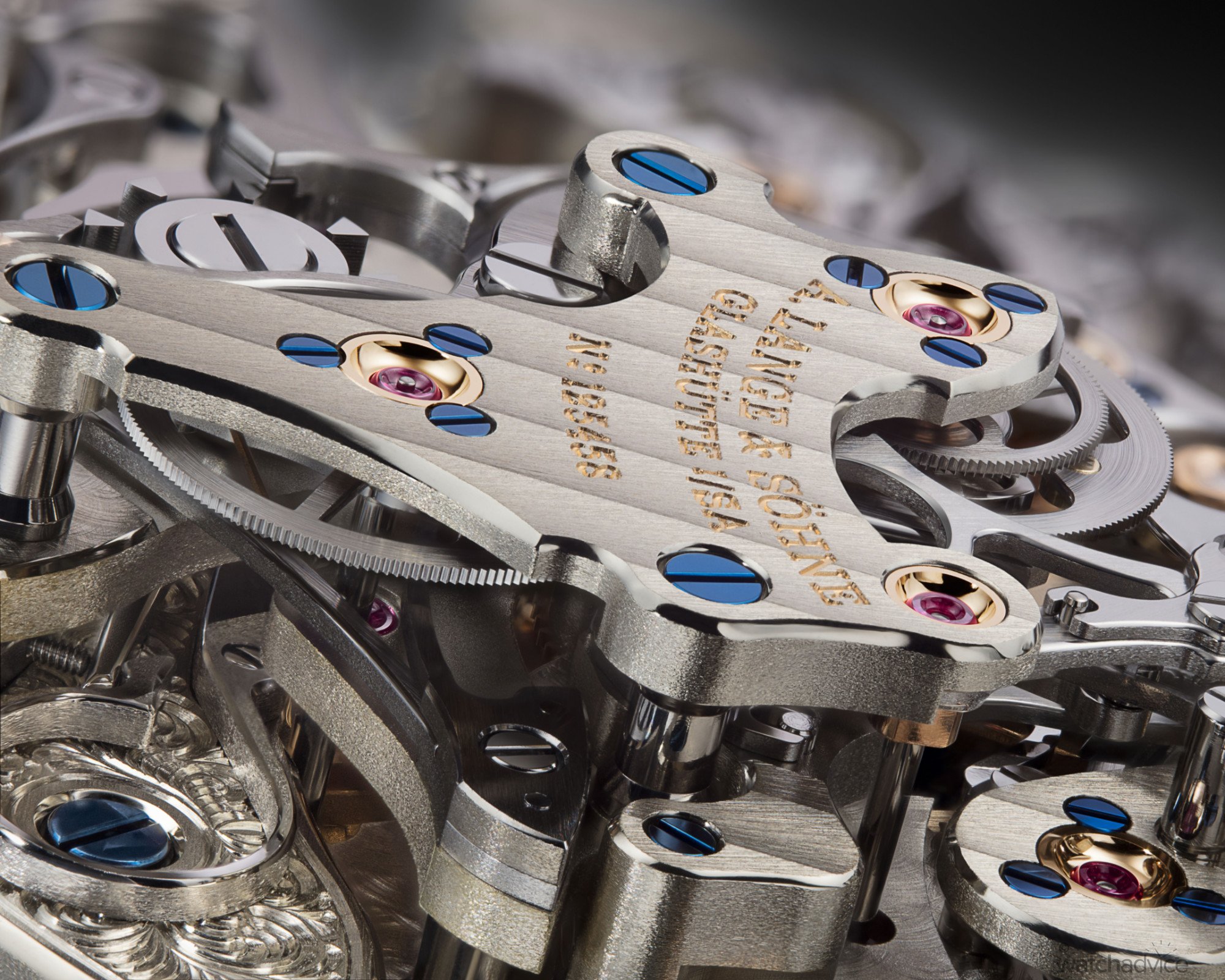
With 567 components packed into a movement measuring 30.6mm across and 9.4mm high, the caseback gives you plenty to look at. More importantly, it shows how the finishing works alongside the mechanical construction. The architecture of the movement has been designed to allow you to see the different layers of the chronograph mechanism working their way across the calibre.
Initial Thoughts
The Triple Split is, for lack of a better word, a mechanical marvel, and one of the standouts (among many) in the A. Lange & Söhne collection, mainly because the complexity showcases what a mechanical chronograph can measure.
Having seen the Double Split movement in person and then had the opportunity to speak with David Weber about how it works, I think you get a much better appreciation for what Lange has actually achieved with the Triple Split. The new platinum version doesn’t change the watch really, but the rhodié dial and grey sub-dials give the Triple Split a new look while keeping the focus on the movement underneath.
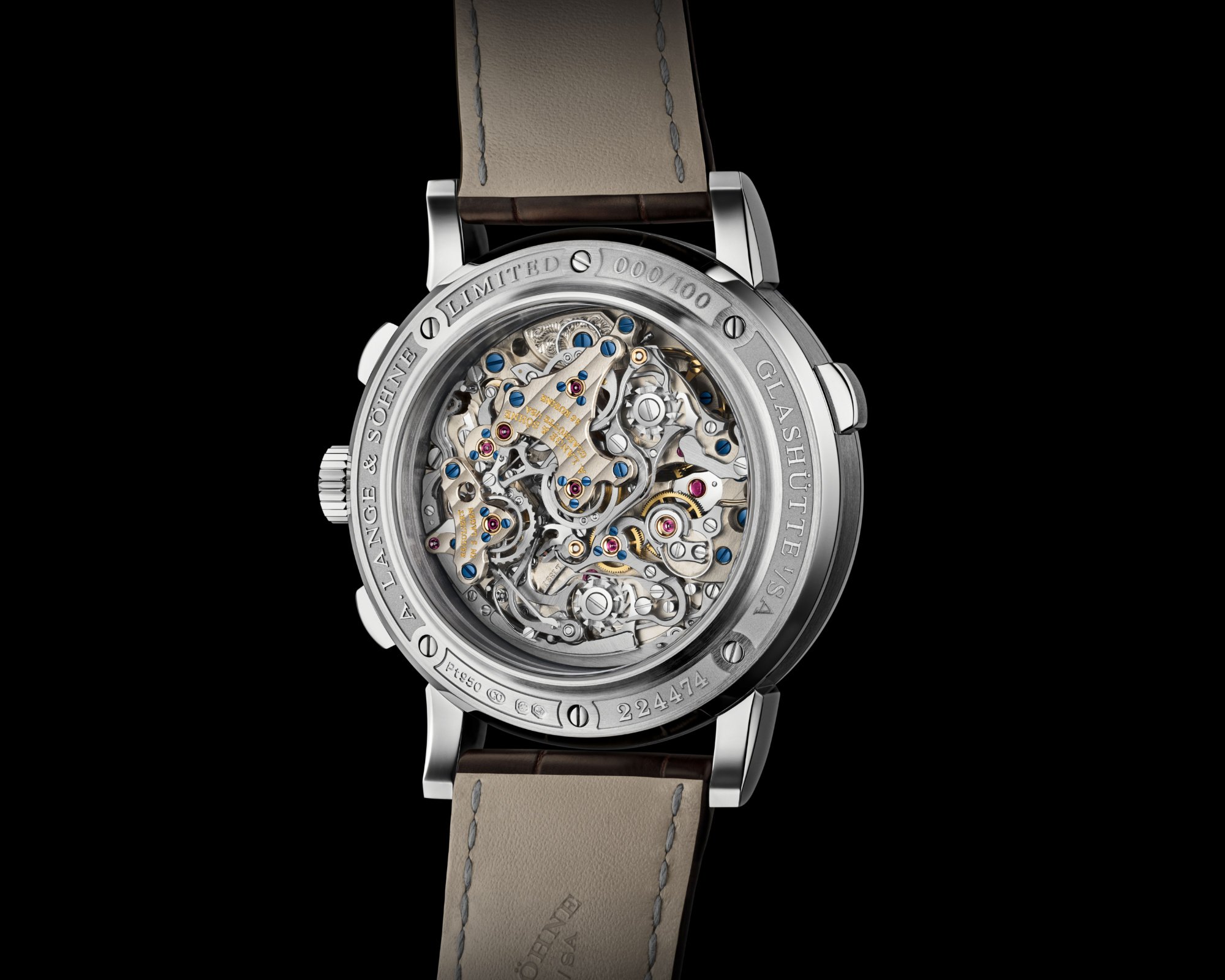
With a 55-hour power reserve, a 21,600 vph balance and the ability to measure split times across seconds, minutes and hours, the L132.1 remains one of Lange’s most technically ambitious calibres. At 43.2mm and 15.6mm thick, it is certainly a substantial watch, but considering what is packed inside it, the dimensions make a little more sense, and it is very much a showstopper on the wrist!
Reference & Specifications
| Feature | Specification |
|---|---|
| Reference | 424.025F |
| Dimensions | 43.2 millimetres; height: 15.6 millimetres |
| Case | 950 platinum |
| Dial | 925 silver, rhodié/grey with hands in rhodiumed 750 gold, rattrapante hour counter in blued steel; appliques in rhodiumed 750 gold, |
| Crystal | Synthetic sapphire crystal |
| Caseback | Open, synthetic sapphire crystal |
| Movement | Lange manufacture calibre L132.1, manually wound; decorated and assembled by hand; precision-adjusted in five positions; |
| Functions | Hours, minutes, and subsidiary seconds with stop seconds; flyback chronograph with triple rattrapante for additive and intermediate time measurements between one sixth of a second and twelve hours; precisely jumping chronograph and rattrapante minute counters; continuous chronograph and rattrapante hour counters; tachymeter scale, power reserve indicator |
| Power Reserve | 55 hours |
| Water Resistance | 30m / 3bar |
| Strap/Bracelet | Hand-stitched alligator leather, dark-brown with grey seam |