

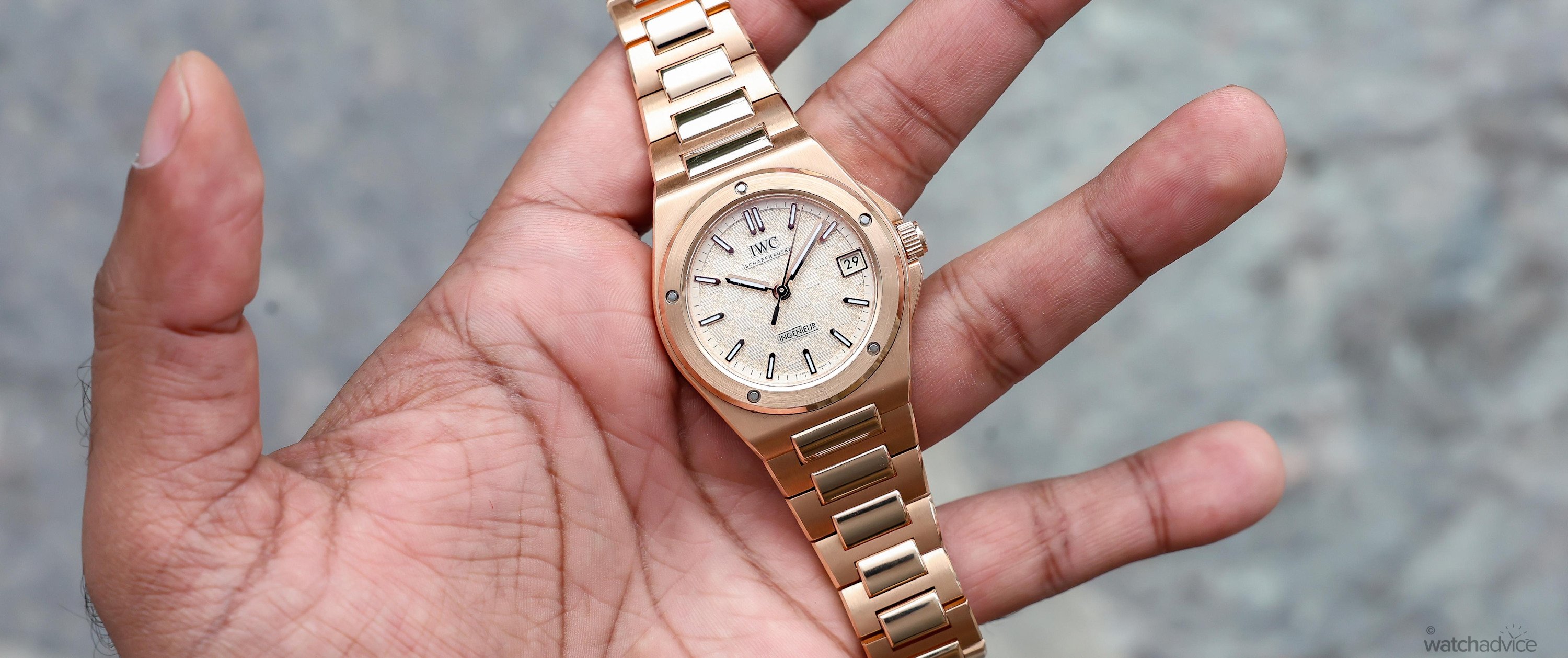
In 2025, IWC Schaffhausen introduced a first for the Ingenieur collection, unveiling three new models in a compact 35mm case size. For this hands-on review, I had the chance to spend some time with one of my favourite pieces from the new lineup. Read on to find out why it left such a lasting impression!
What We Love:
- 35mm case size wears exceptionally well
- Gold toned grid patterned dial works beautifully with an 18k 5N gold case
- Wrist presence of the watch is undeniable
What We Don’t:
- Non-skeletonised rotor
- 42-hour power reserve can be slightly low by modern standards.
- With an open case back, this 35mm Ingenieur doesn’t have an anti-magnetic soft iron cage like older Ingenieurs.
Overall Rating: 8.75/10
- Value for Money: 8.5/10
- Wearability: 9/10
- Design: 8.5/10
- Build Quality: 9/10
Inspired by Gérald Genta’s iconic 1970s Ingenieur SL design, the 35mm Ingenieur timepieces retain the signature elements that define the original collection, from the integrated bracelet to the distinctive grid dial and the five-screw bezel, now perfectly re-proportioned into a smaller, more wearable format!
IWC Schaffhausen has several stand-out collections from past to present, with one of the most influential in shaping the brand being their Pilot’s collections. Then we also have the Portugieser, which played a pivotal role in shaping IWC’s identity with its elegant design and technical watchmaking. Alongside these two iconic collections sits the Ingenieur.
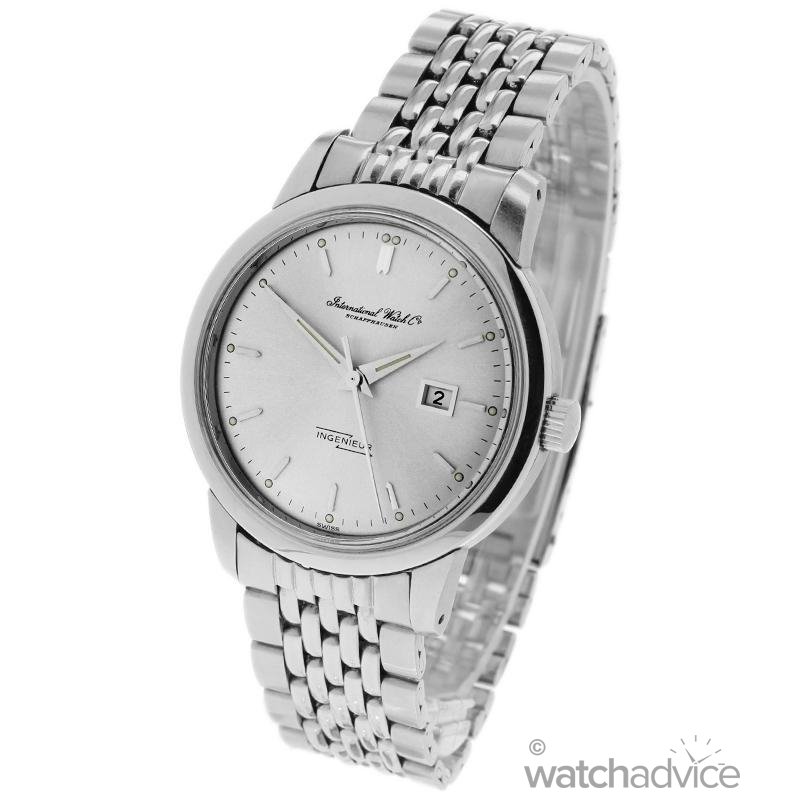
So what makes the Ingenieur so special? The IWC Schaffhausen Ingenieur collection was first introduced in 1955 as a professional tool watch that was designed for engineers and scientists who needed protection against magnetic fields. While the design of the original models was attractive, they weren’t overly unique to stand out from the crowd. This was until the legendary watch designer Gérald Genta came along and reimagined the Ingenieur in 1976 to put it into the realm of watchmaking icons.
When Gérald Genta was tasked with redesigning the Ingenieur, IWC Schaffhausen knew the watch was in good hands. By this stage, Genta had already created one of the most iconic timepieces of all time with the Royal Oak, introducing a new design language that challenged traditional watchmaking. His approach centred around bold industrial aesthetics and the now-famous integrated bracelet design, a formula that was unconventional at the time, but one that would go on to redefine the luxury sports watch category.
Over the decades, IWC Schaffhausen has updated the Ingenieur to suit modern watchmaking standards, updating the movement and dial colours and even using precious materials for the case and bracelet, giving a fresh, contemporary look. The latest release before Watches & Wonders 2025 came in December 2024, when the brand introduced a blue dial variant in steel, completing the three traditional watchmaking dial colours of black, white, and blue for the current Ingenieur collection.
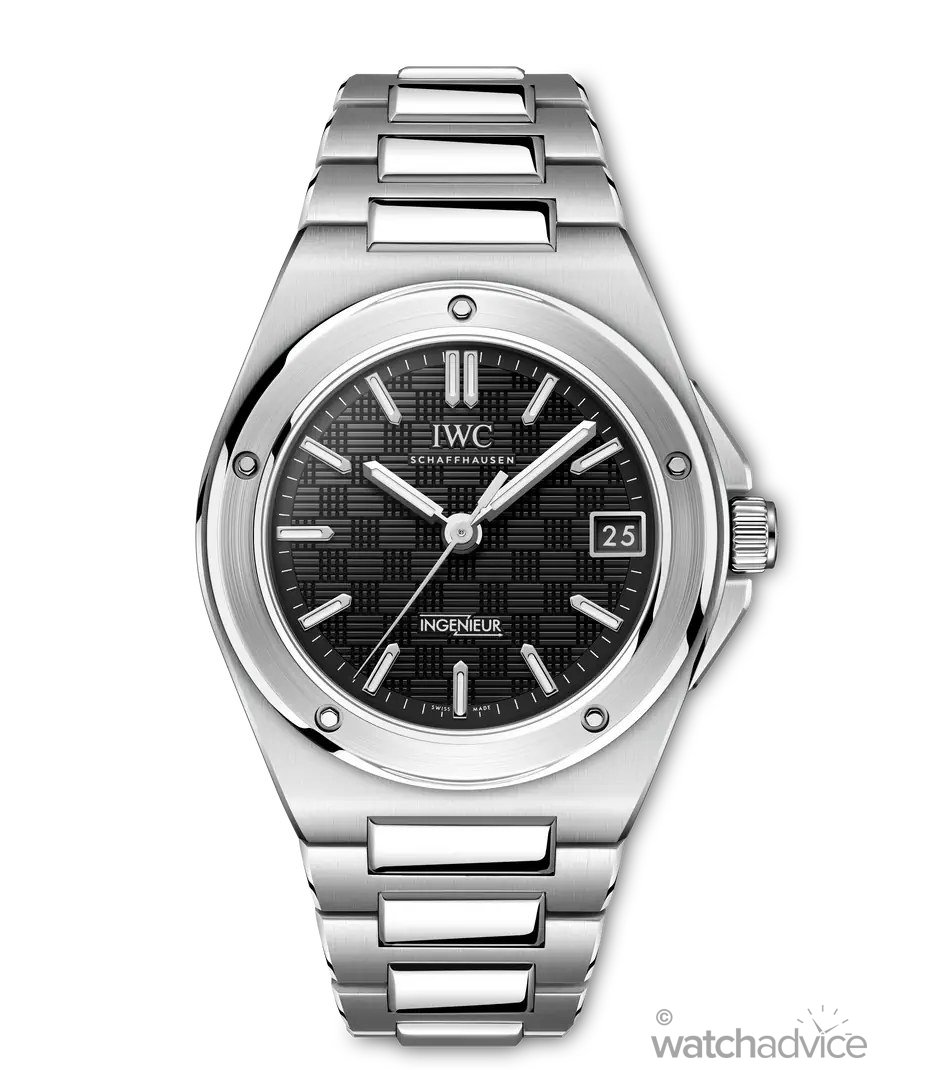
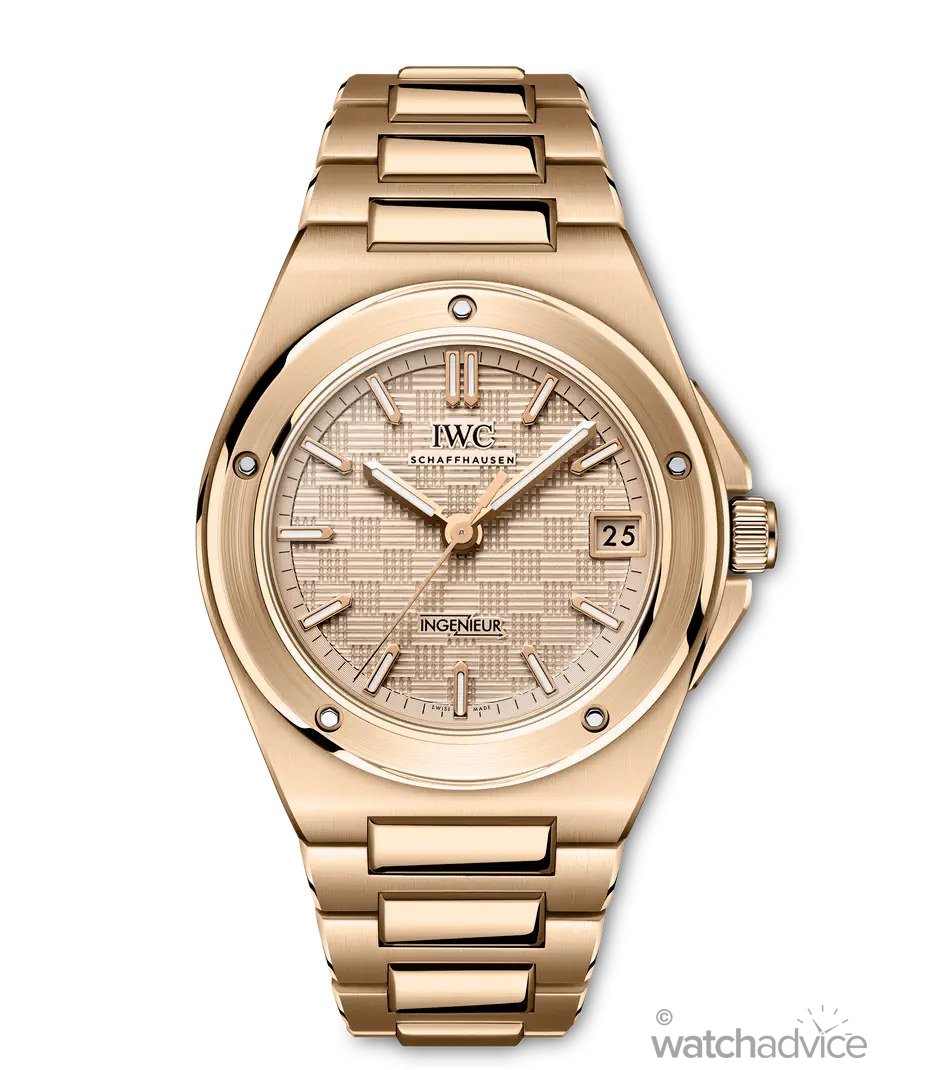
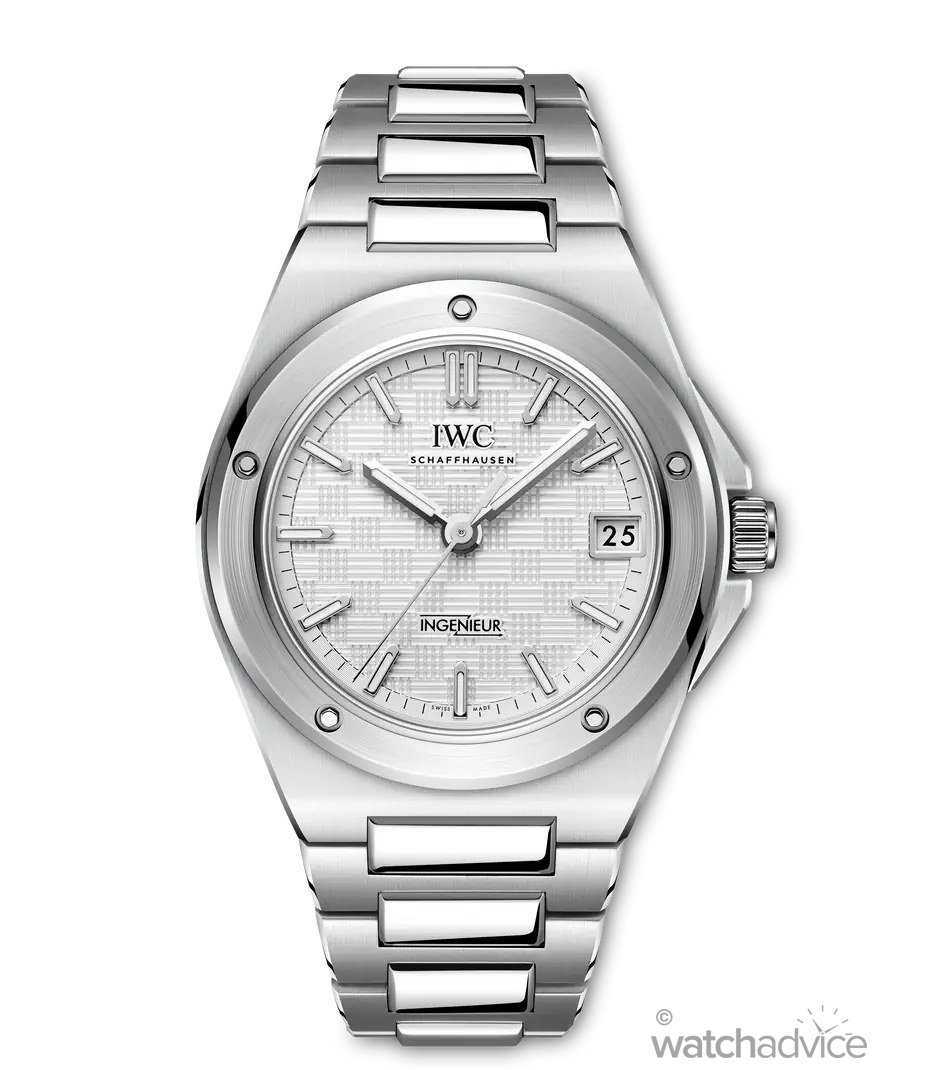
With the introduction of the Ingenieur Automatic 35, IWC Schaffhausen has brought a new dimension to the already modern Ingenieur collection. This release marked the first time the redesigned Ingenieur lineup was offered in a smaller case size, a welcome move for those who prefer watches that wear a little slimmer on the wrist. While the 35 millimetre size might seem small on paper, it is anything but on the wrist, as you will soon find out.
The models retain all the signature design elements that define the Ingenieur, from the integrated bracelet to the distinctive bezel and dial layout, simply re-proportioned into a more compact format. It is thanks to this integrated bracelet and well-balanced case design that the 35 millimetre watch wears with far more presence on the wrist than its larger counterpart.
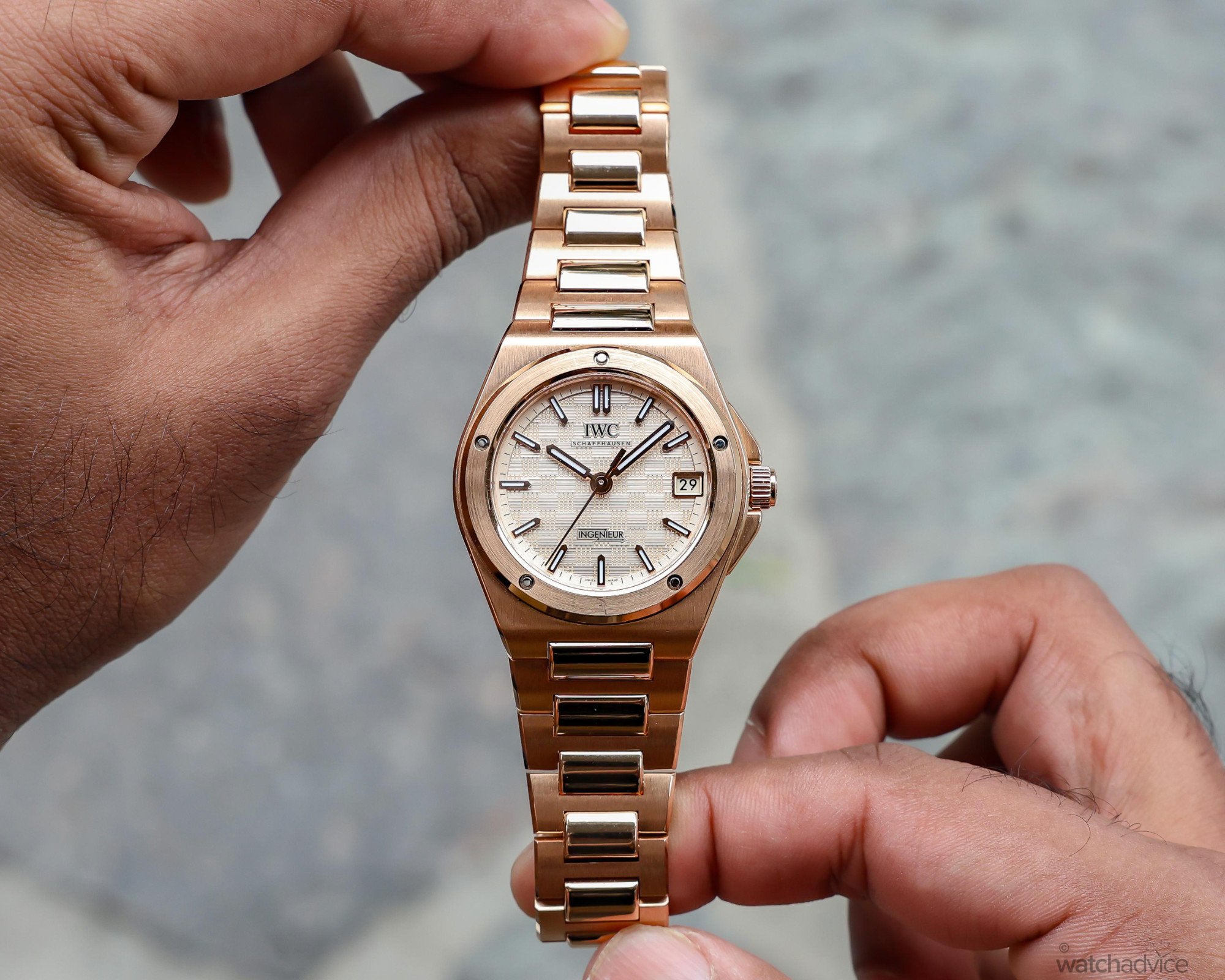
In fact, I had the chance to compare the 40mm Ingenieur directly with the new 35mm model. To be brutally honest, at first I didn’t think I’d ever go for the 35mm. On paper, that size sounded too small, even for my relatively slim wrists. But after trying it on and wearing it for a couple of days, my perspective completely changed. I actually found myself gravitating towards the 35mm and shying away from the 40mm Ingenieur. Funny how that works, isn’t it?
Initial Impressions
As mentioned previously, IWC Schaffhausen is releasing the new 35mm timepieces in 3 variants: an 18-carat 5N gold case and bracelet, completed with a gold-coloured dial (Ref. IW324903) and two stainless steel models in either a silver-plated dial (Ref. IW324901), or a black dial (Ref. IW324906).
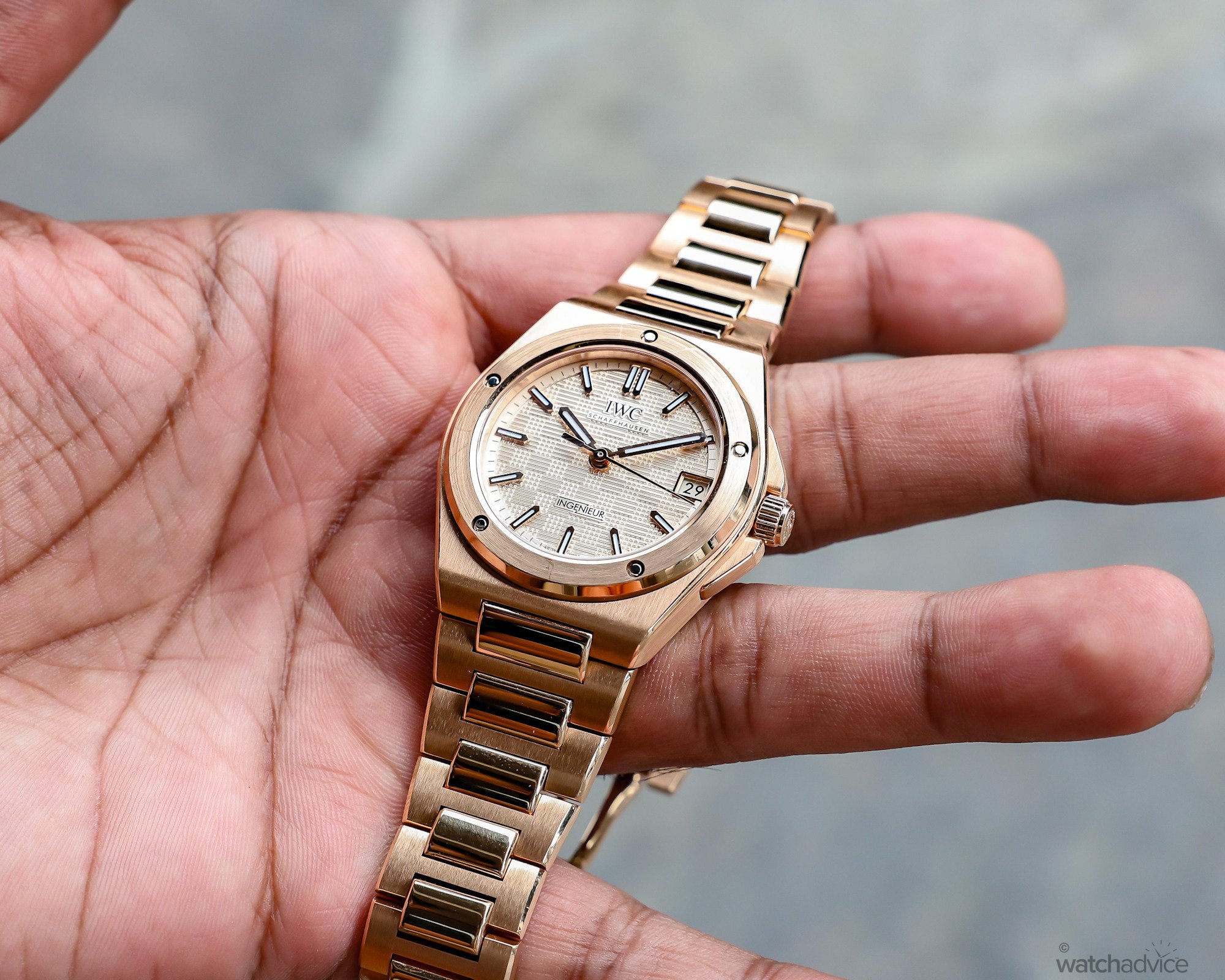
While the two stainless steel models offer a more traditional integrated sports watch aesthetic, the 18-carat 5N gold version brings something bold and different to the table. There is an undeniable sense of presence to the watch, with the warm tones of the gold giving the Ingenieur a level of character that, for me, was very hard to look past.
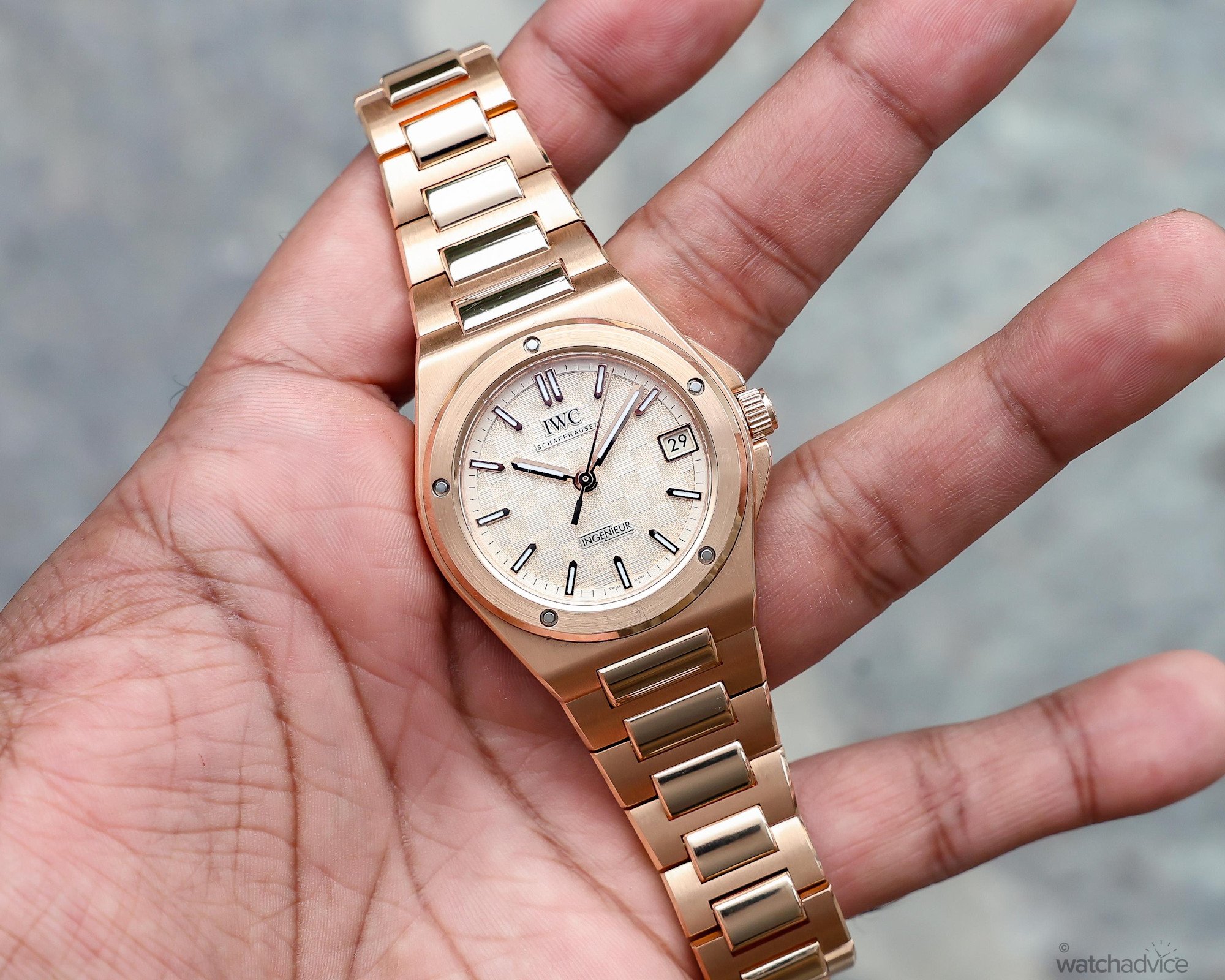
The grid-patterned dial on the gold tone is also more prominent on this model than on its steel counterparts. The white dial offers a subdued aesthetic, perfect for those who want to “fly under the radar”, while the black dial offers perfect contrast, making legibility crisp and clean, with the grid structure also standing out a bit more prominently.
This 18-carat 5N gold Ingenieur, however, takes Gerald Genta’s iconic design with a more luxurious approach, with the gold of the watch giving the timepiece a stronger wrist presence while still retaining the sporty DNA of the collection.
Ingenieur Automatic 35 Case Design
To truly appreciate the craftsmanship and design, it is important to understand the origins of the Ingenieur and the inspiration behind it.
The Ingenieur was originally designed in 1955 as a tool watch for engineers and scientists, featuring a soft iron inner cage to protect the movement from magnetic fields. This technical approach to the watch’s design is what inspired the collection’s name “Ingenieur”, which means engineer in French.
The early variants of the Ingenieur, while featuring a “technical” inner design, featured a more traditional aesthetic on the outside, with elegantly curved lugs, simple dials with rectangular indices, and larger hands for easy readability. It was not exactly the most stand-out piece in a period where watch designs were beginning to push boundaries, particularly as another decade or so later, it ushered in a new era of bold and unconventional sports watches.
So, like any good company, you adapt to change, and that is exactly what IWC Schaffhausen did by bringing in Gérald Genta. His rework of the Ingenieur was dramatic, completely redesigning the timepiece to not only feel more modern but also taking a bold step toward future-proofing the watch with what would become a timeless aesthetic.
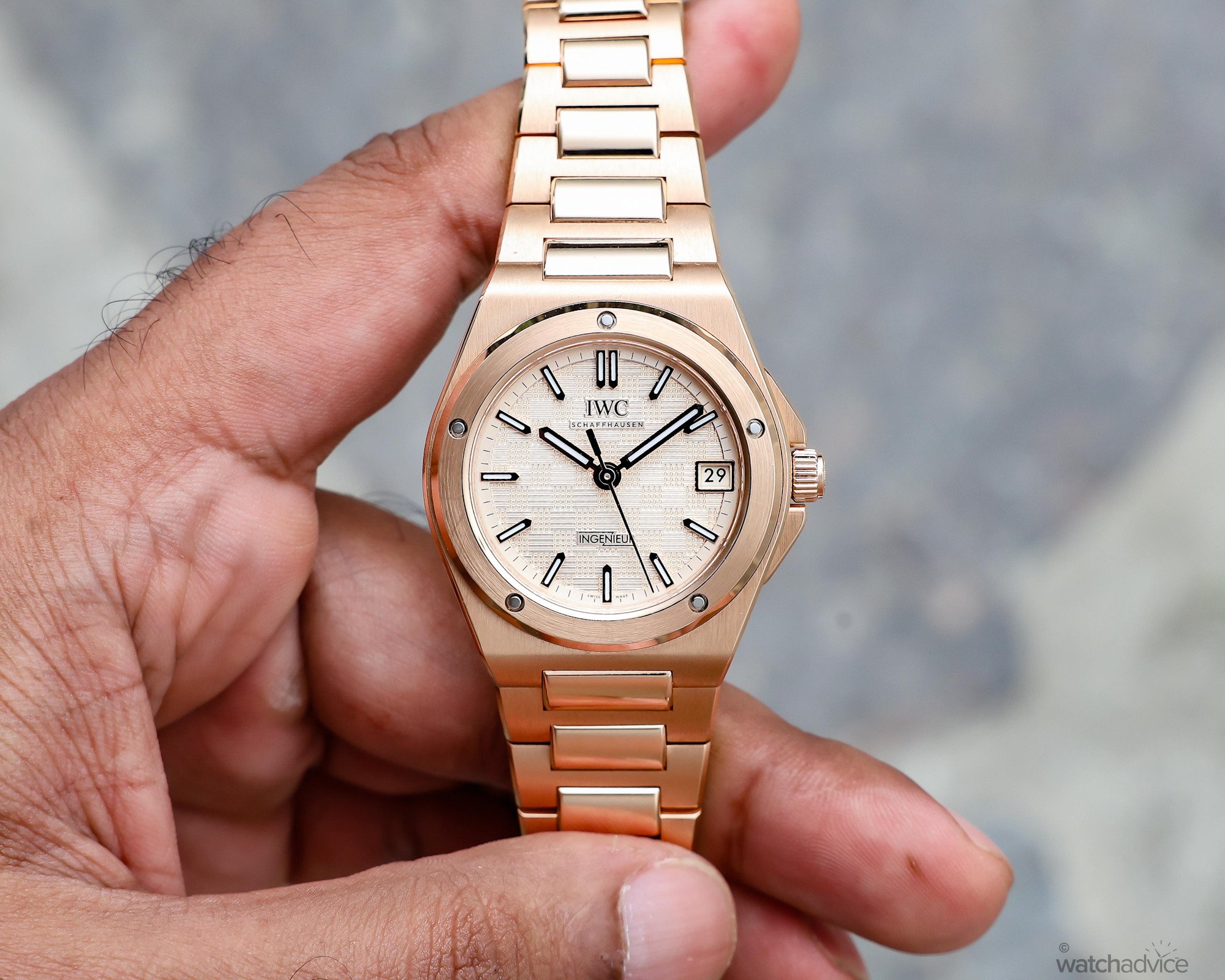
The 35mm retains all the features of the signature Ingenieur case design by Gérald Genta, including the 5 screws on the circular bezel, along with the integrated bracelet attached via the middle links. I personally also love the execution of the different finishes on the case, too.
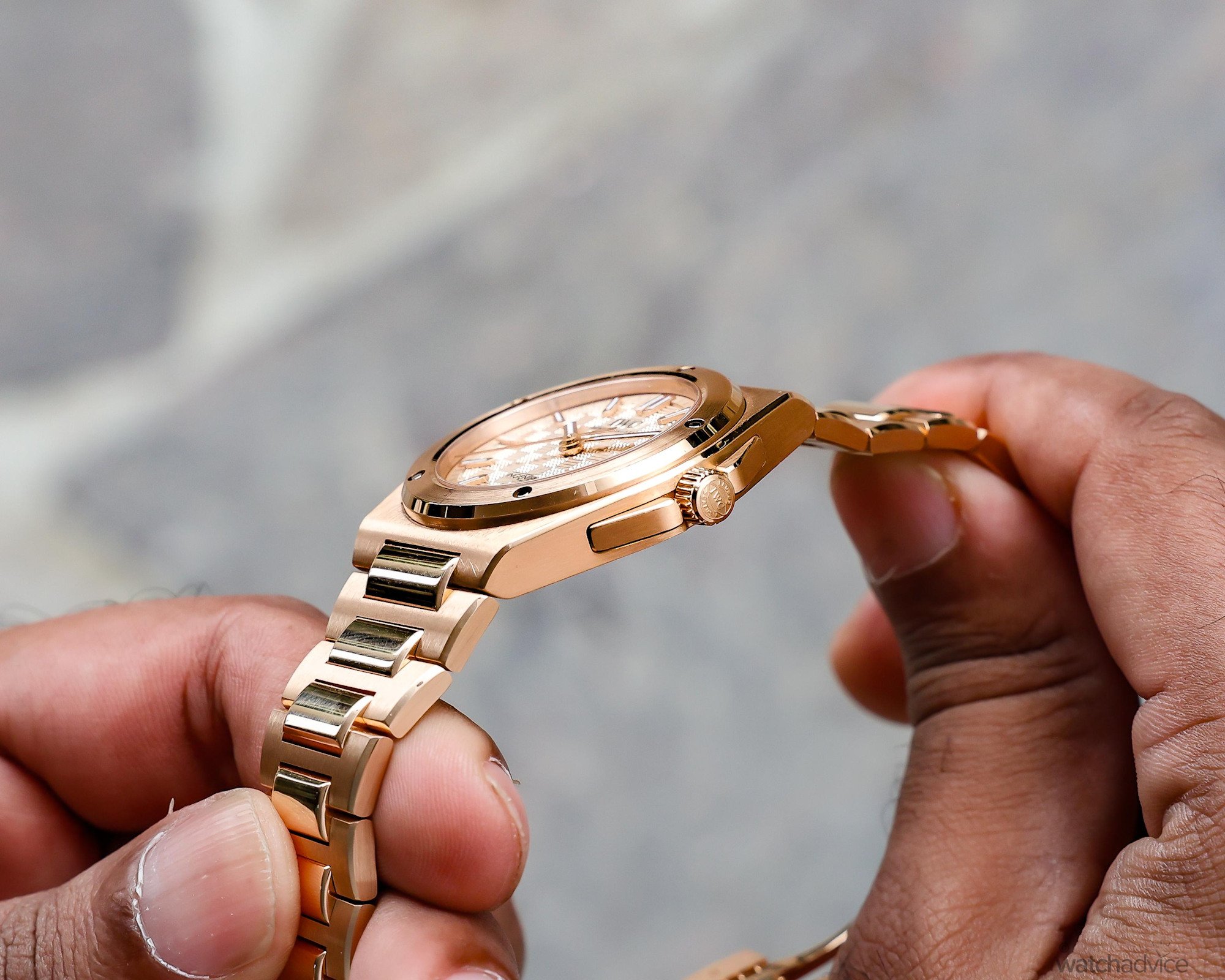
Firstly, we have straight brushed finishing on the surface of the case, while the side profile of the case matches this aesthetic with horizontal brushing. The bezel, in contrast, features a circular brushed technique, which gives it a subtle visual distinction from the rest of the case. What enhances the watch’s luxury and elegance above its industrial character is the chamfered edges of the case. From the case edges, crown guard edges to the chamfered edge of the bezel, they have all been finished with a beautiful polish that catches the light and adds a refined contrast to the otherwise brushed surfaces.
“Designers and engineers worked hand-in-hand to define, proportion, and finish every part and characteristic of the Ingenieur faithfully to a 35-millimetre case size. The result offers the instantly recognisable look and feel of the Ingenieur in a smaller and flatter execution with perfect ergonomics and wearing comfort.”
IWC Schaffhausen on the 35mm Ingenieur collection’s design.
The 18k 5N Gold Ingenieur for me is what makes these finishes even more prominent. The allure of gold and its illustrious shine from the polished edges gives the timepiece a far greater sense of depth and presence on the wrist compared to its steel variants. The gold also allows the contrast between the brushed and polished surfaces to stand out even more, which explains why I had such a hard time putting this piece down!
One important detail to note about the case design of the 35mm model is that it features a sapphire caseback, unlike some of the modern 40mm Ingenieur variants that retain a closed caseback. At first glance, this might seem like a great addition, as it allows a view of the movement and its finishing. However, it does come with a small trade-off.
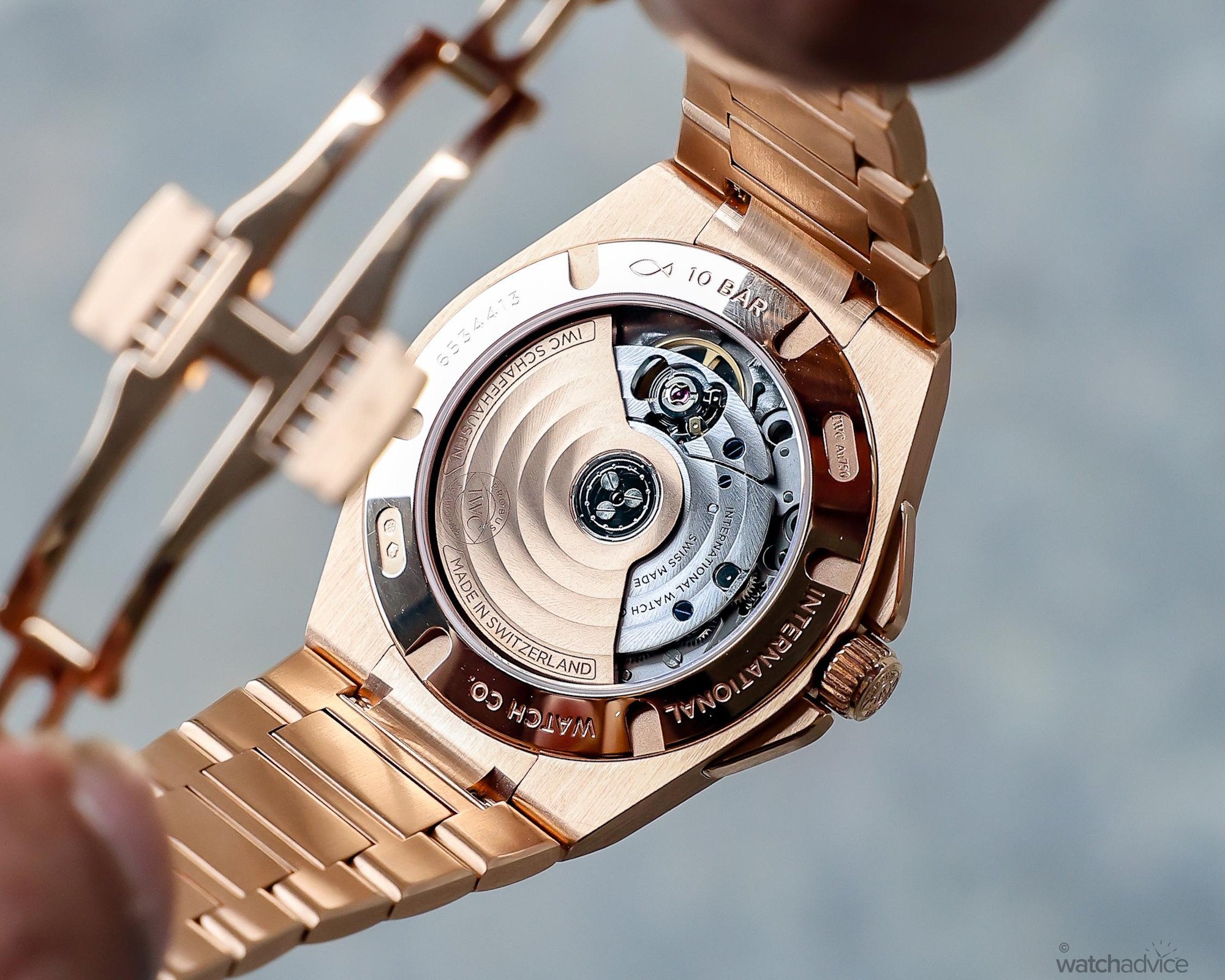
The original Ingenieur (along with the current 40mm variants) was designed with a soft iron inner cage that protected the movement from magnetic fields, a key feature that defined the watch’s engineering-focused purpose. With the introduction of a sapphire caseback, this anti-magnetic protection is no longer present, meaning the modern Ingenieur moves slightly away from the technical roots that originally defined the collection, while also not having the same 80,000 A/m magnetic resistance rating as traditional Ingenieur models.
Ingenieur Automatic 35 Dial Design
While Gerald Genta’s Ingenieur features many hallmark elements in its design, one that stands out is the dial. The grid/structured pattern of the dial is as iconic as the watch itself. Much like how Audemars Piguet is with the Royal Oak and the tapisserie dial pattern (another Gerald Genta design), the Ingenieur’s grid pattern adds another visual element to an already impressive timepiece.
While the grid pattern has been a signature element of the timepiece’s design, what might be underrated about it is why it was specifically chosen for this model. When it comes to Gerald Genta’s work, there aren’t too many elements that are created purely by chance.
The grid pattern is one good example. As we know, the Ingenieur was originally designed as a technical piece for engineers, to be worn in the field. The grid structure of the dial reflects this profession, as it is inspired by the structured layouts often seen in engineering drawings, circuit boards, and architectural frameworks. This reinforces the Ingenieur’s identity as a watch originally designed for engineers and technical professionals!
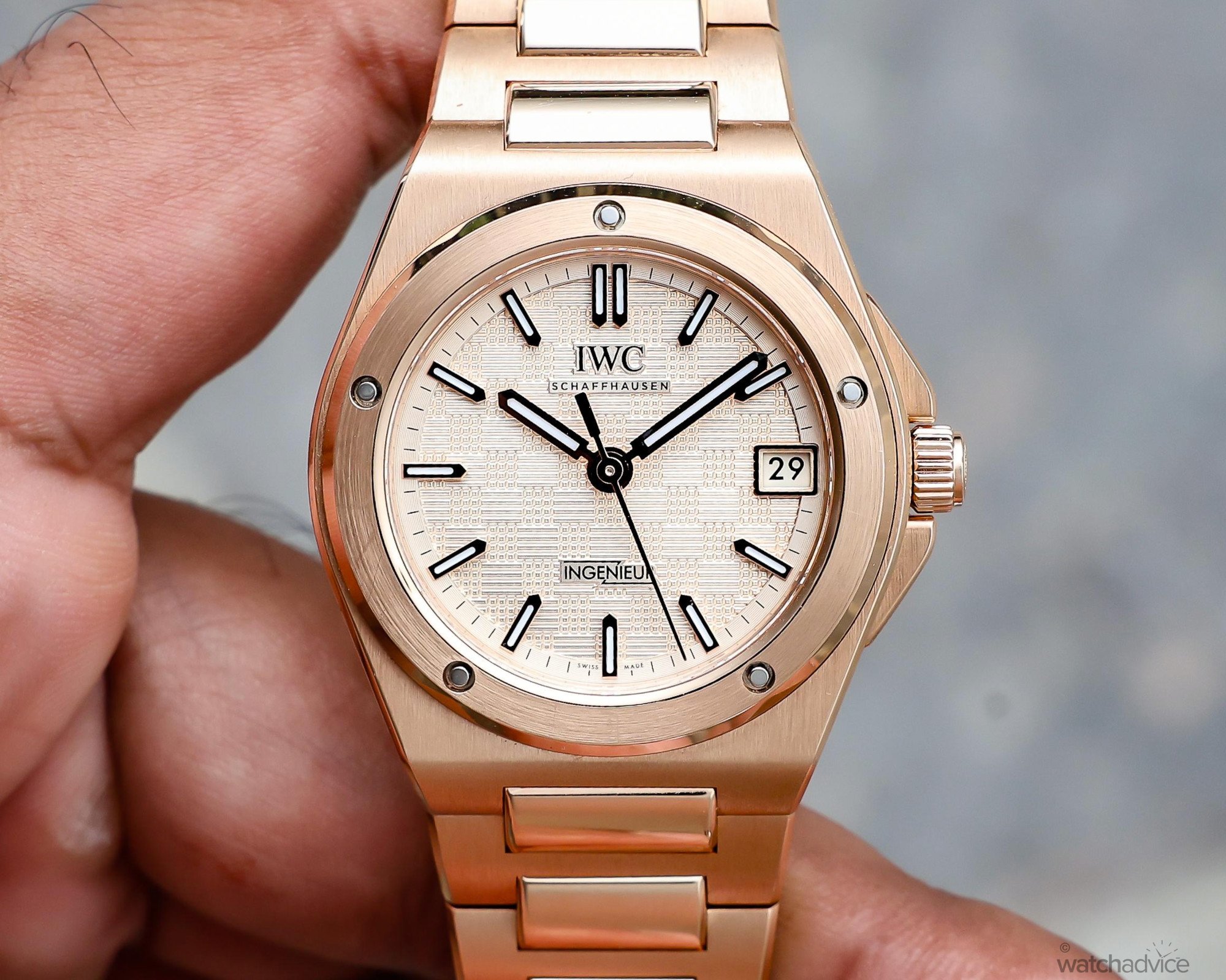
While this grid-structured pattern has technical inspiration, it has been carefully crafted to also play with light beautifully. Consisting of small lines and squares, as every alternating square is subdued, which means the more prominent lines stand out and reflect light when the watch is rotated at different angles, creating a subtle sense of depth and texture across the dial.
The date window is also colour-matched to the dial, which is well executed, so that the dial remains balanced. The date window also matches the aesthetics of the hour indices, making it fit right into the 3 o’clock hour marker position. While nearly all the aspects of the 40mm have been retained on these 35mm models, one subtle detail is different.
This is the small 3 o’clock hour indices being removed to make way for the date window. IWC Schaffhausen has done this on the 35mm models due to a lack of space to integrate both onto the dial. It’s a move I think should happen on all their Ingenieur models! The date window itself acts as an hour index, and with it replacing the marker, it provides a more thought-out, refined, and balanced dial design!
Ingenieur Automatic 35 Calibre 47110 Movement
IWC Schaffhausen is equipping these new 35mm Ingenieur models with the Calibre 47110 movement. Operating at a frequency of 4Hz (28,800 VpH), the movement delivers a reliable power output of approximately 42 hours. The Calibre 47110 is based on the proven ETA 2892-A2 ébauche, a movement that is widely respected throughout the watch industry for its slim profile, accuracy, and long-term reliability.
IWC has taken the foundation set by the ETA 2892-A2 ébauche movement, and they have modified it to meet the watchmaker’s own standards of performance, reliability, and durability, ensuring that the movement is robust for daily wear. While it may not be an in-house calibre, the 47110 movement does benefit from IWC’s refinement in terms of regulation and finishing.
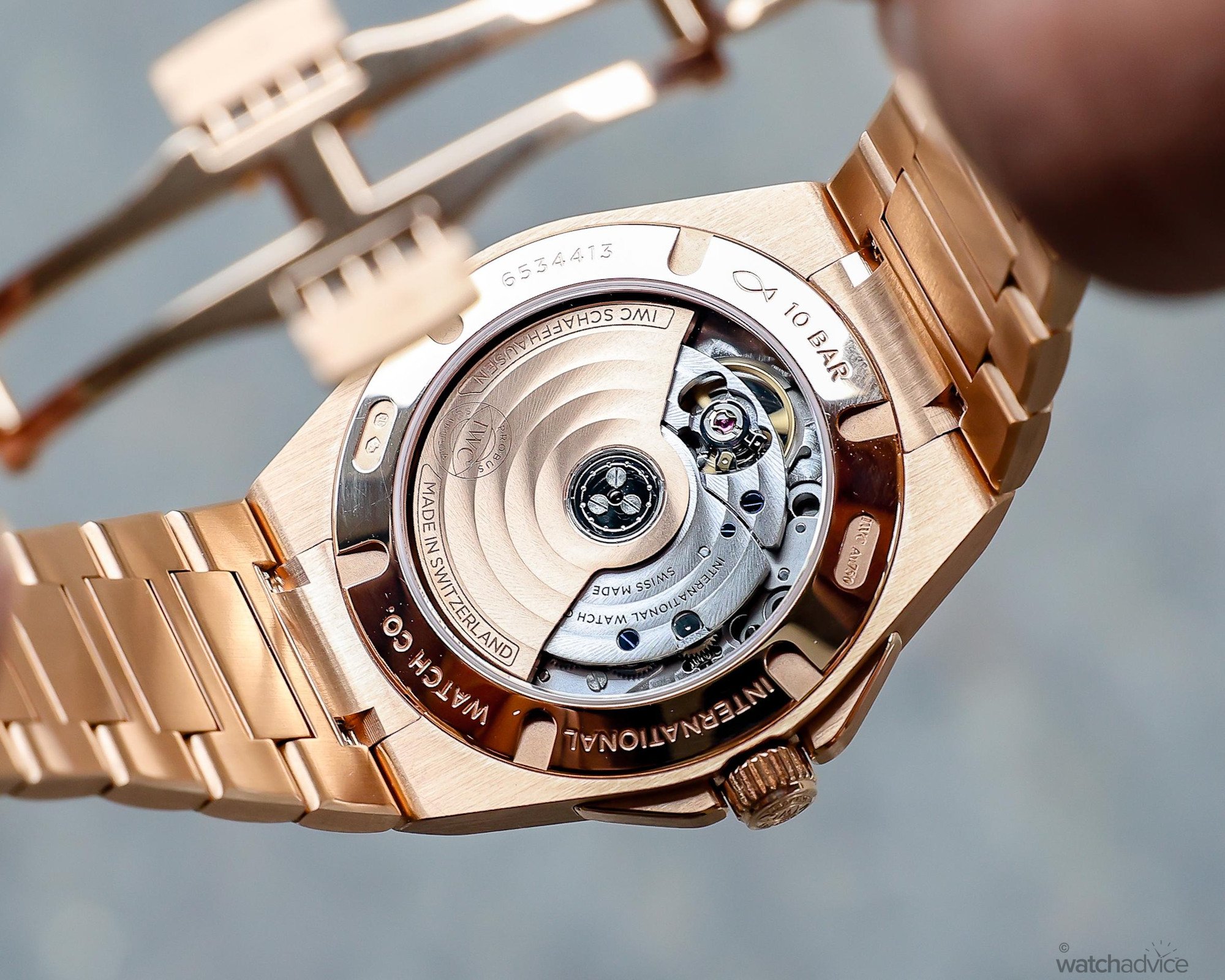
Turning the timepiece over, the sapphire crystal caseback offers a view of Calibre 47110’s finishing, which includes techniques such as perlage for the movement plates and Geneva stripes on the gold-plated winding oscillator. The only thing that stood out as a negative for the movement was this winding rotor. I would have liked to see IWC Schaffhausen give the rotor a skeletonised design, especially considering the price point of the timepiece.
The 40mm Ingenieur gold model with black dial features a skeletonised winding rotor that perfectly complements the overall execution of this timepiece, giving the watch a more refined aesthetic and feel. It’s a small detail, but one that would have elevated the visual appeal of the movement even further. But we need to understand that this is a movement that prioritises reliability and practicality, which fits perfectly with the Ingenieur’s heritage as a watch originally designed for professionals working in demanding environments!
How Does It Wear?
As mentioned earlier on, I was not expecting the 35mm case size to wear well on my wrist. This was from prior experience in wearing smaller timepieces and finding that they feel a little bit too compact. often lacks the presence I prefer on the wrist. However, the Ingenieur Automatic 35 proved to be quite the opposite.
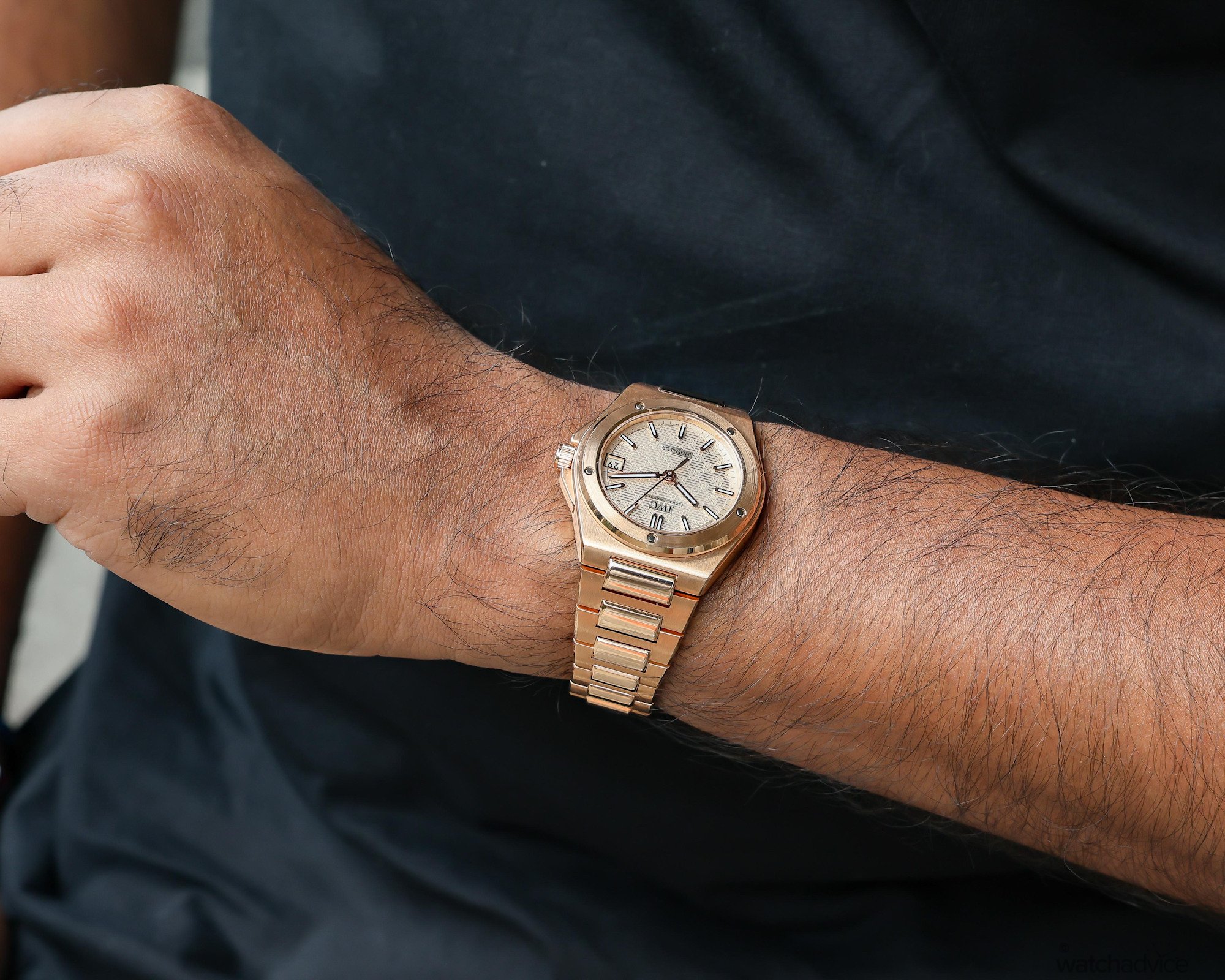
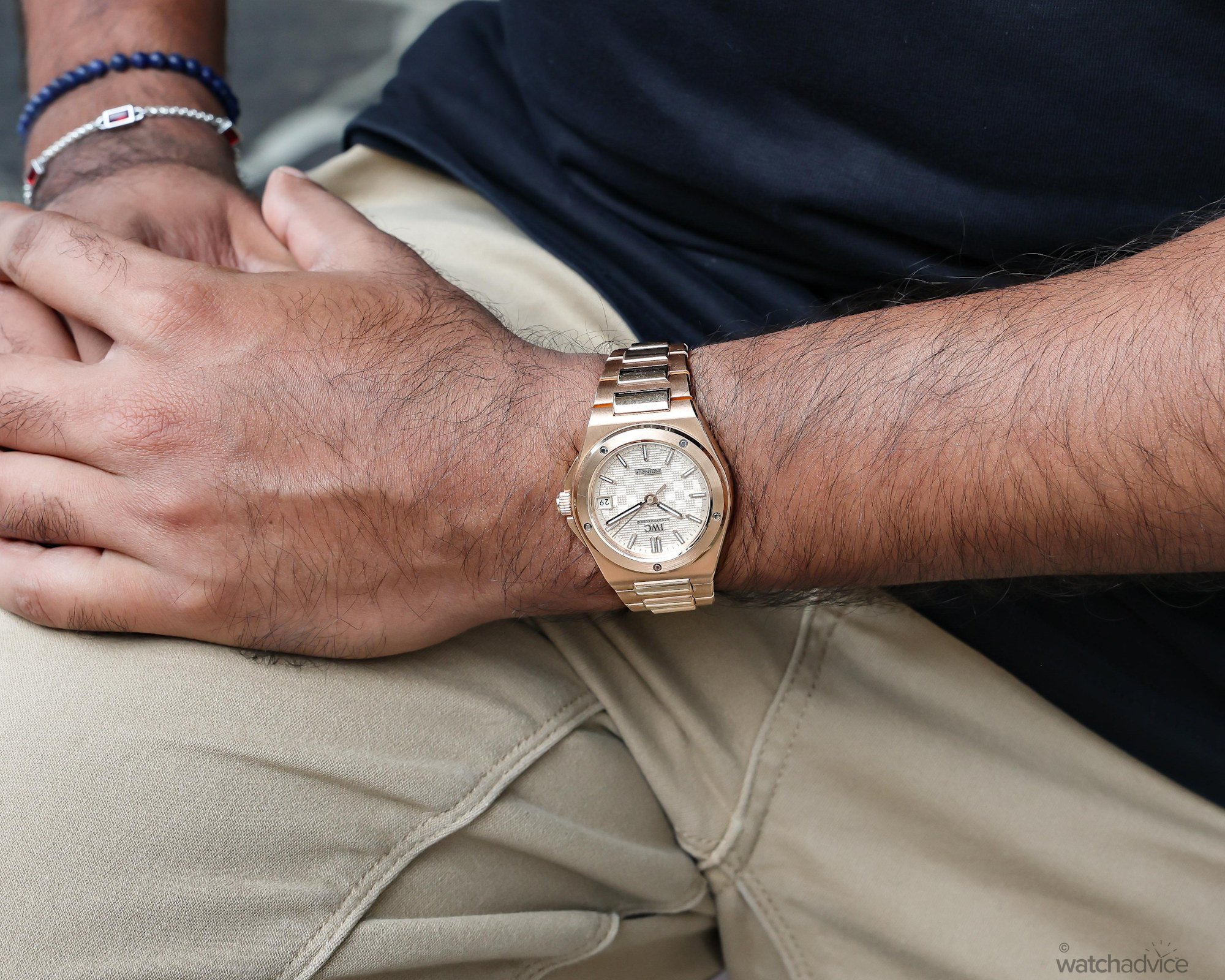
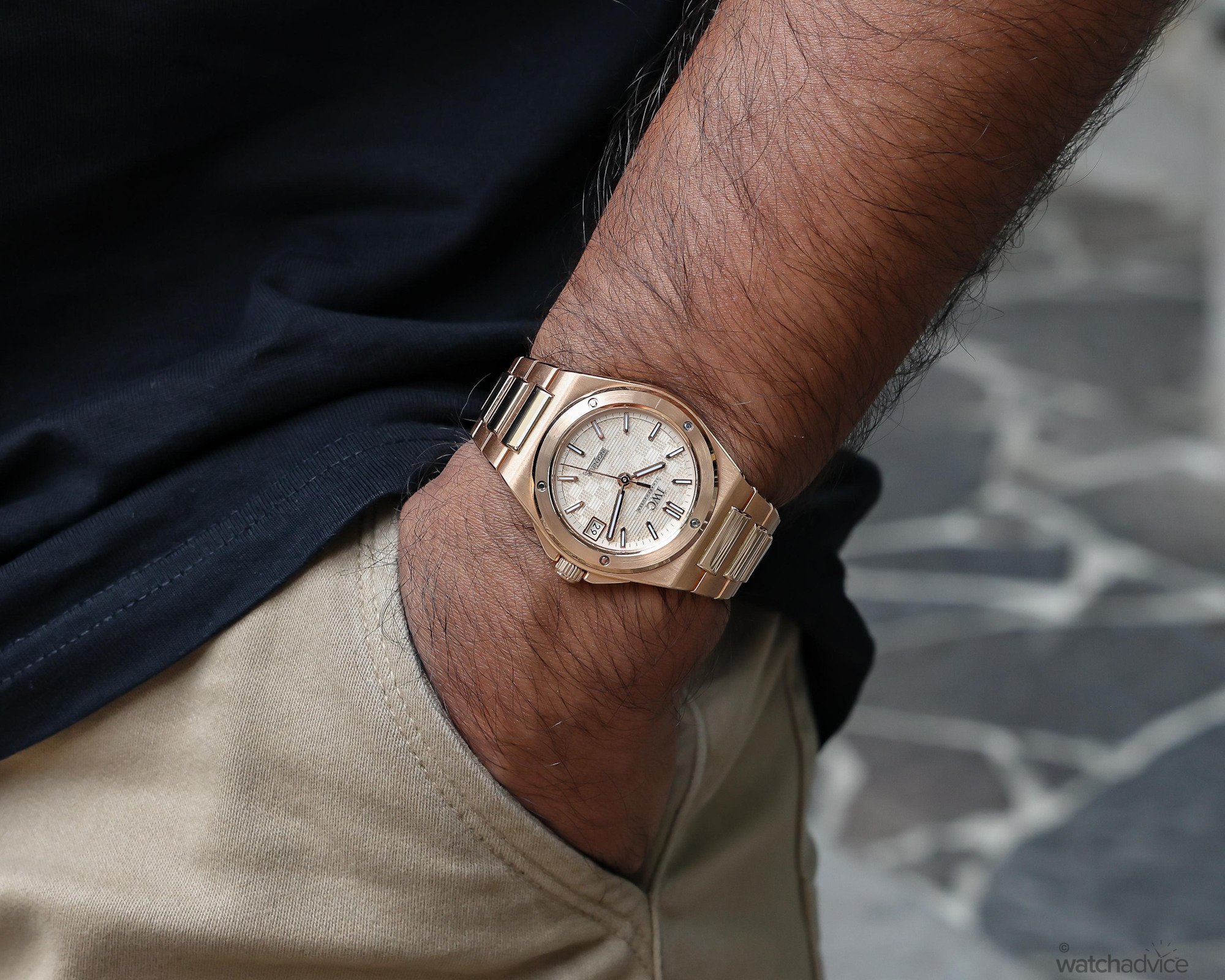
Where this Ingenieur Automatic 35 really excels is in its wearability. With a case measurement of only 35mm x 9.4mm and lug-to-lug distance of just 40.7mm, it still manages to maintain a strong wrist presence. While it’s not bulky by any means, you can certainly feel its weight on the wrist, with the gold construction adding to its weight. And despite the smaller case size, the integrated bracelet and broad case design help the watch sit beautifully on the wrist, striking a great balance between comfort and wrist presence.
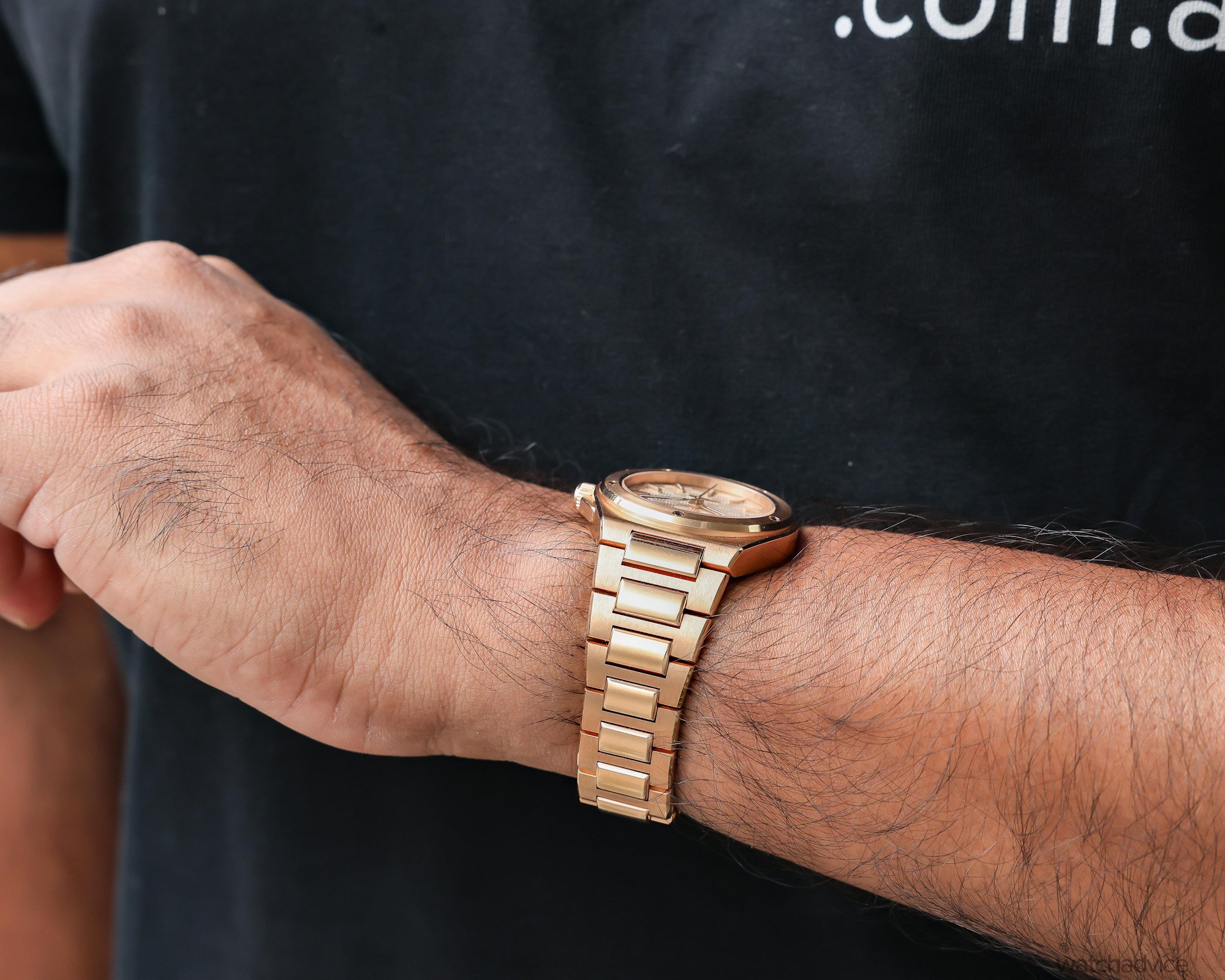
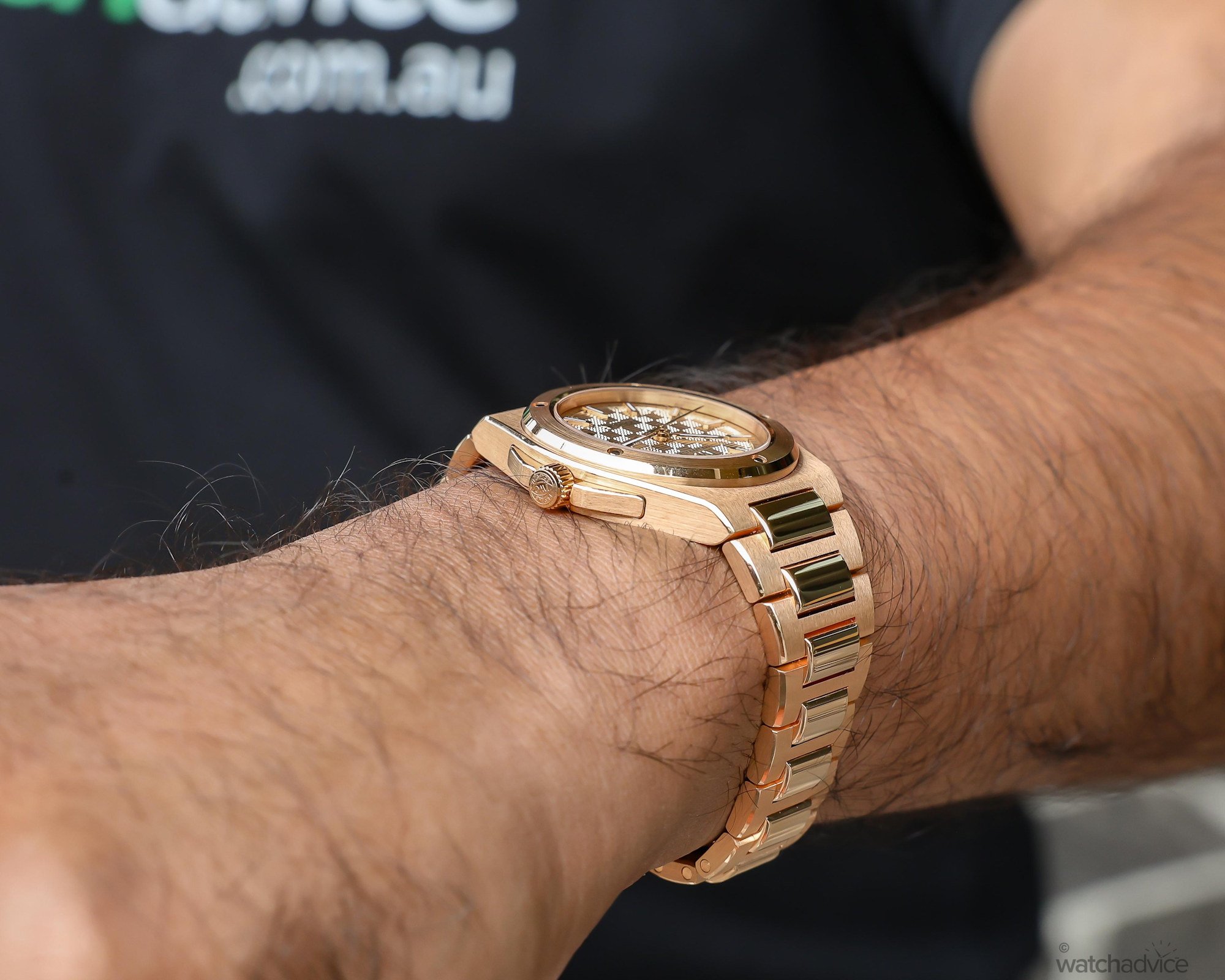
Unlike the 40mm variant, which sits right on the contours of my 16cm wrist, the lugs of this 35mm model end with just a little bit of space left on either side, which honestly feels like the perfect placement. This gives the watch a more balanced look on the wrist. The slightly more compact proportions also allow the case to sit flatter and more naturally. As a result, the watch feels more comfortable during extended wear while still maintaining the strong design presence that defines the Ingenieur.
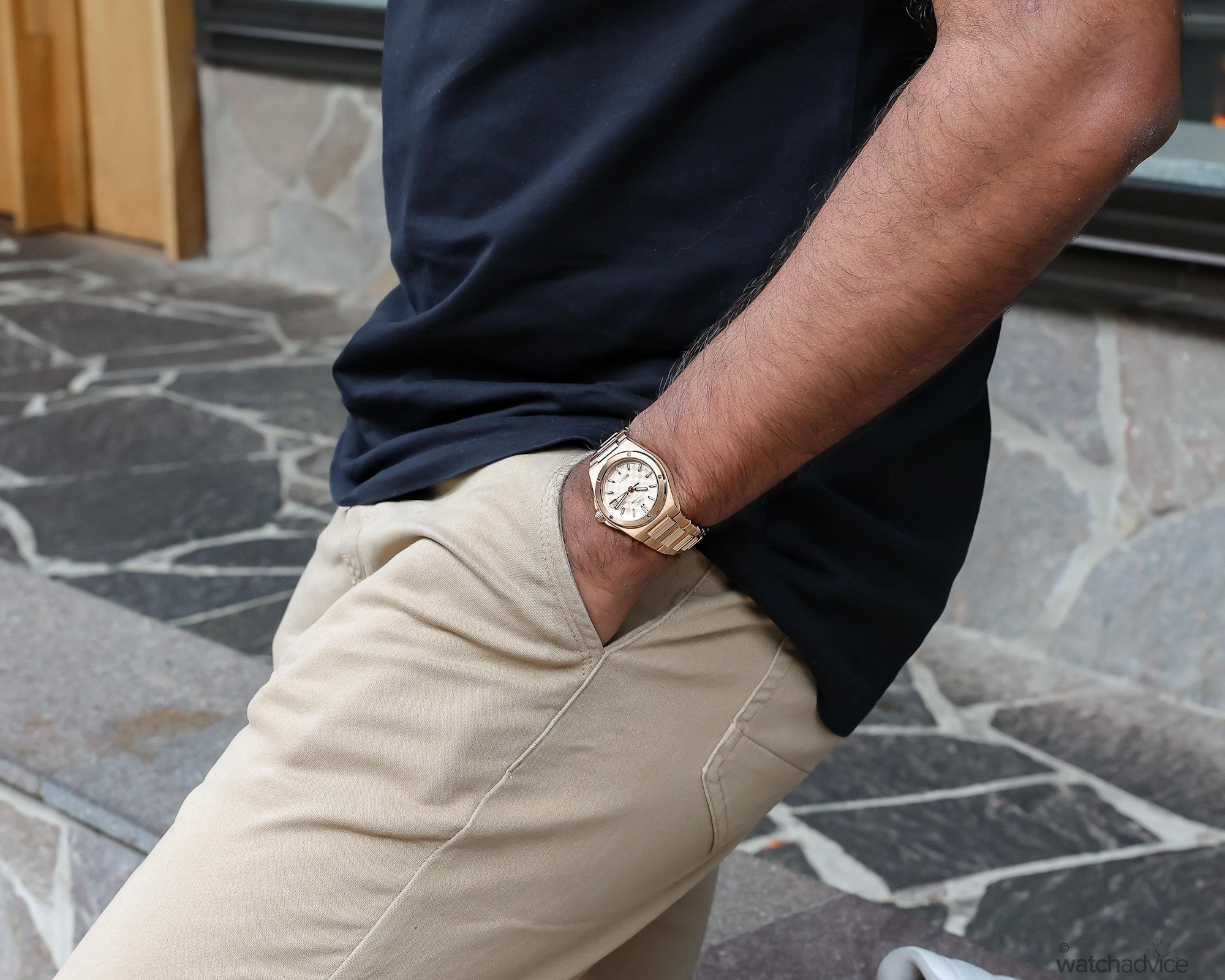

With the Ingenieur’s classic design being a simple three-hander with a date complication, it lends itself perfectly to a 35mm case size. The dial layout remains easy to read, and the grid pattern still stands out beautifully, giving a well-balanced, clean aesthetic. Even with a smaller dimension, the dial never feels cramped or overly busy, which allows the signature design elements of the Ingenieur to remain visually striking.
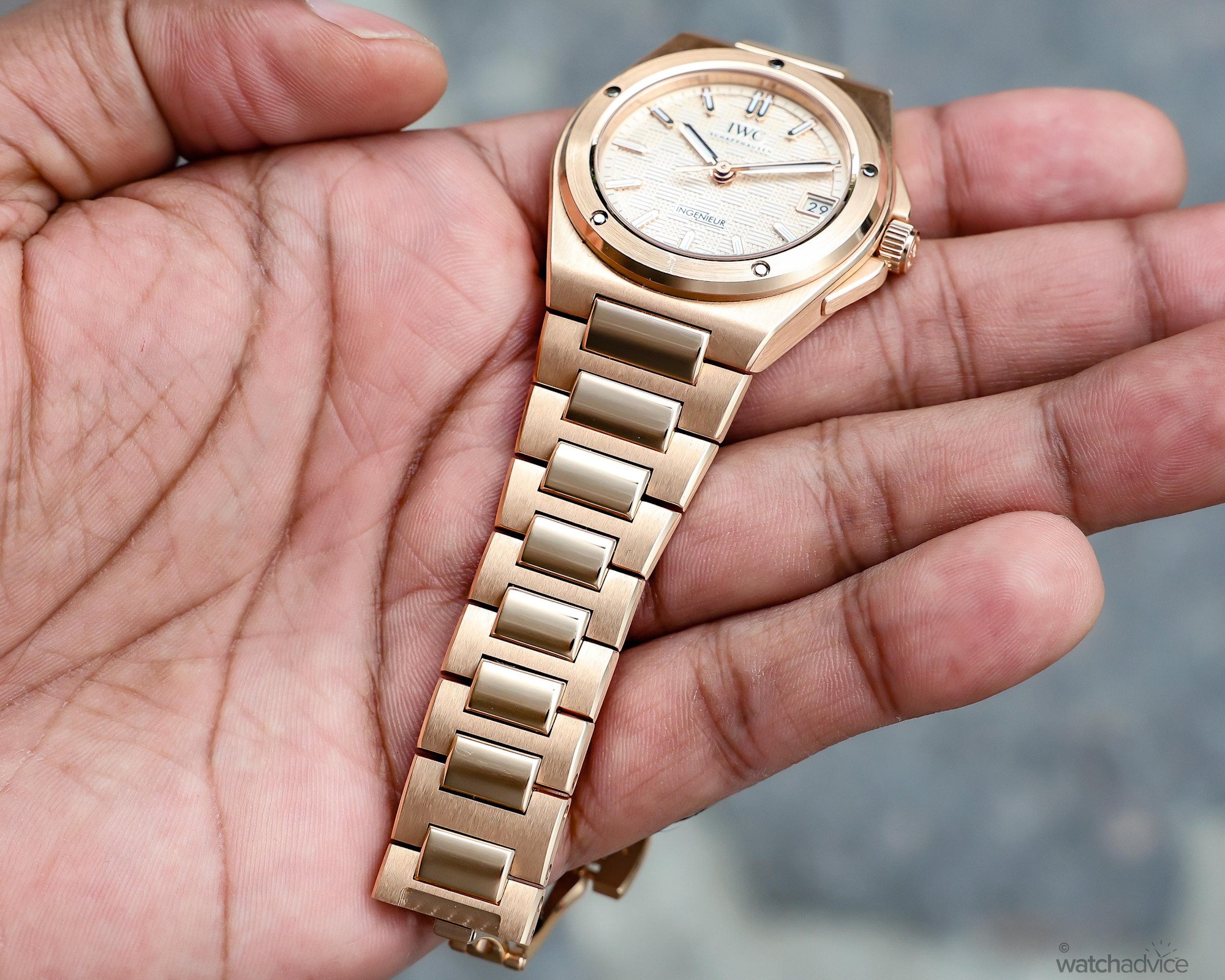
I chose the gold model for a reason as well. The way the polished surfaces shine, without being too overbearing, is what made this model stand out to me the most. From the polished edges of the case to the polished central links of the integrated bracelet, it all comes together nicely to give this integrated sports watch a sense of luxury. At the same time, the brushed surfaces help keep the design balanced, ensuring the watch still retains its sporty character rather than feeling overly dressy.
Final Thoughts
The new 35mm Ingenieur models are a welcome addition to IWC Schaffhausen’s existing Ingenieur collection, bringing the iconic Gérald Genta design into a more compact and wearable format. Initially, I thought that this new case size would be too small for my wrists, but I was pleasantly surprised by how wrong I was, with the 35mm working much better than expected on the wrist.
IWC has been able to successfully integrate Gérald Genta’s signature design codes, while, in my opinion, also making improvements, such as a much better integration of the date window. These modern Ingenieur timepieces have perfectly balanced the sporty engineering roots of the collection, while also refining it with modern luxury aesthetics.
The standout appeal of this new 35mm collection is, for me, the 18k 5N gold model. It has that certain allure that is hard to look away from, and during my time with the watch, I had a hard time gravitating towards anything else! While I loved the gold-toned dial, I can only imagine what the 40mm black dial variant in gold would look like, sized down. It would offer a striking contrast against the warm tone of the gold case and likely give the watch an even bolder visual presence.
For these smaller models, the integrated bracelet works particularly well, helping to give the watch greater wrist presence while also enhancing its overall comfort and wearability. Overall, the Ingenieur Automatic 35 proves that great design truly is timeless, translating Gérald Genta’s iconic vision into a more compact format without losing any of the character that makes the Ingenieur so special.
Reference: IWC Schaffhausen 18ct 5N Gold Ingenieur Automatic 35 (Ref. IW324903)
Specifications
- Dimensions: 35mm x 9.4mm thick, lug-to-lug: 40.7mm
- Case Material: Brushed and polished 18ct 5N Gold
- Dial: Gold coloured grid patterned dial with Super-LumiNova® luminescent hour and minute hands and indexes
- Crystal: Sapphire crystal with anti-reflective treatment on both sides
- Movement: Calibre 47110 automatic
- Power Reserve: Approximately 42 hours.
- Beat Rate: 4Hz (28,800 VpH)
- Water Resistance: 100m (10 bar)
- Strap: 18ct 5N gold integrated bracelet with brushed and polished links.