


We caught up with Jonathan Brinbaum, Bvlgari Watches Managing Director, to talk about the new smaller Octo Finissimo and the direction Bvlgari is heading.
When Bvlgari returned to Watches & Wonders last year, there was a fairly clear message behind the brand’s presence. After some time away from the fair, Bvlgari was back and wanted the industry to take notice of what it had been doing in watchmaking, with the Octo Finissimo Ultra Tourbillon and another world record providing a pretty strong way of making that point. However, this year felt different in a way.
Speaking to Jonathan Brinbaum, Managing Director of Bvlgari Watches, at Watches & Wonders, there was a sense that the brand has moved beyond simply trying to prove that it belongs in the room. The technical credibility is there, the Octo Finissimo has become one of the defining ultra-thin watches of the modern era, and Bvlgari has now produced ten world records across its watchmaking journey.
Not only this, but the brand is one of the rare end to end manufactures in the industry, something we found out when we visited the Haute Horlogerie division in Le Sentier last year. And, not to mention the expertise it now has when it comes to movements, as well as the design led by the enigmatic Fabrizio Buonamassa Stigliani. So, what comes next?
For Brinbaum, this year’s focus is on showing what Bvlgari can do with that technical expertise and how it can bring together the two sides of the brand that have always been important to it: jewellery and watchmaking.
“Last year was the statement of coming back, the statement of setting the stage for the ambitions that Bvlgari watchmaking has,” Brinbaum explains. “This year is the statement of the innovations and the novelties we’re bringing.”
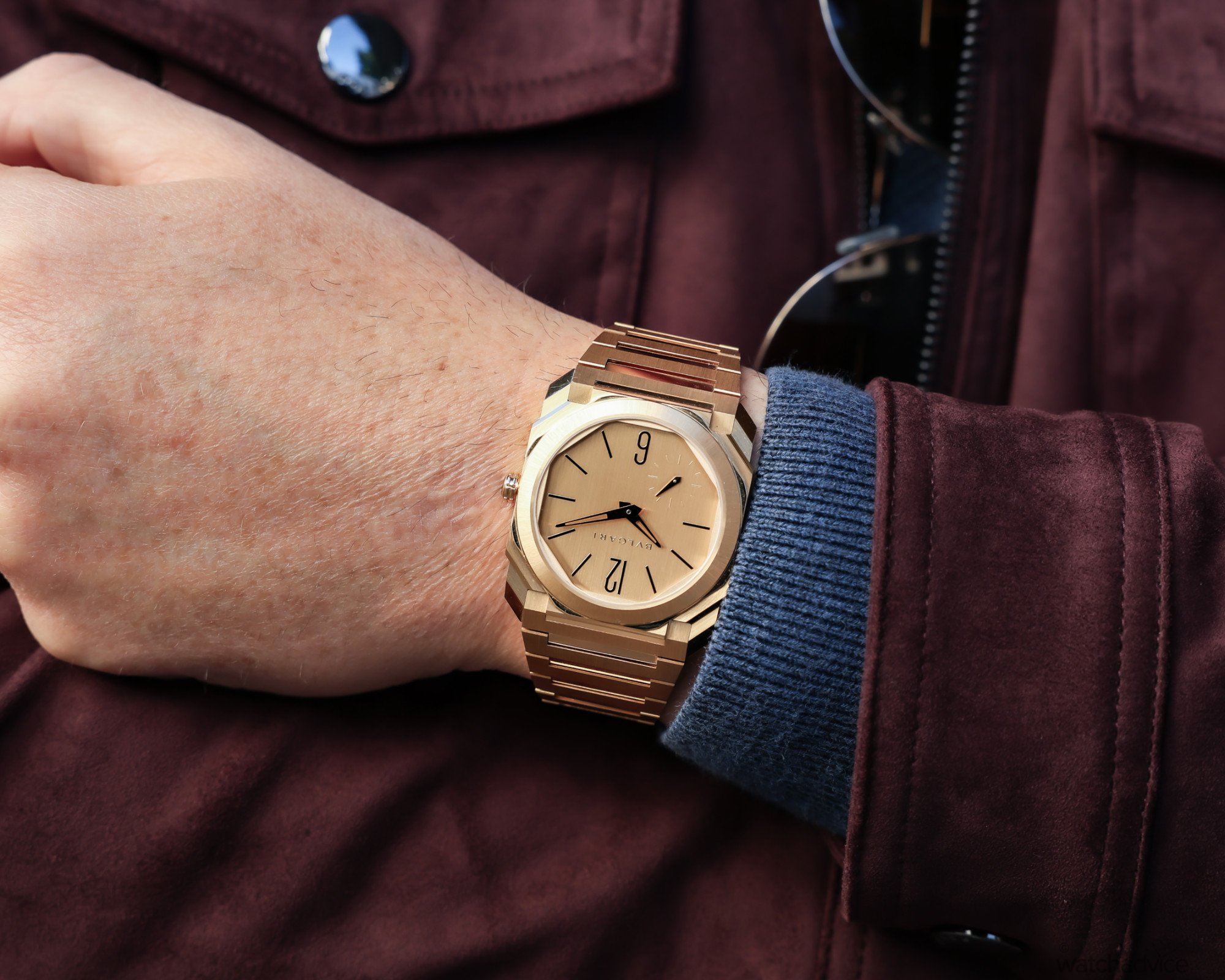
At the centre of that philosophy was the new 37mm Octo Finissimo, a watch that has been three years in development and brings the familiar Octo Finissimo design to a smaller case while introducing a completely re-engineered movement. For Brinbaum, the significance of the watch goes well beyond simply offering a smaller version of the existing 40mm model.
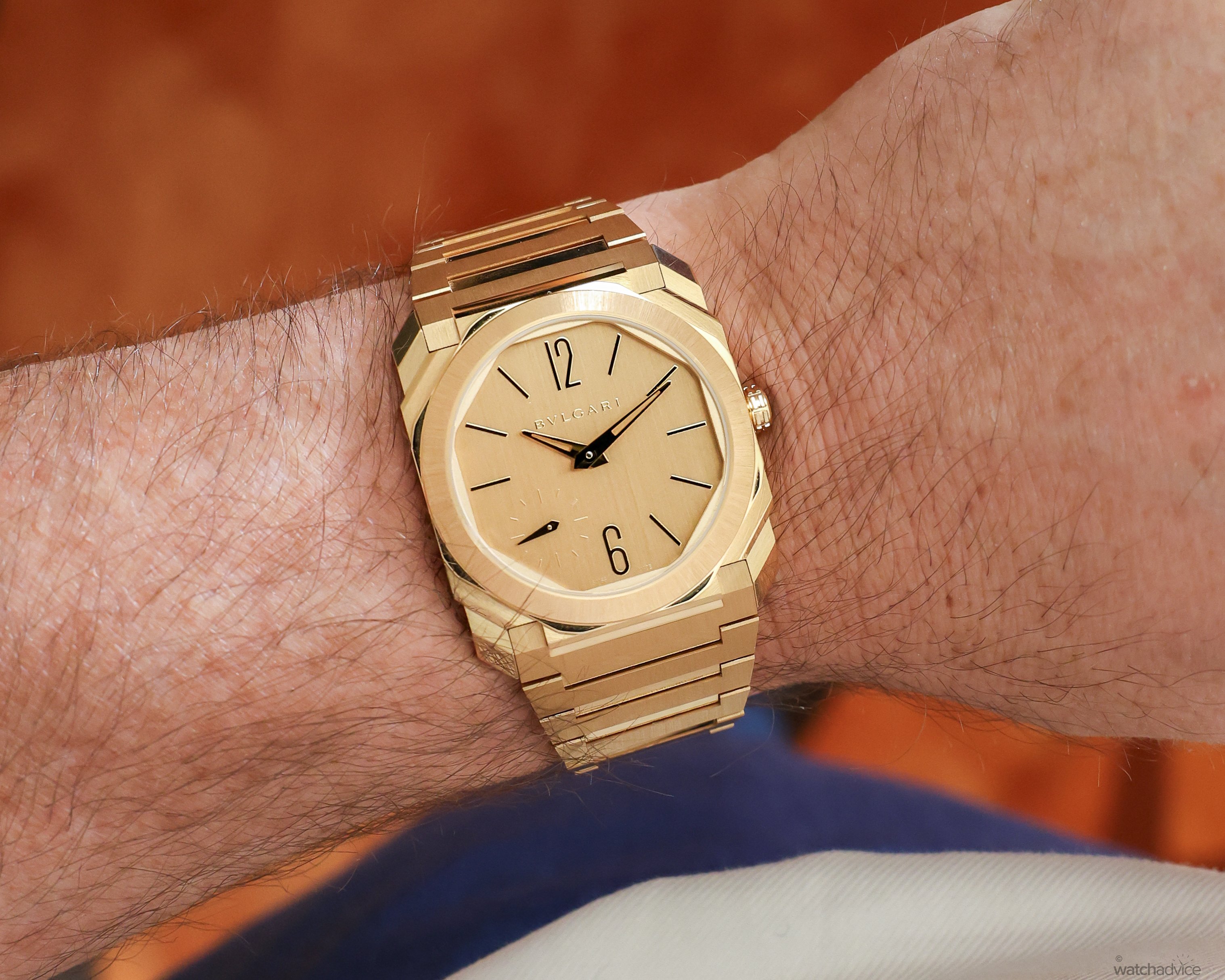
“The 37 is not only a simple, smaller replica of the 40,” he says. “It’s a full re-engineering. Because not only did we reduce the size 20%, but we increased the power reserve by 20%. It makes the technical aspect, the mastery of the technique of the movement completely outstanding”
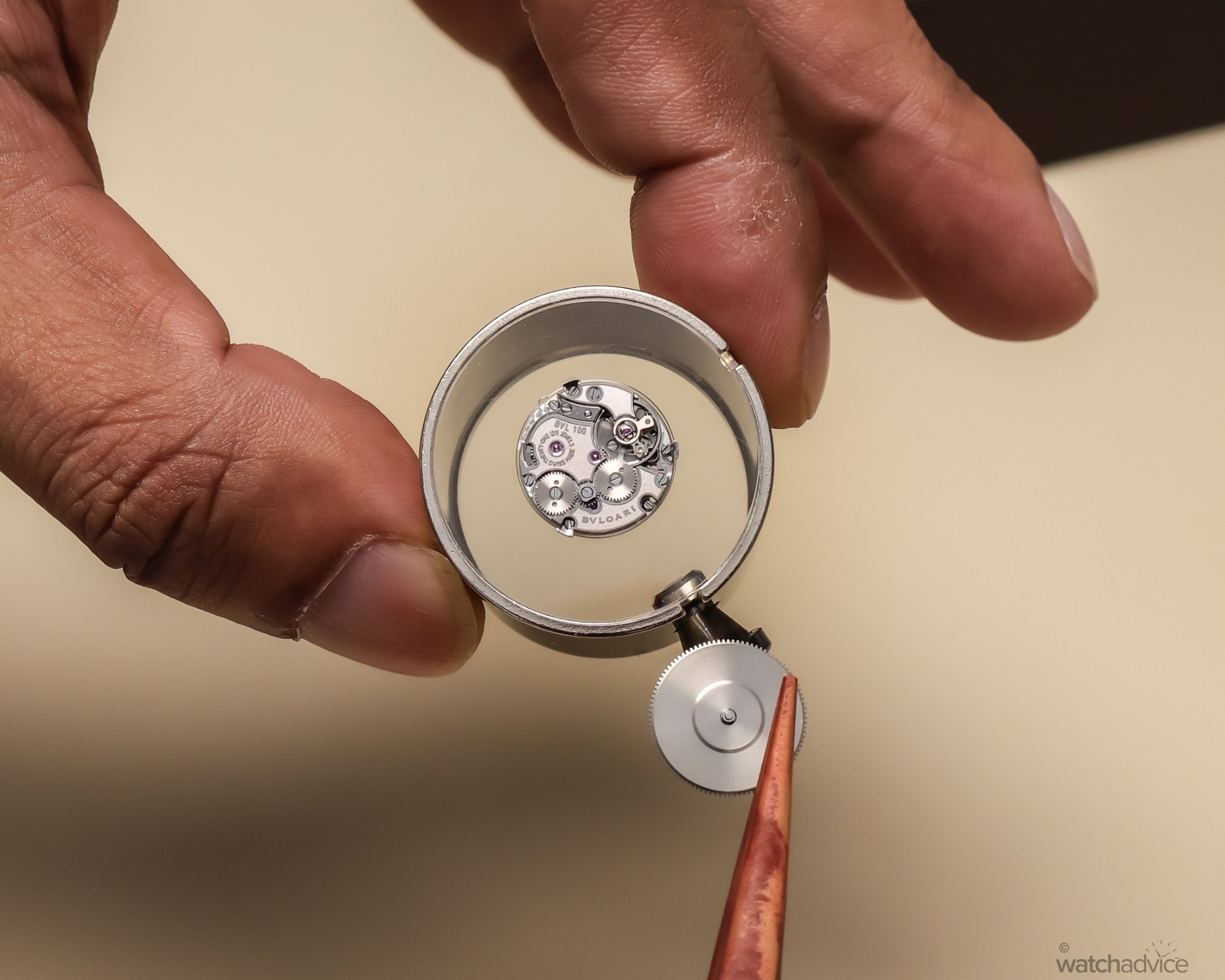
That is quite an achievement when you consider what is involved in making a mechanical movement smaller. The engineers have less space to work with, while still needing to maintain the performance and reliability expected from a modern automatic calibre. The development of the BVL 362 Calibre in the 37mm has therefore been another exercise in the miniaturisation that Bvlgari has become known for through the Octo Finissimo.
“It’s quite a similar challenge,” Brinbaum says when discussing the differences between developing the BVL 362 calibre and the brand’s ultra-thin movements. “Because it’s about space management. It’s about the number of components.”
That might sound straightforward, but once you start reducing the size of a movement, every component and every millimetre becomes increasingly important.
“Our movements, typically Finissimo, and the new Finissimo, we tried not to be more than 100, 120, 140 components, because this is also the driving force of how you’re going to be able to put everything in it.”
Energy management becomes another major consideration. Bvlgari has spent more than a decade working out how to make mechanical movements thinner without compromising their functionality, and Brinbaum sees those lessons as being directly applicable to the smaller movements the brand is now developing.
“Miniaturisation and energy are the two enemies in a watch,” he says. “When you have great engineers, great watchmakers, who have four, ten, twelve years of learned experience in thinness, to bring them into miniaturisation, like the Piccolissimo, it’s a great example.”
It is an area where Bvlgari believes it has developed a genuine advantage, particularly through the experience gained with the Octo Finissimo and the tiny Piccolissimo calibre used in its jewellery watches, like the Serpenti.
Making The Octo Finissimo More Wearable
While the technical aspects of the movement is important, there is also a very simple reason why the 37mm Octo Finissimo makes sense, and when we saw it for the first time, something you understand instantly. The 40mm Octo Finissimo has a strong presence on the wrist. Its integrated bracelet and angular case give it a very distinctive look, but that size has also meant that it has not necessarily been suited to everyone – something I’ve pointed out before in my reviews.
Moving to 37mm changes the watch considerably, even though it may not seem so at first. It retains the architecture and character that have made the Octo Finissimo so recognisable, while making the proportions more approachable for smaller wrists. And it’s not only smaller wrists either. Due to the case construction and design, the 37mm will fit more wrists, even those larger, better. Again, see my review on the 40mm Octo Finissimo.
But, that aside, the new 37mm Octo Finissimo will open the door to a much broader audience, including women, which is an area Brinbaum believes will become increasingly important to Bvlgari.
“I truly believe that ladies’ watchmaking will keep being a driving force,” he says. “And more interestingly, ladies’ mechanical or automatic movements.”
This is where the 37mm Octo Finissimo starts to connect with a much bigger conversation happening within Bvlgari. The brand has always approached women’s watches differently to many traditional Swiss manufacturers because its history begins with jewellery. Serpenti, for example, was born as a piece of jewellery before it became the highly recognisable watch collection it is today.
“Serpenti is not a men’s watch that we are making smaller for women,” Brinbaum says. “It’s design-led jewellery watchmaking.”
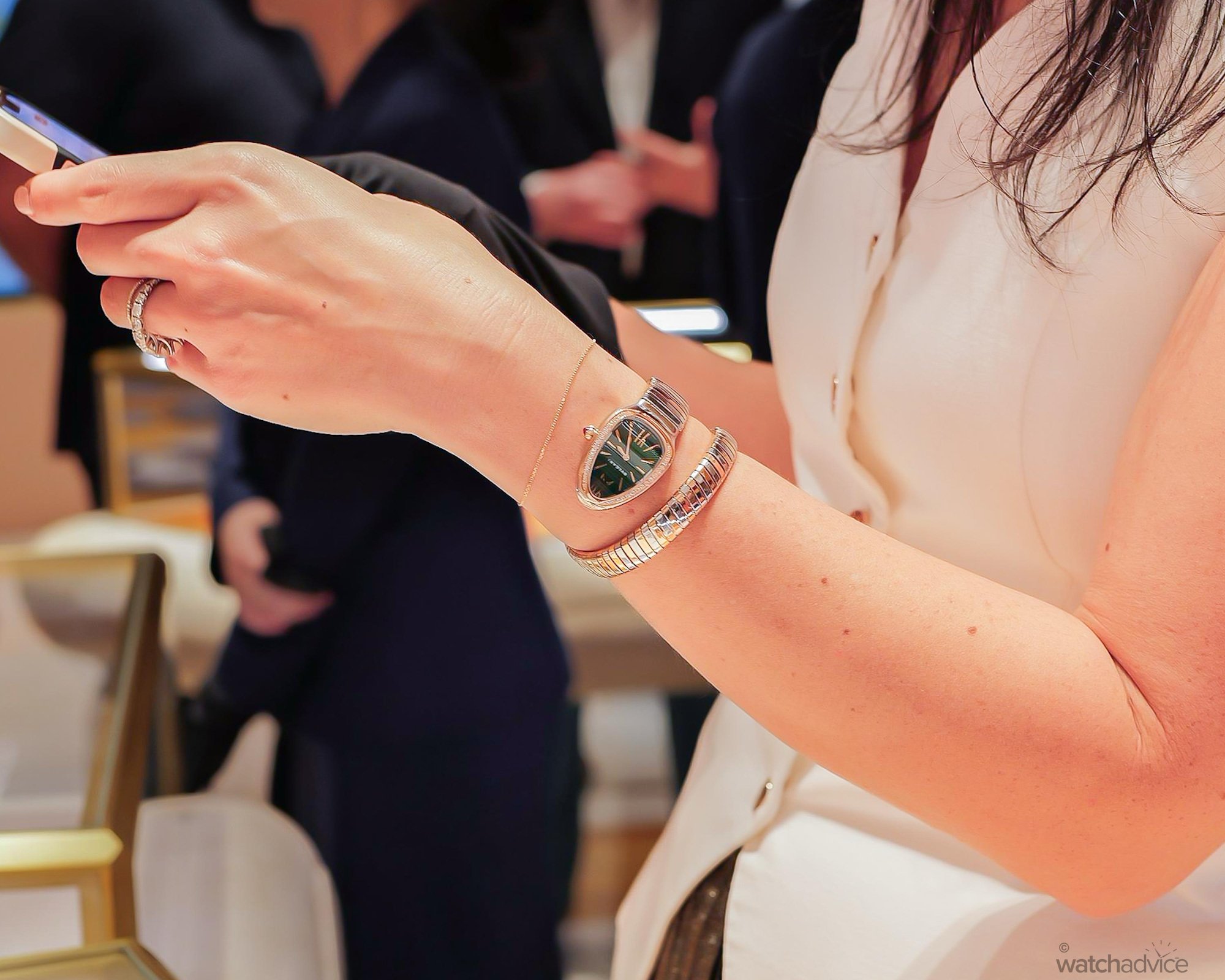
That distinction is important because the traditional approach to women’s watches has often been to take an existing men’s model, reduce the size and perhaps add some gem-setting. Again, something we’ve spoken about before in both a good and bad context. However, Brinbaum is fairly blunt about it.
“75% probably go men’s watches, shrunk down, add some gem sets. That’s what happens.”
And he isn’t wrong here. Bvlgari has the opportunity to approach the category from a completely different starting point because of its jewellery heritage and its investment in miniature mechanical movements.
Designing The Watch Before The Movement
One of the more interesting things to come out of our conversation with Jonathan was how Bvlgari approaches the relationship between design and movement development. For many brands, the movement is already available, and the watch is designed around it. Bvlgari often works in the opposite direction, particularly when it comes to its jewellery watches.
“You have a design, you create an object, and then, able or not, that’s the question, but then you craft the calibre that fits that design.”
The Piccolissimo is a good example of this. Bvlgari developed the movement specifically to fit the requirements of its Serpenti watches, including versions where the winding system was positioned differently because of the shape and construction of the case.
“When we launched Piccolissimo, first of all, the original Piccolissimo was not with a crown,” Brinbaum explains. “The original Piccolissimo was with the crown under.”
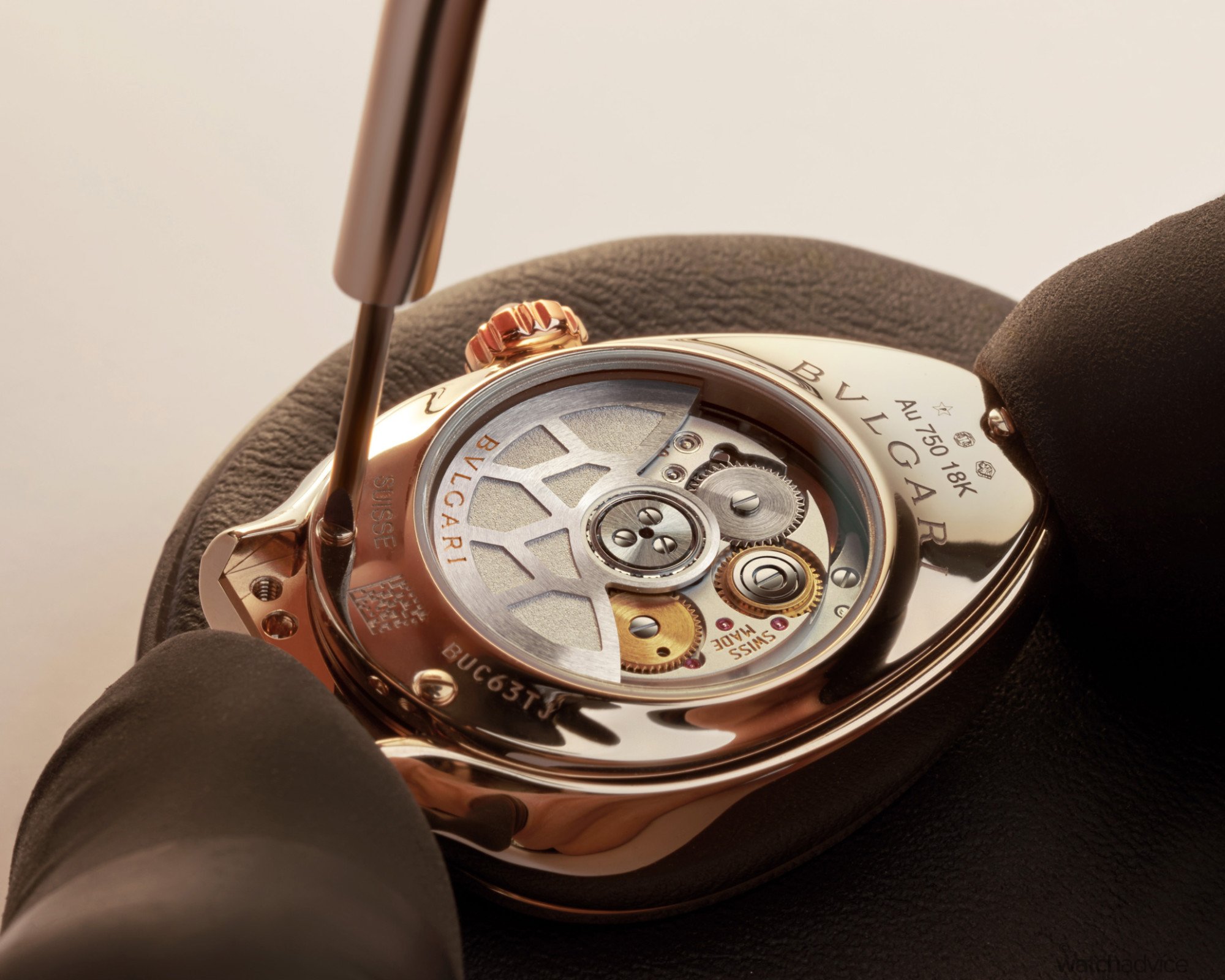
The reason was that the movement needed to work with the particular design of the watch, and the same philosophy applies to the automatic movement used in the Serpenti Solo Tempo.
“We designed this movement because of the design. That movement was designed to perfectly fit the head of the snake,” Brinbaum says.
This approach requires a considerable amount of investment and technical expertise, but it also gives Bvlgari a level of freedom that is difficult to achieve if the design has to start with an existing calibre. It is also particularly relevant as the brand looks at the future of women’s mechanical watches.
Why Bvlgari Believes Women’s Mechanical Watches Have a Big Future
Brinbaum believes women are becoming increasingly interested in mechanical watchmaking, and he sees the jewellery category as a natural way for many of them to enter the world of watches. He explains:
“More and more ladies are interested in watchmaking, and to be fair, a lot of them are entering watchmaking through the angle of jewellery.”
That gives Bvlgari a fairly unique position. A customer may initially come into a Bvlgari boutique looking at jewellery, discover a Serpenti or another watch, and then become interested in the mechanical movement inside it. Brinbaum says this is already happening, with Bvlgari seeing strong demand for its jewellery watches.
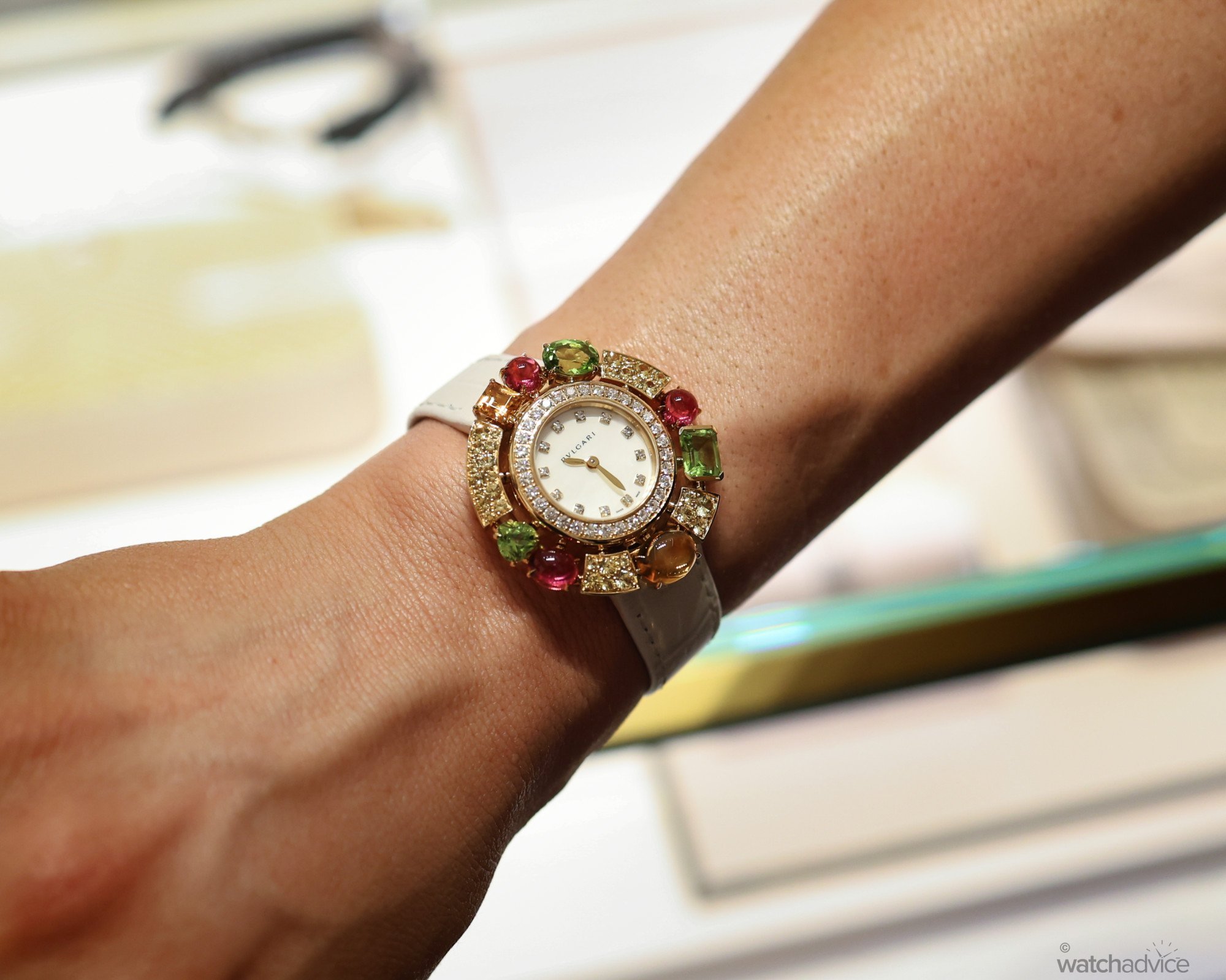
He also believes there has been a broader change in the way women buy watches. In the past, he says, women were often guided towards particular brands by others, whereas today more women are making their own decisions about what they want to wear.
“Years back, women were buying themselves watches because they were somehow following the guidance of others, ‘No, you should buy Rolex because Rolex is good’, as an example. Today, fewer women are actually consulting us (men).”

This mentality creates an opportunity for brands that can offer something designed specifically with women in mind, rather than simply adapting an existing men’s collection, as many brands do. Not only this, but Bvlgari’s history in jewellery gives it a natural advantage, while the development of movements such as Piccolissimo gives the brand the technical capability to back up that design philosophy.
“More and more jewellery watchmaking, but also more and more watchmaking within jewellery is and will be happening, being automatic or mechanical. It’s a good thing!”
The Challenge of Making Small Mechanical Movements
The industry’s history explains why this is not something that every brand can simply decide to do. The quartz crisis effectively wiped out many of the smaller mechanical calibres that had traditionally been used in women’s watches. As demand shifted towards quartz, the economics of continuing to produce those movements changed, and much of the expertise disappeared.
“The history of watchmaking, you know that all the ladies’ calibres, they disappeared in the ’80s with the quartz crisis,” Brinbaum says. “Because they were the calibres that were the smaller volumes, because the men’s category was bigger. What did the big brands do? They all left!
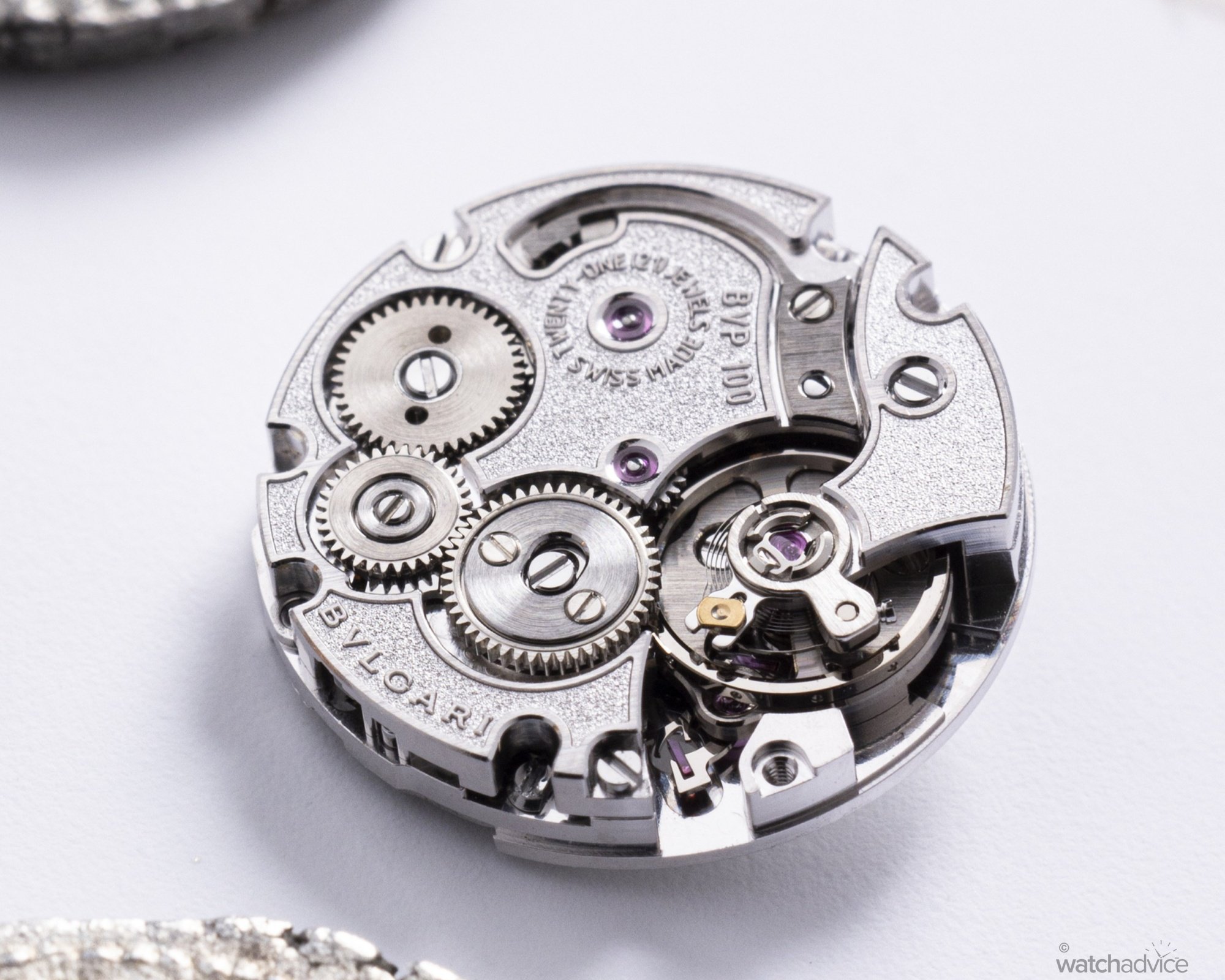
For a brand wanting to return to genuinely small mechanical watches today, that means rebuilding expertise that has not been required at significant scale for decades. This is not an easy thing to accomplish due to scale and economics. And this is where Bvlgari believes its work on ultra-thin watchmaking gives it a significant advantage.
“Miniaturisation, we learned it from thinness,” Brinbaum says. “And that’s a great competitive advantage that Bvlgari has today versus the others.”
The 37mm Octo Finissimo is a good example of how that expertise can be applied beyond the pursuit of another world record. The movement is smaller, but Bvlgari has also managed to increase the power reserve, showing that the engineering work is about more than simply making everything smaller.
The Octo Finissimo Ultra Remains Bvlgari’s Playground
While the 37mm Octo Finissimo is likely to have a much broader appeal, Bvlgari has no intention of walking away from the extreme end of watchmaking. That is where the Octo Finissimo Ultra comes in. Brinbaum describes it as the brand’s “concept car”, which is probably one of the best descriptions of the Ultra we have heard and makes sense.
“Ultra is my concept car,” he says. “It’s my concept watch. It’s like your Ferrari, your Rolls-Royce, your Porsche. You need a concept car. You need to think wild. You also need to bring something that takes their heritage, in our case thinness, plays with it, and goes beyond.”
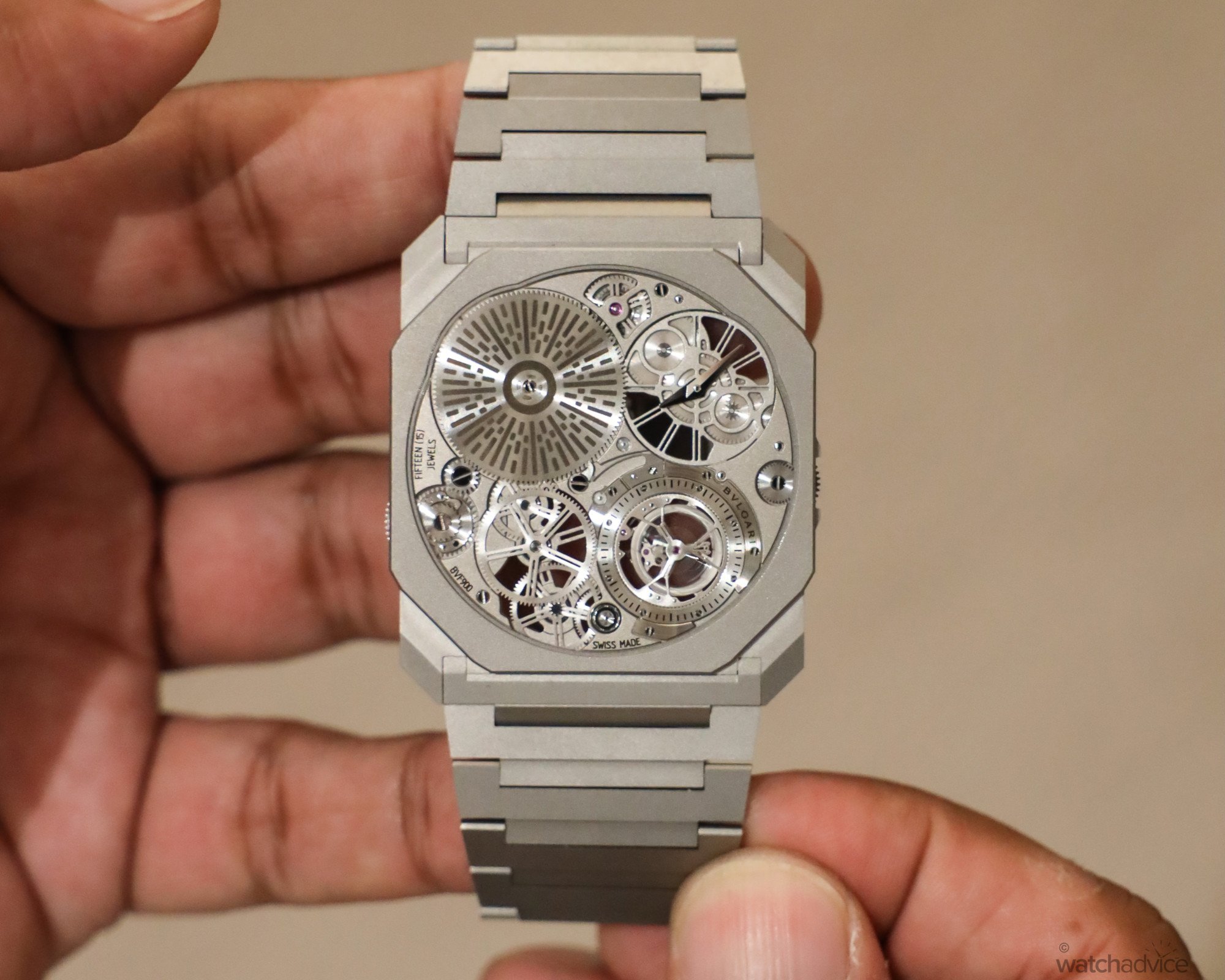
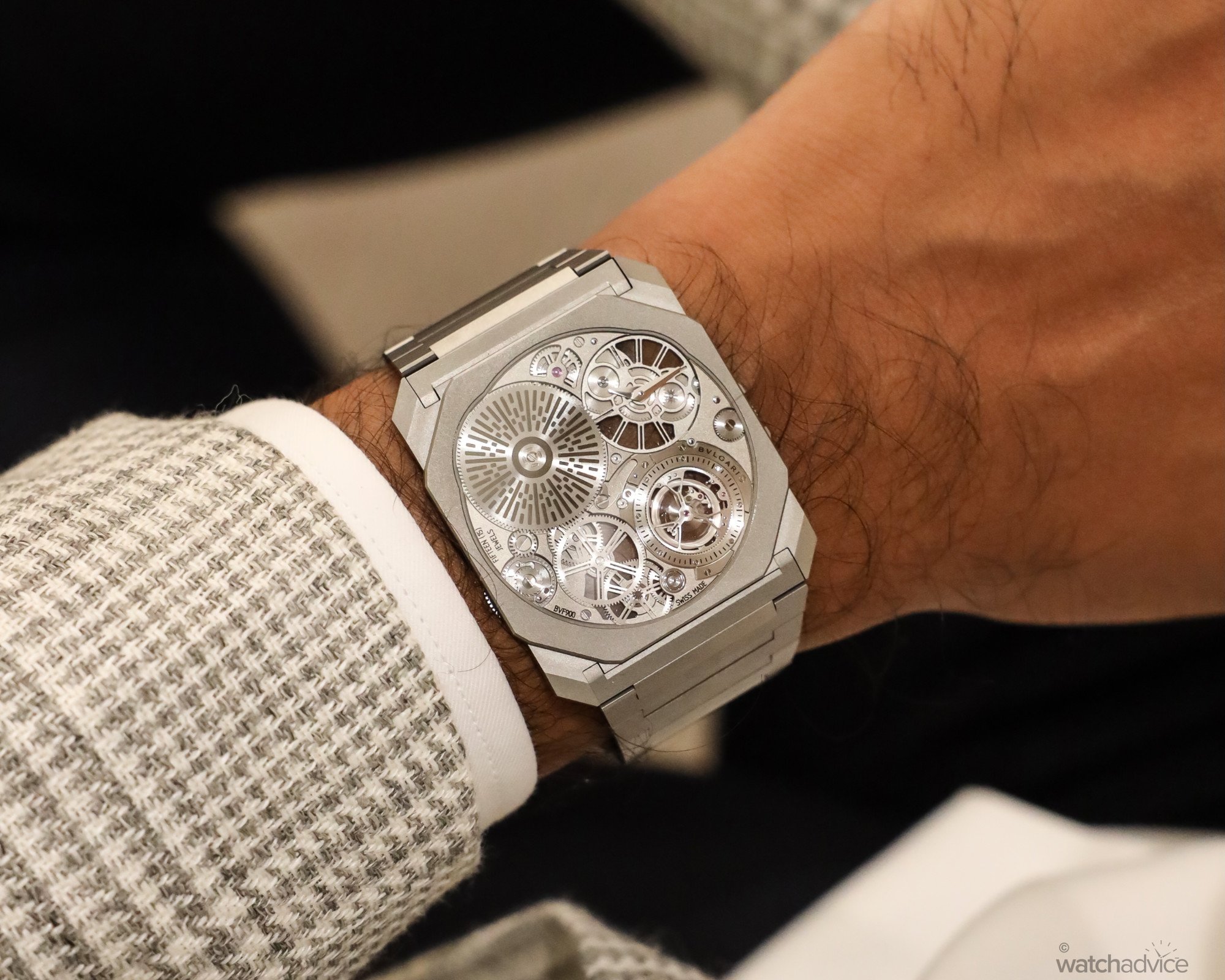
The idea is that Bvlgari’s technical teams have a space where they can experiment, take risks and see just how far they can push the limits. The original Ultra project was not even intended to become a commercial watch. It was developed to answer a simple question: how thin could Bvlgari make a functioning mechanical watch?
“It was meant to push the boundary of thinness and say, okay, how far can we go in a functioning watch? You can take it, you can rewind it, you can set the time. Everything can be done directly on the watch.”
And that last point really matters to Brinbaum because the Ultra is a functioning mechanical watch rather than simply a technical demonstration or a prototype. He continues:
“In this case, thinness, Bvlgari is definitely the brand to go to, because we own this internal savoir-faire. Of course, working with partners, because it’s not only Bvlgari that works at that level, it’s a set of suppliers in the region who, by the way, love the challenge that we’re assigning to them and working together with us.”
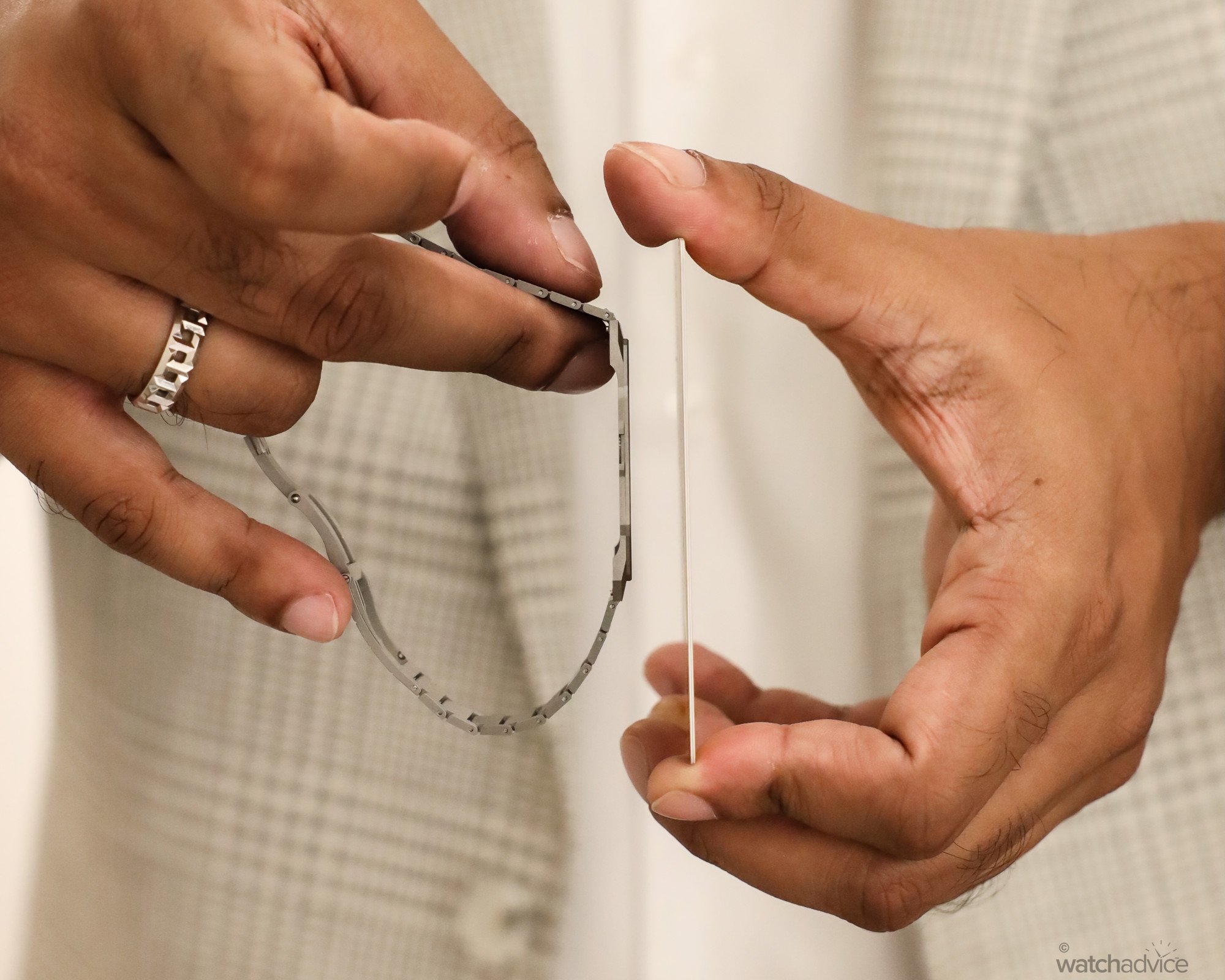
The latest Ultra Tourbillon continues that philosophy while introducing a platinum case. At 1.85mm thick, the watch remains extraordinarily thin, and Bvlgari still relies on tungsten carbide for the structural components because of the demands placed on the movement at such a small scale.
Platinum therefore serves a different purpose than the technical. This is where the Roman side of the brand seeps in, the look and feel is just as important, especially to Jonathan. For him, it adds another layer to the Ultra, bringing the technical and jewellery sides of Bvlgari closer together.
“I love it [The Ultra] in platinum for the preciousness it carries, and it brings this notion of an elevated perception of the watch, so it’s again bridging both worlds.”
One Bvlgari, Two Sides
This brings us back to the broader collection that was presented at Watches & Wonders this year, as well as LVMH Watch Week a couple of months prior, and the importance of these specific collections within the Bvlgari stable. Spanning the Octo Finissimo, the Ultra Tourbillon, and Serpenti, along with jewellery watch collections, which on paper could appear to be quite separate products, but Brinbaum sees a very clear connection between them.
“Every luxury brand needs attention. If you’re not bringing attention as a luxury brand, you’re not bringing any interest. One leg that we have in jewellery and jewellery watchmaking,” Brinbaum explains, alongside “the mechanical Swiss manufacturing savoir-faire.”
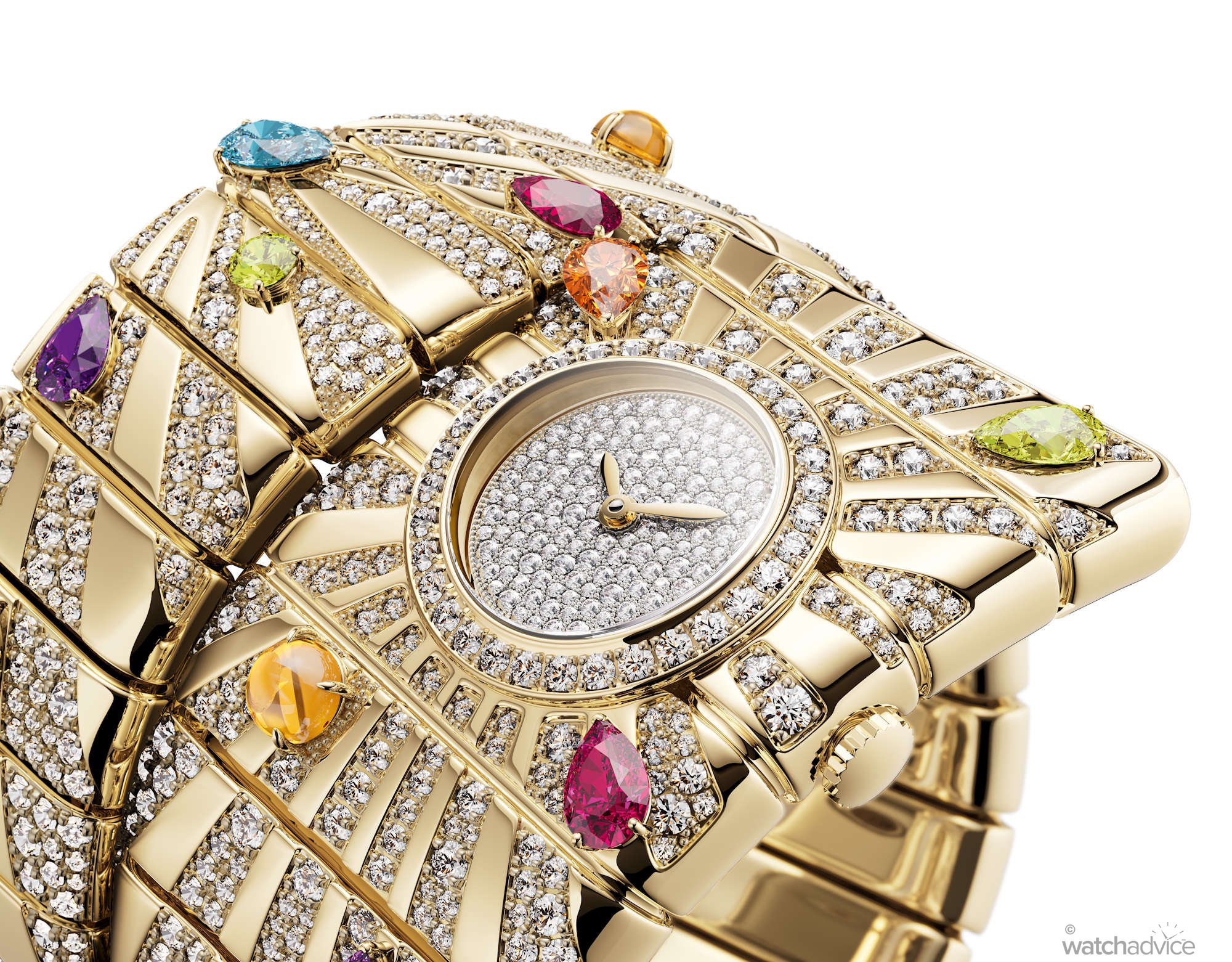
The latter has been built over the past 12 years through Octo Finissimo, as we saw when walking through the Haute Horlogerie manufacture last year. And it is that combination that Brinbaum believes makes Bvlgari different. He also believes there has to be a reason behind the innovation.
“Twelve years of Finissimo, ten world records! Innovating for the sake of innovating doesn’t make sense. It needs to be done in a proper way that talks with who we are as a brand.”
The 37mm Octo Finissimo makes sense within that philosophy because it takes something Bvlgari has become exceptionally good at, miniaturisation, and uses it to make one of its most important watches more accessible.
Has Bvlgari Finally Been Accepted as a Watchmaker?
For years, Bvlgari had to convince sections of the watch industry that it was more than a jewellery house making watches. After ten Octo Finissimo world records, the development of movements such as Piccolissimo and the continued evolution of the brand’s mechanical watchmaking, that argument should now be put to rest. But, Jonathan says Bvlgari isn’t resting on its laurels.
When asked about this and if the battle has been won, he replies emphatically, “Never!” But he does elaborate: “No, you can never say that, no. You know, what I often say is… I truly think that now, within the industry, and within a certain set of clients, nobody questions the legitimacy of Bvlgari anymore.”
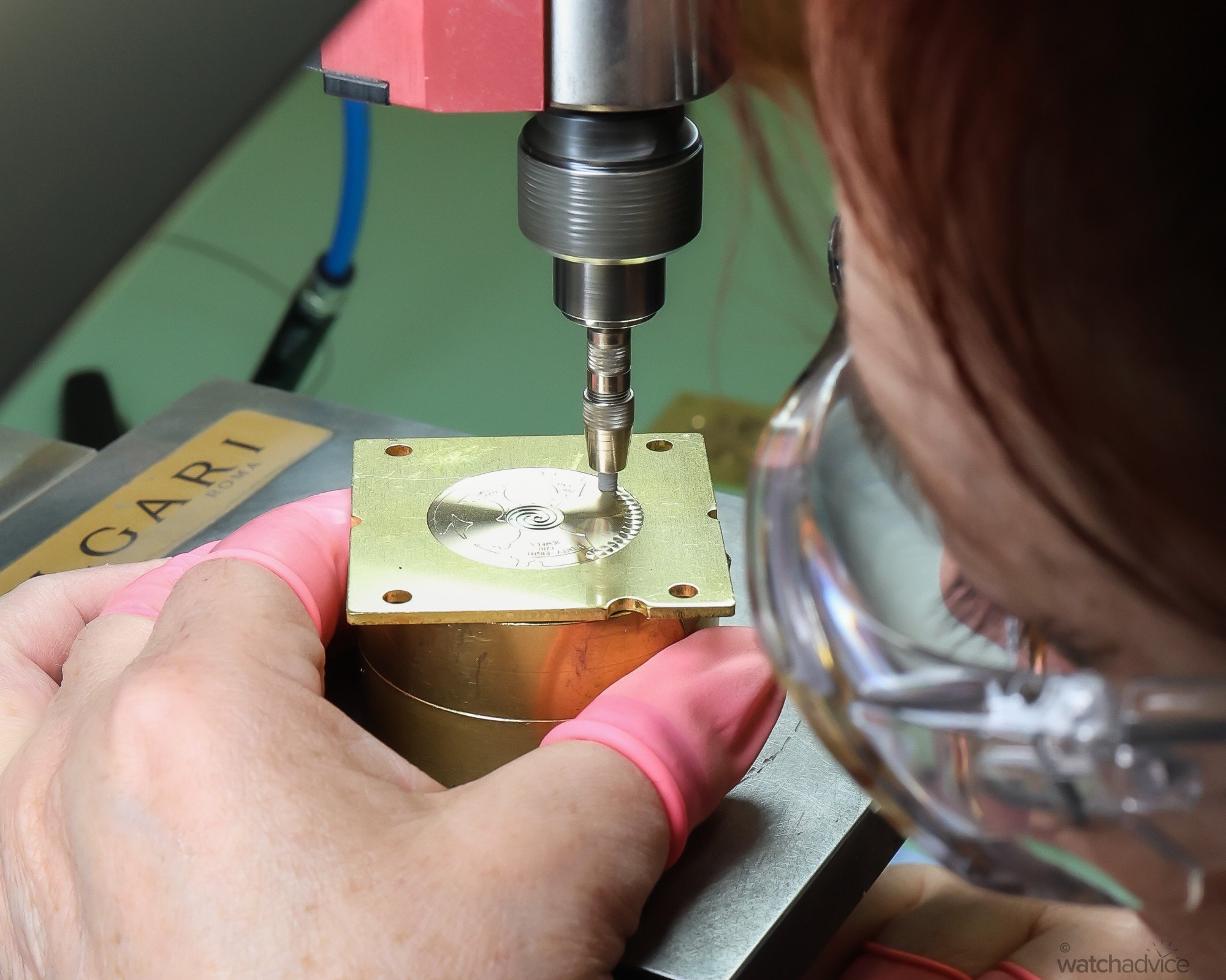
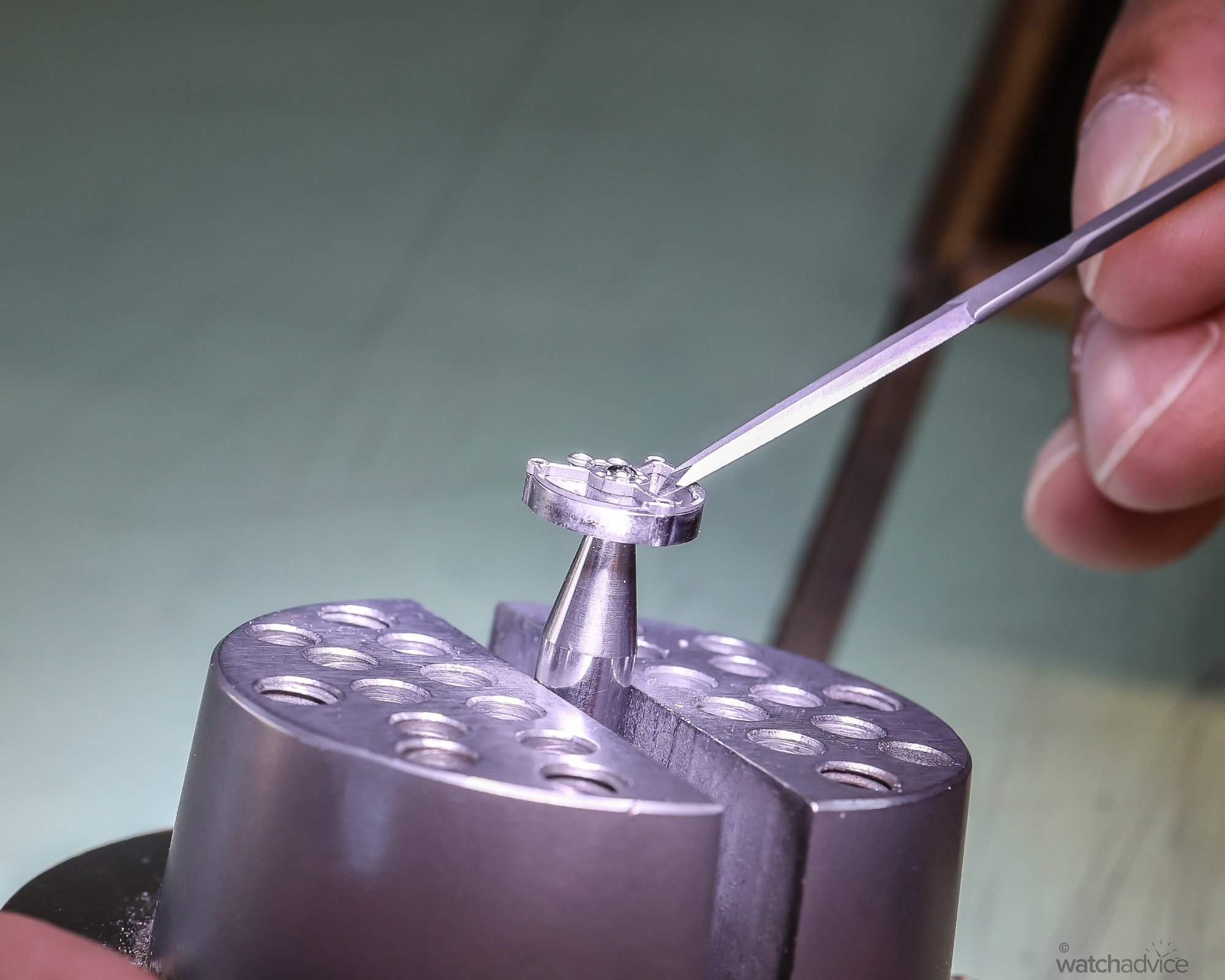
The problem is that there are still plenty of people who simply don’t know what Bvlgari is capable of, and he quickly explains what he means.
“Because 25 years is long, but it’s nothing compared to watchmaking. So when I say my first natural answer is no, the battle is not won; it is not because we don’t have that legitimacy within the community, but because it’s an endless work that we need to do to just tell it out there.”
Within the industry itself, he believes the situation has changed considerably, and this is where he sees much of his role, spending more time talking directly to collectors, whether that is through dinners, coffees or simply getting watches onto people’s wrists.
“I believe that it needs to be one-on-one relationships that you create with collectors. If you don’t know that Bvlgari has serious watchmaking, you’re not going to enter a Bvlgari boutique.”

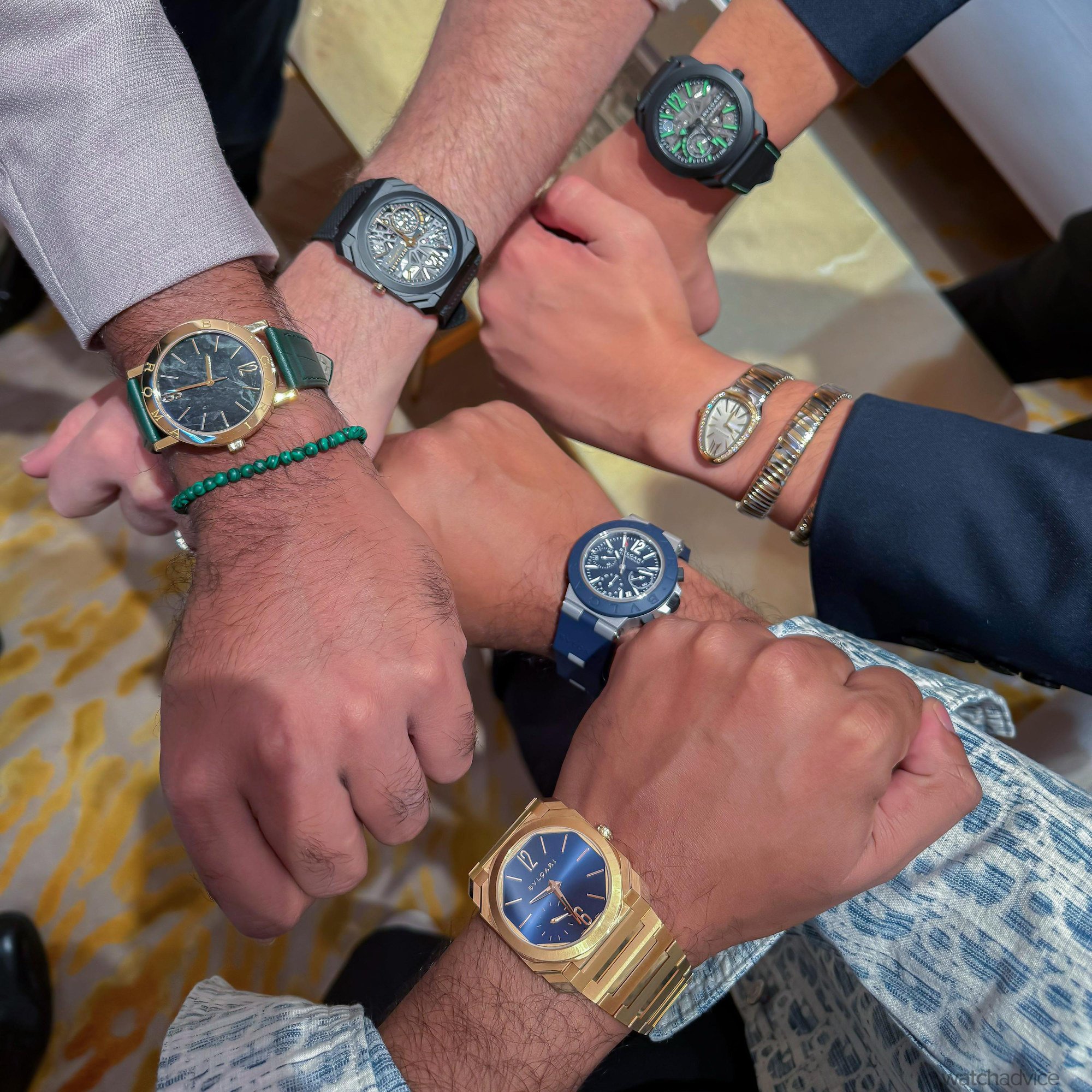

He believes that is particularly important for men, who may not naturally walk into a Bvlgari boutique looking for a serious mechanical watch. This, for him, means the brand needs to build those relationships within the collector community and allow the watches themselves to make the argument.
“It’s an emotion that you need to sell,” Brinbaum says. “An emotion needs to be sold through human relationships and interactions.”
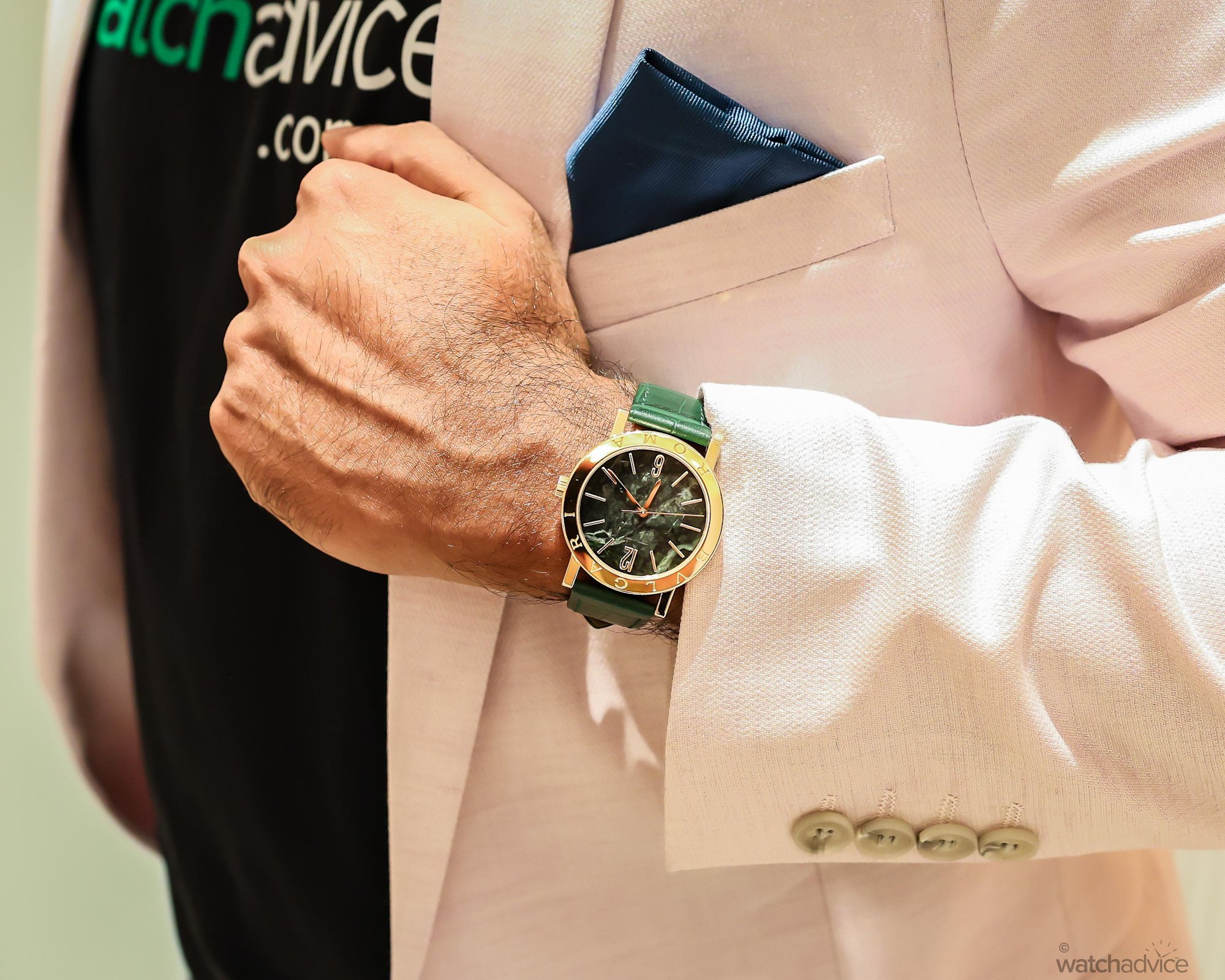

That is where watch collecting becomes particularly valuable for a brand like Bvlgari. A collector wearing something unusual can spark a conversation with another collector, who then wants to understand why they bought it, how it works and what makes it different. And Brinbaum clearly enjoys that side of the industry, as do we!
“Those moments are great, because we all come, we all have a different watch on the wrist. We exchange, we talk, we take a drink, then you try them on… Being together, meeting, having a shared passion, and sharing things about it.”
For him, the shared passion is what creates the relationships that ultimately bring people closer to a brand, and this also allows those to learn more about the brand and form a longer-lasting connection to it.
Getting The 37mm Onto Wrists
There is another aspect of the 37mm Octo Finissimo launch that Brinbaum has been particularly keen on: ensuring people can actually buy the watch. Bvlgari has made around 500 examples available globally for launch, rather than announcing the watch and then asking customers to wait several months before it reaches boutiques like many brands do.
For Brinbaum, this is an important part of how the industry should operate. He says one of his frustrations after becoming more directly involved in the watch division was seeing products announced well before they were available.
“We have 500 of the new 37mm Octo Finissimo watches all across the world, available now to be sold…We could have launched it earlier. We could have made the prototypes six months earlier. But I said, no, let’s wait. Let’s make the right thing out of it.”
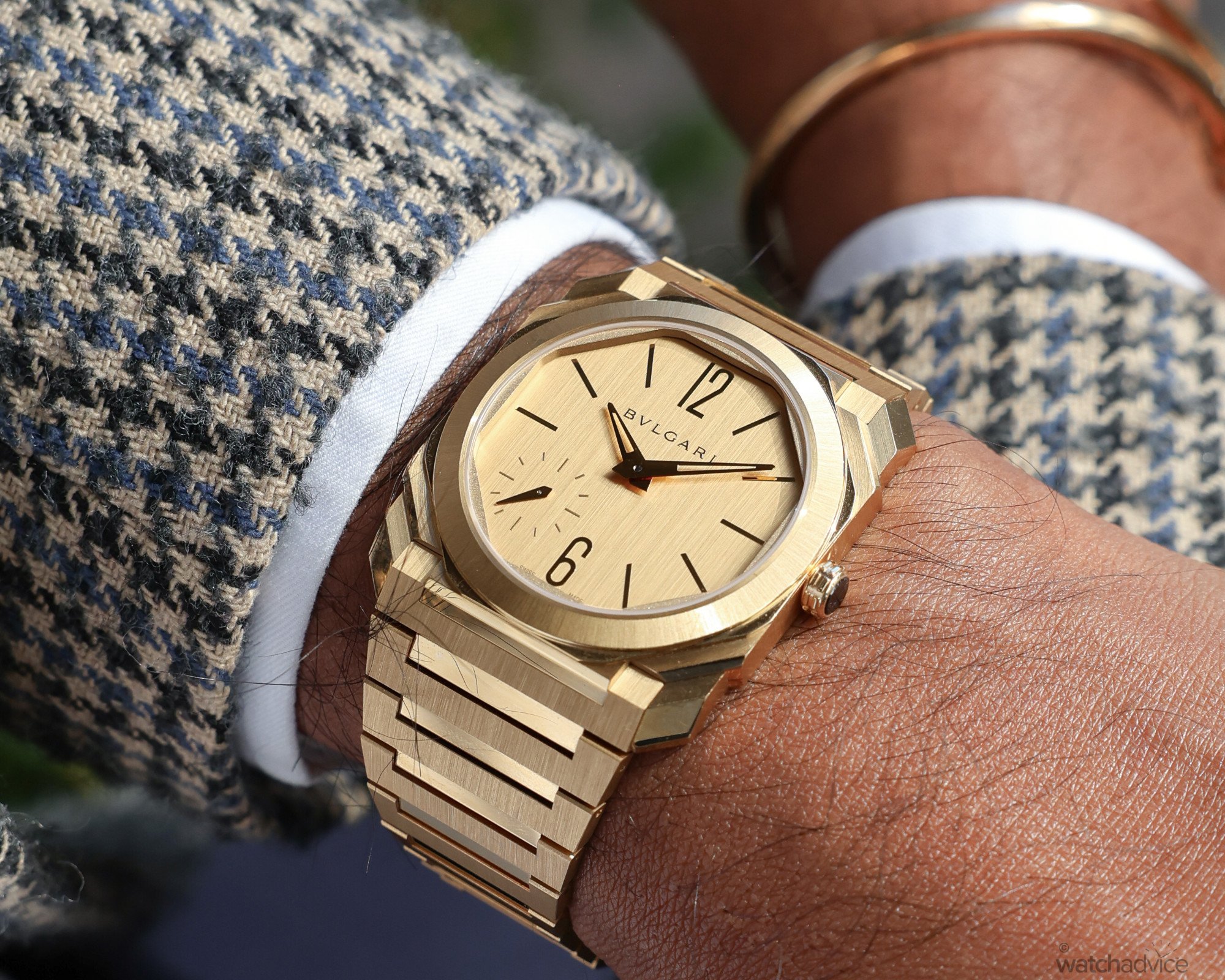
He believes there is little value in creating excitement around a watch if a customer cannot actually see or buy it. And we agree, as this is one of our frustrations with those brands who do this, not to mention collectors and buyers who have expressed this frustration to us as well.
“How frustrating is it that people are hearing about products, they like them, and then they need to wait six months to get one? I don’t want to play that game.”
It also gives the launch a much better chance of creating organic momentum. A collector sees the watch online, goes into a boutique, tries it on, buys one and then starts wearing it around other collectors.
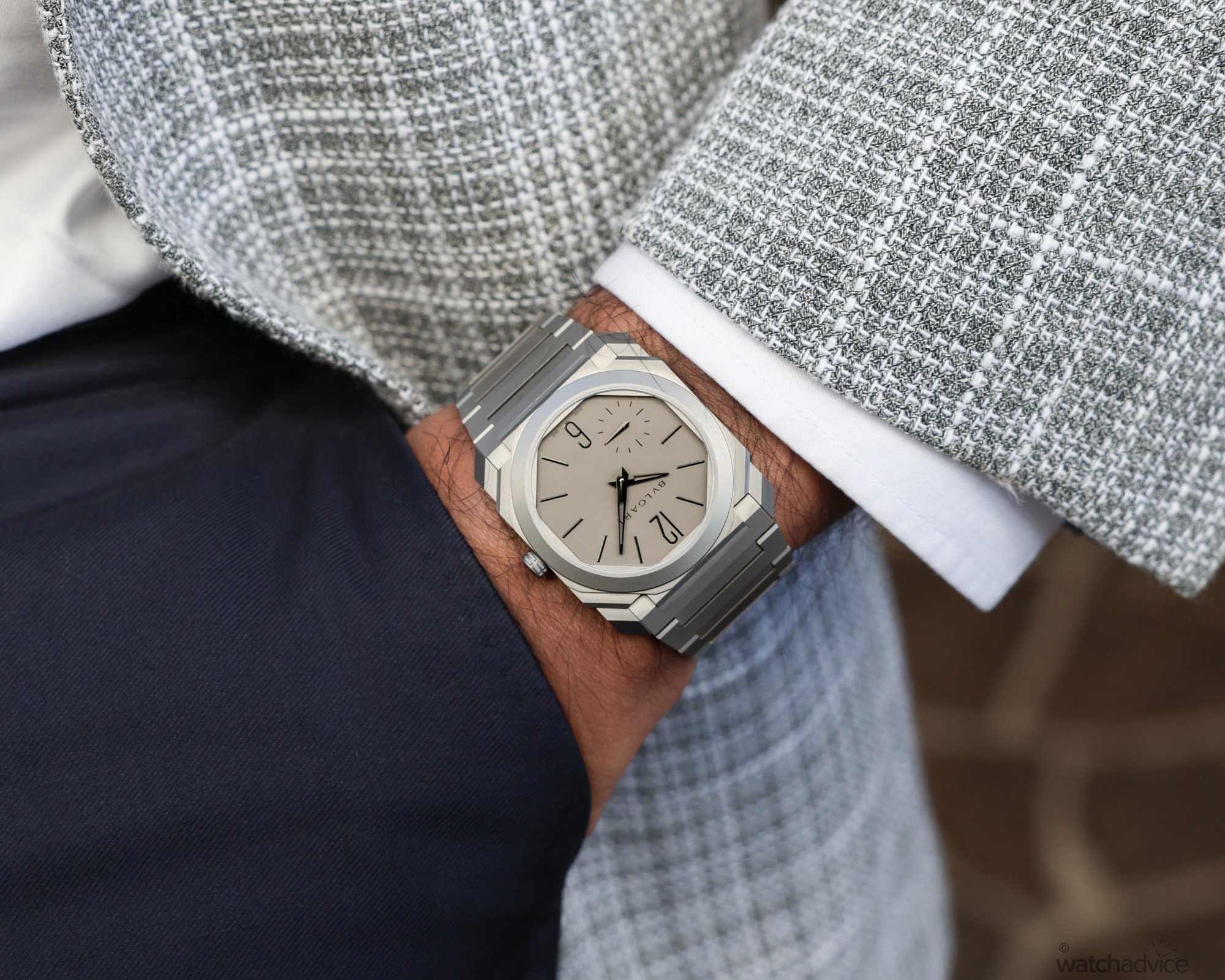
To us, this makes sense, from both a branding perspective as well as the business model. And interestingly, Brinbaum was already keeping track of the first sales when we spoke.
“I’ve asked to receive the update when we sell one watch,” he says. “The first one was sold in Boston yesterday, and funnily enough, a lady bought it.”
Given everything Brinbaum had said about the growing importance of women’s watchmaking, it was an appropriate early sign for the new 37mm and shows that the new size is going to be a more versatile wear for more people.
What Comes Next for Bvlgari?
Talking to Brinbaum, one thing becomes very clear: Bvlgari does not want to become predictable. The brand has established a strong association with ultra-thin watchmaking, but Brinbaum does not believe the future should simply involve producing thinner and thinner watches. The next step could be another technical achievement, a collaboration or something that nobody is expecting.
“It can be records, it can be a collaboration,” he says. “This element of surprise is super important for our brand.”
That is probably the most interesting thing about where Bvlgari sits in the watch industry today. The brand has already demonstrated that it can compete technically at the highest level. The Octo Finissimo has given it a distinctive design language, while the Ultra has provided the technical playground that allows Bvlgari’s engineers to experiment without the same commercial constraints.
At the other end of the collection, Serpenti and Piccolissimo demonstrate what happens when the design of a watch comes first, and the movement is developed to suit it.
The 37mm Octo Finissimo brings those ideas together in a watch that is considerably easier to wear and, importantly, available to a much wider range of collectors. For Brinbaum, the future is about continuing to blur the boundaries between jewellery and watchmaking while maintaining the technical credibility Bvlgari has worked so hard to establish.
“I want to surprise,” he says. “Because we need to be audacious. We need to bring things that people don’t expect from us!”
After more than a decade of world records, that might be the most interesting challenge Bvlgari faces. The brand no longer needs to prove that it can make an exceptionally thin mechanical watch. The Octo Finissimo has already done that, ten times in fact in varying forms. Now, with the 37mm Octo Finissimo, Bvlgari is showing what it can do with all the knowledge it has gained along the way, and implementing that knowledge to ultimately benefit the end consumer.
On a personal note, having tried on and worn the 37mm Octo Finissimo, I can say that it does feel better on the wrist, and even though it is a smaller watch, it in no way detracts from the presence on the wrist. Perhaps that is a spoiler alert for my hands-on review to come shortly, but I have to agree with Jonathan: it shows the direction Bvlgari is taking and how the brand is ever-evolving.

But I’ll end this with some words from Jonathan, which I think sums up our conversation, and the direction he wants to take Bvlgari watches into the future…
“That’s where I want to project the brand, because there’s no other brands, like Bvlgari, that can bring this jeweller DNA, this technical mastery that we’ve had over the last 25 years, mastering miniaturisation…This creates the perfect platform for the future to really be the jeweller watchmaker, owning this segment of mechanical automatic watchmaking.”
To find out more about Bvlgari watches, head to Bvlgari.com