

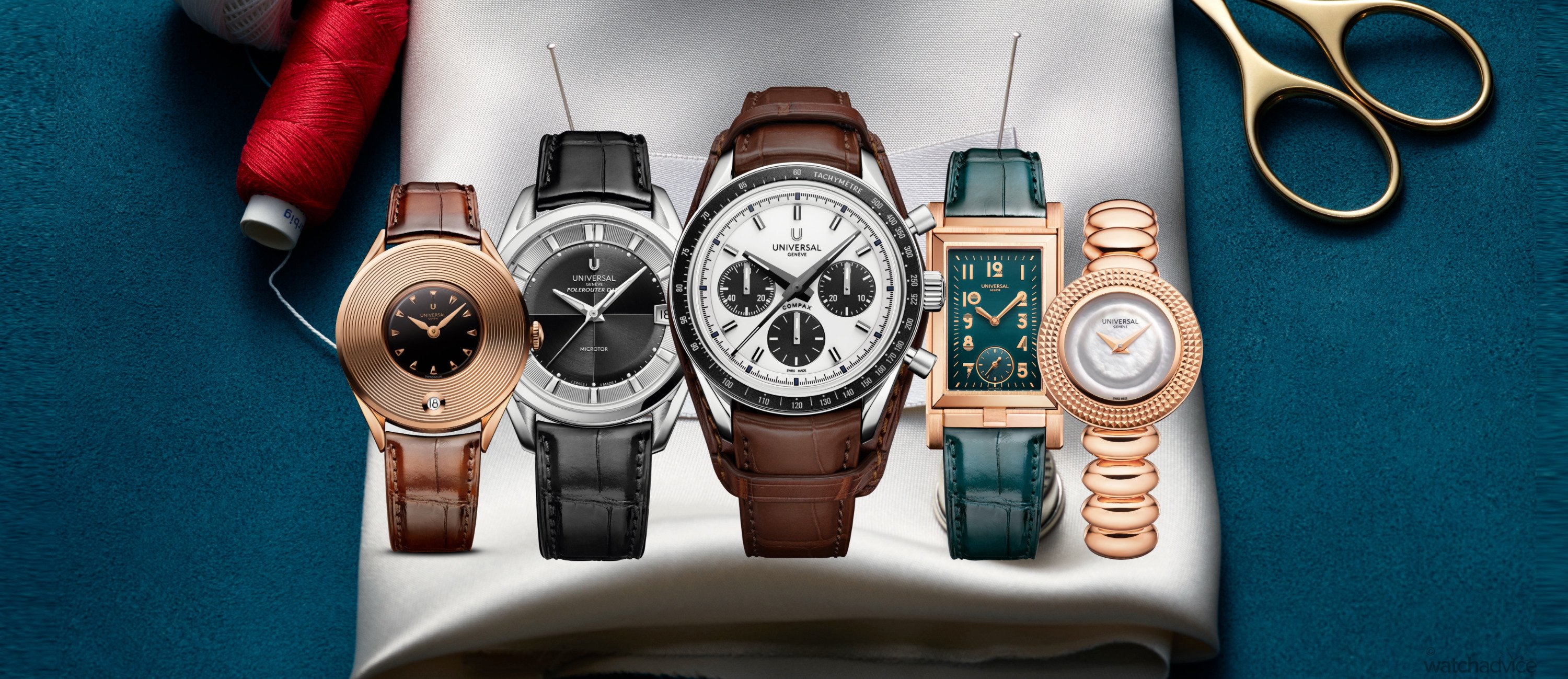
Just in time for Geneva Watch Week, Universal Genève has unveiled its revived core collections, and it is like they were never gone!
For those who follow the industry closely, the return of Universal Genève isn’t exactly a surprise. The groundwork has been laid for a while now, with slow drop feeds and teasers comprising a few limited editions that went up for auction over the past year.
Back in 2024, when the revival was first confirmed under the Breitling-led group, we covered the announcement and what it might mean for one of watchmaking’s most historically important but long-absent brands. At the time, the biggest question wasn’t really about the brand per se, but more so, what models were going to be brought back as part of the core offering to watch lovers.
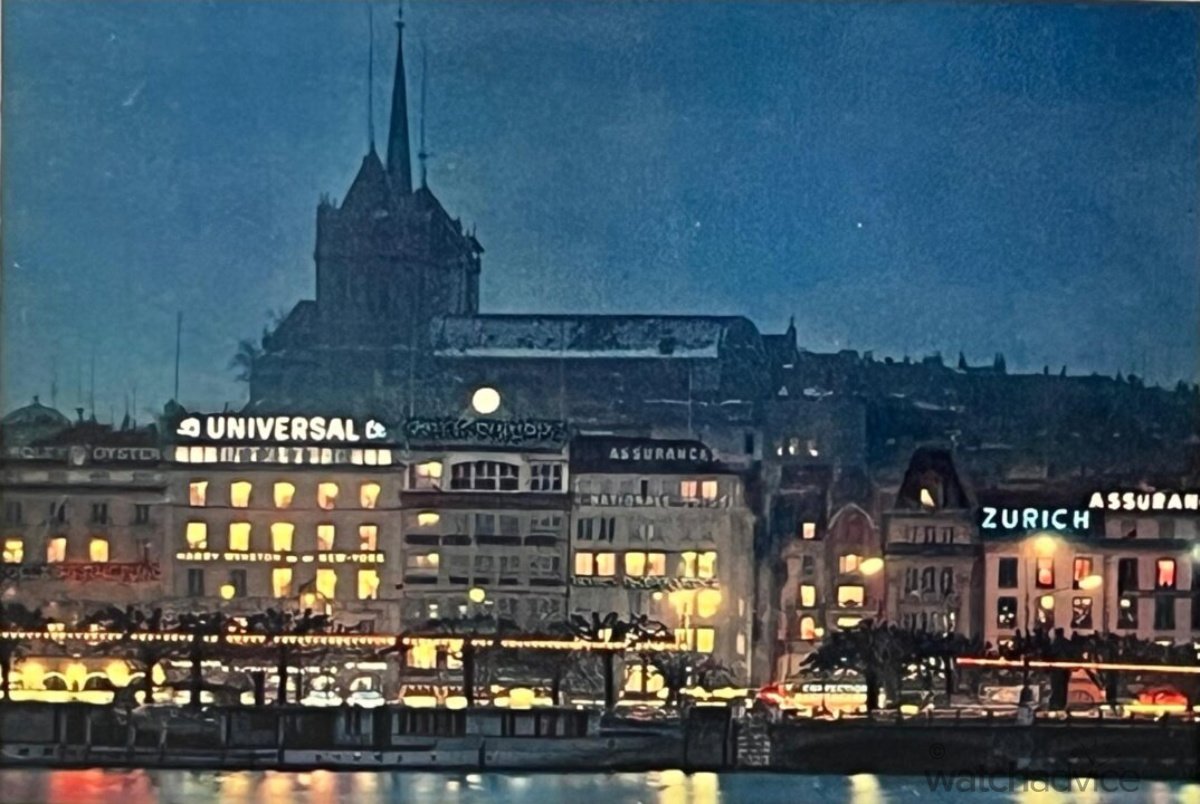
Would the brand lean heavily into the archive and simply recreate its greatest hits? Or would it try to reinterpret them for a modern audience? These are some of the questions we had in our heads, and even had a few predictions in our announcement article, and it seems we got a few right!
Return Of An Iconic Brand
Universal Genève’s official return arrives with a full suite of collections that span the brand’s historic pillars. Polerouter, Compax and Cabriolet form the backbone of the relaunch, supported by smaller collections that expand the design language further.
In total, the relaunch includes dozens of references and several newly developed mechanical movements, which is a serious undertaking for a brand that has effectively been dormant for decades. And what is interesting is that Universal Genève has simply resumed the story where it left off, rather than introducing a suite of new models. At least, for now.
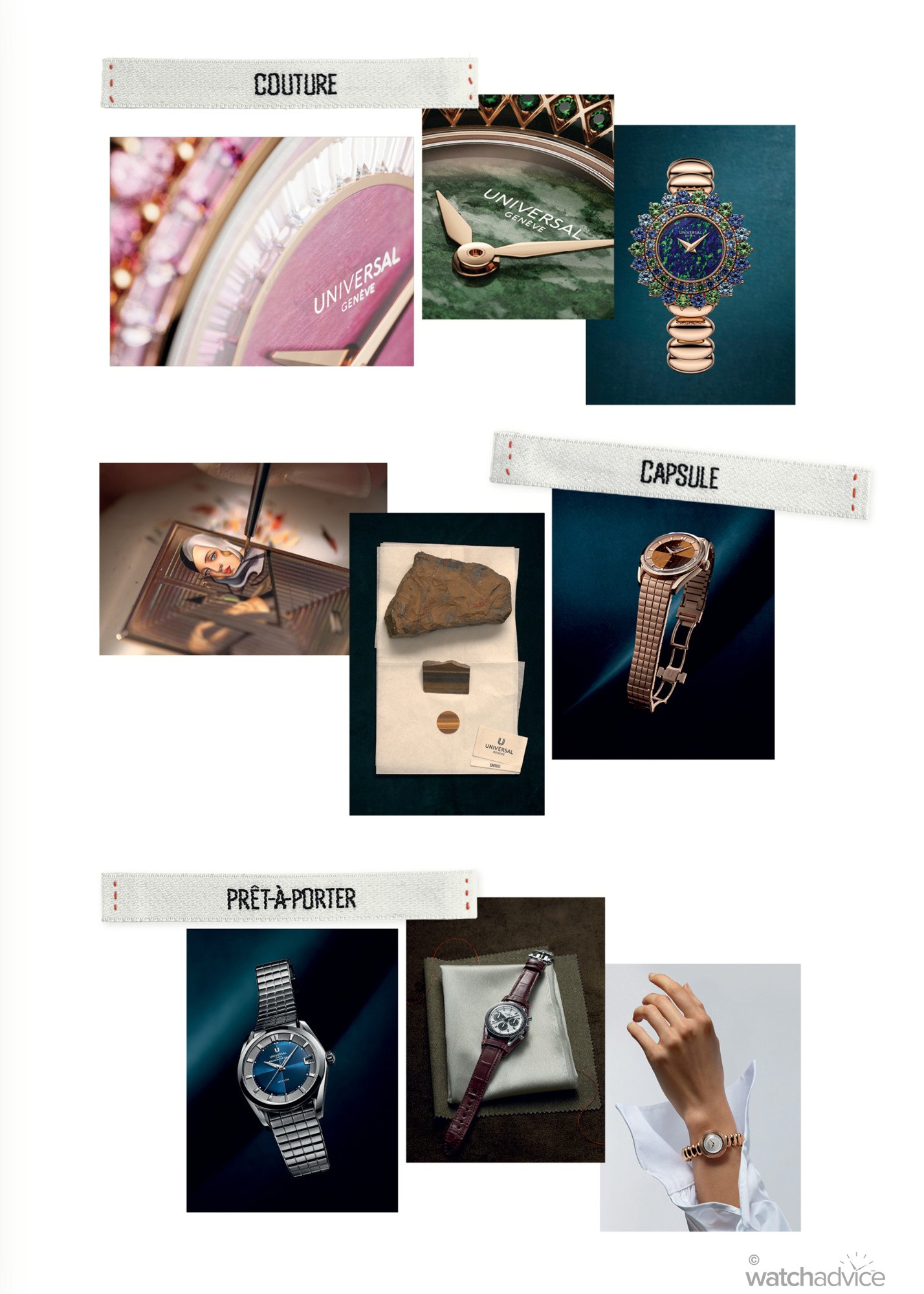
Founded in 1894 by Ulysse-Georges Perret and Numa-Émile Descombes, the brand quickly built a reputation for combining technical innovation with distinctive design. Over time, it earned the nickname “Le Couturier de la Montre” — essentially positioning itself as the fashion house of watchmaking.
Universal Genève wasn’t afraid to experiment with design, but it also played a significant role in mechanical development. The brand produced some of the earliest multi-register chronographs and later became a pioneer of micro-rotor automatic movements, which allowed thinner automatic watches than traditional full-rotor designs. Something we see in the revival collections.
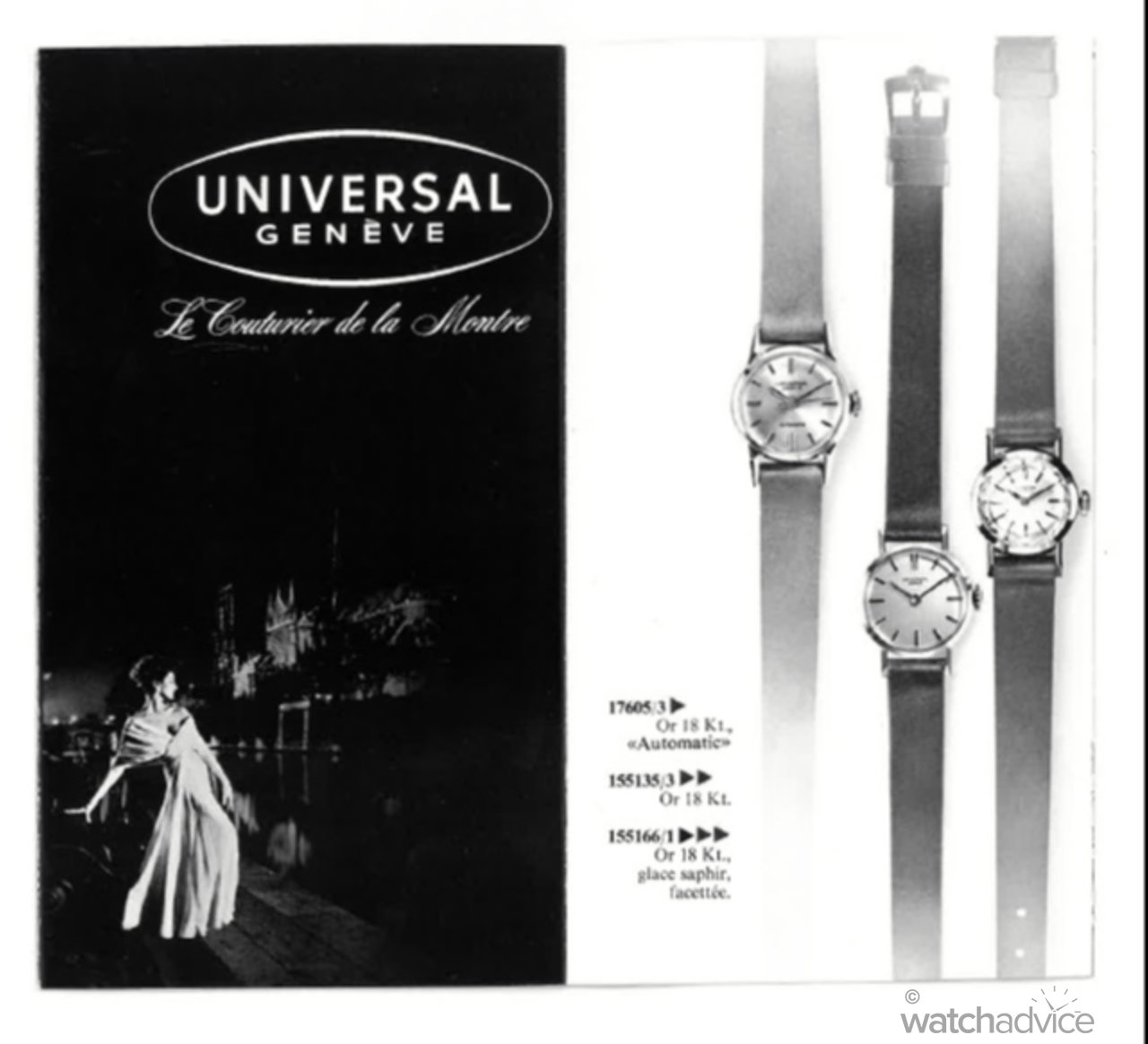
By the mid-20th century, the brand had produced several watches that collectors now consider icons – pieces like the Polerouter, the Compax chronographs and the distinctive reversible Cabriolet. And it is those same watches now form the foundation of Universal Genève’s modern comeback.
The Polerouter Returns
If there was one watch that was always going to anchor the revival, it’s the Polerouter. Originally introduced in 1954, the watch was designed by a young Gérald Genta for Scandinavian Airlines System (SAS) as the airline pioneered new polar flight routes between Europe and the United States. The watches needed to withstand the magnetic interference encountered along those routes, while still maintaining the clean elegance expected from Swiss watchmaking.
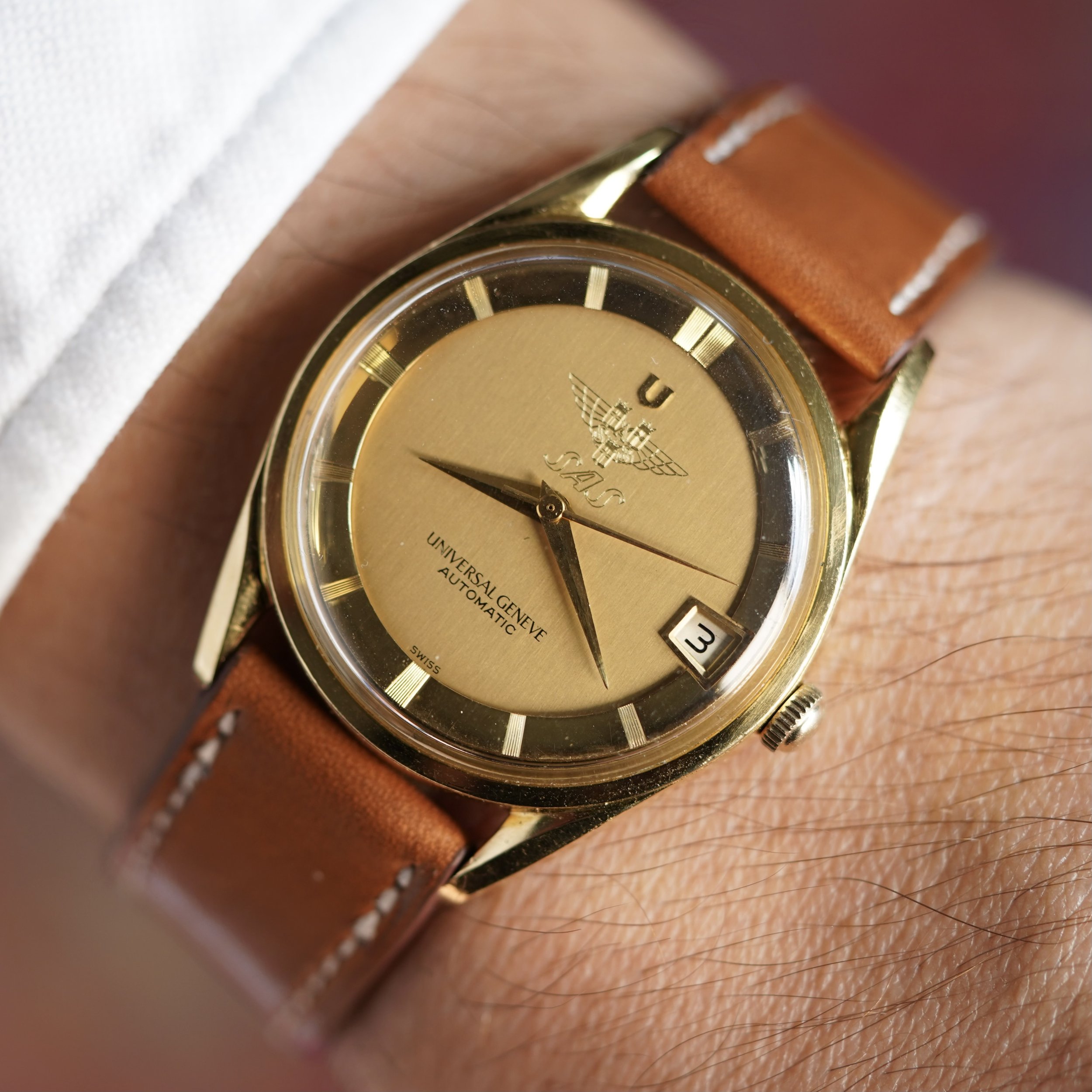

The result was a design that would become one of the defining watches of the 1950s. Twisted lugs, a crosshair dial layout and a stepped outer chapter ring created a look that has aged remarkably well. It’s also widely considered one of Gérald Genta’s earliest important designs, long before the Royal Oak, Nautilus or Ingenieur, to name a few. The modern Polerouter follows that design closely.
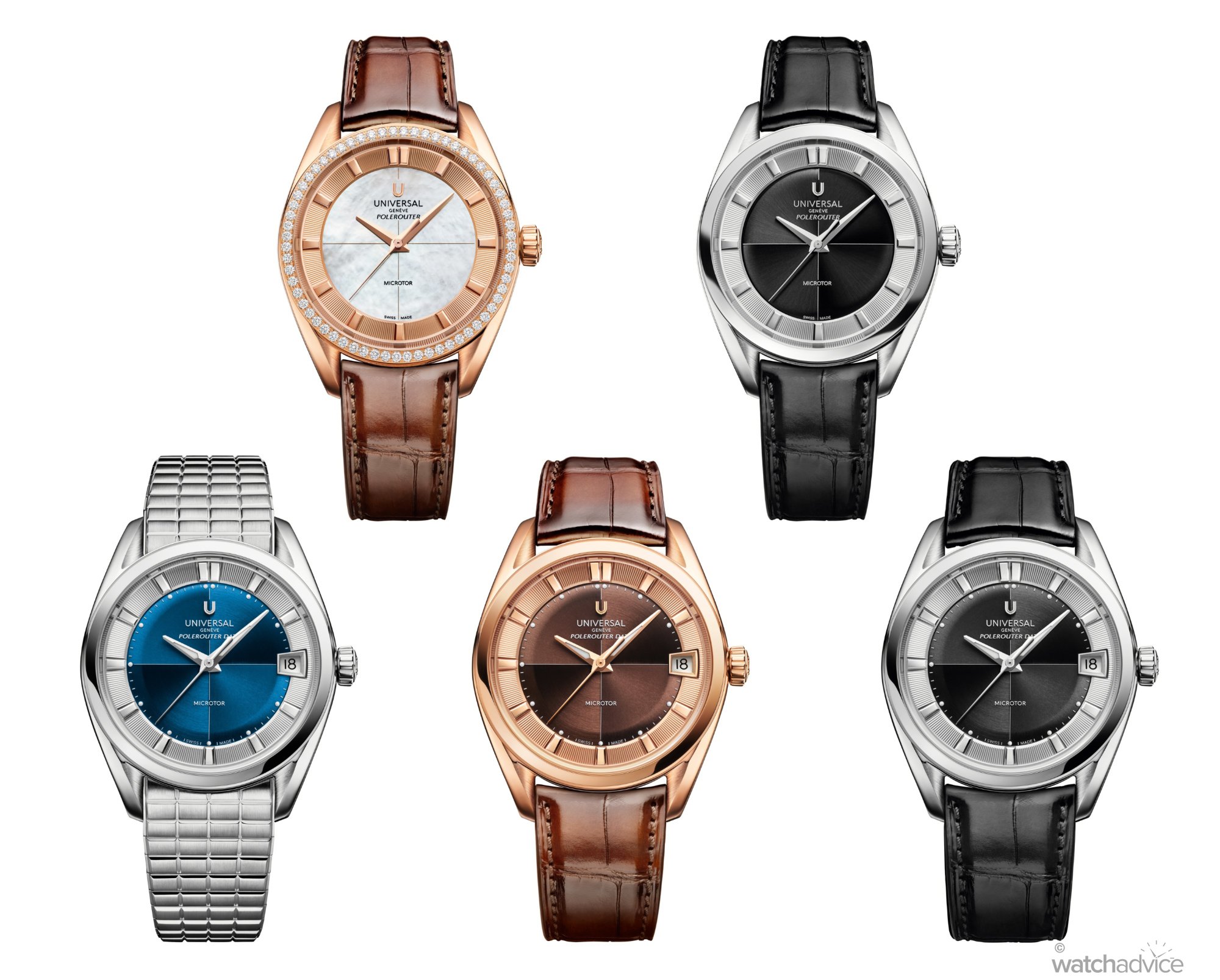
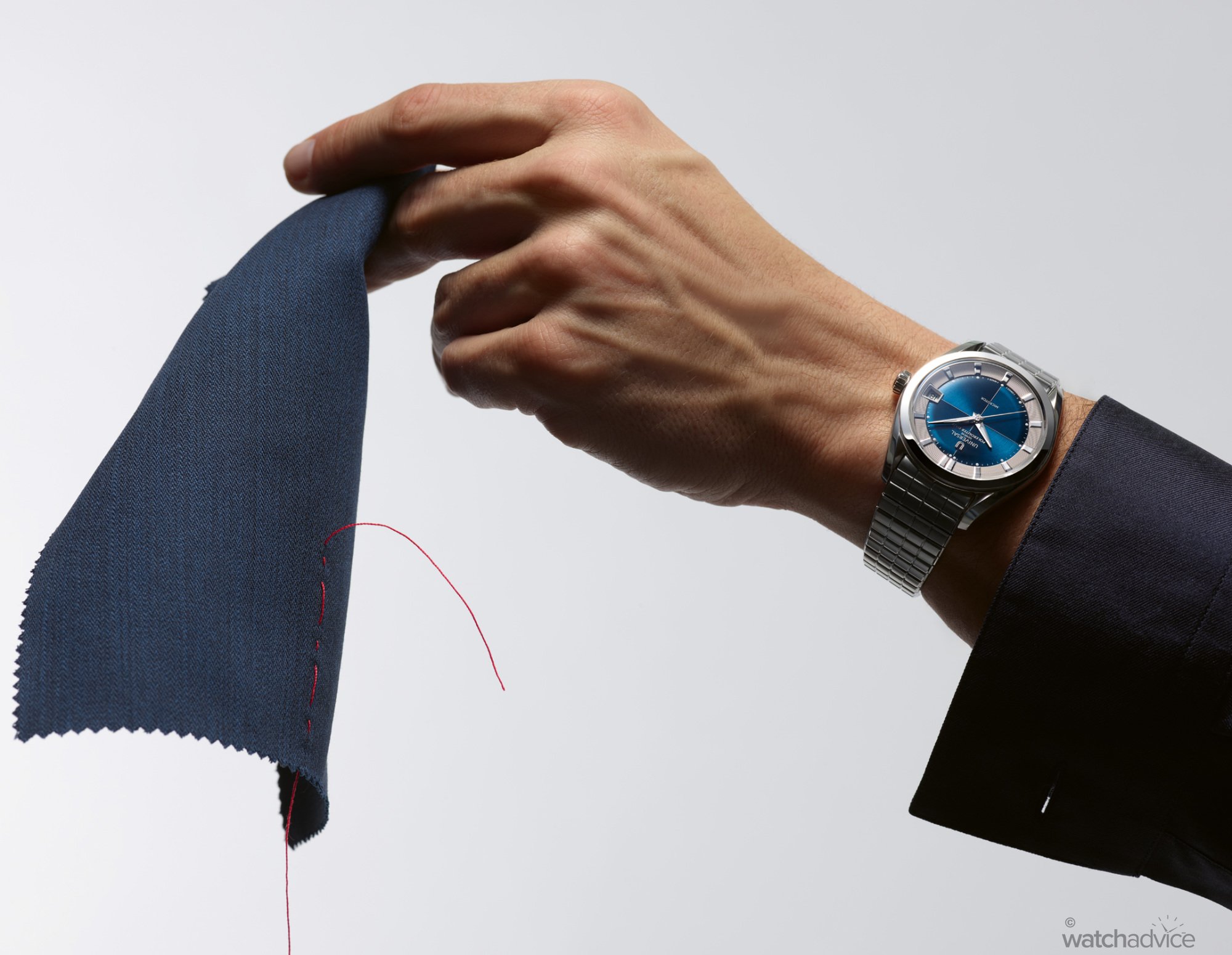
The watch launches in two sizes: 39 mm and 37 mm, and has two sub-collections in these – a Prêt-à-Porter collection and a capsule collection. In the Prêt-à-Porter collection, which consists of five models in both the 37 mm and 39 mm ranges across steel and 18k rose gold. The blue 39 mm reference features a stainless-steel brick bracelet.
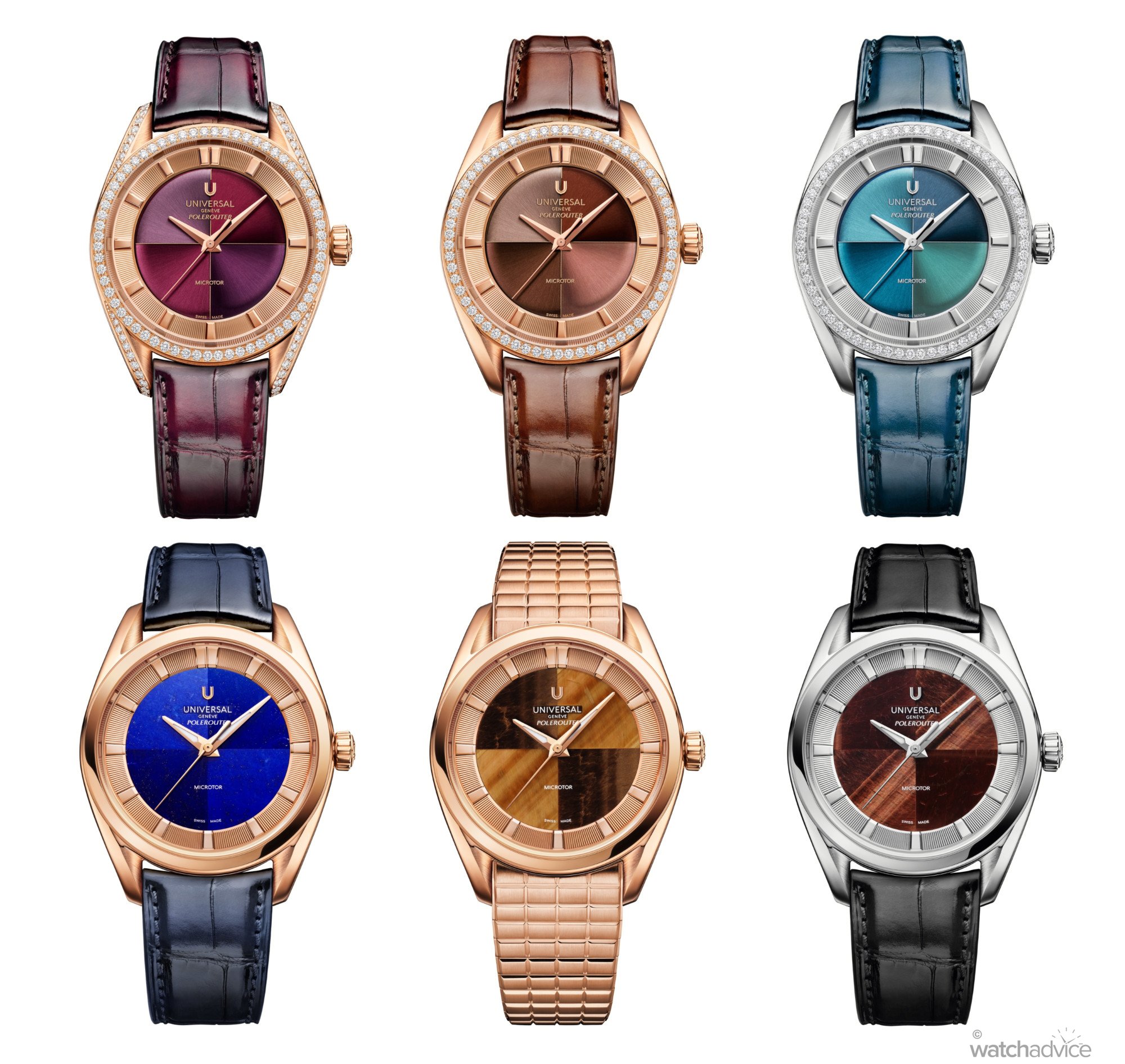
In the capsule collection, again in both 37 mm and 39 mm, a range of dials and materials. The 37 mm collection features two 18k rose gold models, plus a steel model – all set with 110 diamonds totalling 1.28 carats. The 39 mm models give you the option of an 18k rose gold model in Lapis Lazuli, a Tiger’s Eye in full 18k rose gold and a stainless steel model with Bull’s Eye stone dial.
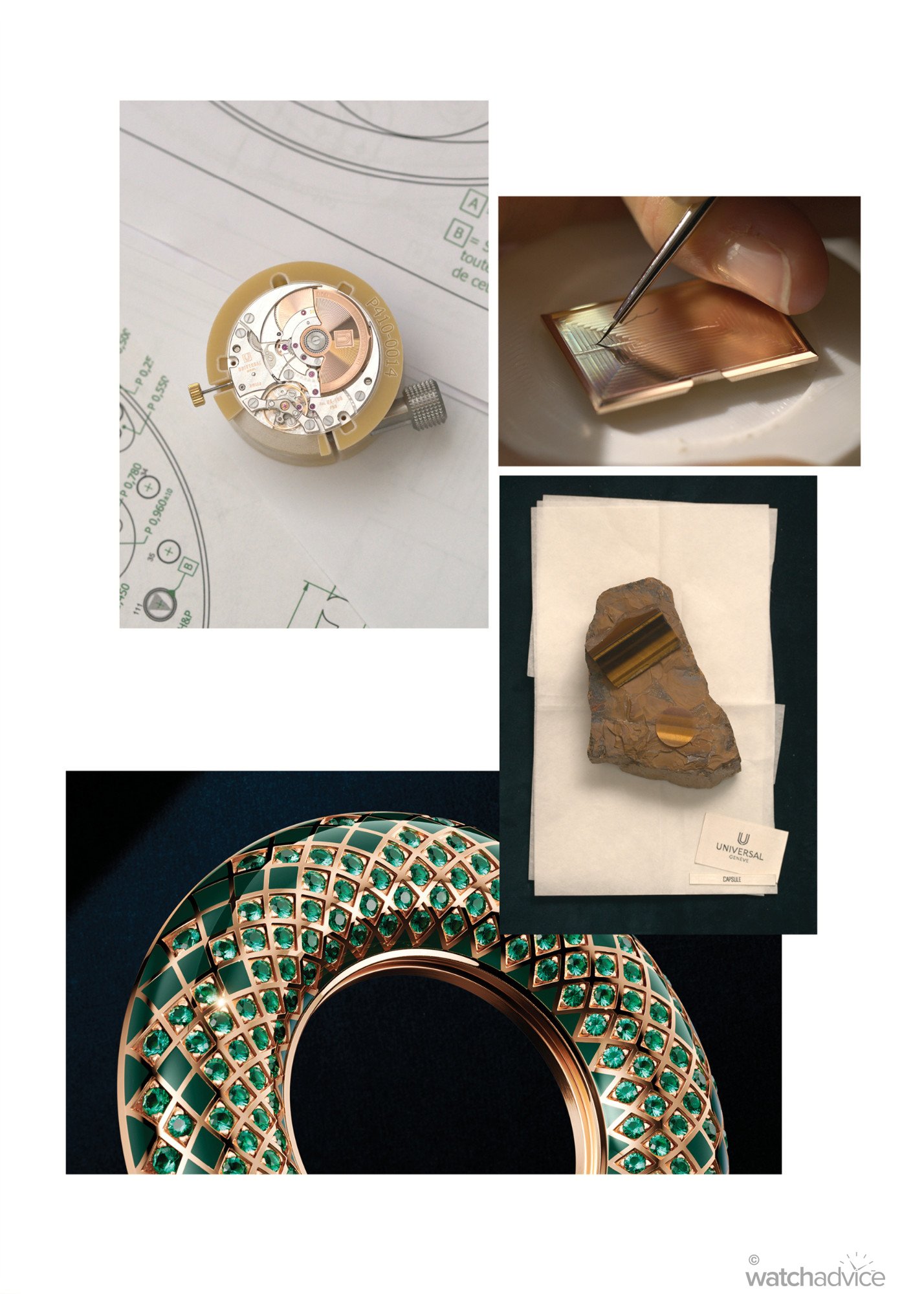
All the models in the new Polerouter range are powered by the new calibre UG-110 automatic movement. The movement continues Universal Genève’s historic association with micro-rotor architecture, measuring just 3.8mm thick while offering a 72-hour power reserve.
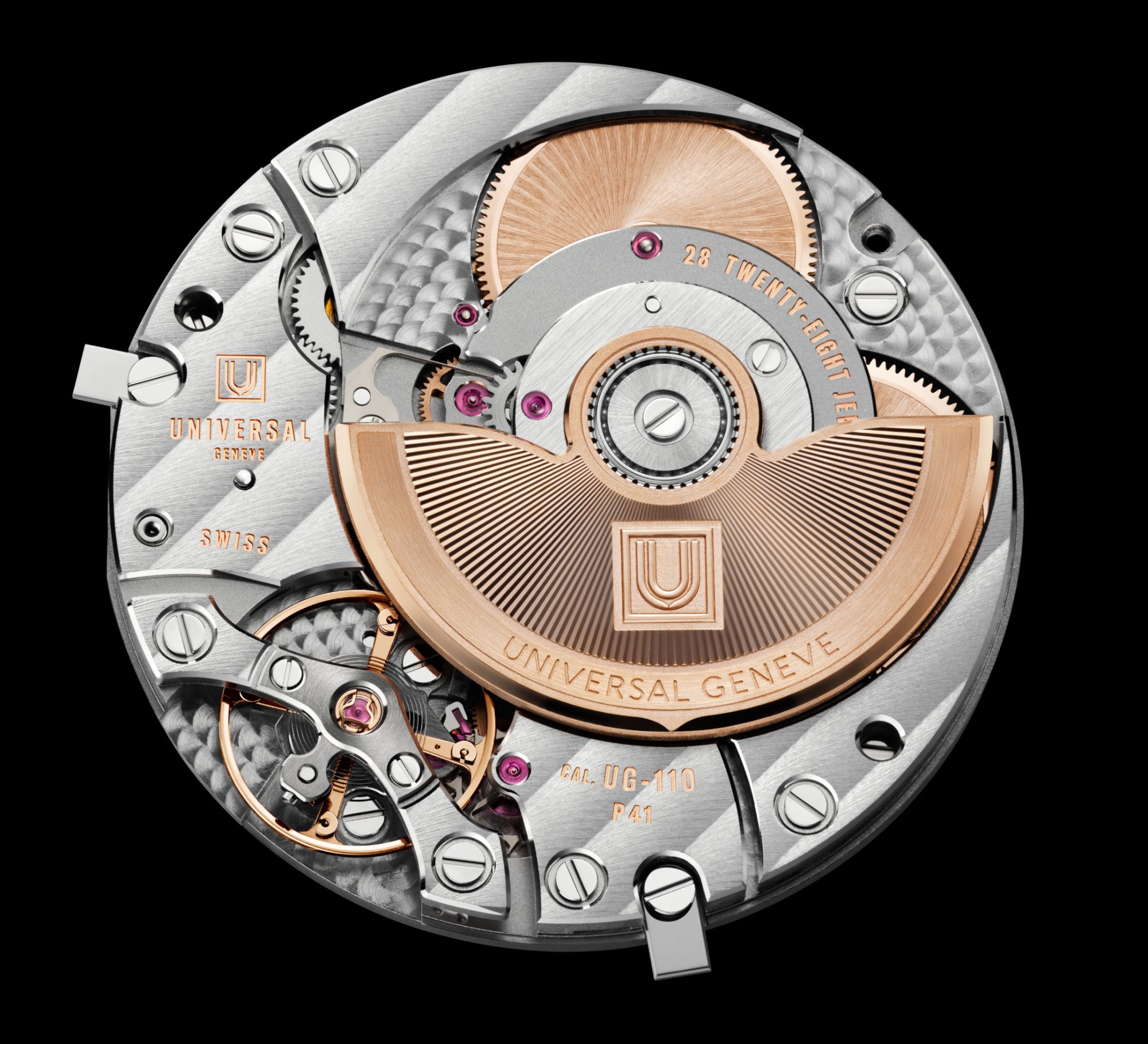
From a design standpoint, the new models feel more like an evolution of the classics that are loved by vintage aficionados. The classic dial layout remains intact, along with the faceted hands and distinctive lug shape. On top of this, there are also a number of dial variations available, including more traditional sunburst finishes as well as hardstone dials such as lapis lazuli. This is something that feels very much in line with Universal Genève’s historical willingness to experiment with materials.
The Compax Chronograph
While the Polerouter might be the most widely recognised Universal Genève design today, chronographs were arguably the brand’s true specialty.
Back in 1936, Universal Genève introduced the Compax, and was widely regarded as the first chronograph to feature a three-register layout with running seconds, a 30-minute counter and a 12-hour counter. That configuration quickly became the standard for chronographs that followed. When ever you hear the terms bi-copmax and tri-compax, thank Universal Genève for that.
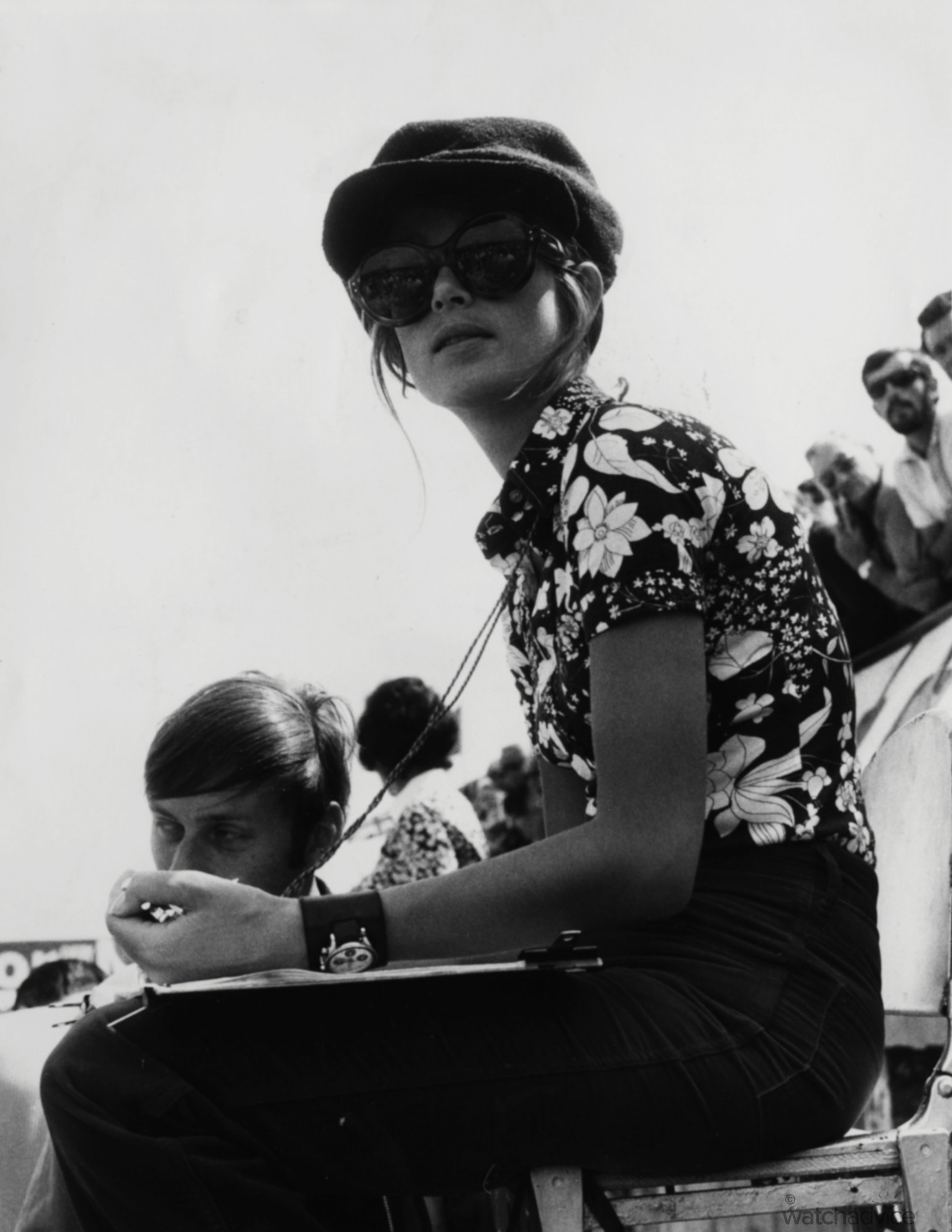
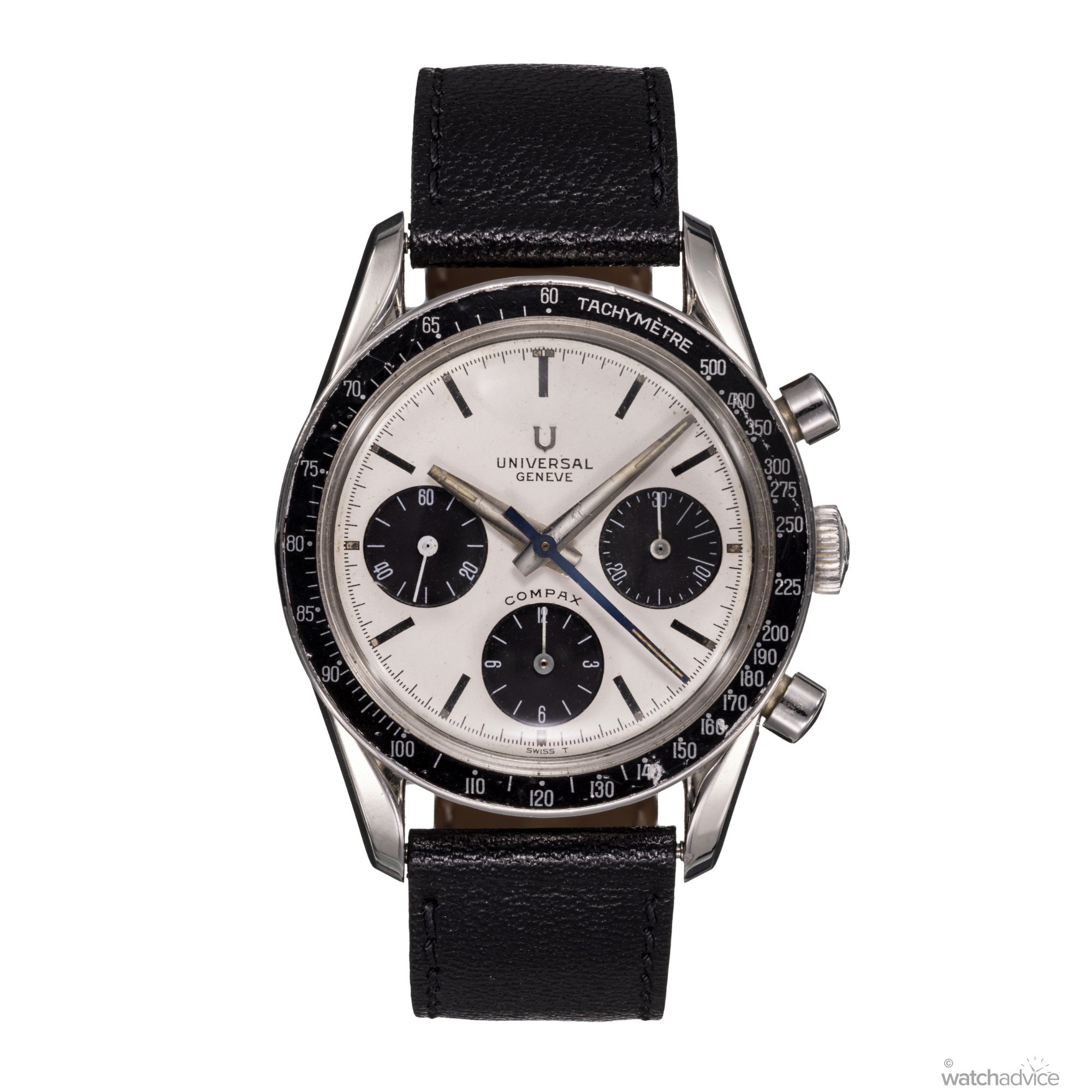
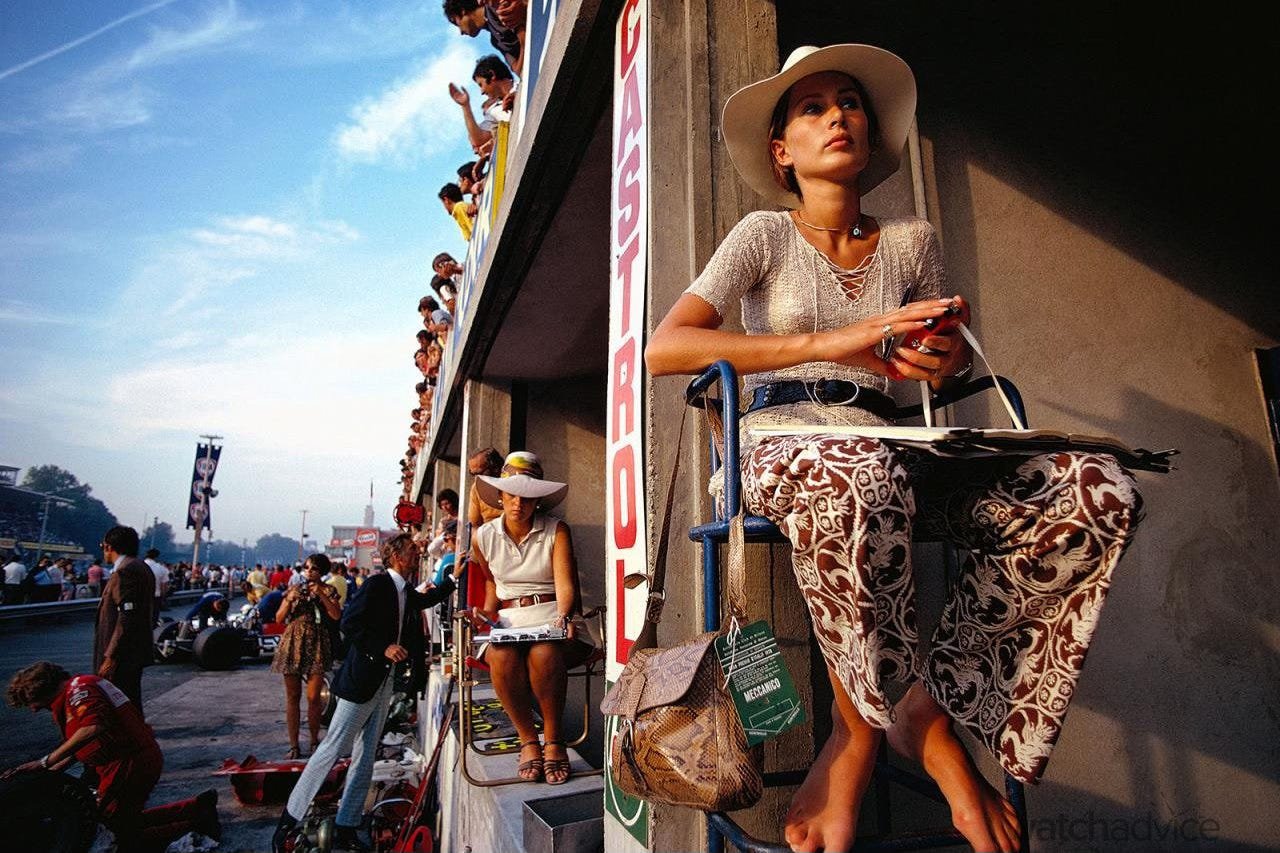
Over the years, the Compax evolved into a sportier watch, with the 1960s versions becoming particularly desirable among collectors today. Much of that attention comes from the association with Nina Rindt, who famously wore a panda-dial Compax trackside while timing races for her husband, Formula One driver Jochen Rindt. That “Nina Rindt” configuration remains one of the most recognisable Universal Genève chronographs, and the modern Compax draws heavily from that era.
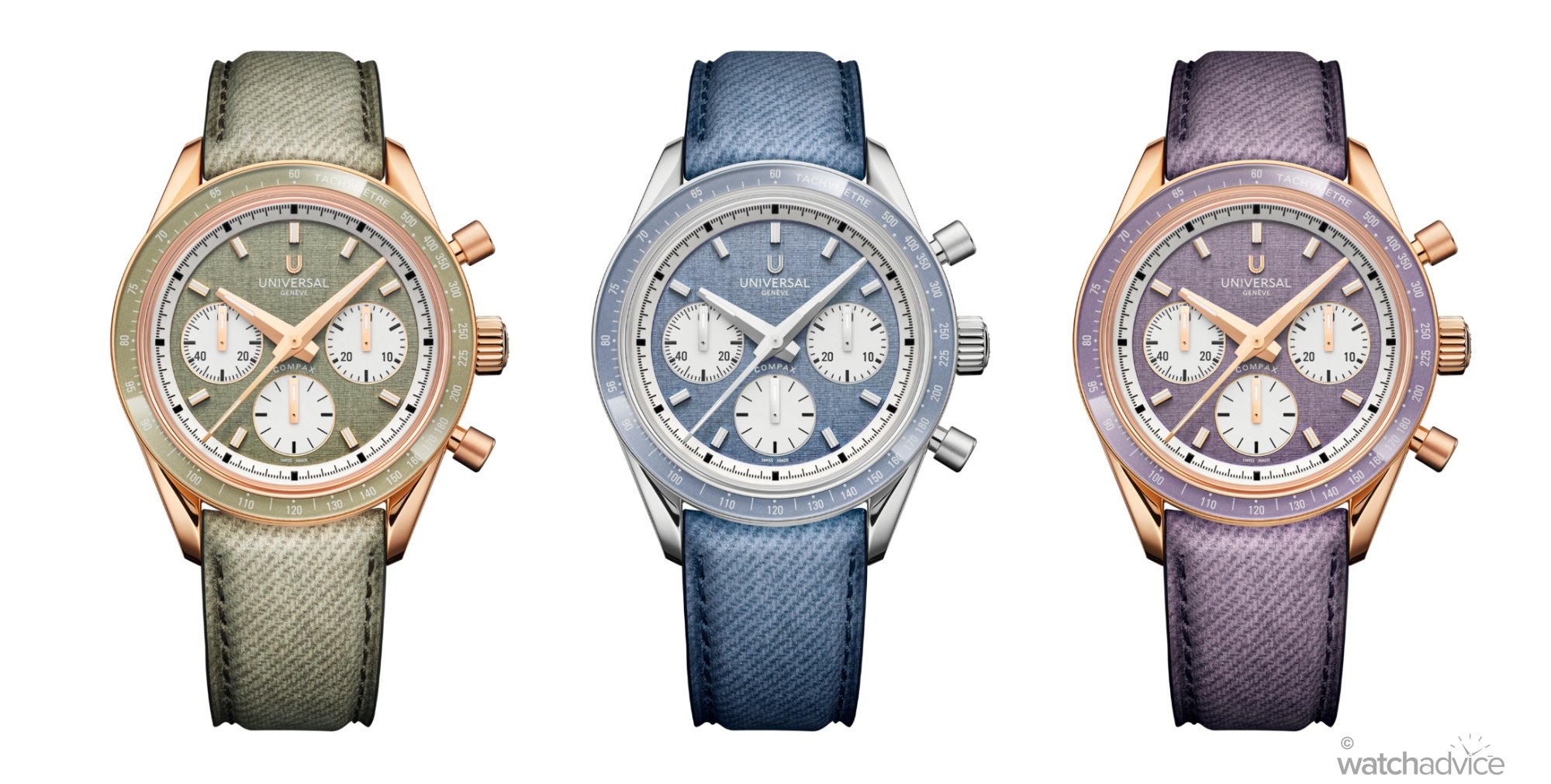
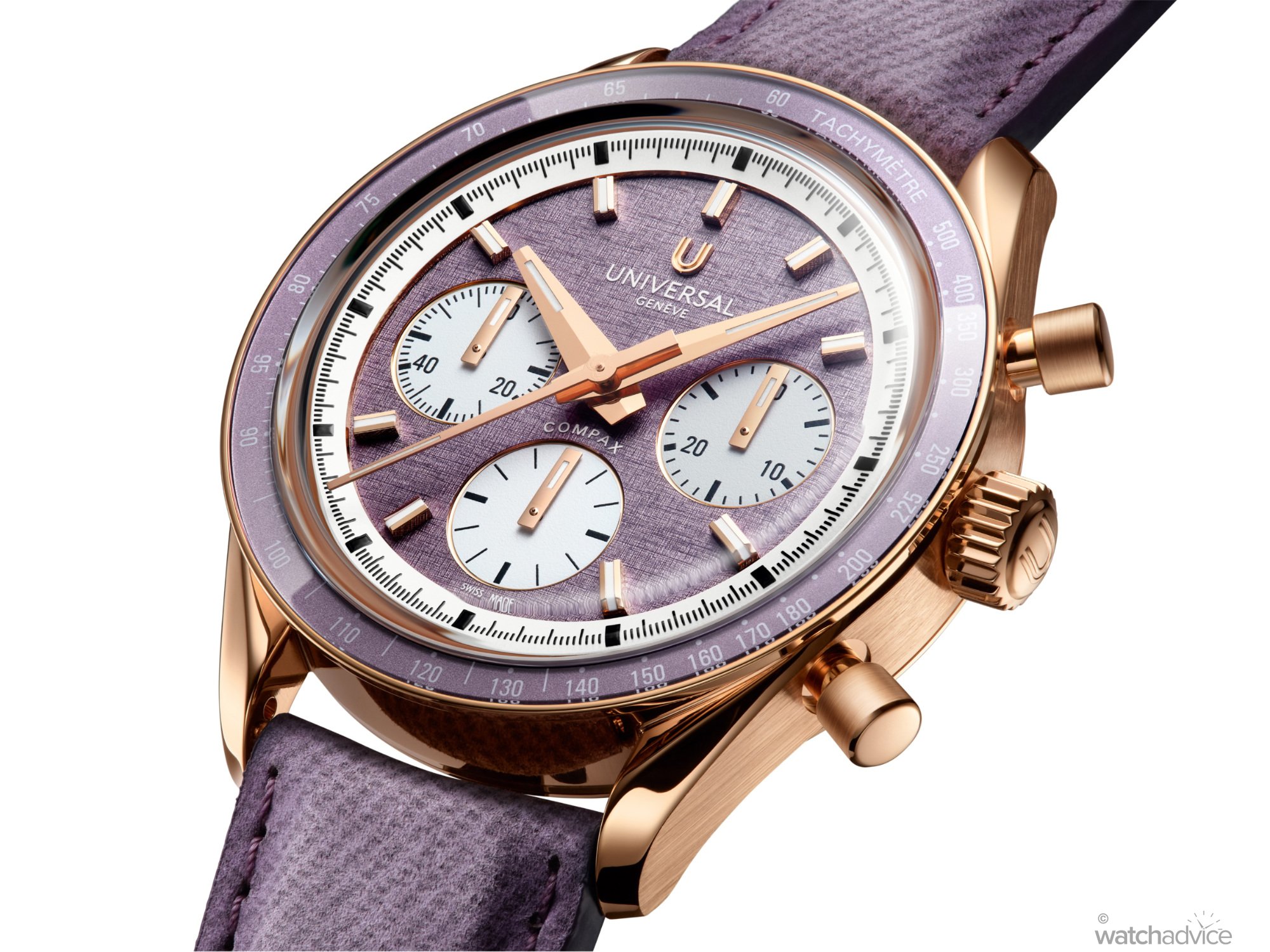
Cases measure 39.5 mm, while dial options include both panda and reverse-panda executions along with more contemporary colour variations. Like the Polerouter, there is a Prêt-à-Porter collection and a capsule collection. The Prêt-à-Porter collection is more vintage-inspired from the original Compax’s from the 1960s, even the black and white on the bundt leather strap, Nina Rindt style, and a more contemporary colour options (above) in the capsule collection.
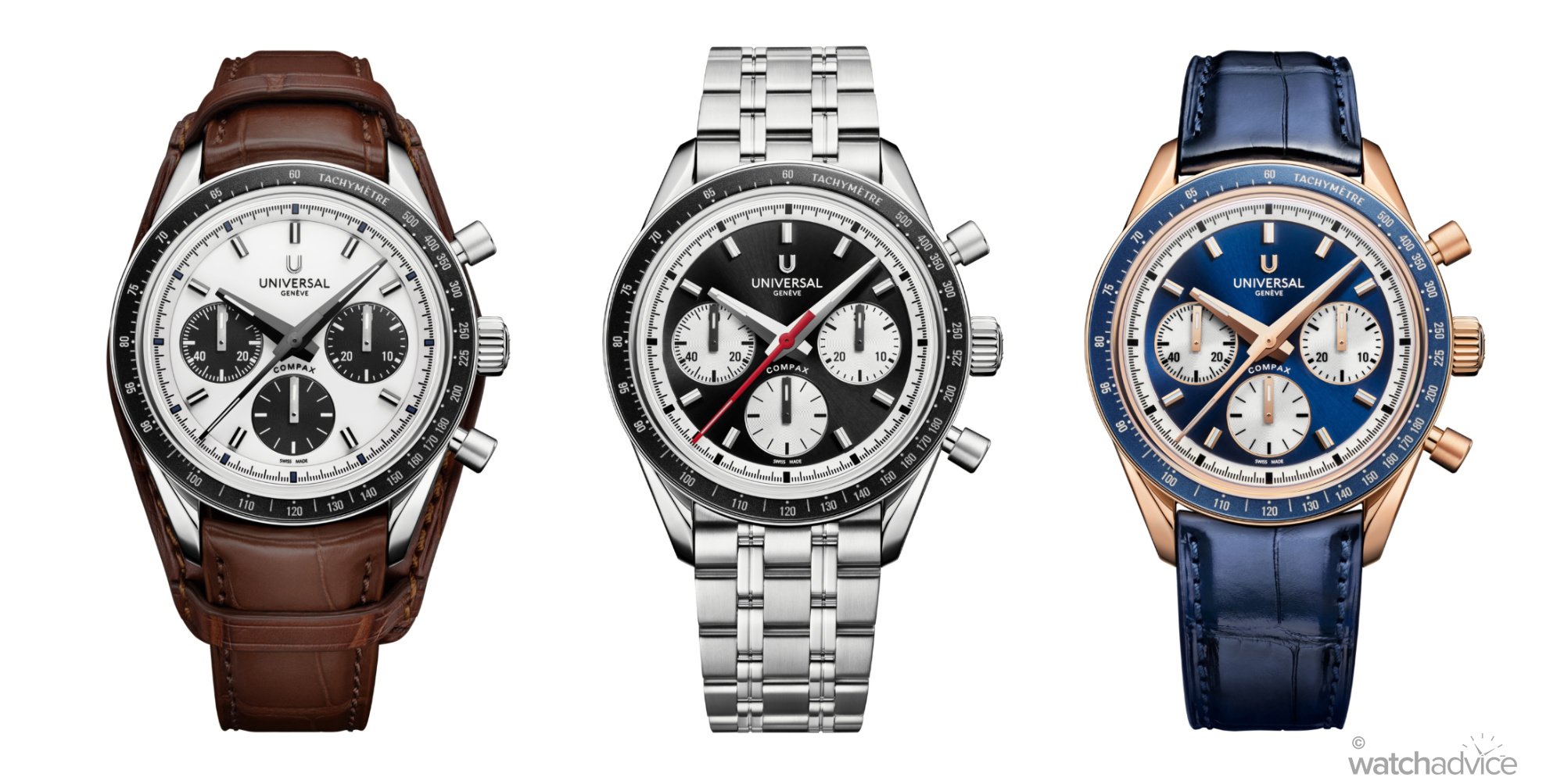
The design remains true to the originals, with the twisted lugs, contrasting subdials, and engraved tachymeter bezels for clean, clear reading. Like the Polerouter, the Compax also receives a new in-house movement as part of the relaunch – another indication that Universal Genève is positioning itself as a serious mechanical brand versus a historical re-release, which was the hope for the newly revived brand, thanks to its parent company and leadership under Georges Kern.
The new UG-200 movement powers the Compax, bringing together an integrated micro-rotor, column-wheel chronograph, vertical clutch, and a traversing balance bridge. Measuring just 6.63mm thick, it operates at 4 Hz and delivers a solid 72-hour power reserve.
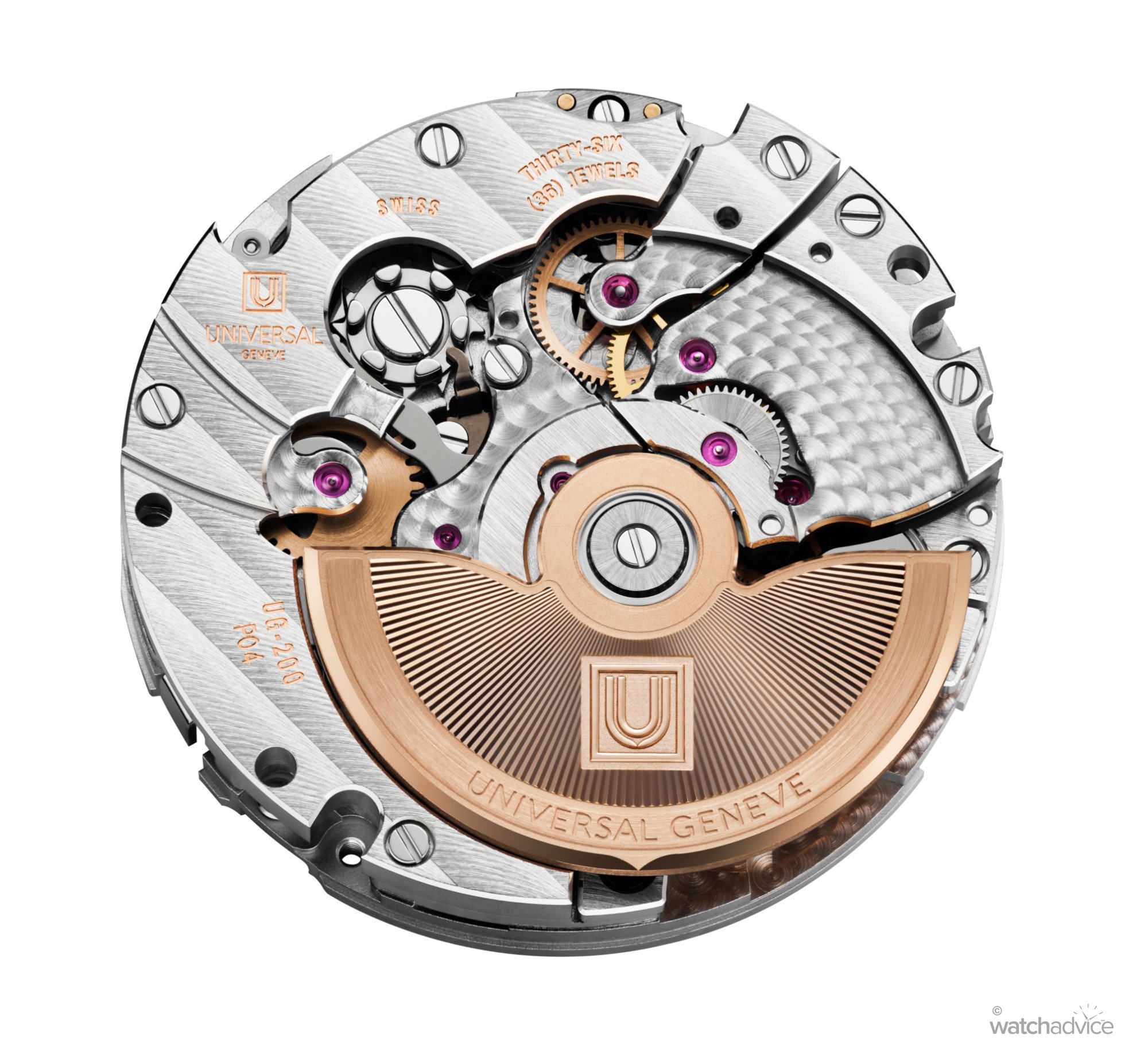
Universal Genève has used the opportunity with the UG-200 Calibre to combine two key elements of the brand’s history – its early work with micro-rotor movements and its long-standing expertise in chronographs – into a single, well-executed calibre.
The Cabriolet And The Brand’s Art Deco Roots
The Cabriolet may be less widely known than the Polerouter or Compax, but it actually represents one of Universal Genève’s earliest design innovations. Patented in 1933, the Ideo, which was nicknamed the “Cabriolet” featured a reversible case that allowed the dial to be flipped over to protect the crystal. And before you say Jaeger-LeCoultre did this in 1931, you would be correct, but Universal Genève had a slightly different take on the reversible watch.
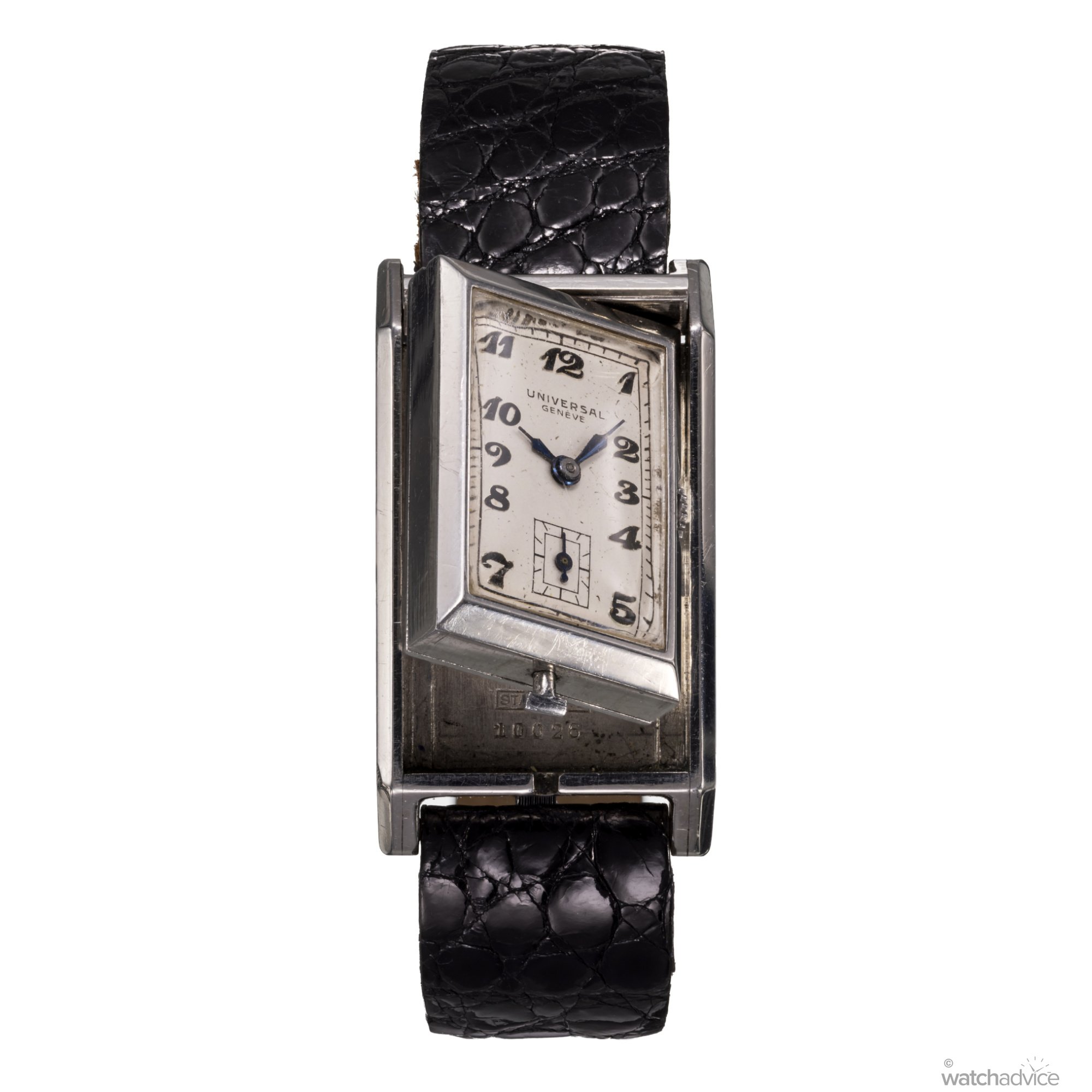
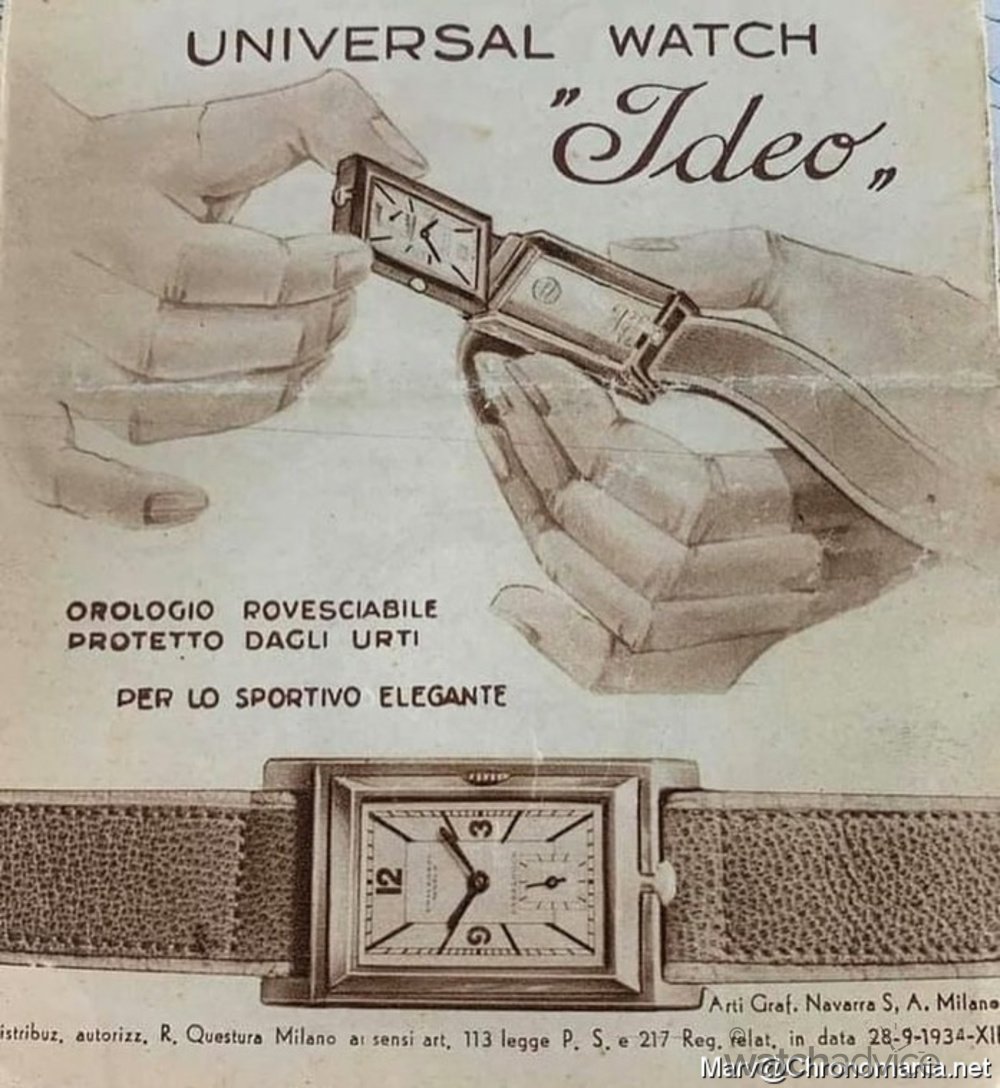
The modern Cabriolet continues that concept with a rectangular case that rotates within its frame from a central hinged pivot at the top (vs the slide and flip of the Jaeger-LeCoultre), and the watch leans heavily into Art Deco influences, particularly through the typography and elongated proportions of the dial. It’s a reminder that Universal Genève historically occupied an interesting position between technical watchmaking and design-driven creativity.
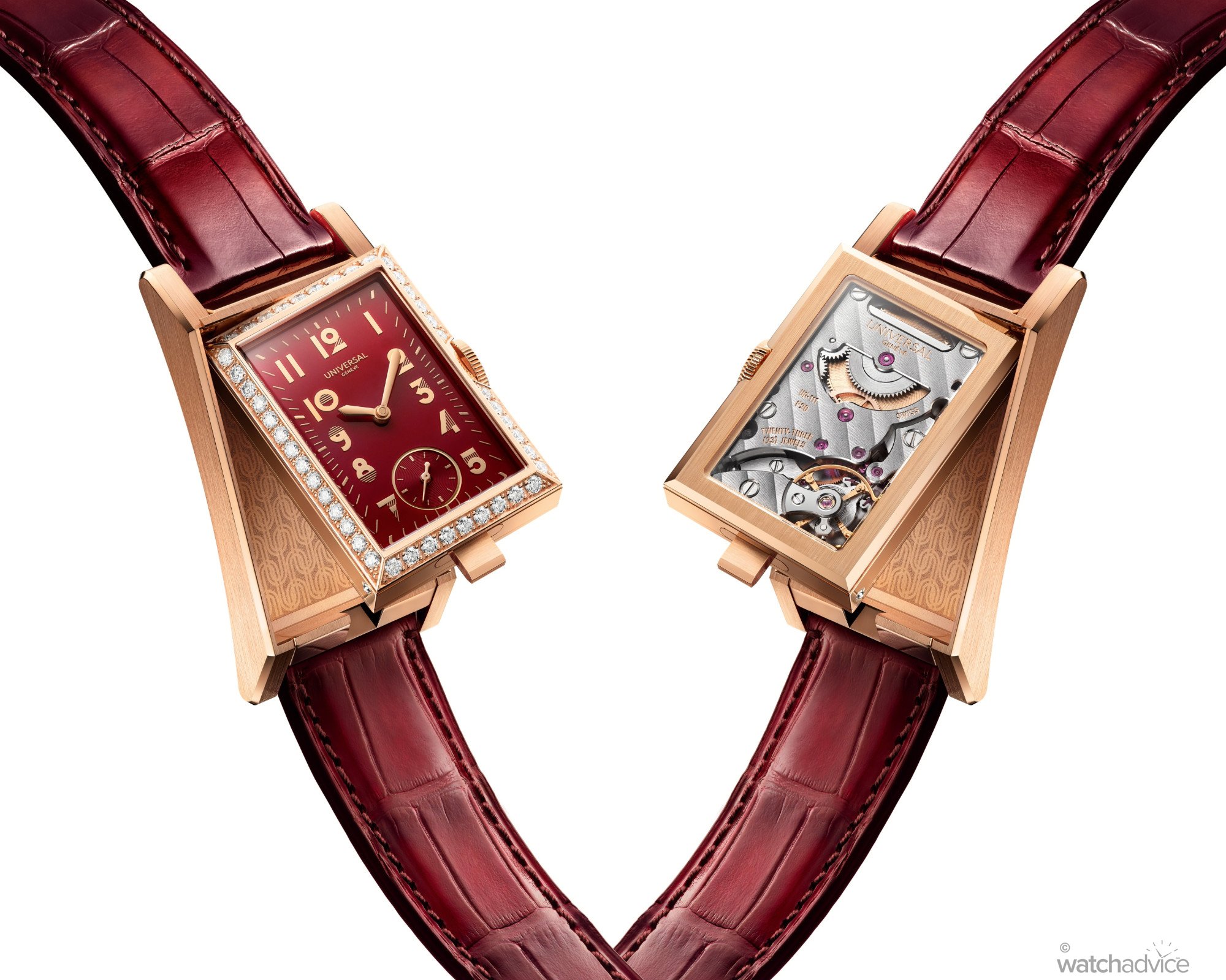
With both a Prêt-à-Porter collection and a capsule collection, the Cabriolet gives those who want something a little different on their wrist an option. The Prêt-à-Porter collection consists of four pieces, in stainless steel, 18K rose gold, or 18K rose gold set with 44 diamonds totalling 0.9 carats.
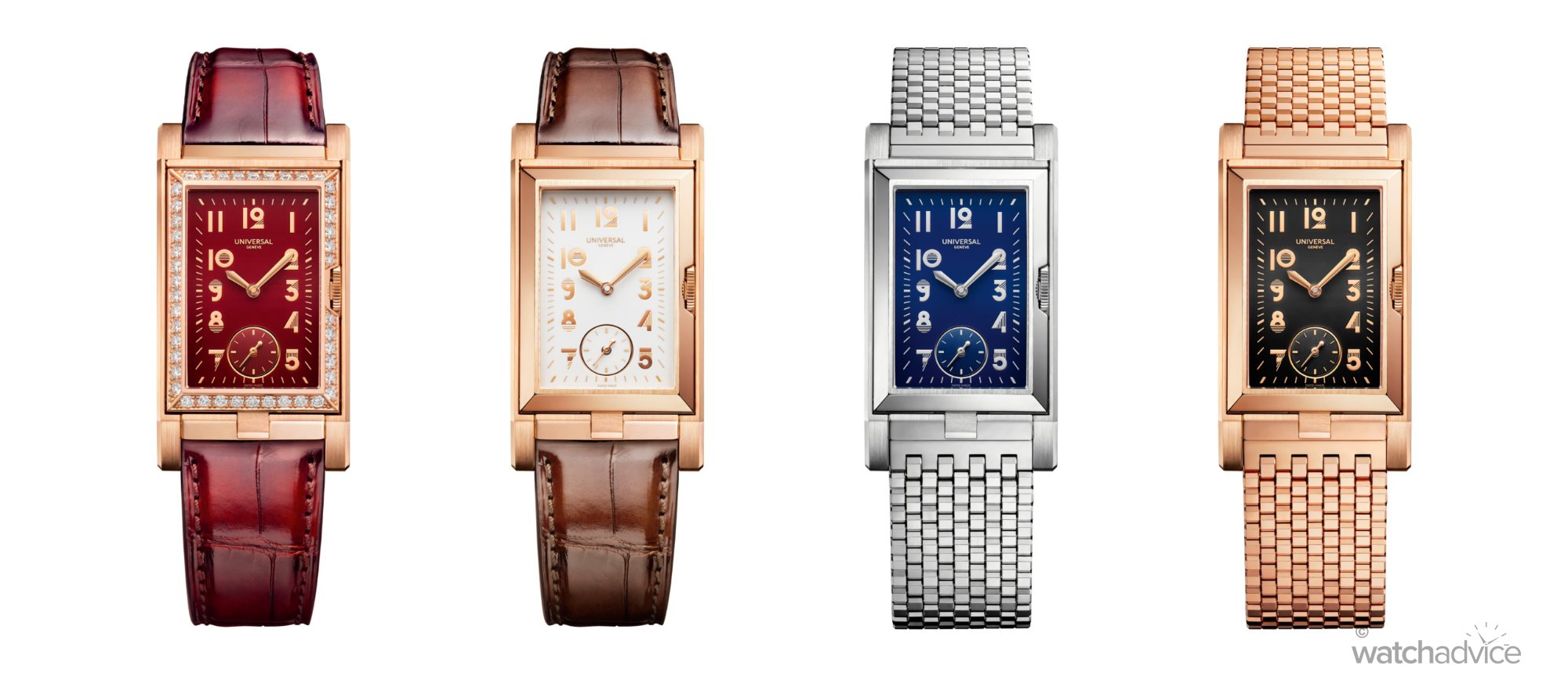
Each case measures 24.2 mm across, 45 mm lug-to-lug and with a case thickness of 8 mm, this collection also offers the option of swapping out the display caseback for a closed one that can be personalised. And speaking of personalisation, the second part of the Cabriolet collection is a special capsule collection, The Cabriolet De Lempicka.
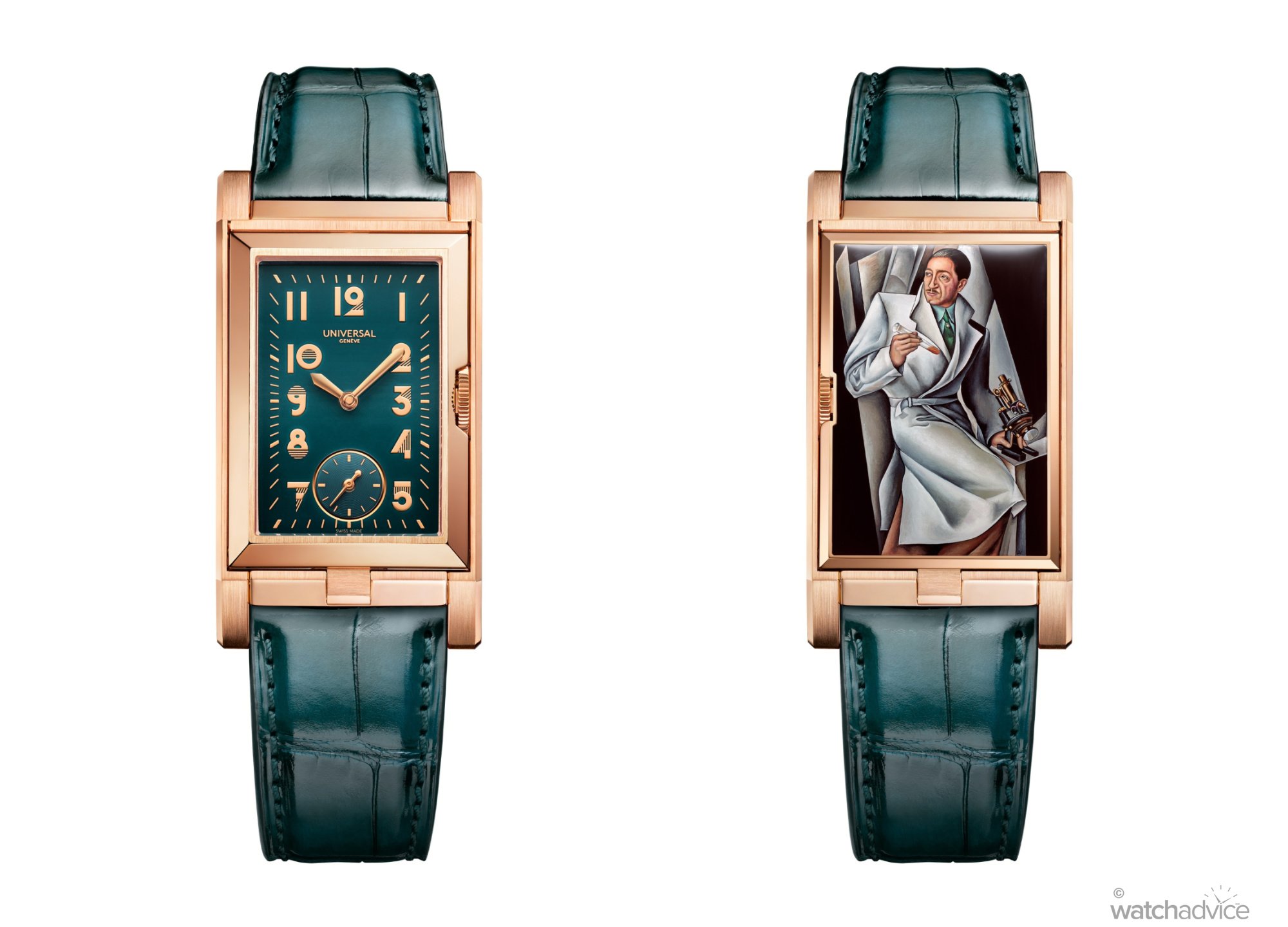
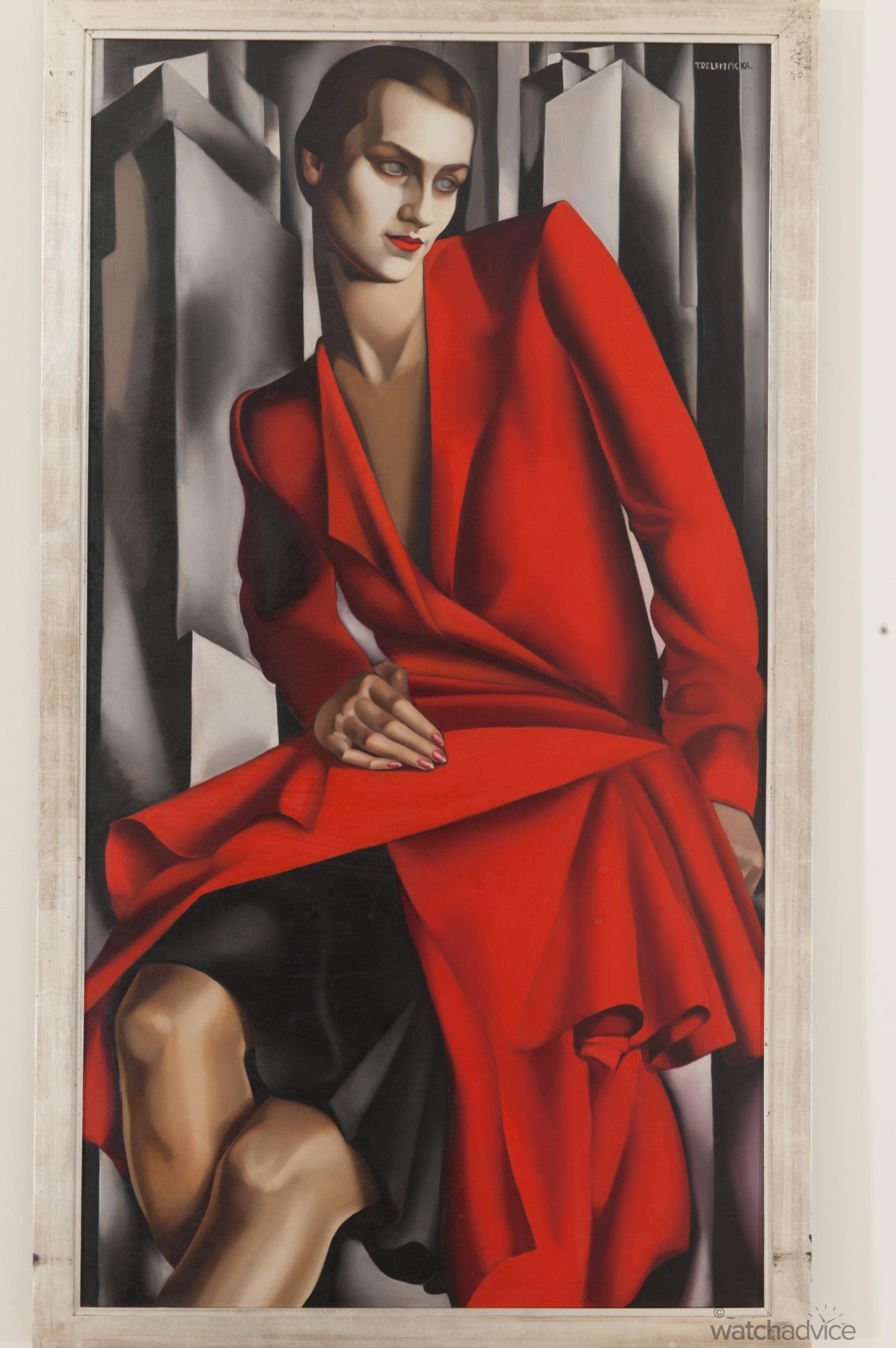
The Cabriolet De Lempicka leans heavily into the artistic side of watchmaking, using the works of Tamara de Lempicka, whose sculptural, highly polished portraits became synonymous with Art Deco sophistication. This collection is presented as a highly limited series where each piece is a wearable piece of artwork. Finished in a velvet teal tone with an 18K rose gold case, each caseback is hand-painted with a miniature of a De Lempicka piece.
Created in collaboration with miniaturist Isabelle Villa, every watch is effectively bespoke. The initial release is limited to 15 pieces, with collectors able to choose from three artworks: Portrait of Mrs Bush, Tamara in Green Bugatti, and Docteur Boucard, with just five examples of each. Further works from the archive are expected to follow in future releases.


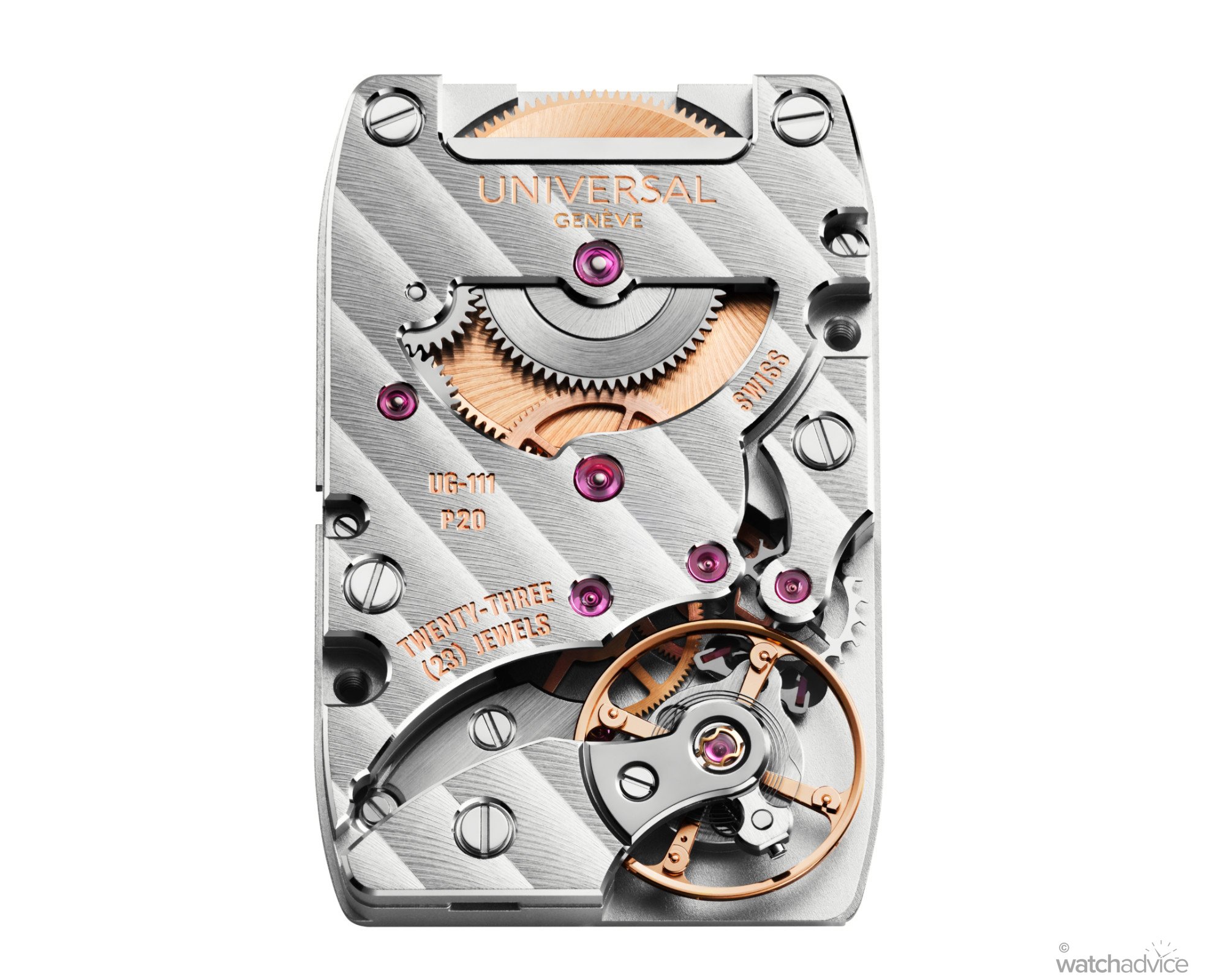
Inside sits the manually wound calibre UG-111, a movement designed specifically to suit the proportions of the rectangular case. It beats at 3Hz, and has a very respectable 72-hour power reserve as well as a 100 meter water-resistant case. Not bad for a dressier watch.
Expanding The Universe
If those three icons were not enough, beyond the core mechanical collections, the relaunch also introduces several more expressive designs, including the Dico Volante and Dioramic, and other collections leaning more towards females with the Disco Mini range, Dioramic, and Mini Cabriolet Couture Edition.
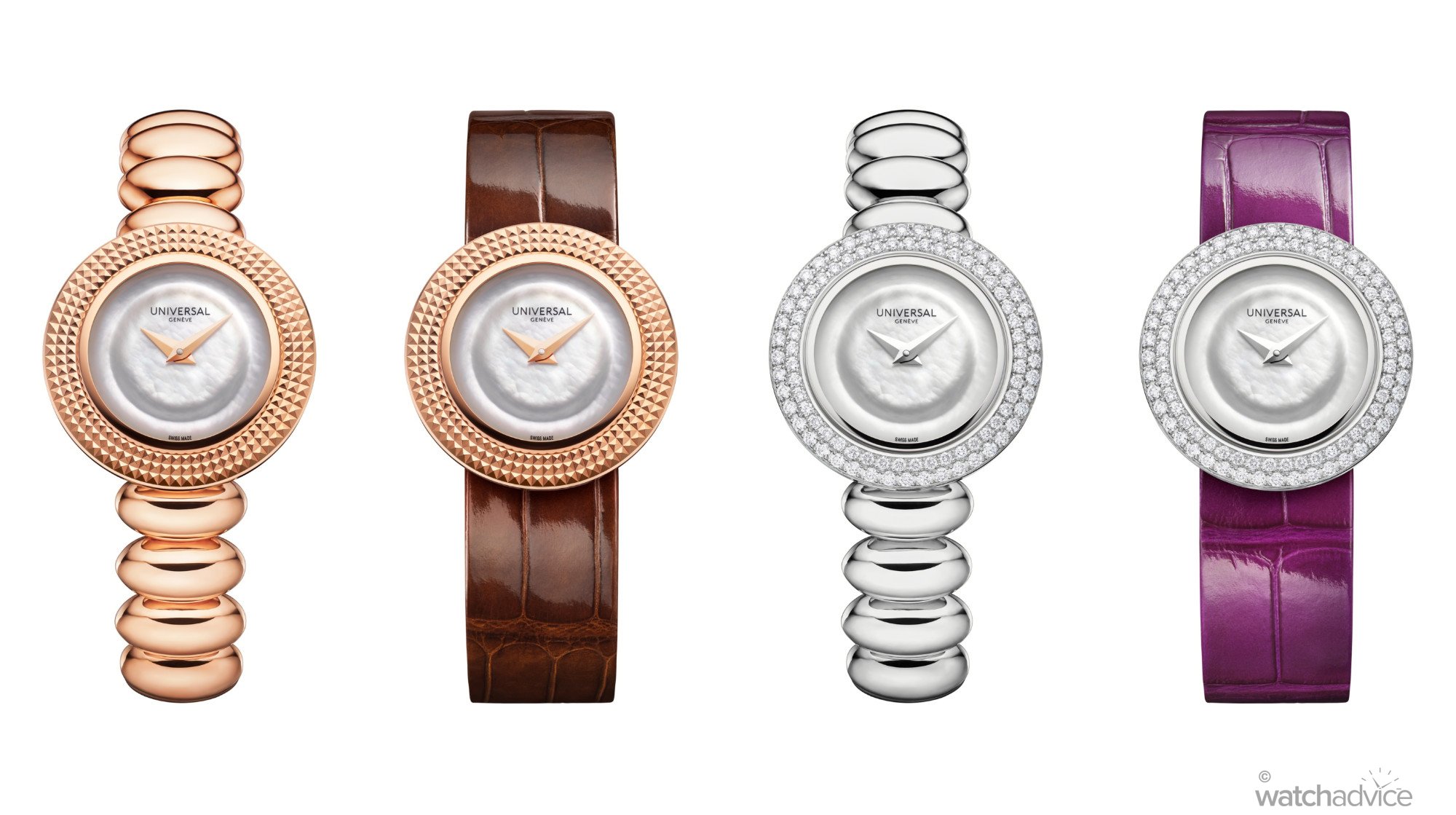
The Disco Volante, Disco Mini, and related models take inspiration from Universal Genève’s more unconventional archive pieces, while the Couture collection moves further into jewellery-style watches with elaborate gem-setting and one-off creations. These models help reinforce the idea that Universal Genève historically wasn’t just about tool watches or dress watches, and showcase one area where Universal Genève sets itself apart from sister brands Breitling and, soon, Gallet.
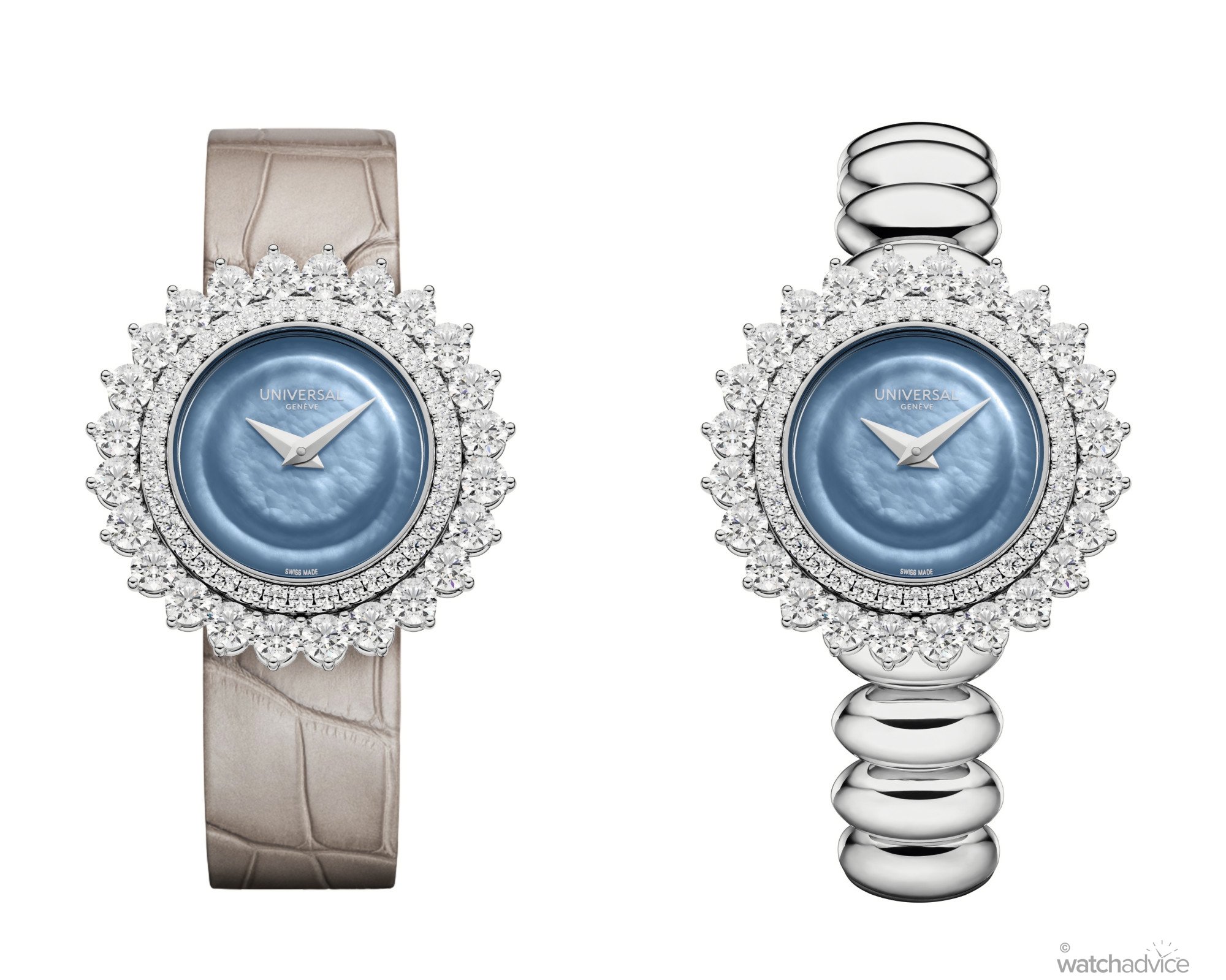
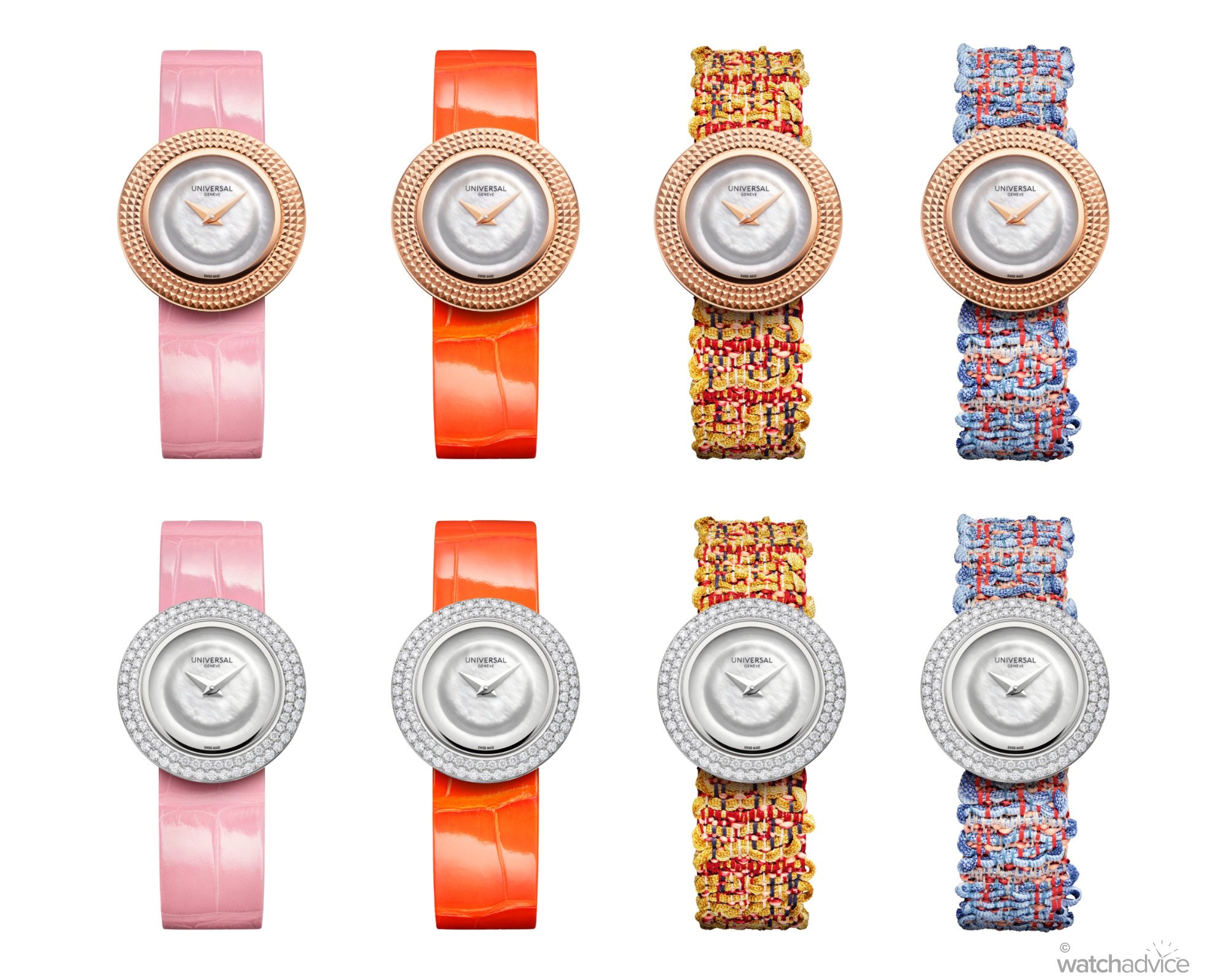
Now, there are a lot of models in this, especially with the Disco Mini line, having the Mini Prêt-à-Porter collection, the capsule and the Spring/Summer strap collection add-ons. The Prêt-à-Porter models are 28 mm x 10.25 mm thick, while the capsule collection are slightly larger at 32 mm x 10.4 mm thick, thanks to being set in 18 k white gold with 60 diamonds totalling 4.4 carats.
I mentioned the Disco Valante and Couture lines, which showcase the more artistic side of Universal Genève. Sitting at the very top of the brand’s offering, the couture pieces showcase artisanal watchmaking at its highest level. Each one is unique, drawing on design cues from Universal Genève’s past and present, while staying true to its identity as “Le Couturier de la Montre.”
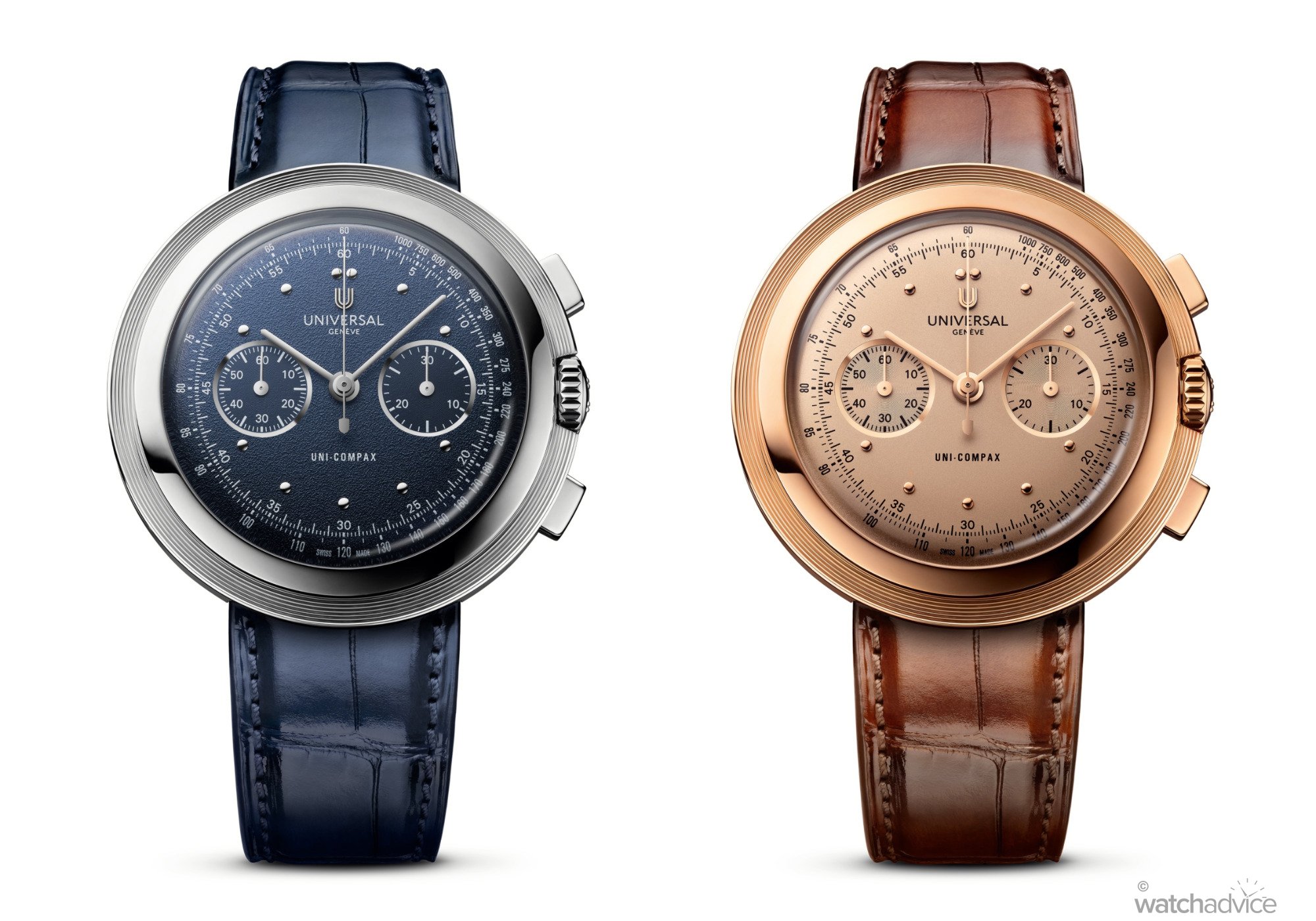
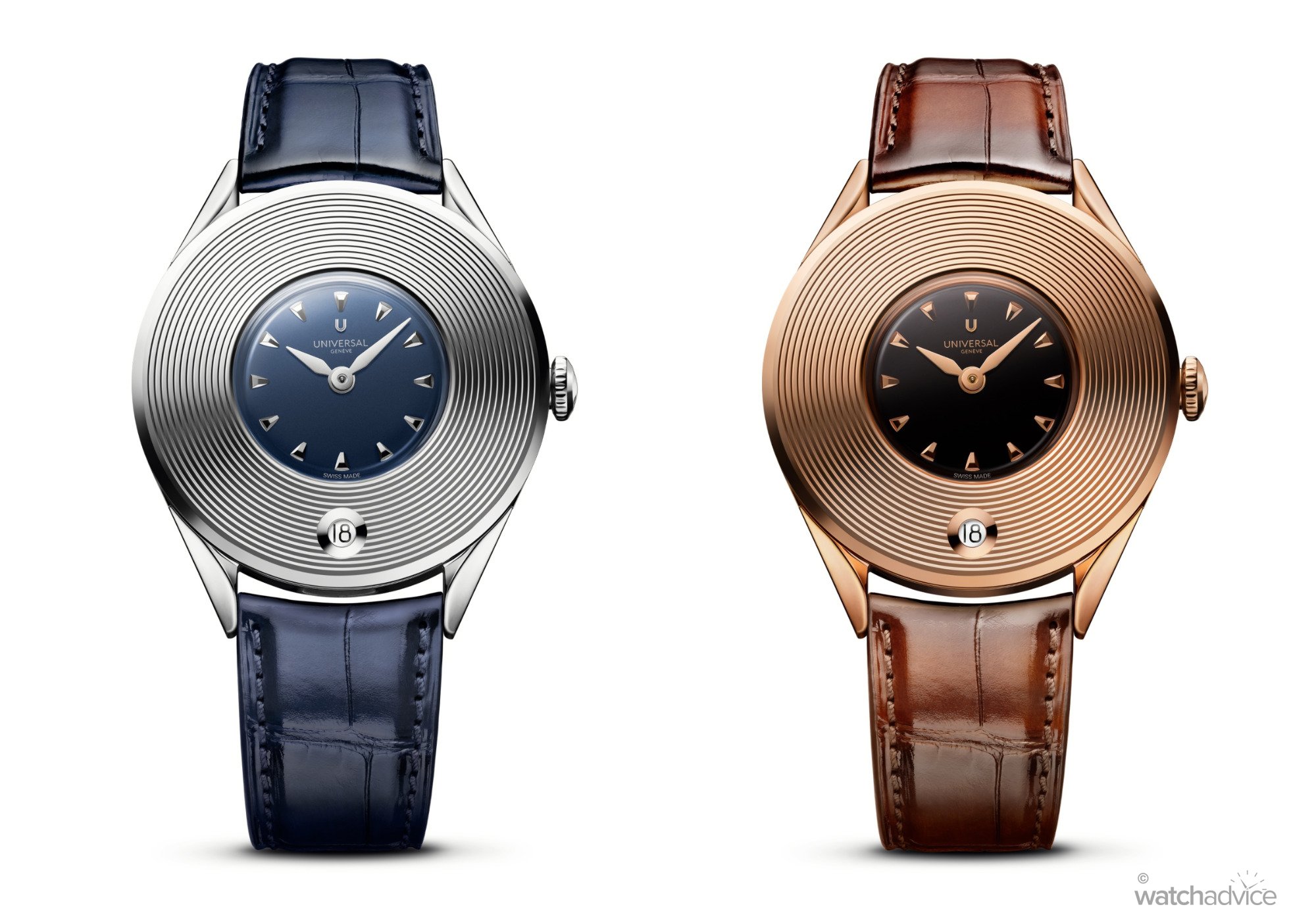
The new Disco Volante and Dioramic models revisit Universal Genève’s more distinctive mid-century designs with a cleaner, modern execution. The Disco Volante keeps its bold, lugless “flying saucer” case and compax chronograph layout, now powered by the UG-200 movement, while the Dioramic takes a more restrained approach with its fluted bezel, compact dial, and UG-110 micro-rotor calibre.
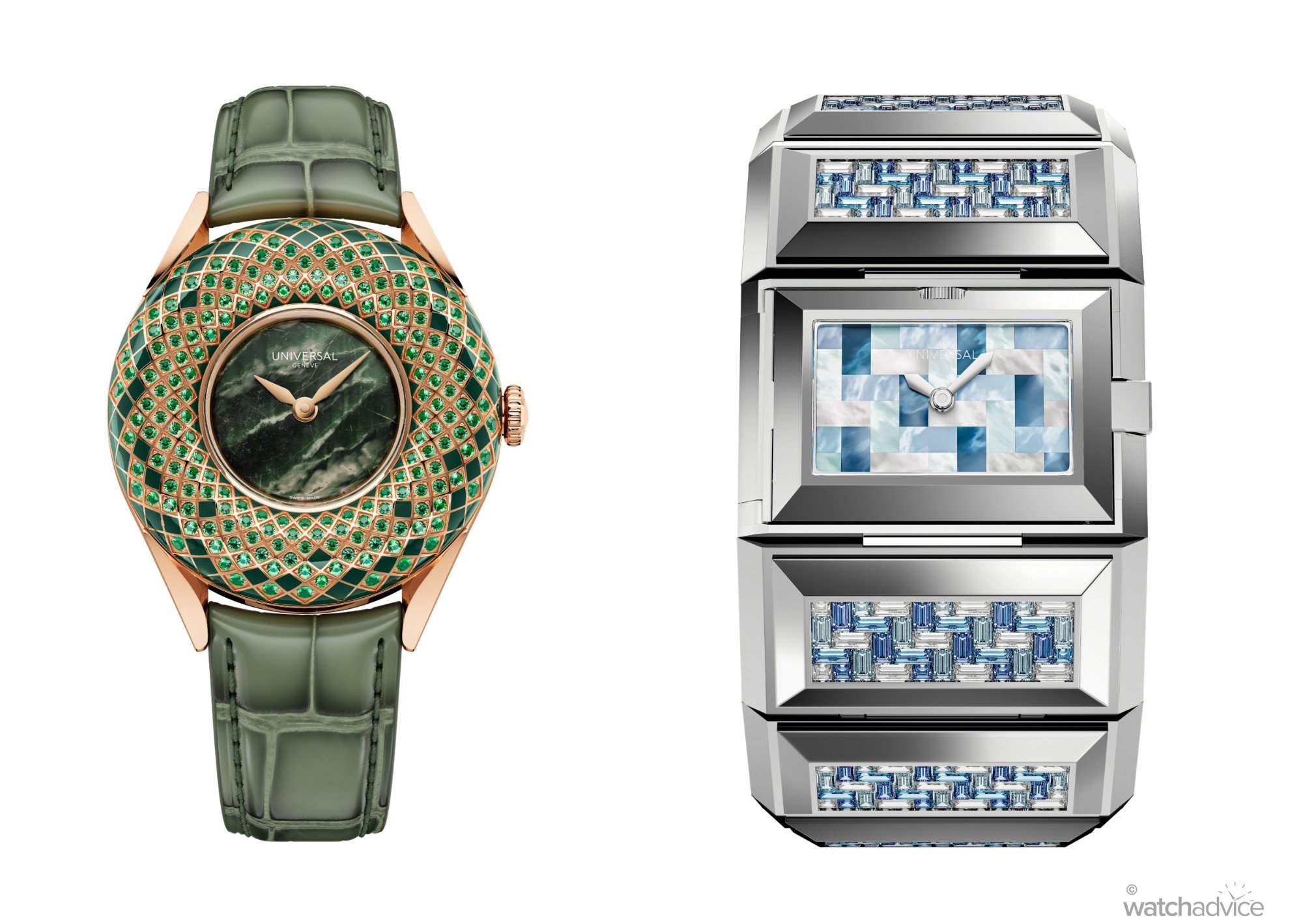
In addition, there are four high jewellery models, where watchmaking becomes fully expressive and jewellery-like in execution. The Disco Maxi is the most dramatic, with a large, sculptural case set with a vivid gradient of sapphires and rubies that turns it into a full statement piece. The Disco Mini Couture takes a more compact, wearable approach, but still pushes into high jewellery territory with opal dials and richly set gemstone bezels that elevate its mid-century-inspired form.
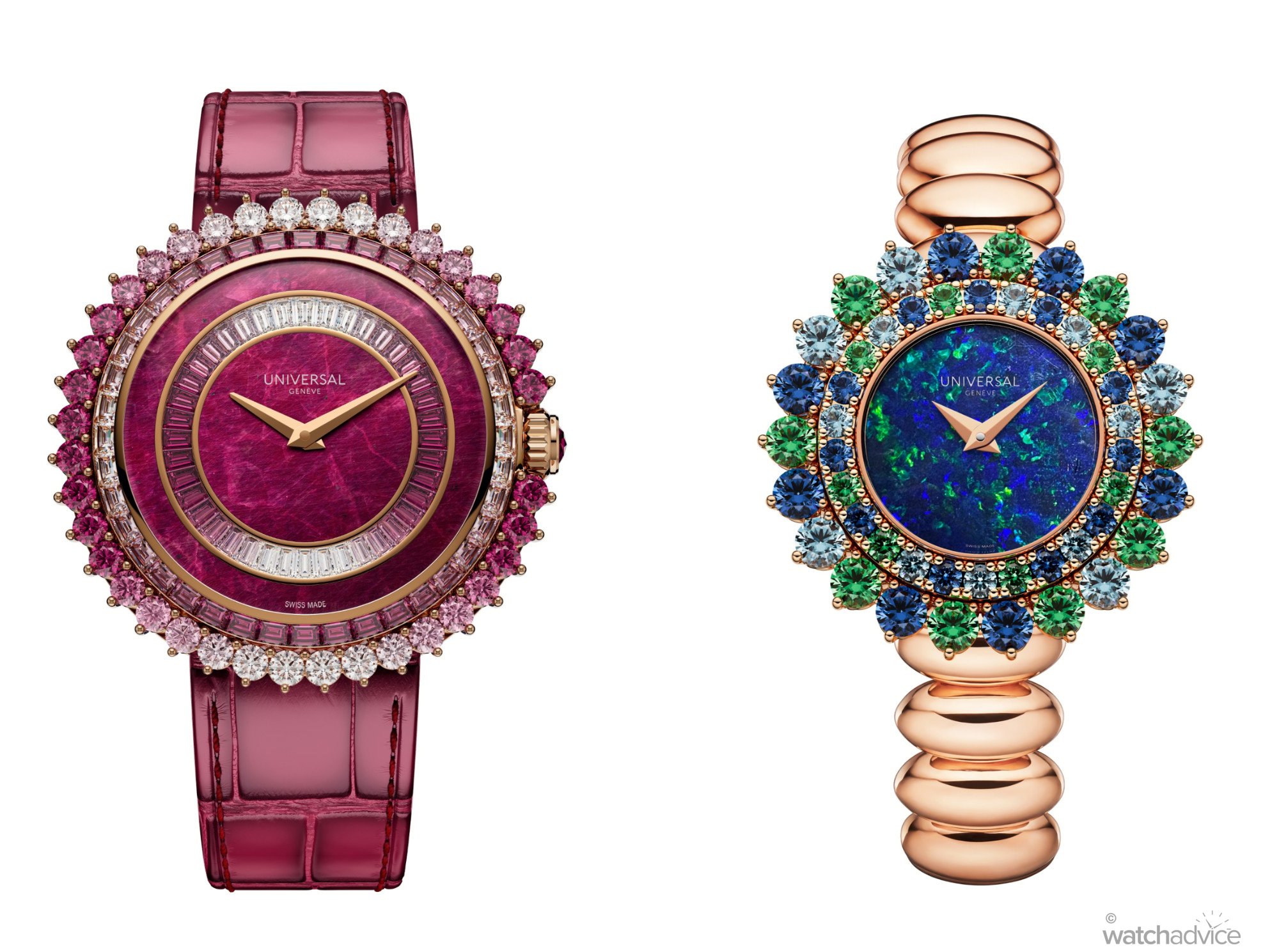
The Dioramic Couture is more architectural, pairing its domed case and layered bezel design with an intricate lattice of emeralds and stonework over an imperial jade dial, giving it a strong Art Deco tension between structure and ornament. Rounding things out, the Cabriolet Couture transforms the brand’s reversible 1930s design into something closer to a concealed jewel, with hand-finished detailing and artistic caseback execution that leans heavily into the idea of a secret, wearable canvas.
Our Initial Thoughts
Looking across the new lineup, it’s clear that Universal Genève has taken a careful approach to its comeback, which, given the initial timeline, we knew the House of Brands (UG, Breitling, and Gallet) headed up by Georges Kern, would. From the outset, we could tell the team was being very careful with the revival and not doing it quickly for the sake of it.
Rather than reinventing the brand, the new collections essentially pick up where the original story left off. The Polerouter continues its role as the elegant everyday watch, the Compax anchors the chronograph side of the catalogue, and the Cabriolet reminds collectors that Universal Genève once pushed design boundaries long before many of its competitors.
For those who have followed the brand’s revival since it was first announced, including our coverage here on Watch Advice, this launch feels appropriate to what the historical brand stood for, and now is again. What we also love is the range of models within each collection. Universal Genève hasn’t just done one or two, but a range of steel and precious metals to hit different areas of the market at different price points. From our perspective, it is a well-rounded release that talks to Universal Genève’s history, and now, ladies and gentlemen, it is back!