

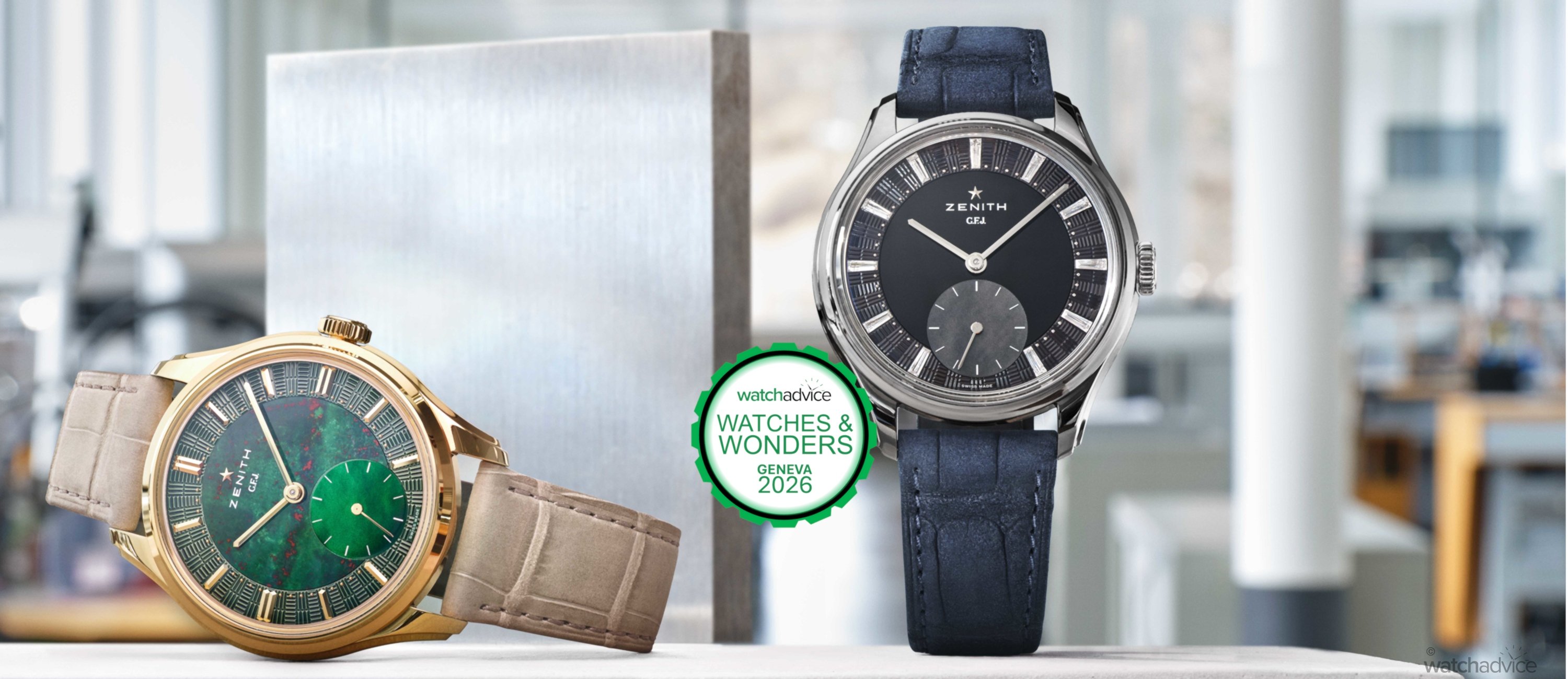
Hot on the heels of last year’s drop, Zenith has upped the ante with a duet of new GFJ watches – complete with new stone dials, yellow gold, and tantalum!
Zenith has always been one of those “if you know, you know” watchmakers. Nary a single Zenith fan I’ve met hasn’t had a vested interest in their timepiece of choice, and looking into their history, it’s not hard to see why. Since 1865, the Le Locle brand has been a shining star (no pun intended) of the watch industry, though its light has often shone brightest behind the scenes.
With a laundry list of past clients such as TAG Heuer, Ebel, and even Rolex, Zenith’s horological capabilities are astronomical. Among these achievements, the El Primero movement is often highlighted as its greatest contribution to the watch world. However, beyond its craftsmanship and innovative spirit, Zenith’s watches have also been known for their incredible performance, particularly in matters of chronometric accuracy.
This is what the modern Zenith G.F.J. collection represents. Named after Zenith’s founder, Georges Favre-Jacot, the G.F.J. recalled over a century’s worth of heritage, and 2,333 chronometry prizes, with last year’s Watches and Wonders release. With the watch world chomping at the bit for more, it was only a matter of time before they did it again. Now, just a year later, they have. Two new models in the G.F.J. line have dropped for Watches and Wonders 2026, stunning the industry both artistically and mechanically.
Same But Different… A Lot Different!
Given the wild success of the original, Zenith isn’t about to change a winning recipe. Thus, the two new models sit at the exact same dimensions as last year’s G.F.J. With a 39.15mm case diameter, near-46mm lug-to-lug, and 10.5mm thickness, the G.F.J. is a slim timepiece made for dressier occasions. It won’t mind a bit of roughhousing, with 50m of water resistance, but what I’m about to tell you will likely dissuade you from doing so.
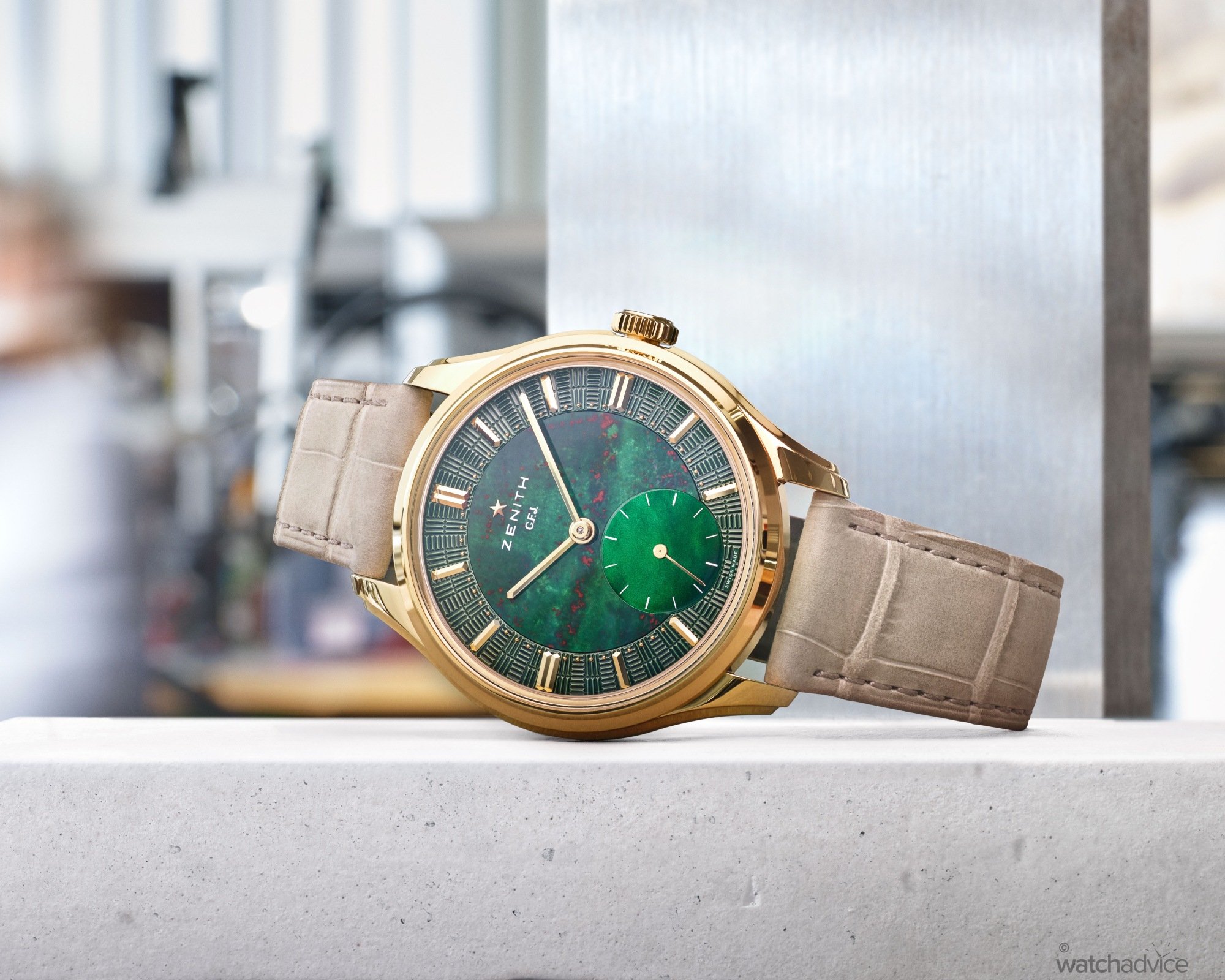
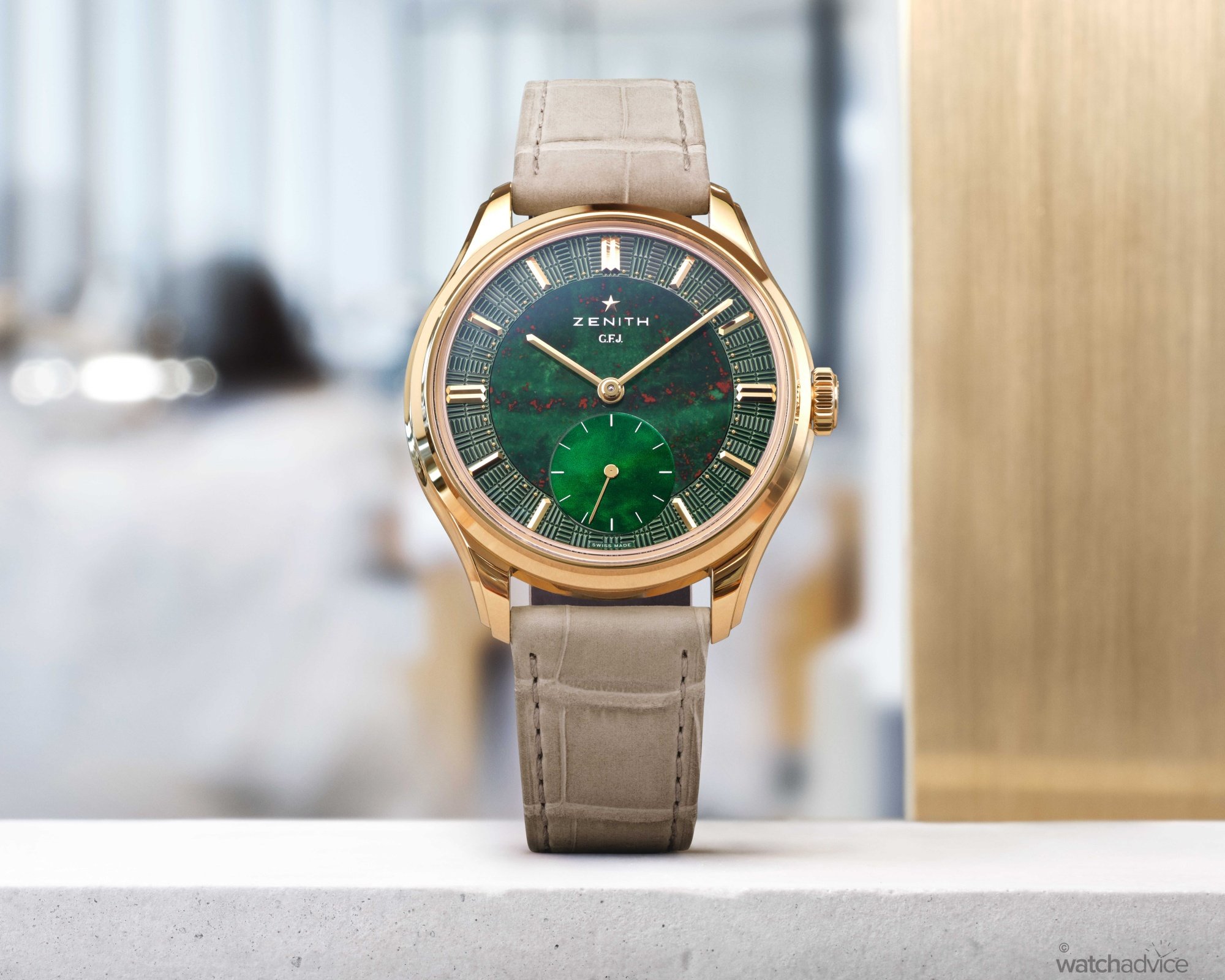
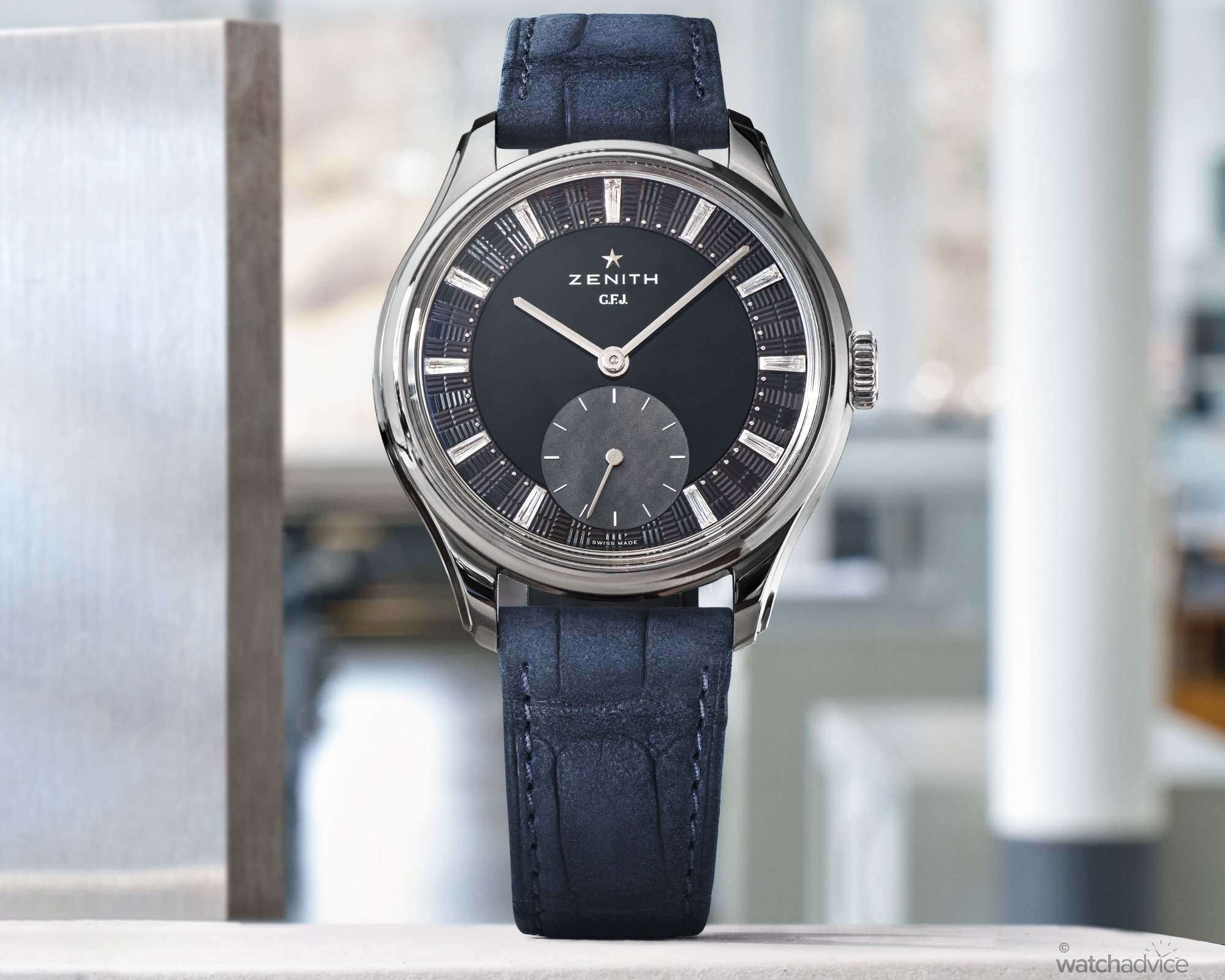
You see, last year’s G.F.J. came encased in 950 platinum, so it was a given that Zenith would go even more all out this time. First, an 18k yellow gold model has been offered; no surprises there, given the need for added ostentation. The second model, on the other hand, uses tantalum as its primary case material.
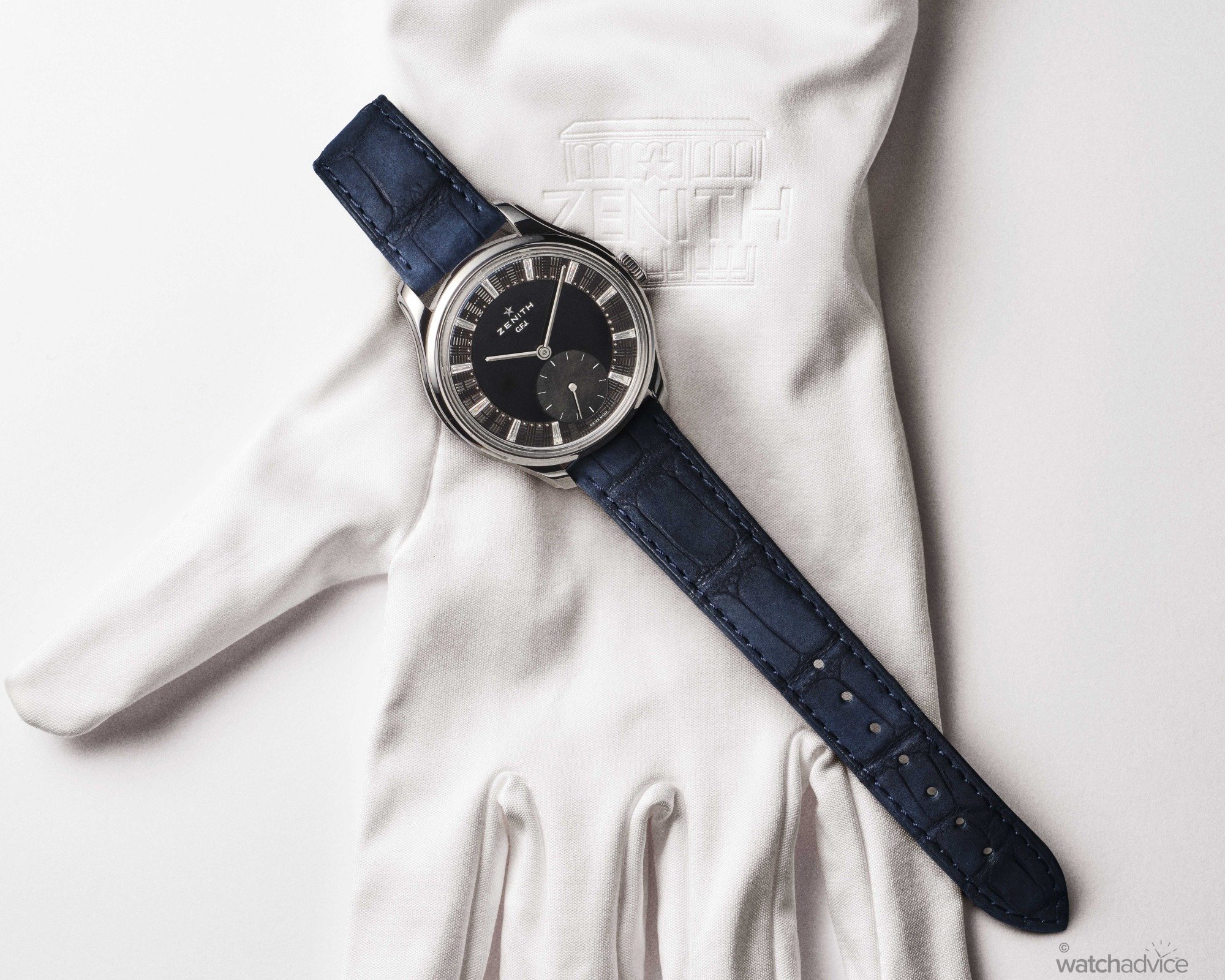
An incredibly hard metal to work with, tantalum is rarely used in watchmaking due to the need for specialised tools and precise workmanship. However, Zenith has taken up the challenge, turning it into a watch case that is exceptionally dense, tough, and unique in appearance.
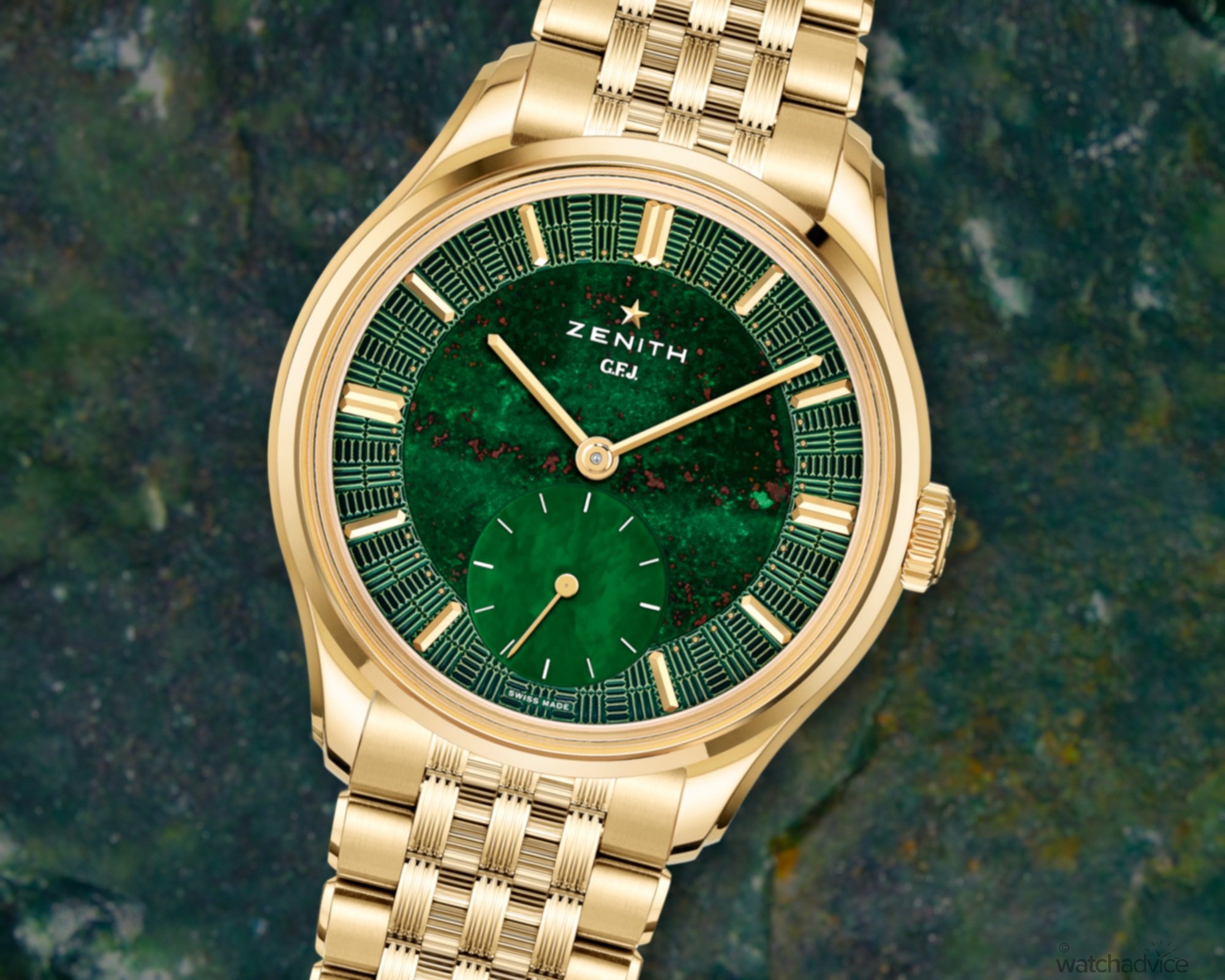
All G.F.J. watches, then, have a serious wrist presence. This is offset by the nubuck alligator leather straps they are presented on. This is the default option, though, as Zenith also provides complementary standard alligator and calfskin straps for each model. For the yellow gold version, they go even further with the optional purchase of a full gold bracelet akin to the original platinum release.
A Stony Exterior
Given the history and nomenclature of the model line, it makes sense that the G.F.J. is presented as a serious timepiece. You don’t want something named after the founder to be merely acceptable; you want it to impress. Looking at the two new models, they have certainly achieved that.
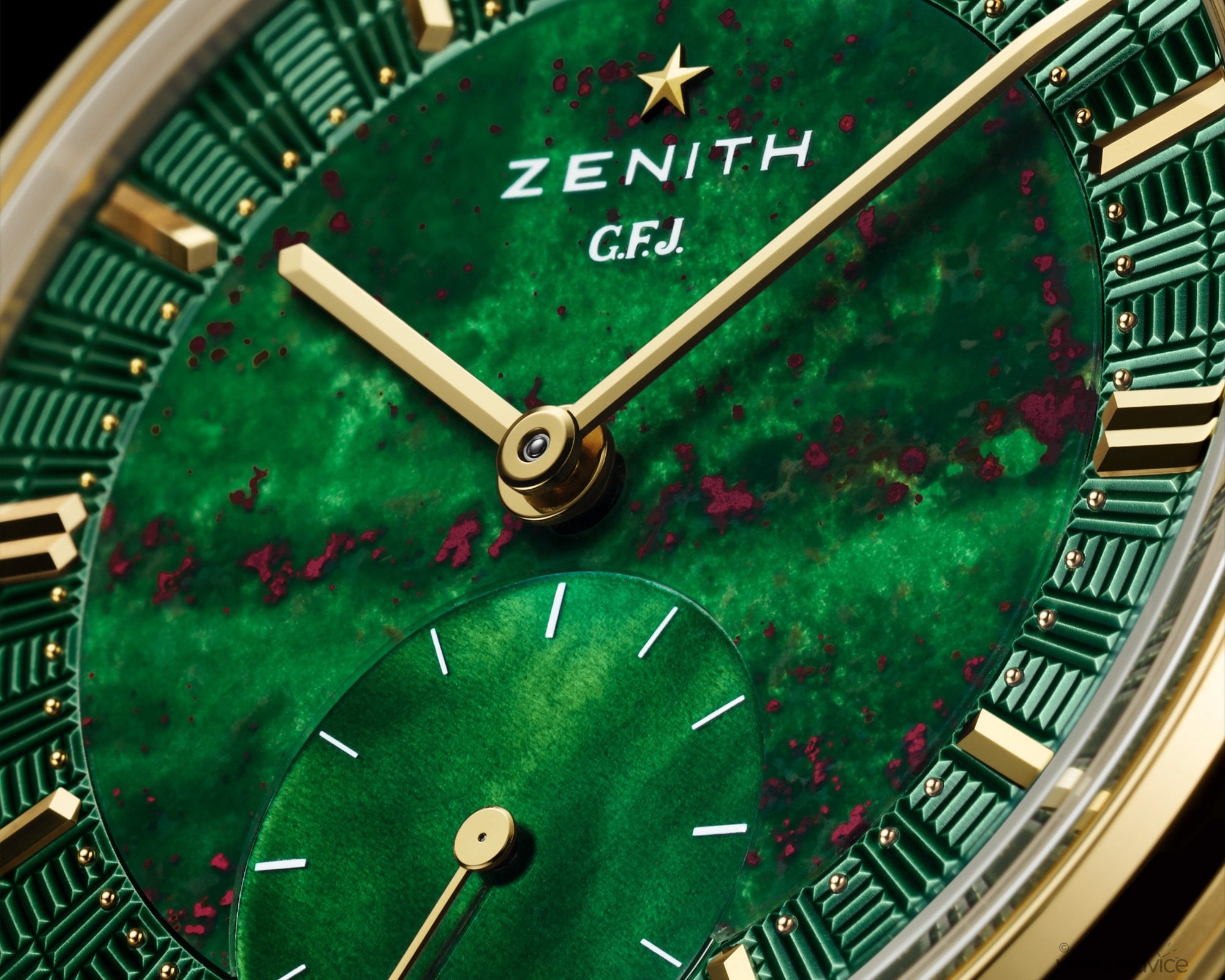
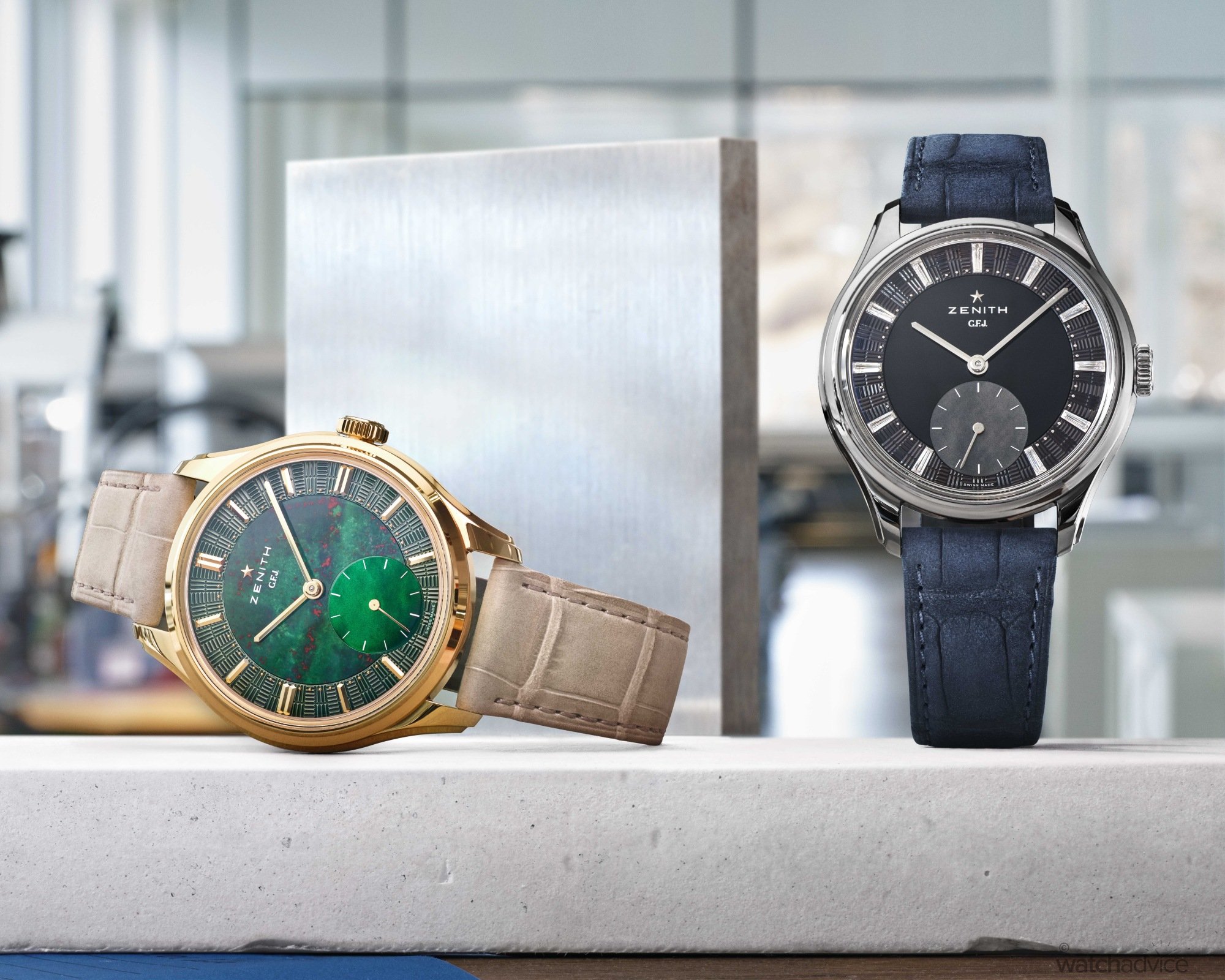
Both watches take after the original’s design: a brick guilloché outer ring, a stone dial centre, and a mother-of-pearl small seconds register. For the yellow gold version, green is the theme, modelled around a heliotrope dial, also known as bloodstone. The tantalum version, on the other hand, features an onyx centre, accompanied by black mother-of-pearl and a black outer ring.
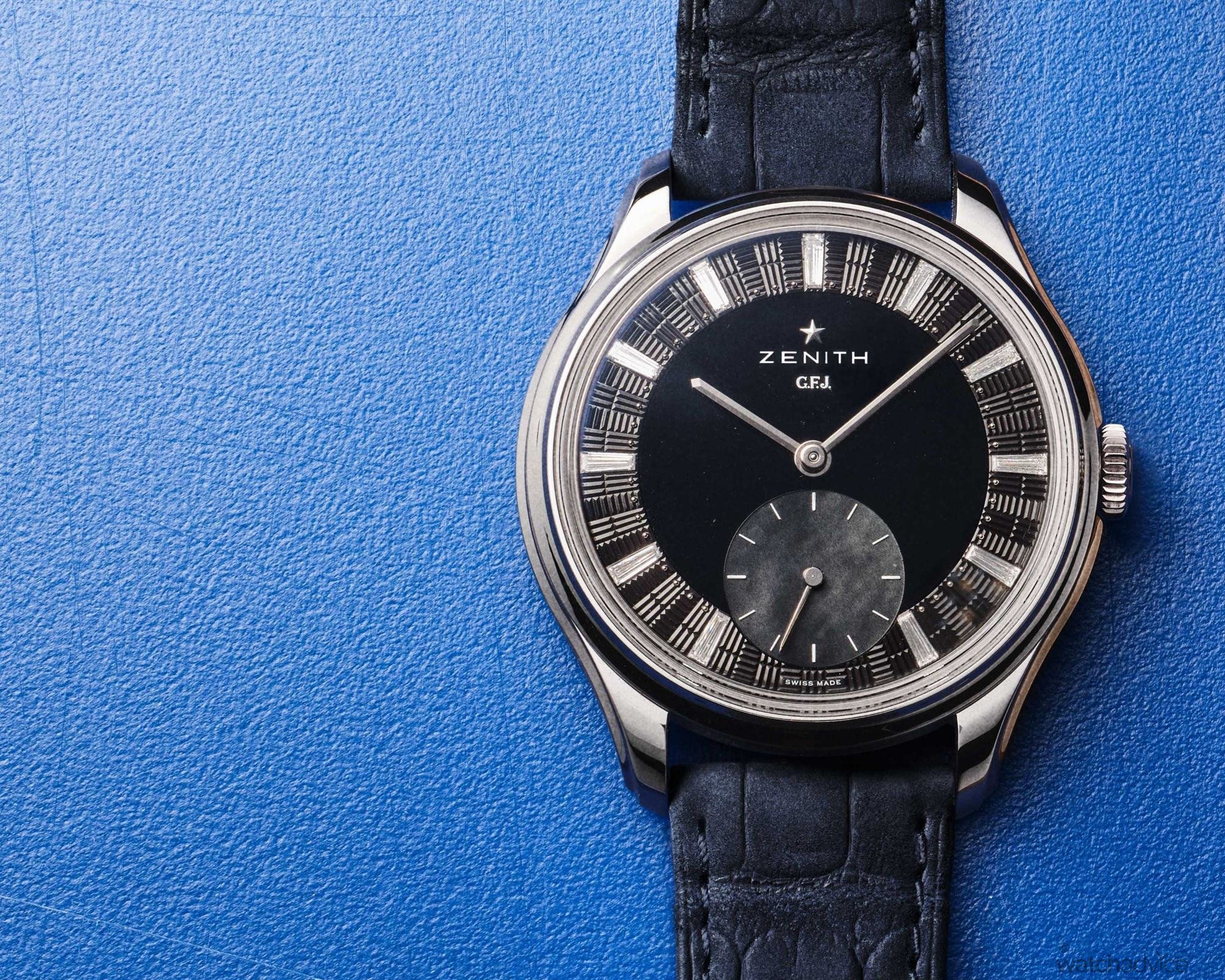
While it may seem more low-key at a glance, it subtly surpasses the yellow gold version. Instead of applied indexes, the tantalum G.F.J. opts for 11 trapeze-cut diamonds, totalling 0.45ct.
Not only does this elevate the watch visually, but it also offers a glamorous contrast to the predominantly black dial. Each individual piece of both models will also be unique, as the stone and mother-of-pearl are naturally occurring materials, so no two will truly be alike.
Return of the King
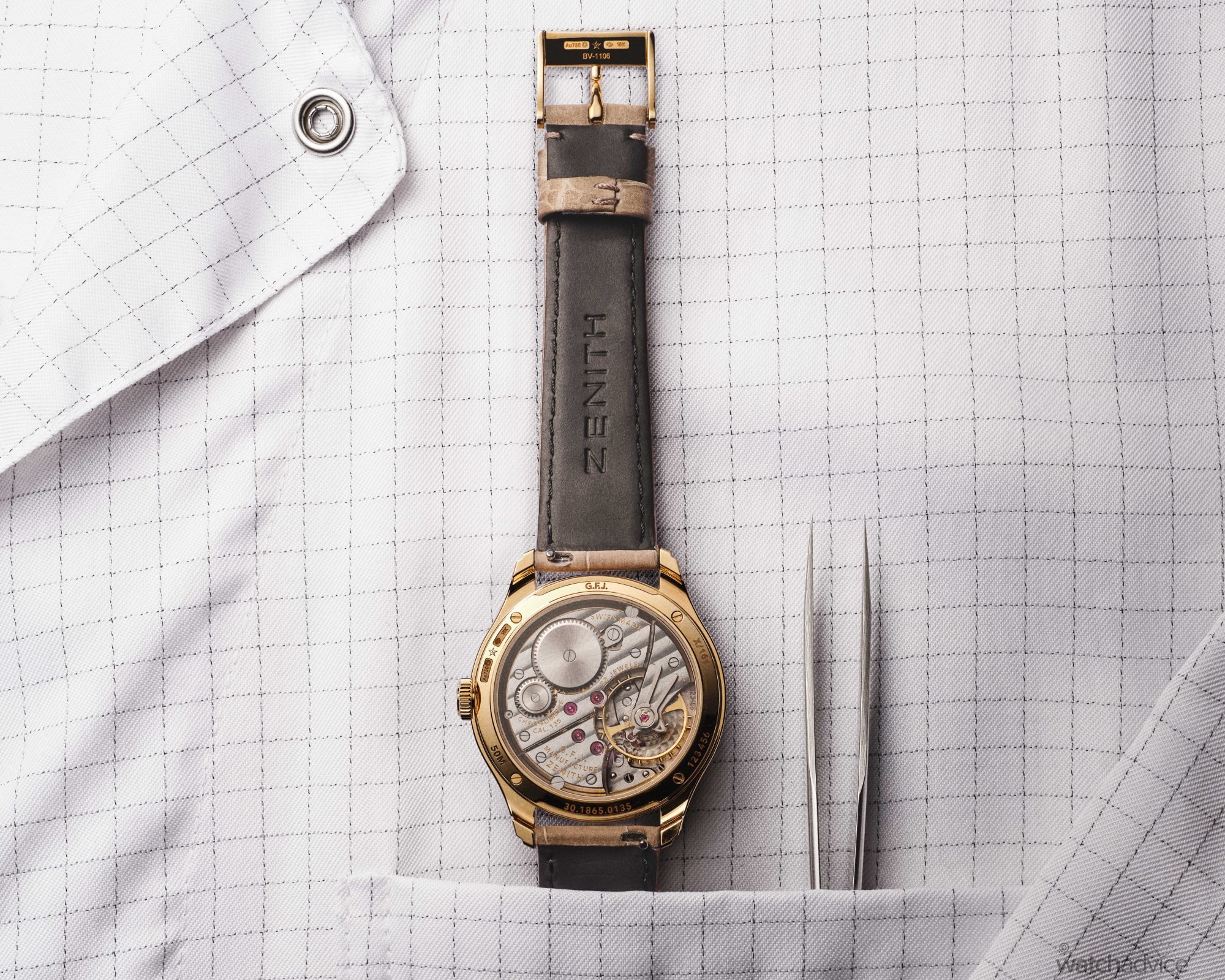
Where they remain similar, though, is in the spectacular movement inside. Turning either watch over to the open caseback reveals Zenith’s legendary Calibre 135. If you’re a watch enthusiast, it is a movement worth getting excited about, especially since it is more than just a tribute.
Developed in the mid-20th century, the Cal. 135 is prized for its historical importance and technical excellence, winning 235 awards at the Neuchâtel Observatory trials. While the movement has been brought back once before, thanks to the efforts of Kari Voutilainen, Zenith’s rendition is a complete overhaul of the original specifications. While they have kept the 2.5Hz (18,000vph) beat rate, significant steps have been taken to extend the power reserve from 42 to 72 hours.
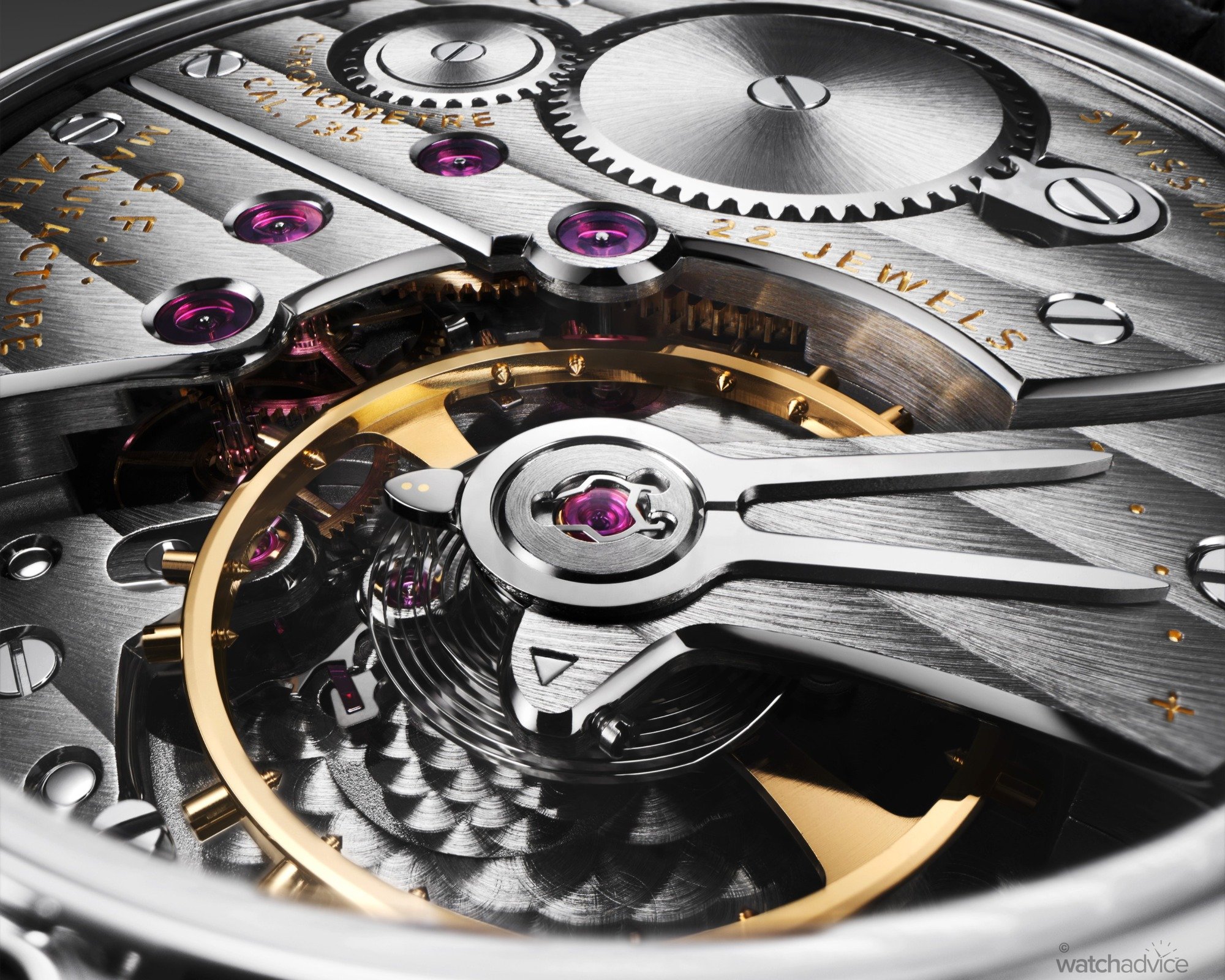
“It’s a long but natural process of development, and then brick after brick, you are building the wall of the final product, so to speak. What we did at first was work on the movement. And then brick after brick, we worked on the design, on the case, and on the dial. But at first, the central part of the whole piece is the movement. I mean, just the idea of bringing back the movement was just the craziest idea that we had at first!”
Romain Marietta, Director of Product Development at Zenith, in a 2025 interview with Watch Advice
It is easy to agree with Romain here. To not only revive, but remaster a movement that has long been outpaced by modern standards is an incredible concept. After years of work, and what must have been millions of Swiss francs in research and development, the Cal. 135 is back and better than ever. It even maintains COSC chronometer certification, denoting its accuracy.
Initial Thoughts
If Zenith is the niche watch enthusiast’s brand, then the Cal. 135 is the niche within the niche. However, Zenith has made it clear that it is not just a brand for enthusiasts deep down the iceberg. Those who know the history of the Cal. 135 will love the G.F.J. for what it represents, but through a clean aesthetic, remarkable craftsmanship, and complex materials, the collection can be appreciated for what it is.
And what kind of watch is it? A demonstration of how much is possible within the Zenith manufacture. It not only nods to a rich, storied heritage, but also reintroduces it to a modern audience. This is not manufactured nostalgia, but the addition of new, exciting chapters to an already compelling story. With the return of the Cal. 135 and the introduction of two new G.F.J. models, Zenith is sharing its past with the present, setting the stage for what the future may bring.
References: 30.1865.0135/56.C216 (Yellow Gold) / 98.1865.0135/21.C205 (Tantalum)
Specifications:
| Dimensions | 39.15mm case diameter x 45.75mm lug-to-lug x 10.5mm thickness |
| Case | 18k Yellow gold / Tantalum |
| Dial | Brick guilloché outer ring (Green / Black), stone centre (Bloodstone / Onyx), & mother-of-pearl small seconds counter (Green / Black) with applied indexes (18k yellow gold / 11 trapeze-cut diamonds totalling 0.45ct) |
| Crystal | Flat sapphire |
| Caseback | Open sapphire |
| Movement | Manual wind Cal. 135 with small seconds complication & COSC Chronometer certification |
| Power Reserve | 72h |
| Beat Rate | 2.5Hz / 18,000VpH |
| Water Resistance | 50m / 5bar |
| Strap/Bracelet | Nubuck alligator leather strap (Beige / Blue) OR alligator leather strap (Green / Black) OR calfskin leather strap (Black / Grey) with pin buckle (Yellow gold / Titanium) Yellow Gold Only: Optional 18k yellow gold bracelet with butterfly clasp |