


Audemars Piguet continues to refine one of watchmaking’s most complex complications. Whether openworked or classic, each piece brings its own personality to the perpetual calendar. Technical, modern, and unmistakably Audemars Piguet.
Being one of the brands that form the Holy Trinity of watchmaking, Audemars Piguet has long stood at the forefront of haute horlogerie, consistently pushing the boundaries of mechanical watchmaking while still staying true to its centuries-old traditions.
One of the crown jewels of Audemars Piguet movements is the perpetual calendar (besides the grand complication, of course!), a calibre that is a testament to the brand’s innovation and evolution over time. We may be used to seeing perpetual calendar movements more and more in modern watchmaking, but that doesn’t make it any less impressive or less technical. This is a mechanism that does more than just track the date, days, months, and leap years. It is the very essence of precision artistry, bringing together complex engineering with stunning aesthetic visuals.
In 2025, Audemars Piguet had a drastic change when it came to their perpetual calendar movement. On their 150th anniversary, the brand stopped production of Calibre 5134 and Calibre 5135, which were featured on the perpetual calendar and openworked perpetual calendar models, some of the most sought-after and iconic timepieces in modern watchmaking. These movements made way for a new generation of perpetual calendar movements, calibre 7138, and now, for the first time, the openworked perpetual calendar calibre 7139.
At this point, the obvious question is: what exactly sets the new Calibre 7138 and 7139 apart from the previous generation? Three key features set this new generation apart, and they aren’t just subtle differences either. The first is the movement frequency and power reserve. The previous Gen 5134 calibre operated at 19,800 VpH and offered approximately 40 hours of power reserve. Audemars Piguet sought to move these numbers to a more ‘modern standard’, with the new Gen 7183 now achieving a much higher accuracy of 4 Hz (28,800 VpH) and an autonomy of approximately 55 hours.
The second change, which is the more drastic and innovative by far, was the operational functionality of the perpetual calendar indications. On the older Calibre 5134, one of the biggest practical limitations of the movement was setting the perpetual calendar itself, requiring a special tool to use on the tiny correctors/pushers on the case side to correct the calendar indications. Now, with the latest Calibre 7138 movement, Audemars Piguet has eliminated the side correctors, as the corrections are now solely carried out through the crown.
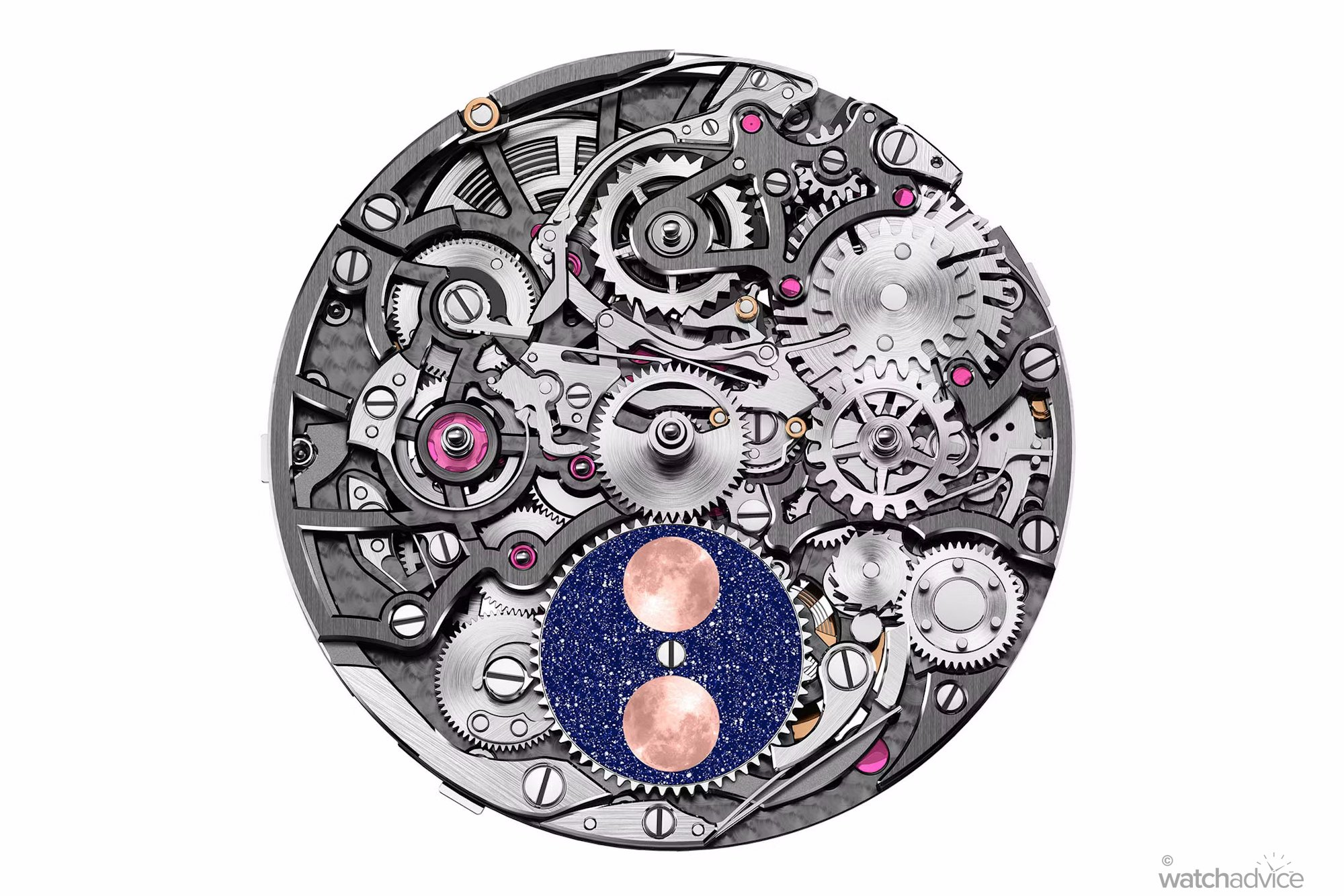
This new system allows every perpetual calendar indication (date, day, month, leap year, moonphase, and week) to be adjusted entirely by the crown alone. This adjustment method is the result of several patented innovations and a very complex crown mechanism developed by Audemars Piguet to control each calendar function. While there are other brands with crown-set perpetual calendars, Audemars Piguet’s traditional layout with moonphase and full calendar indications, while also being a 4.1mm thick movement, presents an enormous leap forward for the perpetual calendar complication.
It doesn’t just stop there either. For this perpetual calendar crown ‘functionality’, Audemars Piguet has created a brand new setting tool that is a first for the watchmaking industry. It is an intelligent watch box that is able to automatically set and wind Audemars Piguet’s 41mm Royal Oak Perpetual Calendar exclusively, which includes the calibres 7138 and the new 7139 calibre. This watch box certainly enhances the ownership and user experience of one of the most complex movements in the world of horology.
The last upgrade to these new generations of Audemars Piguet perpetual calendar calibres is the efficient design of the movements. The previous Gen 5134 calibres were built as a modular addition on top of the base calibres, which, even though was reliable, made the movements thick, while also having less flexibility in dial layout. The new Gen Calibre 7138, however, uses technology and innovative designs that were pioneered in the development of RD#2 ultra-thin perpetual calendar (Calibre 5133), to integrate the different calendar indications more efficiently.
This not only highlights the importance of the Research and Development projects, as the innovations created through such ventures eventually trickle down to Audemars Piguet’s core collections, but also demonstrates how experimental watchmaking can directly impact the timepieces collectors actually wear and enjoy.

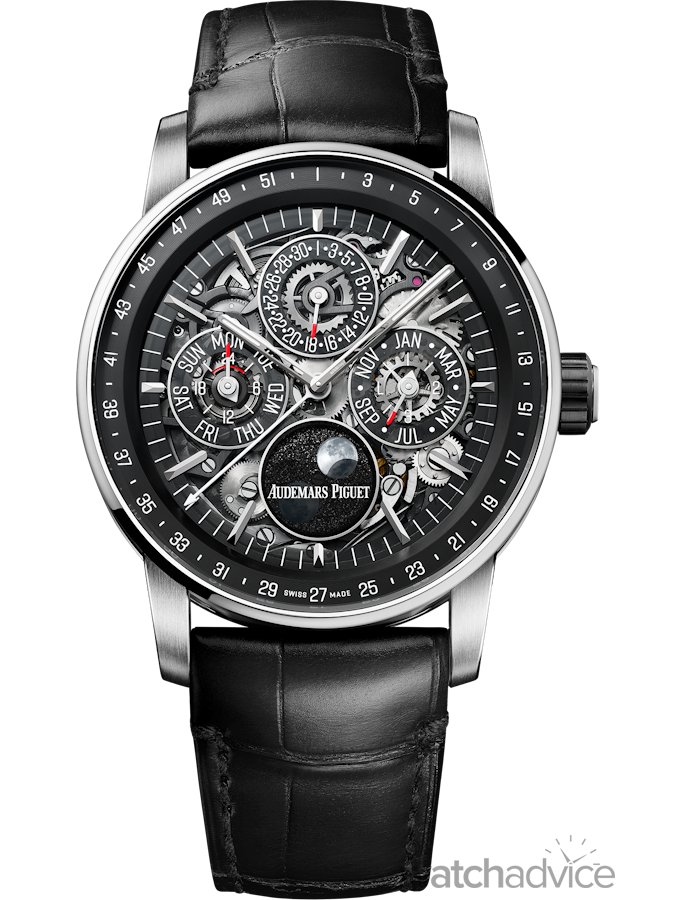
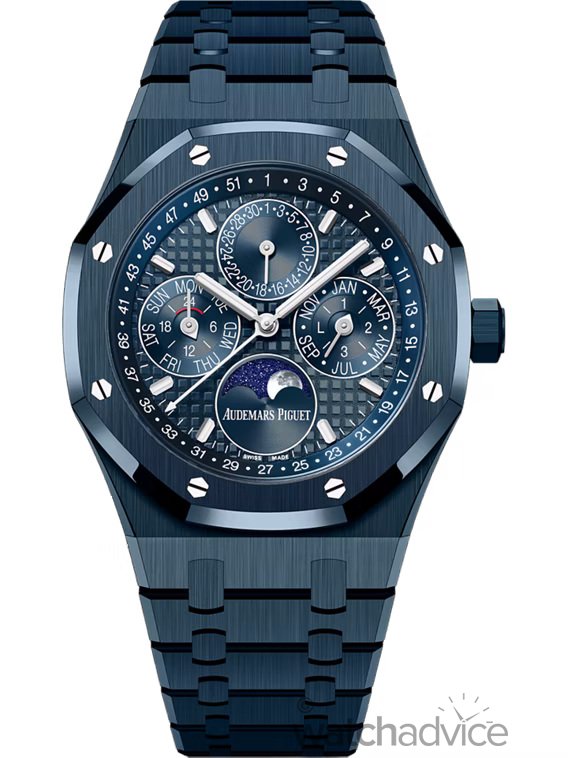
With all of these advancements in place, it was only a matter of time before Audemars Piguet applied this new-generation perpetual calendar architecture to an openworked execution. The new Calibre 7139 movement is just that, created exclusively for the openworked variants of the Code 11.59 Perpetual Calendar and the Royal Oak Self-Winding Perpetual Calendar. Audemars Piguet has released three new timepieces that carry these new-generation perpetual calendar calibres, reinforcing the brand’s commitment to pushing one of haute horlogerie’s most complex complications forward.
Royal Oak Selfwinding Perpetual Calendar (Openworked)
This modern version of the Royal Oak Selfwinding Perpetual Calendar debuts the Calibre 7139 movement, showcasing a newly developed openworked architecture. The 41mm x 9.5mm thick case is crafted from titanium and features a bezel and caseback that are created in Bulk Metallic Glass (BMG), which is an advanced alloy with an amorphous structure that offers exceptional hardness, enhanced scratch resistance, and a distinctive, luxurious shine. The bezel sits atop a satin-brushed surface finish of the case, which makes it stand out all the more.

The openworked components of the Calibre 7139 movement are all hand-finished, and allow light to naturally flow through the movement to showcase the beauty of the beating heart through its various finishes. Audemars Piguet states that “each bridge and plate reflects over 30 hours of Haute Horlogerie craftsmanship, while sapphire dials frame this intricate architecture in all its brilliance.”

As with the previous gen openworked Royal Oak Perpetual Calendar, the dial is full skeletonised, including the subcounters (besides moonphase complication), showcasing more of the Calibre 7139. Each of the three perpetual calendar indications has ‘outer’ smoked sapphire crystals, which allow the indications to still be clearly visible among the complex components. The 18-carat pink gold hands and indices add to the luxury aesthetic, while also contrasting nicely to make dial readability easier.

The astronomical moonphase indicator sitting at 6 o’clock uses a black aventurine disc, which gives the indicator the perfect backdrop as the visuals appear to be a starry night sky with golden moons. The moons themselves are “photorealistic”, as they have been rendered with a detailed surface rather than simple discs. Using an aventurine disc for the moonphase was a great choice, as it enhances legibility against the openworked backdrop, while simultaneously reinforcing the celestial theme of the complication.

Just like the dial, the caseback offers an unobstructed view of the Calibre 7139. The most notable feature is the skeletonised pink gold winding rotor, with the AP logo proudly on display. The barrel bridge and balance wheel bridge are also crafted in pink gold, which, in my opinion, is beautifully executed against the surrounding rhodium-finished elements, allowing the warm tones of the gold to truly stand out.
Code 11.59 Perpetual Calendar Openworked
The Code 11.59 Perpetual Calendar Openworked is presented in the collection’s signature skeletonised case design, measuring 41mm x 10.6mm thick. The case is made up of two materials. With it’s sandwhich style construction. The bezel, top surface, lugs, and caseback are all made from 18K white gold, while the midcase is made from black ceramic. This offers a deep contrast that allows the white gold to shine beautifully, even with its satin-brushed surfaces.
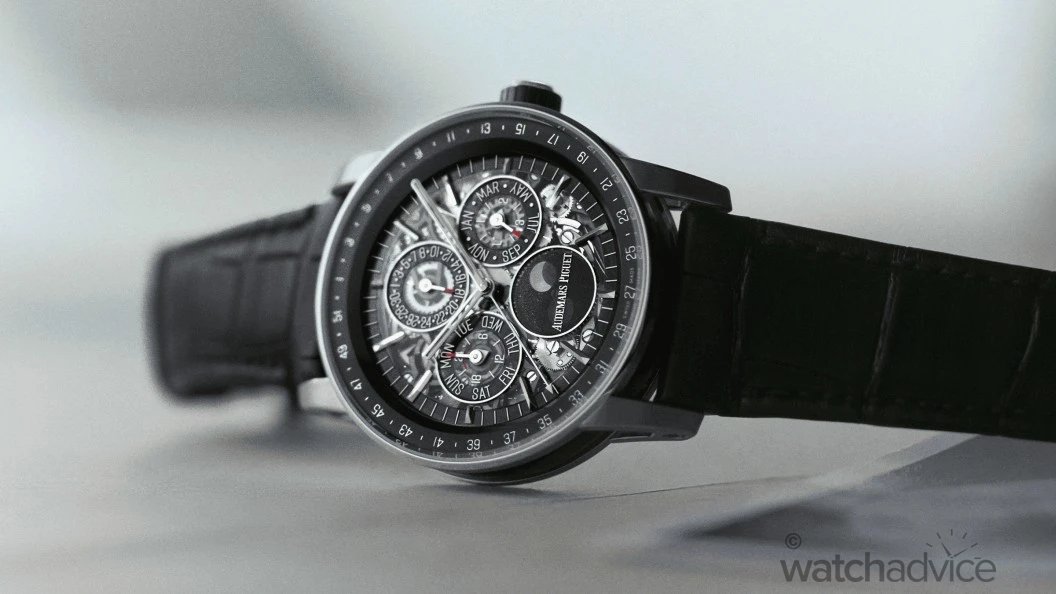
The Code 11.59 Perpetual Calendar Openworked shares the same Calibre 7139 as the Royal Oak Openworked, retaining the same overall dial architecture while introducing aesthetic changes that give it a distinct identity. Firstly, we have white gold hands and indices, which, unlike the pink gold of the Royal Oak, blend with the movement a bit more. Secondly, the sub-dials have red-tipped hands, which allow it to stand out nicely while also offering colour variation to what is otherwise a monochromatic dial.
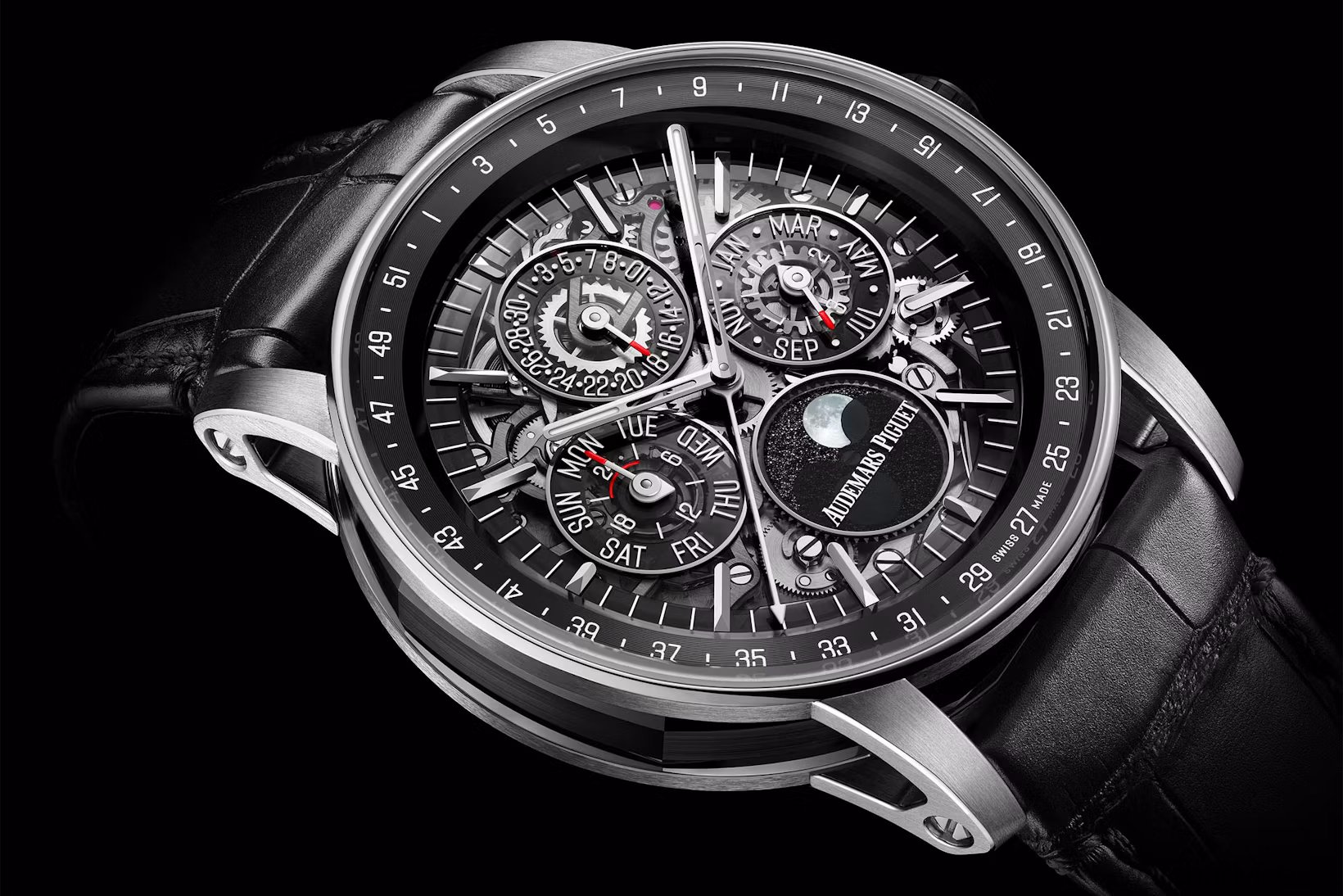

The last notable difference is the moonphase complication at 6 o’clock. Instead of opting to use a blue aventurine glass as the background, Audemars Piguet has gone with a black aventurine look to better match the black and white theme of the watch. The “clouds” aren’t transparent either, which offers a visual of a night sky with the moon sweeping elegantly across the stars.
Royal Oak Selfwinding Perpetual Calendar (Ceramic)
The third Perpetual Calendar unveiled in Audemars Piguet’s latest wave of releases is the non-skeletonised Royal Oak, presented in a striking ceramic case and bracelet. Presented in a 41mm x 9.5mm case constructed in “Bleu Nuit, Nuage 50” ceramic, this Royal Oak Selfwinding Perpetual Calendar provides impressive scratch resistance and durability while also providing a contemporary aesthetic. The case features a mixture of vertical brushed finishes and polished finishes, adding to its sleek, refined look.


As this is the non-skeletonised version, we are treated to the beautiful Grande Tapisserie pattern, which also has the “Bleu Nuit, Nuage 50” colour. The perpetual calendar indications remain unchanged from the openworked models, but what I do particularly love is the rich contrast that is obtained from the 18-carat white gold hands and indices against the “Bleu Nuit, Nuage 50” background. The moonphase complication goes back to blue aventurine glass (as expected, considering overall aesthetics), with the “clouds” being finished with circular graining for added effect.

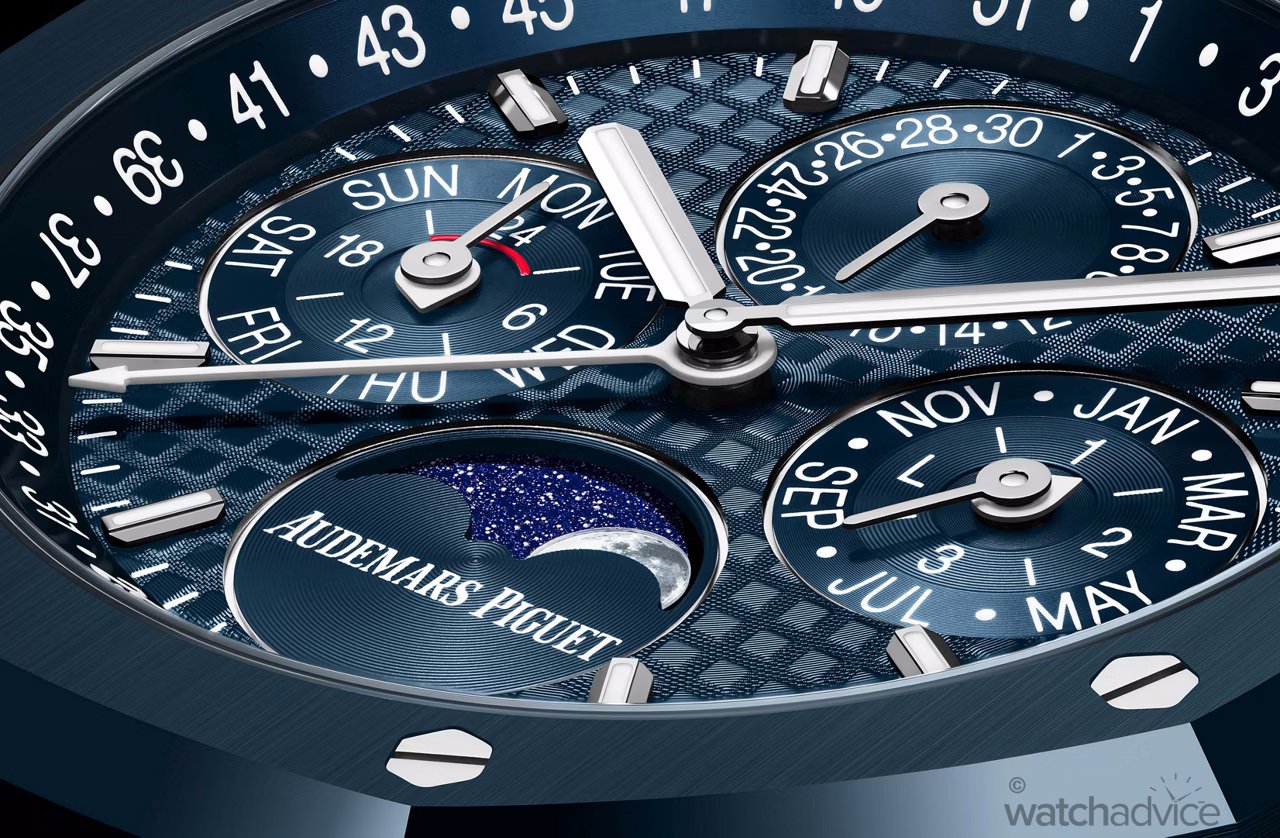
This model uses Audemars Piguet’s Calibre 7138 movement, which houses the same arrangement and caseback design/finishing as Calibre 7139. Both automatic movements operate at a high frequency of 4Hz (28,800 VpH), while offering a power reserve of approximately 55 hours.
Final Thoughts
With the introduction of Calibre 7138 last year, and now Calibre 7139 this year, Audemars Piguet hasn’t just updated its perpetual calendar complication; they have fundamentally redesigned how it operates to make it as user-friendly as possible. The move to a crown-only correction system is more than a mere technical improvement; it genuinely transforms the everyday usability of one of watchmaking’s most complex mechanisms.
What makes this trio of perpetual calendar timepieces so compelling is how they are all so drastically different from each other, even though carrying virtually the same movement inside. From the stunning yet complex openworked executions of the Code 11.59 and Royal Oak, to the refined and beautiful aesthetic of the full ceramic Royal Oak, Audemars Piguet shows that innovation doesn’t have to be just the movement alone. With these latest releases, Audemars Piguet shows us that they are at the forefront of haute horlogerie, proving that historic complications like the perpetual calendar can keep evolving.
Reference: Audemars Piguet Royal Oak Selfwinding (Ref. 26685XT.OO.1320XT.01)

Specifications
- Dimensions: 41mm x 9.5mm.
- Case Material: Titanium featuring bezel & caseback made from Bulk Metallic Glass (BMG).
- Dial: Openworked dial showing perpetual calendar complications. Moonphase indicator made from blue aventurine glass. 18-carat pink gold indices and hands.
- Movement: Calibre 7139
- Power Reserve: 55 hours
- Beat Rate: 4Hz (28,800 VpH)
- Water Resistance: 50m (5 bar)
- Crystal: Sapphire, with an anti-reflective coating on both sides
- Strap: Titanium integrated bracelet with BMG links is fitted with a three-blade folding clasp.
International Recommended Retail Price: CHF 180,300
Availability: Available for purchase through Audemars Piguet boutiques and authorised retailers. For more information, please head online to Audemarspiguet.com
Reference: Audemars Piguet Code 11.59 Perpetual Calendar Openworked (Ref. 26443NB.OO.D002CR.01)
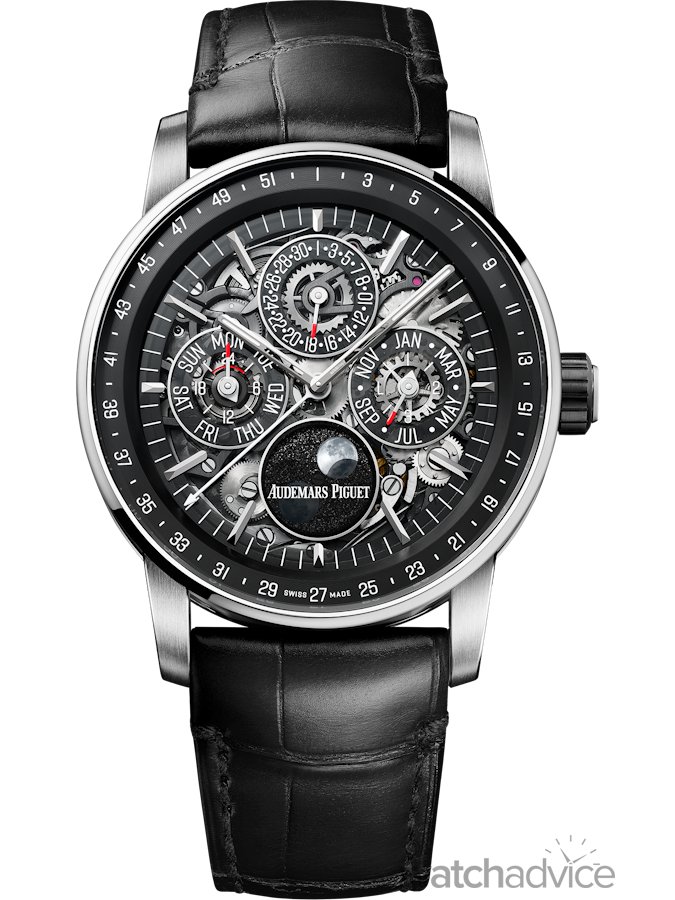
Specifications
- Dimensions: 41mm x 10.6mm.
- Case Material: White gold with black ceramic case middle section.
- Dial: Openworked dial showing perpetual calendar complications. Moonphase indicator made from black aventurine glass. 18-carat white gold indices and hands.
- Movement: Calibre 7139
- Power Reserve: 55 hours
- Beat Rate: 4Hz (28,800 VpH)
- Water Resistance: 30m (3 bar)
- Crystal: Sapphire, with an anti-reflective coating on both sides
- Strap: Large square scale black alligator leather strap.
International Recommended Retail Price: CHF 118,000
Availability: Available for purchase through Audemars Piguet boutiques and authorised retailers. For more information, please head online to Audemarspiguet.com
Reference: Audemars Piguet Royal Oak Selfwinding Perpetual Calendar (Ref. 26674CD.OO.1225CD.01)
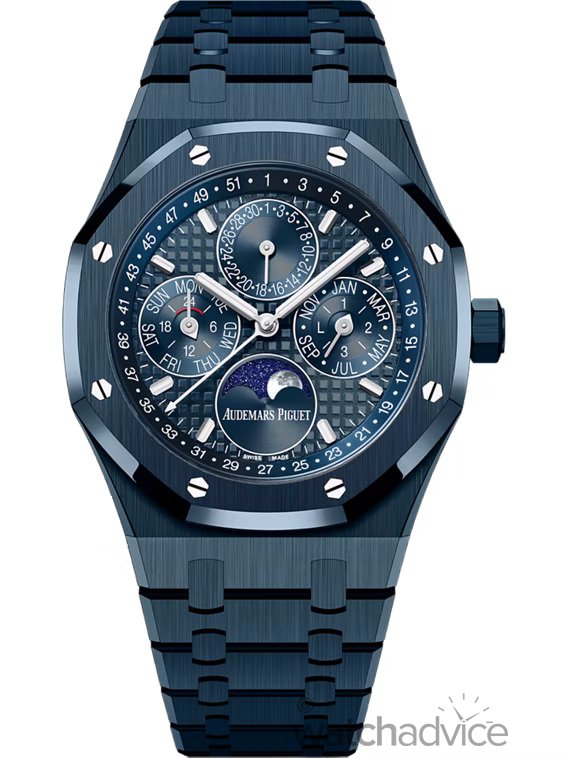
Specifications
- Dimensions: 41mm x 9.5mm.
- Case Material: “Bleu Nuit, Nuage 50” ceramic case with brushed and polished surfaces.
- Dial: “Bleu Nuit, Nuage 50” dial with Grande Tapisserie pattern. 18-carat white gold hands and indices.
- Movement: Calibre 7138
- Power Reserve: 55 hours
- Beat Rate: 4Hz (28,800 VpH)
- Water Resistance: 50m (5 bar)
- Crystal: Sapphire, with an anti-reflective coating on both sides
- Strap: Integrated “Bleu Nuit, Nuage 50” ceramic bracelet is fitted with a titanium three-blade folding clasp.