

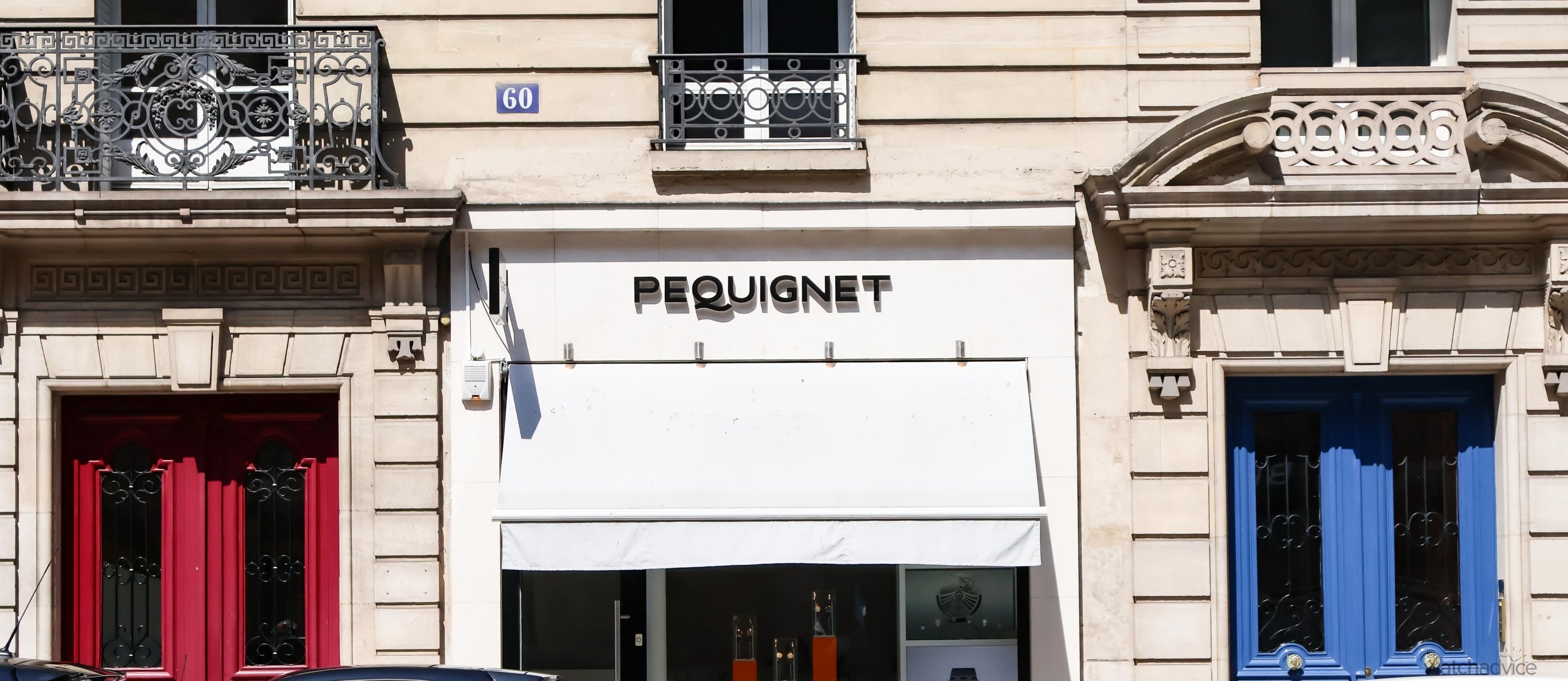
In this instalment of the Travelling Time series, we take a deep dive of the French legacy brand Pequignet with Paris boutique manager Thomas Fontaine.
When you talk about icons of French horology, you might already have a laundry list of incredible brands in mind. Cartier, Hermès, Breguet, and even Chanel would probably be part of that list. If you were a massive watch nerd like myself, you might also think of brands such as Serica, Baltic, or even the legacy of Lip.
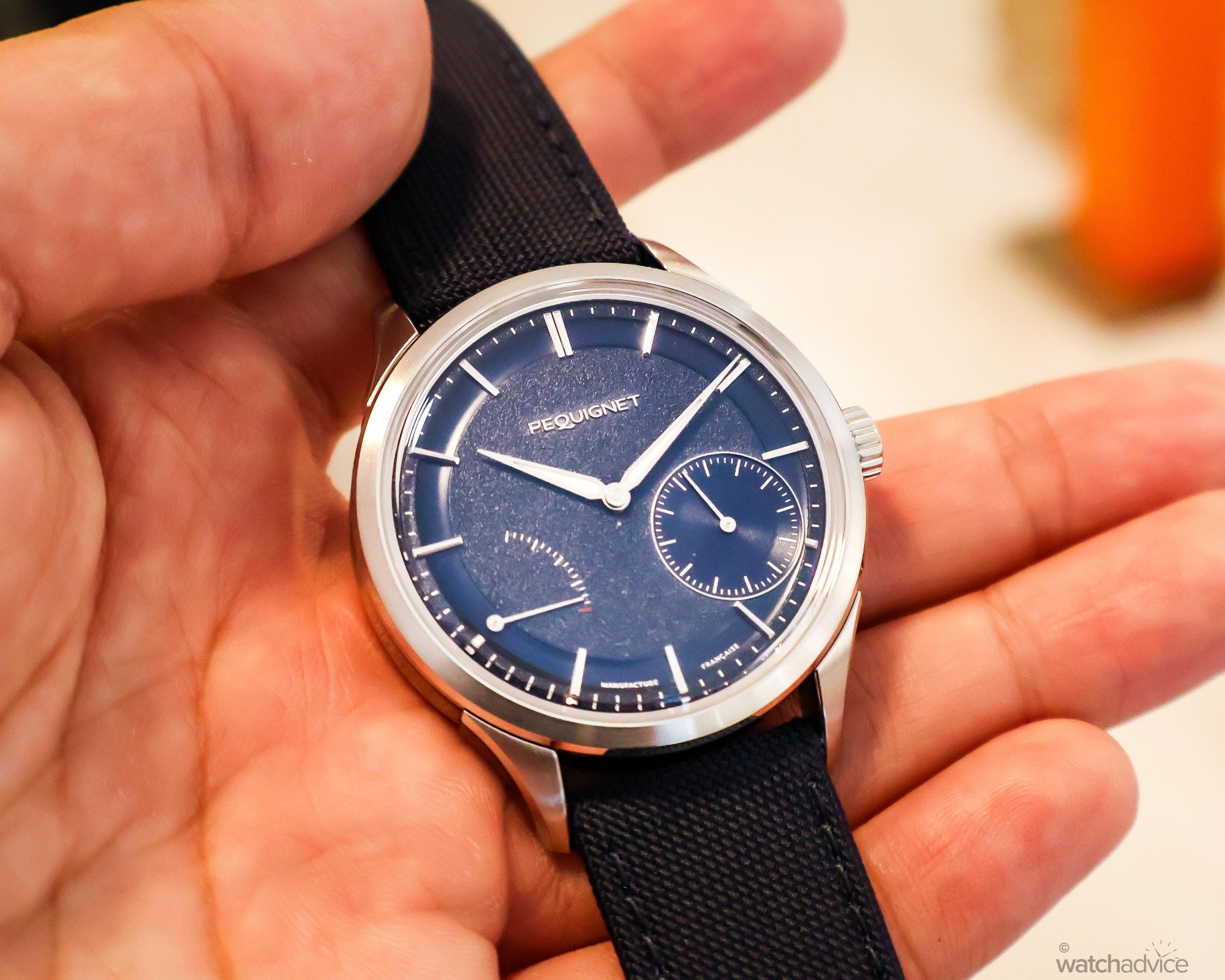
But there’s another, lesser-spoken name on that list, and it’s perhaps the most French of them all: Pequignet. A little-known (and hard to pronounce) name in the industry, the past few decades have seen the brand move from humble quartz timepieces to their own manufacture calibres.
Furthermore, Pequignet is one of the few watch brands actively campaigning to revive the glory days of French horology. They do so by designing, assembling, and manufacturing as locally as possible.
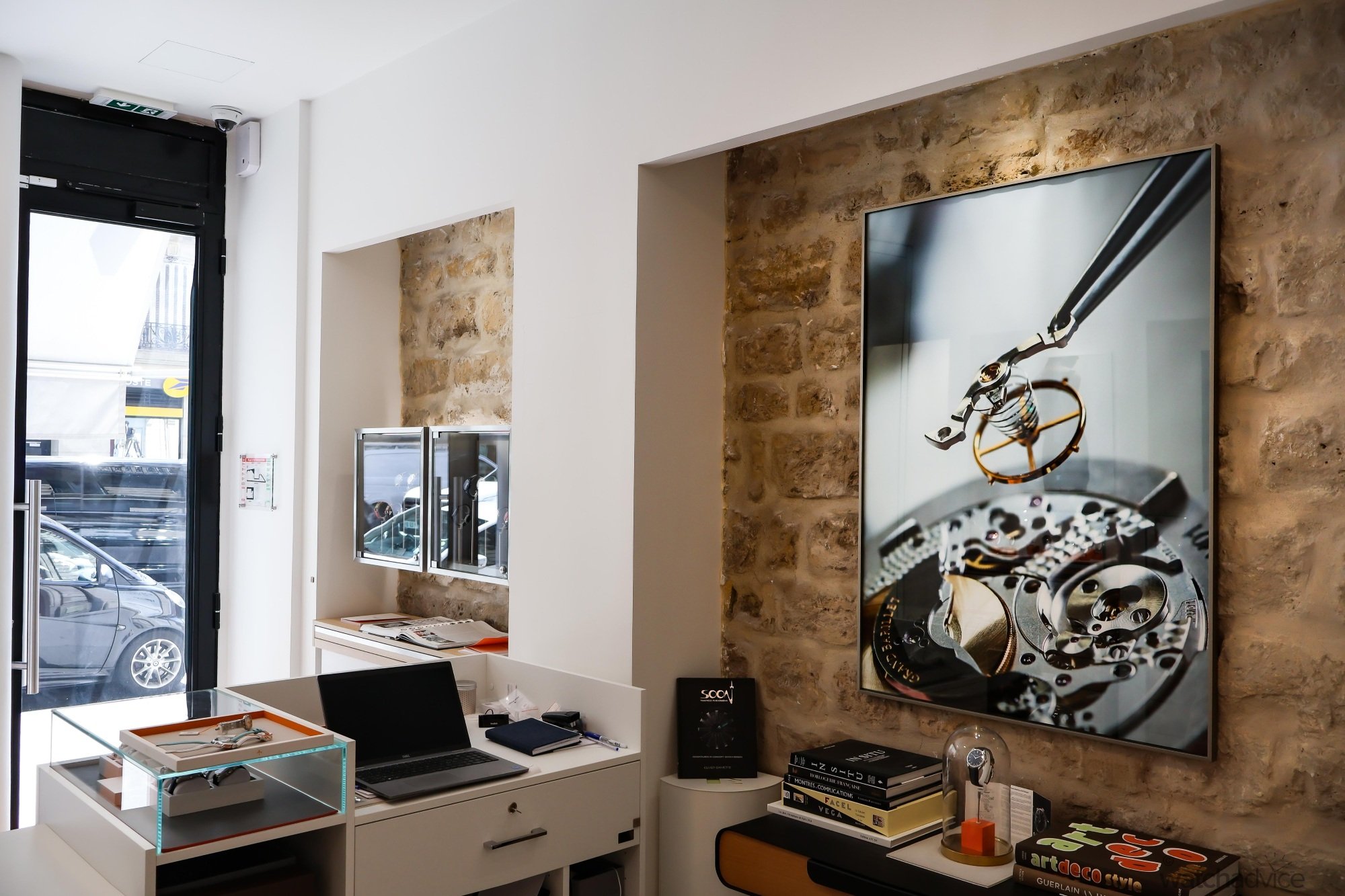
It’s an ambitious goal, and one that hasn’t been without its successes and challenges. Intrigued, I headed to the Pequignet boutique in Paris to meet with manager Thomas Fontaine and discover everything there is to know about this mysterious landmark of French watchmaking.
Who Do You Think You Are?
I understand if you’ve probably never heard of Pequignet before. Larger than most microbrands, yet too small to become a major commercial player, Pequignet lacks the reach of its neighbouring contemporaries. However that’s why the industry seems to be underestimating it right now.

The culture is starting to shift. People are growing tired of the same brands and their endless attempts to appear relatable, and the tides of change are once again lapping at horology’s shores. The watch industry doesn’t need to be relatable to be genuine. Instead, it is aspirational: this type of person wears this type of watch, and so on.
But how can a watch be genuine when it isn’t entirely pure in its origin, making, or identity? This is the line that Pequignet is drawing within the French sector. Its campaign to bridge the gap between a ‘French watch brand’ and true ‘French watchmaking’ is nothing short of admirable. In fact, it is what led me to their boutique in Paris.
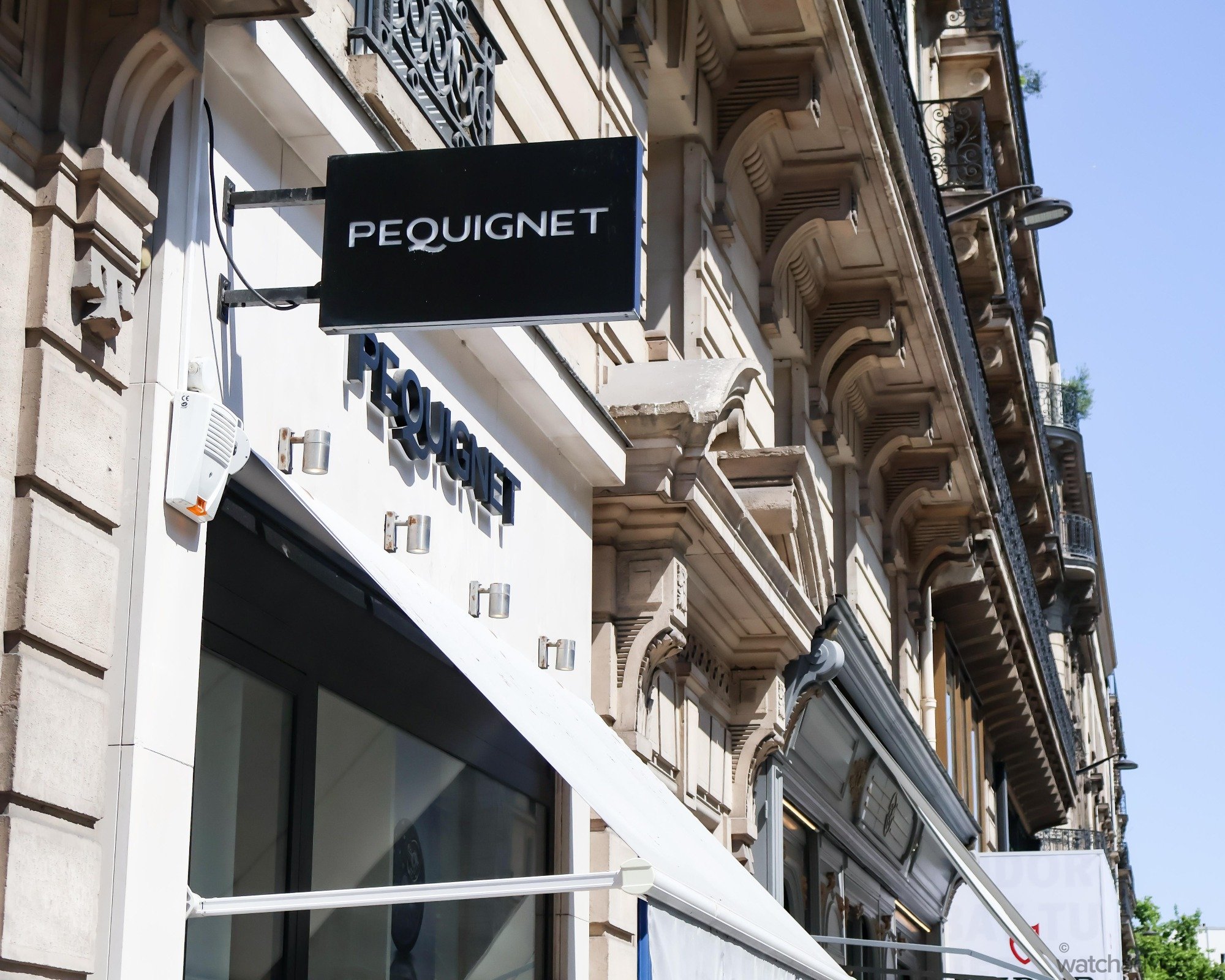
Though I had been in contact with Digital Marketing Director Ségolène Déchaux, unfortunate scheduling clashes at the Morteau manufacture prevented us from meeting. Thankfully, I was still able to enjoy an invigorating conversation with Thomas Fontaine, the highly knowledgeable manager of the Pequignet Paris boutique.
One For All
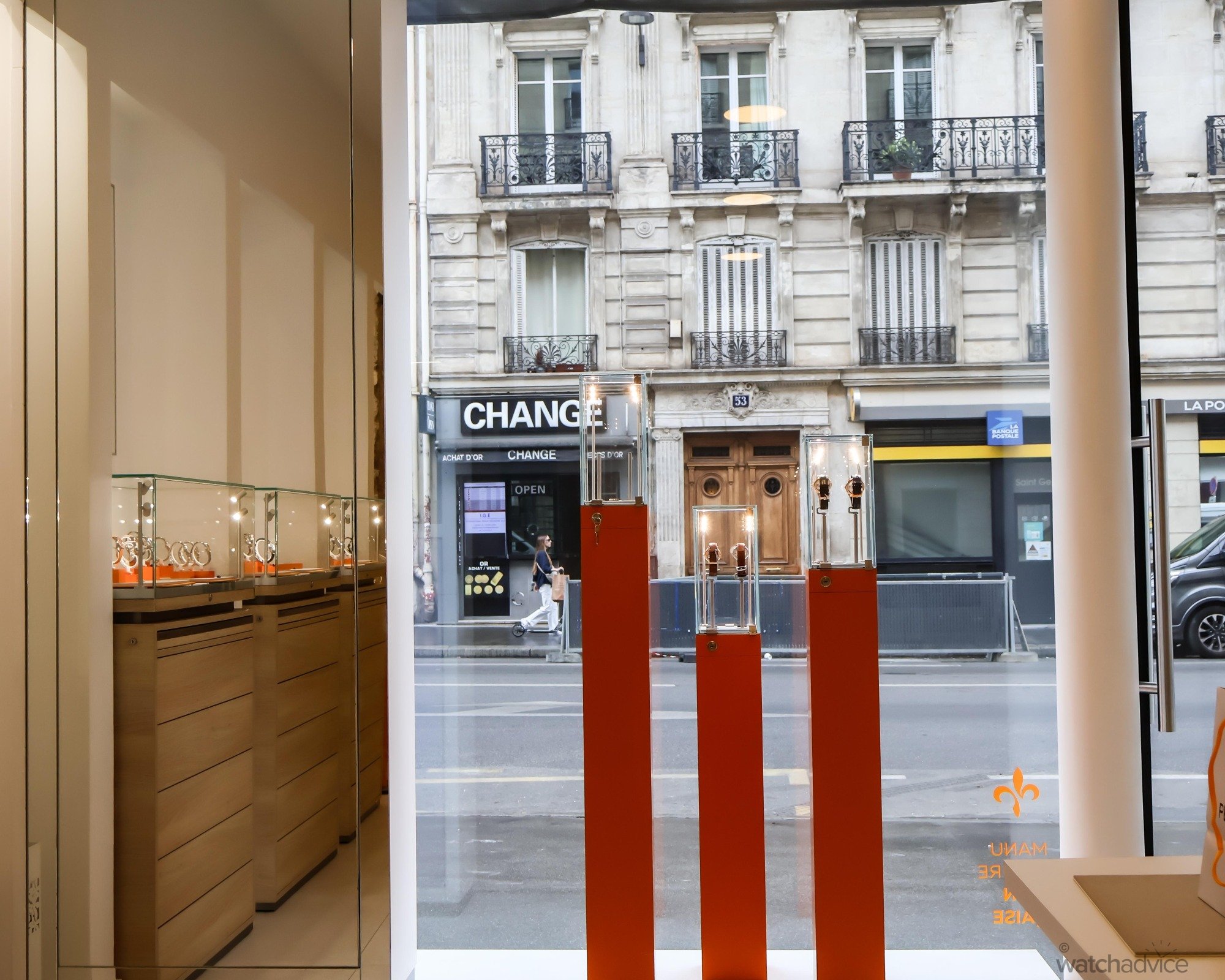
“We were born in the age of the quartz movement, in 1973, the same year many major French brands were collapsing. Manufacturing movements seemed like madness at the time.”
Thomas Fontaine on Pequignet’s origins
Founded by the eponymous Emile Péquignet in Morteau, the 1970s were a rather unfortunate, if not disastrous, time to be a mechanical watchmaker. As a result, the brand initially focused on quartz watches. Inspired by Emile’s love of equestrianism, this period gave rise to more aesthetically driven collections such as the Moorea and Equus.
Emile remained involved with the brand until the early 2000s, when he eventually retired and handed the reins to Didier Leibundgut. Under Didier’s leadership, a new vision began to take shape.
“The idea of becoming a full watch manufacture was introduced by the man who inherited Pequignet. [Didier Leibundgut] couldn’t stand the idea that high horology didn’t exist in France, and he wanted Pequignet to become the face, and the rebirth, of French watch manufacturing.”
Thomas Fontaine on Didier Leibundgut’s influence of Pequignet
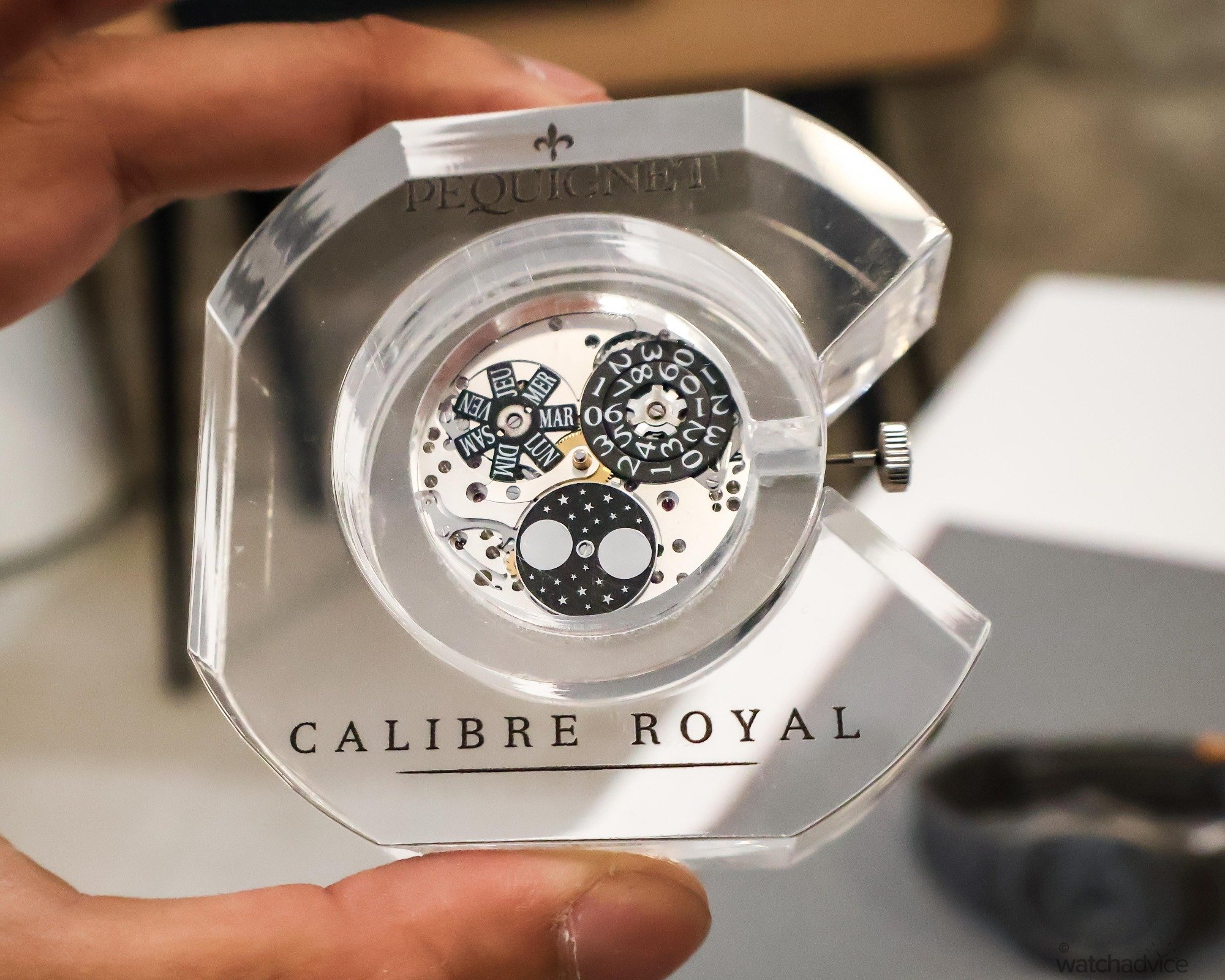
Formerly the General Manager of Zenith, Leibundgut used his passion to elevate the fledgling brand into a regional powerhouse. His admiration for Zenith’s El Primero inspired him to transform Pequignet into an in-house luxury manufacture. In 2011, the fruits of this labour were revealed with the Calibre Royal, which has since become the cornerstone of Pequignet’s renewed ethos.
This achievement earned the brand the Entreprise du Patrimoine Vivant (EPV) designation in 2014, an honour awarded to companies recognised as ambassadors of high-quality French artistic and industrial know-how.
Renewed consecutively for ten years, most recently in 2025, the EPV designation Pequignet’s reputation as a power player in both French horology and craftsmanship.
“We’re working on becoming a bit more distinctive, and introducing more French-ness into our watches.”
Thomas Fontaine on Pequignet’s French reputation
To this day, Pequignet’s Calibre Royal has played centre stage in the brand’s burgeoning roster. It was later joined by three further additions: the manual-wind version in 2018, the Calibre Initial in 2021, and the spectacular Calibre Royal Tourbillon in 2024.
Debuting at 2024’s Watches and Wonders, the Royal Tourbillon marked a major step in the brand’s development. In Geneva, Pequignet finally found its opportunity to shine on the world stage.
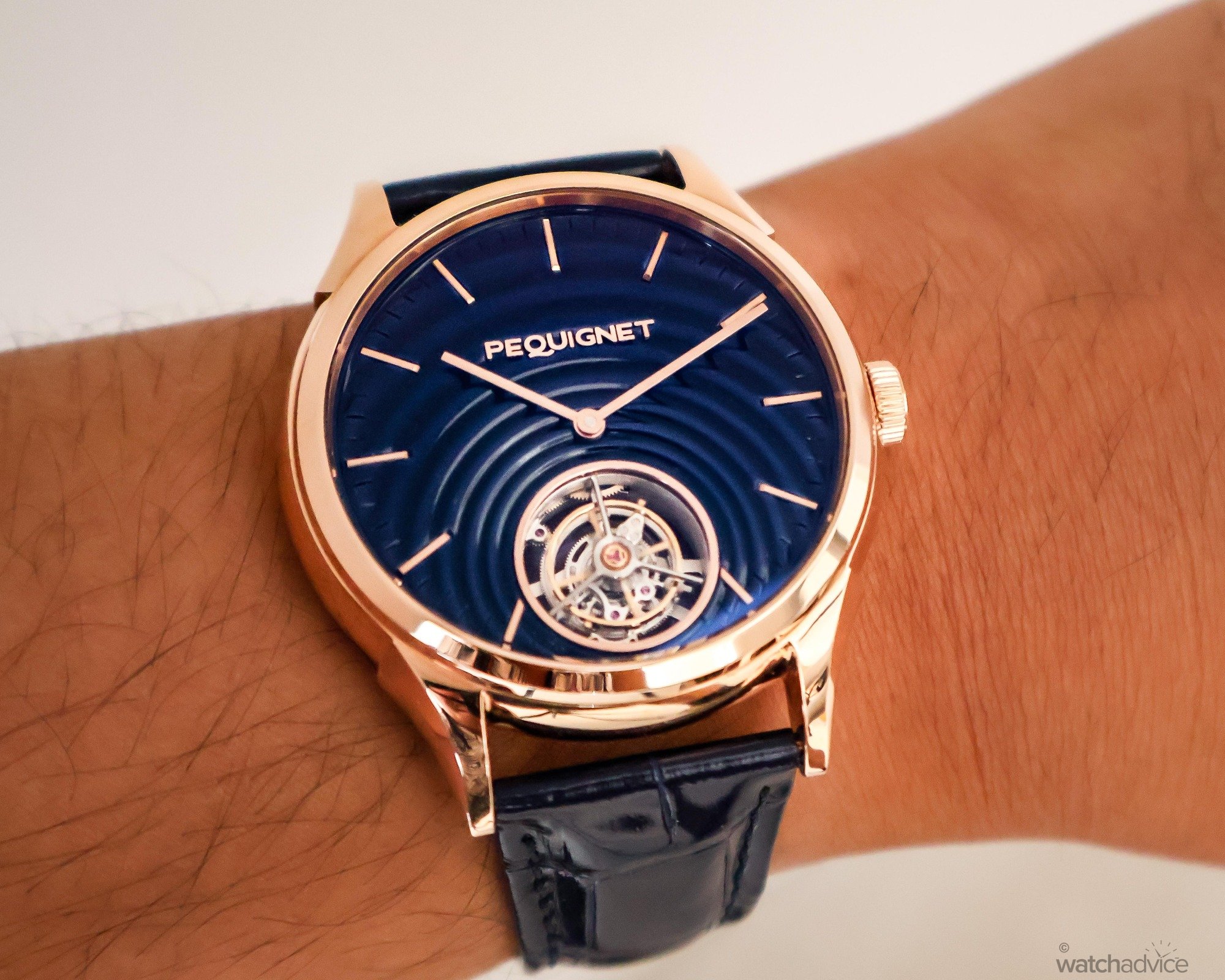
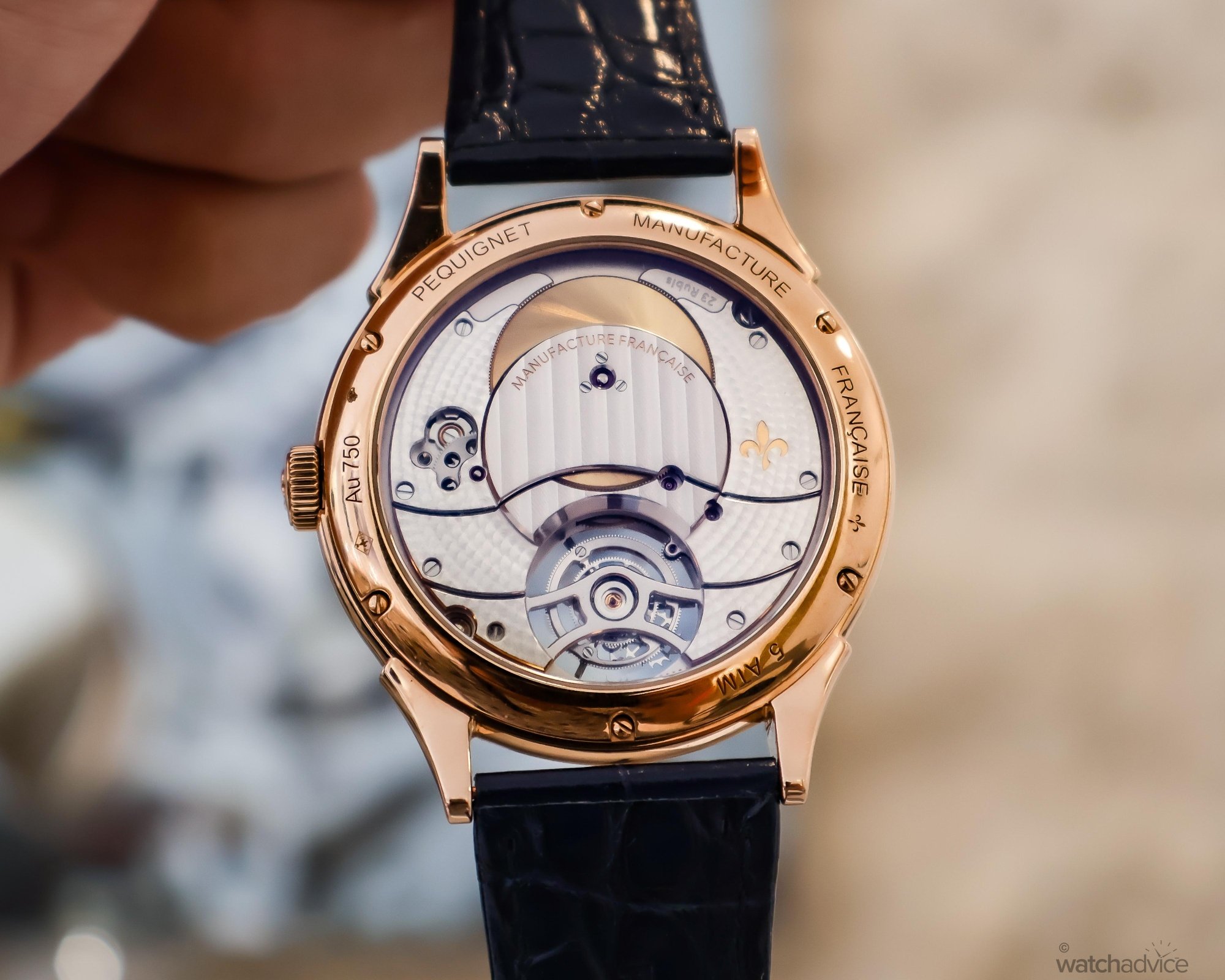
“We wanted to show the rest of the world that we know watchmaking, so we made a flying tourbillon. Two hundred years later, it has been brought back to France. After all, the inventor of the tourbillon was [Abraham Louis] Breguet – He was French!“
Thomas Fontaine on the Pequignet Calibre Royal Tourbillon
Entering its 53rd year of production, Pequignet’s heritage is one of creativity, ingenuity, drive, and an unmistakable French identity. It is what has brought the brand to the summit of French horology. Yet, Pequignet’s ambitions extend far beyond their own triumphs.
Being regarded as the only fully French manufacture in watchmaking has its perks, though far less so when that distinction is celebrated in isolation. Thomas makes it clear that Pequignet does not want to be the exception, but the standard bearer of French horology.
Even in Paris alone, there are numerous local French watch brands, and the scene has been expanding rapidly for years. In that context, Pequignet hopes to continue innovating, all while they witness the growth of France’s watch scene following their example.
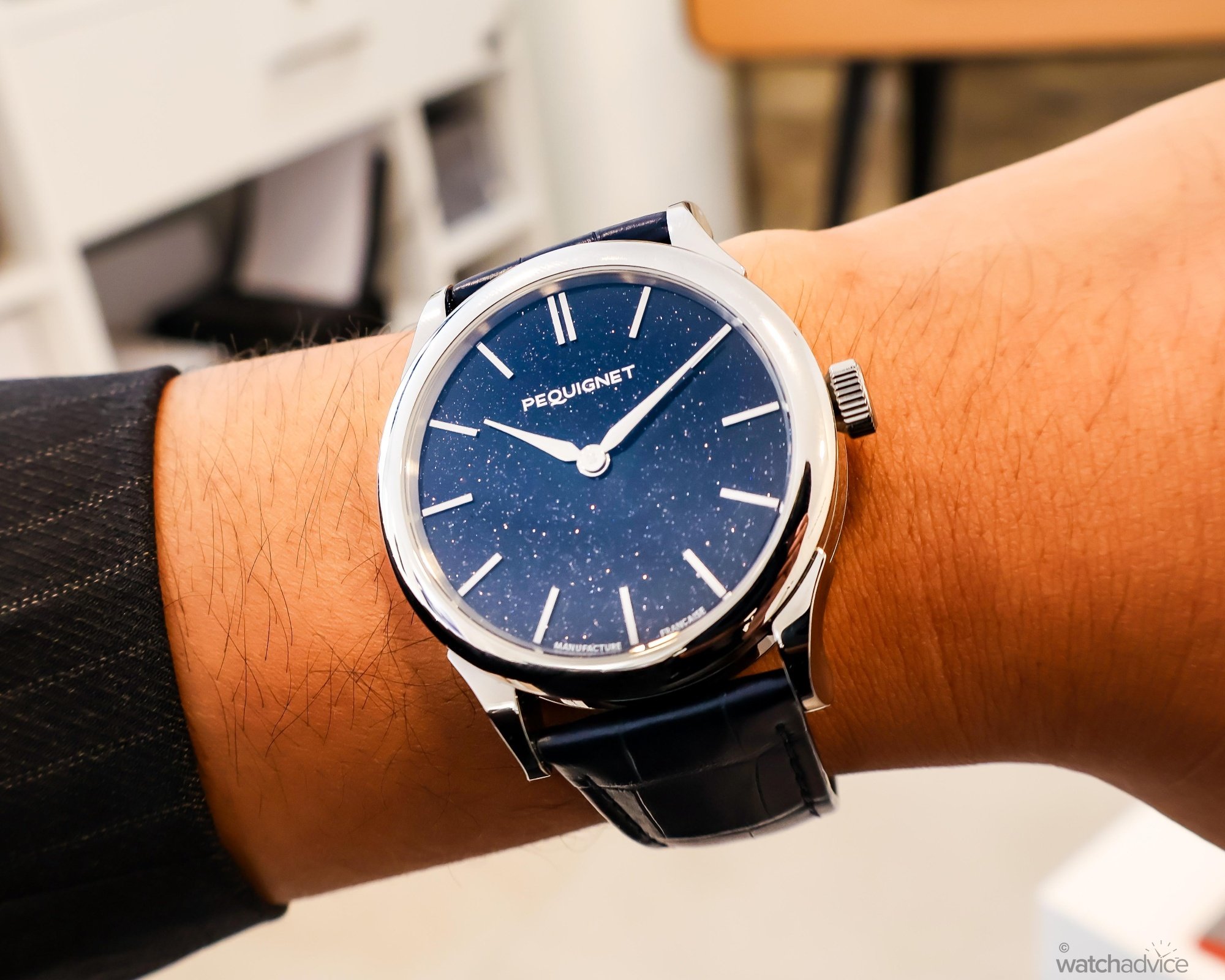
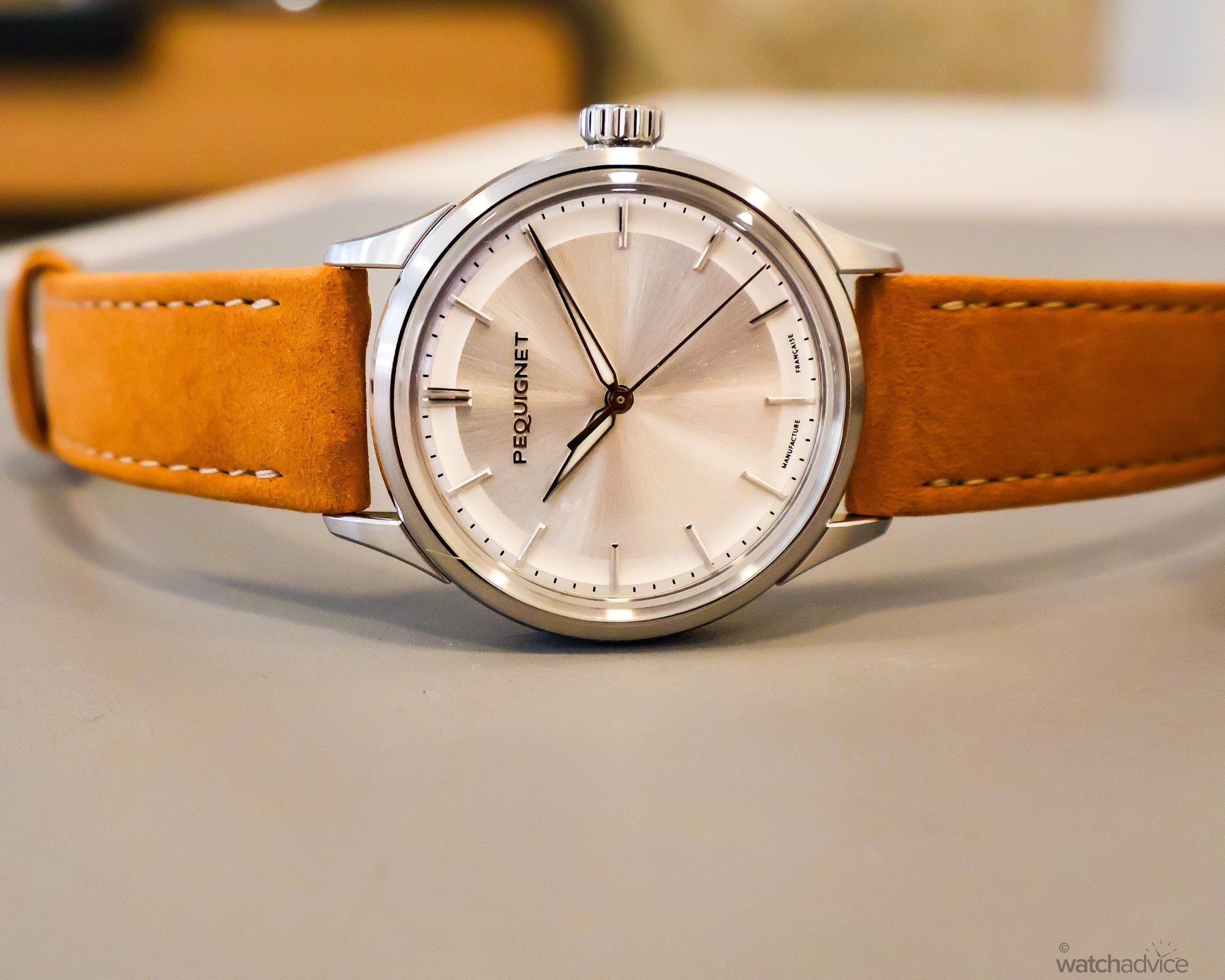
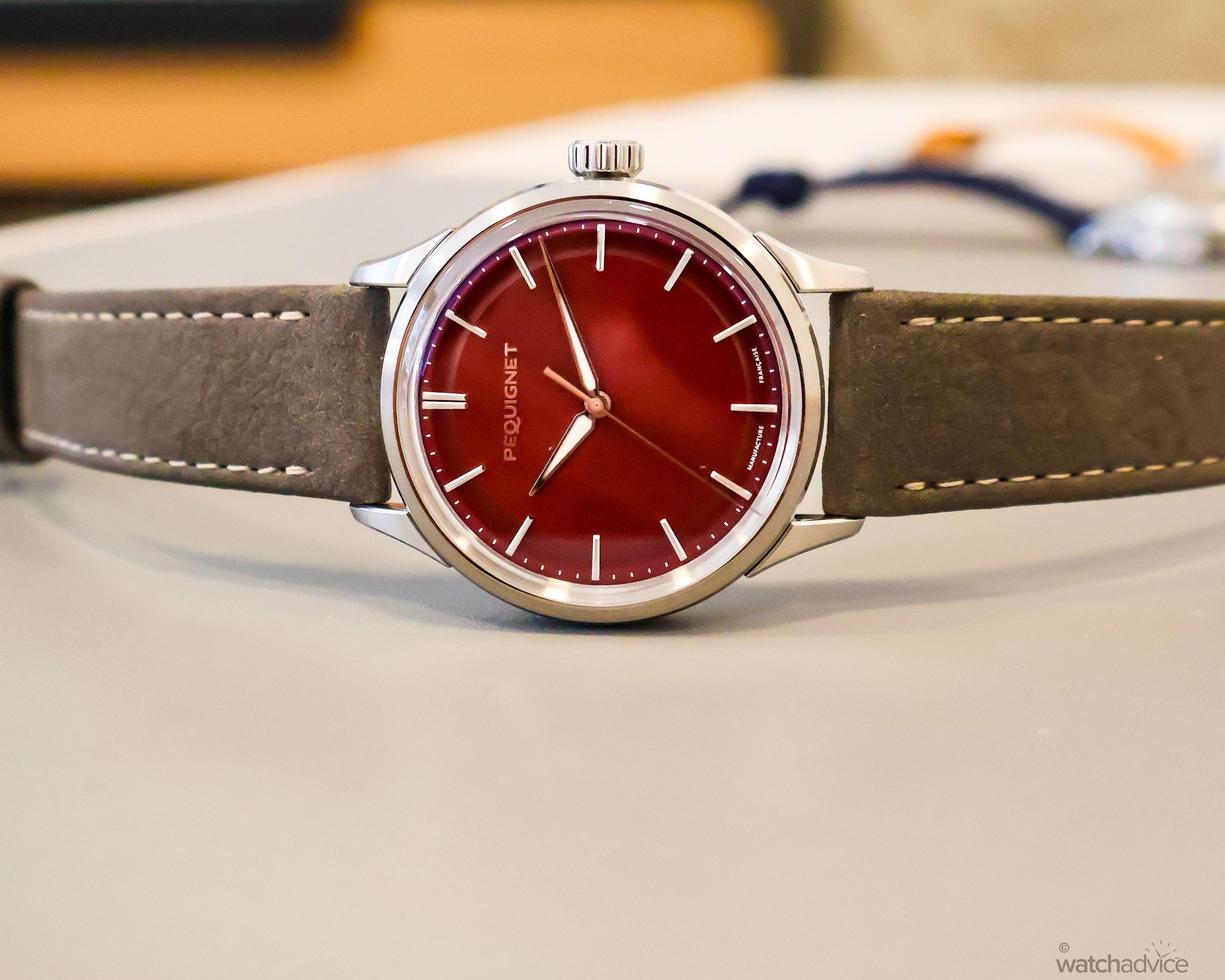
“We’re currently the face of French watchmaking, but we’re not happy to be the only one. We’re glad we made it, but we’d like other French brands to succeed too… It would benefit the global image of watchmaking, as well as the industrial environment here in France.”
Thomas Fontaine on uplifting French watchmaking
Fabriqué en France
A line is being drawn in the French sector between a ‘French watch brand’ and true ‘French watchmaking’. While many legacy names subscribe to the former, Pequignet is one of the few to embrace the latter.
That is not to say brands like Cartier, Hermès, and Breguet are lesser for producing their watches in Switzerland. Rather, it highlights that Pequignet is operating in a different arena altogether, confidently reasserting French identity in horology instead of trying to match or outdo the Swiss.
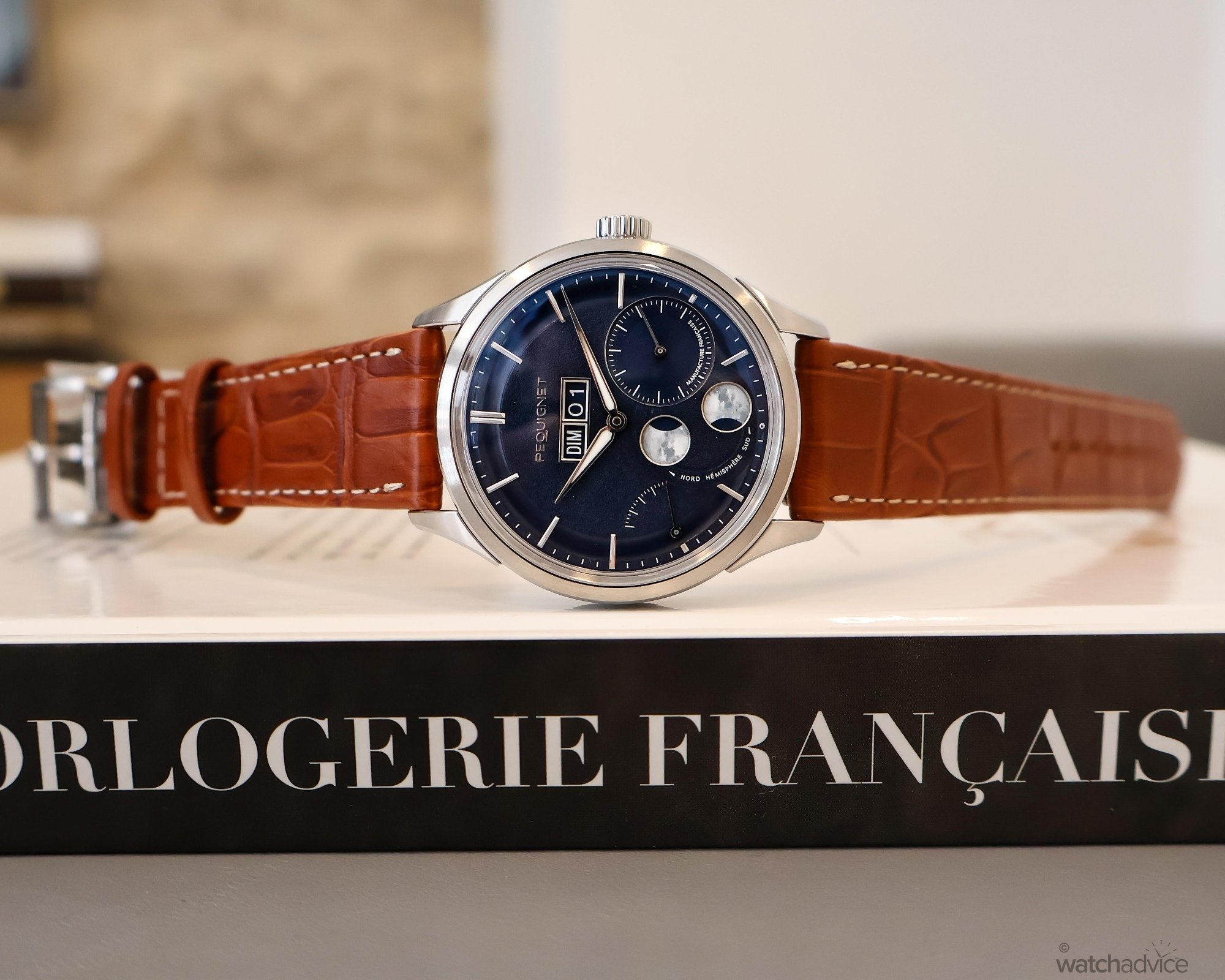
“We place a strong emphasis on the French history of watchmaking. Great watches don’t only come from Switzerland, Germany, or Japan. It’s as if France has been forgotten. So we say to the world: France knows how to make watches.”
Thomas Fontaine on Pequignet’s position as a French watchmaker
It does so by keeping its horology as French as possible. This is mostly reflected in its four in-house movements, with 72% of components sourced locally. The remaining 28% is easy to obtain; Pequignet’s Morteau headquarters sits close to the Swiss border, just 30 minutes from La Chaux-de-Fonds.
However, Pequignet’s dedication to French horology is clearly about more than numbers. It is the guiding philosophy behind the watches and movements they create.
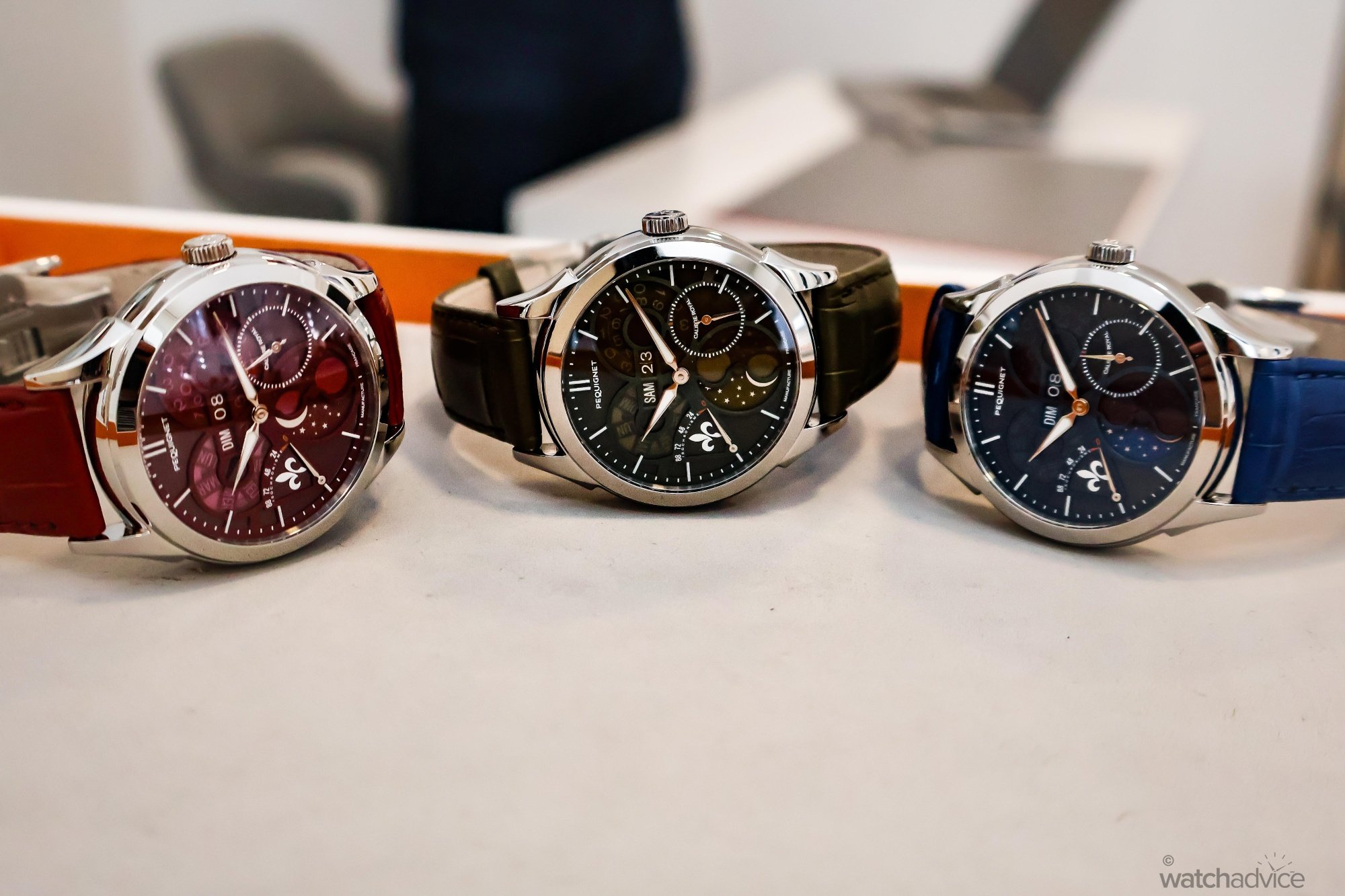
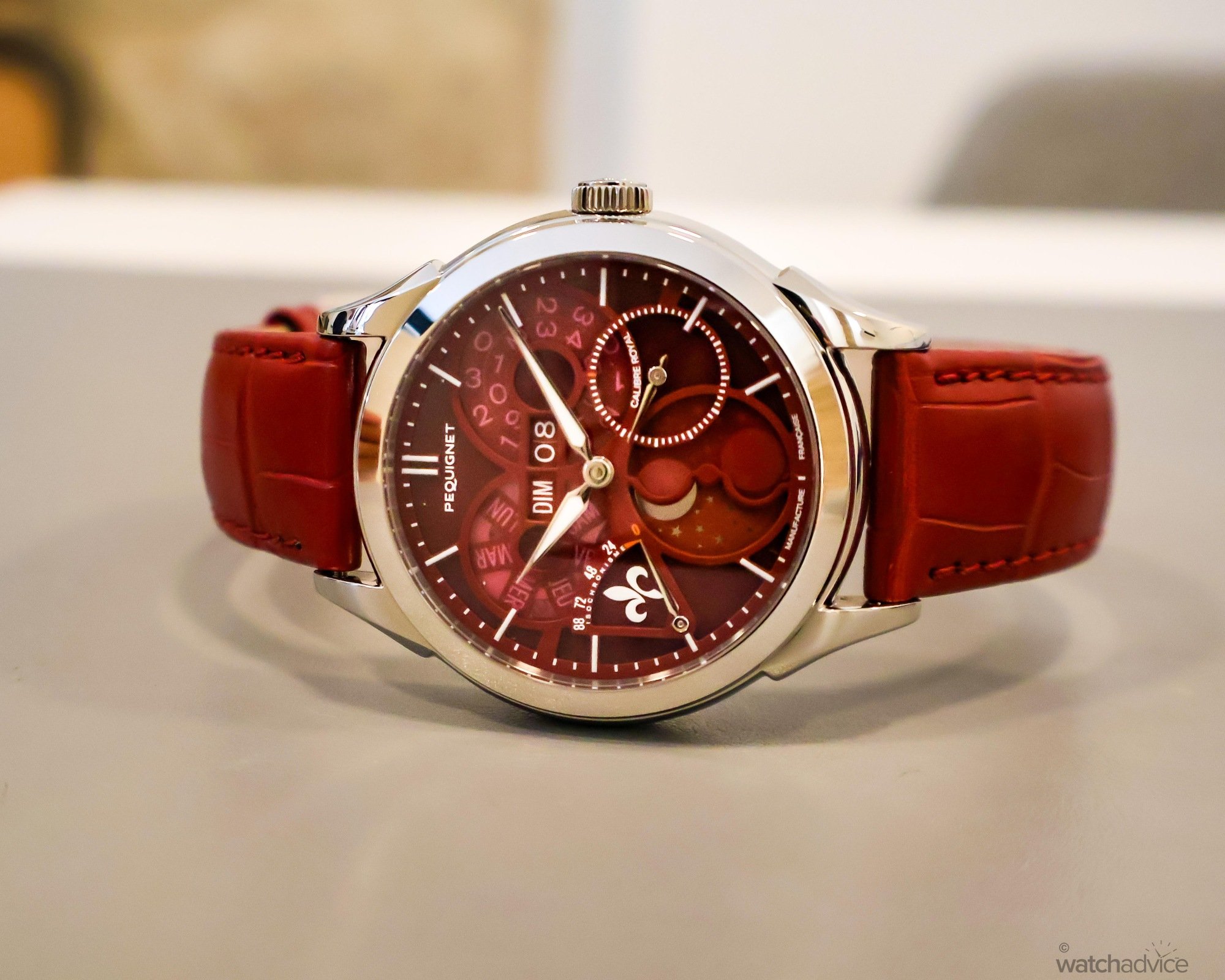
The Royale line exemplifies this. Every aspect of the collection’s design has been carefully considered to showcase the full capabilities of the Cal. Royal. In this, the components work in perfect harmony, like Eddie Brock and Venom, or Max Verstappen and his Red Bull Racing F1 car.
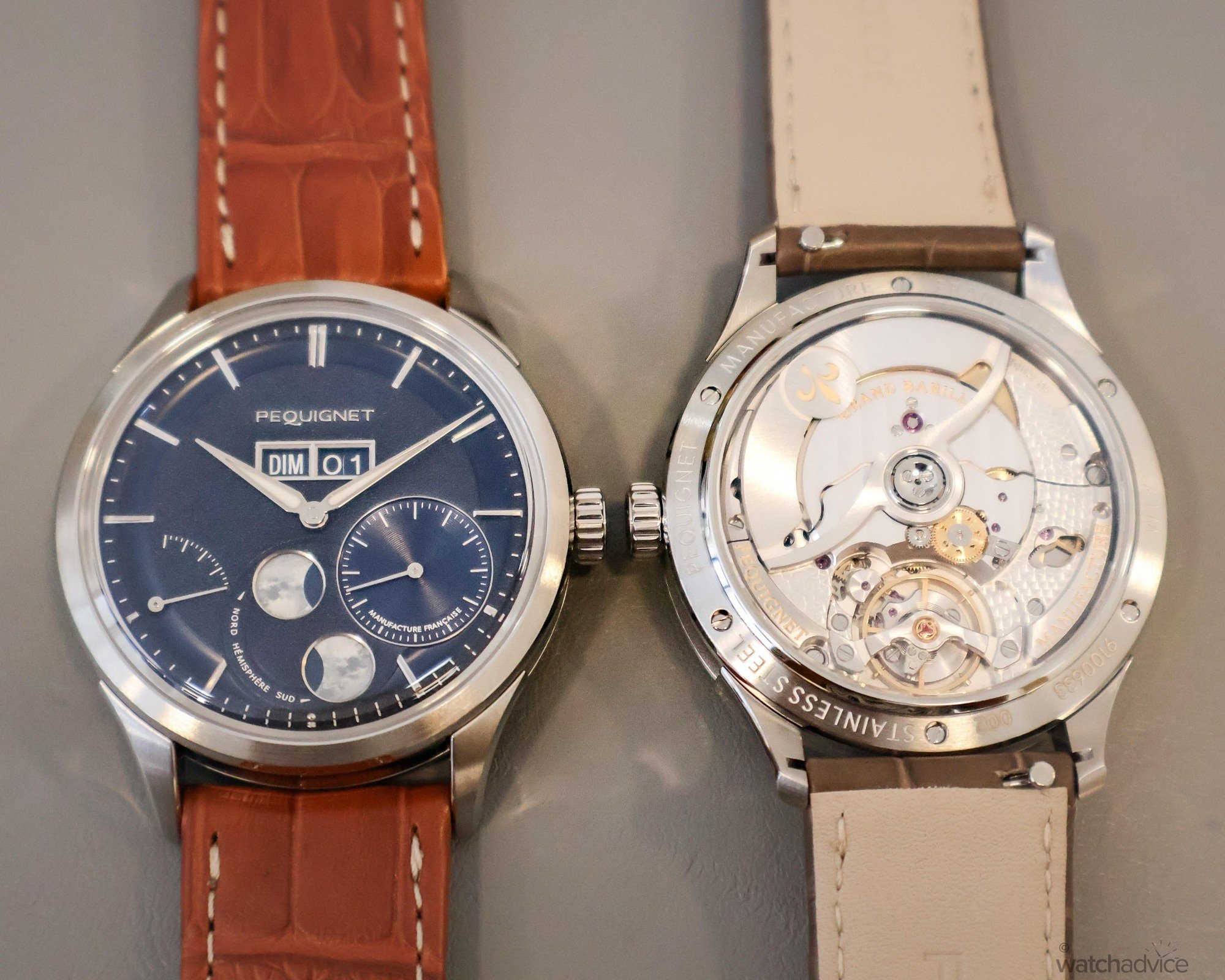
“When we created the movement, the idea was to give it access to as many complications as possible. There are no added modules; everything is done on the same plate.”
Thomas Fontaine on the Calibre Royal
The Royale line has seen various iterations over the years. Pequignet has encased the watch in titanium, gold, and even sapphire dials; complications range from GMTs to moonphases; and sizes now span from 44mm to a demure 39.5mm. To that effect, Pequignet has given the Royale line plenty of time in the limelight, positioning it as the nation’s premier timepiece.
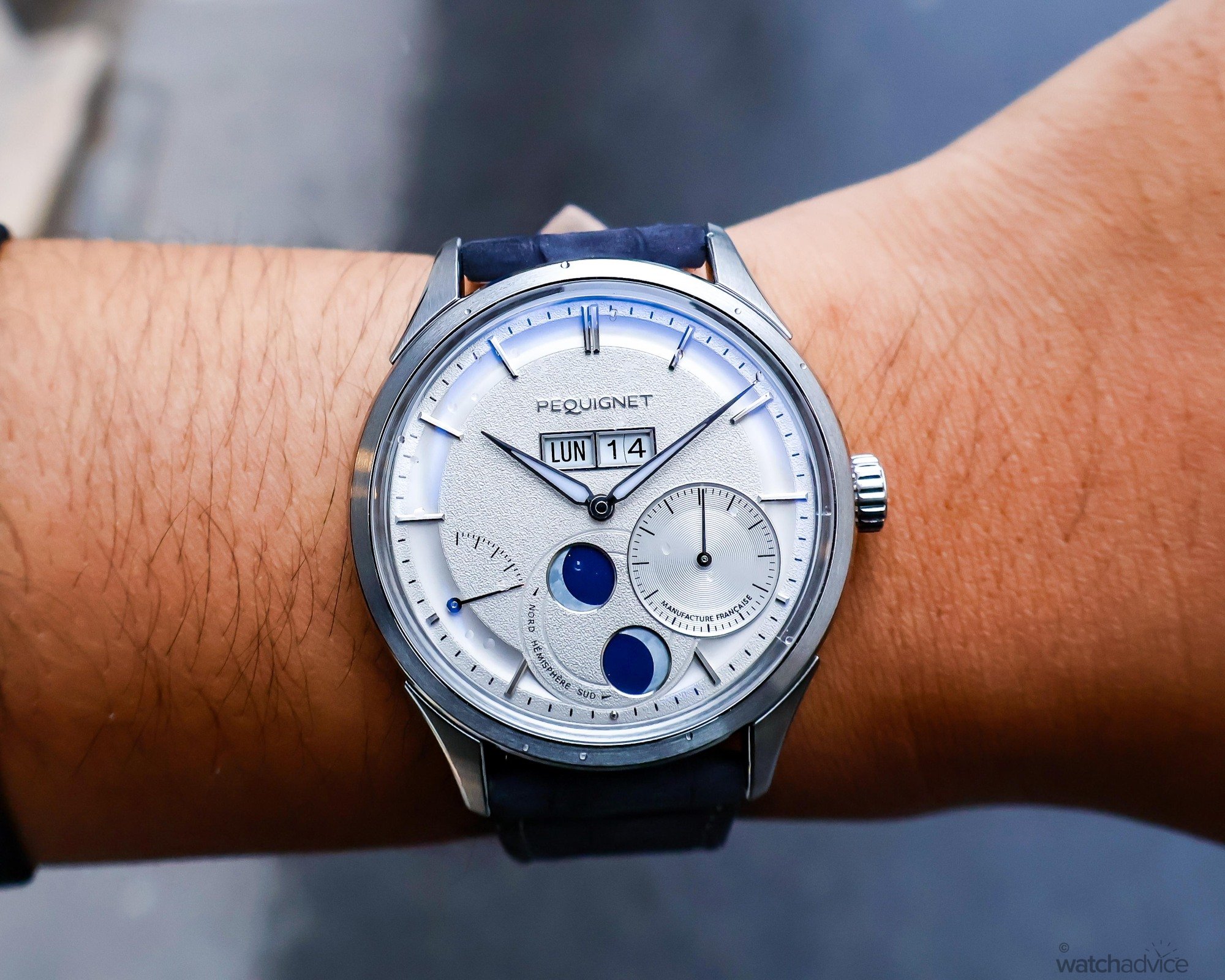
Positioning alone doesn’t define Pequignet’s ‘French-ness,’ as Thomas says. While 2011 was a landmark year for the Cal. Royal, it also marked the first time the brand carried an official logo. And what better symbol to represent luxurious French watchmaking than the Fleur-de-Lis?
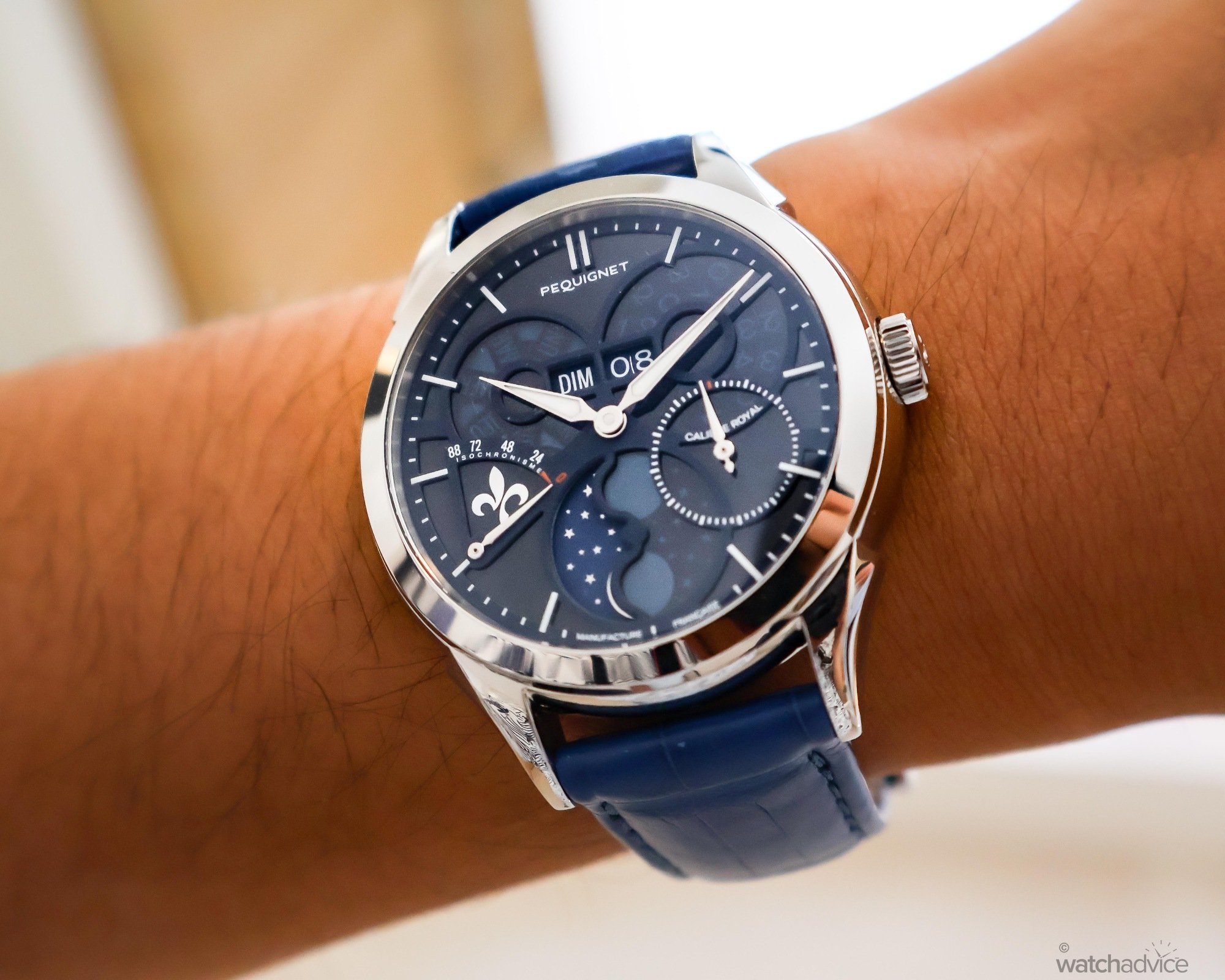
More than just the calling card of Jeanne d’Arc, the iconic lily represents France’s sovereignty, often used by French royalty to symbolise their divine right to rule. You could say, then, that every Pequignet watch carries a clear sign of French heritage.
If you’ve ever read a history book, though, you’ll know the French are notorious for their distaste of royalty. So, when Pequignet was asked to design a watch for the French Presidency, some adjustments had to be made.
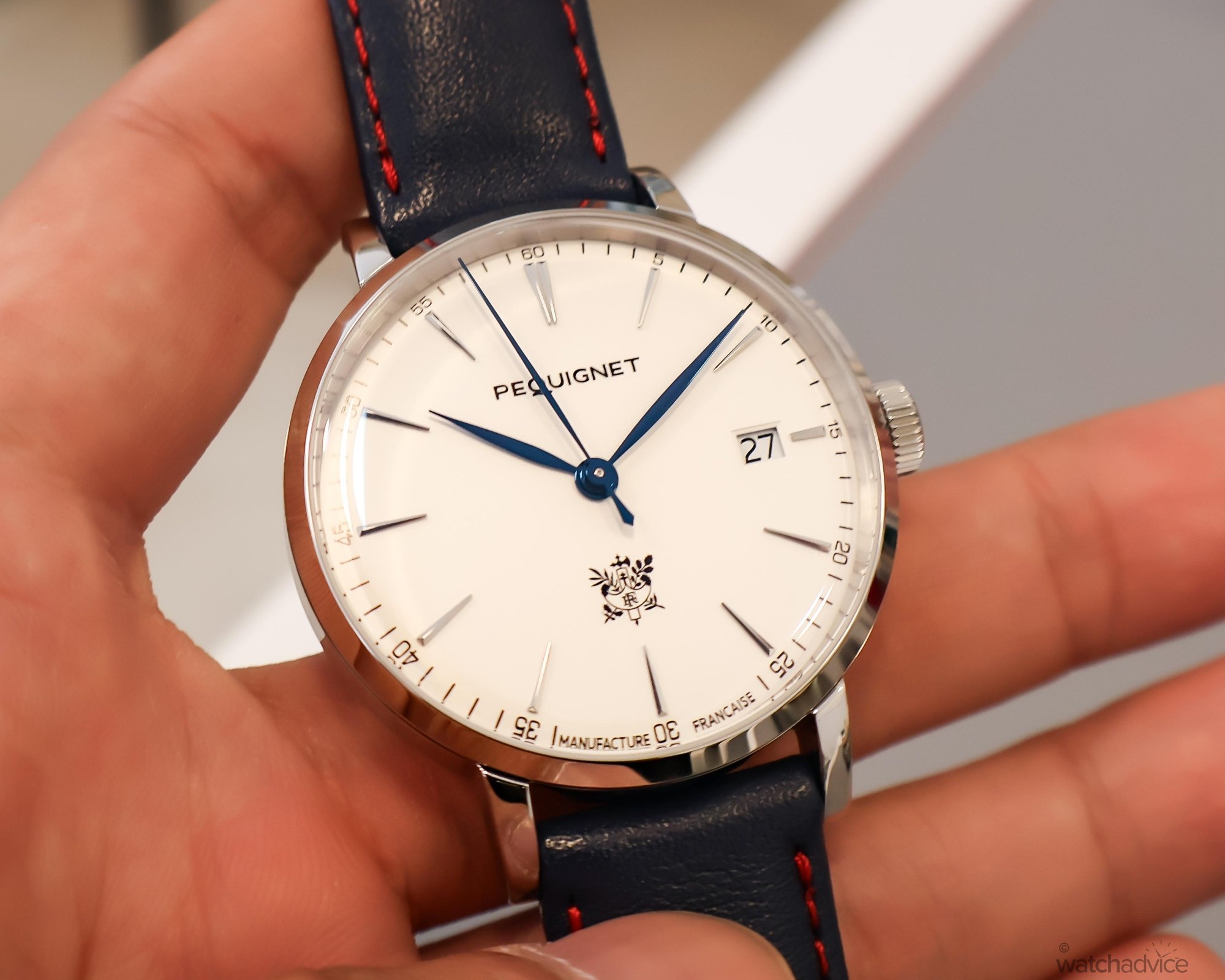
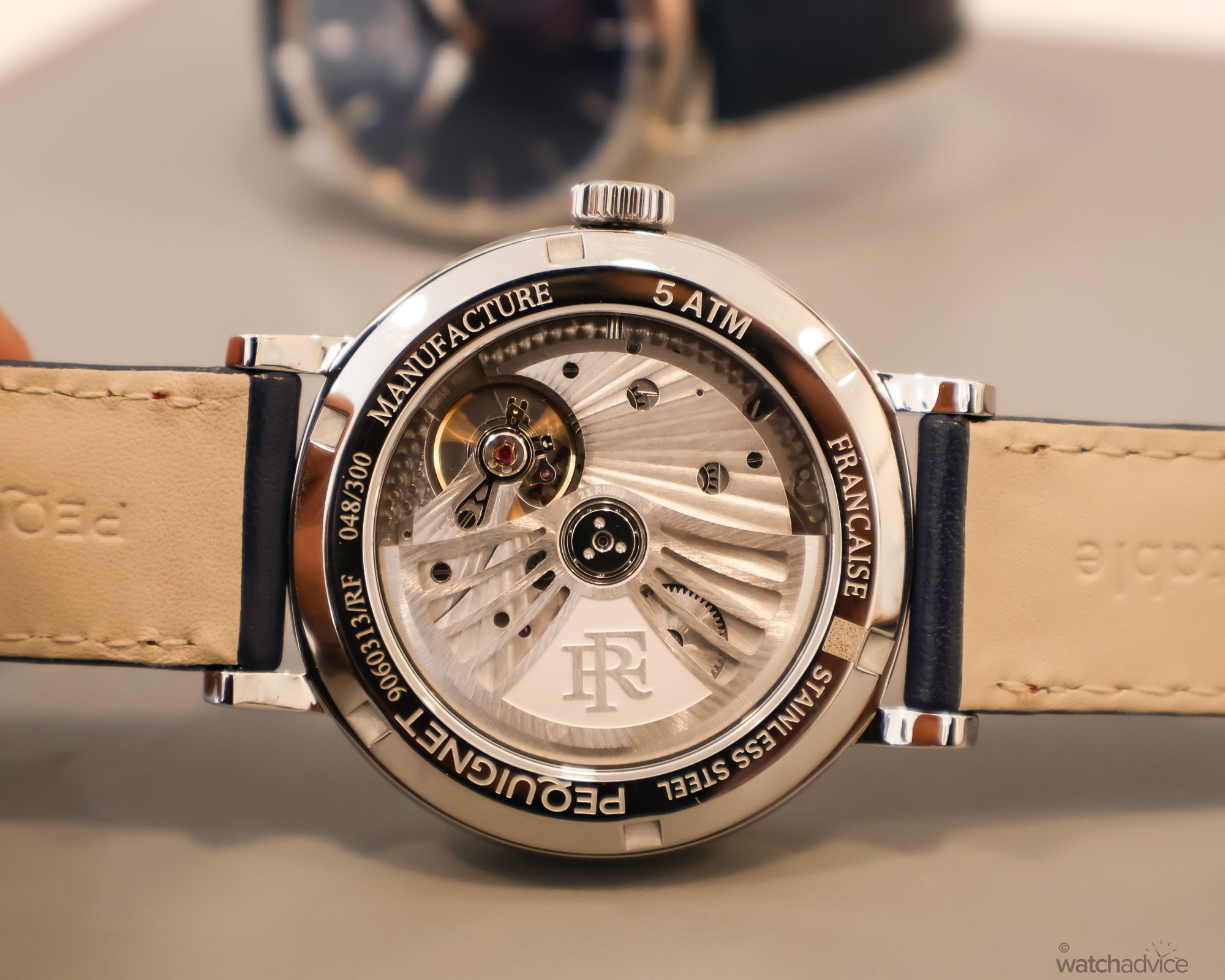
“We’ve even made a watch for the French presidency, a limited edition. You won’t see the fleur-de-lis, as it’s a symbol of the French Monarchy. [Emmanuel] Macron wears the first one; The issue is that it has to be passed on when he leaves office. He wants to keep it – perhaps buy another one for himself – but all the good limited edition numbers are already taken!”
Thomas Fontaine on a Presidential issue with the limited edition Élysée Attitude
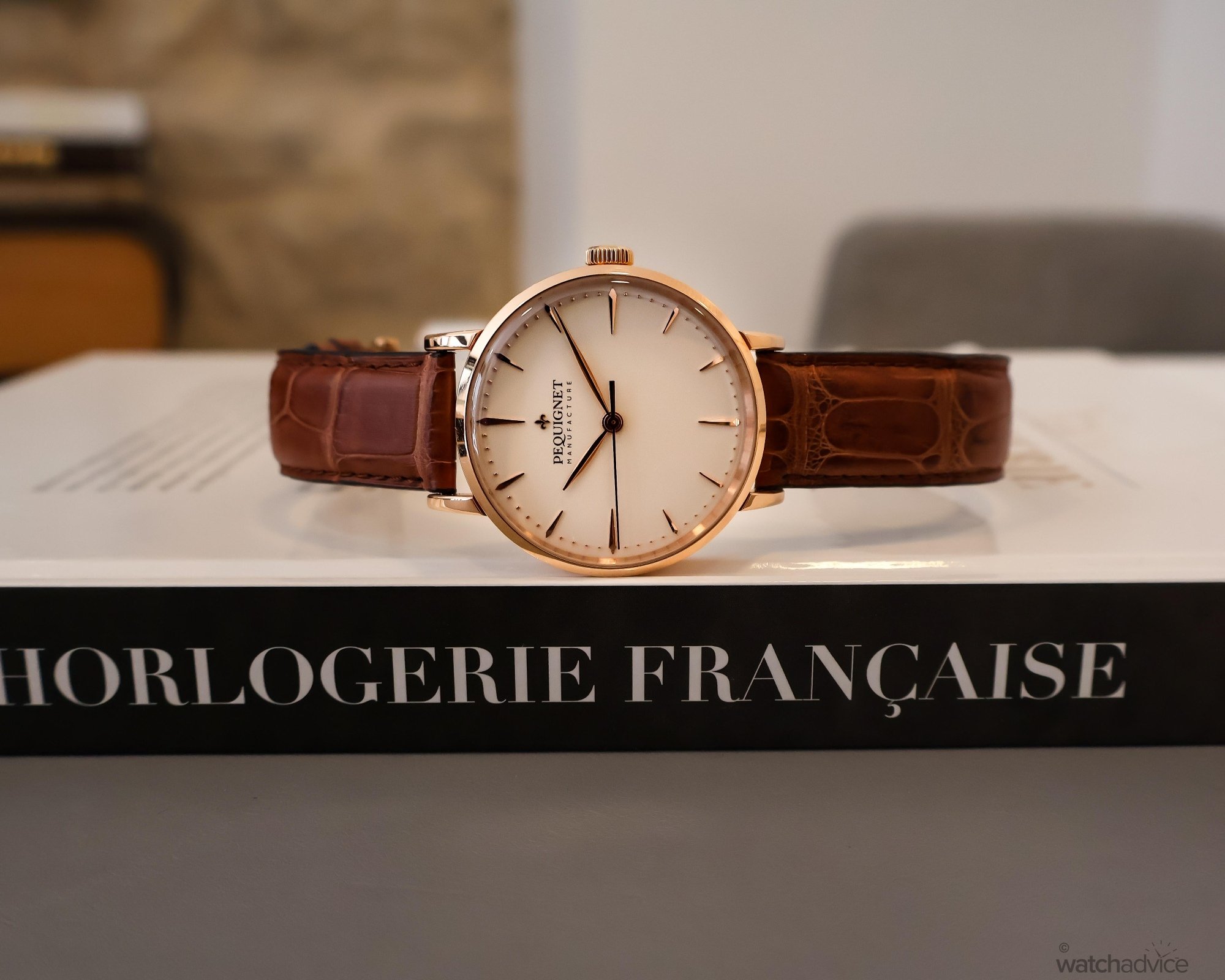
As watch trends began to shrink and slim, the Cal. Royale’s abilities did the same. The Calibre Initial was created in 2021 to bring the same in-house quality to a three-hand format. The Attitude collection became the chassis for the Cal. Initial: a minimalistic, elegant three-hander that exercised restraint rather than horological showmanship.
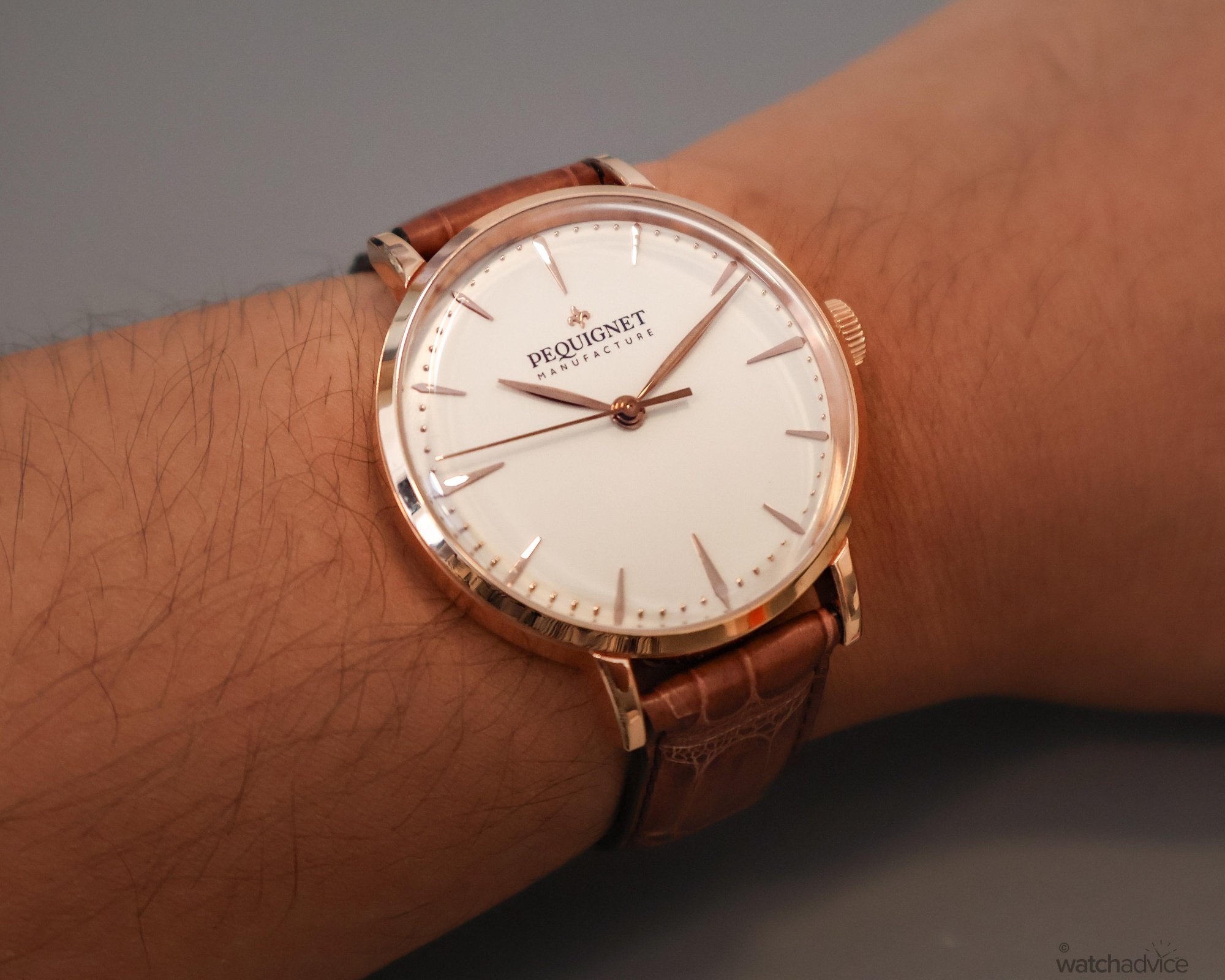
The dressy aesthetic can only take you so far, though. In today’s watch world, brands also need a timepiece capable of handling the rigours of a fast-paced, versatile life. Fortunately, the Concorde collection does both, all while maintaining distinctive French iconography.
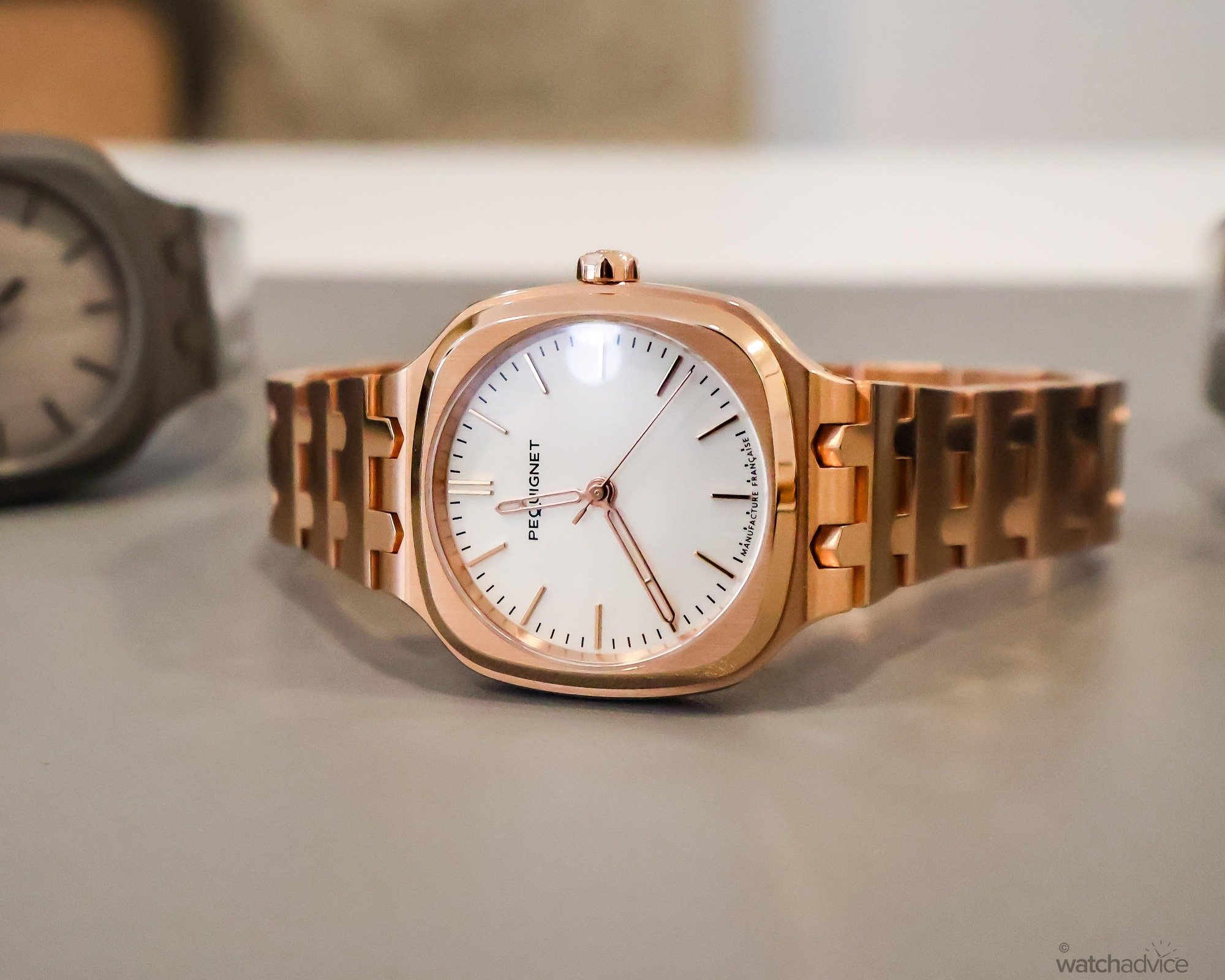
Introduced in 2023 as an integrated bracelet alternative with the Calibre Initial movement, it is the most urban-looking timepiece Pequignet offers. Contrary to my initial assumption, it doesn’t take its name from the Concorde jet.
Instead, the name comes from Place de la Concorde, which bookends the Champs-Élysées in Paris. The integrated bracelet’s design also references the plaza’s crowning feature: the Egyptian obelisk, standing atop the main guillotine site of the French Revolution.
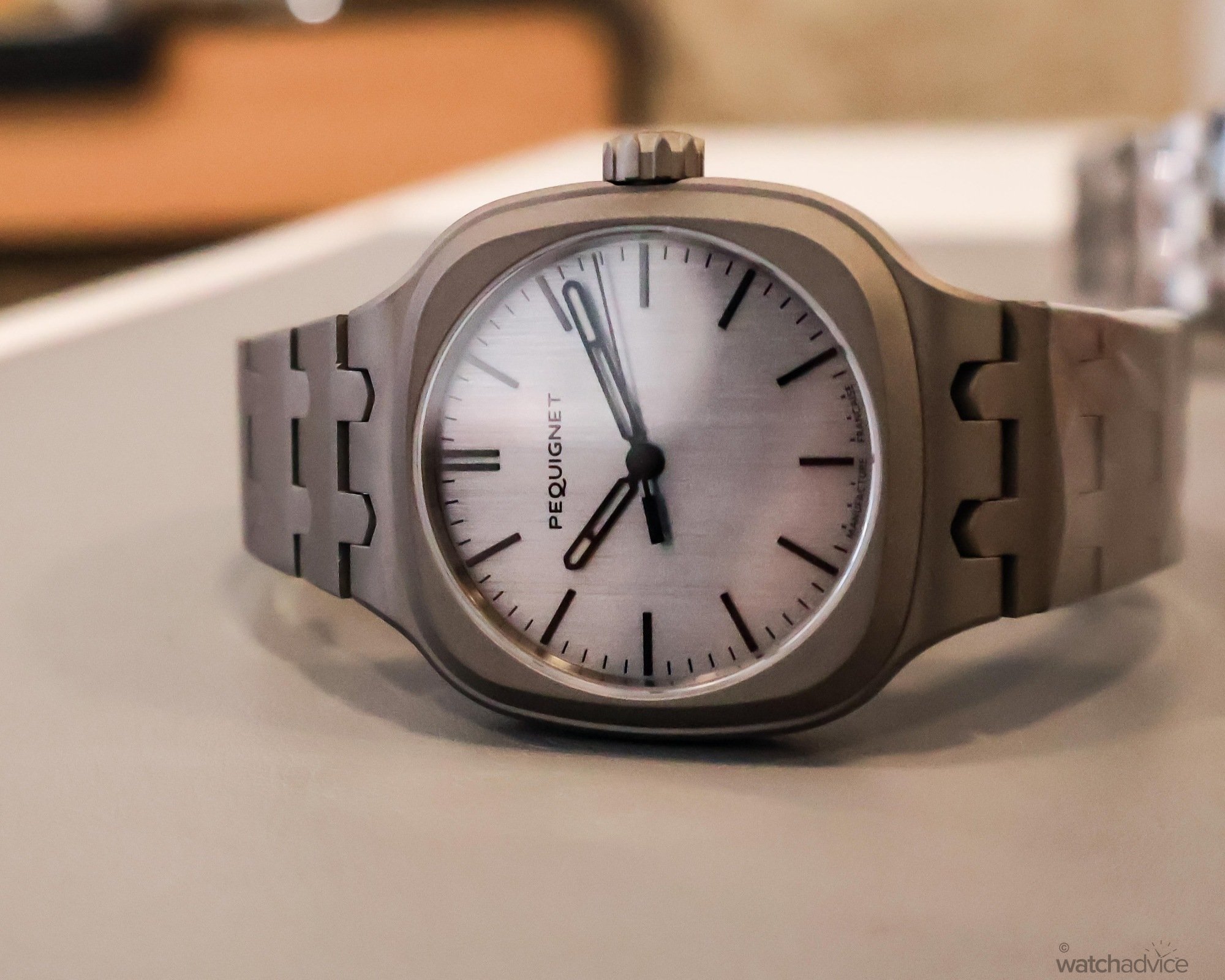
“The Concorde is a new line of watches, intended to be sport-chic. You can tell it has been created by watchmakers who truly love what they do.“
Thomas Fontaine on the Concorde line
Vive la France
Being a watch journalist has its perks and drawbacks. While my passion for the craft far exceeds what my wallet will allow, it has given me the chance to collate an ever-evolving wishlist of potential timepieces.
Like anyone else, though, my tastes and preferences have shifted over time. As the fat was trimmed from that wishlist, an interesting pattern began to emerge.
Some of the best watches I’ve ever seen aren’t remarkable because they’re made from expensive materials or packed with hyper-complex mechanics. They stand out because they’re inspired, created by artisans and engineers who put elements of themselves into their work. Each watch’s identity, as kaleidoscopic as they may be from each other feels concrete and genuine.
This is the case with Pequignet. Distinctly French in both design and mechanics, yet never archetypal. Shaped by founder Émile’s creativity and Mr Leibundgut’s ambitions, Pequignet’s vision of a 100% French horological manufacture permeates every one of its watches. They are not superfluous, but driven by a two-pronged intent: to champion French watchmaking, and to be worn.
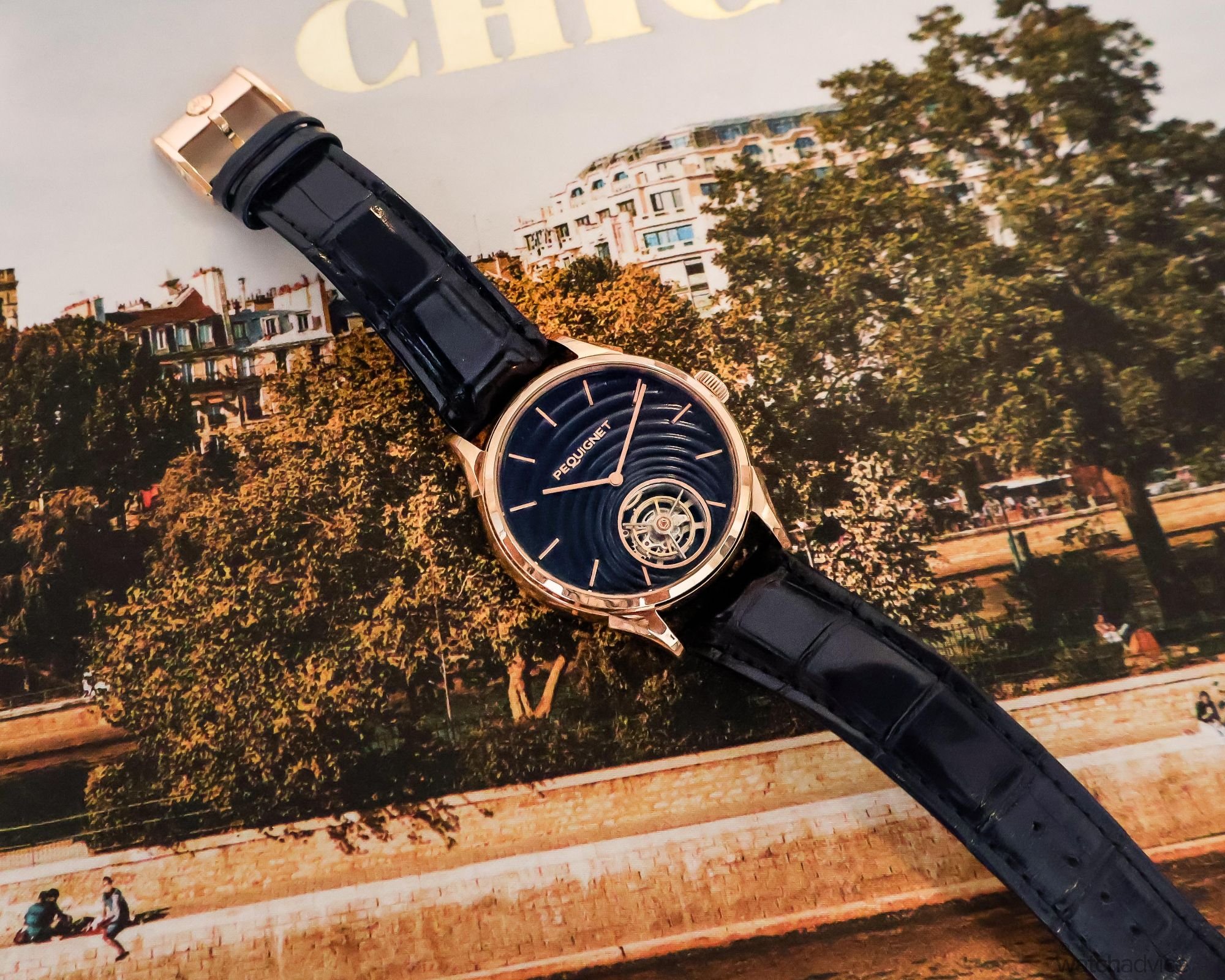
“We’ve had customers come in asking, ‘Can I see the tourbillon?’ The answer is always the same: Yes! Put it on your wrist, that’s what it’s made for! It’s a watch; Wear it! Can’t afford it? Neither can I. Enjoy it while you can!”
Thomas Fontaine on showcasing the Royale Tourbillon to nervous clients
In that sense, my conversation with Thomas Fontaine was telling of Pequignet’s approach to horological authenticity. ‘Manufacture Française’ isn’t a rallying cry designed to wrap consumers in warm nostalgia. Instead, it is a purposeful exercise in condensing the brand’s sense of identity and place into its timepieces.
Perhaps, then, the case of Pequignet goes beyond the simple fact that it makes French watches. More importantly, it’s a reminder of how character of a brand’s home nation can still play a meaningful role in modern horology.
If, like me, you’re curious for more information on Pequignet, visit them online at Pequignet.com.