

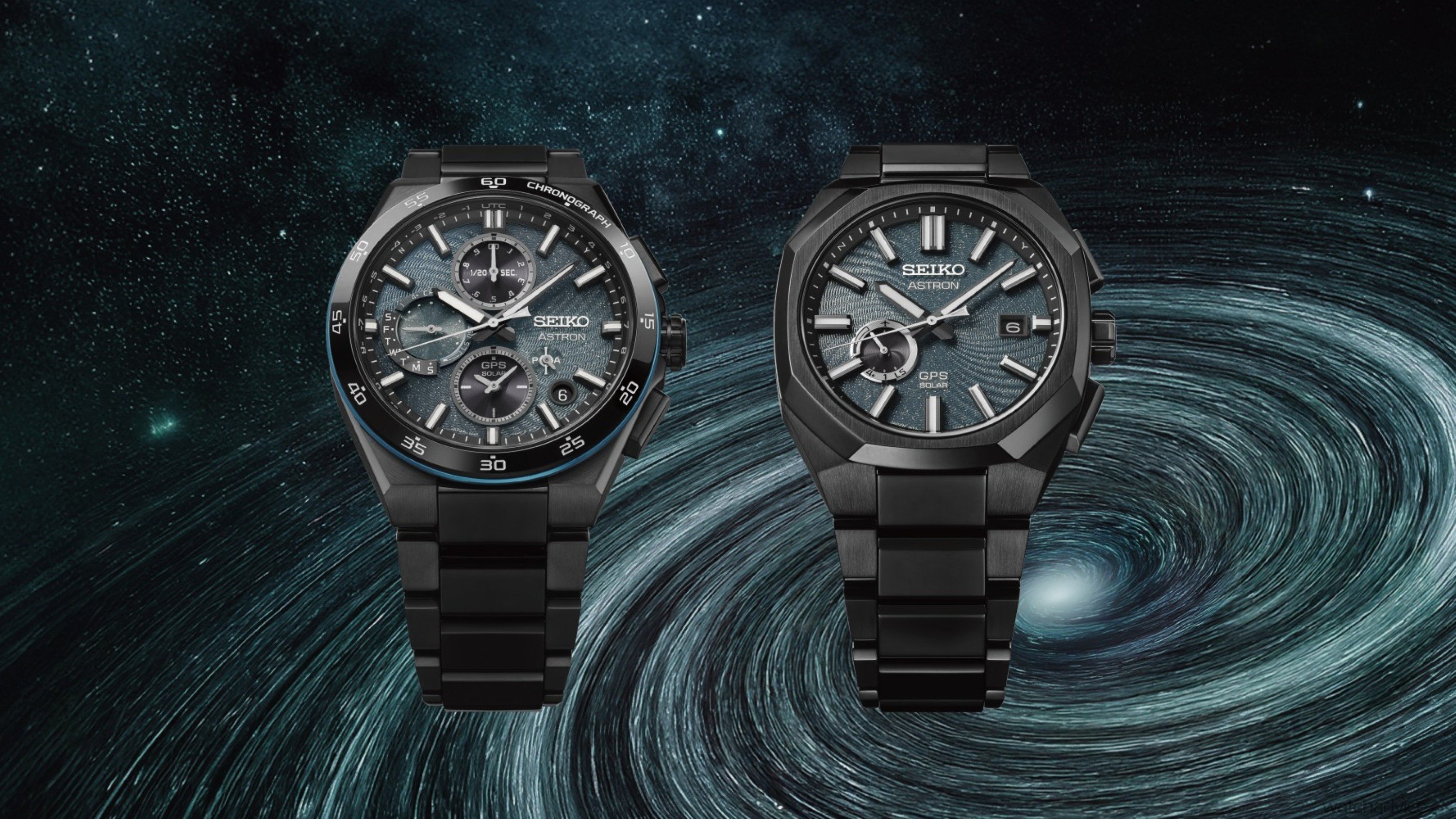
A pair of striking Seiko watches are headed your way in 2026! This time, though, they’ve come straight out of science fiction with a new space-age look!
There’s very few watches that have had as influential a tenure as the Seiko Astron. Sure, it’s not as glamorous or high-falutin as other icons like the Submariner, Carrera, or Freak, but the mere mention of it is enough to give any traditional watchmaker PTSD. It might not seem like much, but when the humble Astron was introduced in 1969, it set off a snowball effect in the industry known as the Quartz Crisis. The Seiko Astron was the very first model to use the quartz movements that we know and mostly love today.
The Astron name would soon disappear until 2012, when it resurfaced as the world’s first GPS Solar wristwatch. Unlike conventional quartz watches, the GPS functionality allows the Astron to link with satellites in outer space to synchronise accurate time, all while running entirely on light. For 2026, Seiko’s latest additions to the collection continue to position the Astron as a champion of technological breakthroughs, with two models drawing inspiration from the Astron’s disruptive heritage.
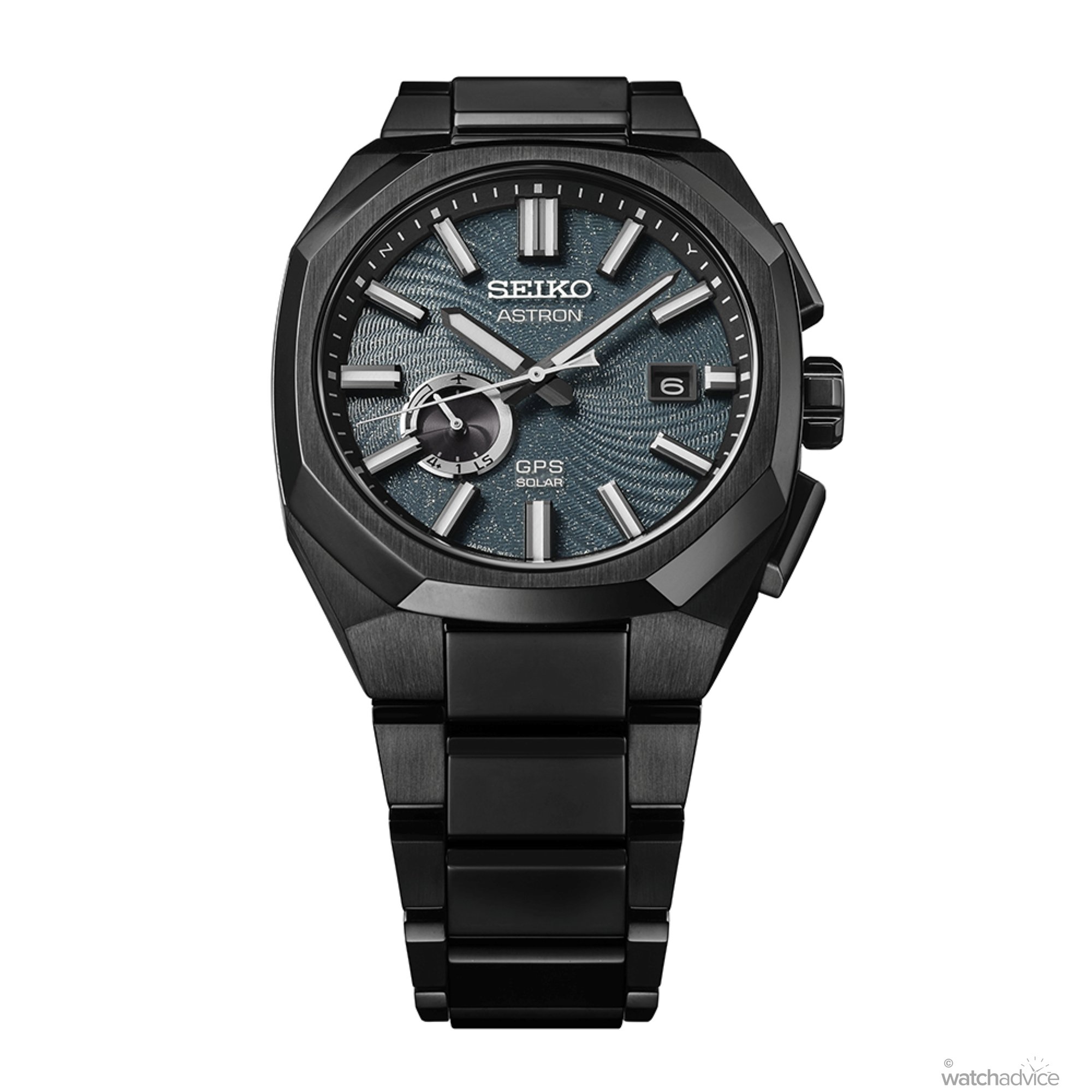
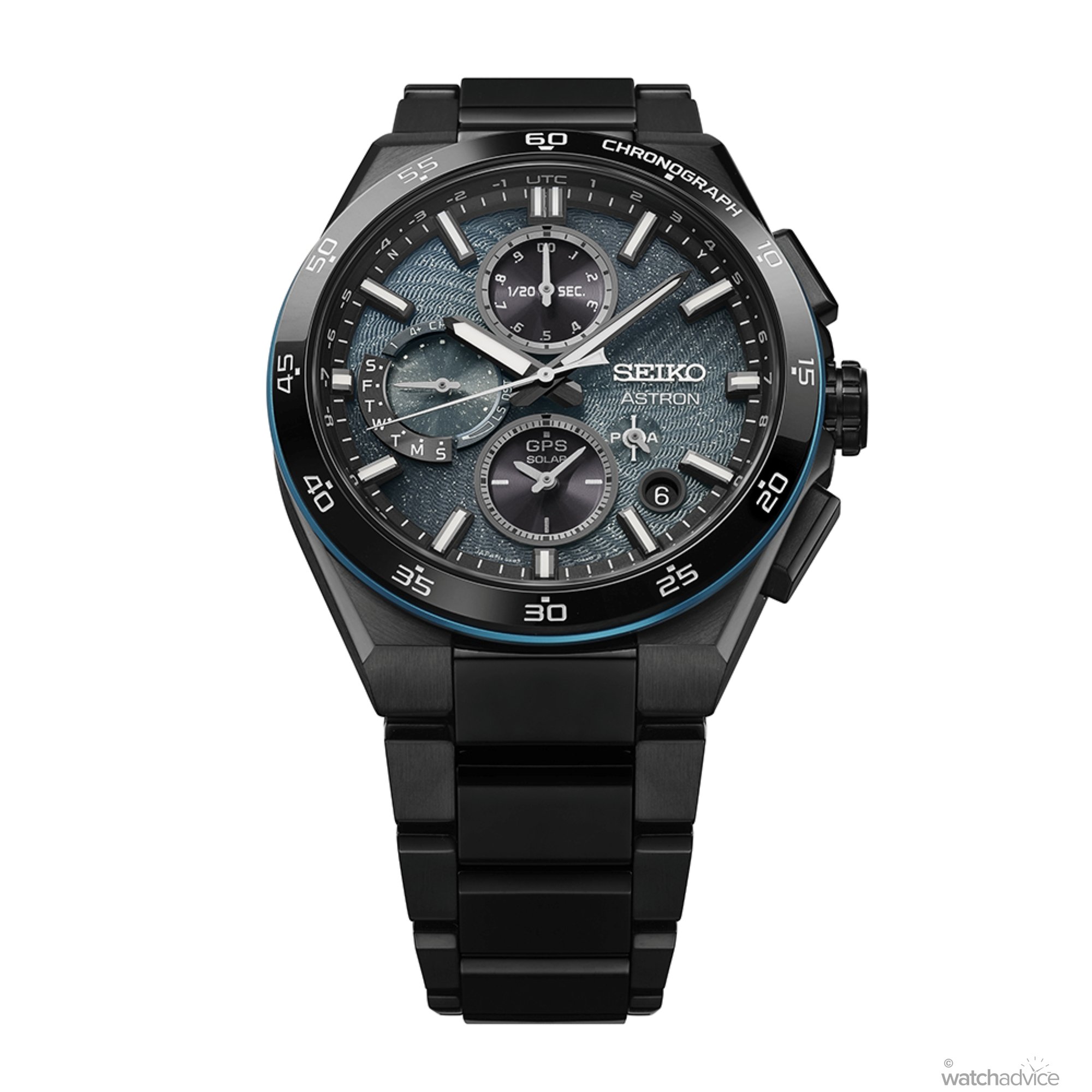
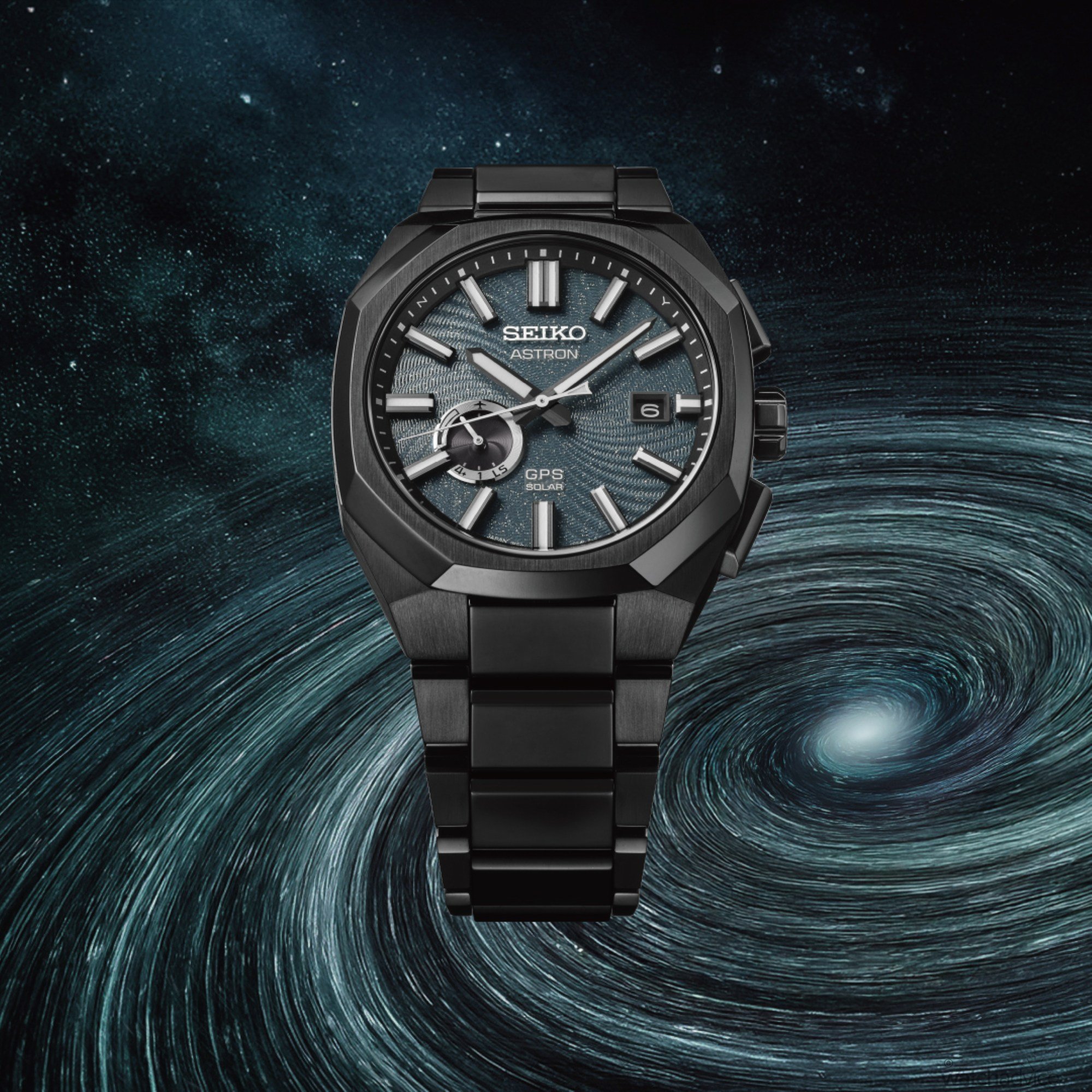
Two new GPS Solar models make up the official release: the SSJ039J, a standard three-hand model, and the SSH187J, which adds chronograph and dual time complications. The three-hand reference is the smaller of the two, measuring 42mm wide, 47.9mm long and 12mm thick, while the chronograph and dual time version is slightly larger at 43mm by 49.5mm by 13.4mm.

The Astron line-up has always had a rather bulky profile, so expect both pieces to wear quite large. Thankfully, though, this doesn’t have much of an impact on overall wrist presence. Both watches are made from black super-hard coated titanium, and the quartz movement inside helps them wear feather-light despite the silhouette.
The black titanium case and bracelet are certainly cool, but they really just serve as a backdrop to the remarkable dial. Both watches feature newly developed spiral-embossed finishes, designed to evoke the swirling motion of distant galaxies. Rendered in a dark teal and compounded with glittering metallic elements, the dials appear to emerge from darkness, creating a dramatic contrast between case and dial.
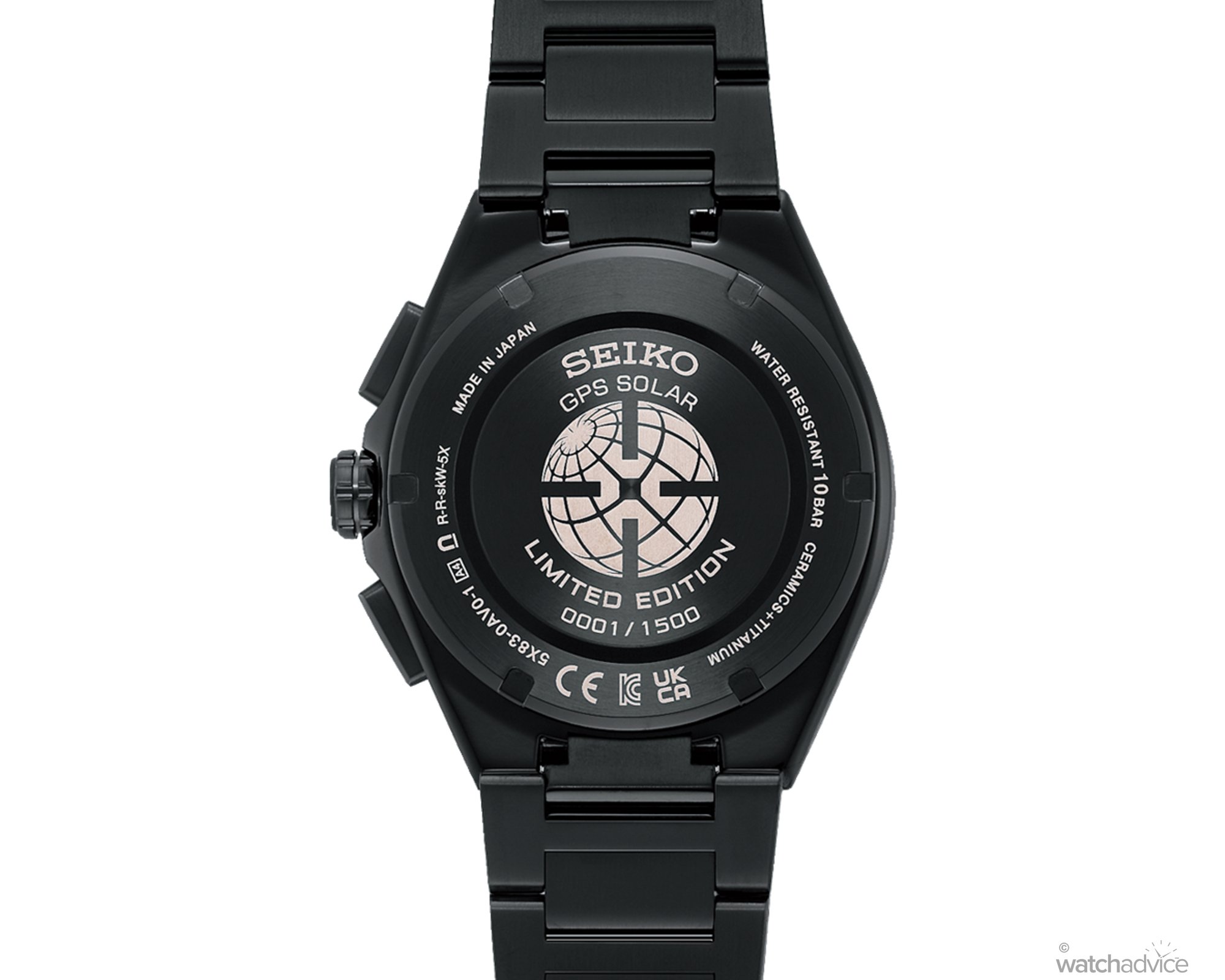
While both movements are quartz and hidden behind solid casebacks, this doesn’t diminish their effectiveness in the slightest. Powering the larger SSH187J is the Calibre 5X83. This highly advanced solar quartz movement offers GPS time-zone adjustment, a 1/20-second chronograph, dual time functionality, world time across 38 zones, and a perpetual calendar accurate until February 2100. Even without GPS synchronisation, the accuracy is formidable at ±15 seconds per month, but with it, the watch is effectively dead-on at all times.
The three-hand SSJ039J is powered by the Calibre 3X62. Staying true to the Astron’s emphasis on functionality, it also provides GPS time synchronisation, a perpetual calendar, and the same solar-powered convenience, ensuring precise global timekeeping without the need for battery changes. Both movements recharge under any kind of light and can run independently for six months, or up to two years when placed in power-saving mode. This makes them true set-and-forget timepieces, that are ready for you at a moment’s notice.
My Thoughts
The Seiko Astron has always been a function-forward timepiece. While some may frown on what it did to the industry, it’s worth understanding that its impact was always inevitable. The Astron was born from the same ambition shared by all mechanical watchmakers: a desire for extreme chronometric accuracy. One could protest and say, “but they didn’t play by the rules!” But when has playing by the rules ever got us anywhere?
The Seiko Astron is a testament to one brand’s refusal to subscribe to the old ways of horology. It changed the rules of the game, introducing technologies that have irrevocably shifted the landscape of watchmaking. And though we’re nearly six decades removed from the Astron’s historic disruption, it’s still finding new ways to remain at the centre of the watch world — or, in this case, the watch galaxy.
Reference: SSJ039J (Three-Hand) / SSH187J (Dual Time Chronograph)
Specifications
- Dimensions: 42mm case diameter x 47.9mm lug-to-lug x 12mm thick / 43mm case diameter x 49.5mm lug-to-lug x 13.4mm thick
- Case Material: Titanium with black super-hard coating
- Dial: Textured dark teal
- Movement: Solar Cal. 3X62 / Solar Cal. 5X83
- Complications: GPS timekeeping, perpetual calendar, power reserve indicator / GPS timekeeping, perpetual calendar, power reserve indicator, chronograph, dual time
- Battery Life: 6 months (2 years in power-saving mode)
- Water Resistance: 100m (10bar)
- Strap: Black titanium bracelet with folding clasp